
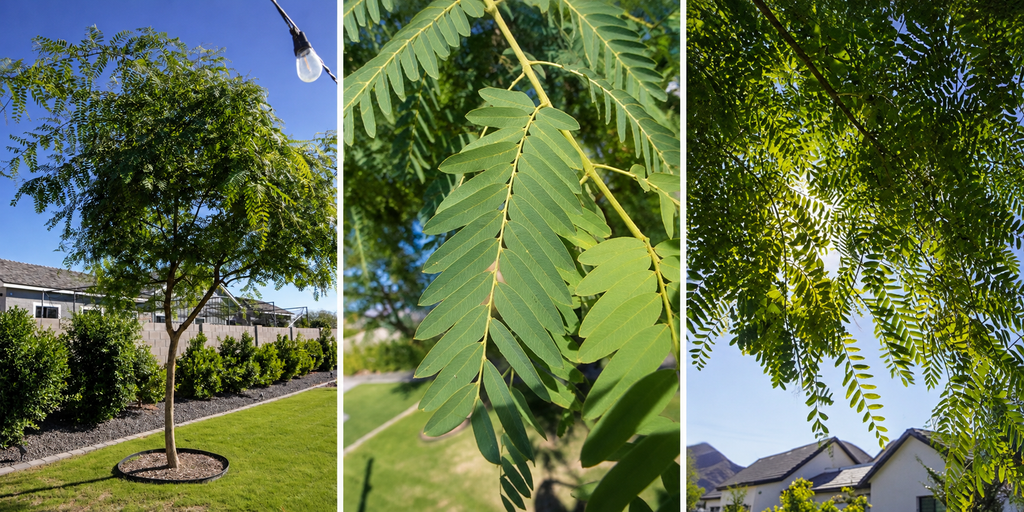
The tipu tree is a fast-growing shade tree from South America with a wide, flat canopy and clusters of yellow flowers. It can give you real shade in a few years. It is not a low water desert tree, though, so it works best where you can give it room and regular water.
Quick Facts
- Sun: Full sun
- Water use: High for a Phoenix tree. It needs regular supplemental water.
- Mature size: 25 to 40 feet tall and 30 to 60 feet wide, though it tends to be less vigorous here than in coastal California
- Bloom: Yellow to apricot flowers, spring into summer
- Native or desert adapted: Neither. It is native to South America and needs more water than desert adapted trees.
- Wildlife: Bees visit the flowers
- Frost: Tender. Young trees can be damaged by frost.
Where It Works in Your Yard
Give a tipu full sun and plenty of space. That canopy can spread 40 feet or more, so keep it well back from walls, walkways and especially pools.
Put it in the wetter part of your landscape, not in a rock mulch area. A spot with drip irrigation, or near a lawn or planting bed that already gets regular water, suits it best. Skip the hot west wall. In the extreme summers of 2020, 2023 and 2024, tipus planted in drier settings suffered badly from the heat.
If you want a shade tree that takes less water, look at a Desert Willow or a Velvet Mesquite. They take less water than plants that aren’t desert adapted.
Planting It Right
Spring is the best time to plant. Dig the hole no deeper than the root ball so the root flare sits at grade. Backfill with native soil and a little compost, lay compost on top, then mulch over it. Keep the mulch a foot back from the trunk.
A 15 gallon tree or smaller usually does better long term than a big boxed one. It settles in faster and builds a stronger root system.
Watering
Water deep and less often so roots grow down instead of staying shallow. Drip or soaker lines work well. The first 8 weeks need extra attention, so check the soil often.
Don’t skip watering after a rain. Desert rain rarely soaks in deep enough. In summer, a tipu that runs short on water will drop leaves and show heat damage, so keep the schedule steady.
Feeding the Soil
Build soil biology with quality compost, worm castings and a good organic fertilizer. Work them into the planting area and top-dress each year. Healthy soil life helps the tree hold moisture and use nutrients.
This matters here because our alkaline soil can cause yellowing between the leaf veins. Adding organic matter is the long-term fix. We don’t use synthetic fertilizers.
Care and Pruning
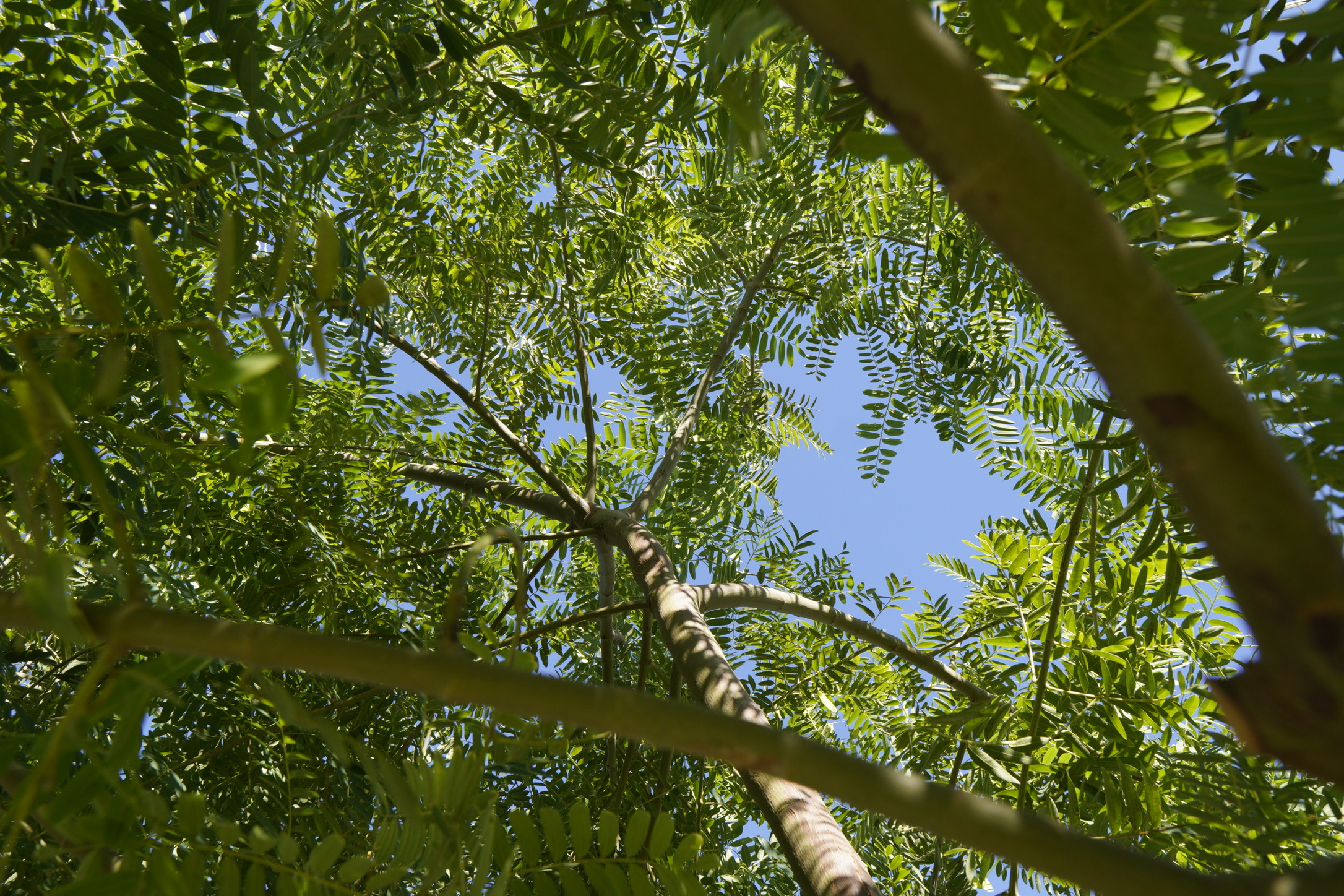
Pruning is the most important job with this tree. Tipus tend to form low, competing trunks. If you leave them, the joints can trap bark inside the crotch and become weak points, and big limbs can fail.
Start structural pruning while the tree is young. Choose one dominant trunk and keep the lower branches in check. Young branches also droop low, so lift them as it grows. For large limbs, hire a certified arborist.
Watch-Outs
- Litter. Expect leaves, flowers and seed pods dropping over a long season. Pool owners feel it most.
- Surface roots. Roots stay shallow and can lift concrete and tear up lawns.
- Water use. It needs more than desert adapted trees, which means a bigger water bill.
- Frost. Young trees can be damaged in a cold snap.
If you’re wanting a tipu for your yard, book a consult with The Garden Nerd or join the Garden Nerd Club. We’ll help you find the right tree and the right spot for it.
Sources
- Arizona State University, Clark Martin plant library, Tipuana tipu: https://www.asu.edu/lib/camartin/plants/Plant%20html%20files/tipuanatipu.html
- Everde Growers, Tipu Tree: https://everde.com/?p=6220
- Desert Tropicals, Tipuana tipu: https://desert-tropicals.com/Plants/Fabaceae/Tipuana_tipu.html
- A&P Nursery, Growing Tipu Trees in Arizona: https://www.apnursery.com/?p=9197
- World Agroforestry, Tipuana tipu species profile: https://apps.worldagroforestry.org/treedb2/speciesprofile.php?Spid=1648