
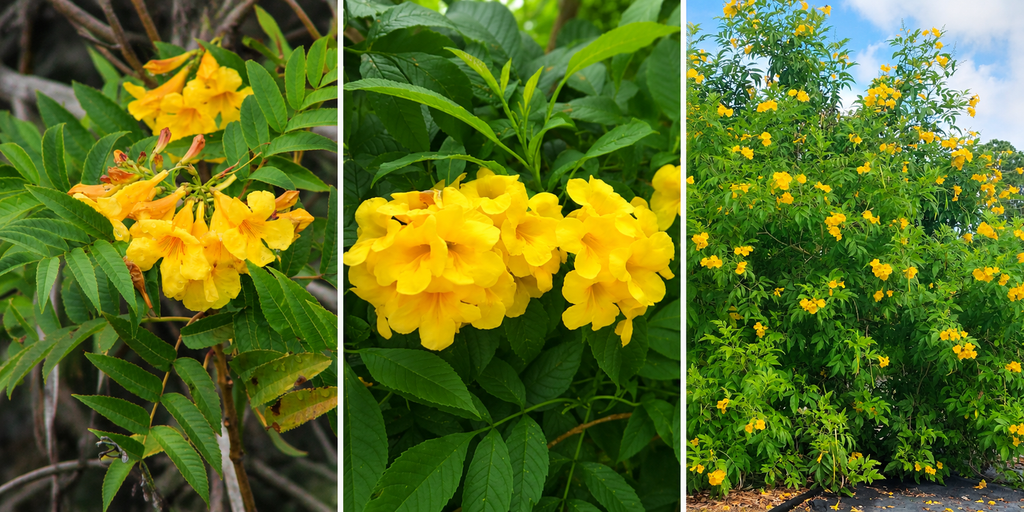
Yellow bells (Tecoma stans var. angustata), also sold as Arizona yellow bells, is a fast-growing shrub that covers itself in yellow trumpet-shaped flowers from spring into fall. It takes less water than plants that aren’t desert adapted, and hummingbirds will find it. If you want long-season color that suits our climate, it’s worth a spot.
Quick Facts
- Sun: Full sun
- Water use: Low
- Size: About 6 ft tall and wide per AMWUA, though it can reach 15 ft by 10 ft
- Bloom: Yellow, trumpet-shaped clusters, spring through fall
- Native or adapted: Native to the Chihuahuan and Sonoran Deserts
- Wildlife: Hummingbirds
- Frost: Rated to 25°F, so cold snaps can burn it back
Where It Works in Your Yard
Give it full sun. It grows fast with an upright, open form, so it fills a space quickly without looking heavy.
Plan for size. AMWUA lists it at about 6 feet tall and wide. A University of Arizona Cooperative Extension plant list shows it reaching 15 feet tall and 10 feet wide. Leave room for the bigger number and you won’t be fighting it later.
It makes a good backdrop along a wall or fence, or a loose hedge where you want color. Put it where you can see it from a window or patio, because the hummingbirds are part of the show. For more hummingbird color, take a look at our Desert Willow post.
If you like the look of Tecomas in other colors, our Orange Jubilee post covers an orange one. Either way, I use one variety per wall rather than mixing. A single variety keeps the look consistent.
Planting It Right
Plant in spring. Dig the hole no deeper than the root ball so the root flare sits at grade. Backfill with your native soil and a little compost. Lay compost on top, then mulch over it, keeping the mulch a foot back from the trunk.
Watering
Water deep and less often so the roots grow down instead of staying shallow. Give the first 8 weeks extra attention while the plant settles in.
Yellow bells takes less water than plants that aren’t desert adapted. Low water use doesn’t mean no water, though. Don’t skip a watering after a rain. Desert rain rarely soaks in deep enough to do the job.
Feeding the Soil
Feed the soil, not just the plant. Build soil biology with quality compost, worm castings and a good organic fertilizer. Healthy soil life is what keeps a fast grower like this one supplied. We don’t use synthetic fertilizers.
Care and Pruning
Once the danger of cold has passed in spring, trim back any growth the frost burned. AMWUA rates litter as moderate, so expect some cleanup around the base.
Watch-Outs
Cold is the main one. AMWUA rates hardiness to 25°F. In my experience it can freeze back in cold winters and then regrow, so don’t pull it out at the first sign of brown.
On the plus side, AMWUA lists no thorns and no skin irritation. The Desert Botanical Garden includes yellow bells on its list of pet-friendly plants.
Ready to Plant?
Want help picking the right spot and building the soil under it? Book a consult with The Garden Nerd or join the Garden Nerd Club.
Sources
- Arizona Municipal Water Users Association, Landscape Plants for the Arizona Desert, Arizona Yellow Bells: https://amwua.org/plants/arizona-yellow-bells
- University of Arizona Cooperative Extension, NatureScape Plant List (2023 Master Gardener Home Garden Tour): https://extension.arizona.edu/sites/extension.arizona.edu/files/programs/NatureScape-Plant_List.pdf
- Desert Botanical Garden, Pet-Friendly Landscapes and Plants: https://dbg.org/pet-friendly-landscapes-and-plants/