
Yvonne Schaefer
Thanks for trusting us with your yard, Yvonne. Everything we planted is listed below, with exactly how to water, prune, and care for each one.
The first few months are what matter most. New plants spend their first season growing roots out of the nursery soil and into yours, and steady, deep watering during that time is what gets them established. After that, they get much easier.
You have direct access to me in the Garden Nerd Club. If anything looks off or you have a question, ask me there anytime.
Watering
Right now
- Trees: fill up the water well around each tree we planted every 2 days. Each tree has its own bubbler, so they're set up well for deep watering.
- Everything else: the orange jubilee, red bird of paradise, and lantana are on the irrigation schedule I set while I was there. They don't need any extra water. If you see something that looks off, send me a text.
- Coming up: I'll be back in about two weeks to add more staking to the red push pistache. I'll check the watering schedule then and adjust it as needed.
Once they're established
After the first year, each plant's watering needs are listed in its section below. Water deeply every time, slow and long enough to soak the root zone, then let the top few inches dry before the next watering. Deep and infrequent trains roots to grow down where the soil stays cooler.
- How deep: shrubs should be soaked about 12 inches down, trees 18 to 24 inches. Push a long screwdriver into the soil after watering. It slides easily through wet soil and stops where it's dry.
- Too little: wilting in the afternoon that doesn't recover by morning, crispy leaf edges, leaf drop.
- Too much: yellowing leaves that stay soft, soil that's soggy days after watering. In the desert this is rare when you water deeply and let it dry between.
Your plants, one by one
Here's everything we planted, with the care each one needs.

Orange Jubilee
Fast, lush, and covered in orange trumpet flowers spring through fall. These will grow together into a solid hedge along the back wall.
Once a week through most of the year, 2 times a week in the hottest part of summer.
Let them grow up and fill in before shaping. Once they reach the height you want, lightly shape the outside two or three times a year. Avoid tight shearing, which cuts off the flowers.
A hard freeze can burn the tips back. Leave the damage on through winter. It protects the inside of the plant. Cut it back in late February or March and they'll flush right out.
Yellowing leaves usually mean they're hungry. Regular feeding keeps them deep green and blooming.
Here's a short video on orange jubilee.

Citrus
Evergreen, fragrant blooms in spring, and fruit in winter. Citrus are heavy feeders and do best with deep watering and a lot of compost.
Every 7 to 10 days in winter, about weekly in spring and fall, and every 3 to 5 days in summer. Fill the water well each time so it soaks deep.
Very little. Never shear it. Leave the low branches on to shade the trunk. Only remove dead wood and any shoots coming from below the graft near the base.
Citrus are heavy feeders and need regular feeding to fruit well. With organic fertilizer and soil amendments, feed monthly.
Young citrus need cover when it drops below about 30 degrees. Use frost cloth draped to the ground, not plastic.
If any bark is exposed to afternoon sun, paint it with a 50/50 mix of white interior latex paint and water.
Pull off any fruit that sets the first year. That sends the energy into roots, and you'll get a much better tree.

Florida Prince Peach
A low chill peach chosen for our warm winters. It blooms in late winter and ripens fruit in spring, before the summer heat. It drops its leaves in winter, which is normal.
Weekly in spring and fall, 2 to 3 times a week in summer, and only once a month while it's dormant in winter.
Pruning each winter while it's bare is important. It keeps the tree the size you want and gets you good fruit production. Open up the center into a vase shape and cut out crossing and inward growing branches. No pruning is needed this first winter.
In spring, thin the small fruit to one every 6 to 8 inches. You'll get bigger, sweeter peaches and less strain on the branches.
Paint the trunk and main branches with the same 50/50 white latex mix. Peaches sunburn easily here.
Birds love ripe peaches. Netting over the tree in May keeps the harvest yours.

Red Push Pistache
This is the shade tree for the backyard. Red new growth in spring, good fall color, and it handles the full west sun. It loses its leaves in winter.
It has its own bubbler, so it gets deep water on its own. Weekly in summer and every 2 to 3 weeks in winter.
Keep a 4 to 6 foot circle around the trunk clear of grass and mulched. Grass right against the trunk competes for water, and mower and trimmer damage is the most common injury to young trees.
Very little for the first couple of years. After that, light structural pruning in winter while it's bare.
I'll be back in about two weeks to add more staking. The stakes come off after about a year, once it stands on its own.
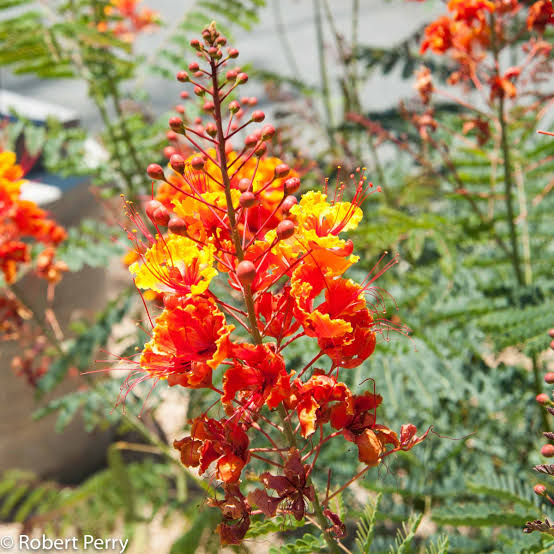
Red Bird of Paradise
Fiery red and orange flowers all summer, and it thrives in the hottest spots in the yard.
Every 1 to 2 weeks most of the year, weekly in summer. It takes less water than plants that aren't desert adapted.
Once a year in late winter, February into March, cut it back hard to about a foot tall. It grows back fast and blooms on the new growth.
It may freeze back in a cold winter. Leave the damage until the late winter cutback.
The seed pods are toxic. Trim them off if kids or pets are around.
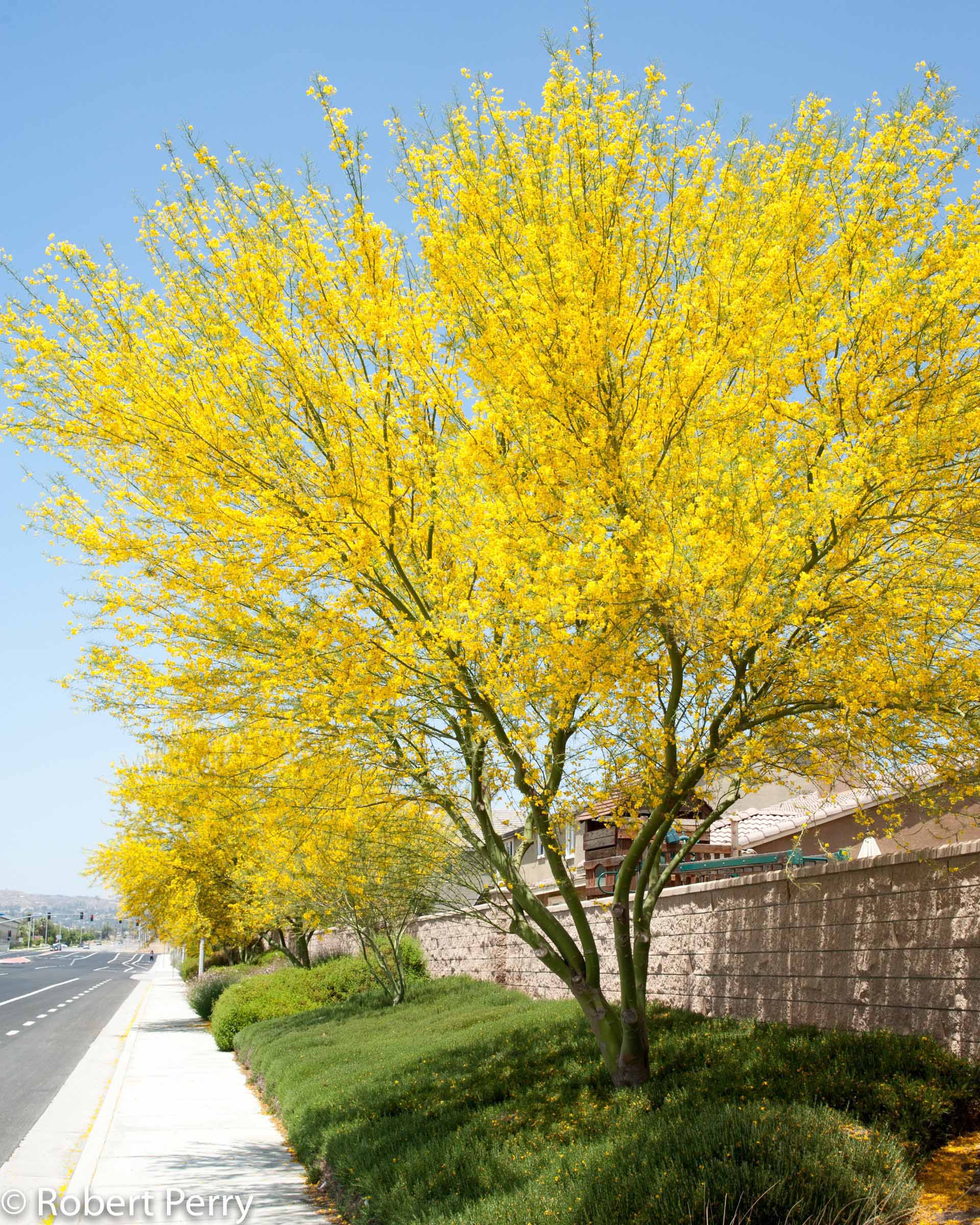
Blue Palo Verde
Native, with green bark and a big show of yellow flowers in spring. Once it's established, it needs very little from you.
Every 2 to 3 weeks in summer, about monthly the rest of the year, and less as it matures. Too much water makes palo verdes grow fast and weak, which is how they blow over.
Light pruning in fall or late spring, after it flowers. Thin the canopy so wind passes through, and remove low and crossing branches over time. Never more than about a quarter at once.
It drops a lot of yellow flowers in spring. That's normal, and they're great for the soil.
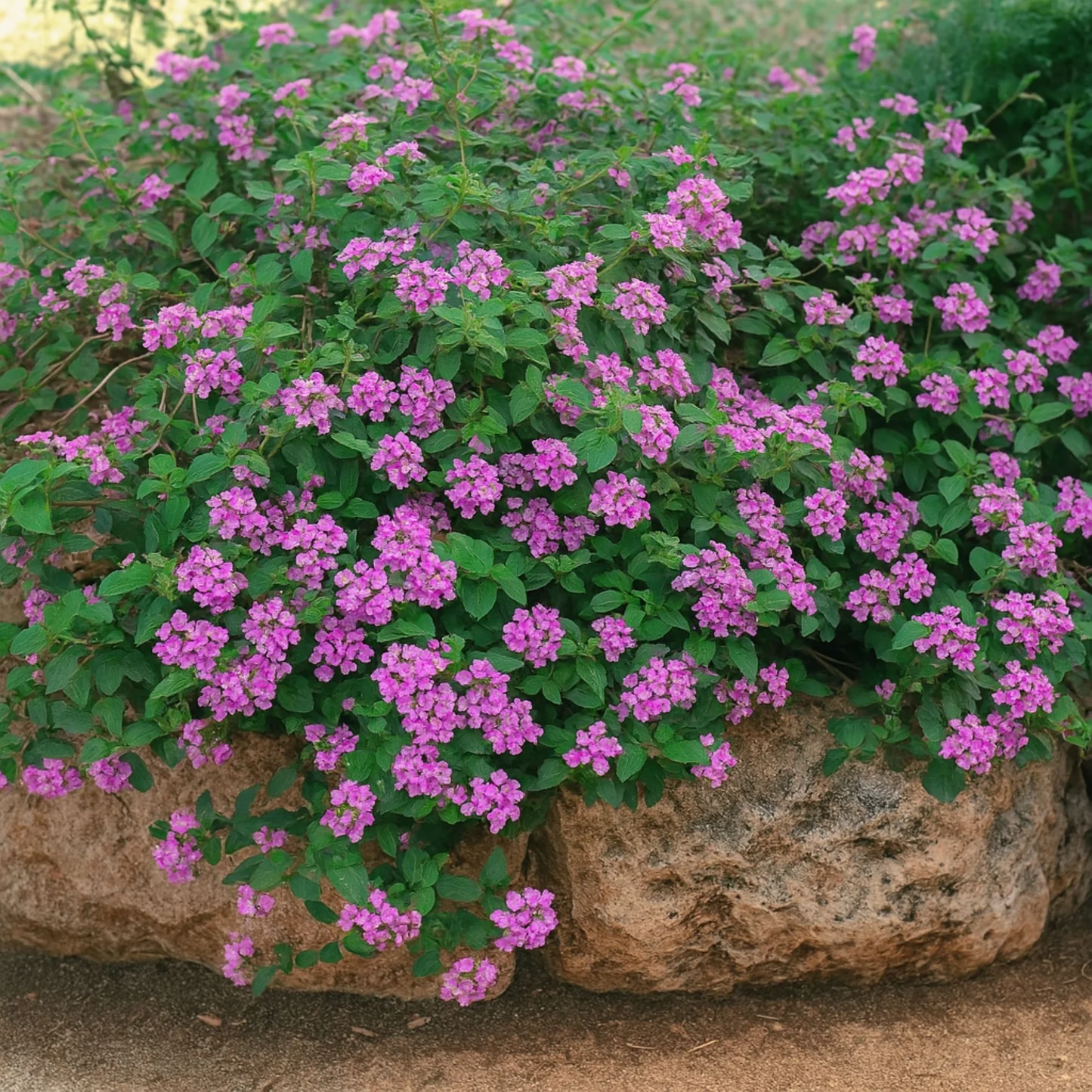
Lantana and Trailing Lantana
Steady color through the warm months and a magnet for butterflies.
Every 7 to 10 days, a little more often in the hottest part of summer.
Cut both types back hard in late February to about 6 to 12 inches. Through summer, a light trim keeps them tidy and blooming.
Frost will burn them back. Leave the damaged growth through winter and cut it back in late February. They come right back.
Fewer flowers usually means too much shade or too much water.
Your year at a glance
Cover the citrus on nights below about 30 degrees. Water the peach once a month while it's dormant. Starting next winter, prune the peach while it's bare. Leave any frost damage on the other plants.
Cut back the lantana and red bird of paradise, and trim frost damage off the orange jubilee.
Thin the peaches. Net the peach in May. Light pruning on the palo verde after it flowers.
The most important watering of the year. Keep it deep and consistent. Avoid heavy pruning.
Start stretching out the watering as it cools. A good time for light shaping on the orange jubilee.
A few things that apply to everything
- Mulch: keep mulch around everything we planted. It holds moisture, keeps the roots cool, and feeds the soil. Keep it a few inches off shrub stems and a foot back from tree trunks.
- Root flares: never let soil or mulch pile up against a trunk. The spot where the trunk widens into the roots needs to stay exposed. Here's a short video on why that matters.
- Feeding: with organic fertilizer and soil amendments, everything here should be fed monthly. That steady feeding is what builds the soil life that keeps new plants growing strong.
- Landscapers: if you have a crew, ask them not to shear the citrus, orange jubilee, or palo verde.
- Text me if: a plant suddenly wilts and doesn't recover overnight, leaves turn yellow or brown across the whole plant, or something just doesn't look right. It's much easier to fix early.
Quick reference
Compost, mulch, worm castings
Arizona Worm FarmOrange jubilee video
Watch on YouTubeRoot flare video
Why the root flare mattersIrrigation
Garrett: 480-678-9121Questions
Ask me anytime in the Garden Nerd Club, or text (480) 253-9261Thanks again
It was great getting these in the ground. Send me photos as things grow in. I love seeing how they fill out.