
 The Garden Nerd
Your consultation write-up
Thanks for having me out. Everything we talked about is below, in the order we walked, starting at the raised bed in the backyard and ending with the front yard. Since you like a lush look and pollinator friendly plants, I leaned that way wherever it made sense.
The raised garden bed
This bed is set up well for growing vegetables and bringing in hummingbirds. Before you plant, top it off with a couple bags of fresh raised bed mix from Arizona Worm Farm. Soil in a raised bed settles and gets used up every season, so a fresh layer on top each fall keeps it rich and full of life.
Now is a great time to plant for winter. Lettuce, spinach, kale, chard, broccoli, carrots, beets, radishes, peas, and herbs like cilantro and parsley all do great here from now through early spring. For exact timing on everything, use my Maricopa County planting guide.
For summer, when most vegetables struggle, switch the bed over to flowers that bring in pollinators and hummingbirds. The ones below handle the heat without much water, and most of them can go in from seed in spring. Letting a few basil plants flower is another easy way to keep the bees coming.
Around the outside of the bed, a few in-ground plants will keep hummingbirds and butterflies visiting all year, even when the bed is between seasons. Chuparosa, desert milkweed, and Greg's mistflower in particular need to go in the ground outside the bed, not in it. They spread and would take over the bed, and they're perennials that can't be pulled out and replanted year over year. Give them a permanent spot in the ground.

For the bed, pick two or three summer flowers. Around it, mix a few of the in-ground plants so something is blooming every season.
Zinnia
Bright, long lasting flowers in almost every color. Butterflies love them and they handle full sun and heat.
Sunflower
Easy from seed and fast. Bees work the flowers all summer and birds go after the seeds in fall.
Mexican Sunflower
Orange flowers that butterflies and hummingbirds both go for. Very heat tough once it gets going.
Penstemon
Tall spikes of tubular flowers in late winter and spring. One of the best hummingbird plants we have.
Chuparosa
Red tubular flowers winter through spring. Hummingbirds visit it constantly.
Autumn Sage
Red, pink, or coral flowers in spring and fall. Hummingbirds love it.
Greg's Mistflower
Fluffy lavender flowers that queen butterflies swarm in fall.
Desert Milkweed
Host plant for monarch caterpillars, with pale yellow flowers.
The planter boxes
Same thing with these planter boxes. Top them off with good quality raised bed mix from Arizona Worm Farm so the soil level comes back up close to the rim.
The other piece is automated watering. Planter boxes dry out fast here, especially in summer, and hand watering is hard to keep up with. Run drip to the boxes on a timer. An inline drip line snaked through the soil, or a few adjustable emitters per box, both work well. Add a layer of mulch on top of the soil to hold moisture in. The irrigation section below covers how to set up the lines.

The orange jubilee arch
Using this arch as a trellis for orange jubilee is a good idea. I'd take the one on the east side, the one on the right, and plant it in the ground. With time, that's the only one you'll need. It will grow up and over the arch on its own. Plants are always much happier in the ground than in a pot, with more room for roots, steadier moisture, and less heat stress.
Now is a good time to transplant it, while the weather is cooling off and the roots can settle in before next summer. To transplant it, dig a hole about twice as wide as the pot and no deeper than the root ball, so the base of the trunk sits right at soil level. Backfill with the native soil and a small amount of compost, water it in deeply, then lay compost and mulch on top. As it grows, tie the long shoots to the arch to guide them up. Let it grow freely instead of shearing it, so it fills in and keeps flowering.

Video not loading? Watch it on YouTube.
Orange Jubilee
Orange trumpet flowers spring through fall. Hummingbirds love it, and it will cover the whole arch once it's in the ground.
A small tree for the pool corner
This corner wants something with a little height that takes very little care, doesn't drop much into the pool, and doesn't have an invasive root system. Since you'd rather have a lush look than a desert one, the pygmy date palm is my first pick. It stays small, drops almost nothing, has a compact root system, and gives the pool a tropical feel.
This spot doesn't have to be a tree. A large evergreen shrub gives you the same height and screening, and yellow bells and sugarcane add green and color without taking up much space. All of these are easy care and have well behaved roots. Plant any of them a few feet back from the pool edge so they lean over the corner, not the water.

Pick one for the corner.
Pygmy Date Palm
Small, tidy, and tropical. Very little litter and a compact root system. The base of each frond has sharp spines, so plant it where no one brushes against it. Cover it on the coldest nights.
Arizona Rosewood
Dense, dark green, and evergreen. Can be left as a big shrub or limbed up into a small tree. Very clean around a pool.
Pineapple Guava
Grey green evergreen leaves, edible flower petals in spring, and fruit in fall. Lush looking and easy to shape.
Hopseed
Fast, dense, and upright. Gives you height quickly and takes the heat off the pool deck.
Yellow Bells
Bright green leaves and big clusters of yellow trumpet flowers spring through fall. Stays a manageable size with a light trim in late winter.
Sugarcane
Tall, lush green canes that give the corner a tropical look fast. It's in the grass family, so the roots aren't invasive, and it grows straight up without spreading into the pool area. Frost can burn the tops back, but it regrows from the base in spring.
Lush color along the pool walls
Along these walls you want something that takes the heat, adds color, and feels lush and full instead of desert, without getting huge. San Marcos hibiscus is what I'd start with. It stays around 3 to 5 feet, flowers most of the warm season, and handles the reflected heat off the pool deck.
The hibiscus you already have in a pot here would be much better off in the ground. For hibiscus, stick with the red varieties. They handle our heat much better than the other colors. Potted plants in full sun cook in summer and dry out quickly. In the ground, the roots stay cooler and it will grow fuller and flower more.
Space these about 3 to 4 feet apart and a couple of feet back from the pool edge so flowers and leaves don't end up in the water.
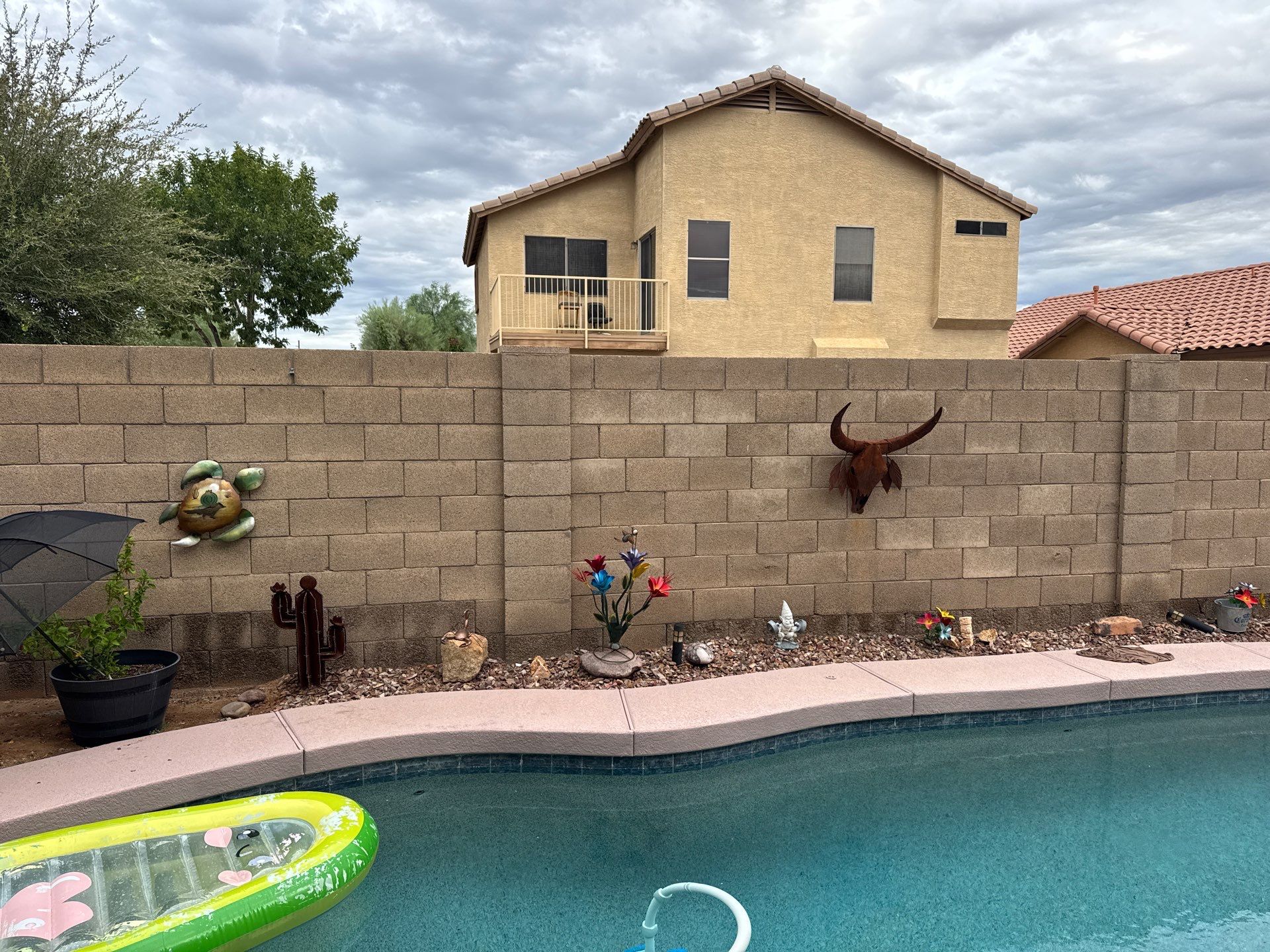
Pick two or three and repeat them along the wall for a full, planned look.
San Marcos Hibiscus
Lavender hibiscus flowers most of the warm season on a lush, full shrub. Handles heat well.
Red Hibiscus
Big, bold red flowers through the warm season. The red varieties hold up much better in our heat than the other colors. Likes regular water and a little afternoon shade. Cover on frost nights.
Canna Lily
Big tropical leaves and bright flowers through the warm months. Cut back to the ground if it looks tired in winter.
Blue Cape Plumbago
Soft powder blue flowers most of the year on a full, mounding shrub.
Firecracker Plant
Arching green stems covered in red tubular flowers. Full, lush, and a hummingbird favorite.
Chuparosa
Red tubular flowers winter through spring that hummingbirds visit constantly. Soft and full.
Desert Honeysuckle
Lush green leaves and orange tubular flowers most of the year. Handles heat and part shade.
Ruellia
Dense and evergreen with purple flowers most of the warm season. Fills in fast.
Asparagus Fern
Soft, airy, and fern like. Great for filling in the shadier spots along the wall.
Getting the potted hibiscus in the ground
You have two hibiscus in containers on either side of this corner. One has died and the other is still going. I'd plant the live one in the ground, then buy a new one for the other side and plant it in the ground too, so the corner stays balanced.
Fall is a good time to move it, since the cooler weather is easier on the roots. Plant it at the same depth it's sitting in the pot, water it in deeply, and cover both of them on frost nights this first winter.
Then plant a groundcover around them to shade the soil and keep their roots cool. Yellow dot or ice plant would both work well here and will spread to cover the rock.

Hibiscus
Plant the healthy one in the ground and add a new one on the other side to match.
Yellow Dot
Low, bright green, and covered in small yellow daisies. Spreads quickly and cools the soil.
Ice Plant
Succulent groundcover with bright flowers in spring. Handles the heat off the pool deck.
Purple Heart
Trailing purple foliage that contrasts nicely with the hibiscus. Grows in sun or part shade.
Vines for the wooden lattice
For this wooden lattice, plant one vine on each side so they grow up and meet in the middle, completely covering it. Tangerine crossvine is the first one that comes to mind. It's fast, holds its leaves through winter, and covers itself in orange flowers in spring.
Plant each vine about a foot out from the base of the lattice. For the first few months, weave the new growth through the lattice or tie it loosely so it knows where to go. After that, most of these will climb on their own.

You can use the same vine on both sides, or pick two that bloom at different times.
Tangerine Crossvine
Fast, evergreen, and covered in orange trumpet flowers in spring. Hummingbirds love it.
Bower Vine
Lush, glossy leaves and pink or white trumpet flowers through the warm months.
Lady Banks Rose
Thornless climbing rose covered in small yellow flowers in spring. Vigorous once established.
Passion Fruit
Fast, tropical looking, with wild flowers and fruit you can eat. Best with some afternoon shade.
Covering the west-facing wall
This wall faces west, so it takes a lot of afternoon sun. The goal is something that grows up like a hedge and covers the wall, with some color where you can get it.
Plant these about 4 to 5 feet apart along the wall and let them grow together into a full screen that covers it. Let them grow freely instead of shearing them, so they fill in faster and keep flowering.

Pick one and run it the length of the wall, or alternate two for more color.
Orange Jubilee
Orange trumpet flowers spring through fall. Handles the west sun and grows into a full hedge if you let it.
Yellow Bells
Big clusters of yellow trumpet flowers spring through fall. Lush and green.
Bougainvillea
The most color you can get on a hot wall. Tie it to the wall as it grows. Frost can burn it back, but it regrows in spring.
Hopseed
Fast, dense, and evergreen. The quickest way to fully cover a hot wall.
Arizona Rosewood
Native, dense, and evergreen with dark green leaves. Handles full west sun and gives complete coverage.
More vinca and low shrubs under the window
Your vinca is doing well here, and you can plant more to fill in this bed. Vinca loves the heat, so it's best planted in spring, around April or May, and it will flower all summer. It usually fades when it gets cold, so think of it as a warm season plant you replant each year.
I'd also pull the rock out of this bed and put down mulch. Rock holds heat against the house and the plants. Mulch keeps the soil cooler, holds moisture, and breaks down over time to feed the soil.
If you'd like something here that stays year round, these low shrubs all stay under the window and keep the bed full.

Vinca
Heat loving flowers in pink, white, and red all summer. Plant in spring and replant each year.
Dwarf Myrtle
Dense, dark green, and evergreen. Easy to keep low and full under a window.
Little Ollie
Compact dwarf olive with silver green leaves. No fruit and very low maintenance.
Autumn Sage
Red, pink, or coral flowers in spring and fall. Hummingbirds love it.
Ruellia
Dense and evergreen with purple flowers most of the warm season.
Lattice and a vine in place of the shade sail
Instead of the shade sail here, put up a lattice panel along the edge of the patio and grow a vine up it. Once it fills in, you get a living green screen that shades the patio, cools the air around it, and looks a lot better than the fabric.
Tangerine crossvine is a great fit. It's fast, stays mostly evergreen, and flowers in spring. Anchor the lattice well, since a fully grown vine gets heavy, and plant the vine about a foot out from the base.

Tangerine Crossvine
Fast, evergreen, and covered in orange trumpet flowers in spring.
Star Jasmine
Evergreen with fragrant white spring flowers. Makes a dense screen.
Snail Vine
Fast and lush, with fragrant, curly lavender and white flowers through the warm months. Dies back in a hard frost but regrows in spring.
Groundcover for the narrow strip along the house
This strip along the house is very narrow, so it needs low plants that fill in without crowding the walkway. Ruellia works well here as a groundcover. The dwarf Katie variety stays under a foot tall and spreads to fill the space. Vinca is another good option for summer color.
Since you like pollinator friendly plants, angelita daisy is a great addition. It flowers nearly all year, brings in bees, and stays compact. Foxtail fern adds a lush green texture alongside it. Pull the rock and mulch this strip too, and space plants about 18 inches to 2 feet apart.

Mix two or three of these along the strip.
Dwarf Ruellia (Katie)
Low, dense, and covered in purple flowers through the warm season. Fills a narrow strip well.
Vinca
Heat loving summer flowers in pink, white, and red. Replant each spring.
Angelita Daisy
Tight mounds of yellow daisies nearly all year. Bees love them.
Foxtail Fern
Upright plumes of bright green foliage. Tidy, compact, and easy along a narrow strip.
Switching the front lawn to St. Augustine
Under that big tree, the Bermuda is thinning out because it needs full sun. St. Augustine handles shade much better, so it's a good fit for this yard.
How it's different from Bermuda
St. Augustine has wider, softer blades and a thicker, more lush look. It grows well in shade where Bermuda won't, and it stays green longer into fall. It spreads by runners above the ground rather than by seed, and it does take a bit more water than Bermuda. Bermuda is finer, handles heavy foot traffic, and goes dormant and brown all winter.
How to install it
You don't have to redo the whole lawn. Buy one or two strips of sod and lay them down in the yard. The runners will spread out from there and slowly take over the Bermuda. If you're patient, it will cover the whole yard. The best time to lay it is late spring through summer, when the soil is warm. Loosen the soil where the strips go, lay them flat, and keep them moist for the first couple of weeks until they root in. Evergreen Turf and West Coast Turf are the places to buy it.
How to care for it
Water deeply and less often once it's rooted, so the roots go down. Mow it higher than Bermuda, around 3 to 4 inches, which shades the soil and helps it crowd out the Bermuda. Feed it with compost and organic liquid feeding instead of synthetic fertilizer. Skip winter rye overseeding, since the rye competes with the St. Augustine while it's trying to spread.

St. Augustine
Shade tolerant, soft, and lush. Lay a strip or two and let it spread and take over the Bermuda. Buy from Evergreen Turf or West Coast Turf.
Replacing the front shrubs and pulling the rock
For the shrubs out front, here are a few good replacements that stay full and green, fit the space by the patio, and don't need constant trimming. Whatever you choose, let them grow into their natural shape rather than shearing them into tight balls. They stay healthier, fuller, and flower more that way.
This bed also needs the rock pulled back. Rake the rock out, lay about an inch of compost on top of the soil, then 2 to 3 inches of mulch over it, keeping both a few inches away from the base of each shrub. Deep water once a week in summer and every couple of weeks in winter.

Pick one and use it for all of the shrubs here so the bed looks clean and planned.
Dwarf Myrtle
Dense, dark green, and evergreen. Holds a clean rounded shape with very little work.
Little Ollie
Compact dwarf olive with silver green leaves. No fruit and very low maintenance.
Autumn Sage
Red, pink, or coral flowers in spring and fall. Hummingbirds love it.
Ruellia
Dense and evergreen with purple flowers most of the warm season.
Chuparosa
Red tubular flowers winter through spring. Hummingbirds love it, and it stays soft and full.
Boxwood
Classic, dense, and deep green. Holds a clean shape by the patio. Give it a little afternoon shade if you can.
Setting up your watering lines
With your new irrigation going in this week, the most important thing is splitting the yard into separate lines, or zones, based on what's being watered. Different plants need water on very different schedules, and when they share a line, something always gets too much or too little.
- Raised beds and pots on their own line. They dry out the fastest and need water the most often, often daily in summer with short run times.
- Shrubs, vines, and groundcovers on the next line. Deeper, less frequent watering, a few times a week in summer and much less in winter.
- Trees on their own line. Long, deep watering spaced further apart, about once a week in summer and every couple of weeks in winter. Move the emitters out toward the edge of the canopy as the trees grow, since that's where the feeder roots are.
Run everything early in the morning, and adjust the schedule with the seasons. Most overwatering happens when the summer schedule is left running all winter. Make sure your irrigation installer sets it up this way on Thursday.
Feeding the soil, not just the plants
Everything above does better in living soil. Compost laid on top of the soil feeds the fungi and bacteria that make nutrients available to your plants, holds water longer, and keeps roots cooler. Arizona Worm Farm is my go to for compost and mulch.
If you'd rather we handle it, our monthly program keeps your whole yard fed.
- Monthly liquid soil treatment. An organic blend applied across your landscape, feeding the soil biology that makes nutrients available to your plants.
- Compost three times a year. Organic matter added back to keep that biology fed.
- A recap video after every visit. So you know what was done and what we're seeing.
Our planting rates
Here are our rates, including both the plant and the planting. These are estimates, since the exact price depends on the plant. Once you let me know which plants you like and want to go with, I can get you exact pricing fairly quickly.
| Plant and planting, per plant | |
| 5 gallonMost shrubs, vines, and groundcovers | About $85 |
| 15 gallonSmall trees and larger shrubs | About $375 |
| 25 gallon and largerPriced by the plant | Quoted |
| 20 or more plants in 1 to 7 gallon sizes | 10% off labor |
| Other | |
| Mulch, delivered and spreadPer cubic yard | $150 |
| Minimum planting job | $250 |
| Deposit to scheduleOf the total job | 50% |
Next steps
You can plant any of this yourself using the notes above. As a consult client, you're already in the Garden Nerd Club, so you have direct access to me there if questions come up along the way.
If you'd rather have us do the planting, let me know which plants you'd like and I'll get you exact pricing.