
Andrew, here's what we covered
6105 S Cobblestone Ct, Gilbert, AZ 85298Thanks for having me out to walk the property. I put this together in the same order we walked it, backyard through front. As a consult client you're already in the Garden Nerd Club, so I'm happy to keep working through this list with you whenever you're ready.

Mostly Healthy, All Need a Root Flare Excavation
This row of ficus on the north facing wall looks mostly healthy overall, but every one of them could use a root flare excavation, exposing that flare is what lets the trunk breathe and keeps them growing the way they should long term. I'd put mulch down in place of whatever comes out during the dig.

Replace the Ones That Are Done, Root Flare the Rest
A few of these are done, if you want them to fill back in faster and budget isn't the deciding factor, I'd just replace them outright, and fall is the best time of year to do exactly that. For the ones that are still alive and worth keeping, dig out the root flare on each and add fresh mulch once that's done. For whatever new trees go in here, planting depth is critical, they need to go in above grade with the root flare exposed from day one, same as the fix we're doing on the trees elsewhere on the property.

One of My Favorites, Give It a Trellis and Some Soil Help
Creeping Fig is genuinely one of my favorite vines. It'll grab onto block walls on its own, but it actually does a lot better with a trellis to climb rather than relying purely on self-clinging. Worth knowing, this particular spot gets eastern afternoon sun, and Creeping Fig is never going to fully thrive in that exposure, it does best on a north facing wall specifically. Feeding it, removing the rock at the base, and working in compost and mulch will still make a real difference here even with the sun exposure working against it.

Nothing Needed, They'll Be Part of the Feeding Program
These citrus look pretty good as is, nothing needed structurally. They'll be included in the feeding program going forward, which should keep them productive and healthy long term.

Both Look Good, Just Clean Up the Pistache
This Jasmine and the Red Push Pistache both look good as is. The one thing worth doing is pruning up the pistache to clear out the cross branching, remove anything rubbing against another branch, and anything that starts on one side of the canopy, cuts through the center, and exits the other side. Clearing that out now keeps the structure clean as it matures. I'm not a certified arborist myself, so if you'd rather have a professional handle this kind of structural pruning, King's Tree Service does great work and is who I'd recommend.

This One Would Benefit Too
This tree would benefit from a root flare dig out as well, same process as the others, expose the flare so it can breathe and grow properly. With all of our root flare work, we add mulch back around the base once the dig is done, so it's never left bare.

It'll Bounce Back Once It Cools Down
This area looks a little rough at the moment, but as we talked about, it'll look a lot better once the weather cools down. It would also benefit from mulch here rather than rock. Feeding through our program will also help keep everything here healthy and flowering.

Just a Hard Reset for the Lantana This Winter
Everything in these beds looks great, I wouldn't recommend changing much here at all. The one exception is the Lantana, which benefits from a good hard reset every few winters, I'd do that this winter specifically. Paired with our feeding program, it should come back thick and full for spring. Outside of that winter reset, prune it the same way covered in the pruning notes below, not with shears.

Reduction Cuts, Not Shears
The sage right along this walkway is a good example to start with, it's in a great spot and just needs to grow more naturally instead of being kept tightly shaped. That's really the whole idea behind how we want to handle any flowering shrub on this property, sage, the new bird of paradise and Texas sage going into section 13, the lantana beds, all of it. For a healthy, natural-looking, heavy-flowering hedge or shrub, reduction cuts and thinning cuts are the best method, not hedge shears.
If a shrub is meant to look natural and flower often, hedge shears are the wrong tool. Shearing cuts off the flower buds and creates a stiff, artificial box shape. Selective hand cuts instead keep the plant healthy, preserve its natural form, and maximize blooms.
Why Reduction Cuts Are Best for Flowering Shrubs
- Protects next year's blooms. Many flowering shrubs bloom on old wood, growth from the previous year. Shearing chops these buds off. Selective reduction cuts let you shorten a tall branch down to a side branch without destroying the surrounding flower buds.
- Encourages new flowering wood. Shrubs produce their most vibrant flowers on young, vigorous wood. Removing a few old, thick stems down to the main trunk or base triggers the plant to send up fresh, highly productive flowering stems.
- Maintains a soft, natural shape. Instead of a flat, rigid wall, selective cuts leave branches at staggered lengths, giving you a soft, textured, informal screen instead of something that reads as architectural.
How to Prune a Natural, Flowering Shrub
- Use the right tools. Put away the electric hedge trimmer. Use hand pruners for small stems and loppers for thicker branches deep inside the plant.
- Time it by the bloom. Prune right after the flowers fade for the season. That gives the shrub the rest of the growing season to put on new wood and set next year's flower buds.
- Follow the third rule. Each year, find the oldest, thickest, or tallest stems. Follow them down into the plant and cut back to a lower main branch or all the way to the ground. Never remove more than a third of the total plant at once.

A Root Flare Excavation Will Help This One Too
This one is doing great overall, it's just planted a little too deep. A root flare excavation would benefit it the same way it's helping everything else on this list, and we'll add mulch back around the base once it's done.
One Plant Palette for the Whole Front Yard
We walked five different spots across the front yard, the jacaranda bed, both sides of the driveway, the boxwood bed by the entry, and the far bed near the bottle brush. Rather than a different plant list for each one, the same core palette works across all of them, plants that read as lush and out of place for the desert but actually hold up fine out here.
A few things specific to each spot before we get to that list. In the jacaranda bed, the jacaranda stays, the iceberg roses come out, and the boxwoods stay. On the driveway's tree side, both trees need root flare excavations with mulch back around the base once that's done, and the lantana needs to grow out freely rather than being pruned hard, following the pruning notes below, with the water bumped up on that side. On the agave side, thin the agave for more even spacing and ease up on how often the bottle brush gets pruned, just keep them fed. In the entry boxwood bed, the orange jubilee comes out and the boxwood stays, keeping that bed low and tidy. The far bed by the bottle brush gets the same palette, just planted more densely.


The Plant Palette
Pull from this same list for any of the five spots above.

Kurapia
Low, spreading groundcover, reads like a lawn.
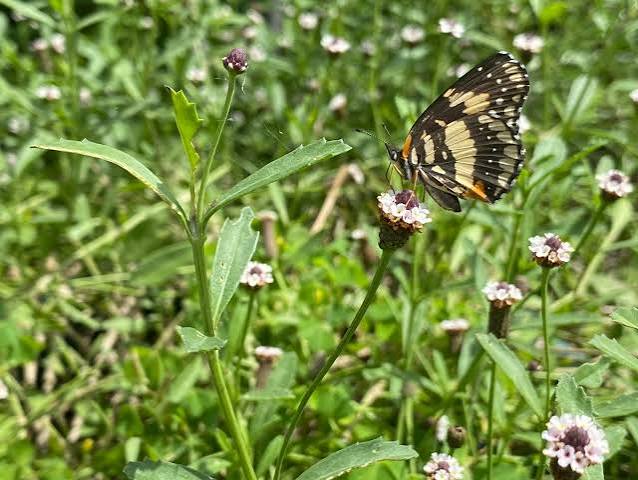
Frogfruit
Native relative of Kurapia, same low spreading habit.
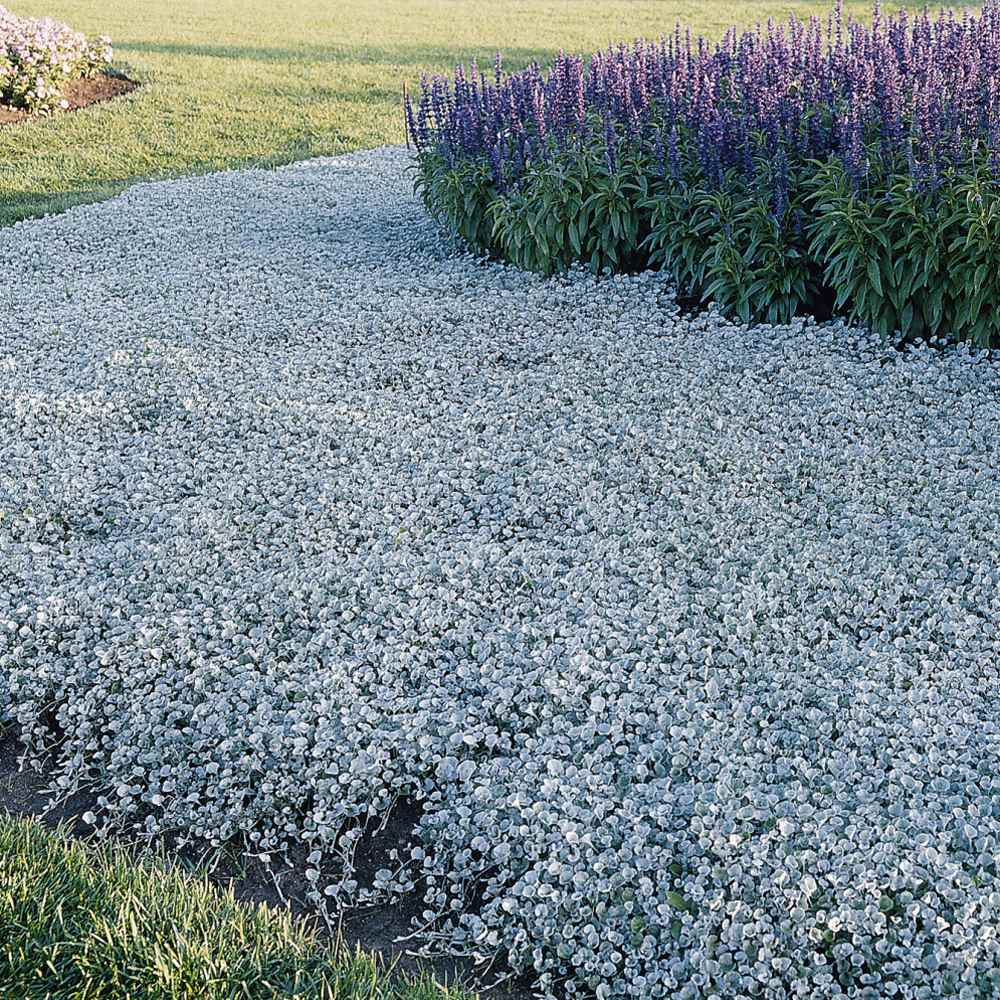
Dichondra "Silver Falls"
Silvery, trailing texture, great spilling over rock or a low wall.

Vetiver Grass
Tall upright clumps, real vertical structure.
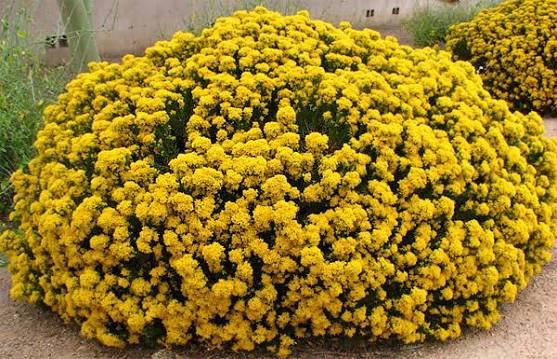
Turpentine Bush
Fine needle texture, yellow bloom in fall.
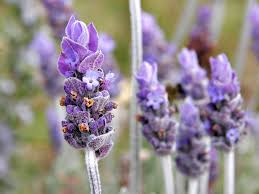
Lavender
Silvery foliage and fragrance, tougher here than expected.
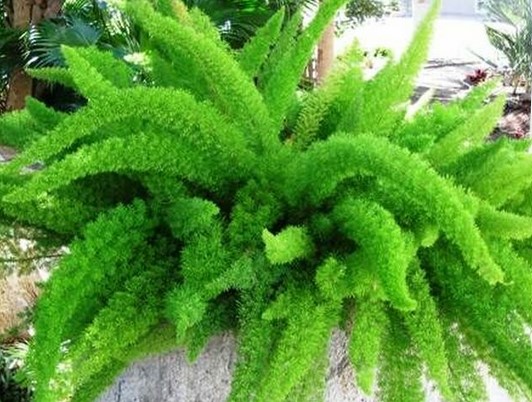
Foxtail Fern
Lush, feathery, almost tropical look.

Texas Olive
Larger accent shrub, big white blooms, also a good symmetrical pick by the entry.

Twisted Myrtle
Denser, structured evergreen backdrop.

Muhly Grass
Fine, airy native grass, soft plumes in fall, works in place of Purple Fountain Grass if you want the same movement without the import.

Society Garlic
Delicate grassy look, genuinely tough.

Blue Chalksticks
Striking blue-gray succulent groundcover.

Autumn Sage
Mediterranean texture and color, a steady pollinator draw.

Jerusalem Sage
Fuzzy silver-green foliage, yellow blooms.

Rosemary (Trailing)
Edible, soft and lush spilling over a bed edge, bees love the bloom.
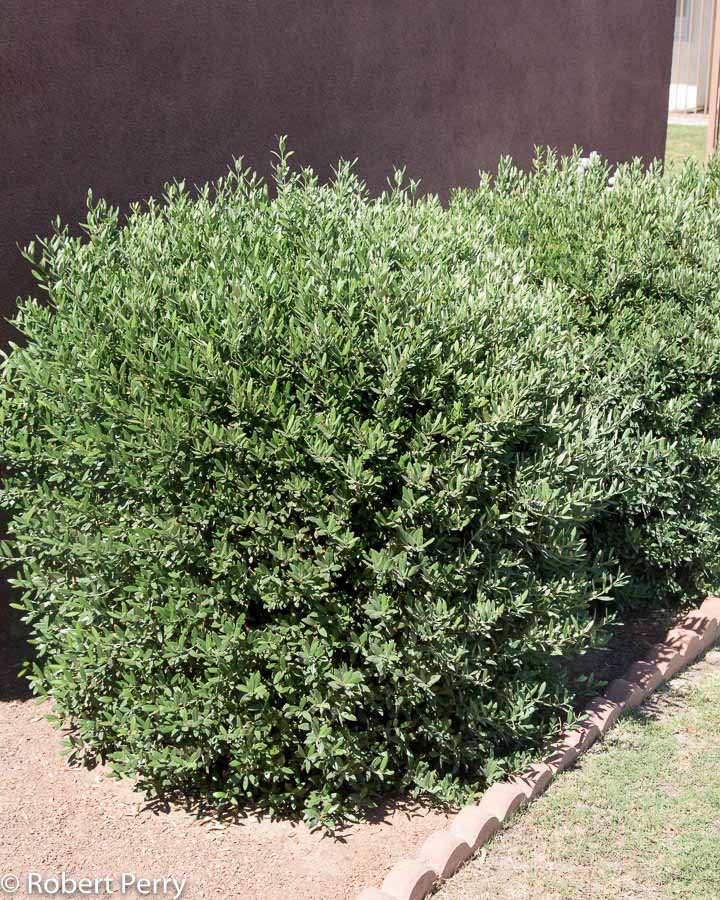
Little Ollie
Stays low and tidy, a good fit for the boxwood bed specifically.

Russian Sage
Silvery stems with tall purple spikes, same look as the photo you sent, extremely tough.

Catmint
Low mounding purple bloom nearly all season, another close match to that photo.

Santolina
Tight silver-gray mounding foliage, reads almost like a low hedge.

Blue Fescue
Small, spiky blue-gray grass, good repeated along a bed edge.

Hercules Aloe
Big, architectural tree aloe with coral flower spikes in winter, a strong focal point wherever it goes.
This is a big list. Rather than try to use all of it, pick 4 to 6 you like best and let me know. Once I know which ones, I'll put together an actual planting plan with spacing, how many of each, and where they go, rather than leaving that to guesswork. Worth knowing going in, several of these aren't things a typical nursery carries, so a few may take some legwork to source. If you love them, we'll find a way to get them.

Looking Great, Just Pull the Mulch Back
This Hong Kong Orchid is looking really good, and the mulch itself was a great idea, it just needs to come off the trunk. It had been piled up crowded right against the trunk, which raises the risk of disease getting in. This tree also needs a root flare excavation. Once that's done, keep any mulch pulled back six inches to a foot away from the trunk going forward.

Pruning Guidelines, Plus Root Flare Excavations on Both
You mentioned wanting to start pruning these up yourself, so here's what to keep in mind. Focus on removing dead, damaged, or crossing branches first, anything rubbing against another branch or growing back into the canopy instead of out and away from it. Late winter, while the tree is still dormant, is the best time for a heavier structural prune, light cleanup can happen anytime. Clean your pruning tools between cuts, especially if you're moving between trees, a simple alcohol wipe down prevents spreading disease from one tree to another. Beyond the pruning, both of these ficus need root flare excavations as well, and we'll add mulch back around the base of each once that's done.
A Lot of Trees Need the Same Fix
One thing that stood out walking the whole property, a lot of your trees were planted too deep from the start, that's a builder or original installer issue, not anything you did. The good news is the fix is the same across the board, expose the root flare and let the trunk breathe. It came up on most of the trees we looked at today, backyard and front.
Root flare excavation is $200 per tree, with a bulk discount once we're doing several at once, 5% off the 2nd tree, 10% off the 3rd, and 15% off the 4th tree and every one after that. If the final count ends up over 10 trees, the rate drops to a flat $150 per tree across the board instead. As an example, seven trees at the tiered rate works out to around $1,250 total instead of $1,400 at full price.
| Tree 1 | $200 |
| Tree 2 (5% off) | $190 |
| Tree 3 (10% off) | $180 |
| Tree 4+ each (15% off) | $170 |
| Over 10 trees, flat rate each | $150 |
Not every tree on this list may actually need a full excavation once we're out there, some might just need a little dirt swept back off the trunk to expose the flare, and we won't charge for those. The list above is what to expect going in, but the final count and total will depend on what each tree actually needs once we're on site.
Monthly Fertilizing
This is really the main reason you had us out, so I don't want it to get lost under everything else on this list. A regular feeding program is what ties all of this together, it's what's going to bring the bottle brush back, keep the citrus productive, help the lantana come back thick after its winter reset, and keep everything else on this property healthy long term. Our monthly program covers the full landscape with a liquid feeding each month plus compost applied a few times a year, built to build up real soil biology rather than force growth with synthetic salts.
Monthly Landscape Fertilizing
Full landscape, liquid feeding every month plus compost applied a few times a year.
Text me to get startedLet's tackle this in whatever order makes sense
There's a lot here, so pick what matters most to you first, the root flare work, the front bed swaps, or the color and pollinator planting. We can advise you along the way in the Garden Nerd Club, or if you'd rather have help with any of it, planting or anything else, just reach out and I can get you pricing.
You can also read more about how we plant at thegardennerd.org.