
Tamasin Baker
8044 W Columbine Dr · Peoria, AZ 85381
Thanks for having me out. Here's everything we talked about, in the order we walked it, with plant options for each spot.
Future Chicken Yard
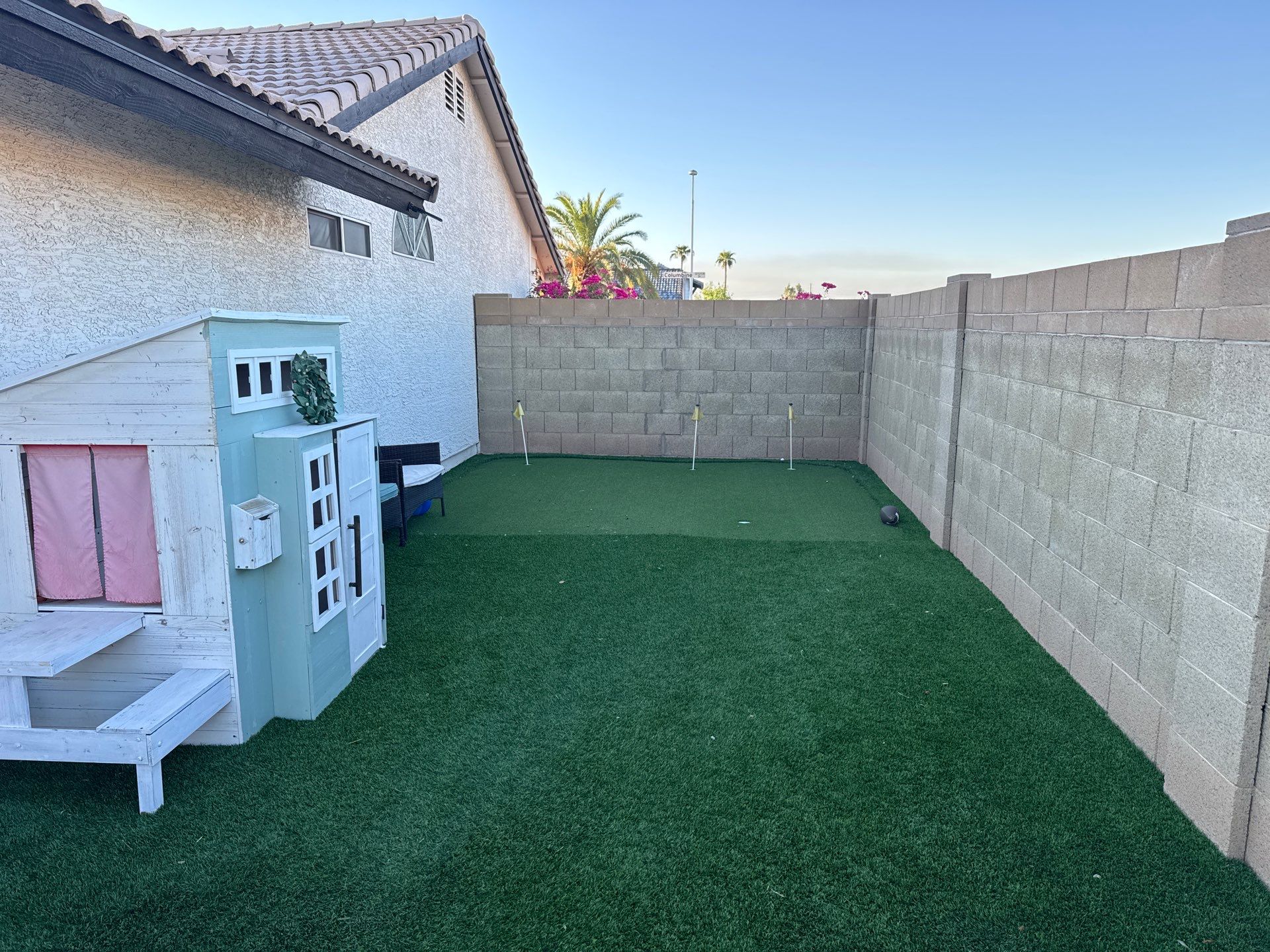
This is the west-facing yard where you want to pull the turf and eventually keep chickens. It needs shade before anything else happens here, and a native velvet mesquite planted in this space would give you that filtered, dappled shade that keeps chickens comfortable without making the ground dark and damp. Fern of the desert is another great native option with the same light shade on a smaller tree.
If you'd rather keep this space open, plant a row of moringa on the other side of the block wall instead. They grow fast and tall, and they'll throw afternoon shade back over the wall into this area. Either way, get the tree in before the chickens move in. Chickens scratch hard, so protect the tree well with a ring of wire for the first year or two.
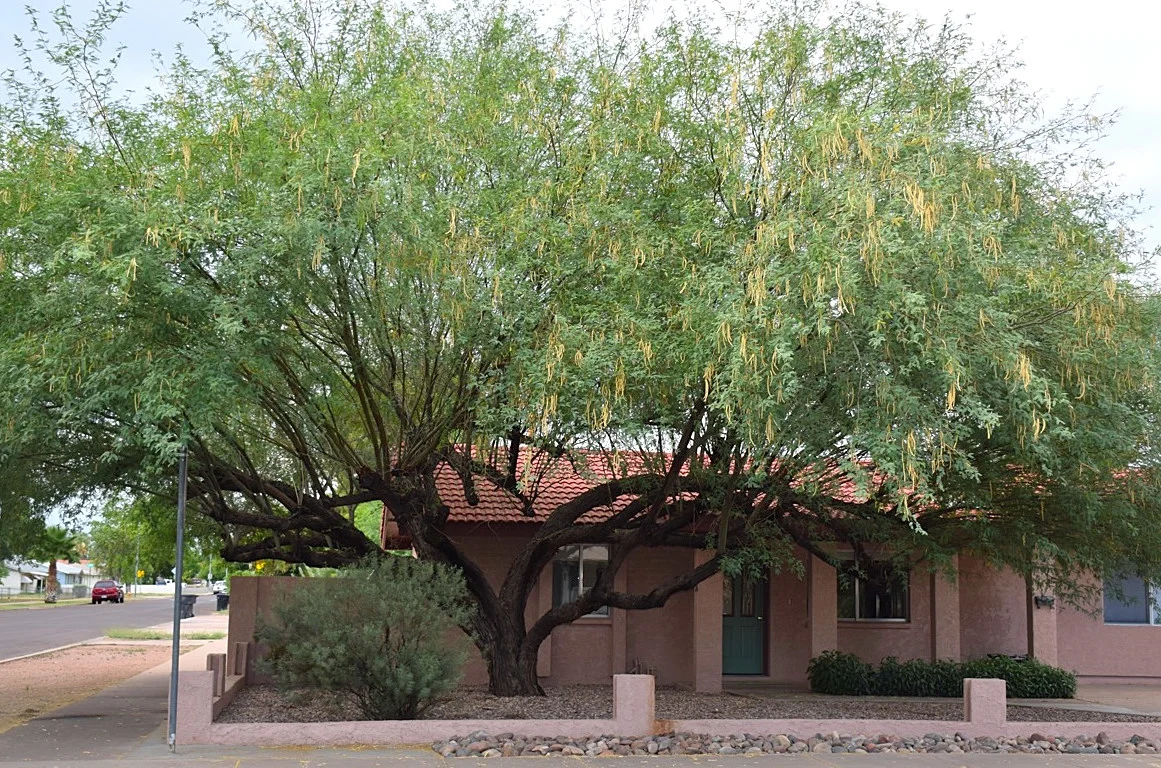
Native Velvet Mesquite
The native mesquite. Light, filtered shade instead of a dark heavy canopy, which is exactly what you want over chickens and over anything you plan to grow underneath later. It supports local wildlife in ways the non native hybrids don't: the spring flowers feed native bees, birds nest in it, and the pods feed wildlife. Fast once its roots settle in, and it takes a lot less water than something that isn't desert adapted. Stake it loosely the first year and start structural pruning early so it builds a strong shape.
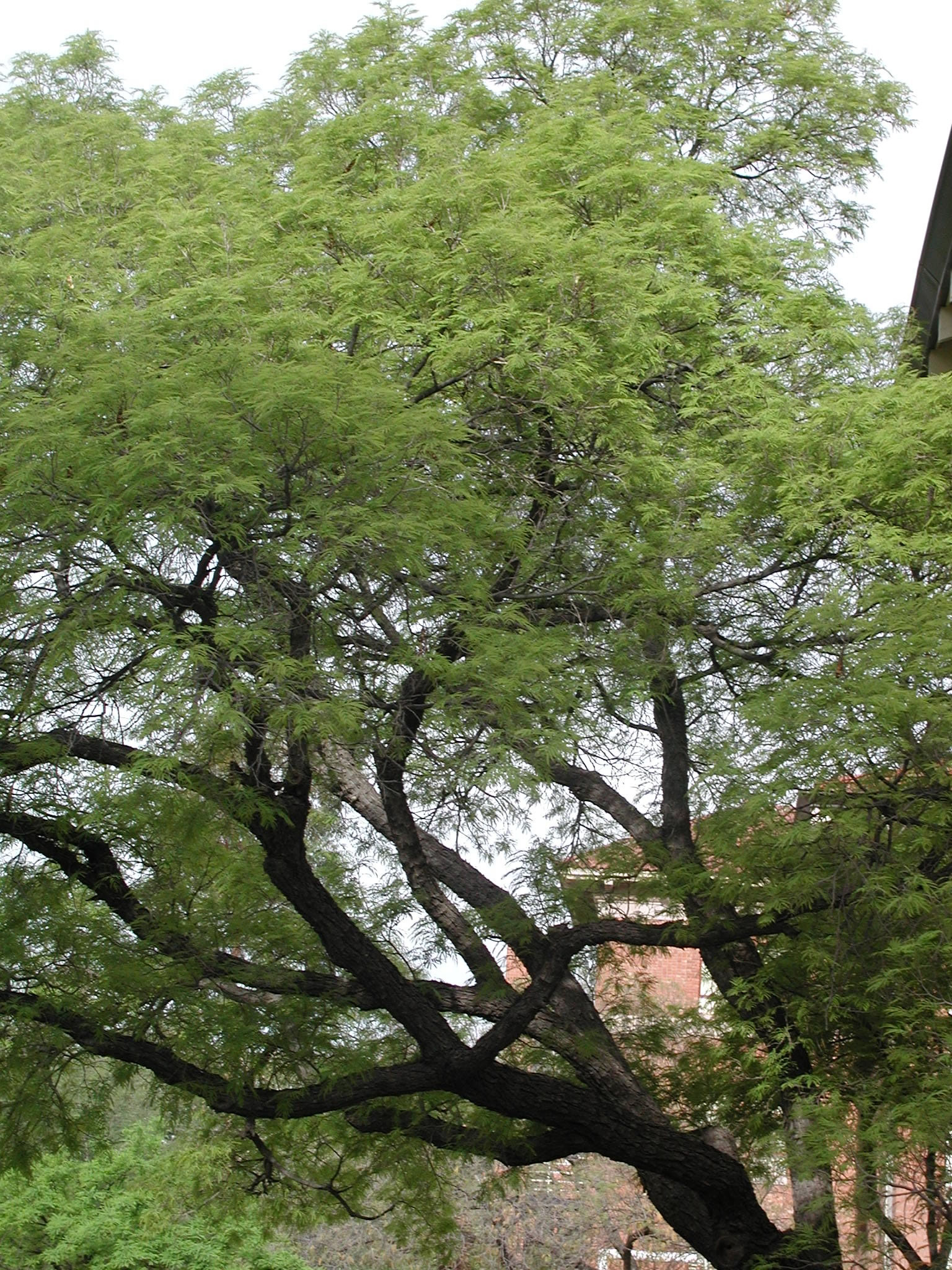
Fern of the Desert (Lysiloma watsonii)
A native with fine, fernlike leaves and creamy flower spikes in spring. Thornless, with soft, light shade that's great over chickens, and it takes a lot less water than something that isn't desert adapted. A good pick if you want shade without a tree as big as a mesquite.
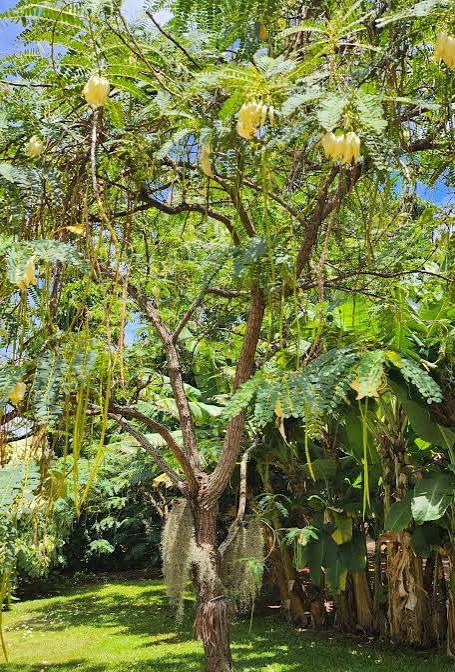
Moringa
One of the fastest shade makers you can plant here, and the leaves are edible and loaded with nutrition. Plant a row of them about 8 to 10 ft apart and they'll shoot up over the wall. Cut them back hard every late winter and they come back bushier.
Backyard Block Walls
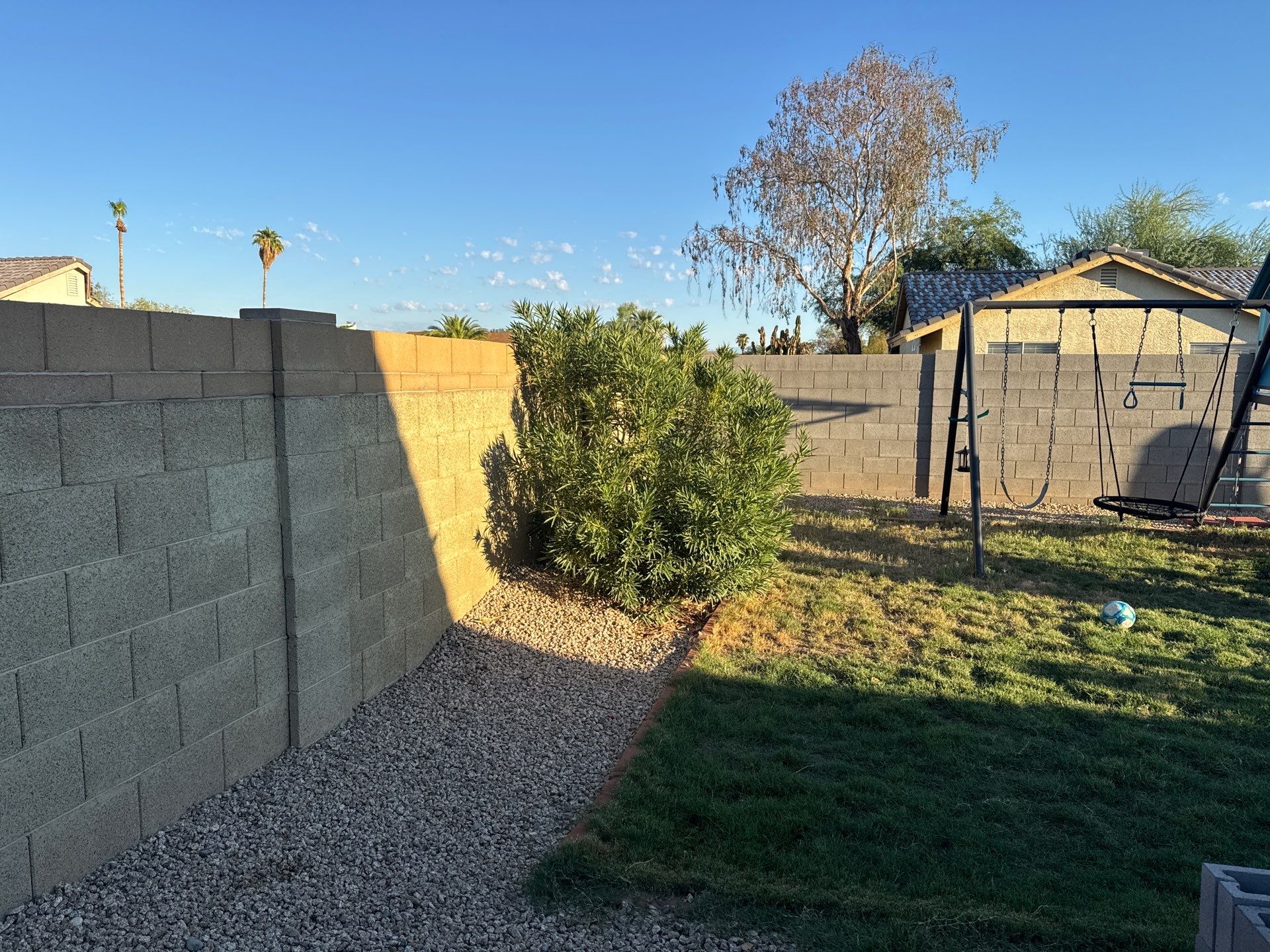
Every block wall in the backyard soaks up sun all day and radiates it back into the yard well into the evening. Lining them with plants cools the walls down, starts building shade, and makes it possible to grow more in the rest of the yard. Any of these will work along these walls:
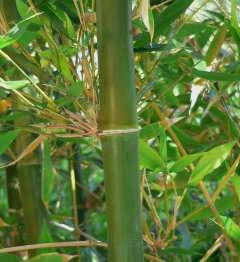
Oldhamii Bamboo (Clumping)
A clumping type, so it stays where you plant it and won't run through the yard like the running kinds. Makes a tall, dense green screen fast. It wants more water than the desert options on this list, so put it where your drip can give it a good deep soak.

Hopseed
My go-to for covering a hot block wall. Fast, dense, upright, and it takes a lot less water than something that isn't desert adapted. Plant them 4 to 5 ft apart and they'll knit into a solid hedge in a couple of seasons.

Arizona Rosewood
A native with dark green leaves that stays full year round. A little slower than hopseed but very tough in full sun, and it takes a lot less water than something that isn't desert adapted. Space them 5 to 6 ft apart.

Orange Jubilee
Orange trumpet flowers from spring into fall and the hummingbirds love it. Grows fast and handles reflected heat off a wall really well. Space 5 ft apart. Here's my video on it: Orange Jubilee.
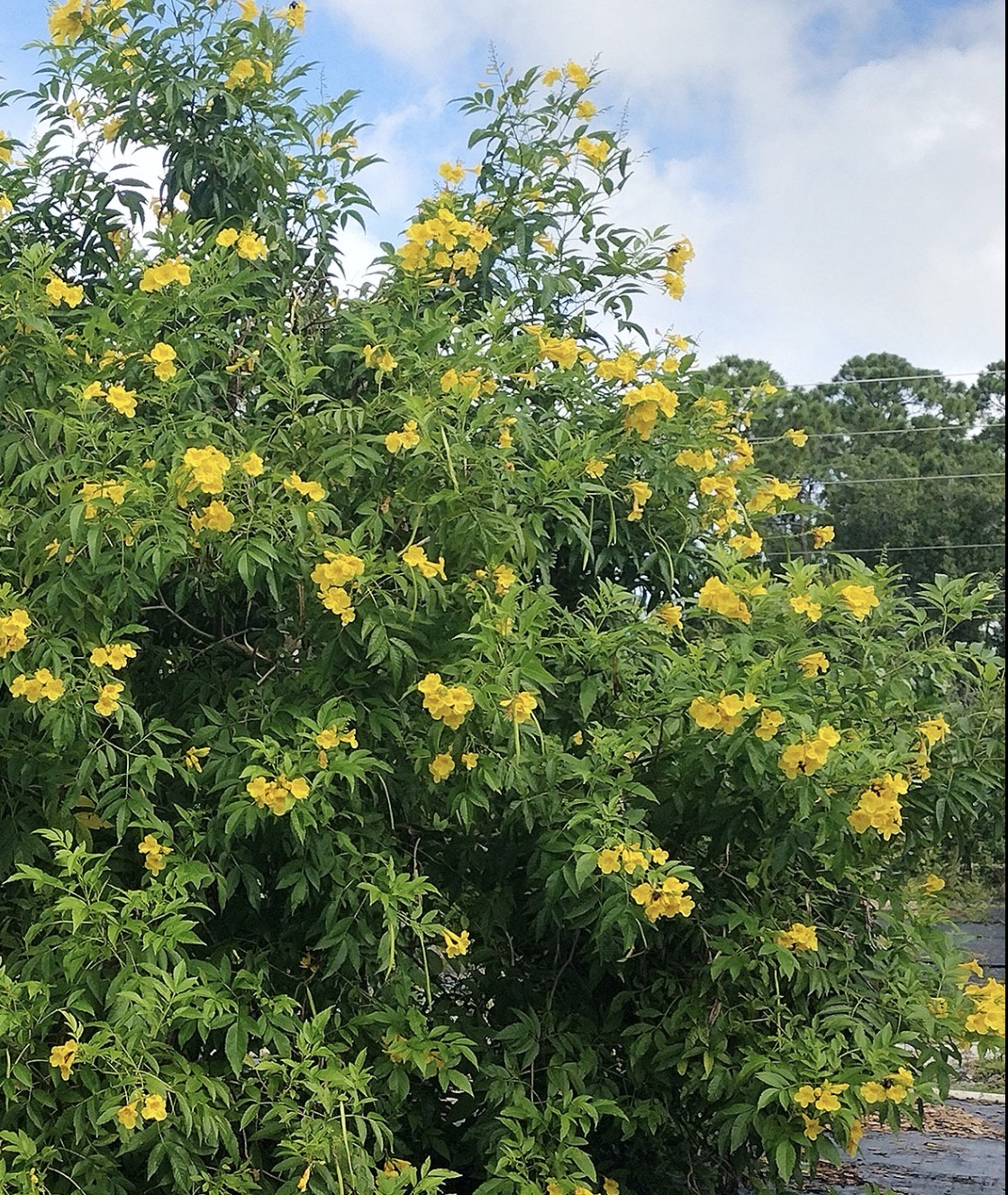
Yellow Bells
Bright yellow flowers most of the warm season and fast growth. If a cold night burns it back, cut the dead tips in late February and it bounces right back. Space 5 ft apart.
You can't fit all of these. Pick your favorites and repeat them along the wall.
Bermuda Lawn
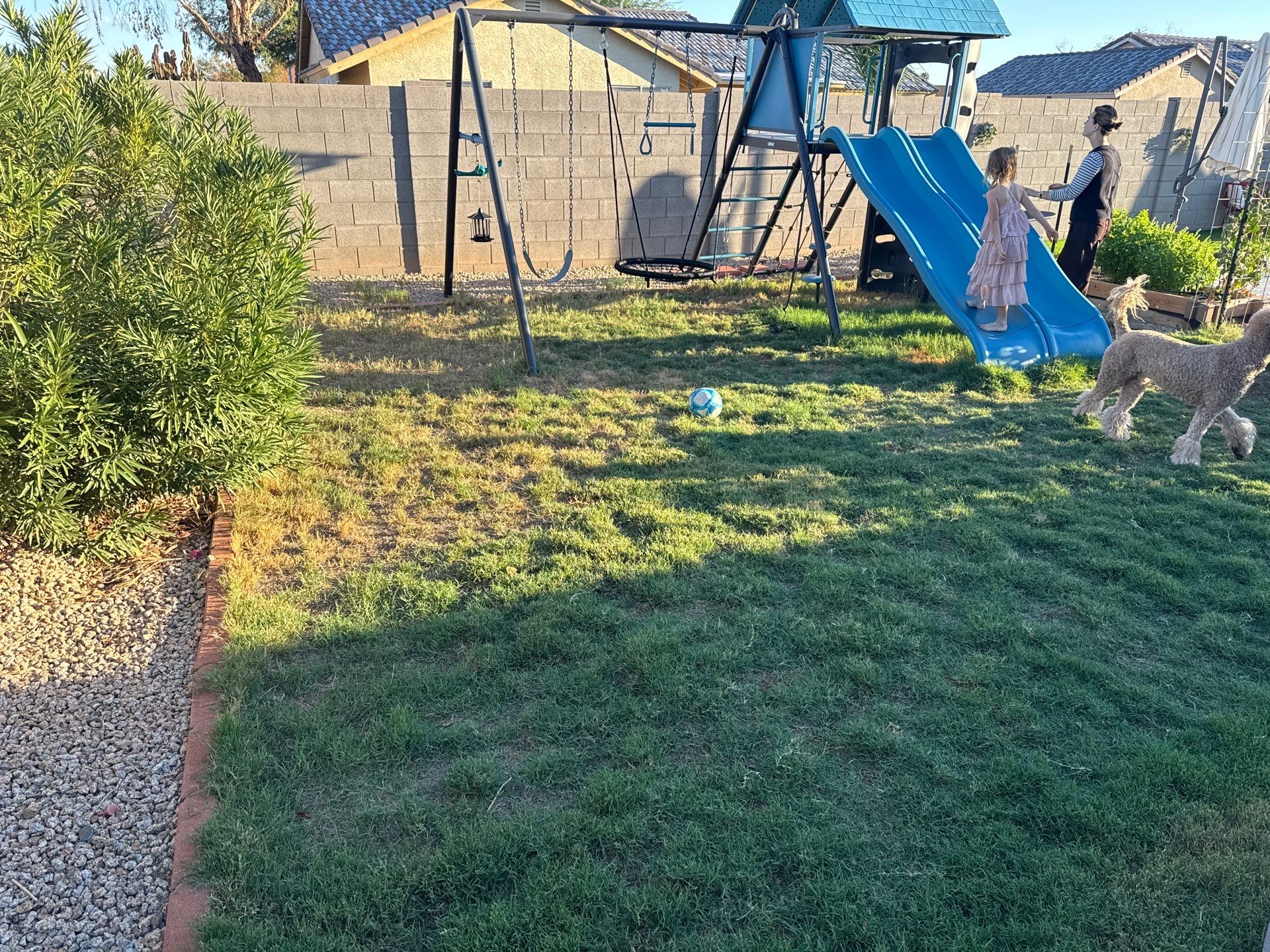
The bermuda is fine where it is for now. Bag your clippings when you mow and spread them in a thin layer around your trees. It's free mulch, it breaks down fast, and it feeds the soil. Keep it a foot back from the trunks.
The Catalyst fertilizers in the Fertilizing section below work great on grass too and really green it up.
As your trees grow and the shade builds, bermuda will start thinning out because it needs full sun. When that happens, switch those areas over to clover. Clover or another living groundcover is also a great choice for the wells around all your new trees, since it keeps the soil shaded and alive instead of baking.
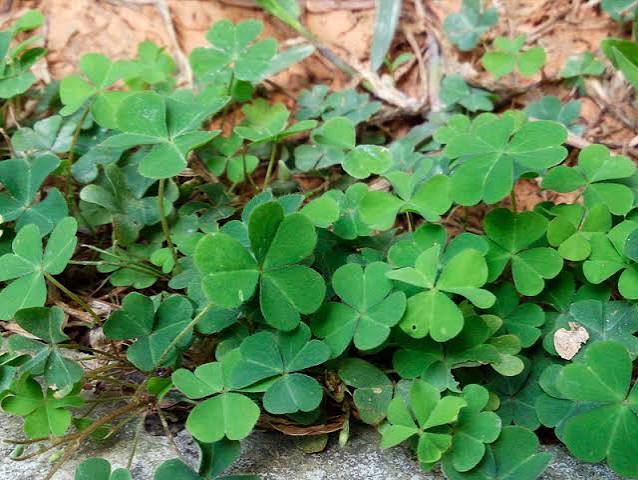
Clover
Handles shade much better than bermuda, pulls nitrogen into the soil, and keeps the ground cool and alive. Great in tree wells too.
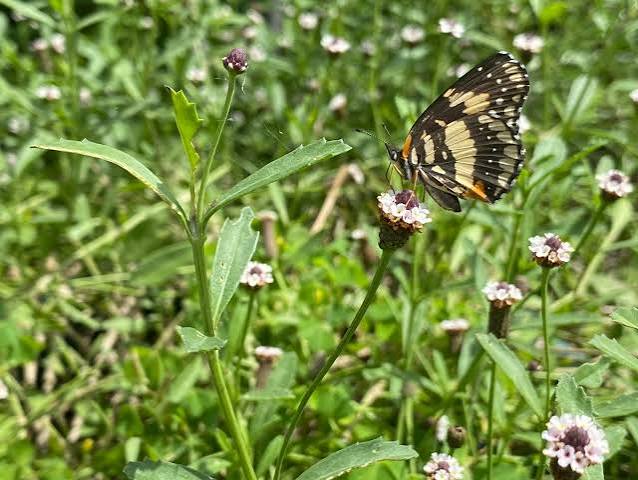
Frogfruit
A native groundcover with tiny white flowers that pollinators love. Spreads on its own, handles sun or part shade, and takes light foot traffic.
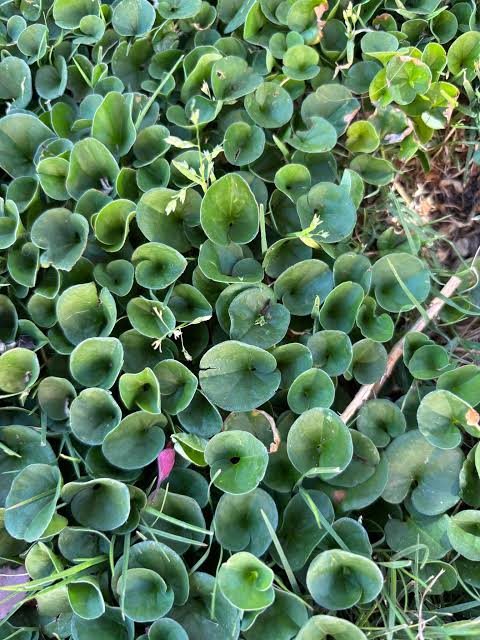
Dichondra
A soft, low carpet for the shadier spots as your trees fill in. Likes regular water, so it's best in the wells and the shaded areas.
Back Wall Behind the Pool
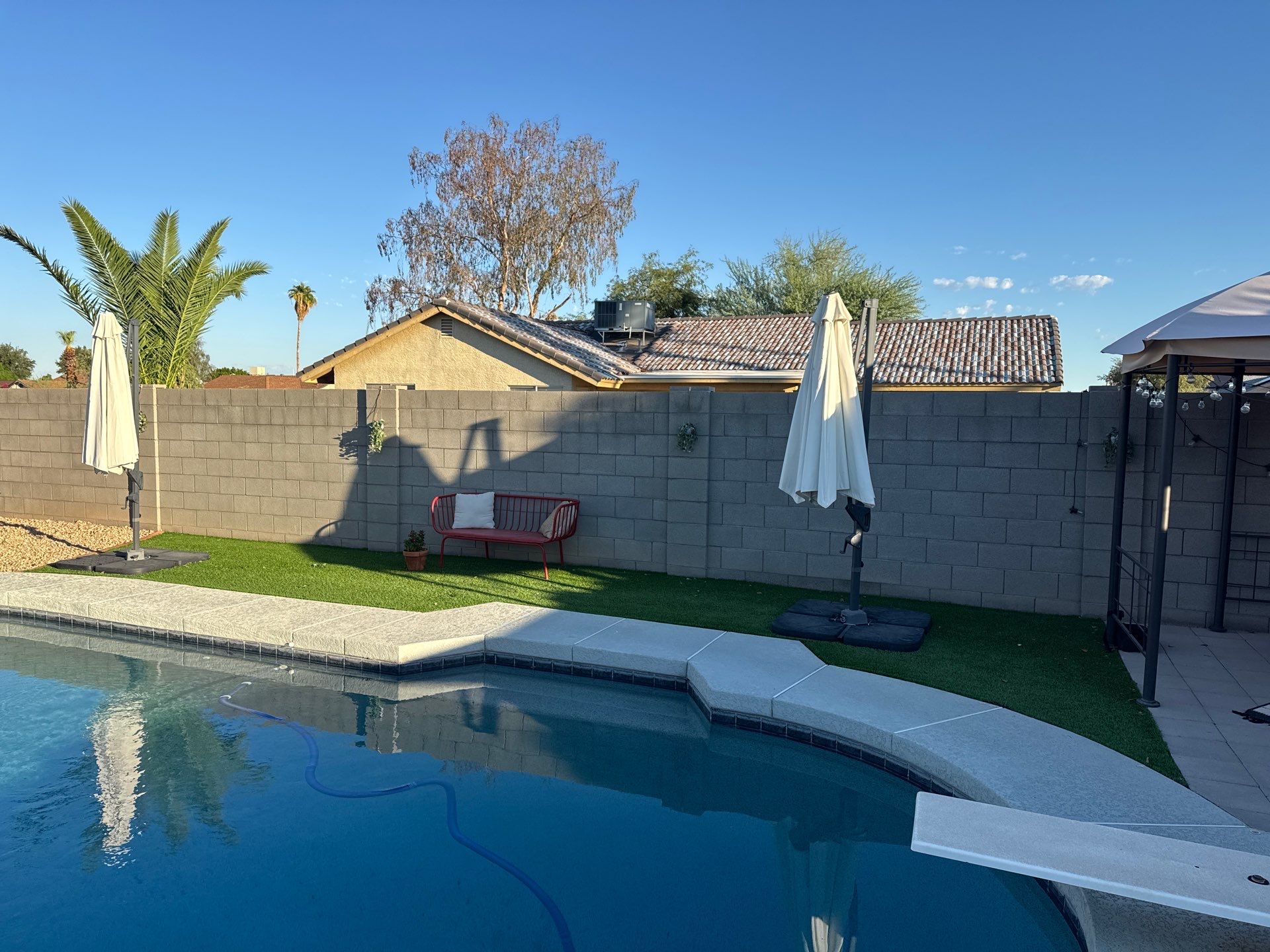
Turf runs right up to this wall, but it still needs something growing on it. You have two ways to go here.
Option 1: Cut a strip of turf out along the base of the wall, about 3 ft wide, and plant the same hedge you're using on the other block walls. This gives you the fullest coverage and the most cooling.
Orange Jubilee
Orange trumpet flowers from spring into fall and the hummingbirds love it. Grows fast and handles reflected heat off a wall really well. Space 5 ft apart. Here's my video on it: Orange Jubilee.
Yellow Bells
Bright yellow flowers most of the warm season and fast growth. If a cold night burns it back, cut the dead tips in late February and it bounces right back. Space 5 ft apart.
Hopseed
My go-to for covering a hot block wall. Fast, dense, upright, and it takes a lot less water than something that isn't desert adapted. Plant them 4 to 5 ft apart and they'll knit into a solid hedge in a couple of seasons.
Arizona Rosewood
A native with dark green leaves that stays full year round. A little slower than hopseed but very tough in full sun, and it takes a lot less water than something that isn't desert adapted. Space them 5 to 6 ft apart.
Option 2: Keep the turf and just cut small holes, about a foot across, along the wall for vines. Less work up front, and the vines will climb and cover the block.

Tangerine Crossvine
Clings on its own and covers a block wall fast. Orange-red trumpet flowers every spring. Very tough on a hot wall.
Hacienda Creeper
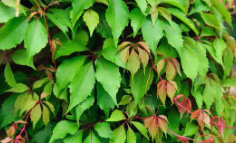
Self-clinging with small leaves that hug the wall tight, and it turns red in the fall. No wires needed.

Passion Fruit
Gives you fruit on top of wall coverage. It needs something to climb, so run a few horizontal wires along the wall. Cover it on frost nights the first couple of winters.
West-Facing Wall and Citrus Row
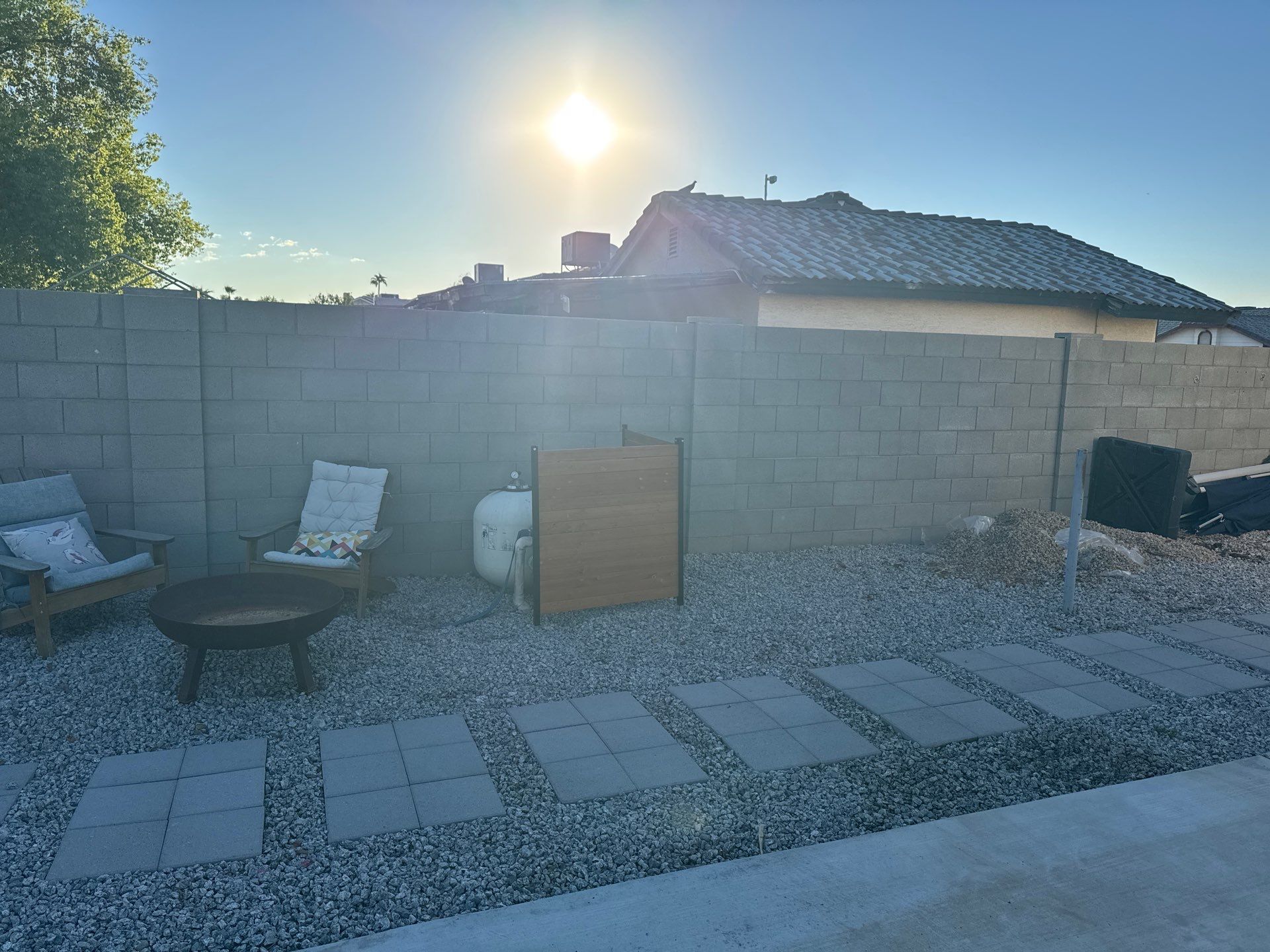
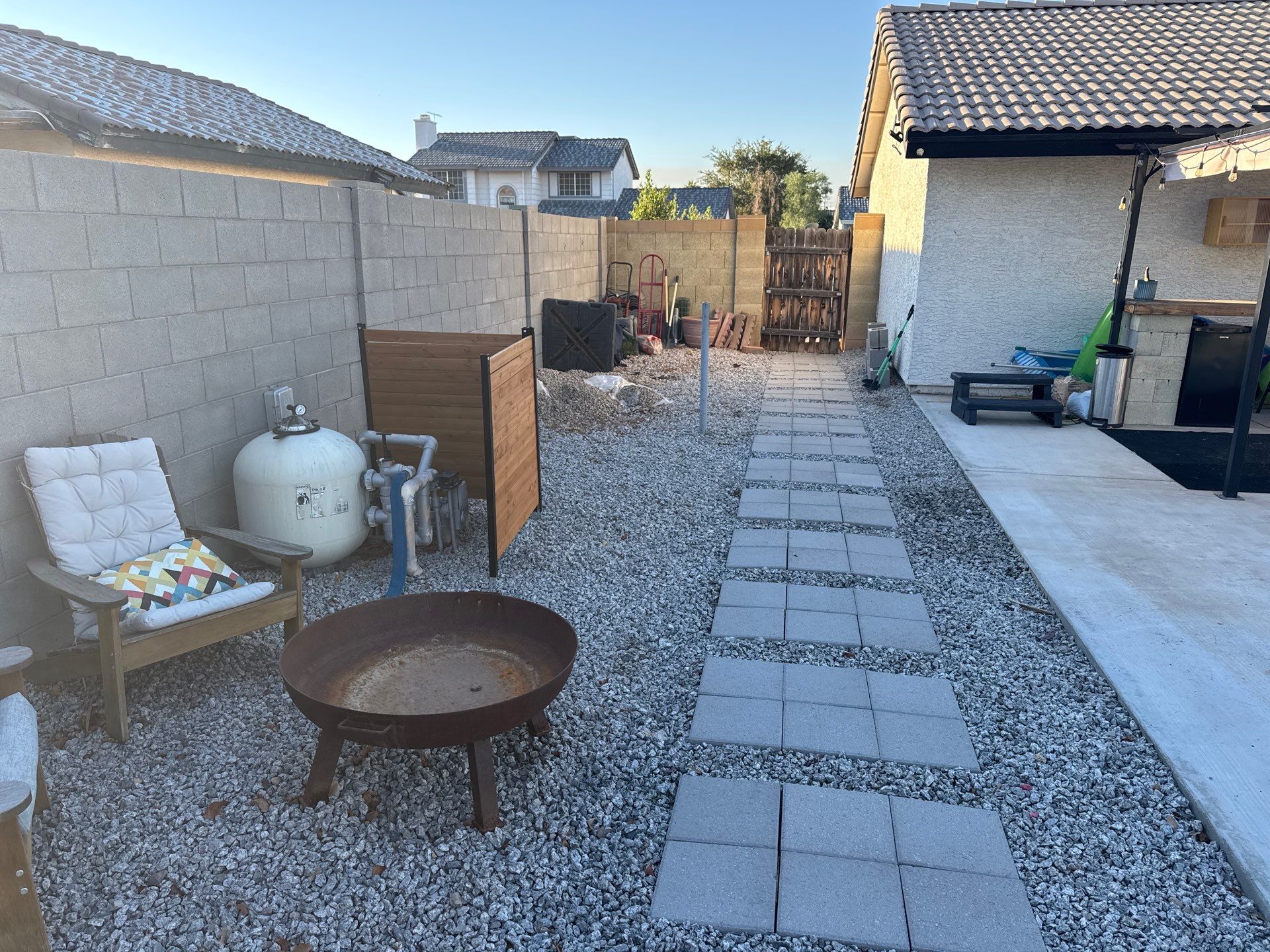
This west-facing wall gets hammered in the afternoon, so it gets the same treatment as the rest of the block walls. Line it first. Once the wall is covered and cooler, this side yard becomes a great home for your citrus.
Because the citrus row is going in off this wall, I'd go with something skinnier here, like hopseed. It grows up more than out, so it won't jut far off the wall, and the trees in the citrus row won't get crowded. A vine is the other way to go, since it stays flat against the block.
Hopseed
My go-to for covering a hot block wall. Fast, dense, upright, and it takes a lot less water than something that isn't desert adapted. Plant them 4 to 5 ft apart and they'll knit into a solid hedge in a couple of seasons.
Tangerine Crossvine
Clings on its own and covers a block wall fast. Orange-red trumpet flowers every spring. Very tough on a hot wall.
Hacienda Creeper
Self-clinging with small leaves that hug the wall tight, and it turns red in the fall. No wires needed.
Passion Fruit
Gives you fruit on top of wall coverage. It needs something to climb, so run a few horizontal wires along the wall. Cover it on frost nights the first couple of winters.
Your citrus
Your grapefruit, lemon, and Cara Cara can all go along this side. Space them about 8 ft apart. They'll eventually want to grow into each other at that spacing, so plan on trimming them every so often to keep them in their space. At the very north end of this row, plant a fig.
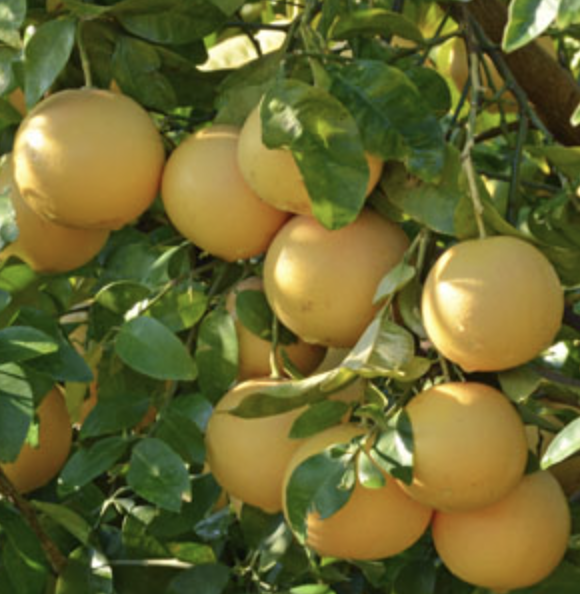
Grapefruit
Your grapefruit. Give it the most room of the three since grapefruit grows the biggest.

Lemon
Your lemon. Lemons are the most cold sensitive of the three, so cover it on frost nights the first couple of winters.

Cara Cara Orange
Your Cara Cara. A navel type with pink flesh and sweet, low-acid fruit that ripens through winter.

Fig
The north end of this row is a great fit. Figs love the heat once established. Black Mission and Brown Turkey both do great here. You can keep it pruned to 8 to 10 ft so the fruit stays in reach.
Grow them as shrubs, not lollipops
Citrus here should grow as a big bush with branches all the way down to the ground. Don't limb them up into a lollipop shape. That low skirt shades the trunk and the root zone, which keeps the soil cool and protects the bark from sunburn. It's also where a lot of your fruit will set, right at picking height. The only thing to cut off the lower trunk is any growth coming from below the graft line, since that's the rootstock and it won't give you good fruit. If a trunk does get exposed, paint it with a white latex paint thinned with water to protect it from sunburn.
Watering citrus and fruit trees
- Water deep, not often. Each watering should soak down 2 to 3 ft. Push a long screwdriver or soil probe into the ground a few hours after watering. It should slide in easily all the way down.
- Water out at the drip line. The feeder roots are out where the canopy ends, not at the trunk. As the tree grows, add emitters and move them outward so the water follows the edge of the canopy.
- New trees: water 3 times a week for 2 weeks, then twice a week for 2 weeks, then once a week. Post in the Garden Nerd Club once they're in the ground and I'll help you dial it in.
- Once established: about every 7 to 10 days in summer, every 10 to 14 days in spring and fall, and every 3 to 4 weeks in winter.
Citrus come from Greenfield Citrus if you add any more.
Pergola Grapes
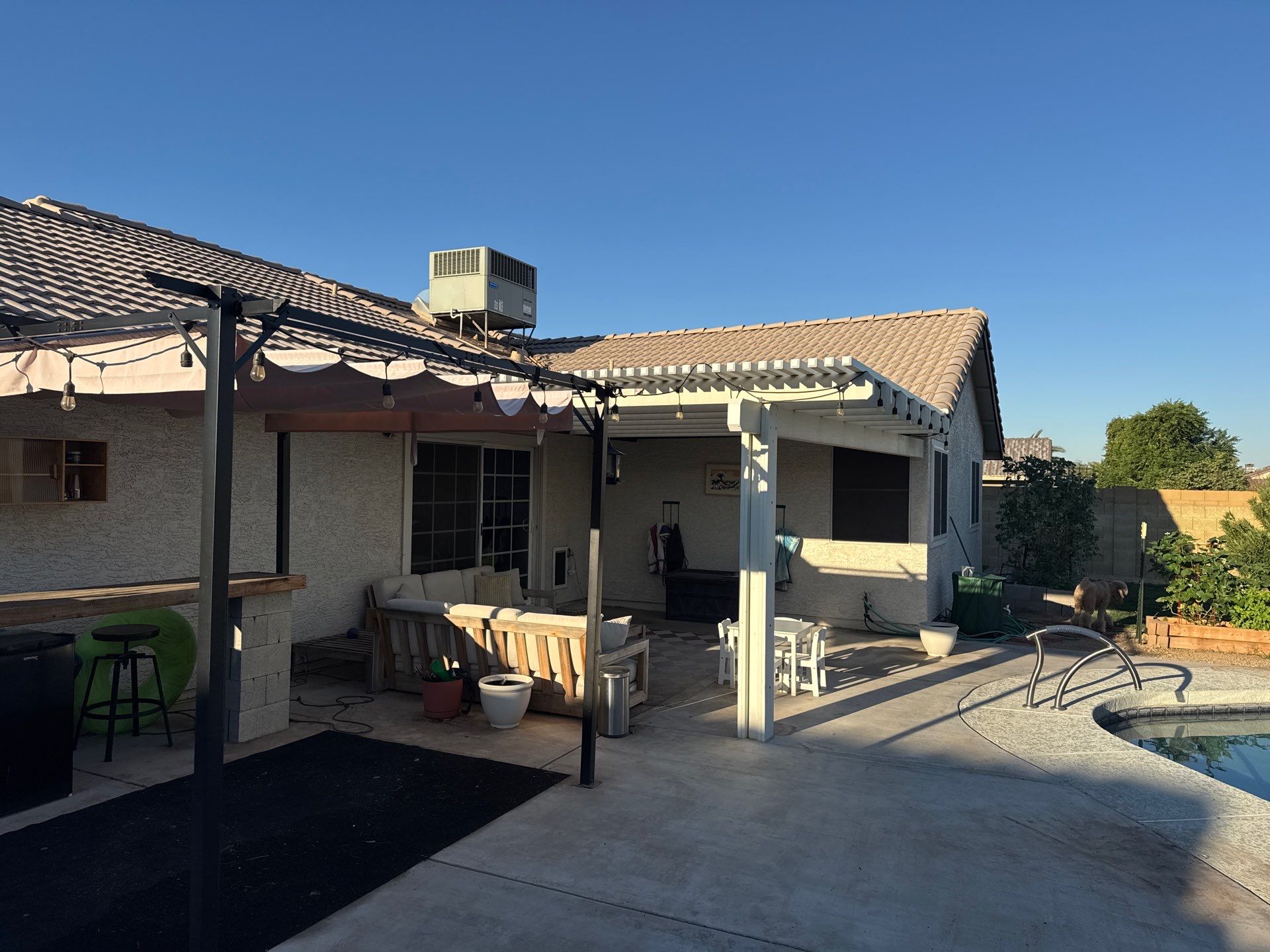
This pergola is a perfect spot for the grapes you wanted. Planting in the ground is always best, so if you're able to cut a hole in the concrete next to a post, do that. If not, use the biggest container you can fit, like a half wine barrel or something 25 gallons or larger.
Plant bare root vines in January or February. Train one main stem straight up the post, then let the arms run along the top of the pergola. Prune hard every winter while the vine is dormant, since grapes fruit on new growth.
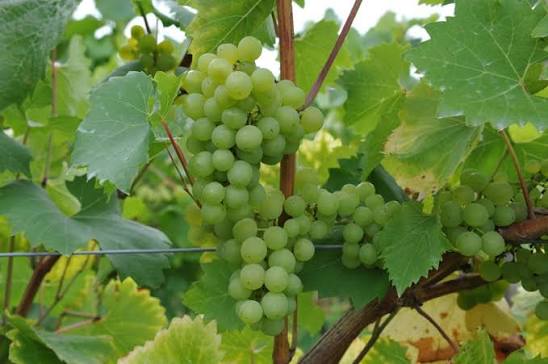
Thompson Seedless Grape
Green, sweet, seedless grapes that ripen in early summer before the worst of the heat. A reliable producer here.
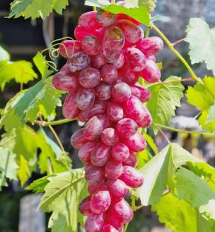
Flame Seedless Grape
Red seedless grapes, crisp and sweet. Also ripens early summer and handles our heat well.
Garden Beds by the Pool
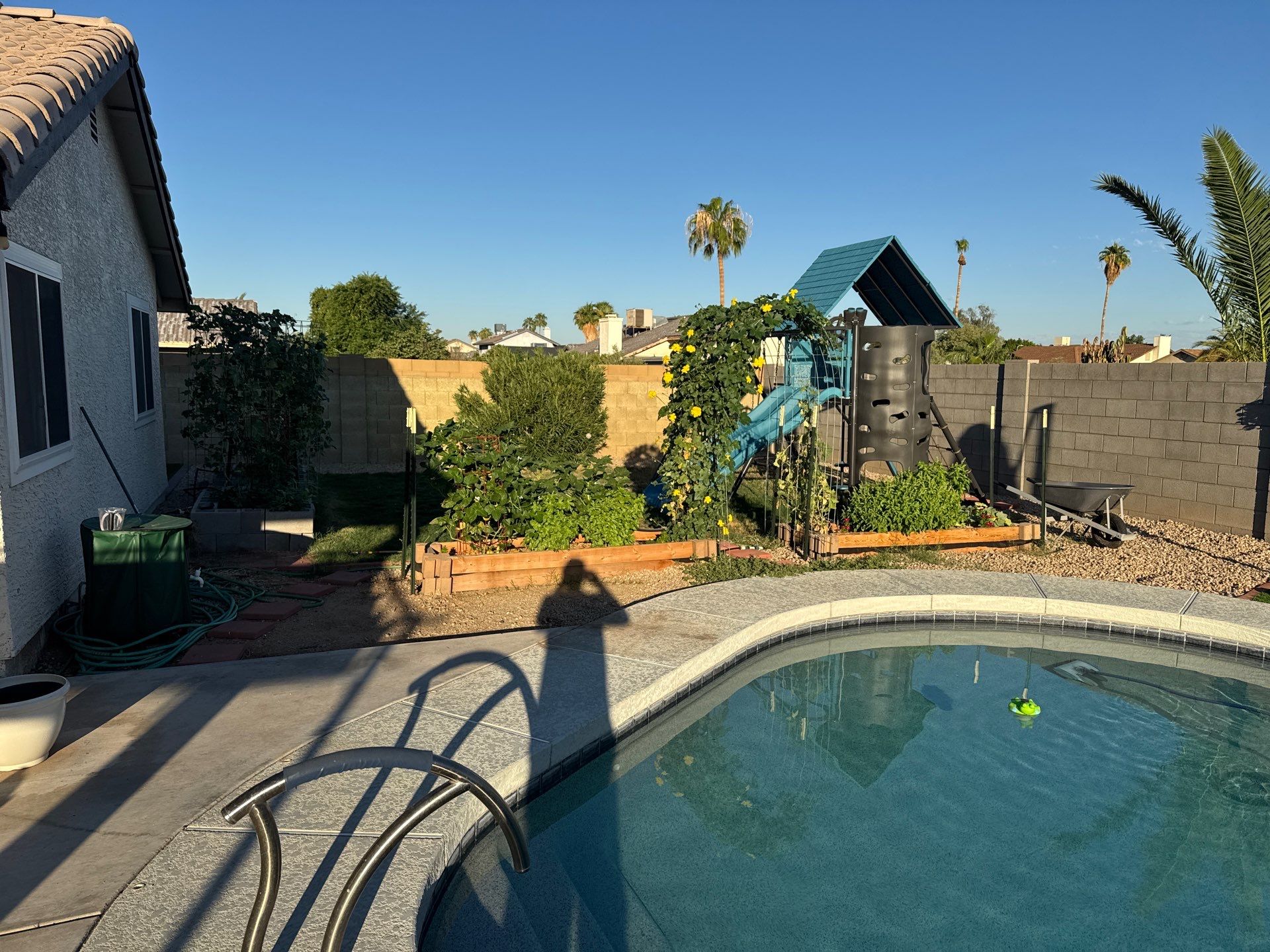
Pull the rock out from around the garden beds and replace it with mulch. Rock holds heat and cooks the soil, while mulch keeps it cool and feeds it as it breaks down. ChipDrop is a great source for free mulch. Then add a groundcover around the beds to cool the whole area down even more.

Yellow Dot
A fast, bright green mat with little yellow daisy flowers most of the year. Covers ground quickly and shades the soil around the beds to keep it cool.
Frogfruit
A native groundcover with tiny white flowers that pollinators love. Spreads on its own, handles sun or part shade, and takes light foot traffic.
For what to plant in the beds and when, here's my Maricopa County planting guide.
Back Corner Shade Tree
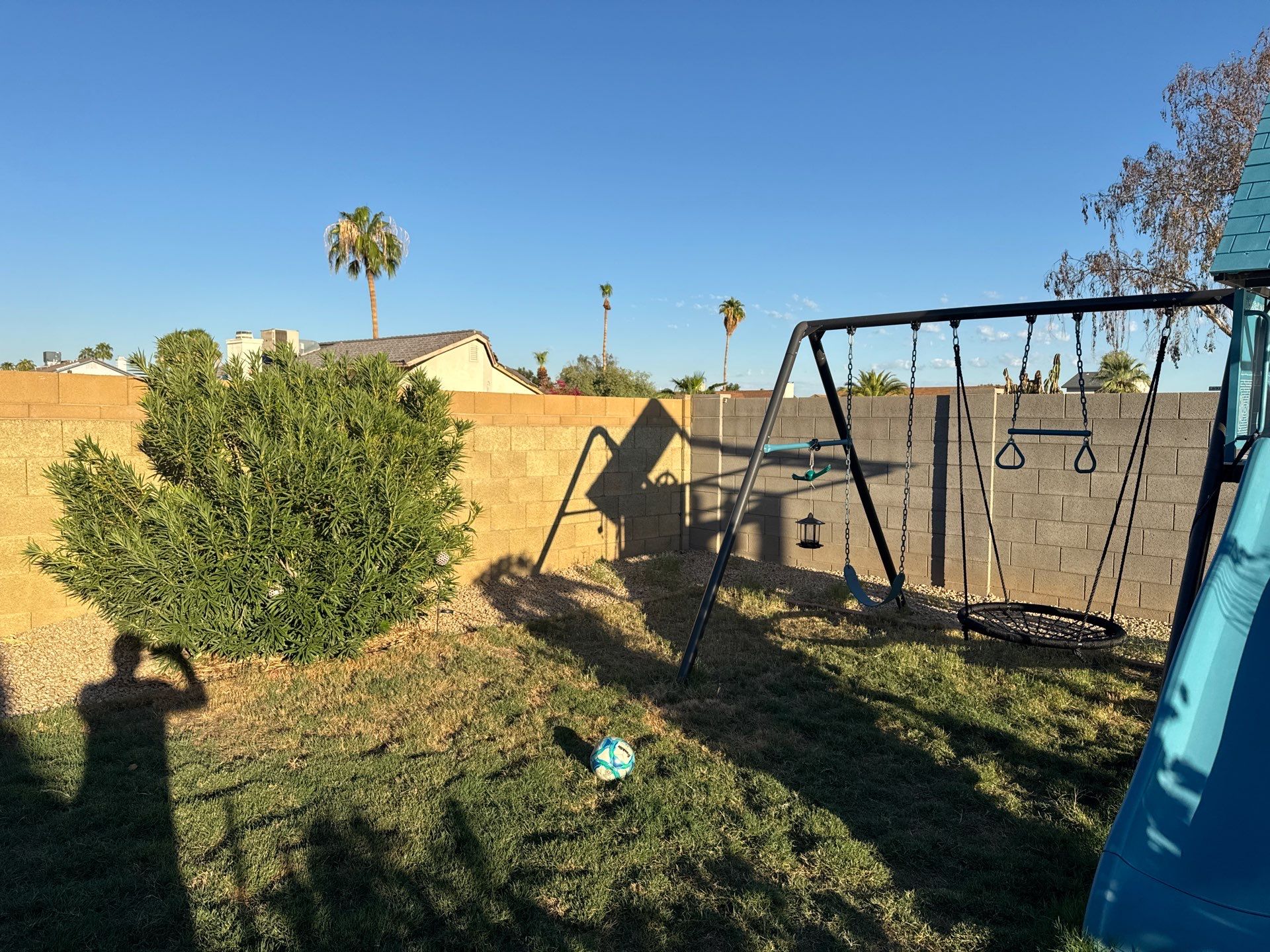
This corner is another great spot for a tree. Planted here, it'll shade the yard through the hot afternoon. A native velvet mesquite gives you the most shade. Red push pistache is another great option with a fuller canopy and good fall color. A desert willow is the smaller option if you want to keep the canopy more compact.
Native Velvet Mesquite
The native mesquite. Light, filtered shade instead of a dark heavy canopy, which is exactly what you want over chickens and over anything you plan to grow underneath later. It supports local wildlife in ways the non native hybrids don't: the spring flowers feed native bees, birds nest in it, and the pods feed wildlife. Fast once its roots settle in, and it takes a lot less water than something that isn't desert adapted. Stake it loosely the first year and start structural pruning early so it builds a strong shape.

Red Push Pistache
Red new growth in spring and great fall color, with a full, rounded shade canopy. Handles full sun and heat well and drops very little.
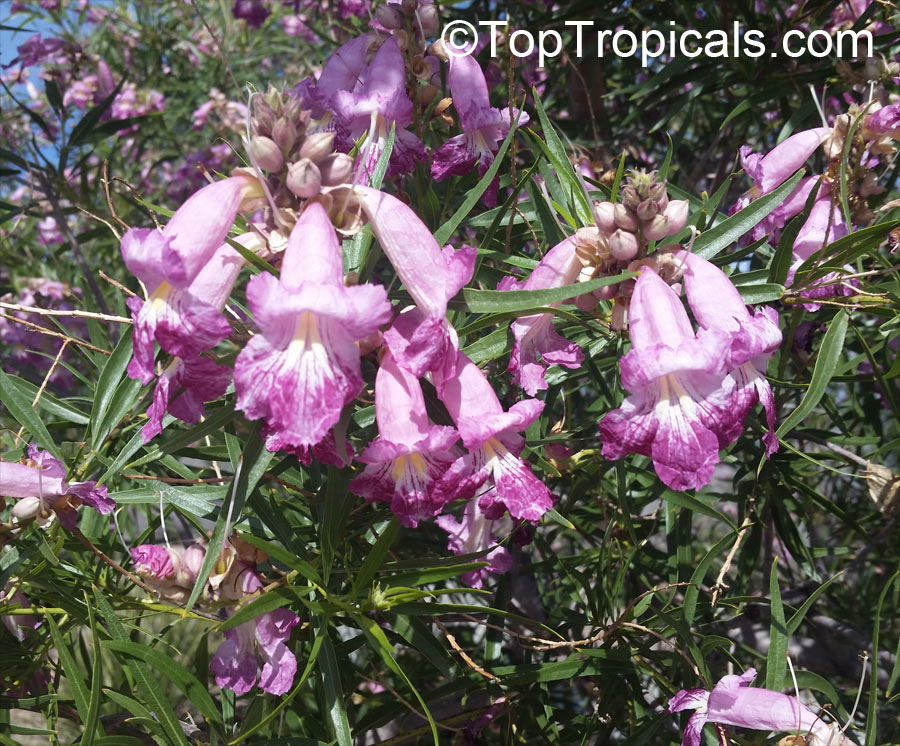
Desert Willow
Orchid-like flowers all summer that bring in hummingbirds. A native, and it takes a lot less water than something that isn't desert adapted. Smaller than a mesquite if you want less canopy.
Pomegranate
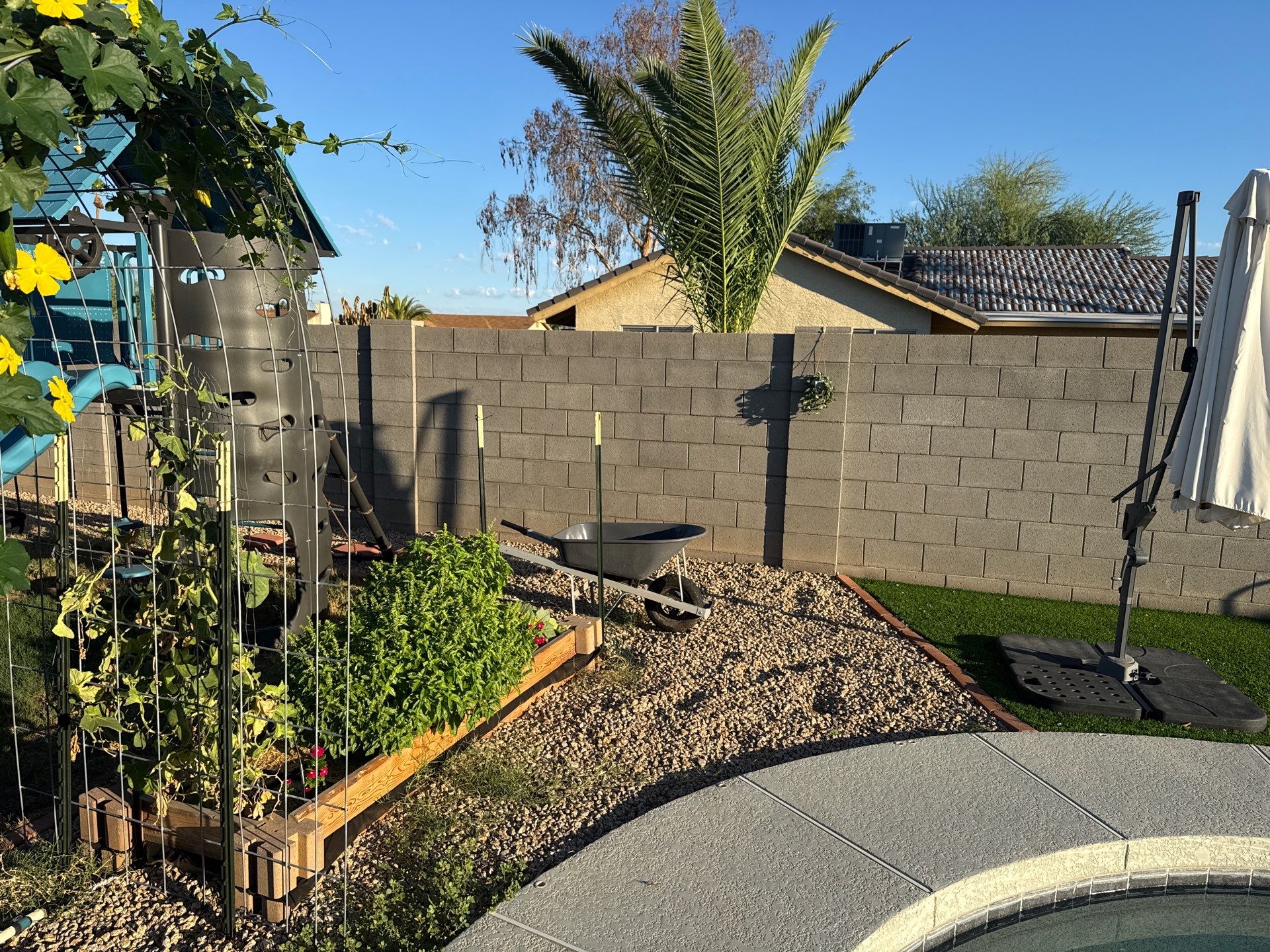
This is a good spot for the pomegranate you mentioned. It'll handle the full sun and reflected heat here. Pomegranates can be grown as a multi-trunk shrub or trained to a small tree, and either works in this space.
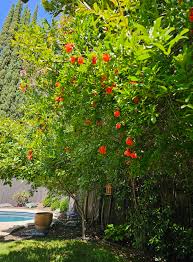
Pomegranate (Parfianca)
I'd go with Parfianca over Wonderful. Wonderful is the one you see everywhere, but it's tart with hard seeds and the fruit tends to split here. Parfianca has soft seeds you can eat right through and much sweeter fruit.
East Side Strip by the Driveway
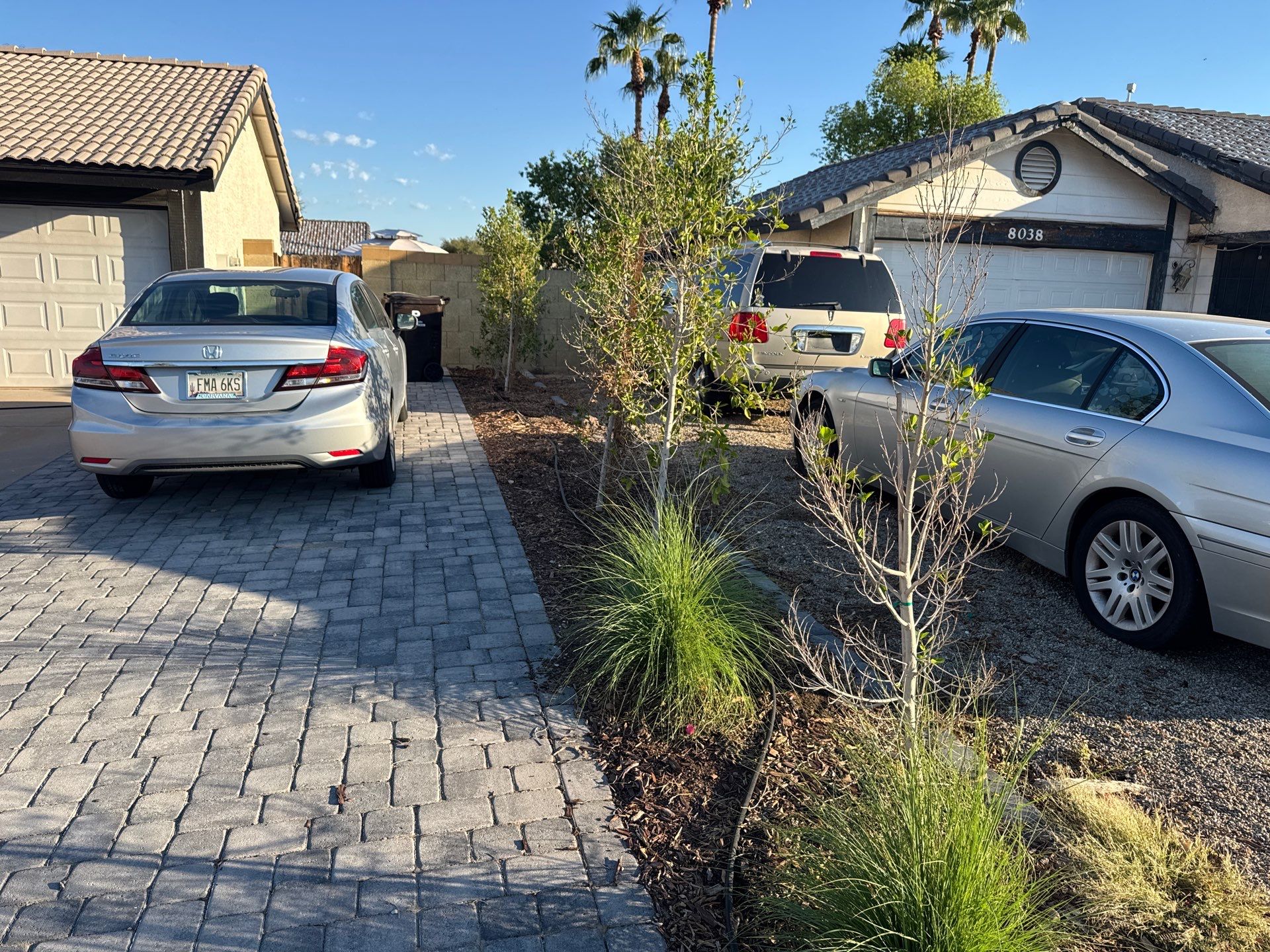
The previous owners planted ficus here, and they were planted too deep. When the root flare, where the trunk widens out into the roots, gets buried, the tree slowly declines and there's no real fix once it's this far along. I think they're all going to die. I'd cut your losses now and replace them with a different hedge.
This video shows why an exposed root flare matters, with real examples. Watch on YouTube.
When you plant the new hedge, set each plant so the top of the root ball sits level with the soil or slightly above it, never below. If soil ever builds up over the flare, a strong stream of water from a hose will blast it away.
Hopseed
My go-to for covering a hot block wall. Fast, dense, upright, and it takes a lot less water than something that isn't desert adapted. Plant them 4 to 5 ft apart and they'll knit into a solid hedge in a couple of seasons.
Arizona Rosewood
A native with dark green leaves that stays full year round. A little slower than hopseed but very tough in full sun, and it takes a lot less water than something that isn't desert adapted. Space them 5 to 6 ft apart.
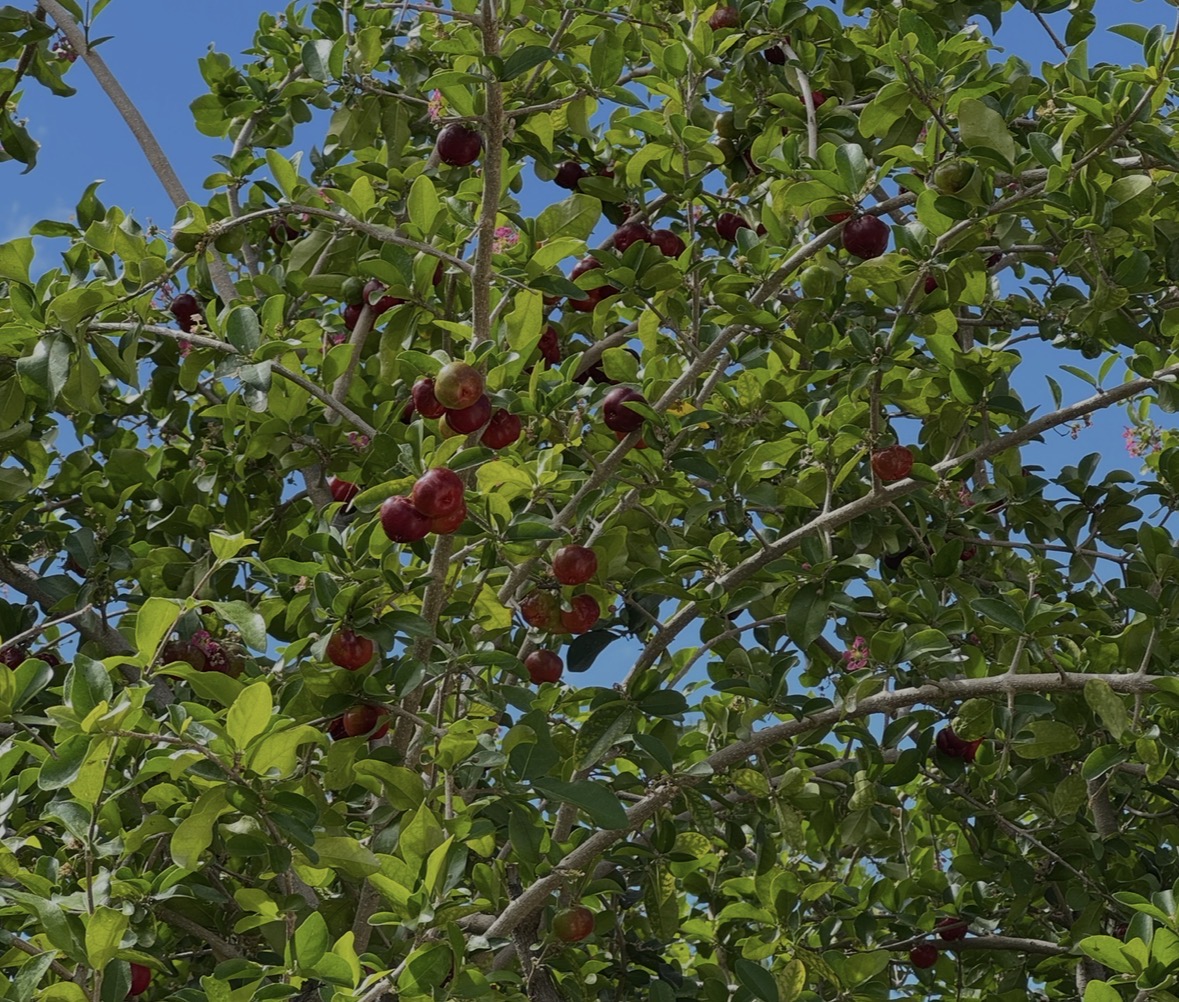
Barbados Cherry
Makes a nice dense hedge and gives you bright red cherries several times a year. Space them about 4 ft apart. Cover them on frost nights while they're young.
Front Yard Shade Trees
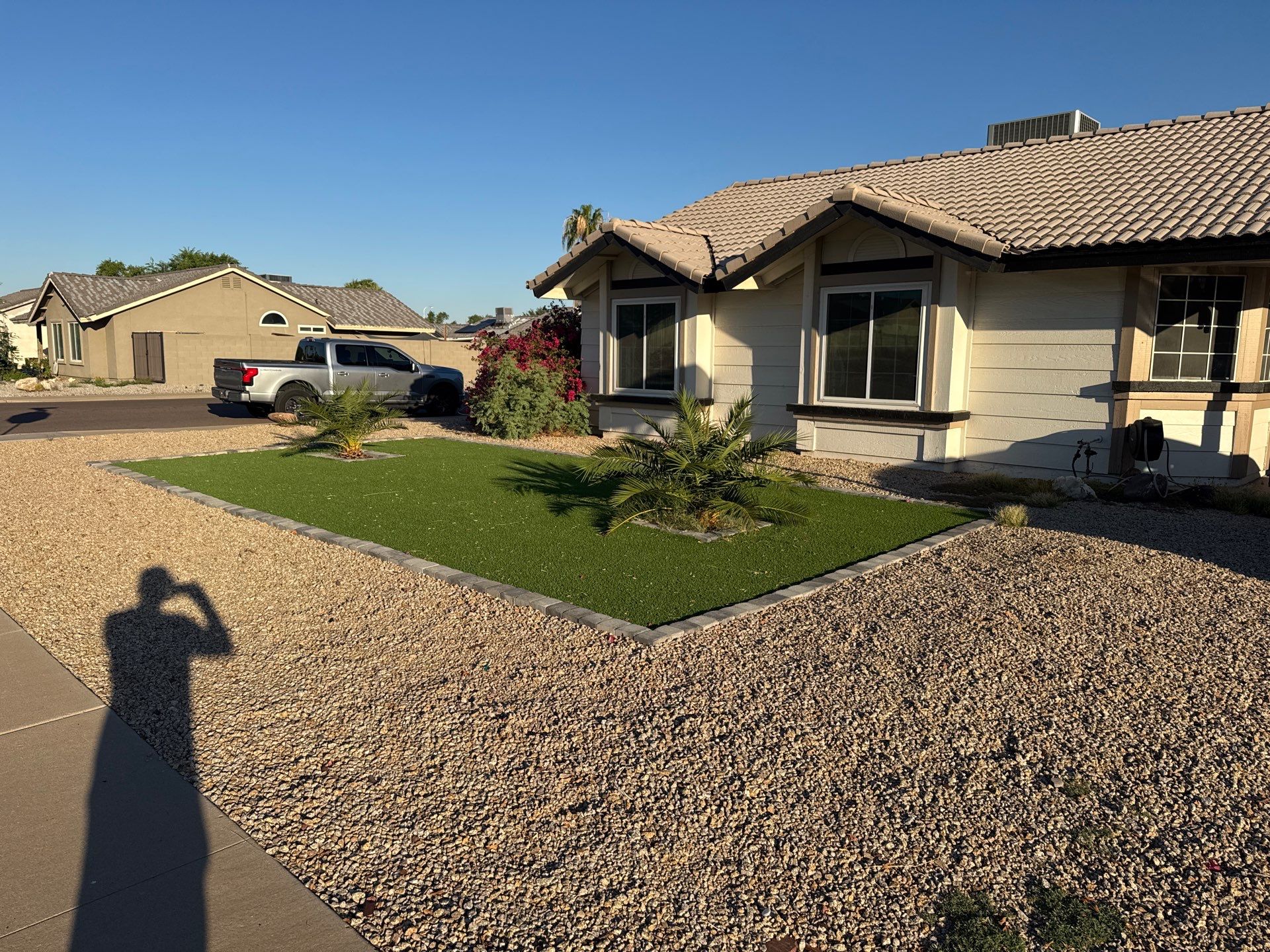
In the front yard, shade comes first. Once the backyard is done, you can move on to everything else out here. Plant your shade trees on the west side of the yard, where they'll block the hottest afternoon sun from the house and the yard.
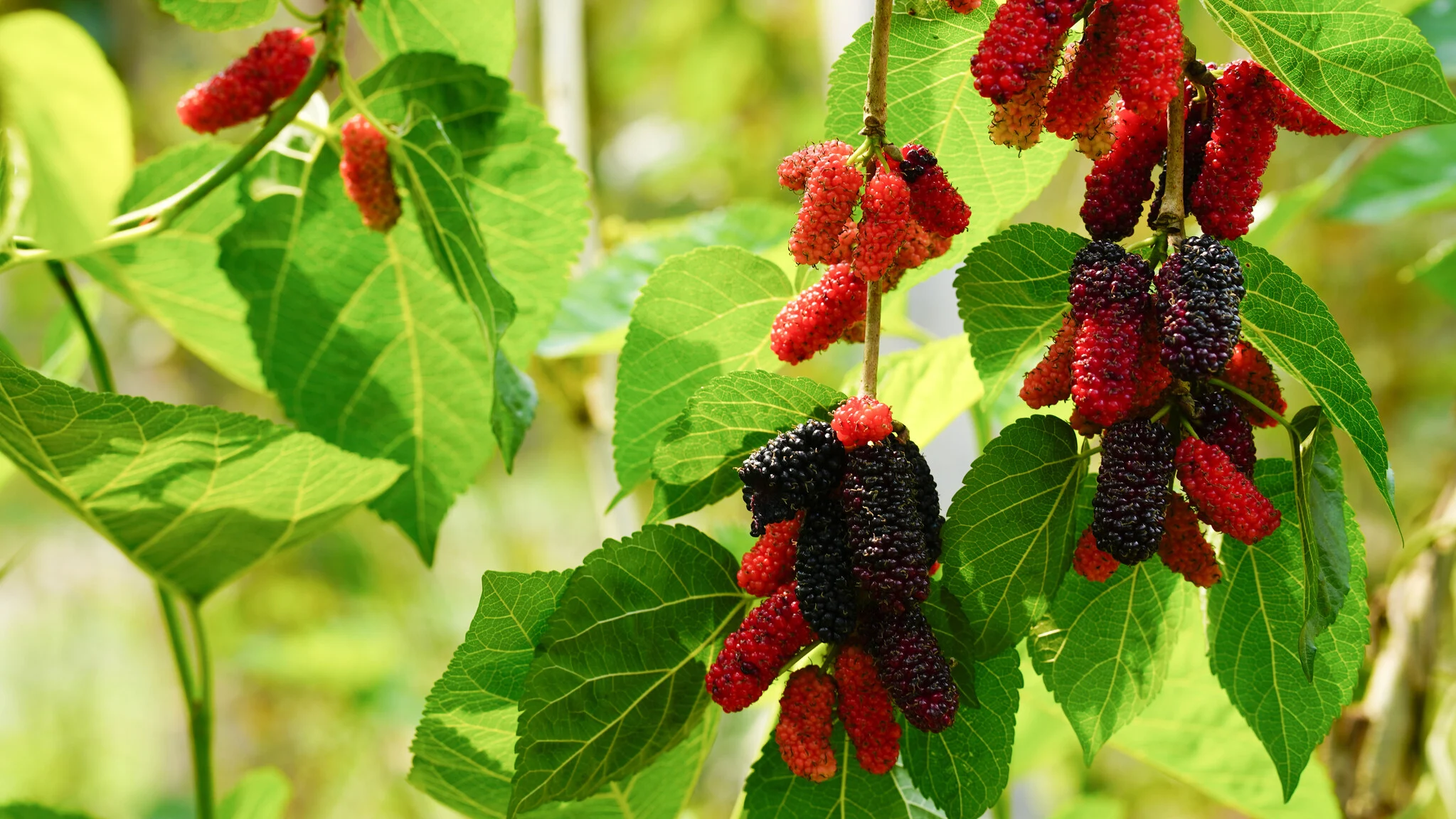
Mulberry (Fruiting)
The fastest big shade tree on this list, plus fruit. The berries stain, so plant it away from the driveway and walkways.
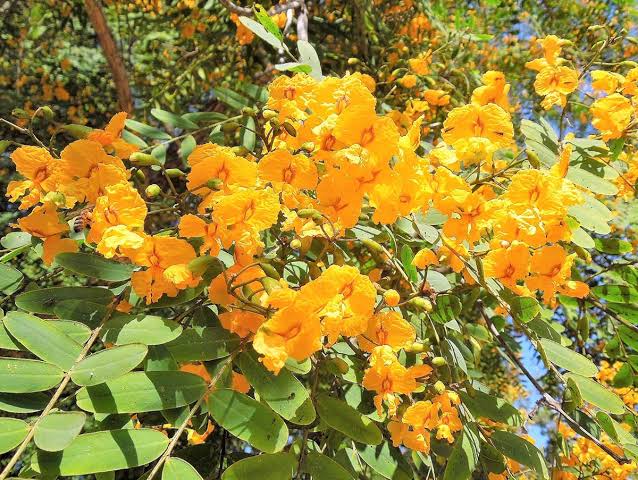
Tipu
Big, wide shade canopy and yellow flowers in late spring. Grows fast and handles the west sun well.
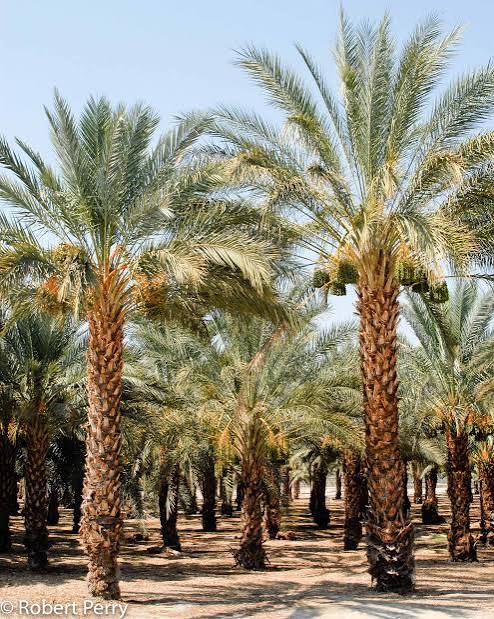
Date Palm
Those big fronds throw a good amount of shade, and a female will give you dates. Plan on trimming it every year.
Native Velvet Mesquite
The native mesquite. Light, filtered shade instead of a dark heavy canopy, which is exactly what you want over chickens and over anything you plan to grow underneath later. It supports local wildlife in ways the non native hybrids don't: the spring flowers feed native bees, birds nest in it, and the pods feed wildlife. Fast once its roots settle in, and it takes a lot less water than something that isn't desert adapted. Stake it loosely the first year and start structural pruning early so it builds a strong shape.
West-Facing Strip Along the Road
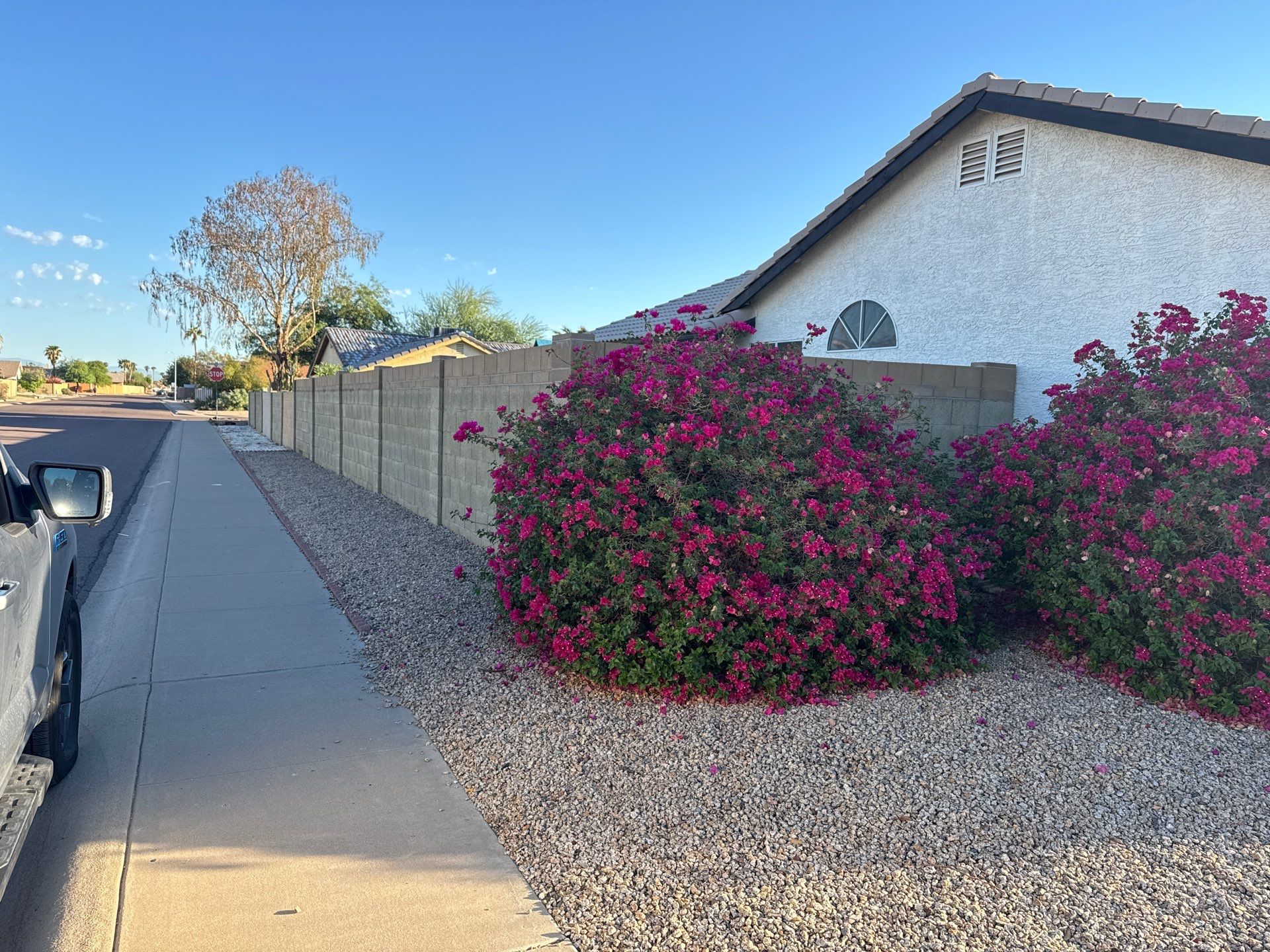
This thin strip between the road and your block wall faces west and takes full afternoon sun, so the goal is to cool it down. Creosote is a great option here. Another is to line the wall with moringa, which will grow up and shade the backyard over the wall. The other trees here grow upward and stay fairly narrow, so they'll give you shade without a huge canopy over the sidewalk. Keep any tree at least 4 to 5 ft back from the sidewalk.
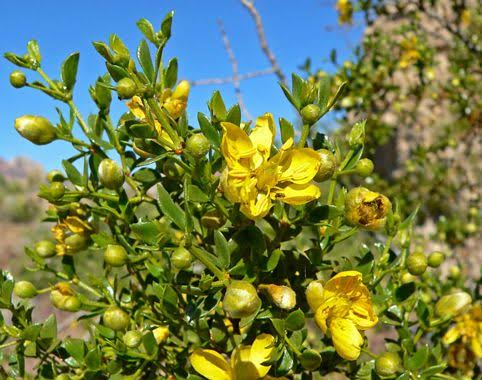
Creosote
Your idea, and a great one for this strip. Very little water once settled in, and the leaves give off that smell of desert rain after a storm. It won't give you tree shade, but it covers ground and handles the full afternoon sun.
Moringa
One of the fastest shade makers you can plant here, and the leaves are edible and loaded with nutrition. Plant a row of them about 8 to 10 ft apart and they'll shoot up over the wall. Cut them back hard every late winter and they come back bushier.
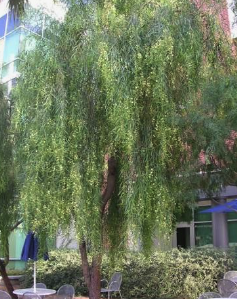
Willow Acacia
Grows tall and fairly narrow, which makes it one of the best trees for a thin strip like this one. Weeping, willow-like look, and it takes a lot less water than something that isn't desert adapted.

Mulga Acacia
Upright and compact, silvery foliage, and it takes a lot less water than something that isn't desert adapted. A good pick if you want shade without a wide canopy hanging over the sidewalk.
Desert Willow
Orchid-like flowers all summer that bring in hummingbirds. A native, and it takes a lot less water than something that isn't desert adapted. Smaller than a mesquite if you want less canopy.
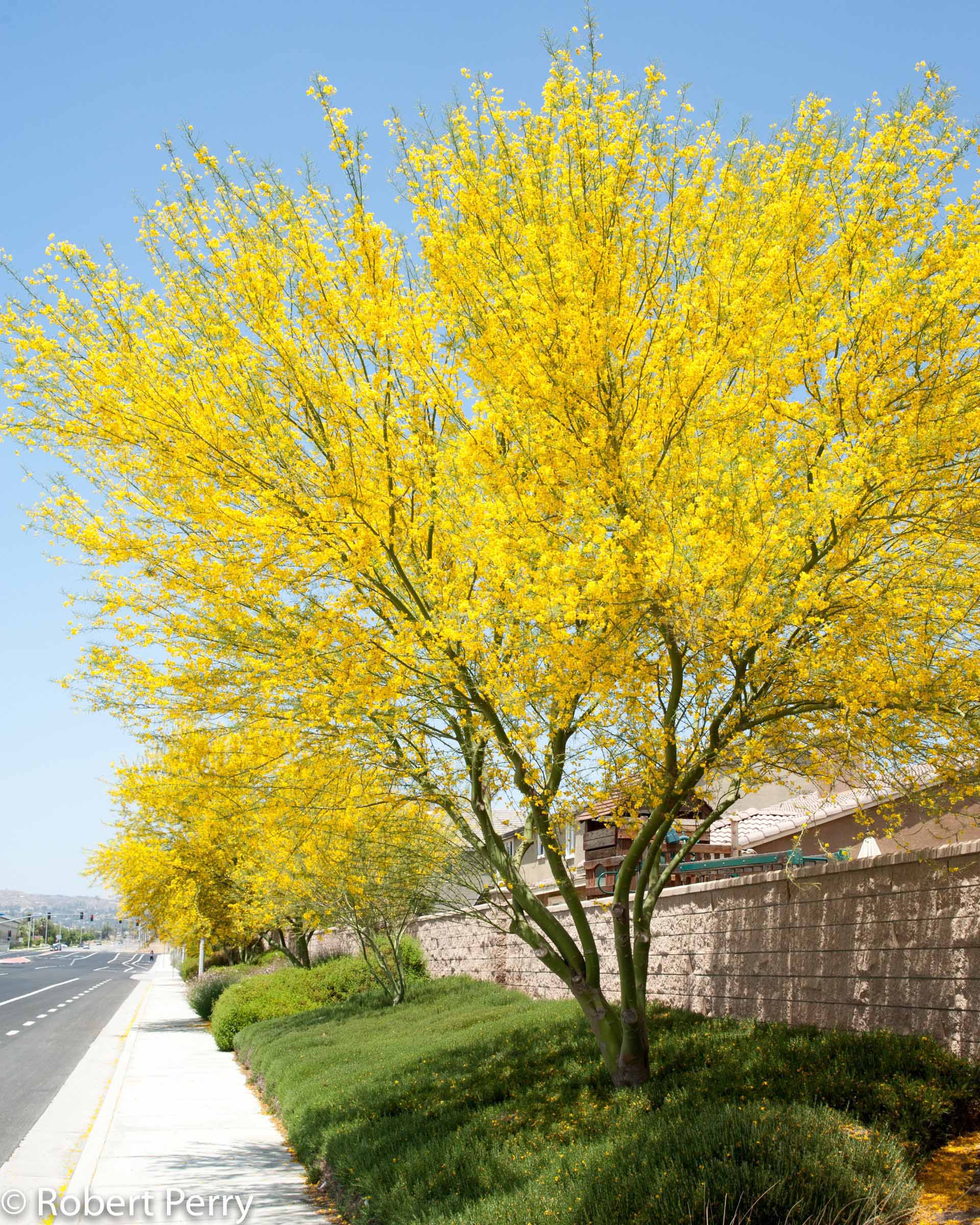
Desert Museum Palo Verde
Thornless, fast, and covered in yellow flowers every spring. Light, airy shade, and it takes a lot less water than something that isn't desert adapted.
Build the Infrastructure First
The shade trees and the hedges on the block walls are the infrastructure of the yard. Once the trees are in and growing, and the walls are covered, the whole yard cools down. The ground holds moisture longer, the walls stop radiating heat into the evening, and you've built a microclimate.
That's when you can move on to the more sensitive plants, like mangos and bananas. Planted now, out in the open, they'd struggle through the heat and the cold. Planted after the microclimate is built, tucked on the east side of a shade tree or along a covered wall, they'll do great.

Mango
Does well here once it has afternoon shade and protection from frost. Plant it on the east side of a shade tree or a covered wall, and cover it on frost nights the first few winters.

Banana
Big tropical leaves that add a lush look fast. Wants afternoon shade, regular water, and lots of compost. Frost burns it back, but it regrows from the base.
How to plant
Backfill each hole with the native soil you dug out plus a small amount of compost. Then lay compost on top of the soil around the plant and mulch over the compost. Don't work it in. Keep the mulch a foot back from the trunk.
Fertilizing
Everything on this list does better when the soil underneath it is alive. Feeding is really about feeding the soil life. Fungi, bacteria, and worms break down organic matter and hand nutrients to the roots, which is what gets new trees established, keeps the hedges thick, and gets the citrus and fruit trees producing, all without synthetic fertilizers. Here's the exact approach I use, so you can do it yourself.
- Compost, and be generous. On trees, spread it in a wide ring around the drip line, the outer edge of the canopy where most of the feeder roots are, from about halfway in to a couple feet past the edge. On shrubs, hedges, and vines, put it closer in, from a few inches off the stems out about a foot past the edge of the plant. Go 1 to 2 inches deep, and if you're unsure, go thicker rather than thinner. You really can't overdo quality compost. Do this three times a year: late winter (February), early summer (May), and fall (October).
- Worm castings every quarter. Every three months, scatter worm castings over the same areas: a few cups around each shrub and a couple pounds around the drip line of each tree. Castings are loaded with beneficial microbes that bring the soil to life. When it lines up with a compost round, put the castings down first and the compost right over them.
- A good organic fertilizer. These are the three products we use and recommend, all from Catalyst. Apply them at the label rate on the schedule each one gives.
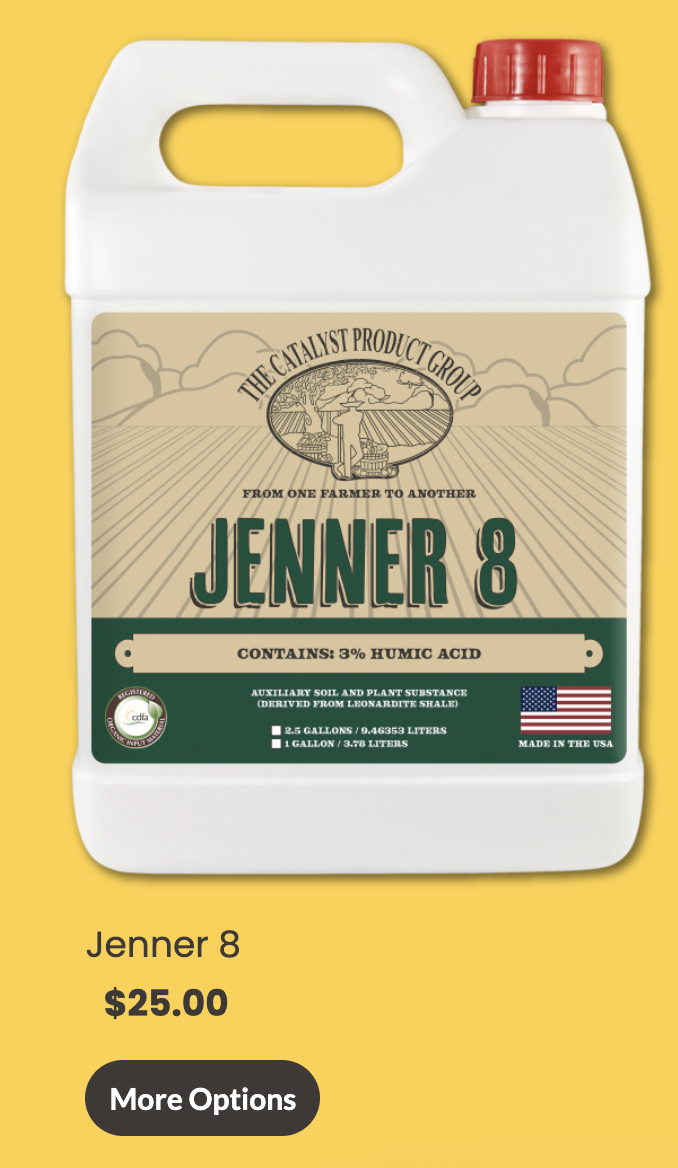
Jenner 8
Liquid organic feed for the whole landscape.
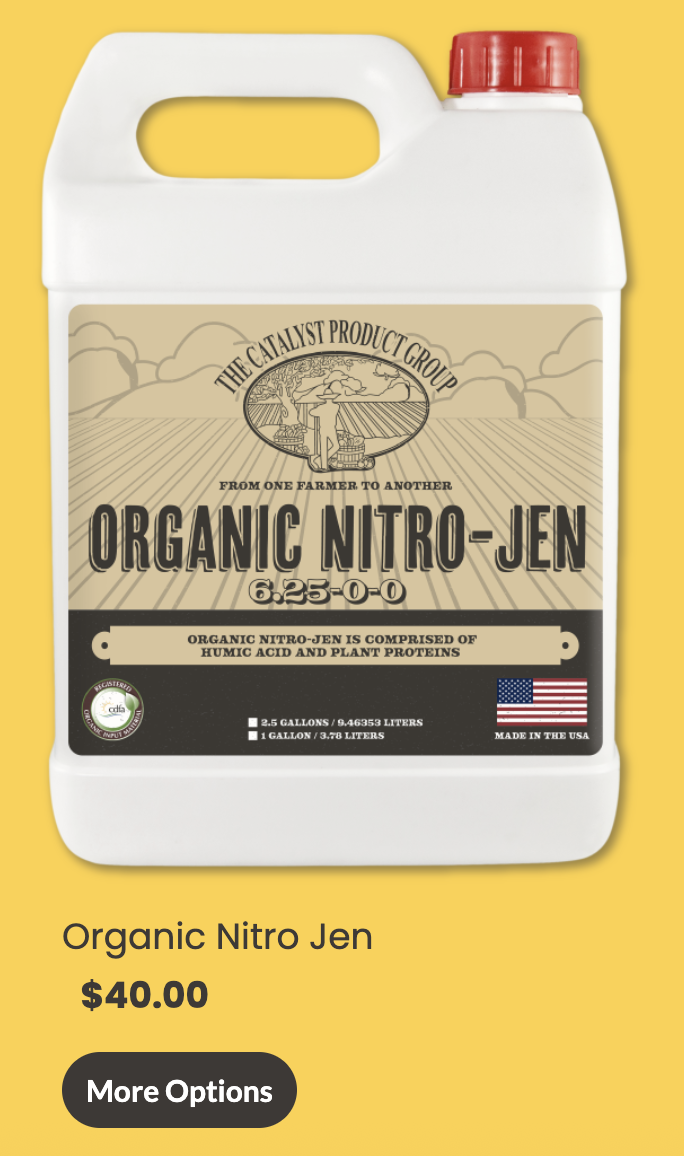
Organic Nitro Jen
Organic nitrogen to push healthy green growth.
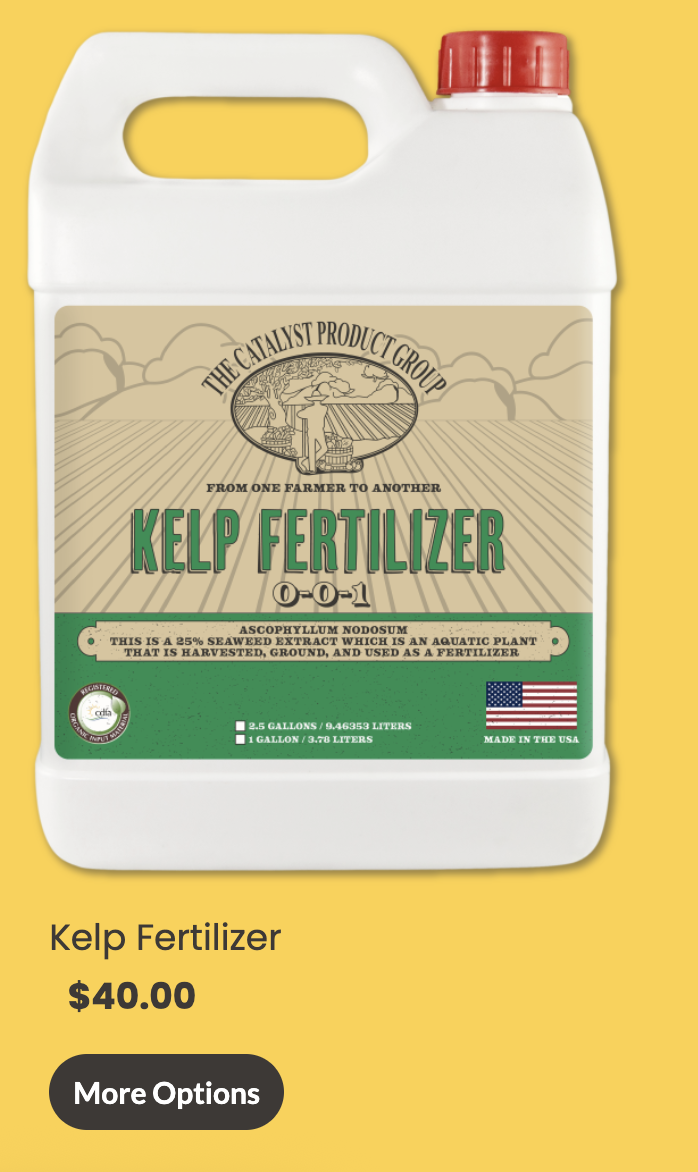
Kelp Fertilizer
Kelp based feed that supports roots and overall plant health.
You can find all three on the Catalyst website. Click Products, then Home and Garden.
- Water it all in. Give everything a deep watering right after you put it down so it soaks into the root zone.
- Mulch over the top. Mulch goes over the compost to keep it moist and cool so the soil life can do its work. Hold it a foot back from trunks and stems. No need to work any of it into the soil.
Compost, worm castings, and mulch are all at Arizona Worm Farm.
If you'd rather we handle it
Our monthly landscape fertilizing program feeds the whole yard for you.
- Covers the trees, citrus and fruit trees, hedges, and the lawn
- Monthly compost based liquid feeding across the full landscape
- Compost applications three times a year
- A recap video sent to you after each visit
Quick Reference
Organic fertilizers
Catalyst (Products, then Home and Garden)Compost and castings
Arizona Worm FarmFree mulch
ChipDropCitrus
Greenfield CitrusTrees and shrubs
A&P NurseryIrrigation
Garrett: 480-678-9121Garden beds
Maricopa County planting guideRoot flare video
Why the root flare mattersQuestions
Ask me anytime in the Garden Nerd ClubNext Steps
As a consult client, you're already in the Garden Nerd Club, so you have direct access to me there anytime you have a question or want a second set of eyes.
You can take this list and do it yourself with the Club behind you. If you'd rather have us handle the planting, I can put together a planting proposal for you.
For anything irrigation related, call Garrett at 480-678-9121.
You can see more of what we do on our planting services page.