
Susie Simerl
Open ground and outer walls
Tree line, south to north
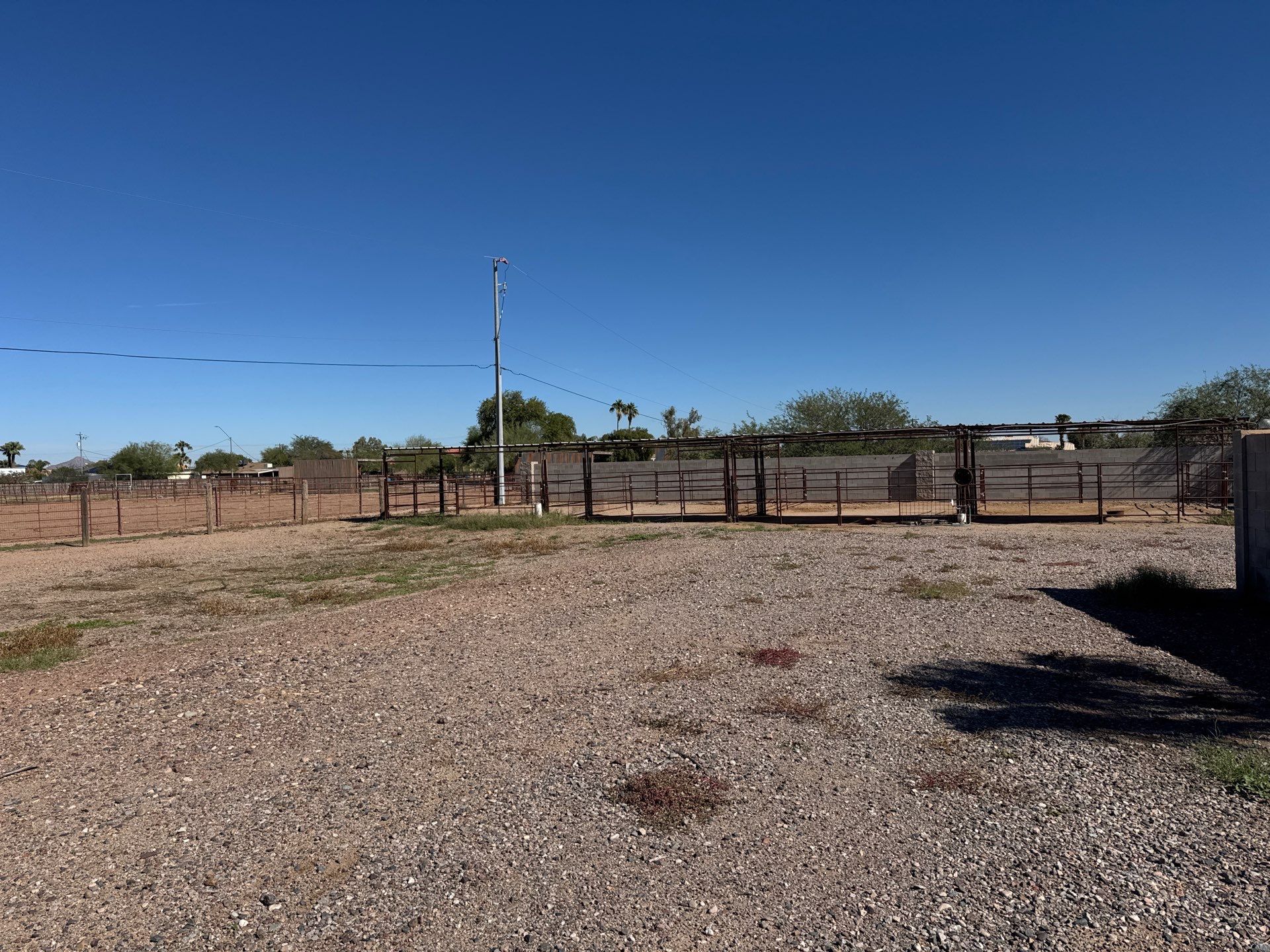
This open area is a great place to line trees from south to north. A row of desert adapted trees here gives you shade, a windbreak, and habitat, and it will make the whole property feel cooler over time. Ironwood, mesquite, and mulga acacia are my top picks. Fruiting date palms are another great option for this line.
Mixing species looks more natural than one tree repeated, and it means one pest or problem never takes out the whole row. Plant 15 gallon trees: smaller trees root in faster and end up healthier long term than big boxed trees.
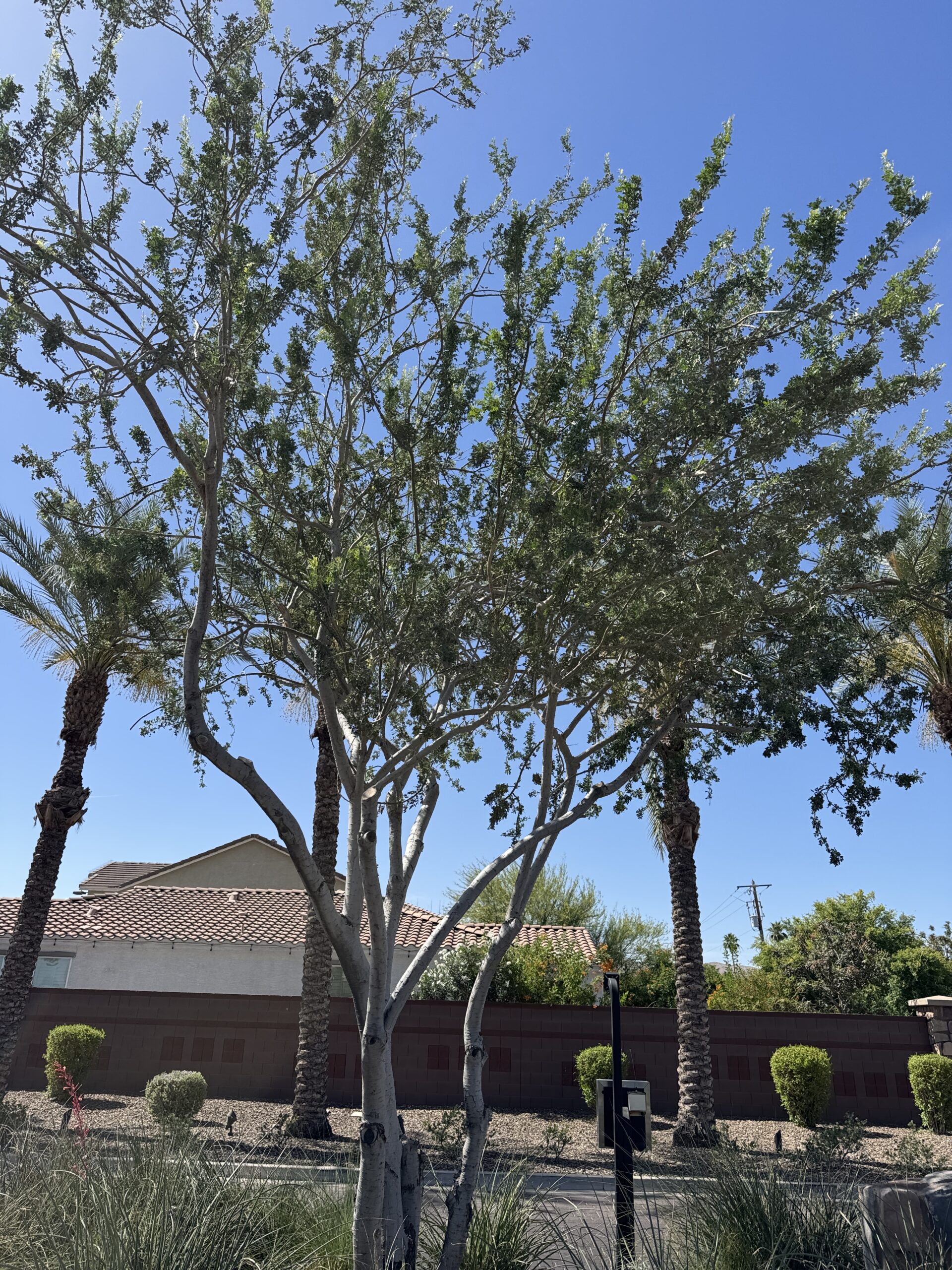
Desert Ironwood
Native Sonoran evergreen with gray green leaves and lavender flowers in late spring. Slow growing but extremely long lived, and one of the most important trees in the desert for wildlife. Takes less water than trees that aren't desert adapted. Space about 20 to 25 feet apart in a row.
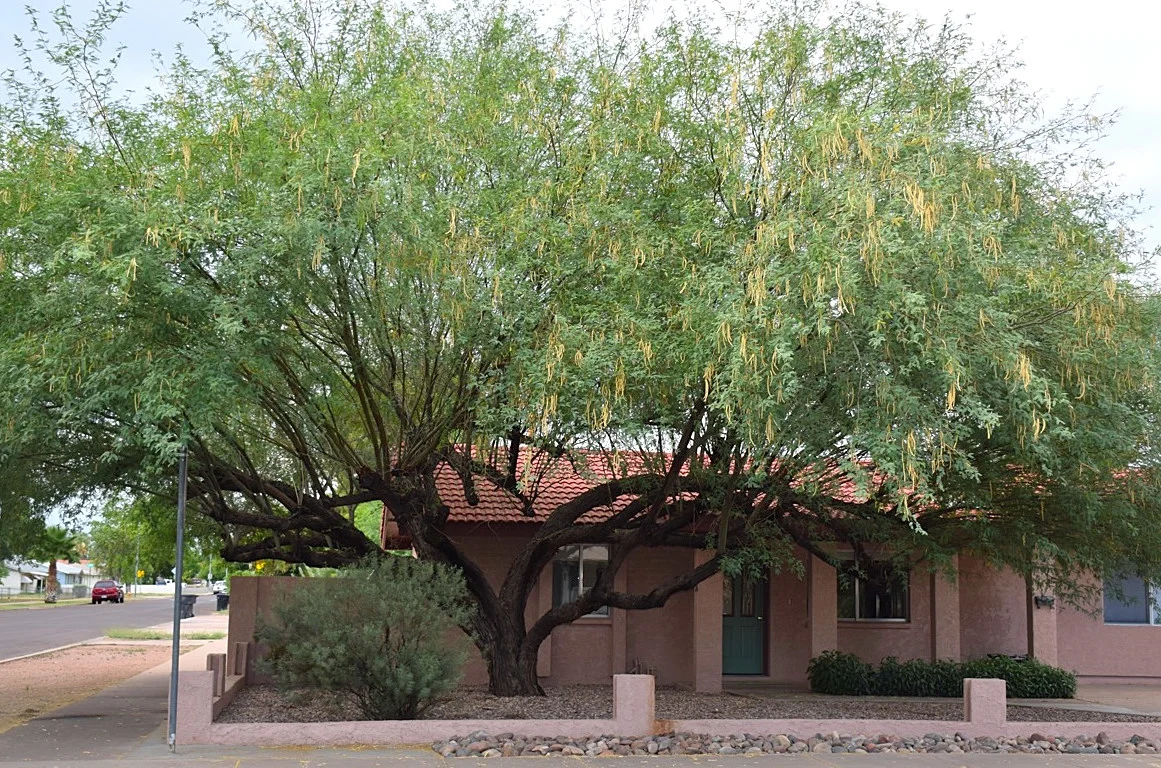
Velvet Mesquite
Our native mesquite, and the one I recommend when thorns aren't a concern. It feeds native bees, birds, and wildlife in ways the hybrids don't, and gives wide, filtered shade. Space 25 to 30 feet apart.

Mulga Acacia
Smaller evergreen tree with silvery needle-like leaves and yellow flowers in spring. Stays compact (15 to 20 feet), handles heat and wind well, and holds a tidy shape on its own. Space about 15 feet apart.
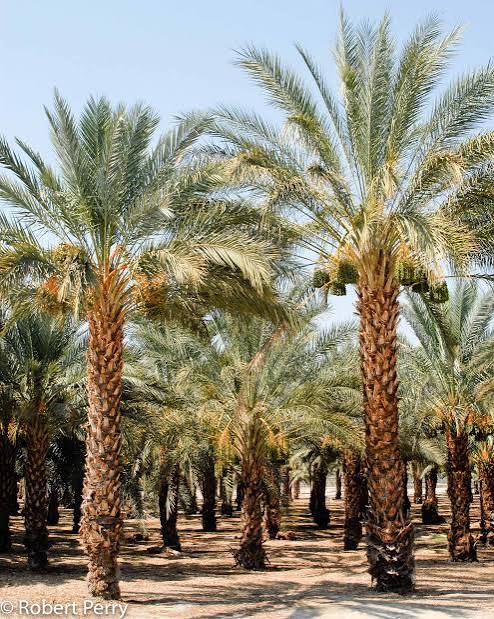
Fruiting Date Palm
Tall, classic desert palm that gives you fresh dates every fall. Only female palms fruit, and they need pollen from a male palm. Most people hand pollinate in spring by tying a strand of male flowers into the female flower cluster. Give each palm 20 to 25 feet.
Date palm varieties to look for:
- Khadrawy: One of my favorites. Soft, rich, caramel dates on a palm that stays smaller than most date palms, and it ripens a little earlier in the season.
- Medjool: The most famous date. Large, soft, and very sweet. The palm gets big (50 feet plus over time), so give it space.
- Deglet Noor: Semi-dry, firmer date with a mild honey flavor. A classic for baking and keeps well.
- Barhi: The one you can eat fresh at the yellow, crunchy stage, when it tastes almost like butterscotch, or let it ripen soft.
- Halawy: Very sweet, soft, caramel-like date. A smaller, productive palm.
Water well
Every tree gets a water well: pull the rock back about 3 feet from the trunk in every direction and build a shallow basin with a raised edge so water soaks down into the roots instead of running off. Fill it with mulch instead of rock, keeping the mulch about a foot back from the trunk. Rock holds heat and bakes the roots. Mulch keeps them cool, holds moisture, and feeds the soil as it breaks down.
East-facing wall
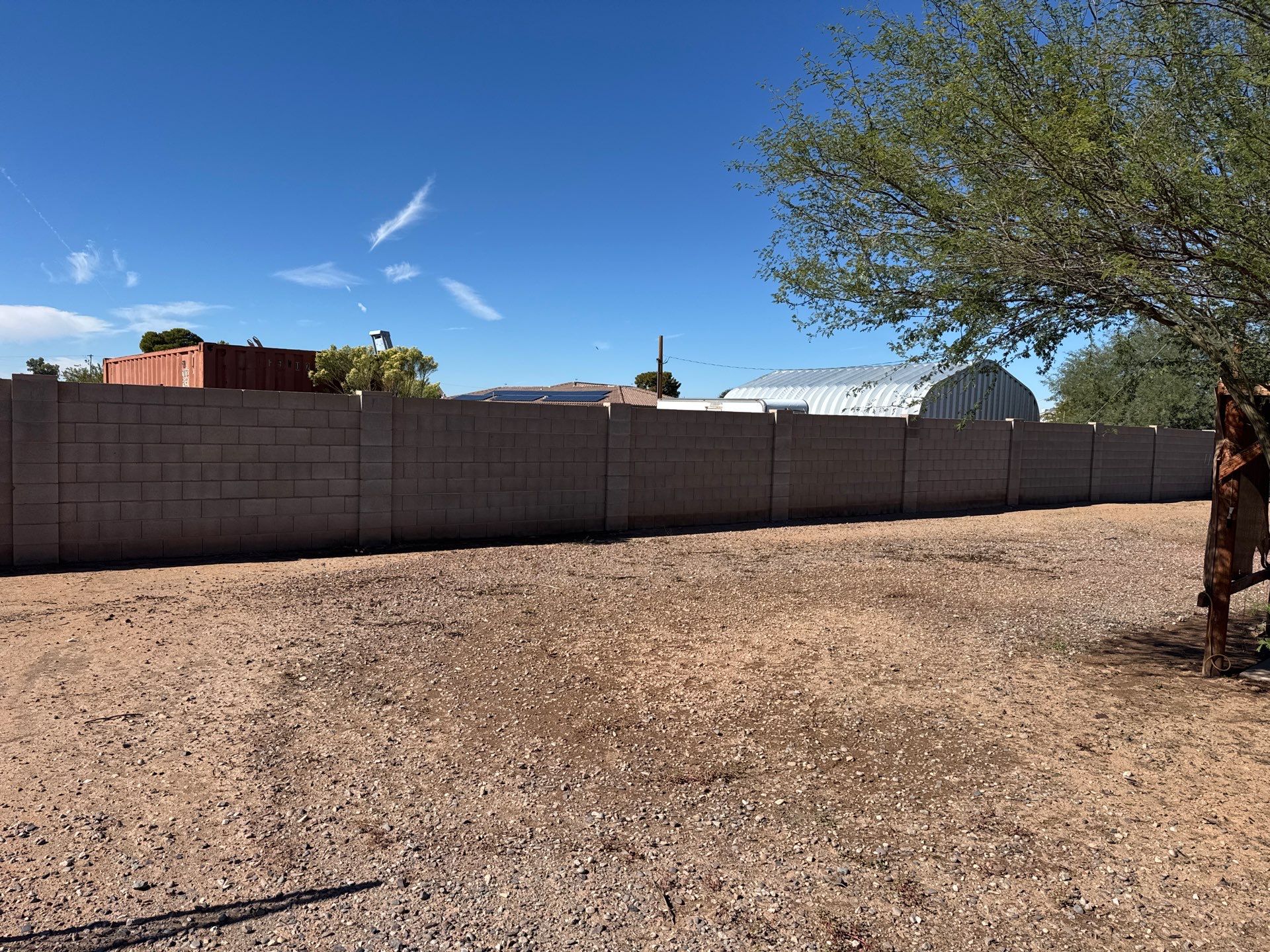
For this wall I'm thinking hopseed. It grows fast, stays green year round, and gets tall enough to cover the wall. The other three are good options too if you want flowers or a different look.
Pick one plant and run it the full length of the wall so it reads as one clean hedge. Plant about 3 feet off the wall.

Hopseed
Fast growing evergreen hedge with narrow bright green leaves. Gets tall and full enough to cover a block wall. Space 4 to 5 feet apart.

Arizona Rosewood
Native evergreen hedge with dark green leaves. Dense, handles full sun and reflected heat, and makes a solid screen. Takes less water than plants that aren't desert adapted. Space 5 to 6 feet apart.

Orange Jubilee
Big clusters of orange trumpet flowers from spring through fall. Hummingbirds love it and will even build their nests in it. Fast and full. Space 5 to 6 feet apart.

Twisted Myrtle
Evergreen with small glossy leaves that have a slight twist, and fragrant white flowers. A little more compact and refined than hopseed or rosewood. Space about 4 feet apart.
Here's a short video on orange jubilee: watch on YouTube.
Chain link fence
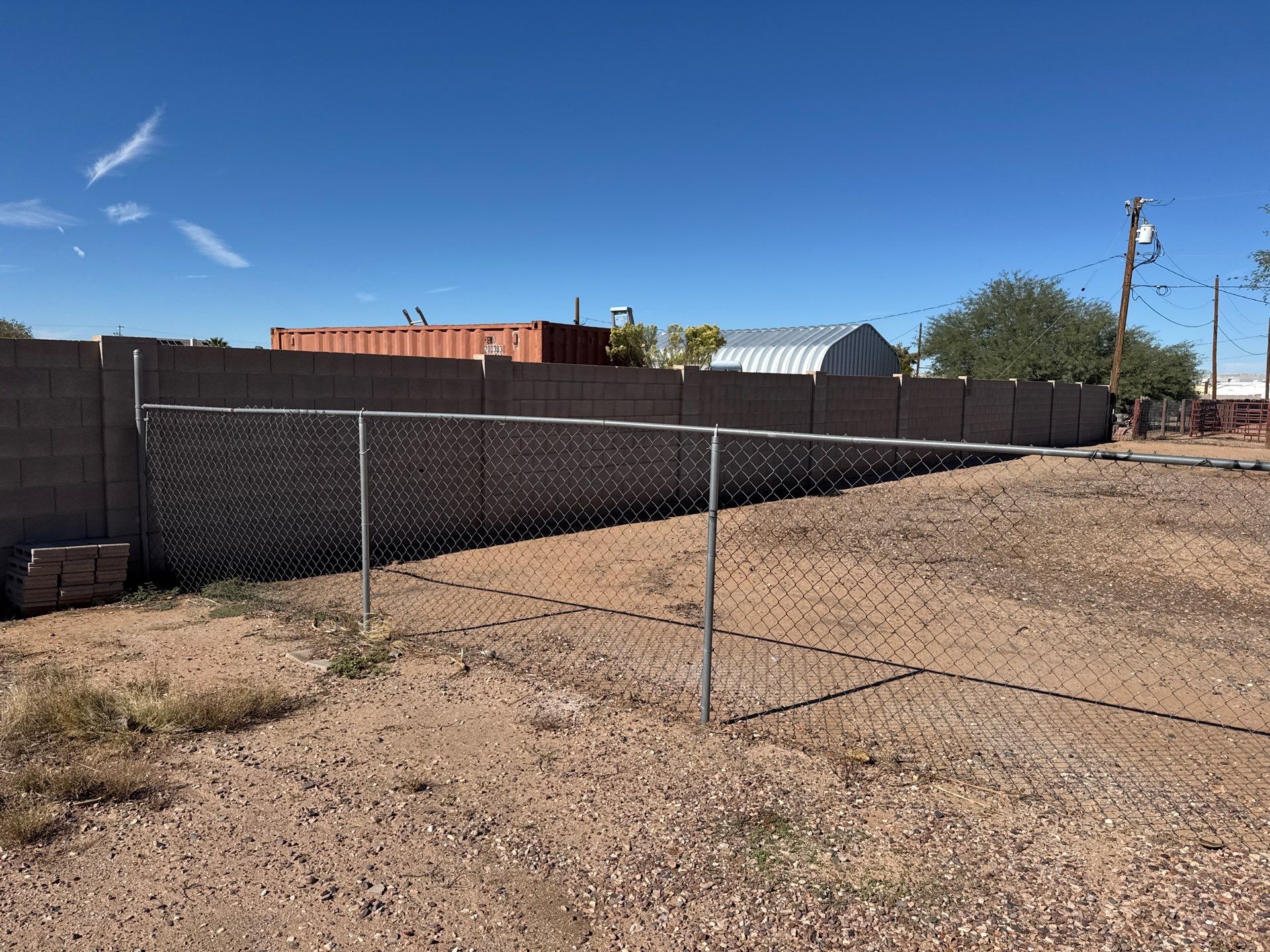
This chain link fence is perfect for a vine. A grape, tangerine crossvine, or passion fruit would all cover it. Grapes and passion fruit give you something to eat, and the crossvine is the toughest and lowest maintenance of the group.
Grapes need to be tied to the fence as they grow and pruned back to a few strong canes each winter for good fruit. Space grapes about 8 feet apart and crossvine or passion fruit about 10 feet apart.
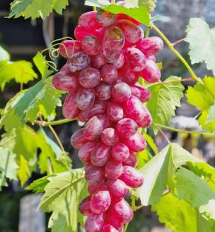
Flame Seedless Grape
Red seedless table grape that ripens early, ahead of the worst summer heat. One of the most reliable grapes in the low desert.
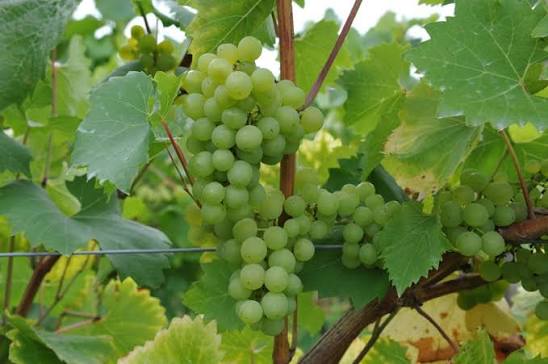
Thompson Seedless Grape
Classic green seedless grape. Very vigorous and productive once it gets going, great for covering a long fence.

Tangerine Crossvine
Evergreen vine with orange trumpet flowers in spring. Clings and climbs on its own, handles full sun, and is very tough.

Passion Fruit
Fast, lush vine with striking flowers and edible fruit. It's frost tender, so in Casa Grande plan on covering it on cold nights or treating it as a bonus if winter is mild.
West-facing side of the house
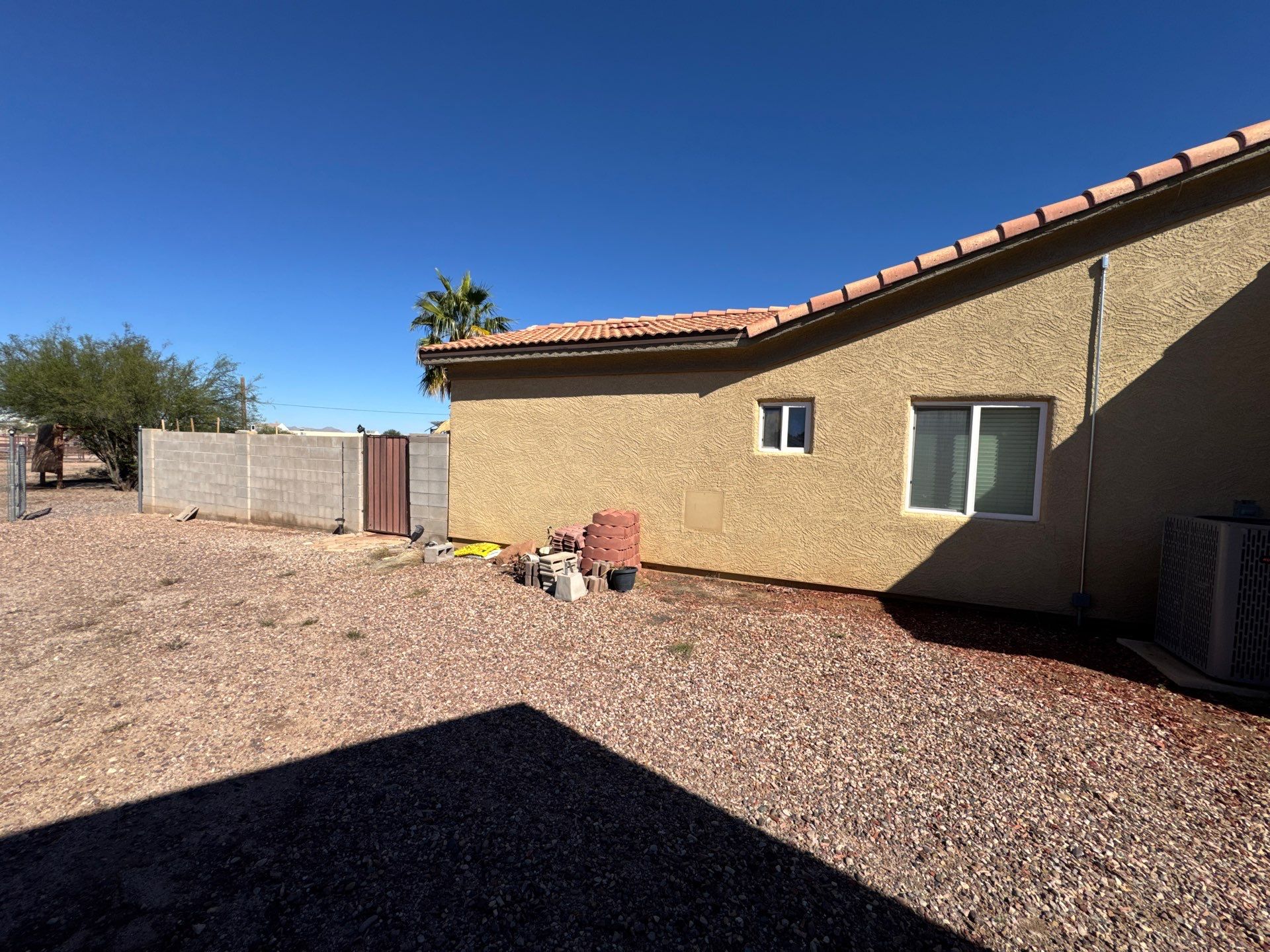
This side of the house takes the full afternoon sun, so everything here needs to be desert adapted and able to handle that heat. Arizona rosewood or hopseed will grow tall and shade the wall, which keeps heat off the house. Little Ollie is a lower option if you want to keep the windows clear.
Plant at least 3 feet off the house so there's room for the plants to grow and air to move between them and the wall.
Arizona Rosewood
Native evergreen hedge with dark green leaves. Dense, handles full sun and reflected heat, and makes a solid screen. Takes less water than plants that aren't desert adapted. Space 5 to 6 feet apart.
Hopseed
Fast growing evergreen hedge with narrow bright green leaves. Gets tall and full enough to cover a block wall. Space 4 to 5 feet apart.
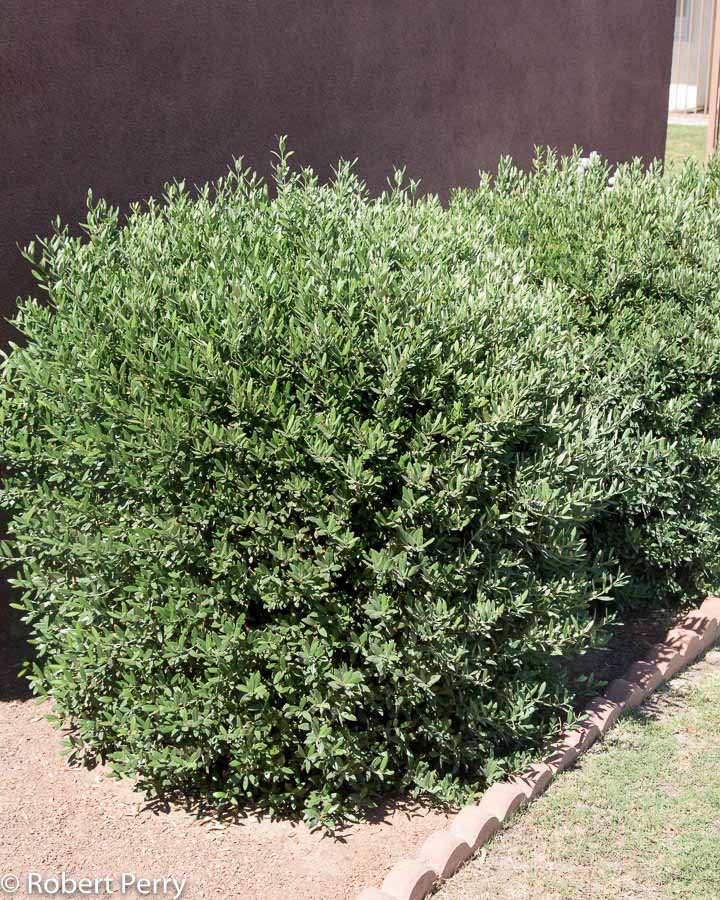
Little Ollie (Dwarf Olive)
Evergreen dwarf olive that stays around 4 to 6 feet with no fruit and no pollen. Handles full afternoon sun and keeps a neat shape without shearing.

Texas Sage
Silvery leaves and purple blooms after summer humidity. One of the toughest shrubs in hot afternoon sun. Let it keep its natural shape and it flowers much more.
Twisted Myrtle
Evergreen with small glossy leaves that have a slight twist, and fragrant white flowers. A little more compact and refined than hopseed or rosewood. Space about 4 feet apart.
West property wall
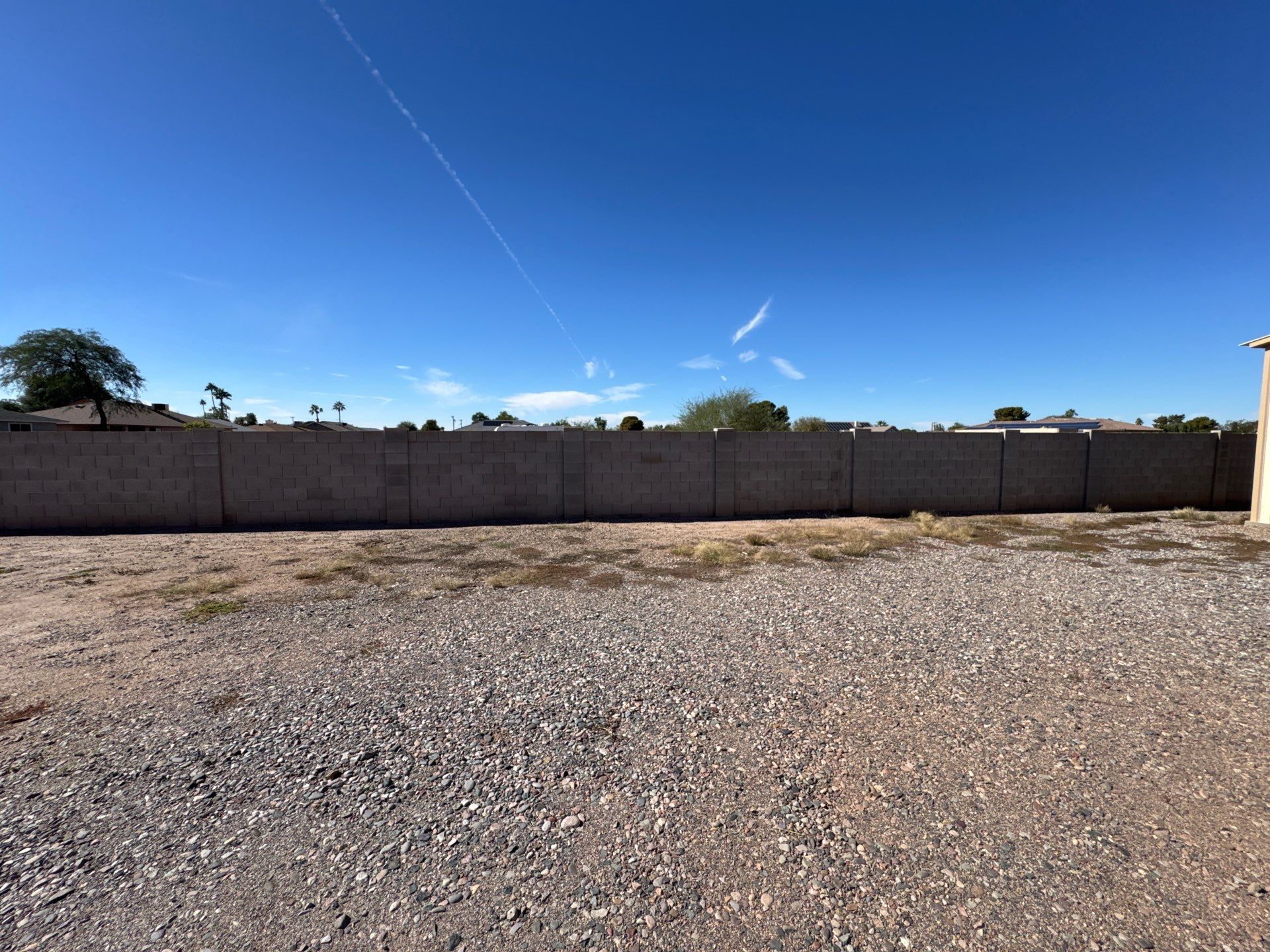
Same idea on this wall: it sits on the west side of the property and faces east. Hopseed, Arizona rosewood, orange jubilee, or twisted myrtle will all cover it well.
Pick one plant and run it the full length of the wall so it reads as one clean hedge. Plant about 3 feet off the wall.
Hopseed
Fast growing evergreen hedge with narrow bright green leaves. Gets tall and full enough to cover a block wall. Space 4 to 5 feet apart.
Arizona Rosewood
Native evergreen hedge with dark green leaves. Dense, handles full sun and reflected heat, and makes a solid screen. Takes less water than plants that aren't desert adapted. Space 5 to 6 feet apart.
Orange Jubilee
Big clusters of orange trumpet flowers from spring through fall. Hummingbirds love it and will even build their nests in it. Fast and full. Space 5 to 6 feet apart.
Twisted Myrtle
Evergreen with small glossy leaves that have a slight twist, and fragrant white flowers. A little more compact and refined than hopseed or rosewood. Space about 4 feet apart.
Here's a short video on orange jubilee: watch on YouTube.
Ironwood spot and south-facing wall
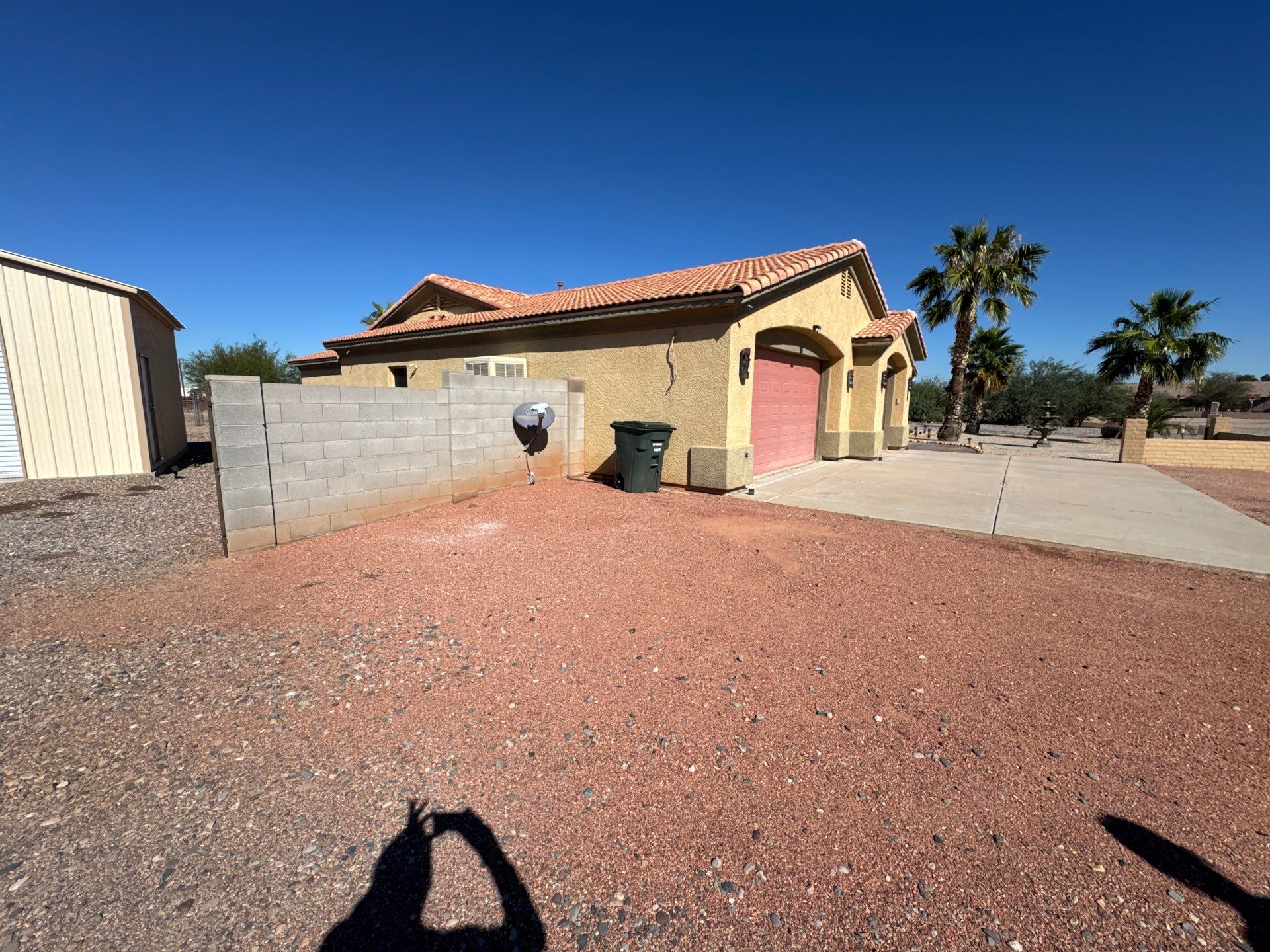
This is a great spot for an ironwood. Mulga acacia is the other option if you want something smaller and faster.
Desert Ironwood
Native Sonoran evergreen with gray green leaves and lavender flowers in late spring. Slow growing but extremely long lived, and one of the most important trees in the desert for wildlife. Takes less water than trees that aren't desert adapted. Space about 20 to 25 feet apart in a row.
Mulga Acacia
Smaller evergreen tree with silvery needle-like leaves and yellow flowers in spring. Stays compact (15 to 20 feet), handles heat and wind well, and holds a tidy shape on its own. Space about 15 feet apart.
Water well
Every tree gets a water well: pull the rock back about 3 feet from the trunk in every direction and build a shallow basin with a raised edge so water soaks down into the roots instead of running off. Fill it with mulch instead of rock, keeping the mulch about a foot back from the trunk. Rock holds heat and bakes the roots. Mulch keeps them cool, holds moisture, and feeds the soil as it breaks down.
South-facing wall
The wall here faces south, so it gets sun all day and throws that heat back out. Covering it with a hedge cuts the heat a lot.
Pick one plant and run it the full length of the wall so it reads as one clean hedge. Plant about 3 feet off the wall.
Hopseed
Fast growing evergreen hedge with narrow bright green leaves. Gets tall and full enough to cover a block wall. Space 4 to 5 feet apart.
Arizona Rosewood
Native evergreen hedge with dark green leaves. Dense, handles full sun and reflected heat, and makes a solid screen. Takes less water than plants that aren't desert adapted. Space 5 to 6 feet apart.
Orange Jubilee
Big clusters of orange trumpet flowers from spring through fall. Hummingbirds love it and will even build their nests in it. Fast and full. Space 5 to 6 feet apart.
Twisted Myrtle
Evergreen with small glossy leaves that have a slight twist, and fragrant white flowers. A little more compact and refined than hopseed or rosewood. Space about 4 feet apart.
Here's a short video on orange jubilee: watch on YouTube.
Front and side yard
Front yard mesquite canopy
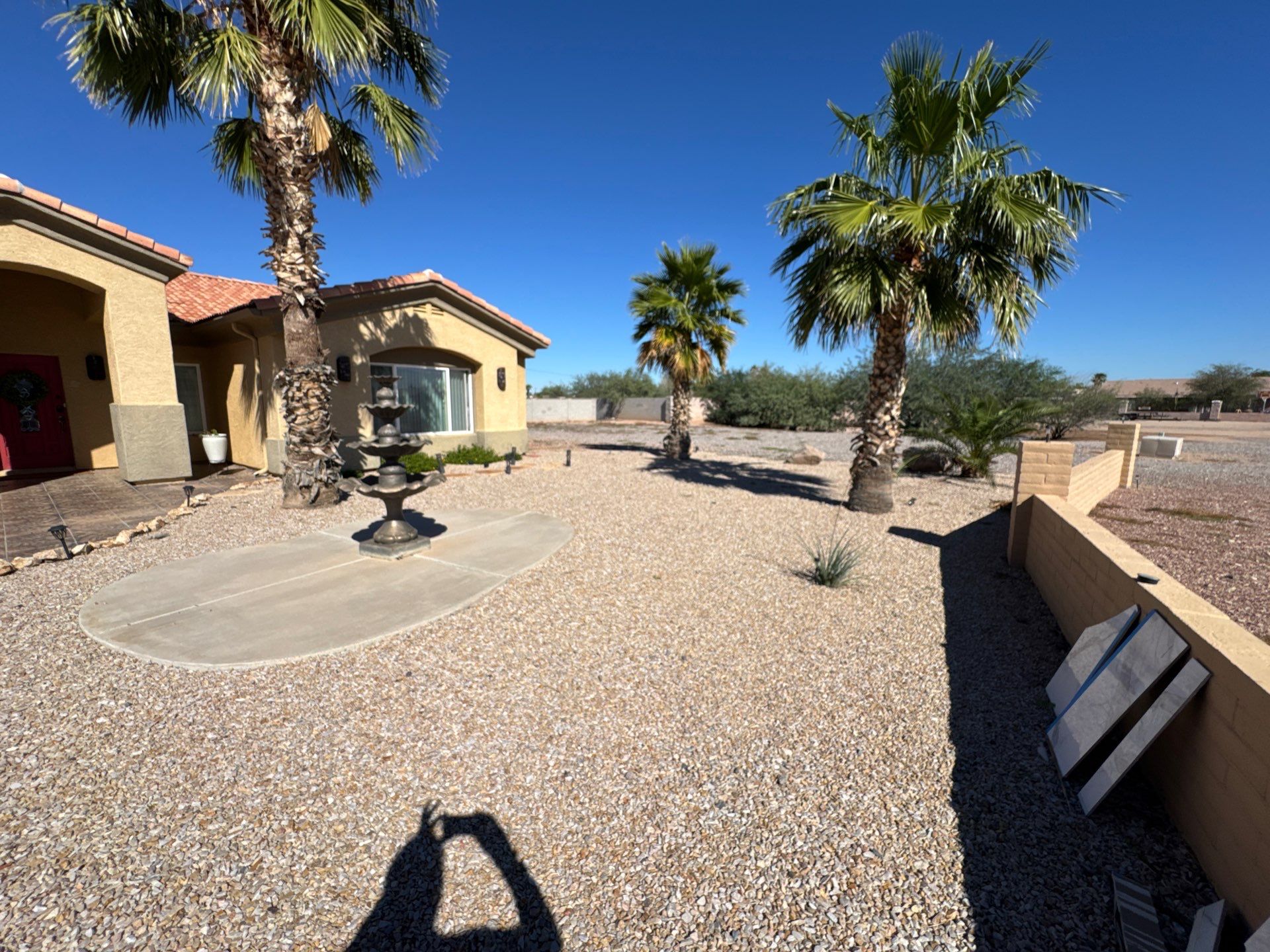
The goal here is to create a canopy over the whole front yard with two mesquites. I love mesquite for this because of its dappled shade. The small leaves let filtered light through, so you get real shade without the yard feeling dark, and plants can still grow underneath. Right now the front yard is all rock, and rock soaks up heat all day and throws it back at the house all night. A mesquite canopy shades that rock and cools everything down, the yard, the house, and anyone walking through it.
Since this is near the house and walkways, go with a thornless variety. If thorns aren't an issue, the native velvet mesquite is the better tree for local wildlife.
Thornless Mesquite
A thornless hybrid mesquite (often sold as Phoenix or thornless South American mesquite). Fast growing with a wide, filtered canopy, and no thorns to worry about near the house and walkways.
Native Velvet Mesquite
Our native mesquite. It does have thorns, but it feeds native bees, birds, and wildlife in ways the hybrids don't. A great choice anywhere people aren't brushing past it.
Spacing
Mesquites get wide, 30 feet or more across. To get one canopy over the yard, space the two trees 25 to 30 feet apart so their canopies meet as they mature, rather than bunching them together. Keep them at least 15 feet from the house and about 10 feet from walls and the driveway.
Planting
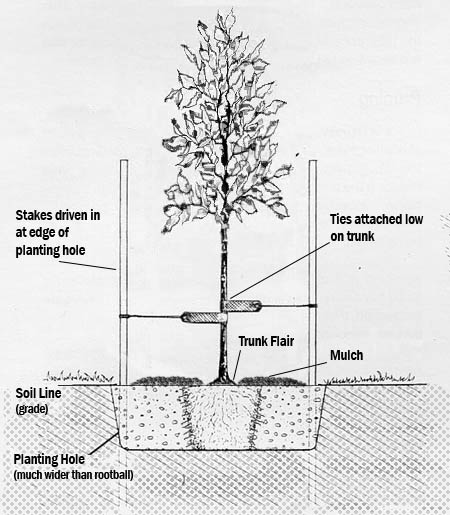
Fall is the best time to plant. Buy 15 gallon trees. Dig the hole as deep as the root ball and two to three times as wide, so the top of the root ball sits level with the ground, never below it. Backfill with your native soil and a tiny bit of compost, lay compost on top, and mulch over the compost. Stake with two stakes, one on each side, only if the tree can't stand on its own (see the diagram in the lemon tree section).
Watering
Water slow and deep so it soaks down 2 to 3 feet. For the first two weeks, water every 2 to 3 days. For the next month, about twice a week. After that, once a week through winter and the first summer. In year two you can stretch to every 2 to 3 weeks, and once established a mesquite takes less water than trees that aren't desert adapted. As the tree grows, move the emitters out toward the edge of the canopy, because that's where the feeder roots are. Don't skip watering after a rain; it almost never soaks in deep enough.
Pruning
Let mesquites grow natural. Thin a few branches to open up the canopy so wind passes through, but never top or shear them. If the trees get large and need structural pruning down the road, King's Tree Service is who I recommend.
Water well
Every tree gets a water well: pull the rock back about 3 feet from the trunk in every direction and build a shallow basin with a raised edge so water soaks down into the roots instead of running off. Fill it with mulch instead of rock, keeping the mulch about a foot back from the trunk. Rock holds heat and bakes the roots. Mulch keeps them cool, holds moisture, and feeds the soil as it breaks down.
Mulberry
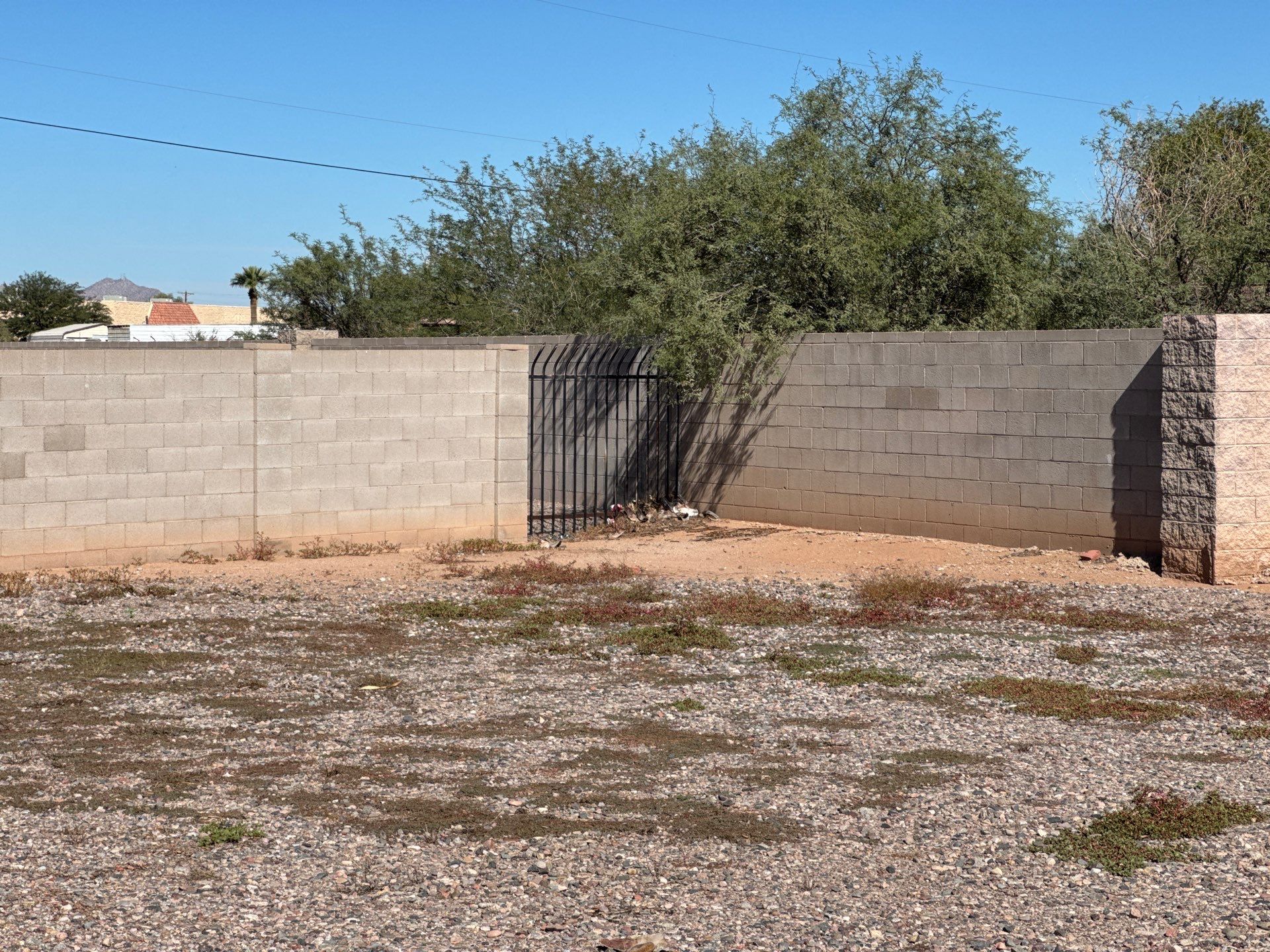
This is a perfect spot for a mulberry. Pakistani is my first pick, but here are a few other good varieties. Keep it away from the pool, patio, and driveway, because dark mulberries stain when the fruit drops.
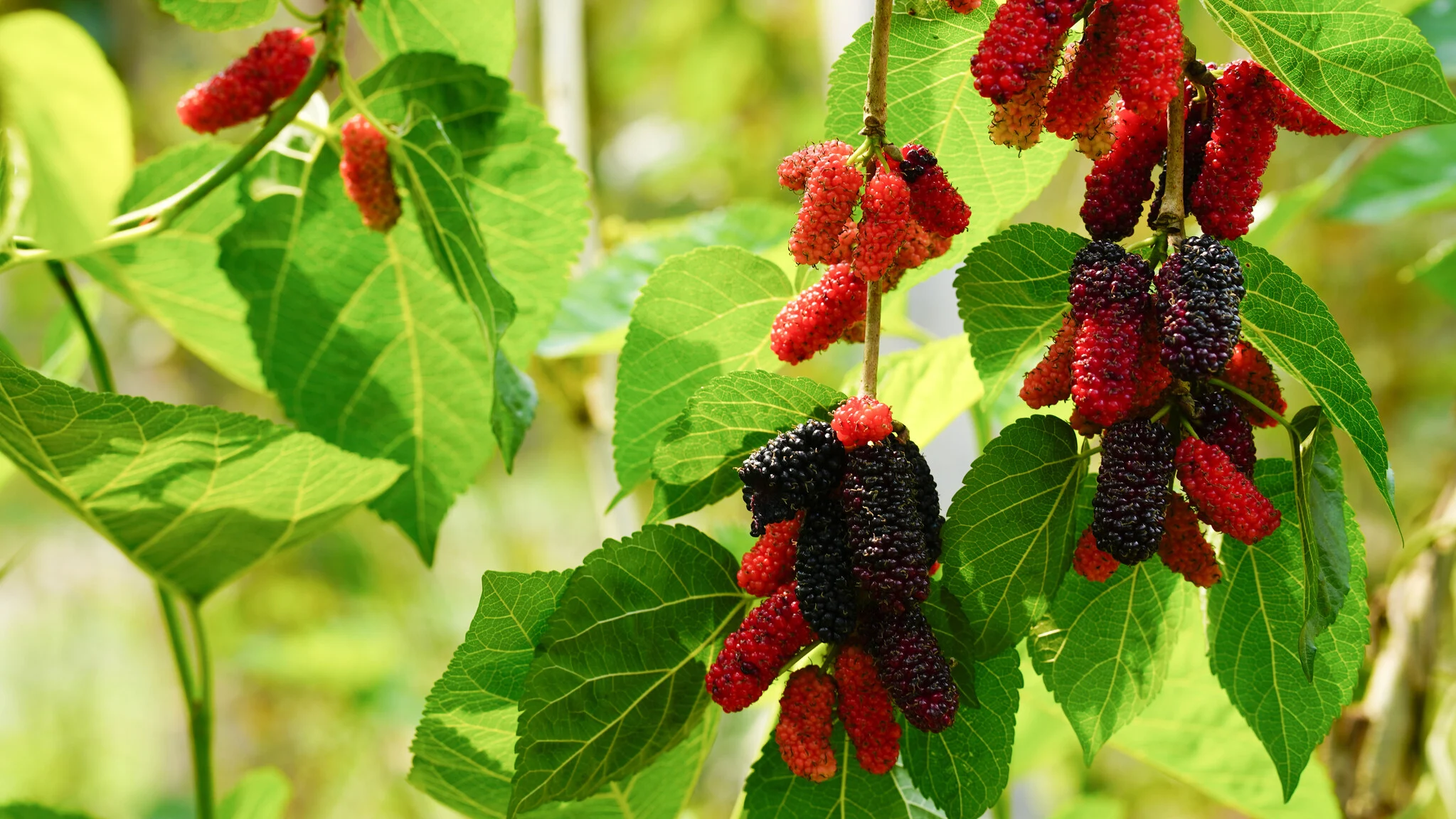
Fruiting Mulberry
Fast growing shade tree with sweet berries in spring. Make sure you buy a fruiting variety, not the fruitless kind. Gets 25 to 35 feet, so give it room.
Varieties to look for:
- Pakistani Mulberry: My first pick. Long fruit (3 to 4 inches) that's very sweet with a little tang, on a vigorous tree that handles our heat really well.
- Dwarf Everbearing: Stays about 6 to 8 feet and fruits on and off from spring into summer. Great if you want something smaller and easy to pick.
- Illinois Everbearing: Very productive with a long fruiting season and sweet, dark fruit. A solid all-around mulberry.
- Persian (Black Beauty): Rich, sweet-tart black berries, many people's favorite flavor. A smaller, slower growing tree.
- Tehama (White Giant): Huge white berries with a mild, sweet flavor. Birds bother white fruit less, and it doesn't stain the way dark mulberries do.
Fruit trees are cheapest and establish best when you buy them bareroot in winter (January and February). A&P Nursery carries a good selection.
Water well
Every tree gets a water well: pull the rock back about 3 feet from the trunk in every direction and build a shallow basin with a raised edge so water soaks down into the roots instead of running off. Fill it with mulch instead of rock, keeping the mulch about a foot back from the trunk. Rock holds heat and bakes the roots. Mulch keeps them cool, holds moisture, and feeds the soil as it breaks down.
Peach and pomegranate
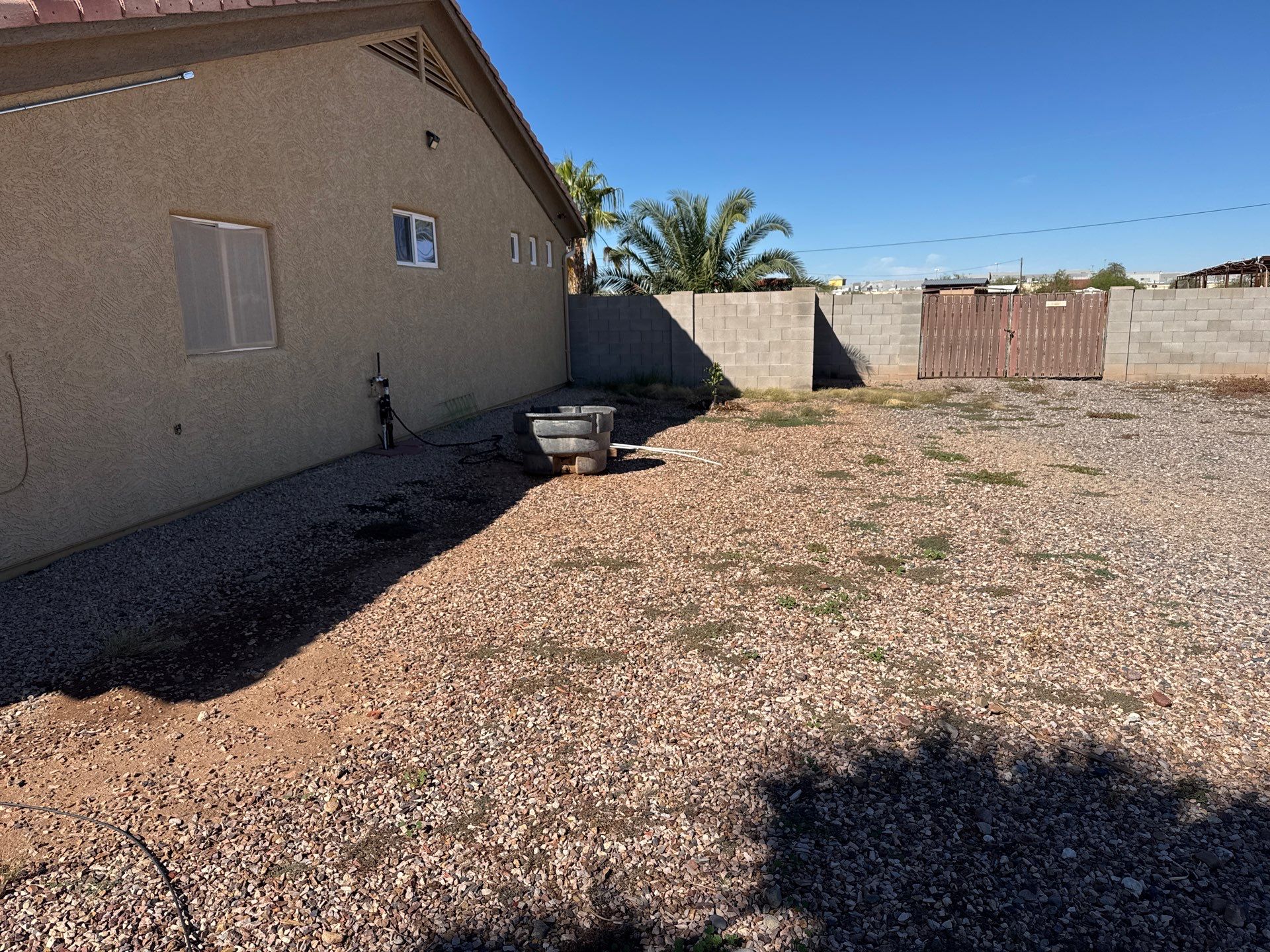
This is a great spot for a peach tree. I'm thinking Desert Gold or Florida Prince. Both are low chill peaches, meaning they don't need a cold winter to fruit, and both ripen in May before the worst of the heat.
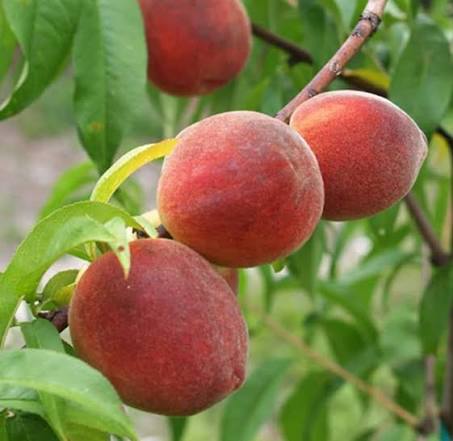
Desert Gold Peach
Low chill peach bred for warm winters. Ripens in May, before the real heat, with sweet yellow fruit.

Florida Prince Peach
My usual pick for low chill. Ripens early (May) with good-sized, sweet yellow peaches.
There's room for a pomegranate here too. Keep it about 8 feet from the peach. Pomegranates handle full sun, take less water than most fruit trees, and are one of the easiest fruit trees to grow here.
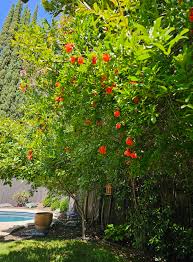
Parfianka Pomegranate
Soft seeds and a sweet-tart, wine-like flavor. I pick it over Wonderful here because Wonderful seems to get hit harder by leaf-footed bugs in the Valley.
Prune the peach every winter to an open vase shape (no center leader) so light gets into the middle, and thin the fruit in spring to one peach every 6 inches so the rest size up. Pomegranates just need suckers pulled from the base.
Fruit trees are cheapest and establish best when you buy them bareroot in winter (January and February). A&P Nursery carries a good selection.
Water well
Every tree gets a water well: pull the rock back about 3 feet from the trunk in every direction and build a shallow basin with a raised edge so water soaks down into the roots instead of running off. Fill it with mulch instead of rock, keeping the mulch about a foot back from the trunk. Rock holds heat and bakes the roots. Mulch keeps them cool, holds moisture, and feeds the soil as it breaks down.
Raised garden bed
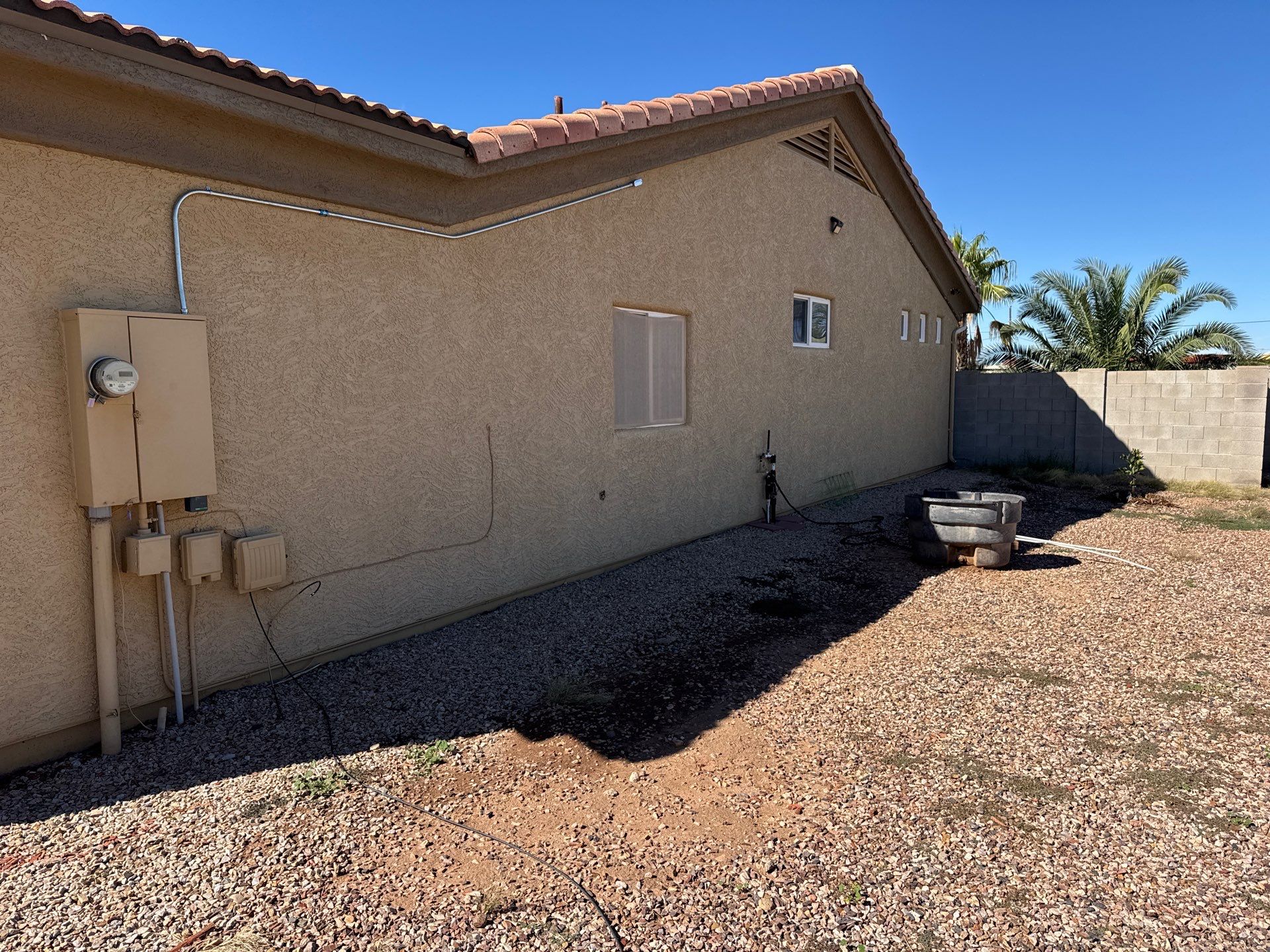
Up against this east-facing wall of the house is a perfect spot for a raised garden bed. It gets morning sun and afternoon shade, which is exactly what vegetables want here, especially in summer.
Keep the bed no wider than 4 feet so you can reach the middle from either side, and 18 to 24 inches tall. Any length works. Leave a couple of feet between the bed and the house for access. Olle Gardens makes great metal raised beds, and Arizona Worm Farm has a raised bed mix to fill it. Put the bed on its own drip line so you can water it more often than the rest of the yard. Garrett can help with that.
For what to plant and when, use my Maricopa County planting guide. The timing is close for Casa Grande. Your winter nights run a bit colder, so keep frost cloth handy for tender crops.
Front yard ground cover
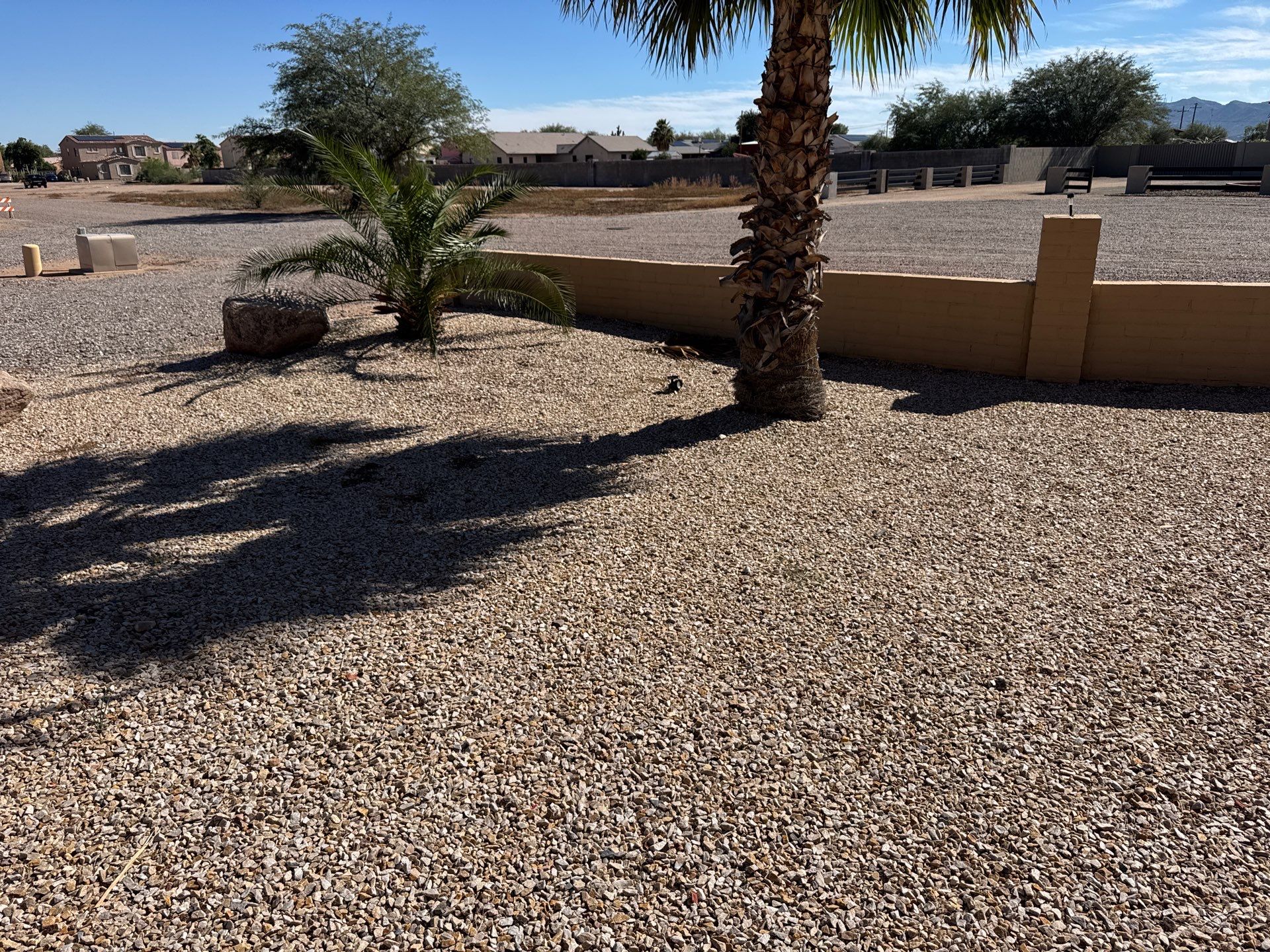
This part of the front yard needs some ground cover. San Marcos hibiscus and trailing emu bush are where I'd start. They stay low, spread, and handle full sun. Here are a few other options too.
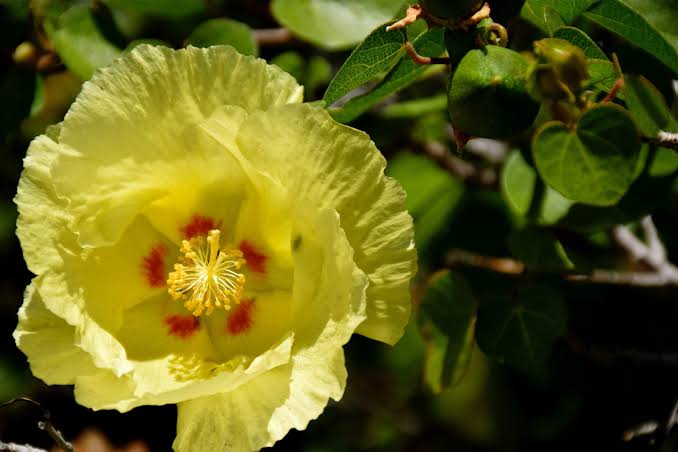
San Marcos Hibiscus
Low, mounding shrub with lavender pink flowers most of the year. Takes heat well and stays small.
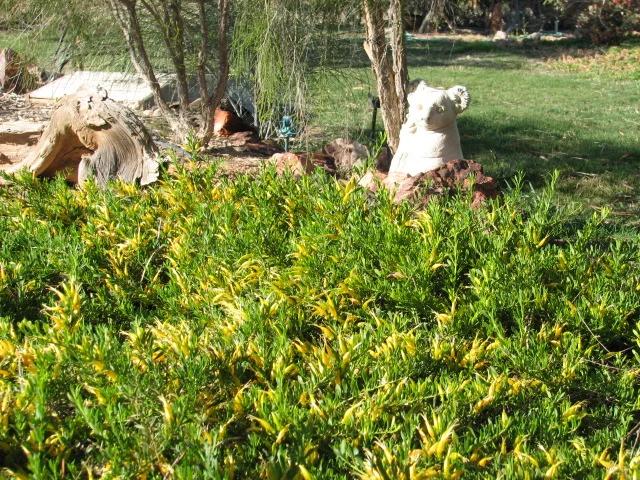
Trailing Emu Bush (Outback Sunrise)
Low spreading ground cover with gray green leaves and yellow flowers in late winter and spring. One of my favorites for the hottest spots in the yard.
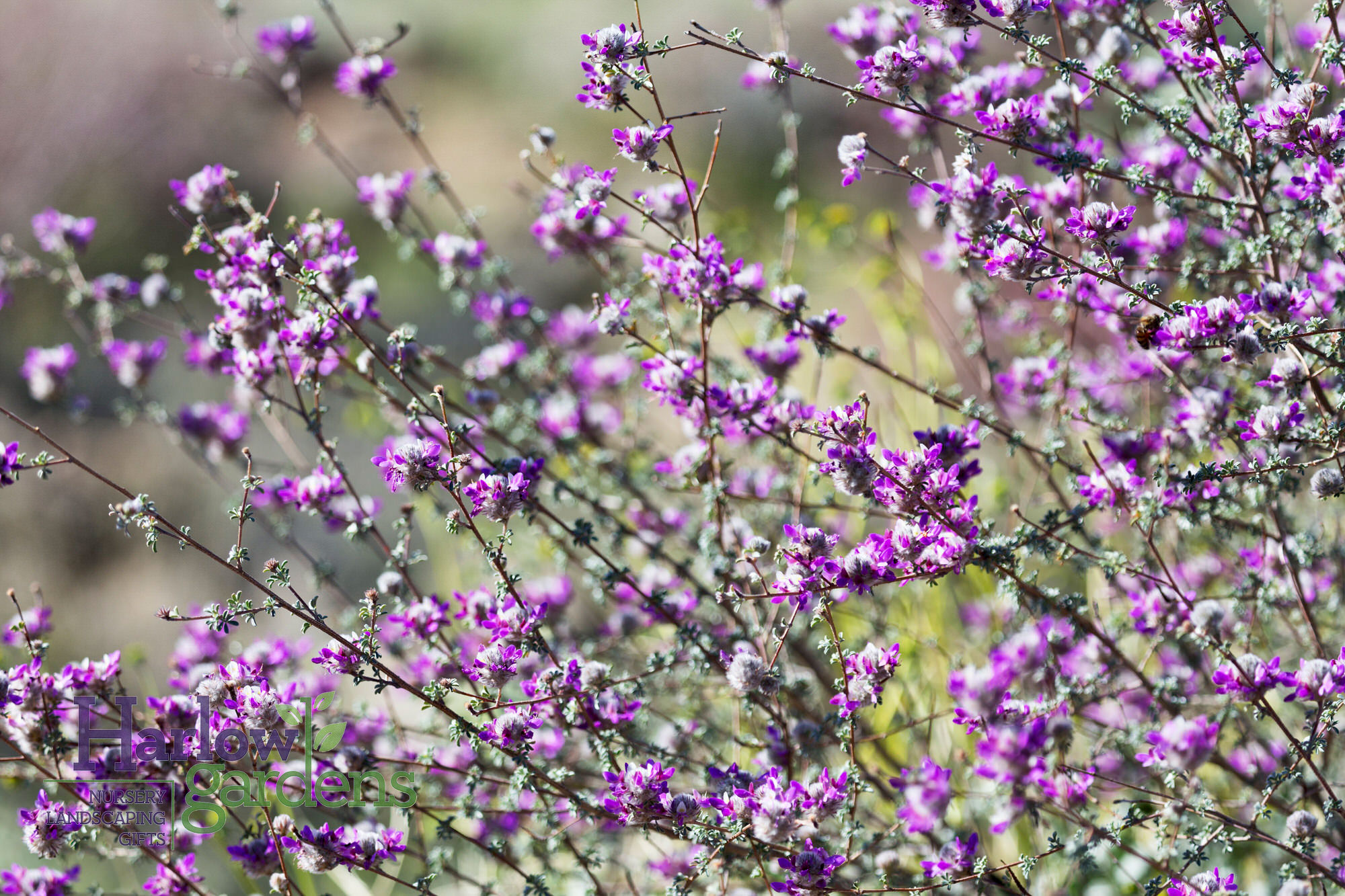
Trailing Indigo Bush
Low silvery ground cover with purple flowers in spring. Spreads wide and stays tidy.
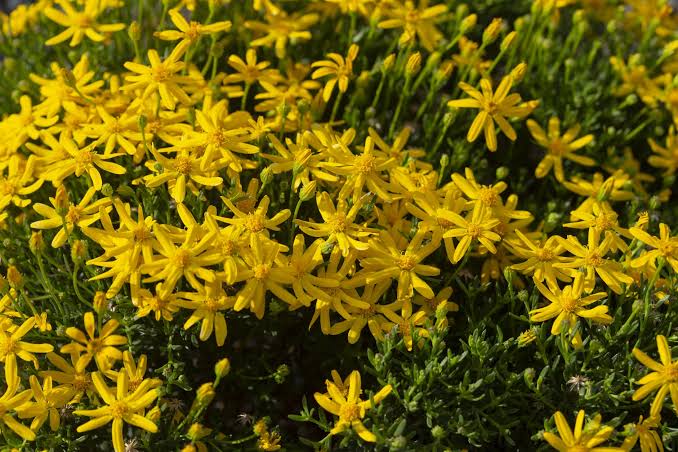
Damianita
Low mound of fine, bright green leaves covered in yellow daisies in spring and fall. Stays under 2 feet.
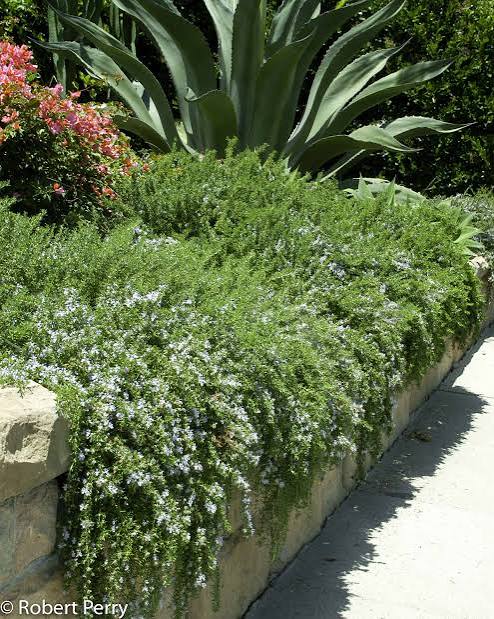
Trailing Rosemary
Low, spreading rosemary that drapes over edges. Fragrant, evergreen, small blue flowers, and great in heat.
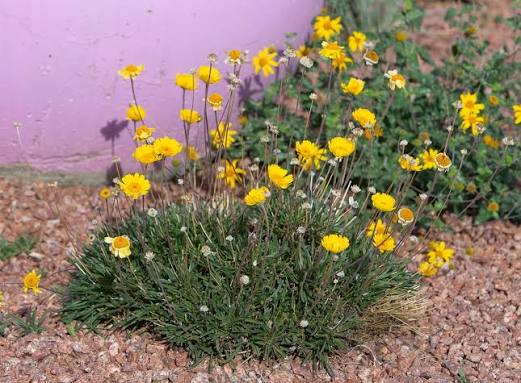
Angelita Daisy
Small mound of fine leaves with little yellow daisies almost all year. Very easy and stays low.

Globe Mallow
Native perennial with apricot orange cup flowers in spring. Fast to fill a gap, takes heat with no problem, and reseeds a little on its own.
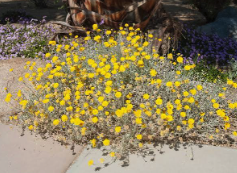
Desert Marigold
Native with soft gray leaves and bright yellow flowers spring through fall. Low and easy, and it reseeds a little.
You can't fit all of these. Pick 3 or 4 favorites and repeat them through the space so it looks planned and full.
Backyard
Under the date palm
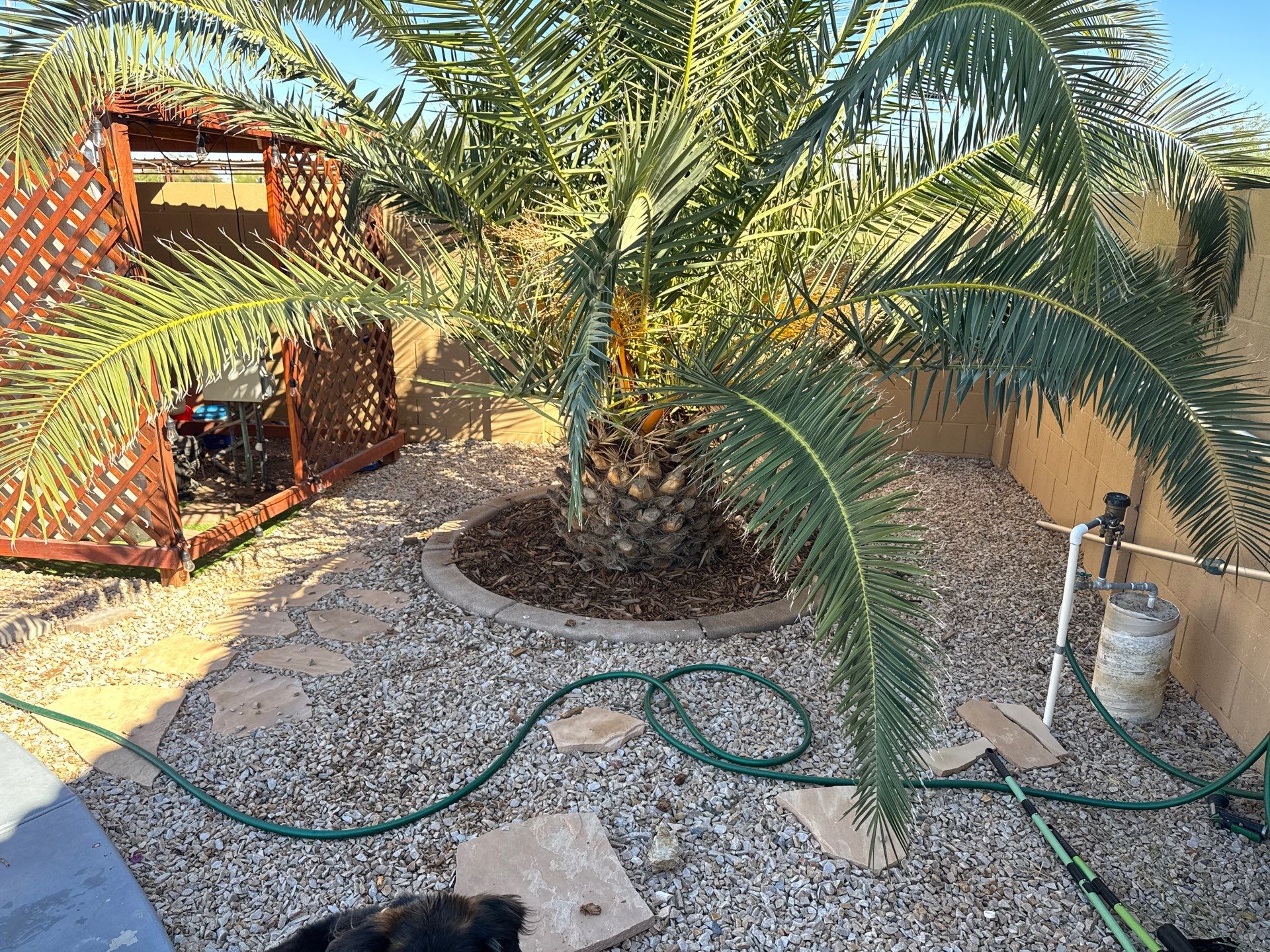
Under this palm, a ground cover would look great. You can plant right inside the ring, in the mulch. Yellow dot is what I'm considering, but here are a few other options. The palm gives filtered shade, so these all do well with a mix of sun and shade. Keep plants about a foot back from the trunk.

Yellow Dot
Fast, bright green ground cover with little yellow daisy flowers. Fills in quickly in the filtered shade under the palm. It can get burned back on a hard frost in Casa Grande, but it comes back from the roots in spring.

Purple Heart
Deep purple leaves that really pop against green and rock, with small pink flowers. Spreads easily. It dies back with frost and returns in spring.
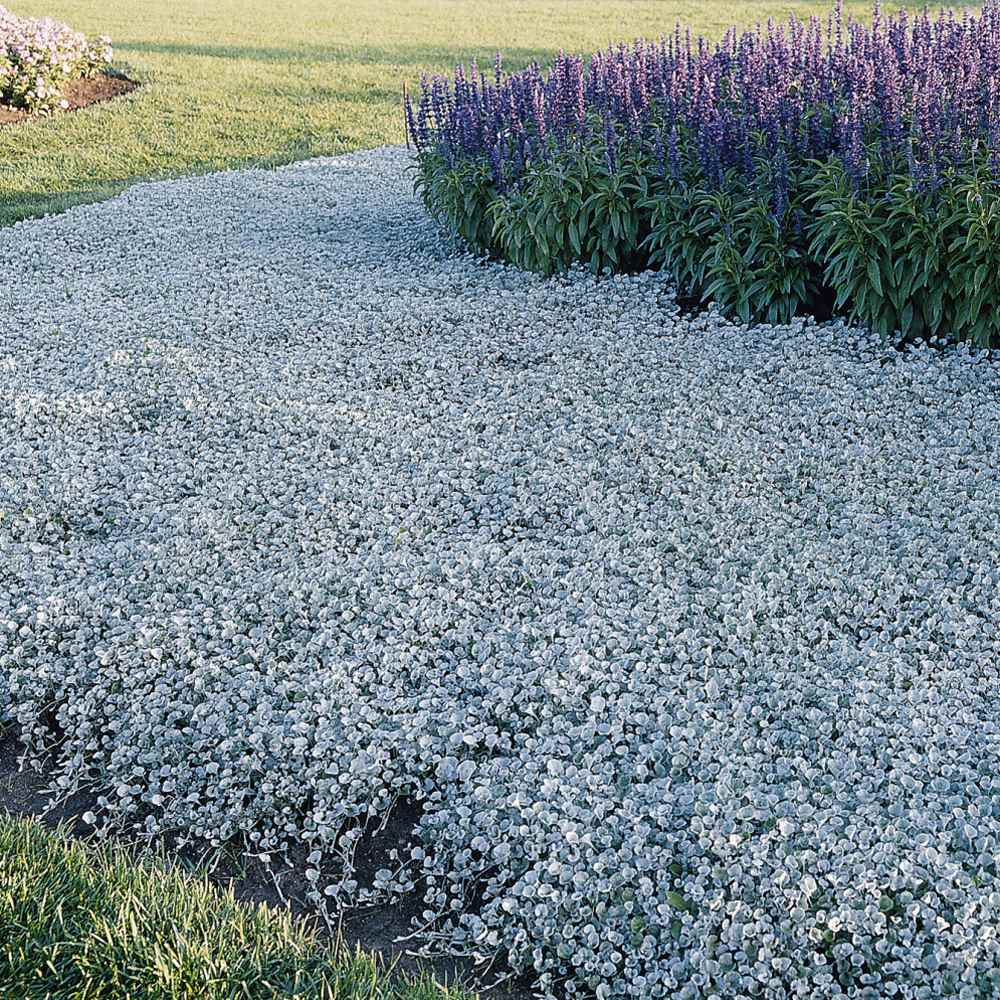
Silver Ponyfoot
Trailing silver ground cover with small round leaves. Soft and elegant, and does well with a little shade in the afternoon.
Trailing Rosemary
Low, spreading rosemary that drapes over edges. Fragrant, evergreen, small blue flowers, and great in heat.
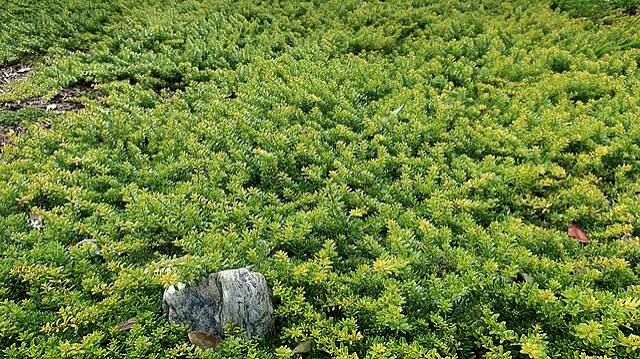
Myoporum
Fast, flat, bright green ground cover with tiny white flowers. Fills space quickly.
Fig tree corner
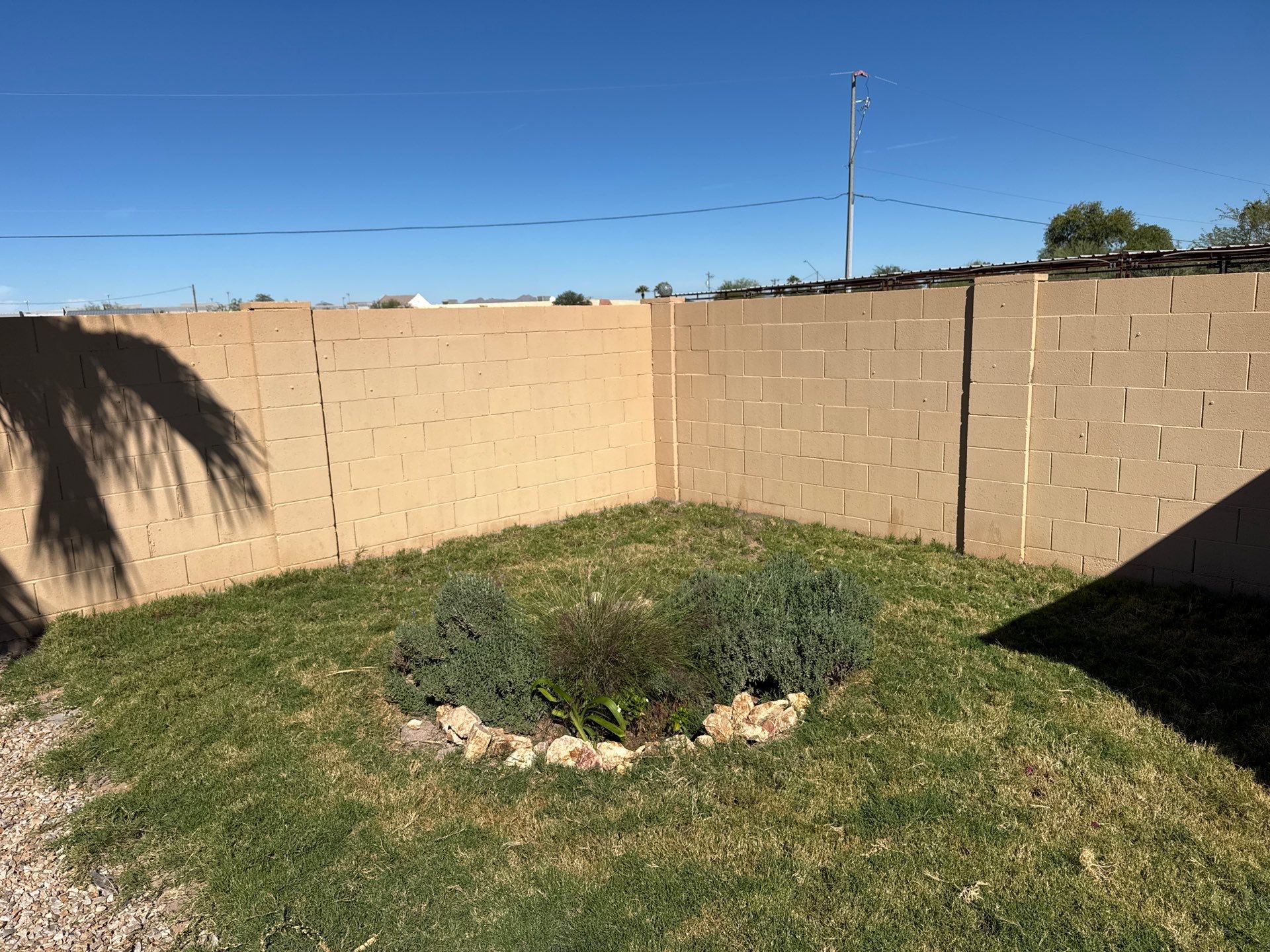
This back corner is a great spot for a fig tree. Here are some varieties that are different from the Black Mission and Brown Turkey you see in most stores. These can be harder to find, so check Greenlife Nursery and A&P in winter, or order online from a fig specialty grower.

Fig
Big tropical-looking leaves, fast growth, and two crops a year on many varieties. Handles our heat well with deep, steady watering and a thick layer of mulch.
Varieties to look for:
- Violette de Bordeaux: Small, dark purple figs with a rich, berry-like flavor. A compact tree that's easy to keep at picking height.
- Panache (Tiger Stripe): Green and yellow striped skin with red, jammy flesh. It needs a long, hot season to ripen, which you definitely have.
- LSU Purple: Sweet, dark purple figs and very productive. Often gives a small early crop plus the main crop.
- Conadria: Light green skin with white to pink flesh. Bred in California for heat and resists splitting.
- Smith: Large bronze figs with amber, honey-sweet flesh. One of the sweetest you can grow.
- Kadota: Yellow green skin and honey-sweet flesh. Great fresh and one of the best for drying and preserves.
Figs like heavy mulch and deep, steady watering. Uneven watering is what causes fruit to split. They can be pruned to keep them at picking height, and winter is the time to do it.
Water well
Every tree gets a water well: pull the rock back about 3 feet from the trunk in every direction and build a shallow basin with a raised edge so water soaks down into the roots instead of running off. Fill it with mulch instead of rock, keeping the mulch about a foot back from the trunk. Rock holds heat and bakes the roots. Mulch keeps them cool, holds moisture, and feeds the soil as it breaks down.
Pool area ground cover
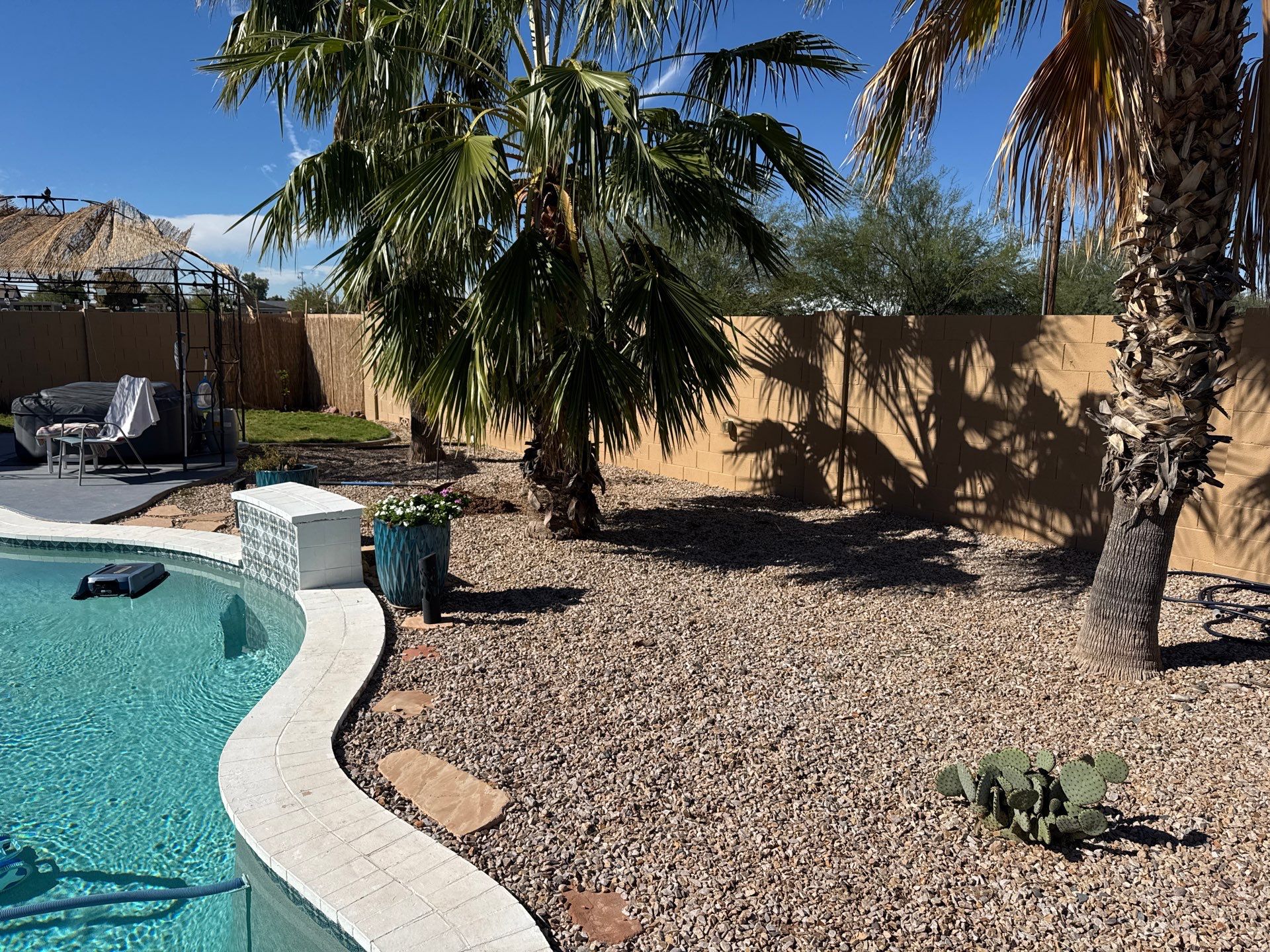
This area by the pool needs some ground cover. Trailing emu bush, globe mallow, and native milkweed are a good start, along with a few other options that will fill in and cover the rock. Keep plants a couple of feet back from the pool deck so they don't spill onto the concrete.
Trailing Emu Bush (Outback Sunrise)
Low spreading ground cover with gray green leaves and yellow flowers in late winter and spring. One of my favorites for the hottest spots in the yard.
Globe Mallow
Native perennial with apricot orange cup flowers in spring. Fast to fill a gap, takes heat with no problem, and reseeds a little on its own.

Desert Milkweed
Native milkweed with tall gray green stems and creamy flowers. A host plant for monarch butterflies. A few aphids on it are normal and bring in the beneficial insects.
Damianita
Low mound of fine, bright green leaves covered in yellow daisies in spring and fall. Stays under 2 feet.
Trailing Indigo Bush
Low silvery ground cover with purple flowers in spring. Spreads wide and stays tidy.
Angelita Daisy
Small mound of fine leaves with little yellow daisies almost all year. Very easy and stays low.
Desert Marigold
Native with soft gray leaves and bright yellow flowers spring through fall. Low and easy, and it reseeds a little.
Trailing Rosemary
Low, spreading rosemary that drapes over edges. Fragrant, evergreen, small blue flowers, and great in heat.
You can't fit all of these. Pick 3 or 4 favorites and repeat them through the space so it looks planned and full.
Newly planted lemon tree
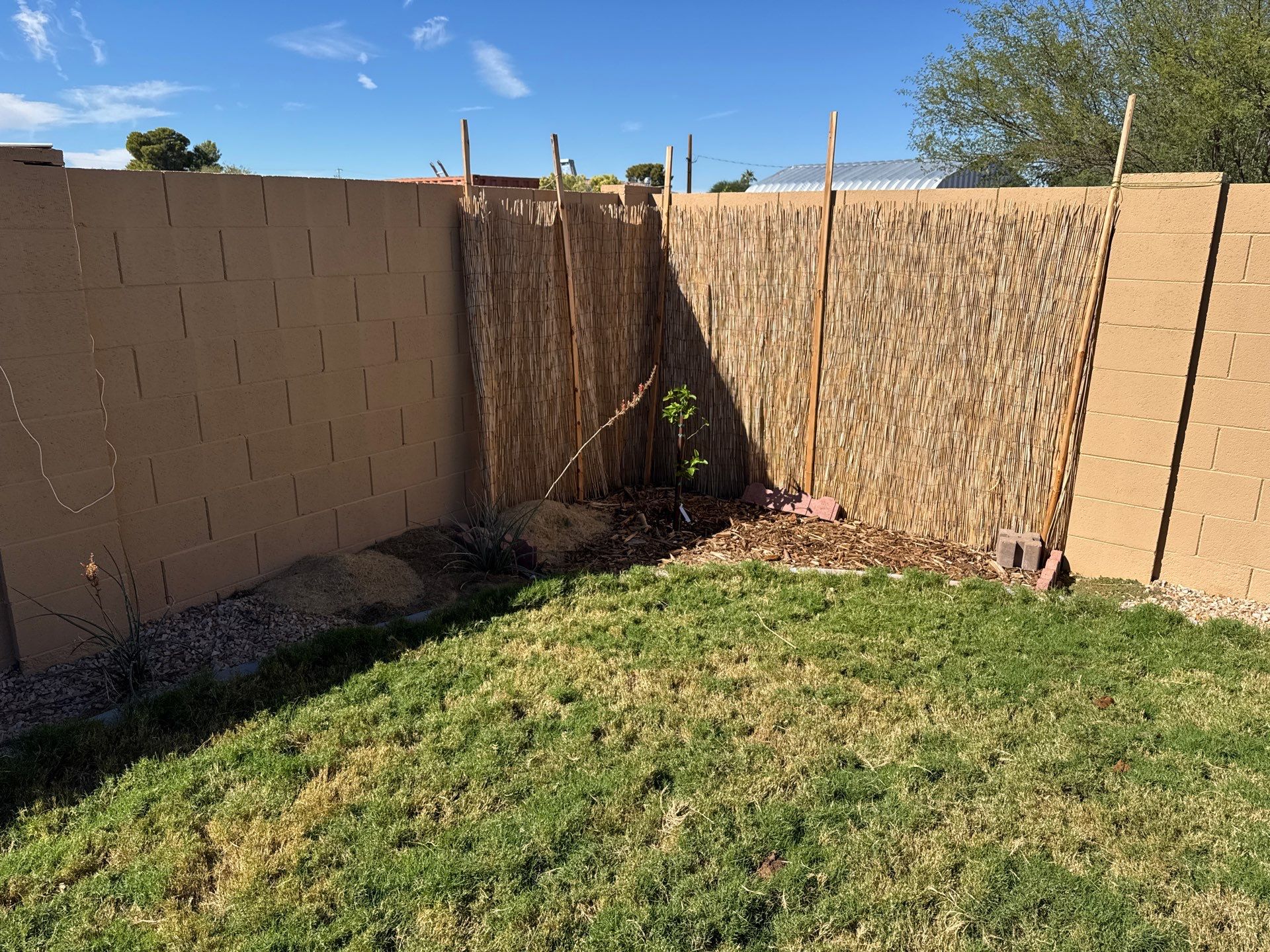
This lemon tree is newly planted, and a few things need to happen now while it's young.
Expose the root flare
Pull the soil back from the base until you can see the root flare, the spot where the trunk widens out into the main roots. It should sit at or just above the soil line. When it's buried, the bark stays wet, the roots can't breathe, and roots start circling the trunk. This video shows why an exposed root flare matters, with real examples.
Can't see the video? Watch it on YouTube.
A strong stream of water from a hose will blast the soil away without damaging the bark.
Build a 3 foot water well
Make a well about 3 feet across with a raised edge so water soaks down into the roots. Fill it with mulch, keeping the mulch a few inches back from the trunk.
Restake it
Pull out the single nursery stake tied to the trunk. Those are only meant for shipping. Put in two stakes, one on each side, about a foot out from the trunk and outside the root ball. Tie the tree to each stake with a loose, flexible tie so the trunk can still sway a little. That movement is what makes the trunk strong. Take the stakes out after about a year, once the tree can stand on its own.
Frost
Lemons are the most frost-sensitive citrus, and Casa Grande gets colder nights than Phoenix. On nights forecast below 32, cover the tree with frost cloth all the way to the ground (not plastic), and water the day before, since moist soil holds heat. Pull the cloth off in the morning.
Backyard walls
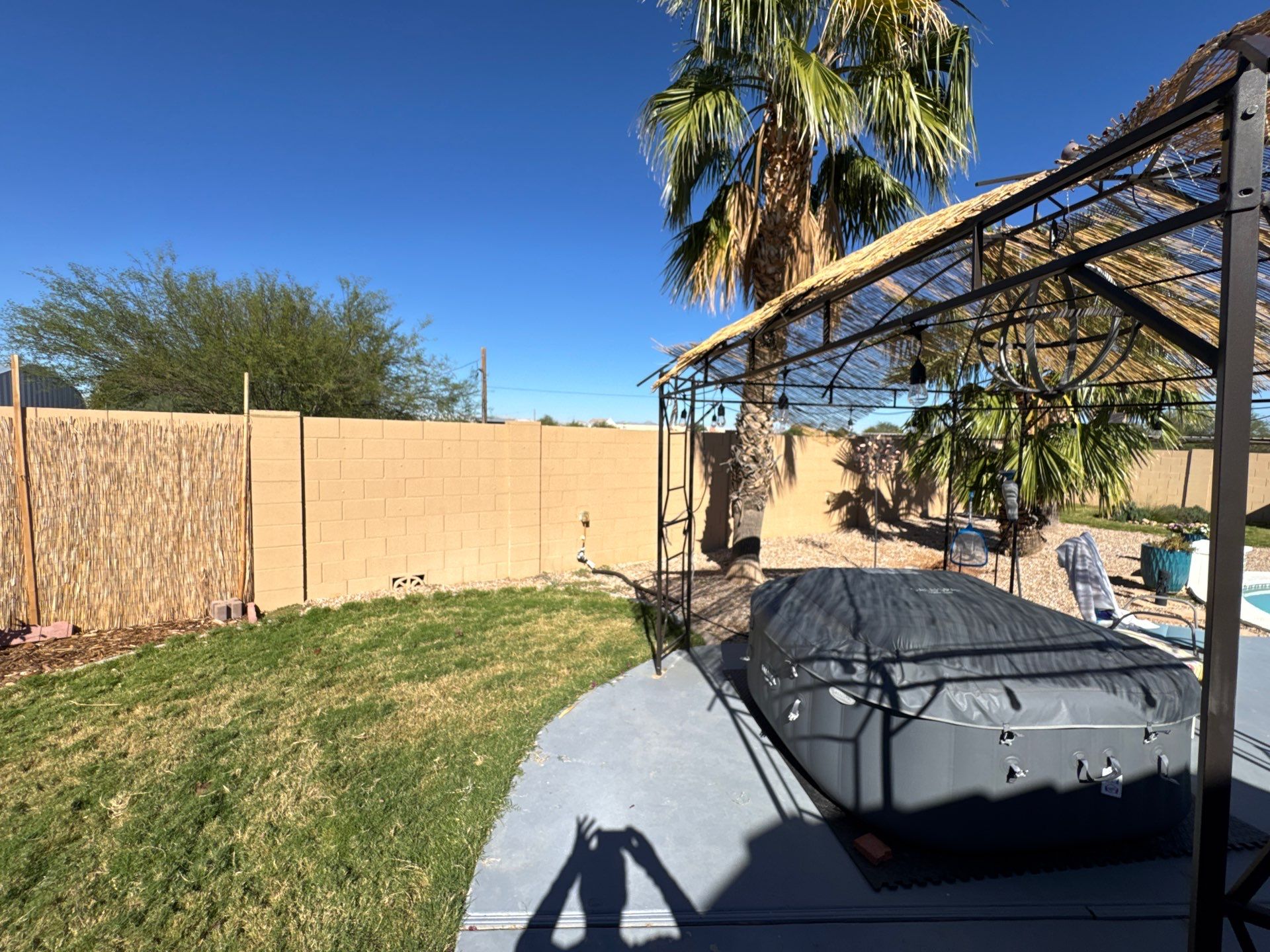
For all the walls in the backyard, here are the plants I recommend for covering them: hopseed, Arizona rosewood, orange jubilee, and twisted myrtle. Orange jubilee is a hummingbird favorite, and they'll even build their nests in it.
Pick one plant and run it the full length of the wall so it reads as one clean hedge. Plant about 3 feet off the wall.
Hopseed
Fast growing evergreen hedge with narrow bright green leaves. Gets tall and full enough to cover a block wall. Space 4 to 5 feet apart.
Arizona Rosewood
Native evergreen hedge with dark green leaves. Dense, handles full sun and reflected heat, and makes a solid screen. Takes less water than plants that aren't desert adapted. Space 5 to 6 feet apart.
Orange Jubilee
Big clusters of orange trumpet flowers from spring through fall. Hummingbirds love it and will even build their nests in it. Fast and full. Space 5 to 6 feet apart.
Twisted Myrtle
Evergreen with small glossy leaves that have a slight twist, and fragrant white flowers. A little more compact and refined than hopseed or rosewood. Space about 4 feet apart.
Here's a short video on orange jubilee: watch on YouTube.
East-facing wall with the trellis
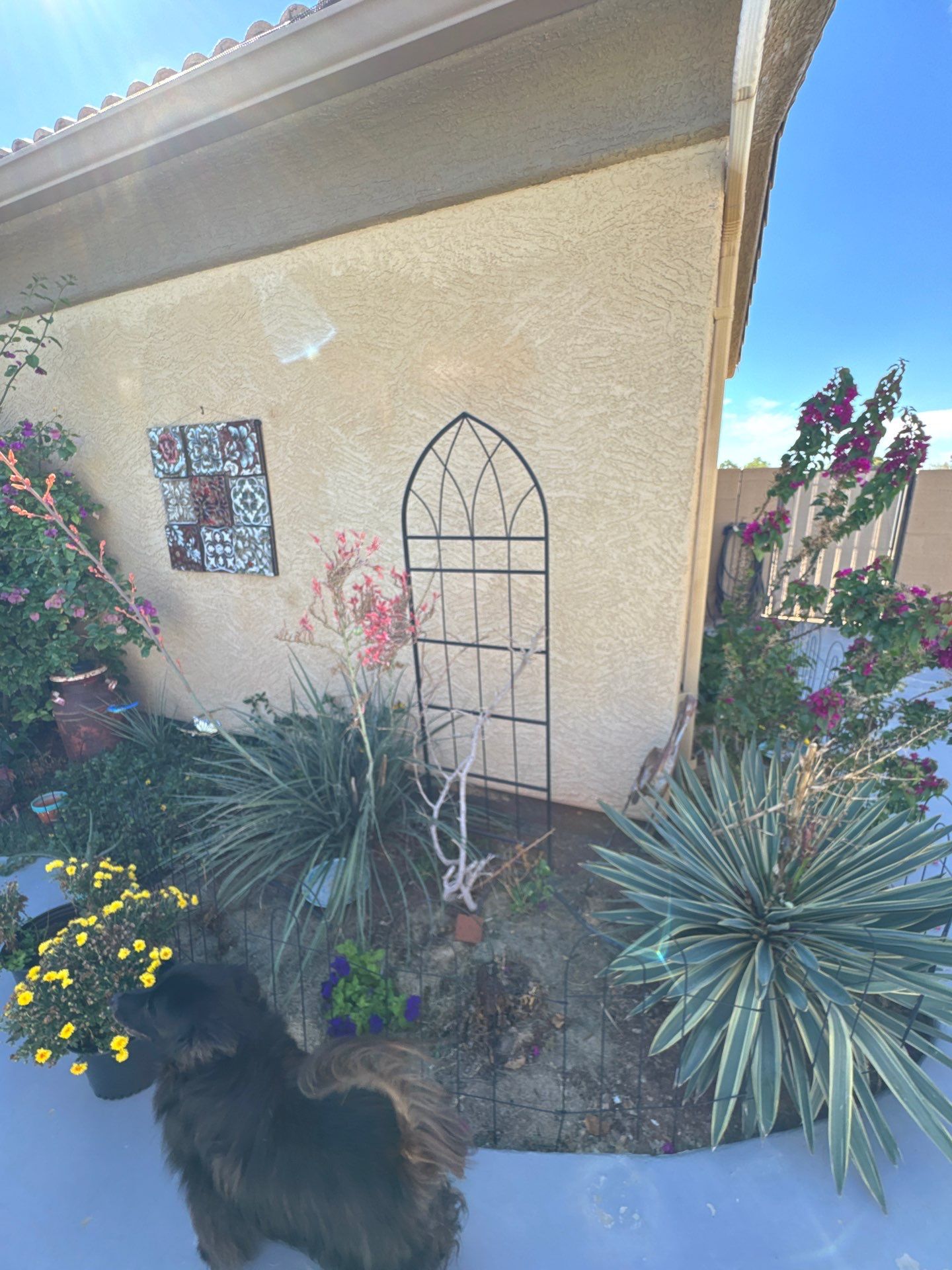
This wall in the backyard faces east, so it gets morning sun and afternoon shade. Here are some suggestions for vines that can grow up the trellis and cover more of the wall.
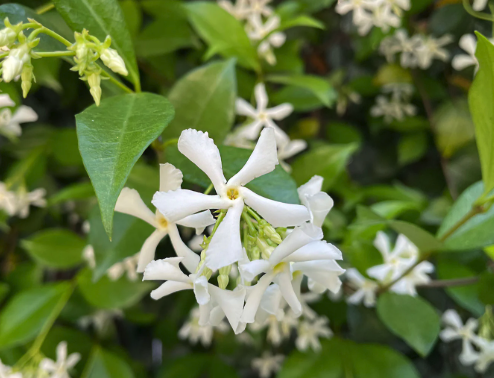
Star Jasmine
Evergreen vine with glossy leaves and very fragrant white flowers in spring. Does great on an east-facing wall with morning sun and afternoon shade.
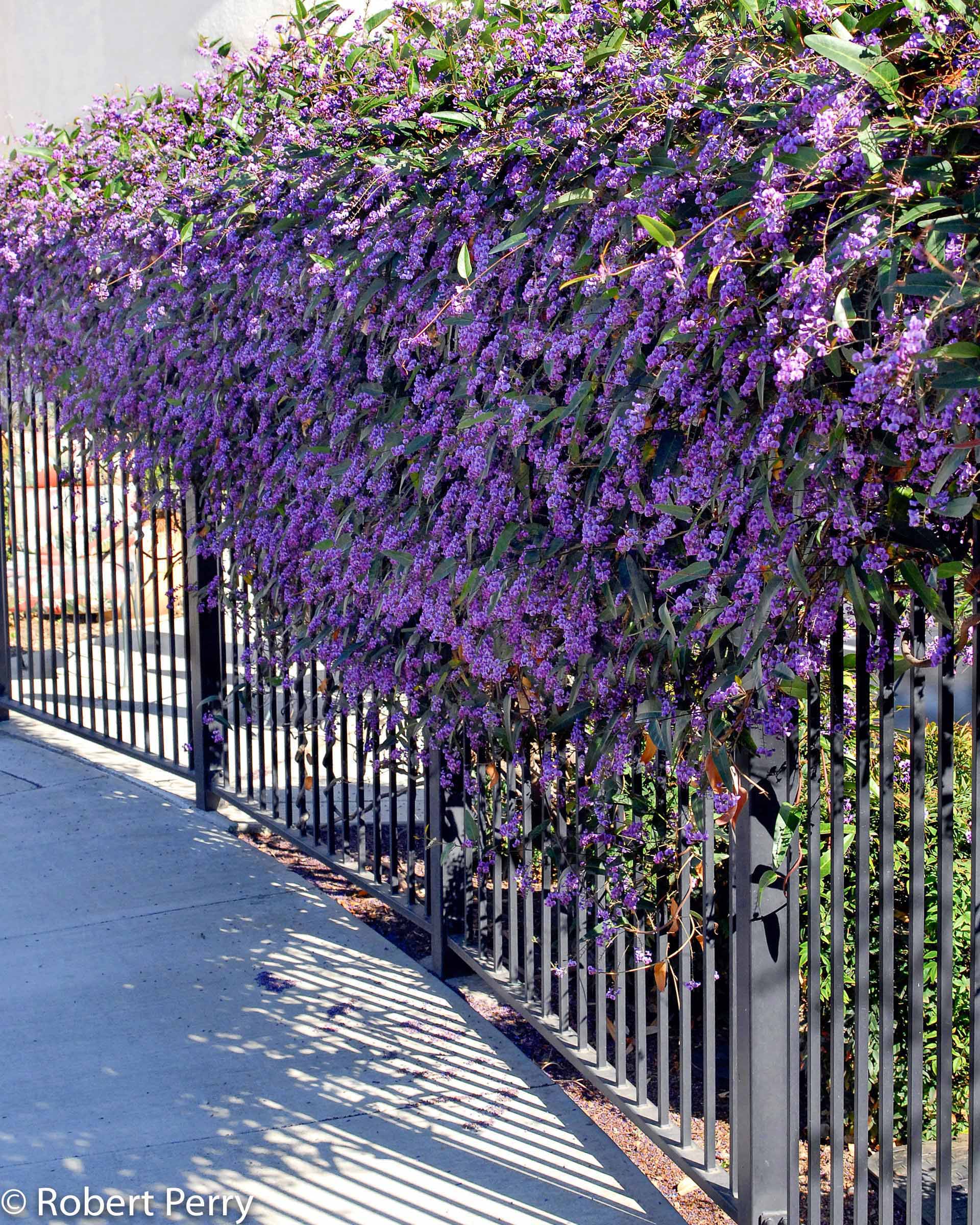
Purple Lilac Vine
Evergreen vine with clusters of purple flowers in late winter and early spring, when not much else is blooming. Likes morning sun.
Tangerine Crossvine
Evergreen vine with orange trumpet flowers in spring. Clings and climbs on its own, handles full sun, and is very tough.
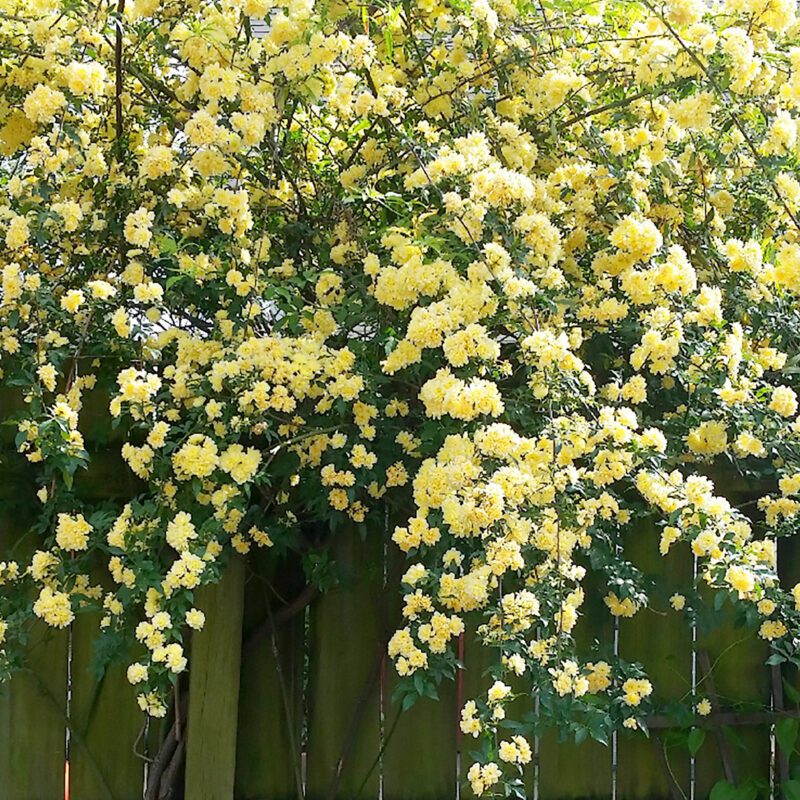
Lady Banks Rose
Thornless climbing rose with a huge flush of small yellow or white flowers in spring. Vigorous and tough once established.
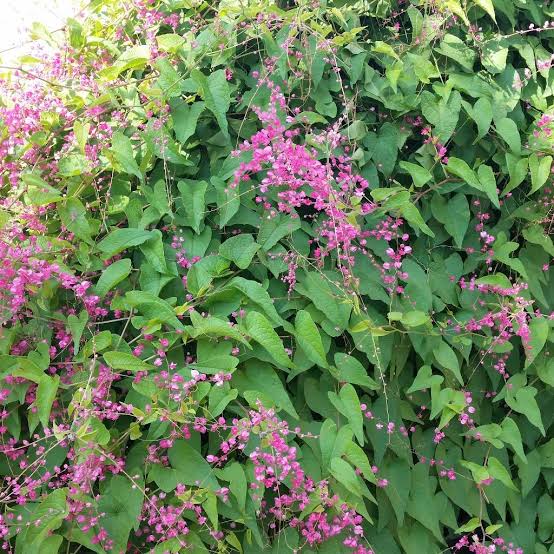
Coral Vine
Fast vine with sprays of pink flowers from summer into fall. Bees love it. It can freeze back in winter and regrows quickly in spring.
Ground cover
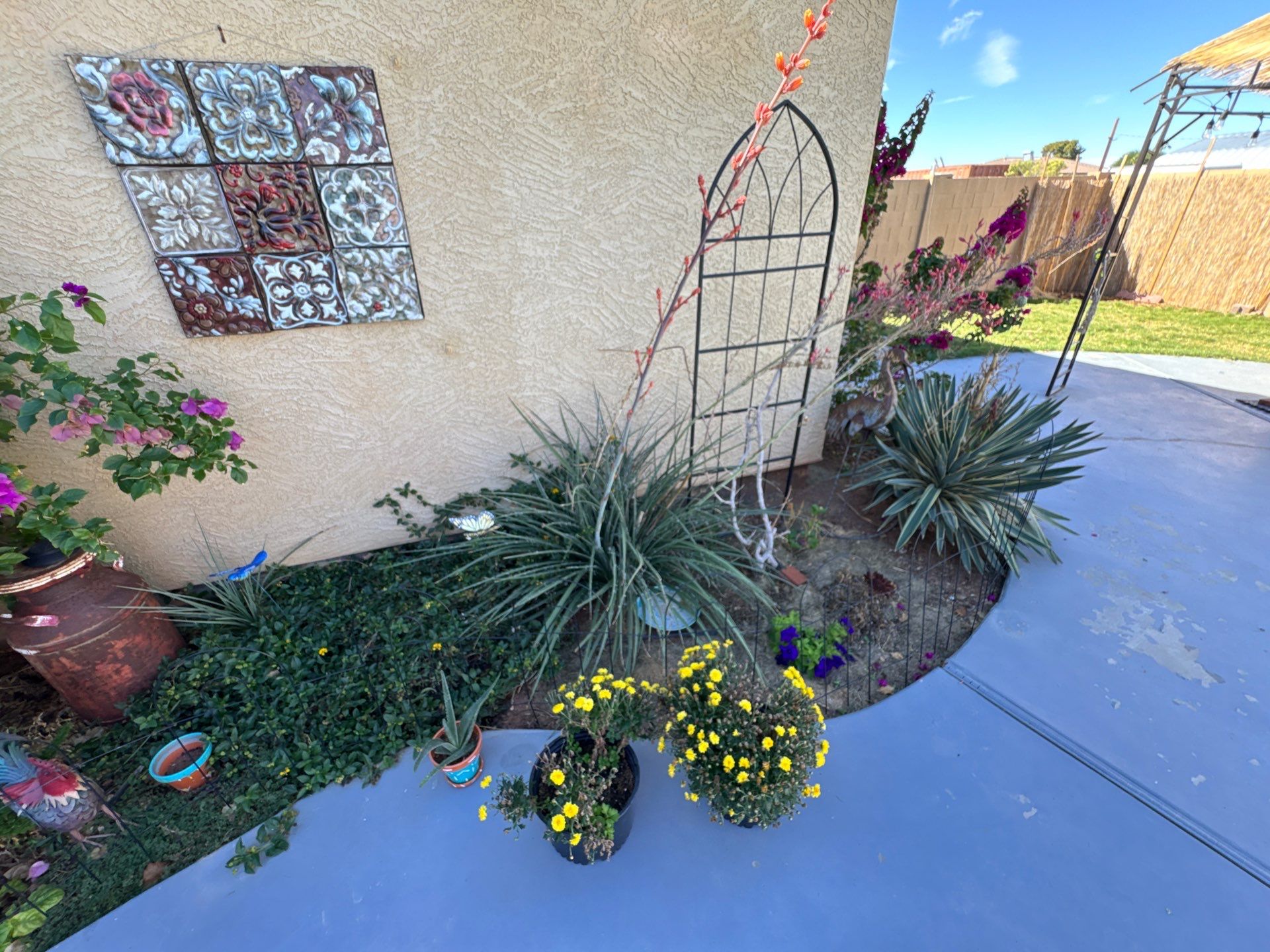
In the bed by the bougainvillea, some ground cover would fill in the bare spots around the yuccas. Purple heart would be a very good choice here. The deep purple really stands out against the green. Here are a few other options.
Purple Heart
Deep purple leaves that really pop against green and rock, with small pink flowers. Spreads easily. It dies back with frost and returns in spring.
Trailing Rosemary
Low, spreading rosemary that drapes over edges. Fragrant, evergreen, small blue flowers, and great in heat.
Silver Ponyfoot
Trailing silver ground cover with small round leaves. Soft and elegant, and does well with a little shade in the afternoon.
Angelita Daisy
Small mound of fine leaves with little yellow daisies almost all year. Very easy and stays low.
Trailing Indigo Bush
Low silvery ground cover with purple flowers in spring. Spreads wide and stays tidy.
Myoporum
Fast, flat, bright green ground cover with tiny white flowers. Fills space quickly.
You can't fit all of these. Pick 3 or 4 favorites and repeat them through the space so it looks planned and full.
Planting everything above
Dig the hole as deep as the root ball and two to three times as wide. Backfill with your native soil and a tiny bit of compost mixed in. Then lay compost on top of the soil and mulch over the compost. Don't work it in. Keep mulch back from the trunk of every tree and shrub. In rock areas, pull the rock back to make room for the compost and mulch. Every tree, new or existing, gets a water well with mulch instead of rock.
Fertilizing
Everything in this write-up comes back to the soil. The desert adapted plants need very little feeding: mulch and a light layer of compost once a year is plenty. The fruit trees, the lemon, the vines, and the raised bed are a different story. They need regular feeding to stay healthy, fruit well, and handle the heat. Feeding is really about feeding the soil life. Fungi, bacteria, and worms break down organic matter and hand nutrients to the roots, all without synthetic fertilizers.
- Compost: Spread a generous layer around the drip line of the trees (out where the canopy ends, not against the trunk) and closer in around the shrubs and vines. Arizona Worm Farm is my go-to.
- Worm castings: Add a layer every quarter around the fruit trees, the lemon, and in the raised bed.
- Organic fertilizer, monthly: These are the three Catalyst products I rotate through every month. You can order them online.
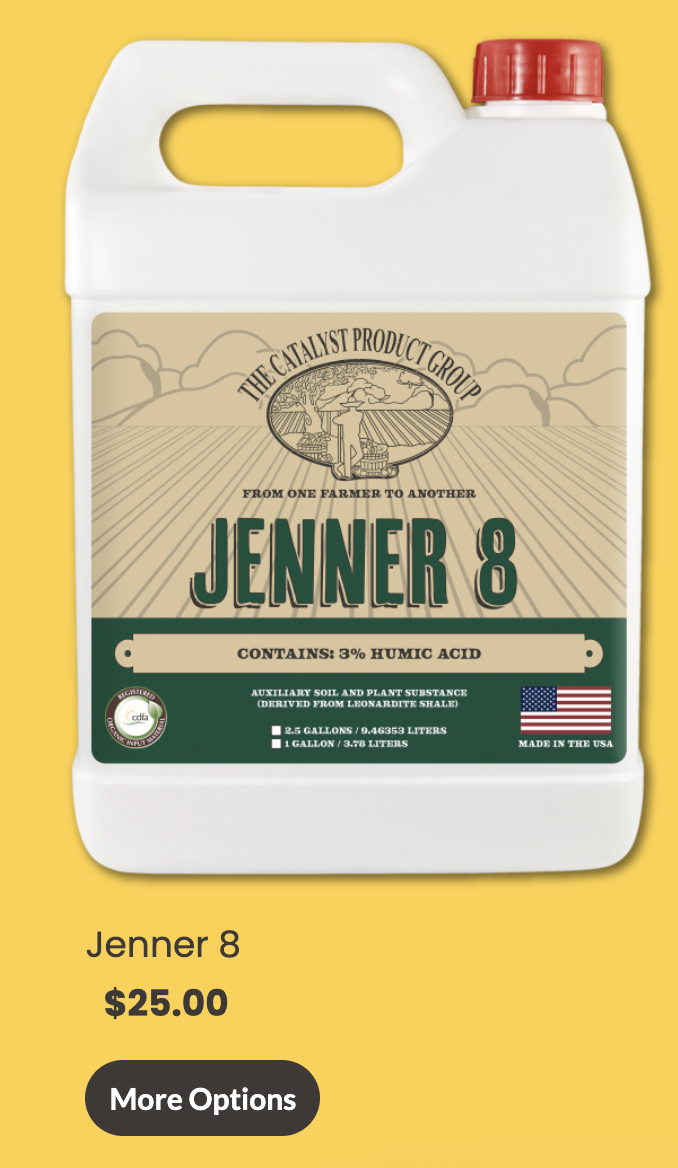
Catalyst Jenner 8
One of the three liquid products in my monthly rotation.
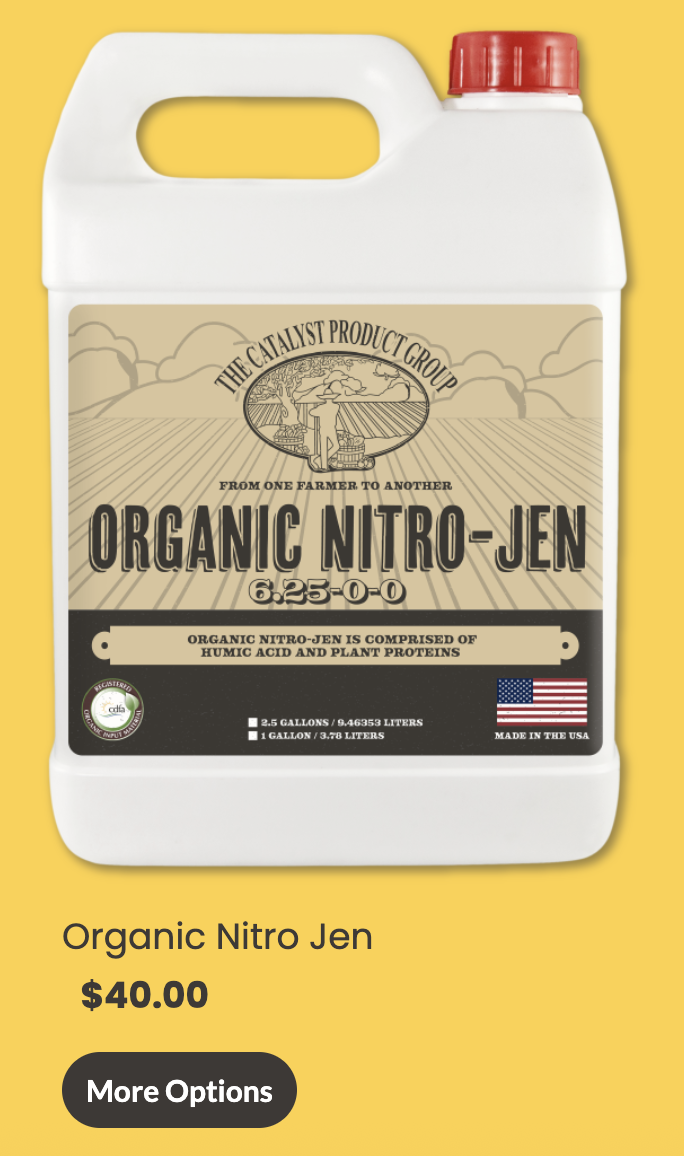
Catalyst Organic Nitro Jen
Organic nitrogen source, great for greening up leaves.
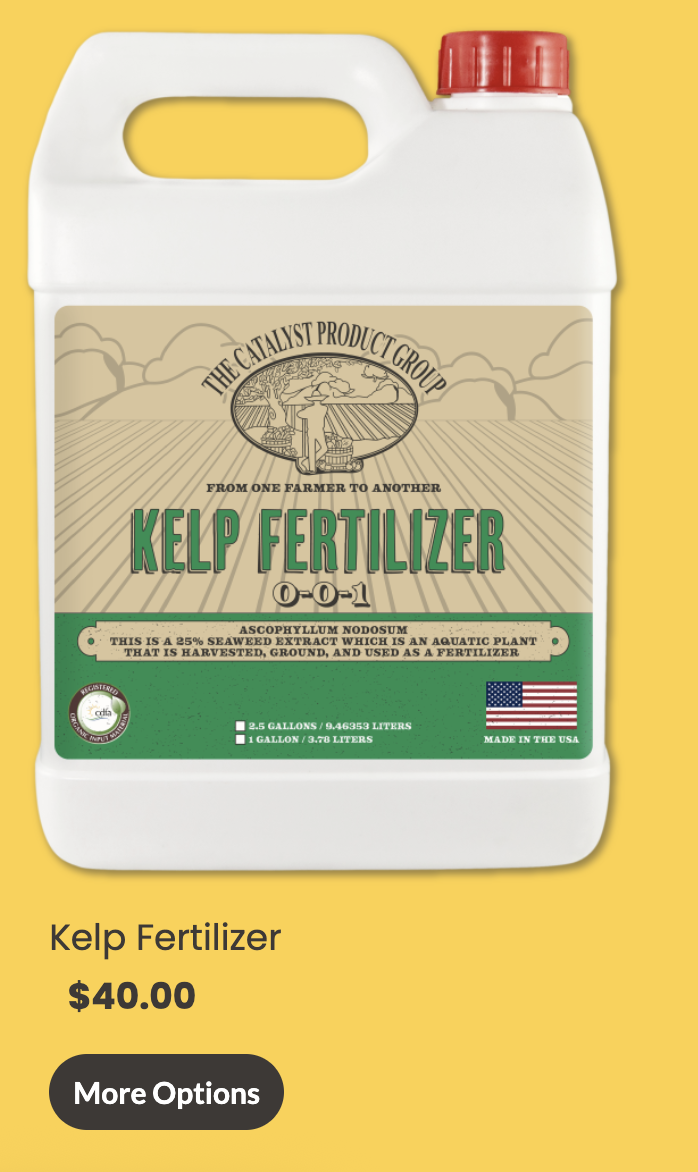
Catalyst Kelp Fertilizer
Kelp-based feed with trace minerals that helps plants handle heat stress.
Find them at Catalyst Product Group (click Products, then Home and Garden).
Quick reference
- Compost, mulch, worm castings, and raised bed mix: Arizona Worm Farm
- Trees, shrubs, and bareroot fruit trees: A&P Nursery or Whitfill Nursery
- Passion fruit and figs: Greenlife Nursery
- Raised beds: Olle Gardens
- What to plant and when: Maricopa County planting guide
- Organic fertilizer: Catalyst Product Group
- Irrigation and drip: Garrett, 480-678-9121
- Tree trimming: King's Tree Service
- Why root flares matter: Root flare video
Next steps
Thanks again for having me out, Susie. As a consult client you're already in the Garden Nerd Club, so you have direct access to me there anytime you have a question while you work through this.
If you want to plant it yourself, everything you need is in here. If you'd rather have us do the planting, I can put together a planting proposal whenever you're ready. For anything with irrigation, call Garrett at 480-678-9121.
