
Consultation Write-Up
Richard's Yard
Thanks for having me out, Richard. We covered a lot: replacing the citrus and fig, getting the water wells and root flares right on all the fruit trees, covering the walls with low-water desert plants, and filling the front yard with easy cacti and natives.
Everything below follows the order we walked the yard, with photos of each spot. As a consult client, you're already in the Garden Nerd Club, so you have direct access to me there for any questions as you work through this.
Hibiscus Bed
Three hibiscus in a row
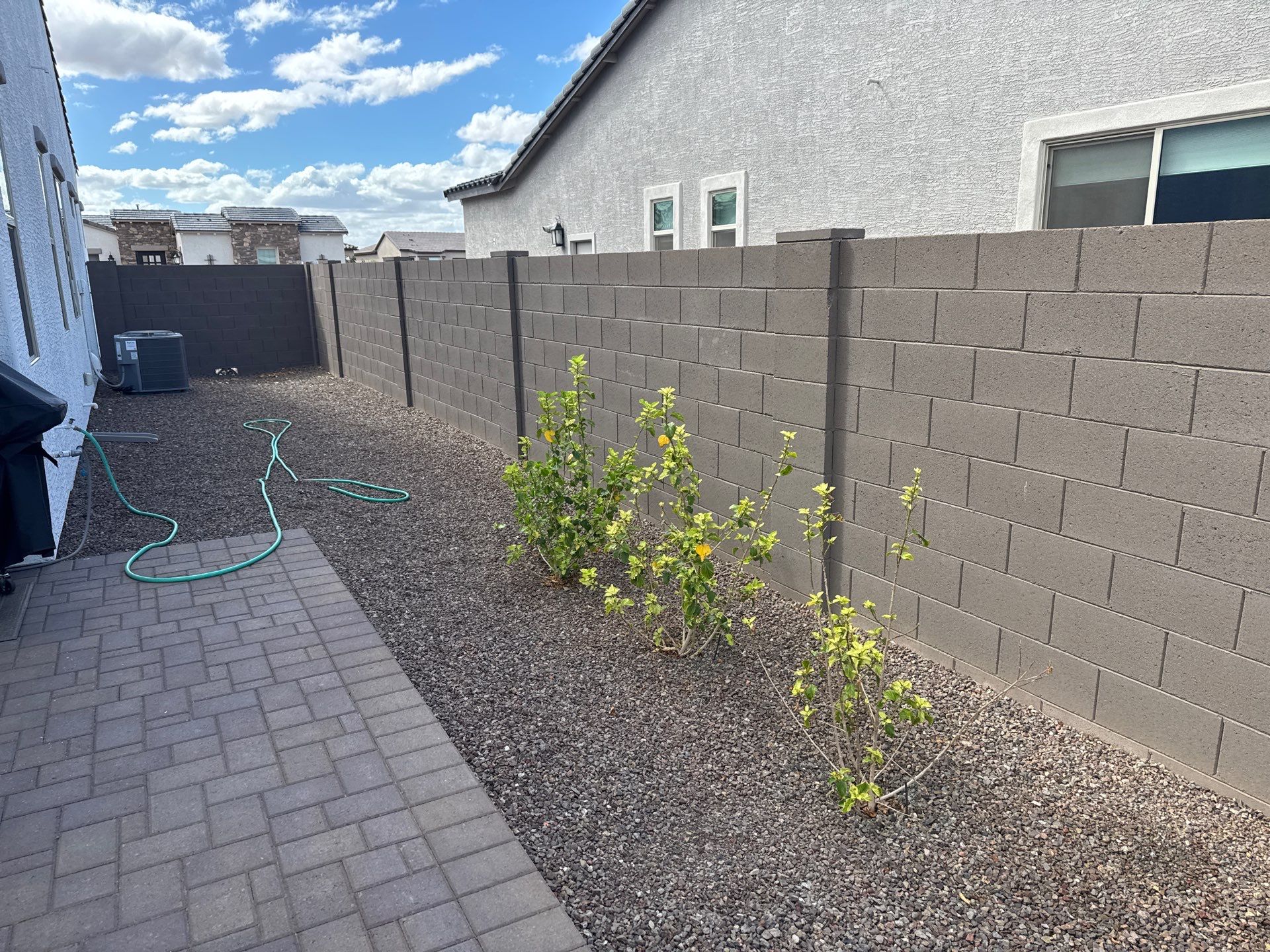
These three hibiscus need some help. Pull all the rock back and make one rectangular in-ground garden bed around all three, extending a couple feet out on every side of the row. No rock in the bed at all, just good quality compost with mulch over it. Keep the mulch a few inches back from the stems.
Rock holds and radiates heat right onto the roots, and a tropical like hibiscus struggles with that. Compost and mulch keep the roots cool, hold moisture, and feed the soil life, and that will help them come back.
Hibiscus needs to be fed on a regular basis to keep looking good. Feed them monthly with the organic fertilizers in the feeding section below.
Side Wall and Back Wall
Low-water plants to cover the wall
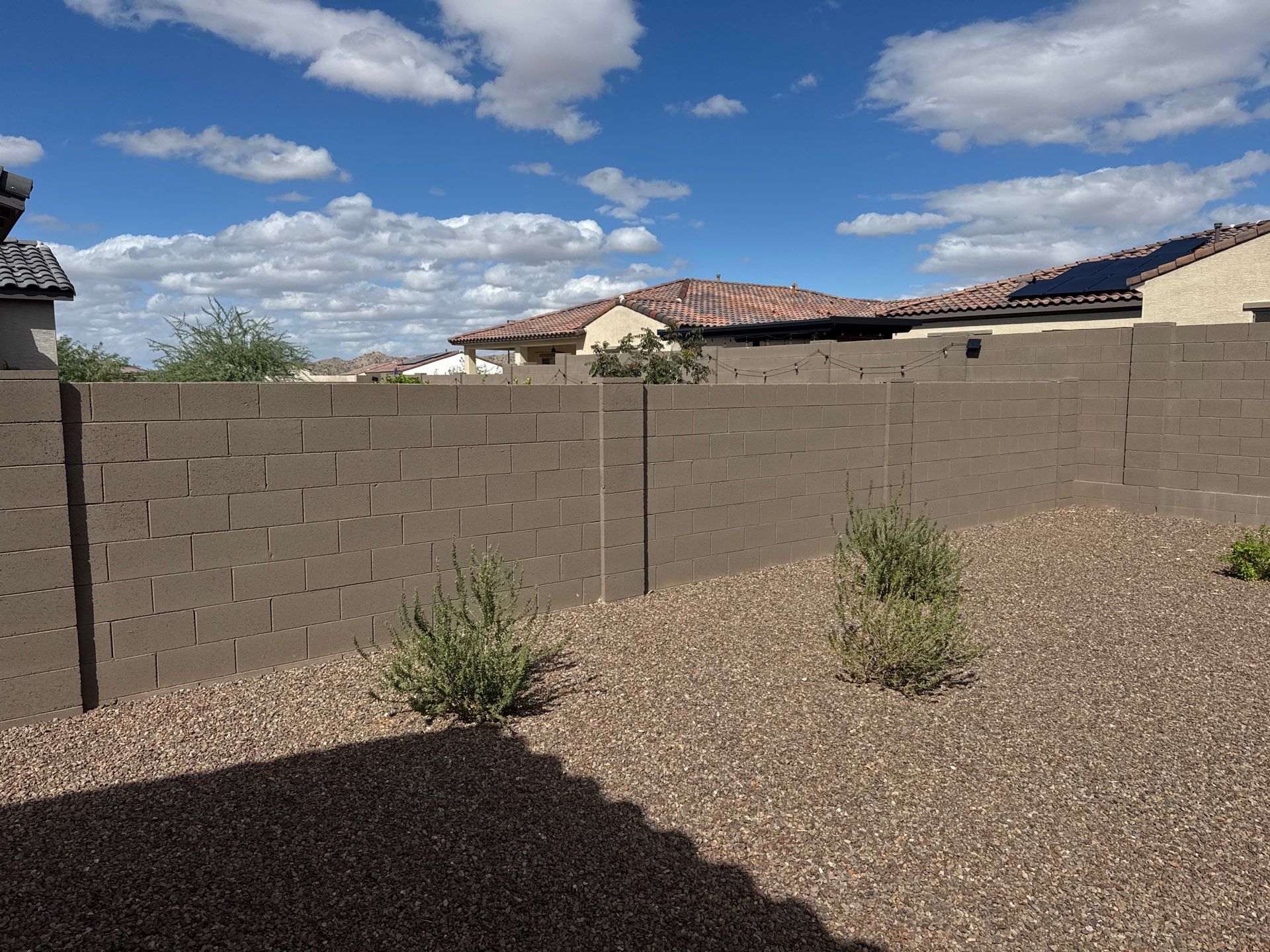
Along this wall and the back wall, we want low-water desert plants that can cover the wall. Arizona rosewood and hopseed are my first suggestions, and I added jojoba as another option.
Plant 15 gallon if you want coverage sooner, 5 gallon if you're patient (they catch up fast). For the first year or two, water deeply and regularly to get them rooted in. After that, these are desert-adapted plants that take a lot less water than plants that aren't desert adapted, so you can stretch the time between waterings way out.

Hopseed
Upright, narrow evergreen that grows quickly to 10 to 12 feet and fills in a wall fast. Takes less water than shrubs that aren't desert adapted. Space about 4 to 5 feet apart.

Arizona Rosewood
Native, dense, dark green evergreen with small white flowers in spring. Gets 6 to 10 feet, slow and steady, with very little trimming. Space about 5 feet apart.
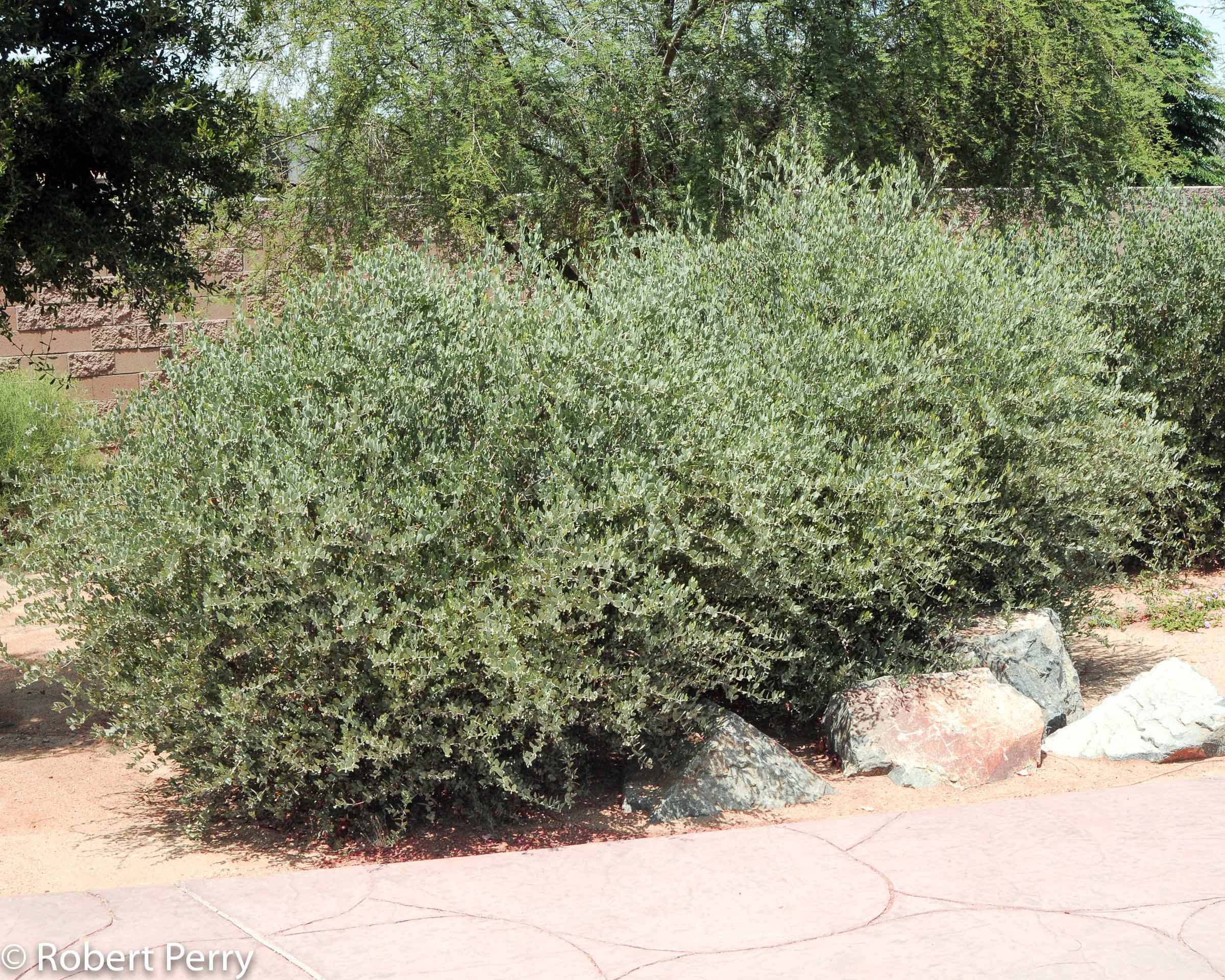
Jojoba
Native evergreen with leathery blue-green leaves that handles full sun and reflected heat off a wall without complaint. Gets 6 to 8 feet and makes a dense, tough screen.
Back Wall
Low-water wall coverage
Same thing on this back wall: cover it with something like hopseed or Arizona rosewood, something low water that after a year or two you won't really need to water much at all.
Plant 15 gallon if you want coverage sooner, 5 gallon if you're patient (they catch up fast). For the first year or two, water deeply and regularly to get them rooted in. After that, these are desert-adapted plants that take a lot less water than plants that aren't desert adapted, so you can stretch the time between waterings way out.
I also added yellow bells here if you want some color. Just know they take a bit more water than the other options.
Hopseed
Upright, narrow evergreen that grows quickly to 10 to 12 feet and fills in a wall fast. Takes less water than shrubs that aren't desert adapted. Space about 4 to 5 feet apart.
Arizona Rosewood
Native, dense, dark green evergreen with small white flowers in spring. Gets 6 to 10 feet, slow and steady, with very little trimming. Space about 5 feet apart.
Jojoba
Native evergreen with leathery blue-green leaves that handles full sun and reflected heat off a wall without complaint. Gets 6 to 8 feet and makes a dense, tough screen.
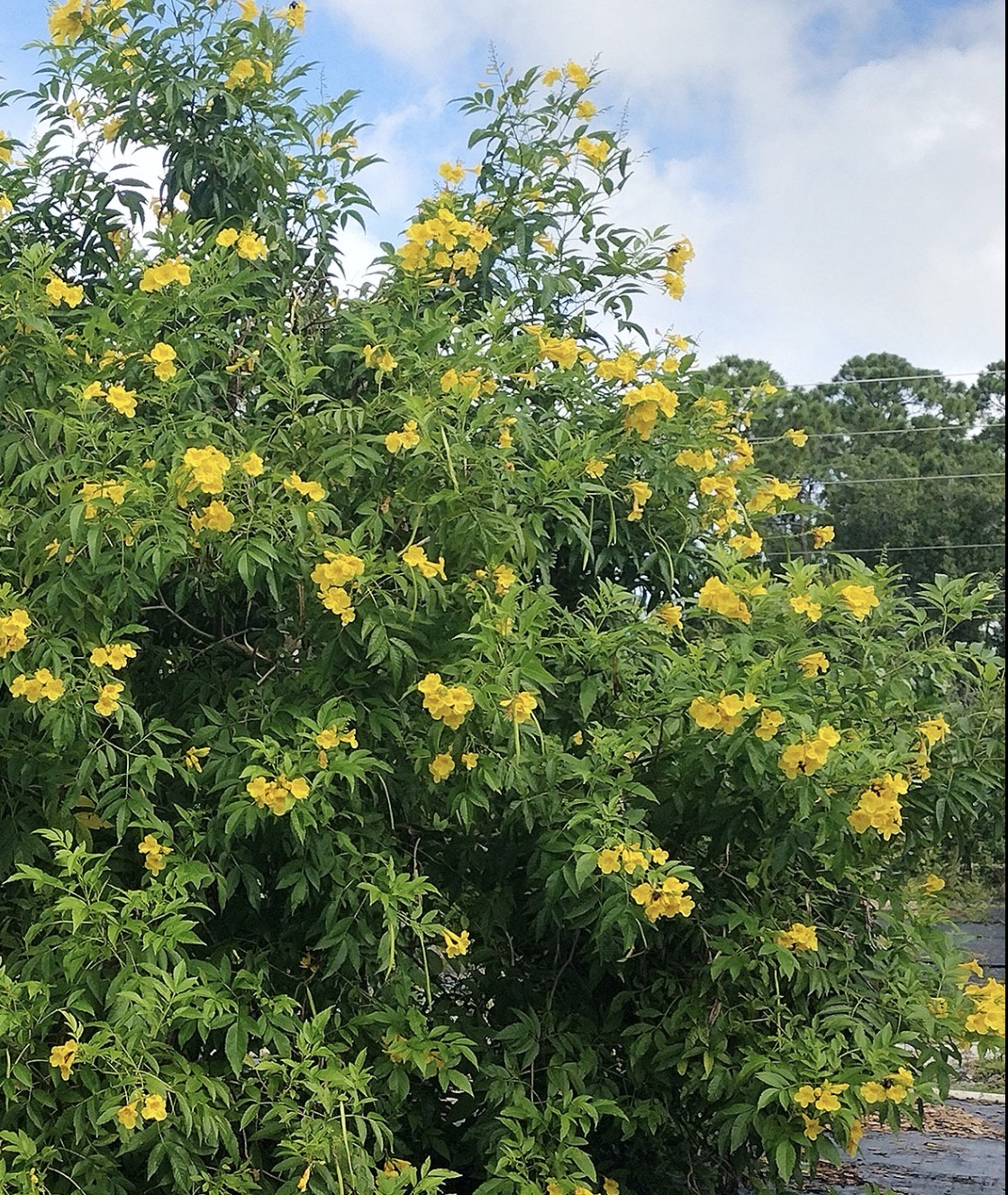
Yellow Bells
Bright yellow trumpet flowers from spring through fall, and the hummingbirds love them. Gets 6 to 10 feet. Unlike the other options here, yellow bells take a bit more water to look their best, so plan on watering them more often.
Citrus Trees
Replant, bigger wells, and swap their spots
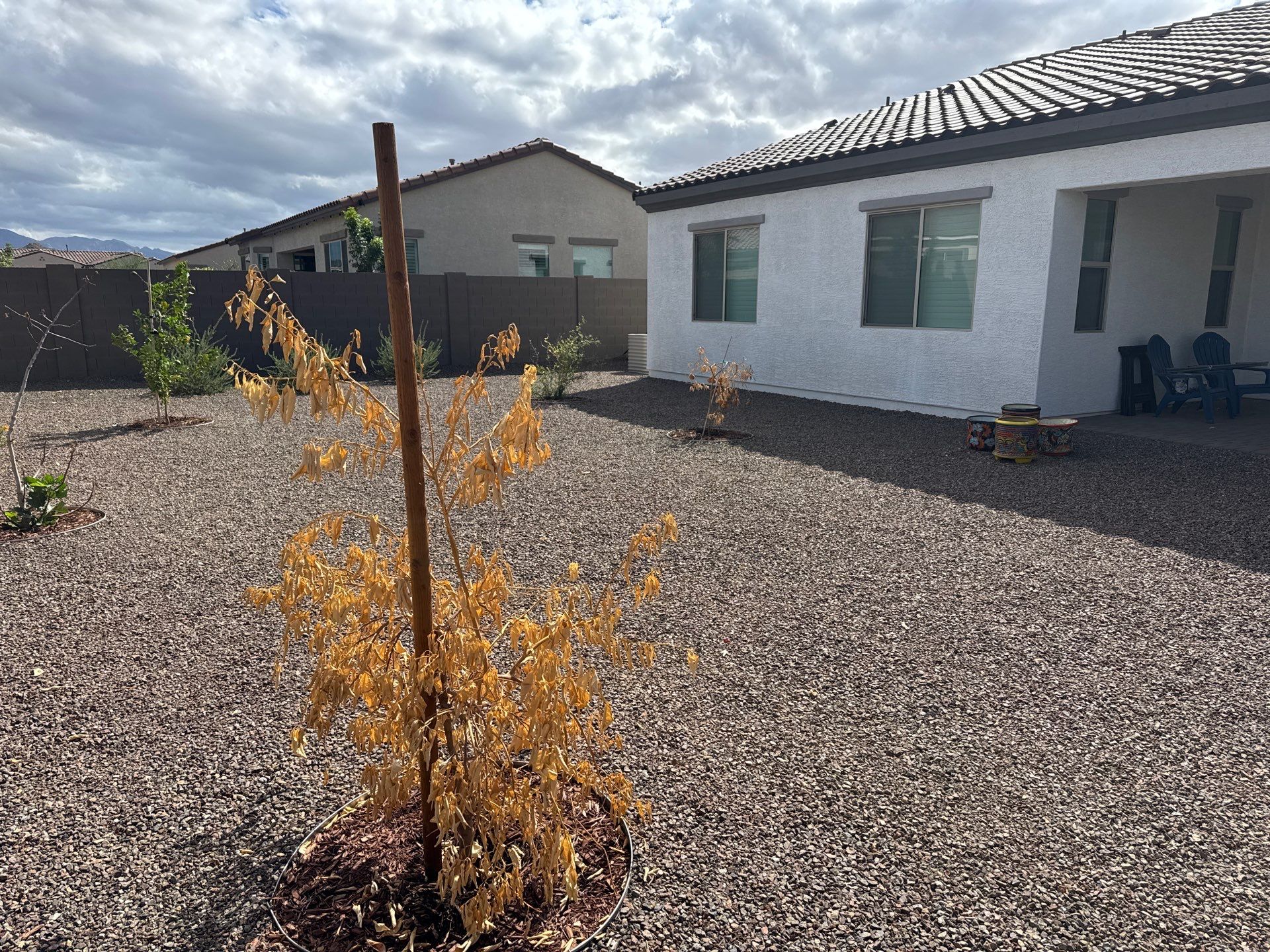
The citrus trees are toast. They need to be replanted. When they are, there are three things to get right:
Plant at the correct depth. The top of the root ball and the root flare (where the trunk widens out into the roots) should sit right at grade, never buried. Citrus planted too deep slowly decline, and that's a big part of what goes wrong with them out here. If soil does end up against the trunk, a strong stream of water from a hose blasts it away easily.
Make the water wells bigger. On all the fruit trees, go 6 feet across.
Swap them. Put the orange where the grapefruit was and the grapefruit where the orange was.
For citrus, go to Greenfield Citrus Nursery. That's where the best citrus trees in the Valley are. Let the lower branches hang low as a skirt to shade the trunk from sunburn, and cover the new trees on any nights near freezing this first winter.
This video shows why an exposed root flare matters so much, with real examples:
Can't see the video? Watch it on YouTube.

Orange
Goes where the grapefruit was. Navels (like Washington or Cara Cara) for eating, or a Valencia if you want juice oranges that hang on the tree into summer.
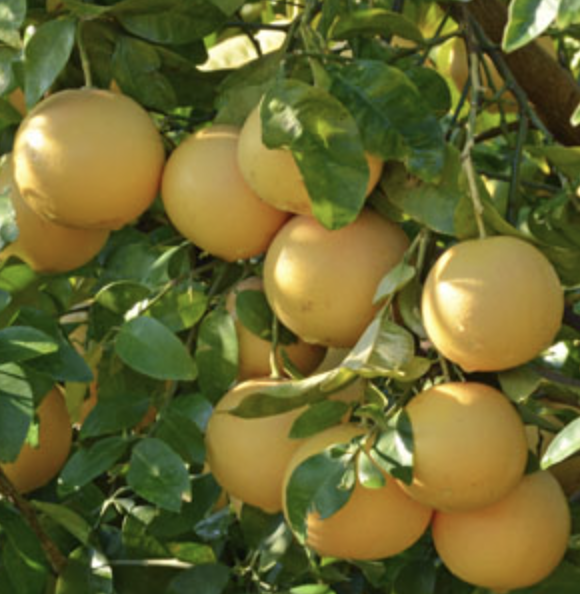
Grapefruit
Goes where the orange was. Rio Red and Star Ruby for deep red fruit, or Oro Blanco for a sweeter, less bitter grapefruit.
Fig Tree
Replant with a new variety
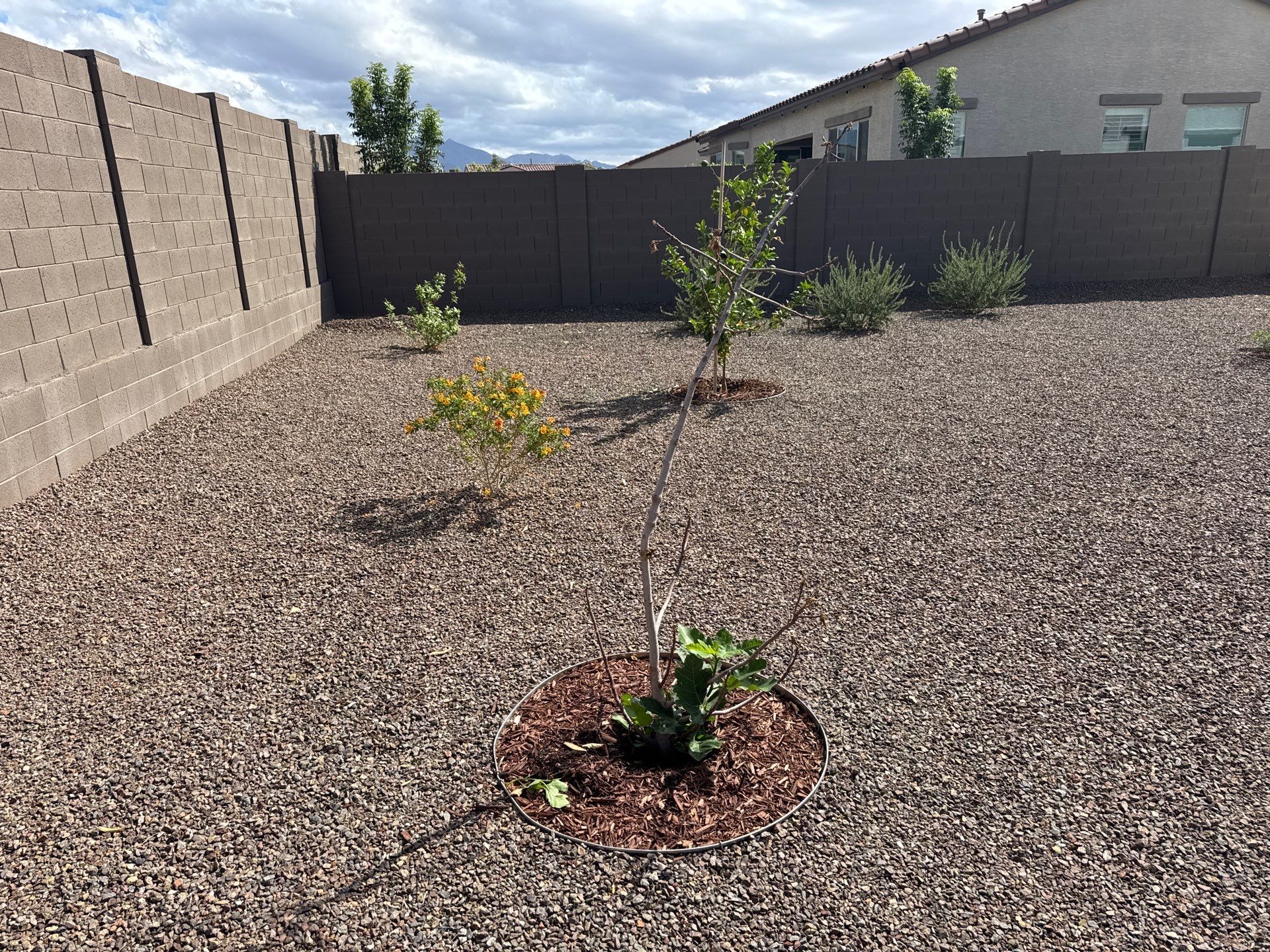
The fig tree is toast. Everything you're seeing is growing from the rootstock, so the variety you planted is gone. Pull it and replant with one of these varieties, all of which do well here:
- Black Mission: the classic, dark purple fruit with sweet pink flesh, usually two crops a year
- Brown Turkey: milder, sweet fruit, very productive and forgiving
- Kadota: green-yellow fruit with amber flesh, great fresh or dried
- Desert King: big green fruit with strawberry-red flesh and a heavy early summer crop
Figs love our heat and grow fast, so you'll be getting fruit again sooner than you'd think.
Water wells: on all the fruit trees, pull the soil back and expand the water well to about 6 feet across. Make sure nothing is piled up against the trunk and that you can see the exposed root flare. Shape a low berm around the outside so the water stays in the well and soaks down, and keep soil from falling back in toward the trunk.
Add an emitter. Put one extra drip emitter on all the fruit trees so each one has at least four, one in each corner of the well, out away from the trunk. If you need help with that, call Garrett at 480-678-9121.
Water deep and infrequently. Keep focusing on this. Long, slow waterings spaced out push roots deep where the soil stays cooler.
Fruit tree watering, deep and infrequent
Soak each fruit tree about 3 feet deep every time you water. Check it by pushing a long screwdriver or soil probe into the ground a few hours after watering; it slides in easily where the soil is wet.
| Season | How often |
|---|---|
| Fall (now) | Every 7 to 10 days |
| Winter | Every 2 to 3 weeks |
| Spring | Every 7 to 10 days |
| Summer | Every 5 to 7 days |
New trees need a little more attention their first year, so check the soil and don't let the root ball dry out.
Pomegranate
It's going to be fine
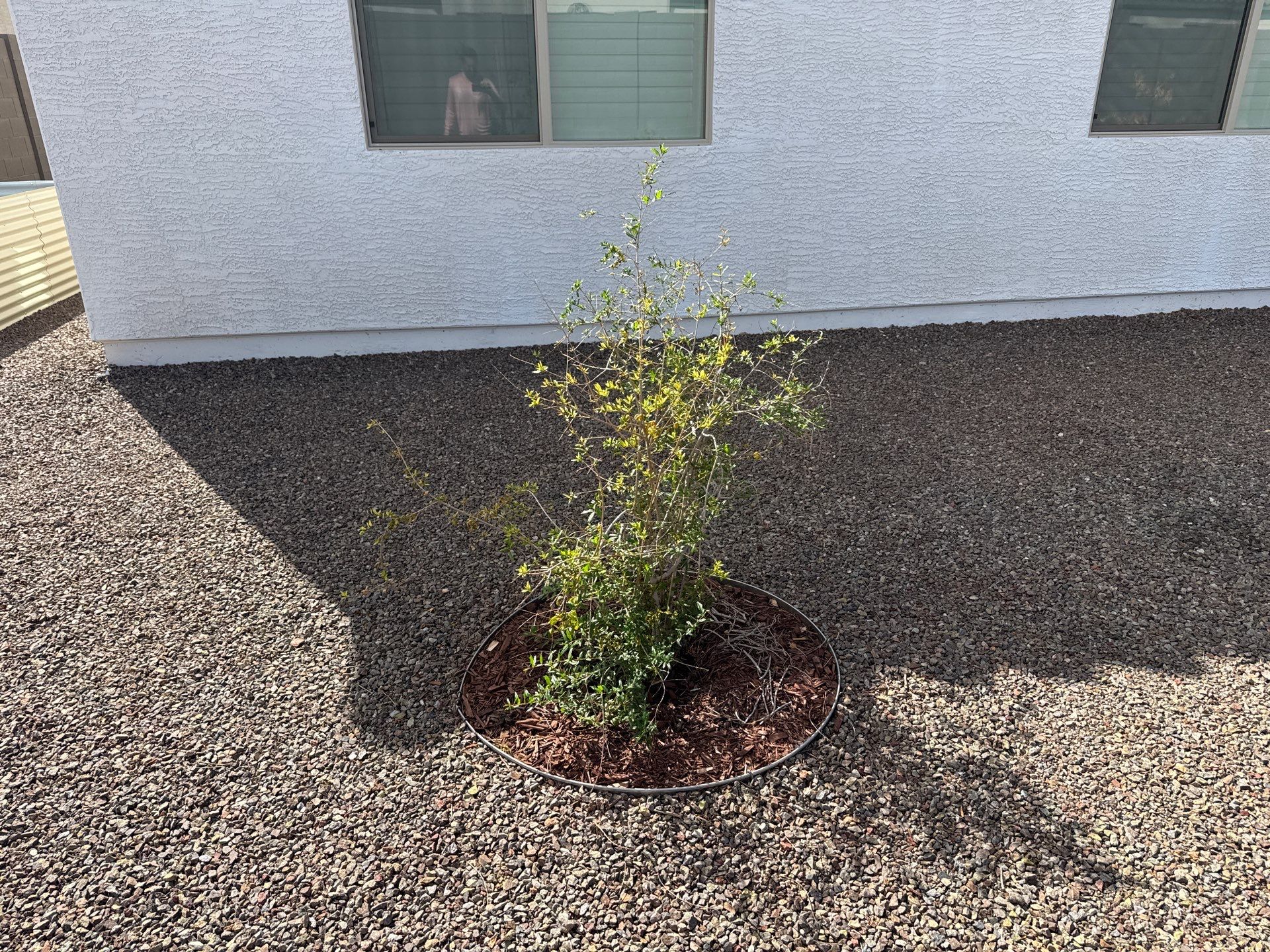
The pomegranate is going to be fine. Like we talked about on all the trees, pull back the water well and make sure nothing is up against the trunk and that you can see the exposed root flare.
Trimming: if you're going to keep it like a bush, the only trimming you need to do is on the downward growing branches. Cut those where they start to bend. That keeps it from flopping over and keeps the fruit up off the ground. The best time is late winter, before it leafs out.
Lemon Tree
Looking good
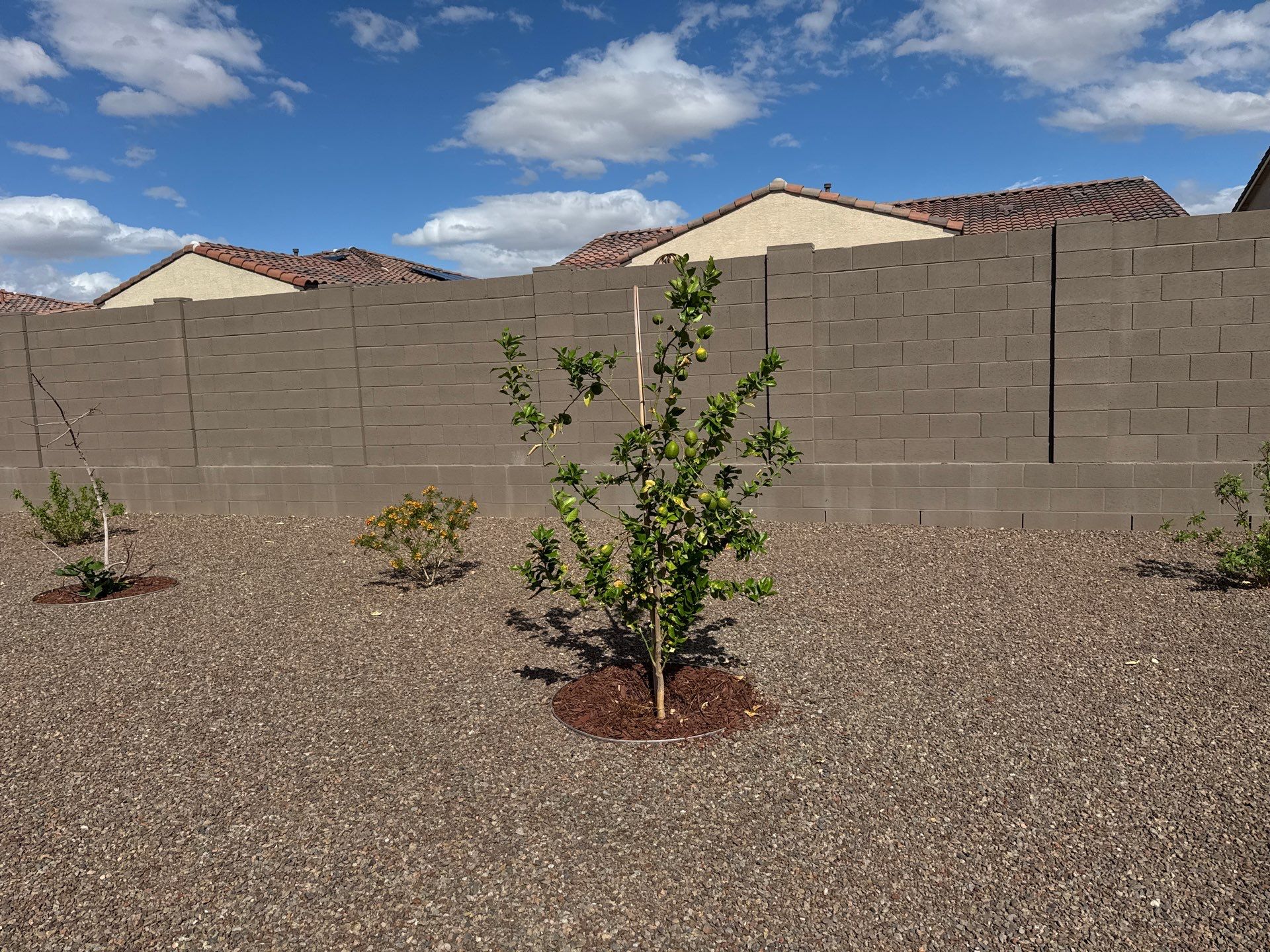
The lemon tree is looking good. You've dug down enough to expose the root flare, which is great. Same thing as all the others: pull out the water well, expand it to about 6 feet across, and make sure the soil doesn't keep falling back in against the trunk.
Wet Spot Along the Block Wall
Neighbor's water coming through
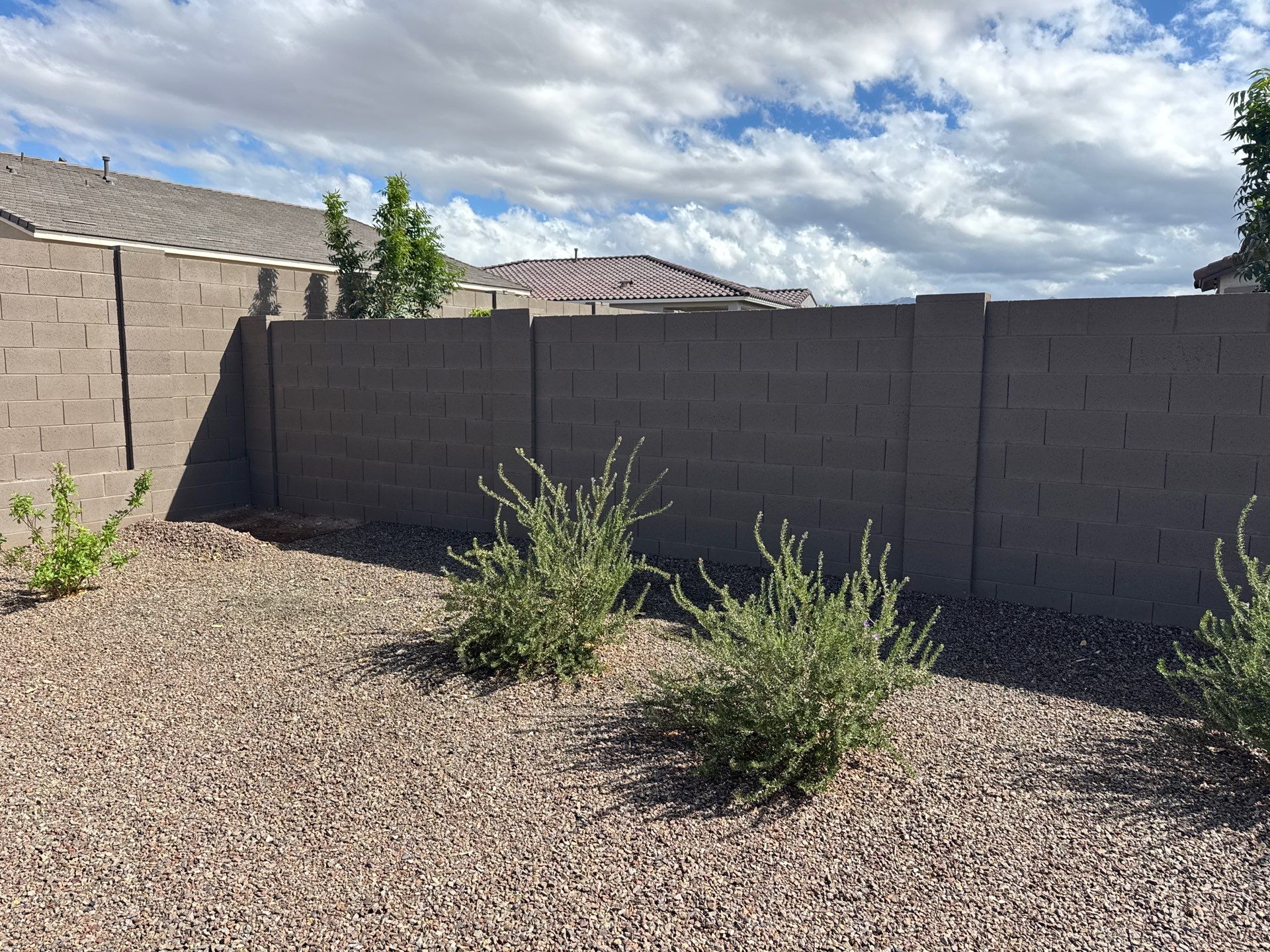
Your neighbor's water is coming through the block wall here and saturating the ground. We want a low-water groundcover that will soak up some of that extra water while it's coming through, and still be fine if it stops. Emu bush is one of my picks, and here are a few more desert-adapted options that handle both wet and dry spells.
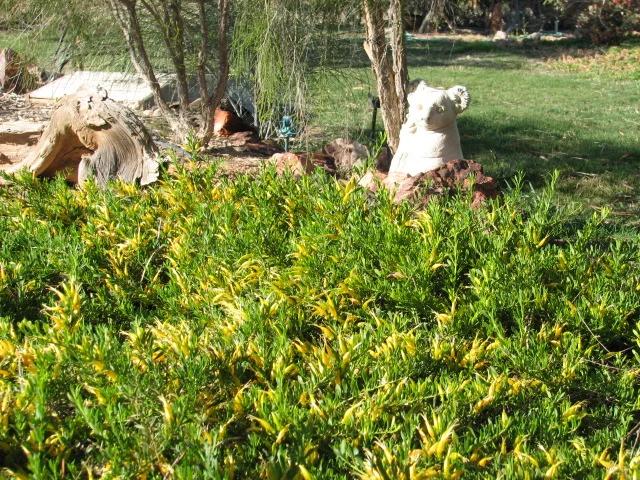
Outback Sunrise Emu Bush
Low spreading groundcover with yellow flowers in winter and spring. Desert adapted and spreads wide, so a few plants cover a lot of ground.
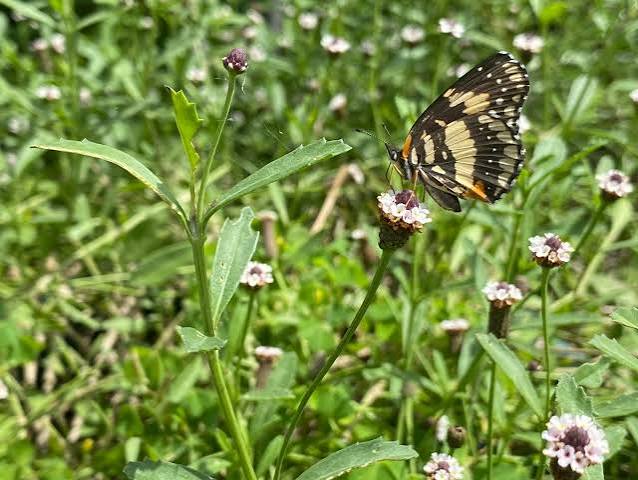
Frogfruit
Native, low groundcover with tiny white flowers that butterflies love. Grows naturally along washes, so it handles wet soil and dry spells both. Spreads fast. It can be hard to find at nurseries, so if you can't track it down, go with one of the other options.
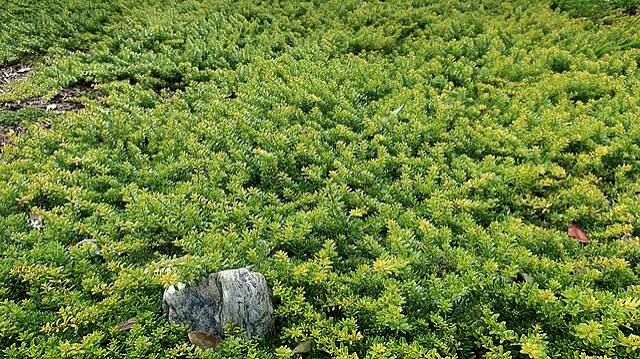
Myoporum
Fast spreading, bright green carpet with small white flowers in spring. Uses a bit more water than most desert groundcovers, which helps here.
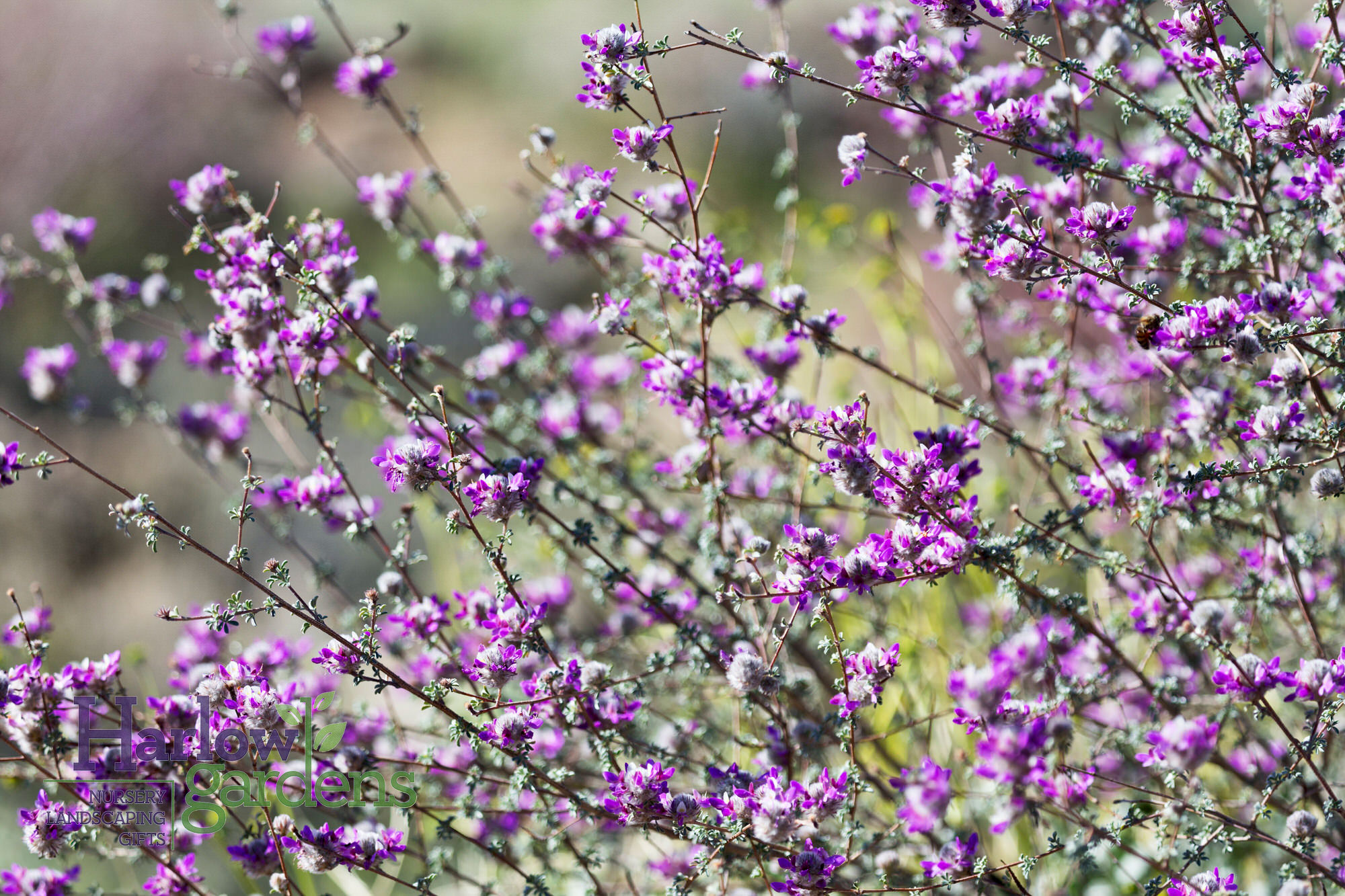
Trailing Indigo Bush
Low, soft gray-green groundcover with small purple flowers in spring. Very desert adapted and spreads wide.
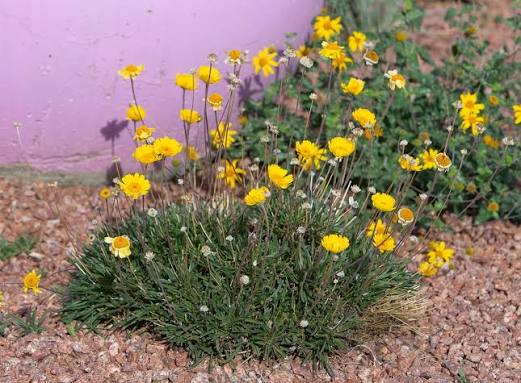
Angelita Daisy
Low, tidy mound covered in yellow daisies nearly year round. Very tough and desert adapted.
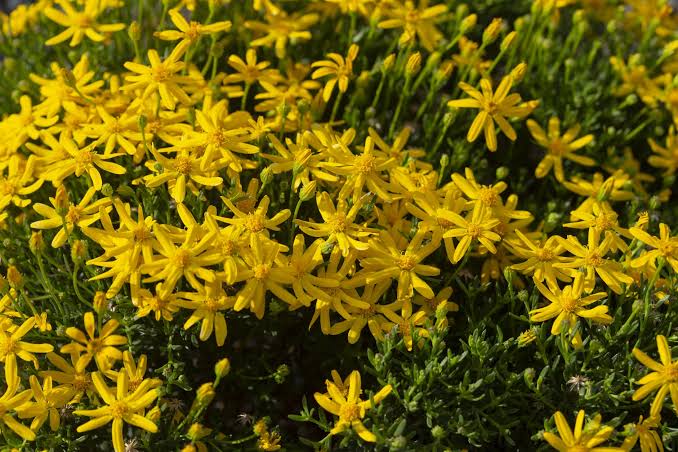
Damianita
Low, fragrant mound with bright yellow flowers in spring and fall. Native to the Chihuahuan Desert.
Raised Garden Beds
Great spot for vegetables
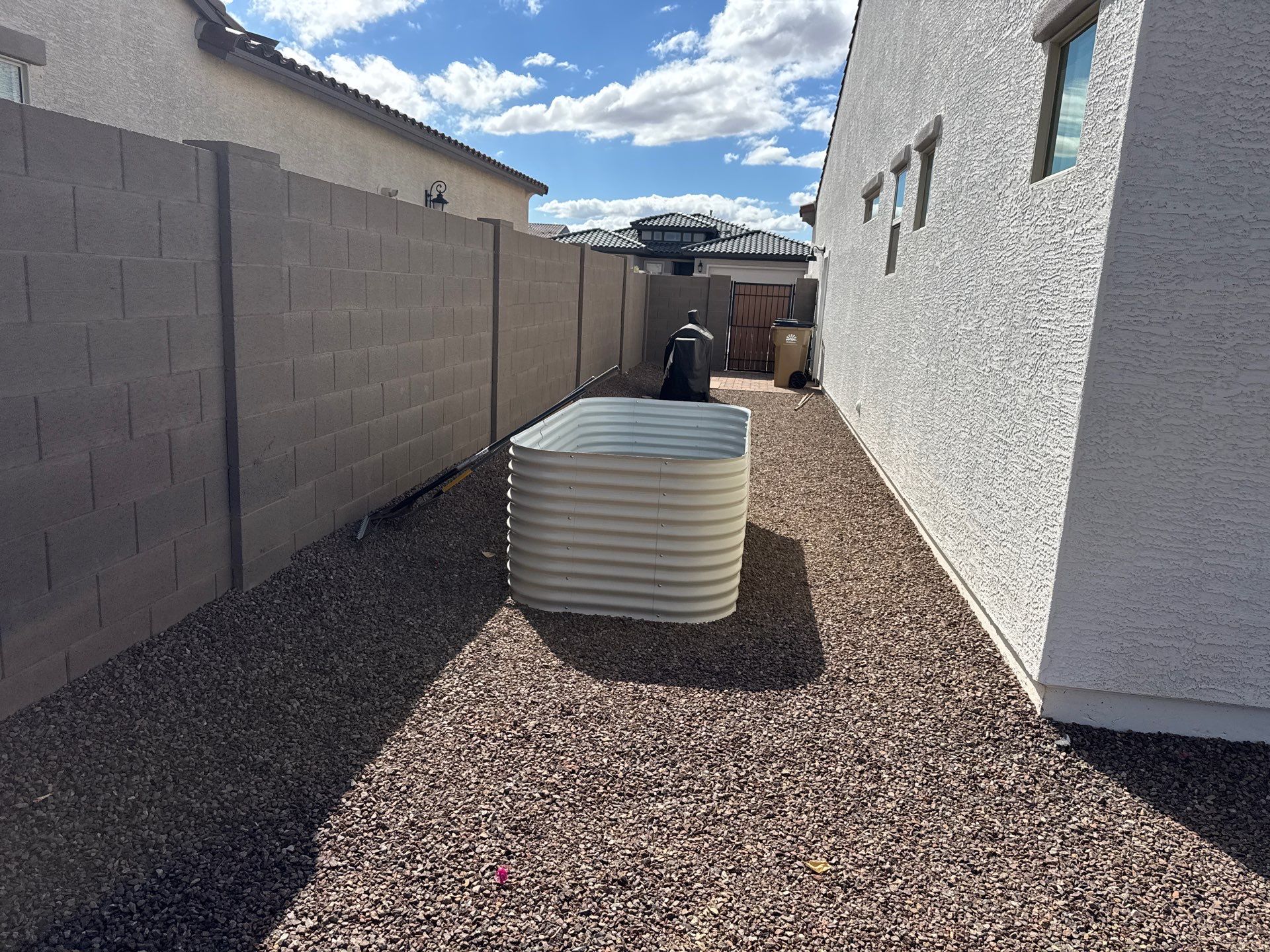
This is a great spot for raised garden beds. For the beds themselves, check out Olle Gardens. To fill them, Arizona Worm Farm has a great raised bed mix, plus compost and worm castings to keep the beds going season after season.
We're heading into our best vegetable season right now. My Maricopa County Planting Guide breaks down exactly what to plant and when.
Containers
Desert-adapted pollinator flowers
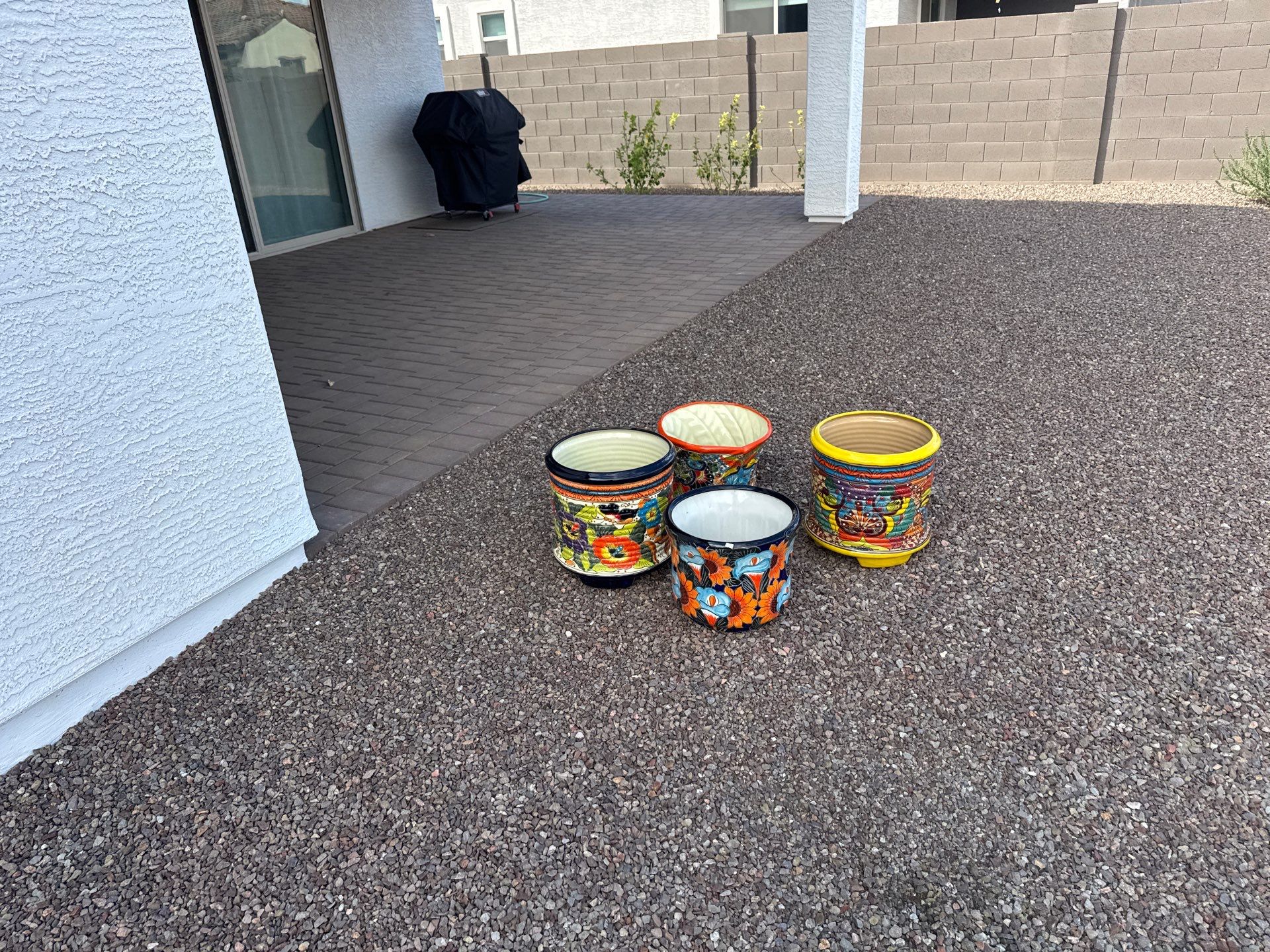
For these containers, here are desert-adapted flowering plants that will bring in the pollinators. Mix two or three per container for a fuller look. Use a quality potting mix blended with compost or worm castings, and remember containers dry out much faster than the ground, especially in summer.

Desert Milkweed
Native with upright, gray-green stems and cream flower clusters. A host plant for monarch butterflies.

Globe Mallow
Native with apricot-orange cup flowers in spring. Bees love it.
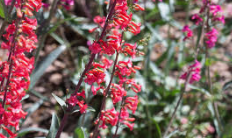
Penstemon
Tall flower spikes in red, pink, or purple in spring. Hummingbird favorite.
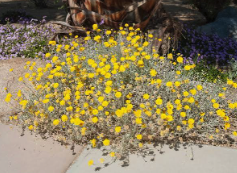
Desert Marigold
Native with bright yellow daisy flowers most of the year and soft gray leaves.
Damianita
Low, fragrant mound with bright yellow flowers in spring and fall.
Angelita Daisy
Small yellow daisies nearly year round on a tidy little mound.
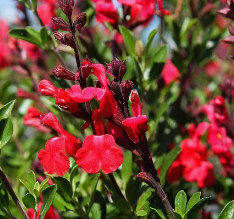
Autumn Sage
Red, pink, or coral flowers spring through fall. A go-to for hummingbirds and butterflies.
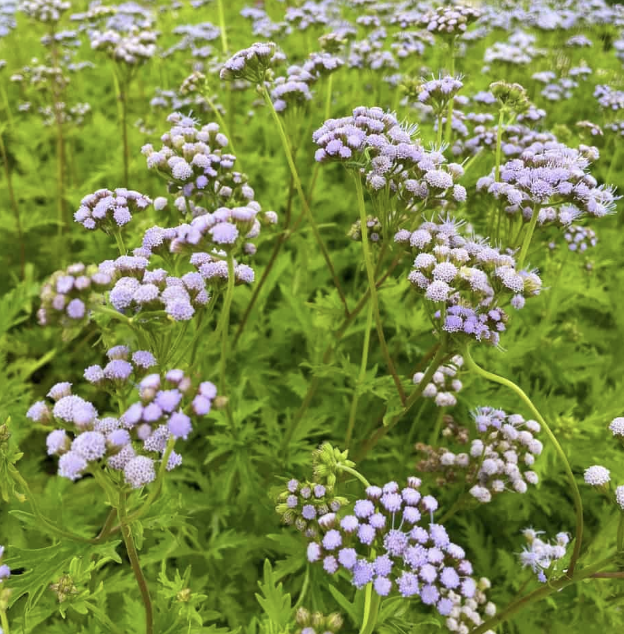
Greg's Mistflower
Fuzzy lavender-blue flowers that pull in queen butterflies by the dozen. A container keeps it from spreading.
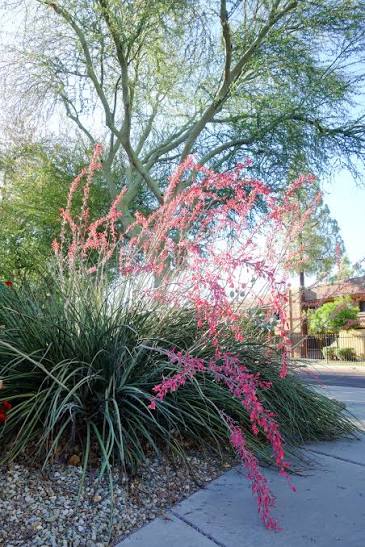
Red Yucca
Grassy clump with tall coral flower stalks all summer. Great as a container centerpiece.
Filling the Gaps
Native, low-water plants for full sun
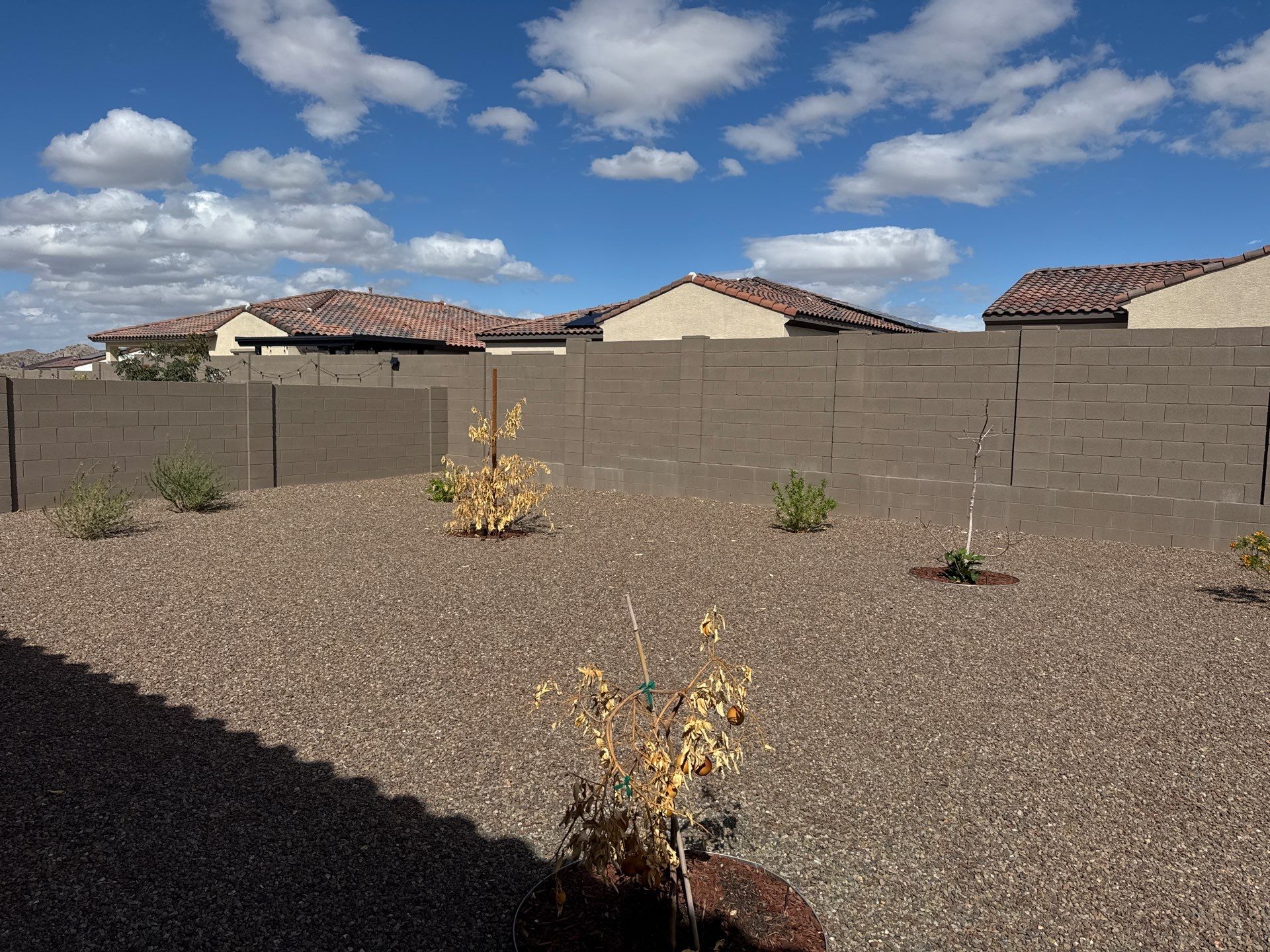
To fill in the gaps here, go with desert-adapted natives like desert milkweed and others that take full sun and take less water than plants that aren't desert adapted. You can't fit all of these, so pick your favorites. Plant them in groups of three and scatter them a bit; it looks fuller and more natural than straight rows.
Desert Milkweed
Native with upright, gray-green stems and cream flower clusters. A host plant for monarch butterflies.
Globe Mallow
Native with apricot-orange cup flowers in spring. Bees love it.
Penstemon
Tall flower spikes in red, pink, or purple in spring. Hummingbird favorite.
Desert Marigold
Native with bright yellow daisy flowers most of the year and soft gray leaves.
Damianita
Low, fragrant mound with bright yellow flowers in spring and fall.
Angelita Daisy
Small yellow daisies nearly year round on a tidy little mound.
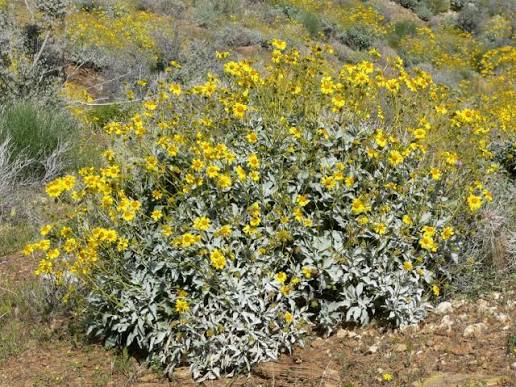
Brittlebush
Native mound of silvery leaves covered in yellow daisies in spring. Fast to fill a gap.
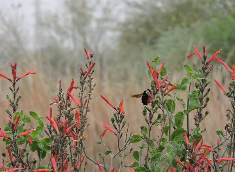
Chuparosa
Native with red tubular flowers through winter and spring. Hummingbirds love it.
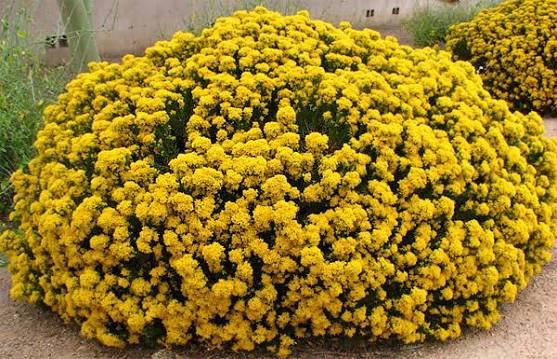
Turpentine Bush
Native, compact, bright green shrub covered in yellow flowers in fall.
Low-Growing Cacti
All day sun
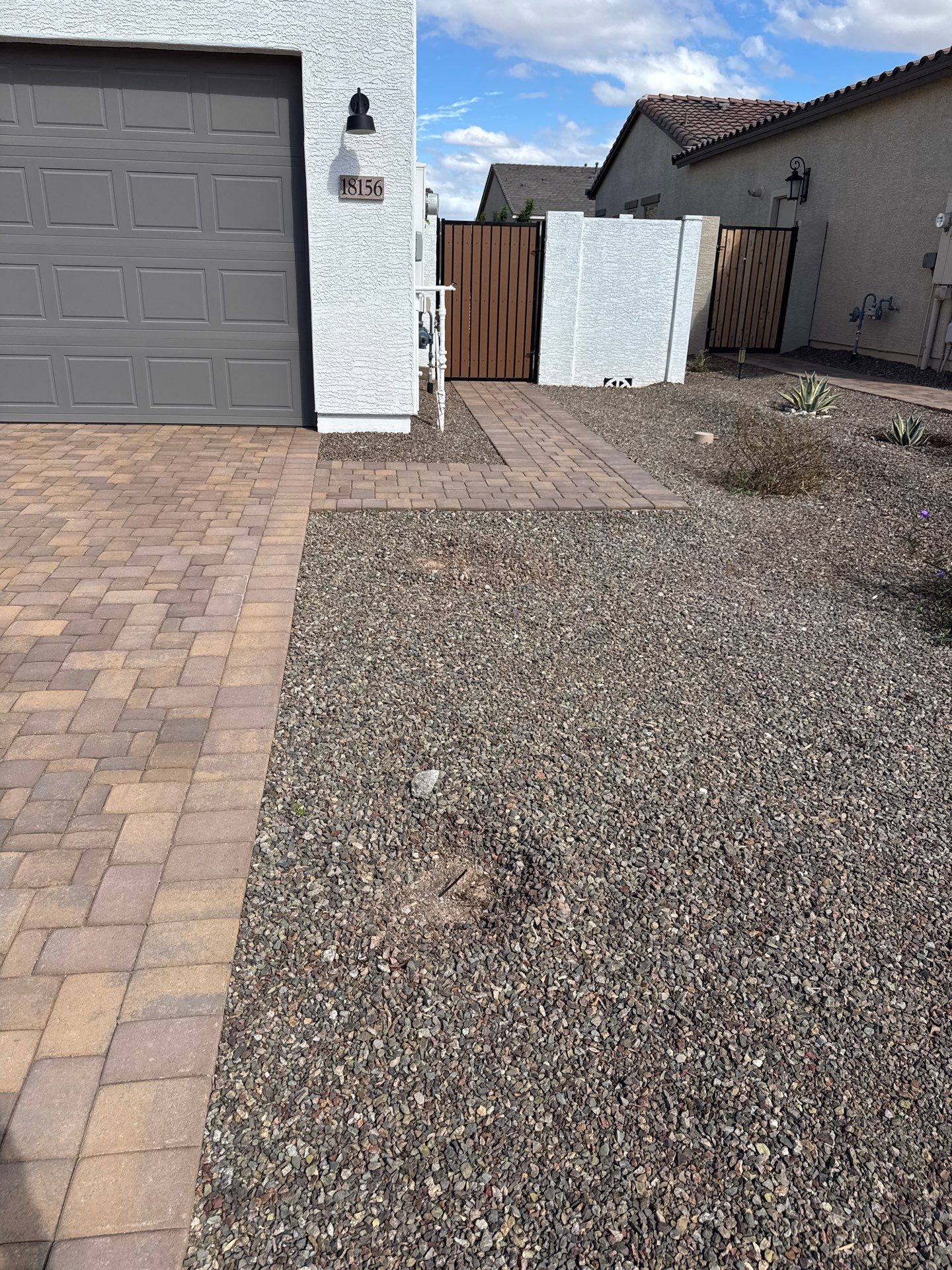
This spot gets pretty much all day sun, so easy, low-growing cacti are perfect here. You like the idea of barrel cactus, and here are a few other options that pair well with it.
Plant cacti a little high so water drains away from the base, and keep any drip emitter at least a foot away from them. Once they're settled in, they need very little supplemental water.
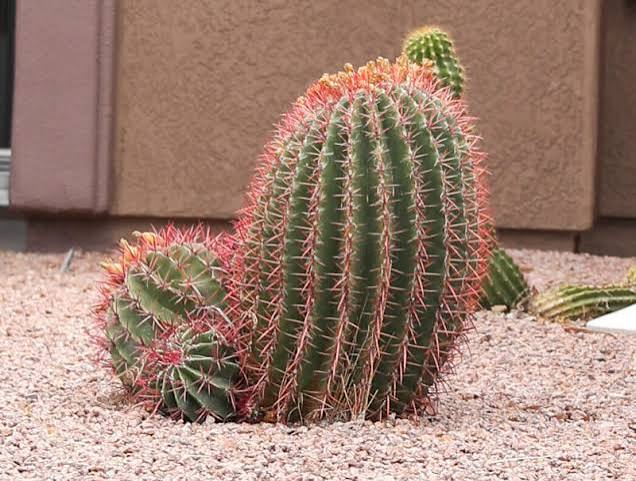
Fishhook Barrel Cactus
Our native barrel cactus. Red-hooked spines, orange-yellow flowers in summer, and yellow fruit that stays on most of the year.
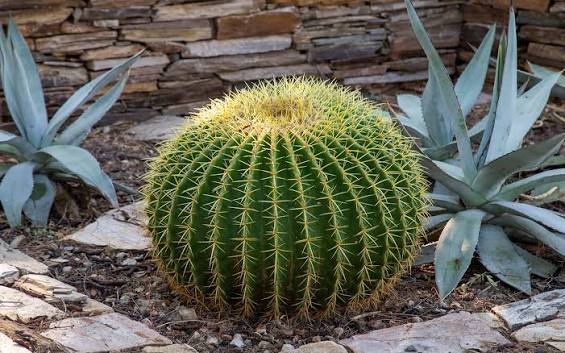
Golden Barrel Cactus
Bright gold spines on a round, compact barrel. Clusters over time and looks great in groups of three.
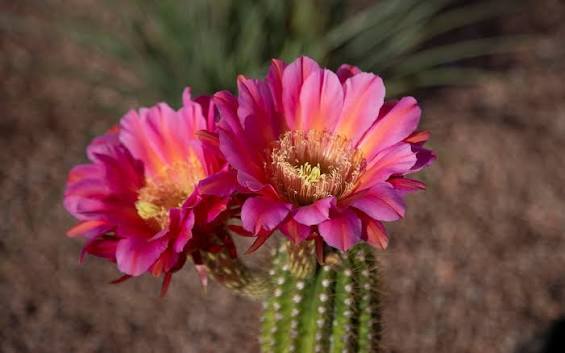
Hedgehog Cactus
Low clusters of short stems with big magenta flowers in spring. Stays under a foot tall.
Ruellia Reset
Cut it back hard and let it regrow
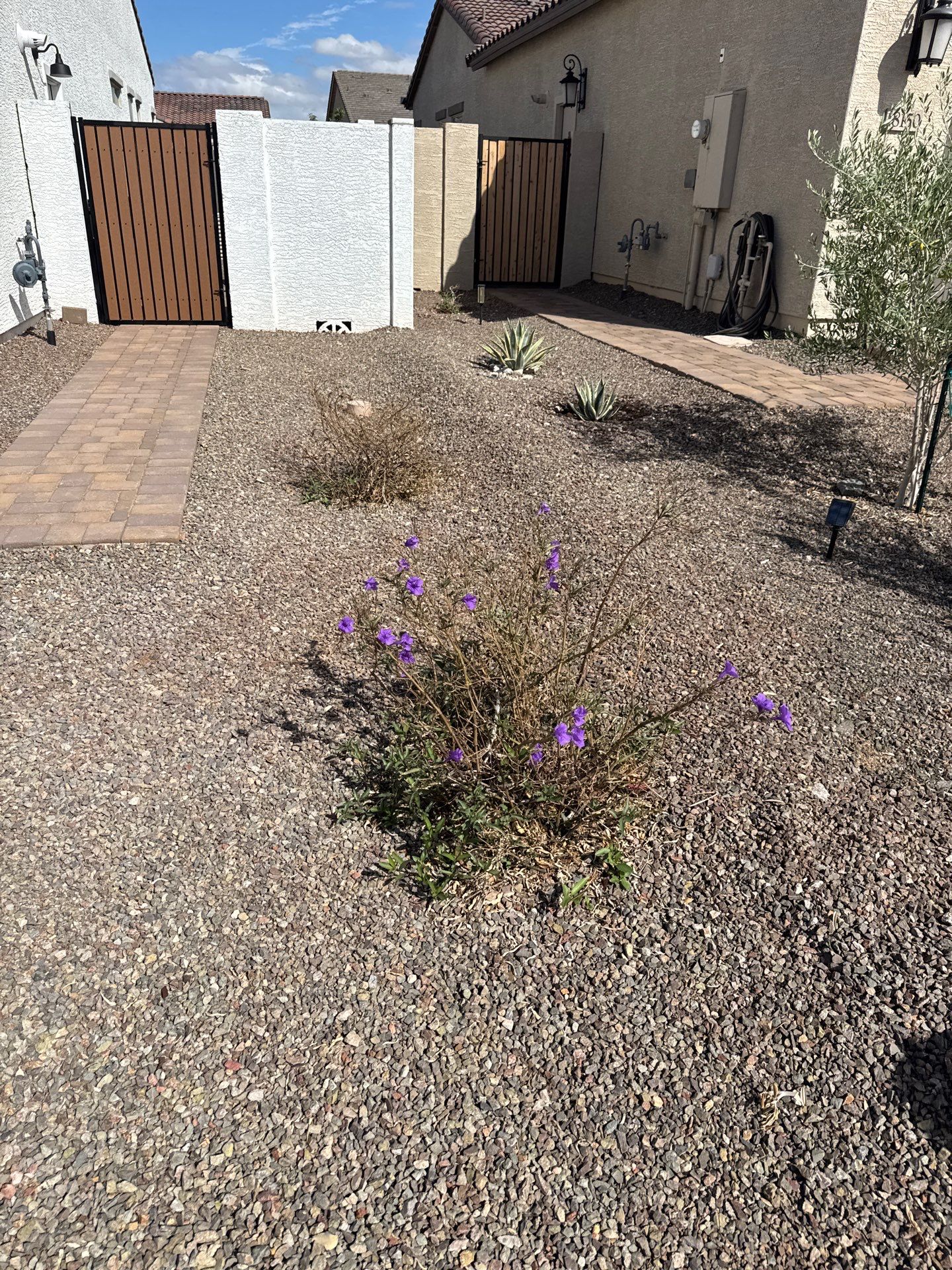
When: the end of winter, around late February, once the frost risk is behind us.
How: cut it back real good, down to about 6 inches above the ground, and let it regrow. It comes back fast and fuller.
After: feed it with a little compost around the base, then give it a deep, long soak with the hose.
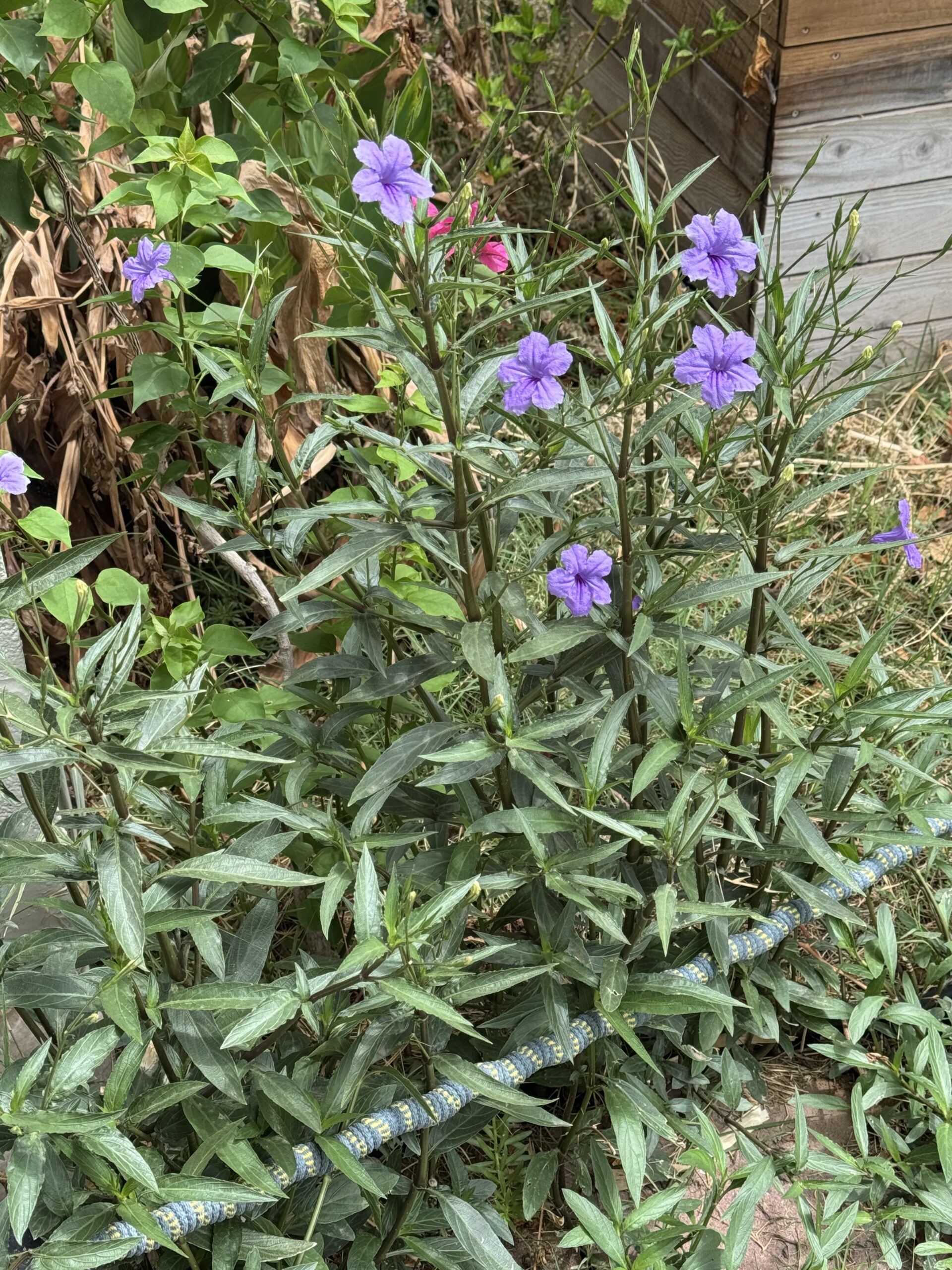
Ruellia
Purple petunia-like flowers all summer, and it handles the heat really well. A hard cut every year or two keeps it full instead of leggy.
Four Front Yard Spots
Full sun all day
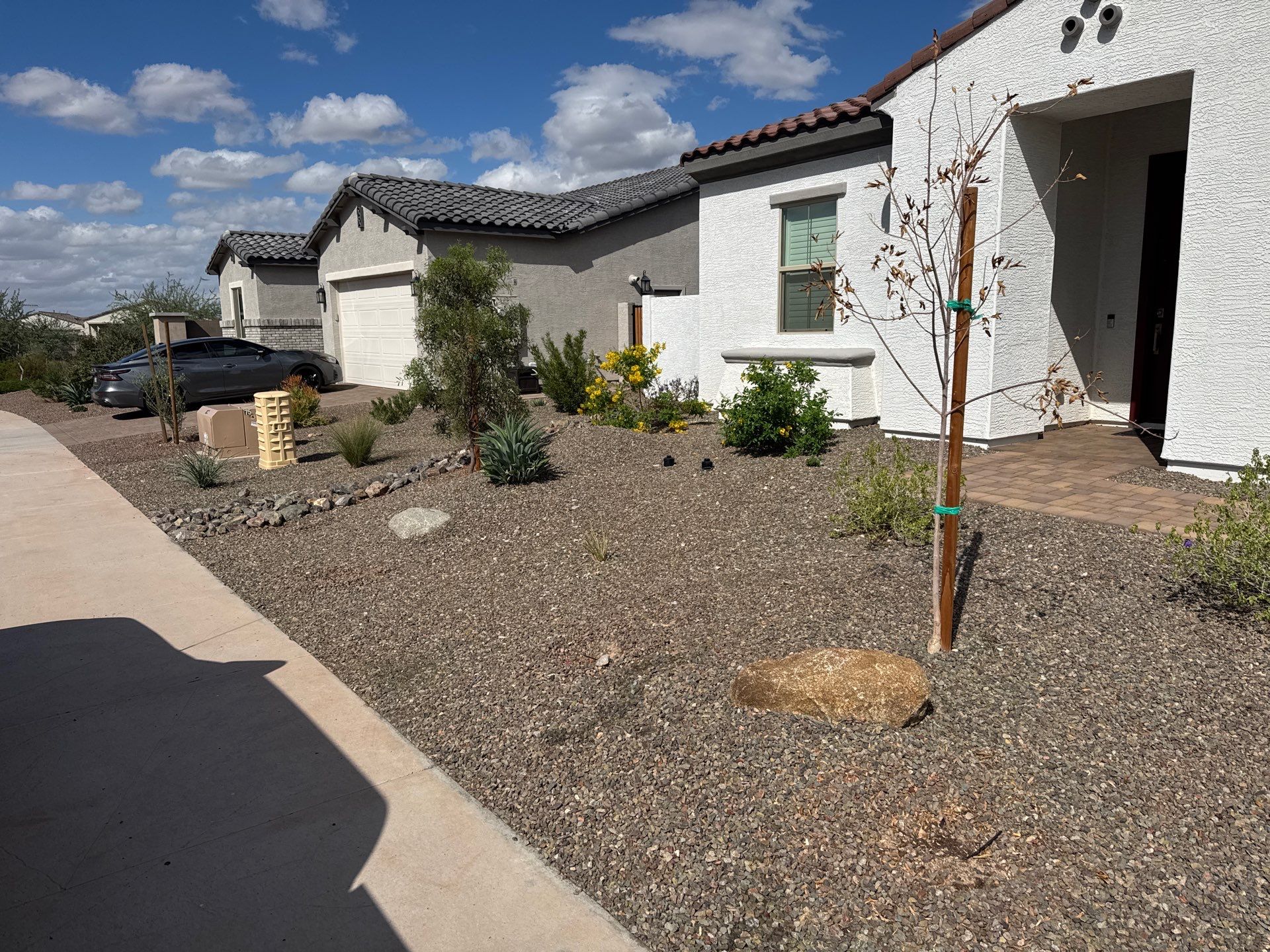
For the four empty spots in the front yard, which get full sun all day, you want something simple and easy: cacti and desert-adapted plants that take very little water and can handle the harsh afternoon sun. Red yucca is my favorite pick, followed by Perry's agave. Pick four you like, or repeat one or two for a cleaner look.
Red Yucca
My favorite pick here. Grassy clump with tall coral flower stalks all summer that the hummingbirds love. Very tough and takes very little water.
Perry's Agave
My next pick. Blue-gray rosette that gets about 2 to 3 feet across. Clean, sculptural, and very tough.
Golden Barrel Cactus
Bright gold spines on a round barrel. Simple and striking.
Fishhook Barrel Cactus
Our native barrel with red-hooked spines and yellow fruit most of the year.
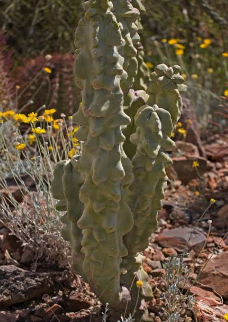
Totem Pole Cactus
Smooth, spineless columns with a knobby texture. Adds height.
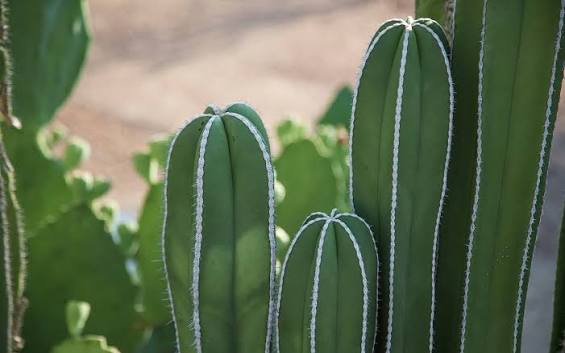
Mexican Fence Post Cactus
Tall, upright green columns. A strong vertical accent.
Ocotillo
Watering and care
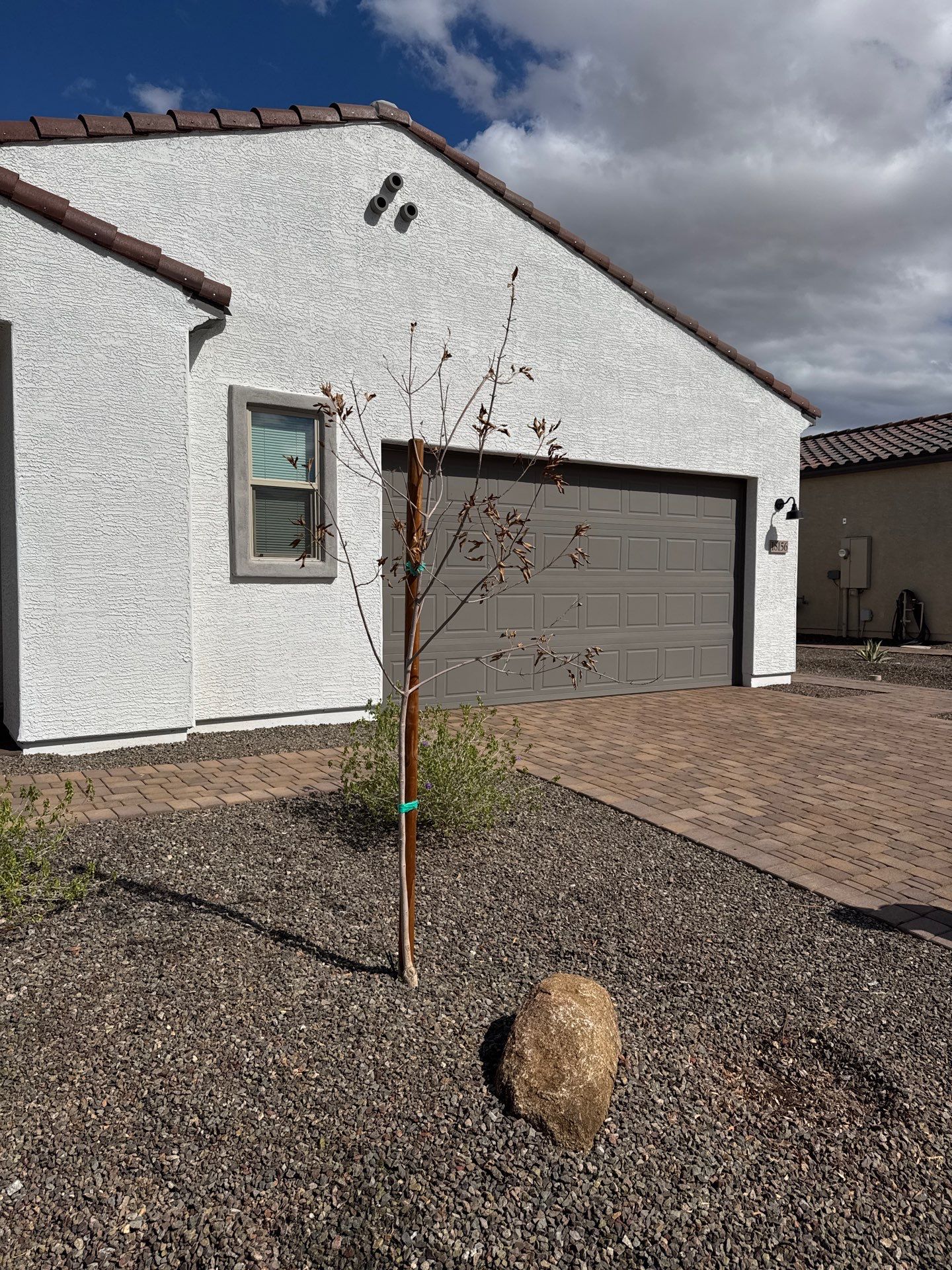
You're replacing this one with an ocotillo, which is a great fit here. Here's how to keep it happy:
- Buy one rooted in soil: get an ocotillo that's growing in a container with soil, not a bare-root one sold as loose canes. Container-grown ocotillos already have a working root system, so they establish much more reliably.
- Planting: plant it in well-drained soil at the same depth it was growing in the container, and stake it if it's tall so it doesn't shift while rooting in.
- Be patient: it can take a while to settle in and push new leaves. That's not a sign it needs more water.
- Watering the first year: water lightly every couple of weeks in the warm months to help it root, and spray the canes down with the hose now and then, since they take up water through the stems too.
- After that: very little water, if any. At most a deep soak once a month in the heat of summer. No emitter on a regular drip schedule; overwatering is what kills ocotillos.
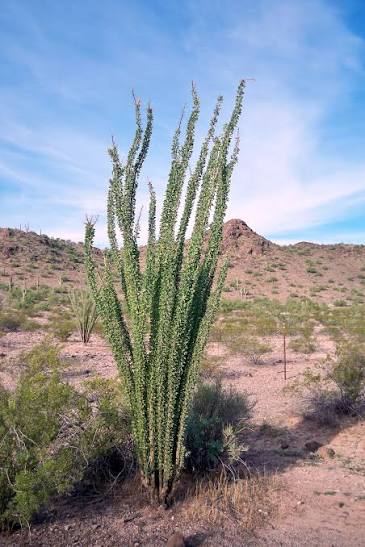
Ocotillo
Native with tall, whip-like canes that leaf out after rain and get bright red flower tips in spring. Hummingbird favorite and a true Sonoran Desert icon.
How to plant
Planting the Right Way
- Dig wide, not deep. Make the hole two to three times as wide as the root ball and only as deep as the root ball, so the plant sits right at grade with the root flare showing, never buried.
- Backfill with native soil. Use the soil you dug out with just a tiny bit of compost mixed in.
- Compost on top. Lay compost on top of the soil around the plant. Don't work it in; let the soil life pull it down.
- Mulch over the compost. Cover the compost with mulch, keeping it pulled back about a foot from tree trunks. (Skip the mulch right around cacti; they like it dry at the base.)
- Water deep. Soak it in well right after planting and keep the root ball from drying out over the first couple months.
Soil and feeding
Feeding Your Plants
Feeding is primarily for the non-native and fruiting plants: the citrus, fig, pomegranate, lemon, and hibiscus. Your native and desert-adapted plants, cacti, and ocotillo don't need regular feeding. Here's exactly how to do it yourself.
- Compost, generously. Spread compost around the drip line of the trees (out where the canopy ends, where the feeder roots are) and closer in around shrubs. Arizona Worm Farm has the best compost around.
- Worm castings every quarter. A light layer around each plant every three months feeds the soil life and helps the roots take up nutrients.
- Organic fertilizer high in fulvic acid, monthly. I use and recommend the Catalyst line below. Find them at Catalyst Product Group (click Products, then Home and Garden).
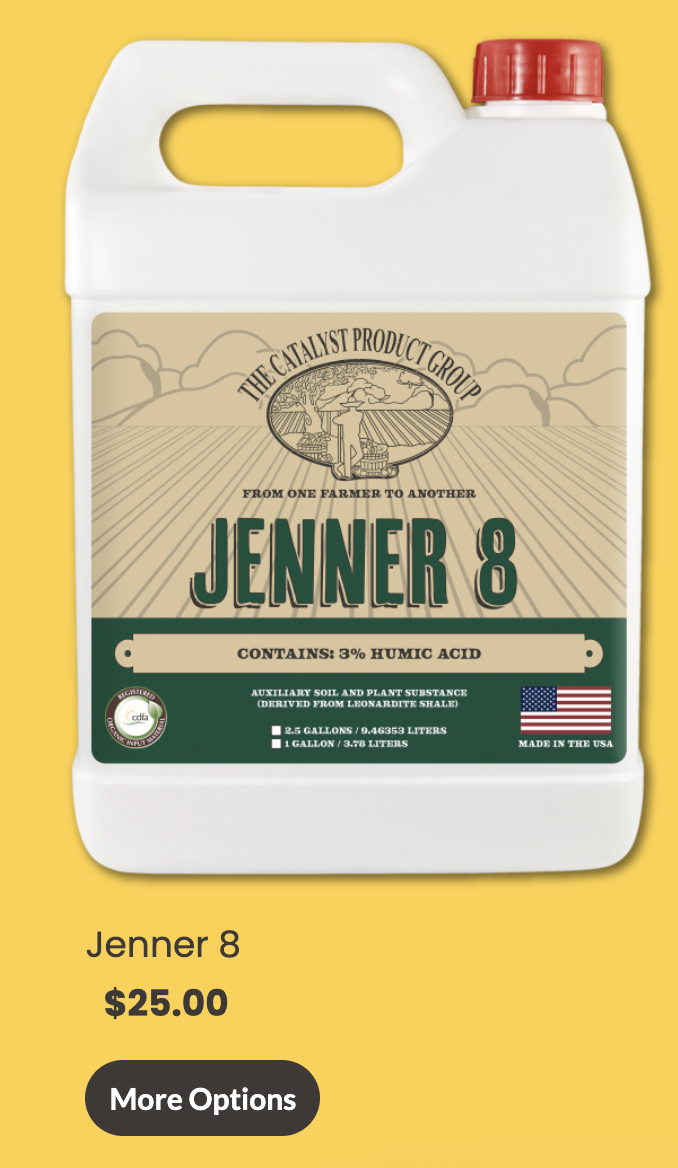
Catalyst Jenner 8
Organic liquid fertilizer loaded with fulvic acid and biology. Feeds the soil food web so the plants can feed themselves.
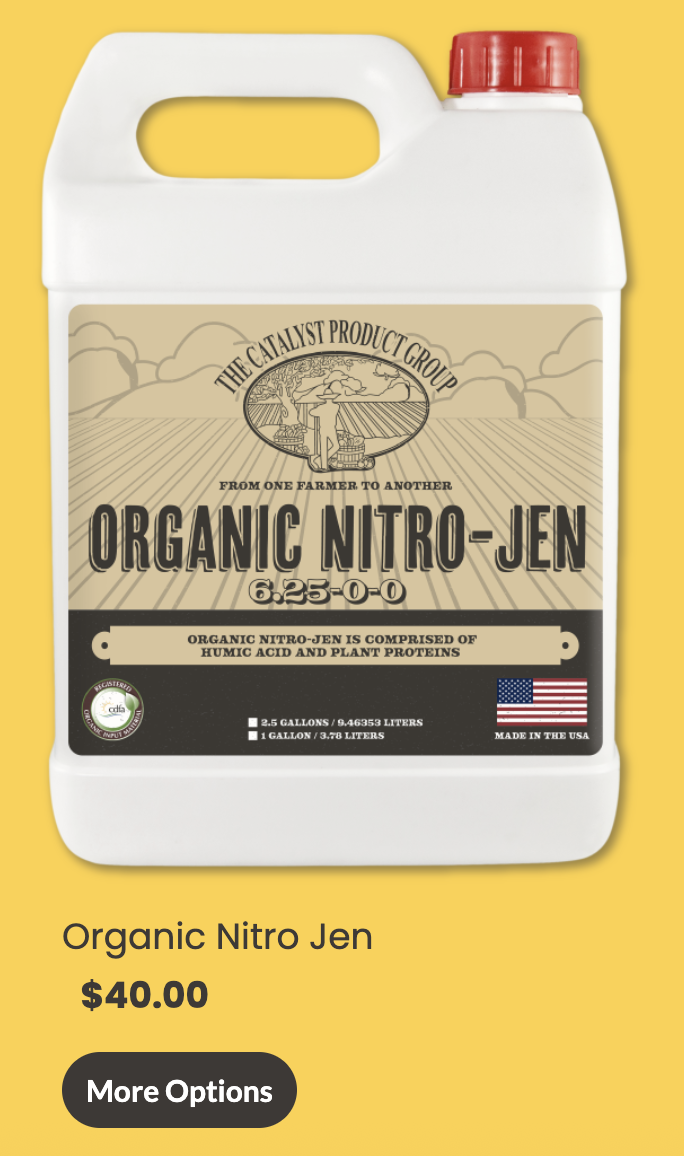
Catalyst Organic Nitro Jen
Organic nitrogen source for strong, green growth without the salt burn of synthetic fertilizers.
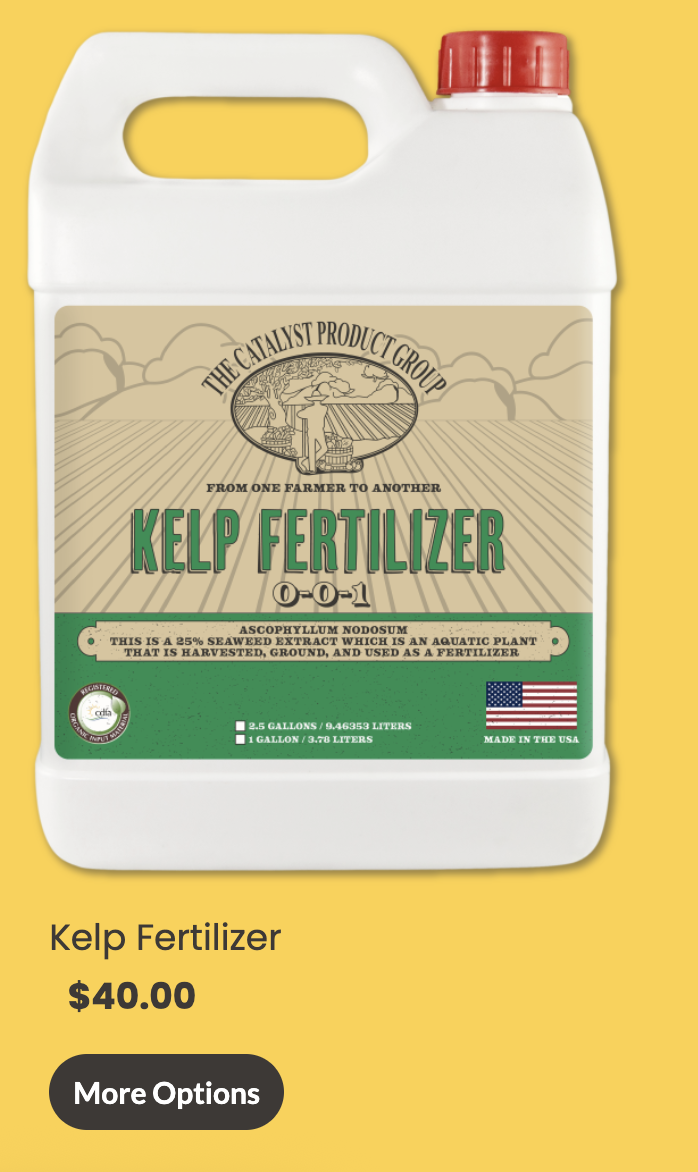
Catalyst Kelp
Kelp fertilizer packed with trace minerals and natural growth hormones. Helps plants handle heat and stress.
Quick reference
Where to Go for What
Citrus (orange and grapefruit)
Compost, mulch, worm castings, raised bed mix
Raised garden beds
What to plant and when
Fig, shrubs, cacti, natives
A&P Nursery
Organic fertilizer
Irrigation (extra emitters)
Call Garrett at 480-678-9121
Why root flares matter
Next steps
Where to Go From Here
Everything you need to do this yourself is in this write-up. As a consult client, you're already in the Garden Nerd Club, so you have direct access to me there anytime questions come up.
For adding emitters or anything else irrigation related, call Garrett at 480-678-9121. We don't do irrigation, but he's who I trust.
Thanks again for having me out, Richard.