
Red Push Pistache: The Easiest Shade Tree for a Phoenix Yard
If you want real shade, real fall color, and none of the mess most trees bring to a desert yard, this is the tree I point people to first. Here's everything you need to know before you plant one, zone 9b/10.

Most people searching for a shade tree in the Phoenix area have already been burned once. They planted something a nursery talked them into, it struggled through its first two summers, and it either died or turned into a constant chore of extra watering, spraying, and cleanup. The Red Push Pistache is one of the few trees I recommend without a list of caveats attached. It handles our heat, our soil, and our winters, and it does it while looking better than almost anything else you could plant in its place.
What Is a Red Push Pistache?
Red Push Pistache (Pistacia x 'Red Push') is a hybrid cross between two pistache species, bred specifically for ornamental use. It's a relative of the pistachio nut tree, but the trees sold at nurseries here are grafted males, so you get all the good traits of the pistache family with none of the fruit or nut drop. It's a deciduous tree, meaning it drops its leaves in winter, which matters more than people expect in a desert climate since it lets winter sun through to warm your house and yard.
Why It's One of the Easiest Trees to Grow Here
A tree earns a spot on my easy list when it can handle both ends of what our climate does to it, not just the summer heat everyone thinks about.
- It doesn't need much water once established. Give it consistent water for the first one to two years while the root system develops, and after that it holds up fine on a low-water desert irrigation schedule.
- It shrugs off both extremes of our climate. It handles Phoenix summers without leaf scorch, and it's cold hardy well past what we ever see here, so a surprise freeze isn't a real threat to it.
- It tolerates poor, rocky, alkaline soil. You don't need to rebuild the native soil to give this tree a chance. It's built for exactly the ground most Valley yards start with.
- It resists verticillium wilt. This is a soil-borne disease that quietly kills a lot of landscape trees in the Valley over several years. Red Push Pistache is resistant to it, which is a bigger deal than most homeowners realize when they're picking a tree.
- No fruit or nut mess. Since it's grafted and male, you get the ornamental benefits of the pistache family without sweeping up dropped fruit every season.
What Makes It Worth Planting (Not Just Easy)
Easy is a good starting point, but this tree earns its place for what it looks like through the year.
New growth comes in bright red and orange before settling into green through summer, so the tree is doing something visually interesting even outside of fall.
Come autumn, it turns shades of orange, red, and burgundy. That matters more here than it would somewhere with four real seasons, because true fall color is rare in Sonoran Desert landscaping. Most of what we plant either stays green year-round or just drops its leaves without any color show. A Red Push Pistache gives you that seasonal shift most desert yards don't have.
It's part of the Anacardiaceae family, the same family as cashew and mango trees, which is part of why it handles heat as well as it does.
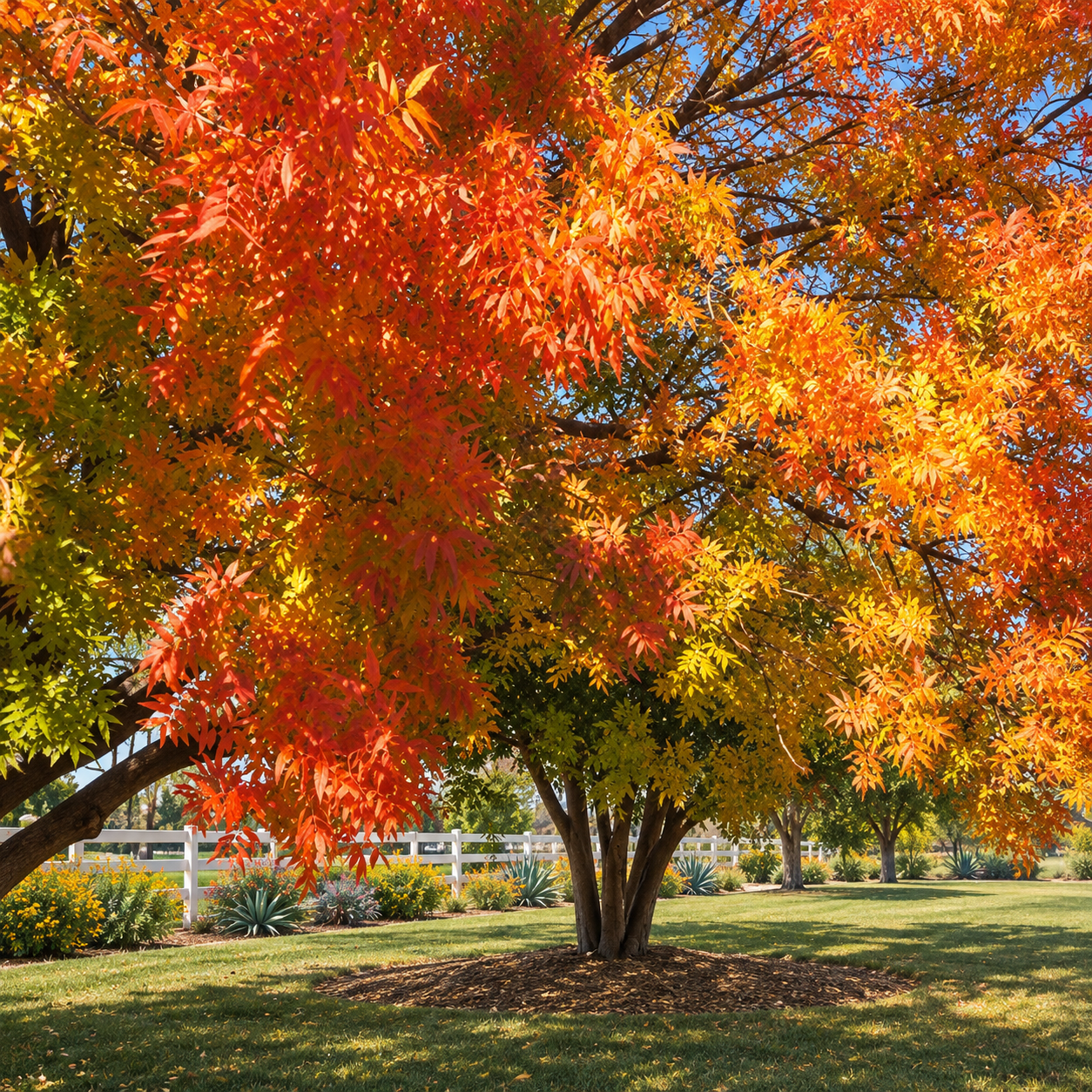
Fall color on a mature Red Push Pistache, one of the few Sonoran Desert trees that actually turns color this time of year.
Where It Fits in Your Landscape
This is a real shade tree, not an accent plant, so think about it in terms of the space it needs and the job you want it to do.
- Shade for a patio, driveway, or west-facing window. At 30 to 40 feet with a wide canopy, it does real work cooling a space, not just decorating it.
- A focal point specimen. Because so few desert trees give you fall color, placing this one somewhere visible (front yard, near an entry) lets it stand out against the rest of your green landscaping in October and November.
- Paired with palo verde or mesquite. Mixing canopy shapes and staggering bloom and color timing across the year keeps a yard interesting instead of everything peaking and fading at once.
- Street trees or larger side yards. Its root system is generally well-behaved for a tree its size, though I'd still keep it a reasonable distance from foundations, pools, and hardscape as a rule with any tree this size.
Planting and Care, Done Right
How you plant it in the first place matters more than almost anything you'll do afterward.
- Don't over-amend the planting hole. Backfill with the native soil you dug out. Lay compost directly on top of the soil after planting, then mulch over that compost. Don't work the compost into the hole itself. This feeds the soil biology around the root zone the way it would happen naturally, instead of creating a rich pocket that discourages roots from spreading out into the native soil.
- Keep mulch pulled back about a foot from the trunk. Mulch piled against the trunk holds moisture against the bark and invites rot.
- Water deeply and infrequently. Wean it down to fewer, deeper waterings as it establishes over the first one to two years rather than frequent shallow ones.
- Stake loosely in windy spots for the first year only. A tree that's never allowed to move a little in the wind develops a weaker trunk over time.
- Prune conservatively while young. Structural pruning early on to establish a strong single leader pays off in canopy shape for decades.
- Feed the soil, not just the tree. Skip synthetic fertilizers and build soil biology instead with quality compost. A tree growing in living soil handles stress, drought, and disease pressure far better than one propped up with synthetic nutrients.
Mistakes I See Most Often
- Planting too deep. The root flare, where the trunk widens out at the base, needs to stay visible above the soil line. Buried root flares are one of the most common reasons a tree quietly declines over several years without an obvious cause.
- Not confirming it's a grafted male. Reputable nurseries sell grafted Red Push Pistache, but always ask. A seed-grown or female tree can produce fruit, which defeats one of the main reasons people choose this tree in the first place.
- Overwatering once it's established. This tree wants to dry out somewhat between waterings once mature. Keeping it on a heavy watering schedule long after it needs it can lead to root problems, especially in denser soils.
Ready to Get One in the Ground?
I can help you figure out where a Red Push Pistache fits on your property, or handle the planting from start to finish so it's done right the first time. If you're already working with me through Garden Nerd Club, you have direct access to ask me about this.
Text Me About Planting