
Your Yard, Liz
Thanks for having me out. This is everything we walked through, written down so you have it in one place. The short version: two shade trees on the west side, a replacement for the dead tree out front, a few gaps filled, and then vines and hedges on every wall that's throwing heat at the house. Plus a groundcover under the olive and a plan to get the raised bed producing this fall.
Where I gave you options, they're all listed with my first pick called out. Every plant here is desert adapted and doesn't need much water once established. Whatever you go with, build the planting hole with quality compost and organic fertilizer so the soil biology gets going from day one. That's what makes these plants take off instead of just survive.
Shade on the west side, fix the dead tree, fill the gaps
Two thornless mesquites for afternoon shade
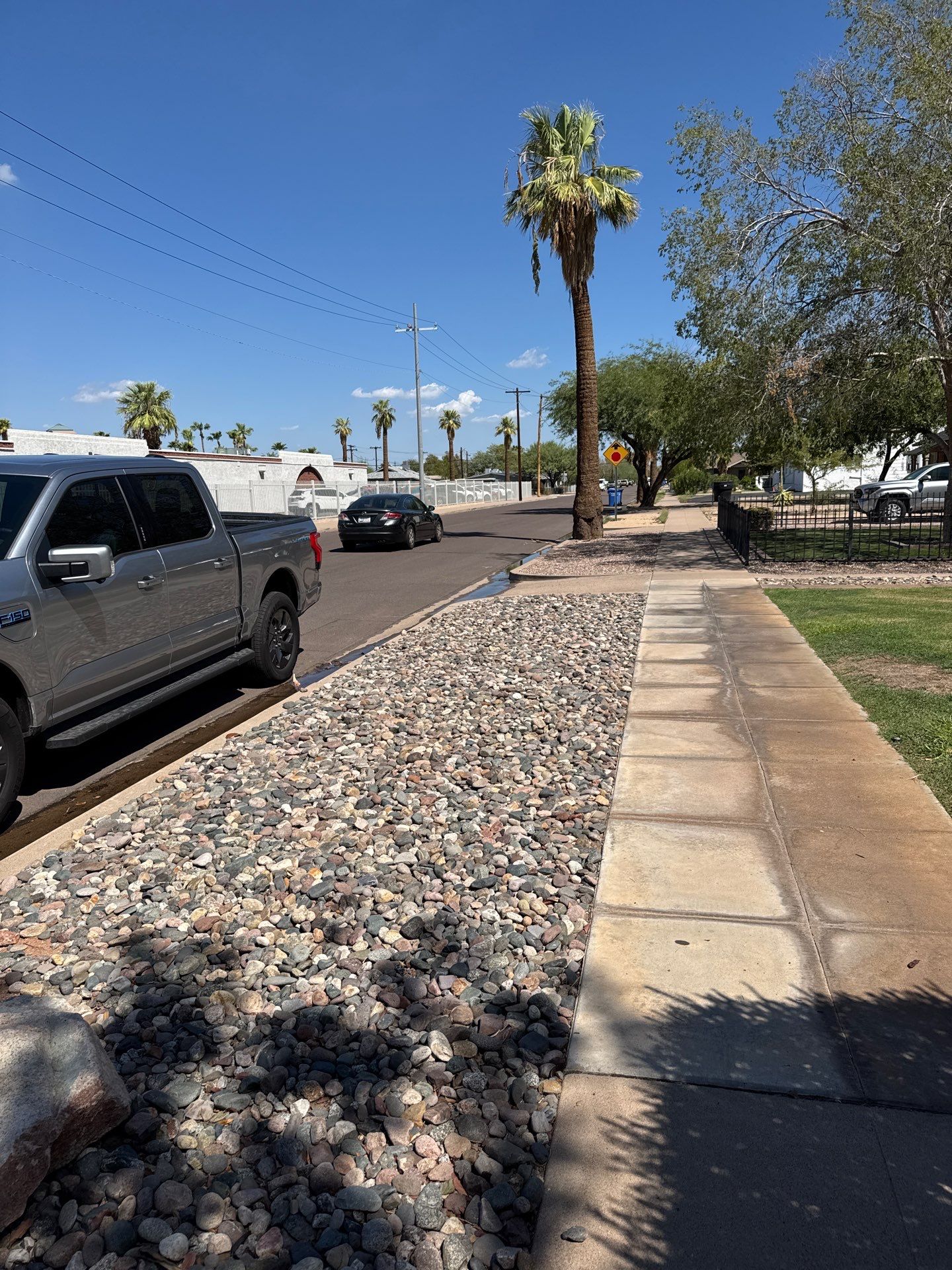
This strip takes the full west sun in the afternoon, which is why the house gets so hot on that side. Two thornless mesquites planted here will throw shade across the front by late afternoon and take a real load off the house. Fast growers, wide canopies, no thorns.
For the ground, you can keep the river rock you have or swap it for a smaller gravel. Smaller reads cleaner and the trees will look better coming out of it, but either works.
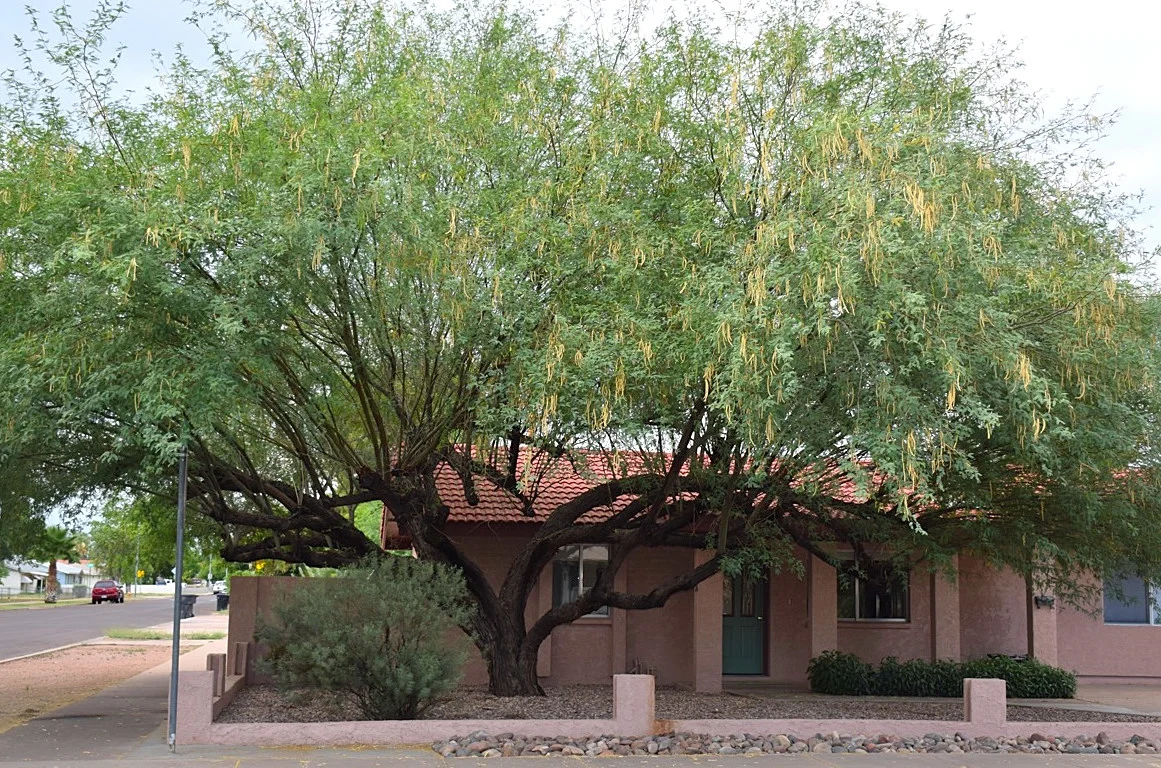
Thornless Mesquite
Fast shade, wide spreading canopy, no thorns. Needs good structural pruning while it's young so it holds up in monsoon wind. Deep, infrequent watering keeps the roots down where they belong.
Replace the dead tree

This one's dead and needs to come out. Three good replacements. Red Push pistache and Chinese elm are both strong choices for this spot. And another ash will work too. The old one didn't die because ash is wrong for Phoenix. It died from how it was planted. Pull the rock back, plant it at the right depth with the root flare above grade, build the hole with compost and organic fertilizer, and an ash will do fine here.

Red Push Pistache
Tough, clean, and one of the few trees here with real fall color. New growth comes in red, leaves turn orange and red in November. 30 to 40 feet at maturity, no fruit, no mess.

Chinese Elm
Fast, graceful, mottled bark, and a wide canopy that throws a lot of shade. Semi-evergreen here, so it holds most of its leaves through winter. Handles the heat and street conditions well.
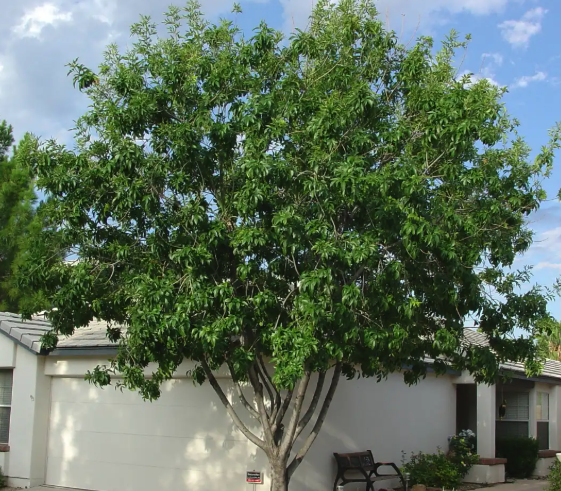
Arizona Ash
What you had before, and it does work here. The old one didn't fail because it was the wrong tree. Take the rock out, plant it at the right depth with the root flare exposed, get compost in the hole, and an ash will do fine in this spot. Fast shade, yellow fall color.
Cover this wall

This block wall wants something growing on it. Any of the plants going on the backyard walls will do fine right here, and they're all listed below so you don't have to flip back and forth. Bougainvillea for the most color, orange jubilee, hopseed, Arizona rosewood, or twisted myrtle if you'd rather have a hedge in front of it.
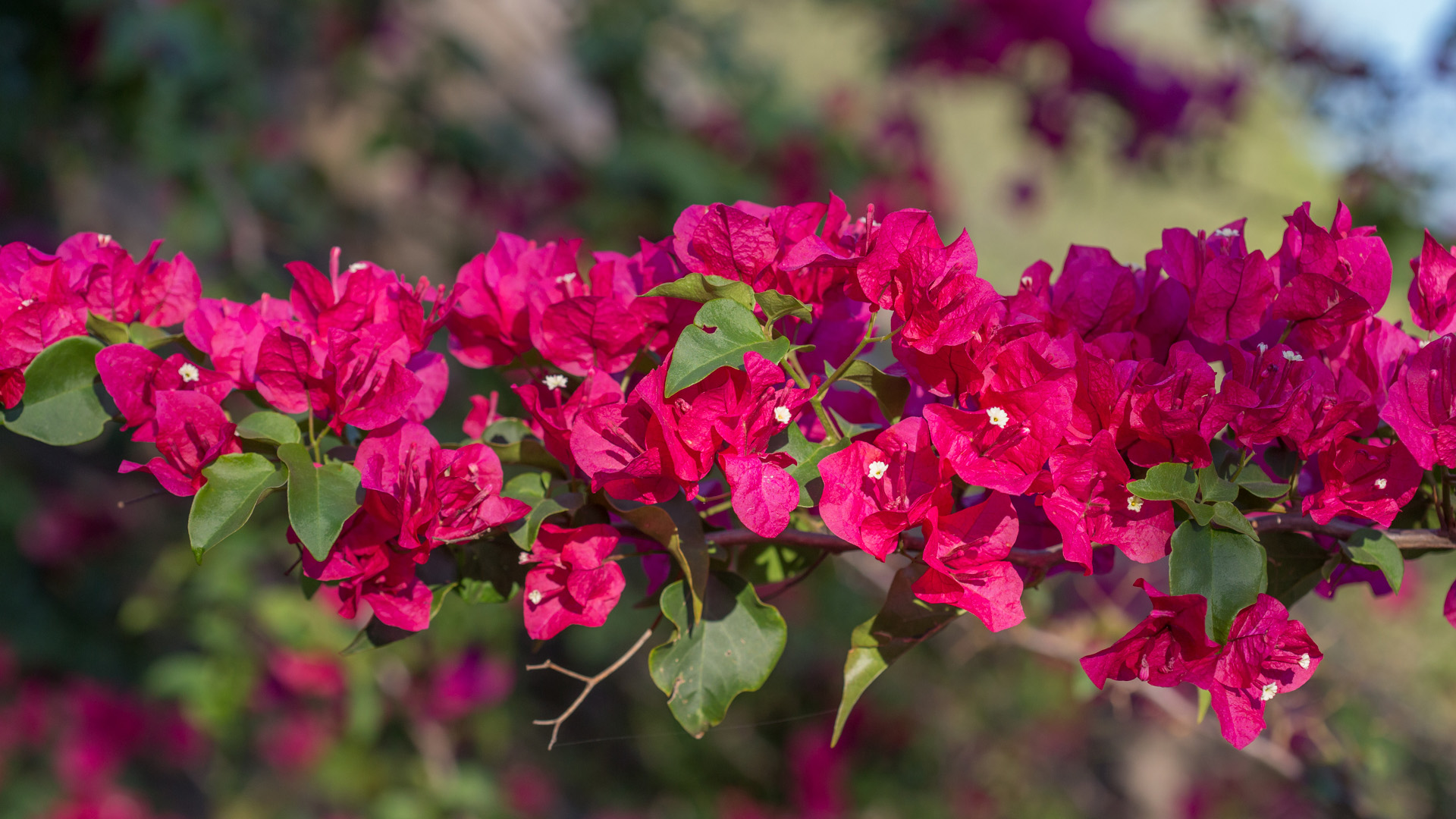
Bougainvillea
The most color you can get on a wall in Phoenix. Blooms most of the warm season, thrives on heat and neglect. Needs something to lean on or a light trellis to go up the block.

Orange Jubilee
Fast, orange trumpet flowers most of the warm season, hummingbirds all over it. Cut back hard in late winter to keep it full.

Hopseed
Native, fast, evergreen, 8 to 12 feet. The workhorse hedge for this climate. Green or purple leaf forms.

Arizona Rosewood
Native, dense, dark green, white flower clusters in spring. Slower than hopseed but very long lived and never needs much of anything.

Twisted Myrtle
Evergreen, dark green, with twisted upright branching that looks sculptural even unpruned. Fragrant white flowers in summer. 6 to 8 feet, slow and steady.
Dig out the root flare

This tree has soil and rock piled up against the trunk above where the roots start. That's the root flare, and it needs to breathe. When it's buried, the bark stays wet, the tree stresses, and it never puts on the growth it should. Pull the rock and soil away from the trunk until you can see where the trunk widens out into the roots, then keep that area clear.
Three more sage to fill the gaps
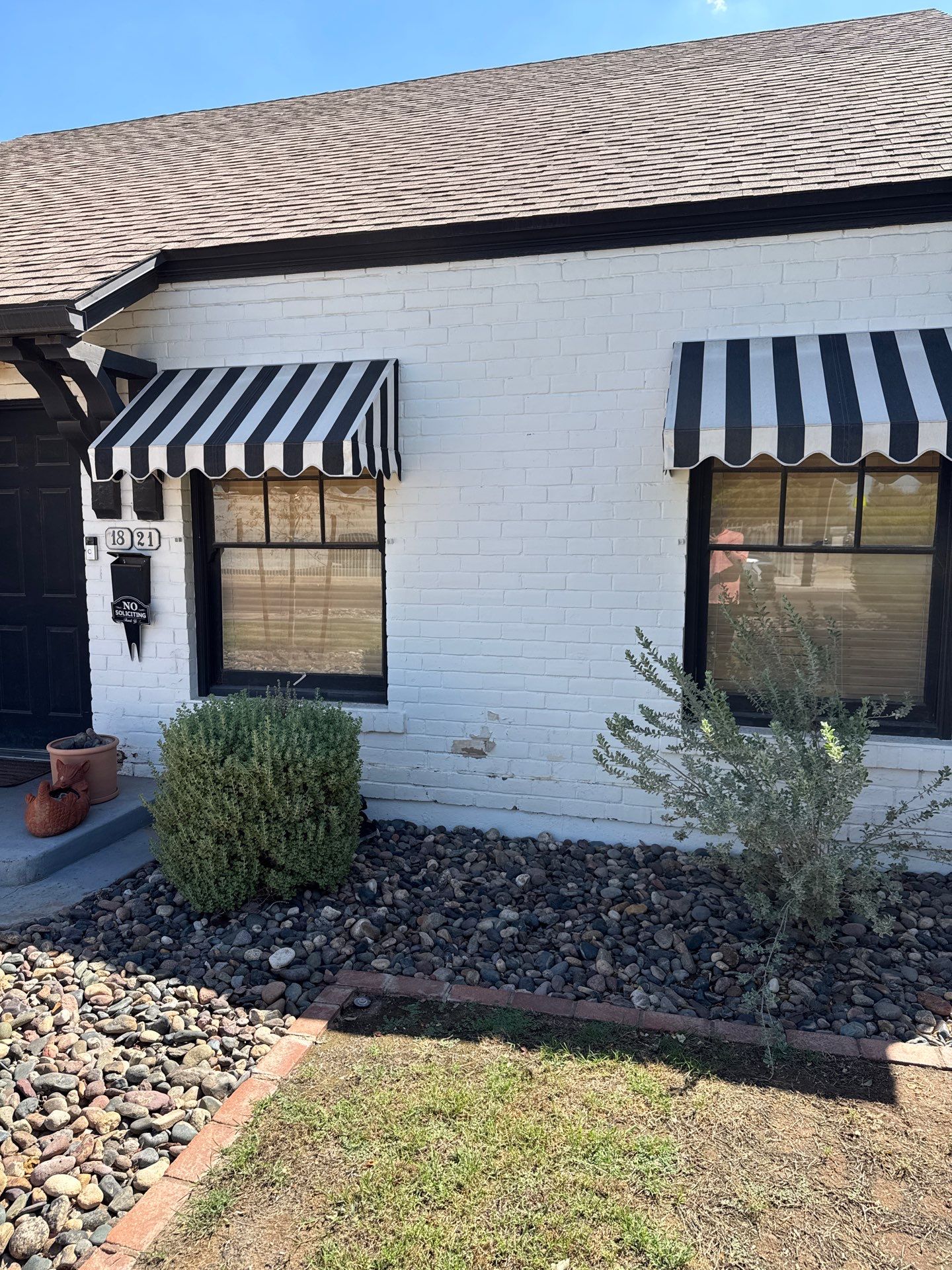
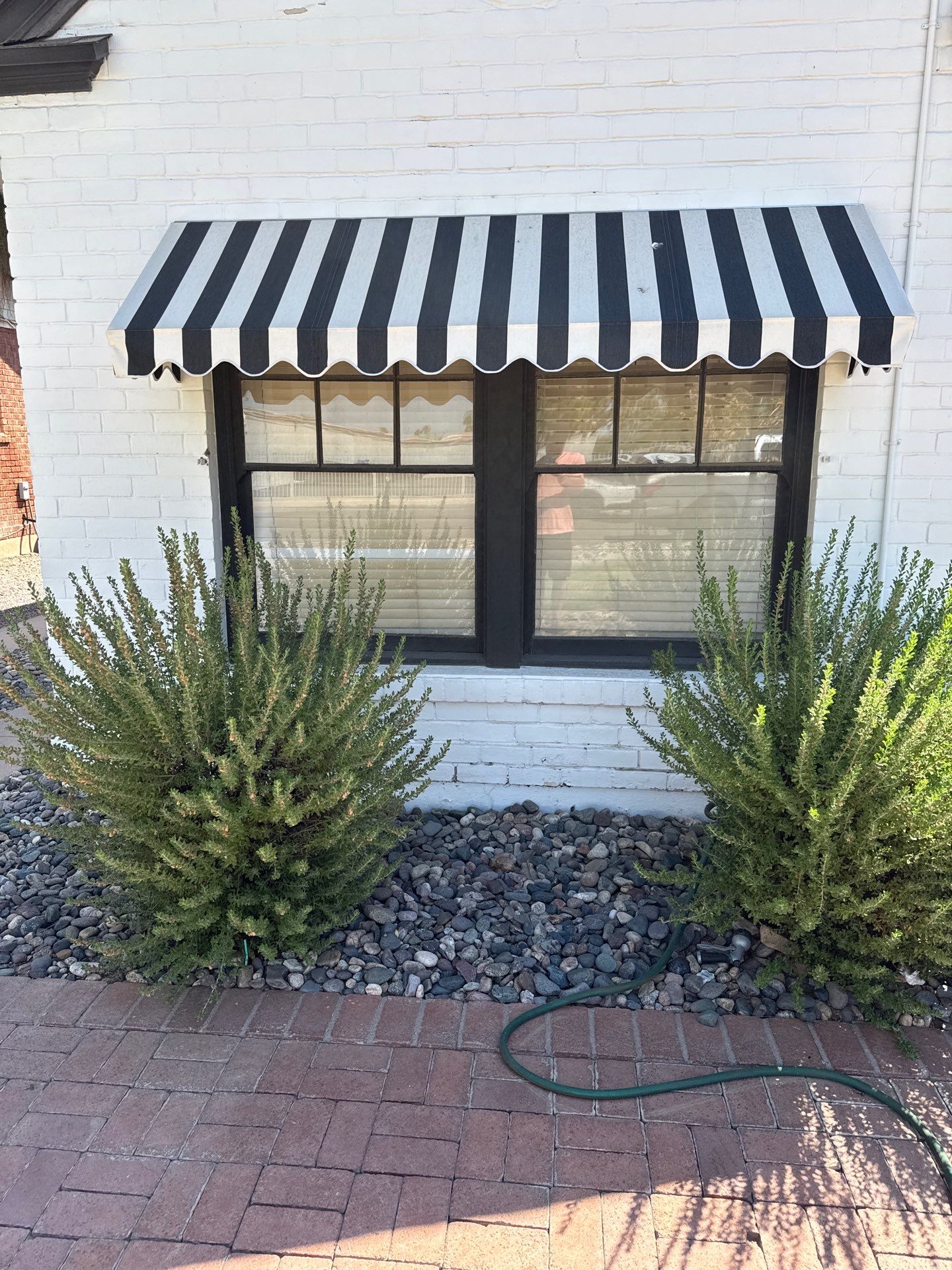
These beds are close. They just have gaps. In the bed on the left (first photo), add two more sage, one in the middle and one on the right side. In the bed on the right (second photo), one more right in the middle between the two you have. Same plant you already have so it reads as one planting once they fill in.

Texas Sage
Match the ones you already have. Silver leaves and purple flowers that show up right after a monsoon storm. Leave it unsheared and it'll bloom heavier and fill in naturally.
Rock out, mulch in, groundcover on top

I'd take all the river rock out of this bed and put down mulch instead. Rock holds heat and gives you nothing back. Mulch cools the soil, feeds the biology as it breaks down, and makes everything planted in it easier to keep alive. Then fill it with groundcover. You already have firecracker plant, which stays. Here are a few more that will fill in around it and give you color most of the year.
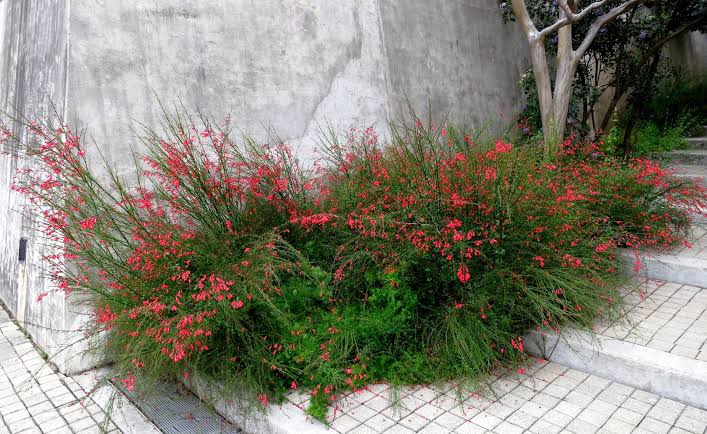
Firecracker Plant
You already have this one. Arching green stems with red tubular flowers most of the year, hummingbirds love it. Keep it and let it spread.

Yellow Dot
Low, glossy green mat with small yellow daisies nearly year round. Spreads fast, handles shade and sun, and looks good against dark mulch.
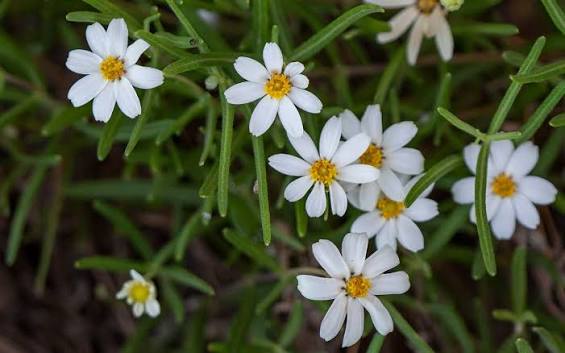
Blackfoot Daisy
Low mounding native, under a foot tall, small white daisies almost year round. Needs sharp drainage, which mulch over a slightly raised bed gives it.
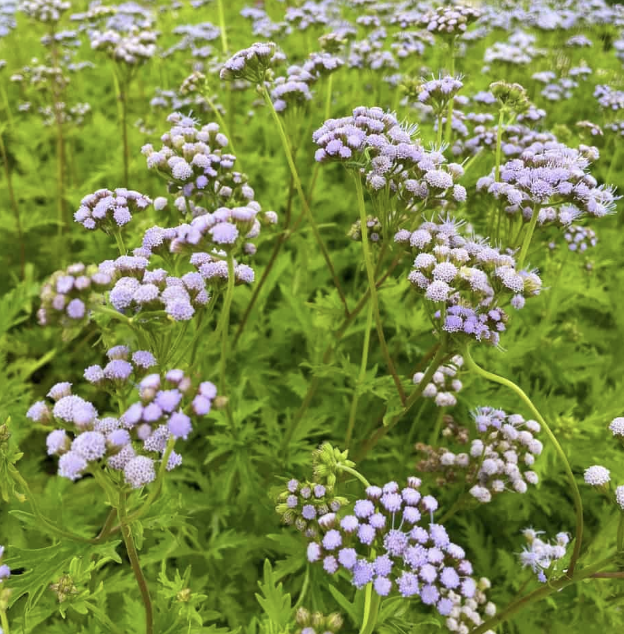
Gregg's Mistflower
Low and spreading, lavender-blue flowers spring into fall, and the single best butterfly plant on this list.

Iceplant
Succulent groundcover, tight to the ground, bright purple or orange flowers in spring. Takes reflected heat and almost no water once it's in.

Desert Milkweed
Upright gray-green stems, cream flowers, and the host plant for monarch and queen butterflies. Taller than the others here, so it gives the bed some height in the middle.
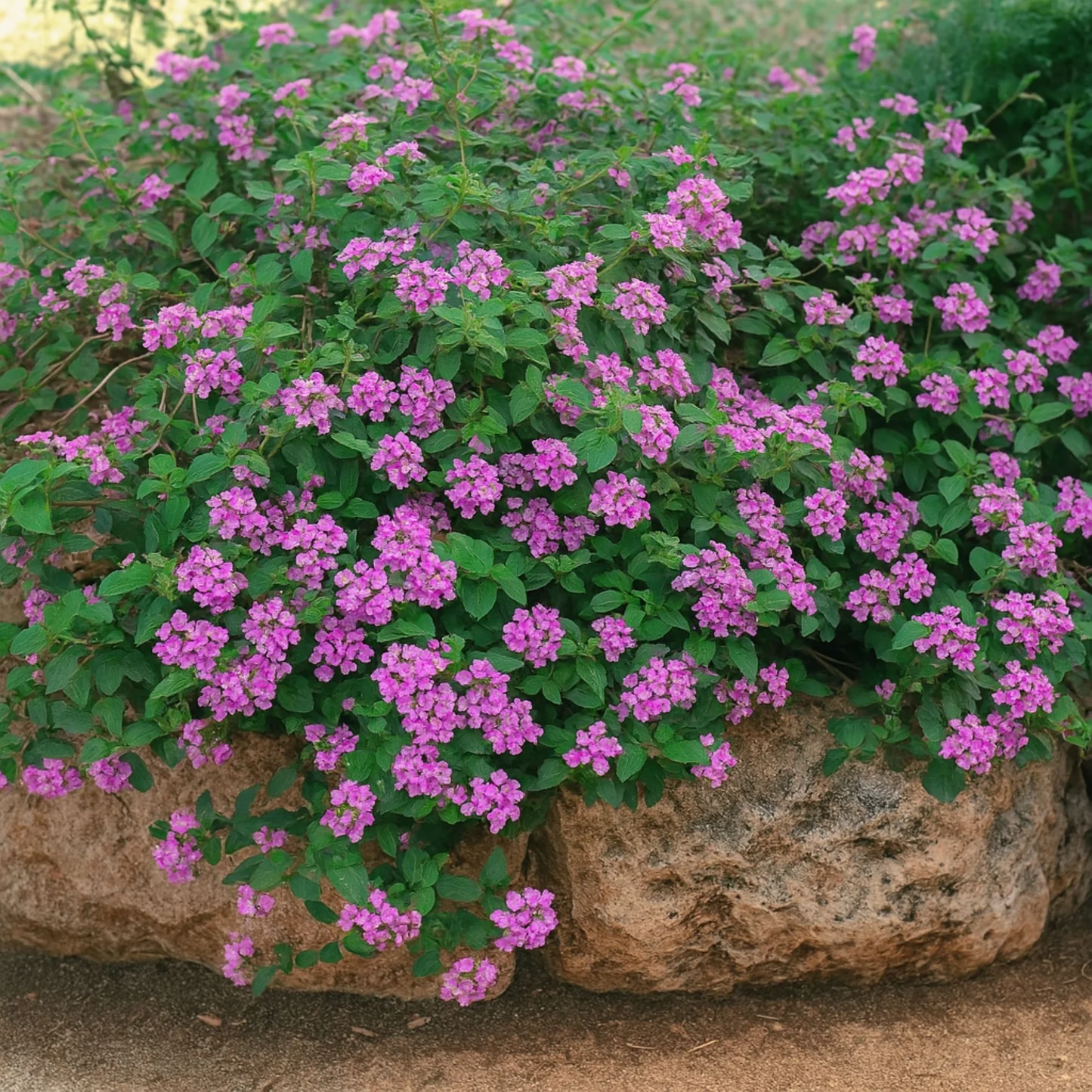
Lantana
Nonstop color from spring until frost, purple, yellow, or mixed, and butterflies all over it. Trailing types stay low and spread wide. It'll do great here once the rock is gone and it's growing in mulch.
Green on the north wall without losing the walkway
Creeping fig up the wall

There's not much room along this side, and you need to get in and out of the car without pushing through plants. Creeping fig is the answer. It clings to the wall on its own, grows flat, and never comes out into the walkway. North facing is perfect for it. In a couple of seasons the wall is green and you haven't given up an inch of space.

Creeping Fig
Evergreen, dense, self-attaching, and it stays flat against the wall. Trim a couple times a year to keep it off the windows and away from the eave.
Cover the walls, cool the yard, grow some food
The backyard has a lot of block wall and a lot of sun. The plan is vines and hedges on every wall that faces the house, groundcover under the olive, and a little help getting the raised bed going this fall.
Top it off and plant this fall

This bed is ready to go with a little help. Before you plant, get one bag of the raised bed mix from the Arizona Worm Farm (their Growing in the Garden Raised Bed Mix, or their compost) and spread it over the top. That refreshes the biology in the bed after a summer of sitting.
For what to plant and when, use the Maricopa County planting guide. Fall is one of our two best seasons and it starts now. Lettuce, greens, brassicas, root vegetables, peas, and herbs all go in over the next few weeks.
Two tangerine crossvines

You said you like the idea of vines here, and this south facing wall is a good spot for them. Tangerine crossvine is the one. Two plants, one at each end, and they'll meet in the middle and cover the wall in a couple of years. Big orange flowers in spring, evergreen the rest of the time, and the casita stops baking in the afternoon.

Tangerine Crossvine
Evergreen, climbs on its own, big orange trumpet flowers in spring. Handles full south sun and heat. Two plants will cover the whole casita wall in a couple of seasons.
Cover the walls with color
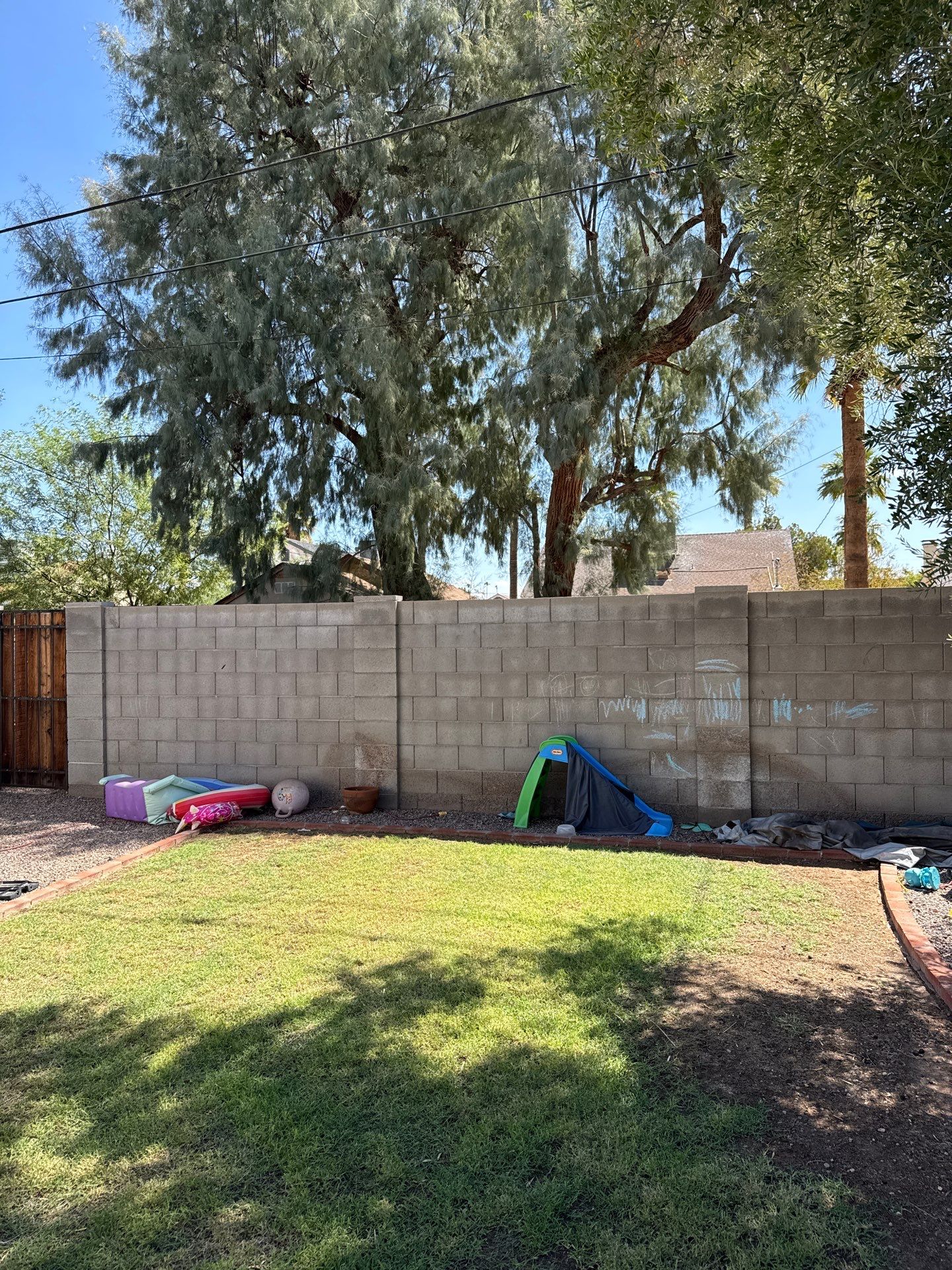
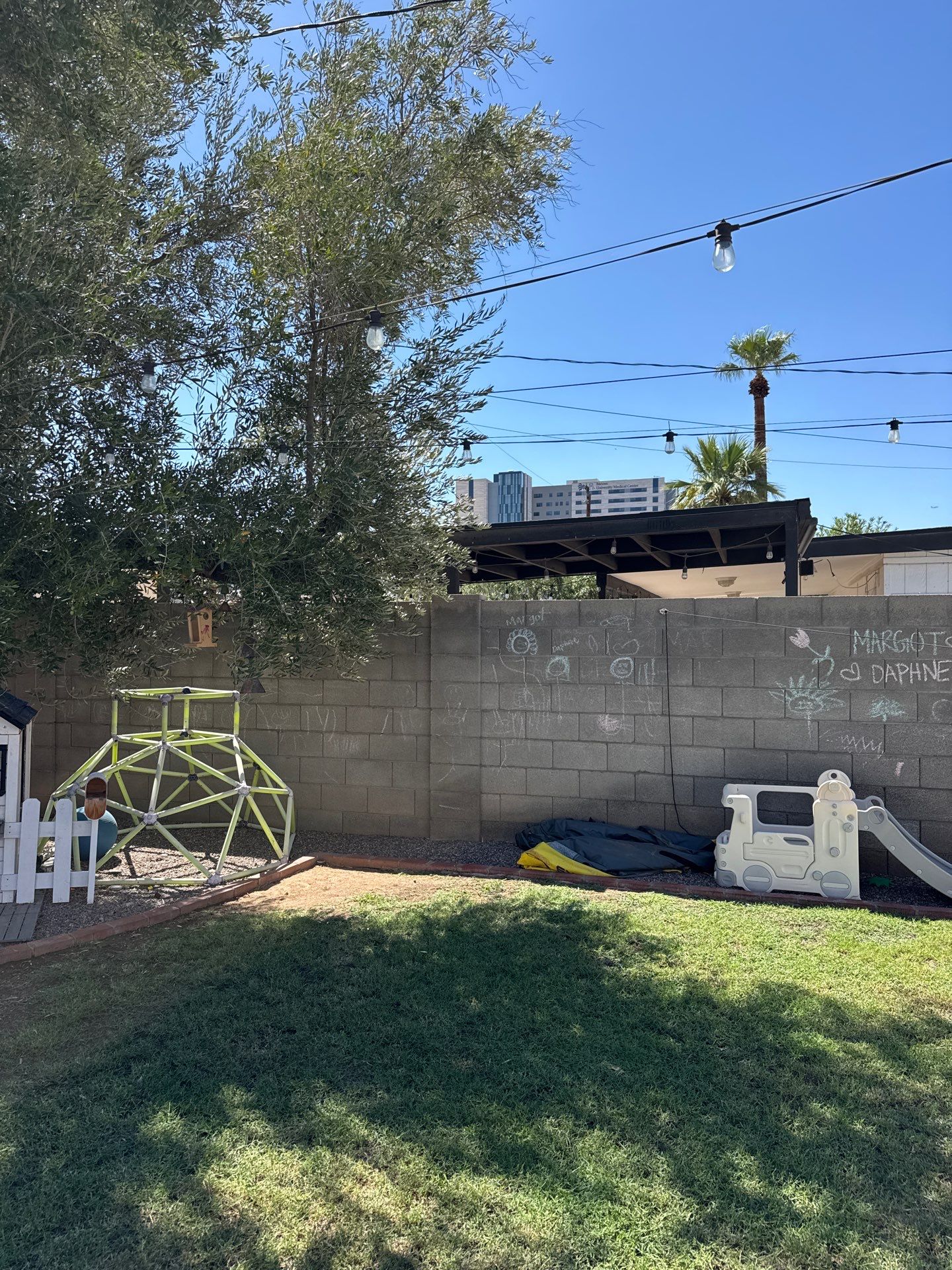
Both of these walls get the same treatment. You said you like color, so bougainvillea is the obvious first pick and orange jubilee is right behind it. If you'd rather have a hedge that reads as a wall of green, hopseed, Arizona rosewood, and twisted myrtle all work here. You can mix them too. A run of hedge with bougainvillea at the corners is a good look.
Bougainvillea
The most color you can get on a wall in Phoenix. Blooms most of the warm season, thrives on heat and neglect. Needs something to lean on or a light trellis to go up the block.
Orange Jubilee
Fast, orange trumpet flowers most of the warm season, hummingbirds all over it. Cut back hard in late winter to keep it full.
Hopseed
Native, fast, evergreen, 8 to 12 feet. The workhorse hedge for this climate. Green or purple leaf forms.
Arizona Rosewood
Native, dense, dark green, white flower clusters in spring. Slower than hopseed but very long lived and never needs much of anything.
Twisted Myrtle
Evergreen, dark green, with twisted upright branching that looks sculptural even unpruned. Fragrant white flowers in summer. 6 to 8 feet, slow and steady.
Yellow dot groundcover, and a better way to water

Under the olive, plant yellow dot as a groundcover. It handles the shade under the canopy, spreads to fill the whole circle, and keeps the soil cool for the tree's roots.
The olive itself needs deep water. Once a week in summer and once a month the rest of the year, put a hose at one corner of the tree's canopy and let it run slow for twenty four hours. Next day, move it to the next corner. Four corners, four days. The goal is to get water as deep as it will go so the roots follow it down.
Yellow Dot
Low, glossy green mat with small yellow daisies nearly year round. Spreads fast, handles shade and sun, and looks good against dark mulch.
Desert willow

A tree here has to stay under the power lines, which rules out most shade trees. Desert willow is the right size. It tops out around 20 to 25 feet, gives good afternoon shade, flowers most of the warm season, and you'll never be fighting the utility company over it.
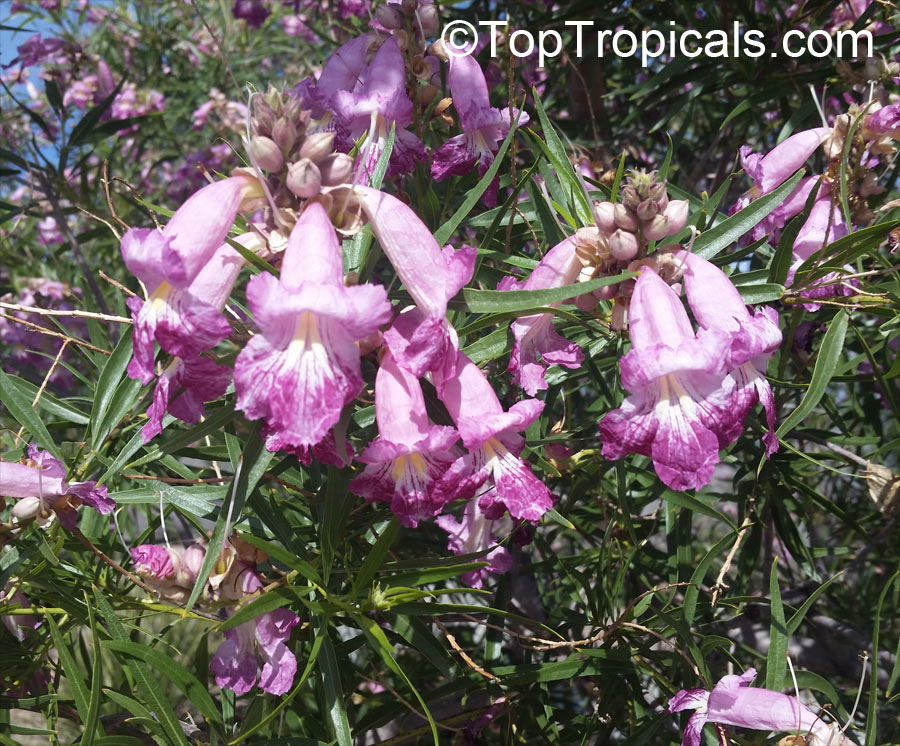
Desert Willow
Native, fast growing, pink to purple orchid-like flowers spring through fall. Tops out around 20 to 25 feet, which keeps it well under the lines. Light, open canopy.
Cover both walls to cut the heat

This narrow run between the house and the block wall traps heat and radiates it back at the house. Covering both walls with plants brings the temperature down noticeably. Same idea as every other wall on the property. Pick one of the options below and run it along both sides, or mix and match. Bougainvillea on the block wall with a hedge against the house, or the other way around, both work.
Bougainvillea
The most color you can get on a wall in Phoenix. Blooms most of the warm season, thrives on heat and neglect. Needs something to lean on or a light trellis to go up the block.
Orange Jubilee
Fast, orange trumpet flowers most of the warm season, hummingbirds all over it. Cut back hard in late winter to keep it full.
Hopseed
Native, fast, evergreen, 8 to 12 feet. The workhorse hedge for this climate. Green or purple leaf forms.
Arizona Rosewood
Native, dense, dark green, white flower clusters in spring. Slower than hopseed but very long lived and never needs much of anything.
Twisted Myrtle
Evergreen, dark green, with twisted upright branching that looks sculptural even unpruned. Fragrant white flowers in summer. 6 to 8 feet, slow and steady.
Monthly organic fertilizing program
Every plant on this page will do a lot better in living soil than in dirt. New trees, hedges, and pollinator beds establish faster and need less water when the biology underneath them is active. That's what this program builds. We come out monthly, spray the whole landscape with our organic liquid blend to feed the soil life, and top dress with quality compost three times a year. You get a short recap video after each visit so you know exactly what was done and what we're seeing.
- Monthly organic liquid feeding, trees, shrubs, beds, and turf
- Compost top dressing three times per year
- Recap video after every visit
- No contract, cancel anytime
Where this goes next
Take a look through this and think about which options feel right, especially the replacement tree out front and what goes on the block walls. If you'd like me to put together a planting proposal with pricing, just let me know. If you'd rather plant it yourselves, I'll get you added to the Garden Nerd Club where you can ask questions as you go and I'll walk you through it.
For pulling the river rock and getting irrigation run to where the new trees and vines are going, reach out to Garrett, the irrigation guy I work with. He's at 480-678-9121.
Questions on anything here, just reach out. You can also read more about how we plant at thegardennerd.org.