
Kristin, here's what we covered
25 W Boca Raton Rd, Phoenix, AZ 85023Thanks for having me out to walk the property. I put this together in the same order we walked it, front yard through backyard. As a consult client you're already in the Garden Nerd Club, so I'm happy to keep working through this list with you whenever you're ready.

A Small Grass Circle, Framed in Brick
Here in the front yard, the grass comes out except for a small circular patch left in the middle. I'd use the same brick you've already got outlining the rest of the front yard to build a hardscaped circle around that remaining patch, so it ties into the look you've already established. On either side of that grass circle, I'd plant two Red Push Pistache trees to frame it symmetrically, and I'd frame each of those trees with its own matching brick circle too, so all three circles read as one cohesive design across the front yard.
Around the base of each tree, I'd fill in with something soft and full rather than leaving bare ground. Foxtail Fern and Asparagus Fern both give you a lush, feathery texture, Iceberg Roses would add clean white blooms into the mix, and Yellow Dot would work well as a low groundcover filling in around all of it.
For each tree's water well, dig it out and put mulch down inside first, keeping it pulled back from the trunk, then plant the ferns, roses, and Yellow Dot in and around that mulched area. Getting the mulch in before the surrounding plants go in keeps the sequence clean and means you're not disturbing new plantings later trying to work mulch in around them.

Red Push Pistache (pair)
Vivid red fall color, planted symmetrically on each side.
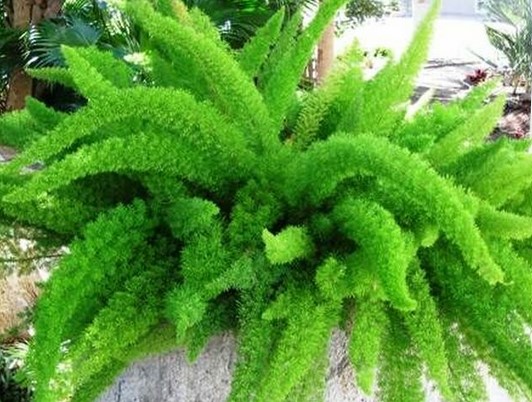
Foxtail Fern
Dense, feathery texture around the base.
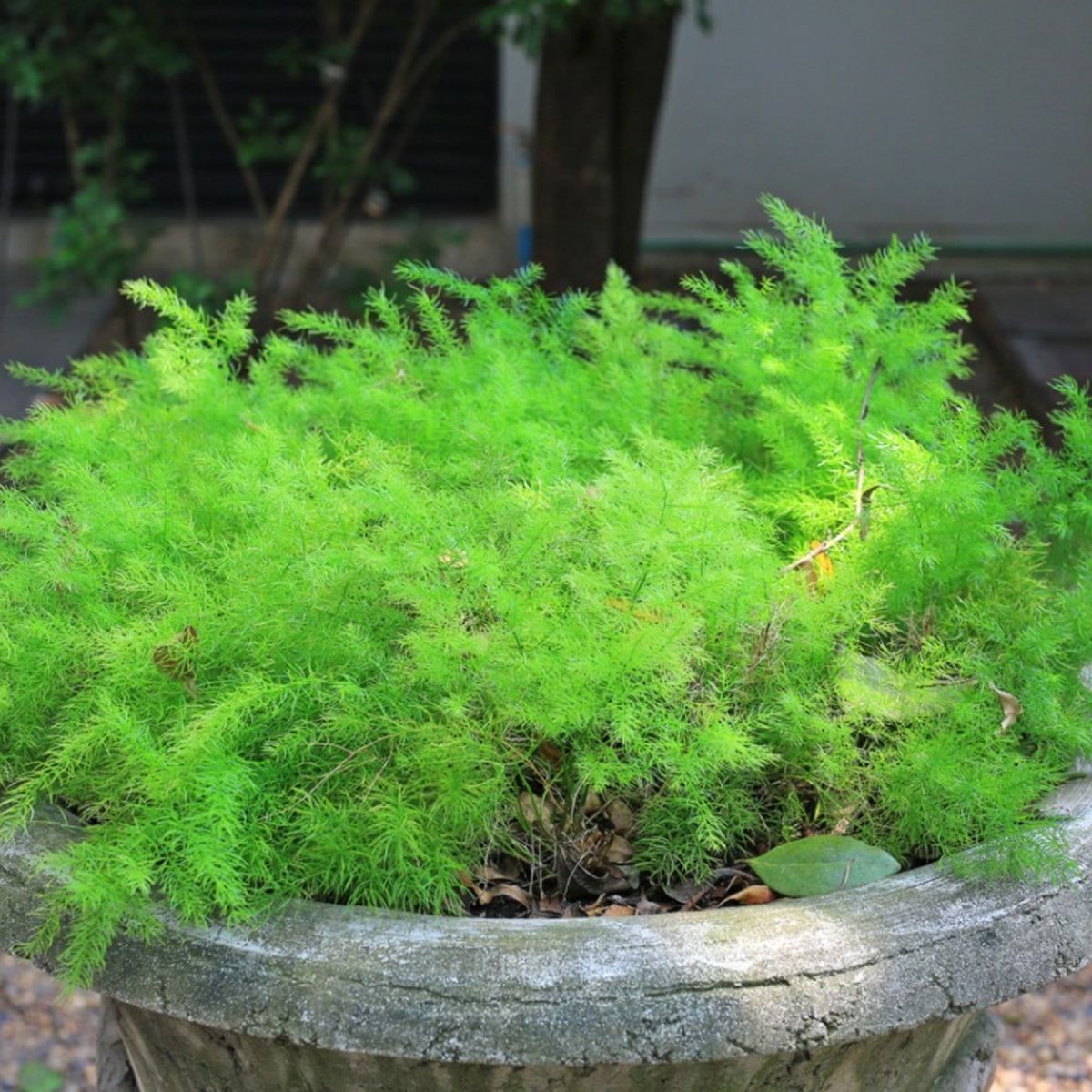
Asparagus Fern
Soft, feathery texture, fills in nicely.
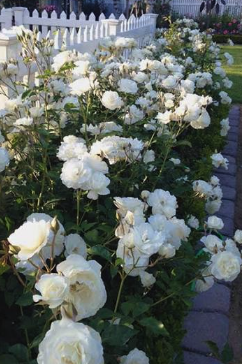
Iceberg Rose
Clean white blooms most of the year.

Yellow Dot
Low groundcover, fast spreading, bright yellow flowers.

Solarize First, Then Cardboard and Mulch
For the grass you're getting rid of, I'd start with solarization, using clear plastic and our summer heat to cook the grass and its roots over several weeks. The University of Arizona Cooperative Extension has good guidance on this process, you can read through it here. Once that's done, put down multiple layers of cardboard and then mulch on top. For the mulch itself, you've got two good options, Arizona Worm Farm carries pine mulch and I believe they'll deliver right to the house, or chipdrop.com is another route if you want it dropped off for free from local tree services in the area.

Cardboard and Mulch Around Everything Here
All along the perimeter where your existing plants are, it's mostly bare soil right now with grass trying to creep back through. I'd add multiple layers of cardboard down first, then mulch on top around all of these, that combination smothers the grass out and builds the soil at the same time.

Same Prep, Plus a Feeding Boost
Same treatment here for the roses on both sides of the driveway, pull out the grass, put down multiple layers of cardboard, then mulch on top. These roses would also do well fed with the nutrient product from Arizona Worm Farm, the one I brought over for you, work that in on a regular basis to help them really take off.

Dense, Whimsical, and Full of Pollinators
This area to the side of the driveway is getting the grass pulled too, same process, solarize, cardboard, then mulch. Once that's ready, I want this to be a densely populated bed, lots of pollinators, bright flowers, and things that specifically bring in hummingbirds and butterflies. Still desert adapted, but leaning into that whimsical, cottage feel you like. Chuparosa and Baja Fairy Duster both pull in hummingbirds with strong red color, Penstemon gives you tall spikes pollinators love, and Lavender and Autumn Sage round it out with that softer, cottage texture. Globe Mallow adds bright orange blooms and is genuinely tough and easy to keep alive, Texas Sage brings silvery foliage with purple blooms into the mix, Desert Milkweed is a magnet for monarchs specifically, and Greg's Mistflower pulls in butterflies with its fuzzy purple-blue blooms. That's a lot of options, you don't need all of them, but packing several of these in together is what gets you that dense, layered look with color and pollinator activity going most of the year.
This is also a great spot to work in the totem pole cactus you rescued. Give them a place with some real visibility within the bed, they'll read as a strong architectural focal point once everything else fills in around them.
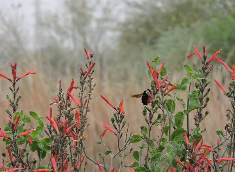
Chuparosa
Red tubular blooms hummingbirds can't resist.
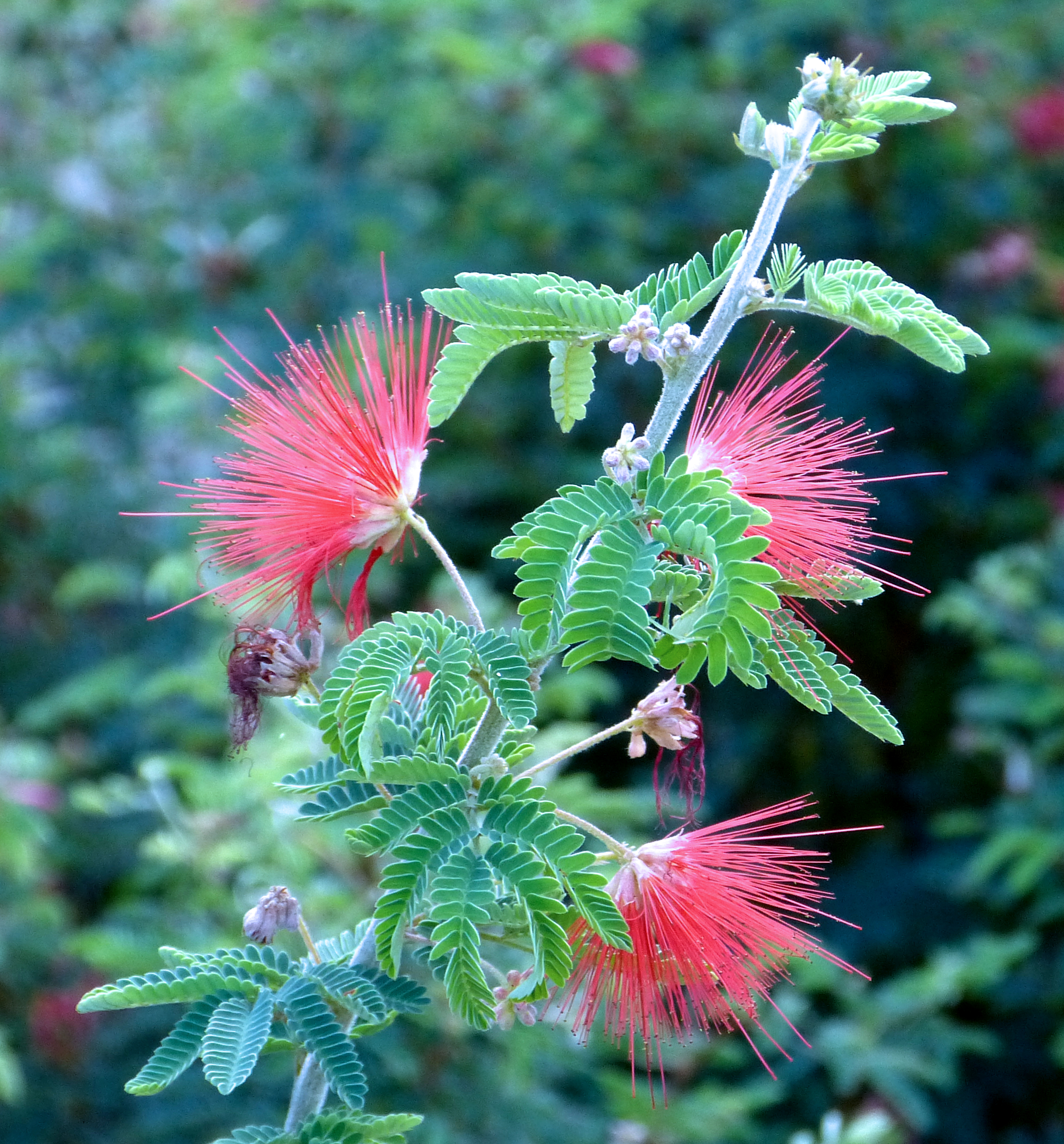
Baja Fairy Duster
Wispy red blooms, hummingbird favorite.
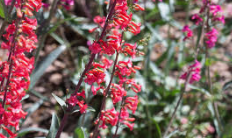
Penstemon
Tall spikes of color, great pollinator draw.
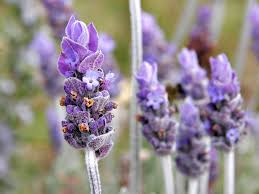
Lavender
Fragrant, soft cottage texture.

Autumn Sage
Red or pink blooms most of the year.

Globe Mallow
Bright orange blooms, tough and easy.

Texas Sage
Silvery foliage with purple blooms.

Desert Milkweed
Tough, upright, a magnet for monarchs.
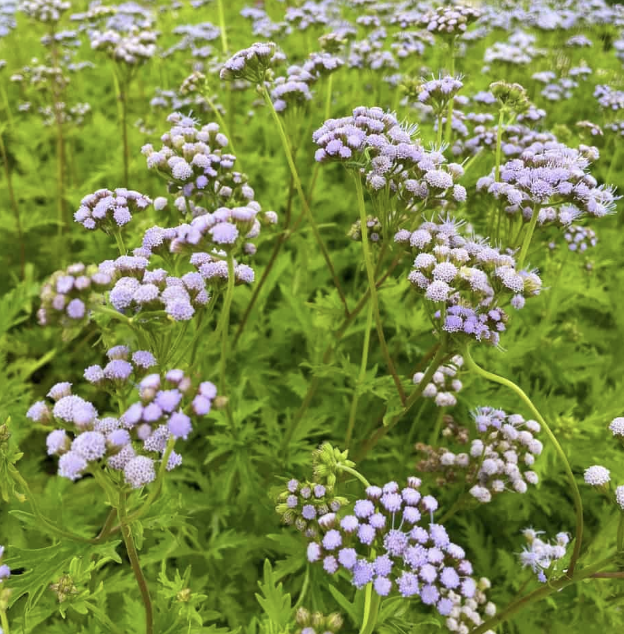
Greg's Mistflower
Fuzzy purple-blue blooms, butterflies love it.
You don't need all of these, pick your favorites and pack them in for that dense, cottage feel.

Finding a Home for Your Rescues
Those totem pole cactus you rescued deserve a good spot, and I'd actually work them right into the driveway pollinator bed from section 05 rather than giving them a separate spot of their own. Placed with some visibility in that bed, they'll read as a strong focal point once the rest of the planting fills in around them.

Too Established to Lift, Root Flare Excavation Instead
This purple plum is planted a bit too deep, but it's too established at this point to try lifting it the way we would a newer tree. A root flare excavation is the right move here instead, carefully exposing the flare, that's the point where the trunk widens and the first major roots branch off, without disturbing the root system as much as a full lift would. Here's the video that walks through exactly how to find and expose it, and how to tell which roots, if any, actually need pruning once it's exposed.
Happy to walk you through doing this yourself using the video as your guide, it's genuinely doable as a DIY project if you're comfortable digging carefully around an established tree. If you'd rather have us handle it, this is also a standalone service we offer at $200 per tree.

Planted Way Too Deep, Time to Lift It
This mandarin is planted way too deep, my guess is at least a foot, though you won't know exactly until you get down in there and start digging. Unlike the purple plum, this one's still young enough that I'd try lifting it rather than just excavating in place. Dig around it as wide as you reasonably can, work a shovel underneath the root ball, and prop the whole tree up to the right height, then pack soil back in underneath to hold it there. This one is a bit more involved than a standard root flare excavation since it's a full lift, happy to do this ourselves if you'd rather not tackle it, just let me know and I'll get you a number for it.

A Big Shade Tree for This Spot
This spot west of the pool would look great with a really nice big shade tree. Carob is a great option, and Chinese Elm is another good choice if you want something a bit faster growing. Ficus is worth a look too if you want dense, year-round green, and Tipu if you'd rather have something that grows even bigger and faster with summer blooms on top.
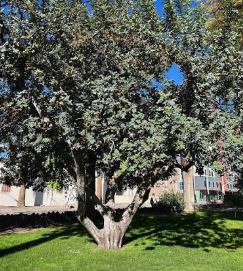
Carob
Evergreen, tough and well-shaped.

Chinese Elm
Faster growing, dense canopy.
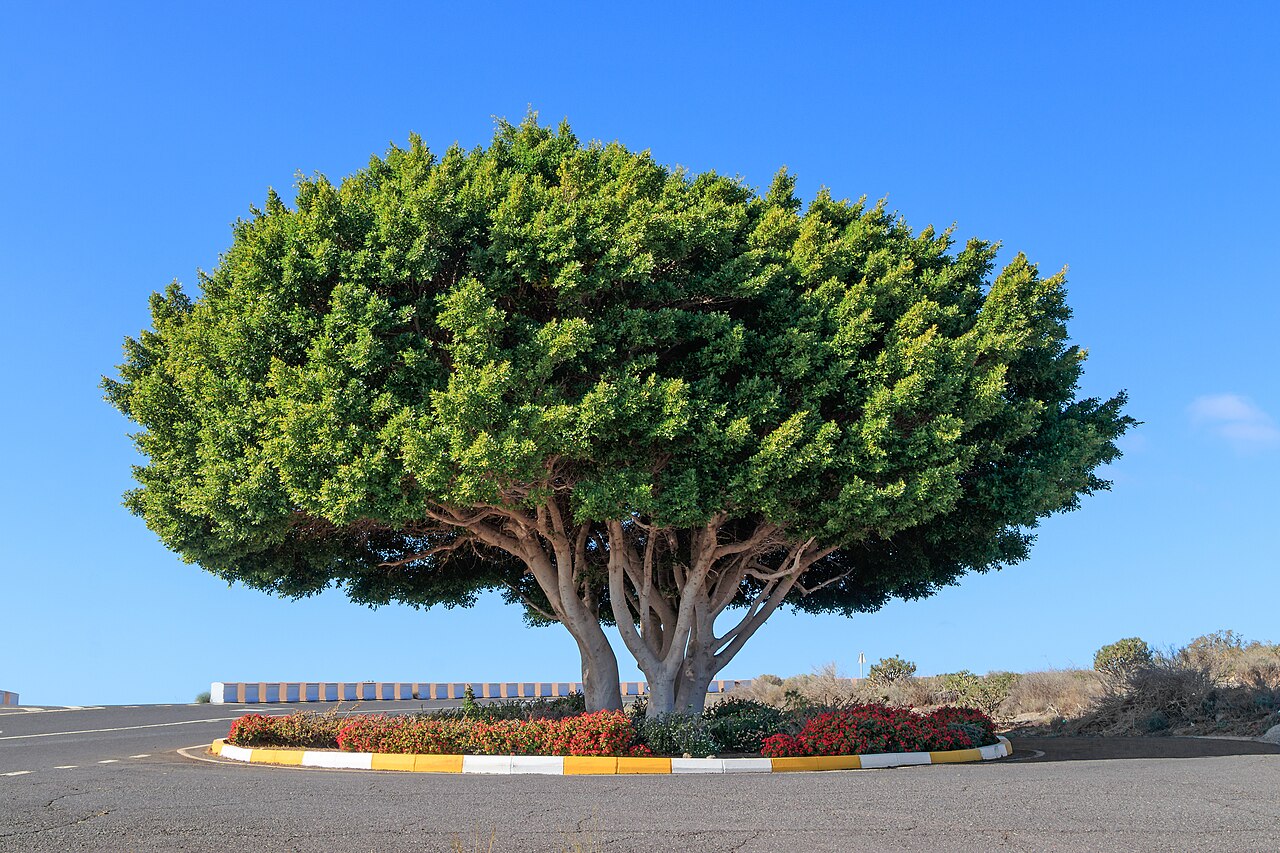
Ficus
Dense, year-round green.
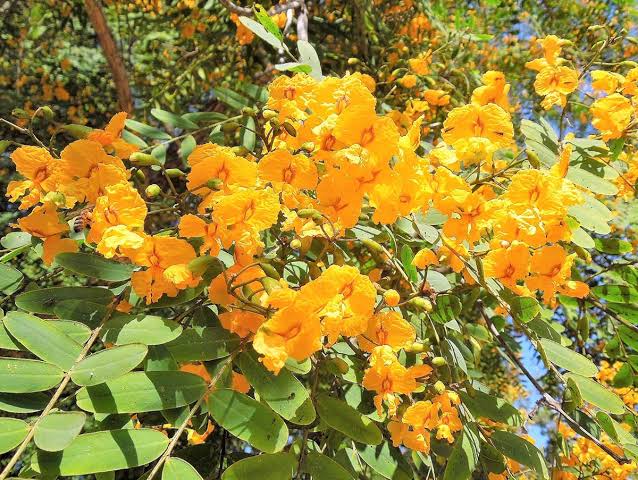
Tipu
Big, fast growing, summer blooms.

Same Process, and Patience Pays Off
These roses could use the same treatment we talked about elsewhere, remove the grass, handpick out as much as you reasonably can, put down multiple layers of cardboard, then mulch on top. It won't disappear all at once, so plan on staying diligent and pulling any grass that pops back through as you spot it.

Bubblers, Water Wells, and a Weekly Deep Flood
Bubblers are what I'd recommend around trees, especially newly planted ones. These go right inside the water well itself, dig that well as big as looks reasonable for the tree, add mulch inside of it but keep it pulled back from the trunk rather than piled against it. From there, deep flood the well once a week using the bubbler rather than watering shallow and frequently.

Healthy Overall, Just a Light Prune
This is a nice big pecan tree, and it's healthy overall aside from a few branches, it's pushing out plenty of new growth, which is a great sign. It doesn't need heavy pruning, but a light prune is worth doing so you don't lose more branches during summer monsoons or high wind events. For pruning work like this, King's Tree Service is who I'd recommend.

Keep the View, Just Soften the Wall Below It
We don't want to lose this view of the golf course and the mountain beyond it. Where the block wall itself sits, up to about three or four feet, a shrub in front of it would soften that without blocking anything above it. Arizona Rosewood would actually grow too tall for this particular spot over time, so I'd steer away from that one here. Hopseed and Dwarf Myrtle both stay in a good range for this. Yellow Bells, Foxtail Fern, and Cape Plumbago are all worth adding into the mix too, they stay low enough to keep the view open while giving you more variety in texture and color along this stretch.

Hopseed
Fast, thick, fills in quickly.
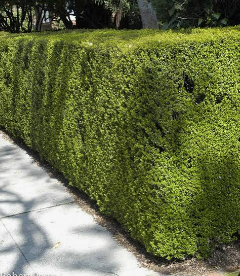
Dwarf Myrtle
Dense evergreen, stays low.
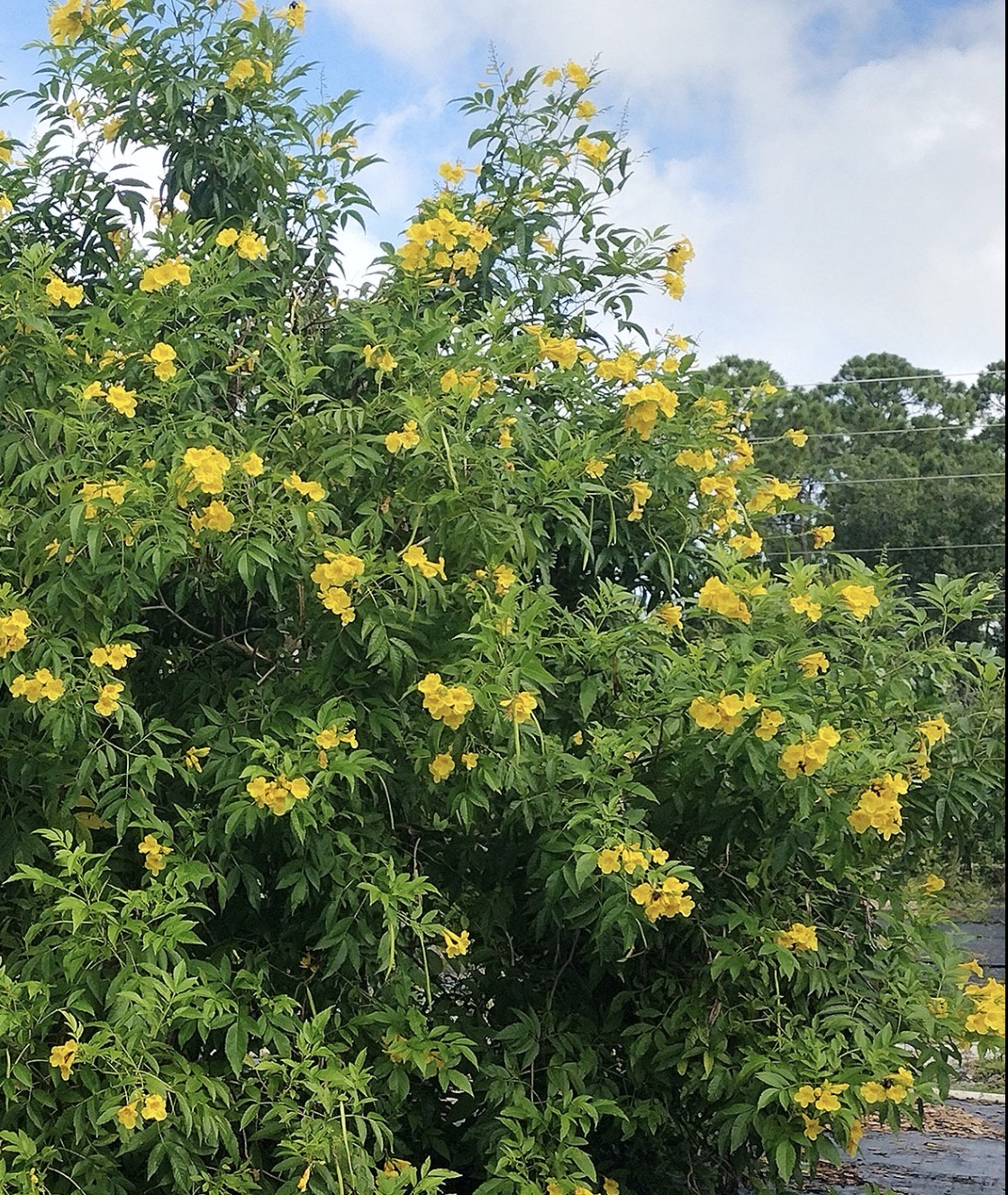
Yellow Bells
Covered in yellow trumpet blooms, stays in a good height range.
Foxtail Fern
Dense, feathery texture, stays low.
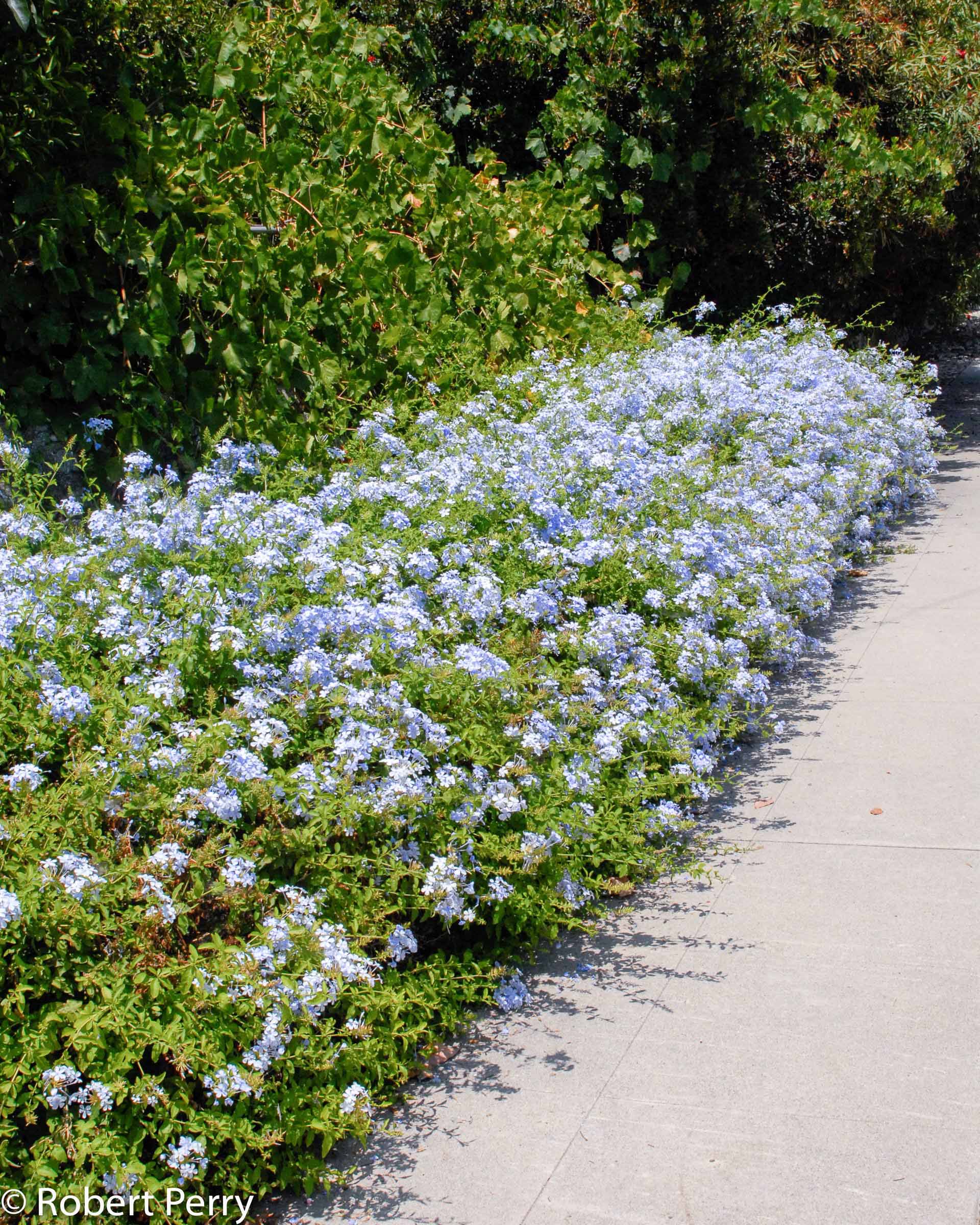
Cape Plumbago
Soft blue blooms nearly year-round.
Keep it to around three to four feet tall so the view above stays open.

One's Not Worth Saving, the Rest Get More Room
This particular one is a goner, I wouldn't put any more time, effort, or energy into it, it's probably going to die regardless, so I'd just remove it. For the rest of the citrus, I'd extend the border around each of them out another three or four feet, then put mulch down in that expanded area. On some of them, it's worth digging down to find the root flare, but these trees are old and established enough that you won't want to disturb them too aggressively in the process, a light touch is the goal here, not a full excavation. This is easy enough to DIY on trees this established, or if you'd rather we handle it, root flare work like this runs $200 per tree.

A Full Rundown of Ground Cover Options
Since ground cover comes up in a few spots on this list, here's an overview so you've got the full picture in one place. Kurapia is a great low water option that handles foot traffic well and works in full sun to light shade. Clover does best with at least some shade, it struggles in full, all-day sun but thrives once there's a bit of tree cover overhead, and it's nitrogen fixing, so it actually feeds the soil as it grows. Yellow Dot (Wedelia) spreads fast and handles full sun well, giving you bright yellow flowers along with the coverage. Dichondra is another option if you want a softer, finer texture, it does best with a bit of shade too.

Kurapia
Full sun to light shade, handles foot traffic well.
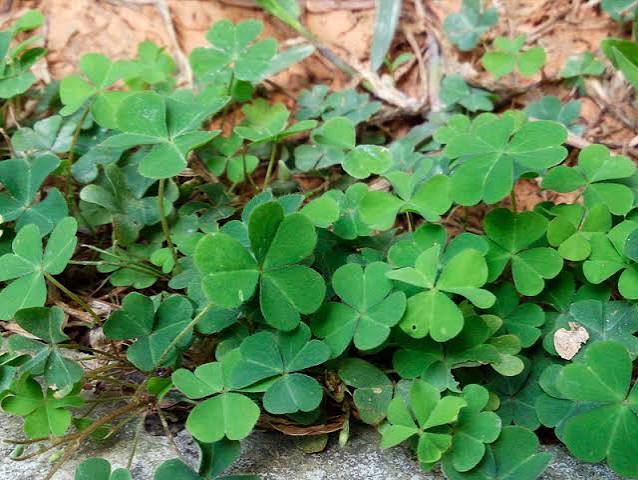
Clover
Needs some shade, struggles in full sun.
Yellow Dot (Wedelia)
Full sun, fast spreading, bright yellow flowers.
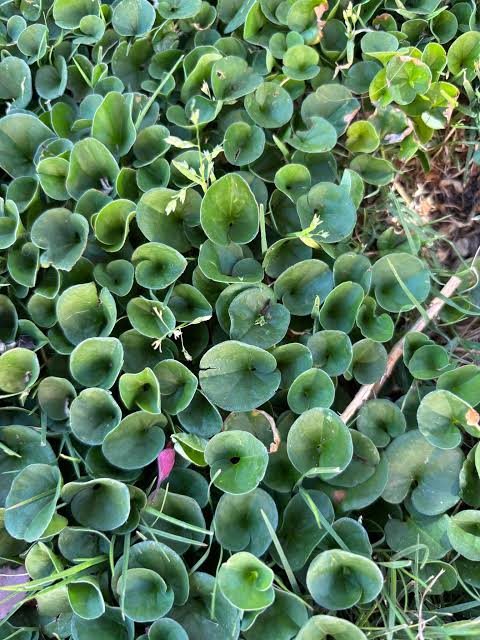
Dichondra
Softer texture, does best with a bit of shade.
Match the ground cover to the light in each specific spot rather than using one variety everywhere, that's what makes the difference between it thriving and just surviving.

Planting to Take the Edge Off the Heat
This side yard runs genuinely hot, there's a lot of reflected heat coming off the block walls and concrete here. Bringing in some real planting is the fix, greenery absorbs and shades that heat rather than bouncing it back the way bare hardscape does. Hopseed and Arizona Rosewood would both work well here and fill in quickly against the wall. Pink Oleander would add height and a good amount of color, and a mix of different colored Bougainvillea varieties would bring in even more color while handling this heat without any issue. Texas Olive is worth adding too if you want a larger accent shrub with big white blooms, and Twisted Myrtle rounds it out as a denser, more structured option if you want something a little more textured than the others.
Hopseed
Fast, thick, fills in quickly.

Arizona Rosewood
Dense, upright, doesn't need much water once established.

Pink Oleander
Adds height and color against the wall.
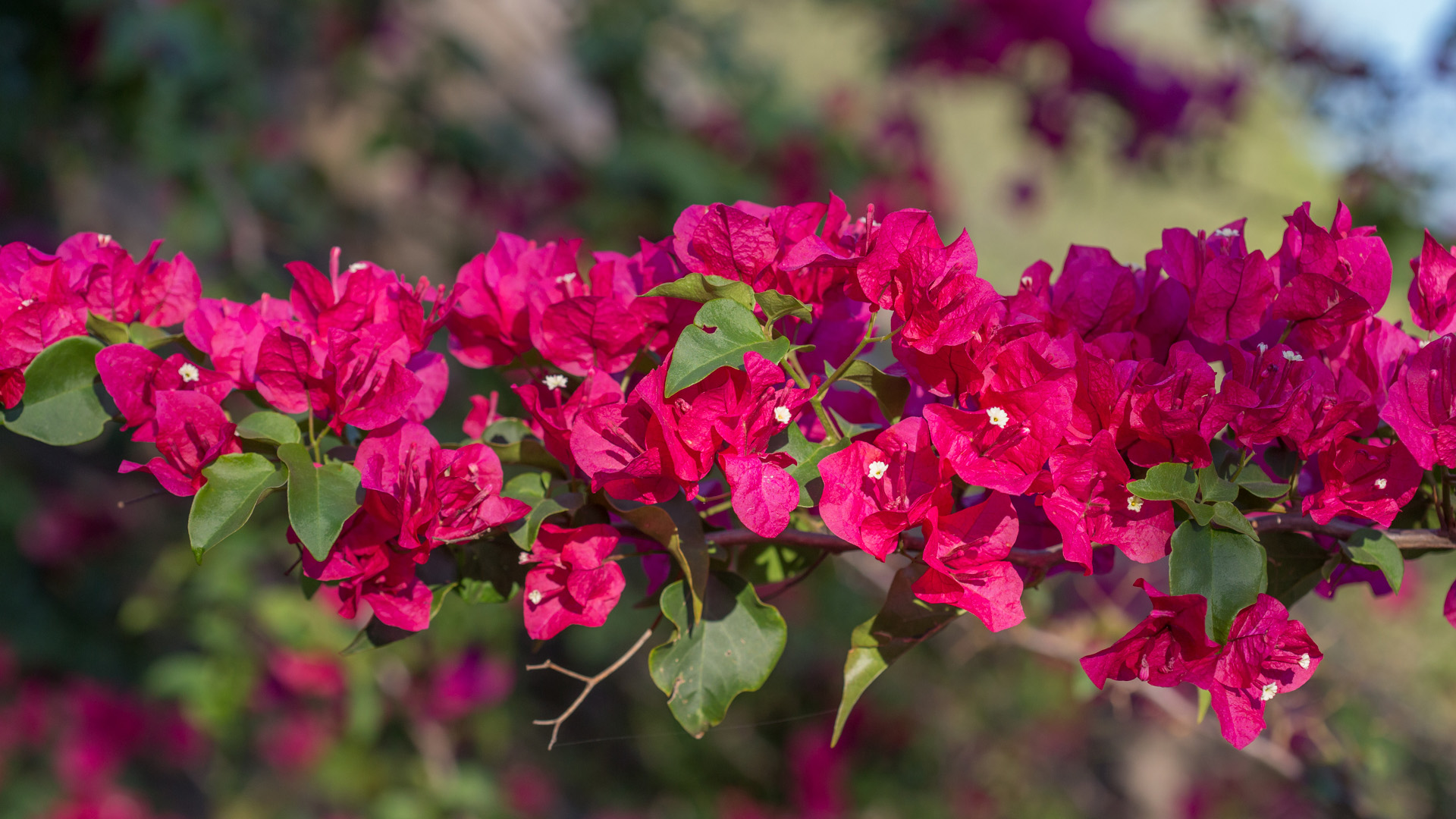
Bougainvillea (mixed colors)
Handles this heat with no issue.

Texas Olive
Larger accent shrub, big white blooms.

Twisted Myrtle
Denser, more structured texture.
Feed the Whole Property
With this much going into the ground, the whole property will do a lot better with regular feeding behind it. Our monthly fertilizing program covers the full landscape, including the grass, with a liquid feeding each month plus compost applied a few times a year, built to build up real soil biology rather than force growth with synthetic salts.
Monthly Landscape Fertilizing
Full landscape, including grass, liquid feeding every month plus compost applied a few times a year.
Text me to get startedWe can also run this on a quarterly basis instead of monthly if that fits your schedule better, just let me know and I'll adjust the plan accordingly.
Let's tackle this in whatever order makes sense
There's a lot here, so pick what matters most to you first, the root flare work, the grass removal, or the front yard beds. We can advise you along the way in the Garden Nerd Club, or if you'd rather have help with any of it, planting or anything else, just reach out and I can get you pricing.
You can also read more about how we plant at thegardennerd.org.