
Consultation Write-Up
Linda's Backyard
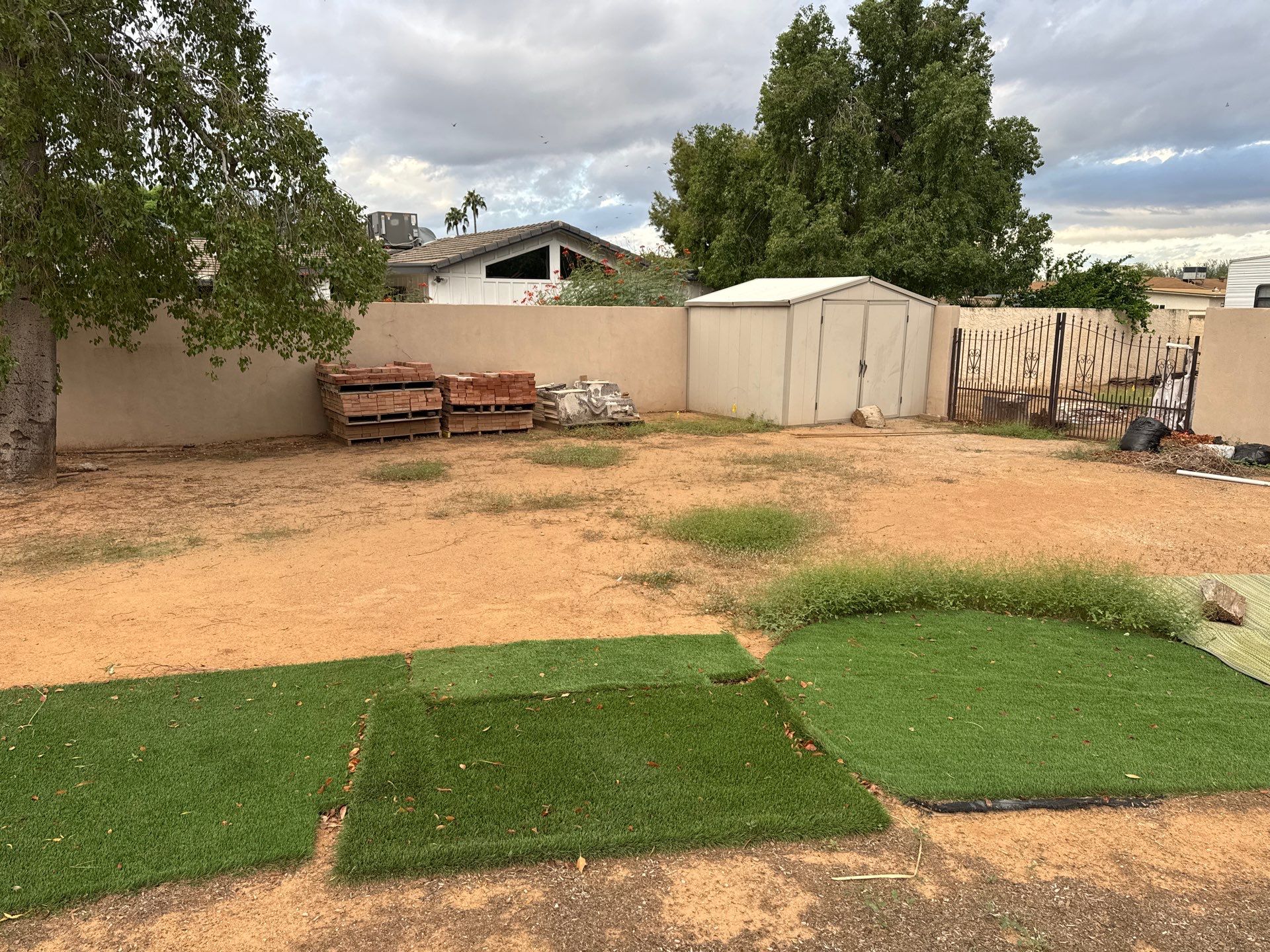
Thanks for having me out, Linda. Your yard is mostly a blank slate right now, and that's a good thing: we get to build the soil and the plantings the right way from the start. You've got a lot to work with, from an east-facing wall that's perfect for tropicals to a big open pool area that can be filled with color.
Everything below follows the order we walked the yard, with photos of each spot and plant options for each one. As a consult client, you're already in the Garden Nerd Club, so you have direct access to me there for any questions as you work through this.
South Side Shade Tree
Southern exposure, two trees already to the west
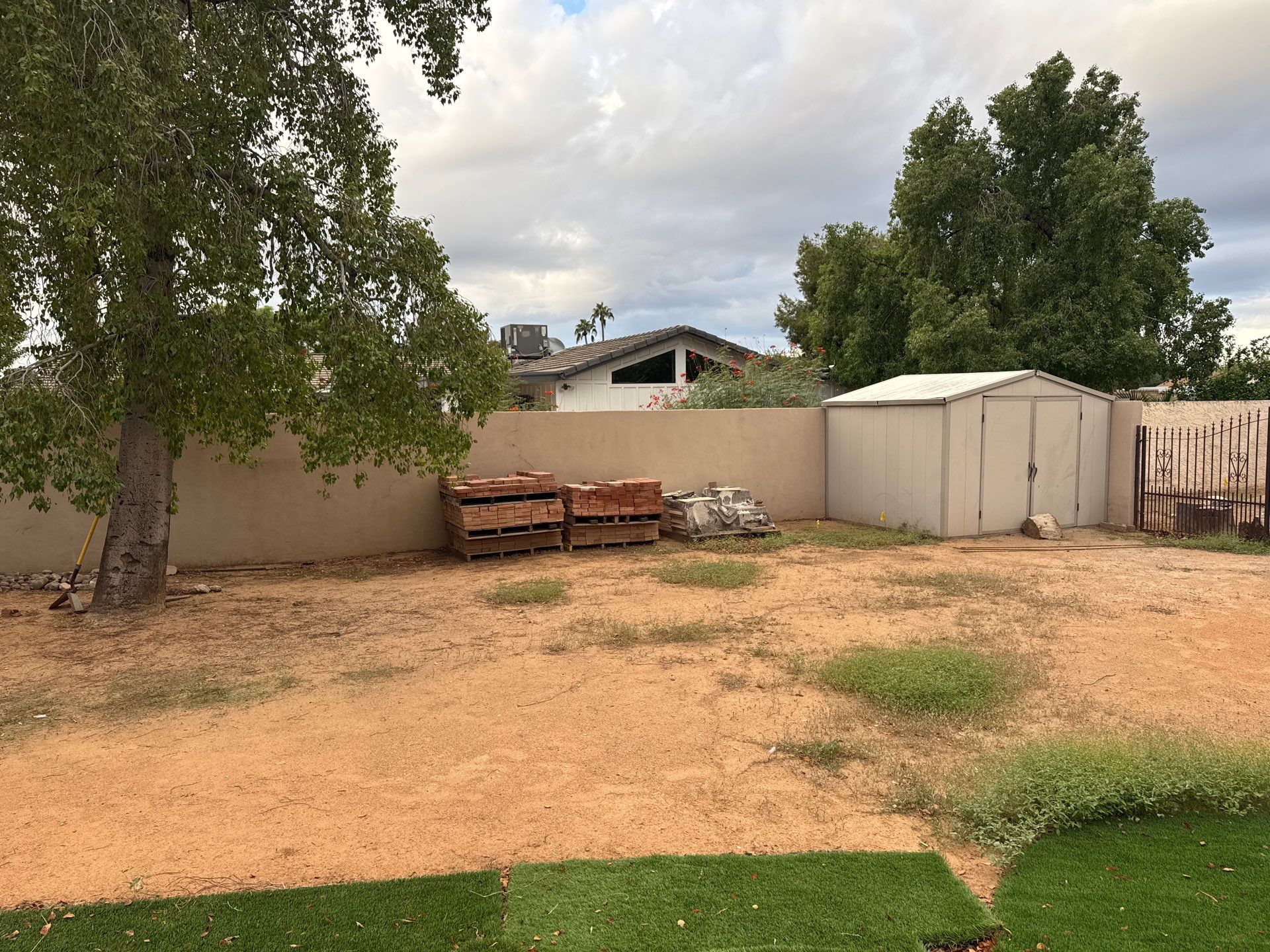
You already have two trees to the west of this spot, so a third tree here does three things at once: it balances out the yard, it screens the neighbor's lights, and it blocks the hard southern sun from the rest of the backyard.
Try to match the spacing of the two existing trees so the three read as a row. Go with a 15 gallon tree. Smaller trees establish faster, root deeper, and usually catch up to (and pass) a bigger boxed tree within a few years.
If year-round screening of the lights matters most, lean toward the Chinese elm or carob, since they keep their leaves. If you'd rather have winter sun in the yard, the red push pistache is the move.

Chinese Elm
Fast growing with a full, slightly weeping canopy that gets to around 30 to 40 feet. It holds most of its leaves through our winters, so it screens year round. Great choice if blocking the neighbor's lights is the top priority.

Red Push Pistache
Tough in full sun and reflected heat, grows into a clean rounded canopy around 25 to 30 feet, and turns red and orange in late fall. It drops its leaves in winter, so you get summer shade and winter sun. Slower than the elm, but very long lived.
Tipu
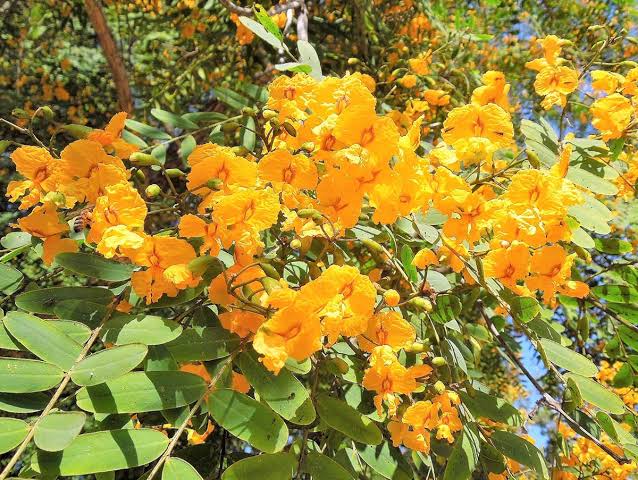
Fast grower with a wide umbrella canopy and yellow flowers in late spring. Gives a lot of shade quickly. It needs room to spread (30 feet or more), and it can drop leaves in late winter before pushing new growth.
Carob
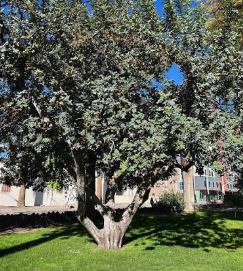
Dense, dark green, and evergreen, so it's the best year-round screen of the group. Handles our heat really well and takes less water than shade trees that aren't desert adapted once it's settled in. A little slower to get going, but worth it.
Grapefruit Tree
Where your old grapefruit used to be
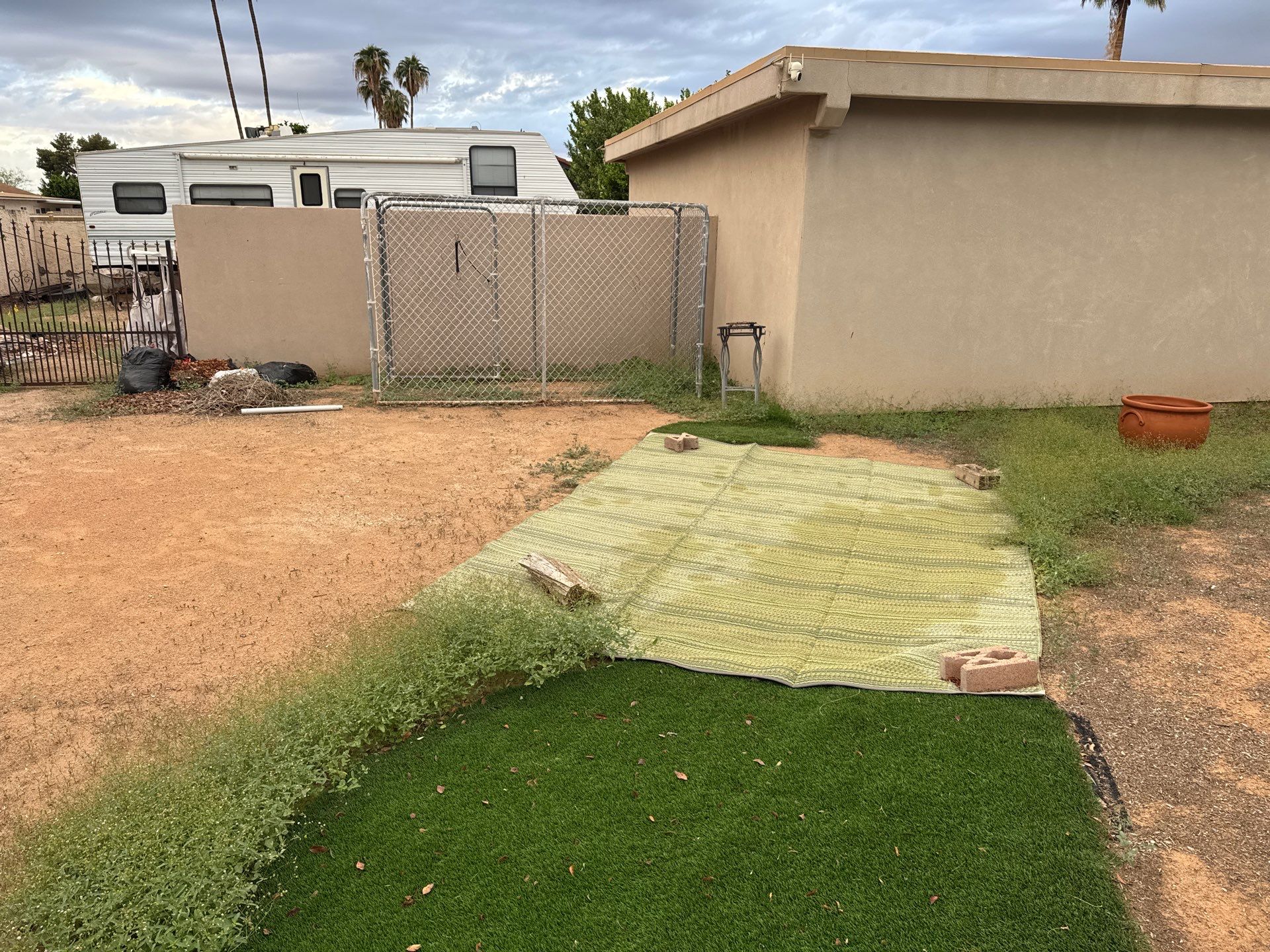
This is a perfect spot for a grapefruit, and the fact that one grew here before tells you the conditions work. For citrus, I always send people to Greenfield Citrus Nursery in Mesa. I know it's a drive from Glendale, but that's where the best citrus trees in the Valley are. Check out their website first to get an idea of all the varieties available.
A few grapefruit worth looking at: Rio Red and Star Ruby for deep red fruit, Marsh for classic white, and Oro Blanco if you want a sweeter, less bitter fruit.
A few citrus specifics: plant it so the top of the root ball sits right at grade (citrus hate being buried), let the lower branches hang low as a skirt since that shades the trunk and protects it from sunburn, and keep it covered on any nights that dip near freezing this first winter.
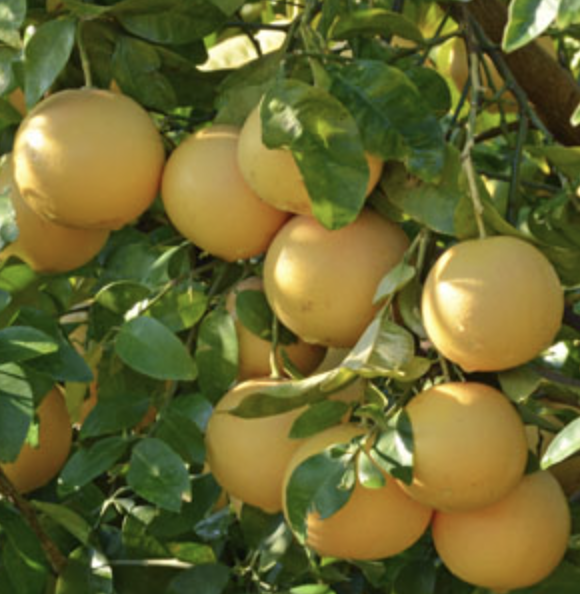
Grapefruit
Big, vigorous tree that fruits heavy once established. Fruit sweetens the longer it hangs, so it's normal to pick from winter into spring. Give it about 8 feet of clearance from other trees.
Kennel Vine and Raised Garden Bed
Vine on the cage, raised bed in front
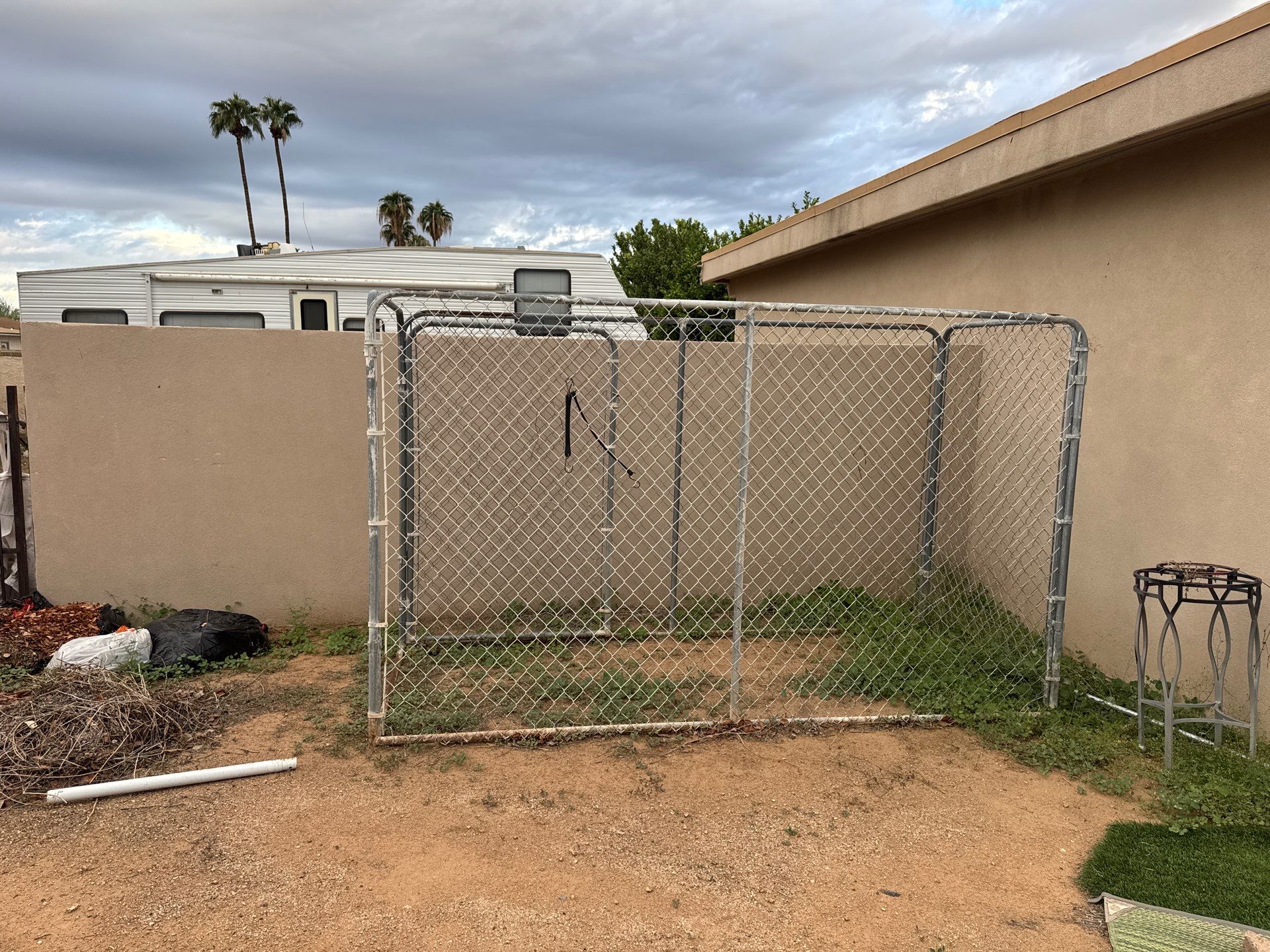
A vine on the kennel is a great idea. It softens the look, and it shades the kennel too. Any of the three below will handle it. If you want the kennel to get winter sun, the hacienda creeper drops its leaves in winter and gives you fall color first.
A raised garden bed in front is a great call too. Leave a couple feet of walking space between the bed and the kennel so you can get to both, and so the vine roots aren't competing with your vegetables.
For the beds themselves, check out Olle Gardens. To fill them, Arizona Worm Farm has a great raised bed mix (and it's a fun stop). Right now is the start of our best vegetable season, so you're timing it well. My Maricopa County Planting Guide breaks down exactly what to plant and when.

Tangerine Crossvine
Evergreen vine with bright orange trumpet flowers in spring that the hummingbirds go nuts for. Handles full sun and heat, climbs on its own with little tendrils, and fills in fast.

Bower Vine
Glossy green leaves and clusters of pink and white trumpet flowers on and off through the warm months. Twines up a support, so give it a wire or trellis to grab.
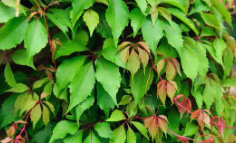
Hacienda Creeper
Self-clinging vine with small, tight leaves that turn red and burgundy in the fall. It drops its leaves in winter, which lets winter sun through. Very heat tolerant and a lot less aggressive than the ivy-type creepers.
Small Ornamental Tree
Near the septic leach area
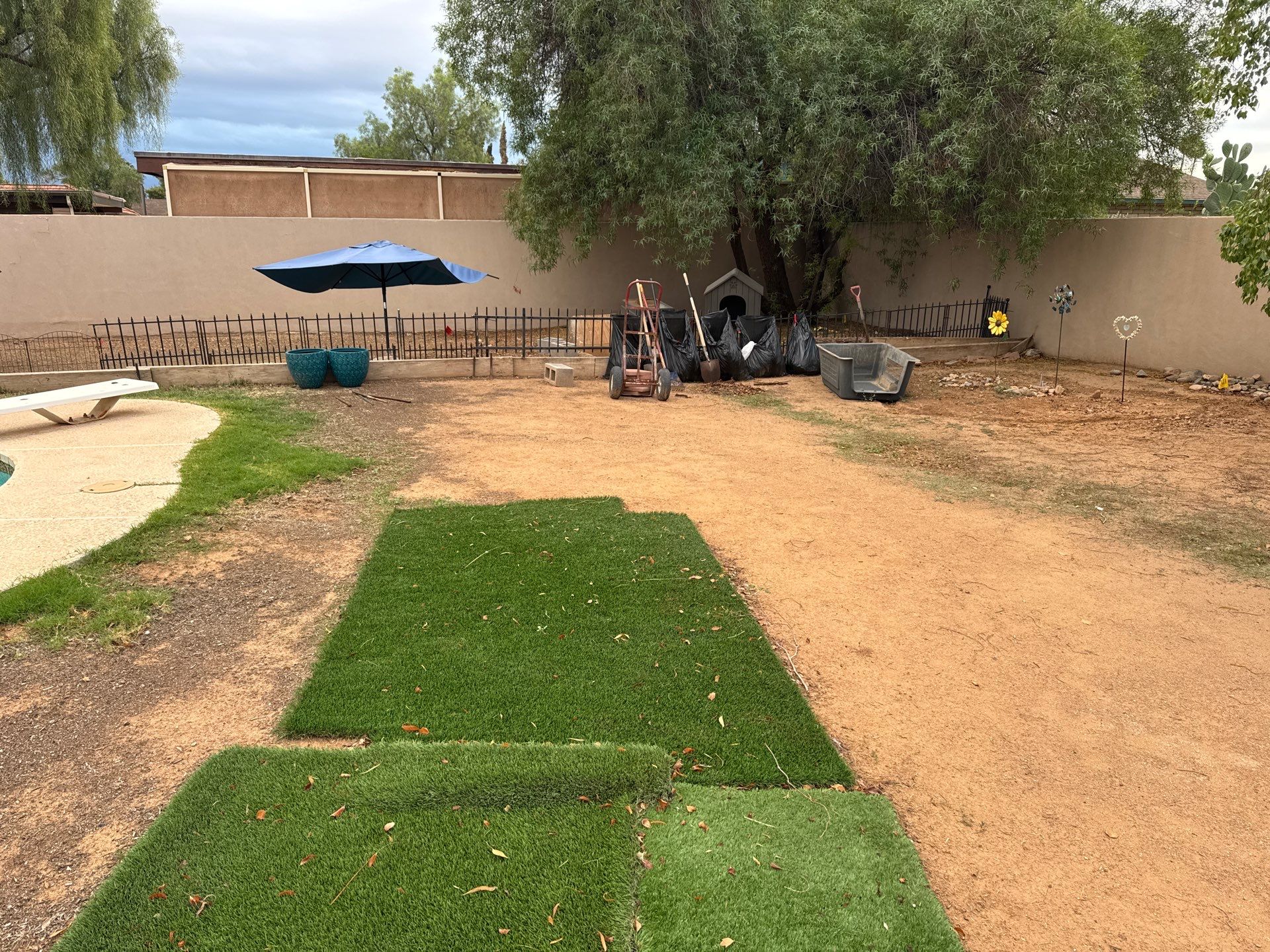
The septic leaches out here, but the tank is far enough away that it isn't an issue. The goal for this spot is something smaller and ornamental that won't get huge and gives you some color. All of these stay on the smaller side.
Go 15 gallon on any of these. Plant in fall or early spring so the roots get a few months to settle before summer.
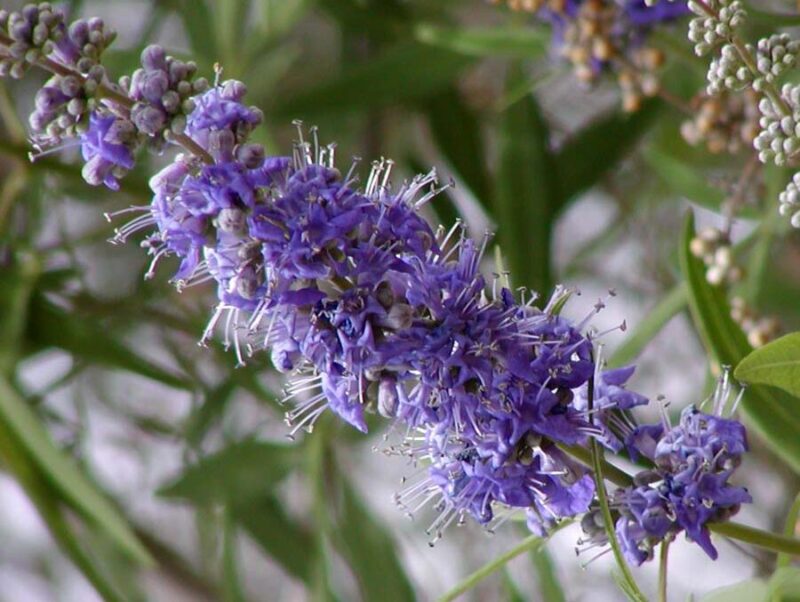
Vitex
Purple flower spikes all summer that the bees love. Usually grown multi-trunk, getting around 15 to 20 feet tall and wide. Drops its leaves in winter.
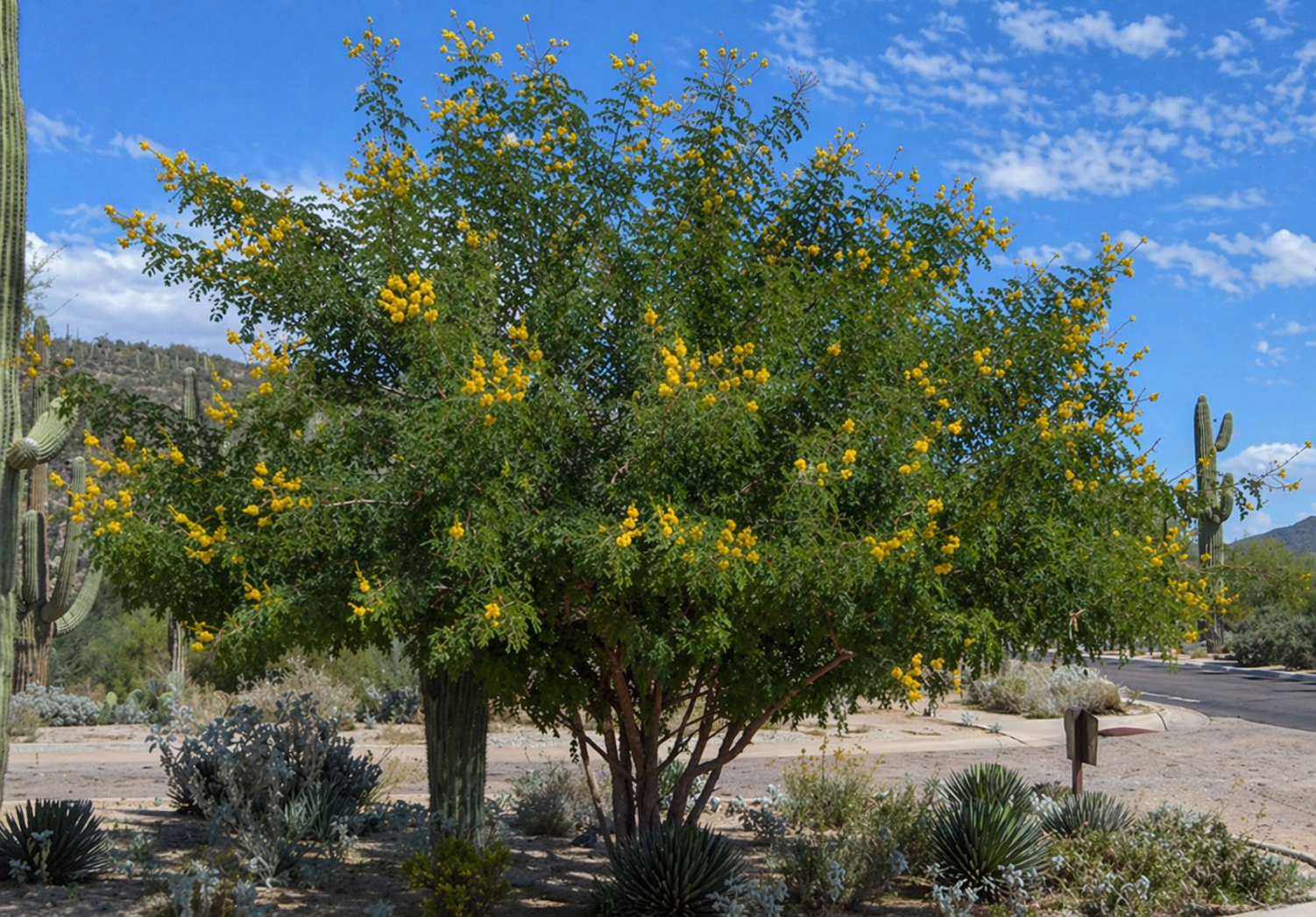
Cascalote
Bright yellow flower spikes in late fall and winter, right when almost nothing else is blooming. Stays around 15 feet. The stems have small thorns, so keep it a few feet off any walkway.
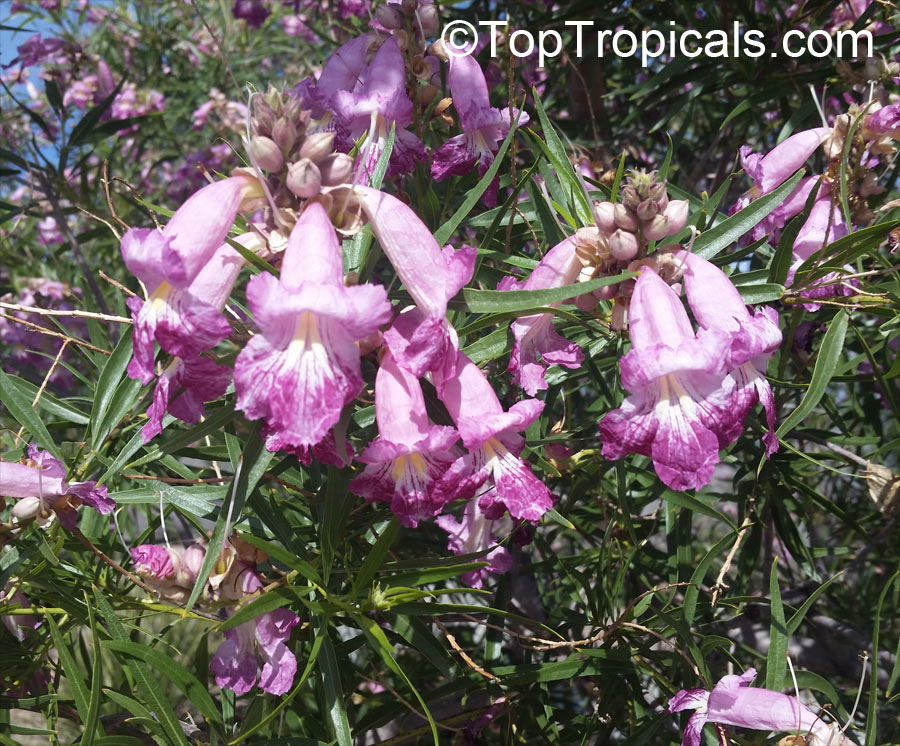
Desert Willow
Native tree with orchid-like pink to purple flowers from late spring into fall. Hummingbird magnet. Light, airy canopy around 15 to 25 feet, and drops its leaves in winter.
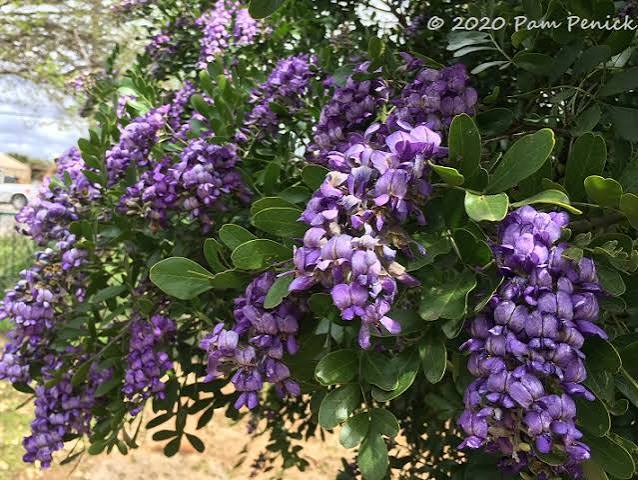
Texas Mountain Laurel
Evergreen with glossy dark leaves and clusters of purple flowers in early spring that smell like grape soda. Slow growing and stays compact, around 10 to 15 feet, so it's a great fit for a small spot like this. The seeds are toxic, so pick up the pods if pets or the tortoises could get to them.
Back Wall Vine
North side of the wall
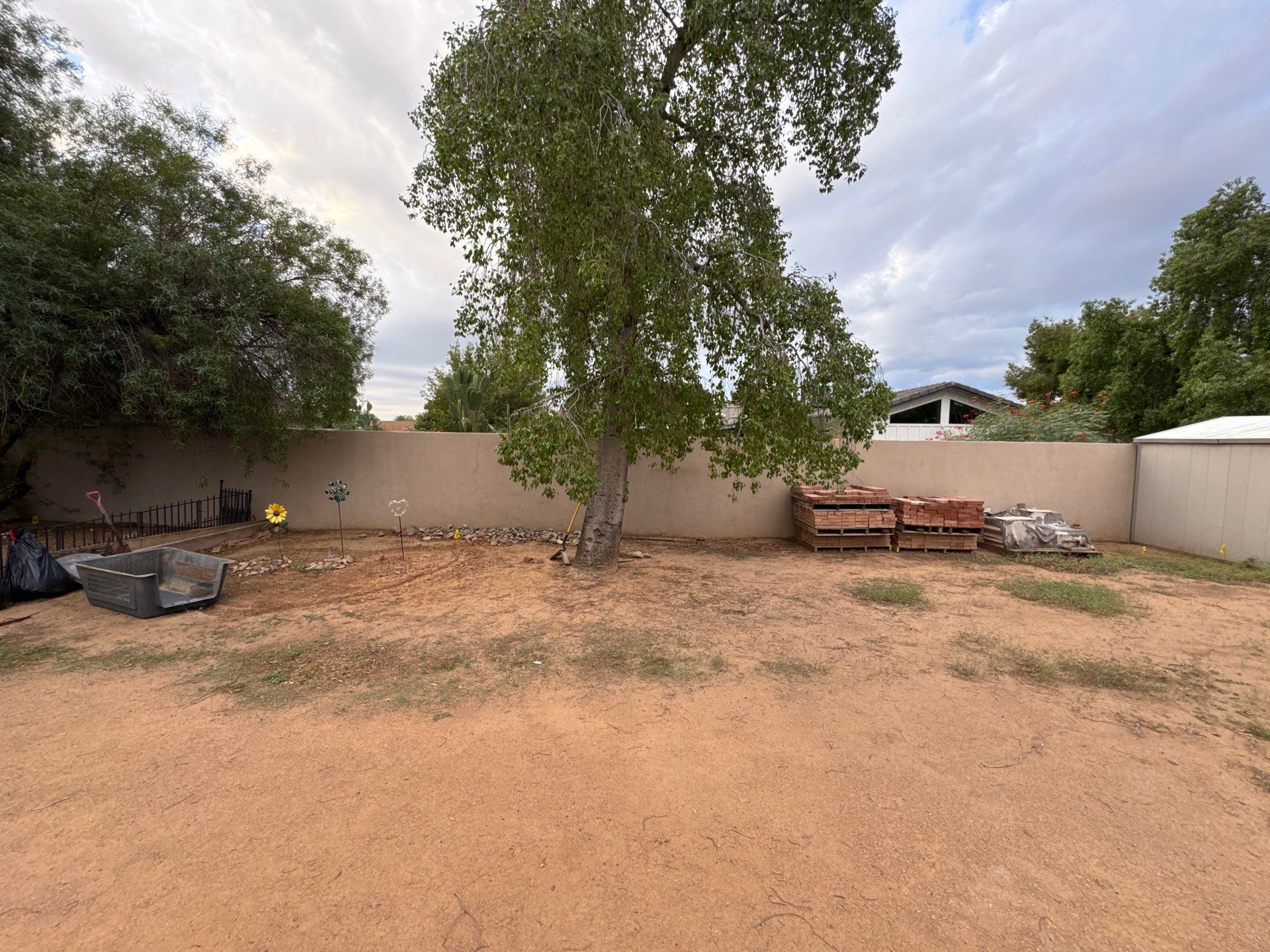
Once the new tree goes in back here and starts casting some shade, this is a great spot for star jasmine. Because it's on the north side of the wall, it won't get blasted by the afternoon sun, which is what usually burns star jasmine out here.
It'll be beautiful to look back at the wall covered in green, and the smell in spring is the best part. Star jasmine twines rather than clings, so run a few horizontal wires or a trellis along the wall for it to climb. Space plants about 4 to 5 feet apart for full coverage.
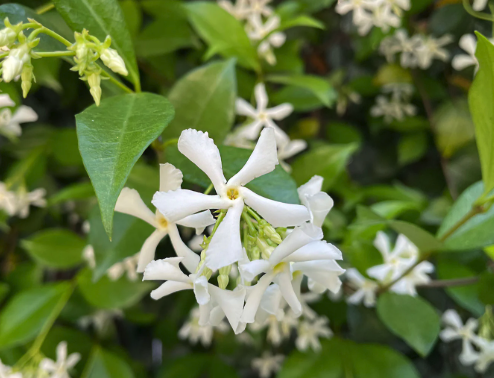
Star Jasmine
Evergreen vine with glossy dark leaves and clusters of small white, very fragrant flowers in spring. Prefers a break from afternoon sun, which this spot gives it.
Tortoise Fence
Low hedge or trained vine along the low fence
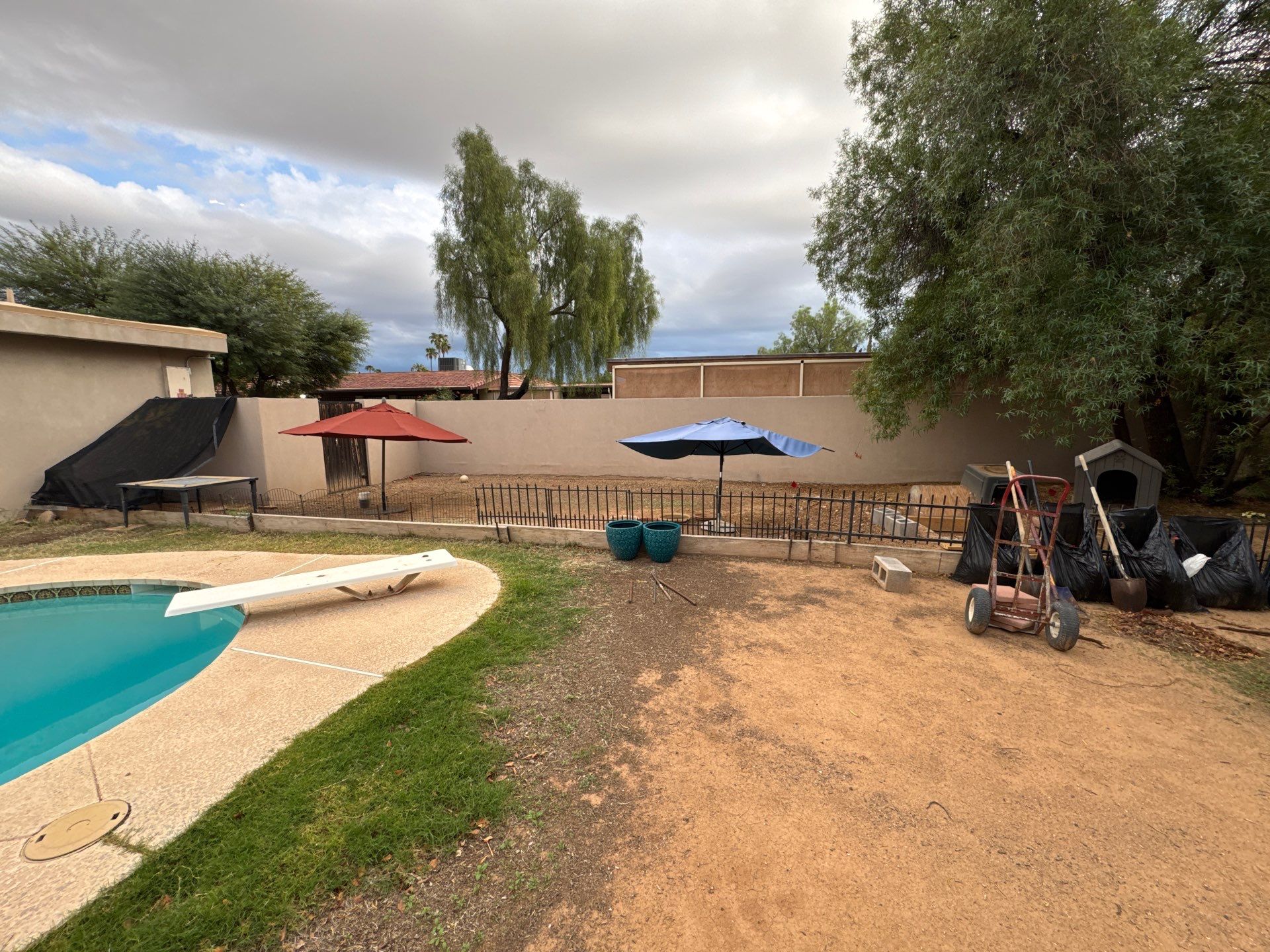
Along the low fence for the tortoises, you've got two directions: a low hedge lined up along it, or a vine trained along the fence. Since the fence is low, a vine works as long as you're willing to keep guiding it along horizontally instead of letting it head up.
Of everything here, sweet potato vine is my top pick, because it does double duty: it covers the fence and it feeds the tortoises. The leaves are a great, safe treat for them, and the vine grows fast enough in the heat to keep up with their grazing. Plant it right along the fence so the runners reach through to their side.
If you go with any of the other options, keep those on the outside of the fence so the tortoises are only grazing on the sweet potato vine.
Spacing: sweet potato vine about 2 to 3 feet apart, Little Ollie and dwarf myrtle about 3 to 4 feet apart, sweet almond bush about 5 to 6 feet apart, crossvine about 6 feet apart.
Sweet Potato Vine
My top pick here. Fast growing, trailing vine with big heart-shaped leaves in lime green or deep purple. It loves heat, fills in quickly along a low fence, and the leaves feed the tortoises. A frost can knock it back in winter, but it comes back strong once it warms up.
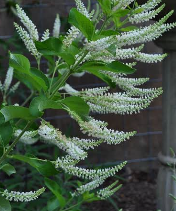
Sweet Almond Bush
White flower spikes with a sweet almond smell in late summer through fall and again in spring, and it's covered in pollinators when it blooms. It can get 8 feet or more, but a light trim after it flowers keeps it right at fence height.
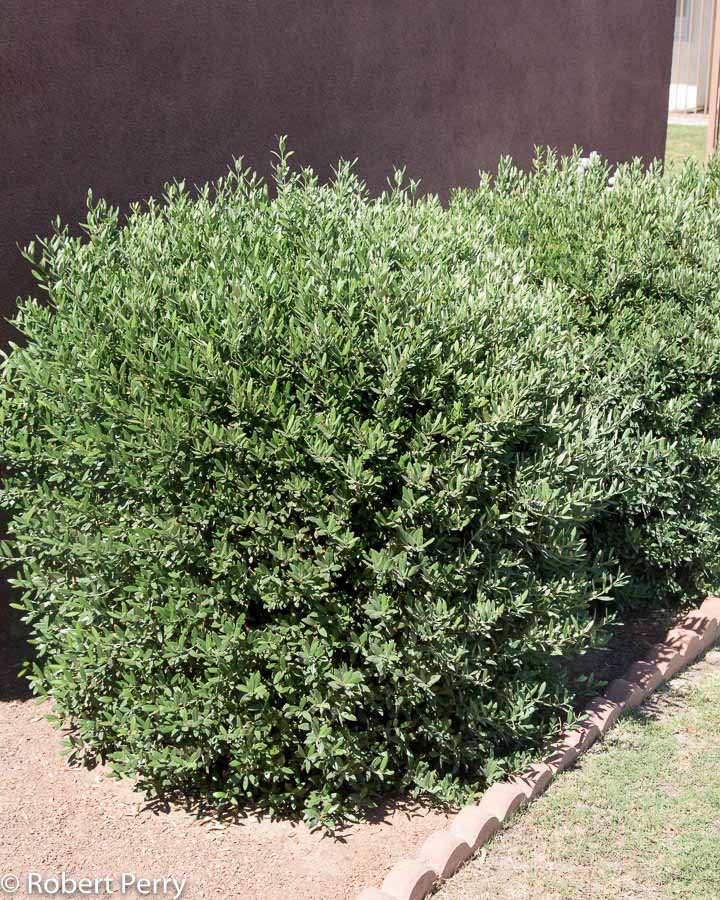
Little Ollie (Dwarf Olive)
Compact, dense, evergreen shrub with silvery green leaves. Naturally stays around 4 to 5 feet and doesn't fruit, so no mess. Great for a clean, tidy line.
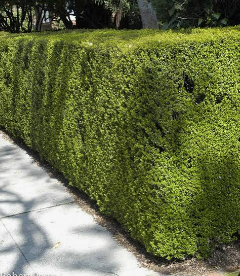
Dwarf Myrtle
Small, fine-textured evergreen shrub that stays low and tight with very little trimming. Takes full sun and shears into a nice formal edge if you want that look.
Tangerine Crossvine
If you'd rather go with a vine, crossvine works well trained along the fence. Tie the long runners along it horizontally as they grow. Orange spring flowers and evergreen leaves.
Back Wall Hedge
Electric line runs a few feet in front of the wall
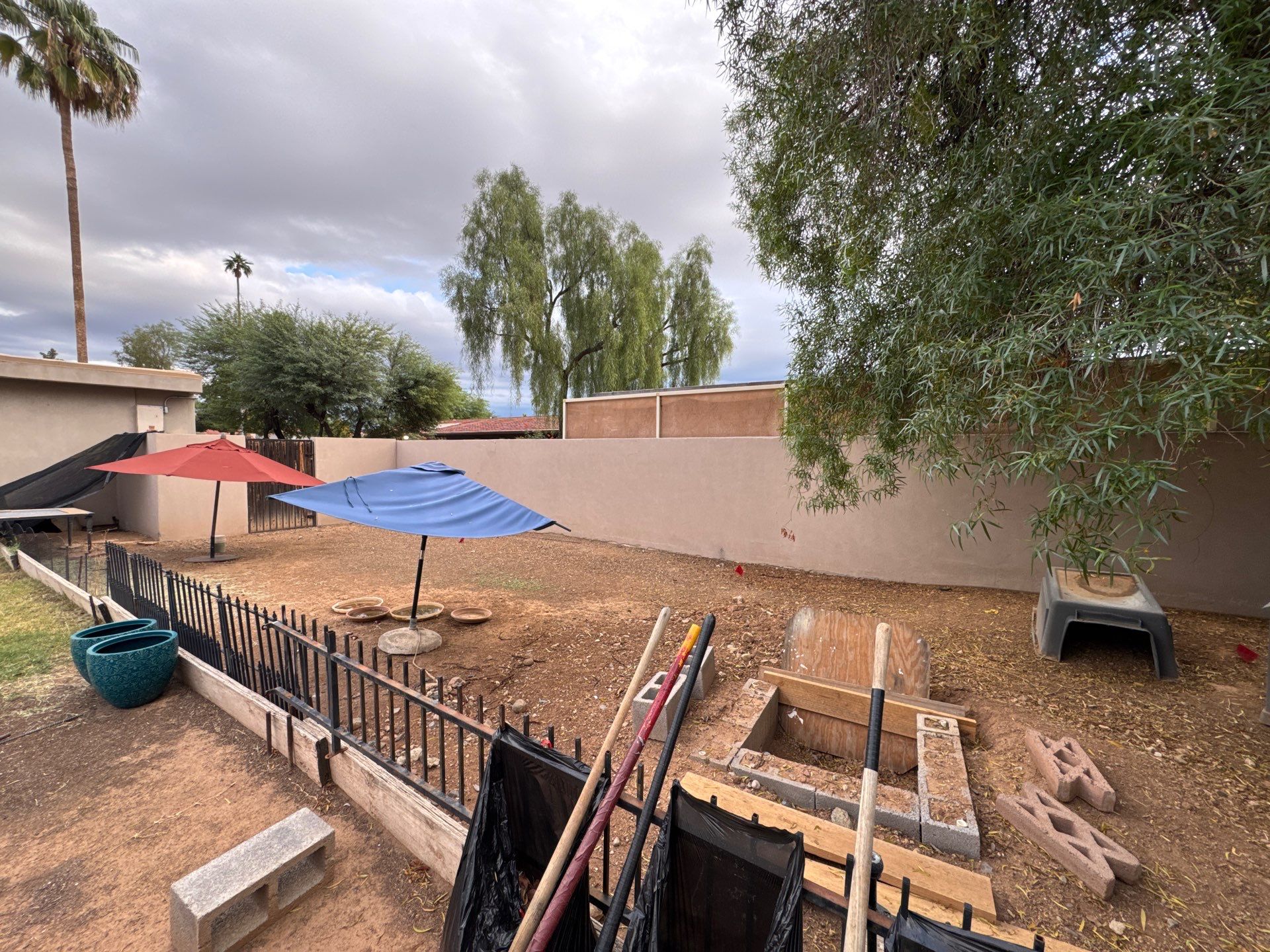
With the electric line running a few feet in front of the wall, you need something that stays narrow and upright, and hopseed is really the only hedge that fits that here. Space them about 4 to 5 feet apart and they'll knit together into a solid screen.
The other option is a vine on the wall itself, which stays tight to the block and out of the way of the line. Crossvine or hacienda creeper are both great. Cat's claw would work too, but just know it can take over with time: it spreads into neighbors' yards and is hard to get rid of once it's established.
Before any digging along this line, call Arizona 811 (just dial 811) to have it marked. It's free.

Hopseed
Upright, narrow evergreen shrub that gets 10 to 12 feet and stays slim. Takes full sun and heat, and takes less water than hedges that aren't desert adapted. The best fit for a tight strip like this.
Tangerine Crossvine
Climbs the block on its own and stays tight to the wall. Orange trumpet flowers in spring for the hummingbirds, evergreen the rest of the year.
Hacienda Creeper
Self-clinging, stays flat against the wall, and turns red and burgundy in fall before dropping its leaves for winter.
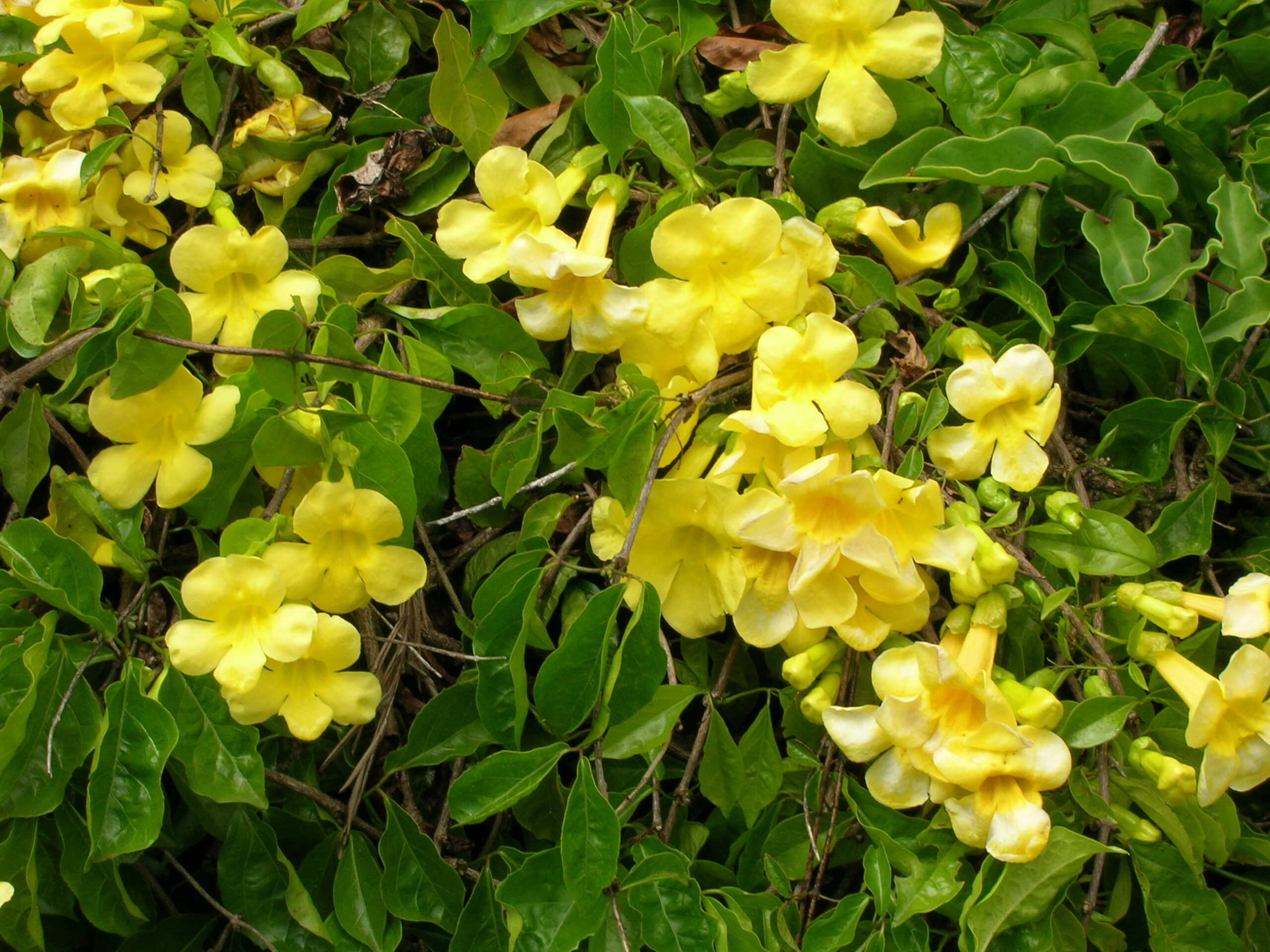
Cat's Claw
Yellow flowers in spring and covers a wall fast. Use caution: it can take over with time, spreading over the wall and into neighboring yards.
South-Facing Wall Spot
Small space, lots of heat
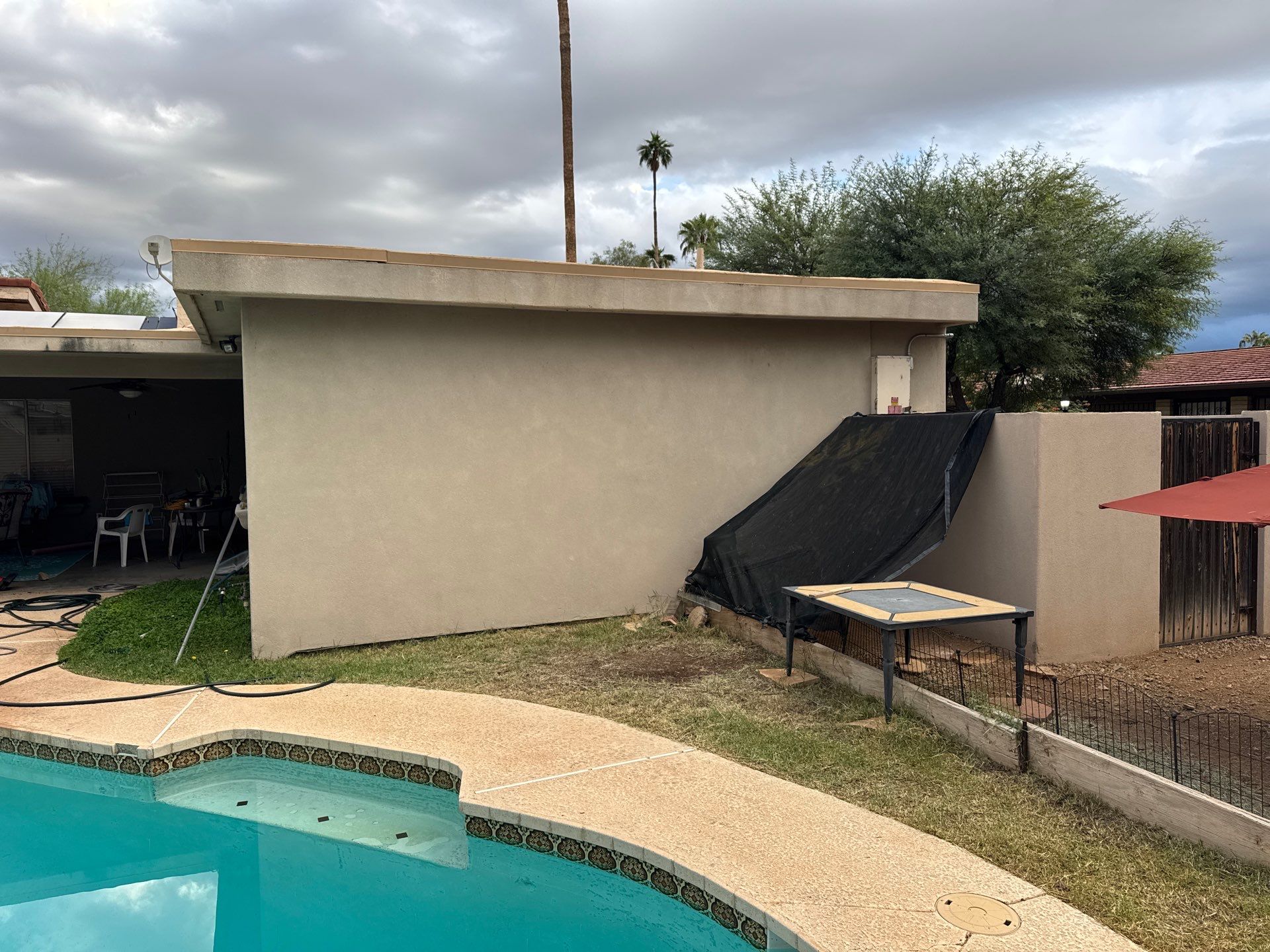
This wall faces south, so it gets pretty hot, and there's only a small space to work with. A smaller shrub is the right call here. Every option below handles the heat and adds color. Pick one (or two if they fit).

Torch Glow Bougainvillea
Upright, compact bougainvillea that grows more like a column than a sprawling vine, so it fits small spaces. Loves heat and blooms hard in it.
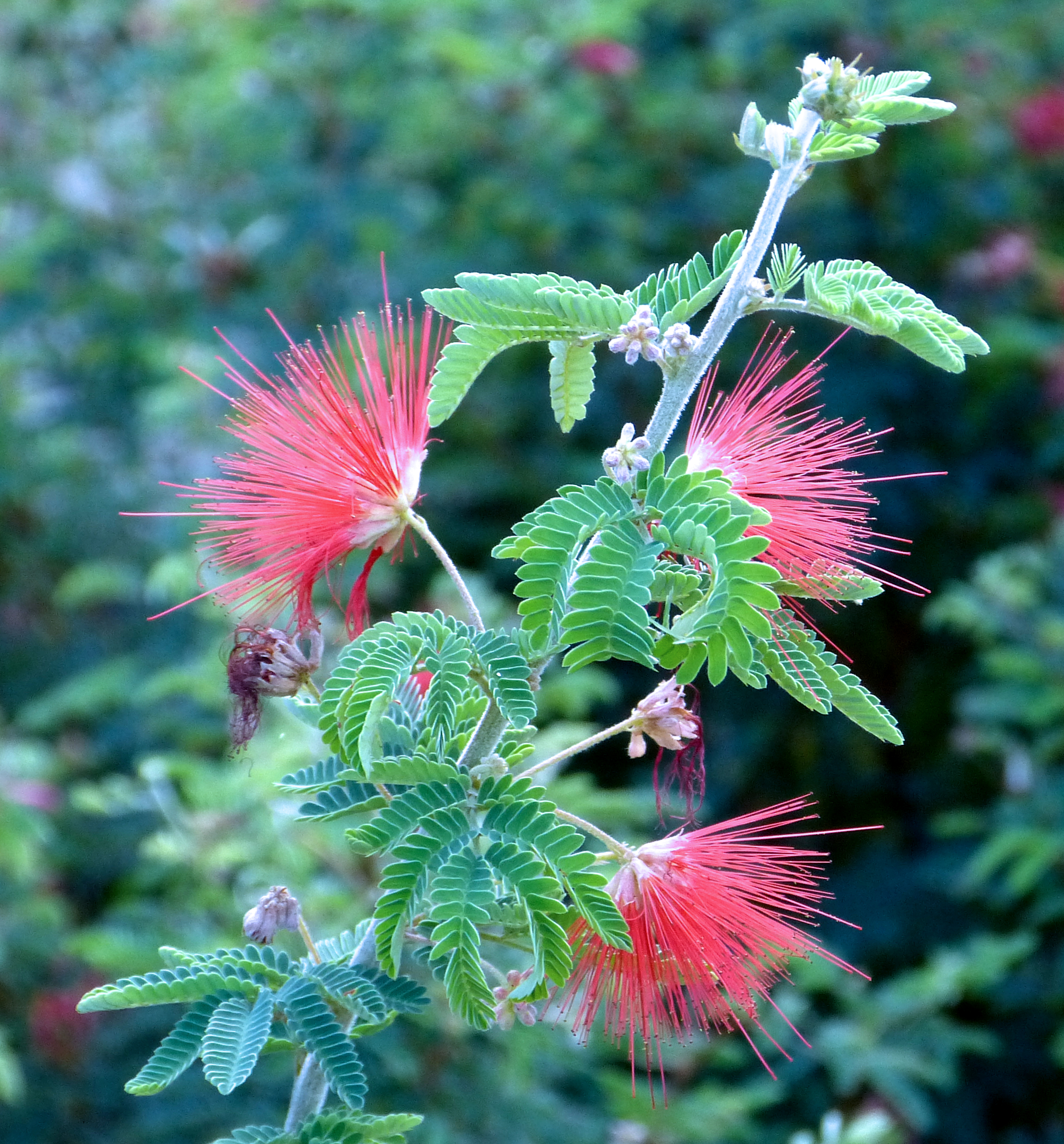
Baja Fairy Duster
Bright red puffball flowers most of the year and a hummingbird favorite. Around 4 to 5 feet, airy and soft looking.
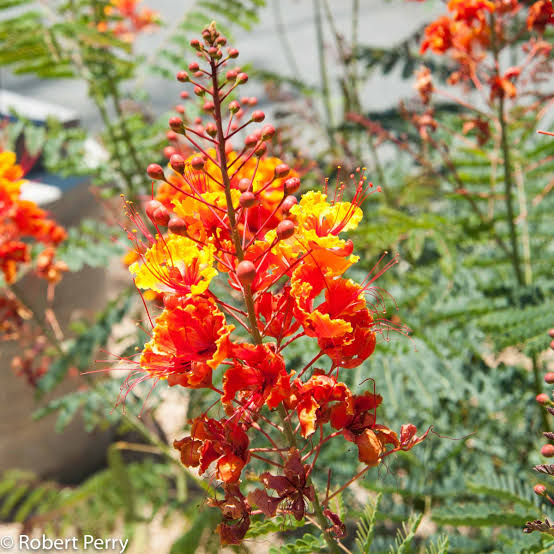
Red Bird of Paradise
Fiery red and orange flowers all summer, and it thrives on heat. Cut it back hard in late winter and it comes back full.
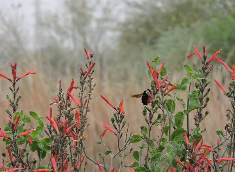
Chuparosa
Native shrub with red tubular flowers through winter and spring. Hummingbirds love it. Goes in the ground, not in a pot or raised bed.

Texas Sage
Silvery leaves and bursts of purple flowers after summer rains. Very tough and takes less water than shrubs that aren't desert adapted.
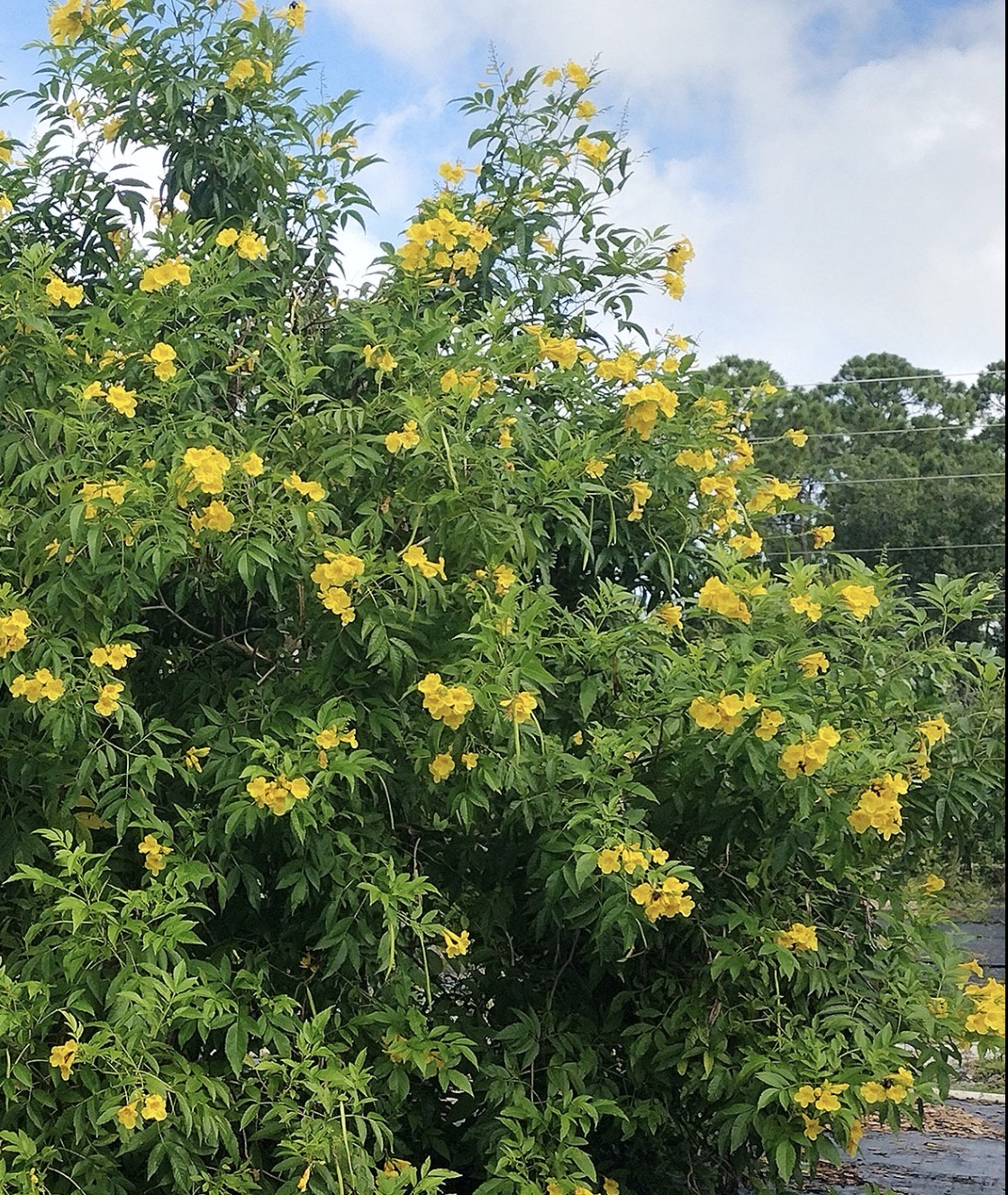
Yellow Bells
Bright yellow trumpet flowers from spring through fall. Can be kept as a shrub or let go into a very small tree if you want height here.
Your Pots
Native and desert pollinator plants
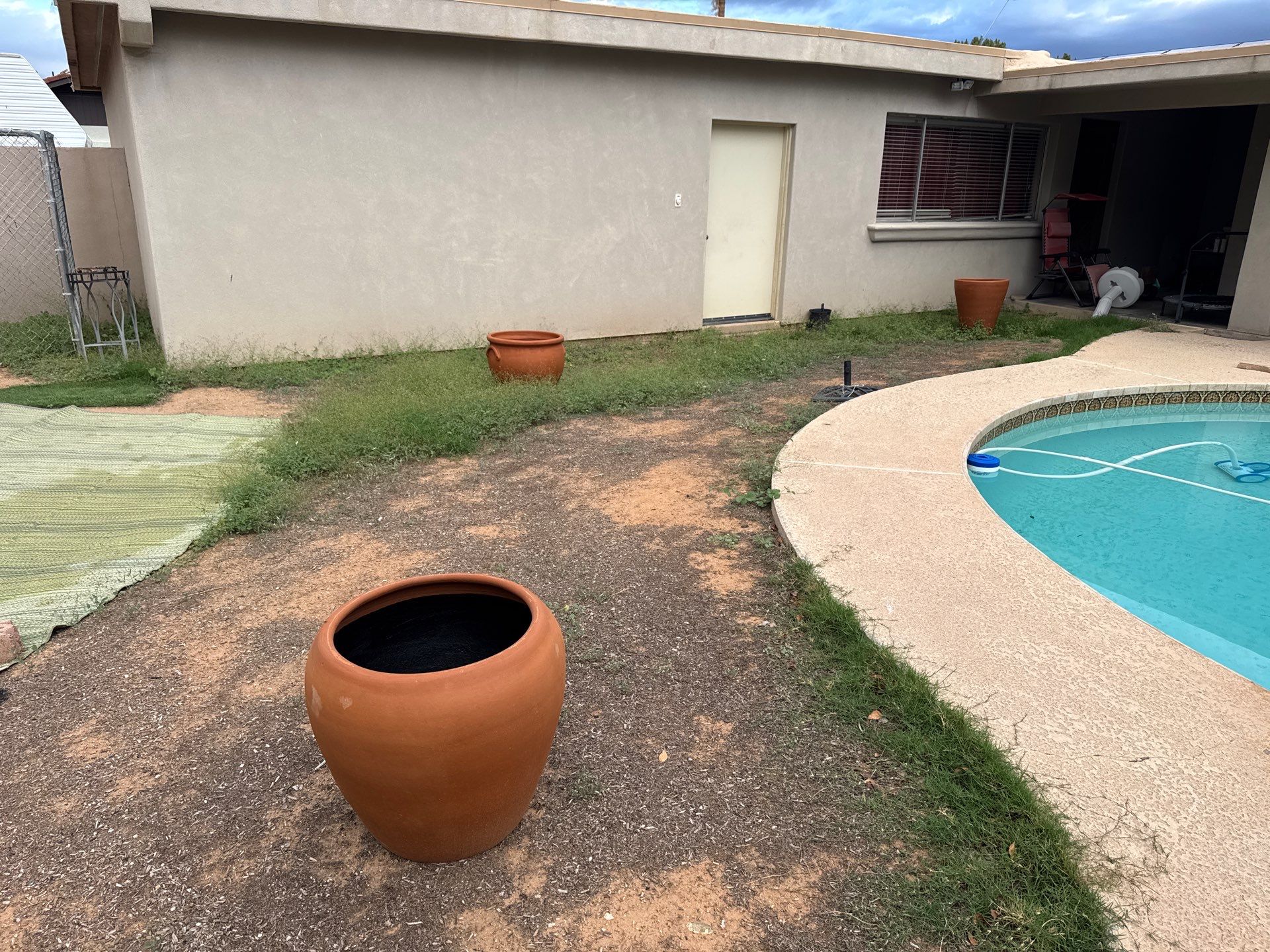
You've got some beautiful pots here, and filling them with native and desert-adapted flowering plants will bring in a lot of color and a lot of pollinators. Mix two or three of these per pot for a fuller look, or do one per pot for a cleaner look.
For pots, use a quality potting mix blended with compost or worm castings. Pots dry out much faster than the ground, so hand watering them works great. Water until it runs out the bottom of the pot, and in the summer expect to water daily, sometimes twice on the hottest days. Milkweed and mistflower spread in the ground, so a pot is a nice way to keep them contained.
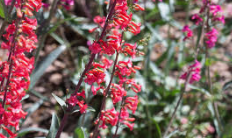
Penstemon
Tall flower spikes in red, pink, or purple in spring. Hummingbird favorite and does great in a pot.
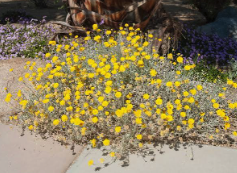
Desert Marigold
Native with bright yellow daisy flowers most of the year and soft gray leaves. Reseeds itself.

Globe Mallow
Native with apricot-orange cup flowers in spring. Bees love it.
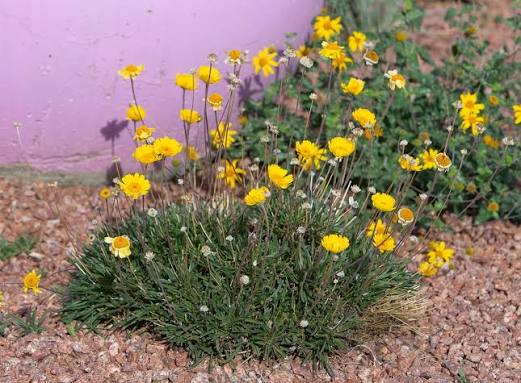
Angelita Daisy
Low mound of fine foliage covered in little yellow daisies nearly year round. Very forgiving.
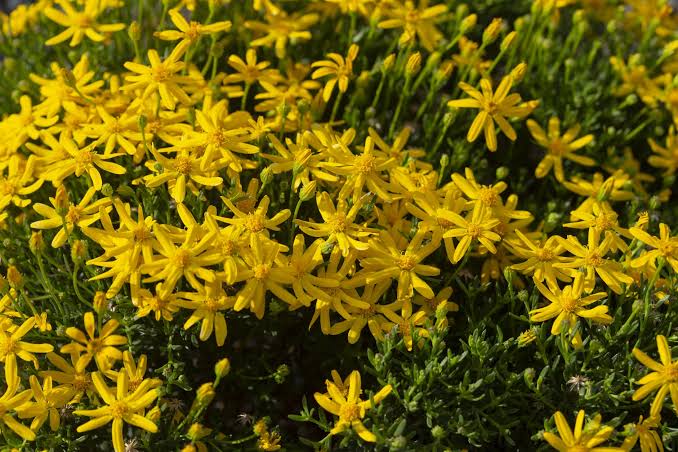
Damianita
Low, fragrant mound with bright yellow flowers in spring and fall. Great spilling over a pot edge.
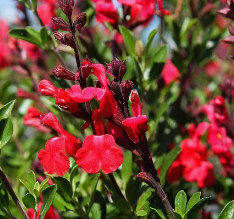
Autumn Sage
Red, pink, or coral flowers spring through fall. A go-to for hummingbirds and butterflies.
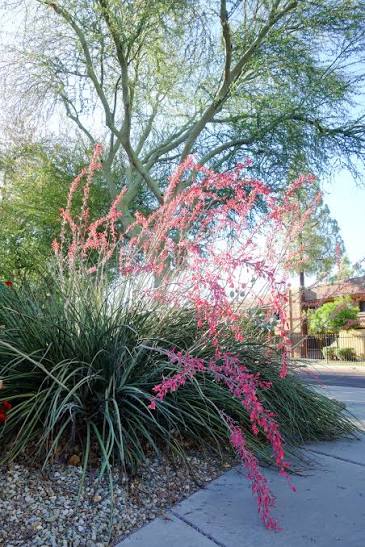
Red Yucca
Grassy clump with tall coral flower stalks all summer. Hummingbirds love it and it looks great as a pot centerpiece.

Desert Milkweed
Native with upright, almost leafless gray-green stems and clusters of cream flowers. A host plant for monarch butterflies, so expect caterpillars, which means it's working.
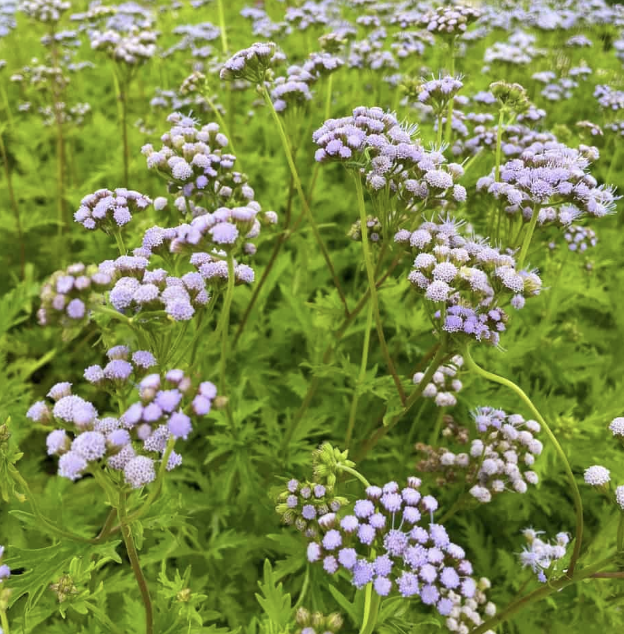
Greg's Mistflower
Fuzzy lavender-blue flowers spring through fall that pull in queen butterflies by the dozen. Spreads by its roots in the ground, so a pot keeps it in check.
Tropical Area
East-facing wall: morning sun, afternoon shade
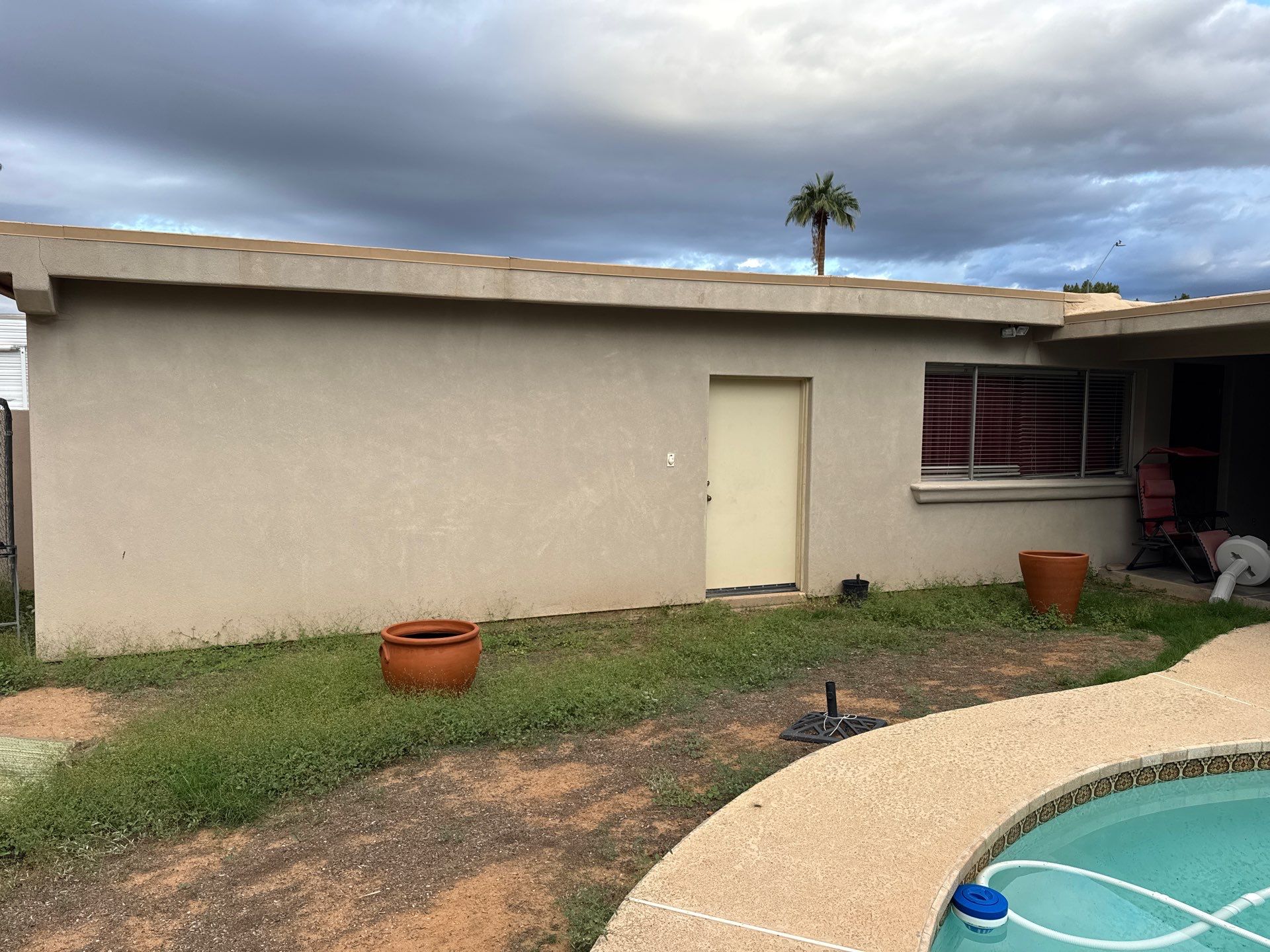
This east-facing wall is great for tropicals. Morning sun and afternoon shade is exactly what they want here. Plantains and canna lilies will both work, and regular bananas too. I added more tropical options below. You can't fit all of these, so pick your favorites.
A few tropical specifics:
- Tropicals want a lot of compost and consistent moisture. Load this area up with compost and keep it mulched.
- For mango, go seedling-grown rather than grafted. Fall planting is fine if you protect it from cold through winter, otherwise wait until early spring.
- Mango and guava can go about 5 feet apart so they shade and protect each other.
- Tropicals take longer to establish here and some losses are normal, so don't get discouraged.
For tropicals, Greenlife Nursery is the place, right next door to Arizona Worm Farm.
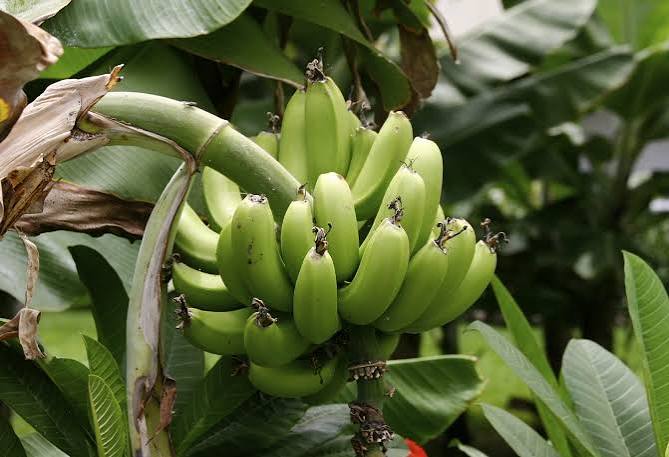
Plantain
Cooking banana with big, bold leaves. Same care as a banana: rich soil, lots of compost, and steady water. Frost can knock the leaves back but it regrows from the base in spring.

Banana
Huge tropical leaves that instantly make the area feel lush. Plant in a cluster for a fuller look and protection from wind.

Canna Lily
Big leaves and bright red, orange, or yellow flowers all summer. Spreads into a nice clump and loves this kind of spot.

Mango
Go seedling-grown. Wants protection from cold the first few winters and a lot of compost. Patience pays off.

Guava
Fragrant fruit, pretty peeling bark, and handles our heat better than most tropicals. Pairs well with mango.
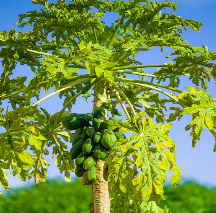
Papaya
Fast growing and fruits quickly, but the most frost tender of the group. Best planted in spring and protected in winter.
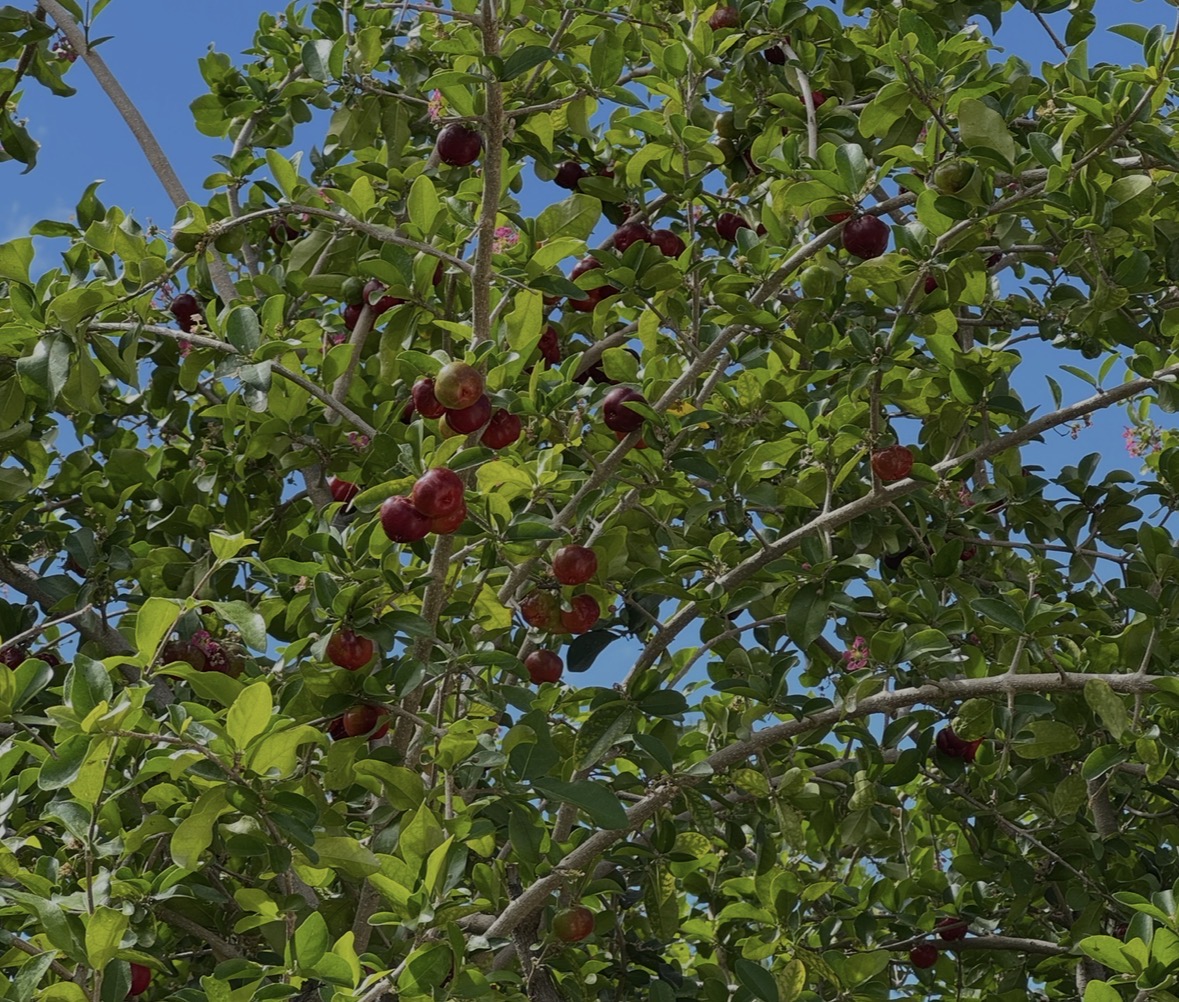
Barbados Cherry
Shrubby tree with small pink flowers and bright red, vitamin C packed cherries several times a year.
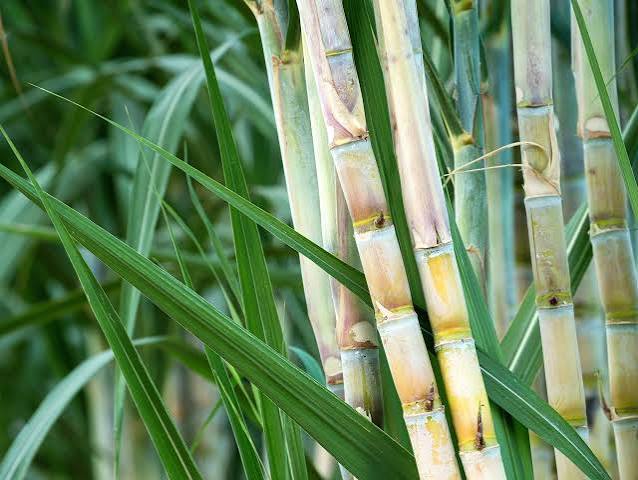
Sugar Cane
Tall, tropical looking cane you can actually harvest and chew on. Great for filling vertical space along the wall.
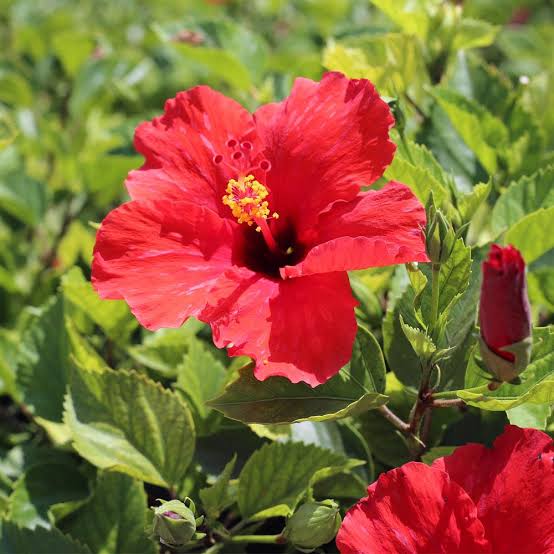
Red Hibiscus
Big tropical flowers most of the year. Stick with red varieties since they do the best out here.
Mulch Everything
The whole yard is bare dirt right now
Right now your yard is mostly bare dirt, and the most important thing you can do is get mulch down as fast as possible. Bare dirt bakes in the sun, crusts over, and the soil life underneath basically shuts down. Mulch shades and cools the soil, holds moisture, and as it breaks down it feeds the soil biology. That's what starts healing and rebuilding this soil.
Spread wood chip mulch 3 to 4 inches deep, ideally on top of a layer of compost. Keep it pulled back about a foot from tree trunks. One cubic yard covers roughly 100 square feet at 3 inches deep.
Arizona Worm Farm sells mulch by the bag and by the cubic yard, and they may deliver. They don't list a delivery area on their website, so give them a call at 602-622-7663 and ask if they deliver to Glendale. If not, you can pick it up with a truck or trailer.
Back Wall Tree
Same options as the first tree we talked about
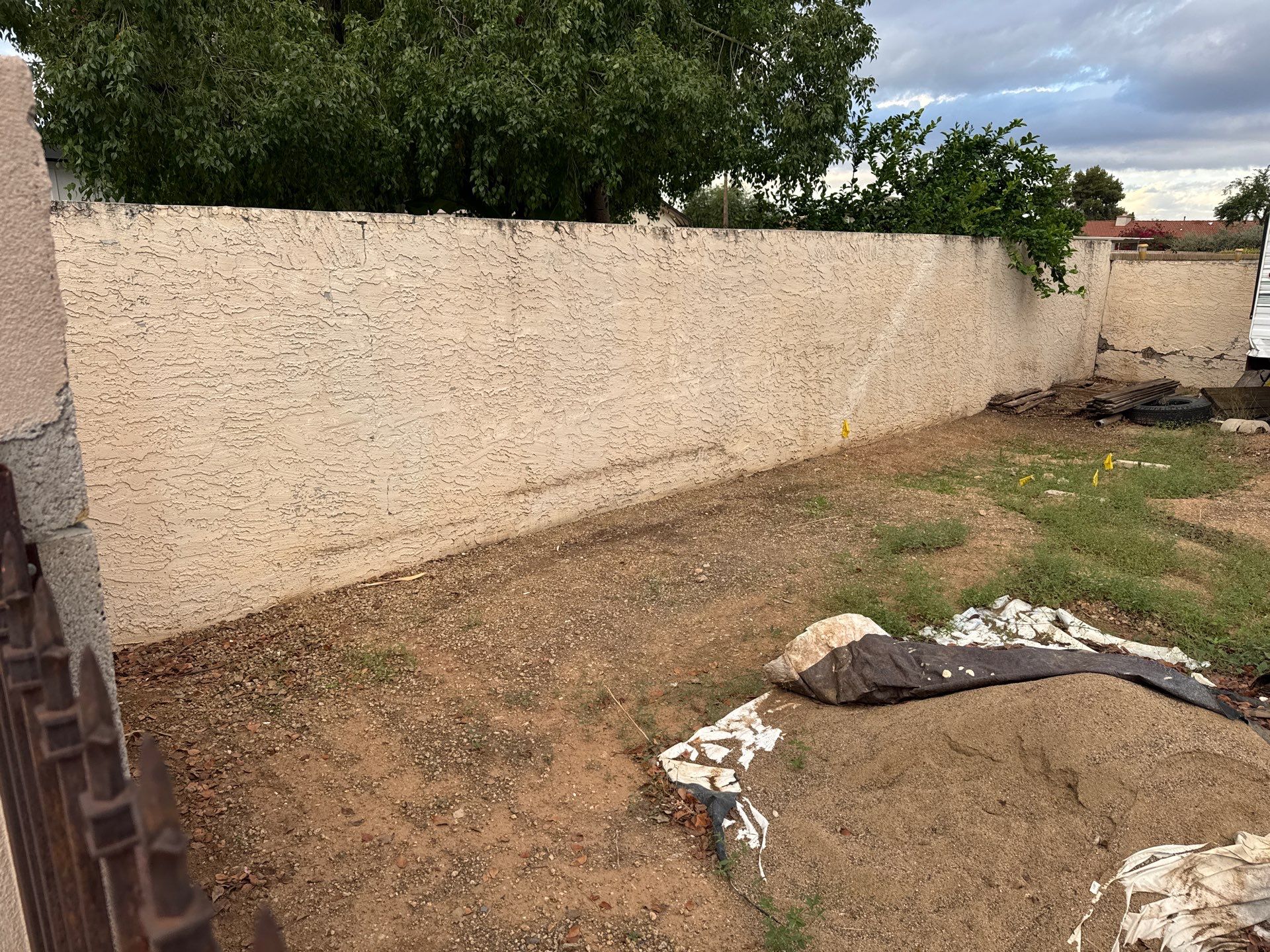
This spot along the back wall is another good one for a shade tree, and the same options I recommended at the start apply here: Chinese elm, red push pistache, or tipu, plus carob. This is also the tree that will shade the back wall for the star jasmine.
Plant it about 8 to 10 feet off the wall so the canopy can develop evenly instead of leaning away from the block. Go 15 gallon.
Chinese Elm
Fast growing with a full, slightly weeping canopy that gets to around 30 to 40 feet. It holds most of its leaves through our winters, so it screens year round. Great choice if blocking the neighbor's lights is the top priority.
Red Push Pistache
Tough in full sun and reflected heat, grows into a clean rounded canopy around 25 to 30 feet, and turns red and orange in late fall. It drops its leaves in winter, so you get summer shade and winter sun. Slower than the elm, but very long lived.
Tipu
Fast grower with a wide umbrella canopy and yellow flowers in late spring. Gives a lot of shade quickly. It needs room to spread (30 feet or more), and it can drop leaves in late winter before pushing new growth.
Carob
Dense, dark green, and evergreen, so it's the best year-round screen of the group. Handles our heat really well and takes less water than shade trees that aren't desert adapted once it's settled in. A little slower to get going, but worth it.
Peach Trees
Room for one or two
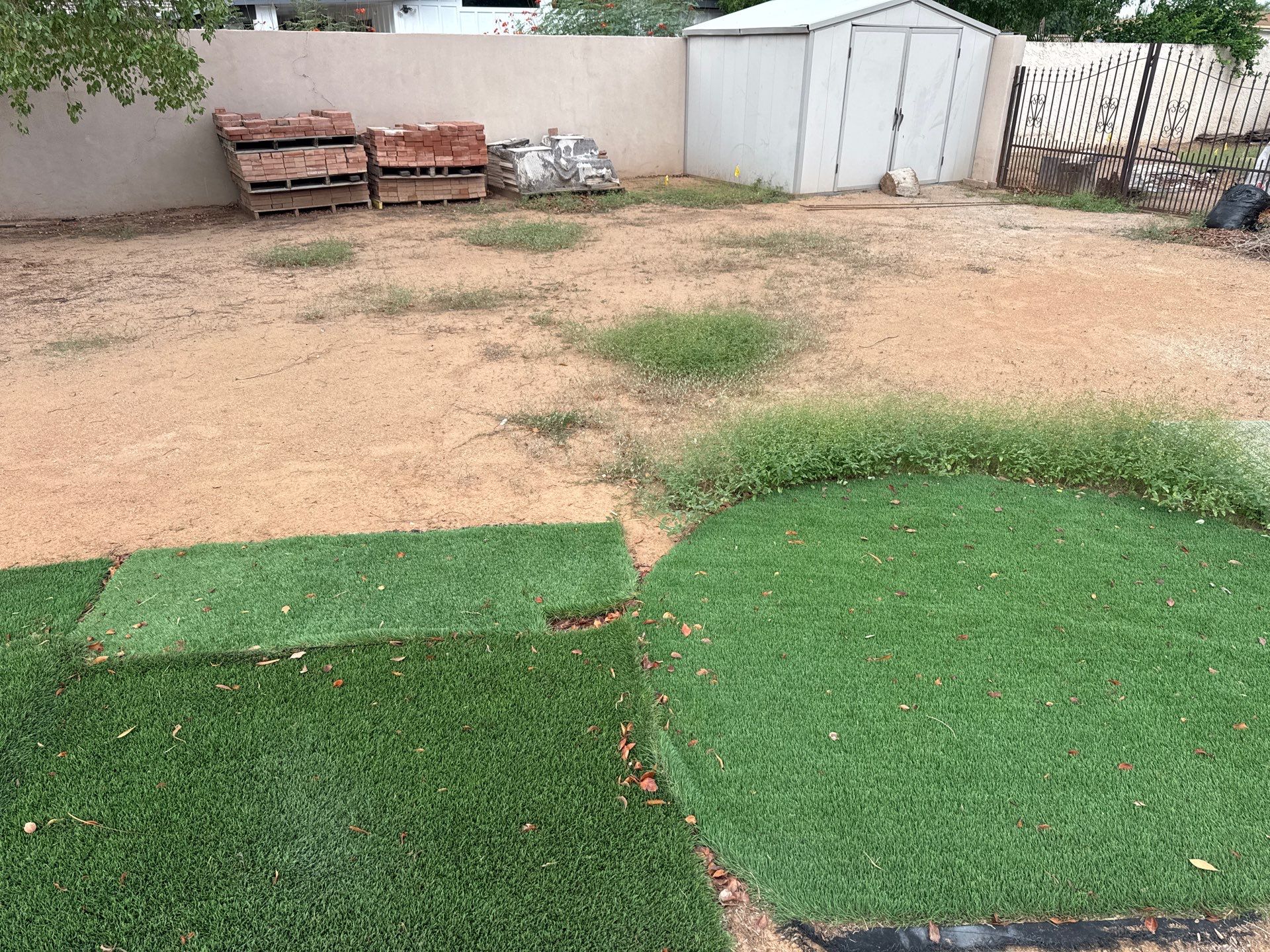
This is a great area for a peach tree, and peaches grow really well here. You can easily fit one or two. If you do two, go with one of each variety below. They ripen a few weeks apart, so you get a longer harvest instead of everything at once. Space them about 10 to 12 feet apart.
Plant any time from now through February. Prune them to an open vase shape and keep them low (around 8 feet), which makes picking easier and lets light into the center.

Florida Prince Peach
Low chill variety, which matters here since we don't get many cold hours. Ripens early, around late April into May, before the real heat hits. Self-fruitful.
Desert Gold Peach
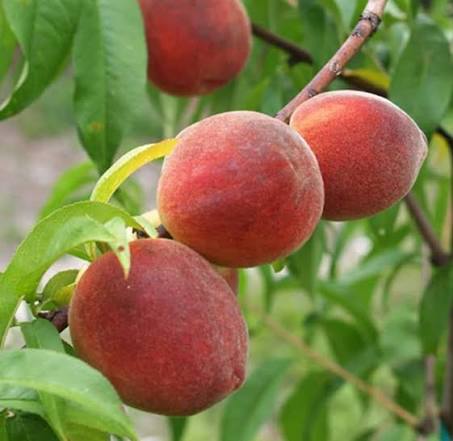
Another low chill peach bred for warm winters. Yellow, sweet fruit ripening in May, a little after Florida Prince. Self-fruitful.
Patio Pillar Vines
Three pillars on the south-facing back patio
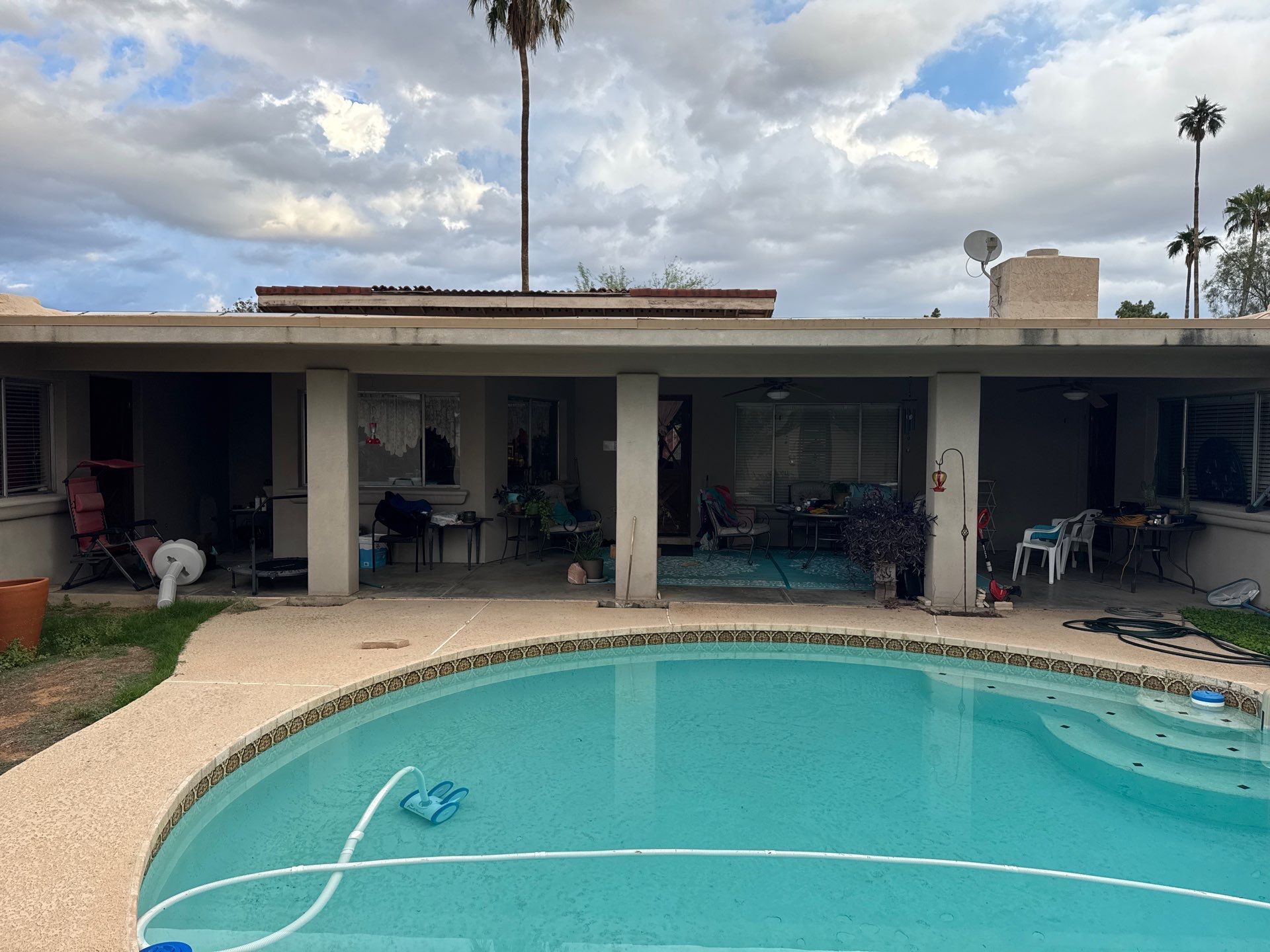
Vines on the three pillars will tie the patio together. These face south, so they need vines that can take the heat. Bower vine, tangerine crossvine, and hacienda creeper are my top picks, and I added a few more below.
Wrap each pillar with a few vertical wires or a slim trellis so the twining vines have something to grab, and tie them in as they grow the first year. Use the same vine on all three pillars for a clean look, or mix them up.
Tangerine Crossvine
Evergreen vine with bright orange trumpet flowers in spring that the hummingbirds go nuts for. Handles full sun and heat, climbs on its own with little tendrils, and fills in fast.
Bower Vine
Glossy green leaves and clusters of pink and white trumpet flowers on and off through the warm months. Twines up a support, so give it a wire or trellis to grab.
Hacienda Creeper
Self-clinging vine with small, tight leaves that turn red and burgundy in the fall. It drops its leaves in winter, which lets winter sun through. Very heat tolerant and a lot less aggressive than the ivy-type creepers.
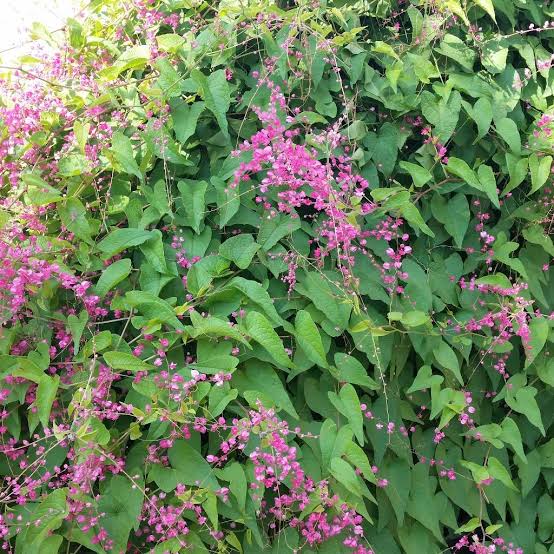
Coral Vine
Pink flower sprays from summer into fall, and the bees love it. Can die back in a hard frost but comes right back in spring.
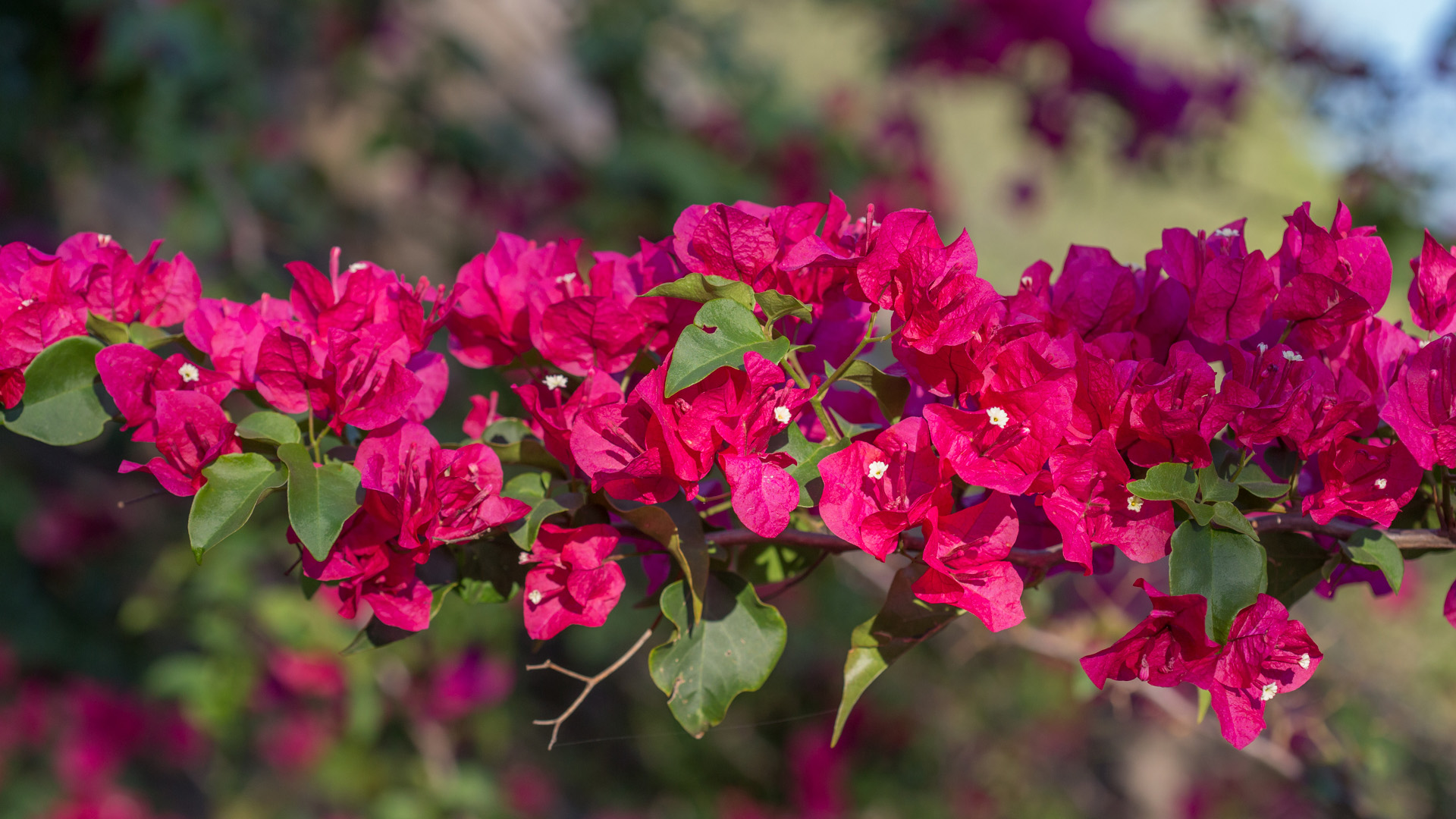
Bougainvillea
The heat is no problem at all. It doesn't climb on its own, so tie it to the pillar as it grows.
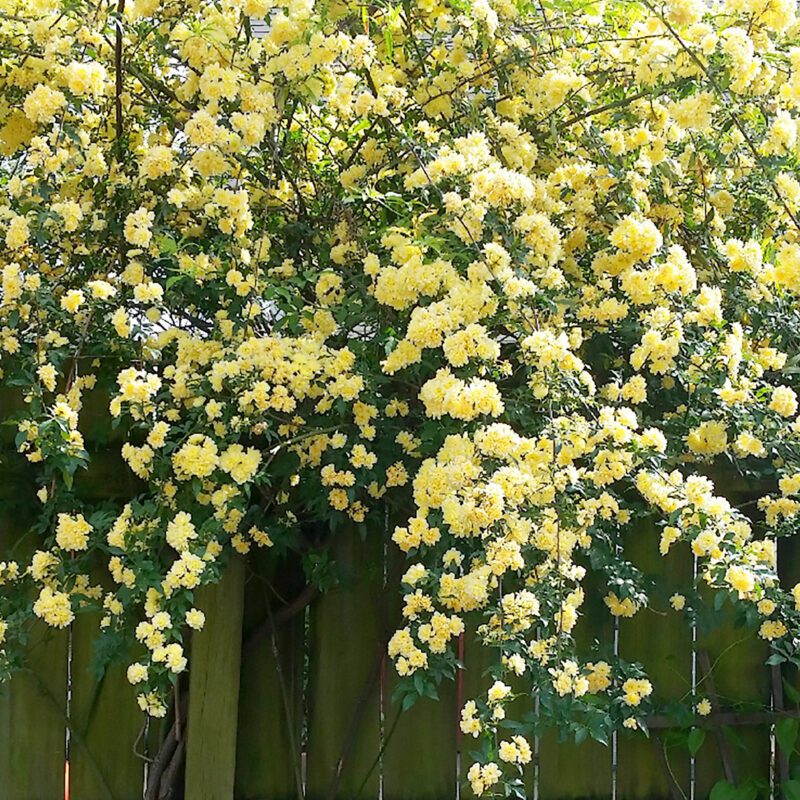
Lady Banks Rose
Thornless climbing rose covered in small yellow or white flowers in spring. Gets big, so it works best if you're happy trimming it back each year.
Pool Area
Low-growing shrubs for sun, heat, and color
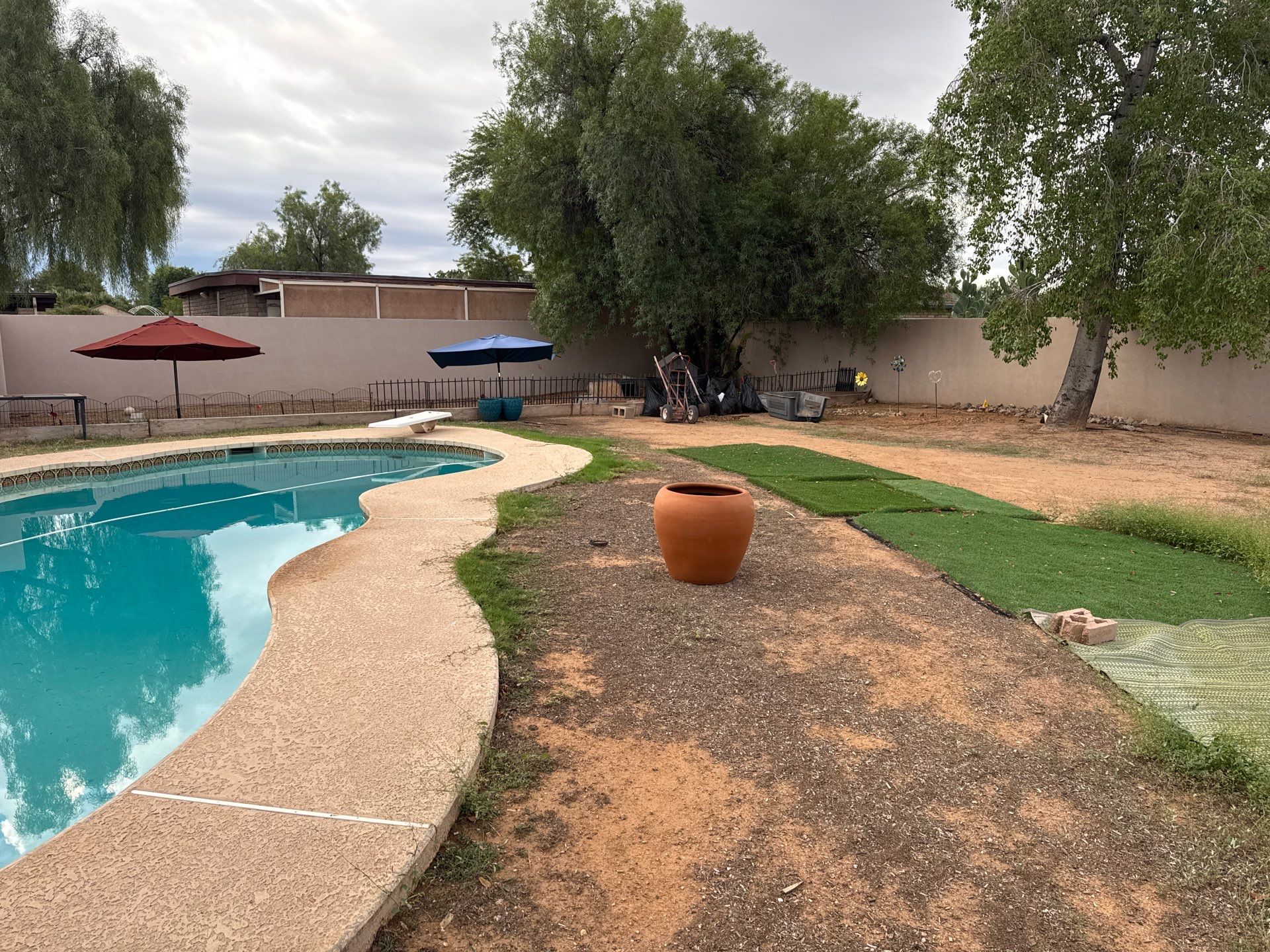
There's a lot of open space around the pool, so this is where you can really fill in with color. Everything below stays low, takes full sun and reflected heat, and adds color. You can't fit all of these, so pick your favorites.
Don't stress about exact placement. Plant in groups of 3 to 5 and scatter them a bit, which looks fuller and more natural than straight rows. Put the lowest ones closest to the pool and walkways and keep everything 2 to 3 feet back from the pool edge so nothing drops into the water.
Damianita
Low, fragrant mound with bright yellow flowers in spring and fall.
Angelita Daisy
Small yellow daisies nearly year round on a tidy little mound.
Globe Mallow
Native with apricot-orange flowers in spring. Bees love it.
Desert Marigold
Native with bright yellow flowers most of the year and soft gray leaves.
Penstemon
Tall spring flower spikes in red, pink, or purple. Hummingbird favorite.
Autumn Sage
Red, pink, or coral flowers spring through fall.
Baja Fairy Duster
Red puffball flowers most of the year. Hummingbirds love it.
Texas Sage
Silvery leaves and purple flower bursts after summer rains.
Red Bird of Paradise
Fiery red and orange summer flowers that love heat.
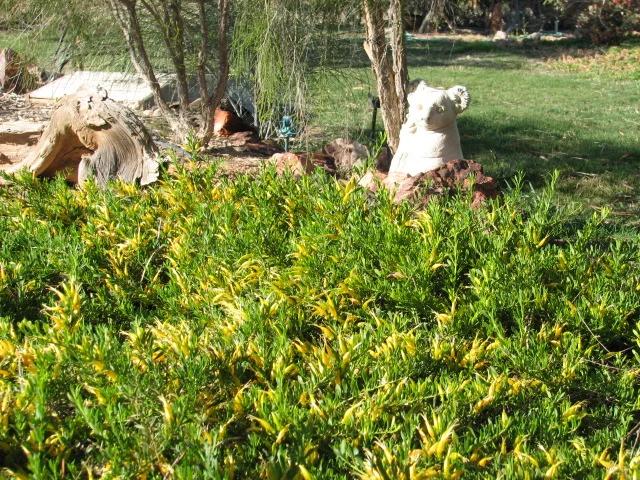
Outback Sunrise Emu Bush
Low spreading groundcover with yellow flowers in winter and spring. Perfect for the hottest spots.
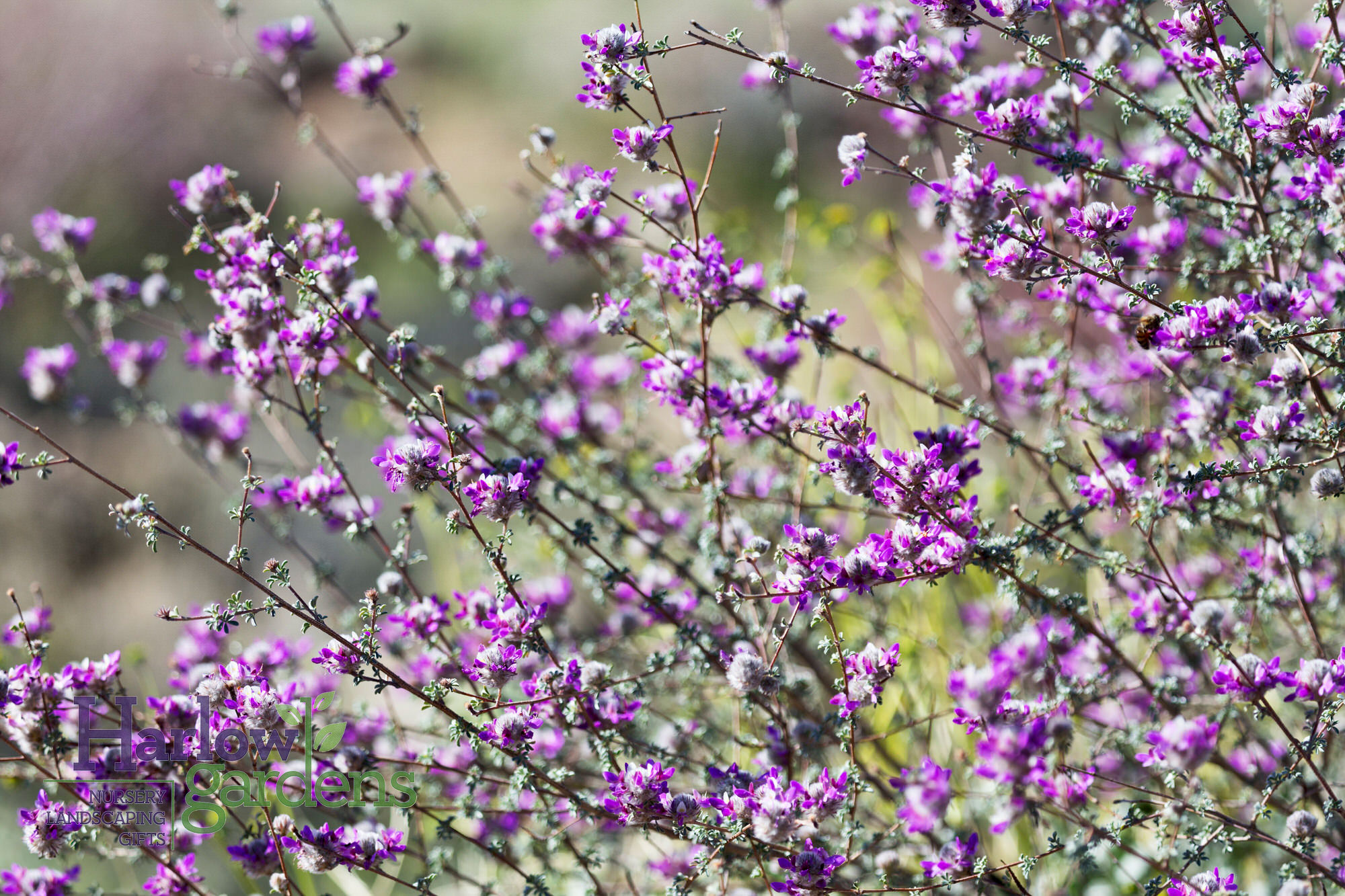
Trailing Indigo Bush
Low, soft gray-green groundcover with small purple flowers in spring.
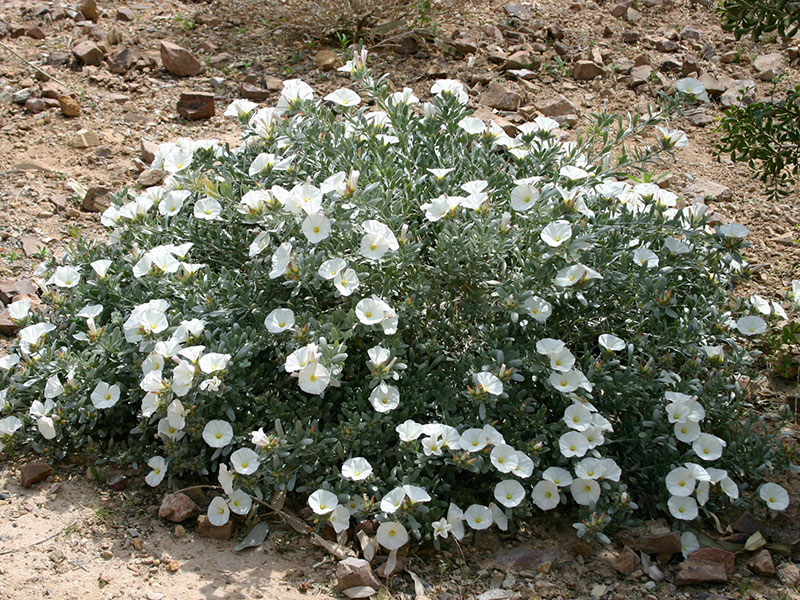
Bush Morning Glory
Silvery mound with white trumpet flowers spring through fall.
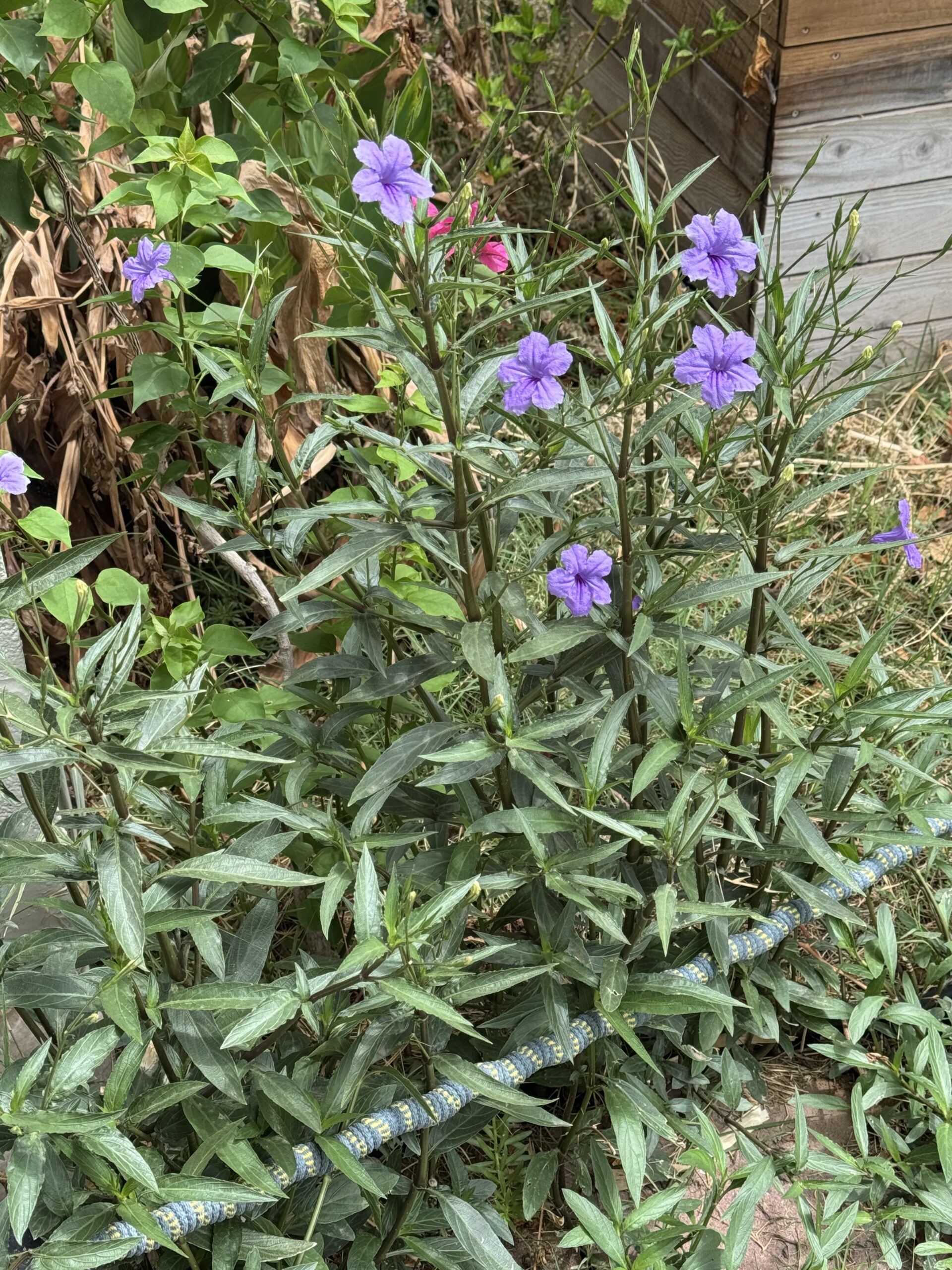
Ruellia
Purple petunia-like flowers all summer, and it handles heat really well.
San Marcos Hibiscus
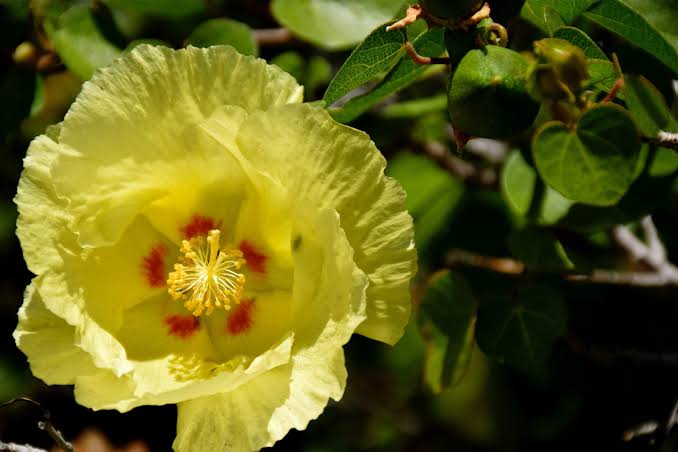
Native hibiscus with soft yellow flowers from spring through fall and small, delicate leaves. Light and airy, around 3 to 4 feet, and loves the heat.
Trailing Rosemary
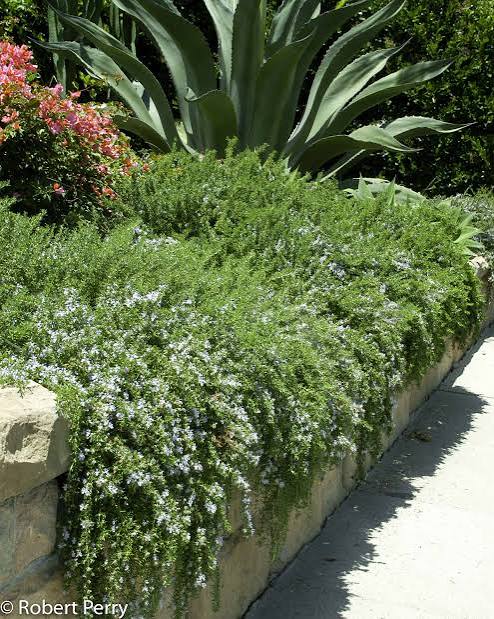
Spills and spreads low, smells great, small blue flowers, and you can cook with it.
Desert and Native Trees
Options to go with your palo brea
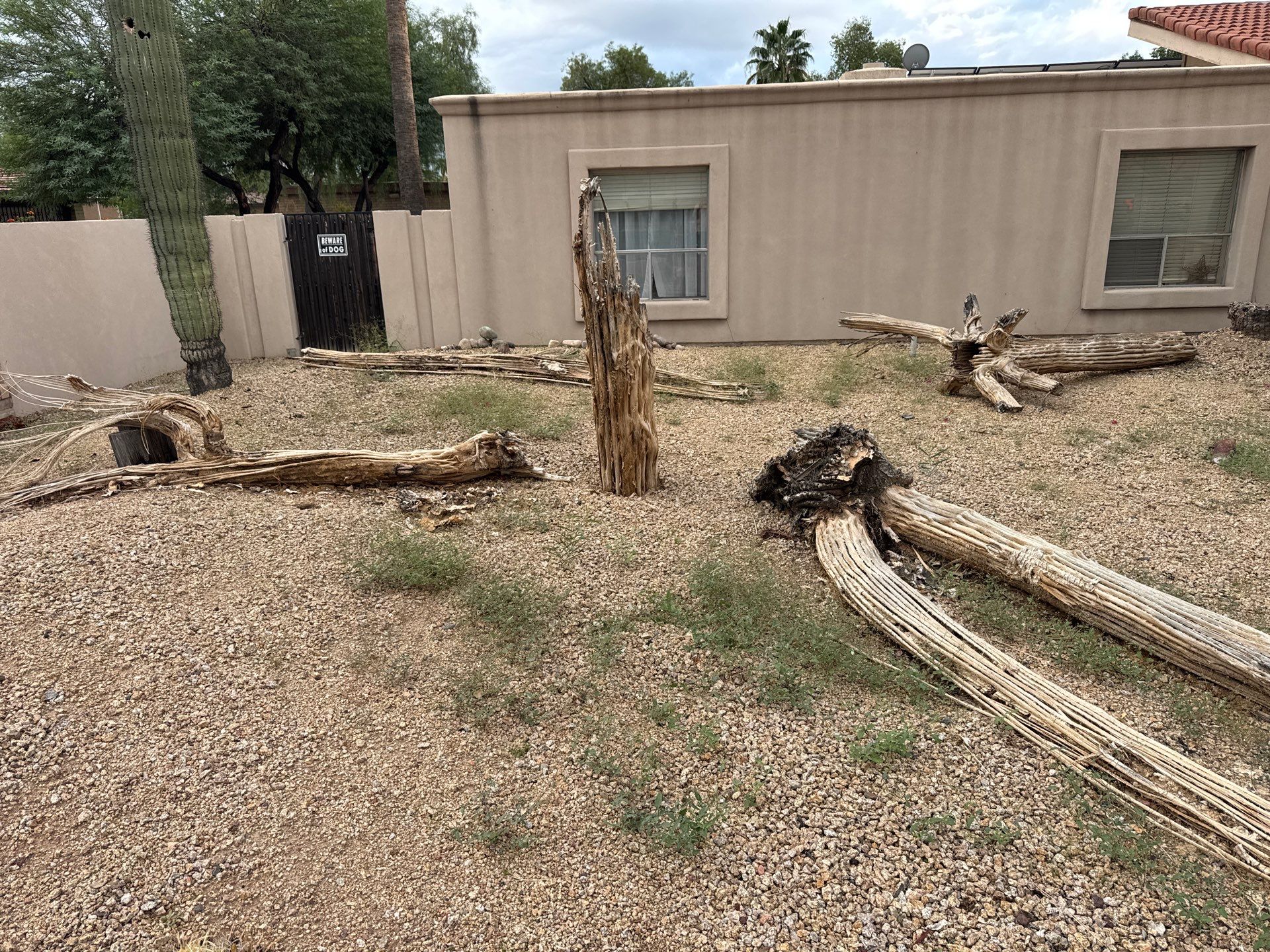
You already have a palo brea, which is a great desert tree. Here are more desert-adapted and native trees that would go well with it. Mixing a few different species gives you more diversity, which means more wildlife and a healthier yard overall. Go 15 gallon on any of these.
Velvet Mesquite
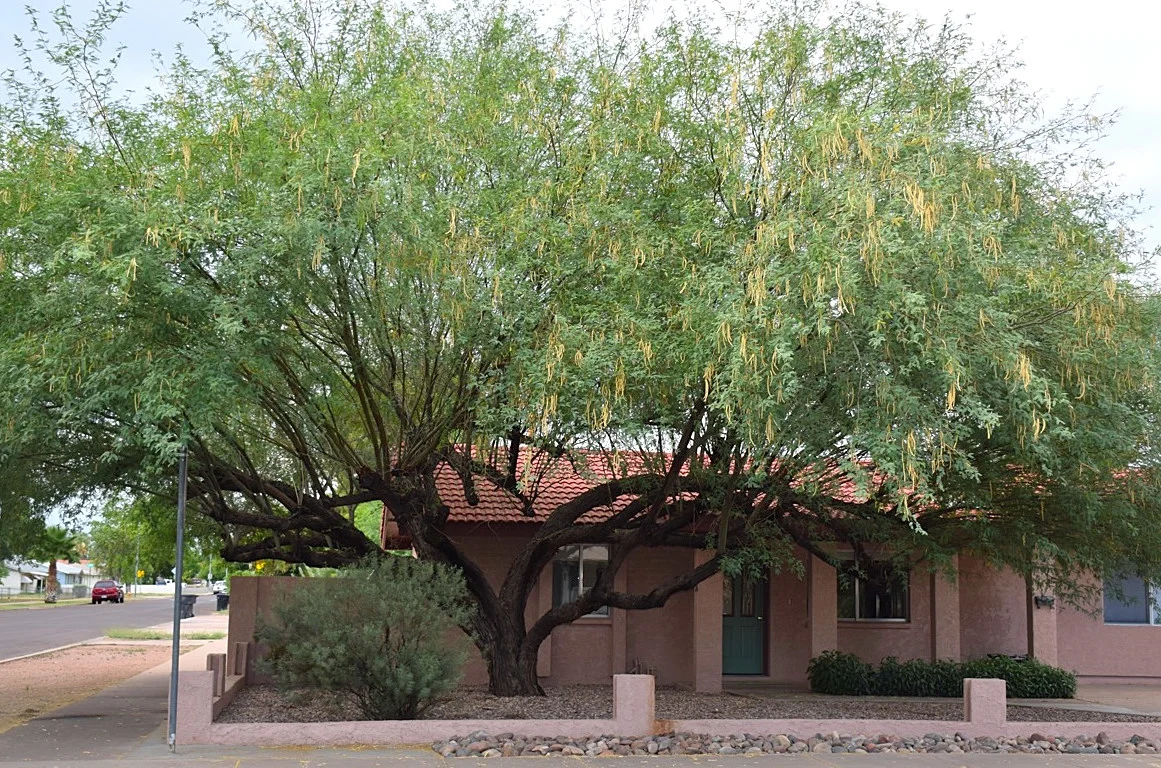
Our native mesquite. Wide, filtered shade canopy around 25 to 30 feet. I recommend velvet over the hybrids because it supports local wildlife the hybrids don't.
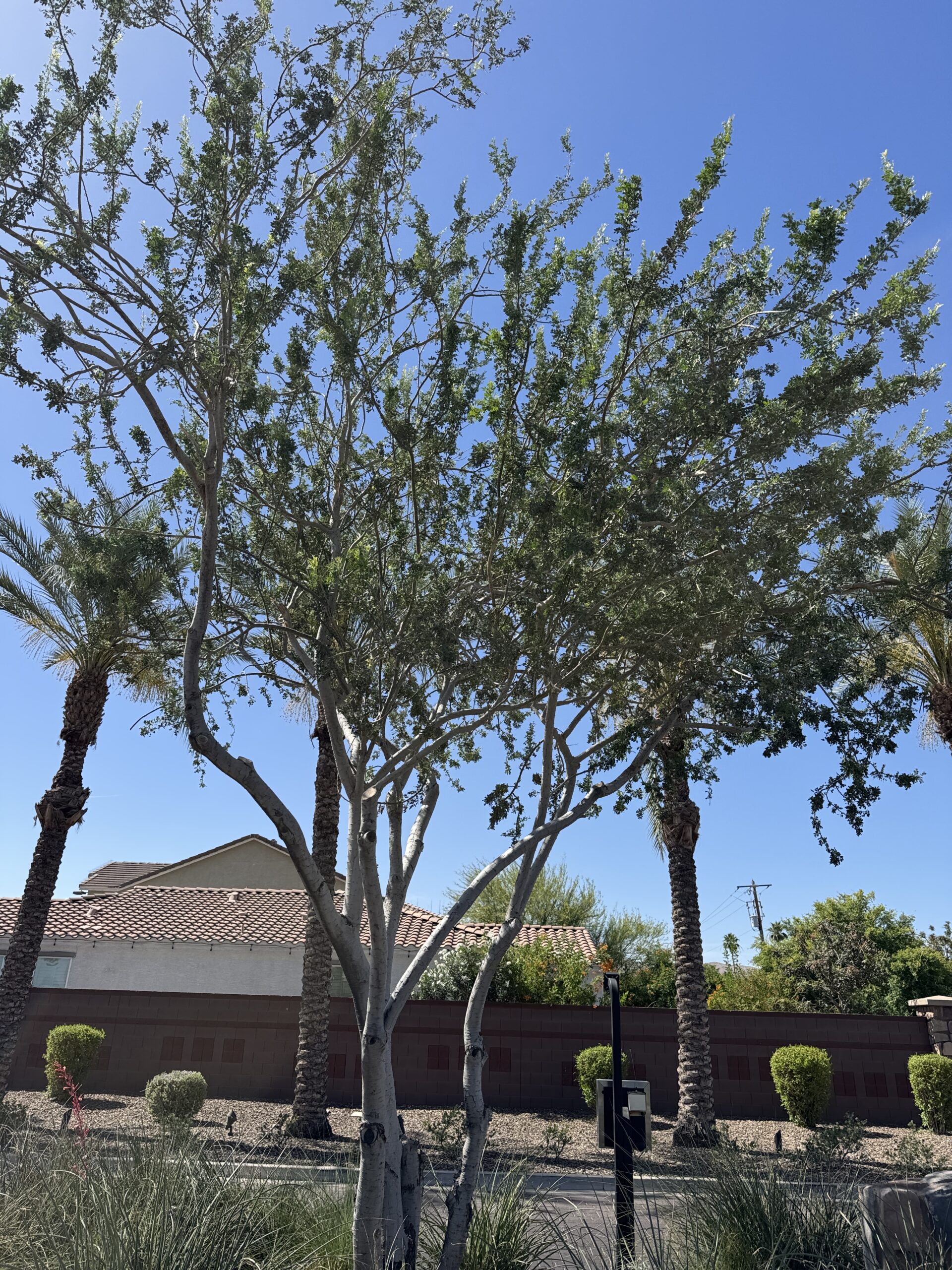
Desert Ironwood
Native, slow growing, and incredibly long lived, with purple-pink flowers in spring. A true Sonoran Desert anchor tree.
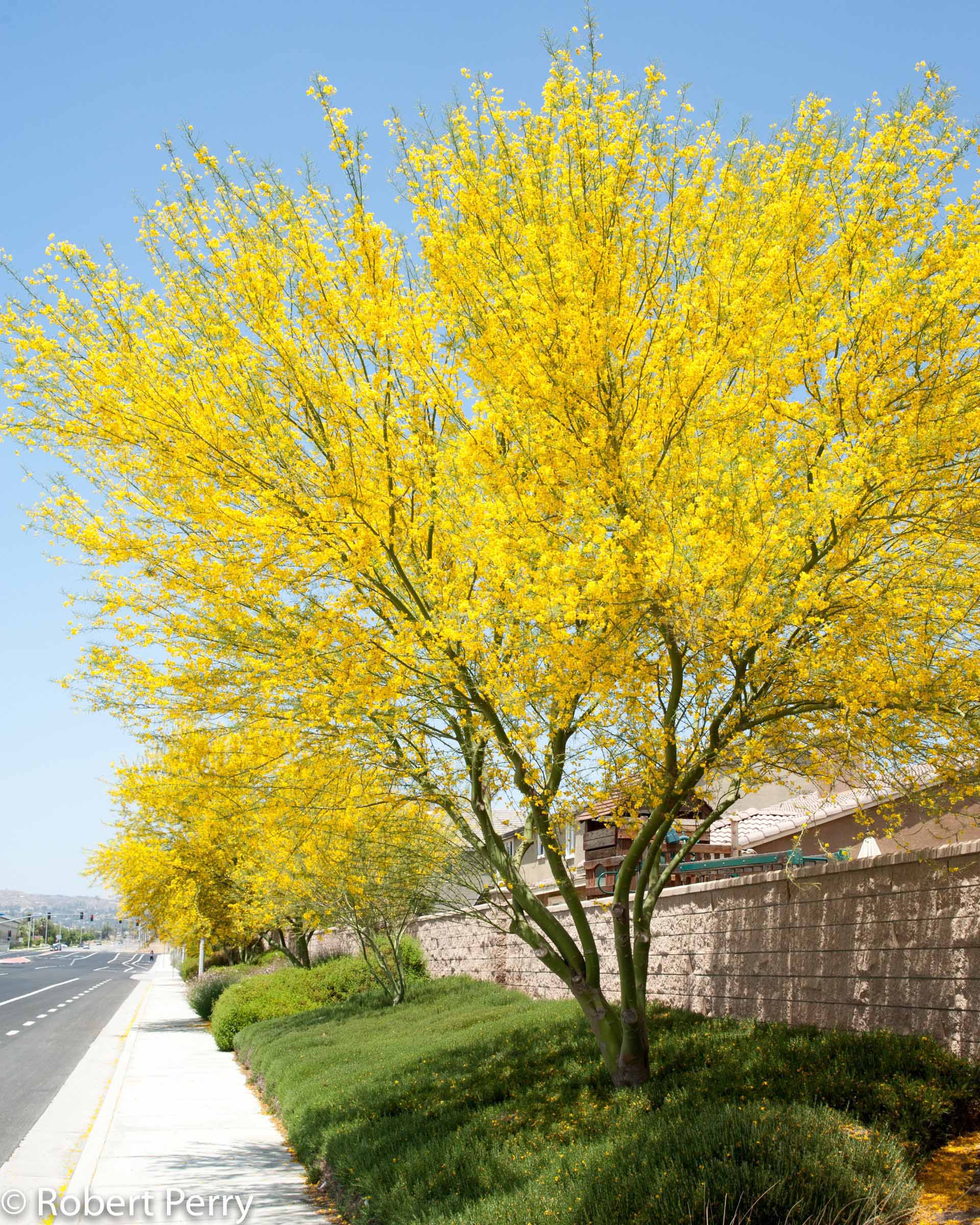
Desert Museum Palo Verde
Green trunk and branches, a huge show of yellow flowers in spring, and fast growth. Thornless, so it's easy to live with.
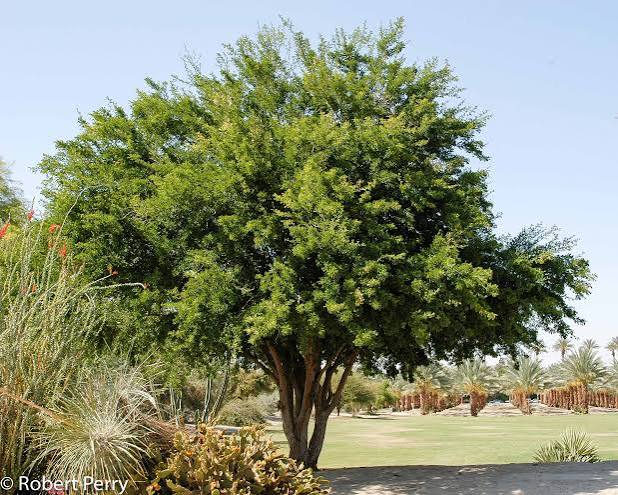
Texas Ebony
Dense, dark green, evergreen canopy with a sculptural shape. Slower growing but very tough.
Desert Willow
Native with orchid-like flowers late spring through fall. Smaller, airy canopy.
How to plant
Planting the Right Way
- Dig wide, not deep. Make the hole two to three times as wide as the root ball and only as deep as the root ball, so the plant sits right at grade, never buried.
- Backfill with native soil. Use the soil you dug out with just a tiny bit of compost mixed in. Plants that grow into native soil root out much better than ones sitting in a pocket of rich mix.
- Compost on top. Lay compost on top of the soil around the plant. Don't work it in; let the soil life pull it down.
- Mulch over the compost. Cover the compost with mulch, keeping it pulled back about a foot from tree trunks.
- Water deep. Soak it in well right after planting and keep the root ball from drying out over the first couple months.
Soil and feeding
Building Your Soil
With bare dirt across most of the yard, building the soil biology is going to make the biggest difference in how everything grows. Here's exactly how to do it yourself.
- Compost, generously. Spread compost around the drip line of the trees (out where the canopy ends, where the feeder roots are) and closer in around shrubs. Arizona Worm Farm has the best compost around.
- Worm castings every quarter. A light layer around each plant every three months feeds the soil life and helps the roots take up nutrients.
- Organic fertilizer high in fulvic acid, monthly. I use and recommend the Catalyst line below. Find them at Catalyst Product Group (click Products, then Home and Garden).
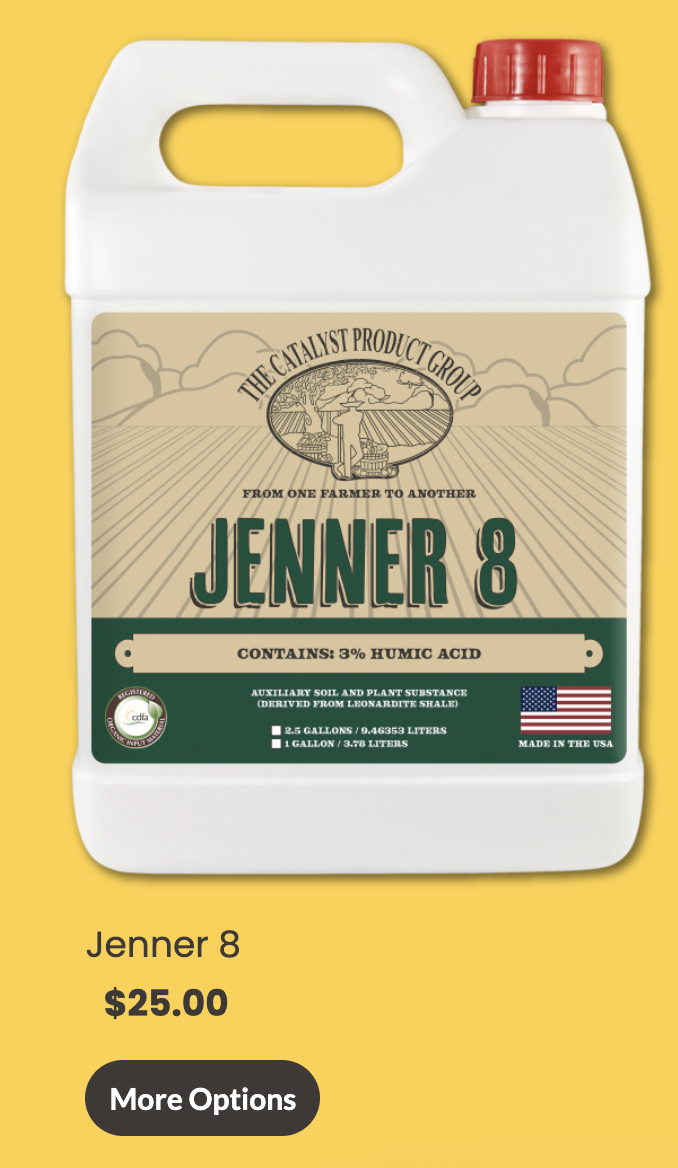
Catalyst Jenner 8
Organic liquid fertilizer loaded with fulvic acid and biology. Feeds the soil food web so the plants can feed themselves.
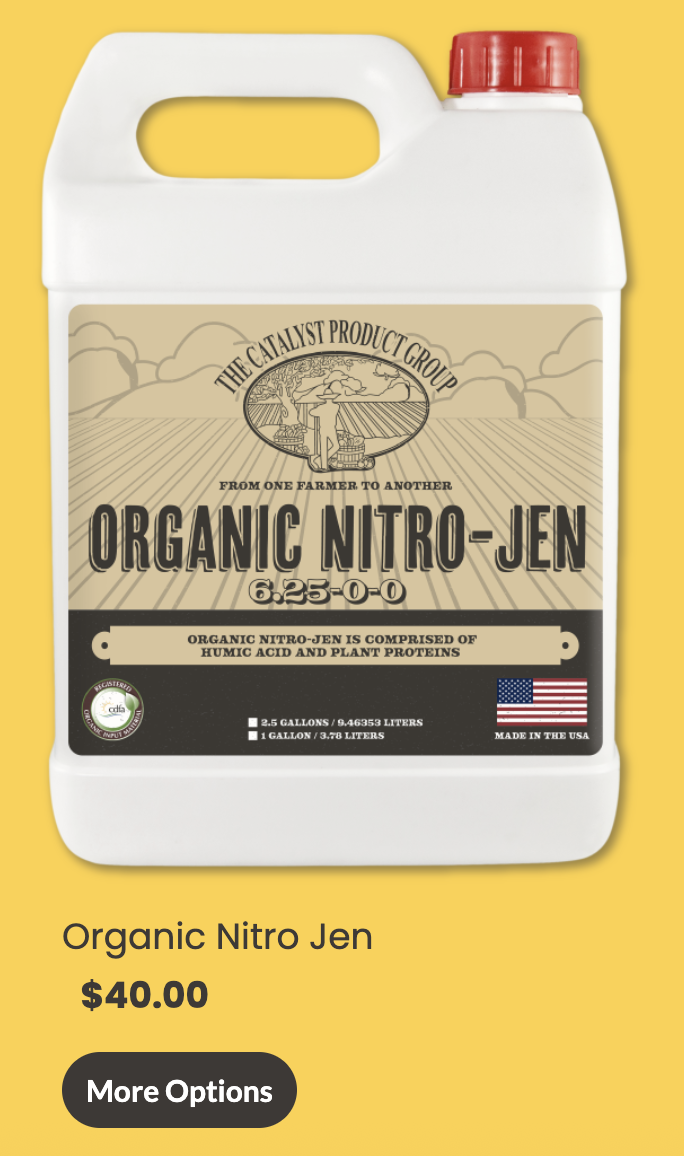
Catalyst Organic Nitro Jen
Organic nitrogen source for strong, green growth without the salt burn of synthetic fertilizers.
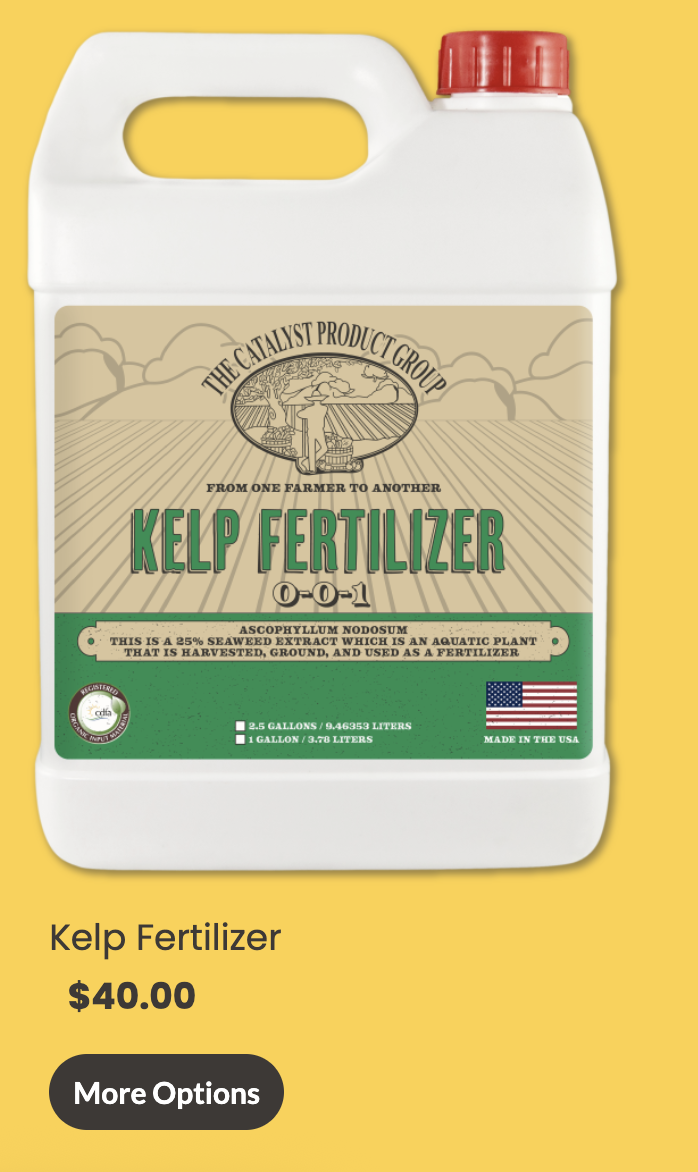
Catalyst Kelp
Kelp fertilizer packed with trace minerals and natural growth hormones. Helps plants handle heat and stress.
Or let us handle it
Monthly Fertilizing
$120/month
- Monthly organic liquid feeding across the whole yard
- Compost applied three times a year
- A recap video after every visit so you know exactly what we did
Quick reference
Where to Go for What
Compost, mulch, worm castings, raised bed mix
Citrus (your grapefruit)
Tropicals (mango, guava, bananas)
Trees, shrubs, and general plants
A&P Nursery
Raised garden beds
What to plant and when
Organic fertilizer
Before digging near the electric line
Arizona 811 (dial 811)
Next steps
Where to Go From Here
You've got two paths. If you want to do the planting yourself, everything you need is in this write-up. As a consult client, you're already in the Garden Nerd Club, so you have direct access to me there anytime questions come up along the way.
If you'd rather have us do it, The Garden Nerd does planting. Just let me know which plants you're leaning toward and where, and I'll put together a planting proposal whenever you're ready.
Thanks again for having me out, Linda. This yard has a lot of potential, and it's going to look completely different a year from now.