
Ane, here's what we covered
7258 W Calle Lejos, Peoria, AZ 85383Thanks for having me out to walk the property. I put this together in the same order we walked it. As a consult client you're already in the Garden Nerd Club, so I'm happy to keep working through this list with you whenever you're ready.

Filtered Shade, Good Soil, and a Lime Tree Nearby
This area is where the garden beds will go. Olle Gardens is where I'd source the beds themselves, and Arizona Worm Farm is where I'd get the raised bed soil mix to fill them. These beds will also want some filtered shade, Mesquite or Mulga Acacia would both work well nearby to give that dappled light without fully shading the beds out. This same area is also a good spot for a lime tree.
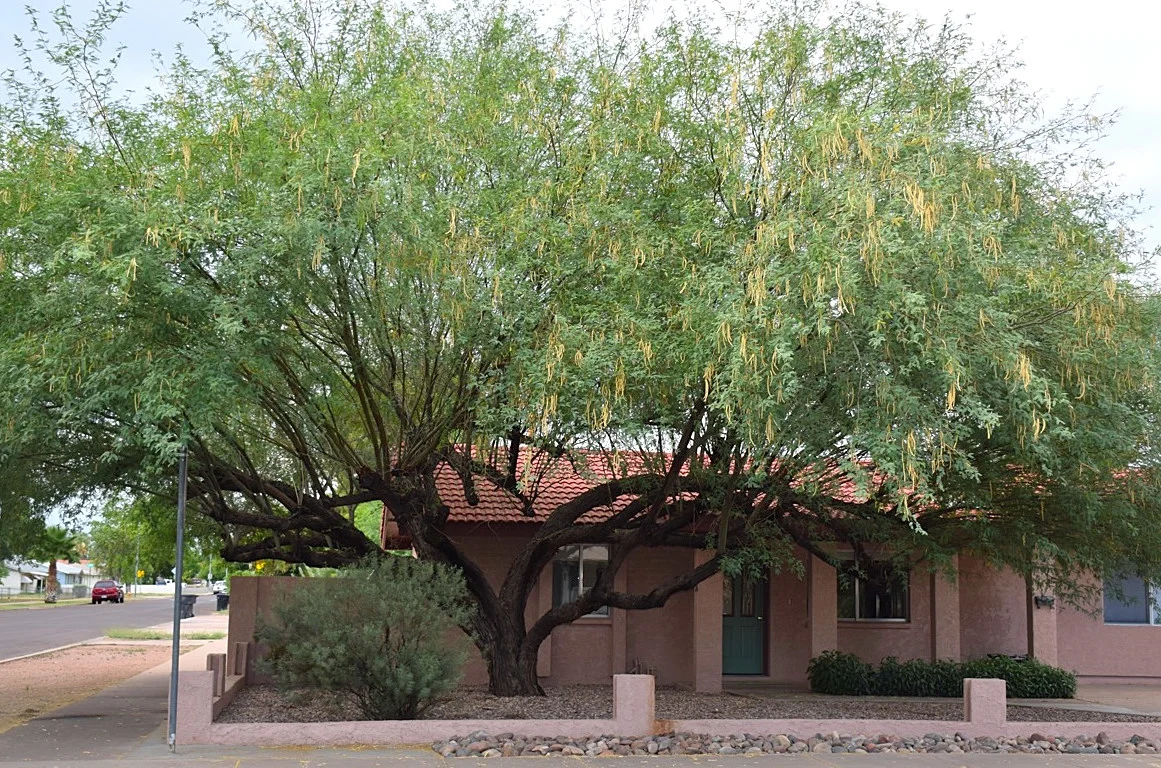
Mesquite
Light, dappled shade for the beds.

Mulga Acacia
Tough, compact, filtered shade option.

Lime
Evergreen year round, good fit for this spot.

Seed Where You Can, Plant Where It Counts
This is a great spot for a native pollinator garden. For native seed, Native Seeds/SEARCH is a great source. For the parts you'd rather plant instead of seed, Desert Milkweed, Chuparosa, Globe Mallow, and Greg's Mistflower are all reliable pollinator draws that establish faster than starting from seed.
If you go the seed route, rough up the soil with a rake first so the seed makes good contact, spread it, then cover the area with bird netting. Without that netting, birds will clean out the seed before it has a chance to germinate.

Desert Milkweed
Tough, upright, a magnet for monarchs.
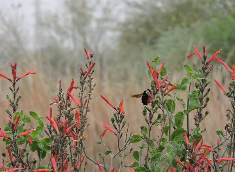
Chuparosa
Red tubular blooms hummingbirds can't resist.

Globe Mallow
Bright orange blooms, tough and easy.
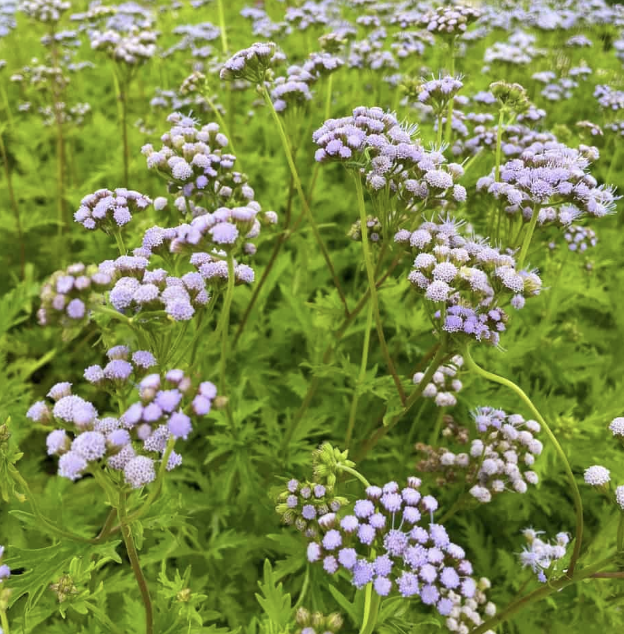
Greg's Mistflower
Fuzzy purple-blue blooms, butterflies love it.

Privacy Trees, Plus Filling Out the Wall
You mentioned wanting privacy back in this corner, and a few large trees here have died off over time. Mesquite is my main recommendation, it matches the desert feel of the rest of the property. Red Push Pistache and Chinese Elm are both worth considering as well if you want one or two more large trees mixed in alongside it rather than a row of all one variety.
For the block walls here, you've already got Orange Jubilee growing, but it's been kept topped so it never gets much height. I'd add more Orange Jubilee to fill in the gaps, and let all of it grow up rather than trimming it back, that's what actually gets you the coverage and height you're after here.
Mesquite
Main recommendation, matches the desert feel.

Red Push Pistache
Good mix-in alongside the mesquite.

Chinese Elm
Another good mix-in option.

Orange Jubilee
Let it grow tall, don't keep topping it.

Water Wells, Root Flares, and Consistent Feeding
All of these citrus would benefit from the rock being pulled back and real water wells built around each one. They're all planted a bit too deep too, so exposing the root flare on each is worth doing at the same time, and since both of those are done together in the same dig, we price them as one combined service per tree. Beyond that, consistent feeding is what's really going to bring these back to full health long term, this isn't a one-time fix, it needs to become a regular habit, see the Fertilizing section below for pricing on that.
Root flare excavation plus water well construction, combined per tree.

Big Water Wells, Mulch, and a Hedge Along the Wall
This is a good spot for a fig tree and a pomegranate tree. Same approach as the citrus, pull the rock back and build large water wells for each, then put mulch inside those wells so the roots aren't getting blasted by the sun and the heat radiating off the surrounding rock. Along this wall, I'd also plant Hopseed, it'll cover the wall and help cool this whole area down.

Fig
Fairly easy going, deciduous, heavy crop with little fuss.
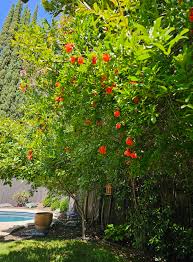
Pomegranate (Parfianka)
Holds up better against leaf-footed bugs than Wonderful.

Hopseed
Covers the wall, helps cool the area.

Something That Grows Up, Not Out
This spot needs a tree to bring back some shade, but the concern is growing into the roofline, so I'd steer toward something that grows more upright than it spreads wide. Tipu is what I'd recommend here, it develops a taller, more vertical growth habit compared to a wide-canopied tree like mesquite. If you'd rather have something that stays smaller overall so it's never a concern near the roofline, Desert Willow is the way to go, it just won't give you quite as much shade.
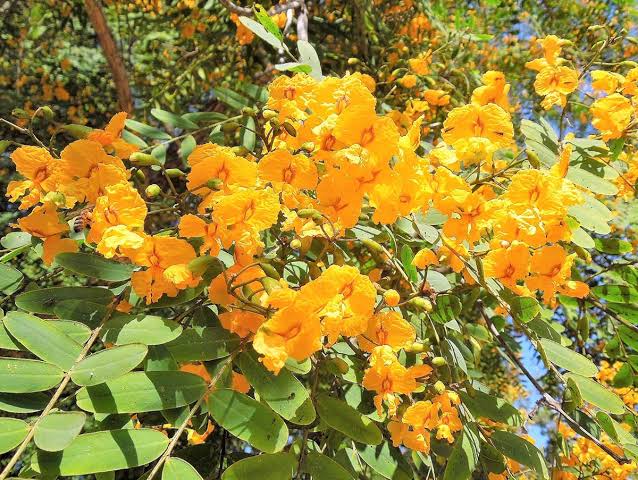
Tipu
Grows more upright than wide.
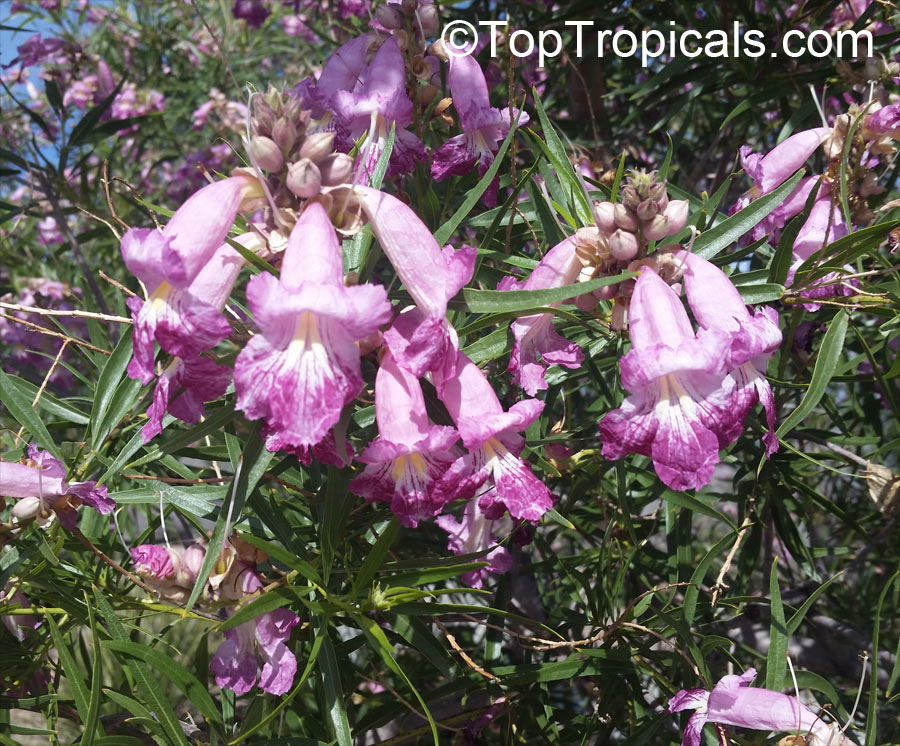
Desert Willow
Stays smaller, less shade but zero roofline concern.

Rock Out, Mulch In, Then Plumeria
This backyard spot is a good one for plumeria. I'd remove the rock and add mulch first, then bring in Yellow Dot as a groundcover underneath to help cool the area down. Plumeria itself will do just fine here once that's in place, and banana would work well in this spot too if you want to add that into the mix.
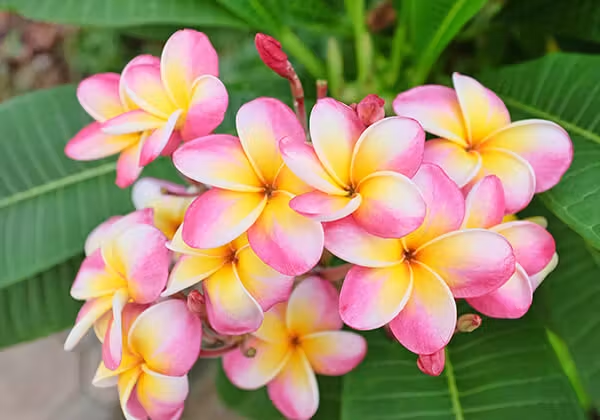
Plumeria
Classic tropical look and fragrance.

Banana
Would work well in this spot too.

Yellow Dot
Groundcover underneath, helps cool the area.

Looking Good, Just Pull the Drip Line Back
This saguaro looks fine, nothing to be concerned about here. The one thing I'd fix is the drip line, it's sitting right up against the trunk right now, I'd pull that back so it's not directly against the plant.

Fill It With a Tree, Transplant the Agave In
There used to be a large saguaro here, and now it's just empty space. A desert adapted tree would fill this in well, Mesquite, Desert Willow, or Desert Ironwood would all work great. I'd also transplant your existing agave into this area, planted underneath the new tree.
For the transplant itself, dig a wide enough root ball around the agave to avoid cutting into too many of its roots, and try to move it on a cooler day if you can, that reduces transplant shock. Once it's in the new hole, plant it at the same depth it was growing before, agave doesn't like being buried any deeper than it already was, and hold off on watering for about a week to let any cut roots callus over before you soak it in.
For more color and interest at ground level under the tree, Chuparosa is a great addition, along with other colorful native options like Globe Mallow and Baja Fairy Duster. Lantana or a similar colorful groundcover would round this out nicely too.
Mesquite
Fast growing, light dappled shade.
Desert Willow
Smaller size, orchid-like blooms all summer.
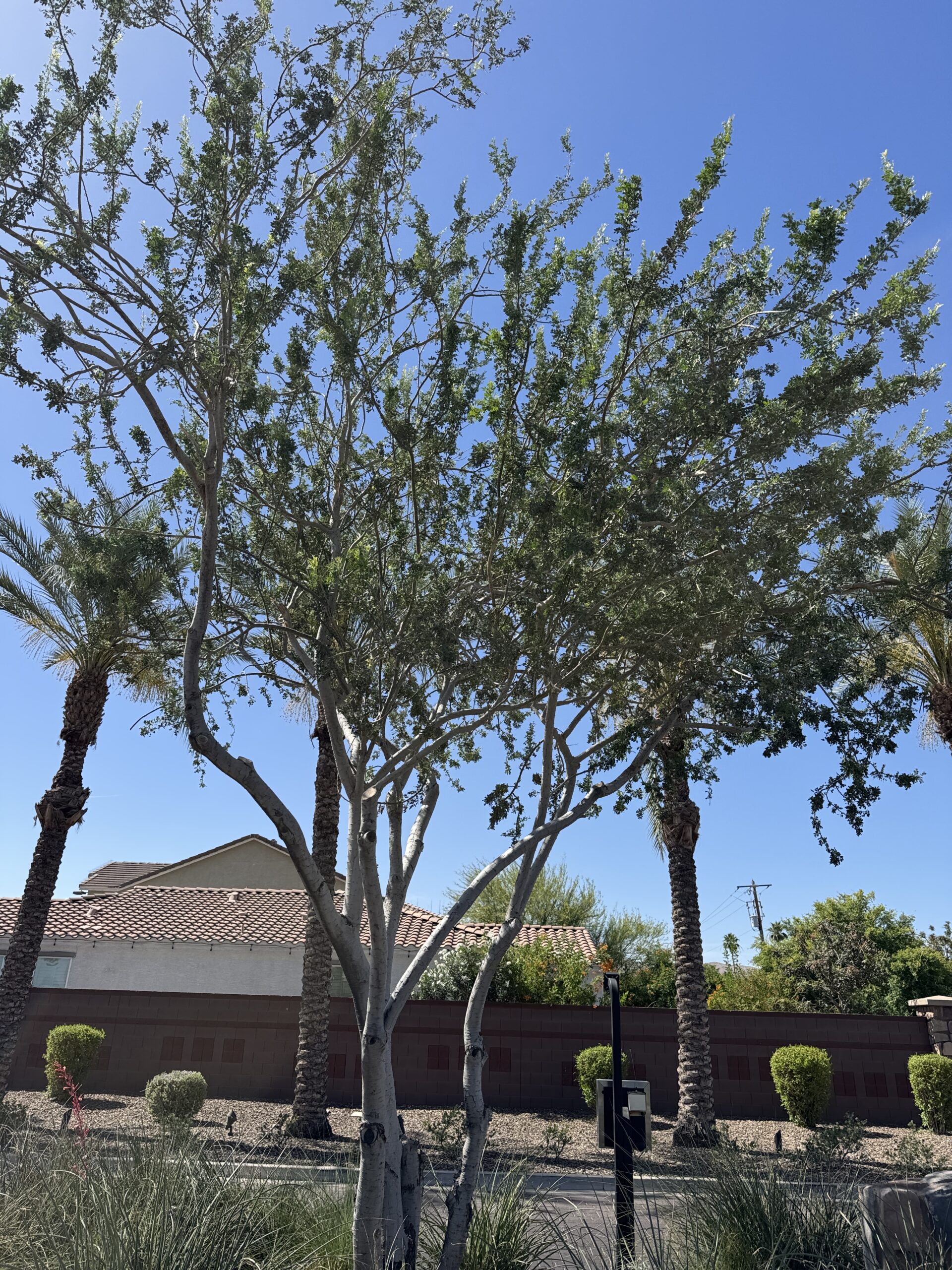
Desert Ironwood
Slower growing native, dense and long-lived.
Chuparosa
Red tubular blooms hummingbirds can't resist.
Globe Mallow
Bright orange blooms, tough and easy.
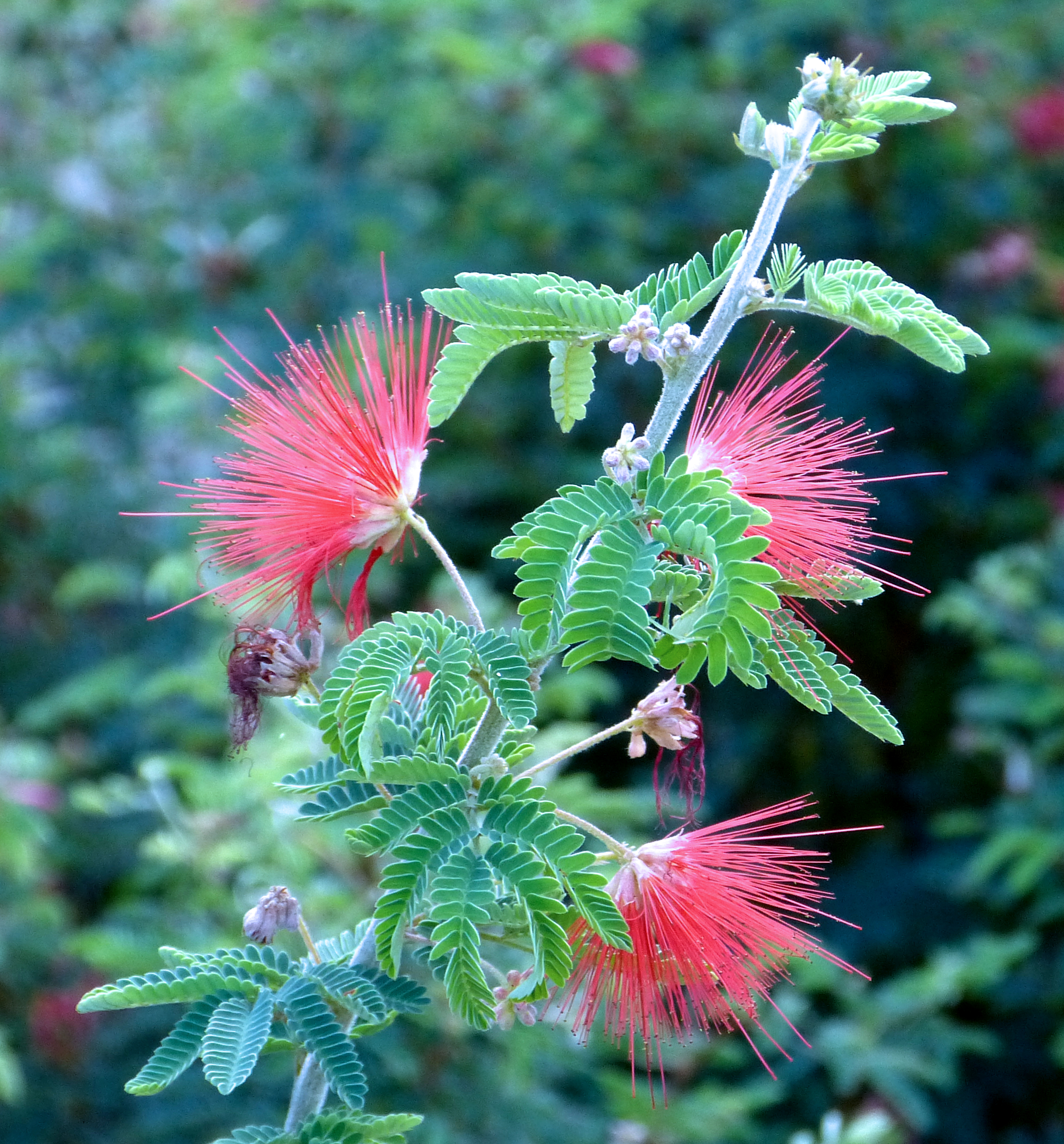
Baja Fairy Duster
Wispy red blooms, stays small and compact.
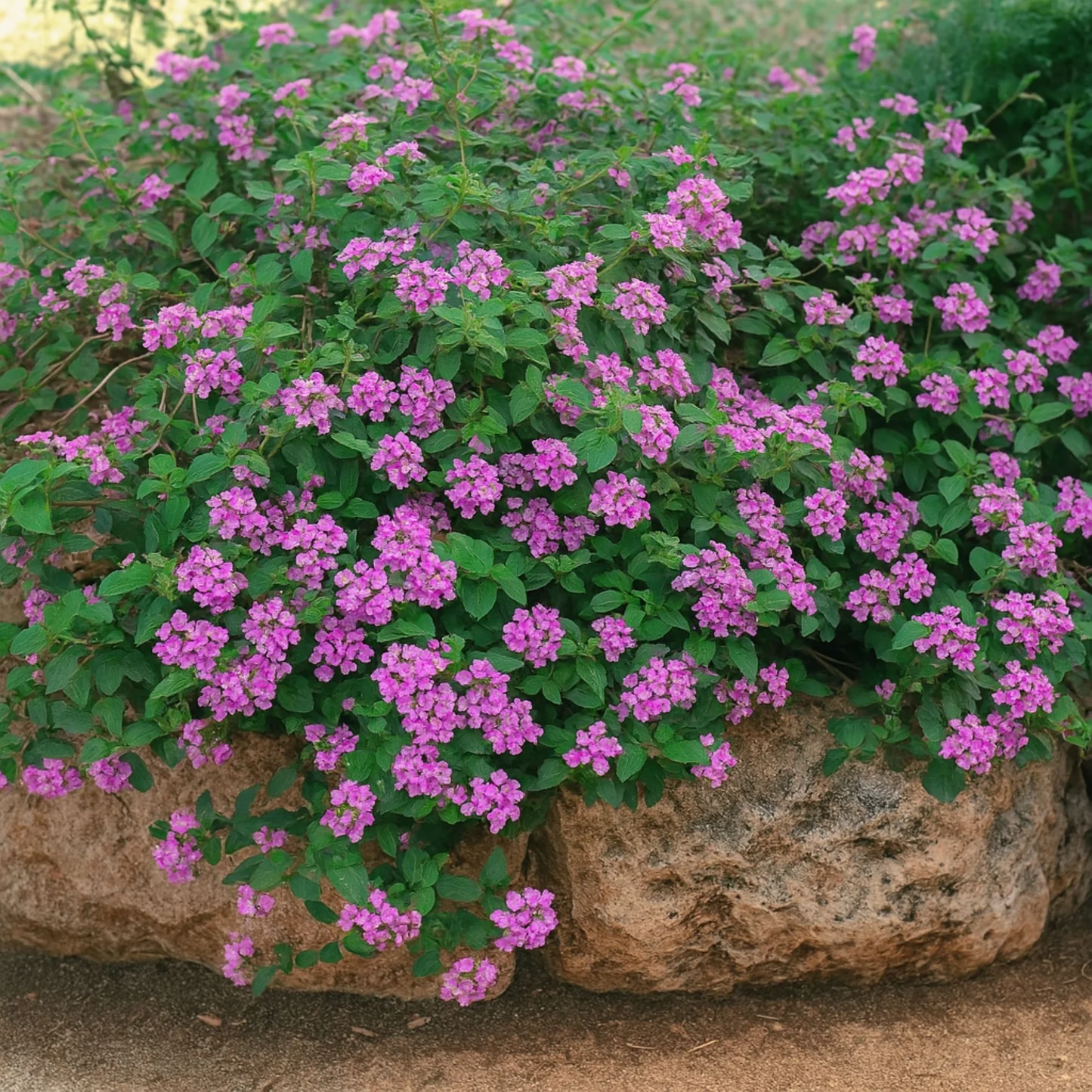
Lantana
Easy color at ground level under the tree.
No need to use all of these, pick your favorites to fill in under the tree.

No Root Concerns, Plant Freely Here
Plumeria can go throughout this whole area, including right up close to the house, there's no root issues to worry about with this one. Everything in this space would do just fine, you're free to plan it out however you like. A groundcover underneath would help finish this area off too, Yellow Dot would work well here just like it does elsewhere on the property.
Plumeria
No root concerns, safe close to the house.
Yellow Dot
Groundcover to finish off the area.

A Plumeria on Each Side, Yellow Dot Underneath
This spot fits a plumeria on either side of the existing lantana, both will do just fine here. I'd pull all the rock back and put down groundcover in its place, specifically Yellow Dot, which you've actually already got started in a pot nearby, moving it into the ground here will help cool this whole area down.
Plumeria (pair)
One on each side of the existing lantana.
Yellow Dot
Already started in a pot, ready to move into the ground.

A Handful of Bananas, Then a Mango Once They Fill In
Along with the plumeria area, this is a great spot for banana. Same prep, pull the rock back and put down mulch to cool the area down before anything goes in, then plant a small handful of bananas together. More is genuinely better here, they shade and protect each other as they grow, which helps all of them establish faster. Once these fill in and start giving some shade of their own, you'll have a good microclimate to add a mango tree into this same area.
Banana
Plant a handful together, they shade and protect each other.

Mango
Add in once the bananas fill in and create some shade.
Feed the Citrus, the Trees, and Everything Else
The citrus specifically need consistent feeding to really recover, that's not optional if you want them healthy long term, but this really applies to every tree and shrub on the property, not just the citrus. Our monthly program covers the full landscape, citrus included, with a liquid feeding each month plus compost applied a few times a year, built to build up real soil biology rather than force growth with synthetic salts.
Monthly Landscape Fertilizing
Full landscape, including the citrus, all trees, and shrubs. Liquid feeding every month plus compost applied a few times a year.
Text me to get startedThis is our starting rate, the exact number can shift a bit based on total square footage, happy to confirm the final figure once we've walked the whole property with that in mind.
Let's tackle this in whatever order makes sense
There's a lot here, so pick what matters most to you first, the citrus recovery, the garden beds, or the privacy trees out back. We can advise you along the way in the Garden Nerd Club, or if you'd rather have help with any of it, planting or anything else, just reach out and I can get you pricing.
You can also read more about how we plant at thegardennerd.org.