
Laura Kuning
932 W Los Lagos Vista Ave, Mesa, AZ 85210
Here's everything we covered on our walk, area by area in the order we walked it, including a full Bermuda care guide, year-round fruit tree care, and how to feed your soil.
Room for More Fruit Trees
Back yard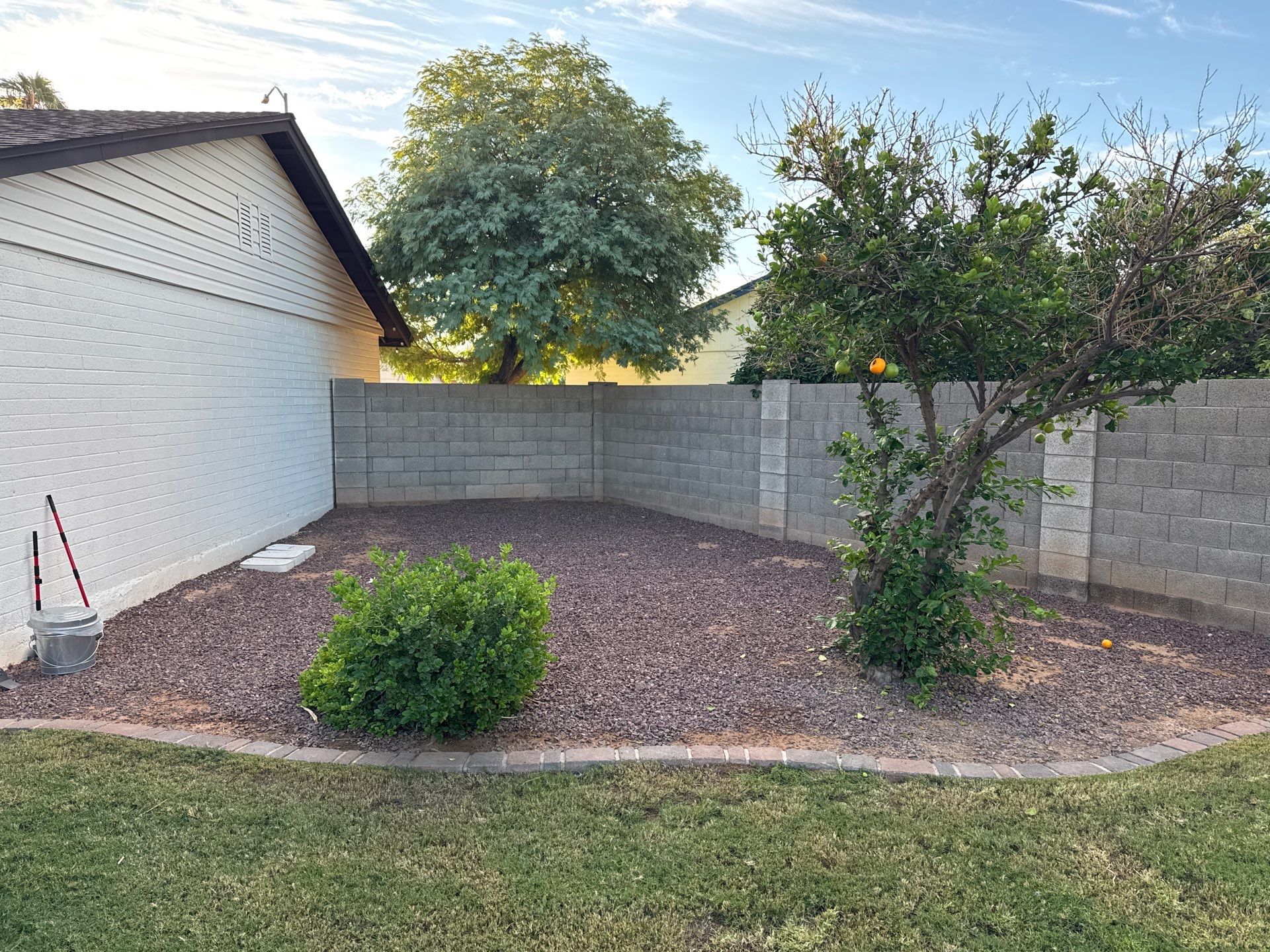
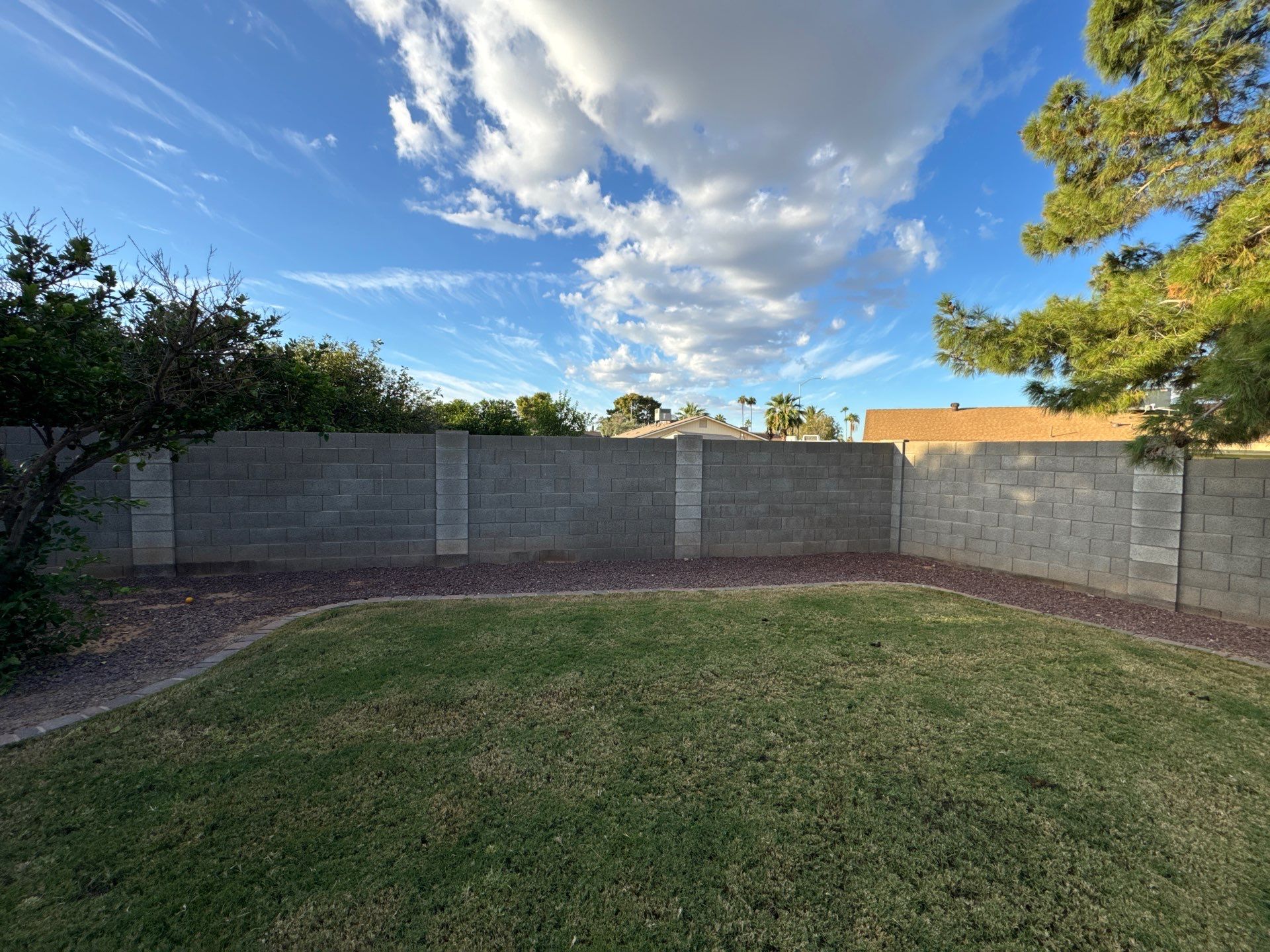
Back in this area there's room for a few more fruit trees. Citrus and figs would both do well here. The spot right next to it, along the same wall, is another good place for more citrus if you want them.
Citrus
Take a look at Greenfield Citrus Nursery. They grow all their citrus here in the Valley, and you can browse every variety that will grow in this spot. Now through early spring is a great time to plant. Space citrus about 8 feet apart.

Lemon Tree
Meyer lemon is a favorite: sweeter, juicier, and loaded with fruit on a smaller tree.
Lime
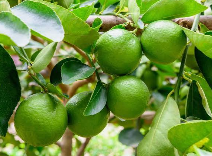
Bearss lime is the most reliable lime here. Cover it on frost nights.

Citrus
Navel oranges, mandarins and tangerines all do great here and ripen through winter.
Grapefruit
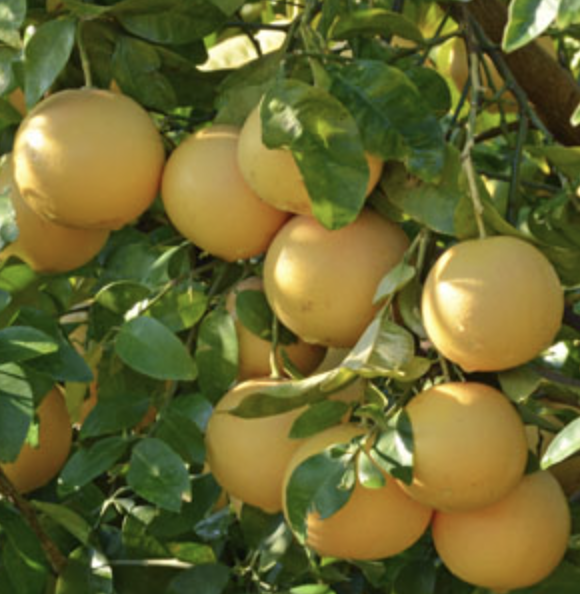
Ruby red grapefruit sweetens up beautifully in our heat. Big tree, big harvest.
Kumquat
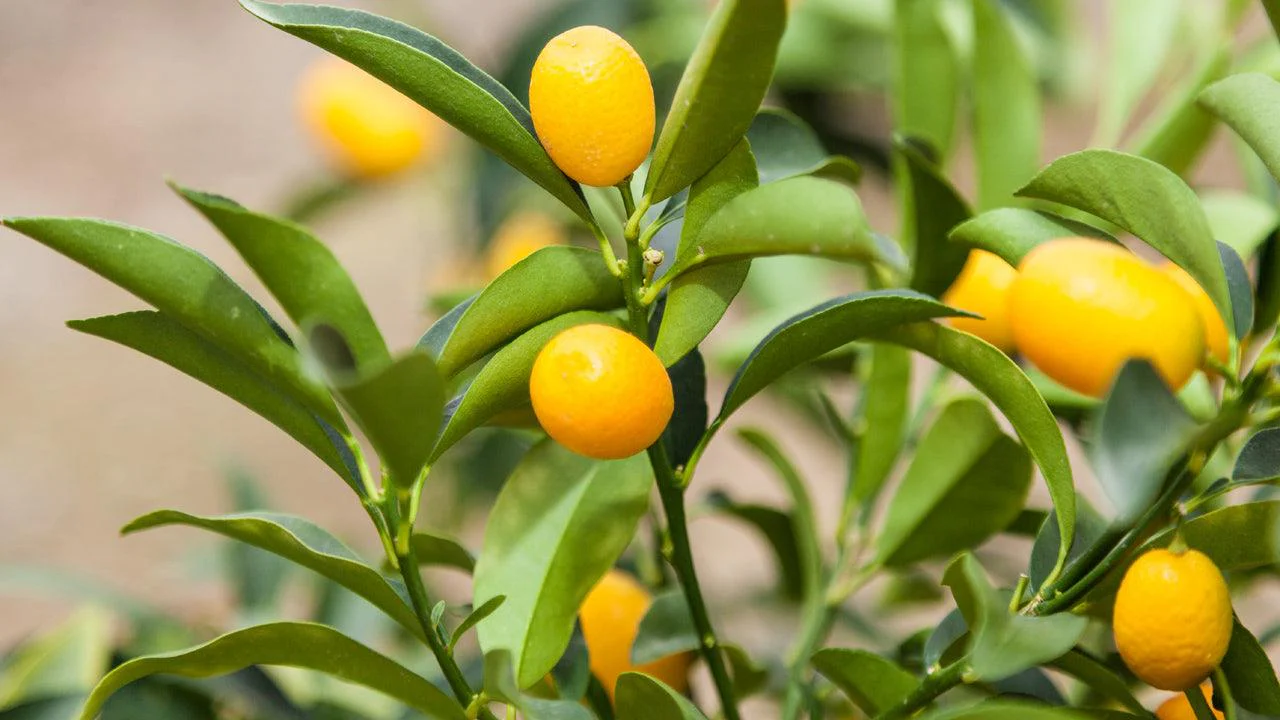
Small and ornamental, and you eat the fruit skin and all. Great where space is tight.
Figs
Figs love our heat, grow fast, and you'll be picking fruit in a year or two.

Fig
Figs grow 10 to 15 feet and can be kept smaller with winter pruning. They drop their leaves in winter. Most give a small early crop in late spring and a main crop in late summer.
Varieties that do well here: Black Mission, Brown Turkey, Kadota, Panachee (Tiger Stripe), and Violette de Bordeaux.
Struggling Citrus Tree
Back yard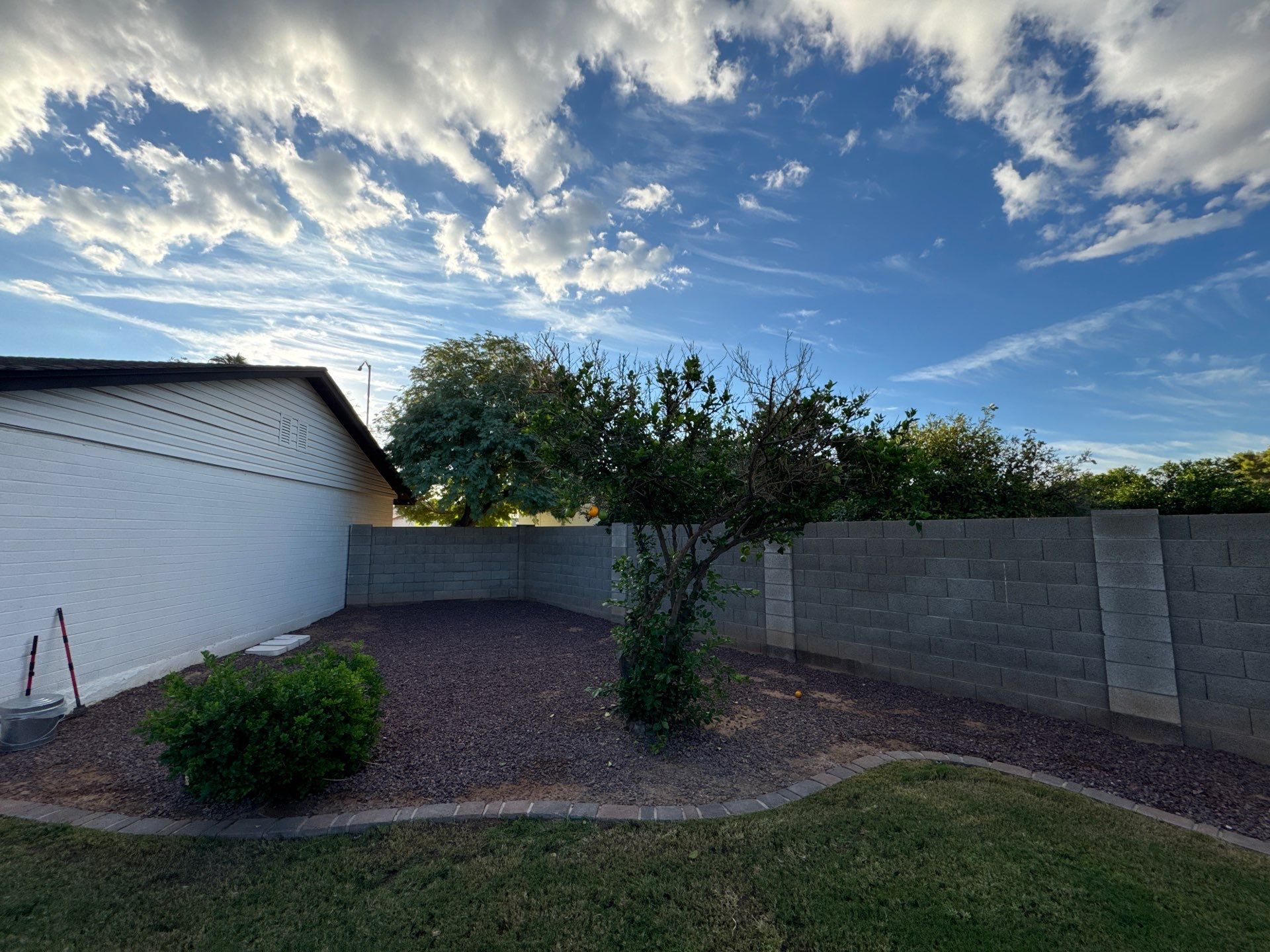
This citrus tree is struggling a bit. I'd give it a fifty-fifty shot of surviving, but it's worth trying to save.
- Remove the suckers on the bottom 3 feet. The branches growing out of the lower 3 feet of the trunk are suckers. They pull energy away from the main tree, so cut those off flush with the trunk. Suckers coming from below the graft also won't produce good fruit.
- Otherwise, cut as little as possible. Leave the rest of the canopy alone. Every leaf it has right now is helping it recover.
- Let it fill in and bush out. As it pushes new growth, let it fill in. A full canopy shades its own trunk and branches and protects itself from the harsh sun.
- Water deep and feed the soil. Water well, compost and mulch out to the drip line, and monthly organic feeding (see the feeding section) will give it the best chance.
If it hasn't pushed new growth by late spring, that's your answer, and the spot is ready for something new.
Vines for the Pool Fence
Pool fence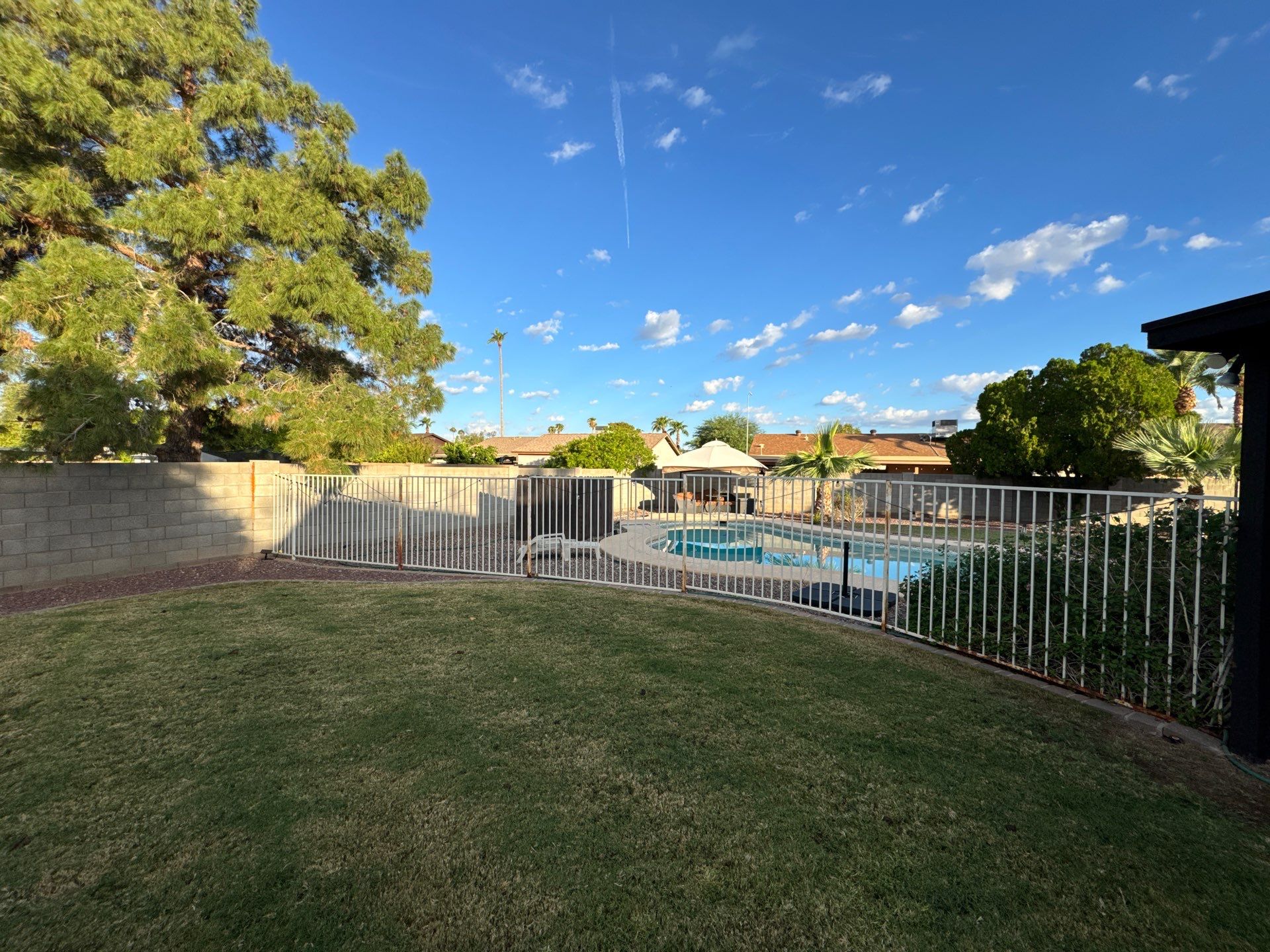
You're not sure yet if you want a vine on the pool fence, but here are some good options if you do. Before you plant, check the pool barrier rules for your city. Thick vines can create footholds on a pool fence, so keep them trained along the fence rather than building up bulk you could climb.

Tangerine Crossvine
Evergreen with orange trumpet flowers in spring. Takes full sun and heat. Light litter.
Purple Lilac Vine
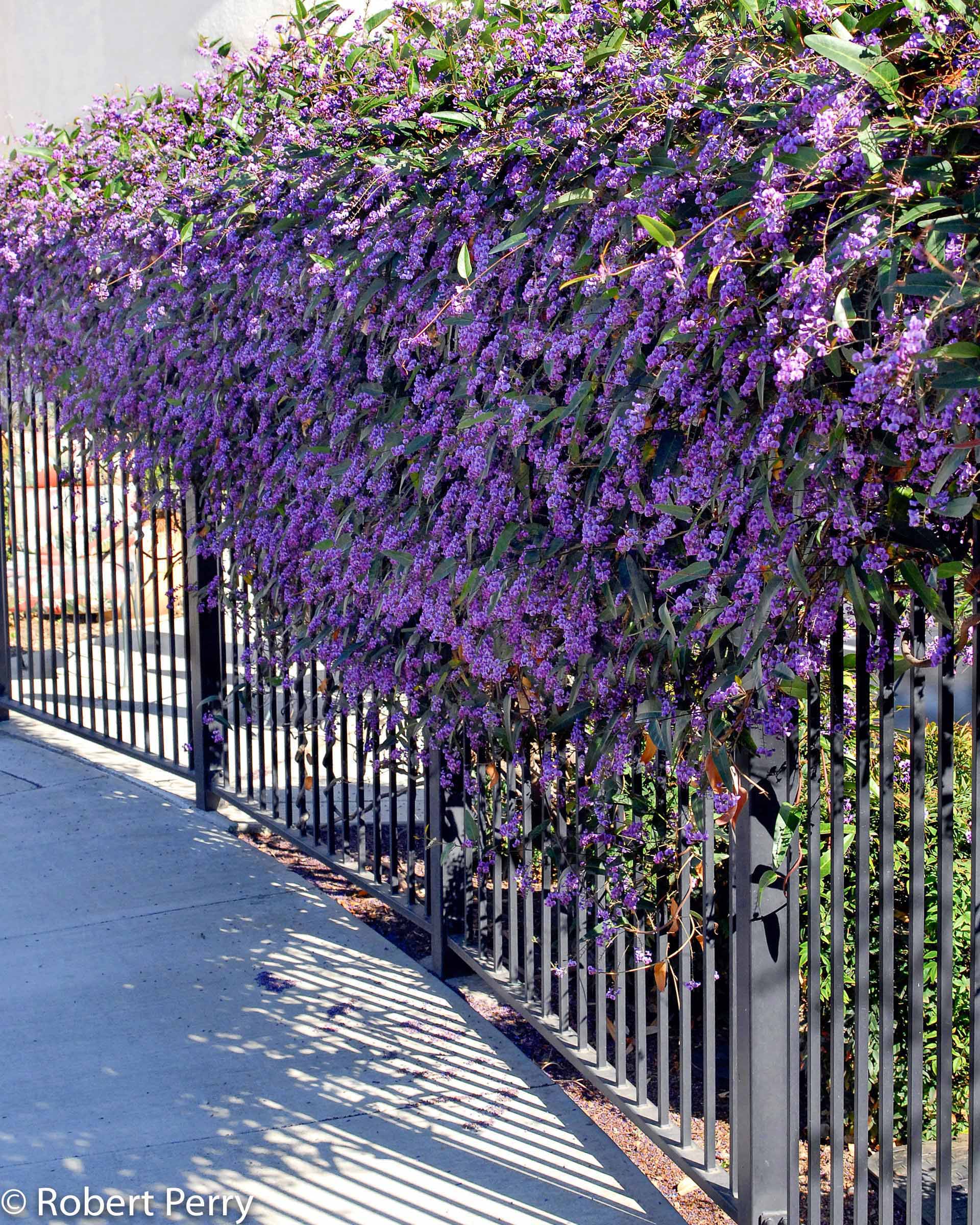
Light, airy vine with purple flowers in late winter and early spring. Doesn't get heavy.
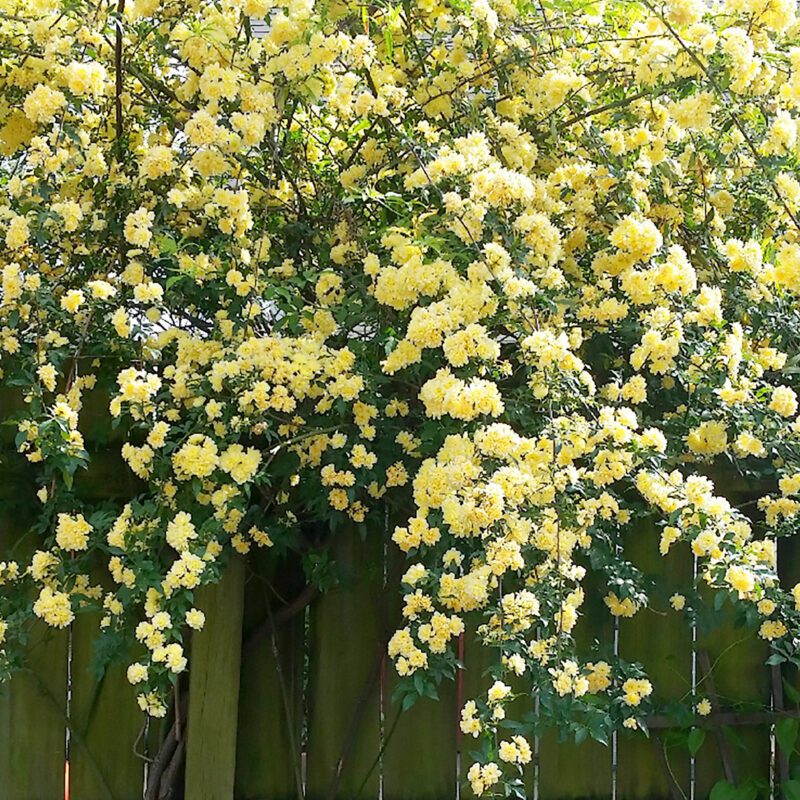
Lady Banks Rose
Thornless climbing rose covered in small yellow or white flowers in spring. Vigorous, so give it room.

Bower Vine
Glossy leaves and pink or white trumpet flowers spring through fall. Prefers some afternoon protection.

Passion Fruit
A fun edible option with exotic flowers and fruit. Grows fast and wants regular water.
Pick one and repeat it, or mix two that bloom at different times.
Shade Tree by the Pool
Afternoon sun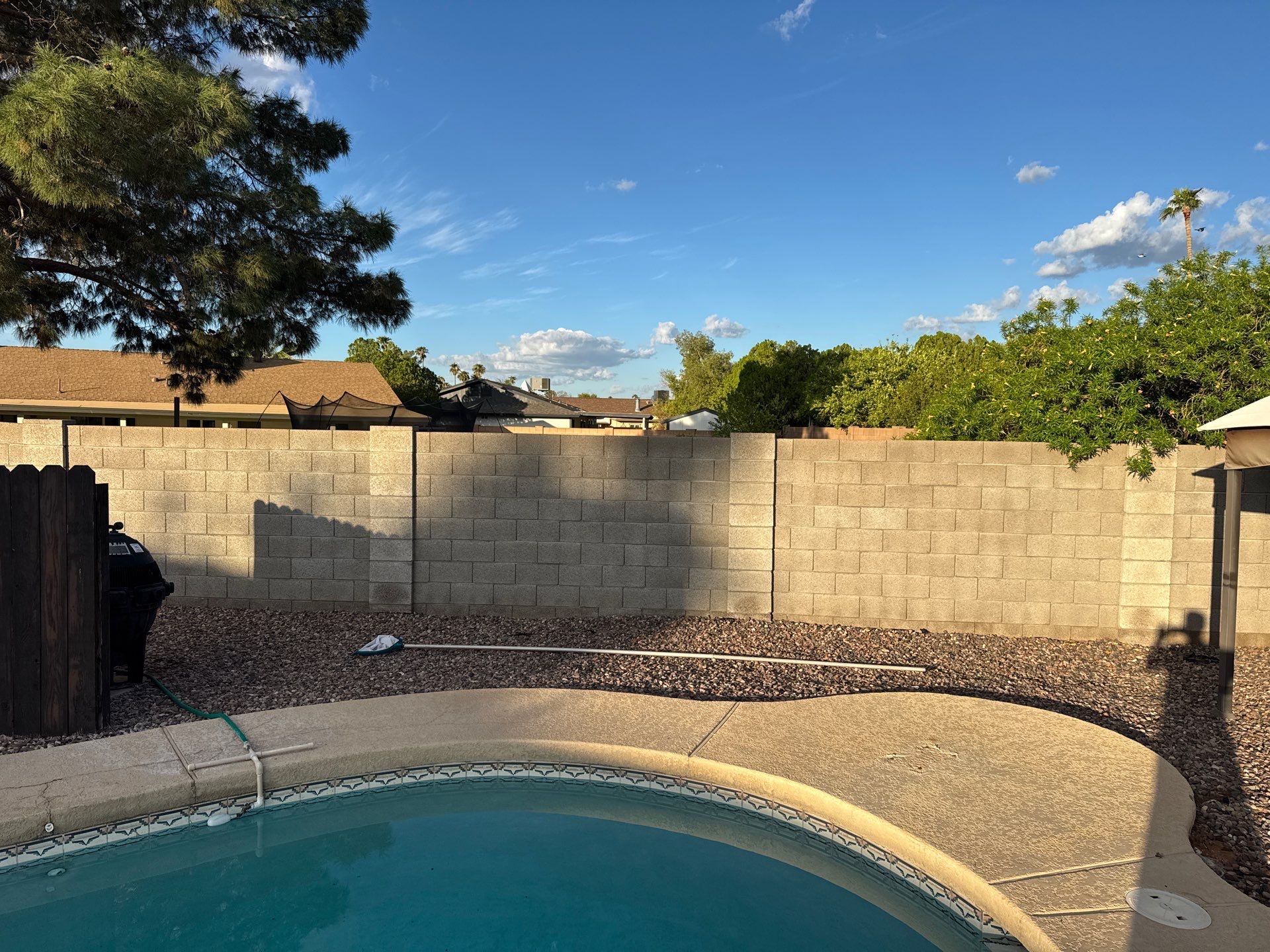
This is a great place for a shade tree to block the afternoon sun from the pool area. There isn't a ton of room here, so we want something with non-invasive roots that drops as little litter as possible since it's close to the pool.

Red Push Pistache
My top pick here. 25 to 30 feet, non-invasive roots, and the only real litter is one leaf drop in fall after great red-orange color. Clean the rest of the year.
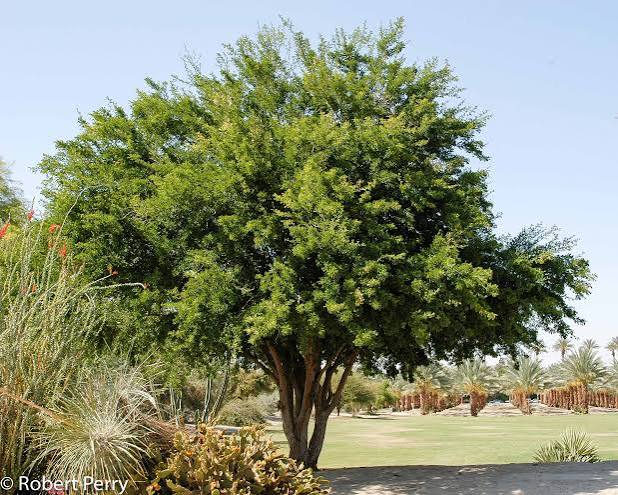
Texas Ebony
Evergreen with a dense, dark green canopy and very little litter. Slow growing, 15 to 25 feet. Has thorns, so keep it a bit back from the pool deck.
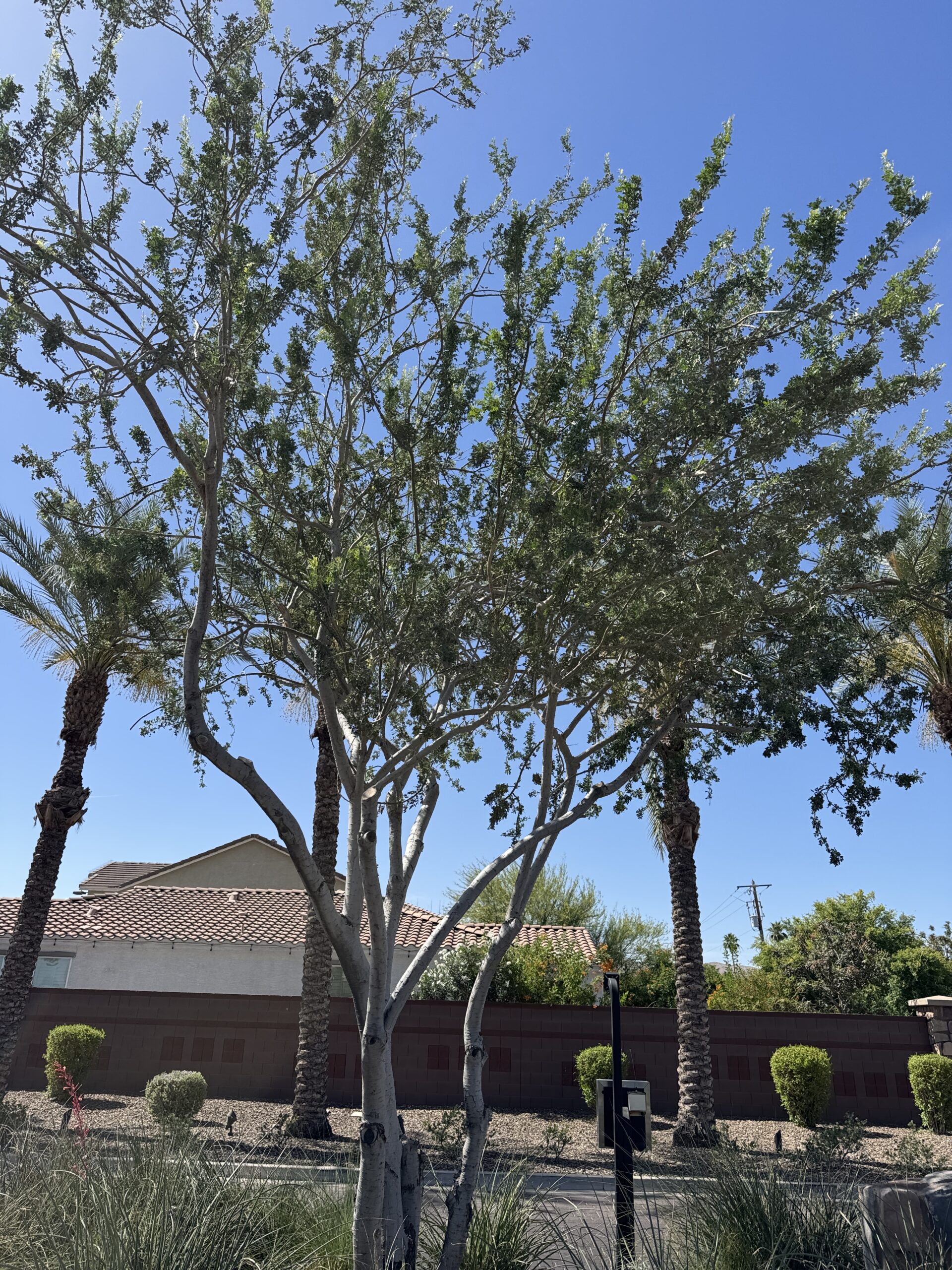
Desert Ironwood
Native, evergreen, slow growing, 15 to 25 feet. Lavender flowers in late spring with some flower drop, otherwise tidy.

Arizona Rosewood
Can be grown as a small multi-trunk tree, 10 to 15 feet. Evergreen, dense, and very little litter. Best if space is tight.
Start with a 15 gallon tree. Smaller trees establish faster and end up better trees long term. Plant it at least 8 to 10 feet from the pool edge. Backfill with your native soil plus a little compost, lay compost on top of the soil, then mulch over the compost, keeping the mulch a foot back from the trunk.
Second Shade Tree Option (Palm Spot)
Back yard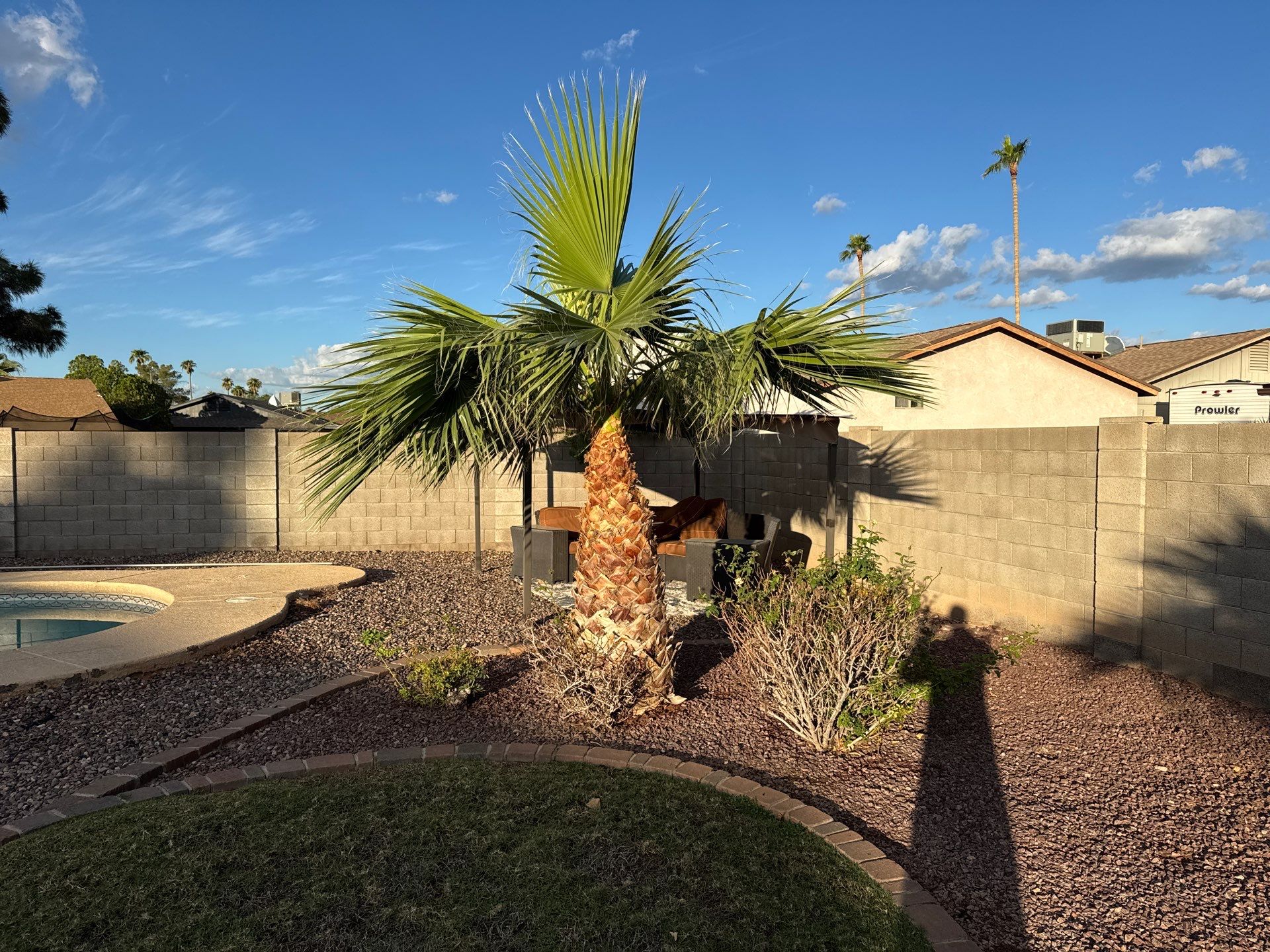
The next best spot for a shade tree is right here where the palm is. You mentioned you don't like the palm and will probably remove it. If the tree by the pool doesn't work out, this is a great option, and here you have room for something that grows big and tall and gives nice shade.

Chinese Elm
Fast growing to 40 feet with a wide, weeping canopy and great shade. Semi-evergreen here.
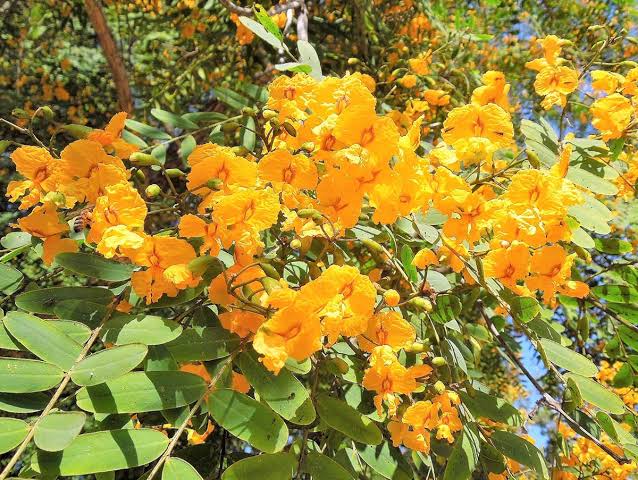
Tipu
Fast, 30 to 40 feet, with a broad umbrella canopy and yellow-apricot flowers in late spring. Beautiful filtered shade.
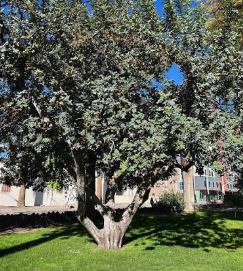
Carob
Evergreen with dense, dark shade, 25 to 30 feet. Very tough.
Red Push Pistache
25 to 30 feet with red new growth in spring and great fall color.
Once the palm is out (we don't do removals, so that would be you or a landscaper), there's no need to grind the stump. Just plant the new tree beside it. A 15 gallon tree is the right size to start.
Color Around the Pool
Pool area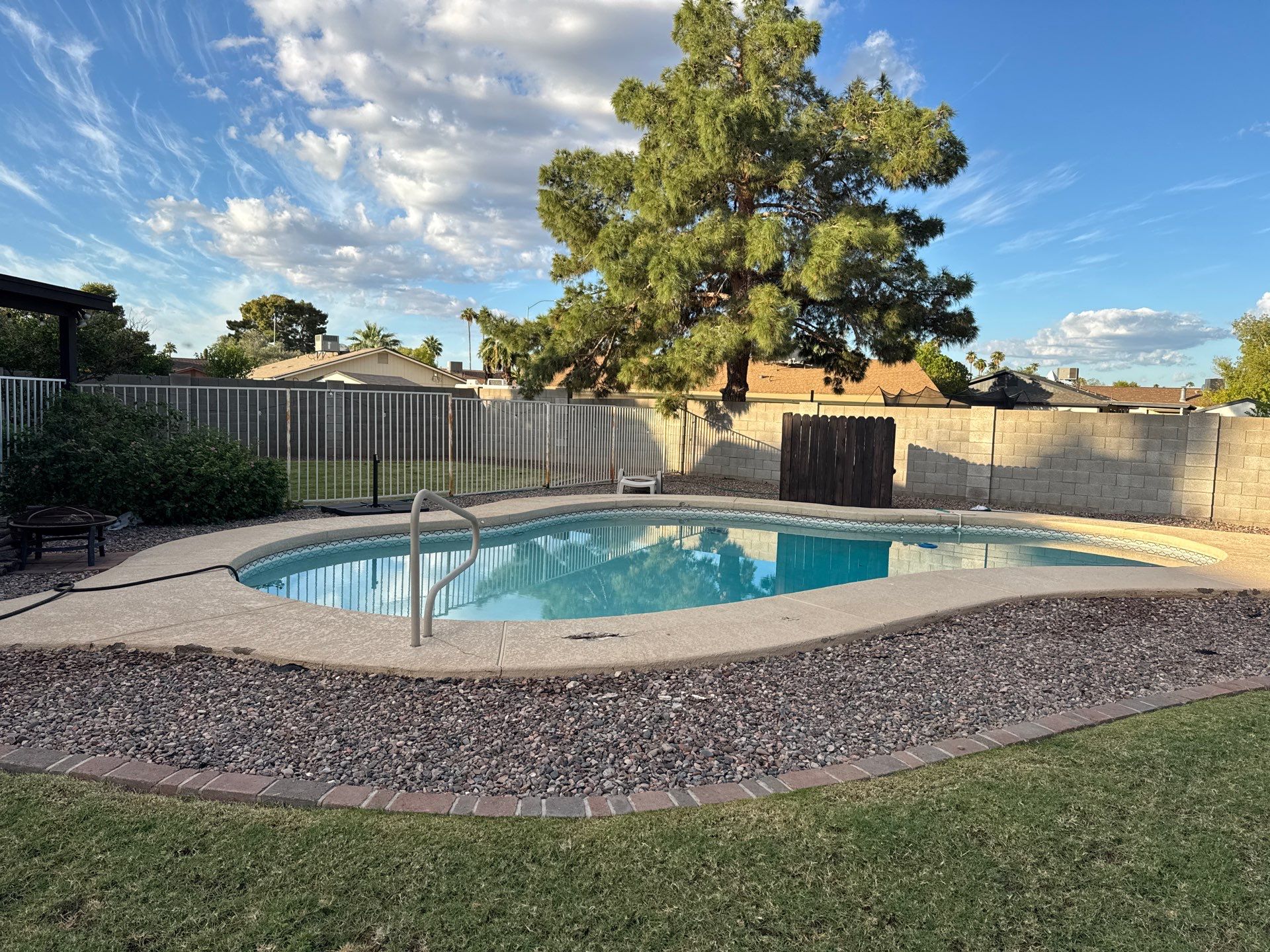
All around the pool, you want low growing, desert adapted shrubs with good color that are mostly maintenance free. San Marcos hibiscus is the first one that comes to mind. Here are more that fit, all low litter and happy in reflected heat off the deck:
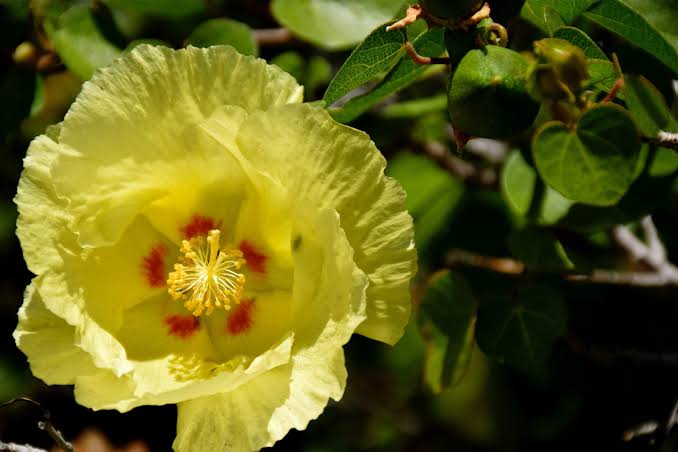
San Marcos Hibiscus
Yellow flowers with a red center most of the warm season, 3 to 5 feet. The tropical hibiscus look built for full sun.
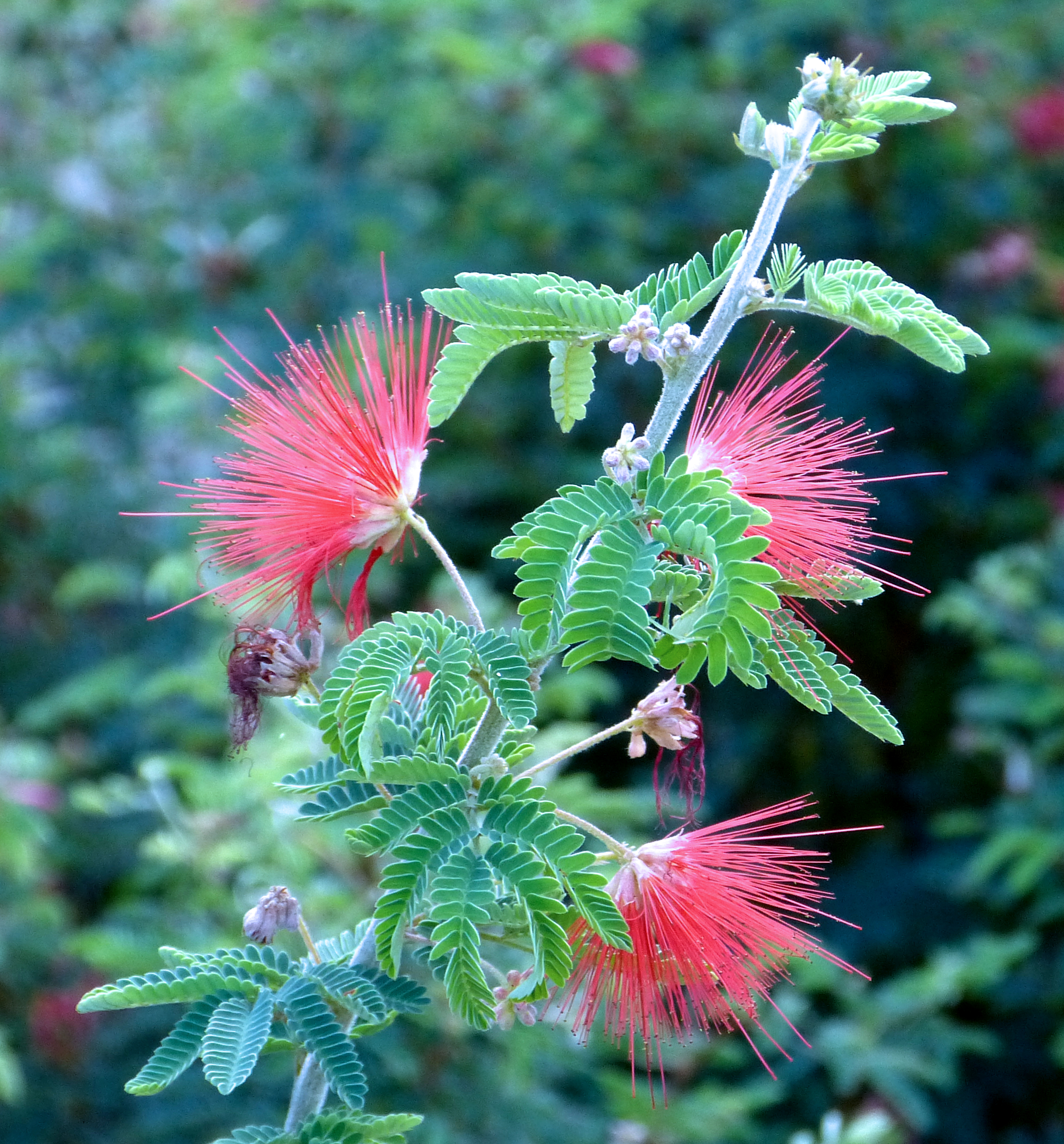
Baja Fairy Duster
Red puffball flowers most of the year, 3 to 5 feet. Hummingbirds visit daily. Leave it natural.
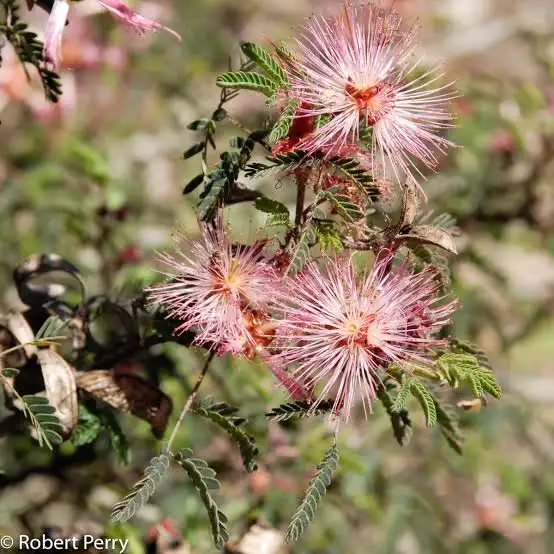
Pink Fairy Duster
Native, soft pink flowers in late winter and spring, 2 to 3 feet.
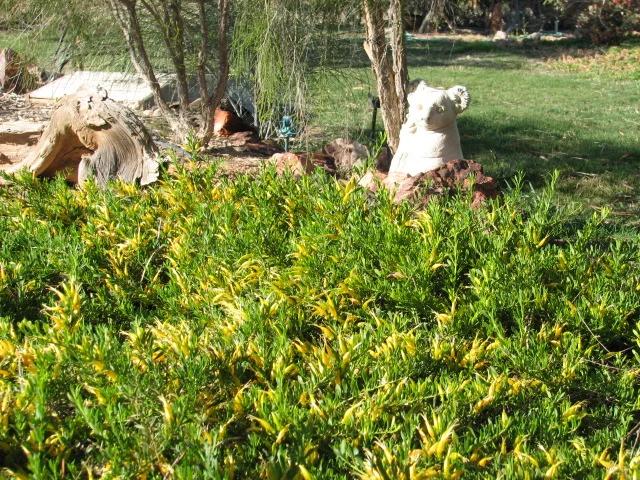
Emu Bush (Outback Sunrise)
Low and spreading, 2 to 3 feet, orange flowers late winter into spring.
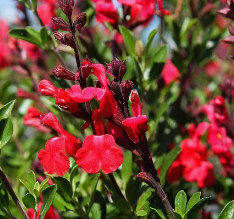
Autumn Sage
Red, pink or white flowers spring and fall, 2 to 3 feet.
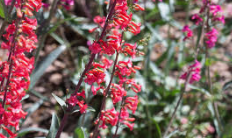
Penstemon
Tall red or pink flower spikes in spring. Great pop of color.
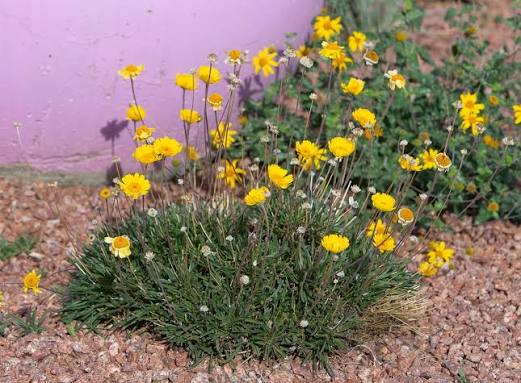
Angelita Daisy
Tidy mound of yellow daisies almost year-round, about a foot tall.
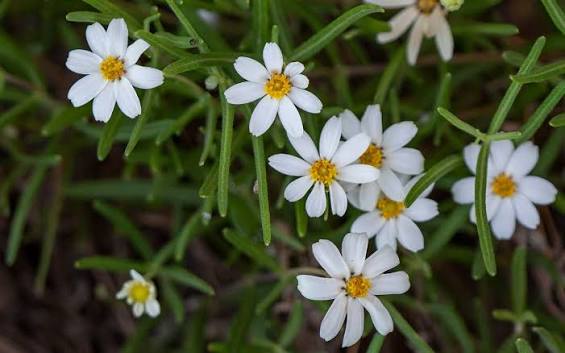
Blackfoot Daisy
Low mound of white daisies, blooms almost nonstop. Great right along the deck.
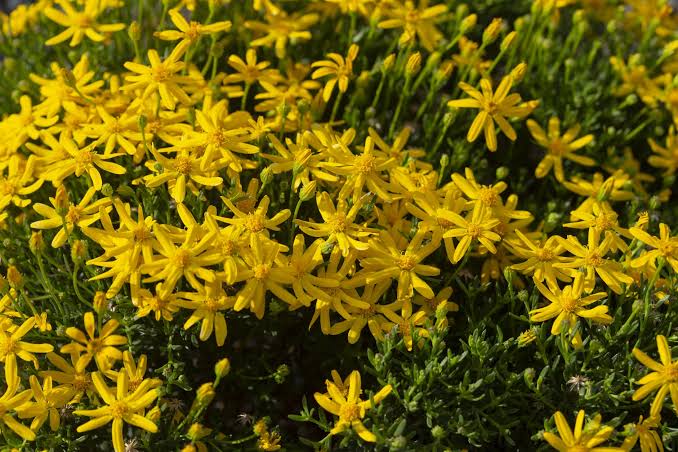
Damianita
Low, fragrant, golden flowers spring and fall.
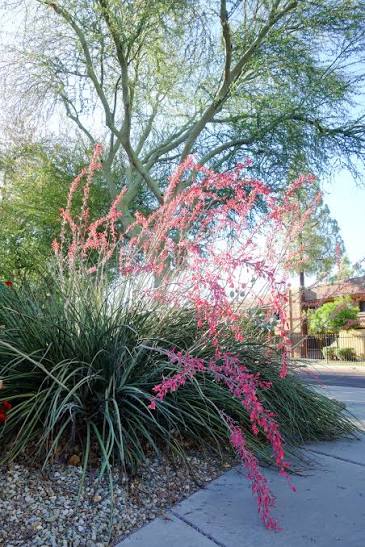
Red Yucca
Coral-red flower stalks spring through fall. Zero litter and almost no care.
You can't fit all of these. Pick your favorites and repeat them around the pool.
Lining the Back Walls
Back yard walls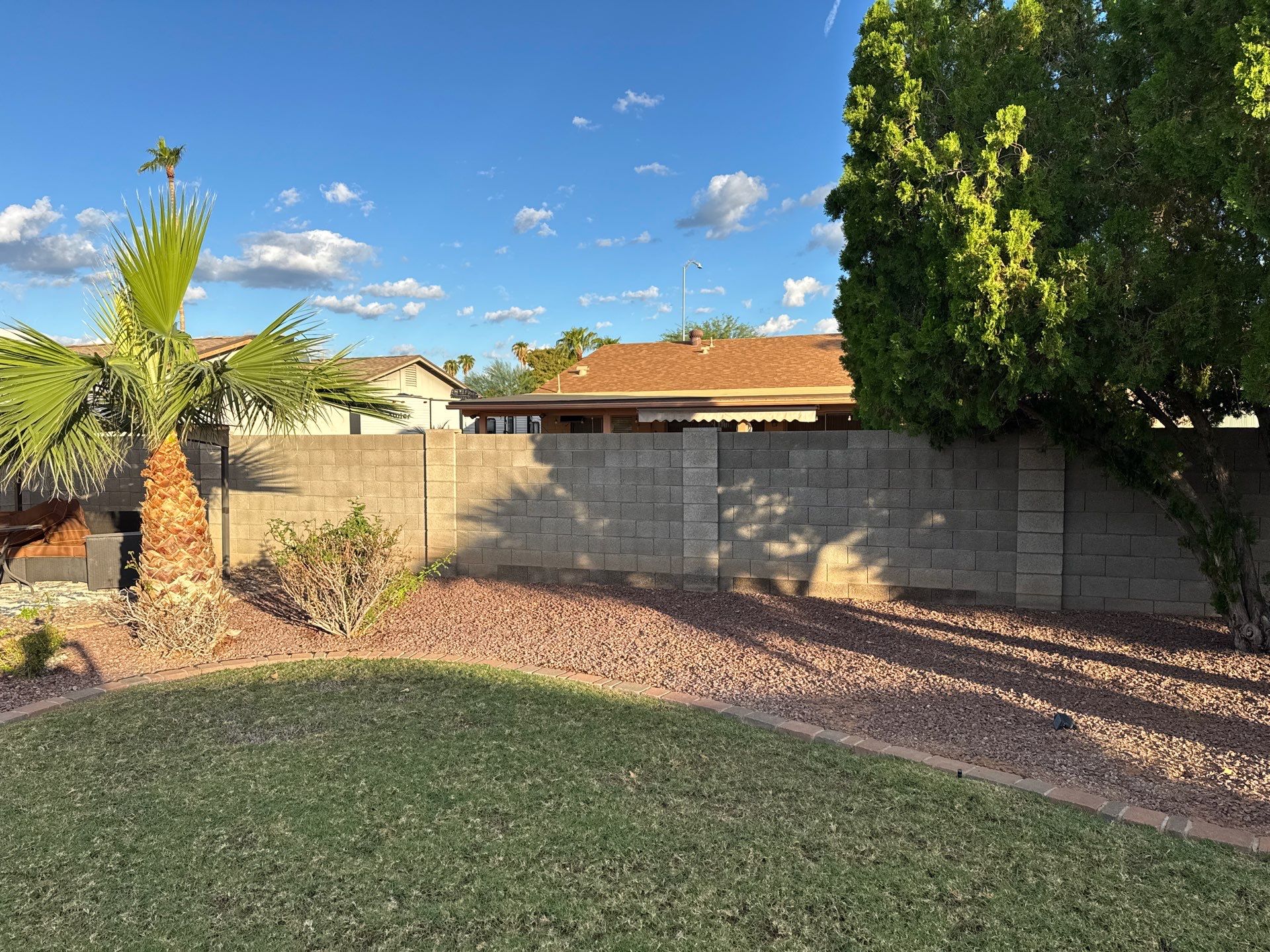
Lining all the walls back here will cool down the whole yard and give you privacy. I think orange jubilee and yellow bells are what you'll like best, and they look great alternated along the same wall. Here are all the options:

Orange Jubilee
Big orange trumpet flowers spring through fall, covered in hummingbirds. Fast to 8 to 10 feet. Plant 5 to 6 feet apart.
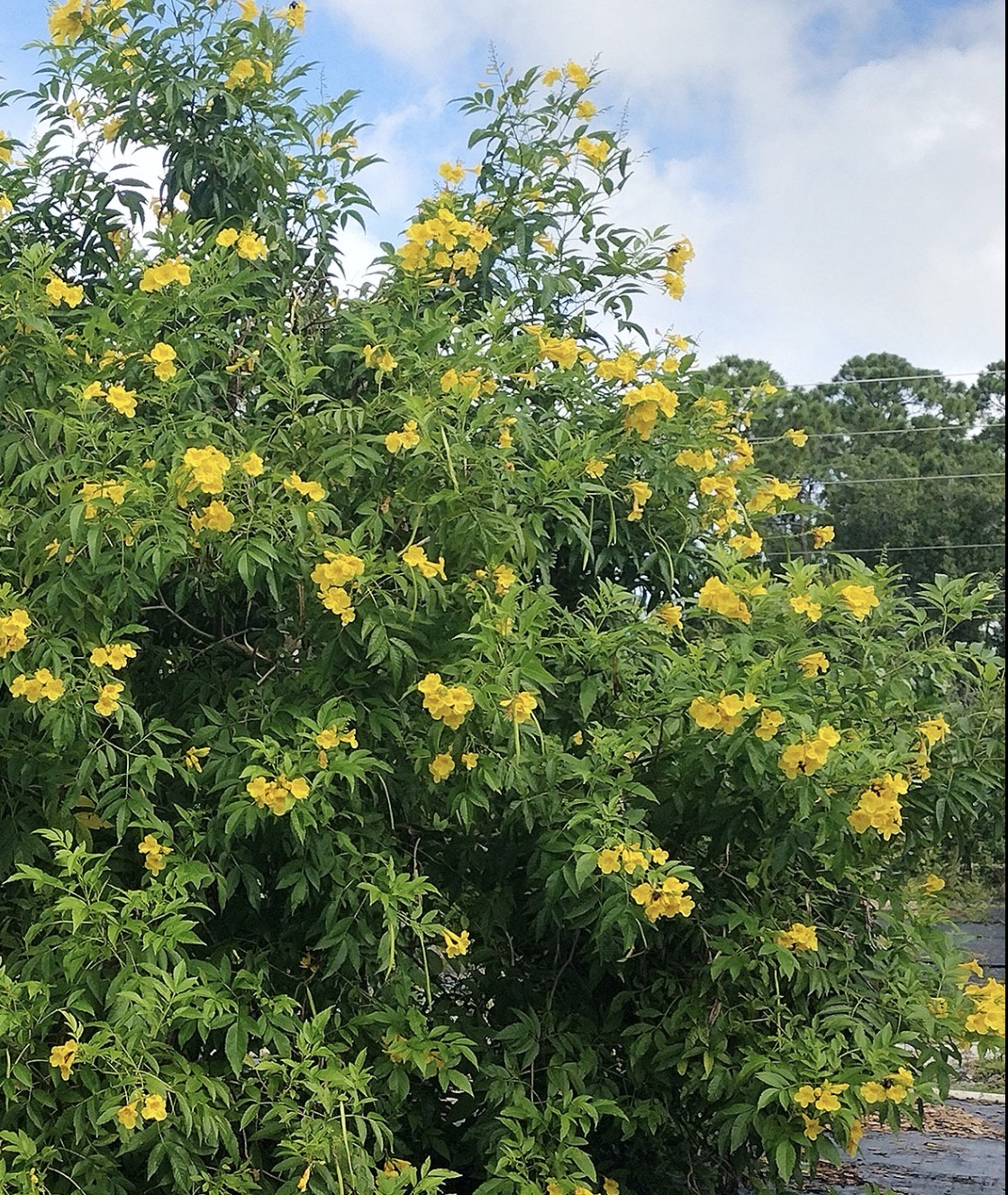
Yellow Bells
Same look in bright yellow. Alternate with orange jubilee for months of color. Plant 5 to 6 feet apart.
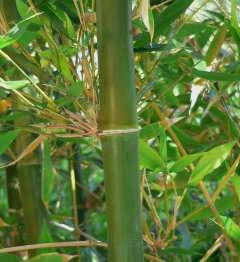
Bamboo (Clumping Oldhamii)
Oldhamii is a clumping, non-running bamboo, so it stays where you plant it. Fast, tall, lush green screen up to 30 feet. Wants regular water. Greenlife Nursery carries it.

Hopseed
Native, evergreen, dense green wall to 10 to 12 feet. Very little shaping needed. Plant 5 to 6 feet apart.
Arizona Rosewood
Native, evergreen and very dense, 10 to 15 feet. Plant 6 to 8 feet apart.
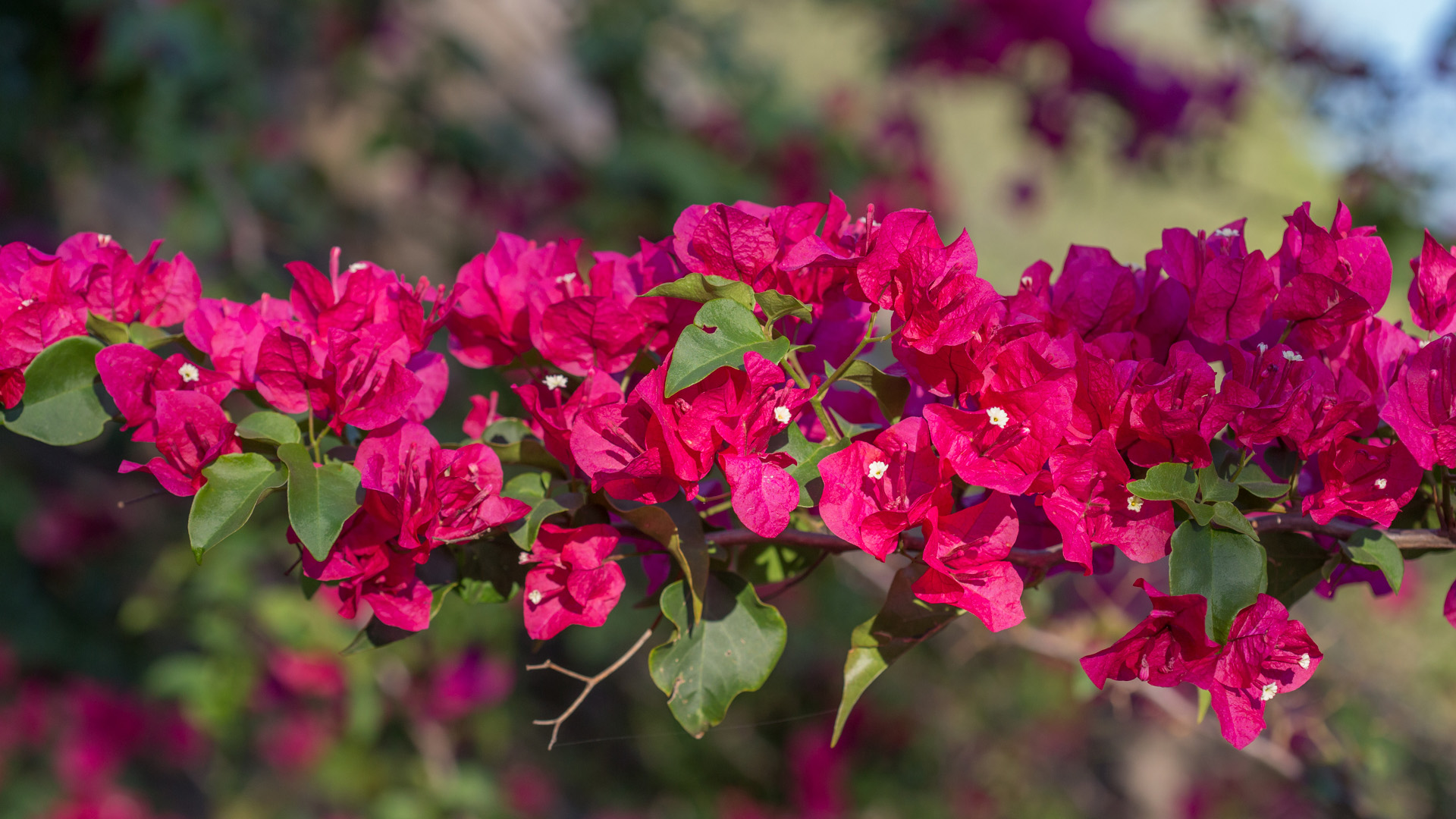
Bougainvillea
Huge color if you want it. Just know it has thorns and needs to be trimmed back regularly to keep it off the yard.
Spacing tip: keep hedges a couple of feet out from the wall and put each plant on 2 to 3 emitters set about a foot off the root ball.
Raised Garden Beds
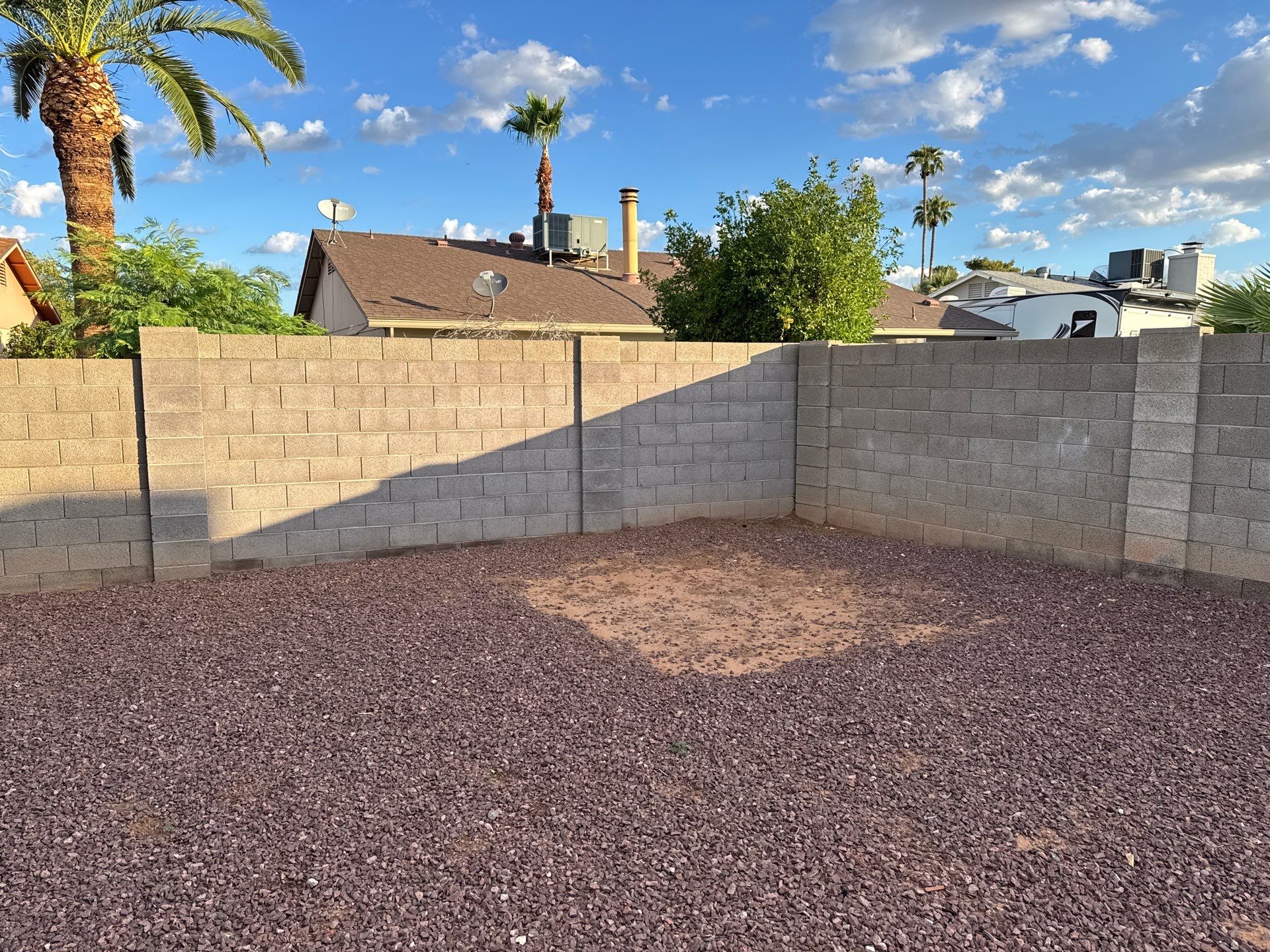
Two good spots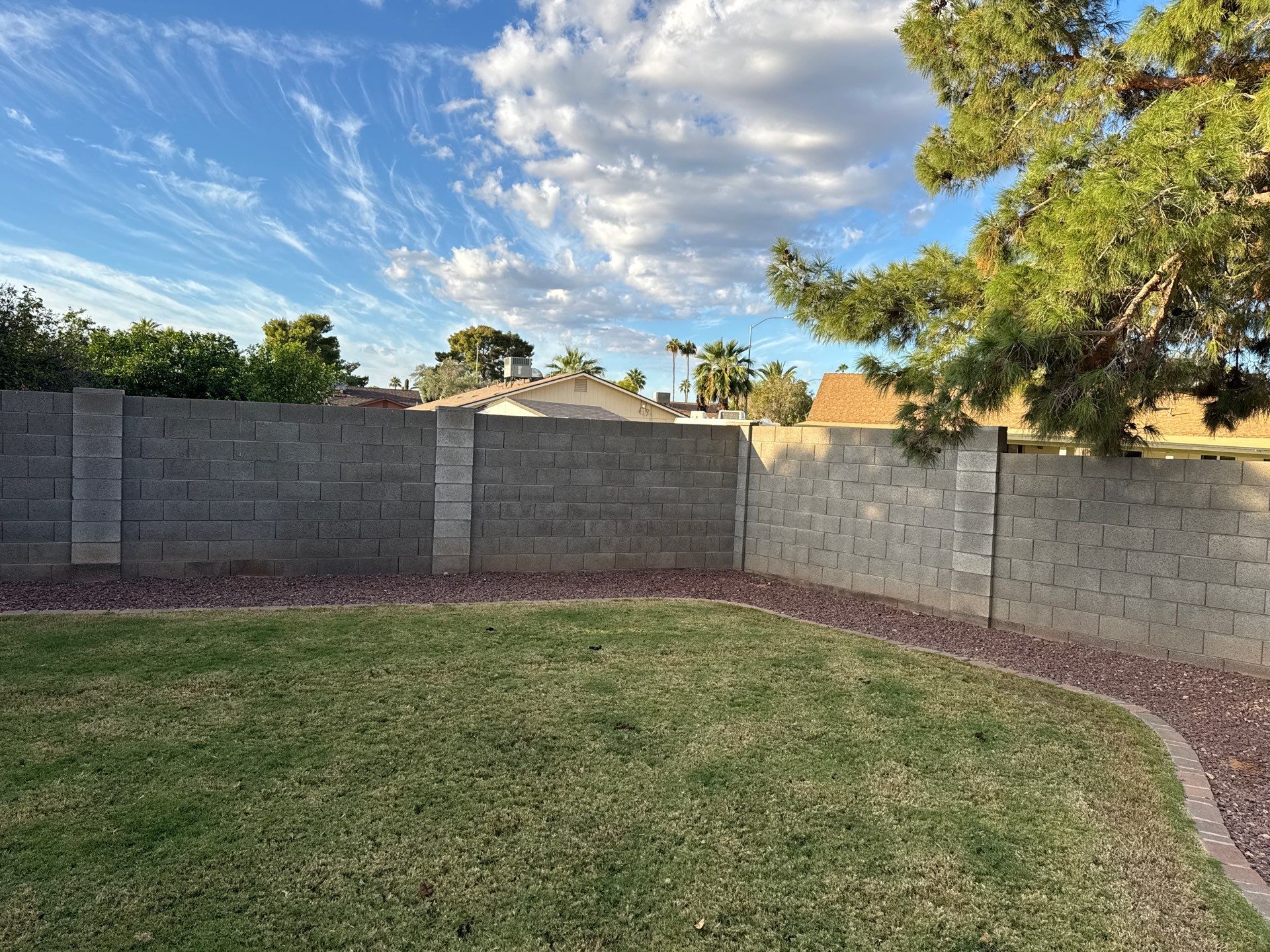
Both of these spots are great for raised garden beds, so you have options when you're ready to start.
- Beds: Olle Gardens makes great raised garden beds. Metal, long lasting, and easy to put together.
- Soil: fill them with raised bed mix from Arizona Worm Farm. They also have compost, worm castings, and worms, and it's a fun place to visit.
- What to plant and when: use my Maricopa County Planting Guide. It walks through what to plant each month here. Fall is our biggest growing season, so now is a great time to start.
- Water: put the beds on their own drip line and valve, since vegetables want water more often than the rest of the yard.
- Each season: top the beds off with a few inches of compost and a few handfuls of worm castings before planting.
- Sun: most vegetables want at least 6 hours of sun. In summer, a 30 to 40 percent shade cloth over the beds makes a big difference.
Bermuda Grass Yard Care Guide
Lawn, no winter grass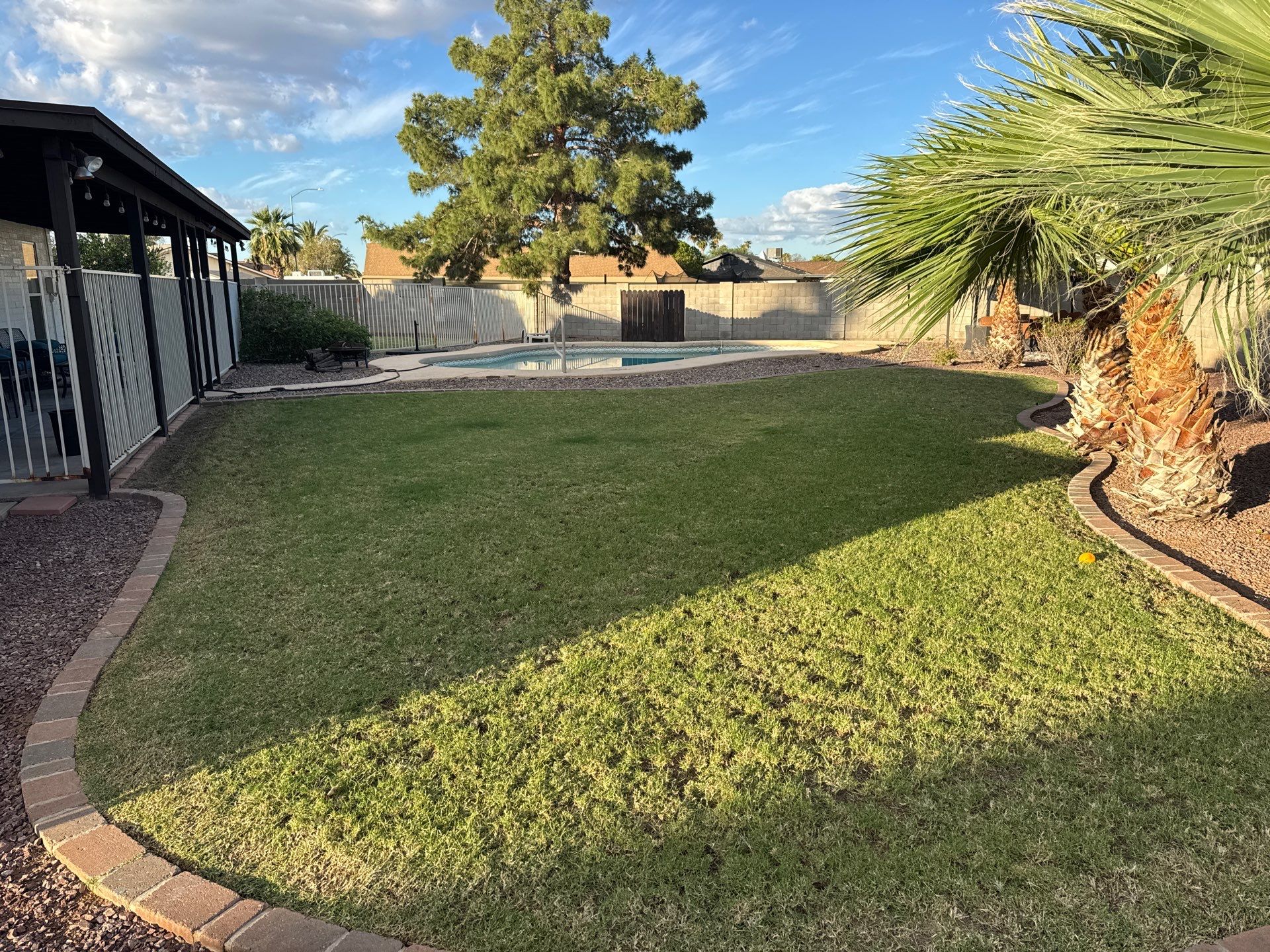
Since you're not overseeding with winter grass, your Bermuda will go dormant and turn tan for the winter. That's normal. Here's how to care for it all year:
| Season | Water | Mow | Feed |
|---|---|---|---|
| Fall October to mid November | Cut back to 2 times a week as nights cool, then once a week as it starts to go tan | Weekly until growth slows, raise the height a little the last few mows | Last organic feeding in October |
| Winter (dormant) Mid November to March | Once every 3 to 4 weeks, a deep soak, just to keep the roots alive | None needed | None |
| Spring green-up Late March to April | Start back at once a week when nights stay above about 60 degrees, building to 2 times a week | Scalp it once low (about 1/2 inch) and rake out the dead thatch to let sun reach the soil, then mow weekly | Start monthly organic feeding once it's actively greening, plus a thin layer of compost |
| Summer May to September | 3 times a week, deep. Early morning. | Weekly at 1 to 1.5 inches | Monthly organic feeding |
- How much water: enough to soak 6 inches deep each time. Put a few tuna cans out when the sprinklers run. About 1/2 inch in the cans per watering in summer is a good target.
- Feeding: skip synthetic lawn fertilizers. A thin layer of compost in spring and monthly organic feeding build the soil so the grass stays green and thick. The Catalyst product in the feeding section works great on grass and really greens it up.
- Mowing: never take off more than a third of the blade at once, and keep the blades sharp.
- Aerate once a year in late spring if the soil feels hard. It lets water and air get down to the roots.
Mexican Fan Palms
Next to the citrus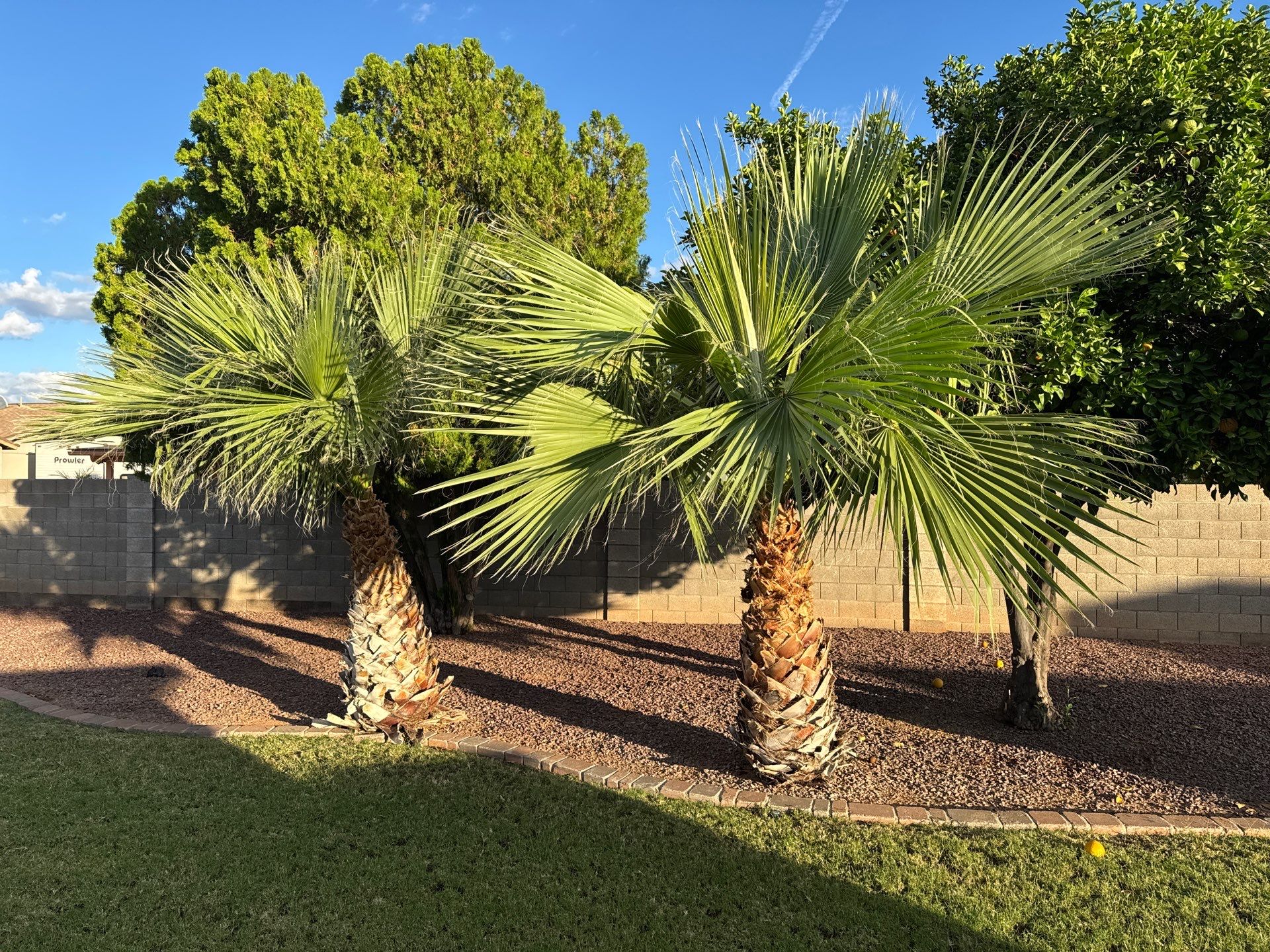
I'd take out these Mexican fan palms before they get too big. They'll grow to 60 feet or more, and as they get bigger they'll block the sun from the citrus tree just to the east, start lifting the bricks here, and interfere with the irrigation in the grass right next to them. They're much easier and cheaper to remove now while they're small. We don't do removals, so this would be you or a landscaper.
Grass by the Roofline
Shady strip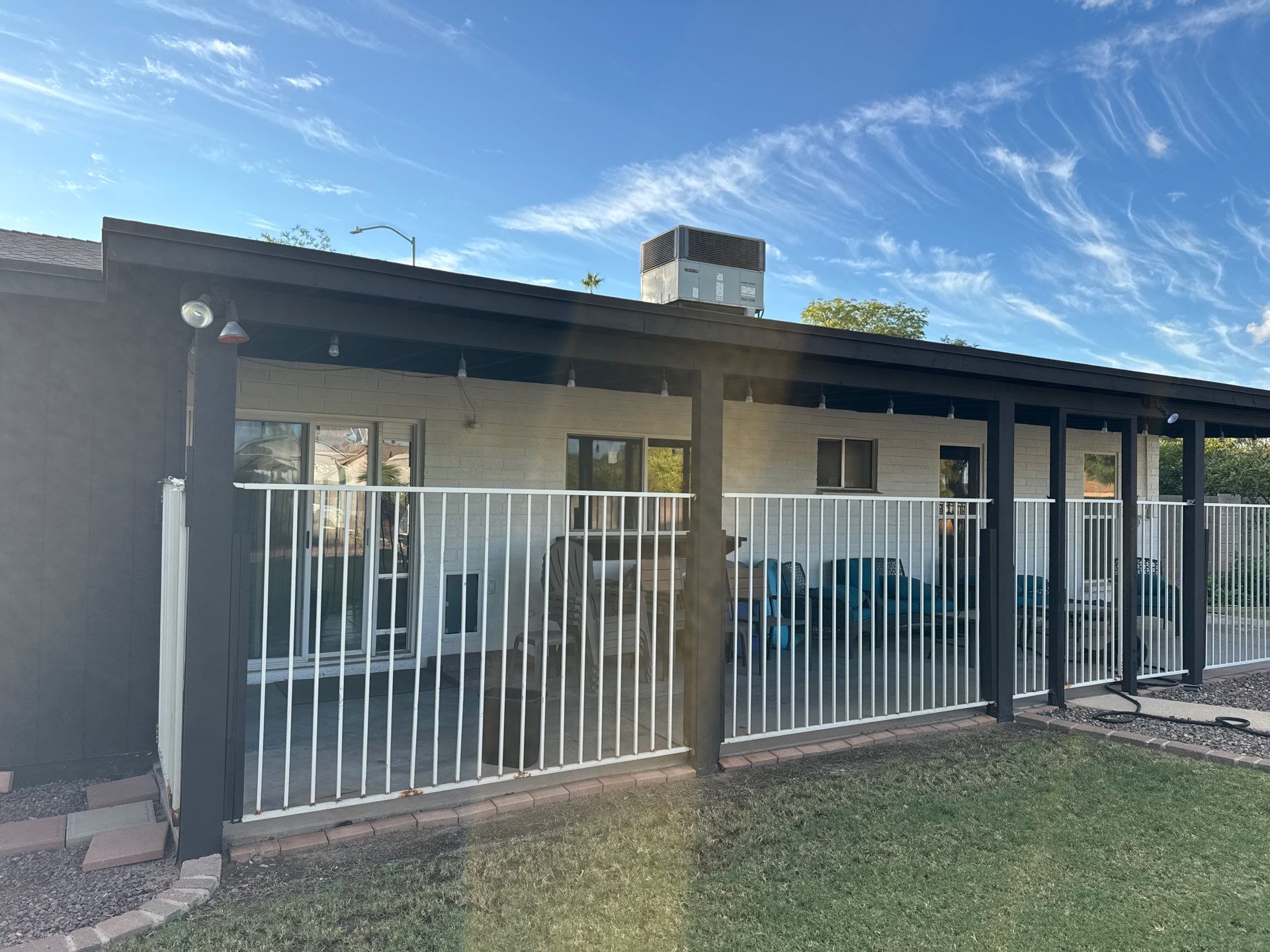
The Bermuda isn't growing well here for two reasons: rain pours off the roof and pounds this spot, and it's shady. You can't fix the shade, but you can fix the water. Add rain gutters along this roofline and put a 55 gallon rain barrel at each end. That catches all that water instead of washing out the grass, and gives you free rainwater for your fruit trees and garden beds.
- Get barrels with a spigot at the bottom and a screened lid to keep mosquitoes out.
- Set them up on blocks so you can fit a watering can under the spigot.
- Rainwater is great for plants. It has none of the salts in our tap water.
Fruit Tree Care Through the Year
All fruit trees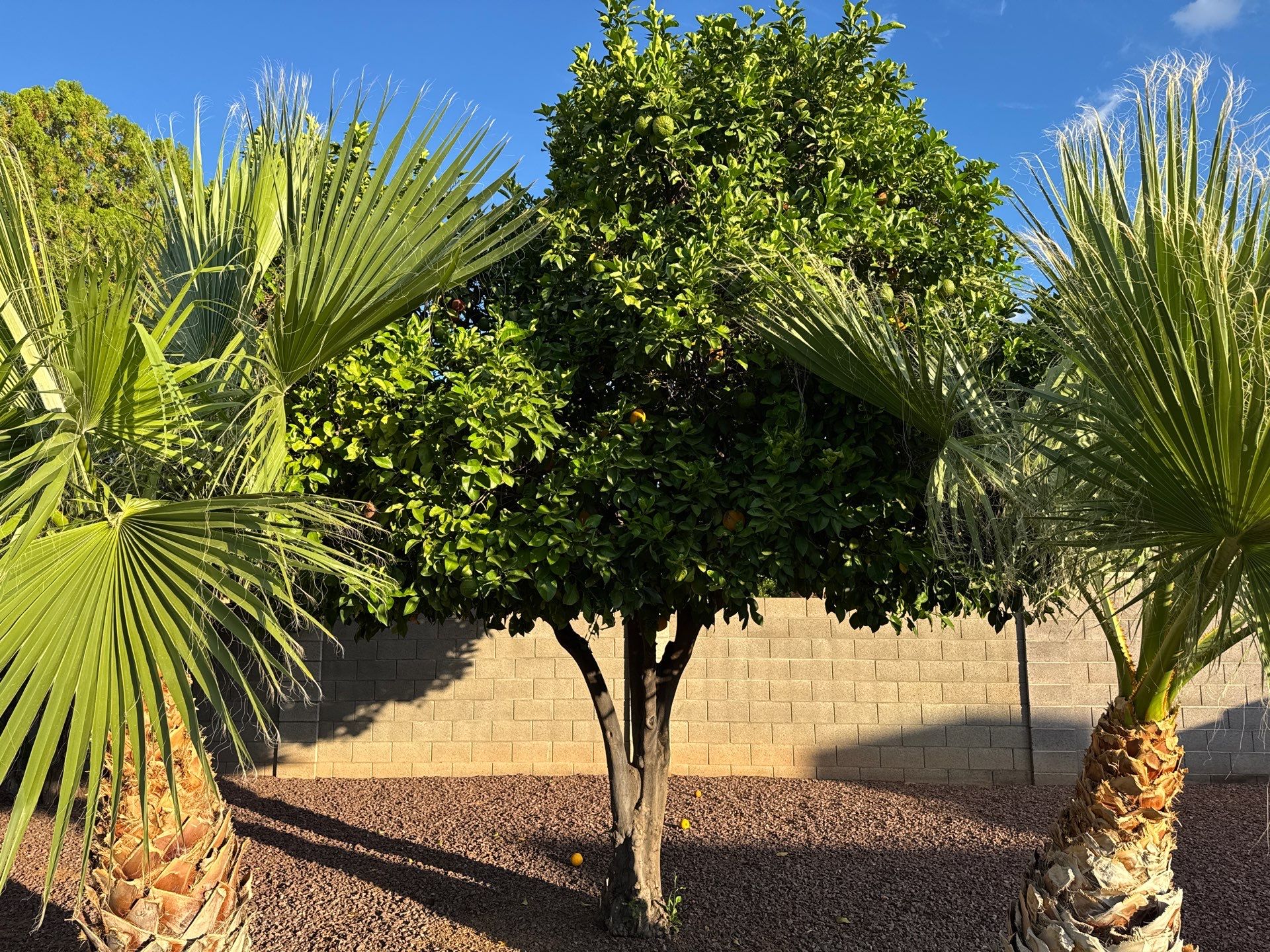
Here's general care for all your fruit trees, season by season.
| Season | Water | Care |
|---|---|---|
| Winter December to February | Every 2 to 3 weeks, deep | Prune figs and other deciduous fruit trees while dormant (January is ideal). Cover citrus on frost nights. Harvest citrus as it ripens. |
| Spring March to May | Once a week, building to 2 times a week by May | Spread compost out to the drip line. Light shaping on citrus after bloom. Thin fruit on any tree setting more than it can carry. |
| Summer June to September | 2 times a week, deep (a long soak that reaches 2 to 3 feet) | No pruning. Leaves are shade for the bark. Keep mulch topped up. Harvest figs. |
| Fall October to November | Once a week | Great time to plant new trees. Add compost and worm castings. |
Pruning
- Citrus: very little pruning. Remove dead wood, crossing branches, and suckers coming from below the graft. Let the canopy grow all the way to the ground. That "skirt" shades the trunk and is where a lot of the fruit sets.
- Figs: prune in winter while dormant. You can cut back by up to a third to keep them a pickable size.
- Never prune heavily in summer. Exposed bark sunburns fast here. Paint any exposed trunk with white latex paint mixed half and half with water.
Feeding
Fruit trees are heavy feeders. Feed monthly with organic fertilizer, add compost out to the drip line a few times a year, and worm castings every quarter. The full steps are in the feeding section below.
Watering and root flares
Each tree should have a water well 3 to 5 feet across with emitters spread out toward the drip line, not at the trunk. Make sure the root flare (where the trunk widens into the roots) sits right at the soil line. If it's buried, pull back the rock and use a strong stream from the hose to blast the soil away.
This video shows why an exposed root flare matters, with real examples. If it doesn't load, watch it on YouTube here.
Mesquite Water Wells and Vinca
Front yard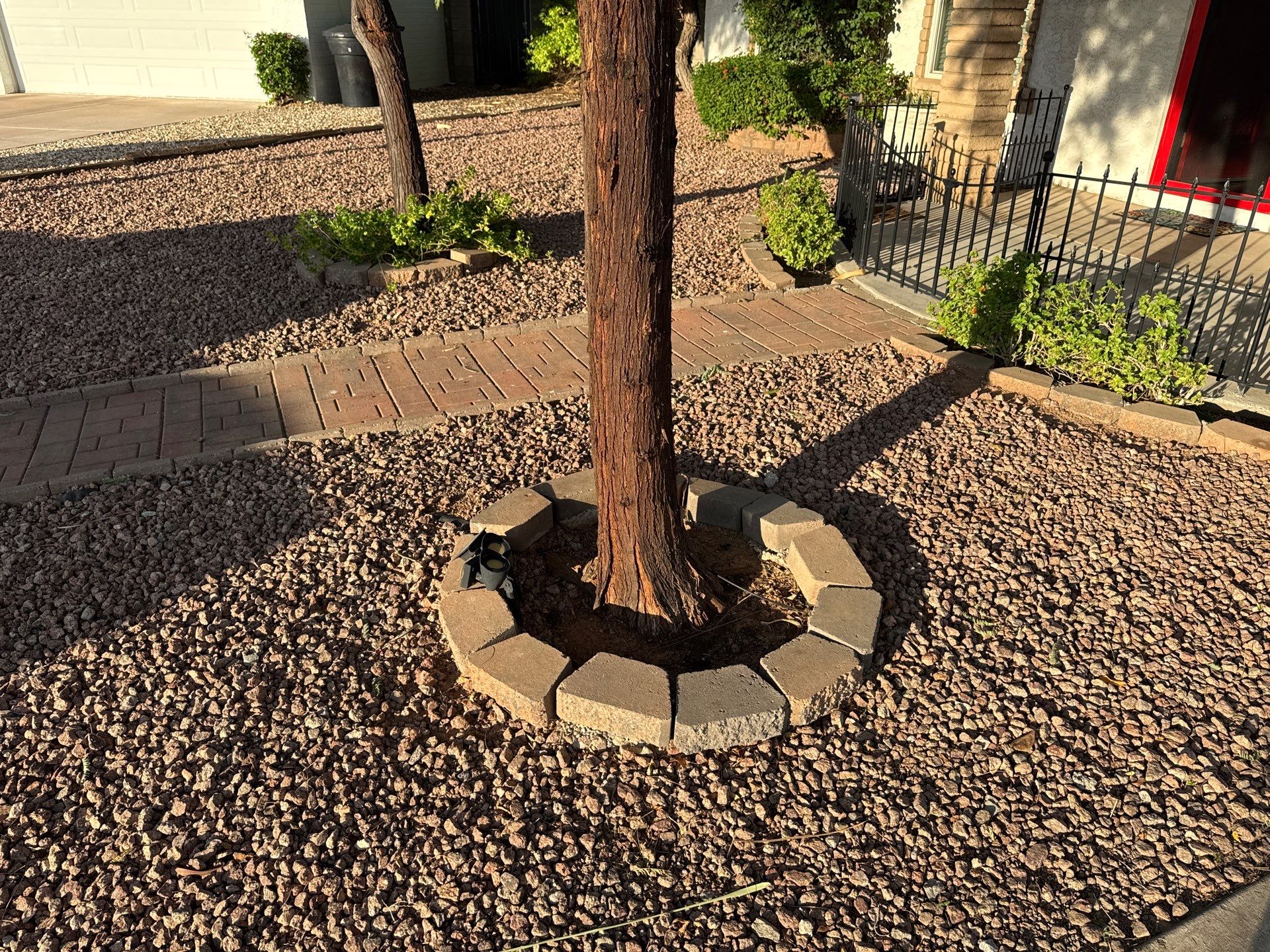
I'd move the water wells around the mesquite back another two or three feet. A wider well gives the roots room to breathe and keeps soil and rock from piling up and burying the base of the trunk. Pull the pavers out, widen the ring, and keep the root flare at the soil line.
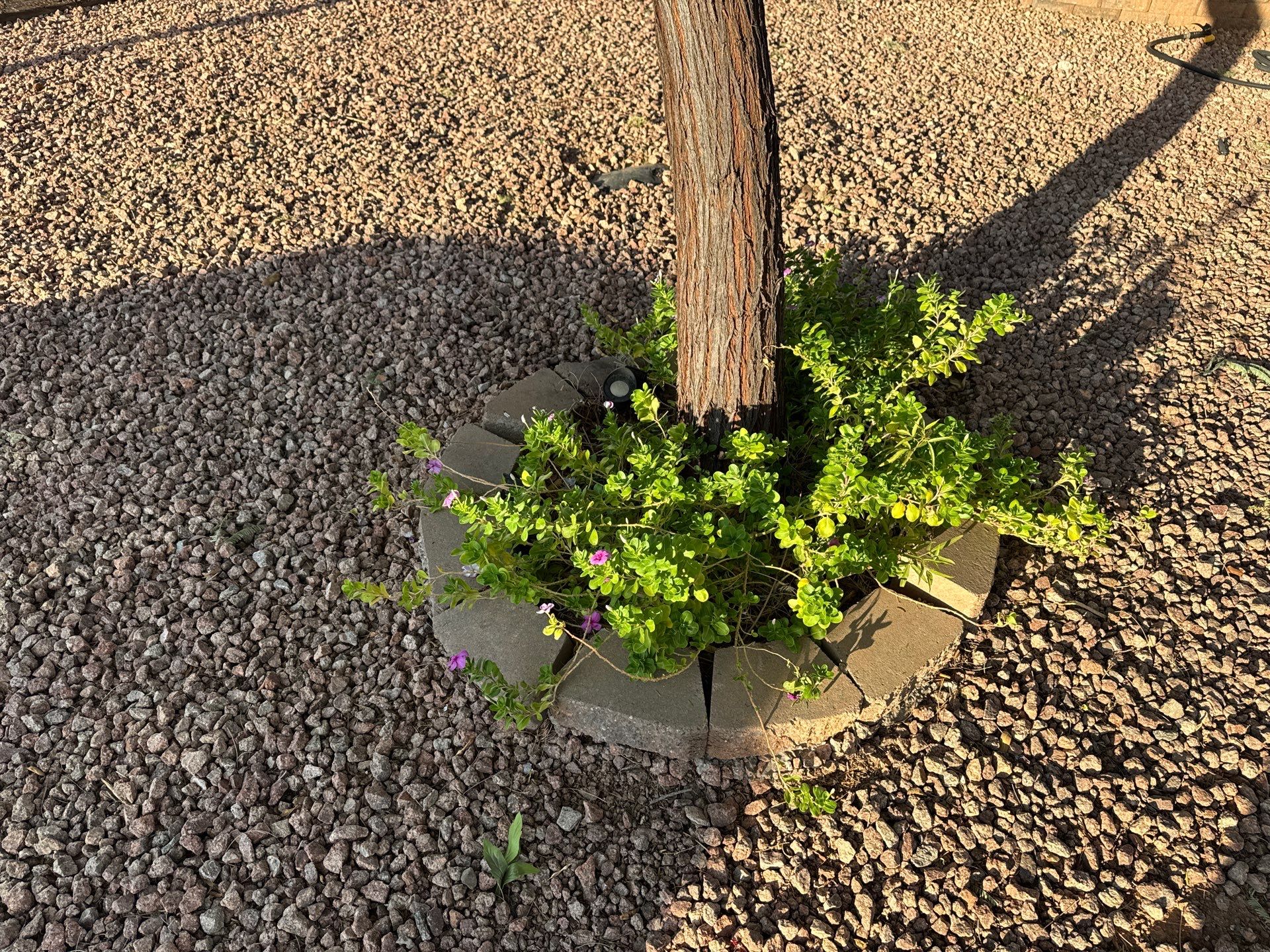
The flowers in the other well are vinca. They're mainly a summer flower but can last through the winter. You can propagate them to fill in the other mesquite well:
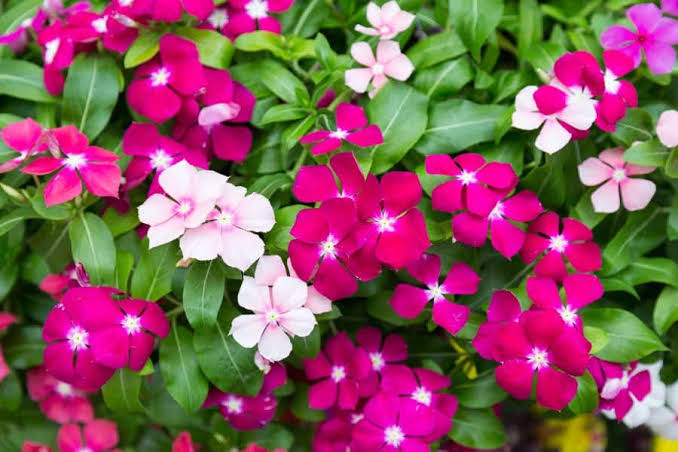
Vinca
Pink, white or red flowers, heaviest in summer. Loves heat. Rots if kept too wet, so let the soil dry between waterings.
- Take cuttings 3 to 4 inches long from healthy stem tips. Do it soon, while it's still warm. Vinca roots slowly once it gets cold.
- Strip the lower leaves so you have a couple of inches of bare stem.
- Root them in a cup of water or in small pots of moist potting mix, kept in bright shade. Roots form in about 2 to 3 weeks.
- Plant them out in the other well once they have roots, about 8 to 12 inches apart, and keep them a little away from the trunk.
Vinca also drops seed and will often come back on its own next spring.
Lantana, Bougainvillea and a Spot for Your Hibiscus
Front yard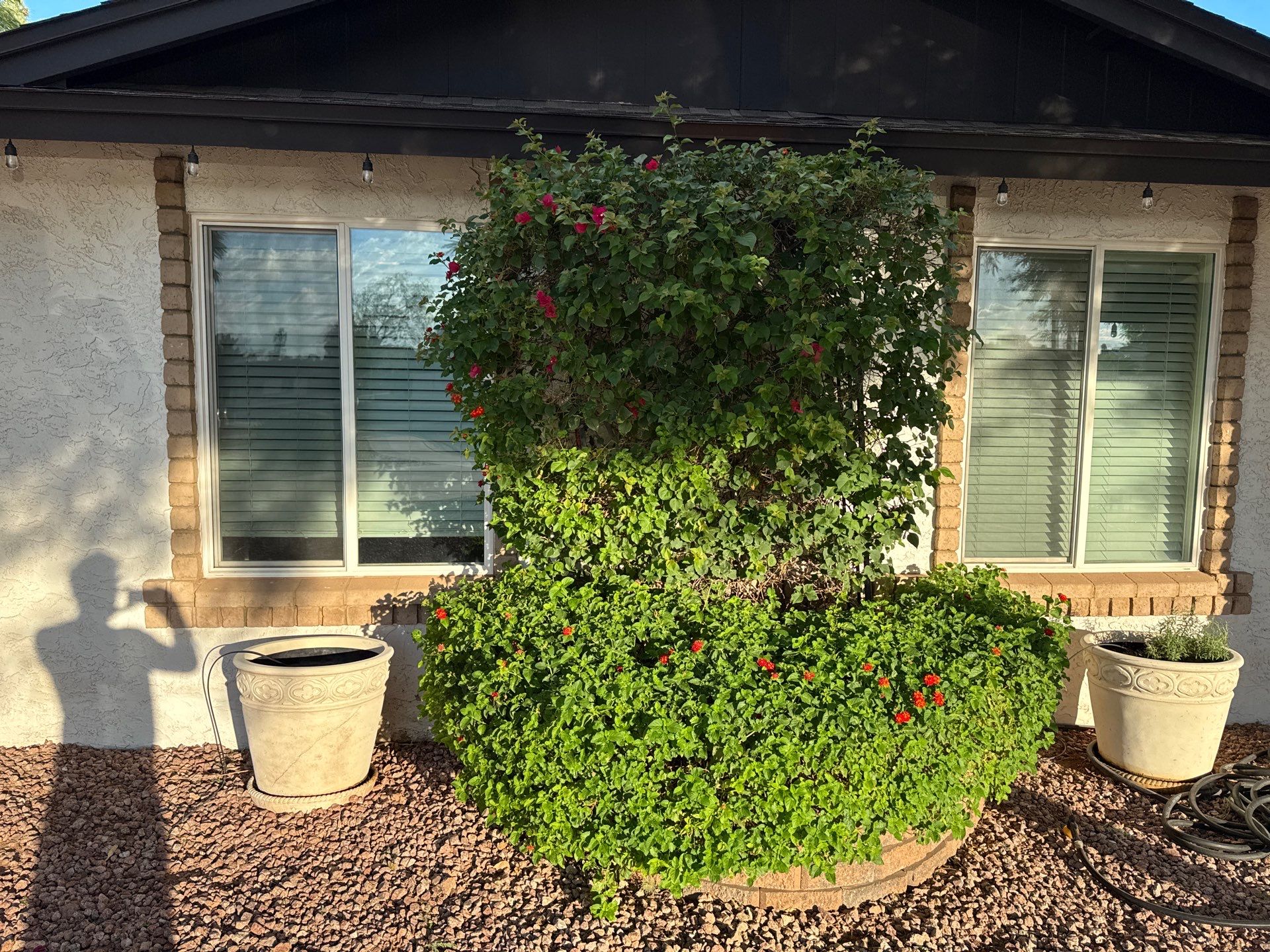
Just so you know what's here: the bottom plant is lantana and the top plant is bougainvillea. The empty pot to the left is a good place for the hibiscus you got from your realtor.
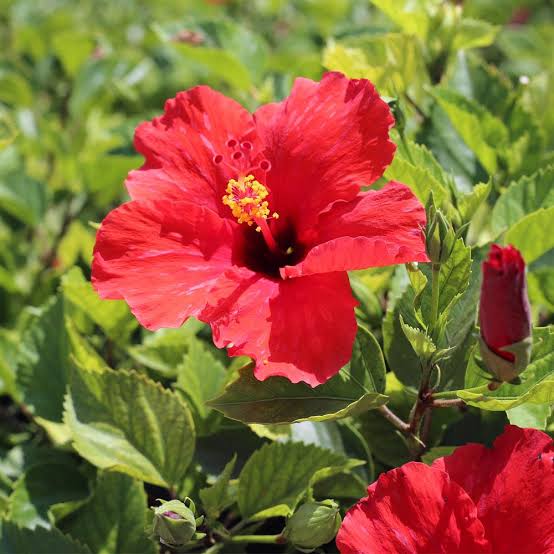
Red Hibiscus
Hibiscus does great in a pot. Use a good potting mix, make sure the pot drains, and water it often in summer (pots dry out fast). Morning sun and afternoon shade is ideal. Move it against the house or cover it on frost nights.
Feed it monthly with the organic fertilizer from the feeding section, and top the pot with a little compost a couple times a year.
Fern of the Desert
Front yard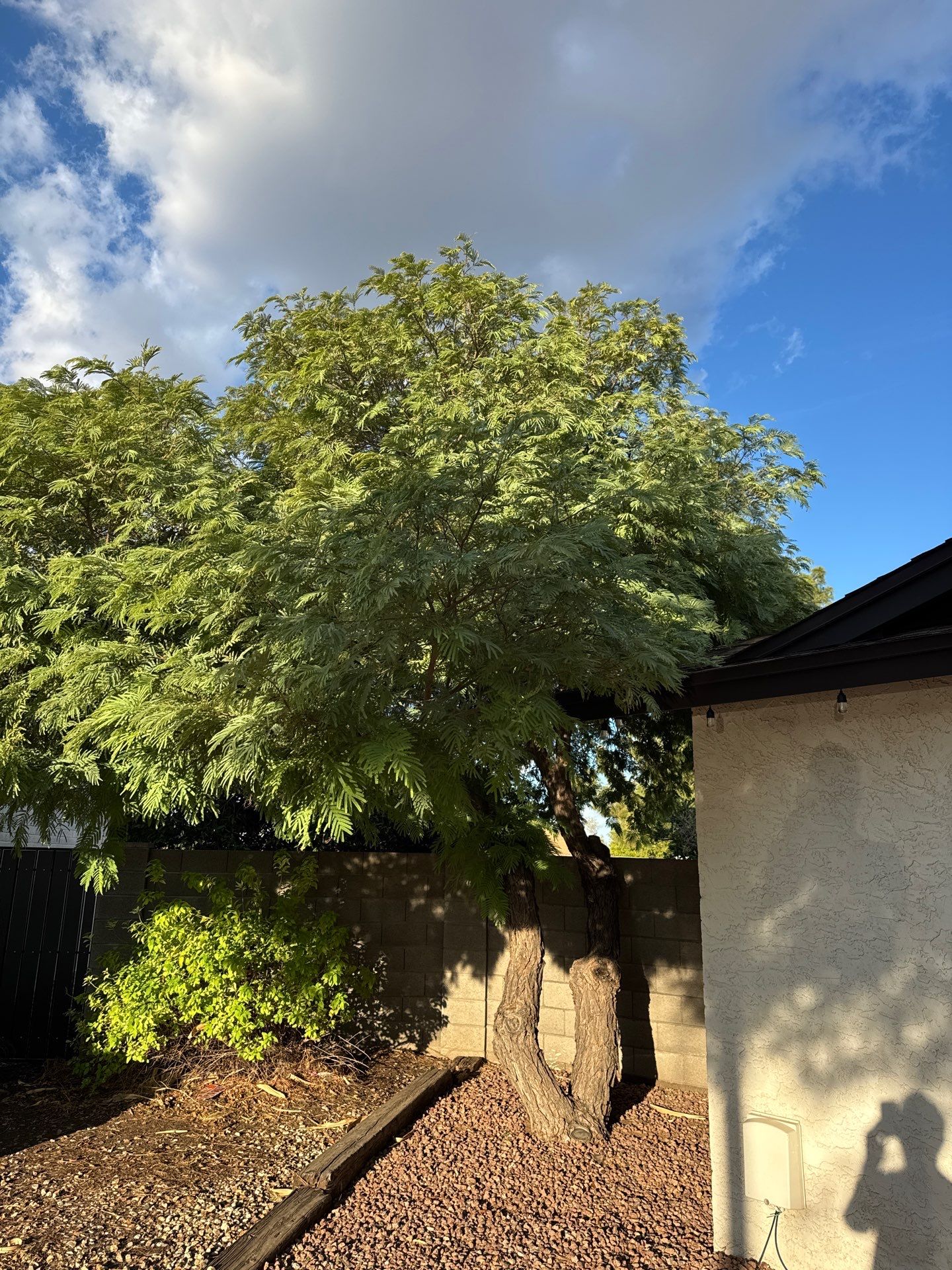
Just for your information, this is a lysiloma, also called fern of the desert. It's a great tree for our area.
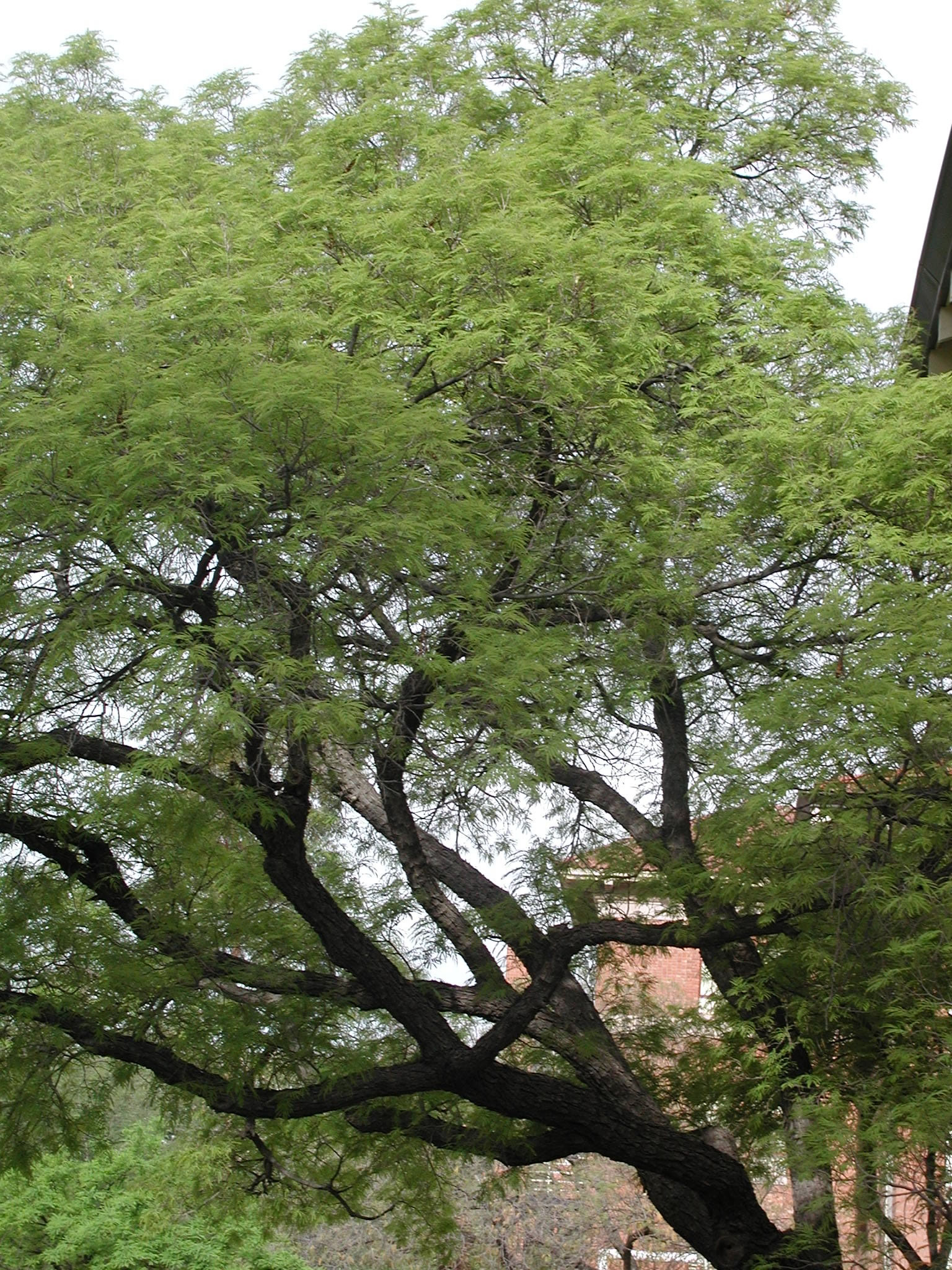
Fern of the Desert
Lysiloma watsonii. Fine, fern-like leaves give light, filtered shade, with fluffy cream flowers in spring. Grows 15 to 20 feet. It can drop leaves in a hard freeze and leafs out again in spring. Native to the Sonoran Desert region, so it takes less water than trees that aren't desert adapted.
Lantana Hedge
Front yard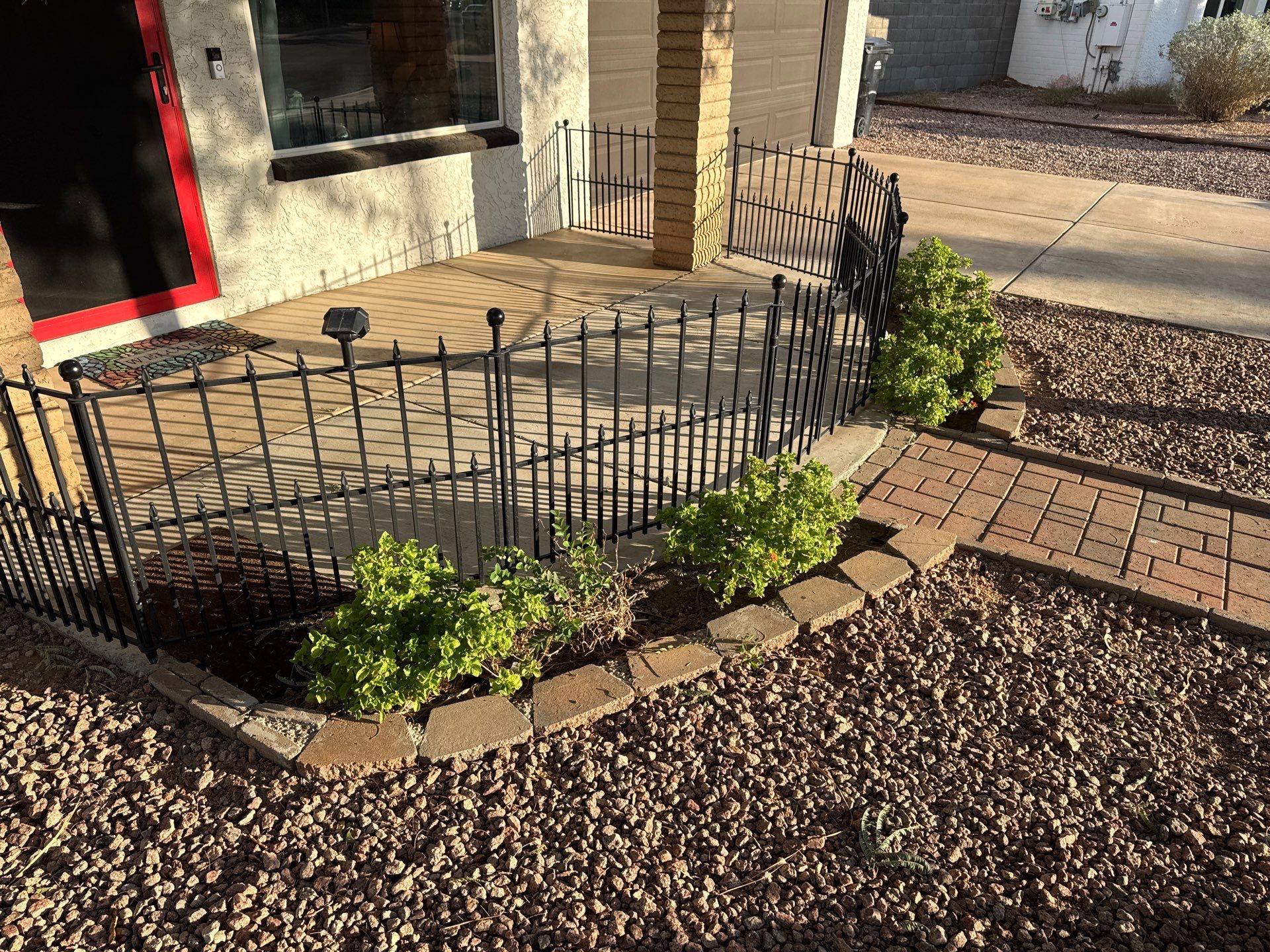
All of these are lantana. If you stop pruning them, they'll fill in the gaps and become a nice hedge. They can also grow taller if you want, up to about four feet. It's just a matter of preference and how you prune.
- To let it hedge up, stop shearing and just cut it back once a year in late winter after the frost risk, by about a third.
- If it freezes back in winter, leave the damage until spring. It protects the rest of the plant, and it'll come back fast.
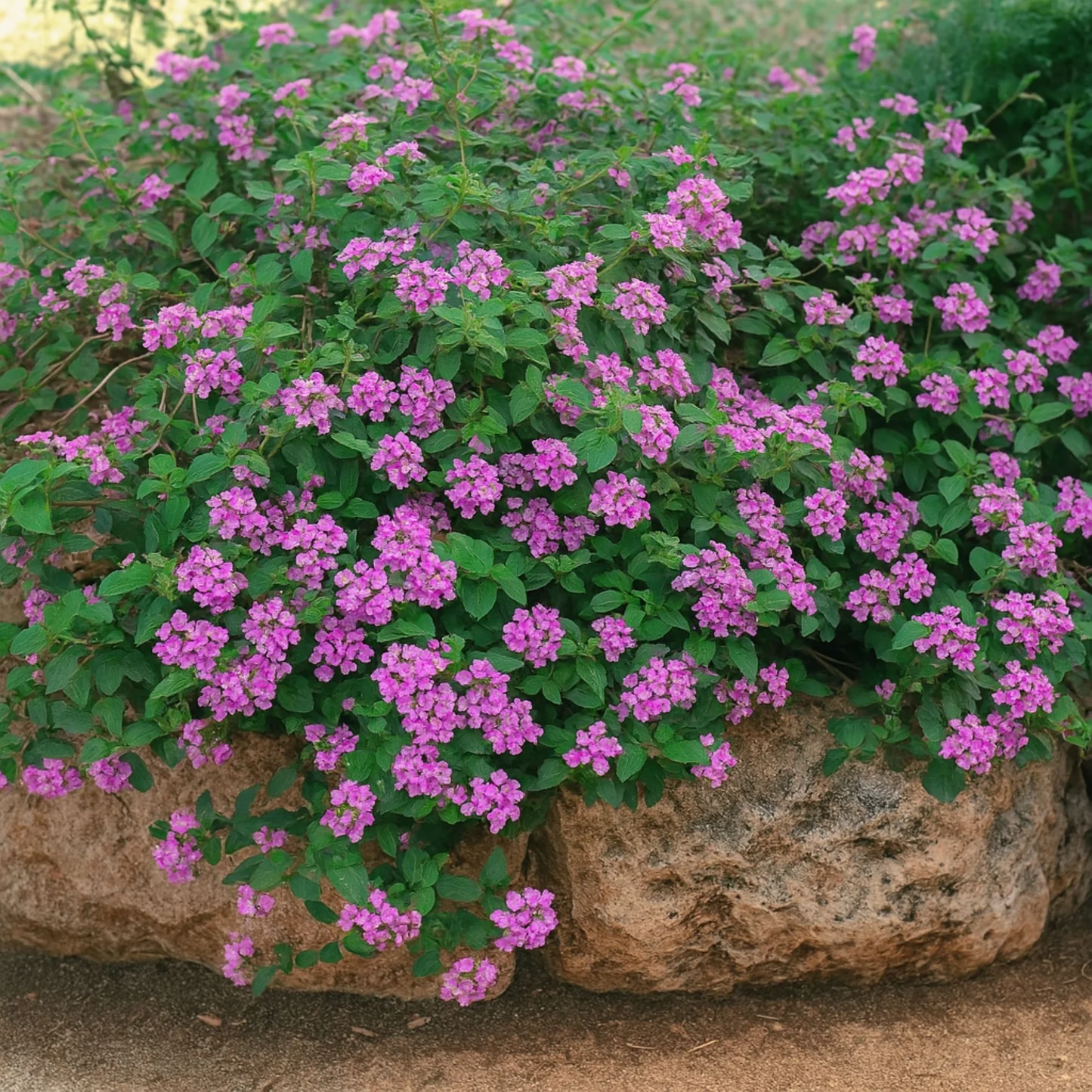
Lantana
Nonstop color through the warm season. Up to about 4 feet tall and wide if you let it grow. Butterflies love it.
Soil and Feeding
For the whole yardMost of what struggles in the Valley comes back to the soil. Our native soil is low in organic matter and soil life, and healthy soil biology is what actually feeds plants and holds water. Here's how to do it yourself:
- Compost. Spread a generous layer of compost around the drip line of every tree (the edge of the canopy) and closer in around shrubs. Do this a few times a year, then cover it with mulch. Arizona Worm Farm has great compost.
- Worm castings every quarter. A few handfuls around each plant, watered in. Castings are packed with soil life.
- Organic fertilizer monthly. Use a good organic fertilizer high in fulvic acid. The ones I use and recommend are from Catalyst: Jenner 8, Organic Nitro Jen, and their kelp fertilizer. Mix and apply monthly. This is great for the citrus, the figs, the shade trees, and the lawn.
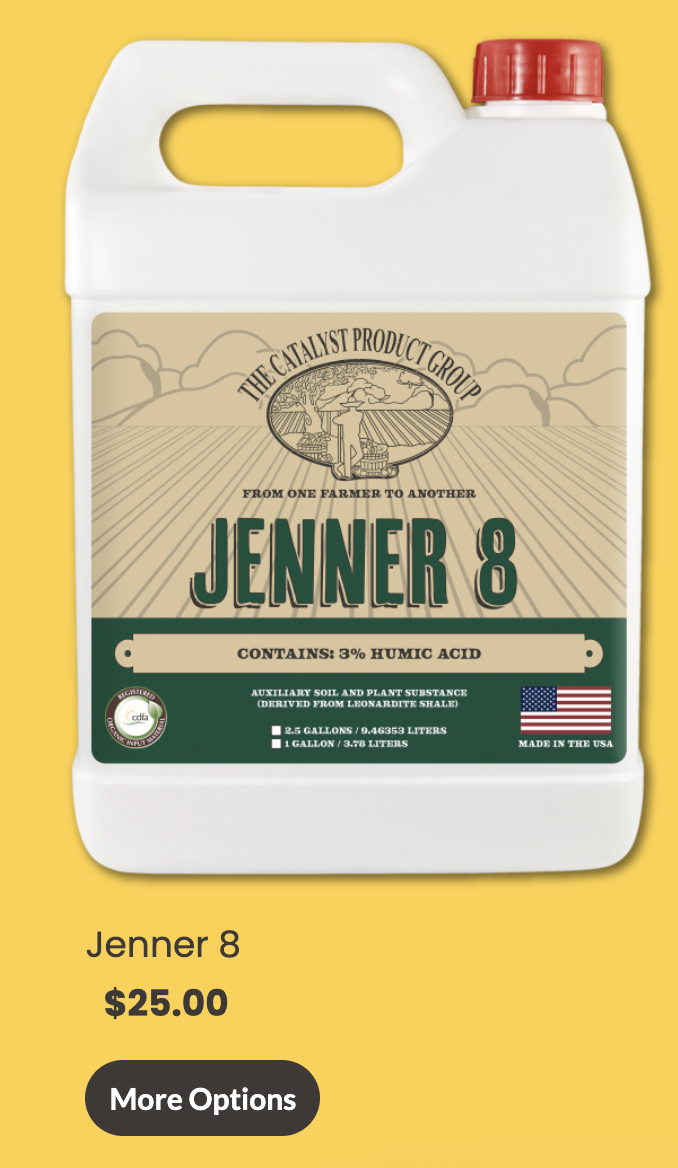
Jenner 8
Fulvic acid-rich organic fertilizer that feeds the soil biology and helps plants take up nutrients.
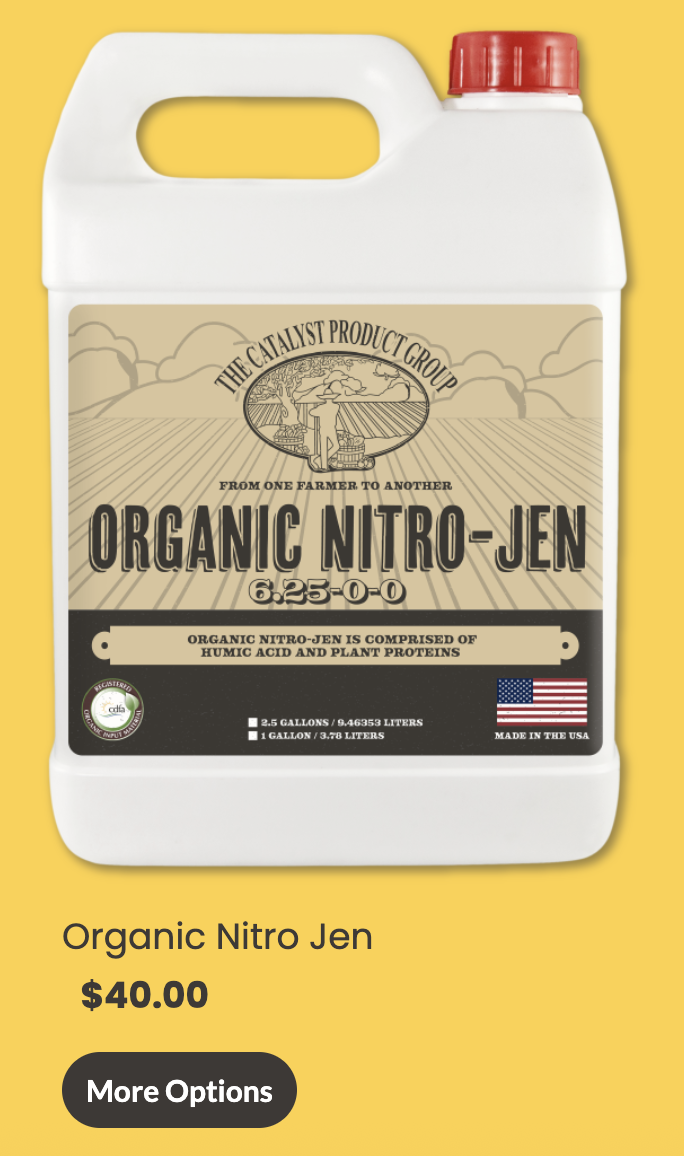
Organic Nitro Jen
Organic nitrogen to push healthy green growth. Great for citrus and fruit trees.
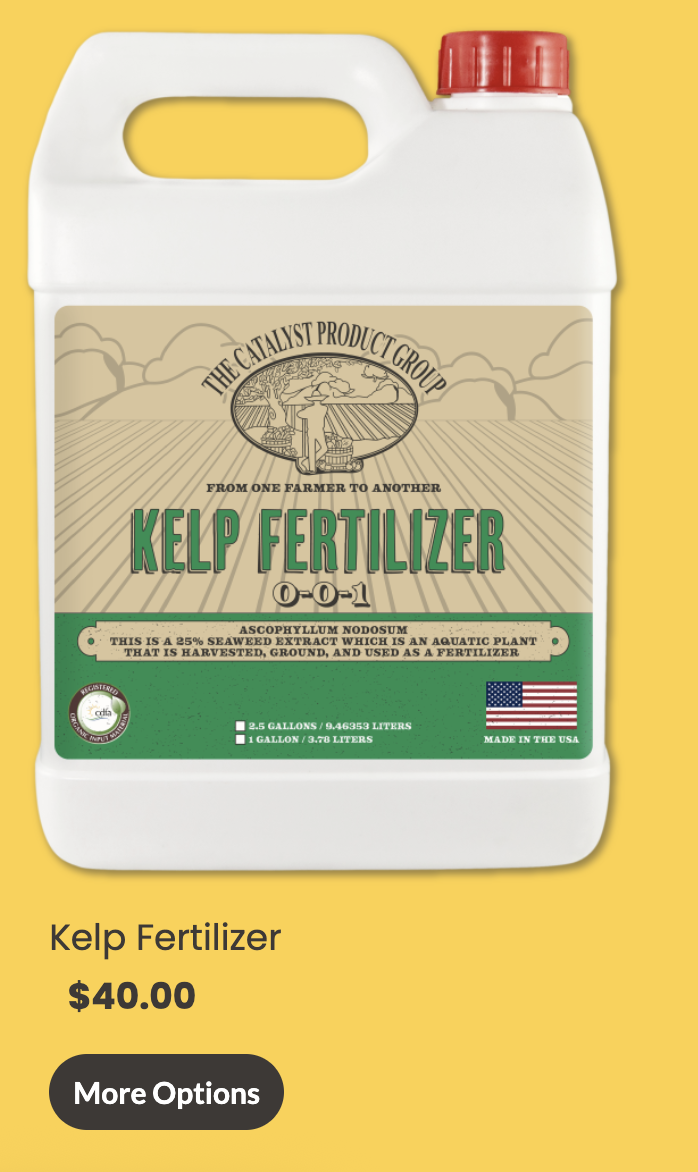
Kelp Fertilizer
Trace minerals and natural growth hormones that help plants handle heat and stress.
Find them at catalystproductgroup.com. Click Products, then Home and Garden.
Monthly Landscape Fertilizing
- Monthly organic liquid feeding of every tree and shrub
- Compost applied 3 times a year
- A recap video after every visit so you know exactly what we did
Quick Reference
Compost, mulch, raised bed mix and worm castings
Citrus trees
Clumping bamboo and tropicals
Trees, shrubs and fig trees
A&P Nursery
Raised garden beds
What to plant and when
Organic fertilizer
Catalyst Product Group (Products, then Home and Garden)
Irrigation
Garrett: 480-678-9121
Why root flares matter
Next Steps
Thanks for having me out, Laura. There's a lot of room to grow here, from more fruit trees to shade by the pool, and you can take it one piece at a time.
If you want to do the planting yourself, everything you need is in here. As a consult client, you're already in the Garden Nerd Club, so you have direct access to me there. Post photos as you go and ask me anything.
We also do planting. Whenever you're ready, whether that's this season or down the road, let me know which plants you like for each area and I can put together a planting proposal. We don't do irrigation, so for adding emitters or running drip to new areas, Garrett is great: 480-678-9121.