
Your Yard, Alaina
Thanks for having me out. Here's everything we walked through, in the order we covered it, starting at the back wall and finishing out front.
One theme runs through nearly all of it: pulling the rock off the soil and putting compost and mulch down in its place. That isn't a cosmetic call. Rock sitting on bare dirt bakes the ground, kills the biology in the top few inches, and leaves plants with nothing to feed on. Every area in this write-up improves faster once the soil underneath is alive again. Picking plants is the fun part, but the soil is what decides whether they thrive or just survive.
The back wall
Covering the block, and the same approach for every wall back here.
Cover the wall completely

Right now the back wall is the first thing your eye lands on, and that's backwards. A yard reads much better when the boundary disappears behind planting and the lawn feels like it's opening into green rather than stopping at block.
Hopseed, Arizona rosewood, and orange jubilee are the three I'd use, and I'd treat this as the palette for every wall in the backyard rather than picking something different for each stretch. Using the same three plants throughout is what will tie the whole yard together.
All three take full sun and reflected heat off block without complaint, all three get tall enough to actually hide a wall, and none of them need much water once established. Hopseed is the fastest to fill in and the best pure screen. Arizona rosewood is the most permanent and the most refined. Orange jubilee is the one that brings color.
How to plant them
- Pull the rock back from the planting strip along the wall.
- Backfill with the native soil that came out of the hole. Nothing added to it.
- Space them so they'll grow together, not so they look finished on day one. Roughly 4 to 5 feet apart for a solid screen.
- Compost on top of the soil once everything is in, an inch or two across the strip. It goes on the surface, not mixed in.
- Two to three inches of mulch over the compost, kept a foot back from every trunk.
- Plant in the cool season, October through March, and water deeply while they establish.
Mixing the three rather than planting a single row of one is what keeps a long wall from looking like a hedge. Group them in threes and fives and repeat the groupings down the run.

Hopseed
Upright evergreen with narrow willow like leaves, getting 10 to 15 feet. Grows fast, fills in dense, and takes full sun and heat without complaint.
The best pure wall cover on this list. Doesn't need much water once established.

Arizona Rosewood
Native evergreen with dark leathery leaves and a clean upright form. Gets 10 to 15 feet and handles reflected heat off block as well as anything we have.
Slower than hopseed, but it's the one that will still look right in twenty years.

Orange Jubilee
Orange trumpet flowers through most of the year on an upright shrub reaching 8 to 10 feet. One of the few things that keeps blooming through a Phoenix summer.
Cut it back in late winter and it returns fuller every spring.
The side wall and the open spaces
Filling the gaps between what's already there.
Same three plants, used to fill in around the bougainvillea and sage

This wall is further along than the back one. The bougainvillea and the Texas sage are established and doing their job, so the work here isn't starting over, it's filling the open stretches between them.
This is all one continuous area, so anything from the back wall list works here. Hopseed, Arizona rosewood, orange jubilee, whichever ones you like best. There's no reason to treat these as separate planting schemes, and using the same handful of plants throughout is the single easiest thing you can do to make a yard feel designed rather than assembled.
Pick by what each gap needs. Hopseed where you want height and density fast. Orange jubilee where you want color picking up against the bougainvillea. Arizona rosewood where you want something that holds its shape for decades without much from you. Any combination is fine.
Same prep as everywhere: rock pulled back, compost laid on top of the soil, mulch over the compost and held a foot back from any trunk.
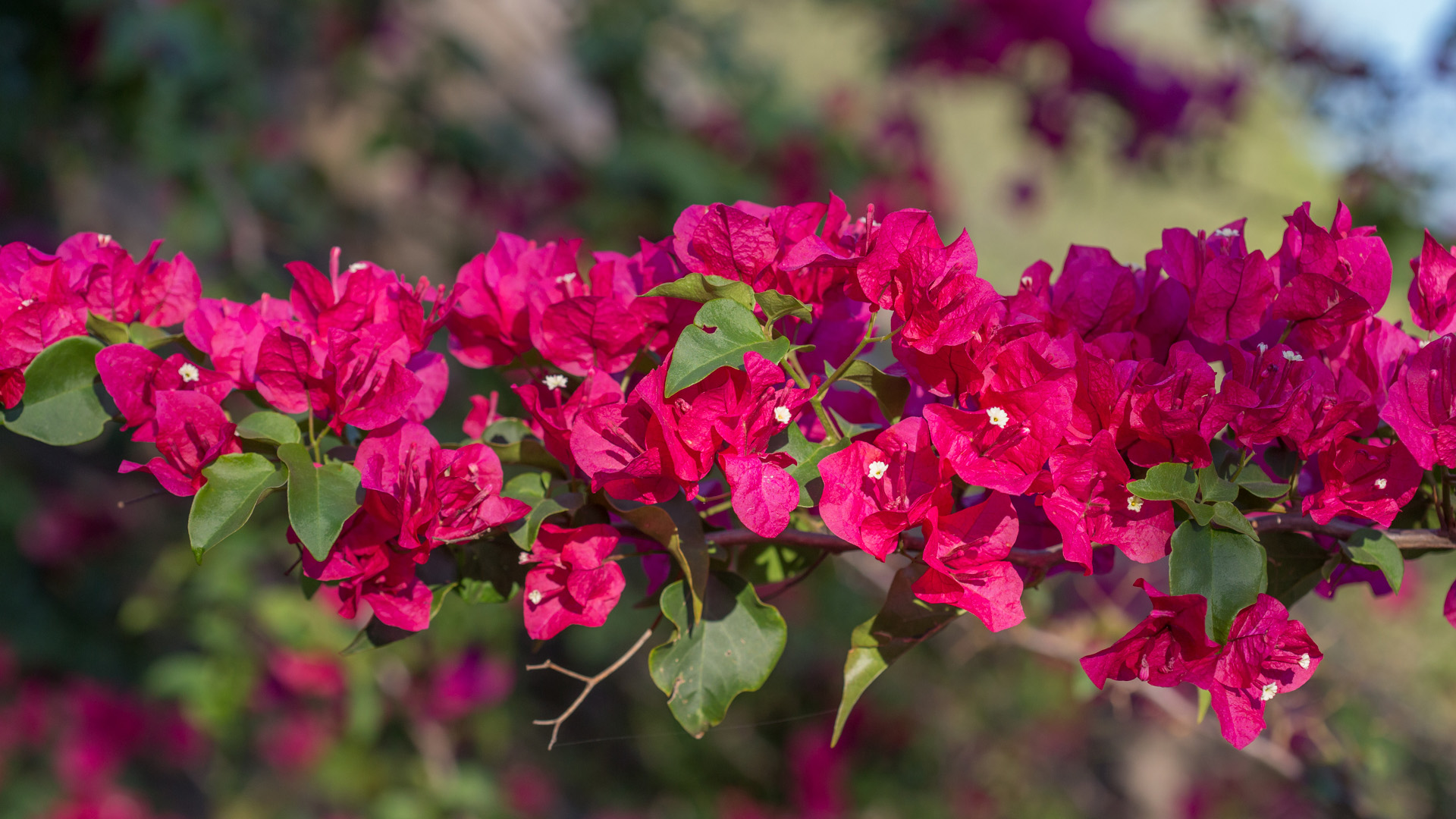
Bougainvillea
Nothing else gives you that much color for that little water. Keep it, and let it get some compost and mulch under it like everything else.
It'll respond to soil work more than you'd expect.

Texas Sage
Silver gray foliage with purple flowers that break out after humidity or rain. Extremely low input once established.
Leave it unsheared. It looks far better loose than trimmed into a ball, and it flowers more.
The bed along the pool path
Rock out, groundcover in, shade tree at the end.
Remove all the rock and fill the space with ruellia

This one is a full reset. Take all the rock out, not just where plants are going. Then compost across the whole bed, mulch on top of that, and ruellia as a cover to fill the space.
Ruellia is the right call here because it spreads and knits together, which is what this bed needs. An empty bed with three shrubs in it always looks sparse. A bed with groundcover running through it looks full even when it's young, and the covering foliage keeps soil temperature down, which matters right next to a hot deck.
- Remove the rock entirely from this bed.
- Compost across the whole bed, an inch or two, laid right on top of the soil. Don't till it in.
- Plant the ruellia using the native soil as backfill, spaced so they grow together.
- Two to three inches of mulch over the compost, across the whole bed.
- Water deeply while it establishes, then back off. It doesn't need much once it's in.
A shade tree toward the end of the path
Planting near a pool narrows the list quickly. You want something that isn't constantly dropping into the water, and you want roots that won't go after the pool shell or the deck. Red push pistache is my first option on both counts.
It's deciduous, so it does drop, but it drops on its own schedule in fall and then it's done. That's much easier to deal with than a tree shedding a little bit every week all year. The fall color is a genuine bonus, and it's one of the few trees here that gives you red and orange in November.
Planting it
The single most important thing when this tree goes in is that the root flare sits at or slightly above finished grade. The flare is where the trunk widens out into the main roots, and it needs to stay visible. Buried flares are the number one cause of trees that struggle for years and then decline, and it's completely avoidable at planting.
If the video doesn't load, watch it here: youtu.be/mLCVVxdvxU8
- Dig wide, not deep. Two to three times the width of the container, no deeper than the root ball.
- Find the flare in the container before planting. Nurseries often have soil piled over it, so scrape back until you see where the trunk widens.
- Correct any circling roots at planting. Much easier now than in five years.
- Backfill with the native soil you dug out. Don't amend the hole.
- Compost on the surface, then mulch out to the drip line, both held a foot back from the trunk.
- Water deep and infrequent so roots go down rather than sideways toward the pool.
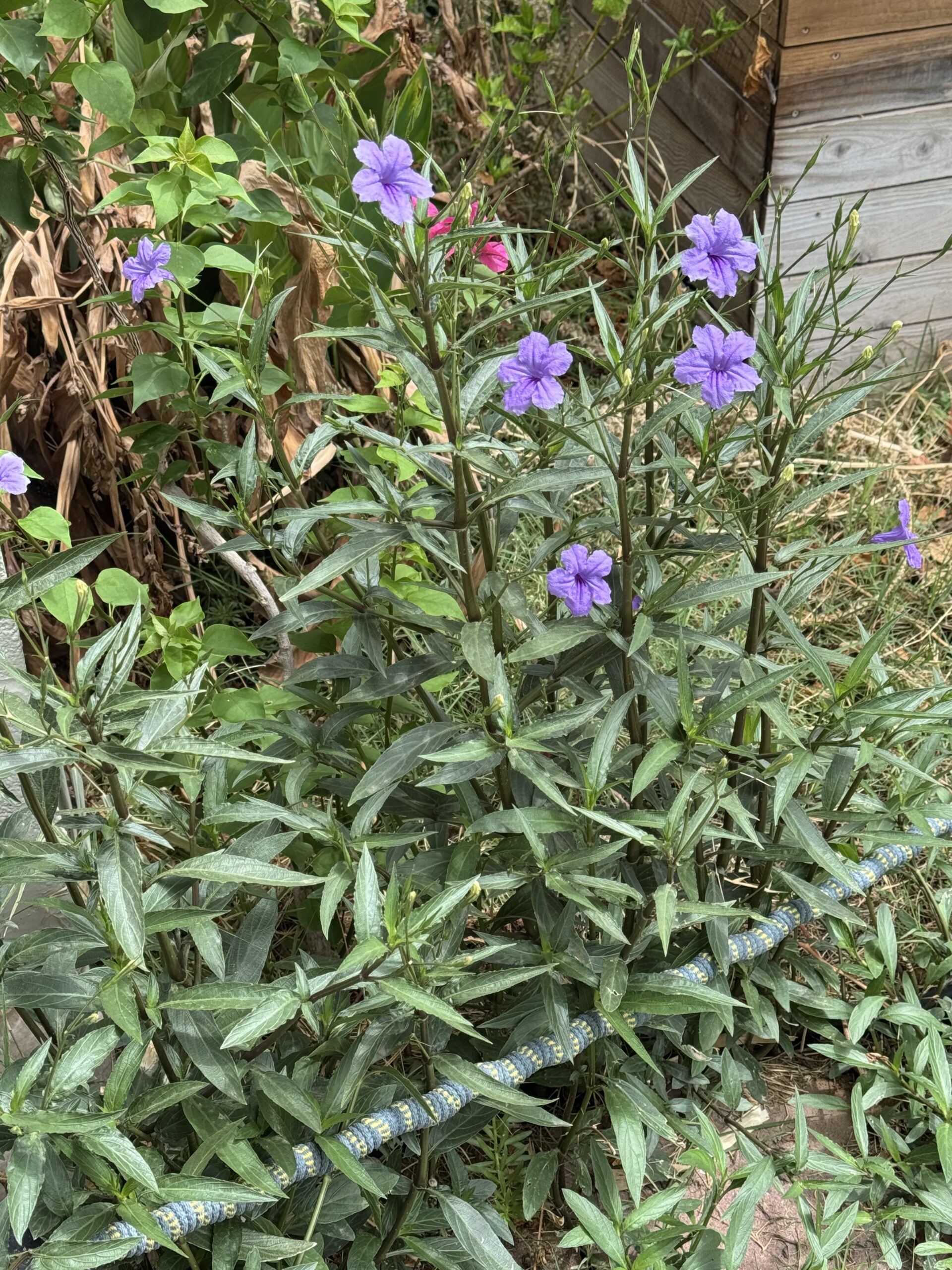
Ruellia
Purple trumpet flowers over deep green foliage, blooming spring through fall. Spreads to fill space and takes full sun and heat.
One of the most reliable long bloomers we have here, and it fills a bed faster than almost anything.

Red Push Pistache
Broad rounded canopy reaching 25 to 30 feet, with real red and orange fall color. Non invasive root system and no fruit drop.
Deciduous, so it drops once in fall and then it's finished. Doesn't need much water once established.
The far side of the pool
Balancing out the volunteer oleander, and adding a palm.
Match the oleander on the other side

You have a volunteer oleander that came up on its own and is doing well, which tells you everything about whether oleander will work in this spot. Putting one on the opposite side fills the gap and makes the two sides symmetrical, which is exactly what this stretch of the pool needs.
Oleander is about as tough as it gets here. Evergreen, blooms most of the warm season, and takes heat and reflected light off a pool deck without any trouble.
A palm on this side
The palm goes in the center, right in the middle of this area between the two oleanders. That placement does a lot of work. The oleanders balance each other on either side and the palm gives you a vertical anchor in the middle, so the whole stretch reads as one composition instead of two shrubs with a gap.
Mexican fan palm is my recommendation. It's fast, it's clean looking, and the slender trunk with a full crown on top is exactly the silhouette that works as a centerpiece. It also handles our conditions without any fuss.
Pygmy date palm is the other option, and it's a different look entirely. It stays small, around 6 to 10 feet, with a fine feathery crown at eye level rather than overhead. If you'd rather have something that stays at human scale and never needs anyone on a ladder, that's the one.
Either way
- A few inches of compost laid on top of the soil around the planting area. On the surface, not dug in.
- A few inches of mulch over the compost, held a foot back from the trunk.
- Plant in the warm season for palms specifically. They root best when the soil is warm, so spring through early fall rather than midwinter.
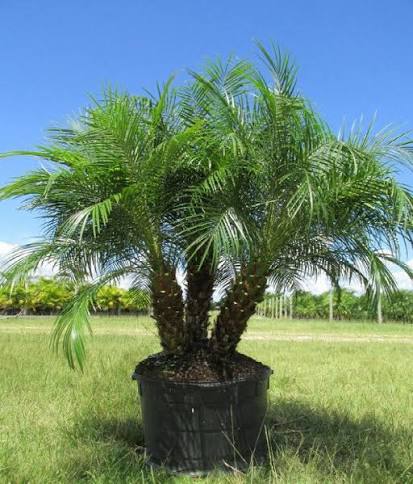
Pygmy Date Palm
Small palm reaching 6 to 10 feet with a fine feathery crown. Slow growing and easy to keep tidy without hiring anyone.
Stays at eye level and never needs anyone on a ladder. Wants some protection in a hard frost when young.
Mexican Fan Palm
Slender trunk with a full fan shaped crown, fast growing and very much at home in our climate. Doesn't need much water once established.
The classic centerpiece silhouette. It will get tall over time, so plan on a trimmer once a year down the road.
The front planter bed
A native pollinator planting, starting with a soil reset.
Reset the soil first, then go native

This bed wants to be a native pollinator planting, and it's already partway there. The chuparosa in here is a good plant that's underperforming, and it's underperforming for the same reason as most of the property: rock over bare soil with no organic matter going in.
Start with the reset. A fresh layer of compost across the bed, then mulch on top. You'll see the existing plants improve from that alone before you put anything new in the ground. Native plants get called low maintenance so often that people assume they don't need soil, but the opposite is true. In the desert they grow in soil with an intact biological community, and a rock bed has none of that.
The reset
- Pull the rock back across the bed.
- Fresh layer of compost, an inch or two, right over the existing soil.
- Two to three inches of mulch on top of the compost, held a foot back from any trunk.
- Deep water once a week. Long soak, not a short daily sprinkle. That's what drives roots down and gets these plants genuinely established.
What to plant
Desert milkweed and globe mallow are the two I'd add. Both are Sonoran natives, both need almost nothing once established, and between them you'll have flowers pulling in pollinators across most of the year. Add them to the chuparosa that's already here and this bed becomes genuinely alive rather than just planted.
Plant these in groups rather than one of each. Pollinators find and work a cluster far more readily than a single plant, and it looks better too.

Desert Milkweed
Upright silver green stems with a sculptural look and small cream flowers. Native, and it needs almost nothing once established.
This is the host plant for monarch and queen butterflies. Plant it and you'll get caterpillars, which is the entire point.

Globe Mallow
Silver gray foliage covered in orange cup flowers through spring, with repeat bloom after rain. Native and very low water.
Native bees work this one hard. Cut it back after flowering and it returns fuller.
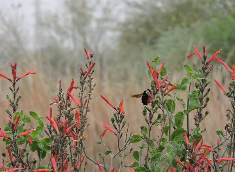
Chuparosa
Sonoran native with red tubular flowers through the cool season into spring, on an open airy frame.
Hummingbirds work this constantly. Give it compost and mulch and it will fill out considerably.
The part that makes all of it work
Why the same recommendation keeps showing up
Rock off, compost down, mulch on top appears in every single area above. That repetition isn't filler, it's the actual mechanism behind everything else in this write-up.
Plants feed through a partnership with the bacteria and fungi living around their roots. The plant pushes sugars out into the soil, that feeds the microbes, and the microbes in turn make minerals available in a form the plant can take up. The whole exchange happens in the top few inches. Rock over bare dirt shuts it down, because soil temperatures under rock get high enough to sterilize that layer and there's no organic matter going in to feed the system anyway.
Compost restores the biology. Mulch protects it and keeps feeding it as it breaks down. Once that's running, plants get what they need on demand instead of in the spikes and crashes you get from a synthetic feed, and they hold up dramatically better through summer.
This is also why the plant lists above are short and repeated. Get the soil right and a handful of well chosen plants will outperform a yard full of things fighting to survive.
Where to go from here
All of this can be done in pieces, and the order matters more than the timeline. Here's how I'd sequence it.
First, rock out and compost and mulch down across every bed. This improves everything you already own before you spend a dollar on new plants, and every other step lands better once it's done.
Second, the trees. They take the longest to become what you want them to be, so the sooner they're in the ground the sooner you get shade. A tree planted this fall is years ahead of one planted later.
Third, cover the walls. That's the change that will make the biggest visual difference in the shortest time, since the block is what your eye currently goes to.
Then everything else. Groundcovers, the pollinator planting out front, and the palm.
Plant in the cool season, October through March. That's when things establish here, and a plant that goes in during fall will be a year ahead of the same plant put in next June.
If you'd like us to handle the planting, let me know which areas you want to move on and I'll put together a proposal with sizes, quantities, and pricing.
You can also see everything we offer here: thegardennerd.org/planting-services