A written recap of everything we walked through on-site — area by area, with what to plant, spacing, and the reasoning behind each call, so this is a plan you can run with on your own timeline.
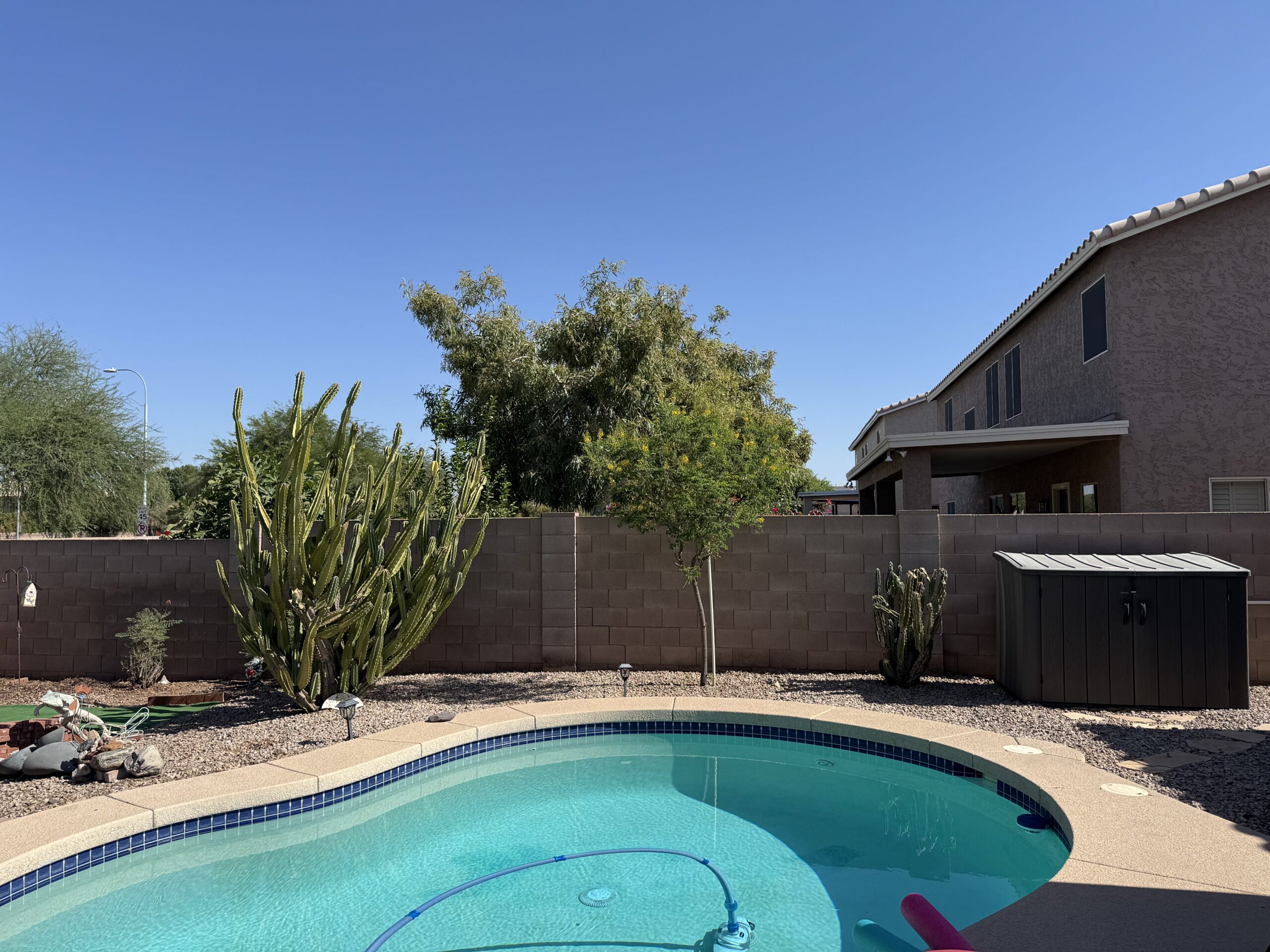
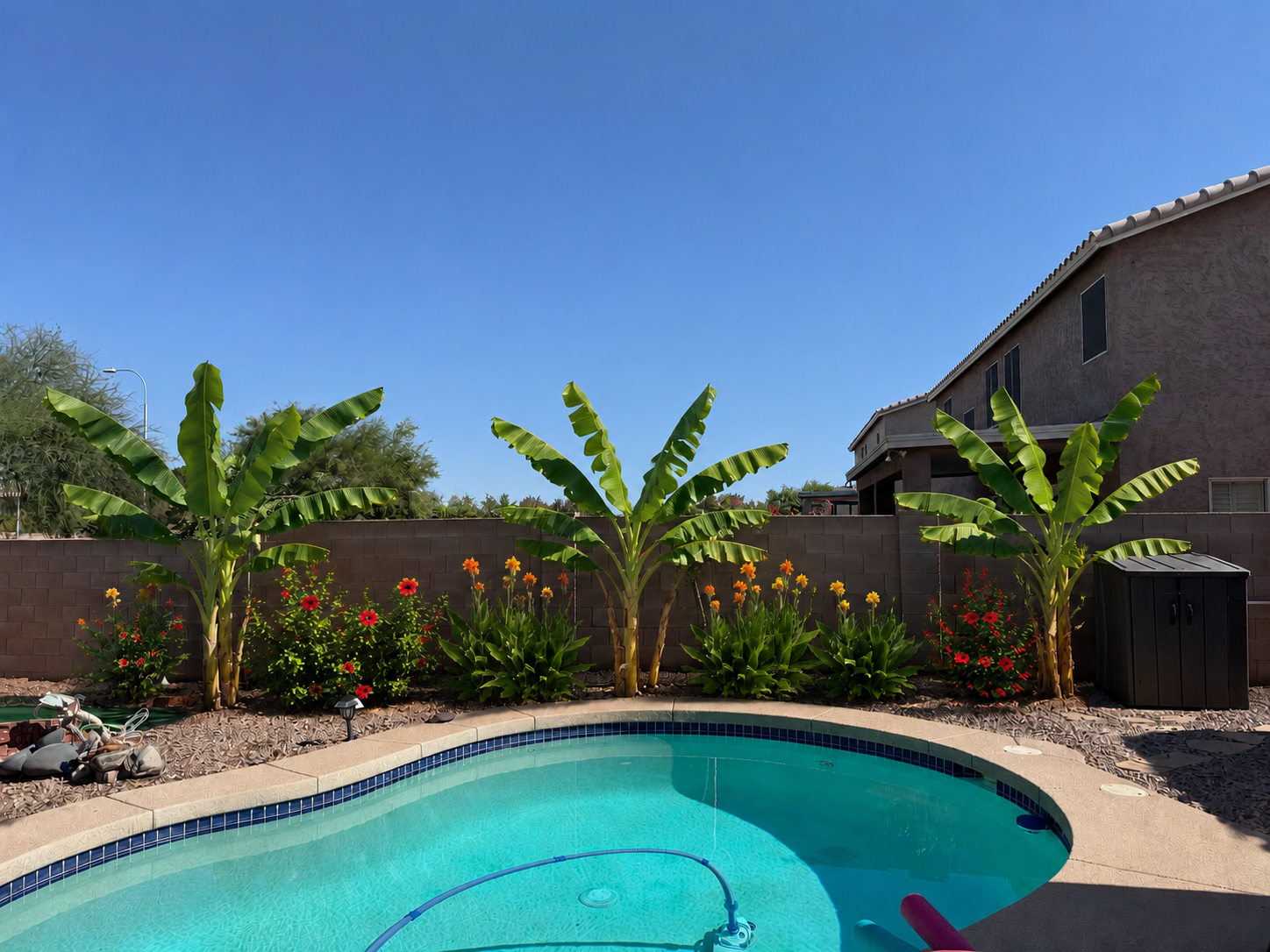
Pulling the existing tree and cactus out and turning this into a true tropical pocket. The banana plants anchor it — one on each side plus one in the middle — with hibiscus and canna lily filling in between them for color and layering.
The rock here needs to come out and be replaced with mulch. Rock works against tropical plants like these — it holds heat and doesn't let the clumps spread the way they want to. Both banana and canna spread by producing pups, so mulch (not rock) gives them room to do that naturally.
One more for this area: just to the west (left) of the banana/hibiscus/canna planting, we're adding one Barbados cherry — no mockup for this one. It's an edible, fruiting shrub — small pink flowers followed by bright red, vitamin-C-rich fruit — and it fits well as a transition piece next to the tropical bed.
Watch: Barbados Cherry overviewThe honeysuckle and cactus along this wall come out, and the entire length gets lined with a hopseed hedge. Once it fills in, expect it to sit about 2 feet above the top of the block wall.
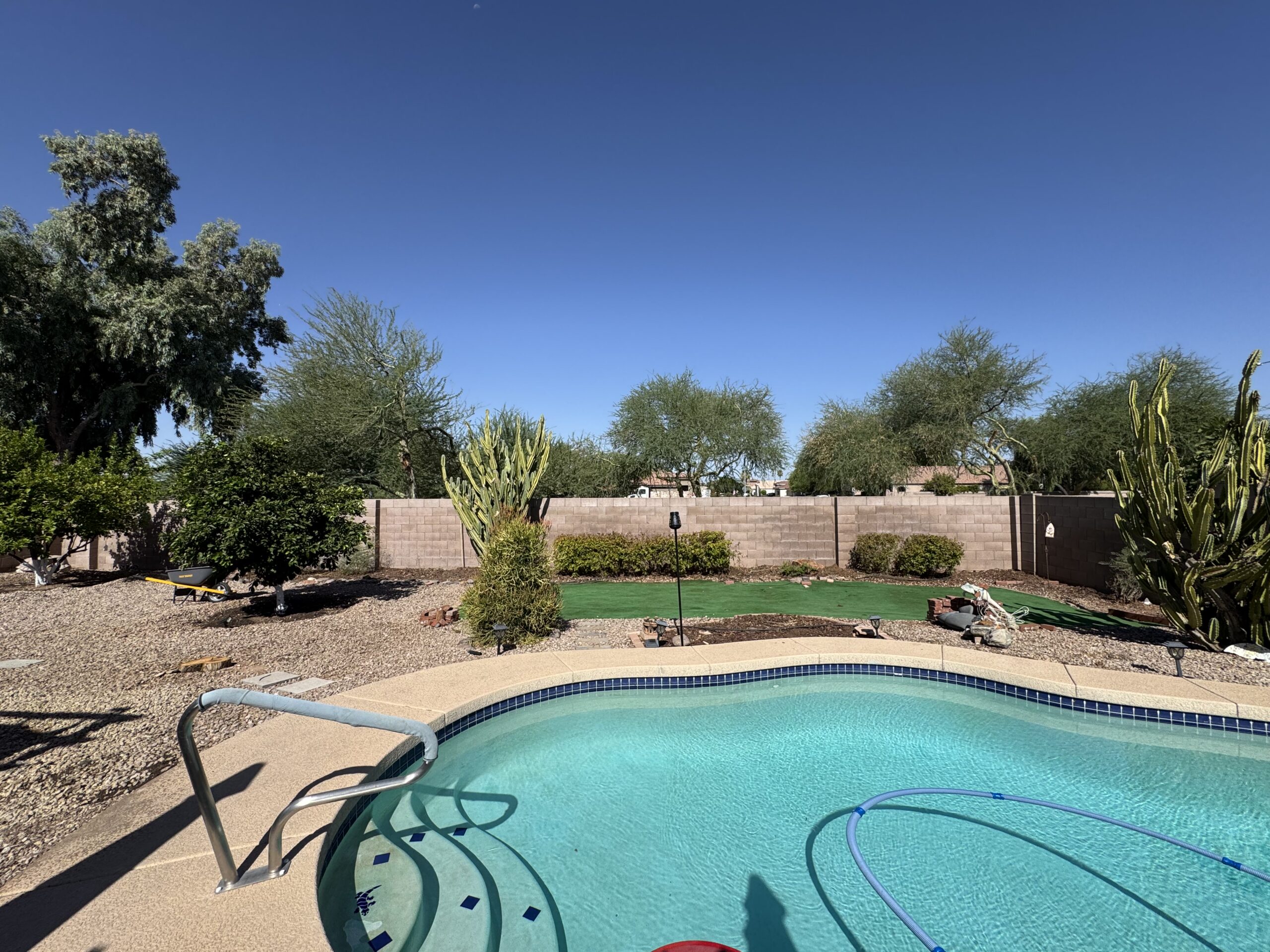
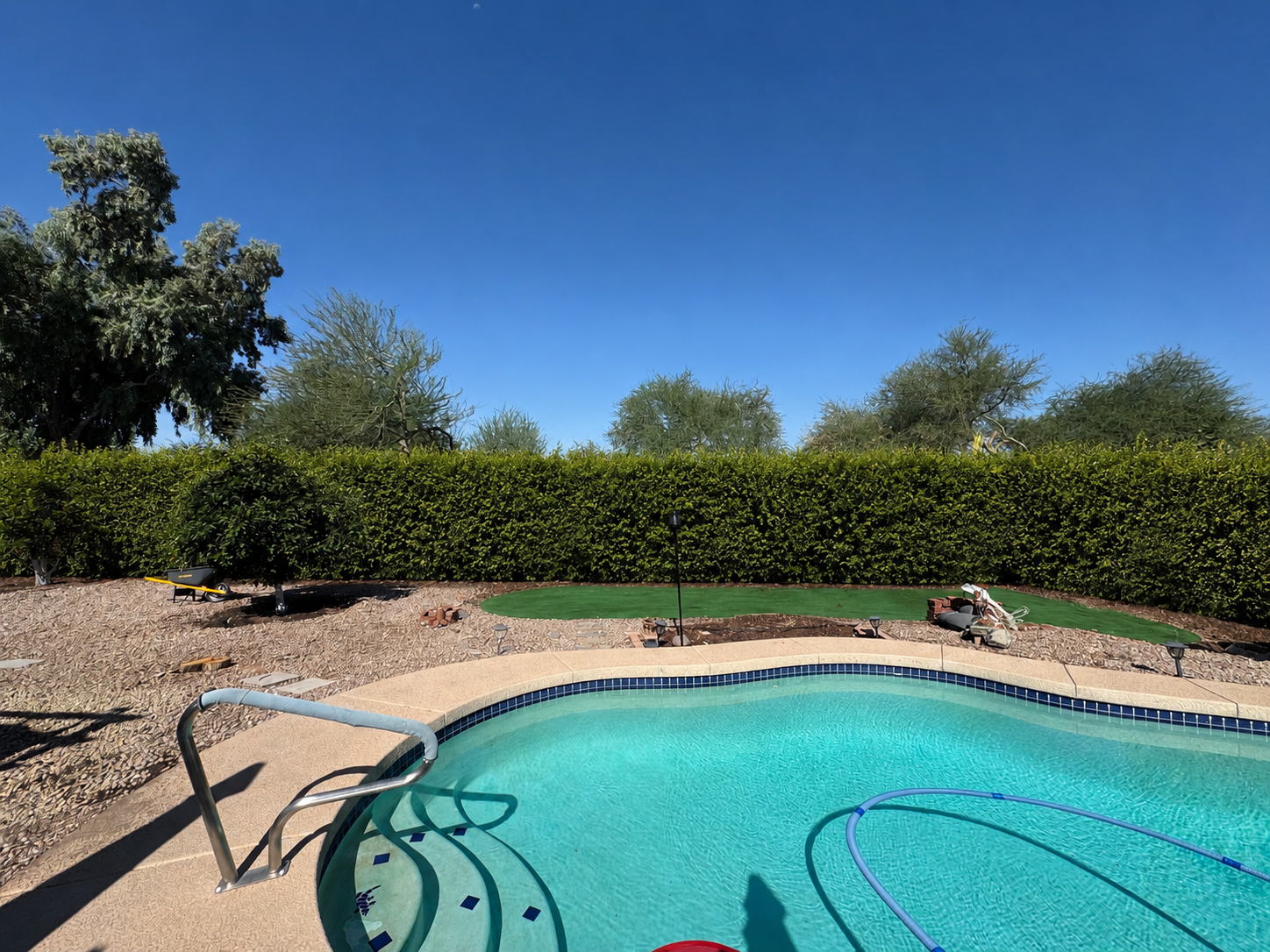
Just west of the pool, where the brown mulch currently sits, we're adding desert milkweed along with a generous planting of Greg's mistflower. The mistflower fills in all the bare ground between and around everything else, turning this whole strip into a butterfly magnet.

Thin, upright, leafless-looking blue-green stems that read almost sculptural against the wall. It's the host plant monarch butterflies lay eggs on, uses very little water, and blooms with small clusters of pale yellow flowers.
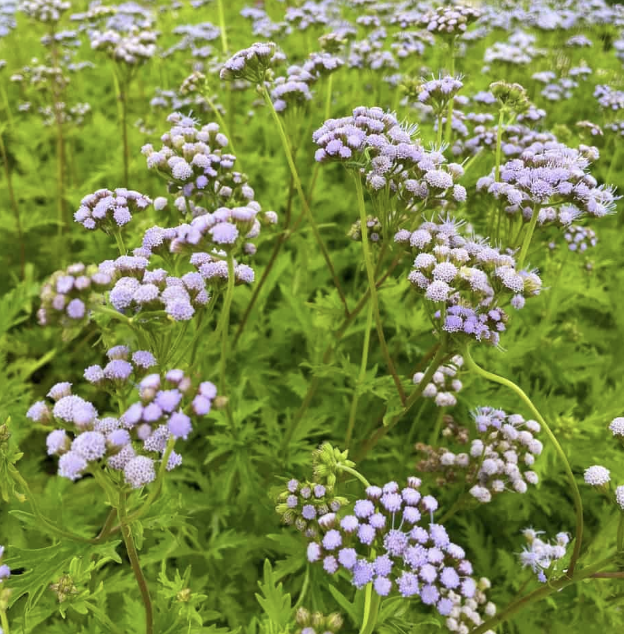
A low, fine-textured spreader covered in fuzzy purple-blue blooms most of the year. It's one of the best butterfly plants for this climate and does exactly what you want here — fills every bare gap on its own.
Goal here is the same either way: hide the block wall, cool the yard down, and add privacy from the neighbors. Two options, both planted 4 feet apart to fill in quickly.


Placement is mapped on the aerial photo below. The peach tree lands to form a triangle with your two existing citrus trees.

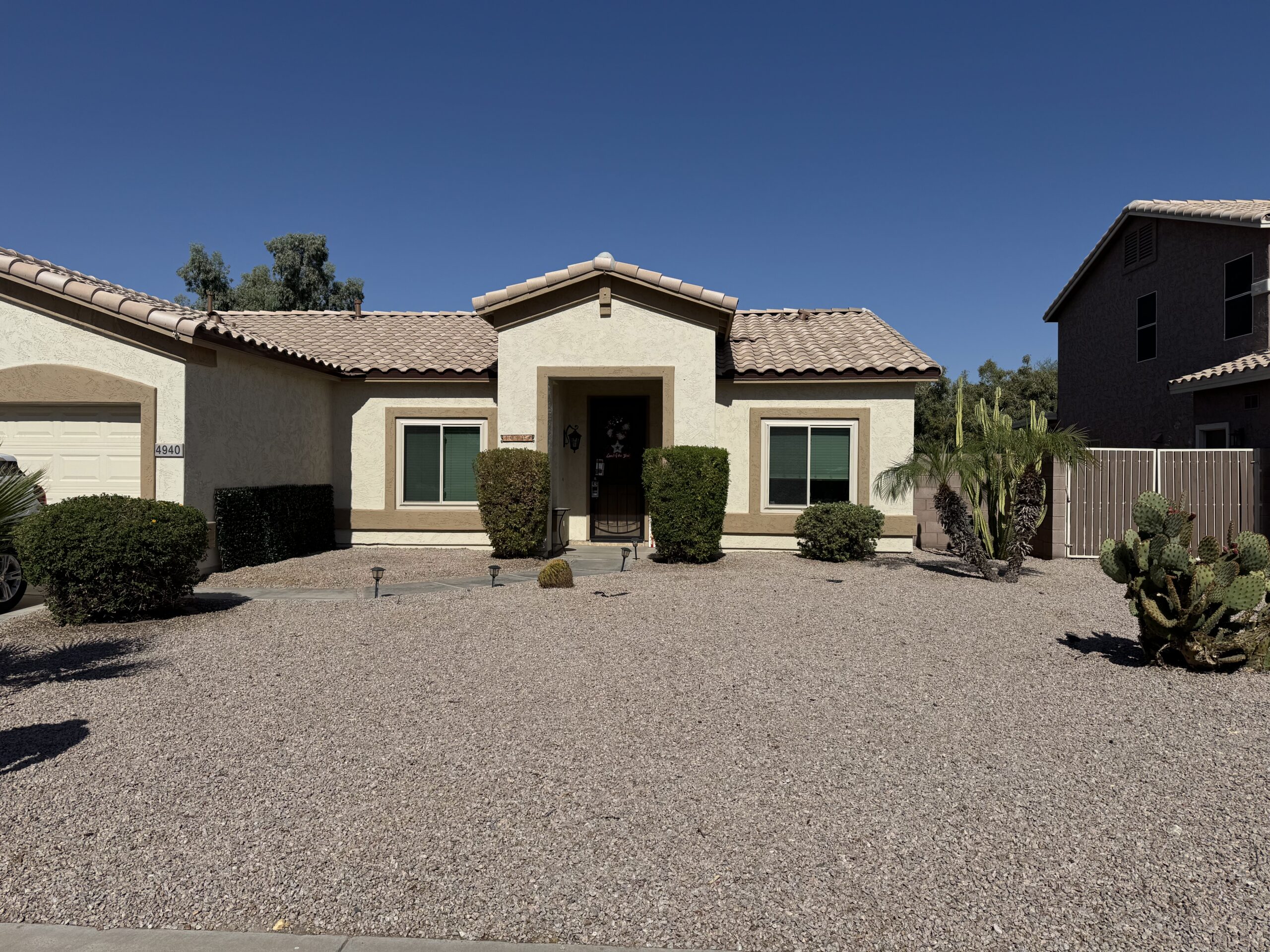
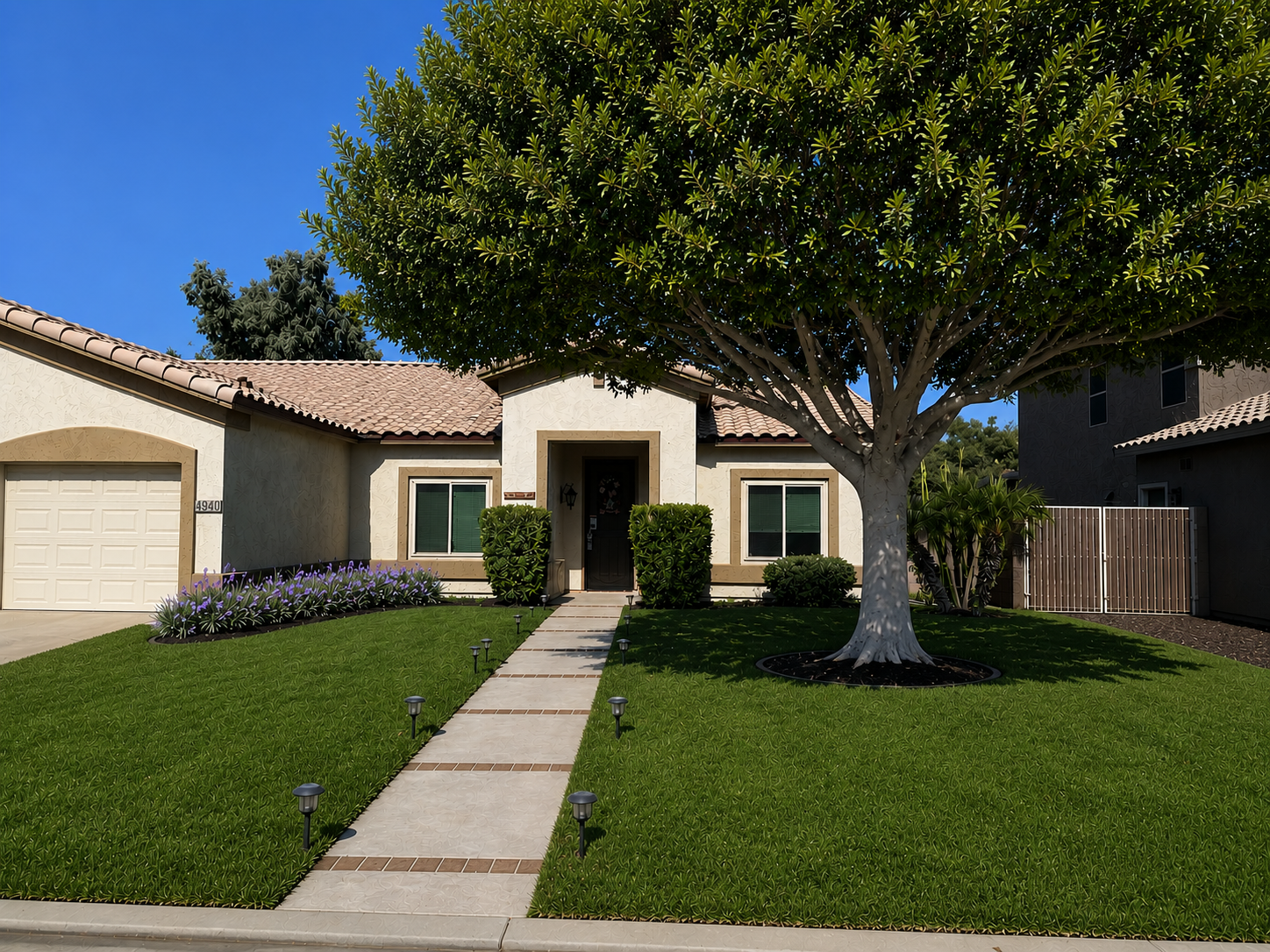
Right now the front yard is all rock. The move here is to pull the rock and get a large ficus tree in the ground — the point right now is just getting this shade tree established and growing. Everything else shown in the "after" is an idea for later; the priority is getting the shade tree in first, since it takes the longest to have an impact.
The grass underneath is St. Augustine, which is actually a good match here — it does much better in shade than most warm-season grasses, so it'll benefit as the ficus canopy fills in over the tree.