
Consultation Recap
kathleencjensen@gmail.com • (602) 397-7313
Below is a full recap of what we walked through on-site, including what's going in, why, and how to handle it whether you tackle it yourself or have us do the work. Pricing for The Garden Nerd to do all of this is at the bottom.
Backyard Wall — North & East Sides (Pool Area)
The 7 oleanders and the palm along this stretch are dead or dying and need to come out. Rather than mix species, we're replacing the whole run with one continuous hedge for a cleaner look and to keep the block wall covered.
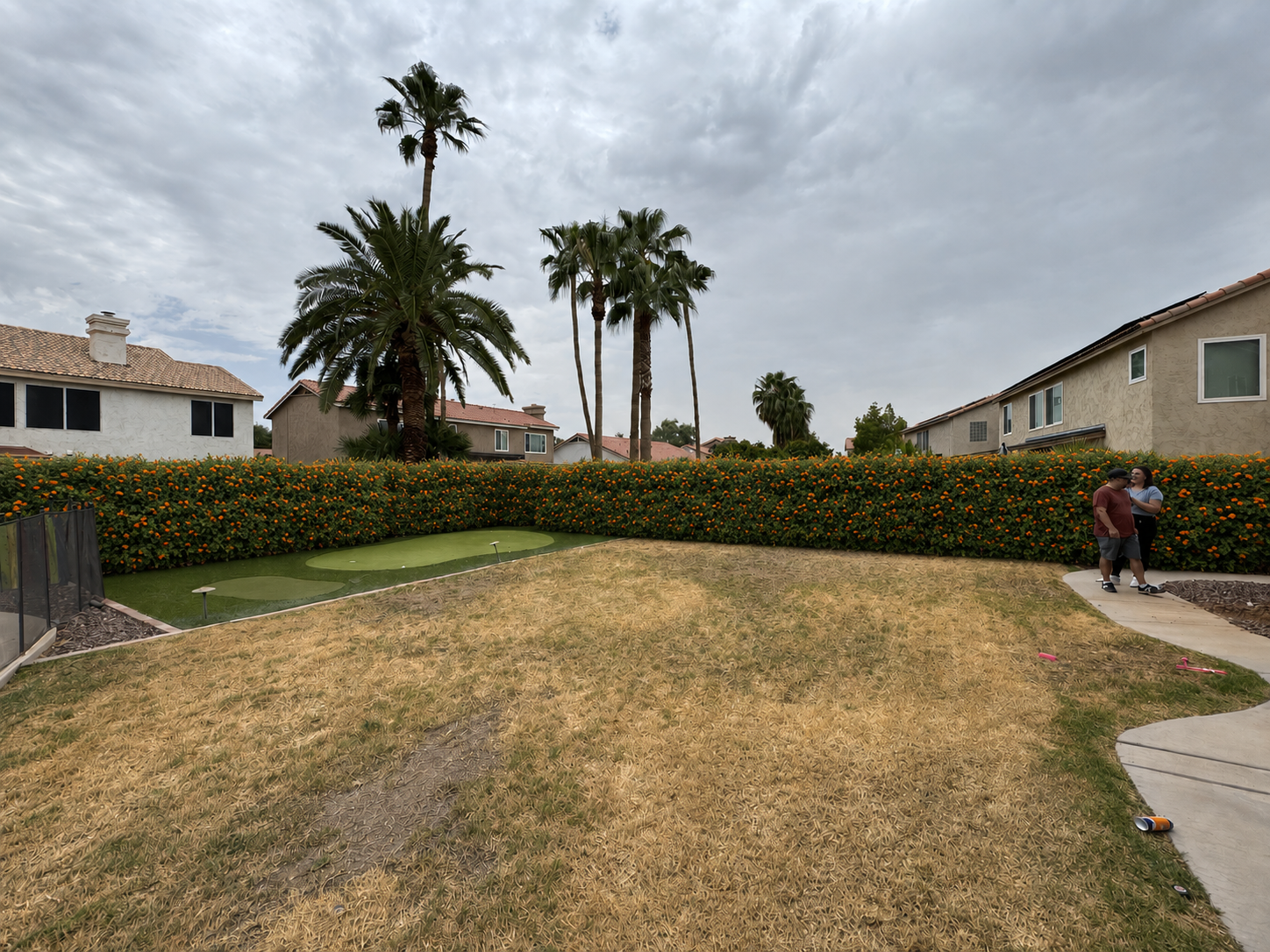
Remove the oleanders and palm, root and all — oleander will resprout from root fragments left in the ground, so dig out as much of the root mass as you reasonably can. Once cleared, backfill and level the bed before planting.
The two walls run 86 feet combined. Space new plants every 4 feet for quick fill-in, which puts you at roughly 22 plants (confirm exact count on-site once beds are cleared — corners and gate openings can shift this by a plant or two). Dig holes twice the width of the root ball, plant at grade (not deeper), and water in thoroughly at planting.
A fast-growing, tough desert shrub that puts out clusters of bright orange trumpet flowers nearly year-round in warm months. It fills in quickly, which is exactly what you want for screening a bare wall fast, and it takes full sun without complaint. Give it occasional deep watering through summer and it'll hold up in tough spots. It does grow leggy if left alone, so plan on a shaping prune once or twice a year to keep it dense and hedge-like instead of open and woody at the base.

Pool Fence Area — South & West Walls
The 2 yellow bells and 3 bougainvilleas already there are healthy and staying put.
The existing bougainvilleas can be cut back hard to remove dead wood and reshape — bougainvillea blooms on new growth, so a hard prune in late winter/early spring won't cost you flowers, it just resets the shape. Wear gloves and long sleeves; the thorns are no joke.
There are gaps along the wall where the coverage thins out. A few directions to fill them in — pick one, or mix and match:
Keeps the look consistent with what's already there. Heat-loving, drought-tolerant once rooted in, and puts out the same bold color you already have on this wall.

The one we talked through at your place. A dense, rounded shrub with small pink flowers followed by edible red fruit (tart, great for jam or eating fresh off the bush). Slower growing than bougainvillea but fills in nicely as a softer, greener option along the fence.
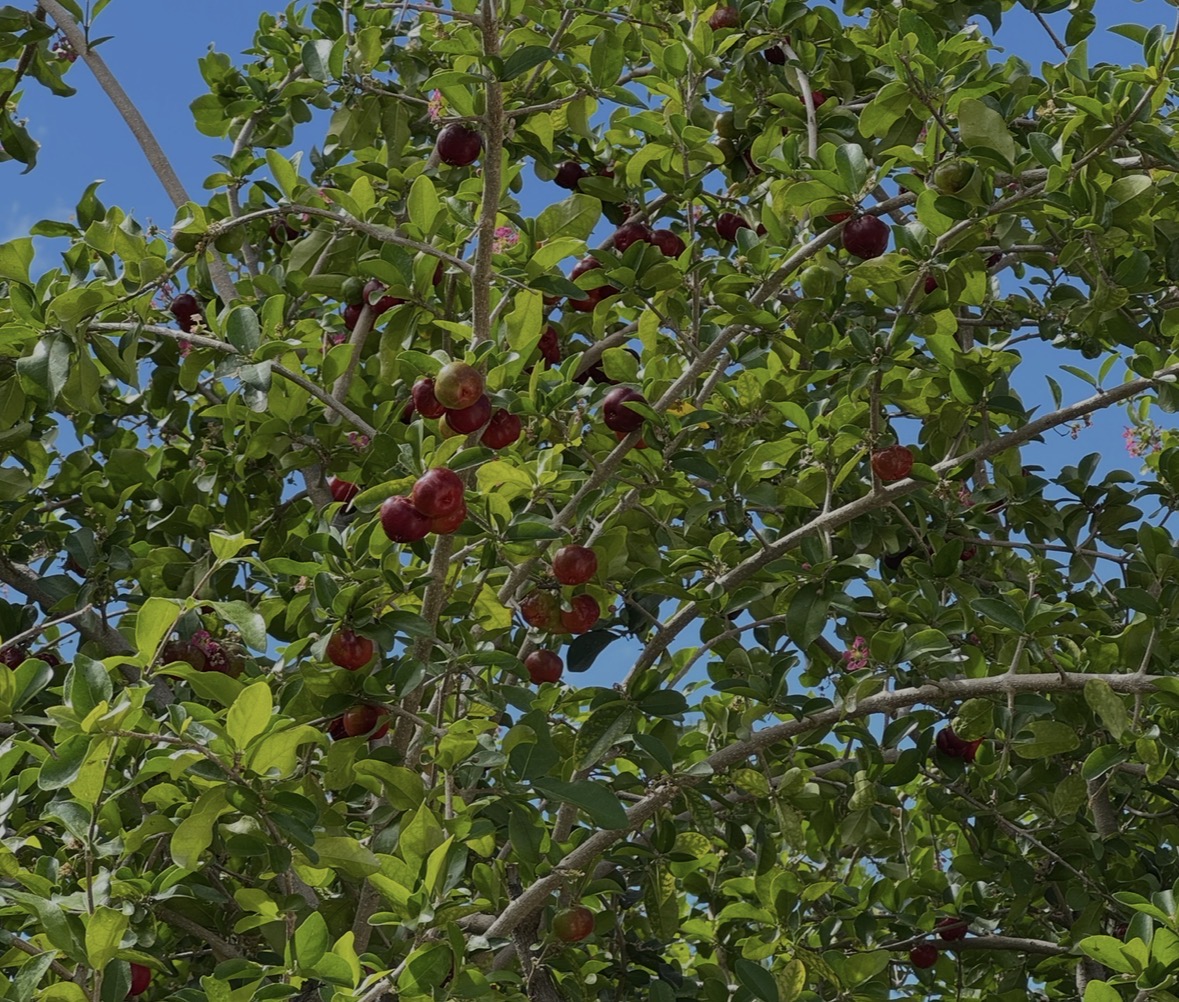
A true desert native that thrives here with minimal watering once established. Puts out purple flowers, often right after a rain or humidity bump, and holds a naturally rounded shape with very little maintenance.

Silvery-gray foliage with a big flush of yellow daisy-like flowers in spring. Extremely low water once established and right at home in a Sonoran Desert planting. It's a shorter-lived shrub (typically a handful of years before it needs replacing), so keep that in mind for long-term planning.

Fine, airy foliage with striking red pom-pom flowers nearly year-round. One thing worth flagging: this one is a magnet for bees and hummingbirds, which is great if you want the pollinator activity but worth knowing since it's right along a pool fence.

Patio / Balcony — Pillars
A vigorous, evergreen climbing vine that will grab onto and climb the stucco pillars on its own, covering them and eventually spilling shade across the patio. It puts out clusters of orange-red trumpet flowers in spring.

One pot per pillar (3 total). Crossvine will cling directly to stucco, but it climbs faster and fuller if it has something to grab onto — a wire, trellis, or cable run up the pillar. That's not included in this quote, so if you want to speed things up, source something for it to climb.
Pots aren't included in this pricing either — you can source them or we can, just let us know. Because these are potted (not in-ground), they'll dry out fast in summer heat and need daily watering through the hot months. Make sure that's something you're set up for before committing to pots over an in-ground option.
Backyard Grass
Rake out all dead grass and weeds. Core aerating after that isn't required but helps a lot — your lawn has some compaction, and aerating opens it up so water and nutrients actually reach the root zone instead of running off.
Set your controller to water once every 3 days, early morning around 5am (watering at night invites fungal issues, and watering midday just evaporates). Run each zone for 25 minutes per cycle — you want a deep, infrequent soak, not a light daily sprinkle, to push roots down instead of keeping them shallow.
Walk the yard while it's running and make sure every section is getting hit. Dry patches usually mean a head needs adjusting or replacing. Whether you're planting this yourself or having us do it, we recommend getting irrigation fully checked out before anything goes in the ground. If you'd rather not deal with it, we have an irrigation guy who can come out and get everything dialed in — that visit isn't included in this quote, it's just an option if you want him out there. Either way, if we're doing the planting, we do need irrigation confirmed working first.
If you want the lawn to actually look good through the season, it needs monthly fertilizing during the warm months, not just water. Proposal below.
Front Yard — Trees
You're looking to add a kumquat, an orange, and a Florida Prince peach.
For the kumquat and orange, go to Greenfield Citrus — best citrus selection around. For the Florida Prince peach, go to A&P Nursery.
Once planted, pull the decorative rock back away from the trunk area and build a water well roughly 5–6 feet in diameter around each tree — a shallow basin that holds irrigation water right over the root zone instead of letting it run off across the rock. Fill the well with mulch, but keep it off the trunk itself — mulch piled against the trunk holds moisture against the bark and invites rot and pests. Leave a few inches of bare space right around the base.


Front Walkway Nook
The current plantings here have outgrown the space. Swapping to right-sized plants — some in the ground, some in containers on the ledge.
In-Ground
Soft blue flowers nearly year-round, stays loose and rounded, and handles the tight footprint of a nook like this without getting unruly.
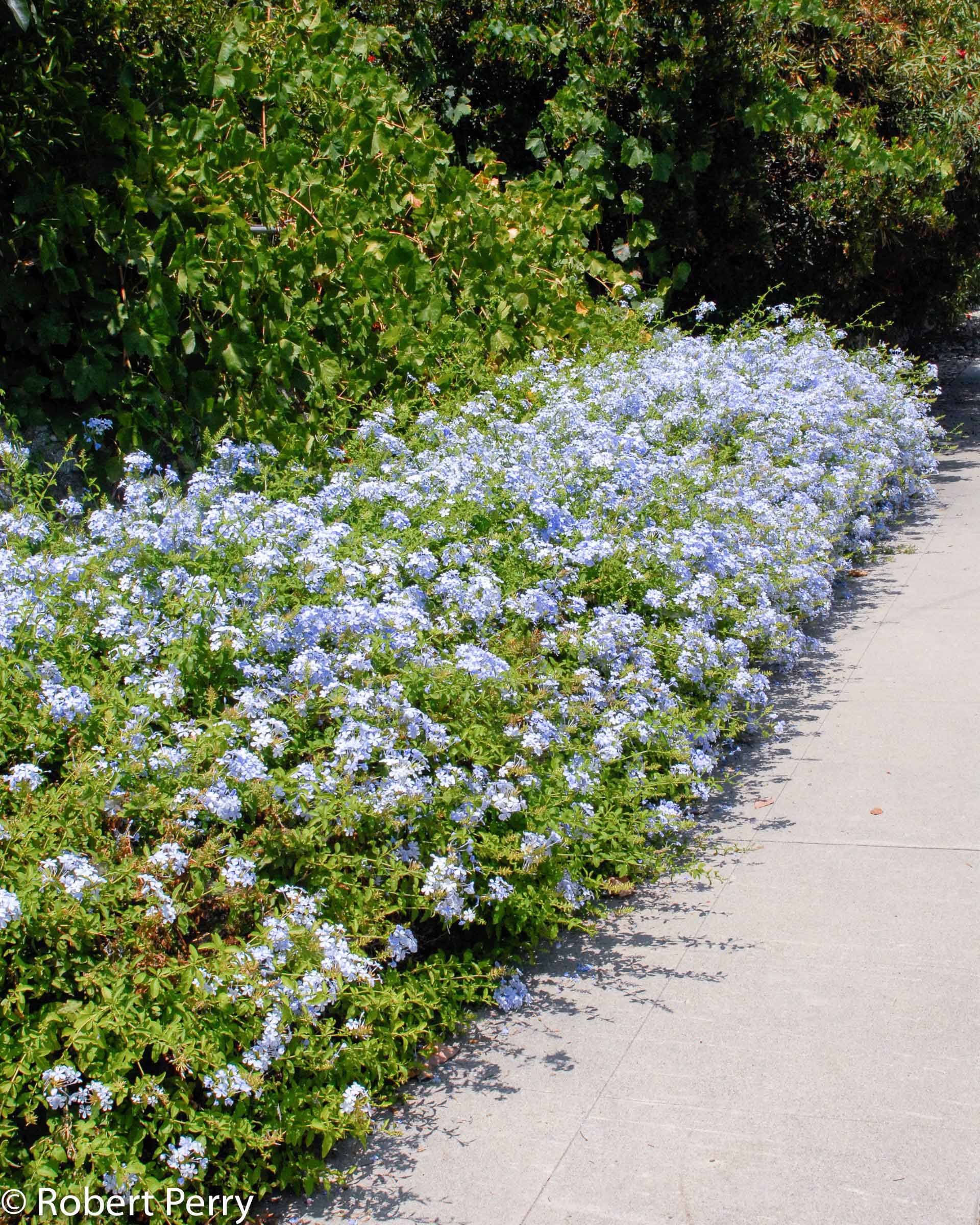
Glossy dark green foliage and fragrant white blooms — a nice scent right at the entry. Wants some afternoon shade in this heat and consistent moisture, so placement in the nook matters.

Upright, structural, nearly leafless stems that give some vertical interest in a tight bed. Extremely low water and a host plant for monarch butterflies.

Containers on the Ledge
Fuzzy purple-blue flower clusters, low and mounding, and a butterfly magnet. This one goes in smaller pots on the ledge — plan on several small containers rather than one or two large ones to get good coverage.
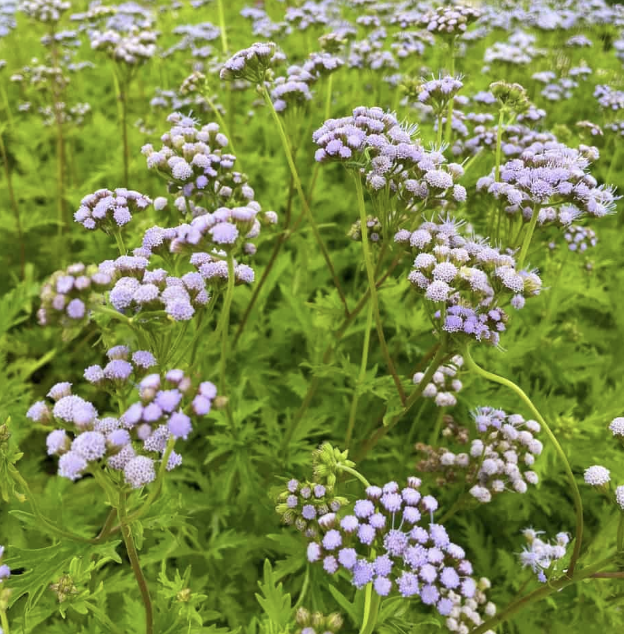
Rotating seasonal flowers swapped out through the year for continuous color right at the entry. ]
A chunky, succulent shrub that handles heat and neglect well and gives some textural contrast against the softer flowering plants.

Seasonal color and elephant food quantities still needed to finish pricing those two.
Keep in mind these containers will need regular watering and will drain onto the wall below — worth factoring into placement.
The Garden Nerd — Pricing to Do This
Everything below is a single all-in price per area — removal, plants, and installation included.
Removing the 7 oleanders and palm, then planting roughly 22 Orange Jubilee (5 gal) spaced every 4 feet along both walls.
| Total | $2,189 |
Trim and reshape the 3 existing bougainvilleas, remove dead wood.
| Total | $300 |
Filling the gaps along the south and west walls. Each option below is a complete, all-in price for 5 plants, installed.
| Option | Total |
|---|---|
| Bougainvillea | $400 |
| Barbados Cherry | $725 |
| Texas Sage | $400 |
| Brittlebush | $400 |
| Baja Fairy Duster | $400 |
3 pots, one per pillar, installed. Pots not included.
| Total | $240 |
Kumquat, orange, and Florida Prince peach — planted, with water wells dug and mulched.
| Total | $1,200 |
Cape Plumbago, Gardenia, Desert Milkweed, and Gregg's Mistflower are all priced the same — $160 per selection (installed), so pick whichever mix of these you like without the price changing your decision. Seasonal color and elephant food pricing still pending quantities.
Grass Fertilizing
A monthly liquid feeding program built around your lawn and the Phoenix growing calendar. Rather than a single generic fertilizer, we adjust the blend and timing through the year — pushing root and blade growth in spring, protecting against summer heat stress, and easing into dormancy in fall — so the lawn gets what it actually needs at each stage instead of guessing with a bag from the store.
What it does for you: deeper, stronger root systems that hold up to Phoenix heat and drought stress, denser turf that naturally crowds out weeds, more consistent color without overwatering, and a lawn that recovers faster from foot traffic, pets, and the summer grind. It also means one less thing on your plate — we're out there every month watching how the lawn is responding and adjusting as we go, instead of you guessing at a store-bought bag once or twice a year.
| Plan | Coverage | Monthly |
|---|---|---|
| Grass-only fertilizing | 1,200 sq ft | $60/mo |
| Full landscape fertilizing | Full property, incl. grass | $120/mo |
Why go full landscape instead of just grass: the same soil-first approach that keeps your lawn healthy applies to every shrub, tree, and bed on the property — especially with the amount of new planting going in here. New plants are the most vulnerable in their first year while roots are establishing, and consistent feeding is one of the biggest factors in whether they take off or struggle. Full landscape fertilizing means the whole yard — not just the grass — gets that same monthly attention.
Being on fertilizing also puts you on our radar. You become one of our recurring monthly clients, which means Malachi is out at your property regularly, seeing how everything is doing in person, not just spraying and leaving. If something looks off — a leaf discoloring, a pest starting, a dry spot — we catch it early instead of finding out three months later when it's a bigger problem. It's the difference between us maintaining your yard and us actually watching over it.
Plant warranty: Given the size of the investment you're making here — the hedge, the trees, the fence line, the nook — this is where fertilizing pays for itself the most. Everything we plant is warrantied for 90 days for active fertilizing clients, so if something we installed doesn't establish in that window, we make it right. You're not just buying plants going into the ground, you're buying our ongoing involvement in making sure they actually thrive here — which matters a lot more in this climate than it would almost anywhere else.
Cost Summary
| Area | Cost |
|---|---|
| Backyard Wall — Removal & Orange Jubilee Hedge | $2,189 |
| Pool Fence — Bougainvillea Clean-Up | $300 |
| Pool Fence — Gap Fill (varies by plant choice) | $400 – $725 |
| Patio Pillars — Tangerine Crossvine | $240 |
| Front Yard Trees | $1,200 |
| Front Walkway Nook (per plant selected) | $160 ea. |
| Estimated Total (excl. gap-fill choice & nook selections) | $3,929 |
Grass fertilizing ($60/mo) or full landscape fertilizing ($120/mo) are separate, ongoing monthly services and aren't included in the total above.
This is an estimate. Once we lock in the specifics — final plant counts, gap-fill selection, and front nook choices — we'll adjust the total accordingly. If we move forward, we'll send over more details along with a planting contract.