
The Garden Nerd · Consultation Recap
Karen Powell
9112 E Via Montoya, Scottsdale, AZ 85255 · November 18, 2026
Thanks for having me out, Karen. This write-up covers plants for the shady spots under the mesquite and palo verde, color for the open rock, slopes and groundcover, swapping the shaded-out bougainvilleas for red hibiscus and how to care for them, ocotillos and cactus, a nicer walkway entry, and the end-of-February pruning for the creosote, sage, and grasses.
Everything is numbered in the order we walked. Every plant I suggest has its own card, and the ones native to our desert are tagged Native.
As a consult client, you're already in the Garden Nerd Club, so you have direct access to me there anytime questions come up.
Backyard
The south-facing slope under the mesquite
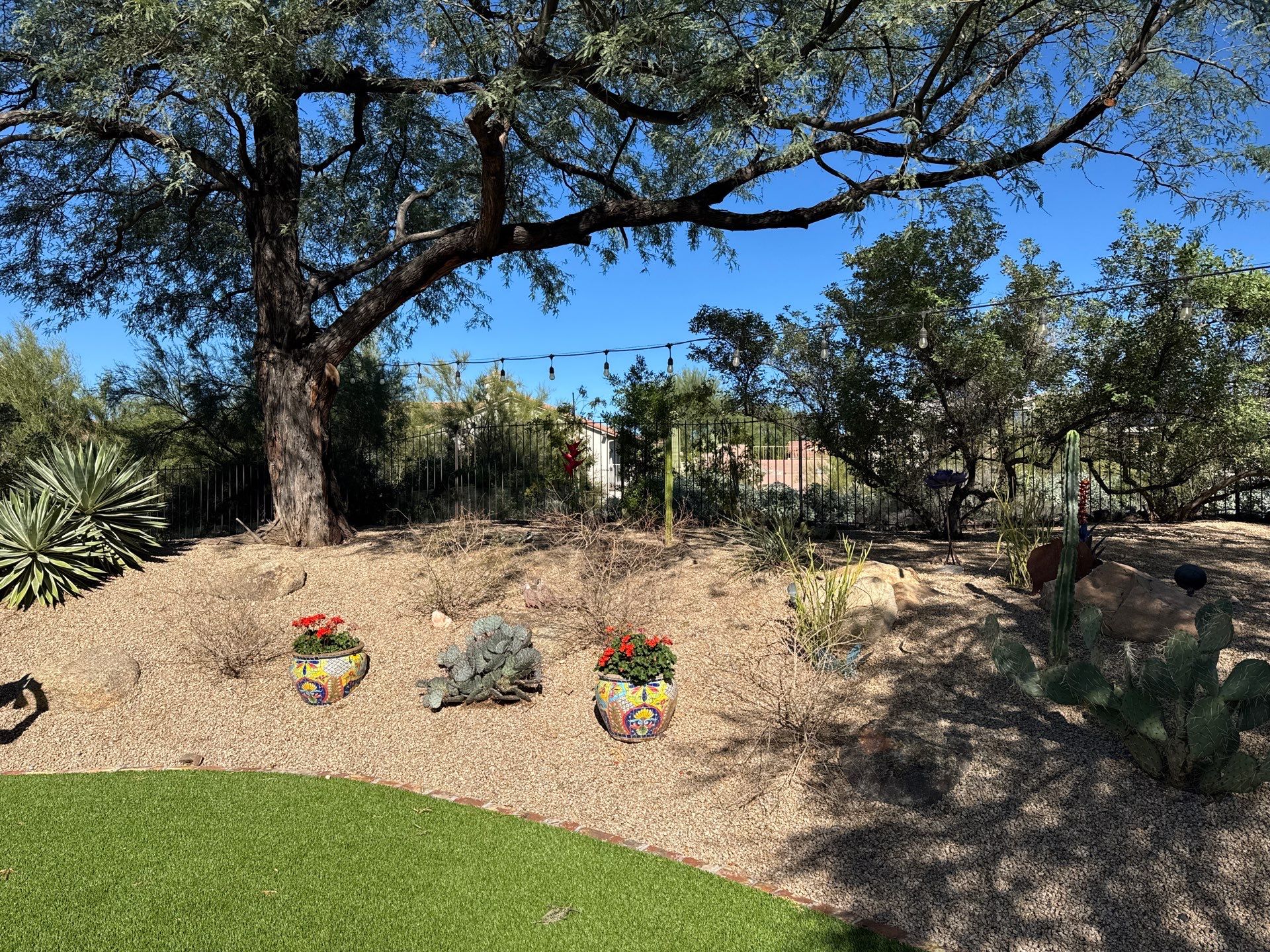
This area is on a hill facing south. It gets a decent amount of sun, but it also sits under the shade of the mesquite directly above it and the palo verde to the east. Lower growing plants that spread will cover the slope over time and help hold the soil. Pink fairy duster or yellow emu (Outback Sunrise) would both do well here, along with these other options.
- Plant in a staggered pattern across the slope rather than in straight lines, so water can't channel straight down.
- Build a small crescent of soil on the downhill side of each plant to catch water.
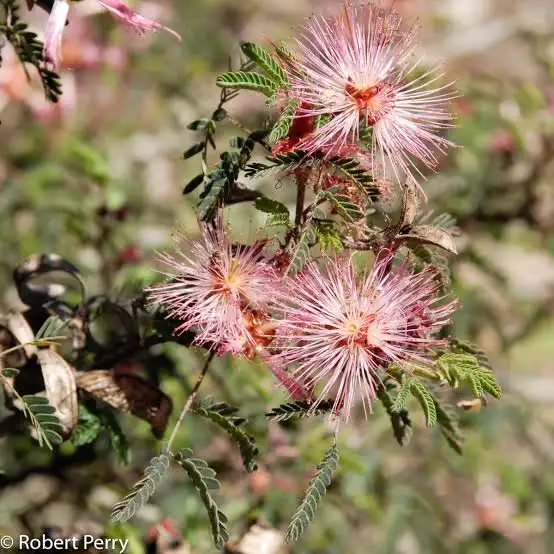
Pink Fairy Duster
Native, with pink powder-puff flowers in late winter and spring. Small, airy, and takes very little water once it settles in.
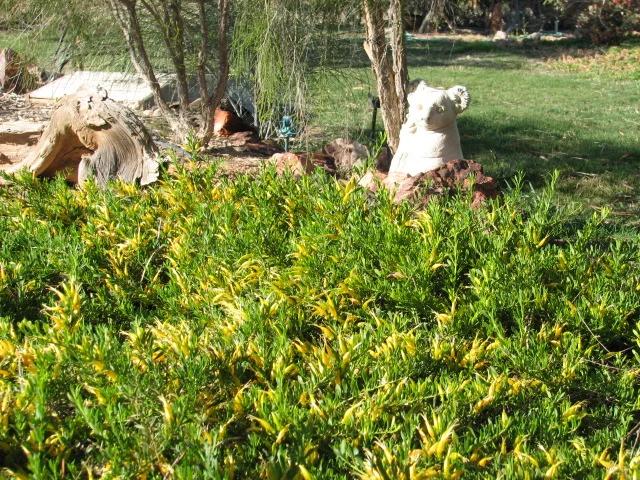
Emu Bush (Outback Sunrise)
Low, dense yellow-green groundcover with small yellow flowers in late winter and spring. One of the best groundcovers for hot spots and reflected heat.
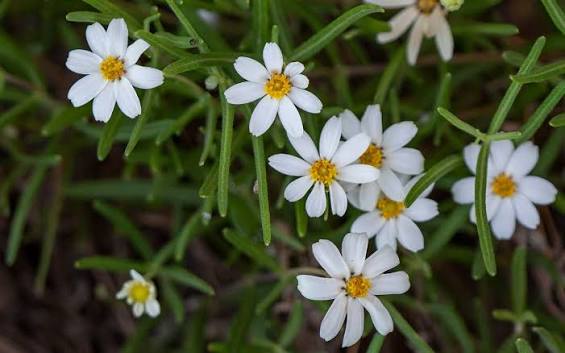
Blackfoot Daisy
Low native mound covered in white daisies most of the year. It does best with a little shade from the hottest afternoon sun, which this spot gets from the mesquite. Don't overwater it.
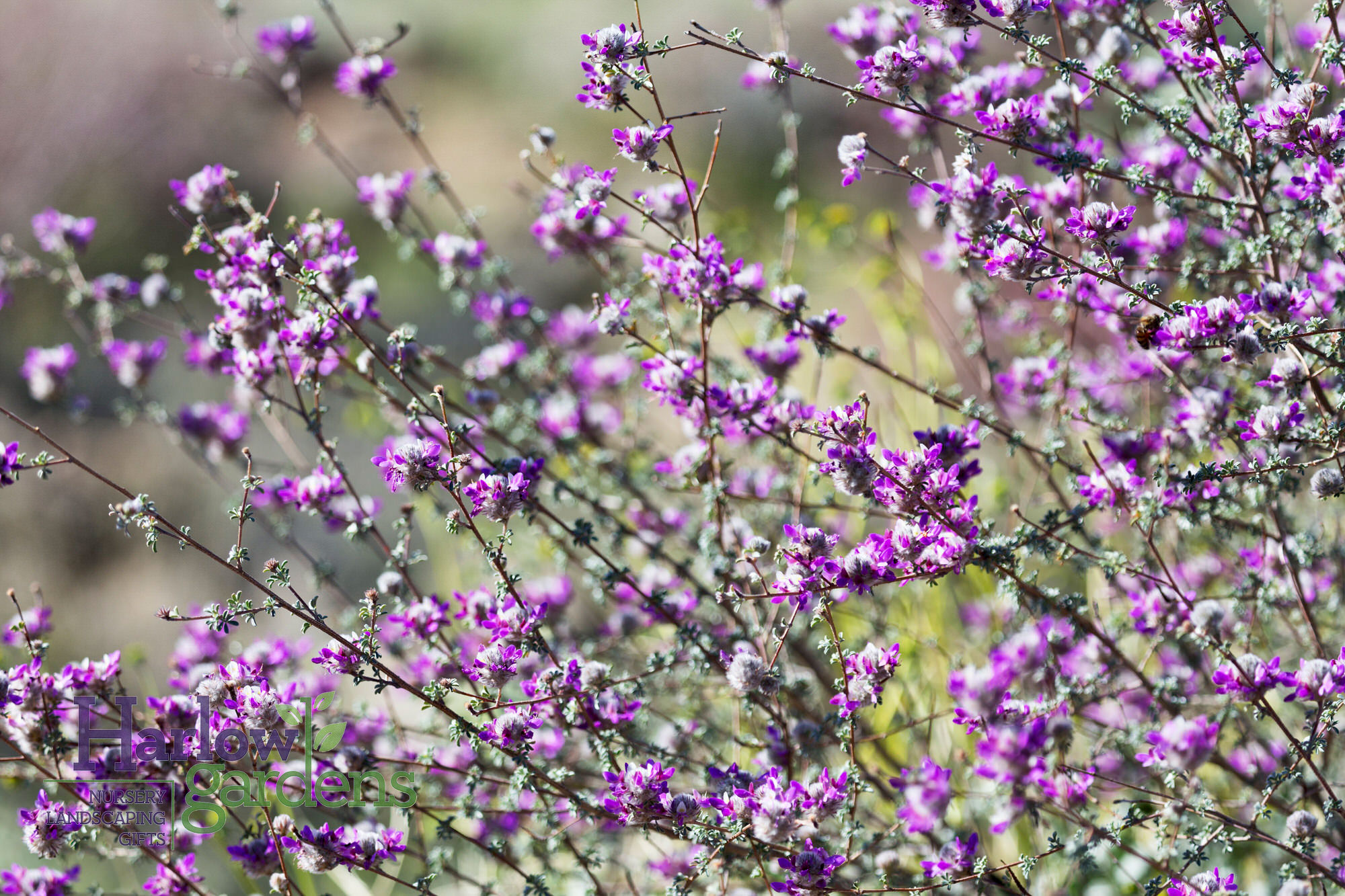
Trailing Indigo Bush
Silver groundcover with purple flowers in summer. Great for covering ground under the trees and softening around boulders without getting tall.
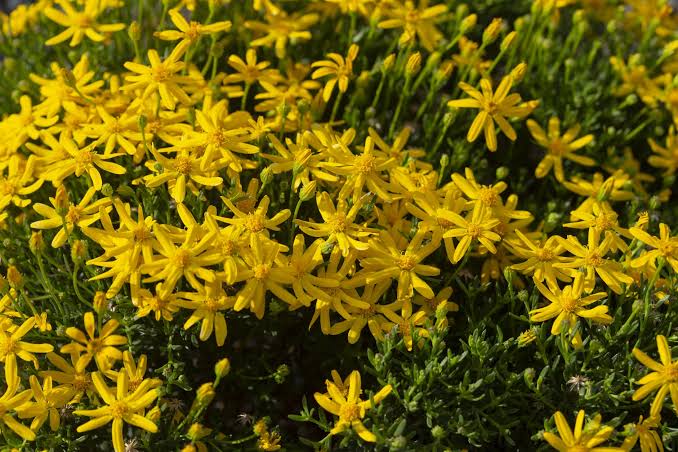
Damianita
Dense, aromatic evergreen mound with golden flowers in spring and fall. Stays very neat, which is exactly what you want along a path.
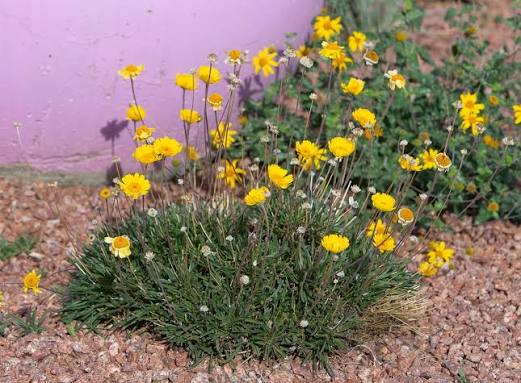
Angelita Daisy
Tight little mound with yellow daisies almost all year. One of the cleanest edging plants we have here.
Desert Marigold
Native, with bright yellow daisies most of the year over soft gray leaves. Small and low, so it's great along edges.
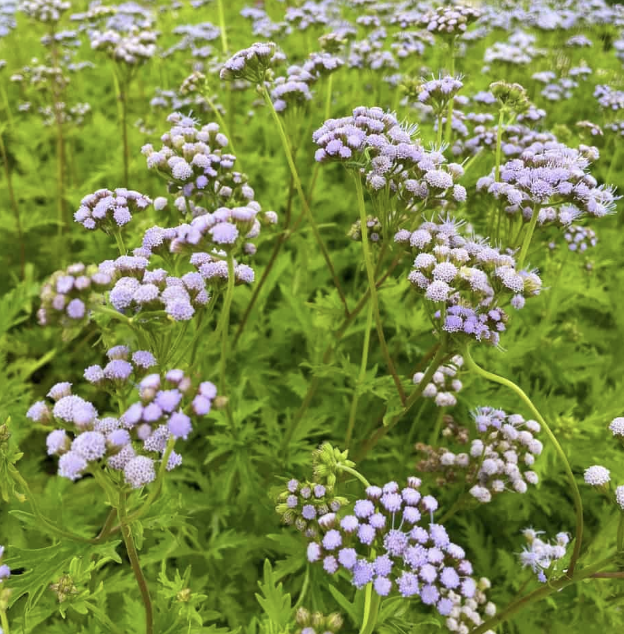
Greg's Mistflower
Fluffy blue flowers in warm months, and it's covered in queen butterflies. Spreads by roots to fill in, so it goes in the ground, not in raised beds.
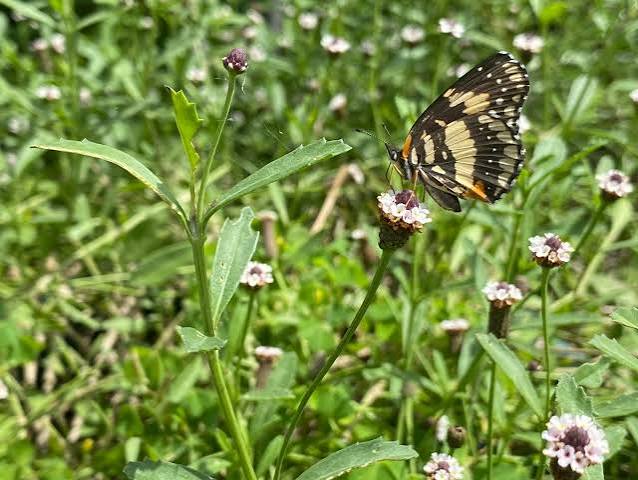
Frogfruit
Native groundcover with tiny white flowers that butterflies love. Spreads fast to fill a water well, takes foot traffic, and handles heat.
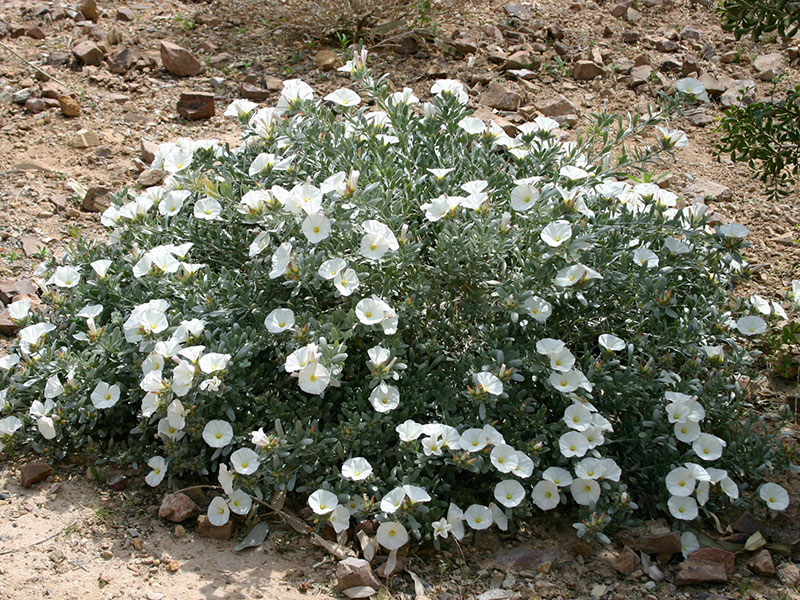
Bush Morning Glory
Silver mound with white morning glory flowers spring through fall. Spreads into a low, soft cover on a slope.
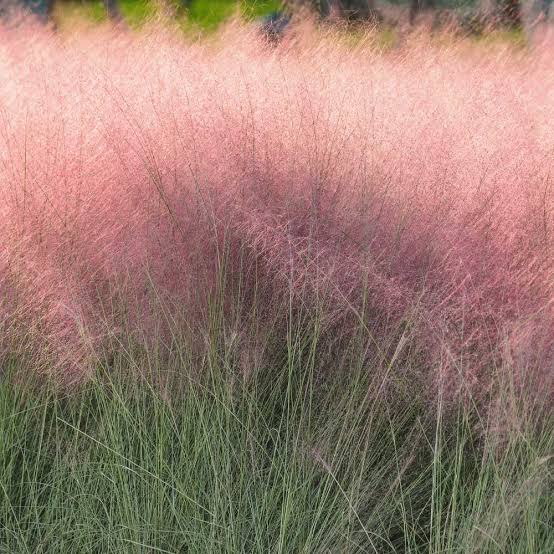
Muhly Grass
Pink, cloud-like plumes in fall that glow when the sun is behind them. Soft movement that breaks up the rock. Cut it back to about 6 inches in late winter and it comes back clean every spring.
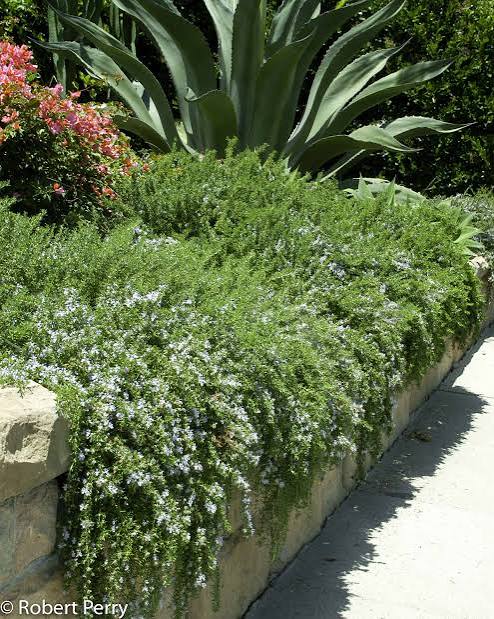
Trailing Rosemary
Low, spilling evergreen with blue flowers in winter and spring, and bees love it. Next to a barbecue you get to snip fresh rosemary right off the plant.
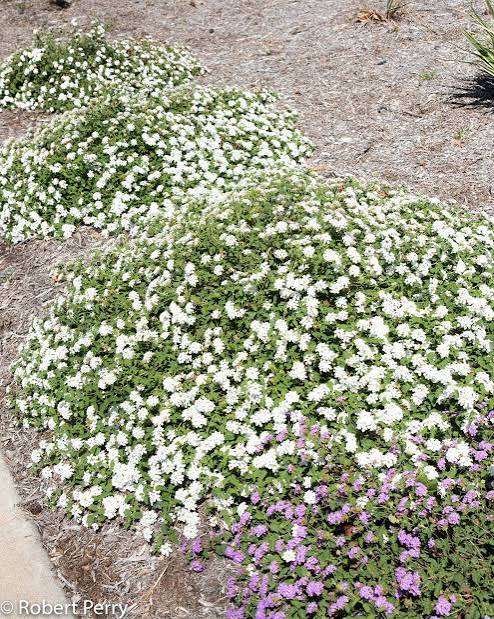
White Trailing Lantana
Low, spreading mats covered in white flowers most of the year, and butterflies visit all day. Handles the hottest spots.
The fence under the mesquite
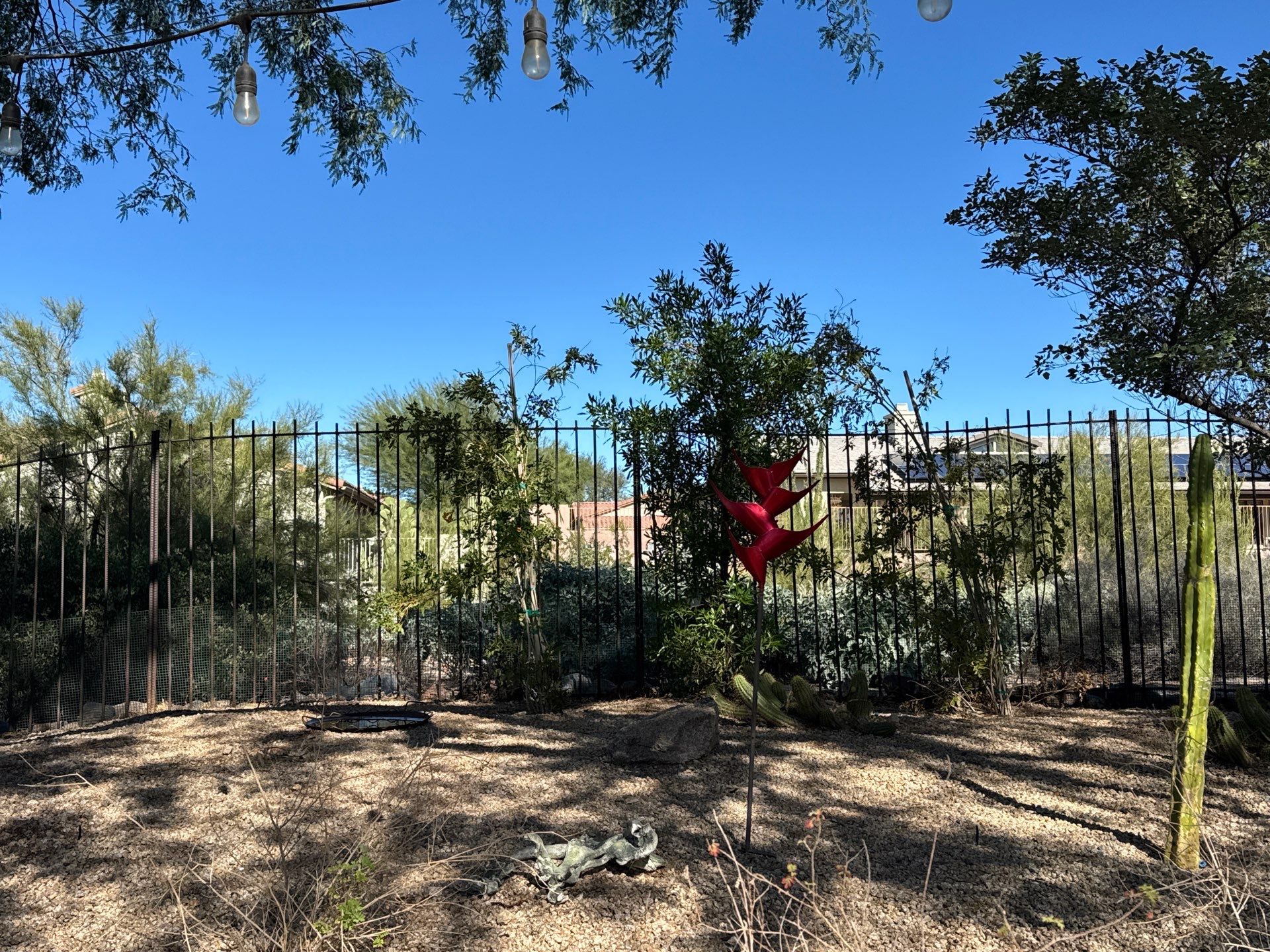
Back here against the fence, under the mesquite, there's a hopseed in the middle and an orange jubilee on each side. They're gangly and not filling in because they're getting too much shade from the mesquite above. Both of those want full sun. We're keeping this yard all desert plants, so here are desert options that get taller, handle the filtered shade under the mesquite, and will fill in fuller along the fence. Jojoba is a great fit here; in the wild it grows right under mesquite and palo verde.
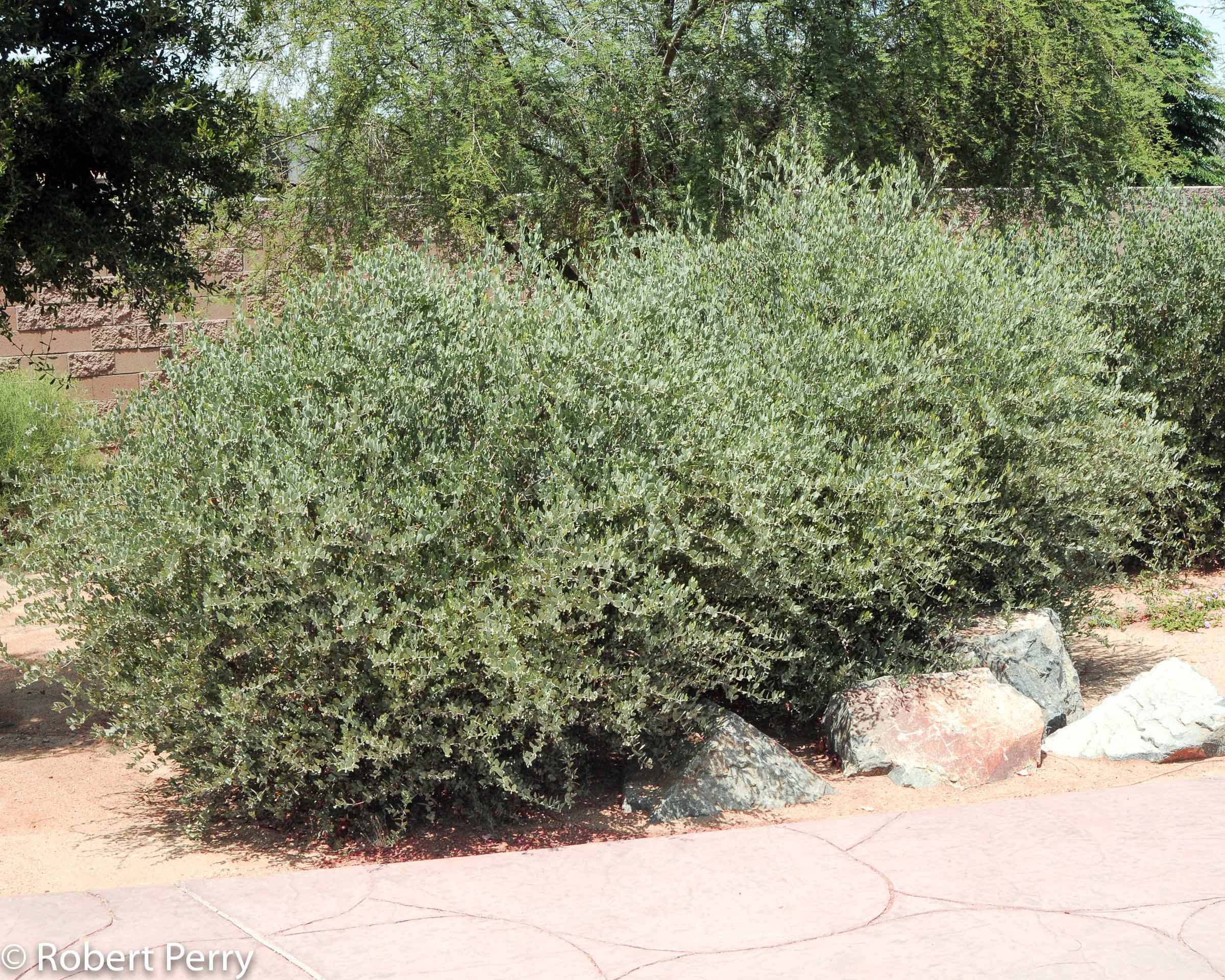
Jojoba
Sonoran native with dense, leathery blue green leaves. In the wild it often grows under mesquite and palo verde, so it handles this filtered shade well and fills in thick enough to screen a fence.

Twisted Myrtle
Small glossy evergreen leaves, white summer flowers, and a naturally upright, neat shape. Grows tall and narrow, so it can reach the roofline without taking over the bed. The cleanest, most minimal look of the options.
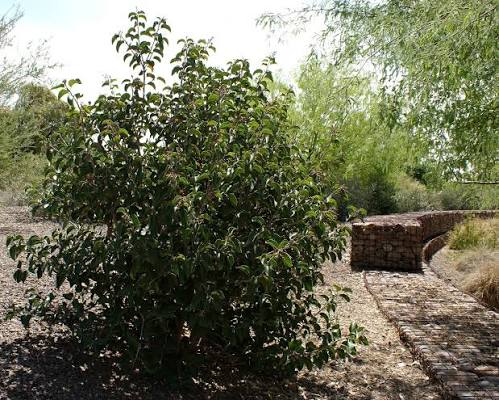
Sugar Bush
Native evergreen with pink and white flower clusters in spring. Dense and structured, so it anchors a bed and gives the smaller plants something to sit in front of.
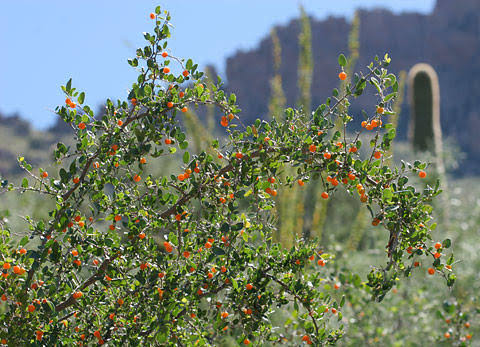
Desert Hackberry
Dense native shrub with small orange berries that birds love. Gives cover and food for quail and songbirds. Great along a property line or a wash.
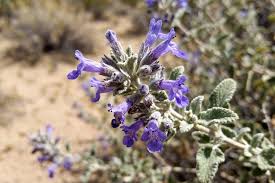
Desert Lavender
Native, with silvery aromatic leaves and small lavender flowers that bees cover. Taller, so it works at the back of a bed or as a soft screen.
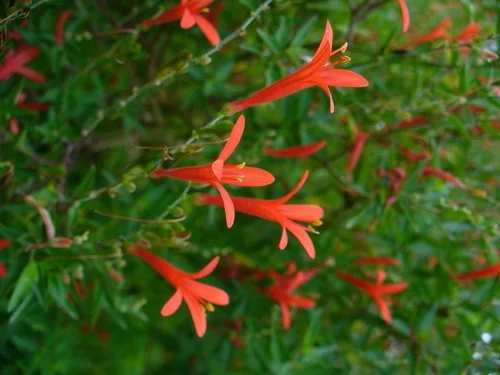
Desert Honeysuckle
Native shrub with tubular orange flowers from summer into fall that hummingbirds love. Takes the filtered shade under trees.
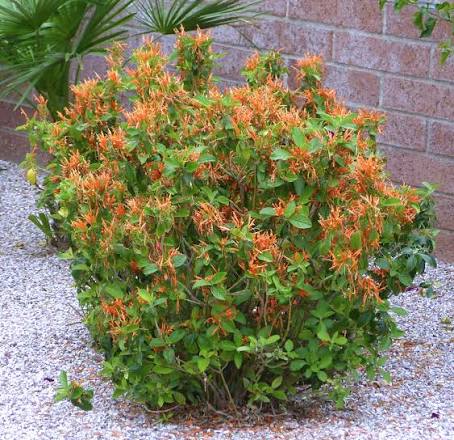
Mexican Honeysuckle
Soft green leaves and orange tubular flowers much of the year, and it actually does better out of full sun. Hummingbirds will find it even in a narrow side yard.
Move the drip emitters away from the cactus
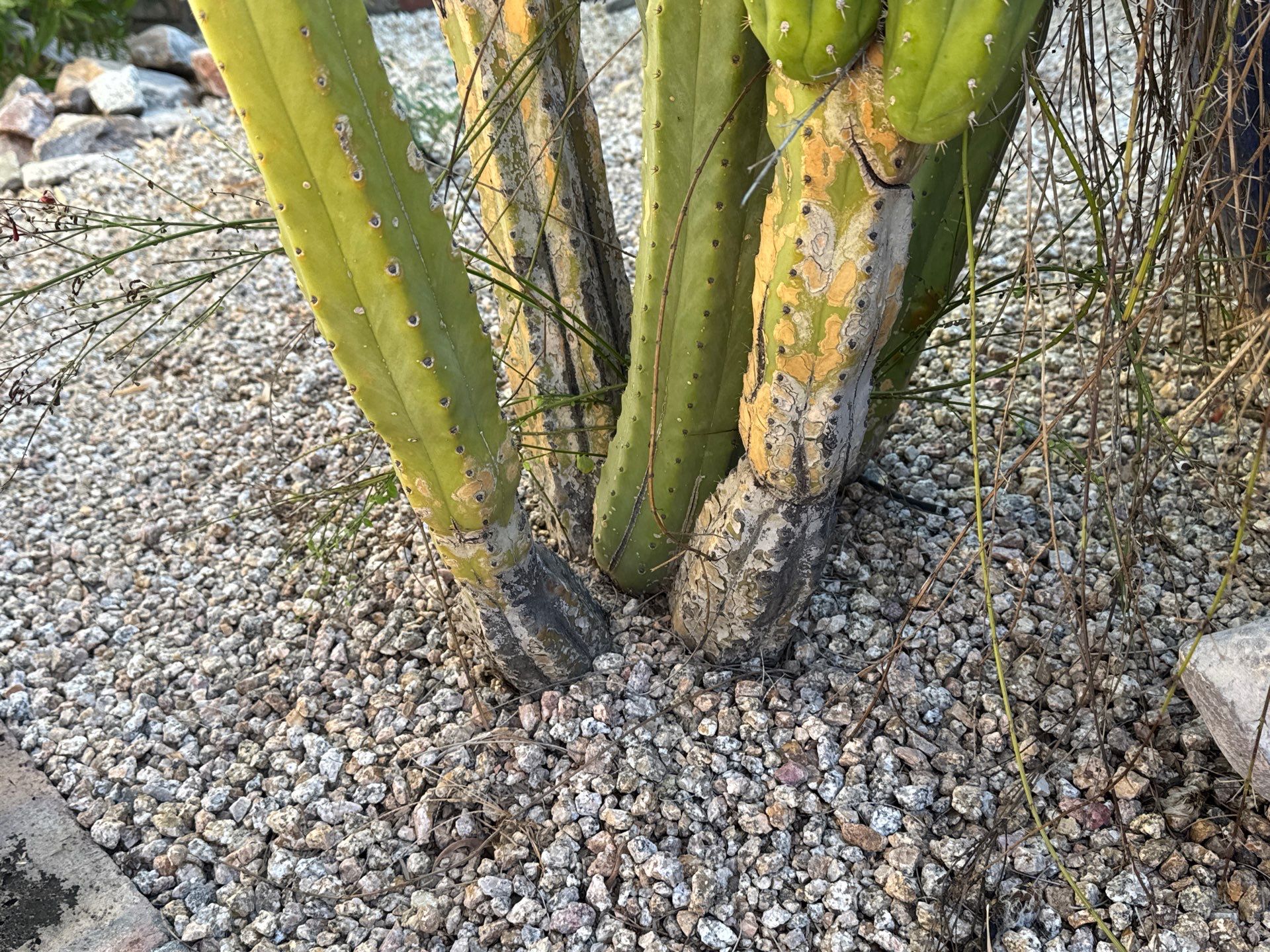
On this cactus and all of the cactus in the yard, the drip emitters shouldn't be right next to the base. Constant water at the base rots cactus out and has them taking up more water than they want. On all of them, pull the emitter back 3 to 4 ft away from the base of the cactus. The roots spread out wide and shallow and will find the water.
Cactus need much less water than the rest of the yard. If they share a drip line with thirstier plants, the simplest fix is to cap their emitters and give them a deep soak by hose every few weeks in summer and about once a month or less in winter.
Shady groundcover
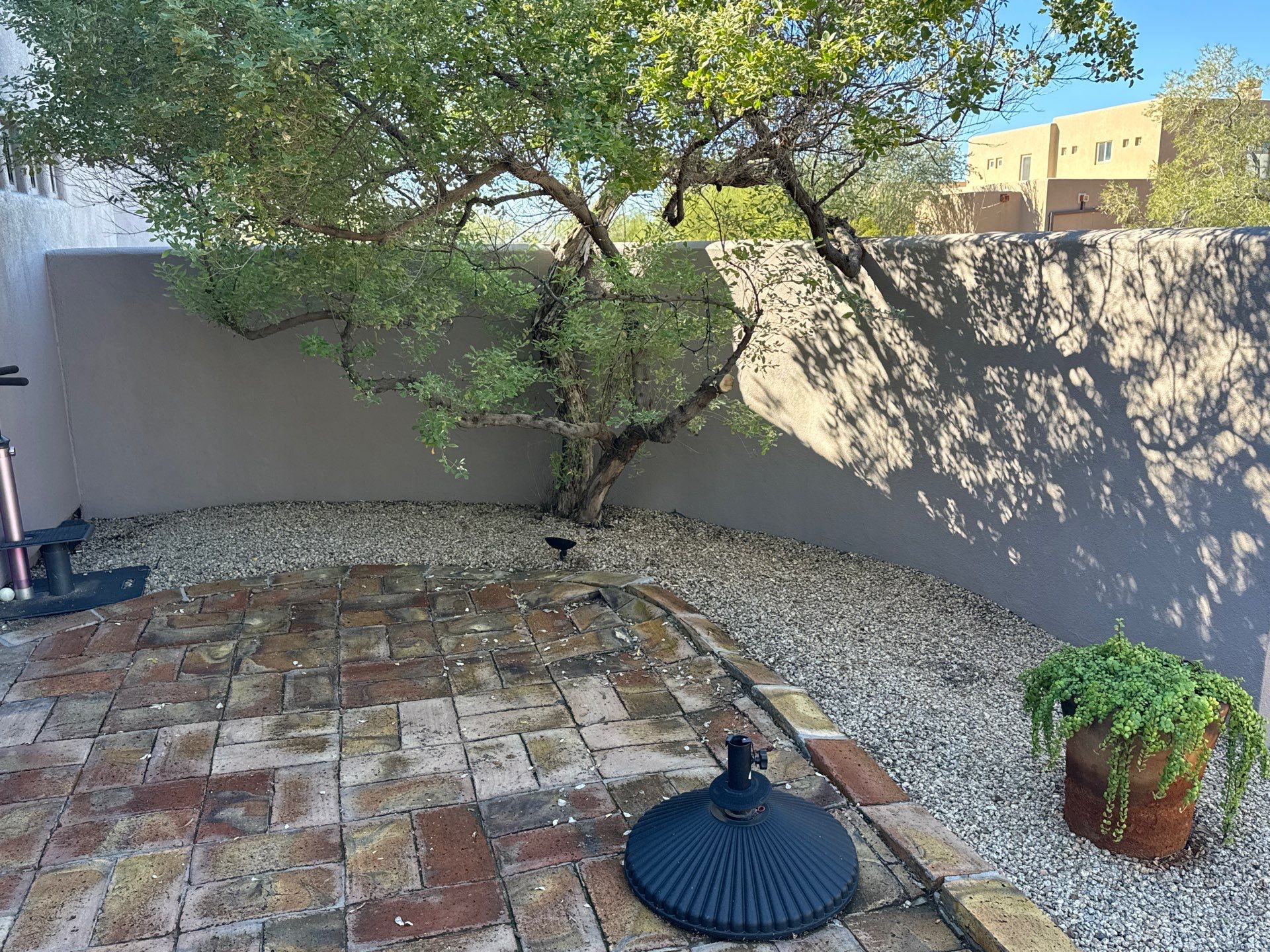
This area gets quite a bit of shade, especially in winter when the sun shifts farther south. A groundcover will fill in and cover the area nicely. Yellow dot is a good choice here; just know it grows fast and can overtake nearby plants once it's established. Blackfoot daisy also does well with this kind of shade, and here are a few others.

Yellow Dot
Also called wedelia. Bright green, glossy groundcover with small yellow daisies most of the warm season. Fills in a water well fast and keeps the soil shaded. It can grow fast and overtake nearby plants once it's established, so trim it back from anything you don't want it climbing into.
Blackfoot Daisy
Low native mound covered in white daisies most of the year. It does best with a little shade from the hottest afternoon sun, which this spot gets from the mesquite. Don't overwater it.

Purple Heart
Deep purple groundcover that brightens up a shady spot. Spreads slowly to fill in and is easy to pull back if it wanders.
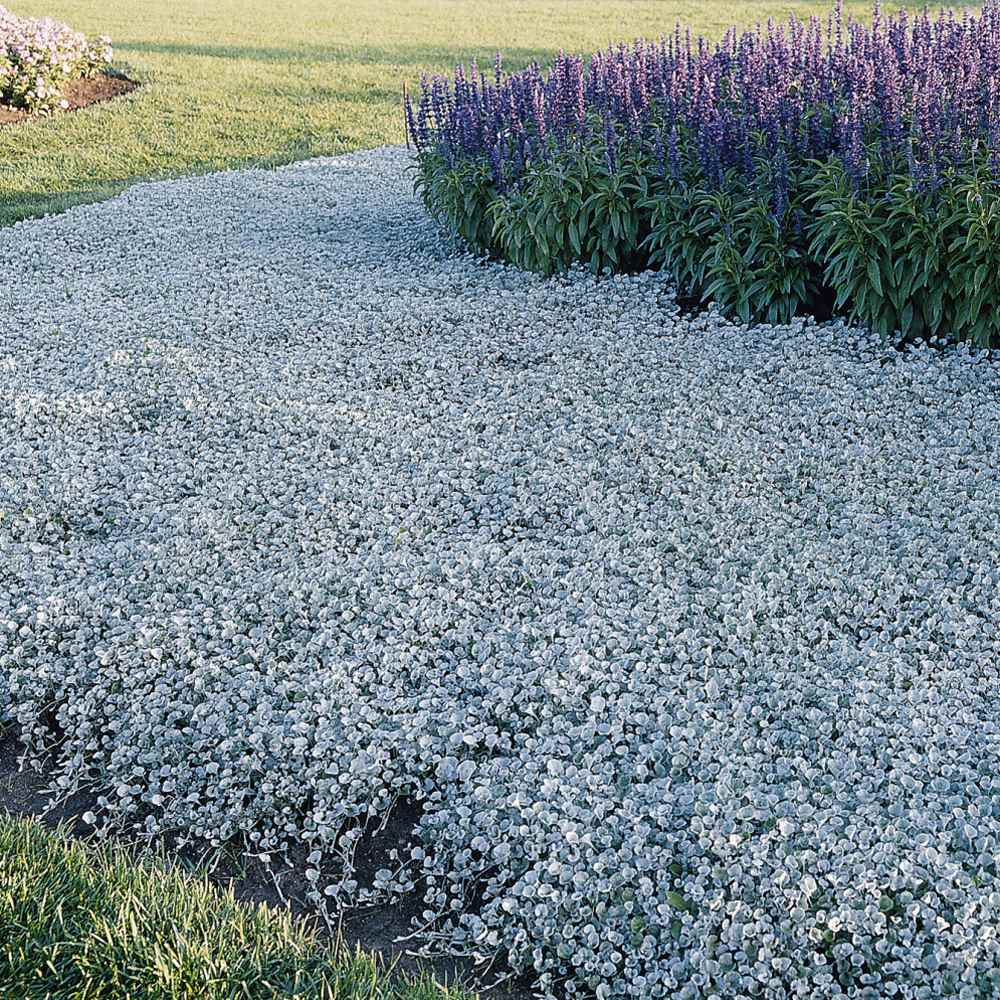
Silver Ponyfoot
Soft silver leaves that trail and spill. A cool, bright contrast against mulch and green plants.
Frogfruit
Native groundcover with tiny white flowers that butterflies love. Spreads fast to fill a water well, takes foot traffic, and handles heat.
Greg's Mistflower
Fluffy blue flowers in warm months, and it's covered in queen butterflies. Spreads by roots to fill in, so it goes in the ground, not in raised beds.
Adding color to the open rock
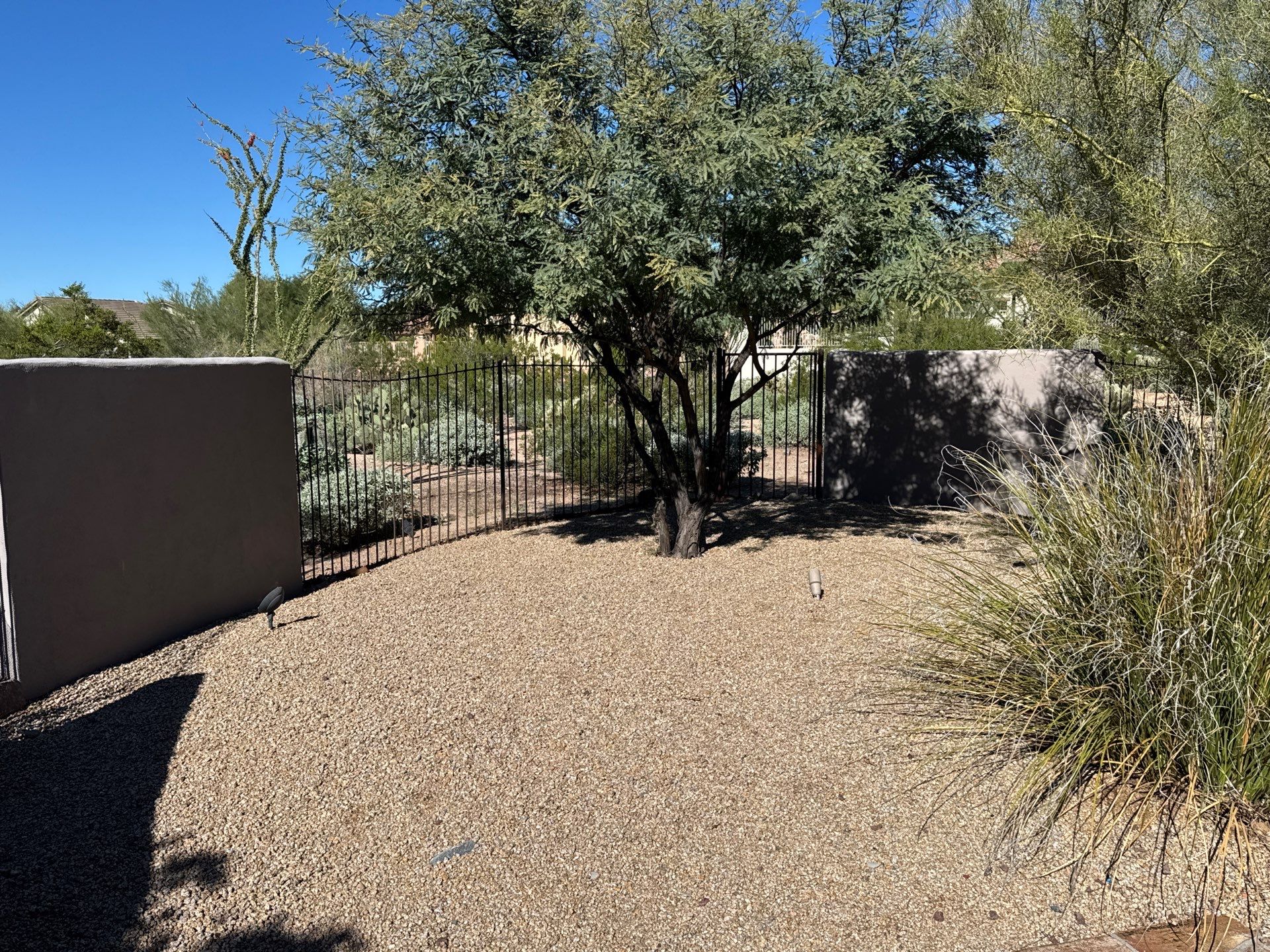
Right here there's quite a bit of open rock, and it's a good opportunity to add more color. This spot gets decent sun, so there's enough light for most desert adapted plants. Here are shrubs that grow about 3 to 4 ft tall, plus a couple of lower groundcovers to fill in around them. Plant the shrubs in loose groups of three, with the groundcover in front and between.
Shrubs, 3 to 4 ft
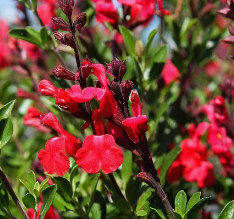
Autumn Sage
Red or pink flowers in spring and fall that hummingbirds love. A great cottage-garden look that still fits the desert.
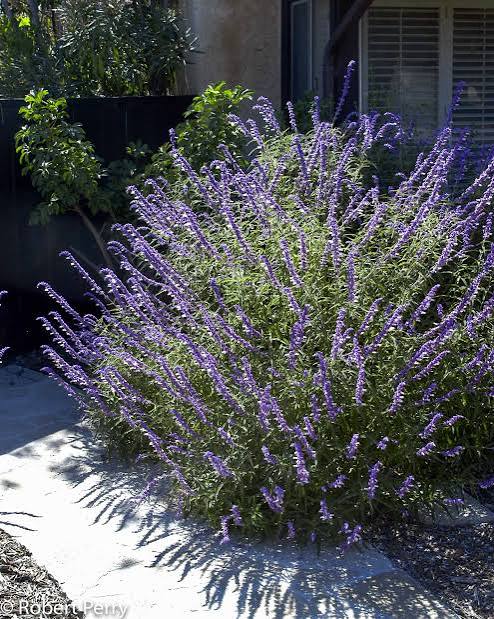
Mexican Bush Sage
Velvety purple flower spikes in fall and spring that hummingbirds and bees love. Great at the back of a bed against the house. Cut it back in late winter.
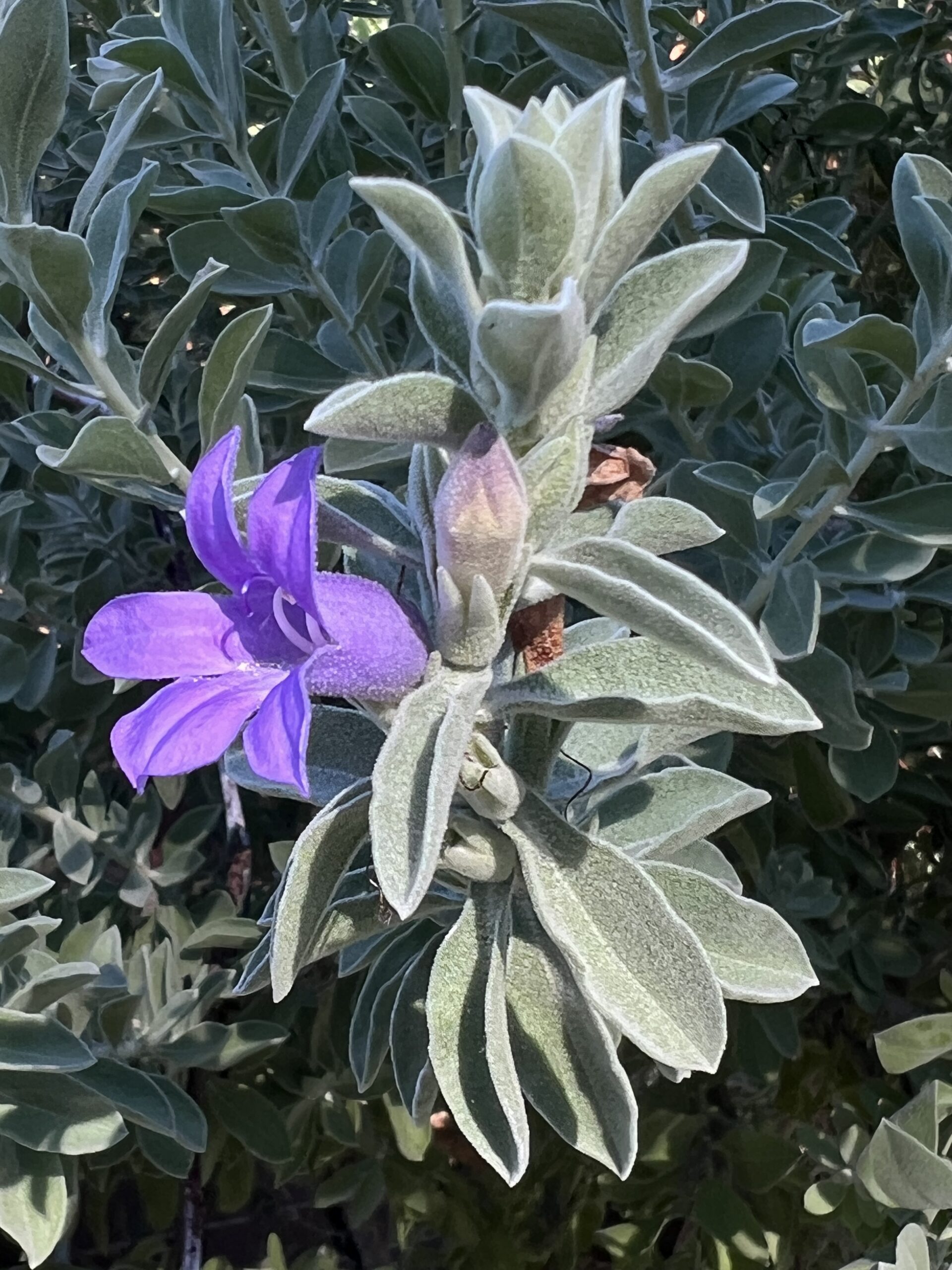
Blue Bells Emu
Blue-purple bell flowers in winter and spring on a tidy evergreen shrub. Handles reflected heat off the pool deck and walls.
Muhly Grass
Pink, cloud-like plumes in fall that glow when the sun is behind them. Soft movement that breaks up the rock. Cut it back to about 6 inches in late winter and it comes back clean every spring.
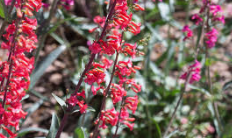
Penstemon
Tall spring flower spikes in pink, red, or purple that hummingbirds love. Low rosette the rest of the year, so it keeps things clean. Reseeds lightly.

Globe Mallow
Native, with bright orange cup flowers in spring that native bees love. Cut it back by about half after the spring bloom to keep it looking tidy instead of rangy.

Desert Milkweed
Upright gray-green stems with cream flowers, and the host plant for monarch and queen butterflies. Very clean, vertical look. Plant it in the ground, not in raised beds.
Pink Fairy Duster
Native, with pink powder-puff flowers in late winter and spring. Small, airy, and takes very little water once it settles in.
Lower groundcover
Blackfoot Daisy
Low native mound covered in white daisies most of the year. It does best with a little shade from the hottest afternoon sun, which this spot gets from the mesquite. Don't overwater it.
Desert Marigold
Native, with bright yellow daisies most of the year over soft gray leaves. Small and low, so it's great along edges.
Angelita Daisy
Tight little mound with yellow daisies almost all year. One of the cleanest edging plants we have here.
Emu Bush (Outback Sunrise)
Low, dense yellow-green groundcover with small yellow flowers in late winter and spring. One of the best groundcovers for hot spots and reflected heat.
Trailing Indigo Bush
Silver groundcover with purple flowers in summer. Great for covering ground under the trees and softening around boulders without getting tall.
Agave pups
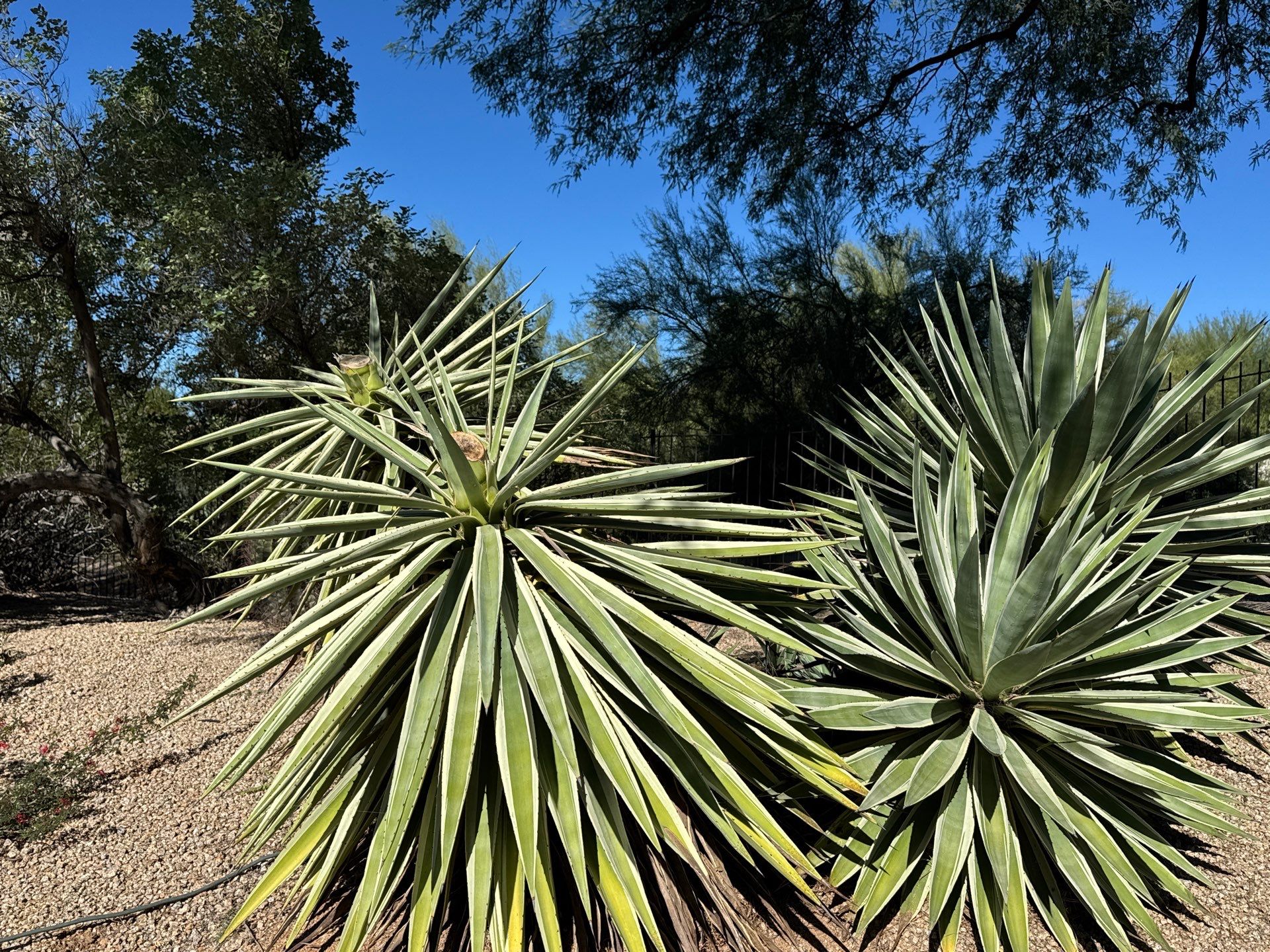
We talked about these. Once an agave flowers, the mother plant dies, but before that it sends up pups around the base. Once one has died, you can cut it out, and the pups can be transplanted anywhere you want. They take pretty easily.
- Dig around each pup with a shovel or trowel, getting as much of its root as you can, and cut it free from the mother plant.
- Let it sit in the shade for a few days so the cut end dries and calluses over. That keeps it from rotting once it's planted.
- Plant it at the same depth it was growing, in a sunny spot with good drainage, and water it in lightly. Then water sparingly until it roots in.
- Spring and fall are the best times to move them.
Shade under the mesquite and palo verde
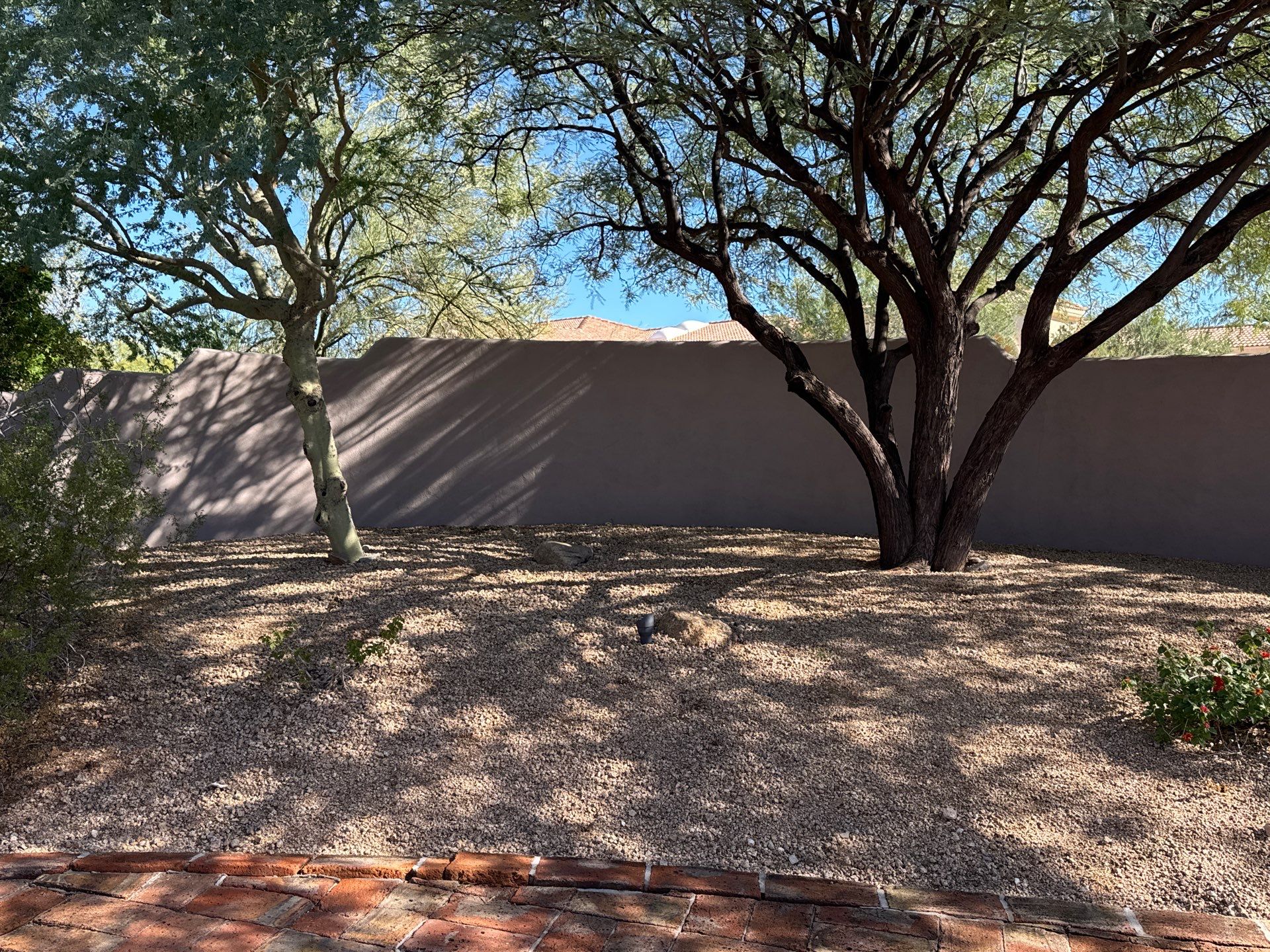
This is the side of the backyard, with quite a bit of shade under the mesquite and the palo verde. One lantana gets a little more sun and is doing better. The one farther north isn't getting enough sun and isn't happy. Lantana needs full sun to flower and stay full. Here are plants that work with limited sun and can fill in this area.
Mexican Honeysuckle
Soft green leaves and orange tubular flowers much of the year, and it actually does better out of full sun. Hummingbirds will find it even in a narrow side yard.
Desert Honeysuckle
Native shrub with tubular orange flowers from summer into fall that hummingbirds love. Takes the filtered shade under trees.
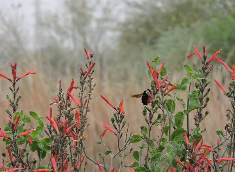
Chuparosa
Native, with red tubular flowers through winter and spring. Hummingbirds will defend it. Goes in the ground, not in raised beds.
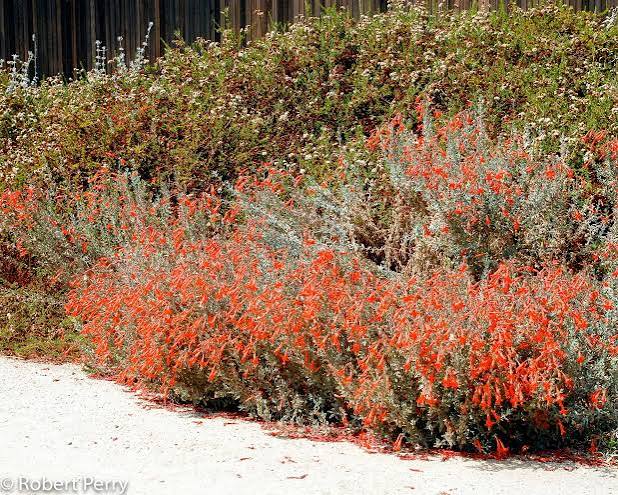
Desert Fuchsia
Native, with orange-red tubular flowers in late summer and fall when hummingbirds need them. Handles some afternoon shade under the trees.
Jojoba
Sonoran native with dense, leathery blue green leaves. In the wild it often grows under mesquite and palo verde, so it handles this filtered shade well and fills in thick enough to screen a fence.
Greg's Mistflower
Fluffy blue flowers in warm months, and it's covered in queen butterflies. Spreads by roots to fill in, so it goes in the ground, not in raised beds.
Blackfoot Daisy
Low native mound covered in white daisies most of the year. It does best with a little shade from the hottest afternoon sun, which this spot gets from the mesquite. Don't overwater it.
Purple Heart
Deep purple groundcover that brightens up a shady spot. Spreads slowly to fill in and is easy to pull back if it wanders.
Elephant food in the pot
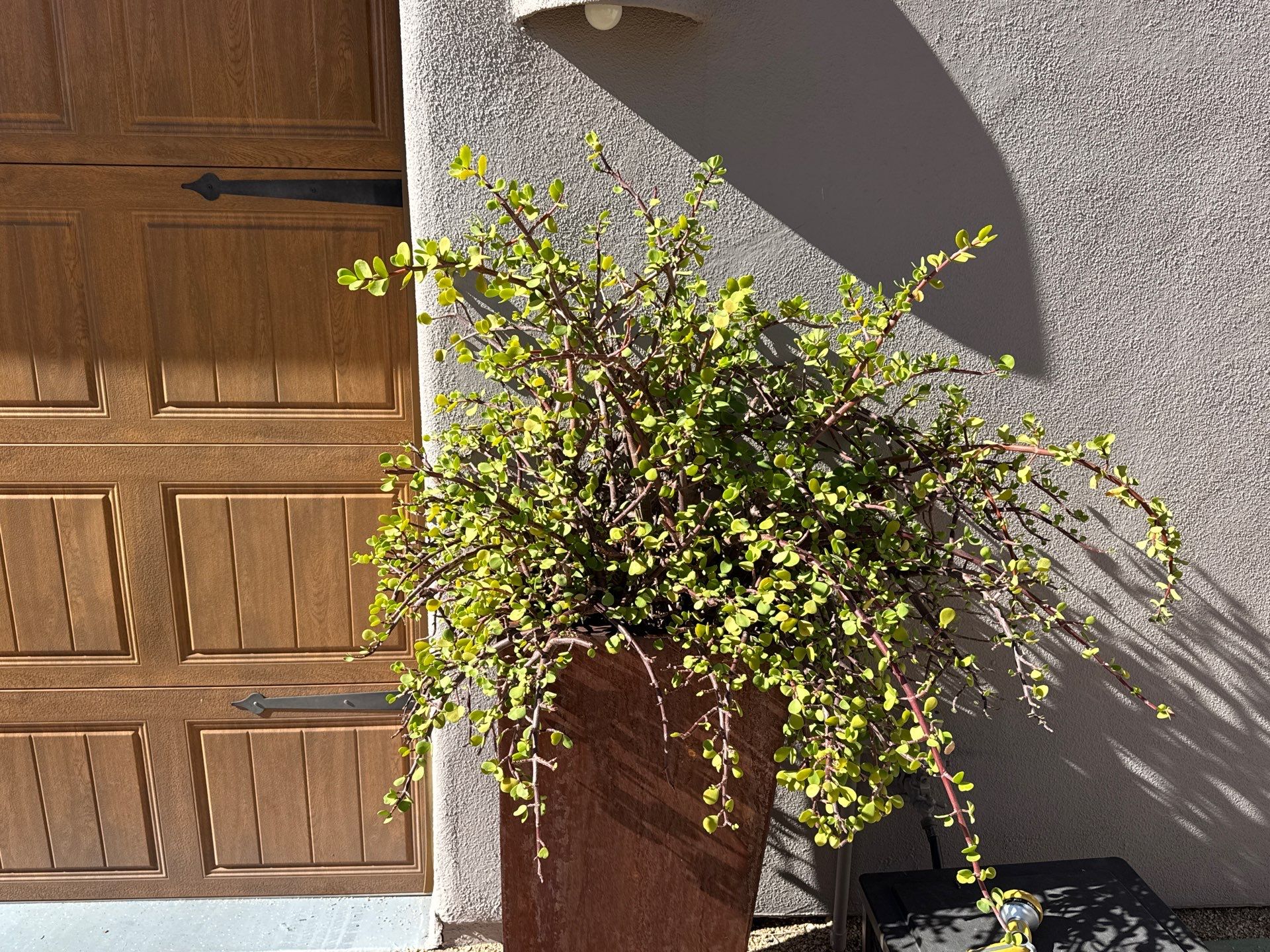
The elephant food in this pot has gotten woody and a little spiky. You can go ahead and cut off all the dead stuff now; this is an okay time to do it.
- Cut dead branches back to where they meet live growth.
- Shorten any long, leggy stems back to a side branch to tighten up the shape.
- Give it a deep water right after pruning to help it push new growth.
- Hold off on heavy cutting until spring, and cover it on frost nights.
Coral fountain grass
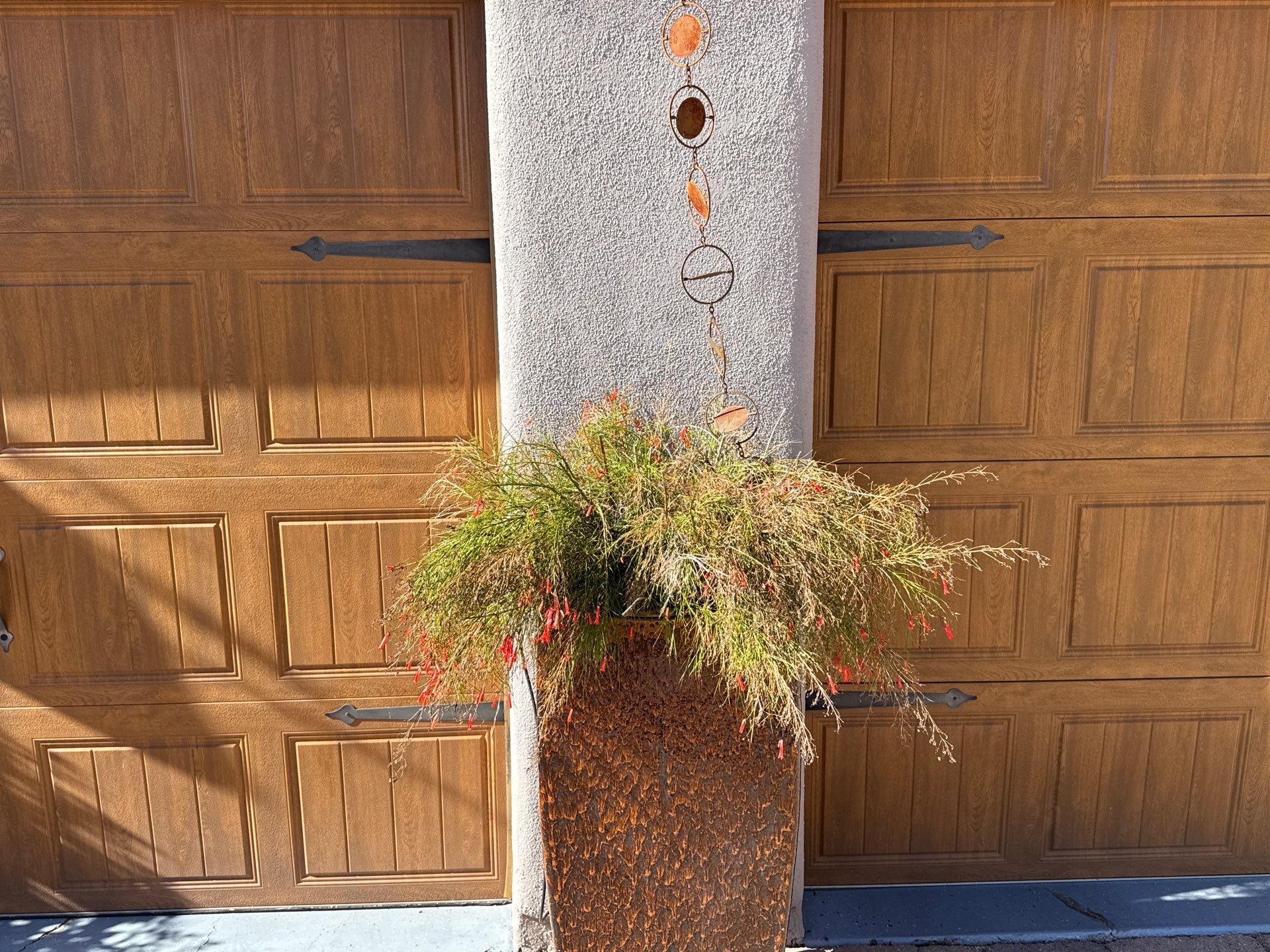
On the coral fountain grass, you can do some pruning now to clean out the dead stuff. Just pull or cut out the dead blades and old flower stalks. For the big corrective prune, which I do recommend, wait until the end of February.
- Cut the whole clump back to about 6 inches.
- Give it a deep water right after pruning to help it push new growth.
- It will come back fresh and full in spring.
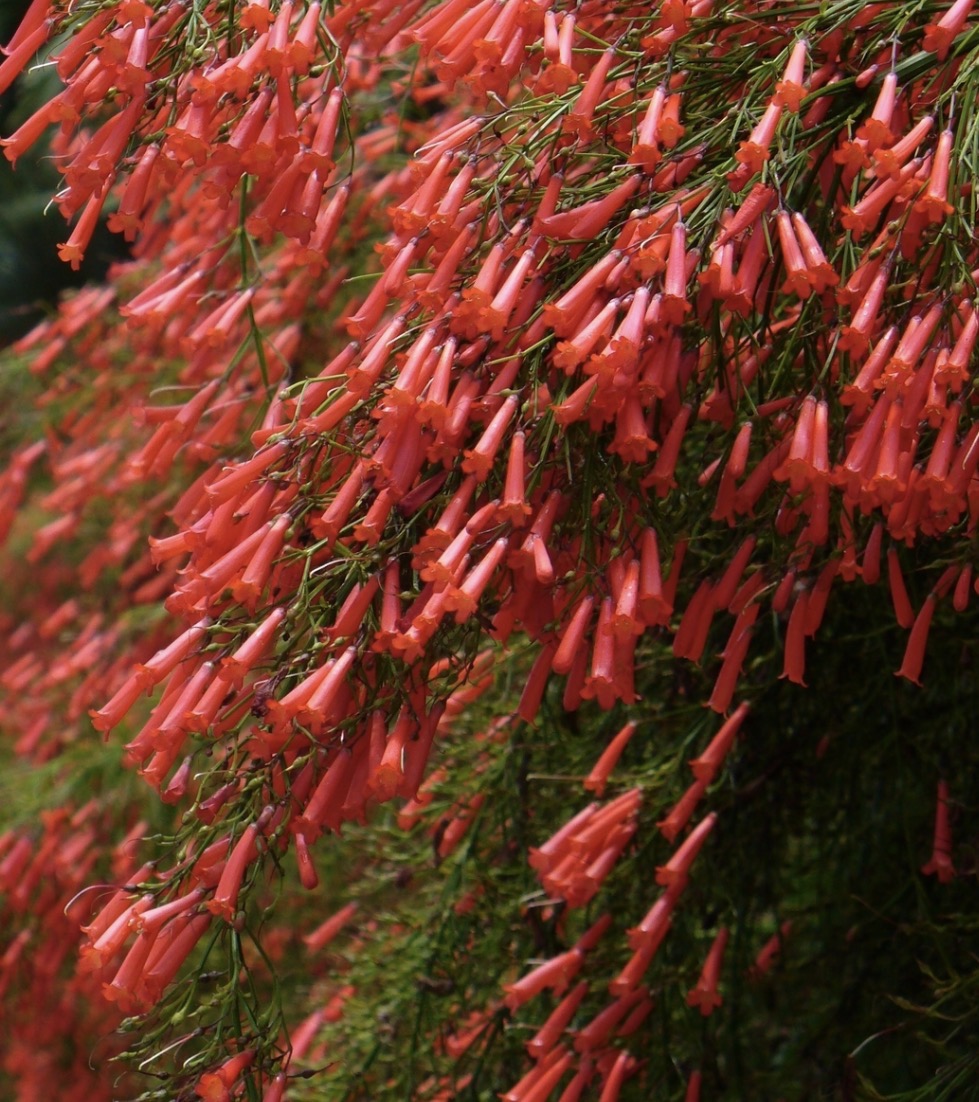
Coral Fountain Grass
Soft, arching grass with coral-pink plumes most of the warm season. Gives movement and a clean, low border without blocking the view. Non-invasive, unlike the old purple fountain grass.
Front Yard
A spot for an ocotillo
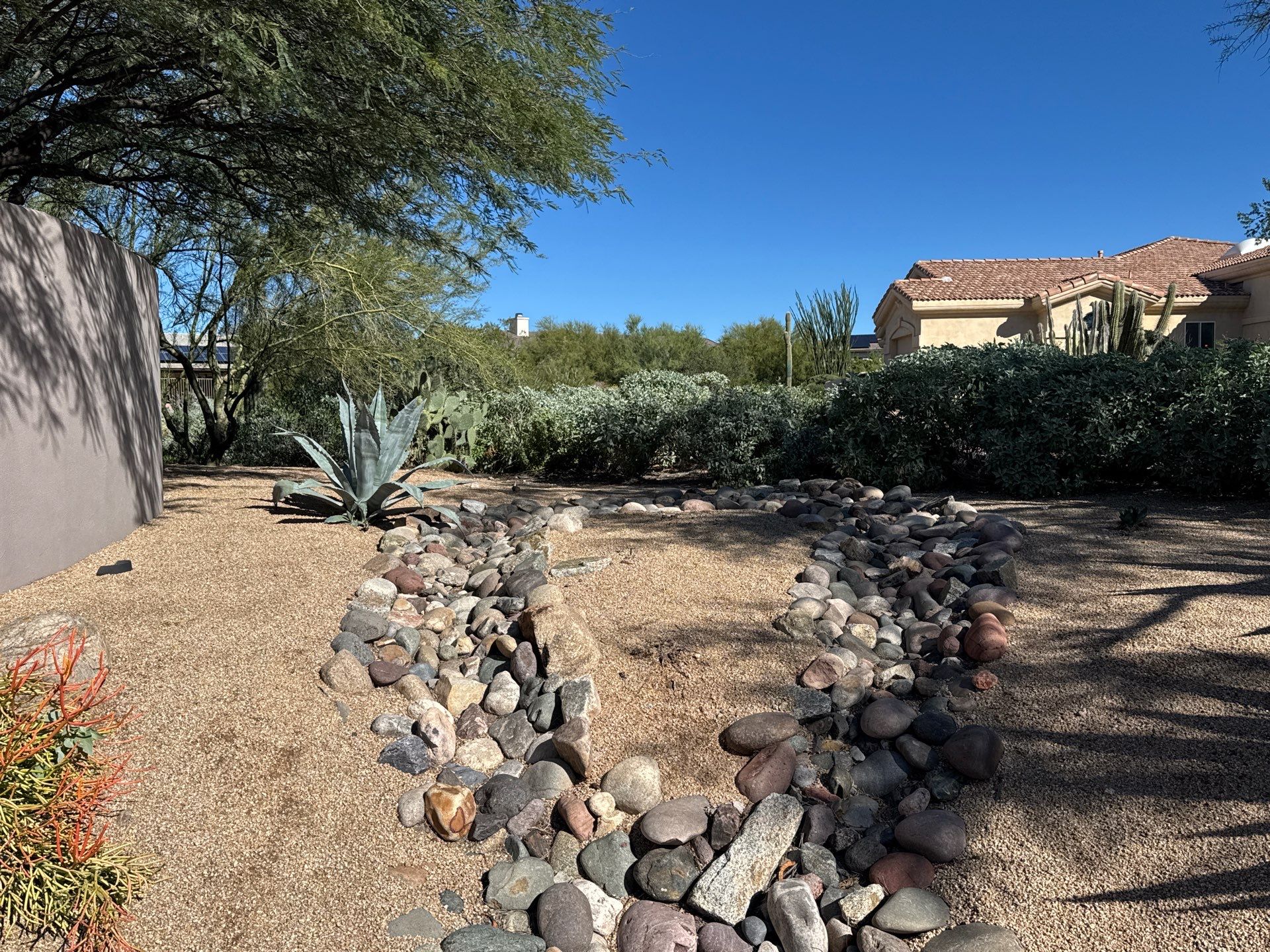
Here in the front yard, this open space between the river rock is a great place for your ocotillo. As I mentioned, buying bare root isn't the preferred way. A bare root ocotillo is a cut stem with almost no roots, and many of them never fully establish. Buy one that's already growing in a pot and rooted out instead. It costs a little more but takes off much faster and reliably.
- Plant it at the same depth it's growing in the pot, in a spot with good drainage.
- Water it deeply after planting, then let it dry out between waterings. Ocotillos leaf out after water and drop their leaves when dry; that's normal.
- Late spring into summer, when it's warm, is the best time to plant.
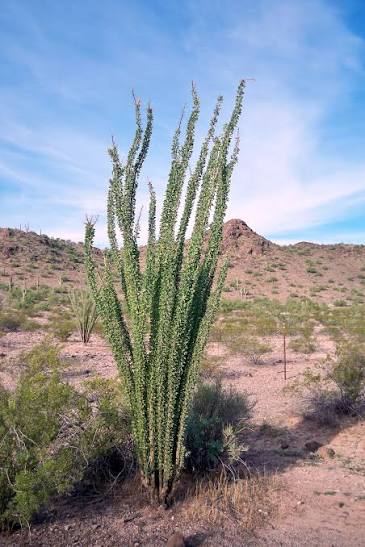
Ocotillo
Tall native wands that leaf out after rain and tip in red flowers in spring. Hummingbirds time their migration around it. Very sculptural.
Replacing the cactus that's on its way out
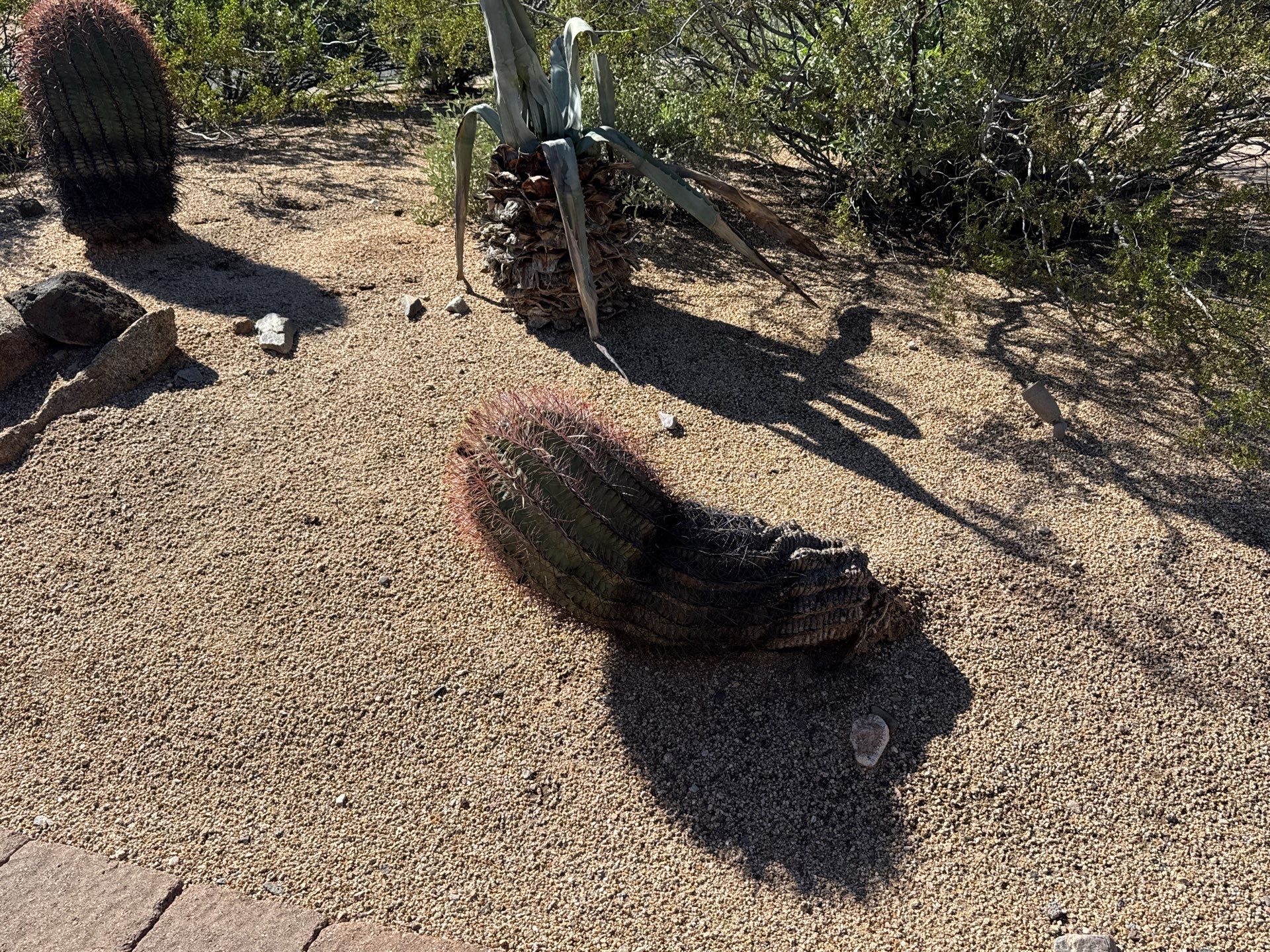
This cactus is on its way out. Here are other cactus that would do well here, with an eye on the colorful ones. Hedgehogs are a great pick, with big magenta or scarlet flowers in spring. Plant cactus slightly high with rock or gravel at the base, no mulch touching them, and keep the drip emitter 3 to 4 ft away like we talked about.
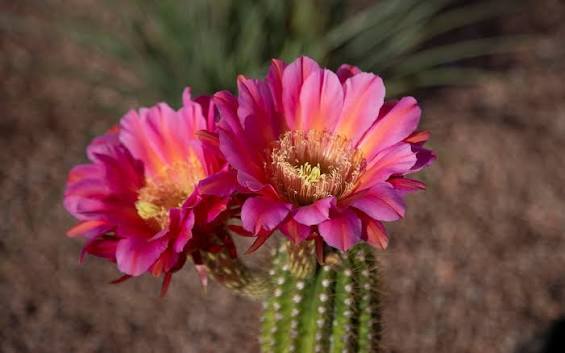
Hedgehog Cactus
Small native clumping cactus with big magenta flowers in spring. Great tucked along path edges and between rocks.
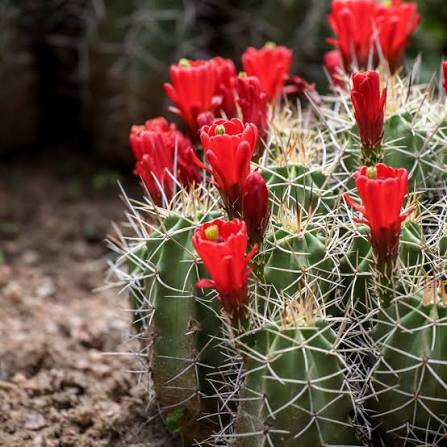
Claret Cup Hedgehog
Native hedgehog with deep scarlet cup flowers in spring that hummingbirds visit, unusual for a cactus. Forms tight mounds that look great nestled against boulders.
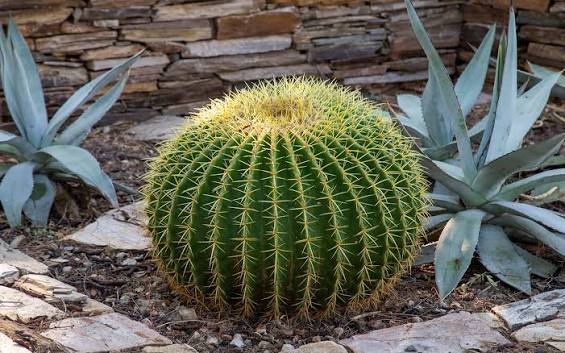
Golden Barrel Cactus
Perfectly round and glowing gold when the sun hits the spines. Groups of three or five look great along a path or at the base of a taller cactus. It can sunburn in reflected heat, so give it a little afternoon shade near walls.
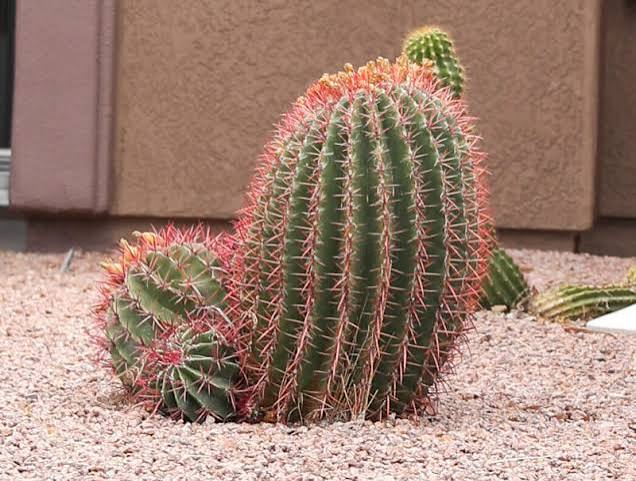
Fishhook Barrel Cactus
Native barrel with a ring of orange or yellow flowers in summer and yellow fruit after. A strong round shape to contrast with the tall saguaros.
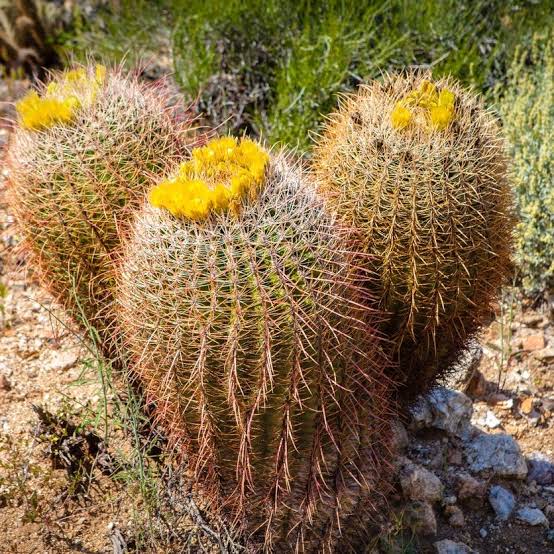
Compass Barrel Cactus
Our native barrel, taller and more columnar than fishhook, with red to yellow spines and yellow flowers in spring. It leans south as it grows, which is how it got its name. A great tall accent at a bend in the path.
The fairy duster by the driveway
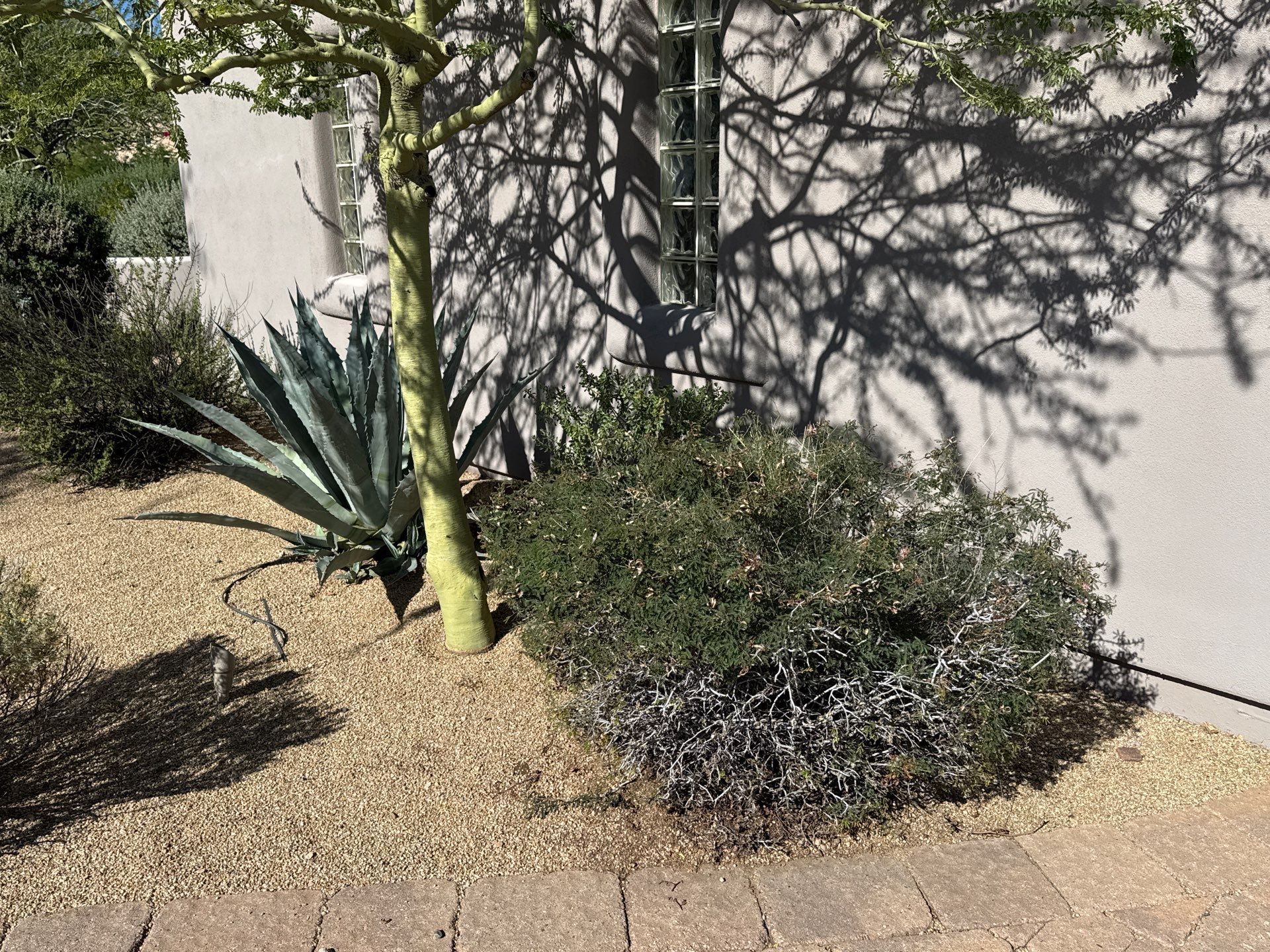
This fairy duster is too close to the driveway, so it's had to be pruned back to keep it off the driveway, and it's not happy about that. I'd take it out. That will also free up the sage bush behind it, which is getting overtaken and not getting enough sun. Once the fairy duster is gone, the sage will fill back in.
A nicer entry along the walkway
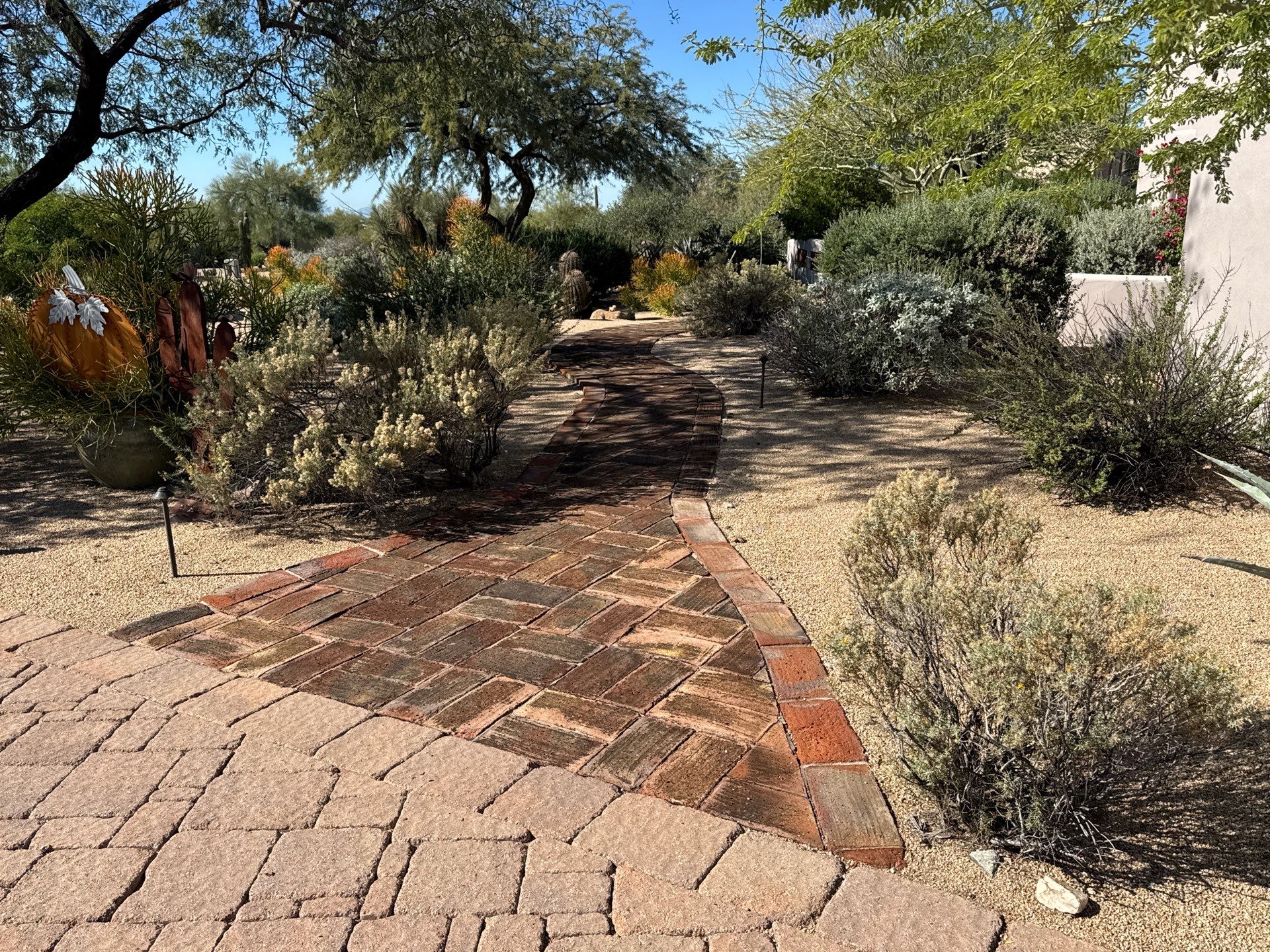
At the entrance to the walkway there are two turpentine bushes, one on each side. You don't like them as an entryway, and I agree; they're underwhelming there. Here are options that grow 2 to 4 ft tall, look nicer, and still feel natural. Use the same plant on both sides so it frames the entry.
Blue Bells Emu
Blue-purple bell flowers in winter and spring on a tidy evergreen shrub. Handles reflected heat off the pool deck and walls.
Autumn Sage
Red or pink flowers in spring and fall that hummingbirds love. A great cottage-garden look that still fits the desert.
Mexican Bush Sage
Velvety purple flower spikes in fall and spring that hummingbirds and bees love. Great at the back of a bed against the house. Cut it back in late winter.
Muhly Grass
Pink, cloud-like plumes in fall that glow when the sun is behind them. Soft movement that breaks up the rock. Cut it back to about 6 inches in late winter and it comes back clean every spring.
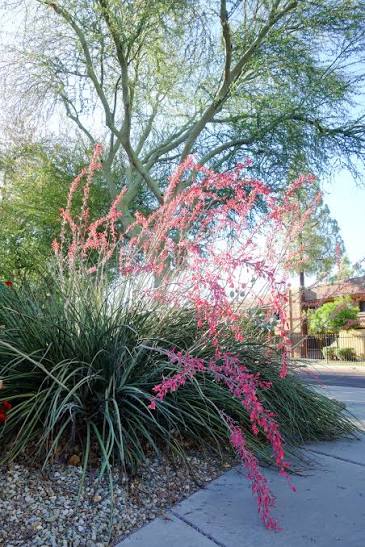
Red Yucca
Grassy clump with coral flower spikes from spring into fall. Hummingbirds love it, and it drops almost nothing, which makes it perfect near the pool.
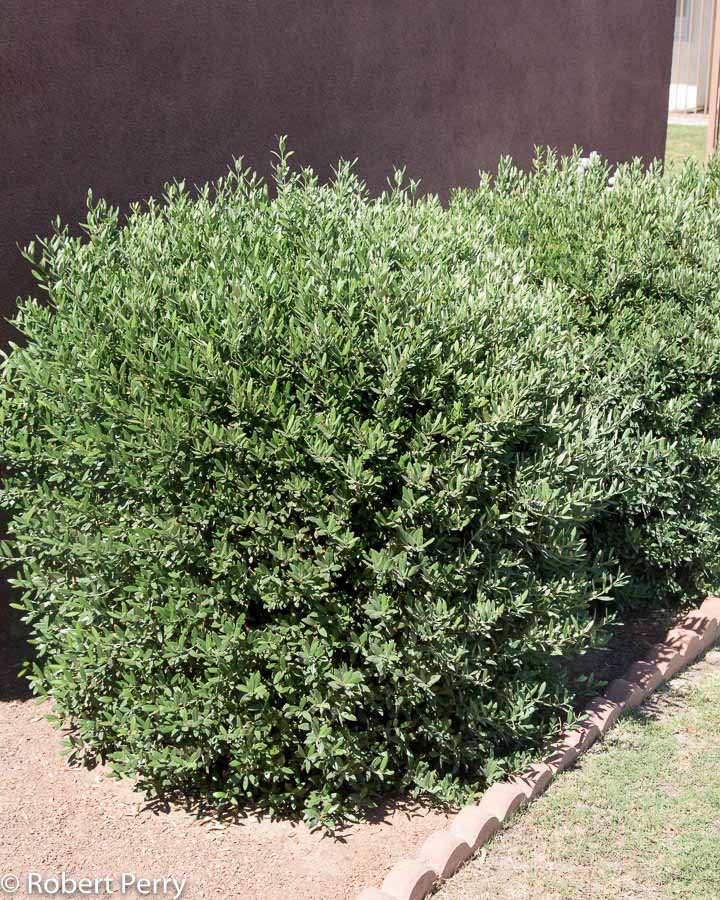
Little Ollie
A dwarf olive that stays a neat, dense, gray-green mound with no fruit and no pollen. Handles full sun against the house and takes less water than plants that aren't desert adapted. Very clean look.
Desert Milkweed
Upright gray-green stems with cream flowers, and the host plant for monarch and queen butterflies. Very clean, vertical look. Plant it in the ground, not in raised beds.
Rejuvenating the sage
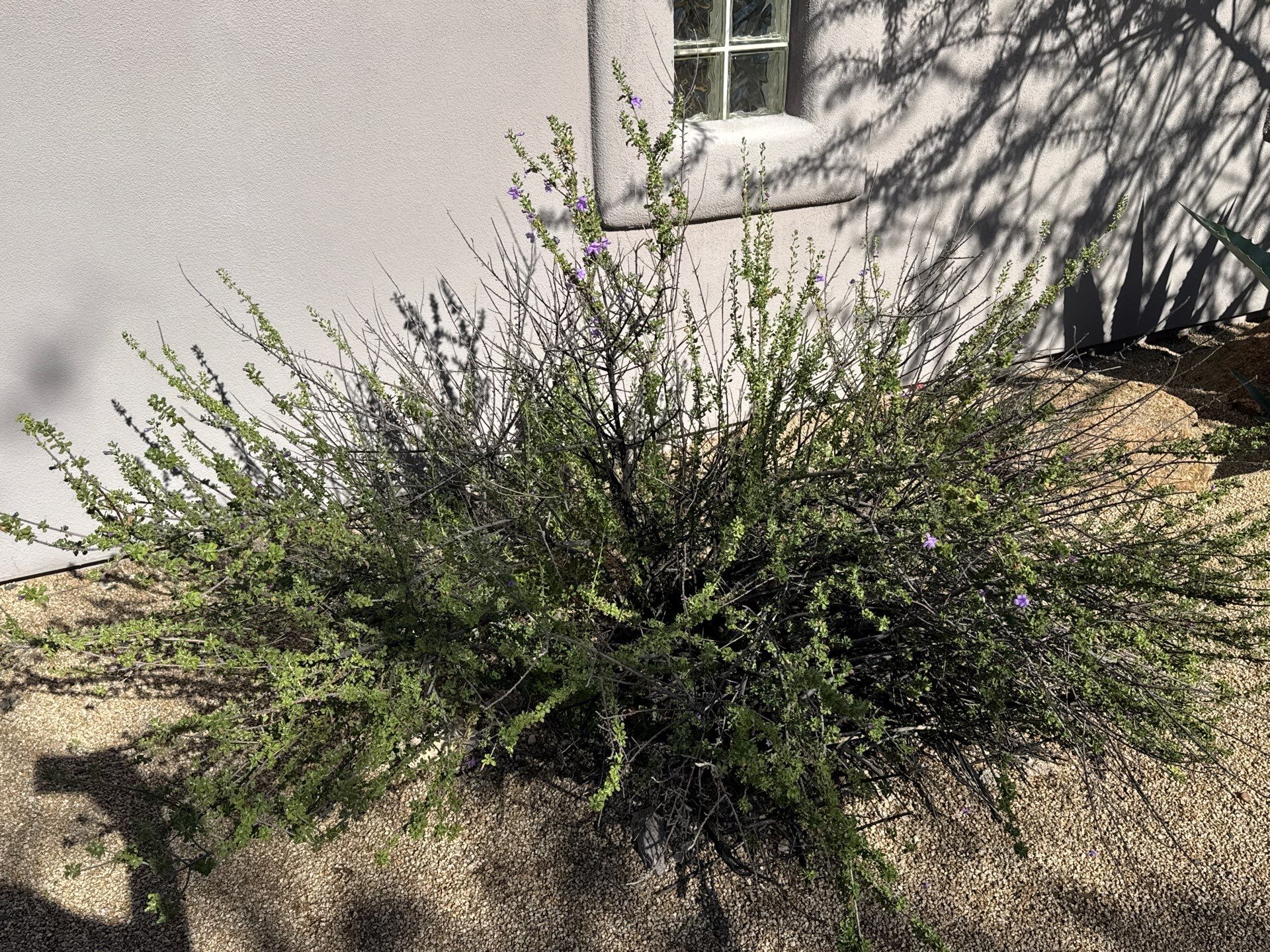
For this sage bush, same as most of the plants I keep mentioning, the end of February, as we head into spring, is a great time to clean out all the dead stuff and give it a rejuvenating prune.
- Cut out all dead wood first.
- Remove a few of the oldest, woodiest stems at the base so new growth fills in from the bottom.
- Shorten the longest branches back to a side branch, rather than shearing the outside. That keeps its natural shape and lets it flower.
- Take no more than about a third of the plant in a year.
- Give it a deep water right after pruning to help it push new growth.
Another ocotillo, with groundcover around it
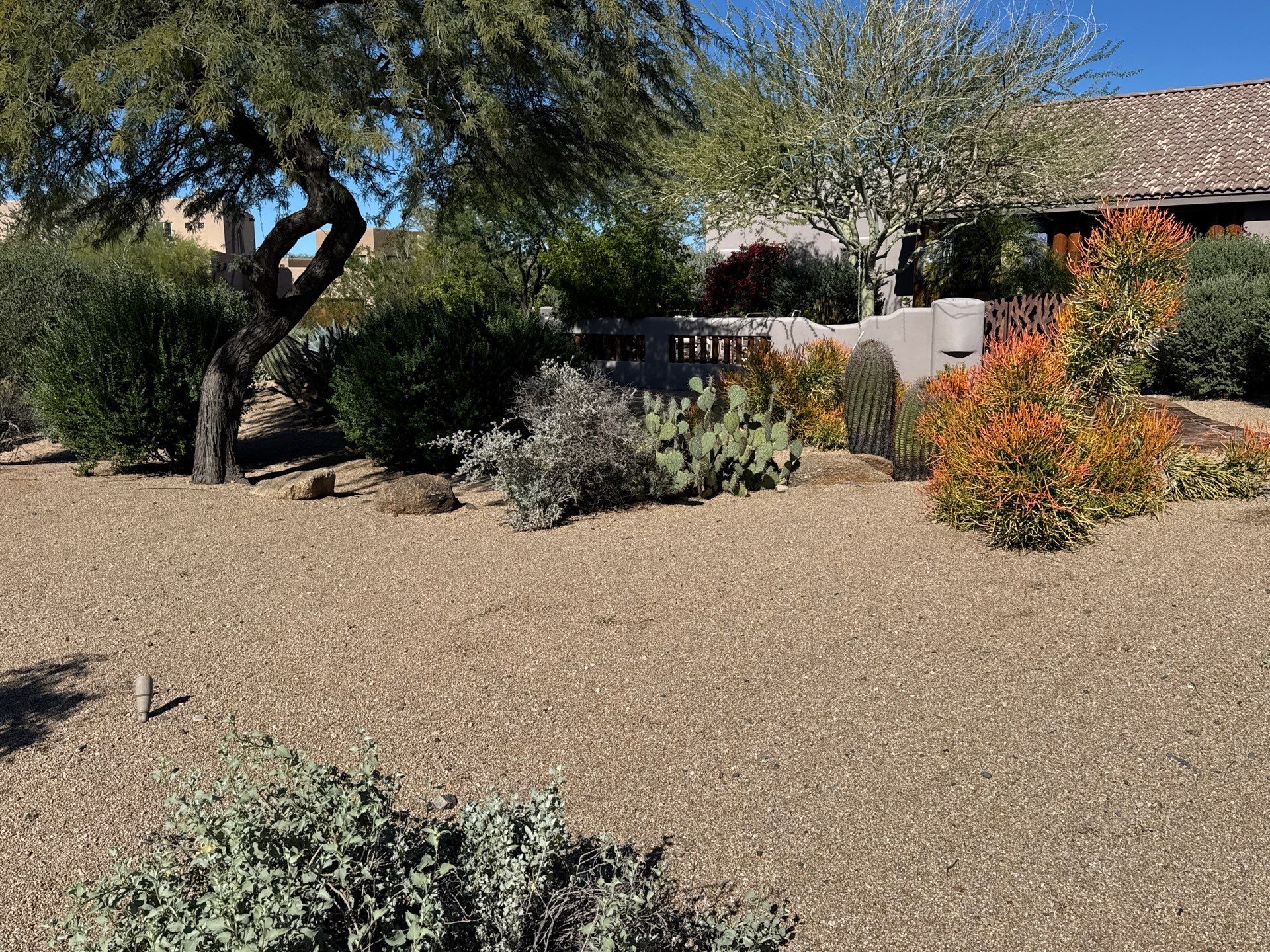
Here in the front yard is another great spot for an ocotillo, which we talked about and you liked. Same as the other one, buy it potted and already rooted. Then fill in around it with a low groundcover so it sits in green instead of bare ground.
Ocotillo
Tall native wands that leaf out after rain and tip in red flowers in spring. Hummingbirds time their migration around it. Very sculptural.
Desert Marigold
Native, with bright yellow daisies most of the year over soft gray leaves. Small and low, so it's great along edges.
Angelita Daisy
Tight little mound with yellow daisies almost all year. One of the cleanest edging plants we have here.
Damianita
Dense, aromatic evergreen mound with golden flowers in spring and fall. Stays very neat, which is exactly what you want along a path.
Trailing Indigo Bush
Silver groundcover with purple flowers in summer. Great for covering ground under the trees and softening around boulders without getting tall.
Emu Bush (Outback Sunrise)
Low, dense yellow-green groundcover with small yellow flowers in late winter and spring. One of the best groundcovers for hot spots and reflected heat.
Muhly Grass
Pink, cloud-like plumes in fall that glow when the sun is behind them. Soft movement that breaks up the rock. Cut it back to about 6 inches in late winter and it comes back clean every spring.
Groundcover for the slope to the street
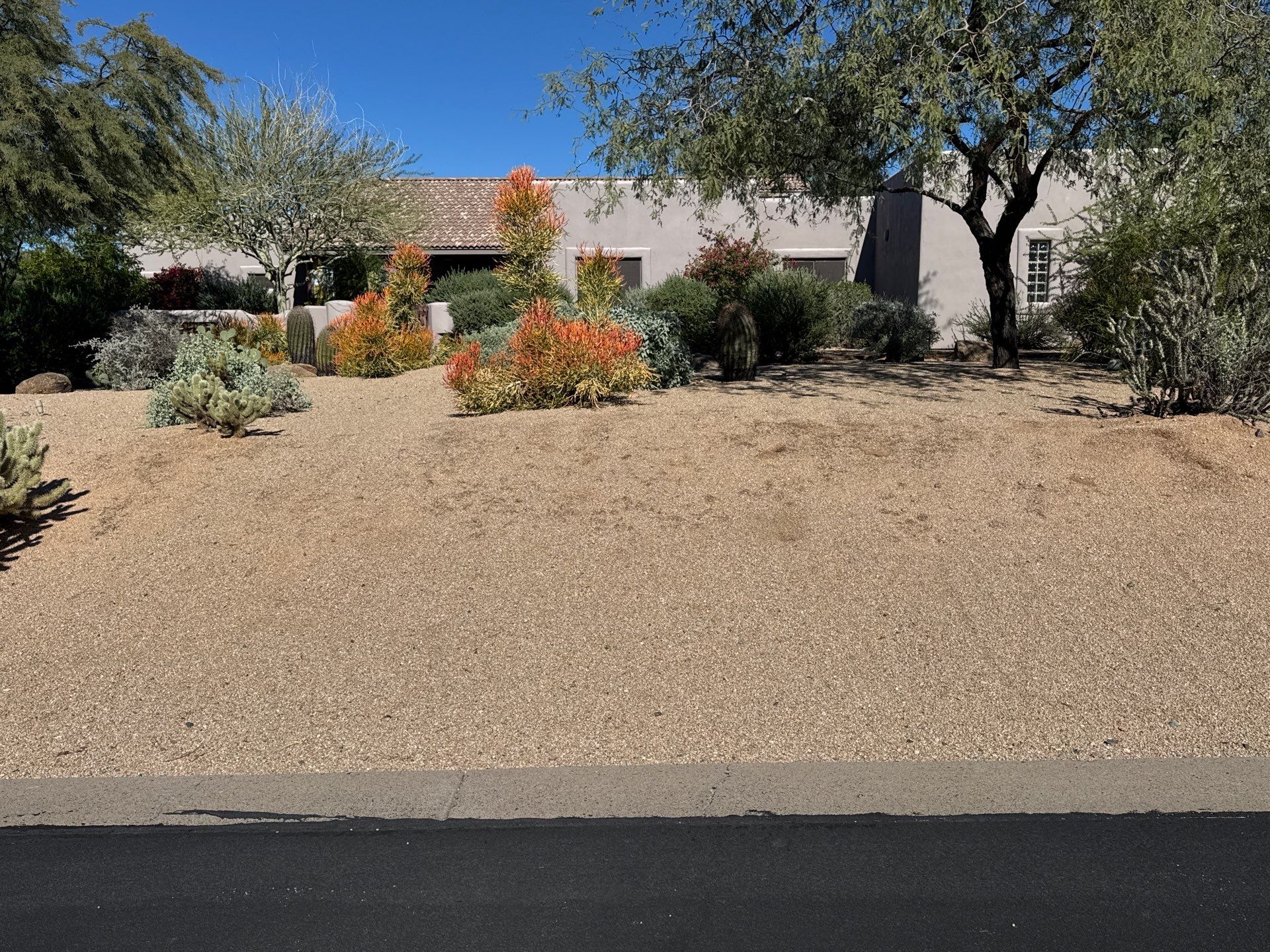
In the front, where the yard slopes down to the street, it's mostly bare dirt. A groundcover here will put roots down, stop the erosion, and fill in the blank space. Plant in a staggered pattern across the slope with a small soil crescent on the downhill side of each plant, and scatter some native wildflower seed in fall to fill the gaps quickly.
Trailing Indigo Bush
Silver groundcover with purple flowers in summer. Great for covering ground under the trees and softening around boulders without getting tall.
Emu Bush (Outback Sunrise)
Low, dense yellow-green groundcover with small yellow flowers in late winter and spring. One of the best groundcovers for hot spots and reflected heat.
Globe Mallow
Native, with bright orange cup flowers in spring that native bees love. Cut it back by about half after the spring bloom to keep it looking tidy instead of rangy.
Muhly Grass
Pink, cloud-like plumes in fall that glow when the sun is behind them. Soft movement that breaks up the rock. Cut it back to about 6 inches in late winter and it comes back clean every spring.
Trailing Rosemary
Low, spilling evergreen with blue flowers in winter and spring, and bees love it. Next to a barbecue you get to snip fresh rosemary right off the plant.
White Trailing Lantana
Low, spreading mats covered in white flowers most of the year, and butterflies visit all day. Handles the hottest spots.
Bush Morning Glory
Silver mound with white morning glory flowers spring through fall. Spreads into a low, soft cover on a slope.
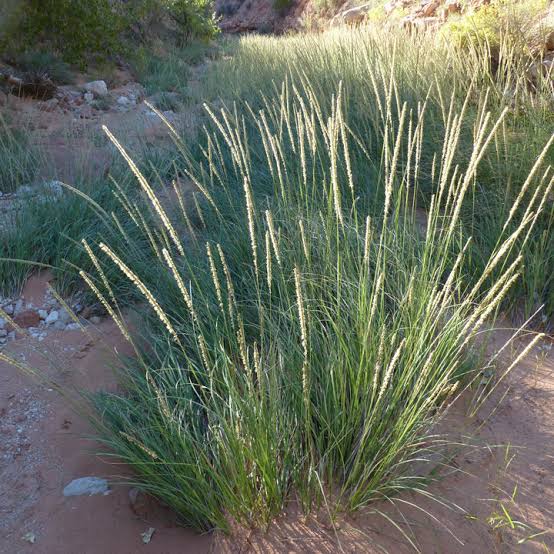
Deer Grass
Native bunch grass with deep, fibrous roots that hold soil in place. One of the best plants for a slope or the edge of a wash.
Desert Marigold
Native, with bright yellow daisies most of the year over soft gray leaves. Small and low, so it's great along edges.
By the front gate: no more containers
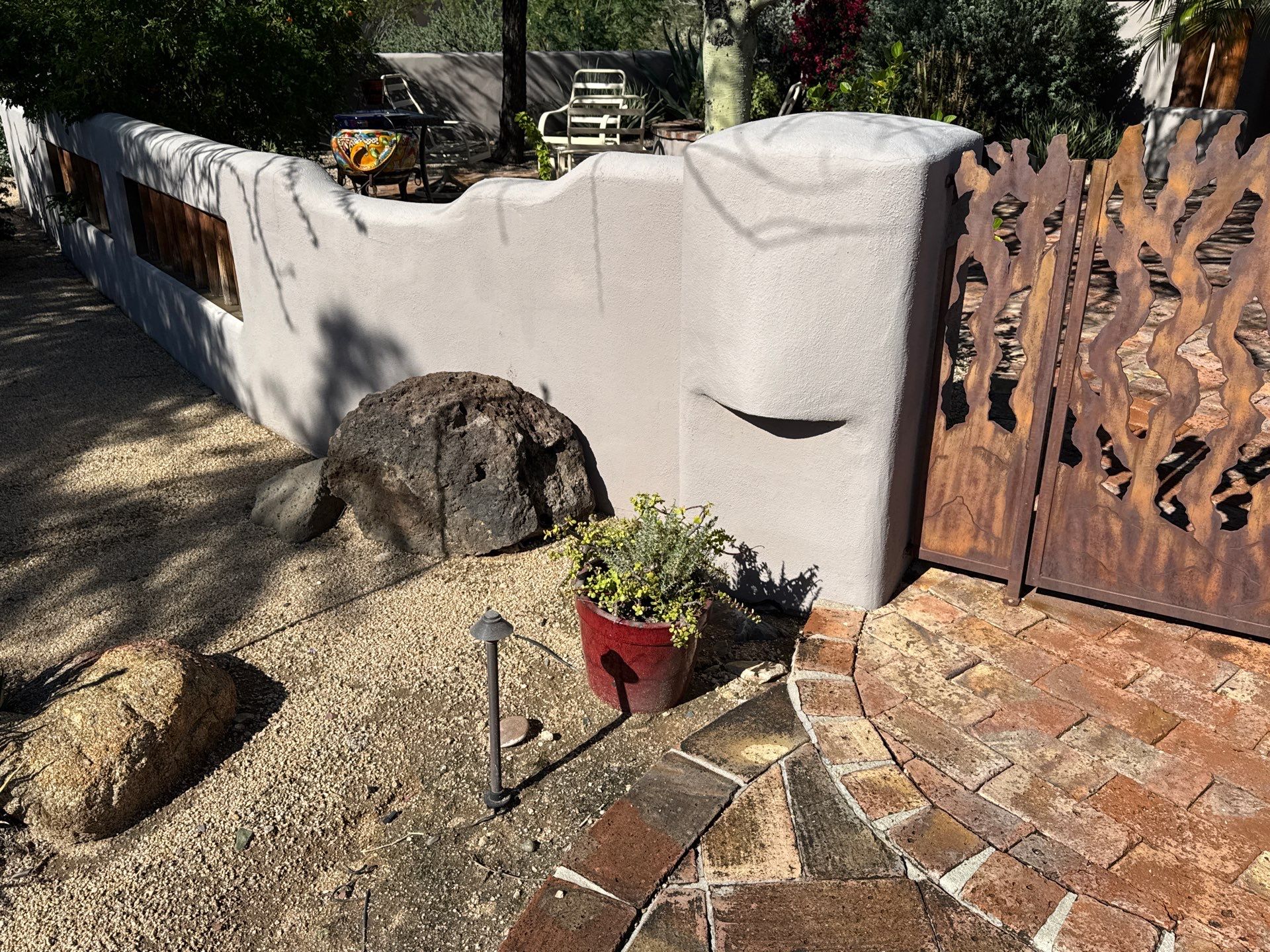
Right in front of the gate into the courtyard, there's elephant food in a pot, and you're over having containers there. Here are plants that get about 3 ft tall and stay narrow, so they won't grow across the walkway. Keep them about 2 ft back from the walk.
Desert Milkweed
Upright gray-green stems with cream flowers, and the host plant for monarch and queen butterflies. Very clean, vertical look. Plant it in the ground, not in raised beds.
Red Yucca
Grassy clump with coral flower spikes from spring into fall. Hummingbirds love it, and it drops almost nothing, which makes it perfect near the pool.
Little Ollie
A dwarf olive that stays a neat, dense, gray-green mound with no fruit and no pollen. Handles full sun against the house and takes less water than plants that aren't desert adapted. Very clean look.
Blue Bells Emu
Blue-purple bell flowers in winter and spring on a tidy evergreen shrub. Handles reflected heat off the pool deck and walls.
Penstemon
Tall spring flower spikes in pink, red, or purple that hummingbirds love. Low rosette the rest of the year, so it keeps things clean. Reseeds lightly.
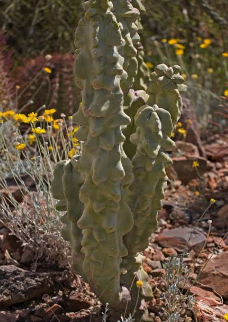
Totem Pole Cactus
Smooth, knobby, nearly spineless columns. Very architectural and minimal, and safe to have near where people walk. Protect it from frost the first couple winters.
Transplanting the pups
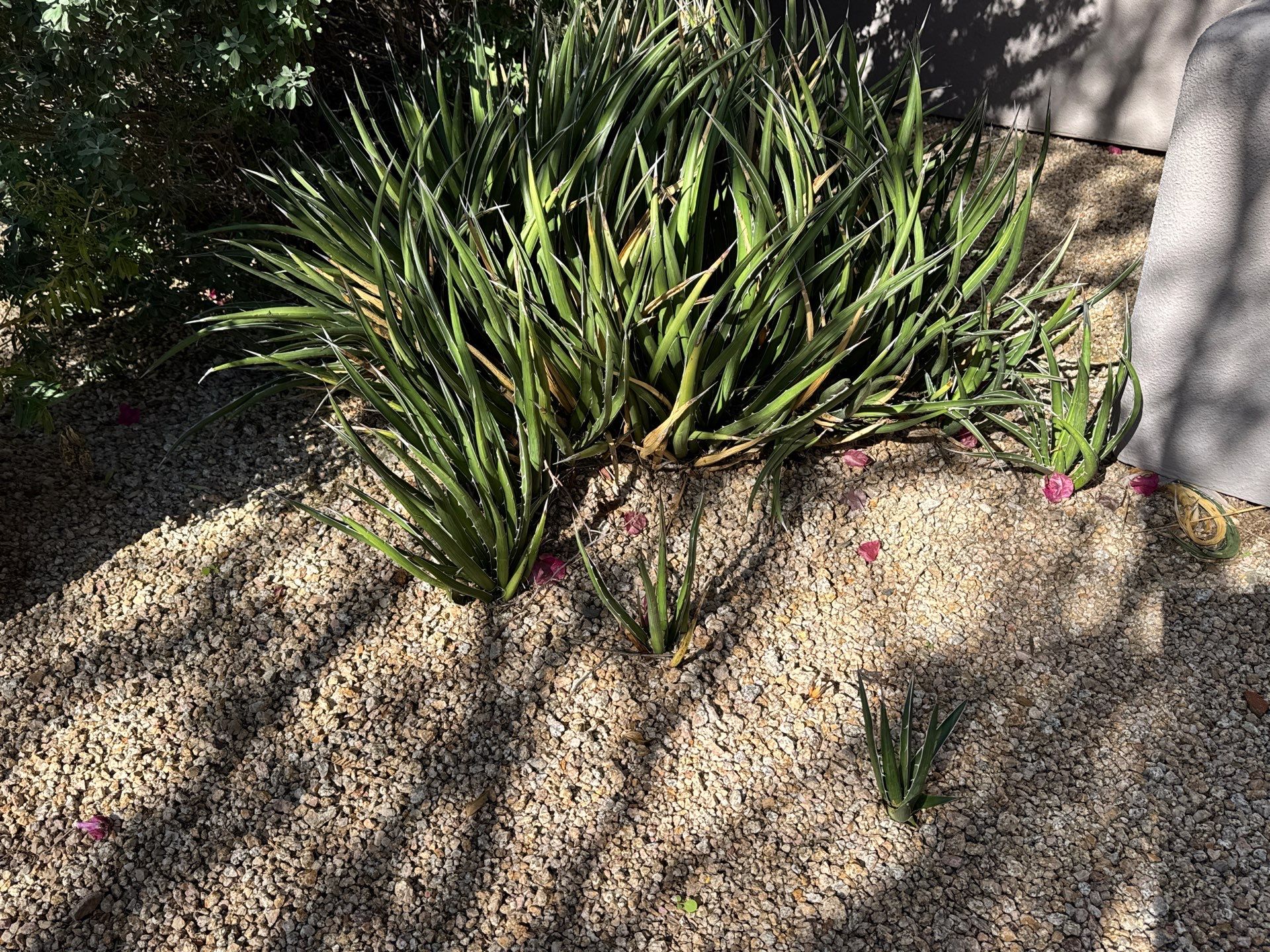
You mentioned this is growing out of control, which is easy to fix. All of these pups spreading out can be transplanted. Dig around them the best you can and move them to other places in the yard.
- Dig around each pup with a shovel or trowel, getting as much of its root as you can, and cut it free from the mother plant.
- Let it sit in the shade for a few days so the cut end dries and calluses over. That keeps it from rotting once it's planted.
- Plant it at the same depth it was growing, in a sunny spot with good drainage, and water it in lightly. Then water sparingly until it roots in.
- Spring and fall are the best times to move them.
Caring for this hibiscus
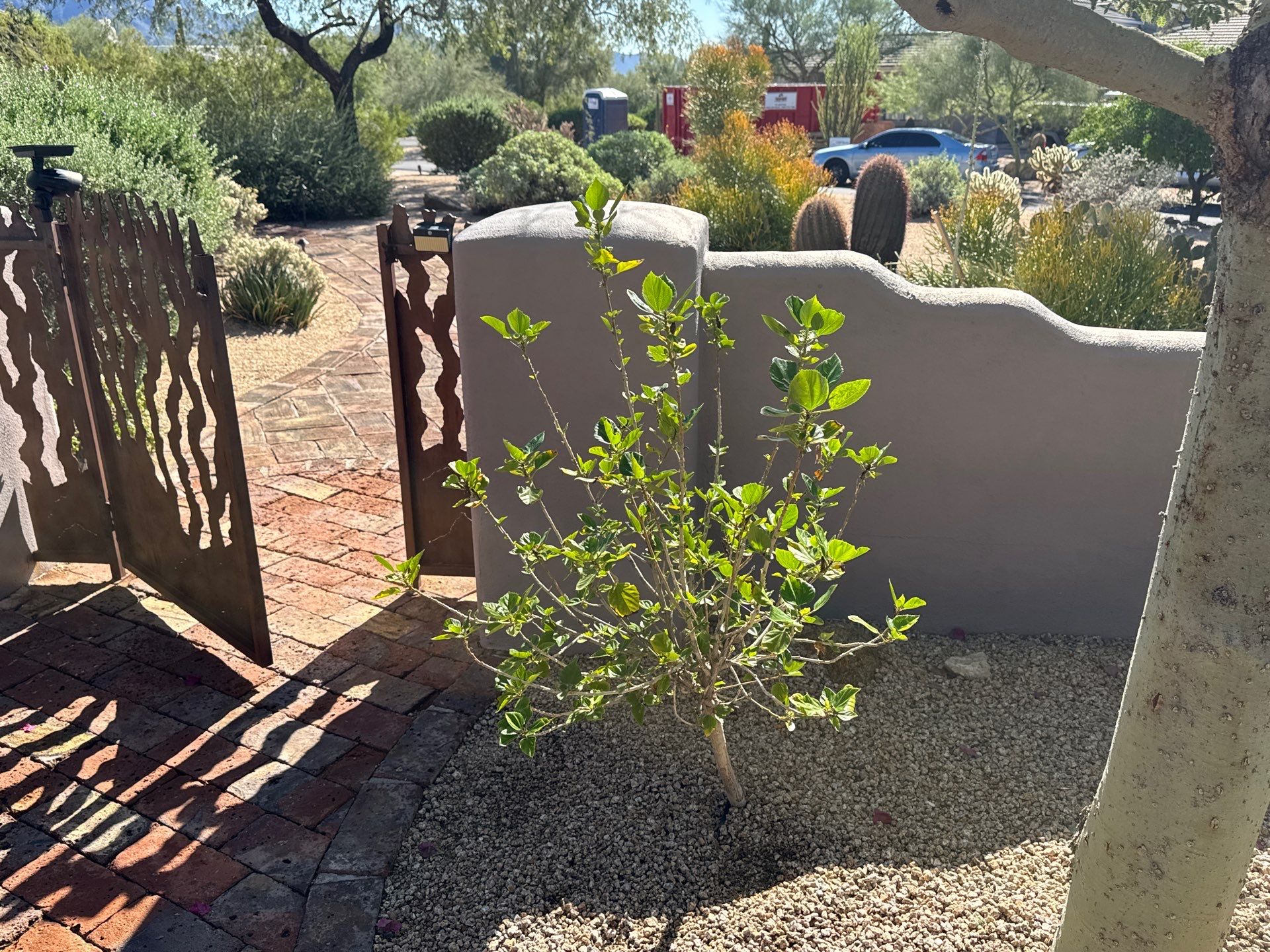
This hibiscus is in a good spot; it just needs to be cared for a little differently. If you want hibiscus to look good here in the desert, it needs a water well and constant feeding.
Caring for hibiscus in the desert
- Pull the rock back from the base into a water well about 2 to 3 ft across, and put wood mulch inside. Rock bakes the roots; mulch keeps them cool and holds moisture, which hibiscus need.
- Feed constantly. Hibiscus are heavy feeders, and to look good here they need it all the time. From March through October, feed every 2 to 4 weeks with a good organic fertilizer high in fulvic acid. Add compost around the base a few times a year and worm castings every quarter. In winter, ease off to monthly.
- Water evenly. Keep the soil evenly moist but not soggy. Yellow leaves on hibiscus are very often a sign of too much water, not too little, so check the soil a couple of inches down before watering.
- Afternoon shade helps in summer, and protect them on hard frost nights.
- Pruning: Light shaping in spring after the last frost. Hibiscus flower on new growth, so a light trim then pushes more flowers.
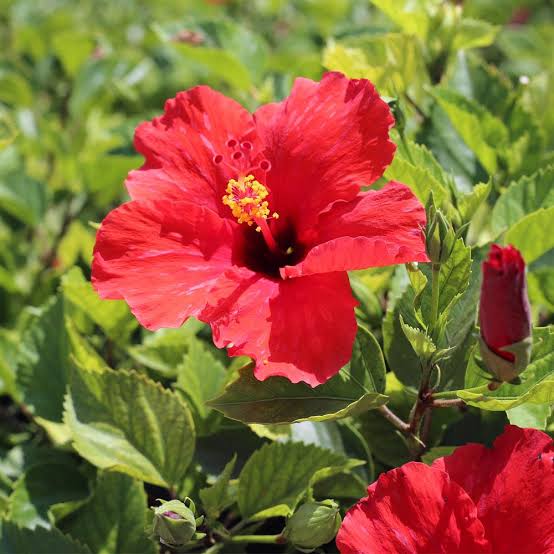
Hibiscus
Red is the color that does best here. Hibiscus wants evenly moist soil, not soggy soil, and yellow leaves on hibiscus are very often a sign of too much water.
Replacing the torch glow bougainvilleas with hibiscus
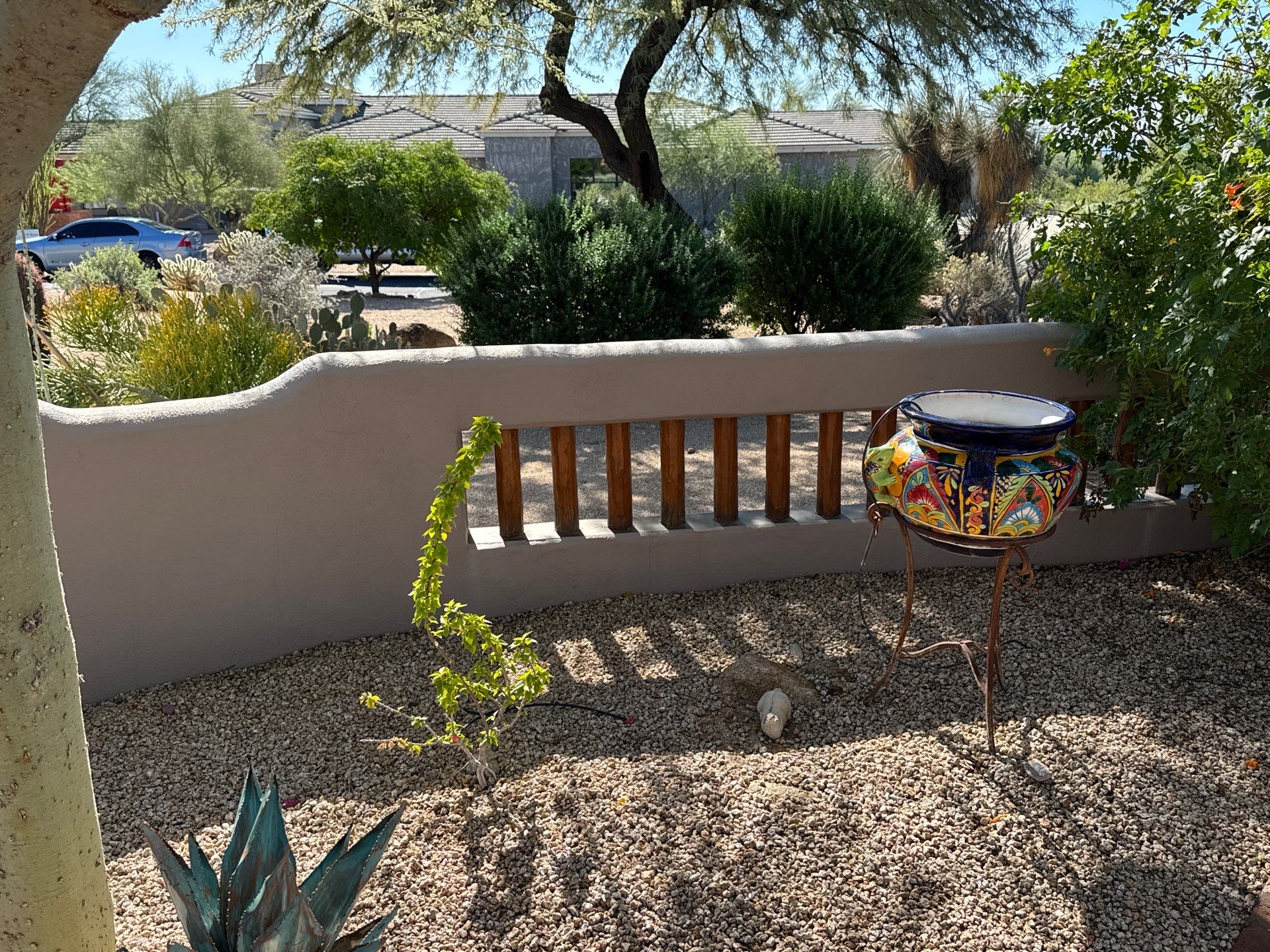
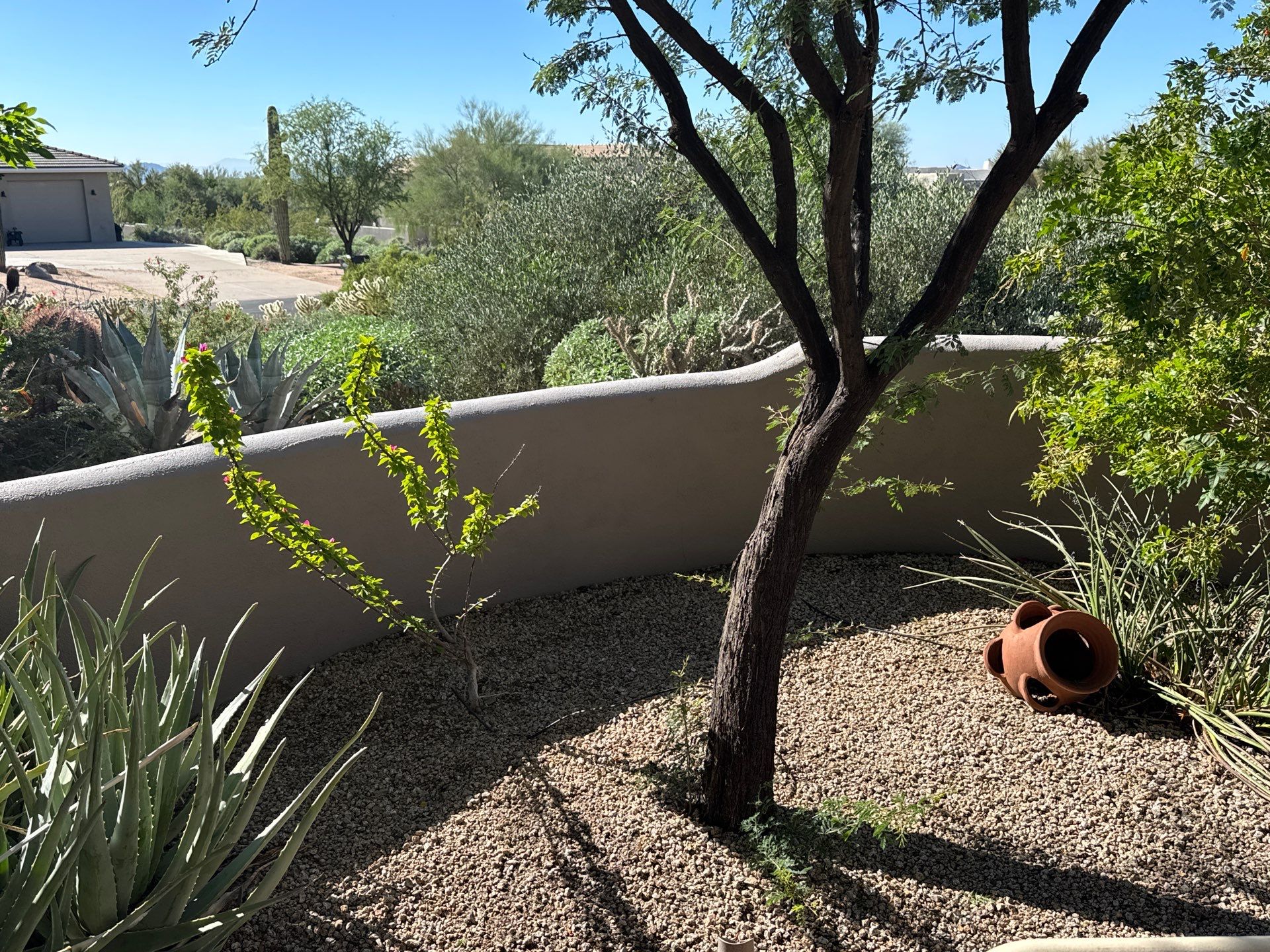
In this spot there's a torch glow bougainvillea that's getting too shaded by the palo verde above it. Bougainvillea needs full sun to flower, so it won't do well here. We talked about planting hibiscus here instead to match the hibiscus next to it. Red hibiscus is what I prefer and what grows best here, and you like red as well.
The next spot has another torch glow bougainvillea. I'd take that one out too and continue the hibiscus there, and plant another hibiscus on the other side of the tree. That gives you a consistent run of red hibiscus. Give them the same water well, mulch, and feeding as above.
Hibiscus
Red is the color that does best here. Hibiscus wants evenly moist soil, not soggy soil, and yellow leaves on hibiscus are very often a sign of too much water.
Filling the gap where the orange jubilee is
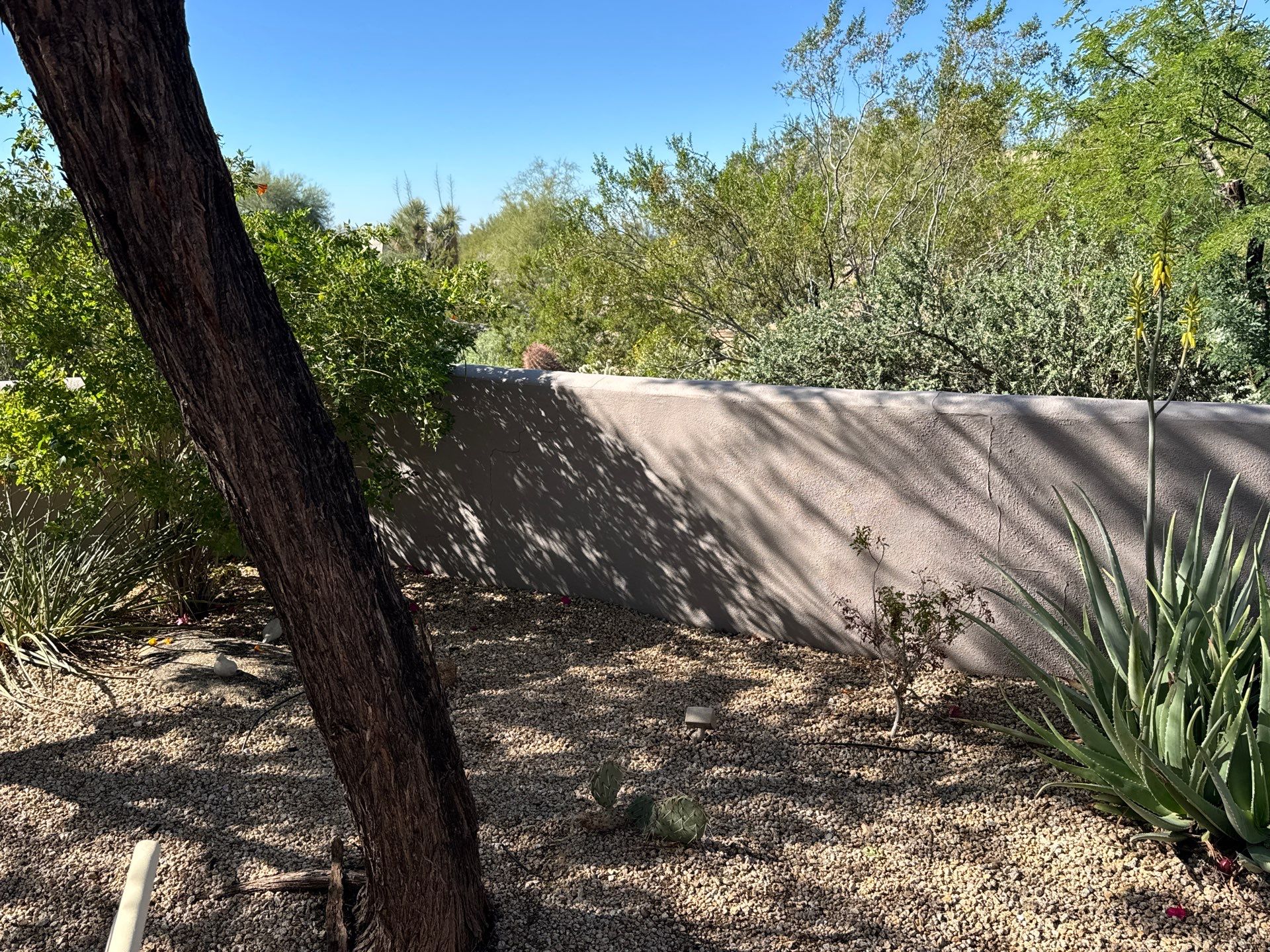
In this gap there's a struggling orange jubilee. I'd take it out. We need something that fills in the space but doesn't get too tall. Keeping the hibiscus trend going, San Marcos hibiscus would go well here. It's from the Sonoran Desert region of Baja, so it takes our heat and less water than a tropical hibiscus, and it has yellow flowers with a red center. Here are some other options too.
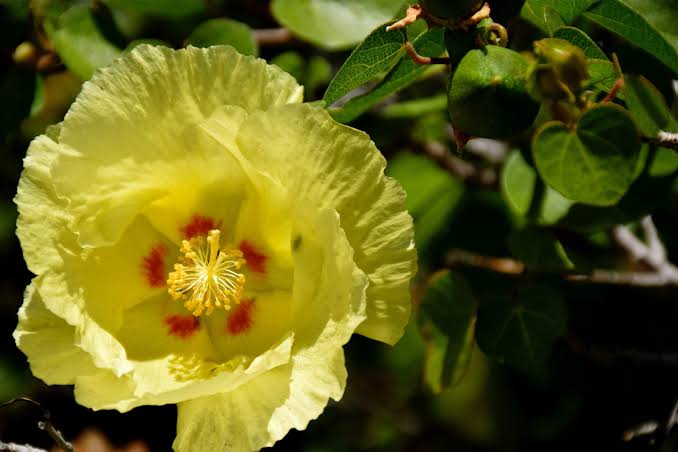
San Marcos Hibiscus
Yellow flowers with a deep red center from spring into fall on a tidy, mostly evergreen shrub. Small leaves and very little litter, so it's an easy one near the water.
Hibiscus
Red is the color that does best here. Hibiscus wants evenly moist soil, not soggy soil, and yellow leaves on hibiscus are very often a sign of too much water.
Blue Bells Emu
Blue-purple bell flowers in winter and spring on a tidy evergreen shrub. Handles reflected heat off the pool deck and walls.
Autumn Sage
Red or pink flowers in spring and fall that hummingbirds love. A great cottage-garden look that still fits the desert.
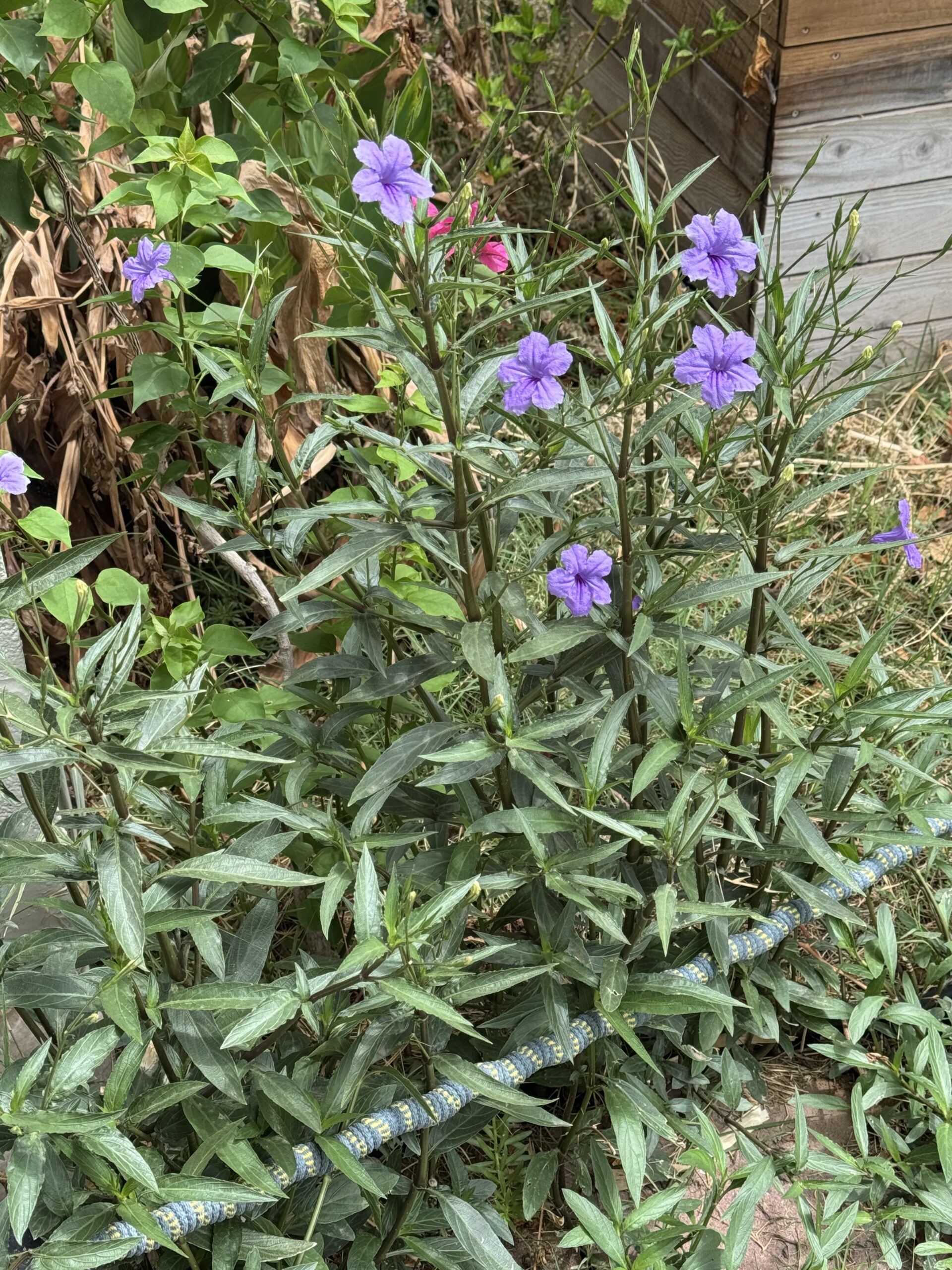
Ruellia
Ask for the dwarf 'Katie' type. It stays a tidy 1 ft mound with purple flowers and doesn't spread like the tall Mexican petunia ruellia, which can get invasive.
Low groundcover in the open space
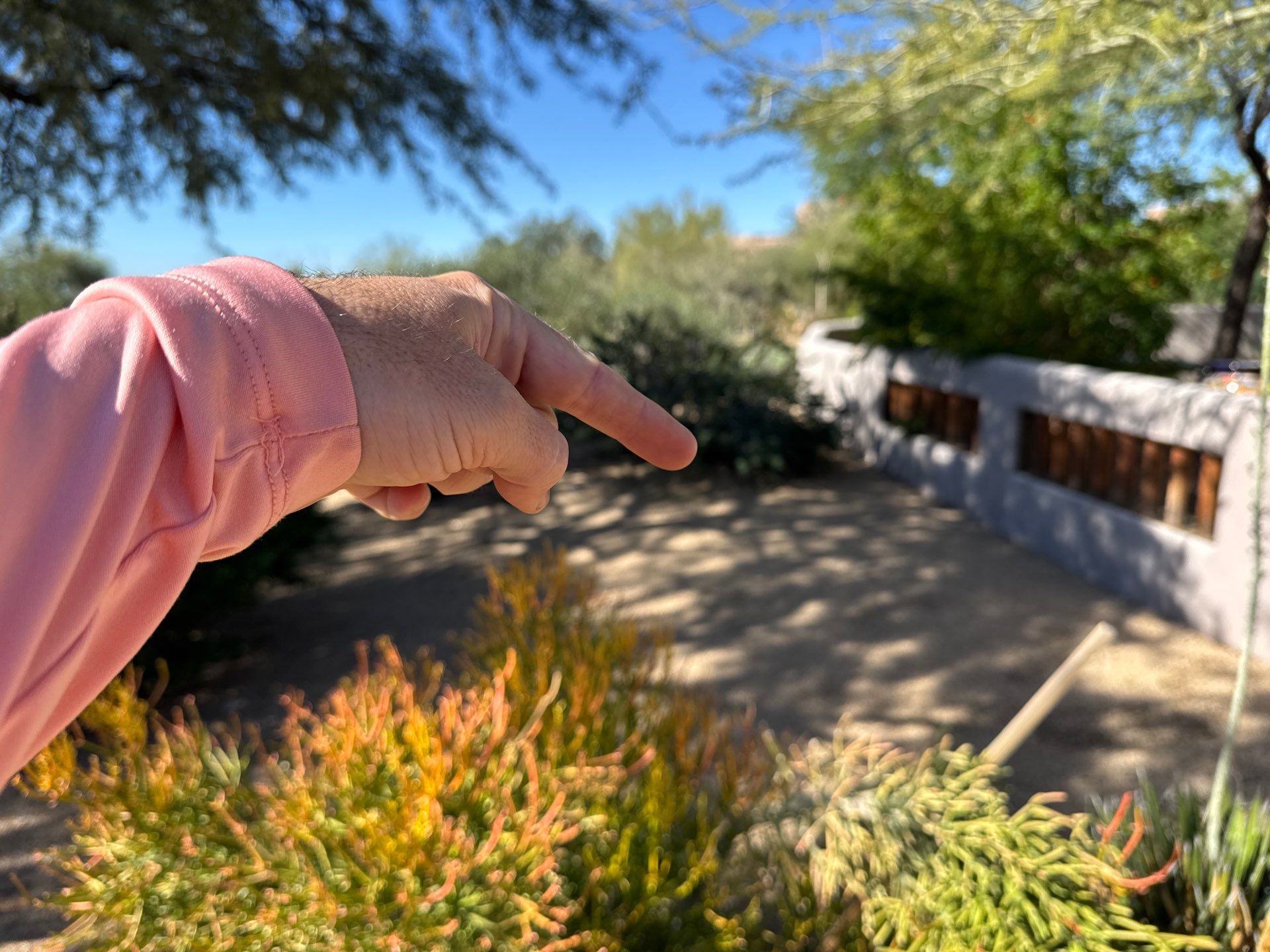
We didn't talk about this area, but it's another open space. It gets some shade, especially in winter, from the mesquite directly to the south. A low growing groundcover would fill it in nicely. Blackfoot daisy would grow well here, since it likes a little protection from the hottest sun, and here are a few others.
Blackfoot Daisy
Low native mound covered in white daisies most of the year. It does best with a little shade from the hottest afternoon sun, which this spot gets from the mesquite. Don't overwater it.
Angelita Daisy
Tight little mound with yellow daisies almost all year. One of the cleanest edging plants we have here.
Damianita
Dense, aromatic evergreen mound with golden flowers in spring and fall. Stays very neat, which is exactly what you want along a path.
Desert Marigold
Native, with bright yellow daisies most of the year over soft gray leaves. Small and low, so it's great along edges.
Trailing Indigo Bush
Silver groundcover with purple flowers in summer. Great for covering ground under the trees and softening around boulders without getting tall.
Purple Heart
Deep purple groundcover that brightens up a shady spot. Spreads slowly to fill in and is easy to pull back if it wanders.
The creosote, and a saguaro behind it
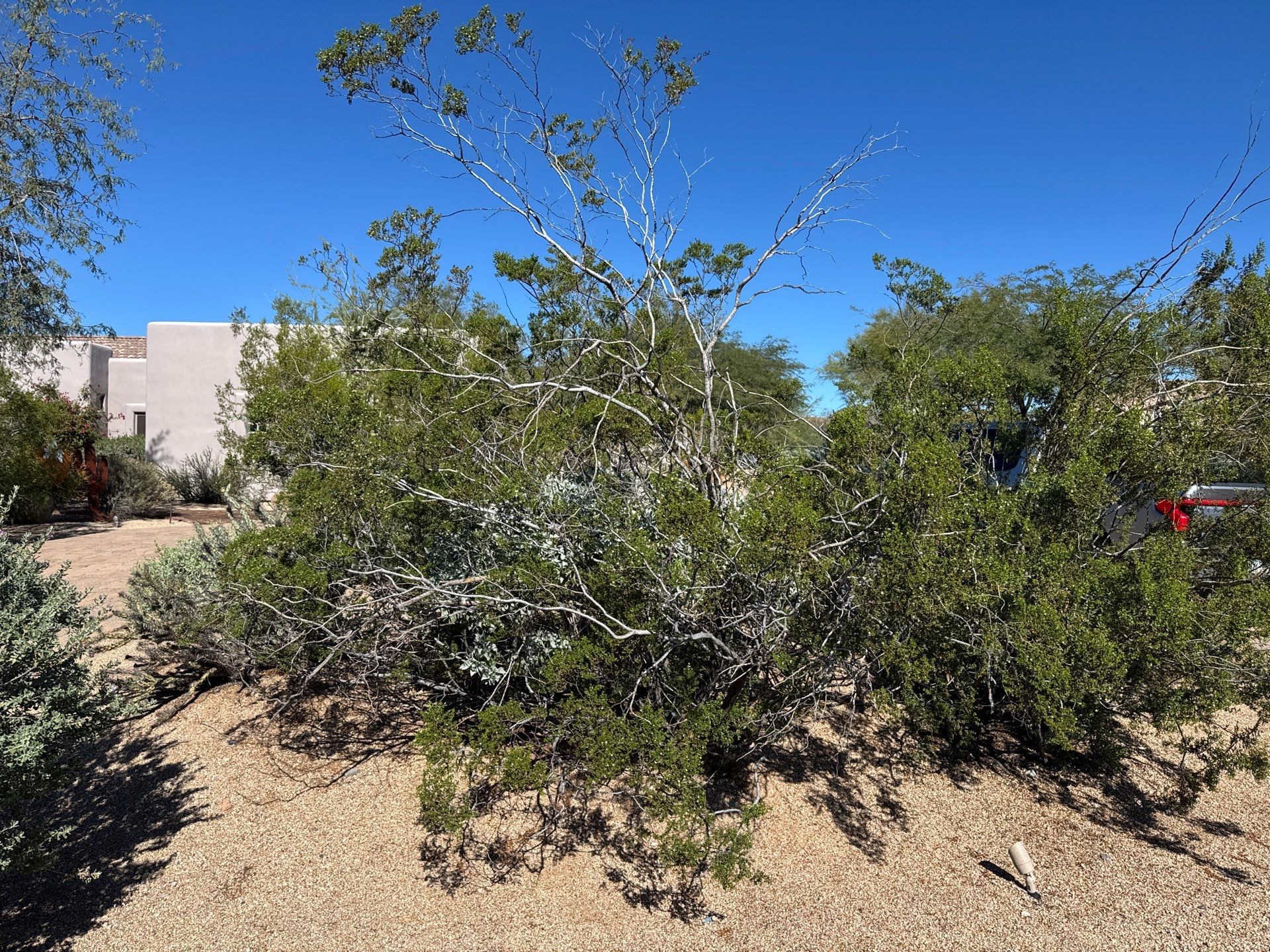
This is the creosote in the front yard. We talked about giving it a good reduction and rejuvenation prune at the end of February.
- Cut out all dead wood first.
- Remove a few of the oldest, thickest stems right at the base. Creosote regrows well from the base, so this opens it up and pushes fresh growth.
- Shorten the remaining long branches back to a side branch to bring the size down, rather than shearing the outside.
- If it's very overgrown, creosote can take a hard rejuvenation cut, down to about a foot, and comes back full within a season or two.
- Give it a deep water right after pruning to help it push new growth.
That pruning will open up space behind it, and you asked what could go there and grow up. I think this would be an awesome spot for a saguaro. The creosote gives it a little shade while it's young, the same way saguaros start out under shrubs and trees in the wild.
- A 2 to 4 ft spear with no arms establishes best. Make sure it comes with a state tag from a reputable nursery.
- Plant it at the same depth it was growing, keeping the marked south side facing south so it doesn't sunburn.
- Don't water for the first two to three weeks, then water deeply but not often. Late spring into summer is the best time to plant.
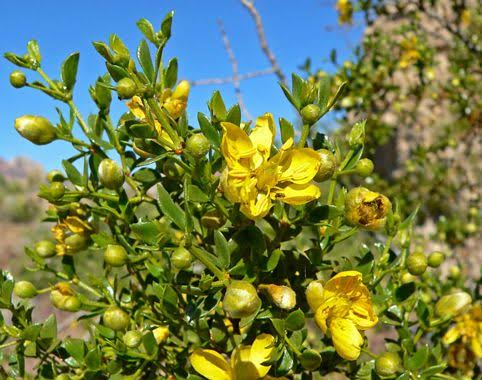
Creosote
The smell of the desert after rain. Evergreen, tough, with small yellow flowers on and off through the year. Responds really well to rejuvenation pruning.
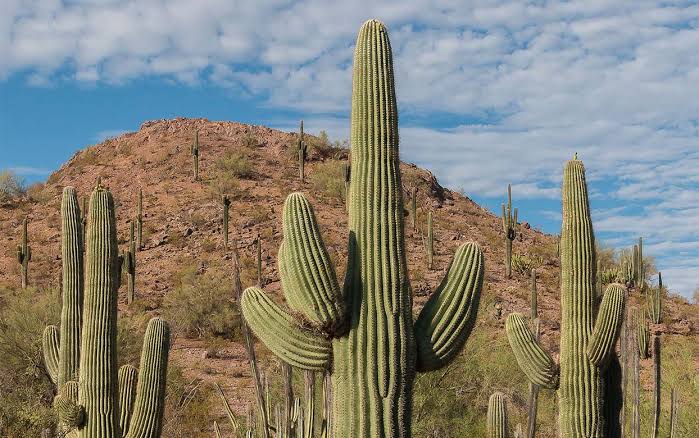
Saguaro
The icon of the Sonoran Desert. A 2 to 4 ft spear (no arms) is the sweet spot: it establishes much better than a big one. See the planting notes above.
Soil and Feeding
Feeding the soil
The hibiscus especially, and everything else in the yard too, does better when the soil is alive. Instead of feeding the plants directly with synthetics, we feed the soil biology: the fungi, bacteria, and other life that break down organic matter and hand nutrients to the roots. Good compost, mulch, and organic fertilizer are how you build that.
Doing it yourself
- Compost: Spread compost generously around the drip line of the trees (out where the edge of the canopy is, since that's where the feeder roots are), and closer in around the shrubs. Arizona Worm Farm has great compost.
- Worm castings: Add worm castings every quarter. They're packed with biology and gentle enough you can't overdo them.
- Organic fertilizer: Once a month, use a good organic fertilizer high in fulvic acid, and every 2 to 4 weeks for the hibiscus in the growing season. These are the ones I use from Catalyst Product Group (catalystproductgroup.com, click Products, then Home and Garden).
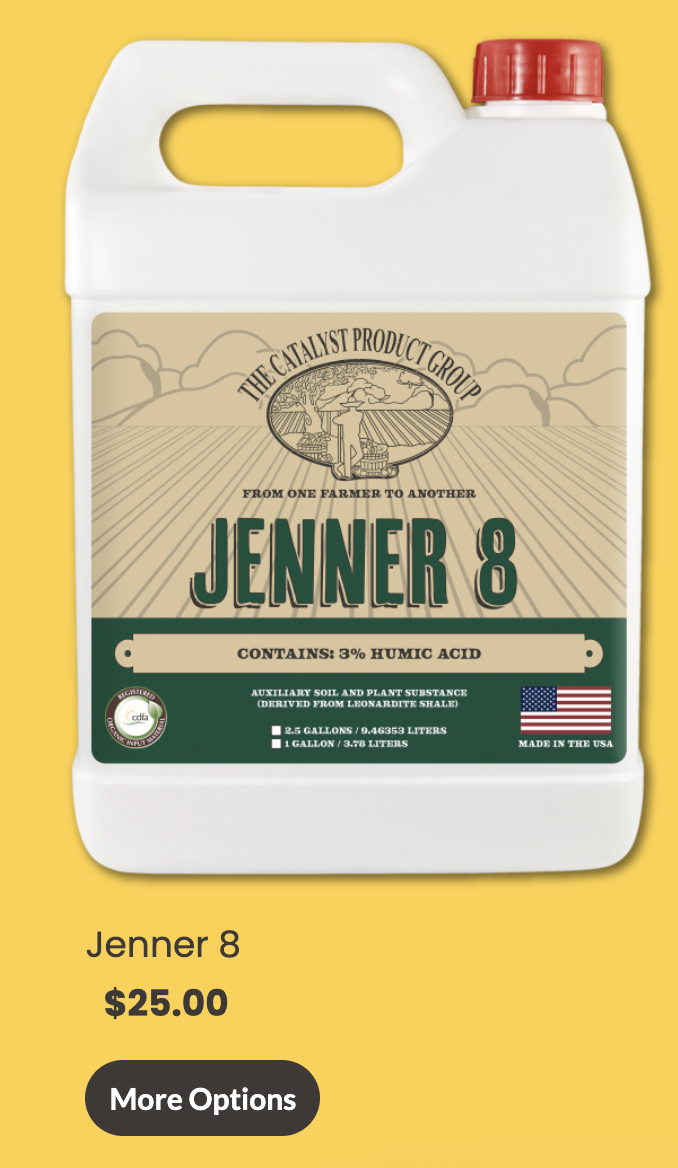
Catalyst Jenner 8
Organic fertilizer high in fulvic acid. Feeds the plant and the soil life at the same time.
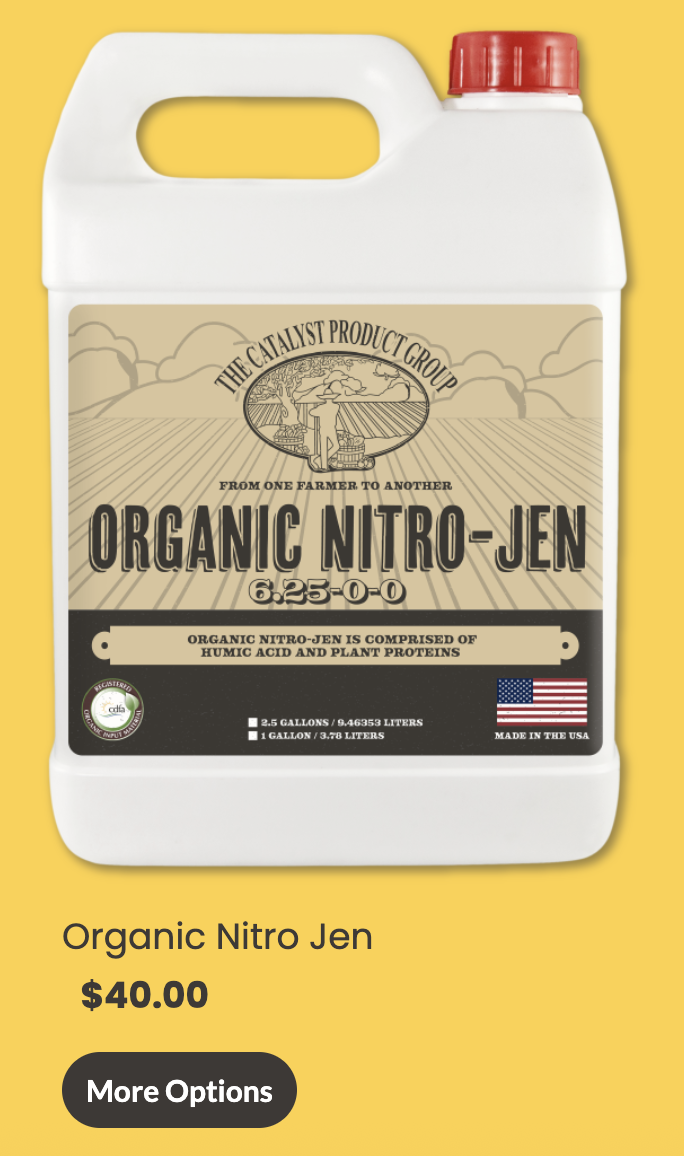
Catalyst Organic Nitro Jen
Organic nitrogen to push healthy green growth, especially on new plantings and trees.
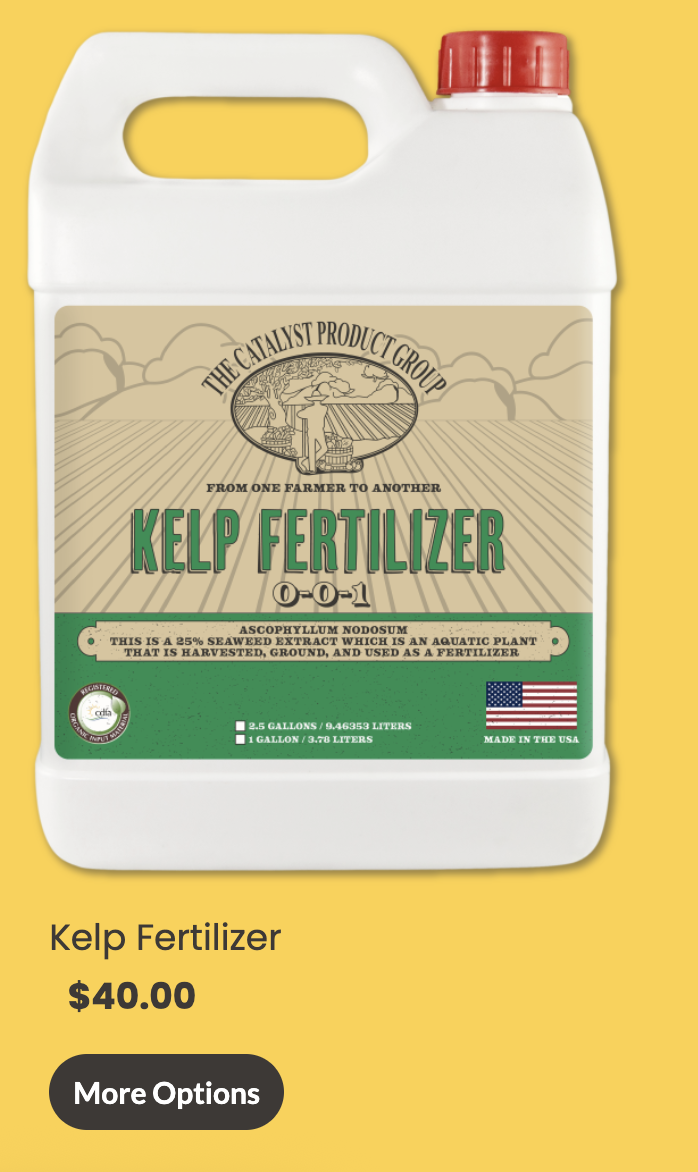
Catalyst Kelp Fertilizer
Kelp brings trace minerals and natural growth hormones that help roots establish and handle heat stress.
Or let us handle it
Monthly Landscape Fertilizing
$153/month
We come out every month and spray our organic liquid blend across the whole landscape, plus compost three times a year. After each visit you get a recap video of what we did and anything we noticed.
Next Steps
Where to go from here
Now: Move the drip emitters away from the cactus, pull the rock back from the hibiscus and start feeding, and clean the dead out of the elephant food and fountain grass.
End of February: The big pruning round: creosote, sage, and the coral fountain grass.
Doing it yourself: Everything above is laid out so you can work through it at your own pace. As a consult client, you're already in the Garden Nerd Club, so you have direct access to me there. Send me photos as you go or check a spot before you dig.
Having us do it: The Garden Nerd does planting. Whenever you're ready, let me know and I'll put together a planting proposal based on the plants you pick. We don't do removals, so the fairy duster, orange jubilees, turpentine bushes, and bougainvilleas will need to come out first.
Irrigation: For moving emitters and adding drip to new plants, Garrett does great work. Call him at 480-678-9121.
Quick Reference
Quick reference
Thanks again for having me out, Karen. Most of what we covered is matching the right plants to the light they get, plus a good pruning round at the end of February. Do that and the yard will look fuller and more colorful. I'm in the Garden Nerd Club whenever you need me.
Michael
The Garden Nerd
The Garden Nerd · Organic soil health, fertilizing, consulting, and planting · Mesa, Arizona · thegardennerd.org
