
Jesus Garcia
1703 S Cholla, Mesa, AZ 85202
Here's everything we covered on our walk, area by area in the order we walked it, plus how to feed your soil so everything you plant gets off to a strong start.
Red Baja Fairy Duster
Back yard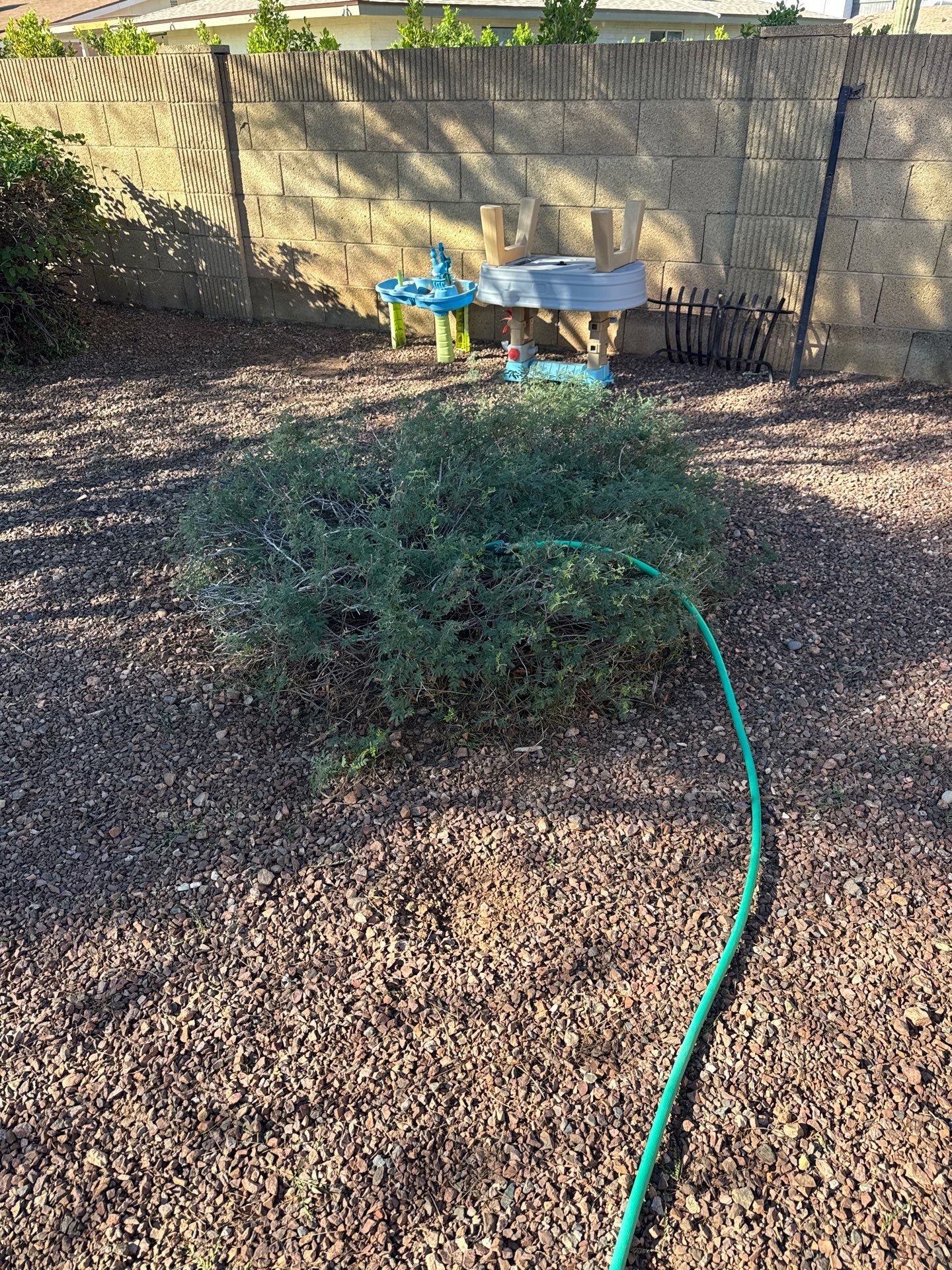
This is a red Baja fairy duster. It's from the Sonoran Desert just south of us and is basically native here, so it will grow great in this spot. It's a good place for it, but it doesn't have to stay here if you'd rather use the space differently.
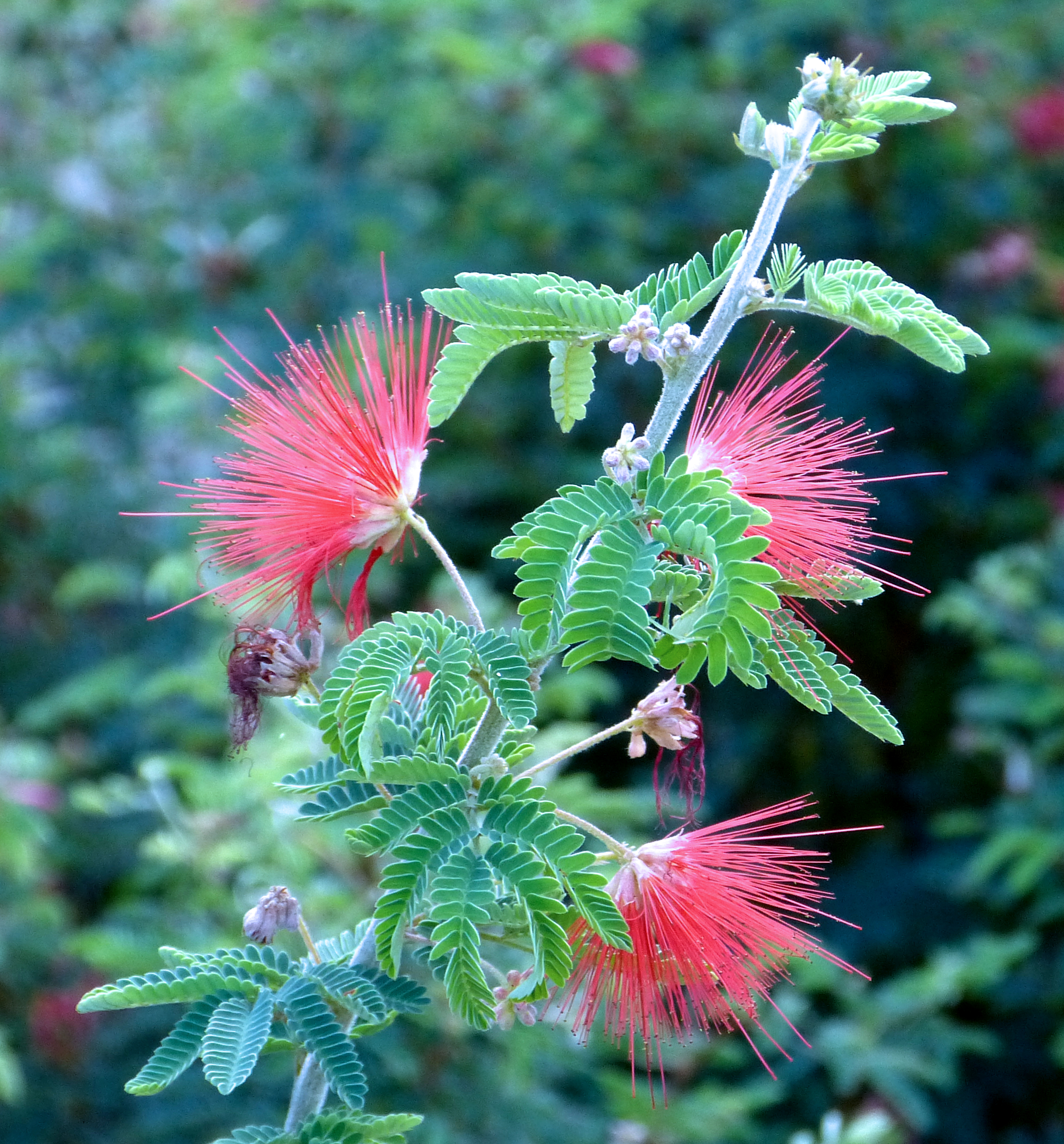
Here's what it does if you leave it untrimmed and let it grow up: it turns into a loose, airy, rounded shrub about 4 to 5 feet tall and wide, with fine, fern-like leaves. It's covered in red puffball flowers most of the year, heaviest from fall through spring, and hummingbirds will visit it every day. Left natural, it looks much better than when it's sheared into a ball, and it blooms more because the flowers form on the branch tips.
Baja Fairy Duster
4 to 5 feet tall and wide left natural. Red flowers most of the year, hummingbird magnet, evergreen. If you want to tidy it, just cut out a few of the longest branches in late winter. Never shear it.
Back Yard Mesquite Canopy
Back yard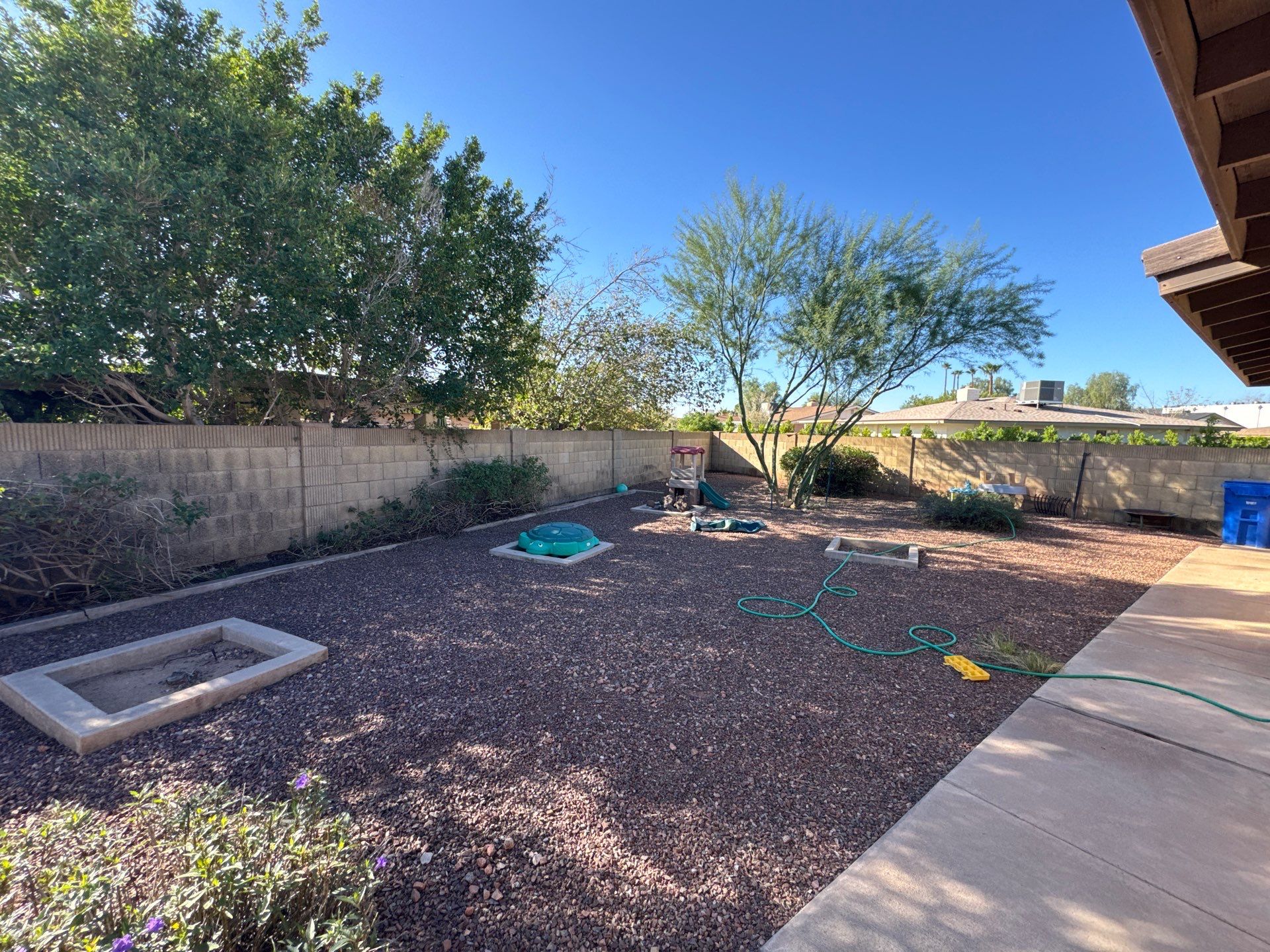
I really like this setup back here and I love imagining what it could be. In each of these curbed squares where trees used to be, I'd put a new tree. I like the idea of making them all mesquites. They're spaced close enough, but not too close, that once they grow up the whole area becomes a full canopy of filtered shade. That turns it into a space you can actually hang out in, put a few chairs or a fire pit under, and enjoy most of the year.
Velvet Mesquite
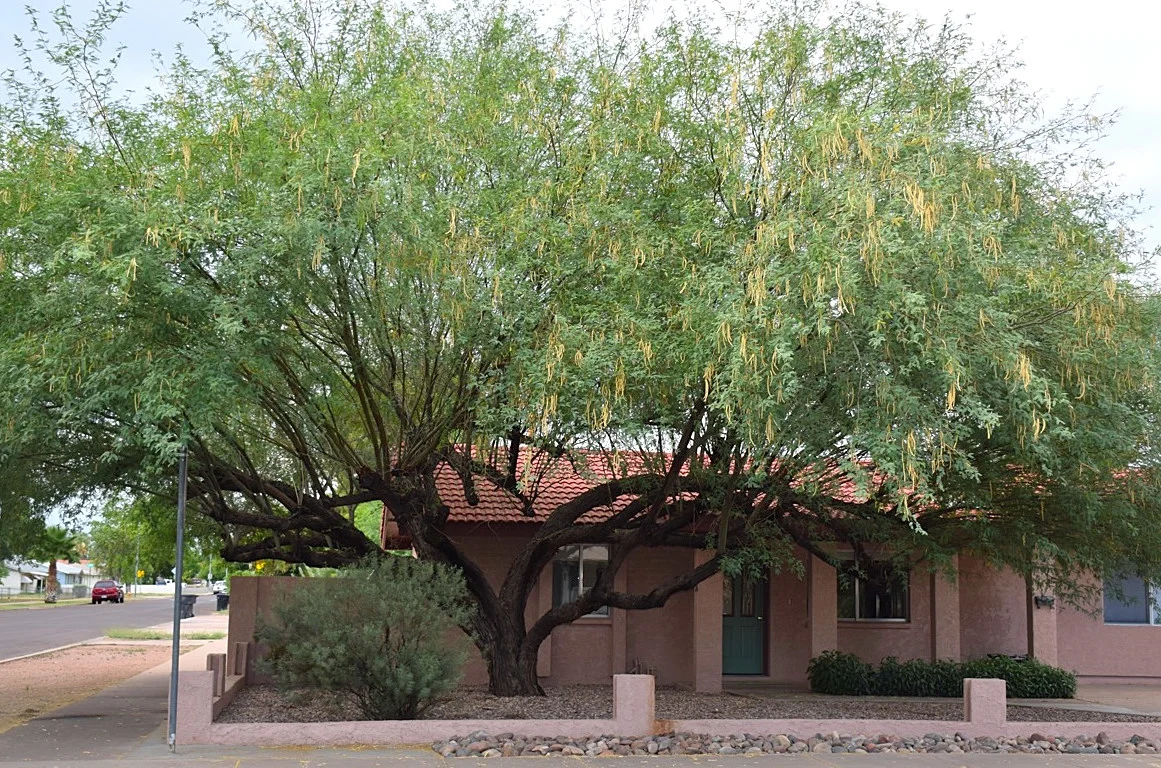
Our native mesquite. 20 to 30 feet tall with a wide, filtered canopy. Native velvet mesquite supports birds, bees, and other local wildlife in a way the hybrid mesquites don't. Its roots go deep, and it's very tough.
- Size: start with 15 gallon trees. Smaller trees establish faster and end up being better trees long term than big box trees.
- Planting: dig as deep as the root ball and two to three times as wide. Backfill with your native soil plus a little compost, lay compost on top of the soil, then mulch over the compost. Keep the mulch a foot back from the trunk, and make sure the root flare (where the trunk widens into the roots) sits right at the soil line.
- Water: each tree needs a bubbler or several emitters spread out around the root zone. Get the irrigation in before you plant.
- Staking: if you stake, use two stakes on opposite sides with loose ties, and take them off after the first year so the trunks get strong.
- Pruning: for the first couple of years, just remove crossing branches and lift the canopy slowly as they grow. Don't thin them heavily. A dense canopy is what keeps mesquites from catching the wind and coming down in monsoons.
Future Vegetable Garden Corner
Back yard corner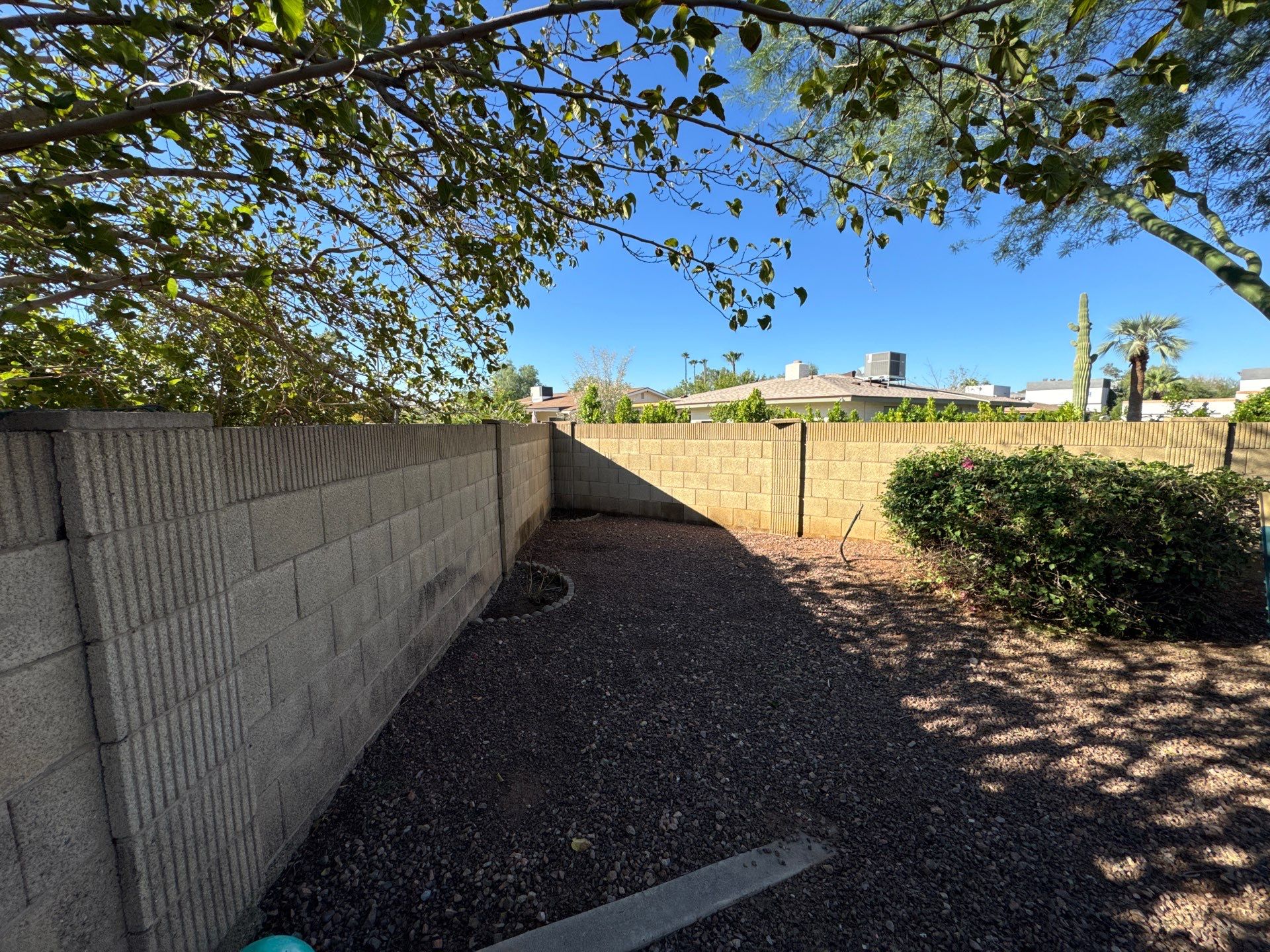
If and when you decide to grow a garden, this back corner is a great place for raised beds. Here's everything you need to make it happen when you're ready:
- Beds: Olle Gardens makes great raised garden beds. I like them because they're metal, they last, and they go together easily.
- Soil: fill them with raised bed mix from Arizona Worm Farm. They also have compost, worm castings, and worms. It's a fun stop if you have the kids with you.
- What to plant and when: use my Maricopa County Planting Guide. It walks through what to plant each month here. Fall is our biggest growing season, so right now is a great time to start.
- Water: put the beds on their own drip line with a separate valve, since vegetables want water more often than the rest of the yard.
- Each season: top the beds off with a few inches of compost and a few handfuls of worm castings before you plant.
Lining the Back Fence
Back yard, all sides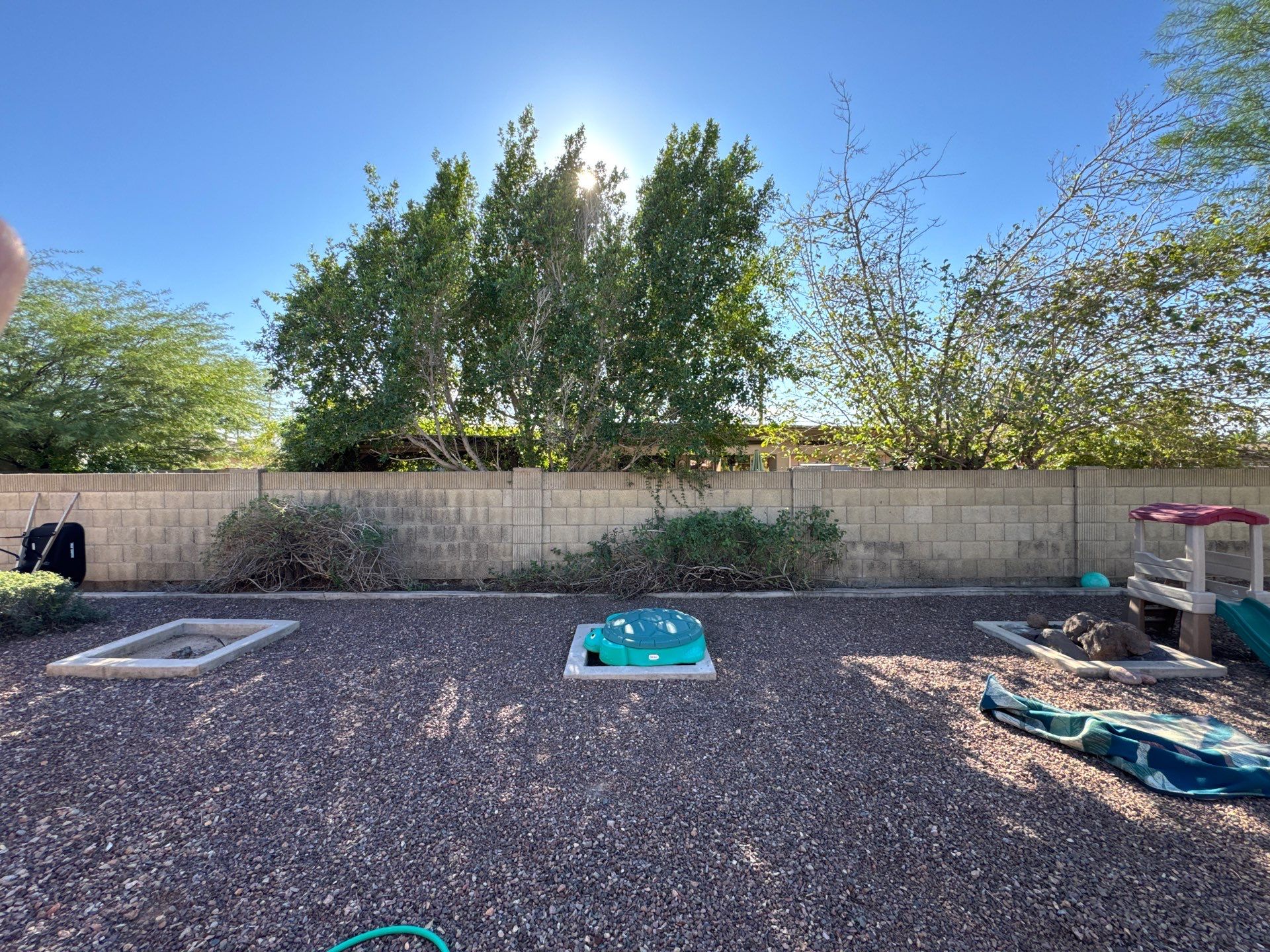
I'd pull out the lantana that's here and line the entire back fence on all sides, completely covering it. Covered walls stop soaking up and radiating heat, which cools down the whole yard, and it gives you privacy and habitat for birds.
Hopseed and Arizona rosewood are both native. Orange jubilee and yellow bells give you a lot of color. All four will work anywhere in your back yard. You can do combinations of them or one single hedge all the way around. If I were doing just one thing back here, this would be it.

Hopseed
Native, evergreen, and my go-to for a dense green wall. Grows fast to 10 to 12 feet and takes full sun and reflected heat with very little shaping. Plant 5 to 6 feet apart for a solid screen.

Arizona Rosewood
Native and evergreen with a slightly softer look than hopseed. Gets 10 to 15 feet tall and very dense. Plant 6 to 8 feet apart. Birds nest in it.

Orange Jubilee
Big orange trumpet flowers from spring through fall, covered in hummingbirds. Fast to 8 to 10 feet. Plant 5 to 6 feet apart. Can freeze back in a hard winter and bounces right back.
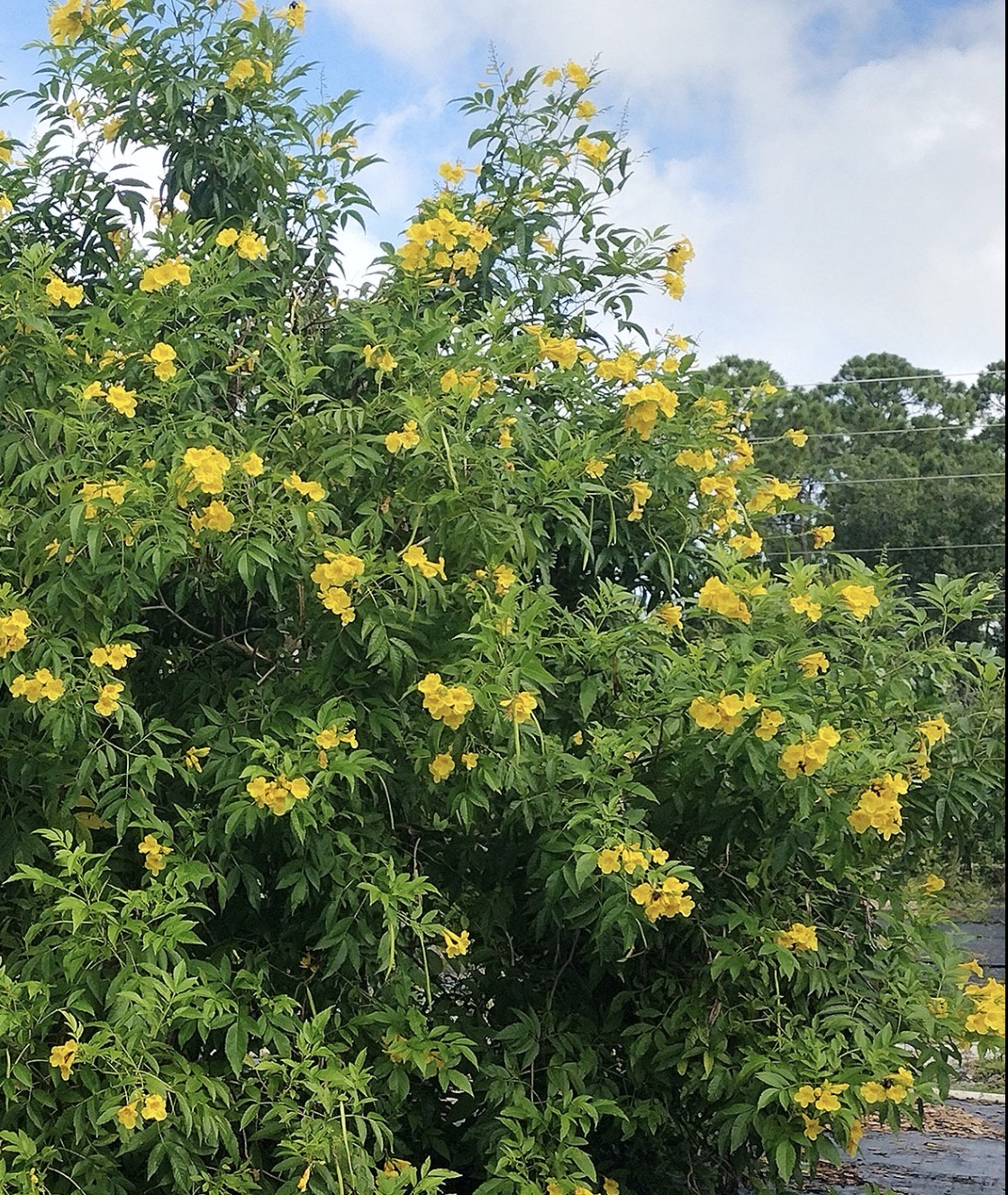
Yellow Bells
Same look as orange jubilee in bright yellow. Alternating the two along a wall gives you months of color. Plant 5 to 6 feet apart.
Spacing tip: keep them a couple of feet out from the wall so the roots have room, and put each plant on 2 to 3 emitters set about a foot off the root ball. Plant at the same depth they were in the pot.
Desert Ruellia Along the Patio and Walkway
Back patio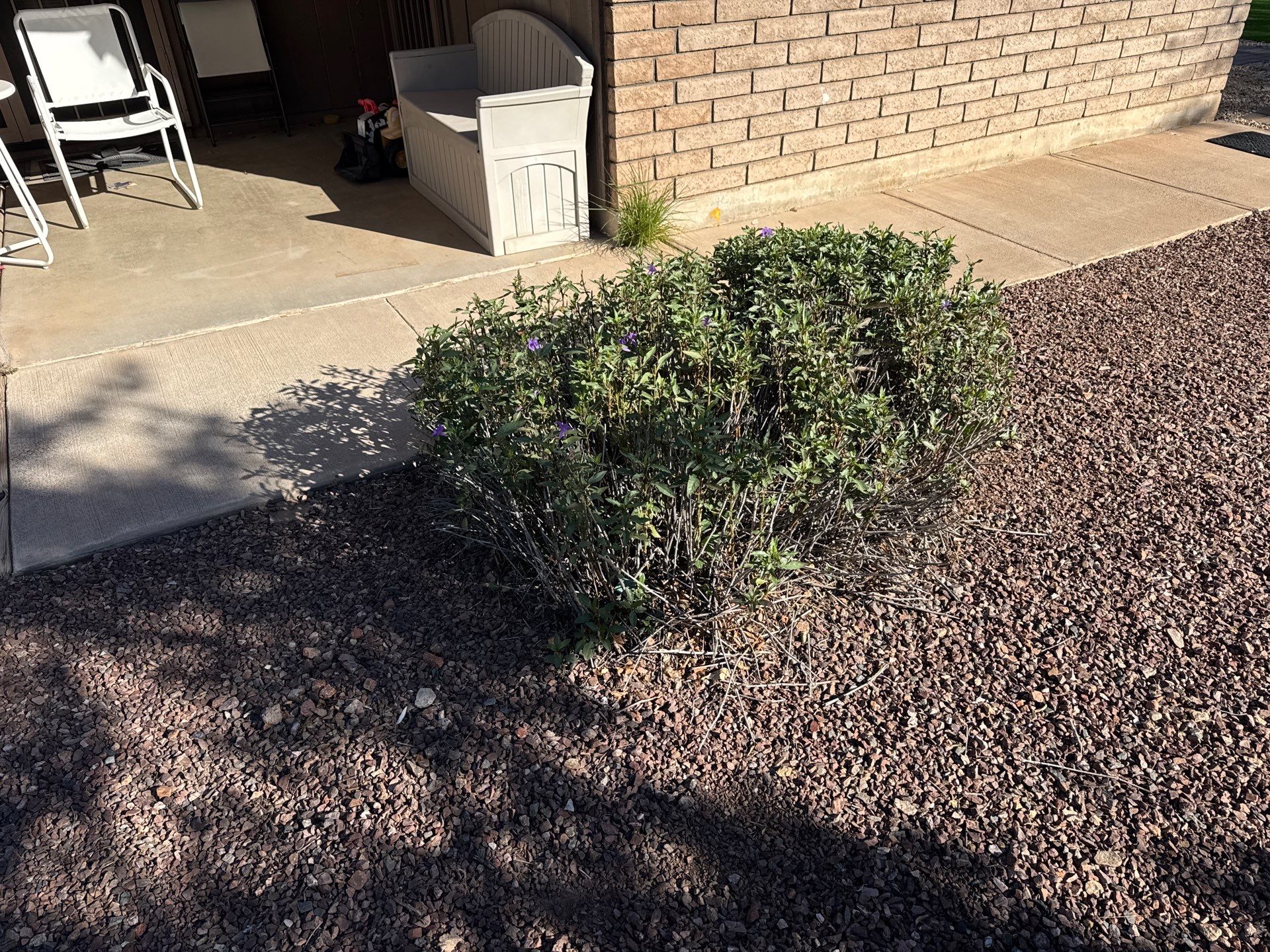
This is desert ruellia, also called desert petunia. It's a good spot for it. It's an evergreen shrub about 3 to 4 feet tall and wide, with purple petunia-like flowers from spring through fall. It takes full sun and heat, bounces back fast if it freezes, and bees and butterflies love it.
It's also one of the best plants for lining sidewalks and walkways. I think you could line the back patio with it, leaving gaps for entryways so you can walk out under the canopy of the mesquite trees once they're grown. I'd also line this walkway with it:
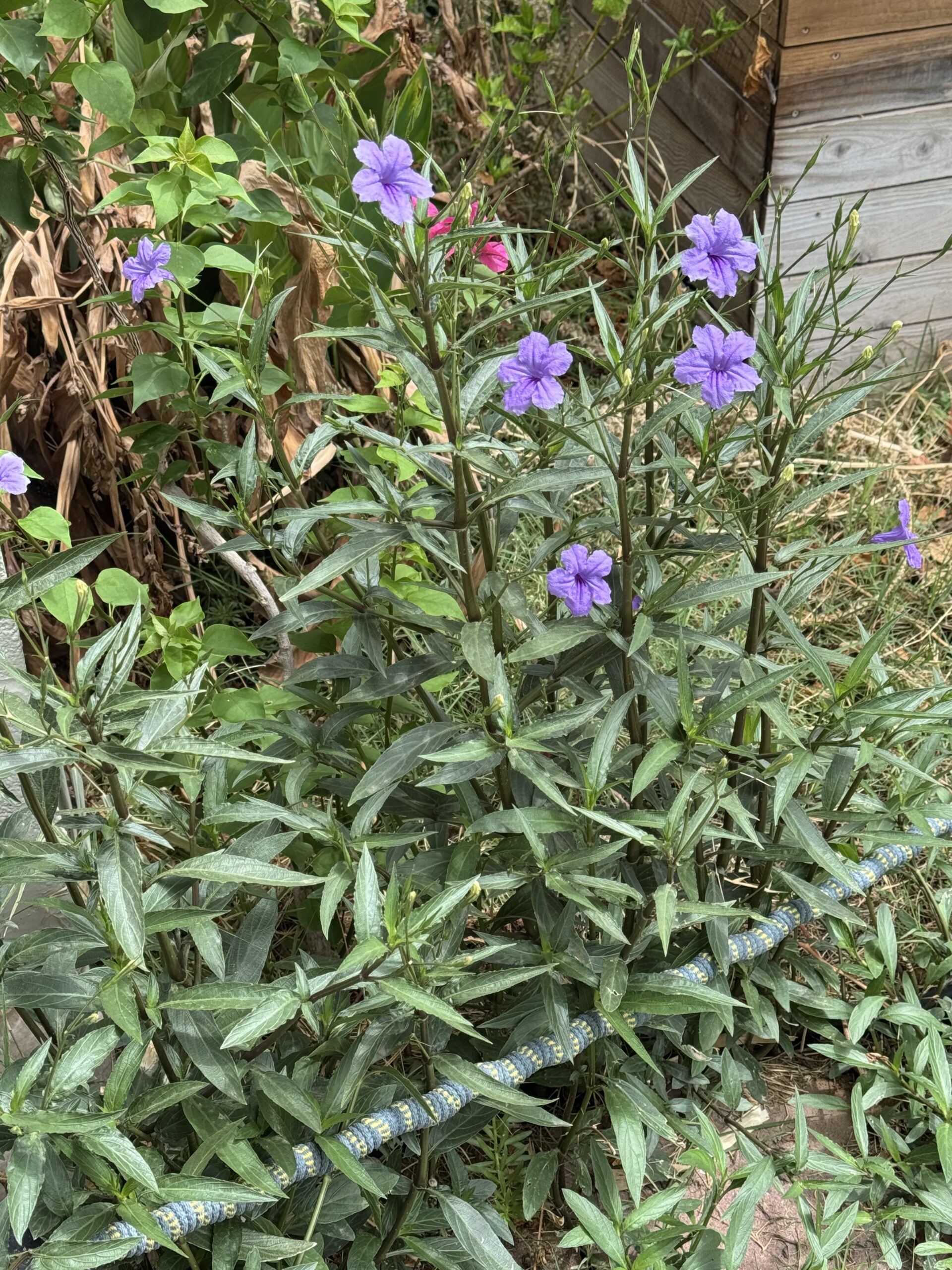
Ruellia
Purple flowers spring through fall, 3 to 4 feet. Plant 3 to 4 feet apart along the walkway for a continuous low hedge. Cut back by about a third in late winter to keep it full.
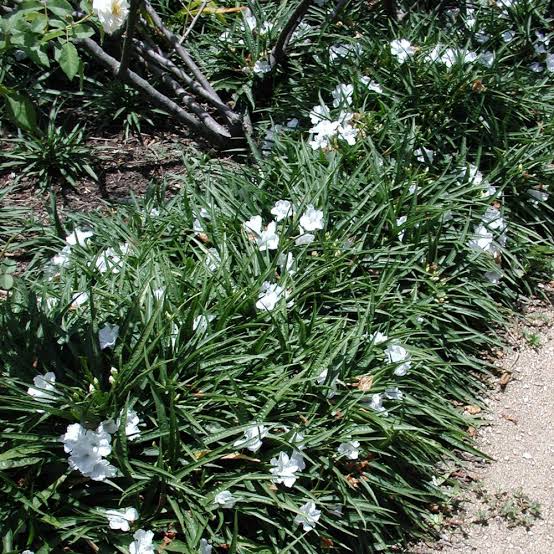
Desert Ruellia (white)
Same plant with white flowers. Mixing purple and white along a walkway looks great.
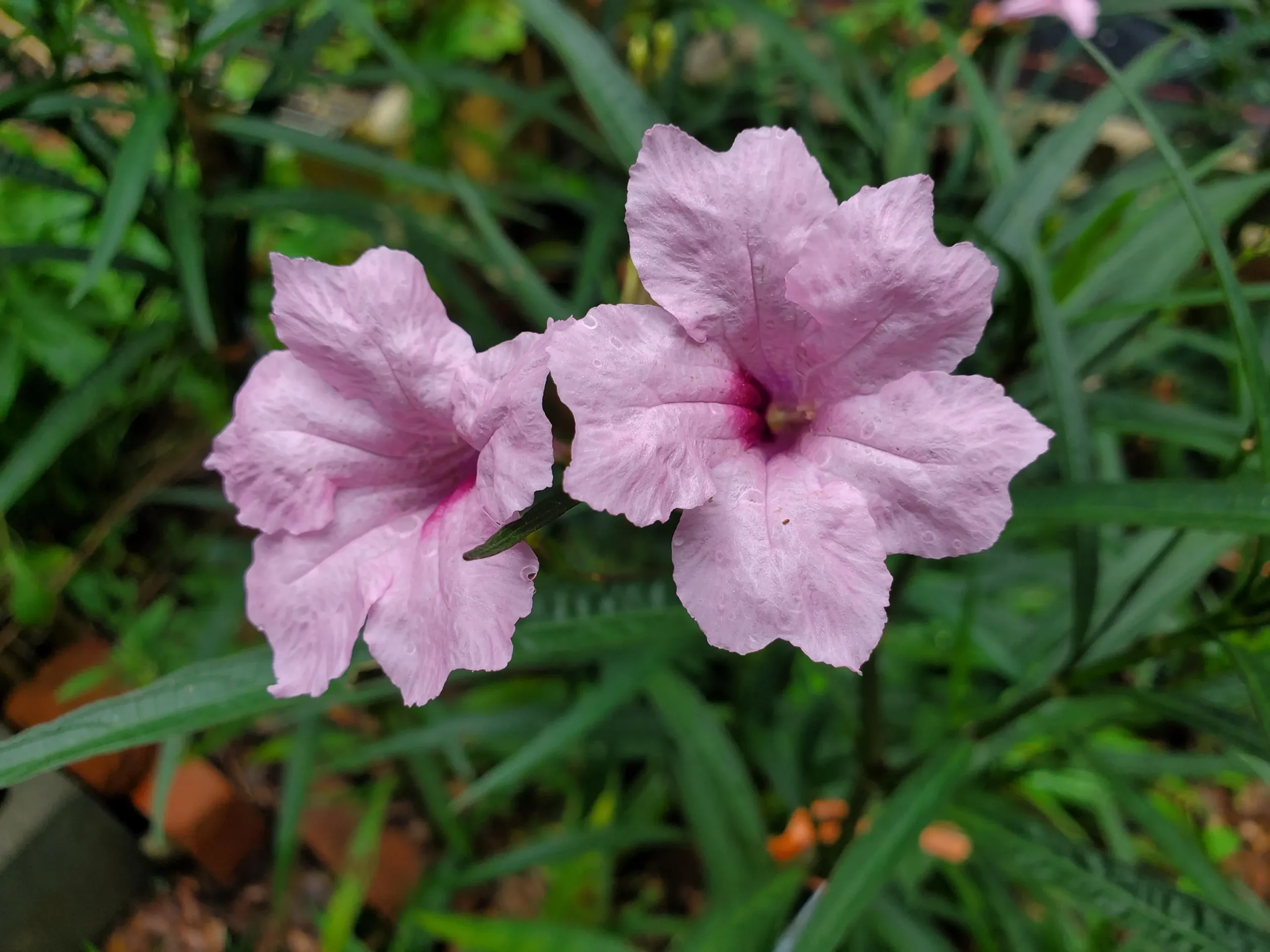
Pink Ruellia
A pink-flowered version if you want a softer color.
Note: the purple ruellia can reseed itself. Pull any seedlings that come up where you don't want them.
Back Yard Palo Verde
Back yard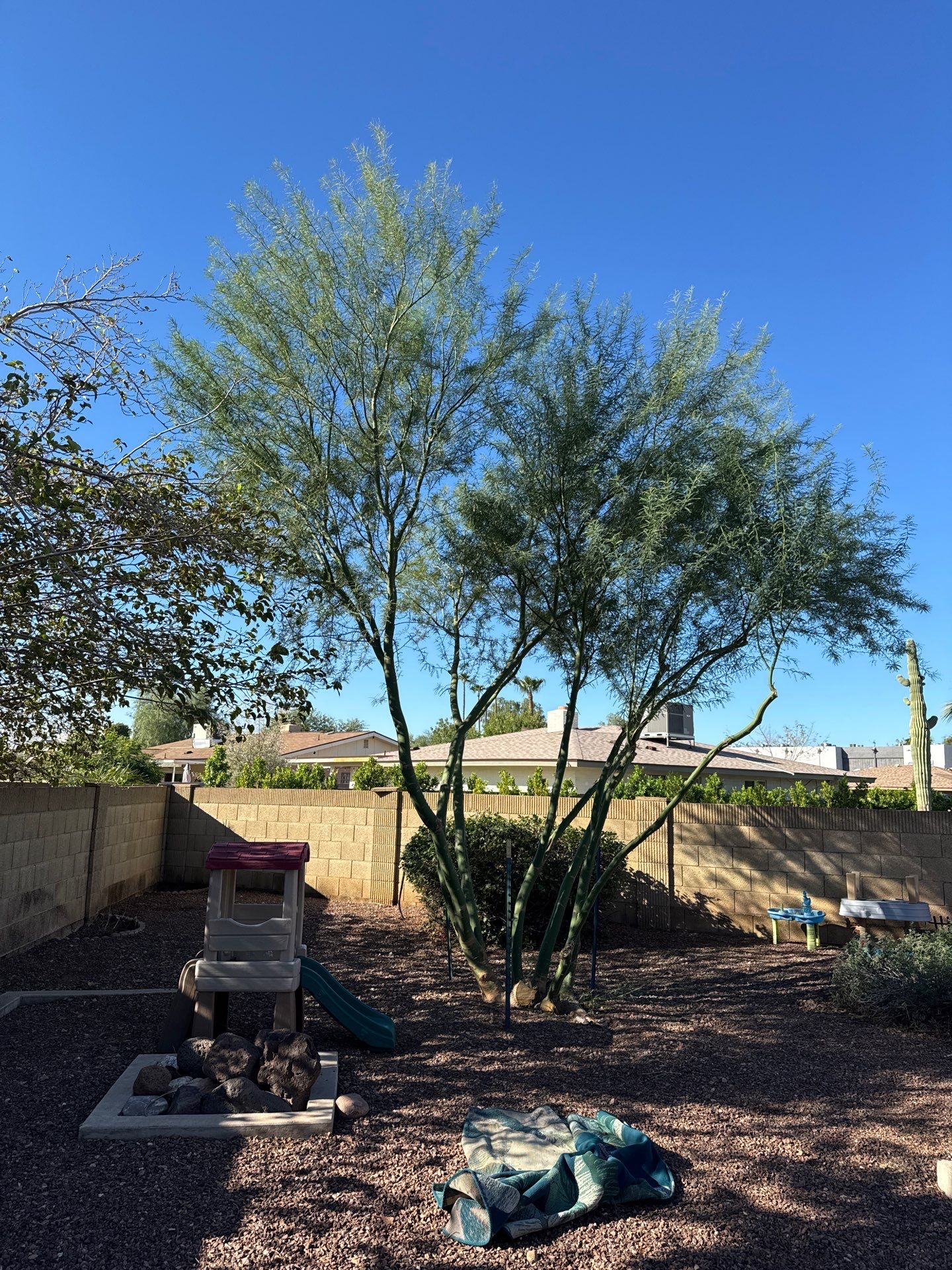
You've done a good job trimming this palo verde. Having multiple trunks like this is actually fine. Palo verdes naturally grow that way.
The main thing going forward is to keep the long, lanky branches cut back. You don't want them getting too long, because long, heavy branches out at the tips are what make palo verdes break and fall in monsoon winds. Once a year, ideally in late winter or right after it blooms in spring, shorten any branches that are reaching way out past the rest of the canopy back to a side branch. Don't strip the inside branches. Those keep the canopy balanced.
If it ever needs bigger structural work, I recommend King's Tree Service, a certified arborist I trust.
Kids Play Area Walls
Back yard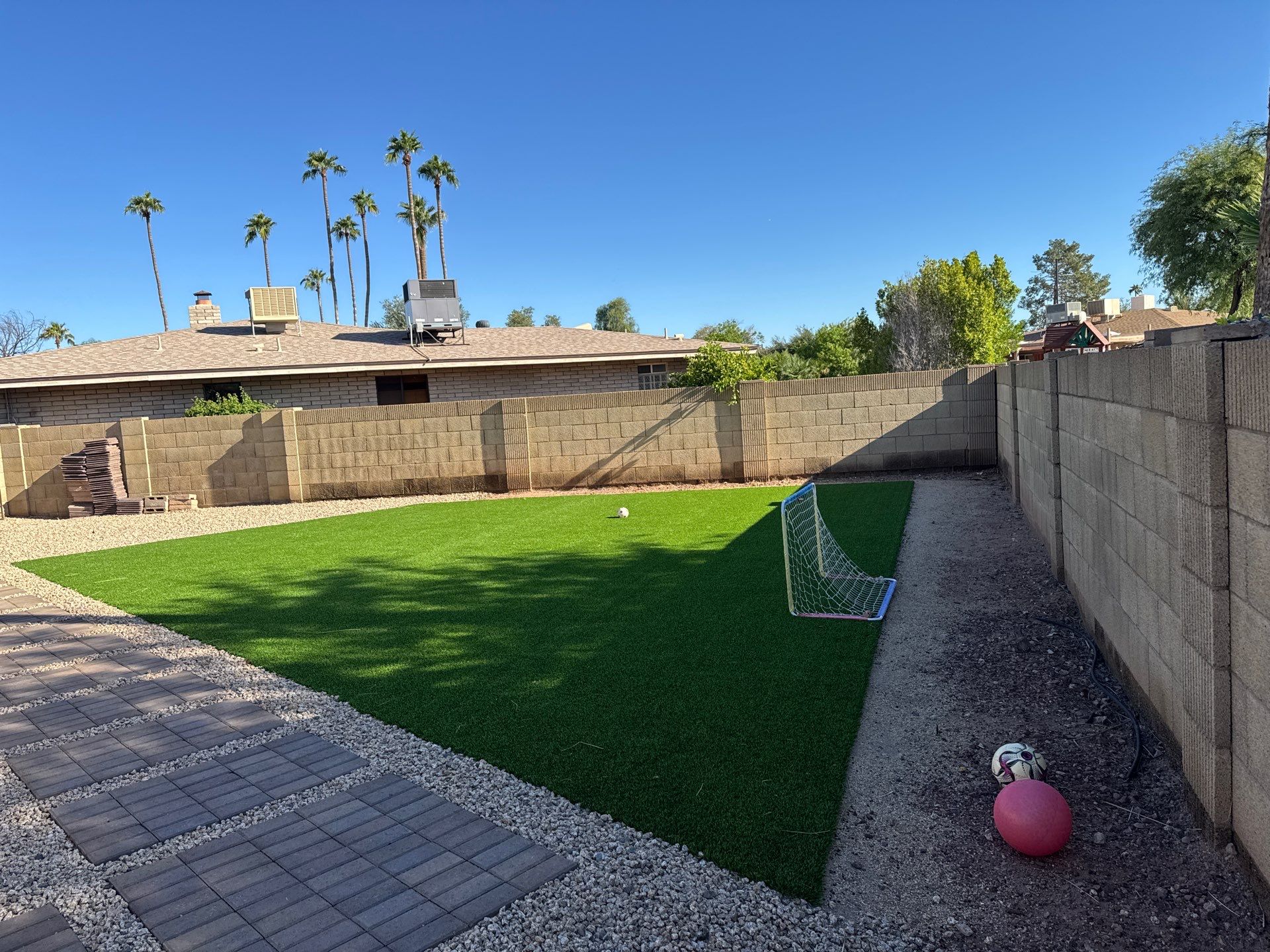
Same thing here. Lining these walls will really cool this area down, especially with the turf, which holds a lot of heat in summer. Any of the same wall options work here:
Hopseed
Native, evergreen, and my go-to for a dense green wall. Grows fast to 10 to 12 feet and takes full sun and reflected heat with very little shaping. Plant 5 to 6 feet apart for a solid screen.
Arizona Rosewood
Native and evergreen with a slightly softer look than hopseed. Gets 10 to 15 feet tall and very dense. Plant 6 to 8 feet apart. Birds nest in it.
Orange Jubilee
Big orange trumpet flowers from spring through fall, covered in hummingbirds. Fast to 8 to 10 feet. Plant 5 to 6 feet apart. Can freeze back in a hard winter and bounces right back.
Yellow Bells
Same look as orange jubilee in bright yellow. Alternating the two along a wall gives you months of color. Plant 5 to 6 feet apart.
You'll need irrigation set up for all of this, and I recommend getting that done before you plant. Garrett is who I send people to for irrigation: 480-678-9121.
Side Yard Shade Tree
Afternoon sun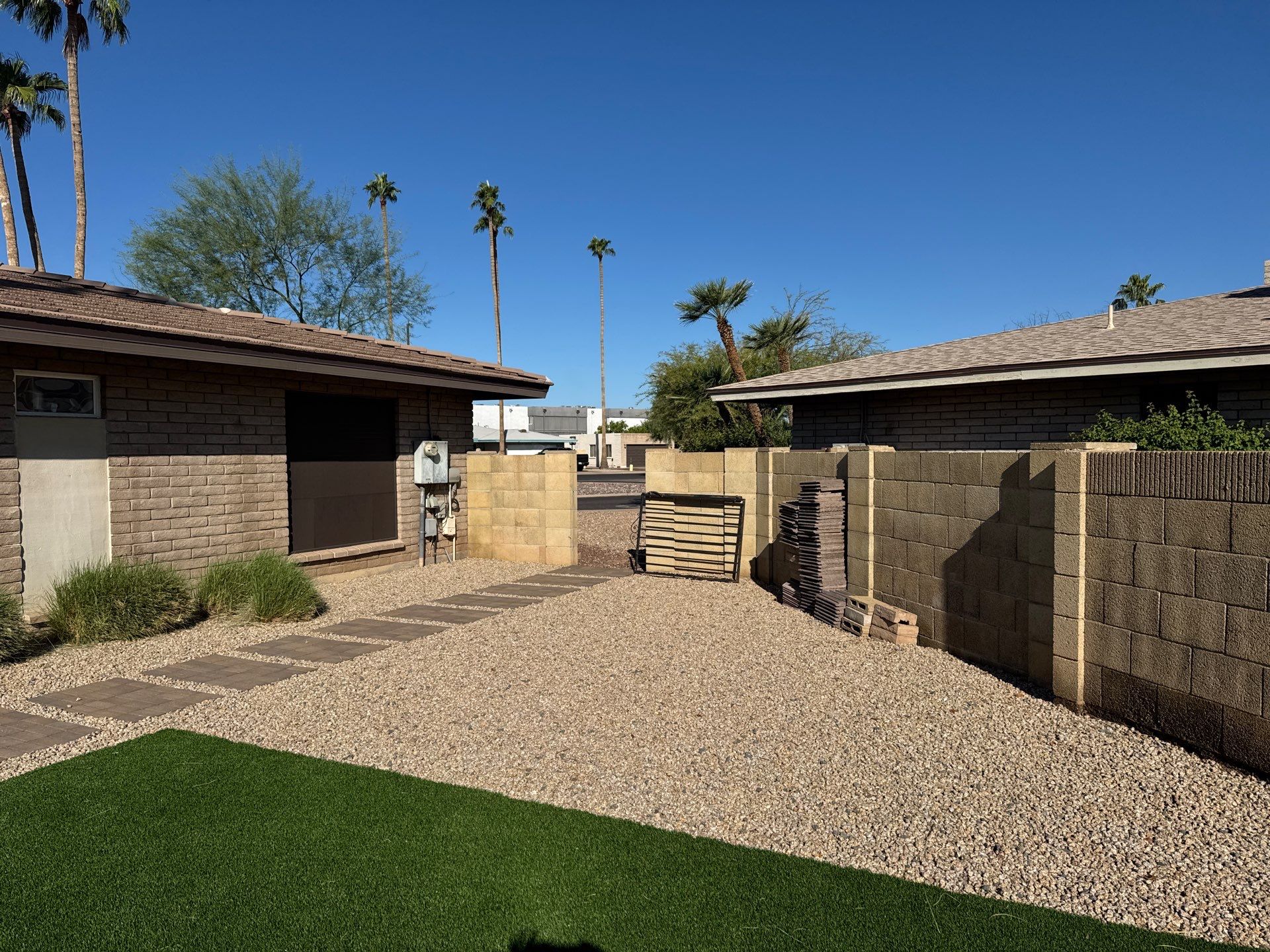
This is a great spot for a desert adapted tree. It'll give shade from the hot afternoon sun. Here are my top options, all native or desert adapted:
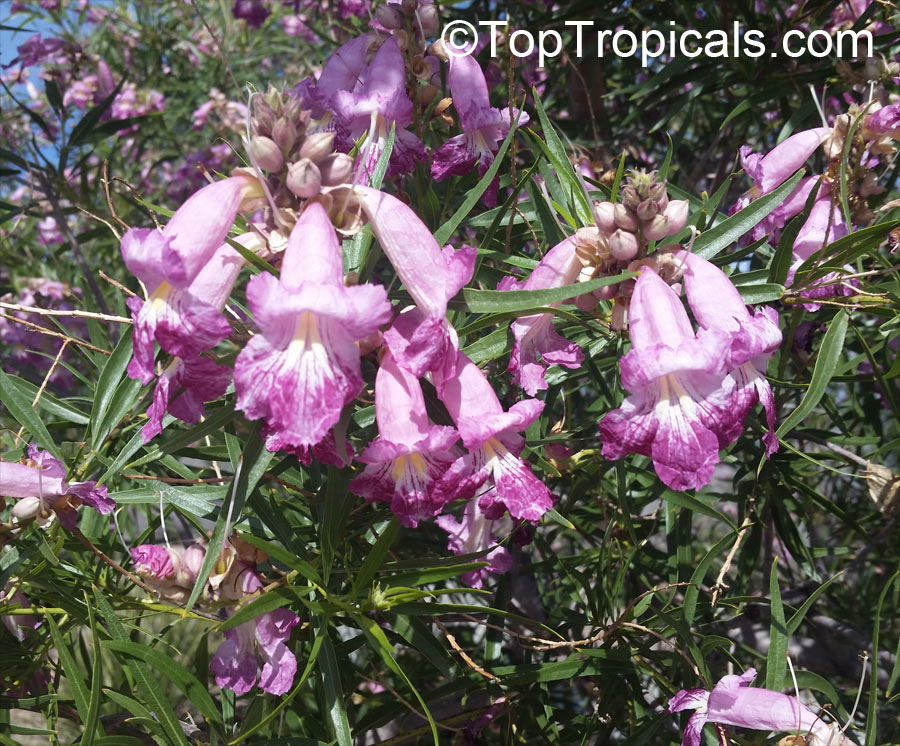
Desert Willow
Native, 15 to 25 feet, with orchid-like pink and purple flowers all summer that hummingbirds and bees love. Light, airy shade. Drops its leaves in winter, which lets winter sun in.
Velvet Mesquite
Our native mesquite, 20 to 30 feet with a wide, filtered canopy. Native velvet mesquite supports local wildlife in a way the hybrids don't, and it's very tough.
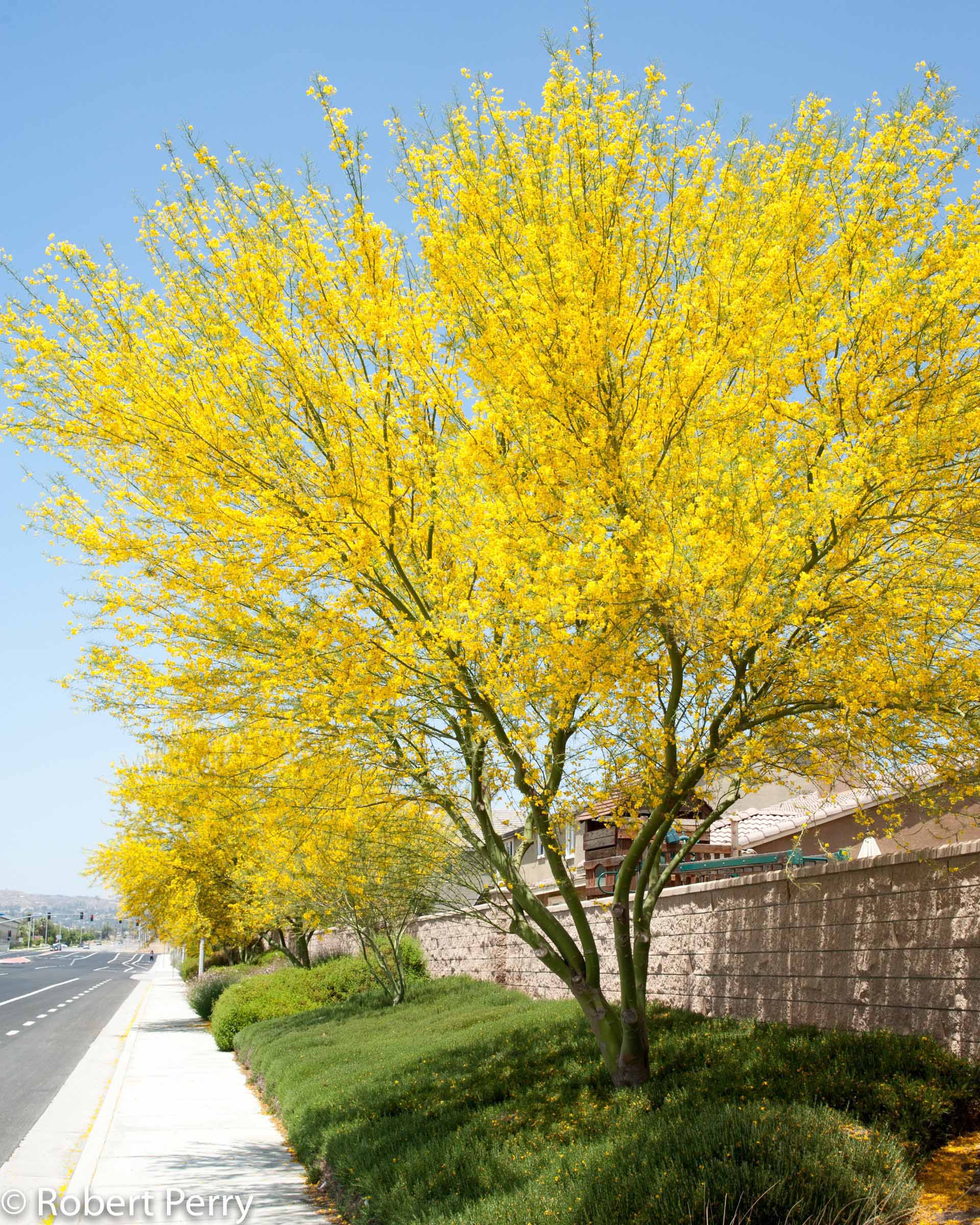
Desert Museum Palo Verde
Thornless hybrid palo verde, 20 to 25 feet, with a huge yellow bloom in spring. Fast growing, green bark, light shade.
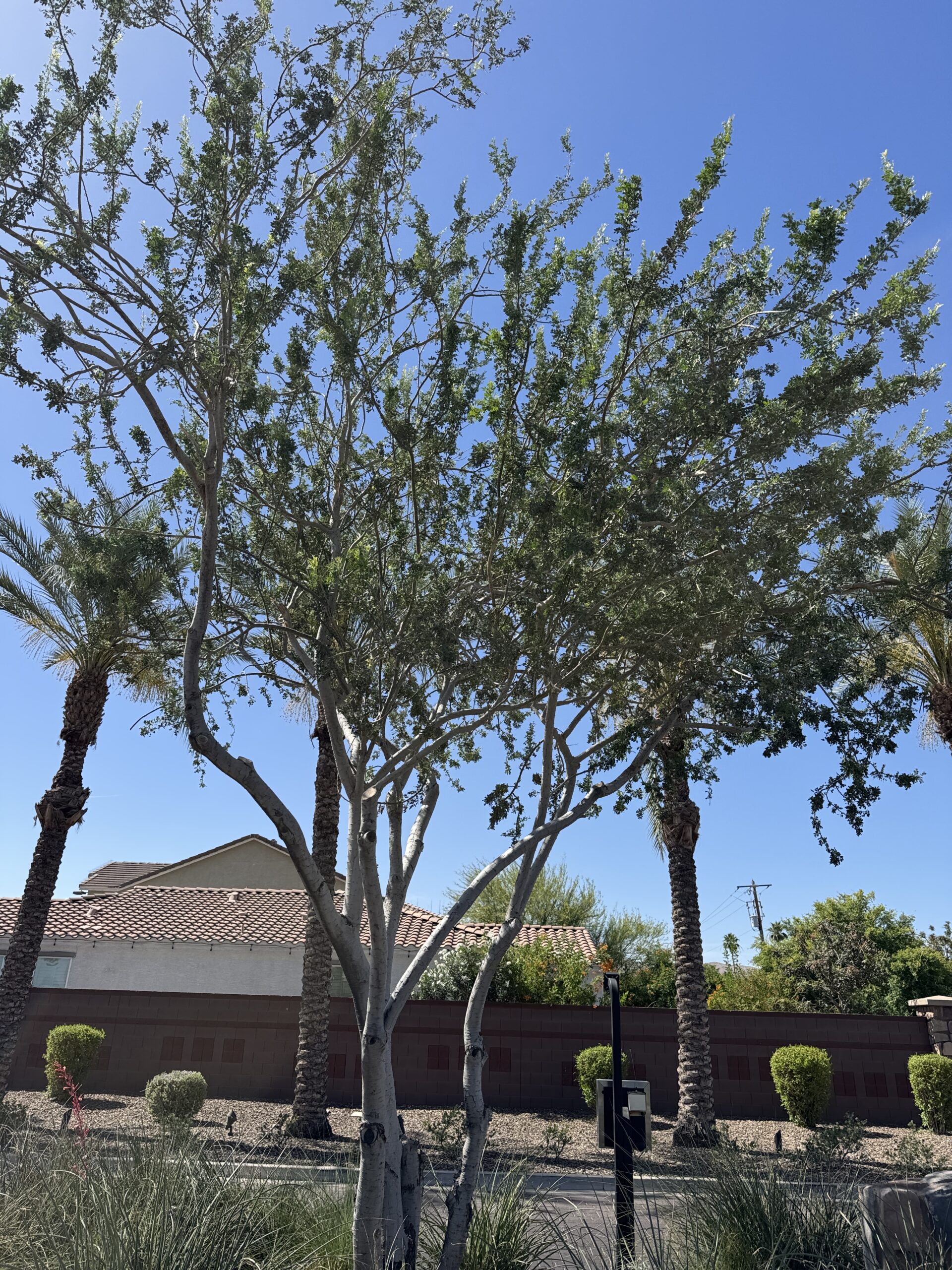
Desert Ironwood
Native, slow growing, and one of the longest-lived trees in the Sonoran Desert. Evergreen, 15 to 25 feet, with lavender flowers in late spring.
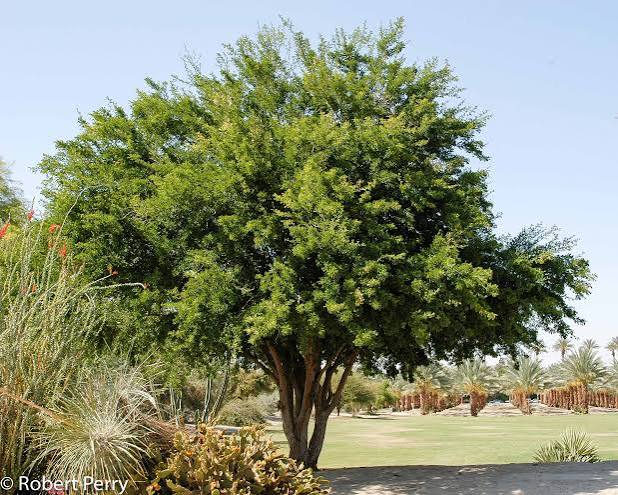
Texas Ebony
Dense, dark green evergreen canopy, 15 to 25 feet. Slow growing and very tough. Has thorns, so keep it away from walkways and play areas.
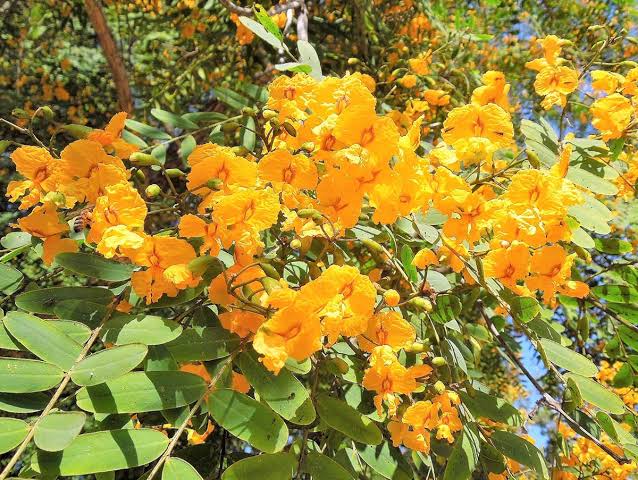
Tipu
Fast growing to 30 to 40 feet with a broad umbrella canopy and yellow-apricot flowers in late spring. Great filtered shade over a big area. Semi-evergreen; it drops leaves briefly in late winter.

Red Push Pistache
25 to 30 feet with red new growth in spring and red-orange fall color. Tough, takes the heat, and roots that are well behaved. Drops its leaves in winter, which lets winter sun in.
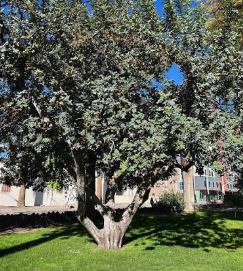
Carob
Evergreen with dense, dark shade. The largest option here at 25 to 30 feet, so give it room. Great if you want maximum shade.
Go with a 15 gallon tree and plant it the same way as the mesquites: native soil plus a little compost in the hole, compost on top, mulch over that, and the root flare right at the soil line.
Fountain Grass Walkway
Back yard walkway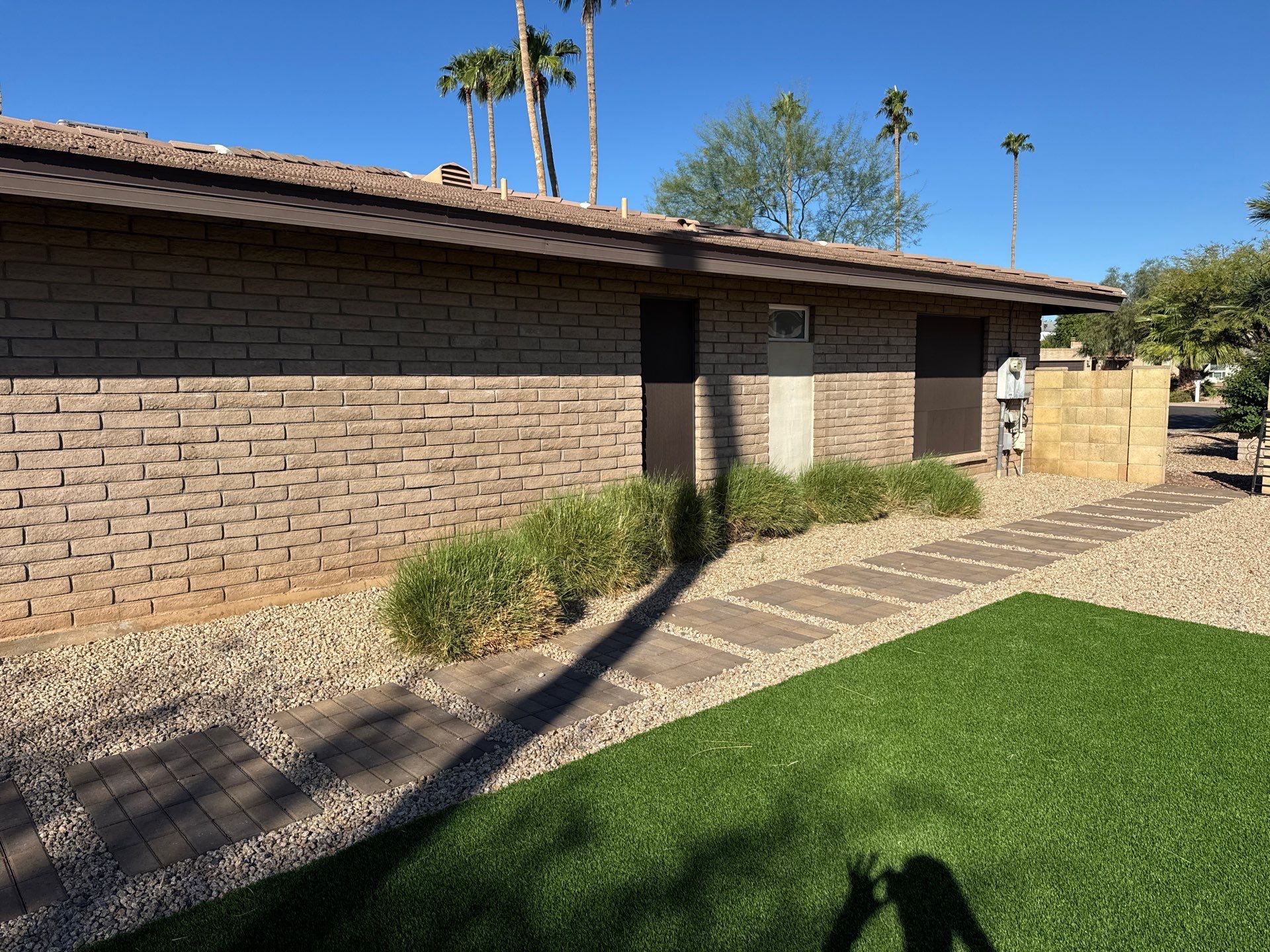
I really like this fountain grass, and this is a great place for it. I'd add more to completely fill in the area so it's continuous, then line the whole walkway with it. One plant type repeated along a path looks really clean.
- Space new plants 2 to 3 feet apart so they grow together into a solid line.
- Once a year in late winter, cut it back to about 6 inches. It'll push fresh green growth in spring.
- Put each new plant on its own emitter.
Citrus Trees
Back yard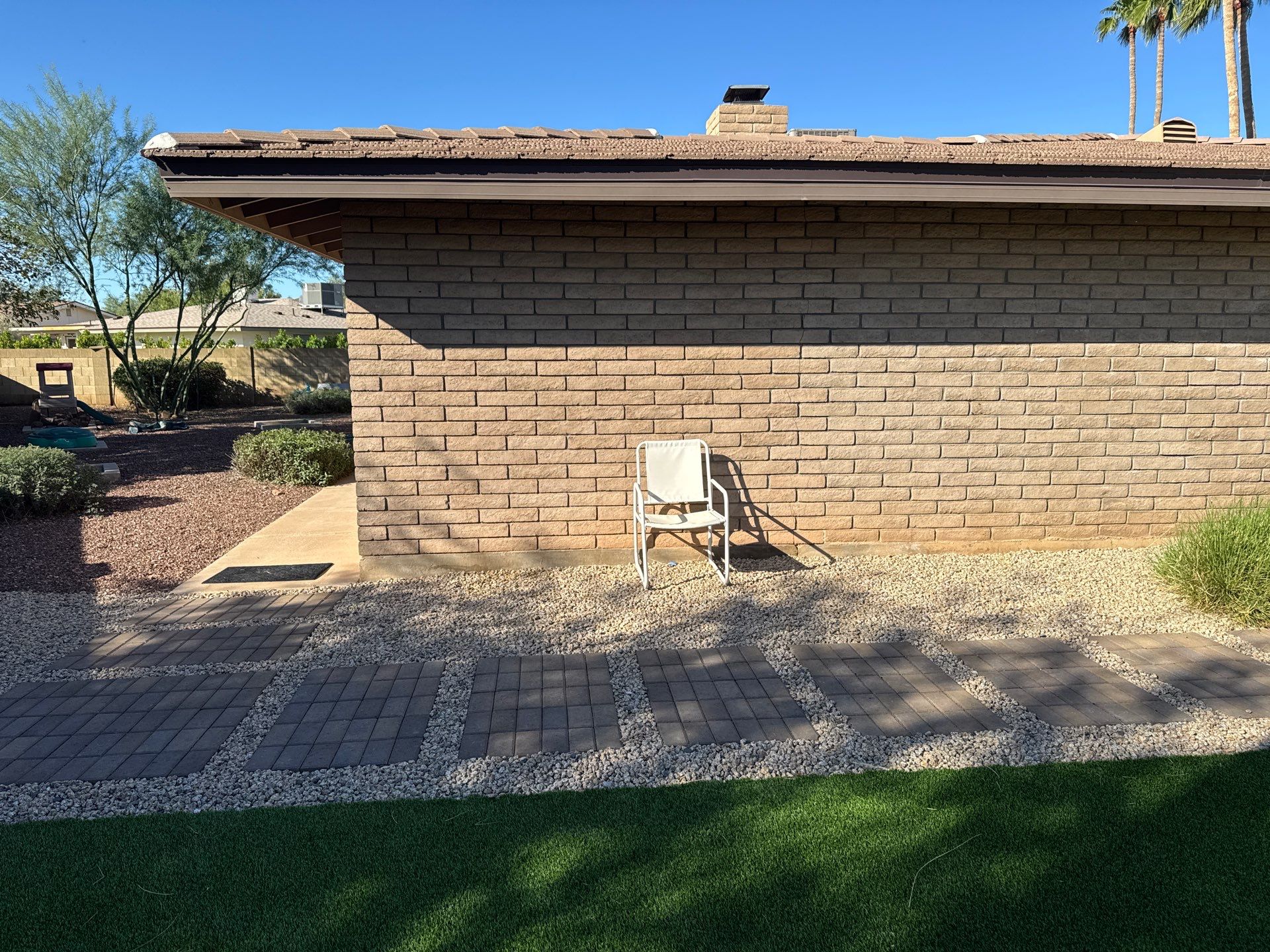
If you decide to grow citrus, this is the best spot for it. You can fit two trees here, about 8 feet apart. And now is a great time of year to plant them.
Check out Greenfield Citrus Nursery. They grow all their citrus here in the Valley, and you can look through all the different types that will grow in this spot: lemons, limes, oranges, grapefruit, tangerines, kumquats and more.

Lemon Tree
Meyer lemon is a favorite: sweeter, juicier, and produces a lot on a smaller tree.
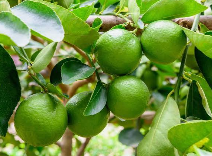
Lime
Bearss lime is the most reliable here. Protect it on frost nights.

Citrus
Navel oranges, mandarins and tangerines all do great here and ripen through winter.
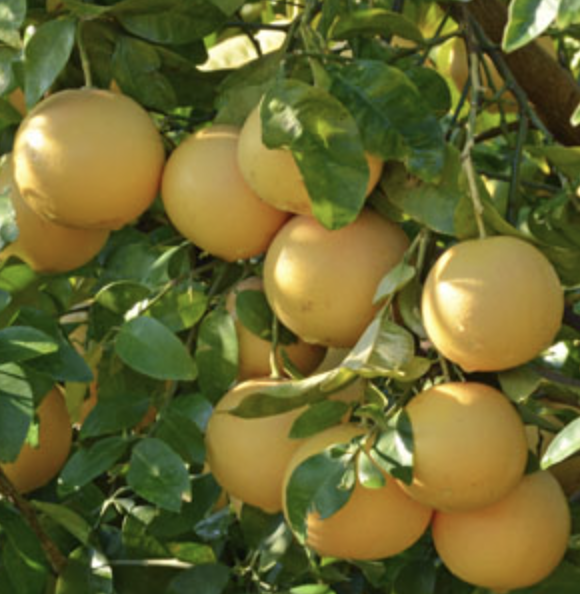
Grapefruit
Big tree, big harvest. Ruby red grapefruit sweetens up beautifully in our heat.
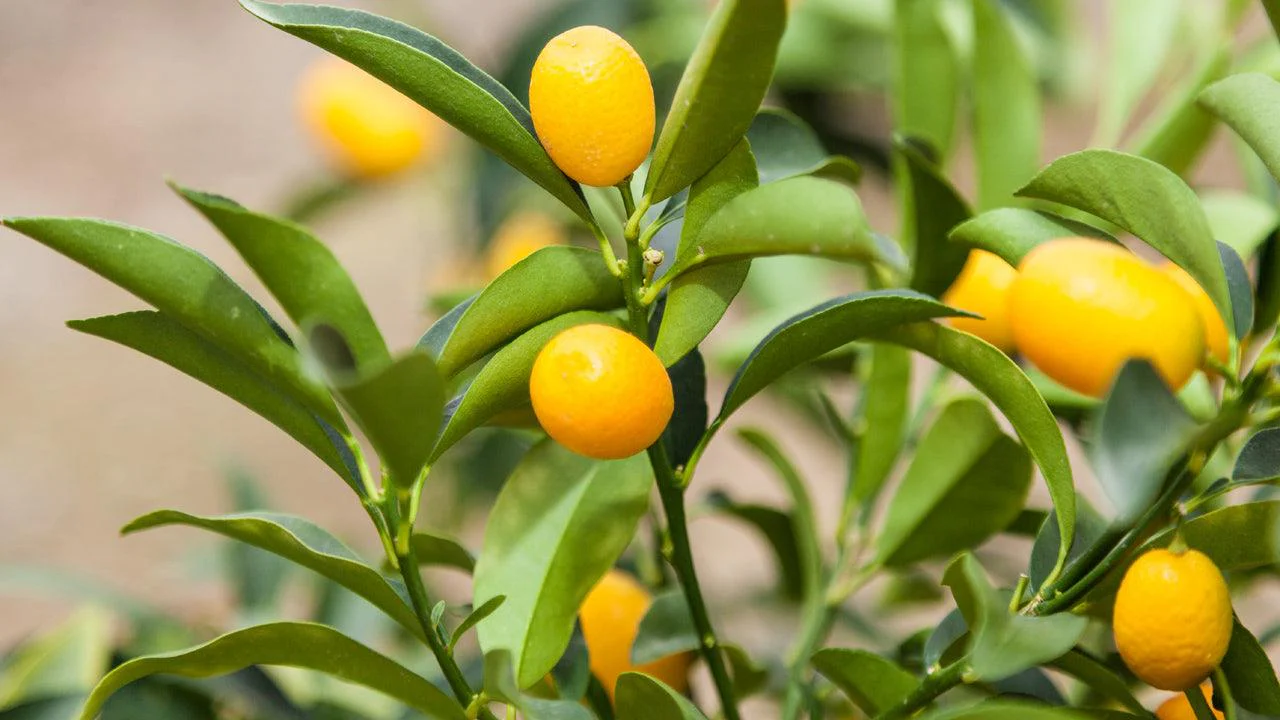
Kumquat
Small, ornamental, and you eat the fruit skin and all. Great if space is tight.
- Plant with the root flare right at or slightly above the soil line. Citrus planted too deep is one of the most common problems I see.
- Create a water well 3 to 4 feet across, lay compost on top of the soil and mulch over it. Keep the mulch away from the trunk.
- Paint or wrap any exposed trunk with white latex paint (half water) or a trunk wrap to prevent sunburn, and let the canopy grow low to shade itself.
- Put emitters out toward the edge of the canopy, not right at the trunk, and move them out as the tree grows.
Pollinator Bed Outside the Living Room Window
Front yard, west facing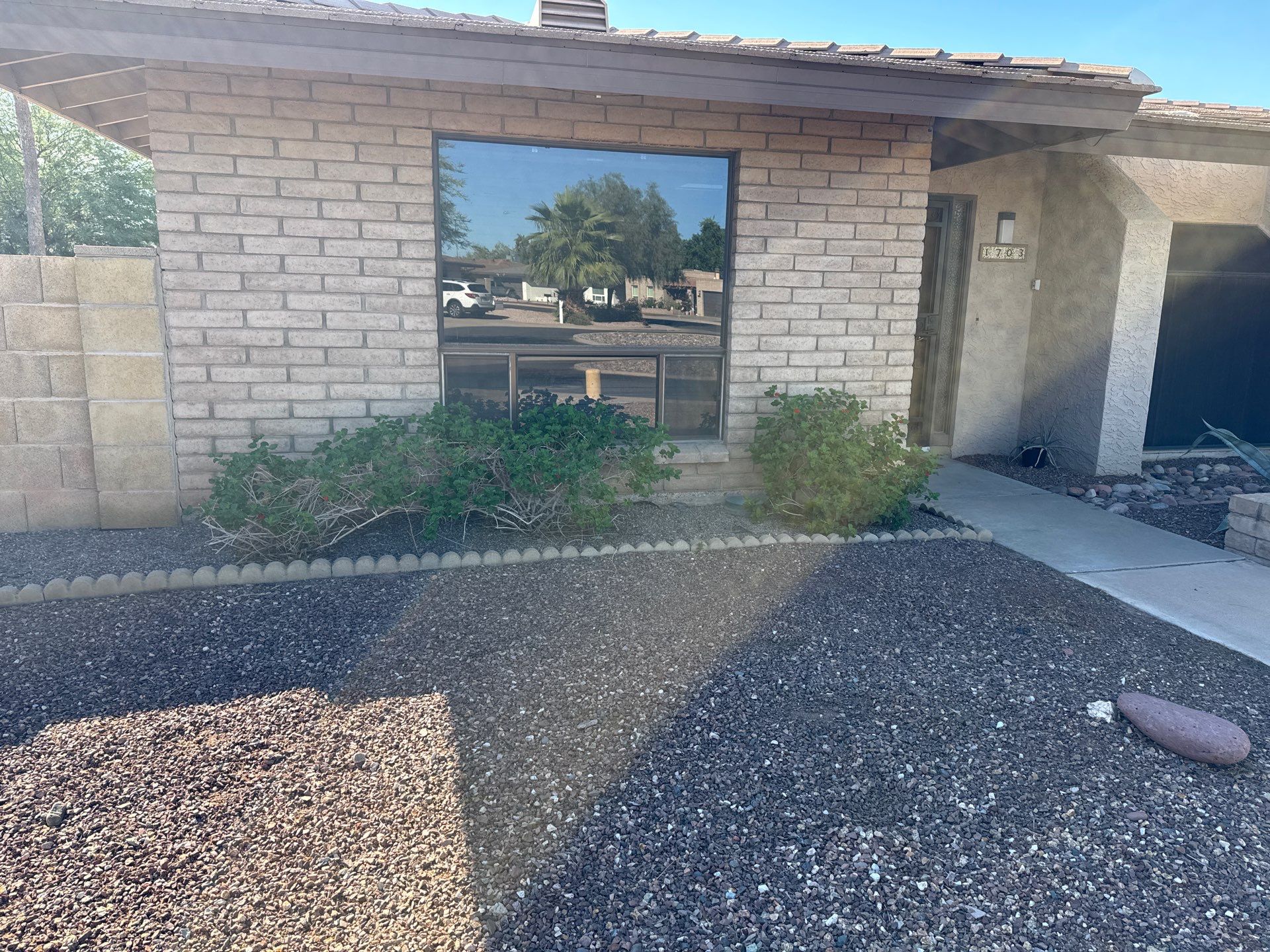
There's lantana here right now, but there are a lot of native options that would work better. Since this is right outside your living room window, let's make it a pollinator bed full of things that bring in hummingbirds and butterflies, so you can watch them from inside.
You also like the idea of pencil stick cactus on either side of the window. That's a great idea. It grows upright with some height without blocking the view, and it turns orange-red in the cooler months.
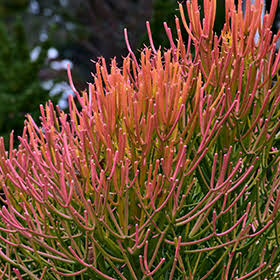
Pencil Cactus
Upright orange-red stems, 4 to 6 feet with time. One on each side of the window frames it nicely.
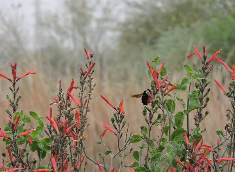
Chuparosa
Native, red tubular flowers through winter and spring when little else is blooming. Hummingbirds fight over it. 3 to 4 feet.
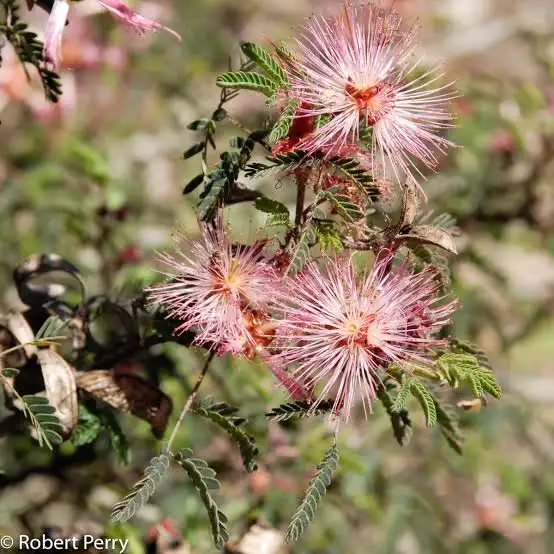
Pink Fairy Duster
Native, with soft pink puffball flowers in late winter and spring. 2 to 3 feet, airy and natural.
Baja Fairy Duster
Red puffball flowers most of the year, 3 to 5 feet. Hummingbirds visit it every day.

Desert Milkweed
Native, upright gray-green stems. The host plant for monarch and queen butterflies.
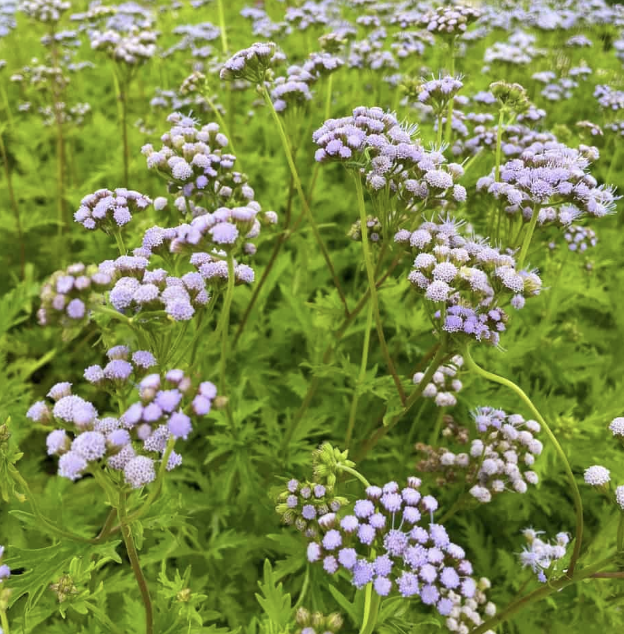
Greg's Mistflower
Purple-blue flowers in fall that get covered in queen butterflies. Spreads, so give it room.
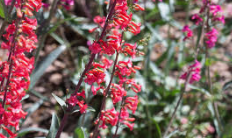
Penstemon
Tall red, pink or purple flower spikes in spring. A hummingbird favorite.
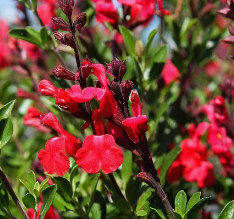
Autumn Sage
Red, pink or white flowers spring and fall, 2 to 3 feet. Bees and hummingbirds love it.

Globe Mallow
Native with apricot-orange flowers in spring. Bees love it.
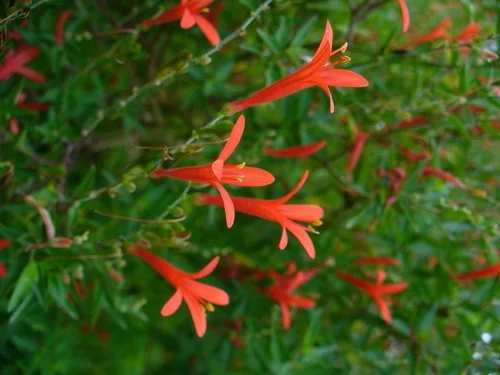
Desert Honeysuckle
Orange tubular flowers spring through fall, 3 to 5 feet. More hummingbirds.
You can't fit all of these. Pick your favorites and group 2 or 3 of each together.
Front Yard Shade Tree
Front yard, west facing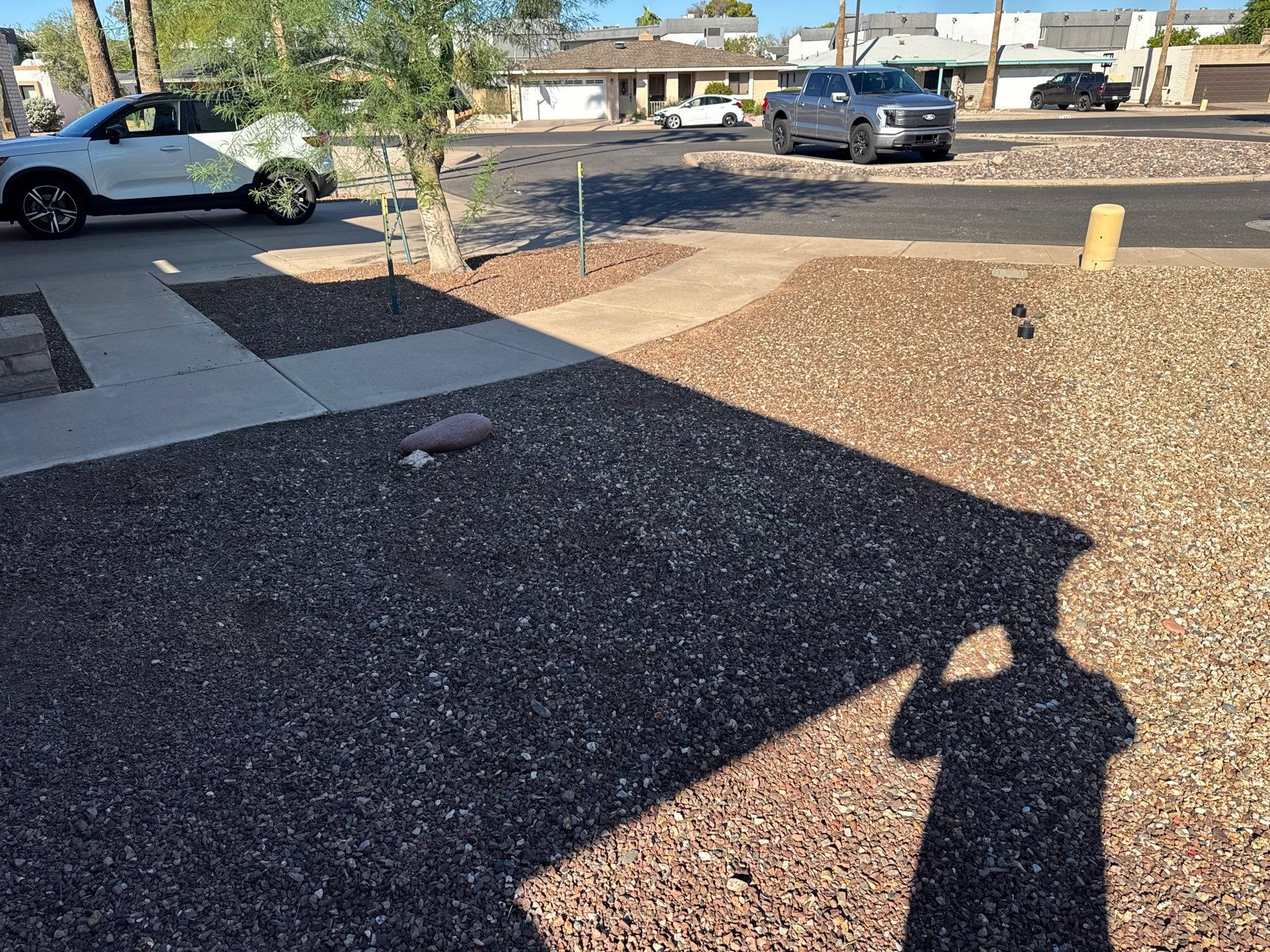
This is a good spot for another native tree. I'm thinking a desert willow, which you already like. Since the house faces west, a tree here will also give you some afternoon shade. Here are a few other native or desert adapted options too:
Desert Willow
Native, 15 to 25 feet, with orchid-like pink and purple flowers all summer that hummingbirds and bees love. Light, airy shade. Drops its leaves in winter, which lets winter sun in.
Velvet Mesquite
Our native mesquite, 20 to 30 feet with a wide, filtered canopy. Native velvet mesquite supports local wildlife in a way the hybrids don't, and it's very tough.
Desert Museum Palo Verde
Thornless hybrid palo verde, 20 to 25 feet, with a huge yellow bloom in spring. Fast growing, green bark, light shade.
Desert Ironwood
Native, slow growing, and one of the longest-lived trees in the Sonoran Desert. Evergreen, 15 to 25 feet, with lavender flowers in late spring.
Texas Ebony
Dense, dark green evergreen canopy, 15 to 25 feet. Slow growing and very tough. Has thorns, so keep it away from walkways and play areas.

Mulga Acacia
Evergreen with soft, silvery leaves and yellow flowers. 15 to 20 feet with a narrower shape, so it fits nicely closer to the house.

Texas Olive
Evergreen with big white flowers off and on through the warm season. Stays 15 to 20 feet with a dense, rounded canopy.
Plant 8 to 10 feet out from the house. A 15 gallon tree is the right size to start.
Leaning Palo Verde and a Future Saguaro
Front yard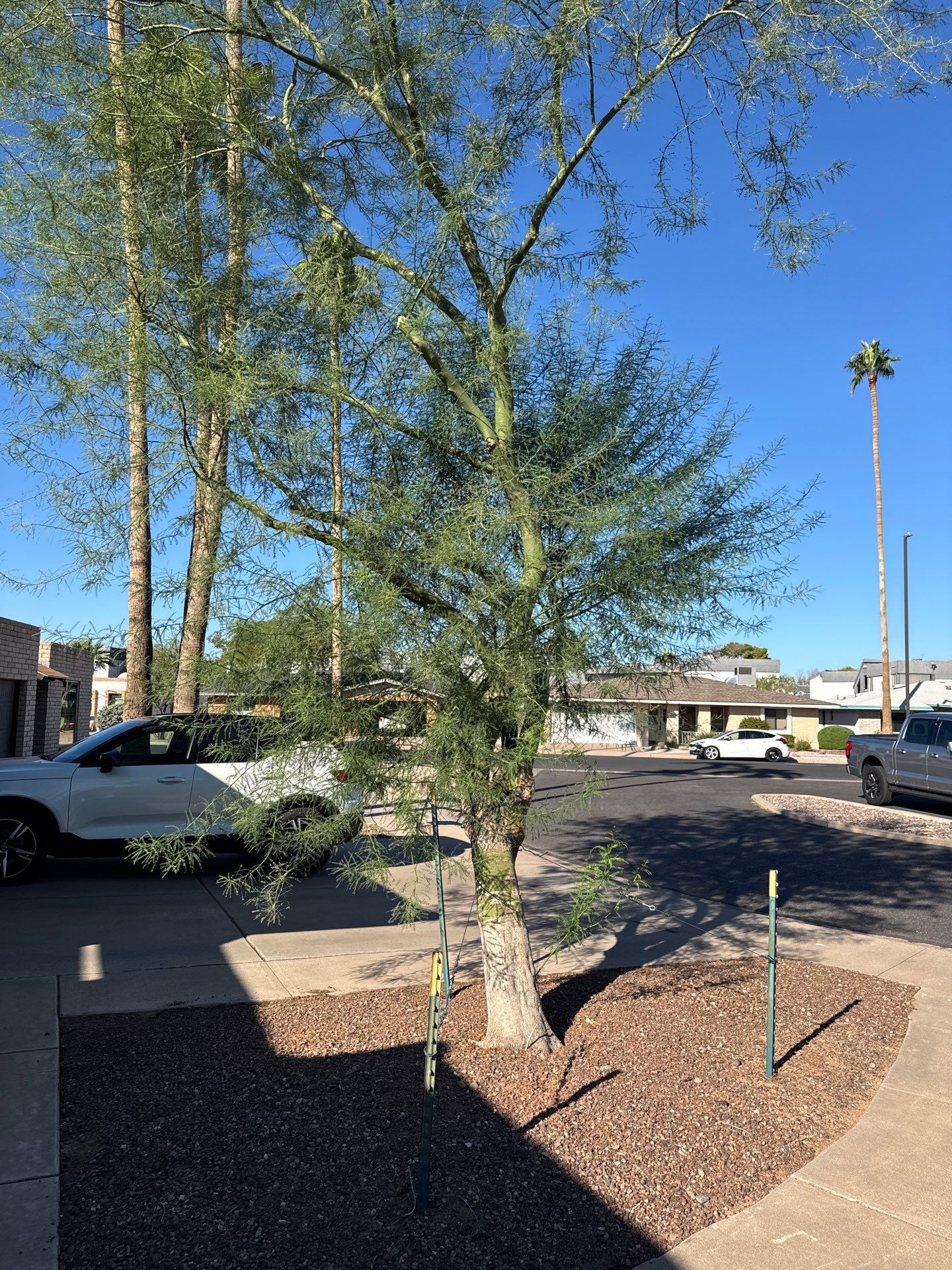
This palo verde is leaning, and it's not the best place for it. You like the idea of planting a saguaro here, which I think would be awesome.
Here's the order I'd do it in. First, get the desert willow from the last section planted and growing so it starts providing shade. Once it's established, that's a good time to take out the palo verde and put in the saguaro. Young saguaros grow up in the shade of a "nurse tree" in the wild, so having the willow nearby helps.
Saguaro
The icon of the Sonoran Desert. Very slow growing, about an inch or two a year when young. Buy from a licensed nursery with a tag (saguaros are protected in Arizona). Plant at the same depth it was growing, facing the same direction it grew (nurseries often mark the south side), and keep it dry for the first couple of weeks after planting so the roots can heal.
Native color for the whole front yard
Under the desert willow and around the rest of the front yard, here's a list of native and desert adapted plants that add color and bring in pollinators. They take less water than plants that aren't desert adapted, and between all of them you'll have something blooming every season. Use a lot of different plants and don't stress about placement. Scattered groupings look fuller and more natural, with lower plants near the walkway and driveway.
Penstemon
Tall red, pink or purple flower spikes in spring. Hummingbirds love them.
Globe Mallow
Native with apricot-orange cup flowers in spring. Reseeds itself.
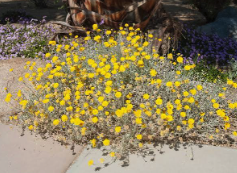
Desert Marigold
Native, bright yellow daisies most of the year. Reseeds naturally.
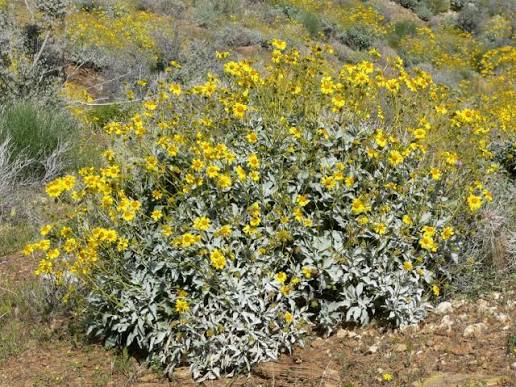
Brittlebush
Native, silvery leaves and a sheet of yellow flowers in spring. 3 feet.
Chuparosa
Native, red flowers through winter and spring. Hummingbird favorite.
Pink Fairy Duster
Native, pink puffball flowers in late winter and spring.
Baja Fairy Duster
Red flowers most of the year. Leave it natural.
Desert Milkweed
Native host plant for monarch and queen butterflies.
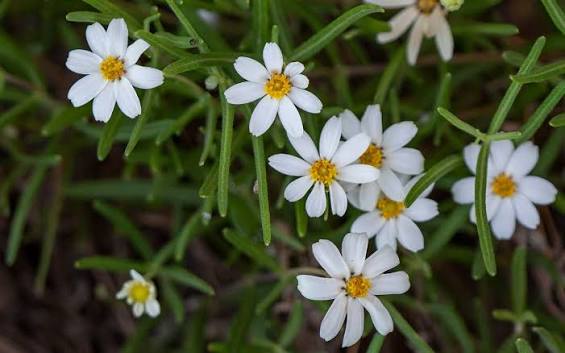
Blackfoot Daisy
Low mound of small white daisies, blooms almost nonstop.
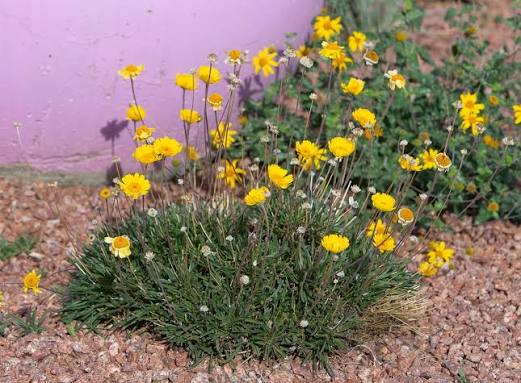
Angelita Daisy
Tidy mound of yellow daisies almost year-round.
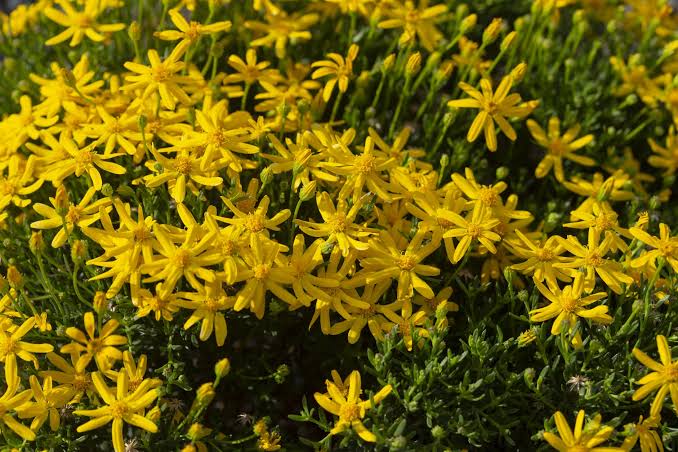
Damianita
Low, fragrant, golden yellow flowers in spring and fall.
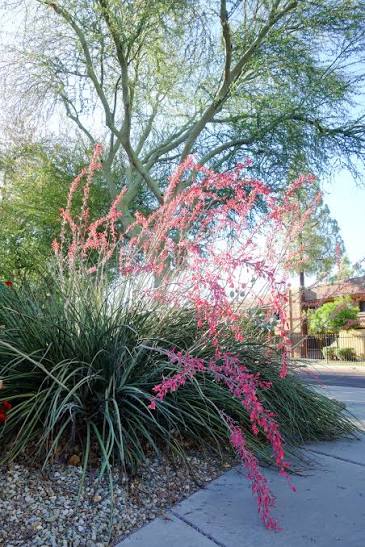
Red Yucca
Coral-red flower stalks spring through fall. Great accent.
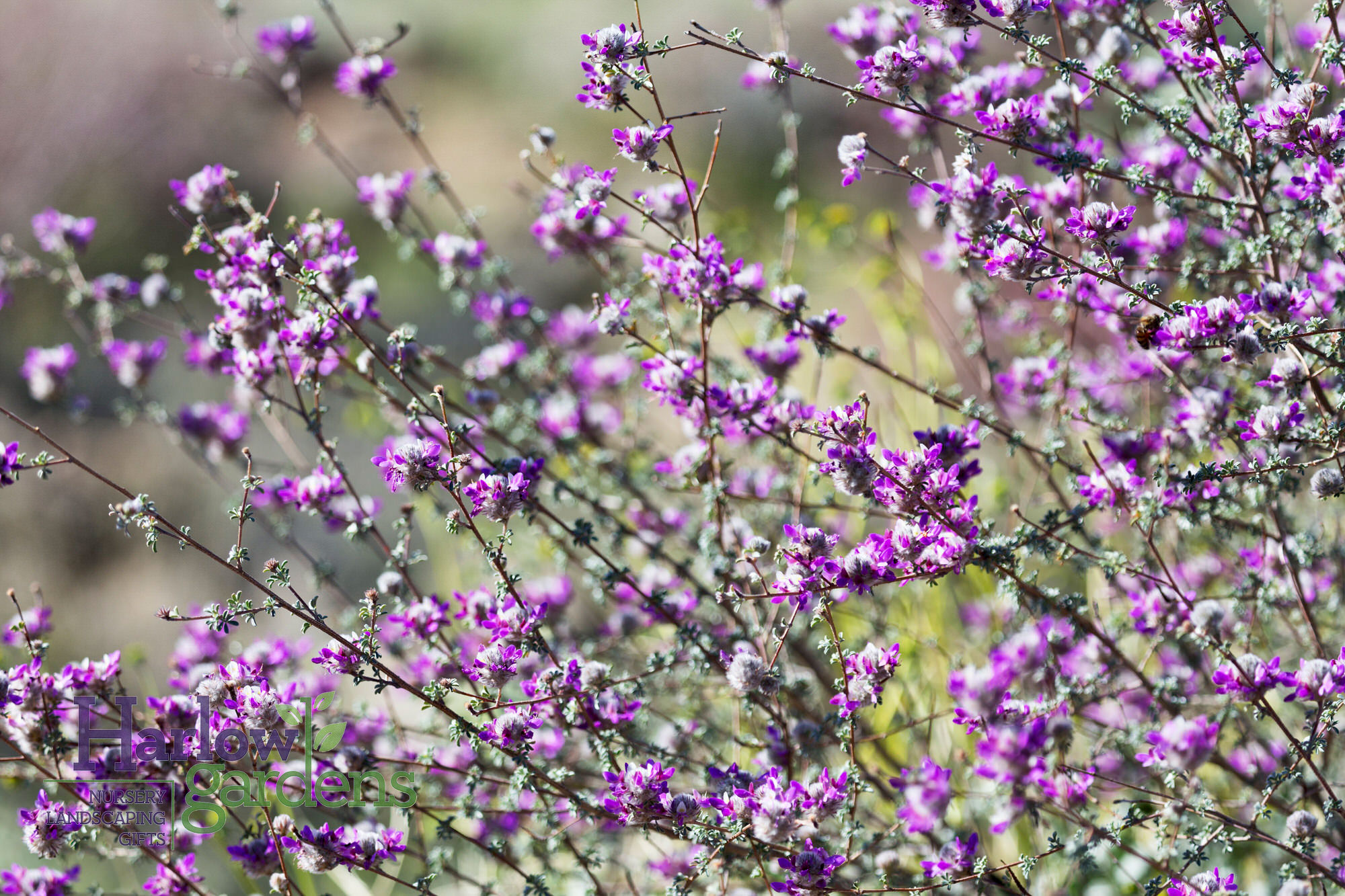
Trailing Indigo Bush
Low, spreading native with purple flowers in spring.
You can't fit all of these. Pick your favorites.
Front Entry Planter
Front yard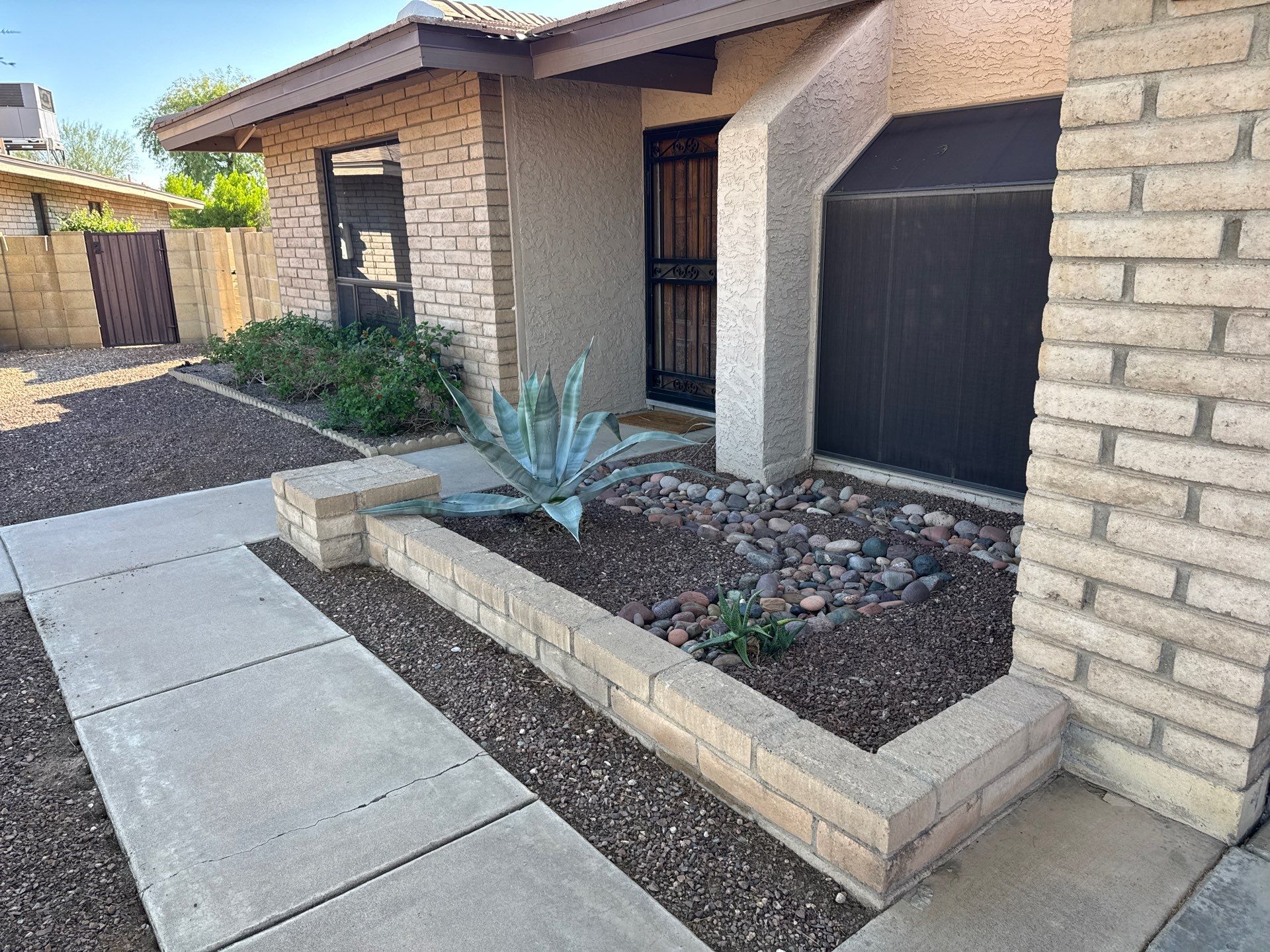
You may remove the agave and aloe in this planter and turn it into a wildflower seeding area. That would look amazing in spring.
- When: sow wildflower seed now through early December so it sprouts with the winter rains.
- Seed: A&P Nursery carries native wildflower seed mixes. Look for one with Mexican gold poppy, lupine, desert bluebells, globe mallow, and desert marigold.
- How: rake the surface lightly, scatter the seed, then press it in or lightly rake it so it's barely covered. Keep it lightly moist until the seedlings are up, then water once or twice a week through spring.
- After bloom: let the flowers dry and drop their seed before you clean it up. It'll reseed itself for next year.
If you'd rather keep this a planted bed, all of the native color plants from the last section will work here too:
Penstemon
Tall red, pink or purple flower spikes in spring. Hummingbirds love them.
Globe Mallow
Native with apricot-orange cup flowers in spring. Reseeds itself.
Desert Marigold
Native, bright yellow daisies most of the year. Reseeds naturally.
Brittlebush
Native, silvery leaves and a sheet of yellow flowers in spring. 3 feet.
Chuparosa
Native, red flowers through winter and spring. Hummingbird favorite.
Pink Fairy Duster
Native, pink puffball flowers in late winter and spring.
Baja Fairy Duster
Red flowers most of the year. Leave it natural.
Desert Milkweed
Native host plant for monarch and queen butterflies.
Blackfoot Daisy
Low mound of small white daisies, blooms almost nonstop.
Angelita Daisy
Tidy mound of yellow daisies almost year-round.
Damianita
Low, fragrant, golden yellow flowers in spring and fall.
Red Yucca
Coral-red flower stalks spring through fall. Great accent.
Trailing Indigo Bush
Low, spreading native with purple flowers in spring.
The strip in front of the planter
Right in front of the planter there's about a foot and a half of space. That's a good spot for smaller, lower growing plants that stay tidy:
Blackfoot Daisy
Stays about a foot tall with white daisies almost all year. Perfect for a narrow strip.
Angelita Daisy
Tight mound of yellow daisies, about a foot tall.
Damianita
Low, fragrant, with golden flowers spring and fall.
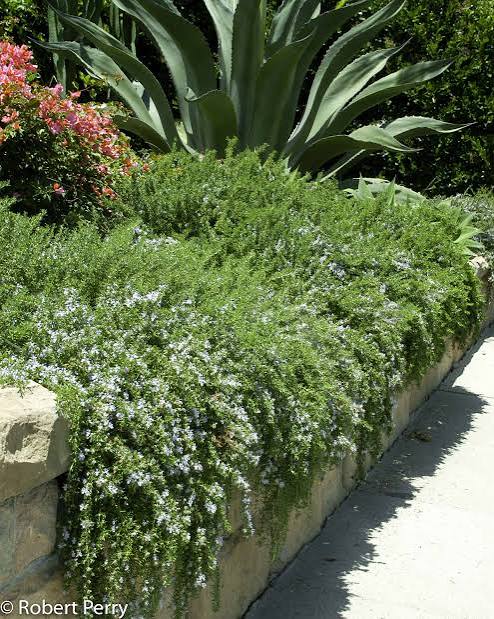
Trailing Rosemary
Spills over the edge of the planter, blue flowers in winter and spring.
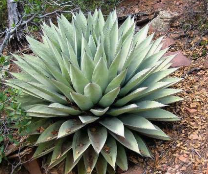
Perry's Agave
If you want one sculptural accent, a small agave works at the end of the strip.
Soil and Feeding
For the whole yardMost of what struggles in the Valley comes back to the soil. Our native soil is low in organic matter and soil life, and healthy soil biology is what actually feeds plants and holds water. Here's how to do it yourself:
- Compost. Spread a generous layer of compost around the drip line of every tree (the edge of the canopy) and closer in around shrubs. Do this a few times a year, then cover it with mulch. Arizona Worm Farm has great compost.
- Worm castings every quarter. A few handfuls around each plant, watered in. Castings are packed with soil life.
- Organic fertilizer monthly. Use a good organic fertilizer high in fulvic acid. The ones I use and recommend are from Catalyst: Jenner 8, Organic Nitro Jen, and their kelp fertilizer. Mix and apply monthly. This is great for the new trees, the citrus, the palo verde, and everything you plant.
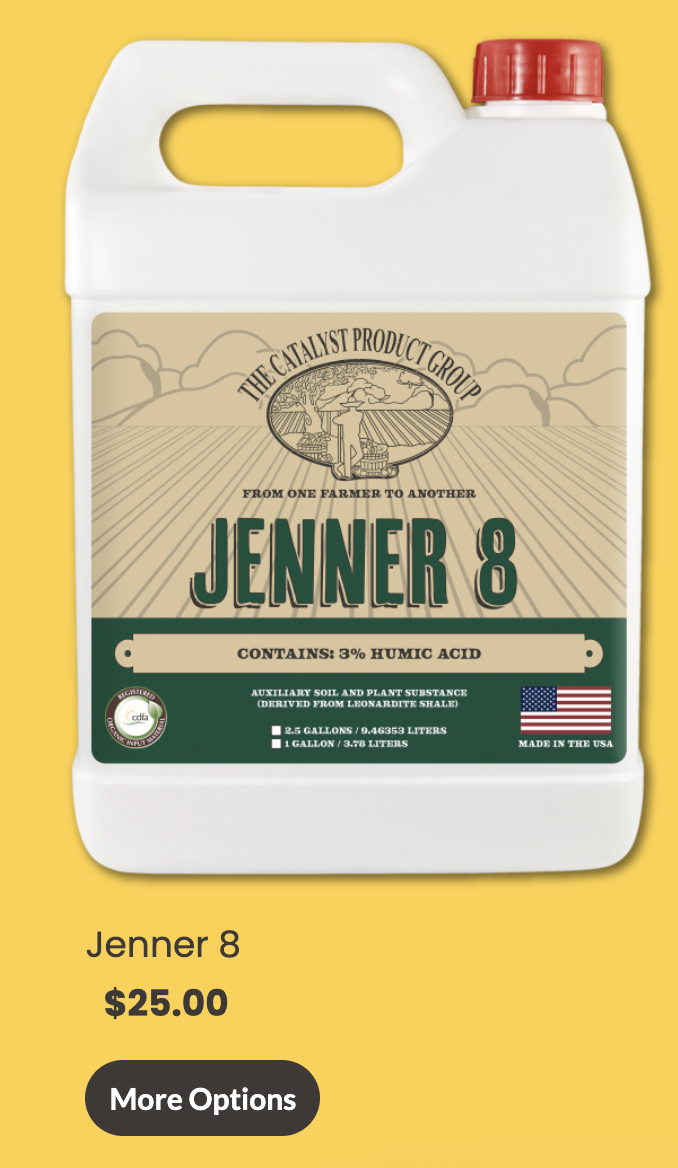
Jenner 8
Fulvic acid-rich organic fertilizer that feeds the soil biology and helps plants take up nutrients.
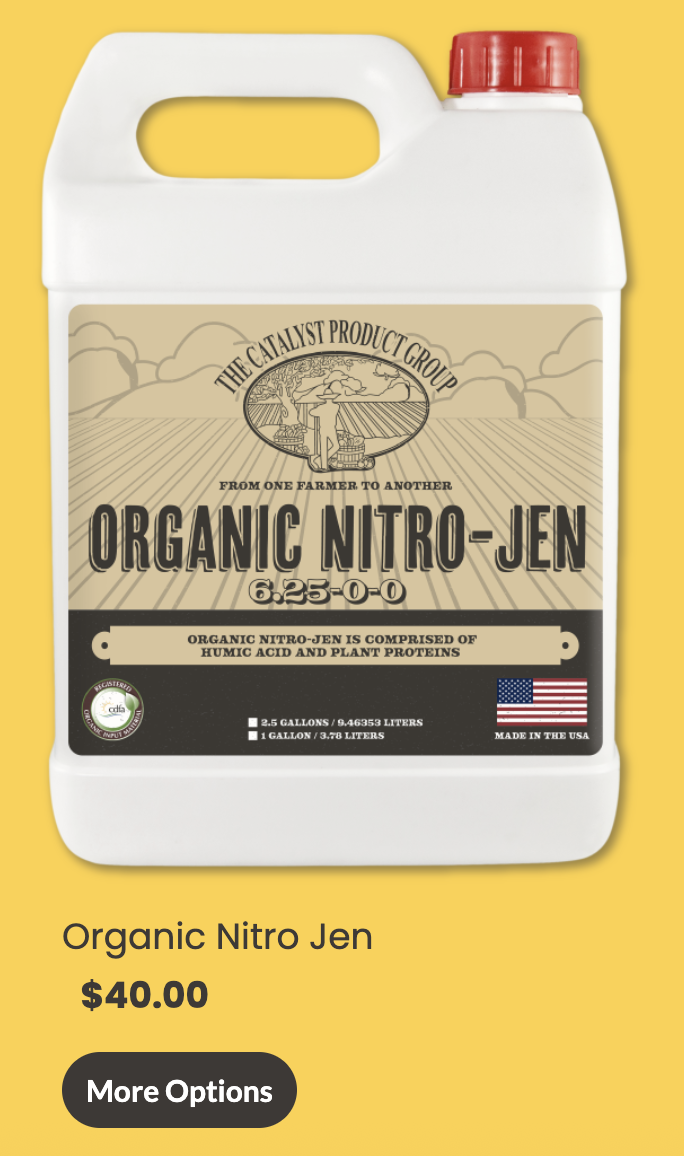
Organic Nitro Jen
Organic nitrogen to push healthy green growth. Great for the citrus and new trees.
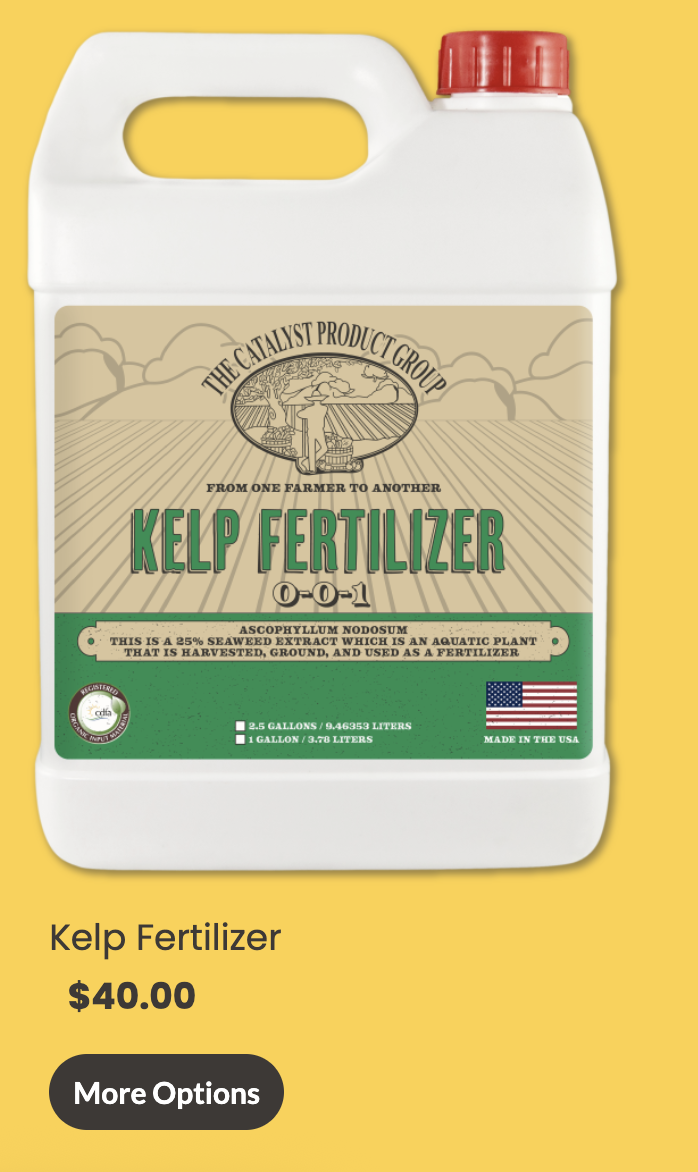
Kelp Fertilizer
Trace minerals and natural growth hormones that help plants handle heat and stress.
Find them at catalystproductgroup.com. Click Products, then Home and Garden.
Monthly Landscape Fertilizing
- Monthly organic liquid feeding of every tree and shrub
- Compost applied 3 times a year
- A recap video after every visit so you know exactly what we did
Quick Reference
Compost, mulch, raised bed mix and worm castings
Citrus trees
Trees, native plants and wildflower seed
A&P Nursery
Raised garden beds
What to plant and when
Organic fertilizer
Catalyst Product Group (Products, then Home and Garden)
Irrigation
Garrett: 480-678-9121
Arborist
Next Steps
Thanks for having me out, Jesus. I love where this yard can go. Once the walls are covered and the mesquites fill in, the back yard is going to be a completely different space.
If you want to do the planting yourself, everything you need is in here. As a consult client, you're already in the Garden Nerd Club, so you have direct access to me there. Post photos as you go and ask me anything.
We also do planting. Whenever you're ready, whether that's this season or down the road, let me know which plants you like for each area and I can put together a planting proposal. We don't do irrigation, so for adding emitters or running drip to new areas, Garrett is great: 480-678-9121.