
Your Yard Plan, 953 S Cerise
Thanks for having me out to walk the yard. Here's a recap of everything we talked through, plus the details on varieties, sourcing, and timing so you (or whoever's planting) can move forward with confidence.
Barbados Cherry (5 plants)
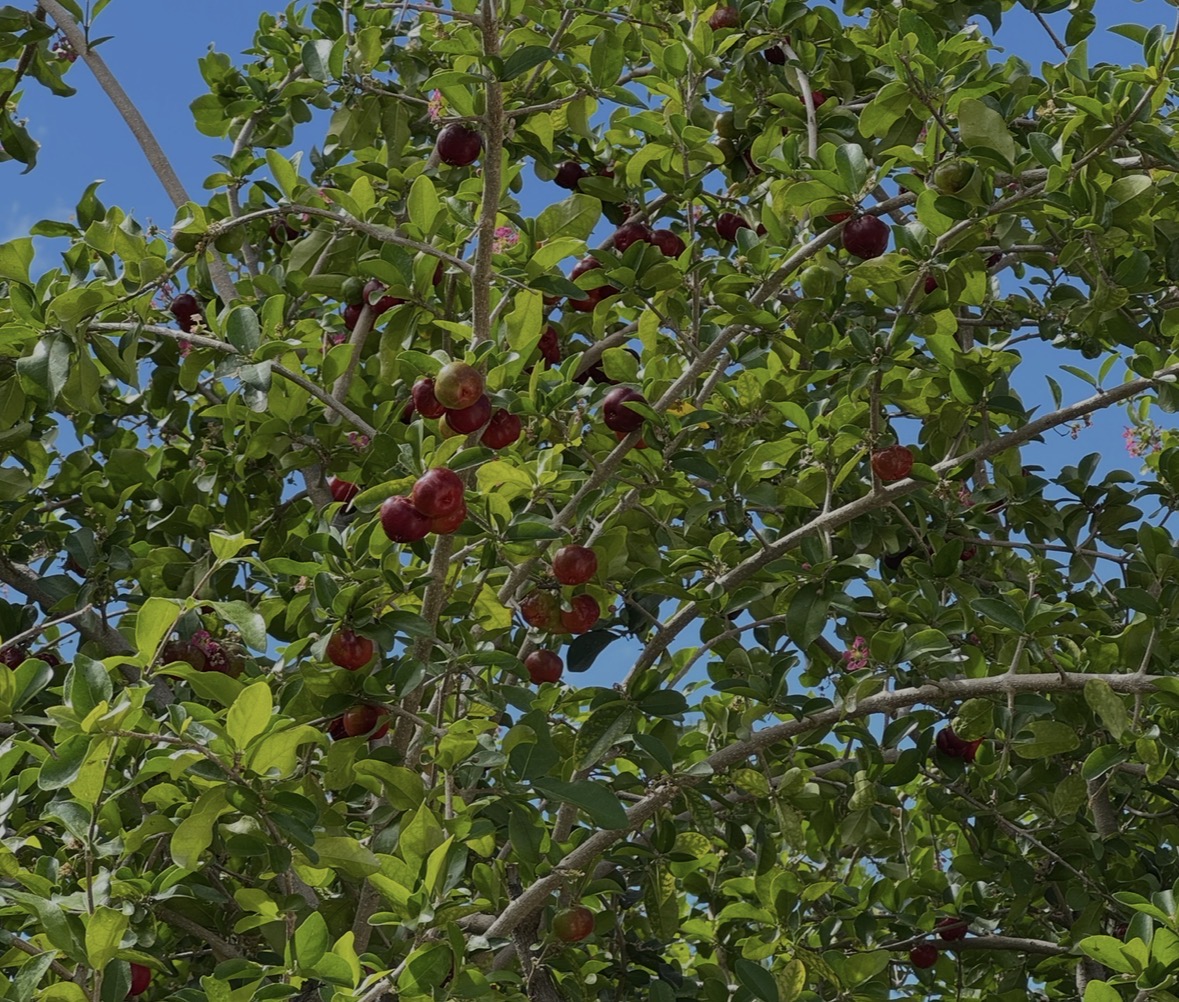
That west wall gets full sun and holds heat, which is exactly what Barbados cherry wants. Plant five along the wall and they'll fill in to cover it, giving you shade on the wall itself and knocking down some of the radiant heat that bounces off it in summer.
As a bonus, they fruit. The cherries are small and tart, good for snacking or jam if you're into that. Once established, they hold up well through Mesa summers without a lot of babying.
Timing: Plant in early spring. Source: Greenlife Nursery in Phoenix, right next to Arizona Worm Farm.
Pomegranate — Parfianka
Going with Parfianka over Wonderful. Wonderful is the one you see everywhere, but Parfianka has better flavor and softer seeds, which makes it a lot more pleasant to actually eat.
A&P sells these as small trees in winter. Buy small and let it grow into itself, it puts on size fast. You've got a choice between growing it as a bush or a tree. I'd recommend training it as a multi-trunk tree with three trunks. Whichever way you go, start shaping it from the beginning so the structure sets while it's young. Trying to correct it later is a lot harder.
Timing: Plant in fall through winter. Source: A&P Nursery.
Peach — Florida Prince
Florida Prince is the best peach option for our climate because it's a low chill hour variety, meaning it actually gets enough cold-hour accumulation here to fruit reliably. The fruit itself is sweet and full flavored, not the bland kind you sometimes get from trees pushed past their chill range.
Buy this one bareroot in winter. Bareroot trees are cheaper than potted, and they tend to grow better long term because the roots aren't circling inside a container before you plant them.
Timing: Plant in fall through winter. Source: A&P Nursery.
Shade Tree — Five Options to Choose From
There isn't one obvious answer here, so here's how the five options stack up. All are solid choices for our climate, it comes down to what look and maintenance level you want.
Timing: Plant in fall through winter. Source: A&P Nursery.
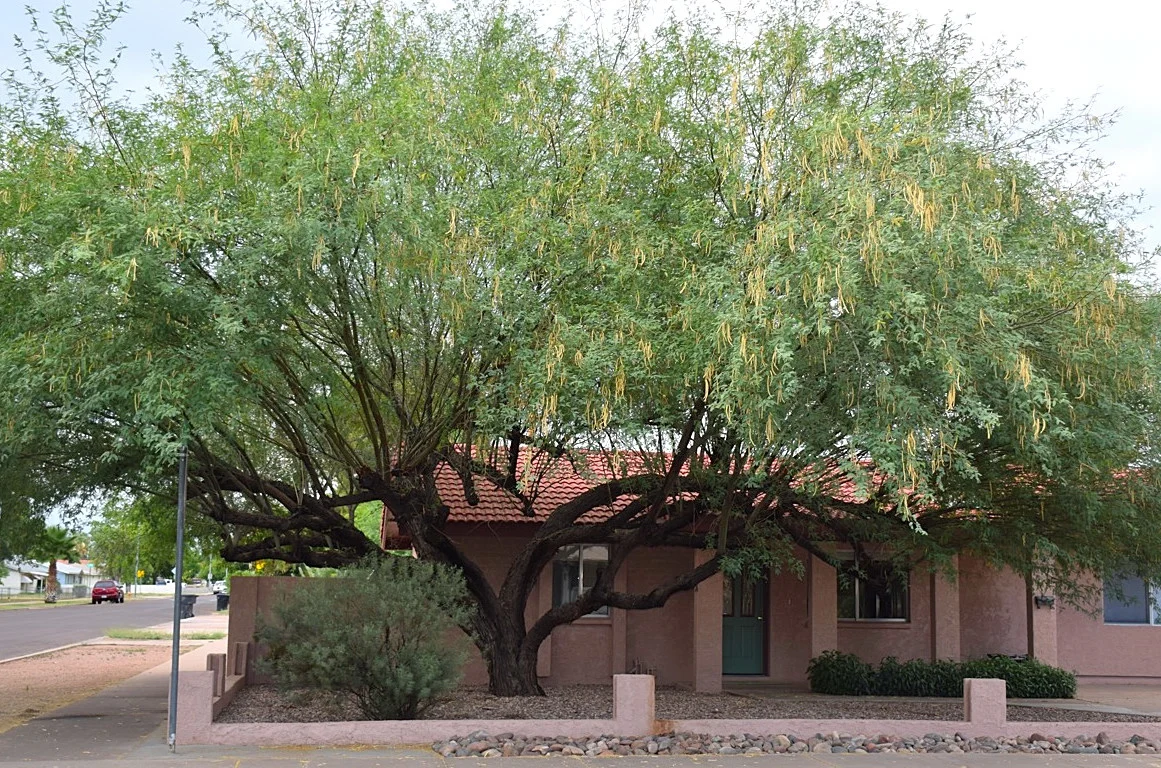
Mesquite
Grows large and gives great filtered shade. Matches the desert-native look of your existing landscape. Drops seed pods, though the pods are edible and can even be ground into flour if you want to use them instead of dealing with them.

Mulga Acacia
Stays smaller than a mesquite, so a better fit if you don't want a tree that eventually takes over the whole front yard. Extremely well adapted to our heat and low water.

Chinese Elm
Fast growing and good looking. Loses its leaves for a short stretch in winter, sometimes it doesn't even drop all of them. Lowest maintenance of the group if you want shade sooner rather than later.
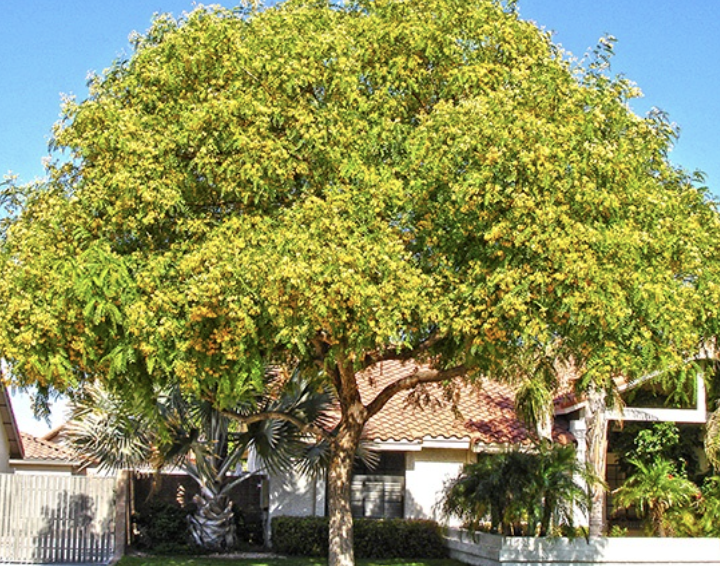
Tipu Tree
The biggest, fastest grower of the bunch, reaching 40 to 50 feet in just a few years. Known for showy yellow flowers and full, lush foliage. Give it room, this one gets big.

Red Push Pistache
Pistacia 'Red Push'. Easy, low-issue tree with a broad spreading crown. New leaves come in with a red tint and mature to green, then turn red, orange, and yellow in fall, the best fall color of any option here. Small inconspicuous green blooms in spring. Grows at a moderate rate to 25–40 feet tall and 20–40 feet wide. Cold hardy to 0°F. Does lose its leaves in winter.
Watering & Establishment
- First year is the establishment window. Every new planting listed here needs consistent, deep watering through its first year while the root system builds out. Frequency matters less than depth, water deeply and less often rather than a quick daily sprinkle.
- Barbados cherry and pomegranate Water deeply 2–3 times a week through the first summer, tapering to weekly once established. Both handle full sun well once their roots are settled in.
- Bareroot peach Bareroot trees need extra attention early since there's no root ball holding moisture yet. Keep the soil consistently moist (not soggy) for the first several weeks after planting, then move to a normal deep-watering schedule.
- Front yard tree, whichever you choose Desert-adapted trees like mesquite and mulga acacia can be tapered off to infrequent, deep watering once established. Faster growers like Chinese elm and tipu will want a bit more consistent water long term to support that growth rate.
That covers everything from our walkthrough. Let me know which front yard tree you land on and we'll get sourcing sorted for that one too.
Beyond this planting plan, The Garden Nerd also runs a monthly organic soil fertilizing service to keep everything in your yard, new and existing, healthy from the ground up. If that's something you want to look into, you can read more at thegardennerd.org/garden-nerd-planting-services.