
Your Yard, Nora
Thanks for having me out. This is everything we walked through, written down so you have it in one place. The short version: shade trees on every side of the property, orange jubilee and friends on every wall, fruit and bananas in the side yard, and living groundcover instead of dirt in the backyard. It's a lot of planting, and it'll turn this into a completely different yard.
Where I gave you options, they're all listed with my first pick called out. Every plant here is desert adapted and doesn't need much water once established. Whatever you go with, build the planting hole with quality compost and organic fertilizer so the soil biology gets going from day one. That's what makes these plants take off instead of just survive.
Shade the front, even out the beds, fill the gravel
Two thornless mesquites
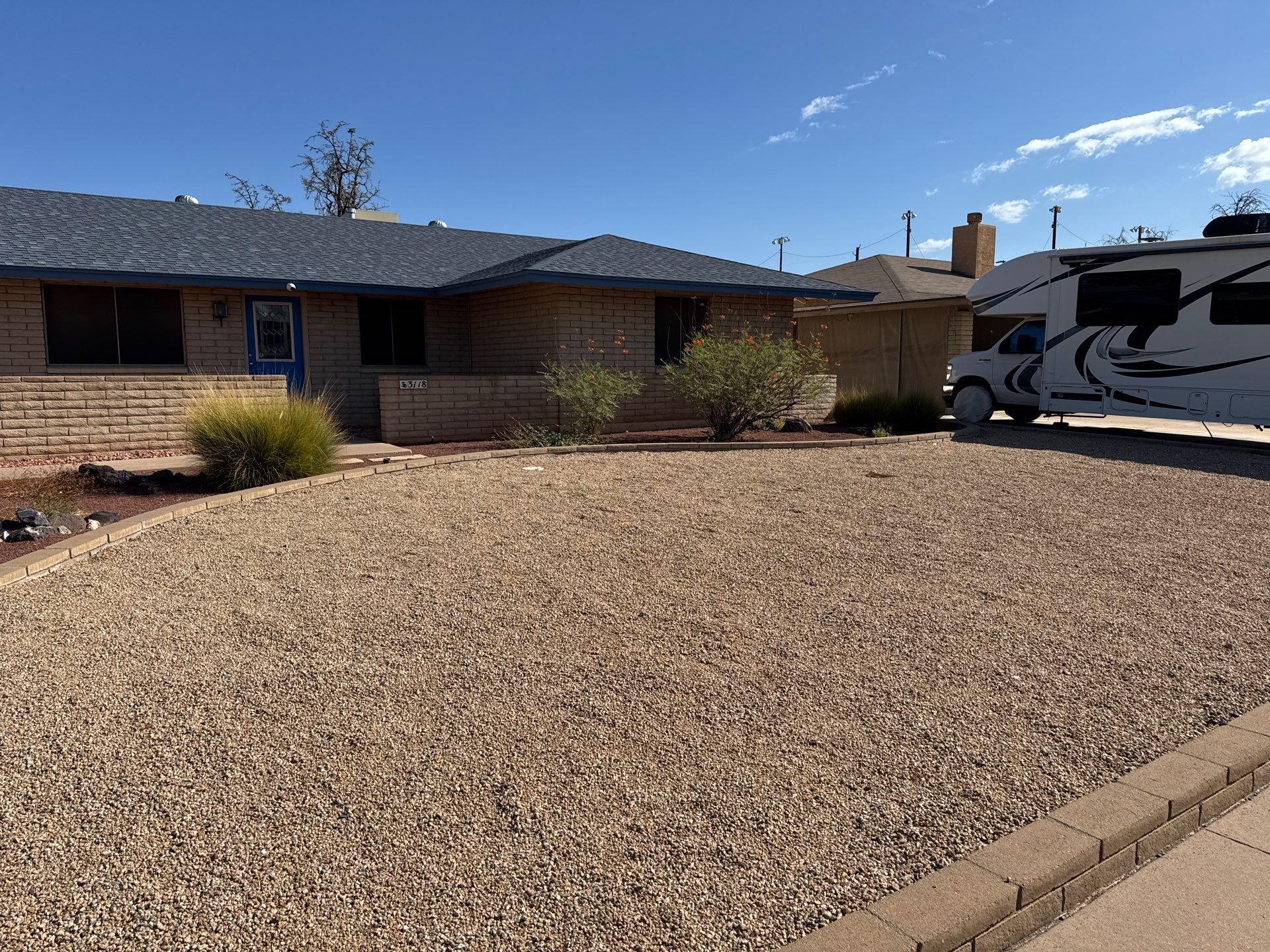
The front takes a lot of sun and the house feels it. Two thornless mesquites, one on each side of the front, will shade this whole area within a few years. Fast growing, wide canopies, no thorns, and they look right in front of a ranch house.
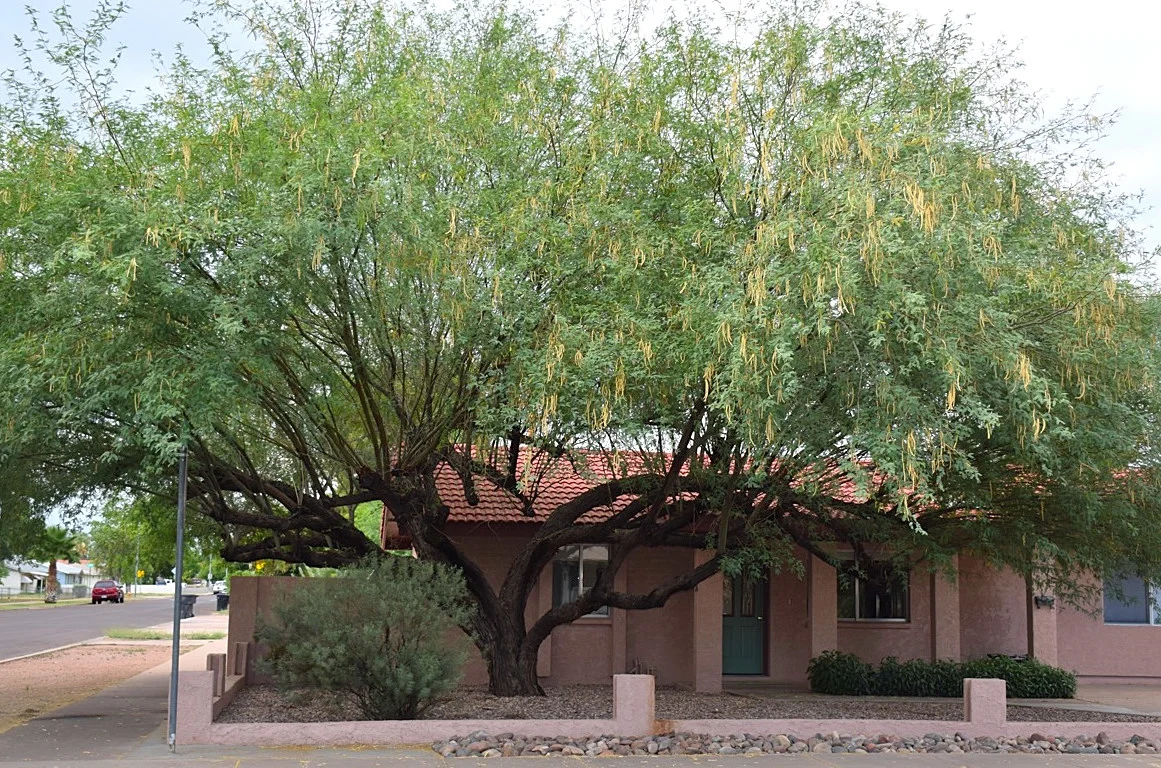
Thornless Mesquite
Fast shade, wide spreading canopy, no thorns. Two of them will cover the whole front by late afternoon in a few years. Needs good structural pruning while it's young so it holds up in monsoon wind.
Two more fountain grasses

You've got fountain grass here already and it looks good. Add two more, one on either side, so the entry reads as balanced from the driveway. Same variety as the existing ones.
Fountain Grass
Match the ones you already have. Soft mounding grass with feathery plumes summer into fall. Cut it back to a few inches in late winter and it comes back fresh every year.
One more red bird of paradise, plus groundcover

One more red bird of paradise on the open side evens this bed out and gives you a matched pair of color. Then the bare gravel between them wants groundcover. Blackfoot daisy is my first pick here. It stays low, blooms almost year round, and loves this kind of dry, sunny spot. A couple of other options that work just as well are listed with it.
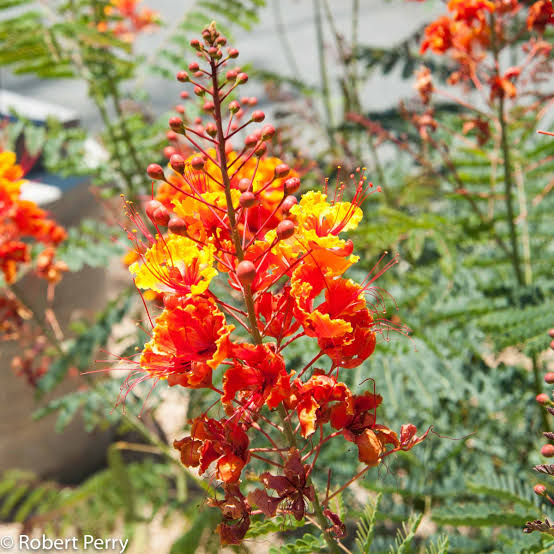
Red Bird of Paradise
Match the existing one. Orange and red flowers all summer, hummingbirds love it, and it shrugs off the worst heat. Cut it back hard in late winter, it comes right back.
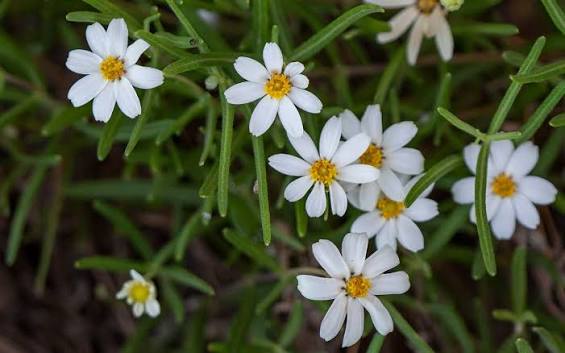
Blackfoot Daisy
Low mounding native, under a foot tall, small white daisies almost year round. Takes full sun and reflected heat. Needs sharp drainage, which this gravel bed already has.
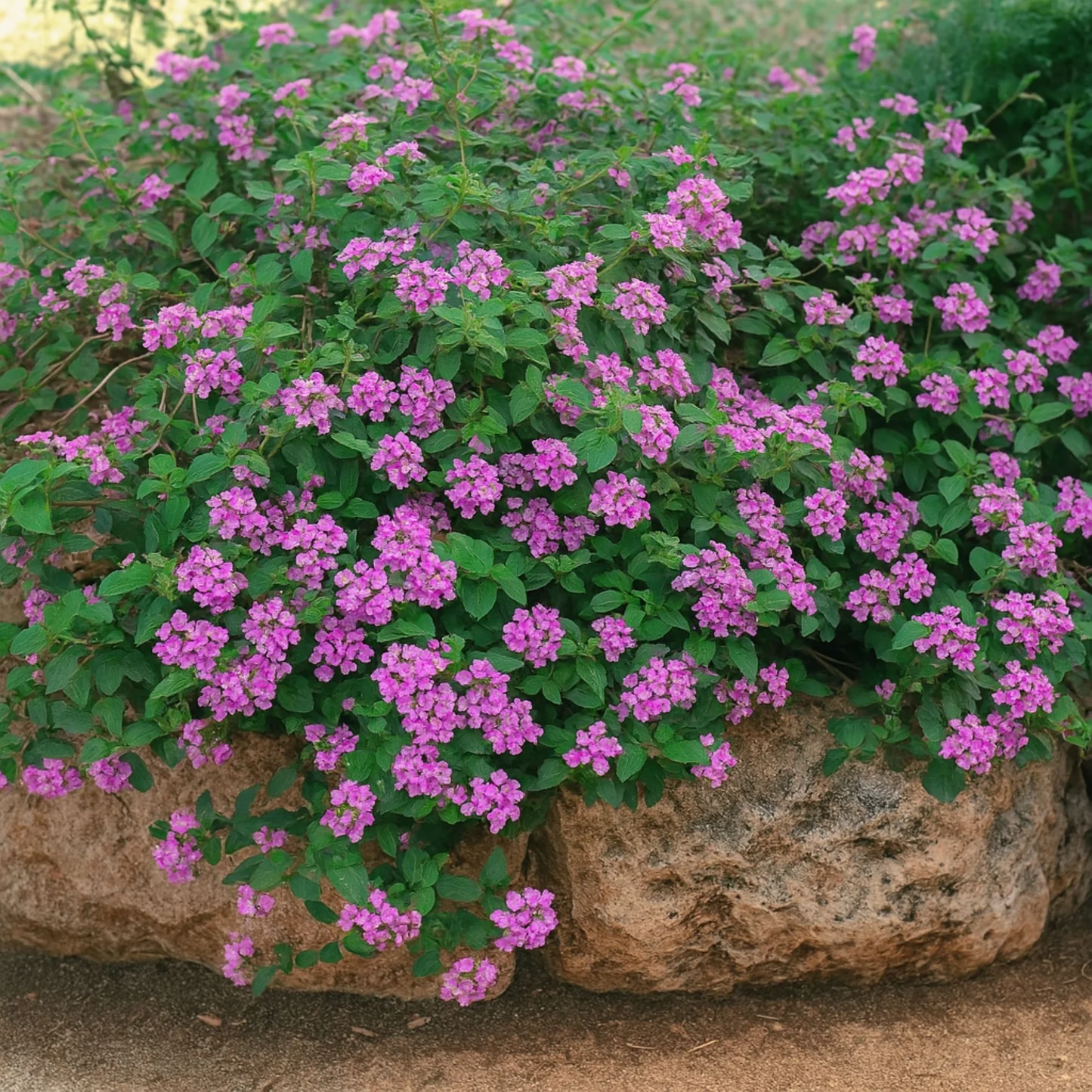
Lantana
Trailing lantana stays low and spreads wide, purple or yellow flowers spring until frost, butterflies all over it. Fills in faster than blackfoot daisy.
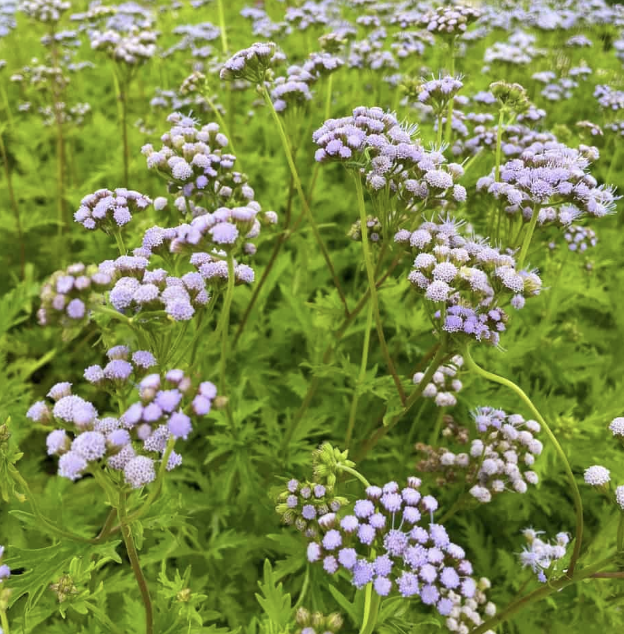
Gregg's Mistflower
Low and spreading, lavender-blue flowers spring into fall, and the single best butterfly plant on this list.
Green on the walls by the entry
Orange jubilee on both sides
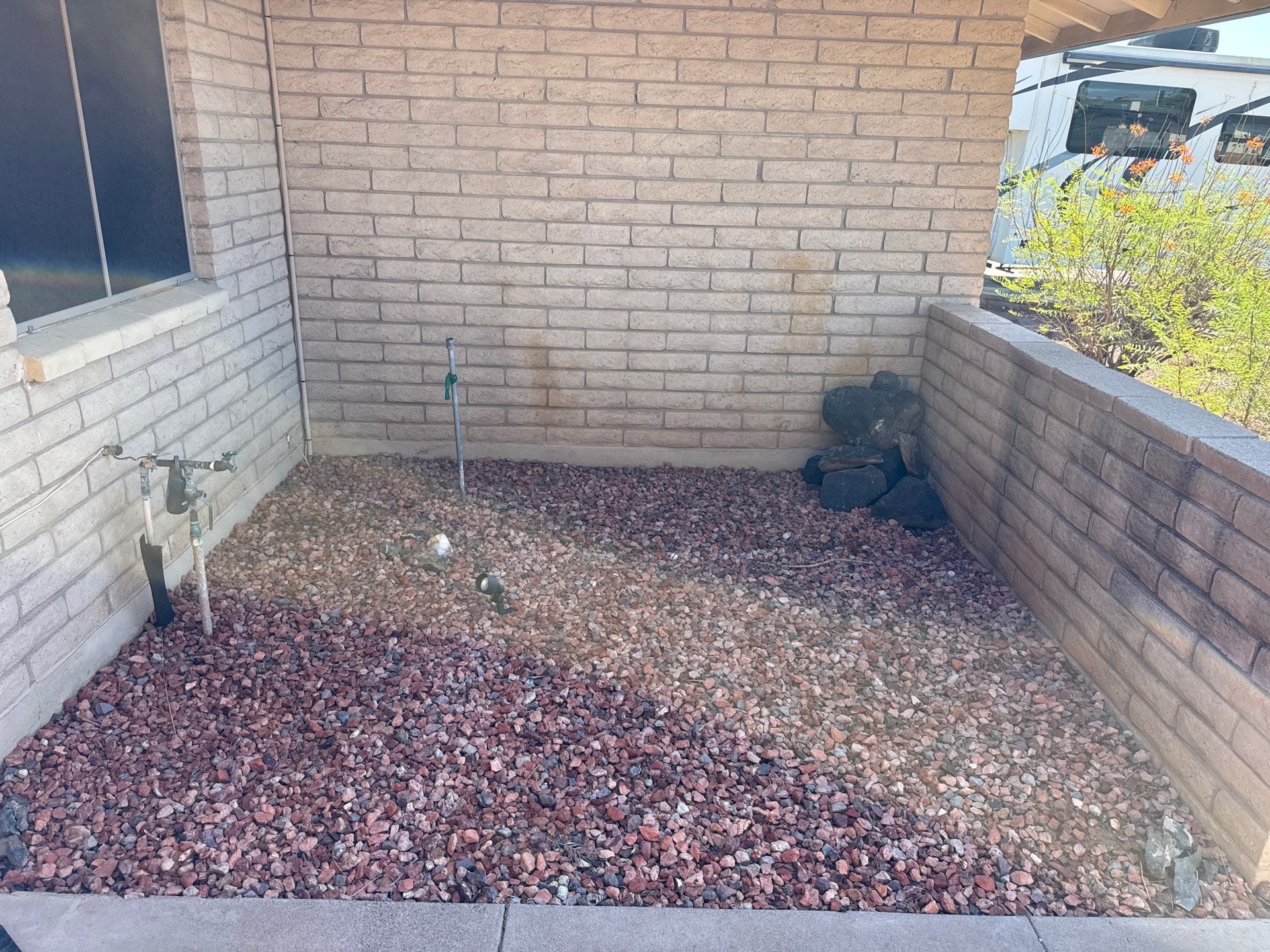
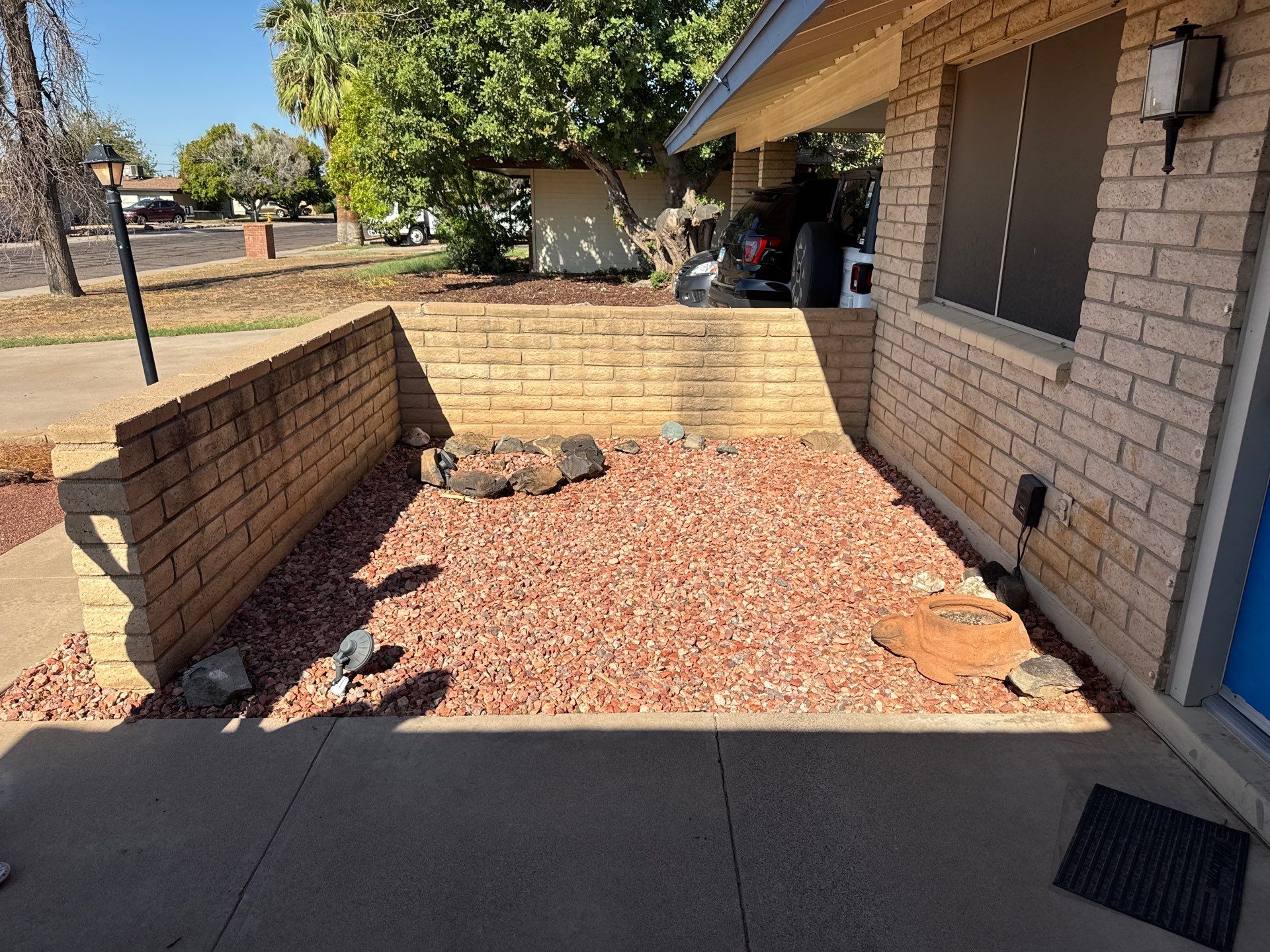
These two courtyard beds get the same treatment: orange jubilee in each. It's fast, it flowers most of the warm season, hummingbirds work it constantly, and against the block it gives you a wall of green and orange within a year. Globe mallow is the other option if you'd rather keep these beds lower and more open. Pull the rock back from the planting hole and get compost in there so the roots have something living to grow into.

Orange Jubilee
Fast, orange trumpet flowers most of the warm season, hummingbirds all over it. 8 to 10 feet if you let it. Cut back hard in late winter to keep it full and blooming.

Globe Mallow
Native, orange cup-shaped flowers in big flushes spring and fall, gray-green leaves, 3 feet tall and wide. A softer, lower option than orange jubilee if you'd rather not fill the bed with a big shrub.
Cover this wall

This narrow strip against the house wants something growing in it. All five of these work here. Twisted myrtle and Arizona rosewood if you want evergreen and tidy. Hopseed for the fastest green screen. Orange jubilee or bougainvillea if you want color on the wall.

Twisted Myrtle
Evergreen, dark green, twisted upright branching that looks sculptural even unpruned. Fragrant white flowers in summer. 6 to 8 feet, slow and steady.
Orange Jubilee
Fast, orange trumpet flowers most of the warm season, hummingbirds all over it. 8 to 10 feet if you let it. Cut back hard in late winter to keep it full and blooming.

Hopseed
Native, fast, evergreen, 8 to 12 feet. The workhorse hedge for this climate. Green or purple leaf forms.

Arizona Rosewood
Native, dense, dark green, white flower clusters in spring. Slower than hopseed but very long lived and never needs much of anything.
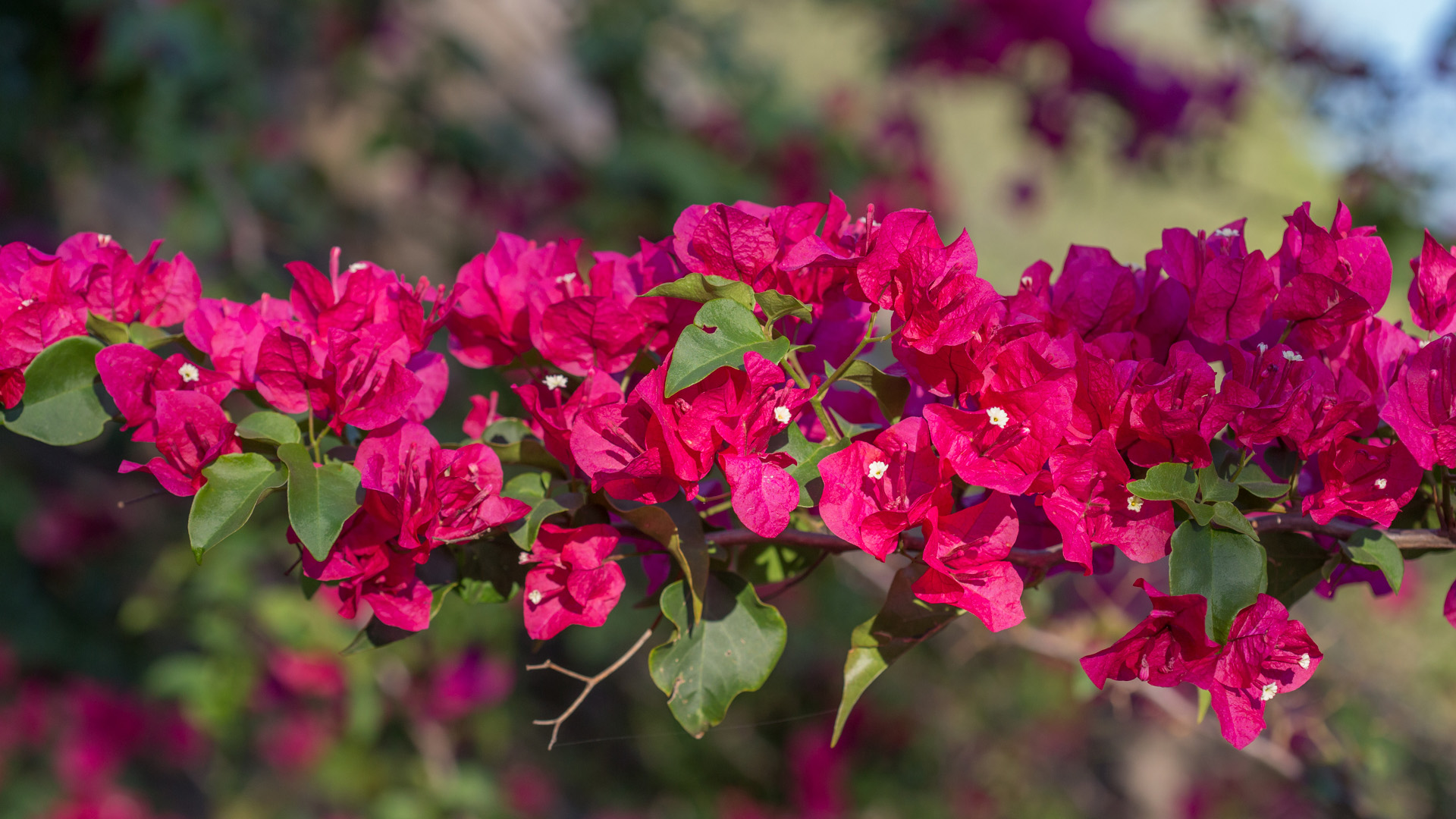
Bougainvillea
The most color you can get on a wall in Phoenix. Blooms most of the warm season, thrives on heat. Needs a little support to get up a wall, then it takes over.
Fruit and bananas
This side yard has the two exposures you want for edibles: a warm west side for the fruit trees and a hot south wall against the house for bananas.
Mango and lemon on the west side, bananas on the south

On the right hand side, which faces west, plant a mango tree and a lemon tree. Both want the heat and both will do well there. On the left, the south side up against the house, this is your banana spot. Bananas want reflected heat and lots of water, and a south wall gives them the first half.
Do these in order, not all at once. Lemon goes in first. Then the mango. Then the bananas, once the first two have grown in a bit and started throwing some afternoon shade. Bananas planted into a bare, baking side yard struggle. Bananas planted into a little shade take off.

Mango
Yes, mango grows here. Give it the warm west exposure, protect it from frost the first couple of winters, and it'll fruit in a few years. Plant in spring, not fall.

Lemon
Meyer or Lisbon both do great here. Full sun, deep infrequent water, and citrus fertilizer three times a year. Plant in spring or fall.

Banana
Bananas love the reflected heat off a south wall and they grow fast, 10 to 15 feet in a season. They want a lot of water and a lot of compost. Wait until April to plant. They hate cold soil.
Bananas on the east side

This is the other side of the house, the east side, and it's a good banana spot too. Morning sun, protection from the worst of the afternoon, and a wall to hold heat overnight. Same rule as the other side: wait until April. Once it starts warming up again, get them in the ground with a lot of compost and they'll take off.
Banana
Bananas love the reflected heat off a south wall and they grow fast, 10 to 15 feet in a season. They want a lot of water and a lot of compost. Wait until April to plant. They hate cold soil.
Shade trees, covered walls, and living groundcover instead of dirt
The backyard is a blank slate right now: bare dirt, block walls, a pool, and a pergola. The plan is shade trees on every side, hedges and vines on every wall, ruellia around the pool, and groundcover everywhere the dirt shows.
Compost and mulch where the grass is coming out

You're keeping some of the lawn, but this section is coming out and it's not going to be grass anymore. Instead, cover this area with a layer of compost and then mulch over the top of it. The compost feeds the soil biology, the mulch keeps it cool and moist and stops the dust. Every tree and shrub you plant into this yard will grow faster because of it, and this corner stops looking like a dirt lot the day it goes down.
Two big shade trees to match
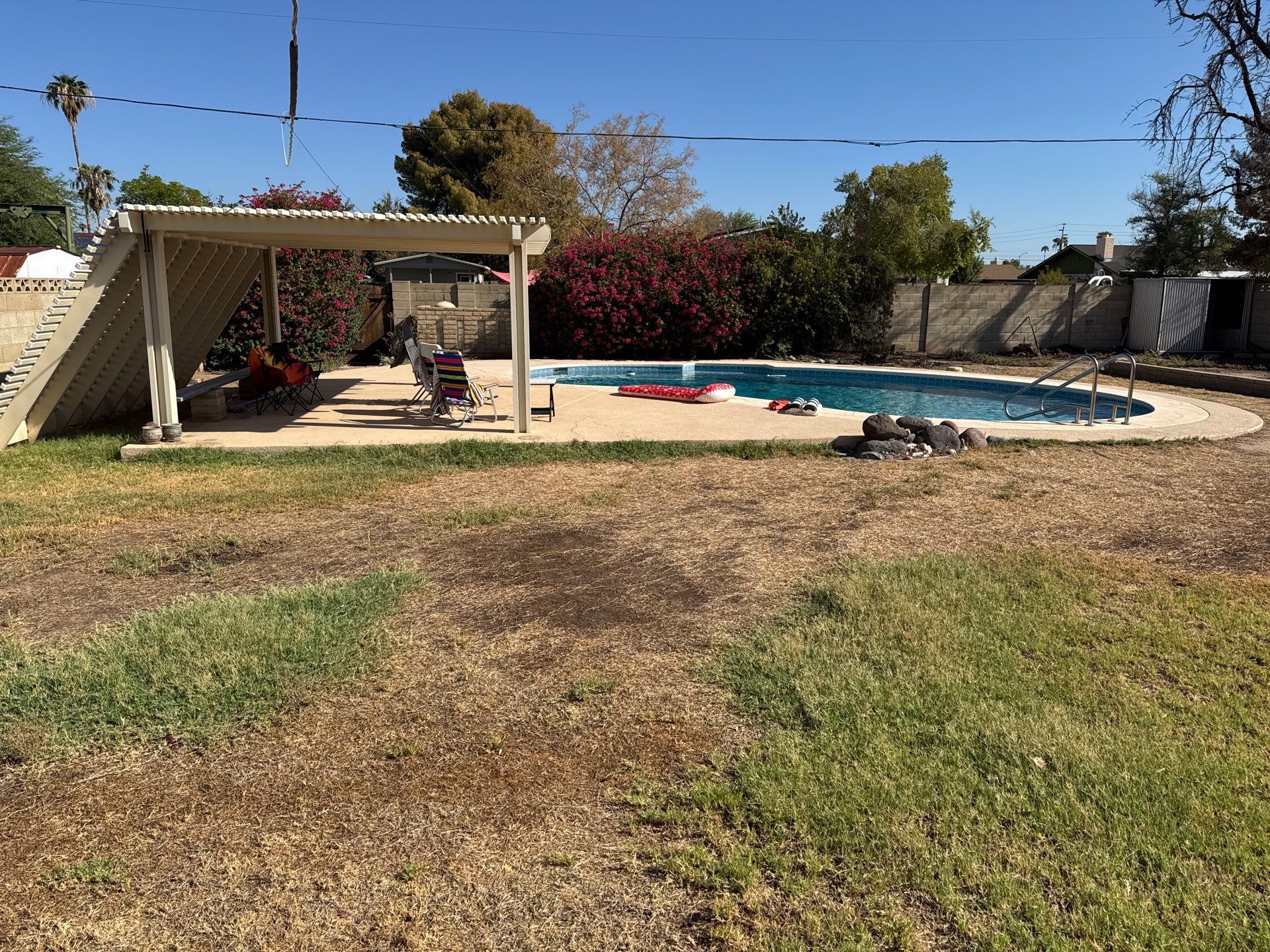
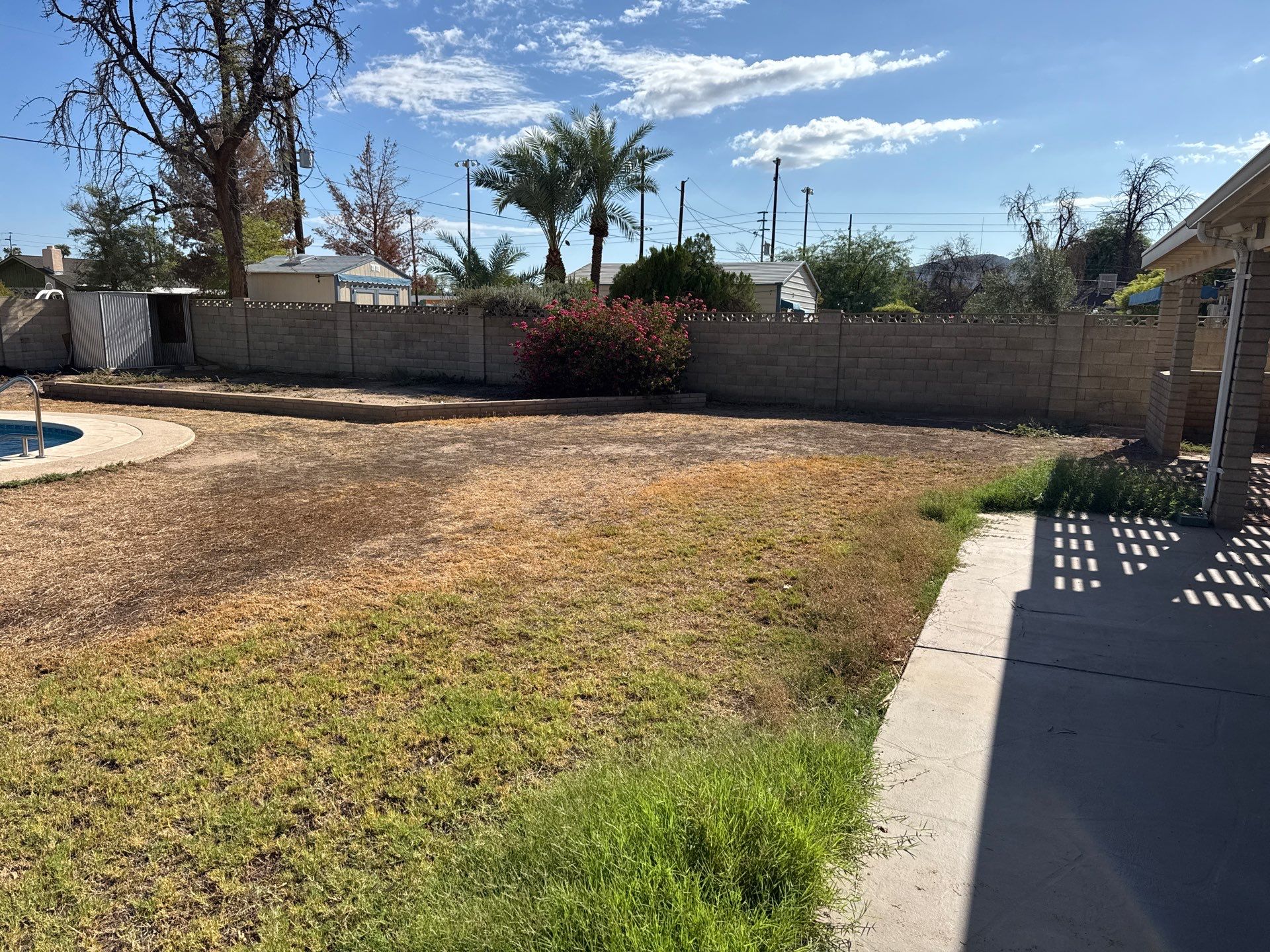
The yard needs shade on both sides. One large tree by the pergola side and one to match it on the other side of the yard. Tipu, Red Push pistache, and Chinese elm are the three I'd choose from. Tipu is bigger and faster with one of the best canopies in town. Red Push is cleaner and gives you fall color. Chinese elm is fast, graceful, and holds most of its leaves through winter. Plant the same tree on both sides so they match, or mix them if you'd rather.
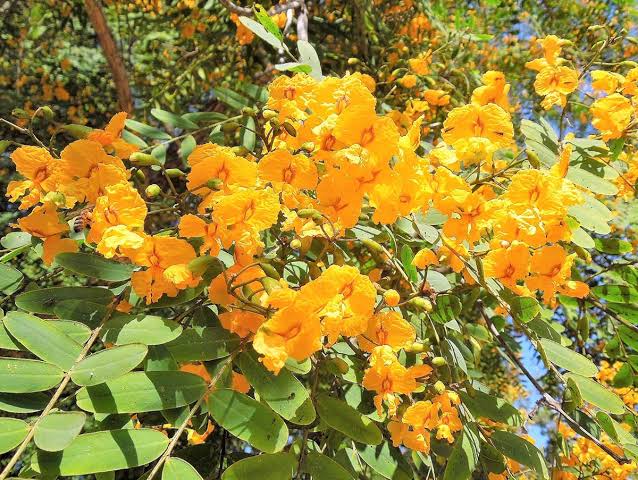
Tipu
Fast, big, and one of the best shade canopies in the Valley. Ferny leaves, yellow flowers in early summer, 35 to 50 feet with a wide spread.

Red Push Pistache
Tough, clean, and one of the few trees here with real fall color. 30 to 40 feet, no fruit, no mess.

Chinese Elm
Fast, graceful, mottled bark, and a wide canopy that throws a lot of shade. Semi-evergreen here. Two side by side will read as one big canopy in a few years.
Two more shade trees, side by side

Along this wall, two large shade trees planted side by side. In a few years their canopies meet and you've got one big block of shade across the back of the yard. Tipu, Chinese elm, or thornless mesquite. All three are fast and big. Chinese elm holds most of its leaves through winter if you want the screen year round. Mesquite gives you the most desert look and matches the two out front.
Tipu
Fast, big, and one of the best shade canopies in the Valley. Ferny leaves, yellow flowers in early summer, 35 to 50 feet with a wide spread.
Chinese Elm
Fast, graceful, mottled bark, and a wide canopy that throws a lot of shade. Semi-evergreen here. Two side by side will read as one big canopy in a few years.
Thornless Mesquite
Fast shade, wide spreading canopy, no thorns. Two of them will cover the whole front by late afternoon in a few years. Needs good structural pruning while it's young so it holds up in monsoon wind.
Two date palms, a male and a female

Two date palms here, one male and one female. Date palms don't self-pollinate, so the female won't fruit without a male nearby. Plant them together and in a few years you'll be harvesting your own dates. They're slow to get started and then they're there for a hundred years.
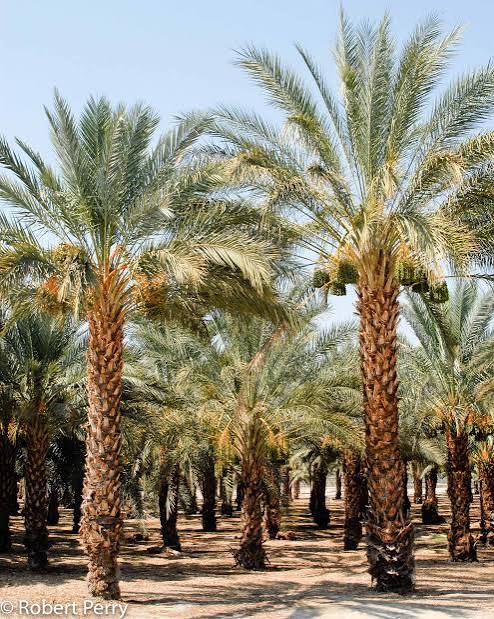
Date Palm
The real thing, Medjool or Deglet Noor. Date palms are male or female, and you need one of each to get fruit. The female is the one that produces. Slow to start, then a landmark tree for a century. Plant in the warm months.
Cover every block wall

All of the block walls in the backyard get covered. The bougainvillea you already have stays, it's doing great. For the rest of the wall, hopseed, Arizona rosewood, and orange jubilee are the options. Run one along the whole length for a clean look, or mix them with the bougainvillea for more color.
Hopseed
Native, fast, evergreen, 8 to 12 feet. The workhorse hedge for this climate. Green or purple leaf forms.
Arizona Rosewood
Native, dense, dark green, white flower clusters in spring. Slower than hopseed but very long lived and never needs much of anything.
Orange Jubilee
Fast, orange trumpet flowers most of the warm season, hummingbirds all over it. 8 to 10 feet if you let it. Cut back hard in late winter to keep it full and blooming.
Bougainvillea
The most color you can get on a wall in Phoenix. Blooms most of the warm season, thrives on heat. Needs a little support to get up a wall, then it takes over.
Ruellia around the pool

Along the perimeter of the pool deck, ruellia. It'll follow the curve of the deck and fill in the space between the concrete and the yard with purple flowers all summer. You're putting a pool fence in, so this goes on the outside of the fence where it softens the line without being in the way.
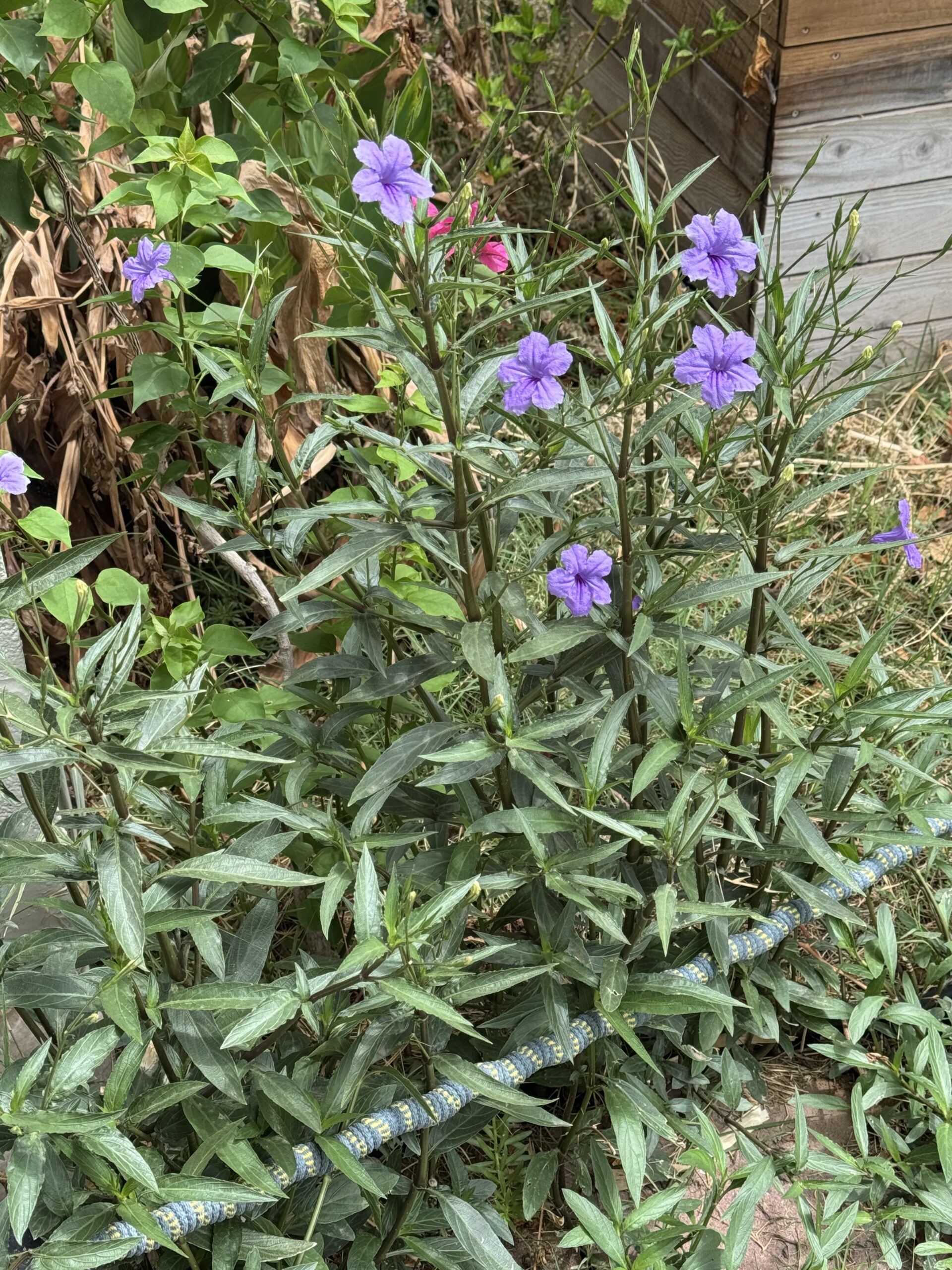
Ruellia
Purple flowers every day of the warm season, upright green foliage, and it'll hug the curve of the pool deck and fill in solid. Dwarf types stay about a foot tall.
Yellow dot to cover the dirt

This corner is bare dirt and it wants a living cover. Yellow dot spreads fast, stays low, blooms yellow nearly all year, and covers ground like this in a season. Plant it on about two foot centers and let it run.

Yellow Dot
Low, glossy green mat with small yellow daisies nearly year round. Spreads fast, handles shade and sun, and covers bare dirt in a season.
Jasmine on the trellises, yellow dot on the ground

This wall is shaded most of the day, which rules out most of the plants on this page and makes it perfect for a couple of others. Star jasmine on both trellises. It climbs on its own, stays evergreen, and the spring flowers will fill the whole side yard with scent. Then yellow dot across all the ground around it. Yellow dot is one of the few groundcovers that's happy in shade.
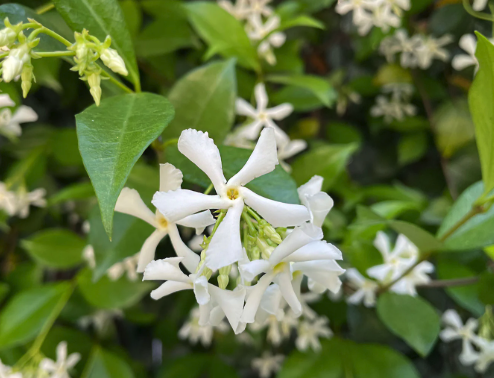
Star Jasmine
Evergreen twining vine with white flowers in spring that you'll smell from across the yard. Happiest in shade or morning sun, which is exactly what this wall gets. Climbs the trellis on its own once it gets going.
Yellow Dot
Low, glossy green mat with small yellow daisies nearly year round. Spreads fast, handles shade and sun, and covers bare dirt in a season.
Tangerine crossvine up and over

The pergola wants a vine. Tangerine crossvine is the one. Plant it at the base of a post, tie it up as it grows, and it'll climb the post and spread across the top. In a couple of seasons the pergola has a living roof, the patio is a lot cooler, and you get orange trumpet flowers every spring.

Tangerine Crossvine
Evergreen, climbs on its own, big orange trumpet flowers in spring. Handles full sun and heat. It'll go up the post and across the top of the pergola and you'll have a green roof in a couple of seasons.
Where this goes next
Take a look through this and think about which options feel right, especially the shade trees and what goes on the walls. If you'd like me to put together a planting proposal with pricing, just let me know. If you'd rather plant it yourselves, I'll get you added to the Garden Nerd Club where you can ask questions as you go and I'll walk you through it.
For getting irrigation run to all the new trees and beds, reach out to Garrett, the irrigation guy I work with. He's at 480-678-9121.
Questions on anything here, just reach out. You can also read more about how we plant at thegardennerd.org.