
The Garden Nerd · Consultation Recap
Gena Greene
3734 E Dulciana Ave, Mesa, AZ 85206 · November 17, 2026
Thanks for having me out, Gena. This write-up covers everything we talked about: lemon and lime, better stone fruit varieties, a fig, a shade tree for the afternoon sun, covering the walls and the raised pool, a low hedge on the north side, and fixing the citrus that's planted too deep.
Everything is numbered in the order we walked. Every plant I suggest has its own card, and the ones native to our desert are tagged Native.
As a consult client, you're already in the Garden Nerd Club, so you have direct access to me there anytime questions come up.
Backyard
A lemon or lime tree
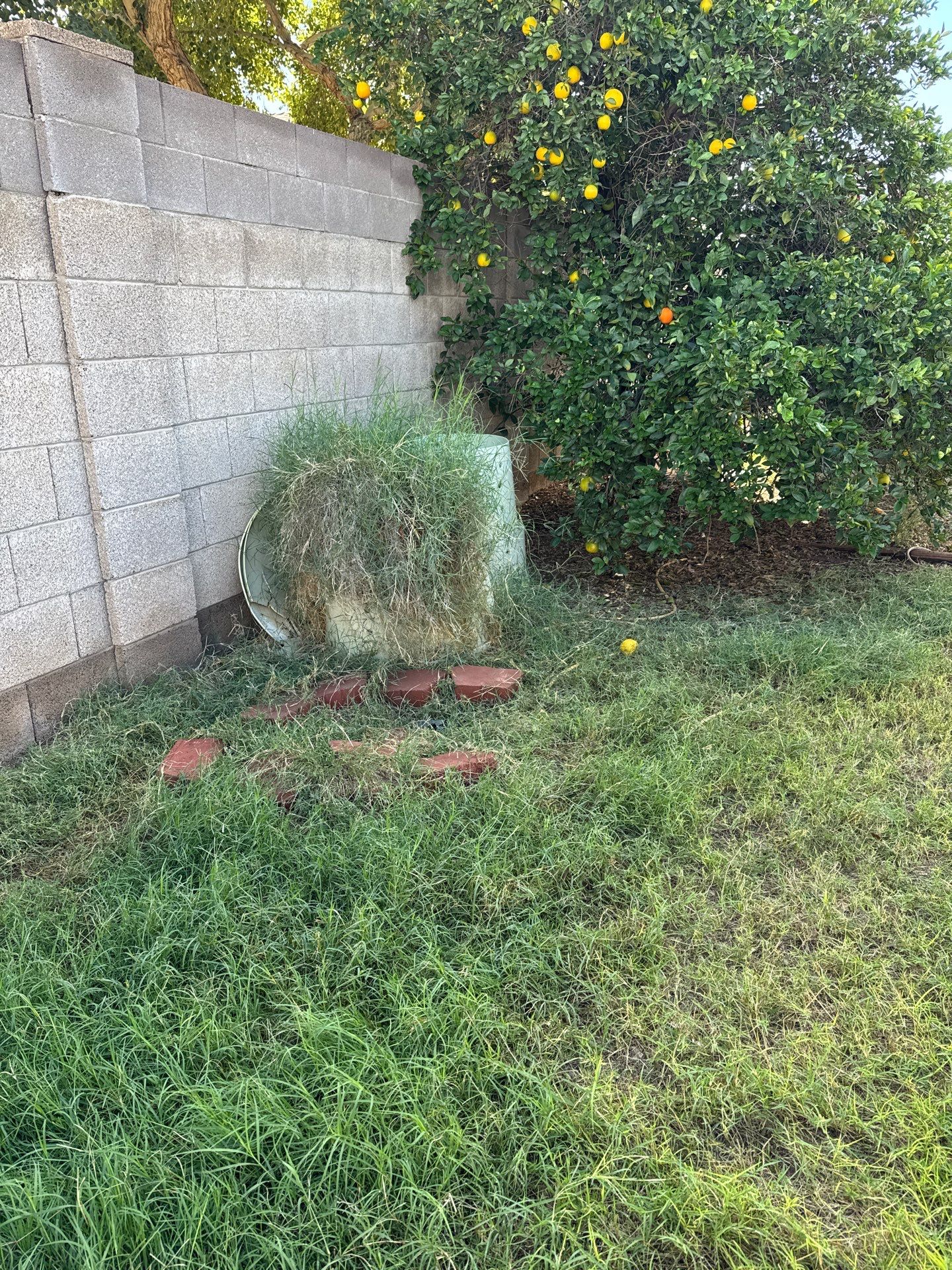
Right here is a great spot for another citrus tree. You like the idea of a lemon or a lime, and both do really well here. Give it about 10 to 12 ft from other trees so it has room to spread. Plant it about 4 ft farther off the wall than the trees here were planted before, so the canopy has room to grow out and the roots aren't fighting the wall footing.
For the tree, go to Greenfield Citrus Nursery in Mesa. Their trees are field grown and much better quality than what you'll find at big box stores, and they have every lemon and lime variety you'd want. Fall and early spring are both good times to plant.

Lemon
Meyer is the easiest and sweetest, with thin skin and juicy fruit, and stays smaller. Lisbon and Eureka are the classic sour lemons, very productive here. Lisbon is a little more cold hardy.
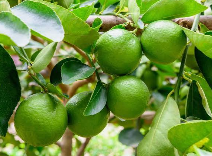
Lime
Bearss (Persian) lime is the best choice here: seedless, big juicy fruit, and more cold hardy than other limes. Mexican (Key) lime has amazing flavor but is frost tender, so it needs a warm spot and cover on cold nights.
How to plant a fruit tree
Dig the hole only as deep as the root ball and two to three times as wide, and set the tree so the root flare (where the trunk widens into the roots) sits right at the soil line, never below. Backfill with your native soil and just a tiny bit of compost. Lay compost on top of the soil, then mulch over the compost, keeping the mulch a foot back from the trunk. Water deeply right after planting.
Citrus care
- Water: Deep and infrequent. For a new tree, every 3 to 4 days the first few weeks, then stretch to every 7 to 10 days in the cool season. Water out at the edge of the canopy, not at the trunk.
- Skirt: Let the low branches hang down. They shade the trunk and the roots and carry a lot of the fruit.
- Sun protection: Young trunks can sunburn. Paint the exposed trunk with white latex paint mixed half and half with water, or let the branches grow low to shade it.
- Feeding: Compost from Arizona Worm Farm around the drip line a few times a year, worm castings every quarter, and a monthly organic fertilizer high in fulvic acid (see the feeding section below for where to get them). Citrus are heavy feeders and respond really well to it.
Greenfield Citrus Nursery: greenfieldcitrus.com
Covering the raised pool wall
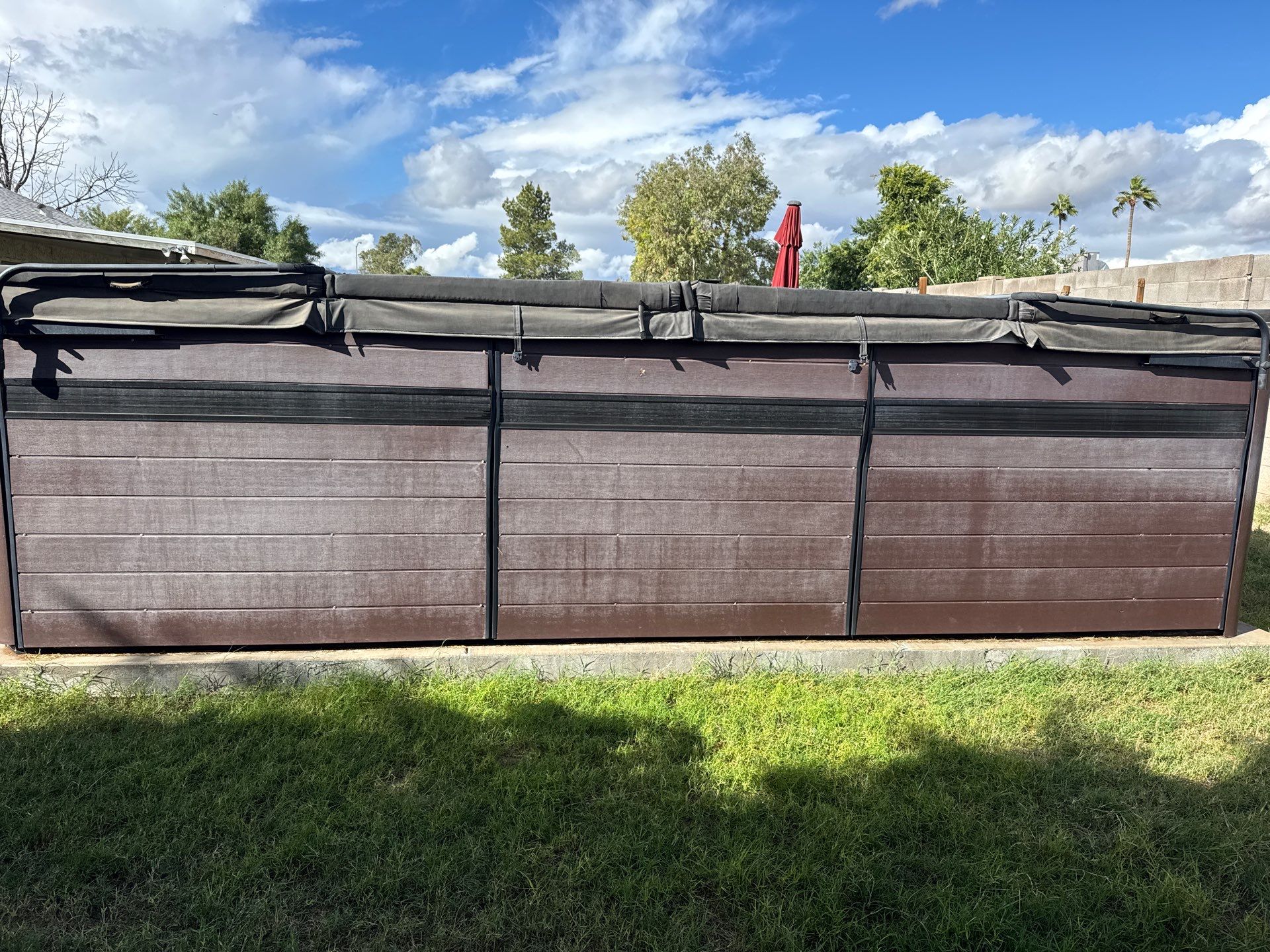
Up against the raised pool, you're thinking about covering the pool wall with something that gets 3 to 4 ft tall. This spot gets morning sun and afternoon shade, which opens up a lot of options. Since it's right by the pool, these are all plants that stay tidy and don't drop much into the water. Plant them about 2 ft out from the pool wall and 3 ft apart so they fill in as one low hedge.
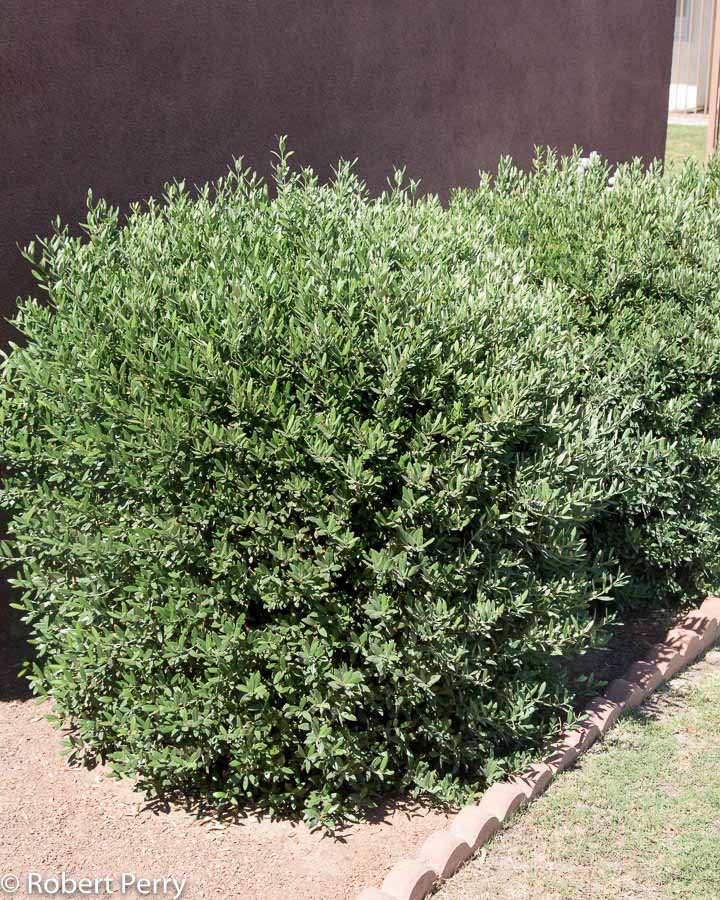
Little Ollie
A dwarf olive that stays a neat, dense, gray-green mound with no fruit and no pollen. Handles full sun against the house and takes less water than plants that aren't desert adapted. Very clean look.
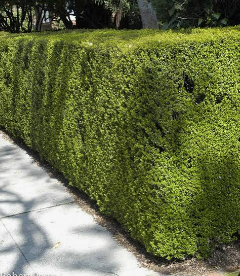
Dwarf Myrtle
Small, glossy evergreen leaves and white summer flowers. Stays compact and tidy with little effort.
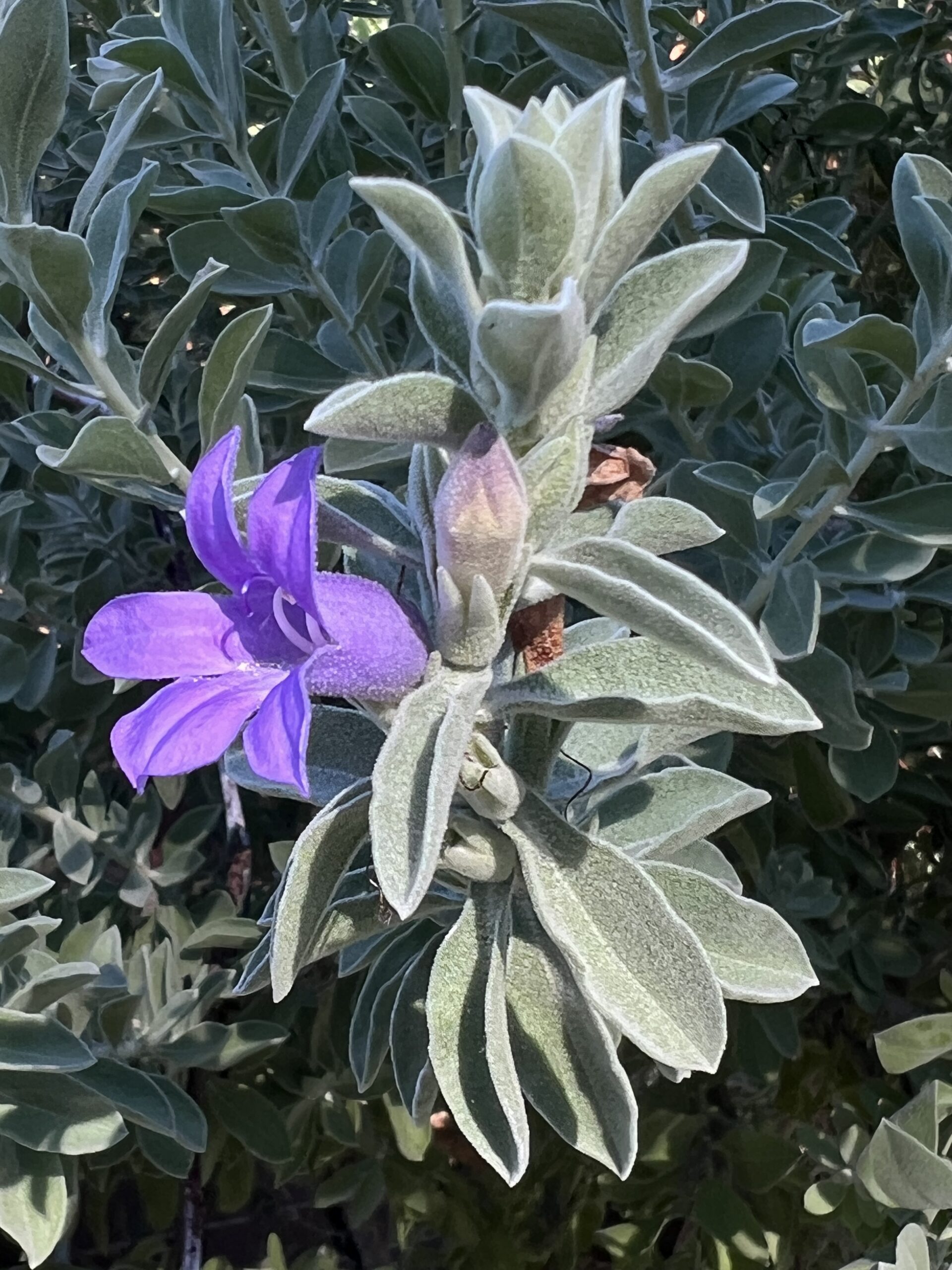
Blue Bells Emu
Blue-purple bell flowers in winter and spring on a tidy evergreen shrub. Handles reflected heat off the pool deck and walls.
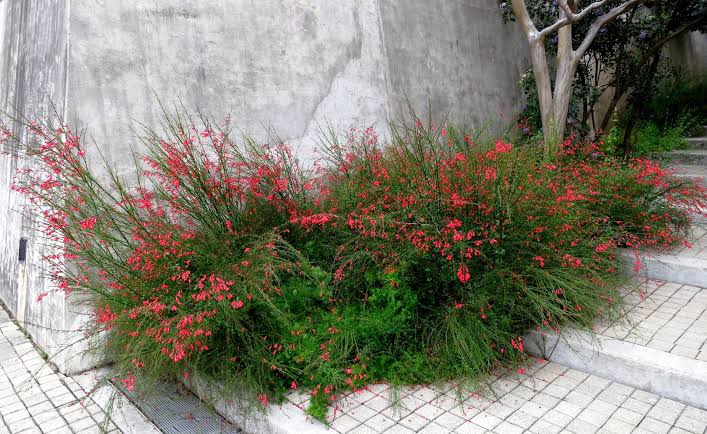
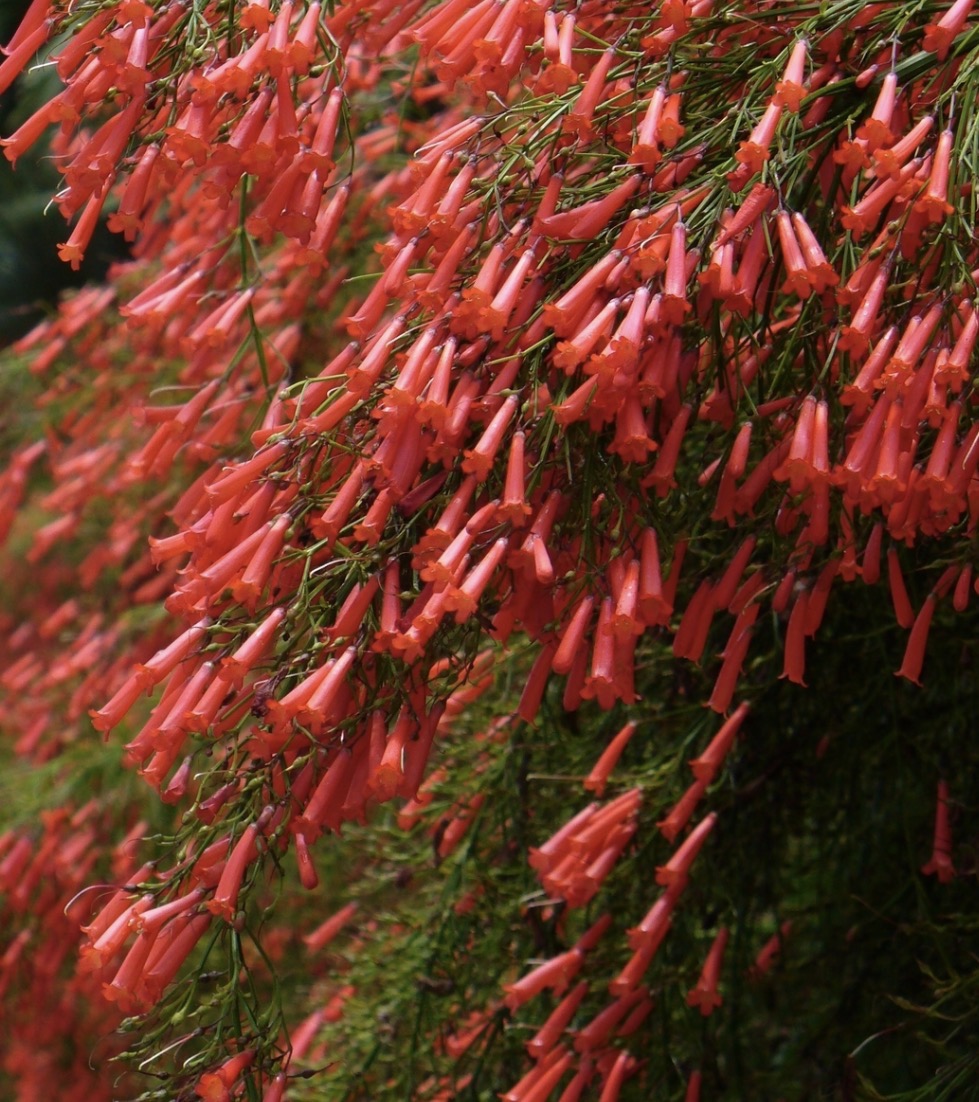
Firecracker Plant
Arching green stems with little red tube flowers most of the year. Handles part shade and brings hummingbirds in.
Coral Fountain Grass
Soft, arching grass with coral-pink plumes most of the warm season. Gives movement and a clean, low border without blocking the view. Non-invasive, unlike the old purple fountain grass.
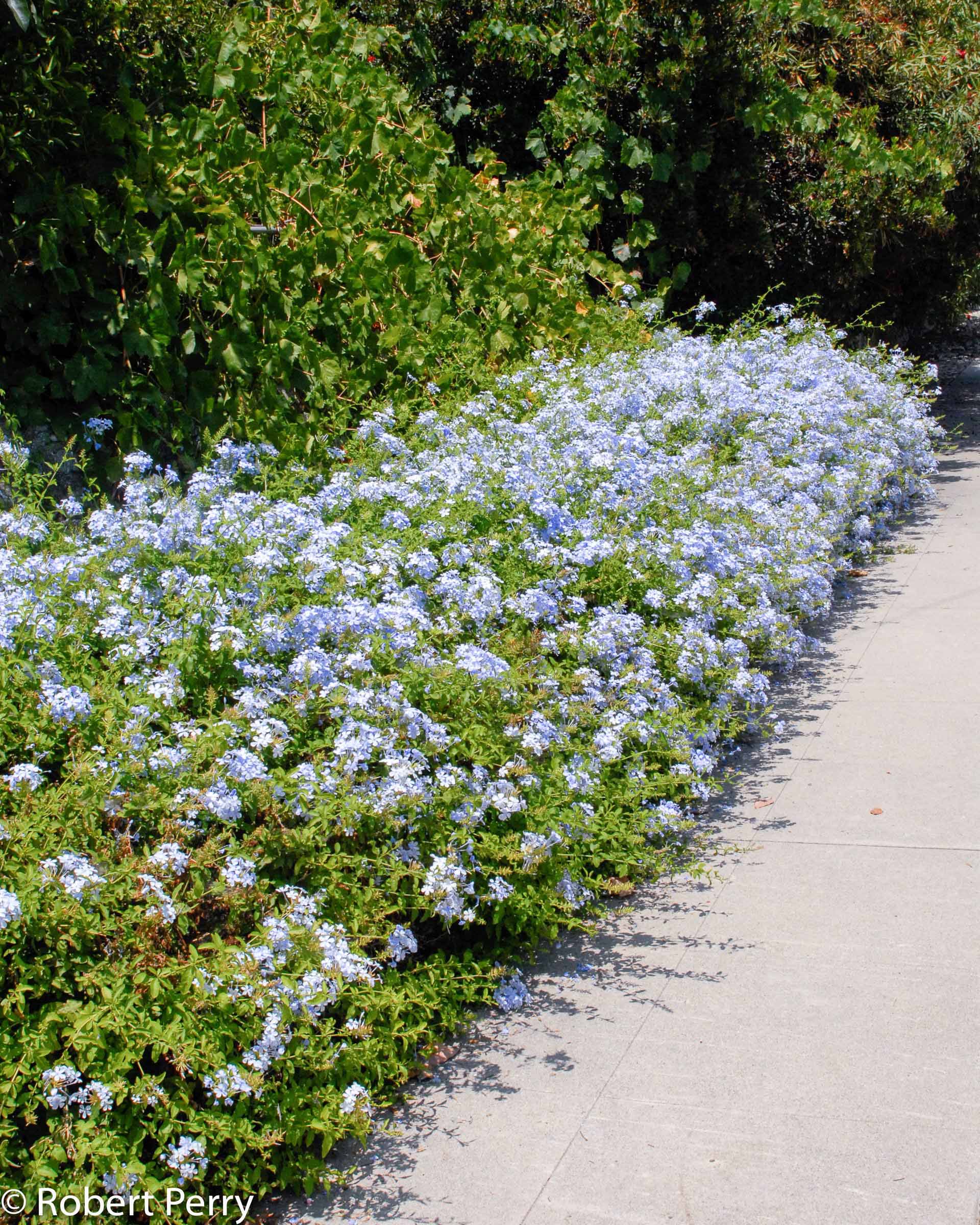
Cape Plumbago
Sky-blue flowers spring through fall. Does well with the morning sun and afternoon shade you get on an east wall. Keep it thinned so it doesn't crowd the path.
Better stone fruit
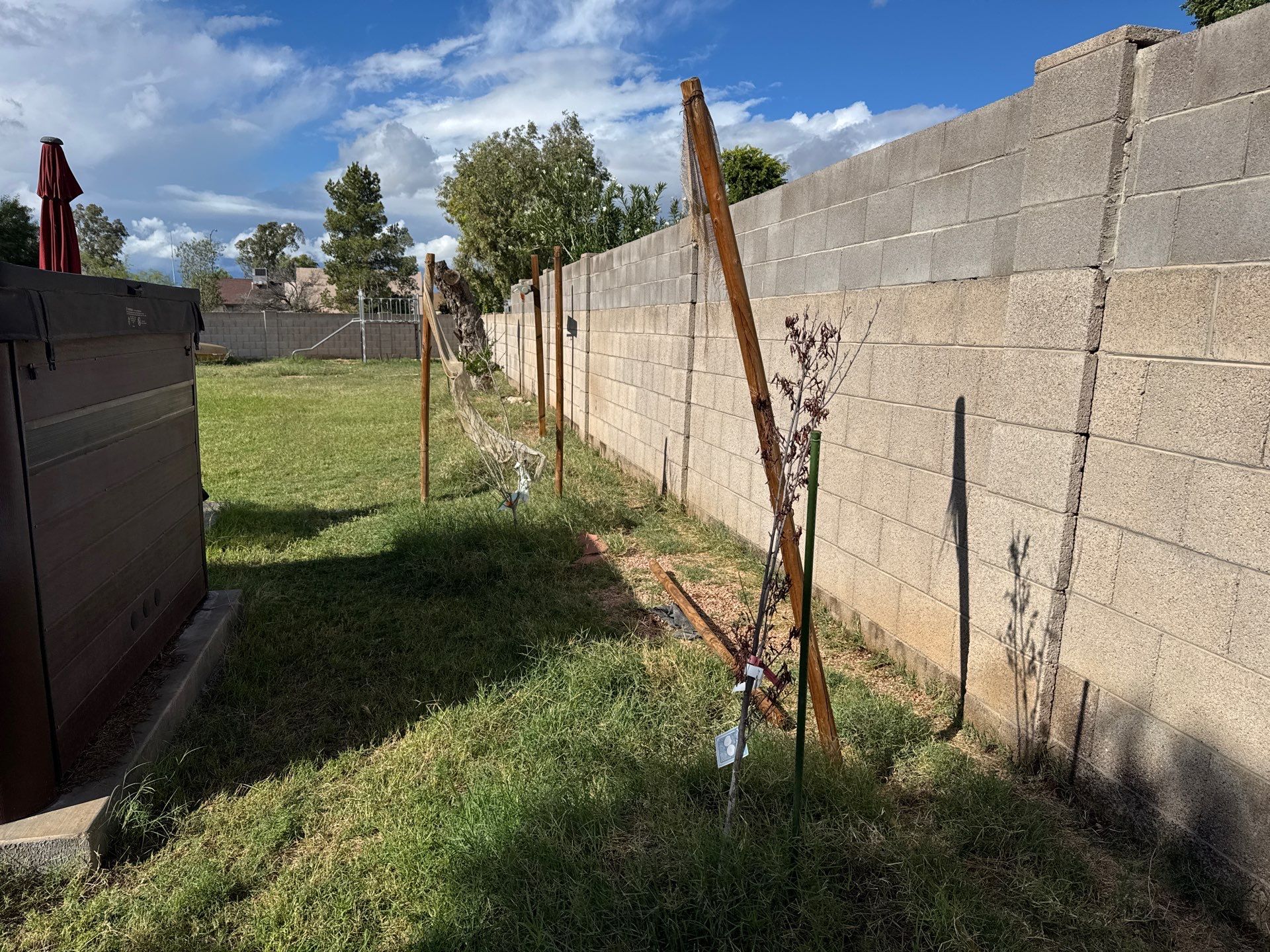
You had two stone fruit trees here, a plum and a peach. For replacements, I'd go with peach and apricot, which are the most reliable stone fruit here. The biggest thing with stone fruit in the Valley is chill hours. Most varieties need a certain number of cold hours in winter to flower and fruit, and we don't get many. A lot of trees sold here are the wrong varieties, so they grow fine but barely fruit. Stick with low chill varieties and they'll produce well. Plant the new trees about 4 ft farther off the wall than the trees here were planted before, so the canopy has room to grow out and the roots aren't fighting the wall footing.
Varieties that do well here
- Peach: Florida Prince (my top pick), Desert Gold, Tropic Snow (white peach), and Eva's Pride. All self-fruitful.
- Apricot: Gold Kist and Katy. Both self-fruitful.

Peach
Low chill varieties are a must here: Florida Prince, Desert Gold, Tropic Snow, and Eva's Pride. All fruit reliably with our mild winters, and most ripen in May or early June, before the worst heat.
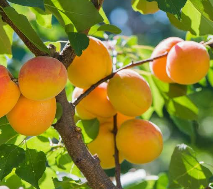
Apricot
Gold Kist and Katy are the low chill apricots that fruit reliably here. Both are self-fruitful, so you only need one. Fruit ripens in May.
How to plant a fruit tree
Dig the hole only as deep as the root ball and two to three times as wide, and set the tree so the root flare (where the trunk widens into the roots) sits right at the soil line, never below. Backfill with your native soil and just a tiny bit of compost. Lay compost on top of the soil, then mulch over the compost, keeping the mulch a foot back from the trunk. Water deeply right after planting.
Growing stone fruit
- When to plant: Bare root trees go in December through February. Container trees can go in now through early spring.
- Pruning: Prune in winter while they're dormant. Keep an open, vase shape by thinning out the center and any branches growing straight up, so sun and air get into the middle of the tree. Keep them around 8 to 10 ft so you can reach the fruit.
- Thin the fruit: In spring, when the little fruit are about the size of a marble, thin them to about 6 inches apart. Fewer fruit means bigger, sweeter ones and less stress on the branches.
- Water: Deep and regular from bloom through harvest, when the fruit is sizing up. Ease off a little after harvest.
- Sun protection: Stone fruit bark sunburns easily. Paint the trunk and main branches with white latex paint mixed half and half with water.
- Birds: Netting over the tree as the fruit starts to color makes a big difference.
The back wall: comparing your options
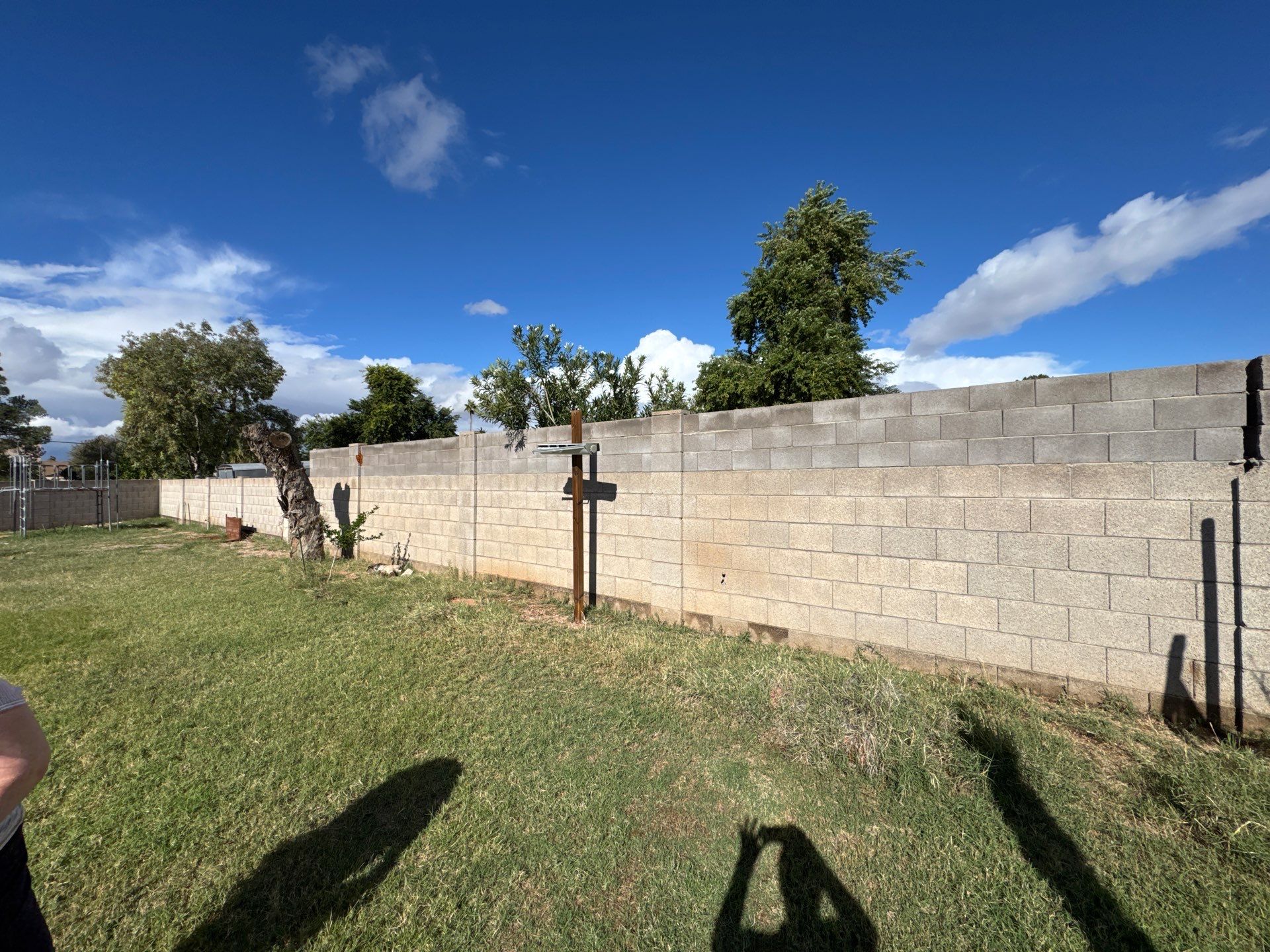
This back wall faces south, so it gets blasted with sun. You like yellow bells, orange jubilee, hopseed, and Arizona rosewood, and all four handle this wall. Clumping bamboo is another good option if you want something tall and lush. Here's how they compare so you can pick, or mix two of them.
| Plant | Size and spacing | Pros | Cons |
|---|---|---|---|
| Yellow Bells | 8 to 15 ft tall · 6 to 8 ft apart | Native. Bright yellow flowers most of the warm season. Fast, and hummingbirds and bees love it. | Gets big and drops flowers and seed pods. Needs thinning every year to stay full. Can freeze back in a hard frost. |
| Orange Jubilee | 8 to 12 ft tall · 5 to 6 ft apart | Orange flowers spring through fall. Fast and a hummingbird favorite. A little more compact than yellow bells. | Frost tender, so the tips burn in a hard freeze. Some flower drop. Best planted in spring. |
| Hopseed | 8 to 12 ft tall · 6 ft apart | Native, evergreen, and the fastest to fill in. Low maintenance and very little litter. | Not much for flowers. Can get open at the base if it's sheared instead of thinned. |
| Clumping Bamboo | 15 to 30 ft tall · 6 to 8 ft apart | Fast, tall, and very full, so it screens and shades the wall quickly. Oldhamii is a clumping type, so it doesn't run or spread across the yard. | Not desert adapted, so it needs regular water to stay green. Drops leaves year round. Give it room from the pool. |
| Arizona Rosewood | 10 to 15 ft tall · 6 to 8 ft apart | Native, dense, dark green, and evergreen. The cleanest, most finished look, and it gets the tallest for the most shade. | Slower to fill in than the others. Small white flowers in spring only. |
Plant all of them 2 to 3 ft out from the wall so they can fill in behind. A nice combination is evergreen rosewood or hopseed as the base, with yellow bells or orange jubilee mixed in every third plant for color. Prune by thinning, never shearing, and they'll stay full to the ground and keep flowering.
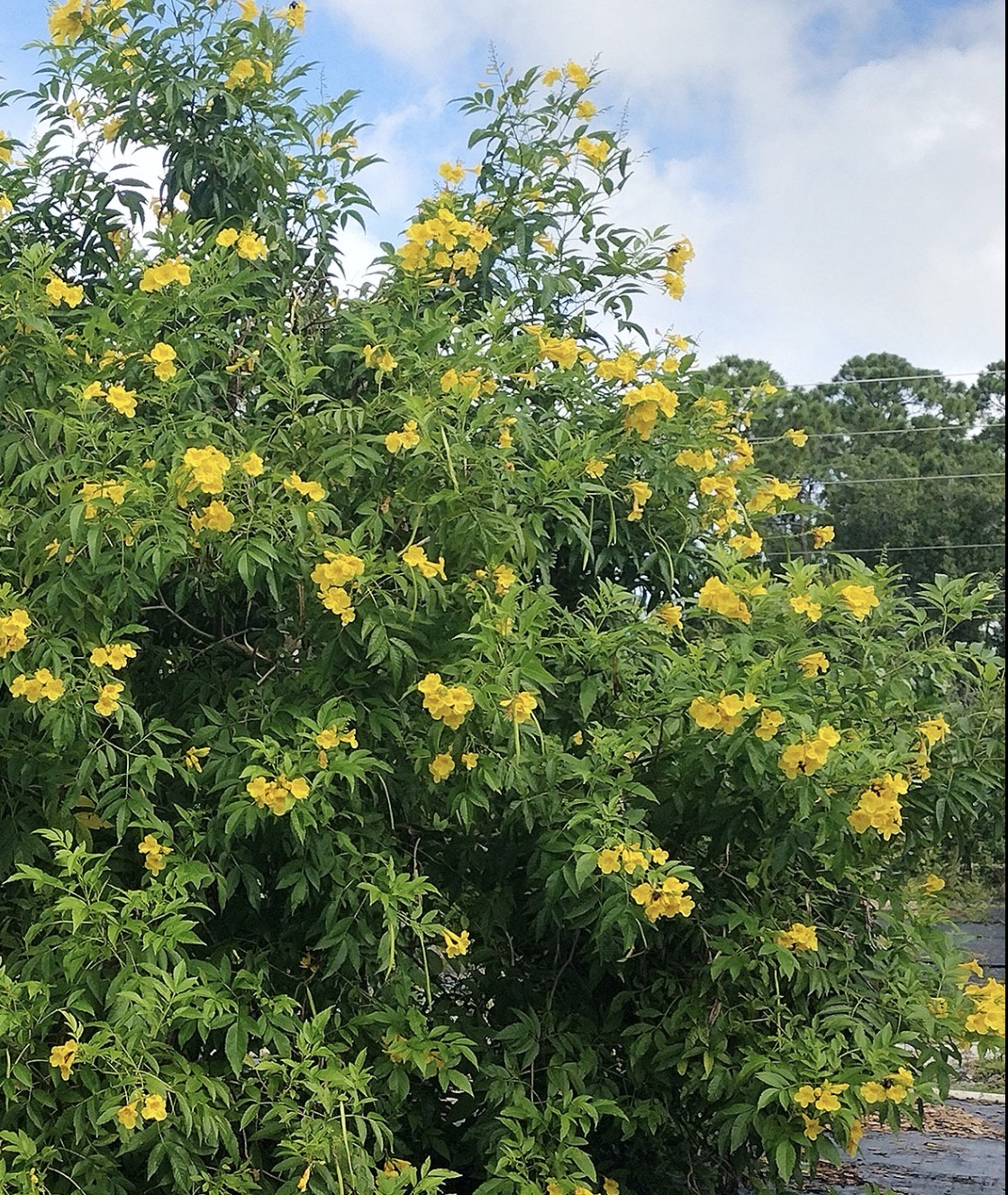
Yellow Bells
Bright yellow trumpet flowers most of the warm season and lots of bee activity. Grows fast and big, so give it room or plan to thin it every year.

Orange Jubilee
Orange trumpet flowers from spring through fall and a hummingbird favorite. Fast to cover a wall. A hard frost can burn the tips, so plant it in spring rather than now.

Hopseed
Native, evergreen, and fast. My go-to for filling in a block wall quickly with a soft green screen. Keep it natural with thinning cuts and it stays full to the ground.

Arizona Rosewood
Native, dense, dark green, and evergreen with small white flowers in spring. A little slower than hopseed, but it gives the cleanest, most finished look of the group.
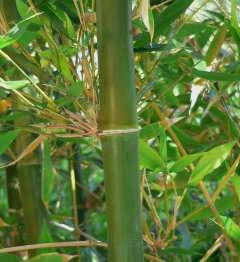
Bamboo (Clumping)
Oldhamii is a clumping bamboo, so it does not run or spread across the yard. In a deep raised bed it grows tall fast and makes a soft green screen that cools the whole area. Whitfill Nursery has good ones.
Fixing the citrus that's planted too deep
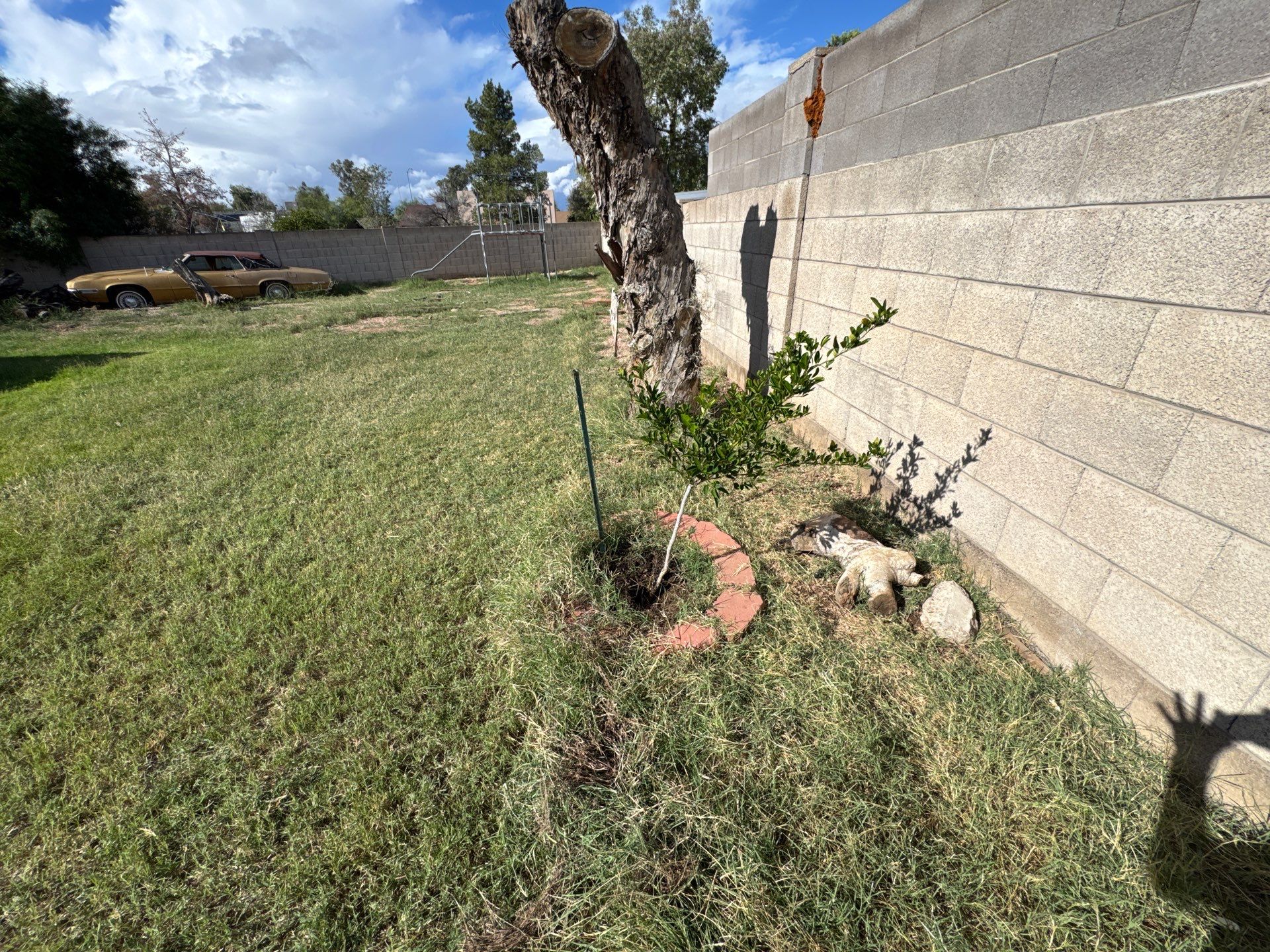
This citrus tree is planted a little too deep. The root flare, where the trunk widens out into the roots, is buried. When soil sits against the trunk there, the bark stays wet, it invites rot and disease, and over time roots can start circling and girdling the tree. Citrus are especially sensitive to this, and it's one of the most common reasons I see citrus struggle.
Video not loading? Watch it on YouTube. It walks through why an exposed root flare matters, with real examples.
Digging it out
- Pull back any rock or mulch from the base of the tree.
- Dig the soil away from the trunk by hand or with a small trowel until you find where the roots start spreading out. A strong stream of water from a hose works great to blast the dirt away without damaging the roots.
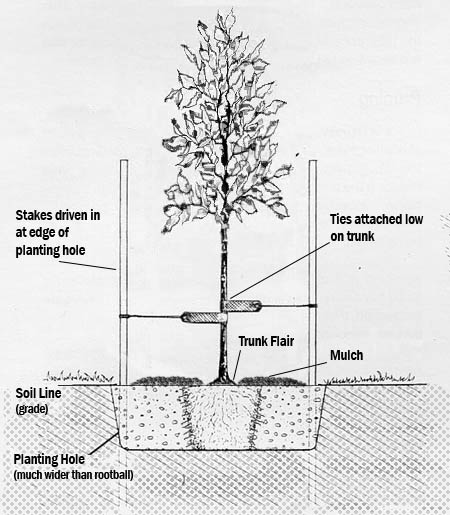
- Leave that flare exposed to the air. Clear about a foot all around the trunk.
- If you find roots wrapping around the trunk, those are girdling roots and need to be cut.
- Rebuild the water well out around the tree, about 3 ft across, rather than right against the trunk, and keep mulch a few inches back from the flare.
Staking properly
Take off any nursery stake tied tight to the trunk. A tree that can't sway never builds a strong trunk, and a tight stake can rub and girdle the bark. Set two stakes outside the root ball on opposite sides, and attach the tree with loose, flexible ties (not wire) low enough that the top can still move in the wind. Remove the stakes after the first year once the roots have anchored it.
Root Flare Excavation
$200/tree
If you'd rather we handle it, we can do the root flare excavation for you. We dig and wash the soil away from the trunk, expose the flare, and cut any girdling roots we find.
A shade tree for the afternoon sun
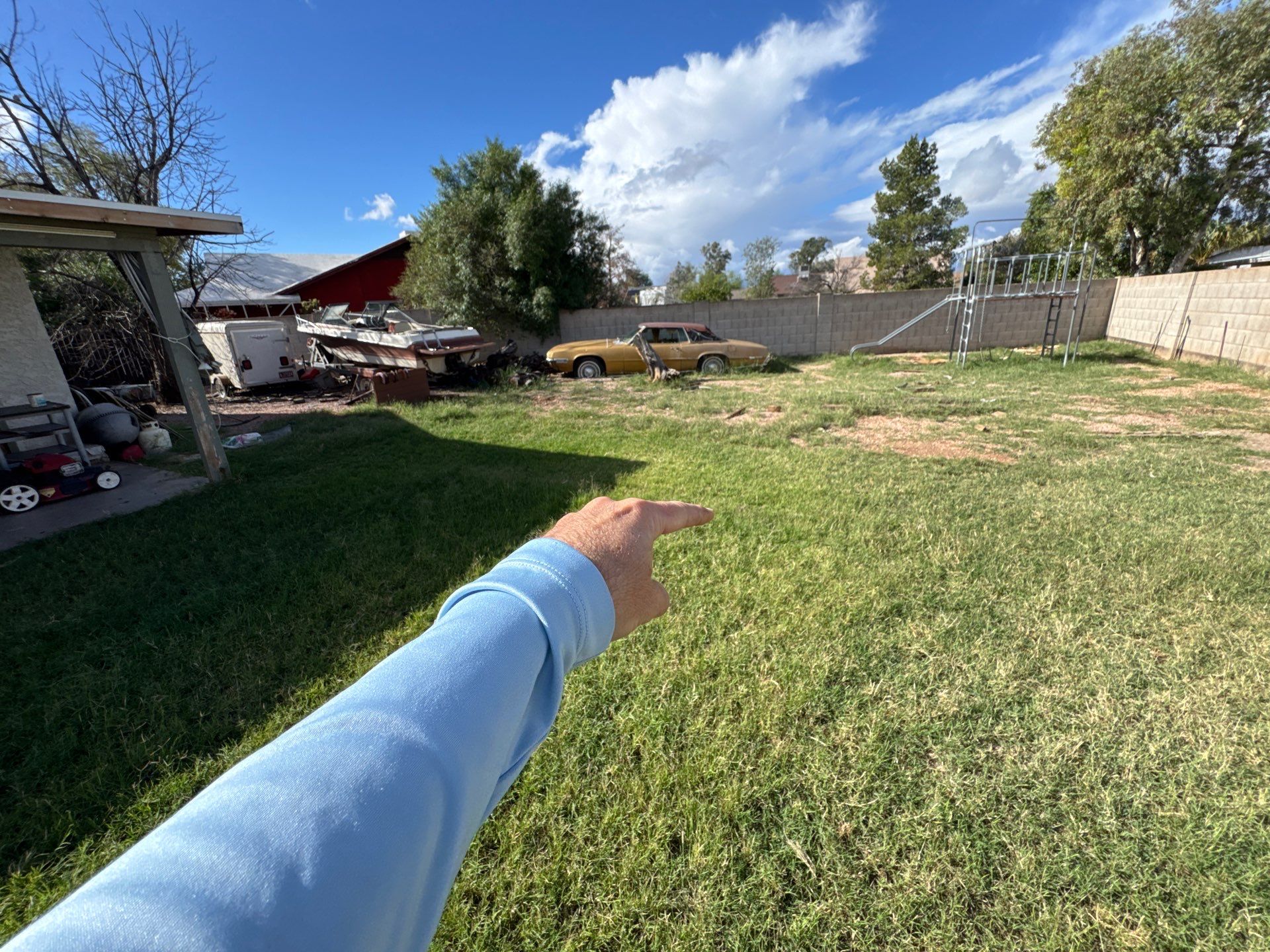
Right here is a good spot for a tree that can grow up and shade the afternoon sun. Tipu, carob, and Chinese elm are all great options, along with a couple of others. Keep it at least 10 to 15 ft from the house and go with a 15 gallon tree. Plant it about 4 ft farther off the wall than the trees here were planted before, so the canopy has room to grow out and the roots aren't fighting the wall footing. Smaller trees settle in faster and end up stronger and better shaped than big boxed trees.
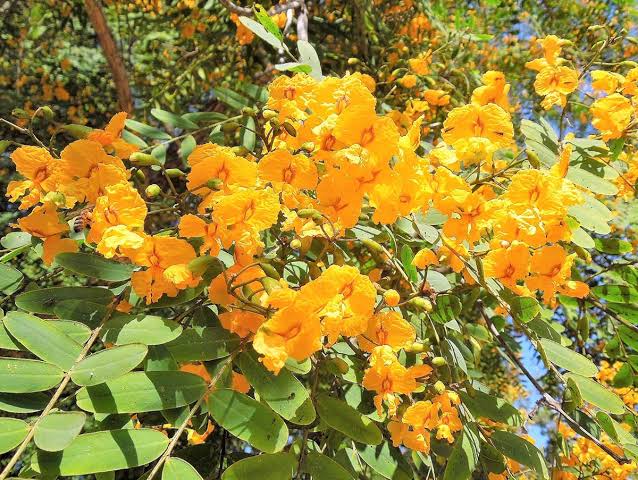
Tipu
Fast growing with a wide umbrella canopy that throws real shade, and clusters of yellow-apricot flowers in late spring. Mostly evergreen here. It drops leaves and seed pods, so keep it back from the pool.
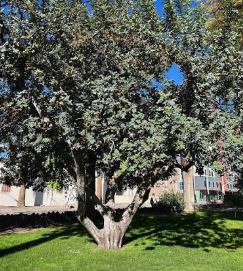
Carob
Evergreen, dark green, and the densest shade on this list. It stays green all year, which is nice from the patio in winter. Female trees drop pods, so it's best placed away from the pool and paths.

Chinese Elm
Fast, with a graceful weeping shape and dense shade. Semi-evergreen, so it holds most of its leaves through winter. Give it plenty of room since it gets big.

Red Push Pistache
Dense, full shade with red new growth in spring and great red-orange fall color. Moderate growth rate and a clean, rounded shape that stays tidy. One of the best shade trees for our heat.
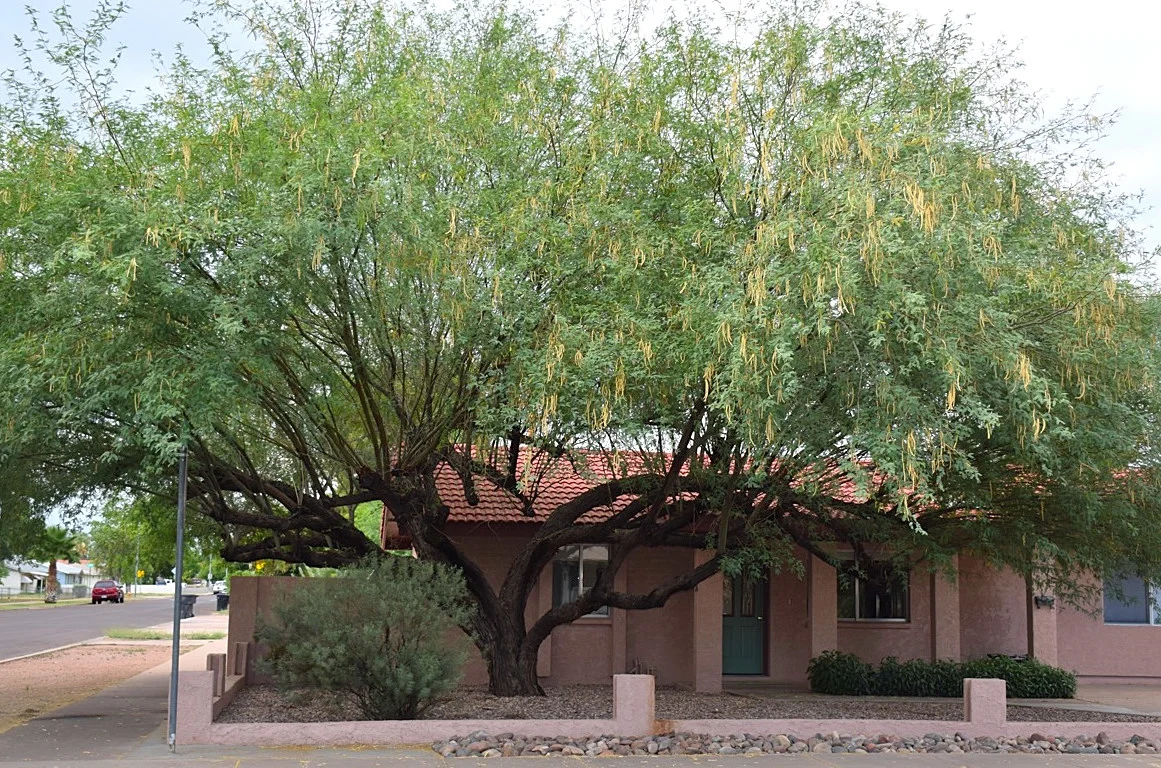
Velvet Mesquite
Our native mesquite and my top pick for a main backyard tree. It grows fast, gives soft filtered shade you can garden under, and its spring catkins are covered in native bees. It also supports local wildlife in a way the hybrid mesquites don't.
A fig in the corner
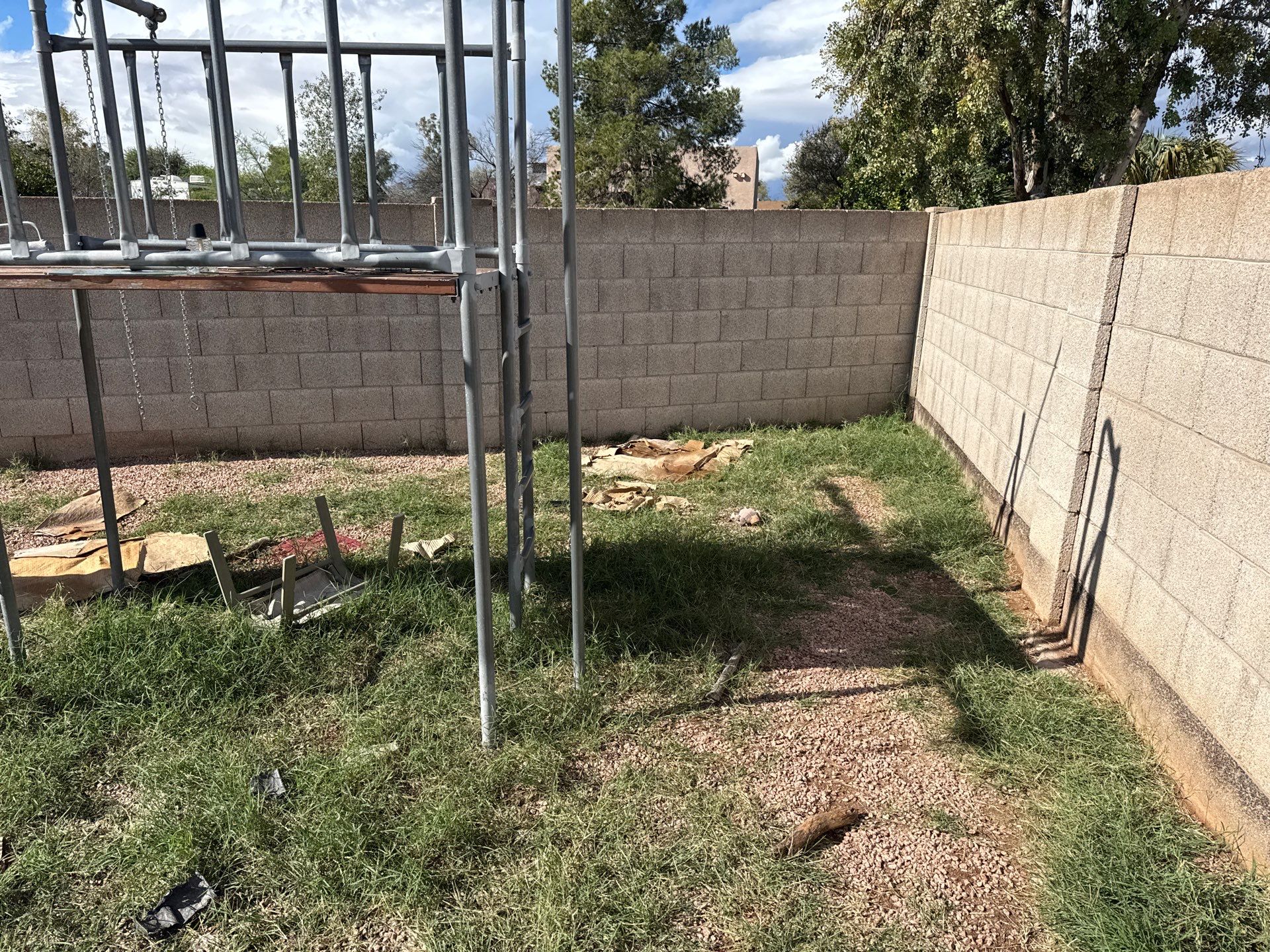
Back here in the corner, a fig would work great. Figs love our heat, grow fast, and are one of the easiest fruit trees to grow in the Valley. Figs spread wide, so plant it about 4 ft farther out of the corner than the trees here were planted before, so it has room to fill out on all sides.
Varieties that do well here
- Black Mission: The classic. Dark purple, very sweet, and productive. Gets big.
- Brown Turkey: Reliable and tough, with a mild, sweet flavor.
- Panache (Tiger Stripe): Green and yellow striped fruit with red flesh. Loves heat and is a fun one to grow.
- Violette de Bordeaux: Small dark fruit with rich, berry-like flavor. Stays compact, great for a corner.
- Celeste and LSU Purple: Very sweet and handle our conditions well.

Fig
Figs love our heat and are one of the easiest fruit trees you can grow here. See the variety list above for the ones that do best.
How to plant a fruit tree
Dig the hole only as deep as the root ball and two to three times as wide, and set the tree so the root flare (where the trunk widens into the roots) sits right at the soil line, never below. Backfill with your native soil and just a tiny bit of compost. Lay compost on top of the soil, then mulch over the compost, keeping the mulch a foot back from the trunk. Water deeply right after planting.
Fig care
- Water: Deep and regular, especially while fruit is forming. Uneven watering makes the fruit split.
- Afternoon shade helps: Figs handle full sun, but a corner with some afternoon shade keeps the leaves from scorching in July and August.
- Pruning: Keep it light, in late winter. Thin crossing or crowded branches and shorten any that get too tall to reach. Figs fruit on last year's wood and new growth, so heavy pruning cuts your crop.
- Harvest: Pick when the fruit softens and droops on the stem. Figs don't ripen after picking. Most varieties give an early crop in June and a main crop in late summer.
- Feeding: Compost around the drip line and monthly organic fertilizer.
Low hedge on the north side of the house
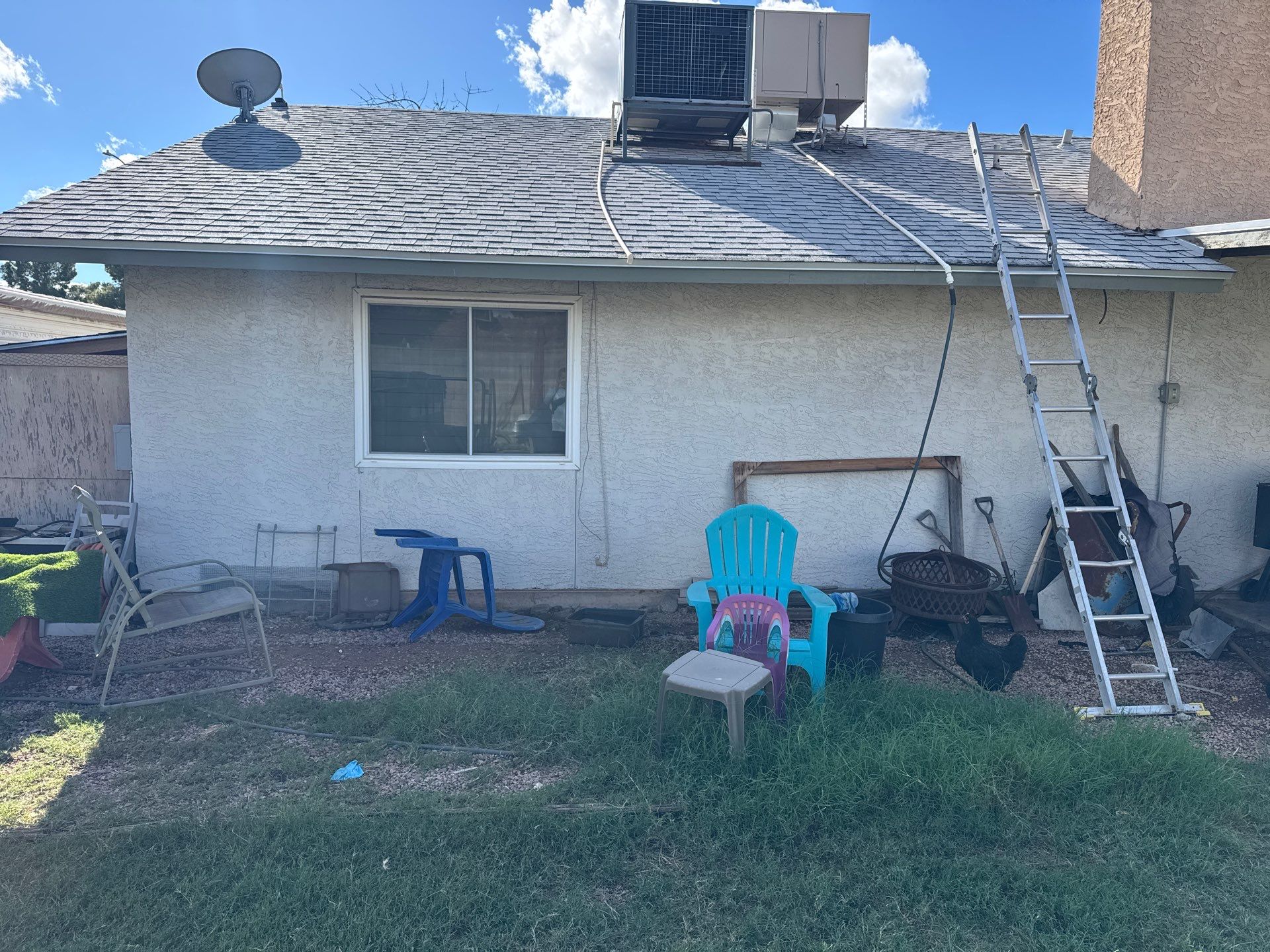
Up against the house, this side faces north, so it's pretty shaded. You're thinking of a low-growing shrub hedge, something like cape plumbago or ruellia. Both work well here, and here are some other options. Plant them 2 to 3 ft out from the house with the drip on the outside of each plant, away from the foundation. Shade dries out slowly, so water this bed less often than the sunny ones.
Cape Plumbago
Sky-blue flowers spring through fall. Does well with the morning sun and afternoon shade you get on an east wall. Keep it thinned so it doesn't crowd the path.
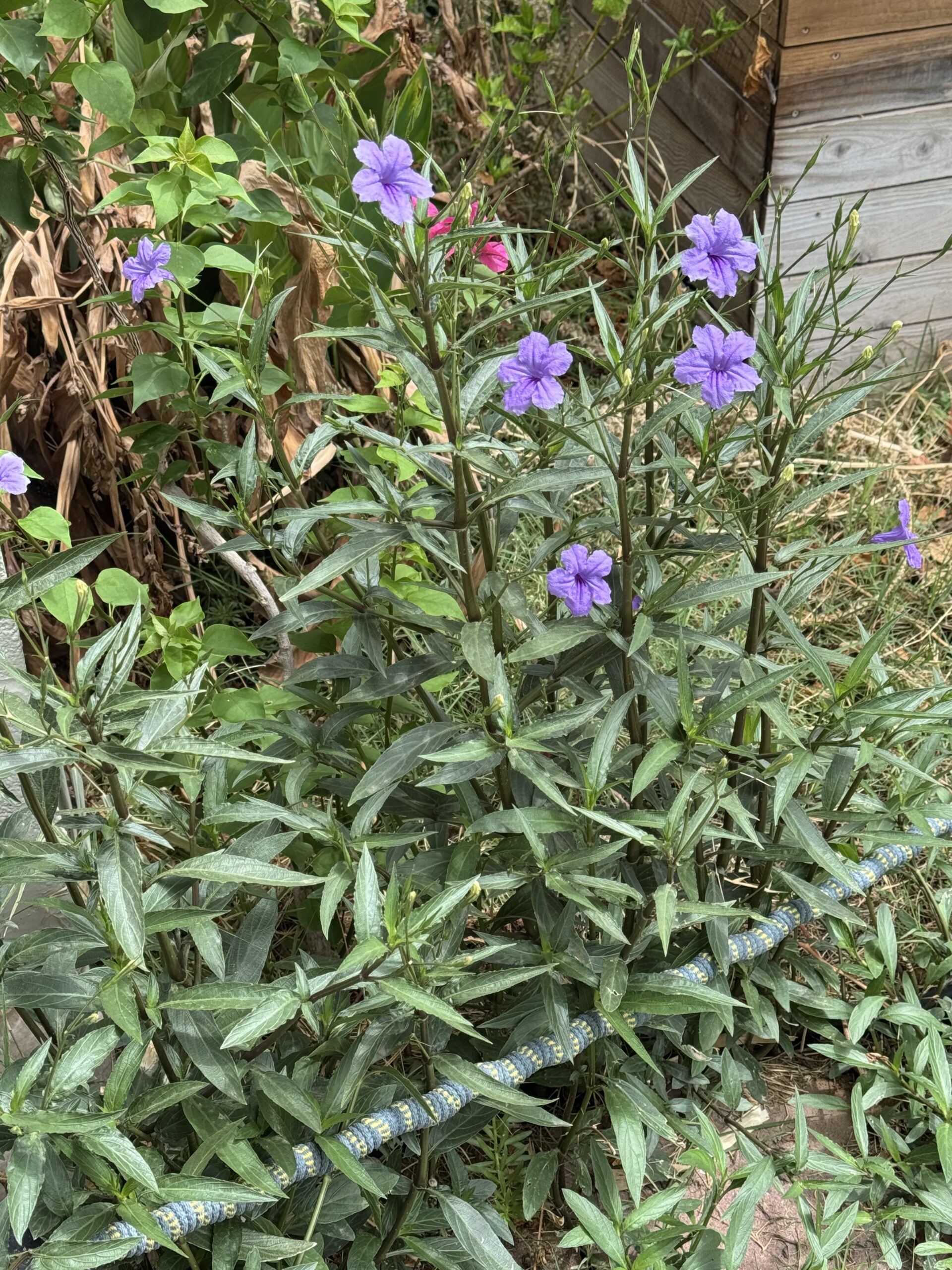
Ruellia
Ask for the dwarf 'Katie' type. It stays a tidy 1 ft mound with purple flowers and doesn't spread like the tall Mexican petunia ruellia, which can get invasive.
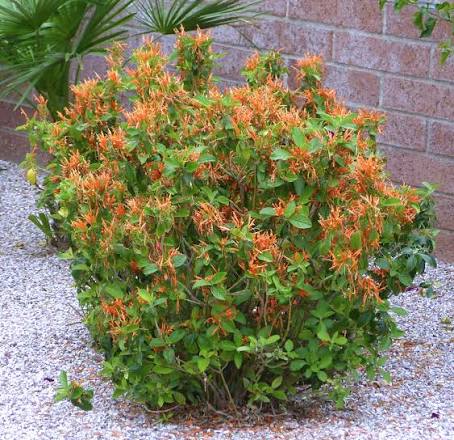
Mexican Honeysuckle
Soft green leaves and orange tubular flowers much of the year, and it actually does better out of full sun. Hummingbirds will find it even in a narrow side yard.
Dwarf Myrtle
Small, glossy evergreen leaves and white summer flowers. Stays compact and tidy with little effort.
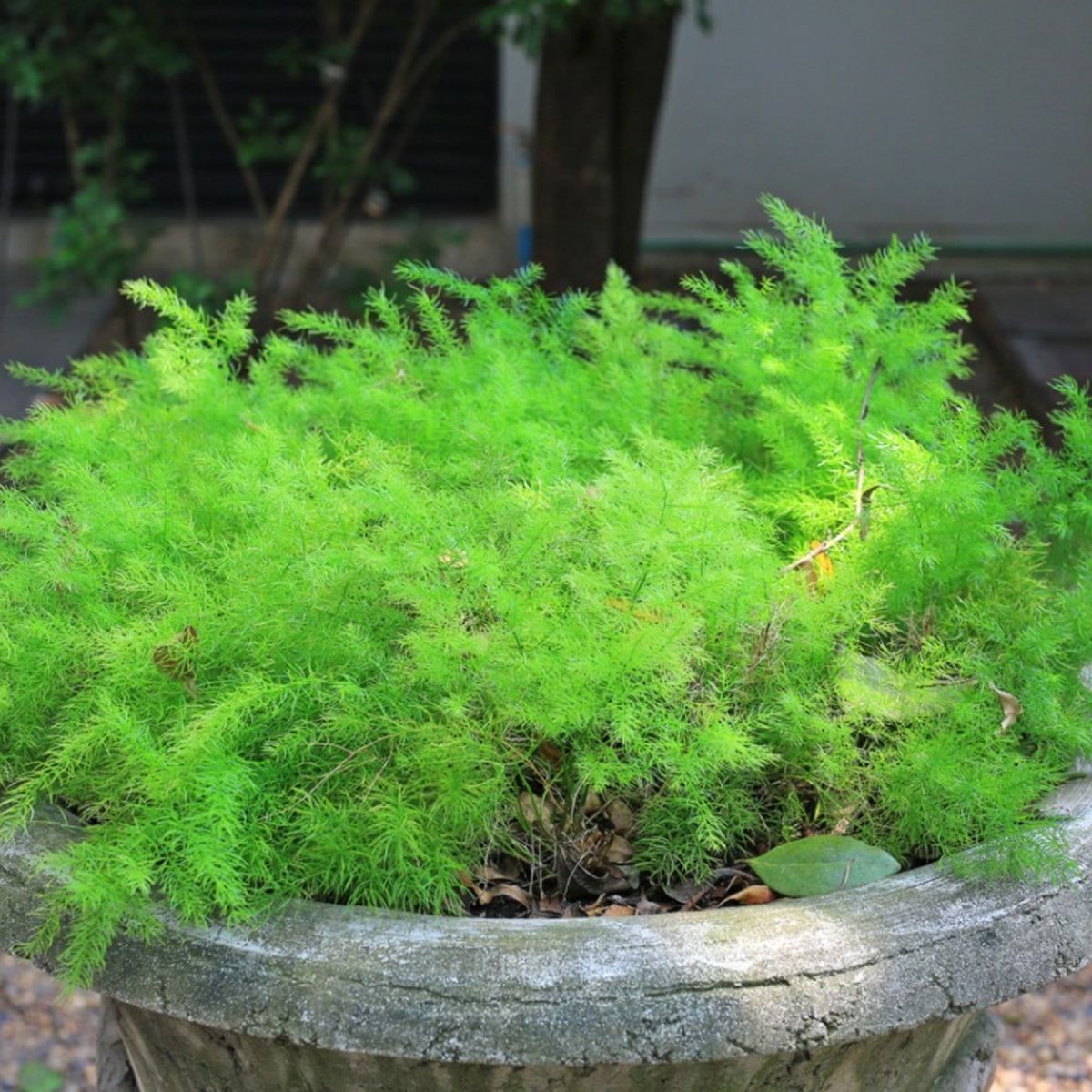
Asparagus Fern
Soft, feathery green mound that loves shade. A tough, easy way to make a shady strip feel lush.
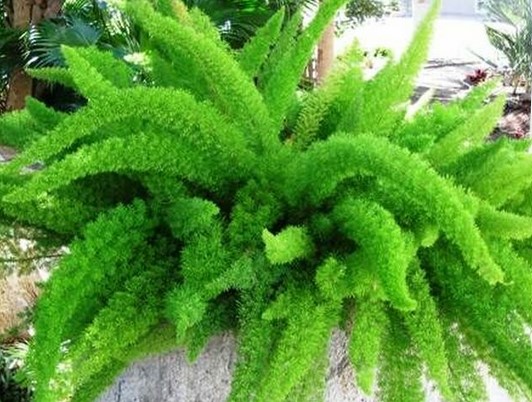
Foxtail Fern
Upright fluffy plumes that look like green foxtails. Clean, neat shape and very easy in shade.
South-facing wall: replacing the rose
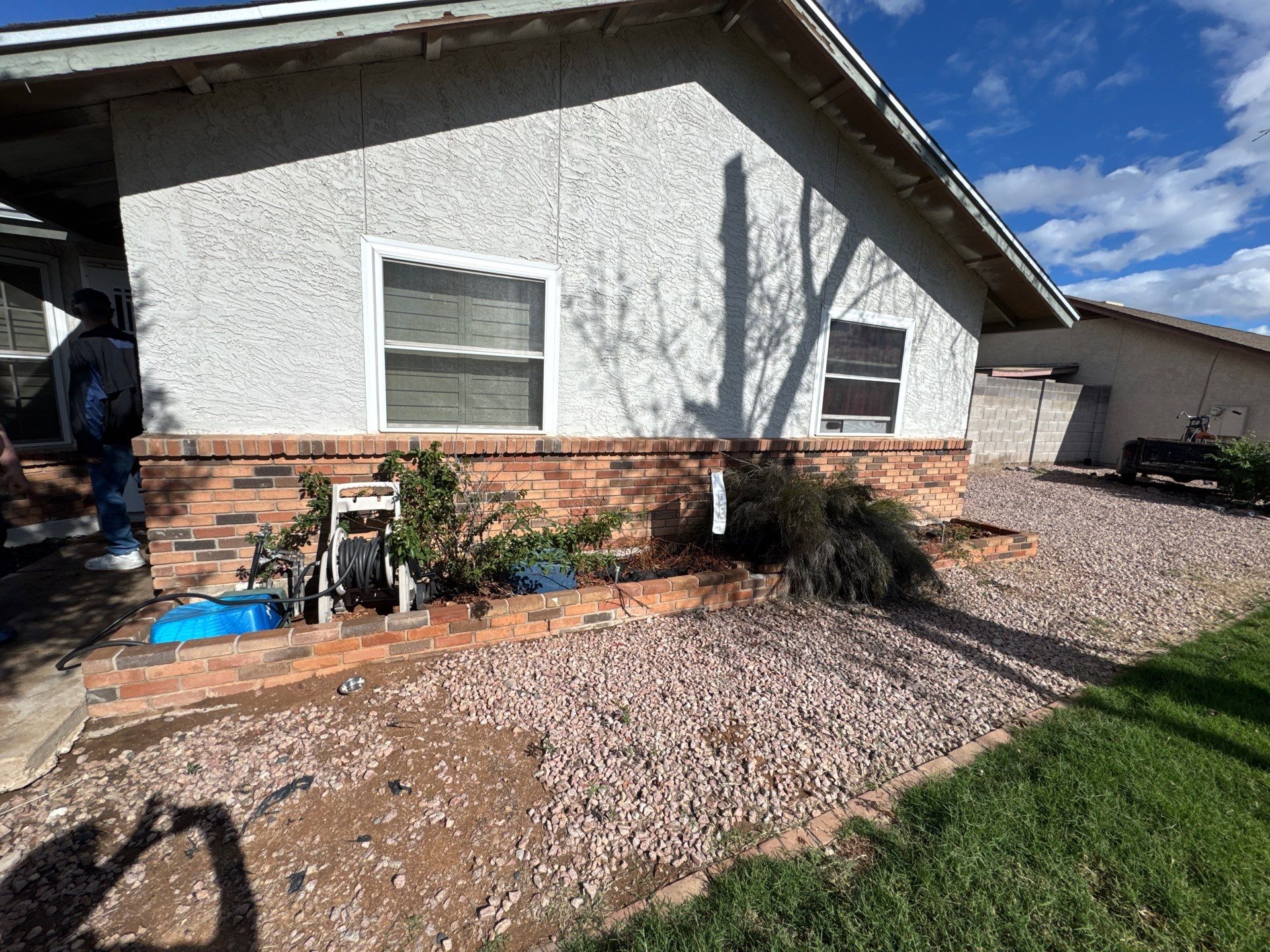
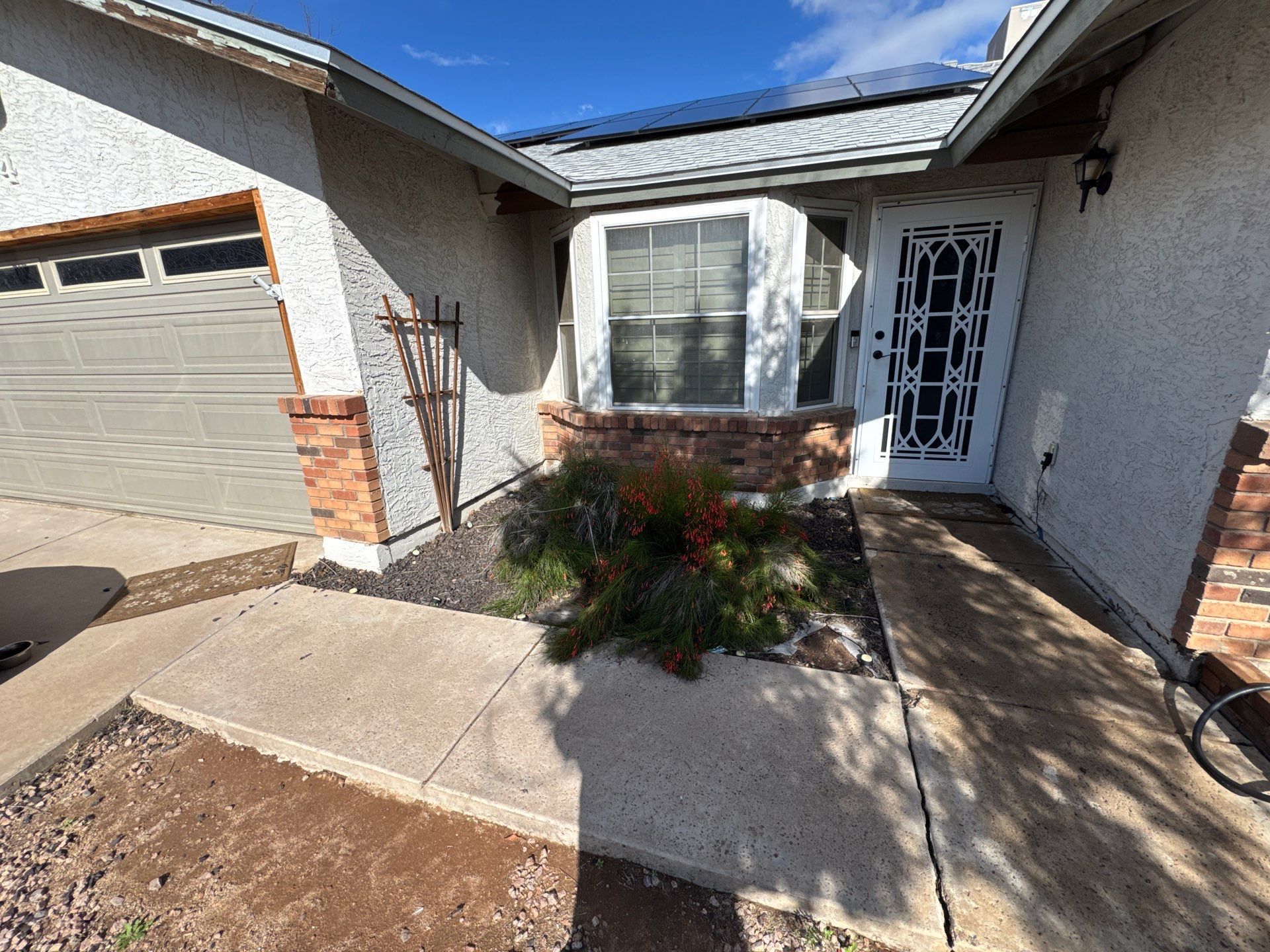
This is a south-facing wall, and the rose that's here now has got to go. It's struggling in this heat and isn't going to get better. This spot needs lower growing plants, so here are options that stay low and handle a hot south wall. Plant them about 2 ft out from the wall in groups of three or five, with the spreading groundcovers in front.
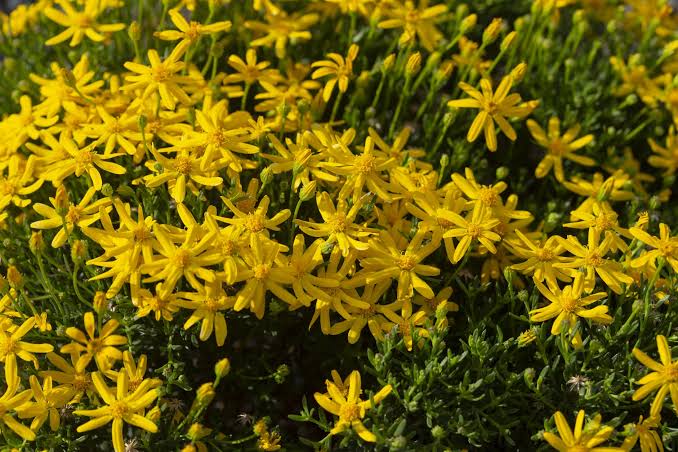
Damianita
Dense, aromatic evergreen mound with golden flowers in spring and fall. Stays very neat, which is exactly what you want along a path.
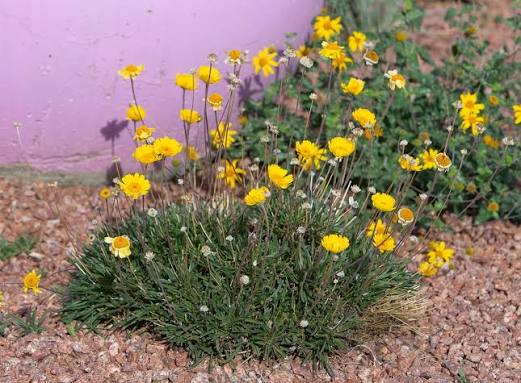
Angelita Daisy
Tight little mound with yellow daisies almost all year. One of the cleanest edging plants we have here.
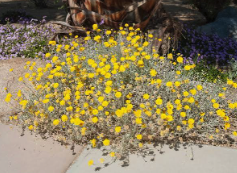
Desert Marigold
Native, with bright yellow daisies most of the year over soft gray leaves. Small and low, so it's great along edges.
Blue Bells Emu
Blue-purple bell flowers in winter and spring on a tidy evergreen shrub. Handles reflected heat off the pool deck and walls.
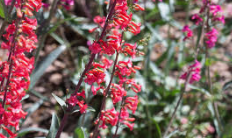
Penstemon
Tall spring flower spikes in pink, red, or purple that hummingbirds love. Low rosette the rest of the year, so it keeps things clean. Reseeds lightly.
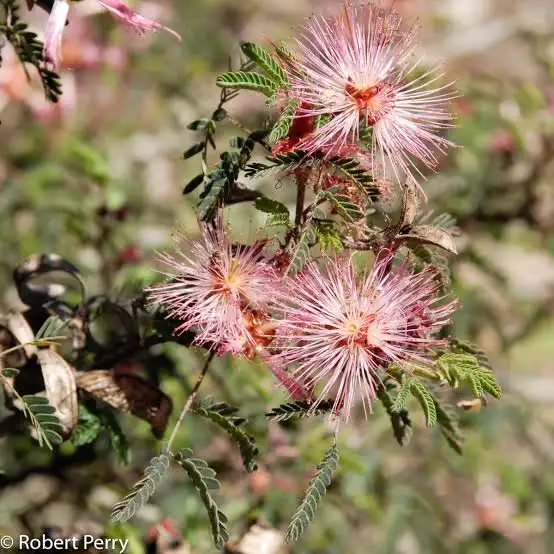
Pink Fairy Duster
Native, with pink powder-puff flowers in late winter and spring. Small, airy, and takes very little water once it settles in.
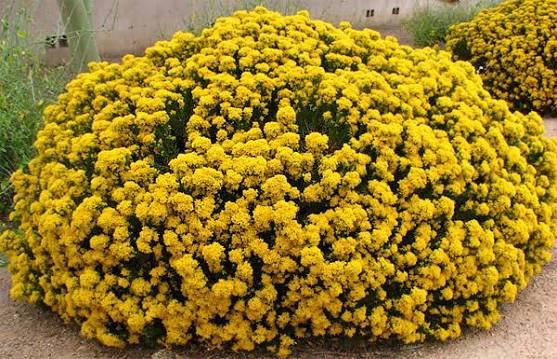
Turpentine Bush
Native, with fine evergreen foliage that smells great when you brush it and a cover of yellow flowers in fall when pollinators need them. Stays compact and tidy along a wall.
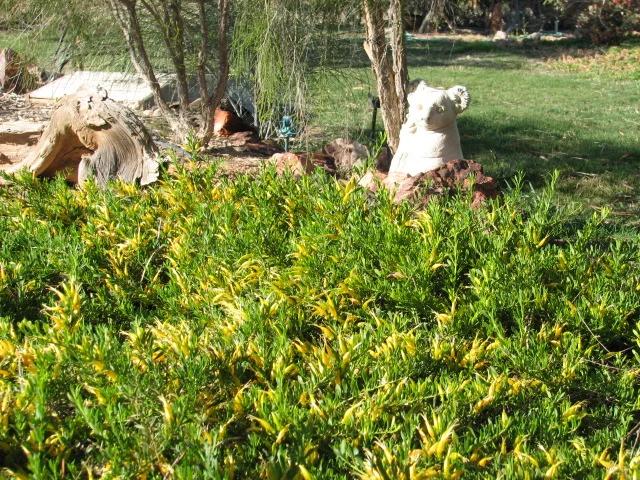
Emu Bush (Outback Sunrise)
Low, dense yellow-green groundcover with small yellow flowers in late winter and spring. One of the best groundcovers for hot spots and reflected heat.
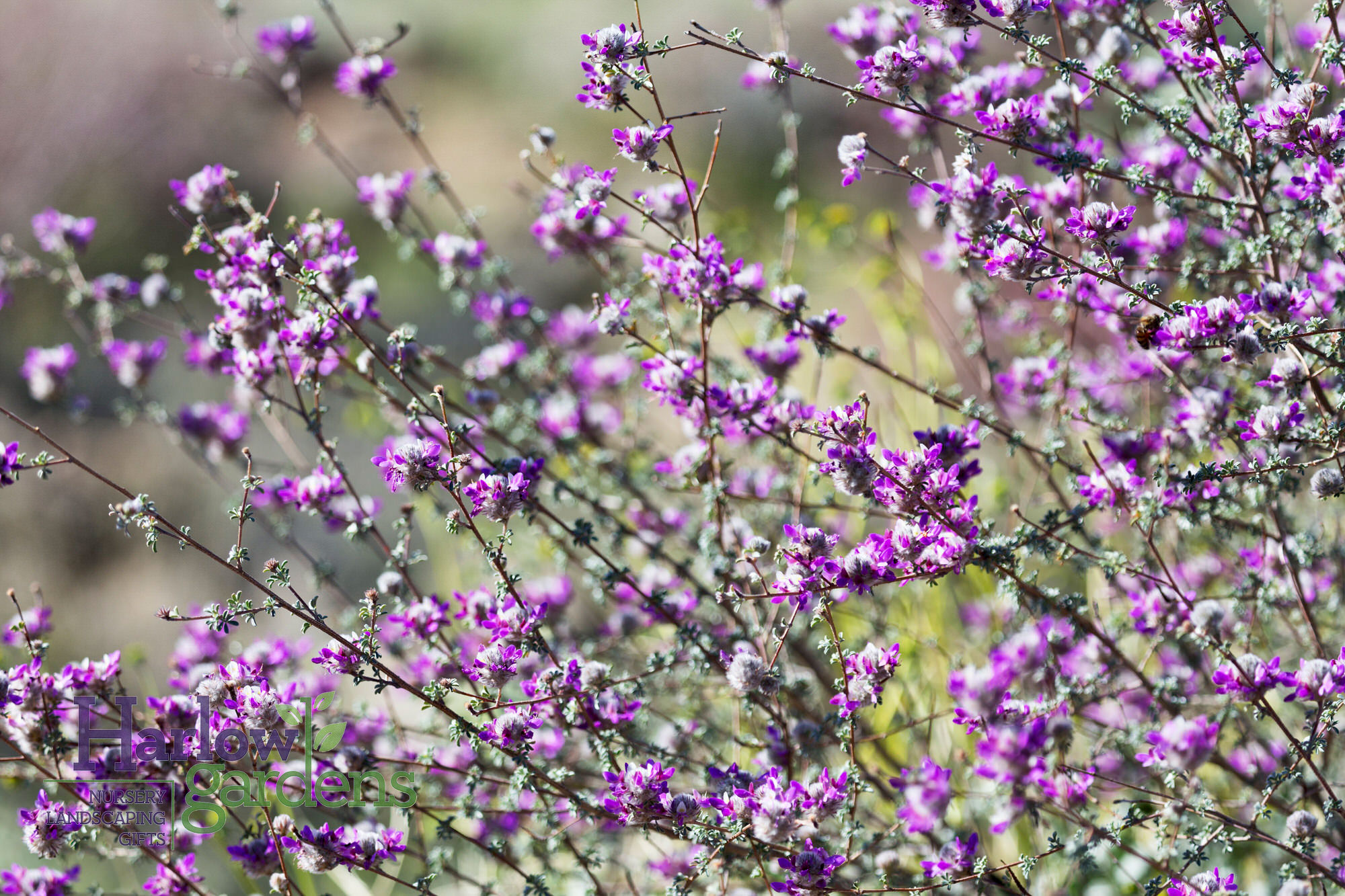
Trailing Indigo Bush
Silver groundcover with purple flowers in summer. Great for covering ground under the trees and softening around boulders without getting tall.
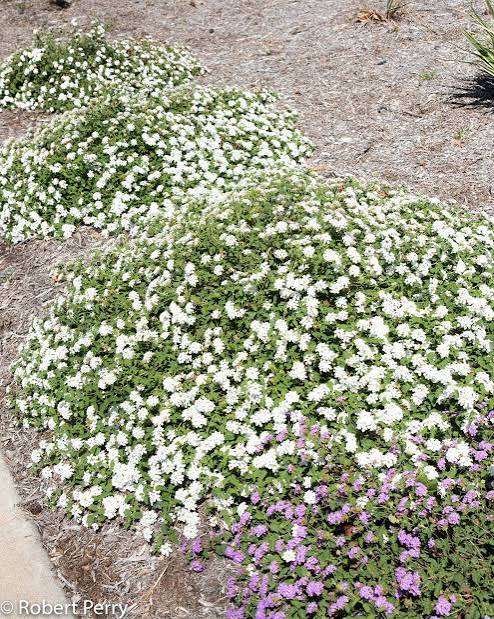
White Trailing Lantana
Low, spreading mats covered in white flowers most of the year, and butterflies visit all day. Handles the hottest spots.
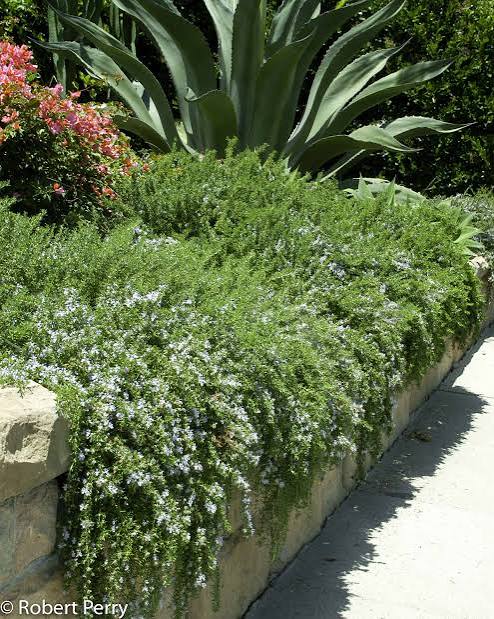
Trailing Rosemary
Low, spilling evergreen with blue flowers in winter and spring, and bees love it. Next to a barbecue you get to snip fresh rosemary right off the plant.
Soil and Feeding
Feeding the soil
With citrus, stone fruit, and a fig in the plan, feeding the soil makes a huge difference in how much fruit you get. Instead of feeding the plants directly with synthetics, we feed the soil biology: the fungi, bacteria, and other life that break down organic matter and hand nutrients to the roots. Good compost and organic fertilizer are how you build that.
Doing it yourself
- Compost: Spread compost generously around the drip line of the trees (out where the edge of the canopy is, since that's where the feeder roots are), and closer in around the shrubs. Arizona Worm Farm has great compost.
- Worm castings: Add worm castings every quarter. They're packed with biology and gentle enough you can't overdo them.
- Organic fertilizer: Once a month, use a good organic fertilizer high in fulvic acid. These are the ones I use from Catalyst Product Group (catalystproductgroup.com, click Products, then Home and Garden).
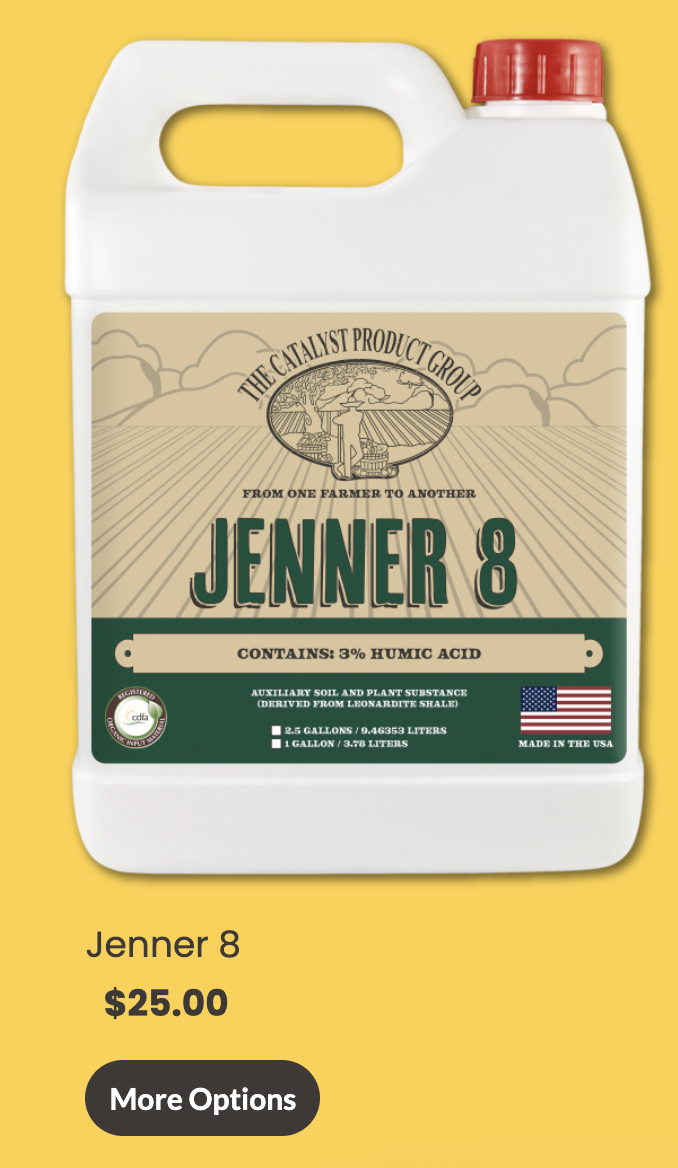
Catalyst Jenner 8
Organic fertilizer high in fulvic acid. Feeds the plant and the soil life at the same time.
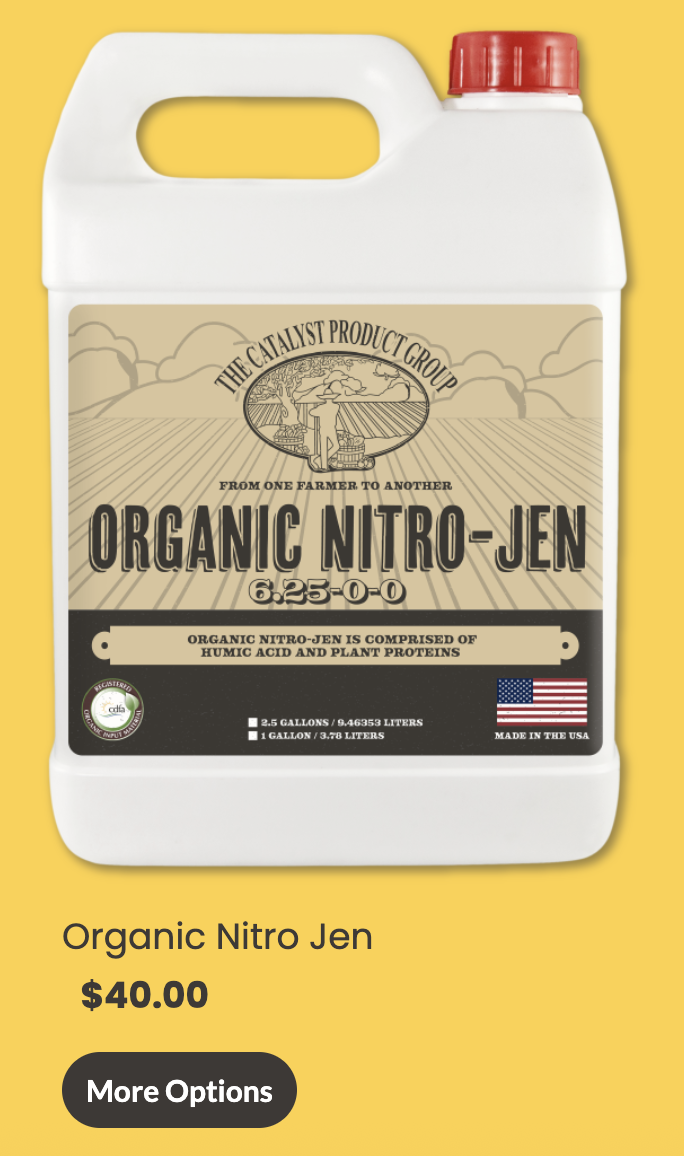
Catalyst Organic Nitro Jen
Organic nitrogen to push healthy green growth, especially on new plantings and trees.
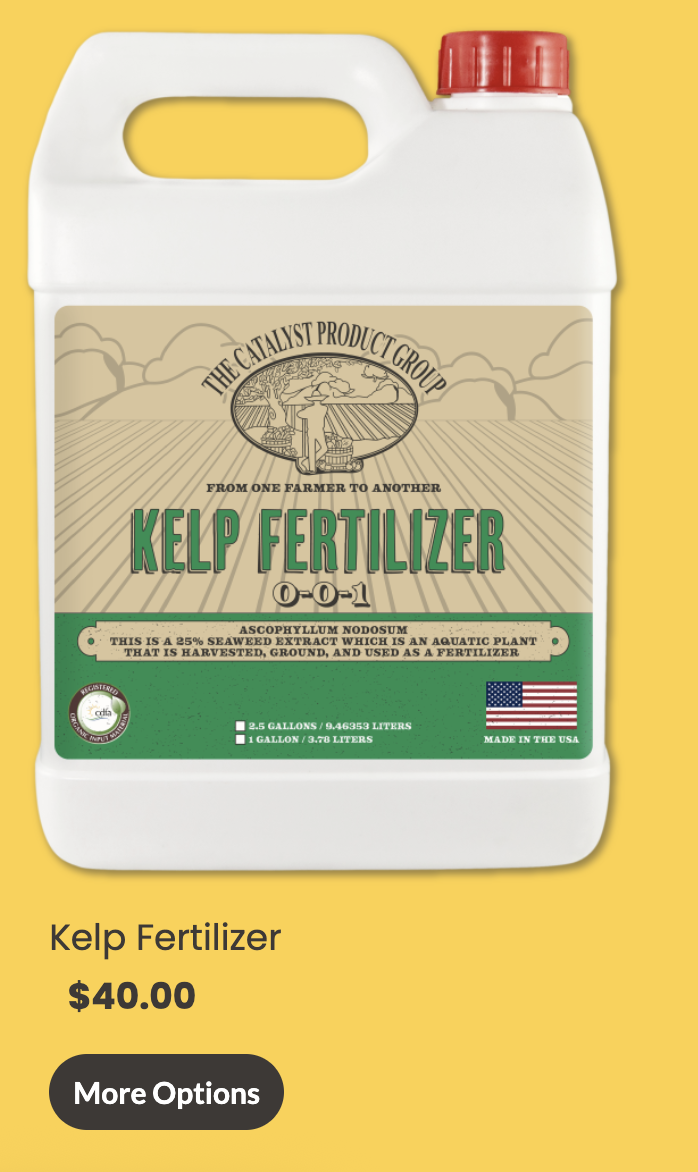
Catalyst Kelp Fertilizer
Kelp brings trace minerals and natural growth hormones that help roots establish and handle heat stress.
Next Steps
Where to go from here
Doing it yourself: Start with the citrus root flare, since that tree is already in the ground and struggling. Then get the shade tree and wall plants in, followed by the fruit trees. As a consult client, you're already in the Garden Nerd Club, so you have direct access to me there. Send me photos as you go or check a spot before you dig.
Having us do it: The Garden Nerd does planting and root flare work. Root flare excavations are $200 per tree. For planting, let me know when you're ready and I'll put together a proposal.
Irrigation: New trees and wall plants will need their own drip. We don't do irrigation, but Garrett does great work. Call him at 480-678-9121.
Quick Reference
Quick reference
Thanks again for having me out, Gena. Between the citrus, stone fruit, and fig, you're set up for a really productive yard. Fix that root flare first, then take the rest one step at a time. I'm in the Garden Nerd Club whenever you need me.
Michael
The Garden Nerd
The Garden Nerd · Organic soil health, fertilizing, consulting, and planting · Mesa, Arizona · thegardennerd.org