
Lysiloma watsonii | Also called: Feather Bush, Feather Tree, Littleleaf False Tamarind Synonyms: Lysiloma thornberi, Lysiloma microphylla var. thornberi
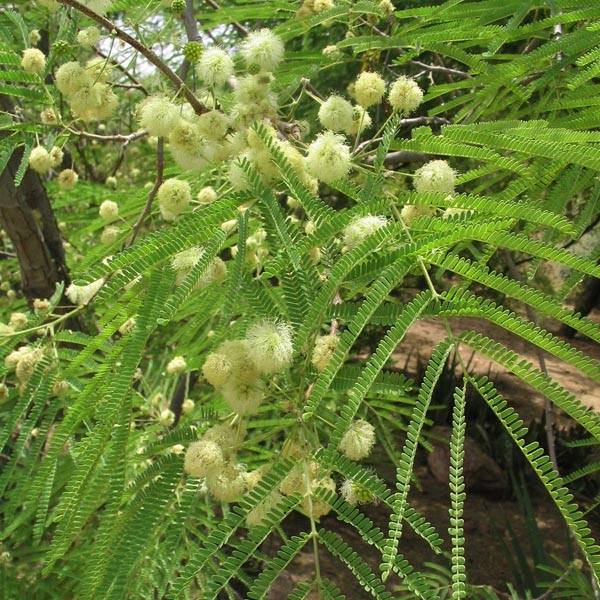
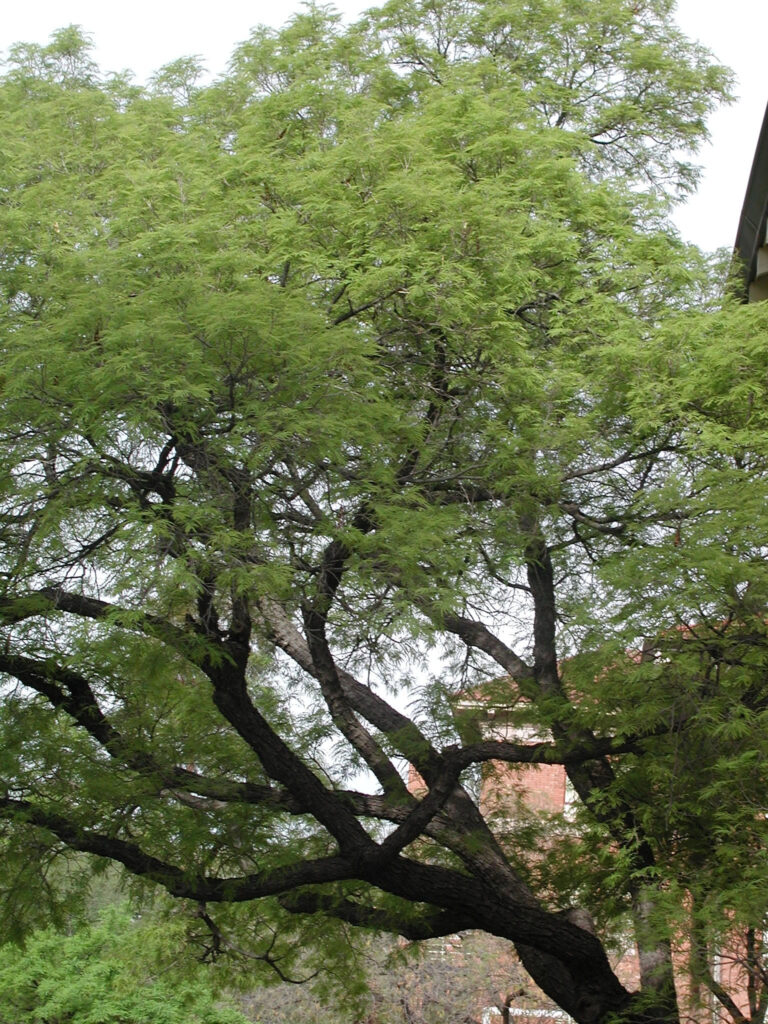
If you’ve driven through Phoenix neighborhoods and noticed a tree with the softest, most delicate-looking foliage you’ve ever seen on something that’s obviously thriving in 110-degree heat, there’s a decent chance you were looking at a Fern of the Desert. The bipinnate leaves are so fine and feathery that the canopy has an almost cloud-like quality from a distance – light filters through it rather than getting blocked, which creates a kind of shade that feels different from most trees. It’s one of the more visually distinctive shade trees you can grow here.
It’s also an Arizona native, thornless, a nitrogen fixer, and genuinely well-adapted to our conditions. For those reasons, it gets recommended a lot. And it deserves the recommendation – with some honest caveats about what you’re getting into with form training and litter management that most guides underplay.
What It Is and Why It Fits Here
Lysiloma watsonii is native to the mountain foothill washes and rocky slopes of the Rincon Mountains southeast of Tucson, extending south into the foothills of Sonora, Mexico. It grows in seasonally dry riparian zones where water moves through periodically but soils drain fast between events – similar in character to the Desert Willow’s native habitat. That origin points directly to what the tree wants: sun, good drainage, and deep infrequent water rather than constant moisture.
It belongs to the Fabaceae family – the legume family – alongside Palo Verde, Sweet Acacia, and Cascalote. Same nitrogen-fixing capability, same general compatibility with low-fertility desert soils, same preference for well-drained conditions. The family connection matters because it explains why this tree does so well in Phoenix’s alkaline, biologically limited soils without needing heavy fertilizing or soil amendment.
The name Lysiloma comes from the Greek for “loose border” or “loose fringe,” a reference to the seed pods. Watson honors Sereno Watson, a 19th century botanist at Harvard’s Gray Herbarium who catalogued much of the Southwest’s flora. The common names – Fern of the Desert, Feather Bush, Feather Tree – all point to the same thing: that foliage, which is genuinely unlike most other trees growing in Phoenix.
A note on the taxonomy: you’ll see this tree sold and labeled under several names – Lysiloma watsonii, Lysiloma thornberi, and Lysiloma microphylla var. thornberi are all the same plant. The taxonomy has been revised a few times and nursery labels haven’t fully caught up. Same tree regardless of which name is on the tag.
Appearance and Growth Habit
In Phoenix landscapes, the Fern of the Desert typically reaches 15 to 20 feet tall with a spread that often exceeds its height at maturity – this tree goes wide. In its native range in warmer, wetter conditions further south, it can reach 45 feet or more, but in Phoenix cultivation you’re looking at a modest, manageable size. Growth rate is moderate – roughly 2 feet per year under decent irrigation – faster when young and well-watered, slower as it matures.
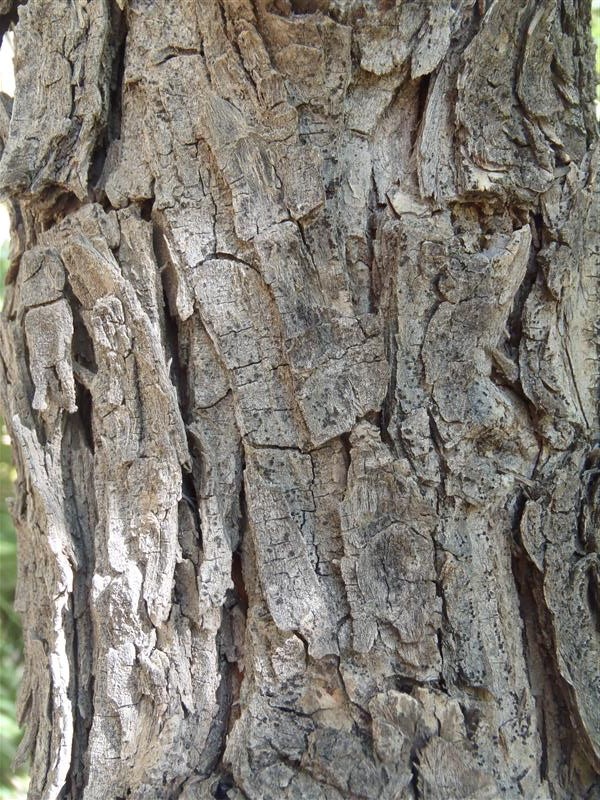
The form is naturally multi-trunk and spreading, more upright when young and progressively wider-reaching with age. The trunks develop rough, gray bark with prominent lenticels – small horizontal pores on the bark surface – that give them a textured, interesting character as the tree matures.
The foliage is what defines this tree. The leaves are bipinnately compound – each leaf divides into 6 to 8 pairs of pinnae, and each of those pinnae carries 20 to 35 pairs of tiny leaflets, each one only a few millimeters long. The overall effect is extraordinarily fine-textured and soft-looking, genuinely fern-like. The leaves are a rich green through most of the year, turning golden yellow in spring just before they drop, then replaced quickly by fresh lime-green new growth. The brief spring yellow flush is one of the more quietly beautiful moments this tree offers.
The flowers appear in late spring – small, creamy-white puffballs in terminal clusters, similar in character to other legume family flowers. They’re not the primary reason most people plant this tree, but they’re pleasant and they attract pollinators reliably. The fragrance is mild.
Following the flowers come flat, dark brown seed pods, 4 to 6 inches long, that develop through summer and drop in late summer and fall. The pod drop is significant – more on that in the litter section.
One critically important note on growth habit from ASU’s plant database: this tree “will produce root and trunk suckers profusely at its base” and naturally wants to be, in their words, “a giant shrub on steroids.” That’s an honest description. If you want a tree form, you are working against the plant’s inclination, and that work is ongoing. This is not a tree you train once and walk away from. It requires consistent attention to form, especially in the first several years.
The Thornless Advantage
Worth calling out specifically because it’s genuinely meaningful: the Fern of the Desert is thornless. In a family of trees – the legumes – where thorns are nearly ubiquitous (Palo Verde, Sweet Acacia, Cascalote, Catclaw, Mesquite), a thornless native legume tree is notable. It means you can work near it without protective gear, plant it closer to paths and patios than you’d risk with thorned species, and train it without the hazards that pruning an acacia or mesquite involves. For households with kids and dogs, that matters.
Sun and Heat Tolerance
Full sun in Phoenix. This tree is native to the Sonoran Desert region and handles our summer heat without complaint when properly established. Some references note that in the hottest parts of its range – areas that mirror Phoenix’s extreme conditions – filtered afternoon shade can be beneficial, but in standard Phoenix residential settings, full sun is the norm and the tree handles it well.
The fine leaf structure is part of the heat adaptation. The same mechanism that makes it look so delicate – thousands of tiny leaflets rather than a few large leaves – reduces the surface area any single leaf must manage under direct sun and heat. The tree is less prone to the heat stress and leaf scorch you see on plants with large, flat leaves in full Phoenix exposure.
Water Needs
The Fern of the Desert is drought-tolerant once established, but “drought-tolerant” here exists on a spectrum. This tree responds noticeably to irrigation – more water means faster growth and a fuller, denser canopy. It can survive on very lean supplemental irrigation once roots are established, but it won’t look the same as a tree that’s getting consistent deep watering during the growing season.
During establishment (first 1-2 years): Water deeply every 7 to 10 days during summer, every 2 to 3 weeks in winter. Deep root development is the goal – shallow, frequent irrigation produces shallow roots that keep the tree dependent and more vulnerable to heat stress.
Once established: Every 2 to 3 weeks during summer is a reasonable baseline. Monthly or less in winter. If you’re in a monsoon year with good rainfall, you can back off supplemental irrigation significantly. In lean monsoon years, maintain consistent deep irrigation through late summer.
Drought response: If significantly underwatered, the Fern of the Desert will drop its leaves earlier and more completely than in a well-watered year. It comes back from this, but the mid-summer defoliation it can experience under very dry conditions is something to factor in if the tree is in a prominent location.
What to avoid: Root rot from poor drainage and overwatering. The same well-drained soil requirement that applies to most desert legumes applies here. Don’t plant it in a depression where water collects, and don’t keep the root zone consistently wet.
Soil and Fertilizing
This tree is well-matched to Phoenix soils in a way that requires little intervention. It tolerates alkalinity, handles low-fertility conditions through its nitrogen-fixing root associations, and doesn’t develop the chronic chlorosis problems that plague acid-preferring plants in our high-pH soils. ASU simply lists soil tolerance as “tolerant” – meaning it handles the range of what Phoenix throws at it without special accommodation.
That said, the same principles that apply across Phoenix landscaping apply here. Salt accumulation from irrigation water is an ongoing reality, and low organic matter limits soil biology regardless of what you’re growing. Consistent organic inputs – a compost topdress in spring, organic mulch maintained year-round – build the biology that keeps nutrients cycling and available. You’re not trying to change the soil’s fundamental character; you’re supporting the microbial ecosystem that allows the tree to function well within that character.
Fertilizing approach: light organic inputs in spring are sufficient. This is a nitrogen fixer – it’s producing a meaningful portion of its own nitrogen supply through root-nodule bacteria. Heavy external nitrogen inputs suppress that relationship rather than supplementing it. Feed the soil, not the tree, and let the biology do the work.
Planting Guide
Best time to plant in Phoenix: Fall is ideal – October through November. The mild conditions give the root system time to establish before the first real summer. Spring planting (February through March) also works.
Planting hole: Wide and no deeper than the root ball. Two to three times the diameter of the root ball, set at grade. Backfill with native soil. No heavy amendments needed – this tree handles Phoenix’s native soil without special preparation.
Caliche: Break through any shallow caliche layer before planting. Impaired drainage under the root ball will cause chronic stress for any tree, and this one is no exception.
Mulch: 3 to 4 inches of organic mulch over the root zone, pulled away from the trunk. For the Fern of the Desert, mulch does double duty: it moderates soil temperature and moisture, and as it breaks down it feeds soil biology and adds mild organic acidity to the surface layer – exactly the kind of ongoing organic input that supports long-term soil health.
Spacing: Plan for mature spread. This tree goes wide over time – 20 feet or more at full spread is common. Give it 15 to 20 feet of clearance from structures and other large plants. The spreading canopy is part of what makes it valuable as a shade tree; don’t plant it where the spread will be a problem.
Placement decisions: ASU specifically recommends against using this tree near pools – the litter load from spent flowers, seed pods, and leaf drop is substantial enough to be a real maintenance issue around water features. It’s also not recommended in turf areas. The best placement is in a landscape bed with clearance, where the litter is either tolerated aesthetically or falls onto mulch that can be raked periodically.
Pruning and Maintenance – The Most Important Section
This is where most guides underserve people who plant a Fern of the Desert.
The tree’s natural inclination is to grow as a large, multi-stemmed shrub with low branching and profuse suckering from the base and trunk. ASU’s plant database describes it plainly: it “wants to be a giant shrub on steroids.” Training it into a tree form is legitimate and achievable, but it requires consistent effort over the first several years and ongoing maintenance for the life of the tree.
What ASU recommends for training: Select three major scaffold branches early for crown support and slowly raise the crown over time as the tree matures. Remove branch and root suckers consistently. Do not try to train it as a standard single-trunk tree – that’s fighting the plant’s fundamental growth habit too hard and will result in a constant battle. A multi-trunk form with three to five trunks and a raised canopy is the realistic and attractive target.
Sucker removal: This is the primary ongoing maintenance task. The tree throws suckers from the base and root zone prolifically. Left unmanaged for even a season or two, a tree form will revert toward a shrub. Stay on top of suckers while they’re small – they’re much easier to remove as young shoots than as established stems.
Crown raising: Do this gradually over several years, removing the lowest branches one at a time per season. Aggressive crown removal all at once creates large wounds and can expose the trunk to sunscald.
Timing: Late winter to early spring, before new growth, is the primary pruning window. This also follows the brief spring leaf drop and gives you clear visibility into the structure before the tree flushes new growth.
Litter management: The Fern of the Desert drops spent flower clusters densely under the canopy in May and June – ASU notes they “can densely carpet the ground” underneath the tree. Seed pods litter the ground through late summer and fall. And the spring leaf drop before flowering adds another layer. This is a tree that requires periodic raking or blowing under the canopy throughout the growing season. Not a reason to avoid it, but a reason to be realistic about maintenance before planting.
Common Problems and Pests
The Fern of the Desert is notably pest and disease free. ASU lists disease and pests as simply “none” – which is a genuinely short list for any landscape tree. Most of what goes wrong with this tree traces to cultural or siting issues rather than anything attacking it.
Root rot: The standard risk for any desert tree planted in poorly drained soil or overwatered. Symptoms look like drought stress – yellowing, wilting, reduced vigor. If a tree is declining and you can’t trace it to drought or frost damage, drainage is the first thing to investigate.
Reseeding: The tree reseeds readily in Phoenix landscapes near sources of water. Volunteer seedlings can appear in mulched beds and irrigated areas around the parent tree. Staying on top of seedlings when they’re small keeps this from becoming a management burden.
Spring defoliation: The brief deciduous period in spring – when leaves turn yellow and drop before new growth – surprises people who plant this tree for the first time. It happens right before the tree leafs out again in a flush of fresh lime-green growth. In a year with lean irrigation, the defoliation can be more complete and last longer. It’s normal; the tree comes back.
Frost damage: The Fern of the Desert is cold-hardy to about 15 to 20 degrees F. In hard Phoenix winters, it may experience tip dieback or partial defoliation. As with any frost-damaged tree, wait until you can clearly see where live growth begins before pruning. The tree typically recovers well once temperatures moderate and spring arrives.
Suckering as a management issue: Not a pest or disease, but worth treating as a chronic maintenance item. Suckering is what this tree does. If you skip a season of sucker removal, you’ll spend the following season catching up. Build it into your regular landscape maintenance calendar rather than addressing it reactively.
Frequently Asked Questions
How fast does a Fern of the Desert grow in Phoenix?
Moderate – roughly 2 feet per year under good conditions. Faster when young and well-irrigated, slower as it matures. It’s not the fastest tree in Phoenix, but it’s faster than most native desert trees and will establish meaningful size within a few years.
Is it really thornless?
Yes, genuinely thornless. In a legume family where thorns are nearly universal, this is a real distinguishing characteristic. You can work near it, prune it, and plant it close to paths without the hazards that come with acacia or mesquite.
How much maintenance does it need?
More than most guides suggest, primarily because of two things: the persistent suckering at the base that requires regular removal to maintain tree form, and the seasonal litter from spent flowers, seed pods, and leaf drop. It’s not a high-maintenance tree in the sense of needing spraying or complicated care, but it does need consistent attention to form and regular cleanup under the canopy.
Can I plant it near my pool?
ASU specifically recommends against it. The flower litter in May and June, the seed pod drop in late summer and fall, and the spring leaf drop create an ongoing cleanup burden around water features that most people don’t want. Plant it where litter drops onto a mulched bed rather than into water or clean hardscape.
Why are the leaves turning yellow and falling off in spring?
This is normal. The Fern of the Desert goes briefly deciduous in spring – leaves turn golden yellow and drop right before new growth emerges. The new growth that follows is a fresh, bright lime-green and comes in quickly. In years with adequate irrigation, the transition is fast and barely noticeable. In lean water years, the defoliation can be more pronounced and last longer.
How do I keep it as a tree rather than a shrub?
Select three to five strong scaffold trunks early and remove competing stems. Remove root and basal suckers consistently – don’t let a season go by without addressing them. Gradually raise the canopy over several years by removing the lowest branches one at a time per season. This is ongoing work for the life of the tree, not a one-time training effort.
The Fern of the Desert is a genuinely beautiful, well-adapted native tree that earns its place in Phoenix landscapes. The foliage is unlike anything else growing here, it provides real shade with a light-filtering canopy quality, it handles our soils and heat without complaint, and the thornless growth habit is a meaningful advantage in residential settings. The honest tradeoffs are the litter – which is significant and ongoing – and the persistent suckering that requires consistent management to maintain tree form. Neither of those is a reason to avoid it, but both are reasons to be realistic about placement and maintenance before you plant. Put it in the right spot, stay ahead of the suckers, and this tree will repay you with one of the more striking canopy textures in the Phoenix landscape palette.