
Ellis Carter
12 E Concorda Dr, Tempe, AZ 85282
Thanks for having me out. You want your backyard to feel lush: lots of green, lots of pollinators, and plants that don't ask for much maintenance or water. That means leaning desert adapted, and since you don't mind packing a lot into the space, we can layer plenty in. Below is everything we walked through, in order, from the side wall through the fruit tree spots and out to the front yard.
East-Facing Side Wall
West side of the house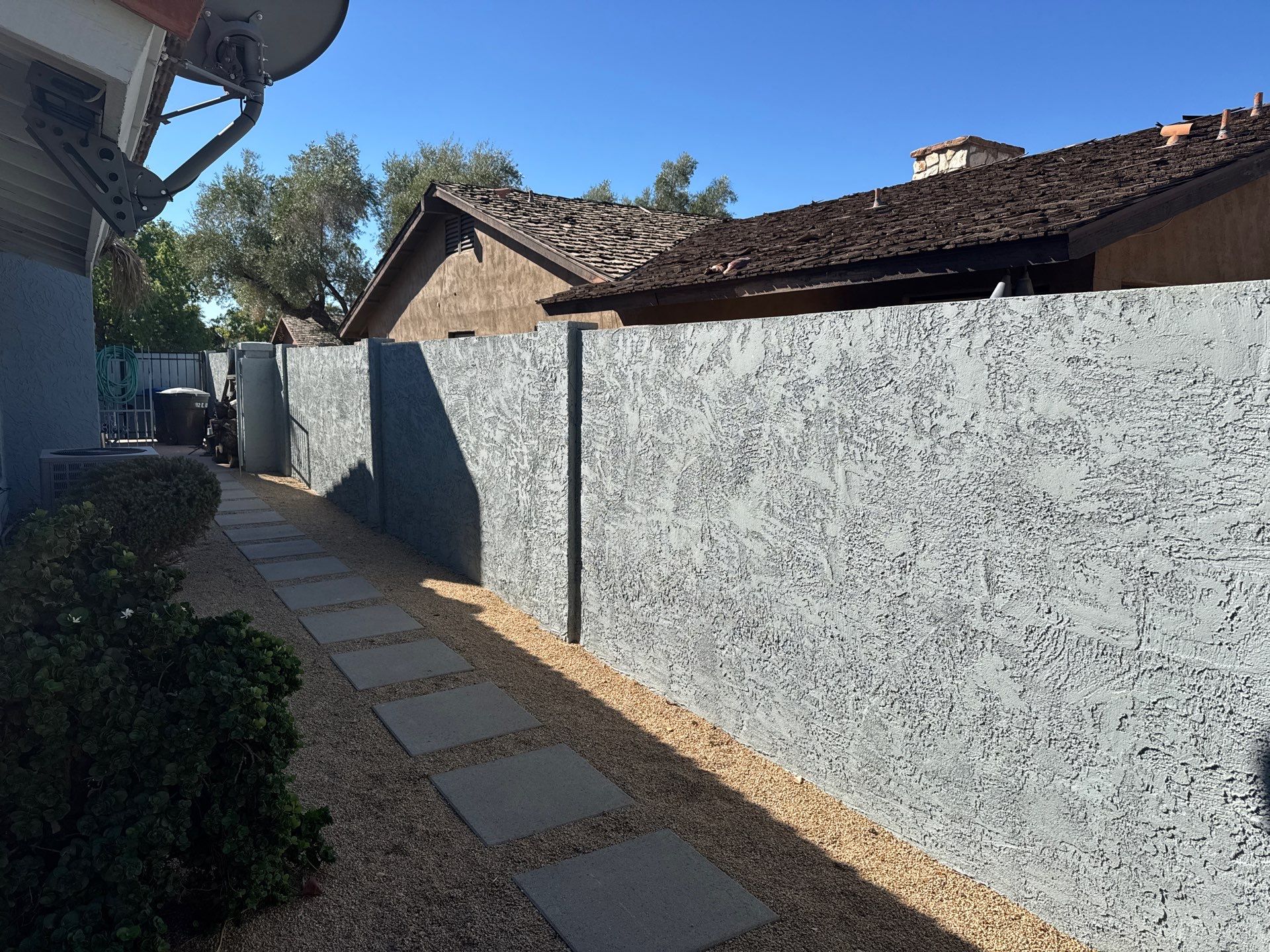
This one isn't top priority, but it would be simple, easy, and inexpensive to line the whole length of this wall. Hopseed or Arizona rosewood are the two I'd pick. Both are evergreen, both handle the morning sun this wall gets, and both fill in into a solid green screen with very little care.
- Hopseed: space about 5 feet apart. It grows faster and fills in sooner.
- Arizona rosewood: space about 6 to 8 feet apart. It's a bit slower but gets fuller and taller over time.
Plant each one about 1 foot off the wall. You can also alternate the two for a more natural look.

Hopseed
Fast, dense evergreen screen, 8 to 12 feet. Takes trimming well if you want it tighter.

Arizona Rosewood
Native evergreen, 10 to 15 feet, with small white flowers in spring. Full and dense with very little care.
House Wall, West Sun
Back yard, afternoon sun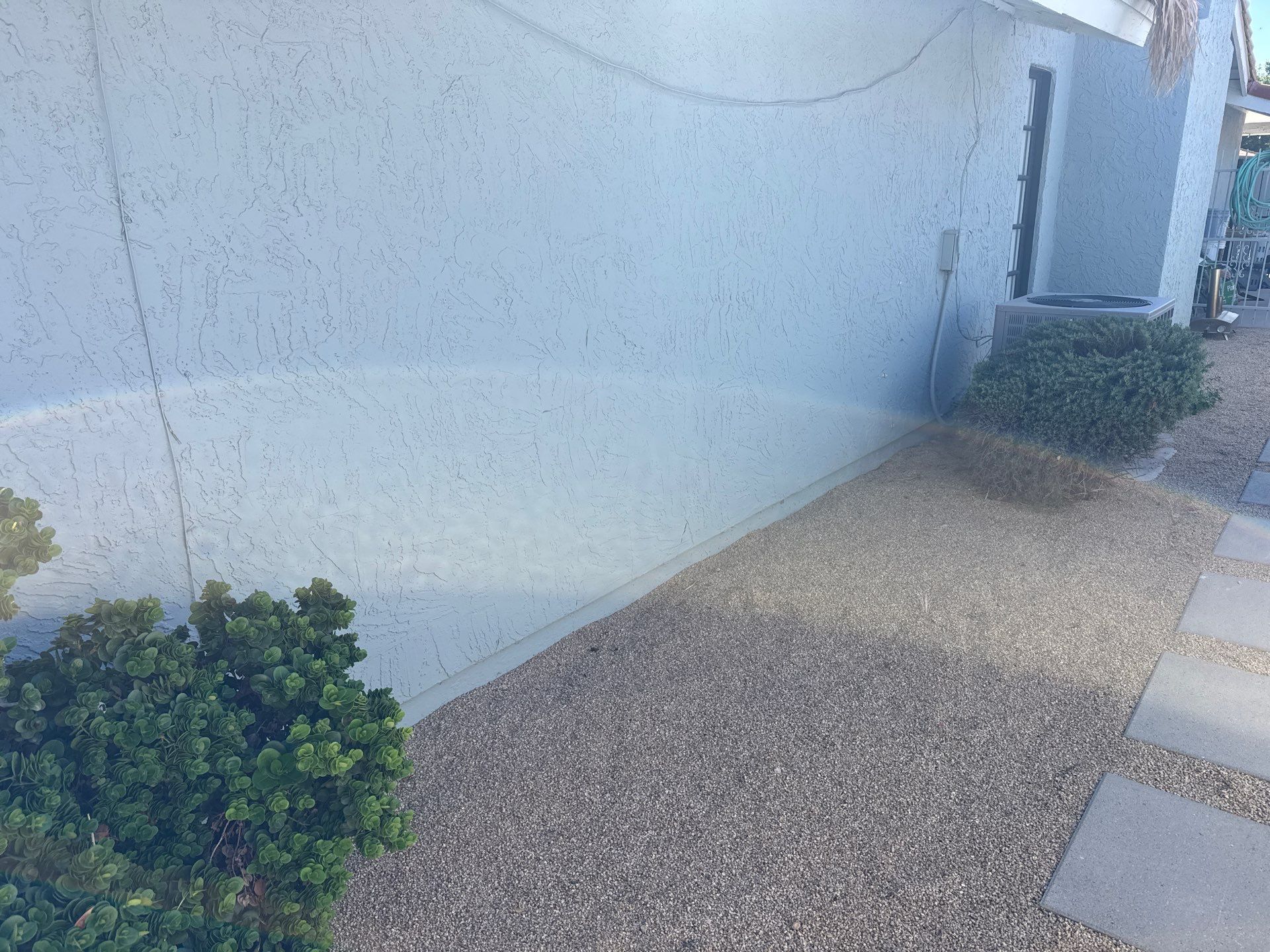
This wall along the house gets the western afternoon sun, so whatever goes here has to handle real heat. You want pollinators and a lush, green look, and the good news is there are plenty of desert adapted plants that give you both. Mixing a few of these along the wall will look full and natural.

Orange Jubilee
Big orange trumpet flowers spring through fall, 8 to 10 feet. A hummingbird magnet and very green.
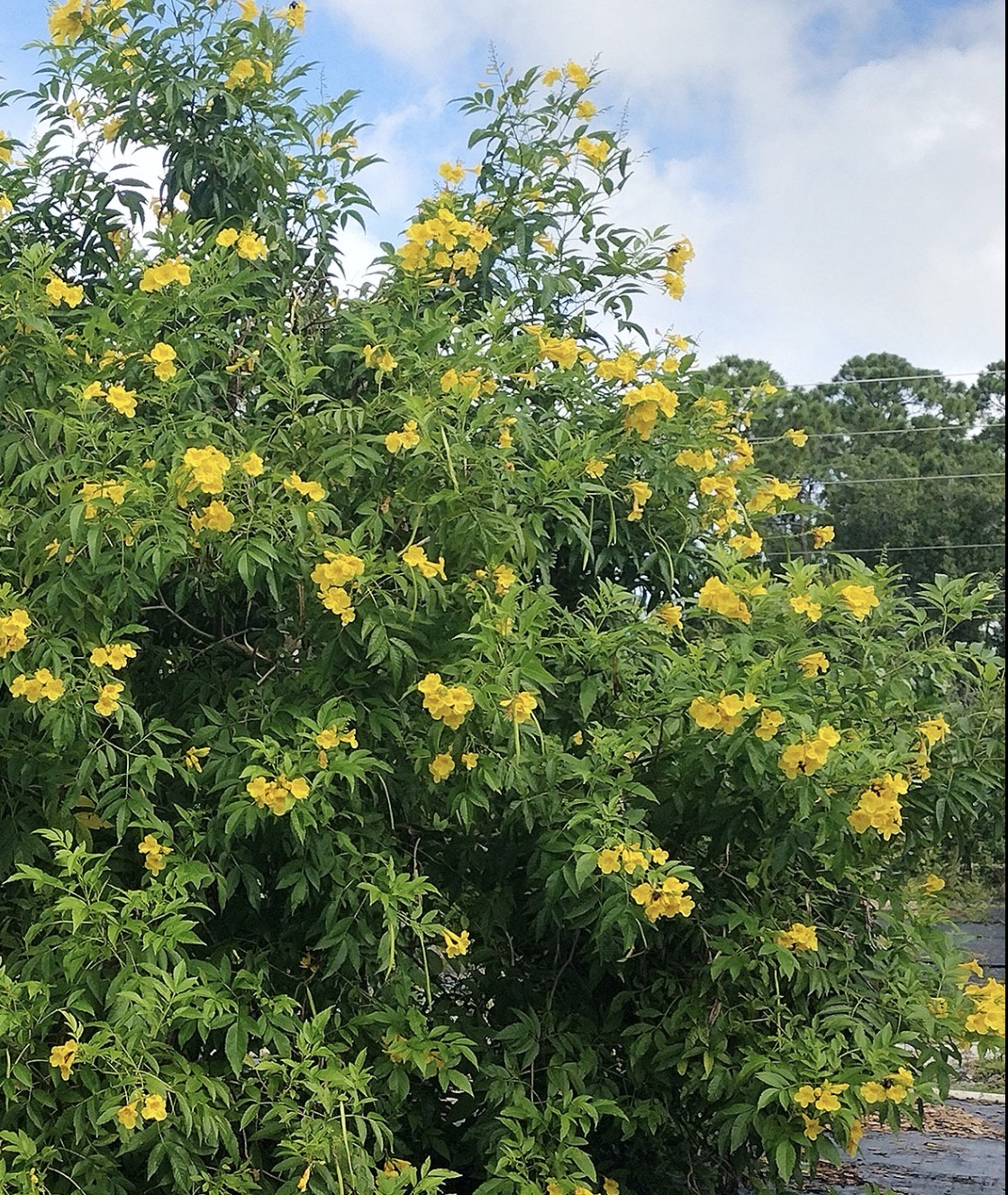
Yellow Bells
Bright yellow trumpet flowers spring through fall, 6 to 10 feet. Lush and leafy, and the bees love it.
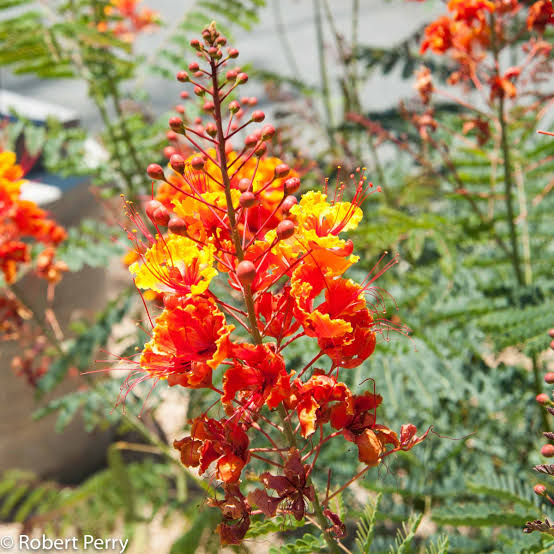
Red Bird of Paradise
Red and orange flowers all summer, 6 to 8 feet. Loves heat and attracts hummingbirds.
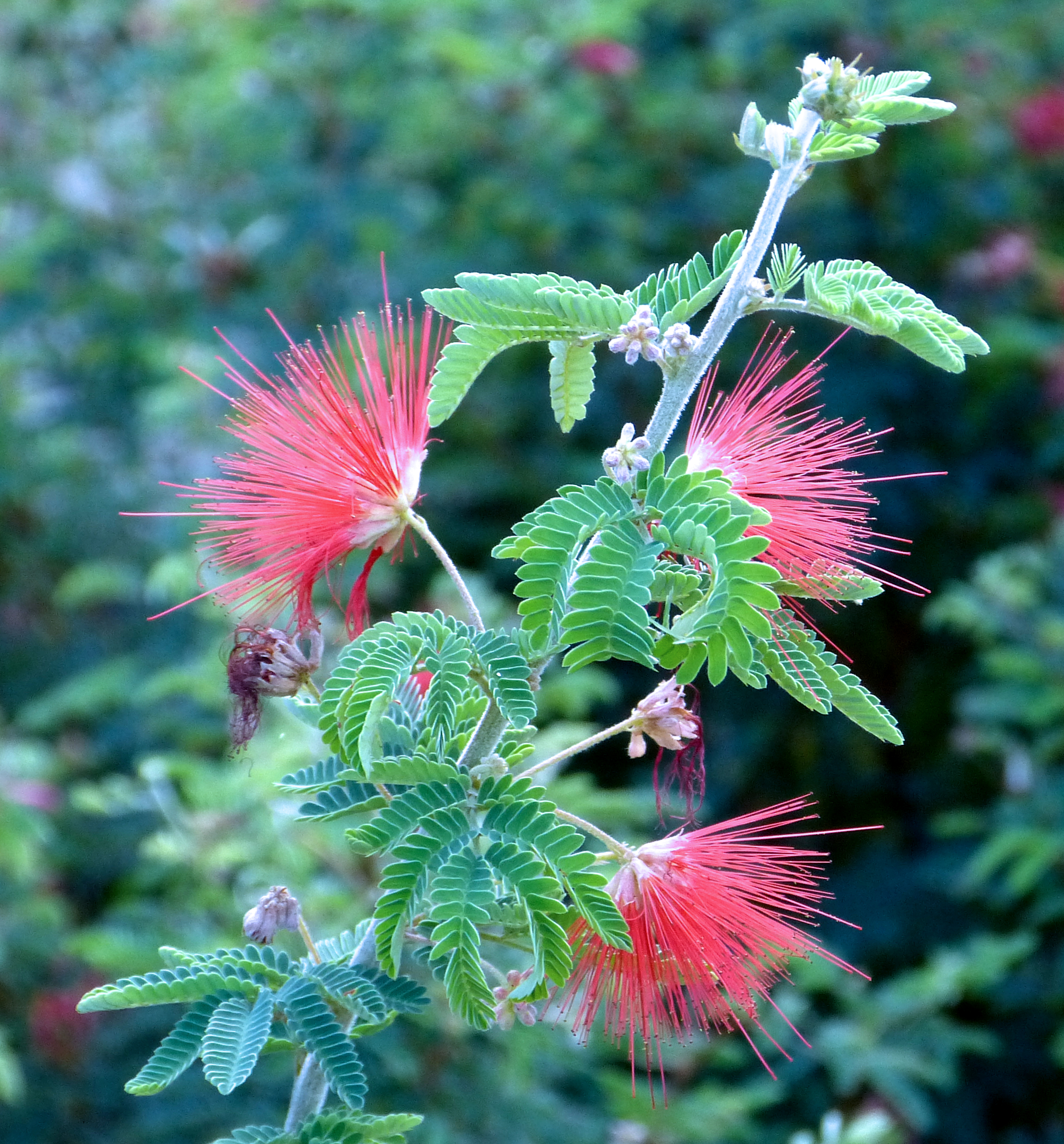
Baja Fairy Duster
Red powder-puff flowers most of the year, 3 to 4 feet. Good for a lower layer in front of taller shrubs.
Prickly Pear with Globe Mallow
A combination planting: prickly pear cactus for sculptural structure along the wall, with globe mallow filling in low in front as a ground cover. Bees love the yellow prickly pear blooms in spring and the apricot globe mallow flowers.
Fruit options for this wall
If you'd like fruit here too, these handle the western sun well and stay a size that fits against a house.
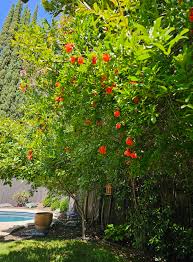
Pomegranate (Parfianka)
Gorgeous orange flowers in spring and fruit in fall, 10 to 12 feet. Parfianka holds up better here than Wonderful, which leaf-footed bugs hit hard.
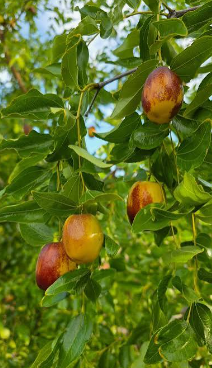
Jujube
Sweet, apple-like fruit in late summer, 15 to 20 feet. One of the toughest fruit trees for hot, sunny spots.
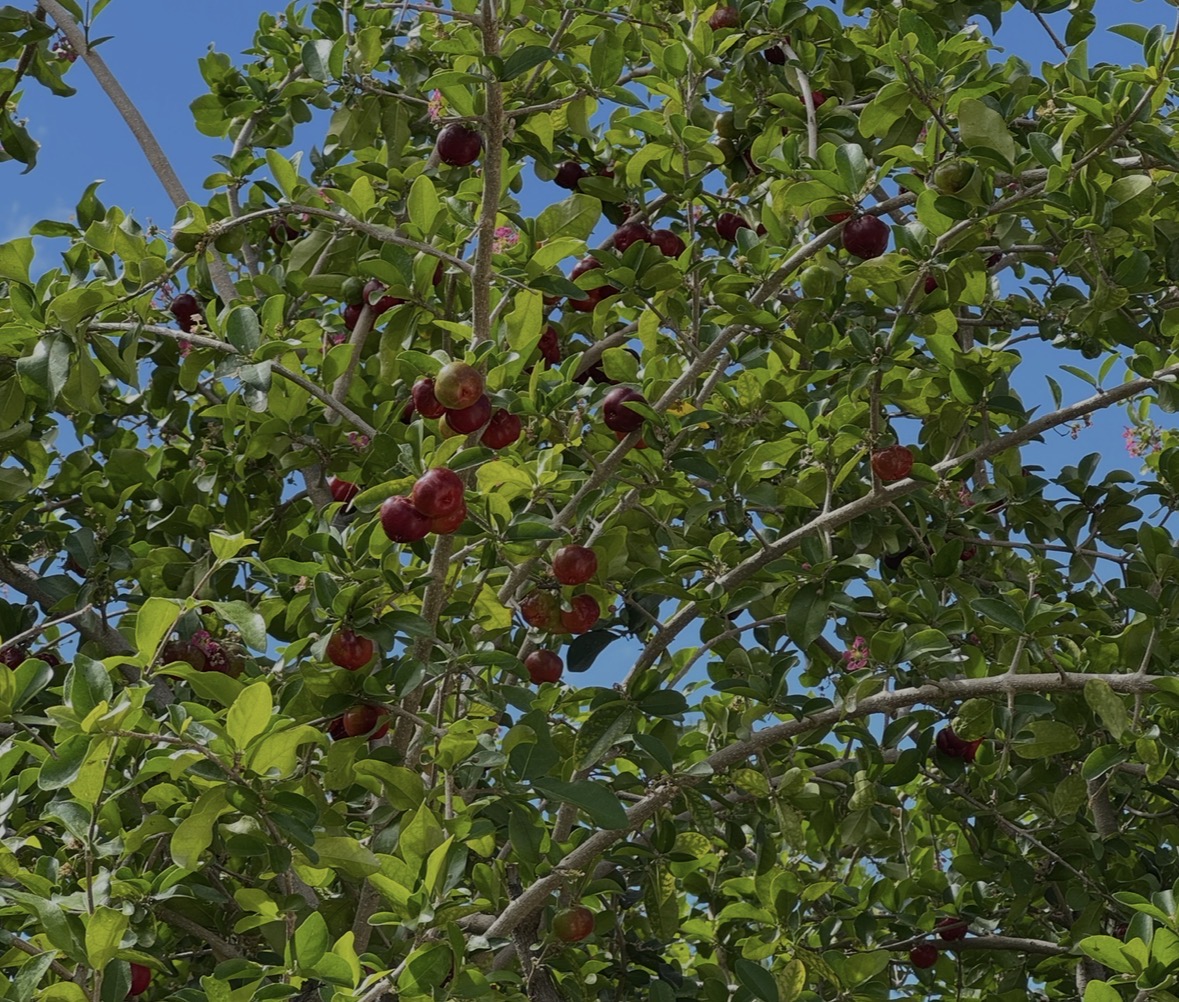
Barbados Cherry
Glossy evergreen shrub, 6 to 10 feet, with small pink flowers and bright red cherries packed with vitamin C several times a year.
Grapefruit Tree
Back yard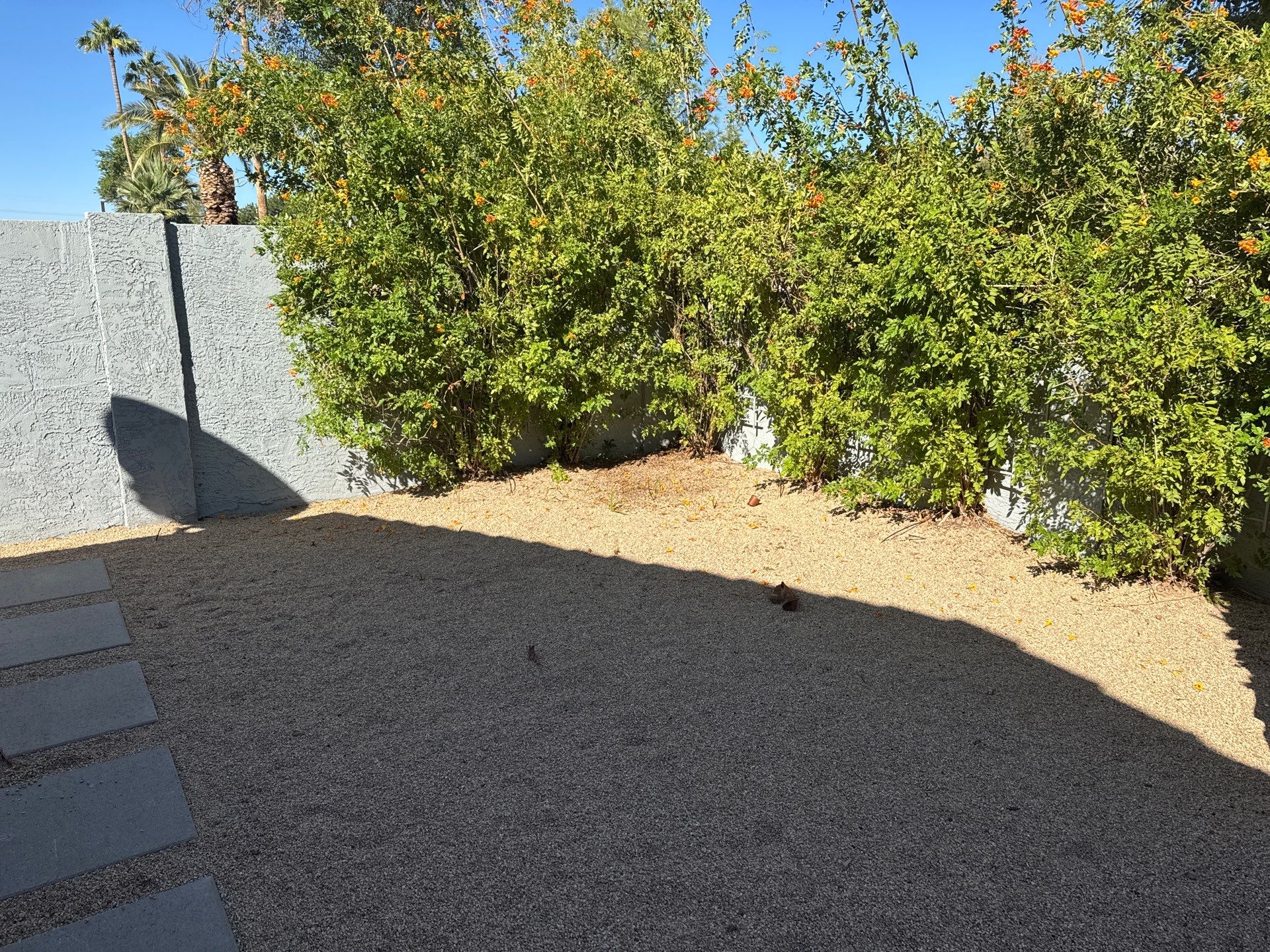
You love grapefruit, and there used to be one right around here, so this is a perfect spot to put one back. For citrus, I send everyone to Greenfield Citrus Nursery. They're the best place in Arizona for citrus, and their website lays out every variety, so you can compare flavor, size, and when the fruit ripens before you choose.
Planting it right
- A big water well: citrus needs a large water well, about as wide as the eventual canopy, roughly 6 feet across to start.
- Pull the gravel back: clear all the quarter minus gravel out of that whole water well area and use mulch inside it instead. Gravel bakes the roots and blocks the soil from ever building up. Mulch keeps it cool and feeds the soil as it breaks down.
- In the hole: backfill with the native soil and a little compost, lay compost on top of the soil, then mulch over that. Keep the mulch back about a foot from the trunk.
- Set it at the right height: the root flare, where the trunk widens into the roots, should sit right at the soil surface, never buried.
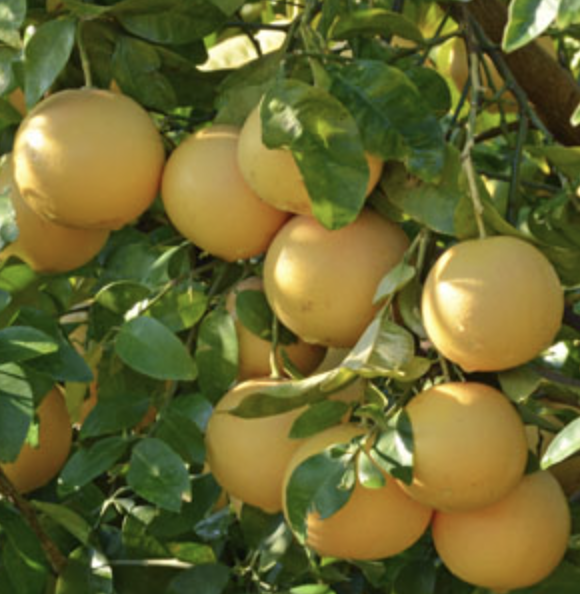
Grapefruit
Pick your variety at Greenfield. Big, juicy fruit that ripens through winter, and evergreen, fragrant blossoms in spring.
Want us to plant it?
We can plant a 16 inch B&B grapefruit from Greenfield, which is the equivalent of a 25 gallon tree, for $560 installed.
Another Tree Spot
Back yard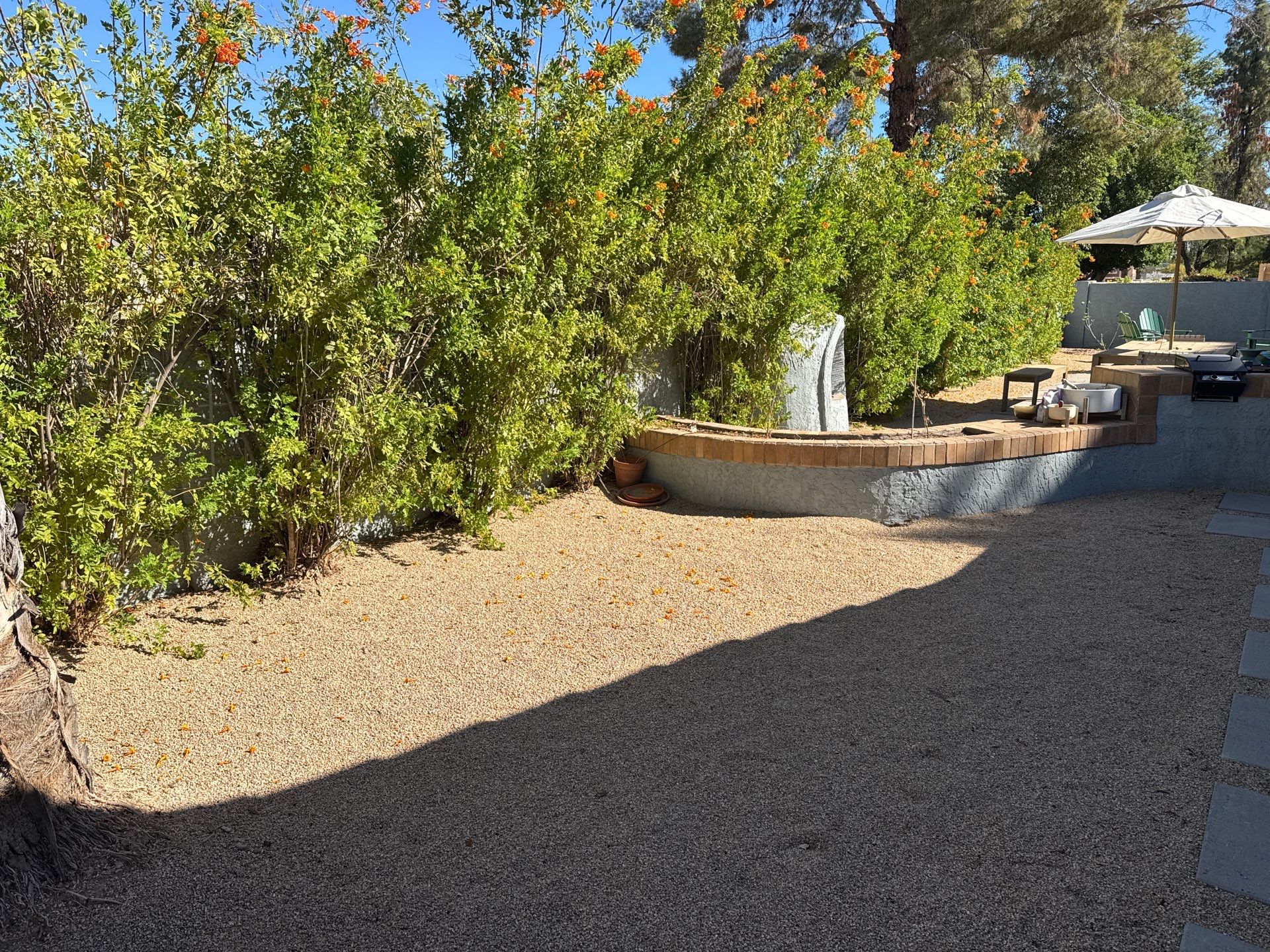
This is another great spot for a tree. You like fruiting trees, so peach and guava are the two I'd start with here.

Florida Prince Peach
Low chill, so it fruits reliably in our mild winters. Sweet peaches in May, 12 to 15 feet.

Guava
Fragrant, tropical fruit, evergreen, 10 to 15 feet. Needs some frost protection its first couple of winters.
Flowering, ornamental options
If you'd rather have a smaller tree that's all about the flowers, these are great choices and they all bring in pollinators.
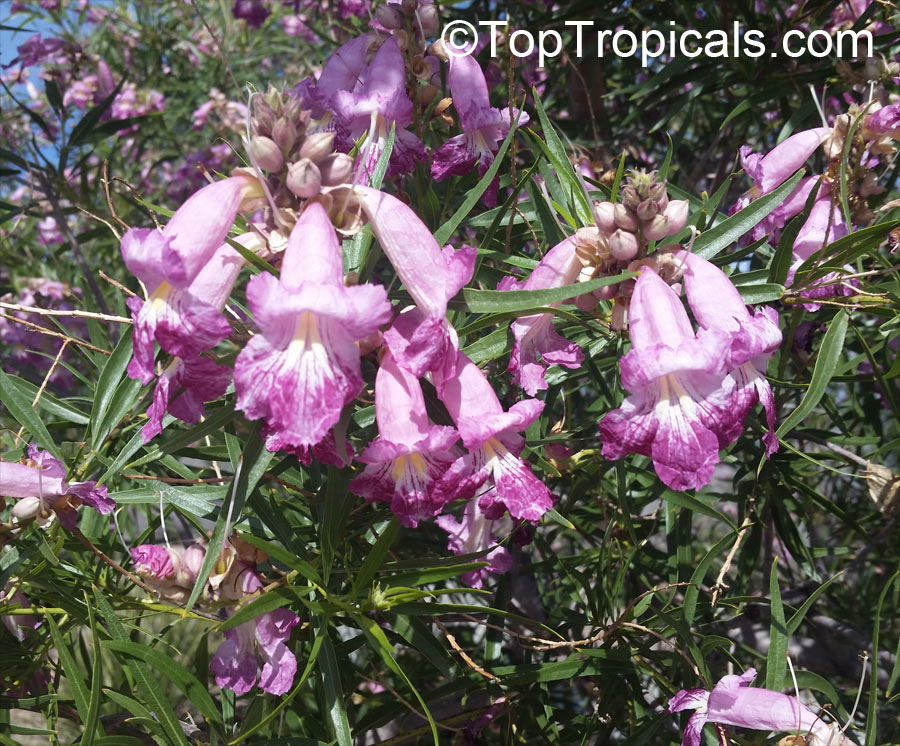
Desert Willow
Native, trumpet flowers all summer that hummingbirds love, 15 to 25 feet. Deciduous in winter.
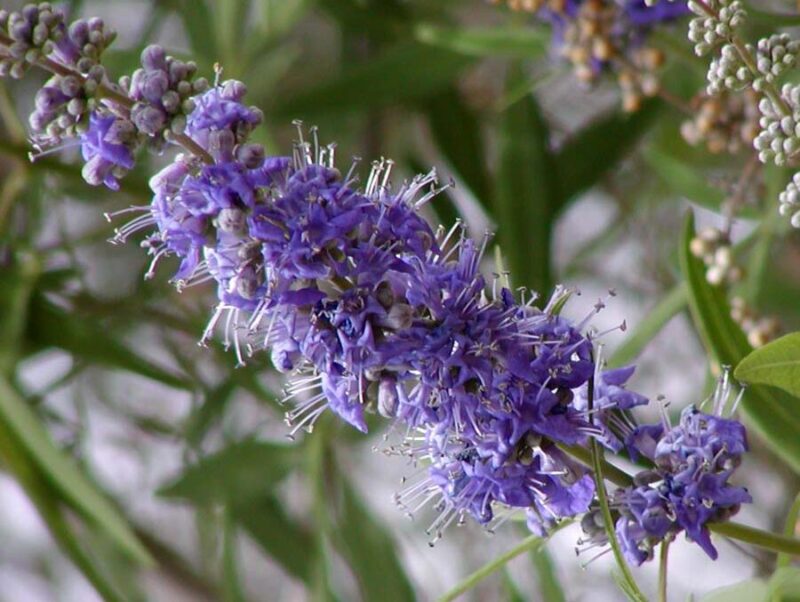
Chaste Tree (Vitex)
Purple flower spikes all summer, 15 to 20 feet. Bees love it. Deciduous in winter.

Hong Kong Orchid
Large orchid-like pink and purple flowers through winter and spring, 20 to 25 feet. Semi-evergreen.
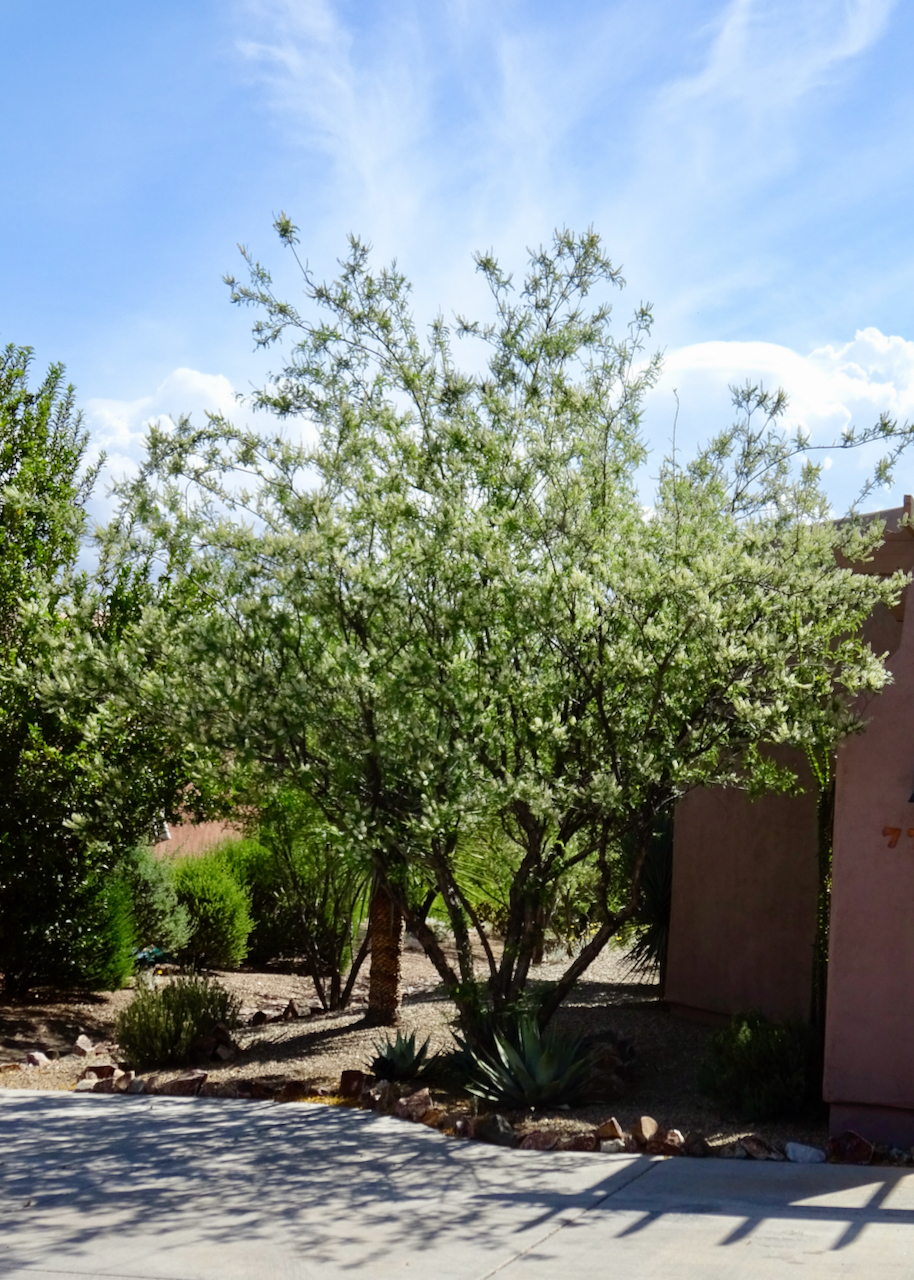
Kidneywood
Native to our area, fragrant white flower spikes, 10 to 15 feet. Butterflies and bees love it. Deciduous in winter.
Raised Garden Beds
Back yard, by the house and walkway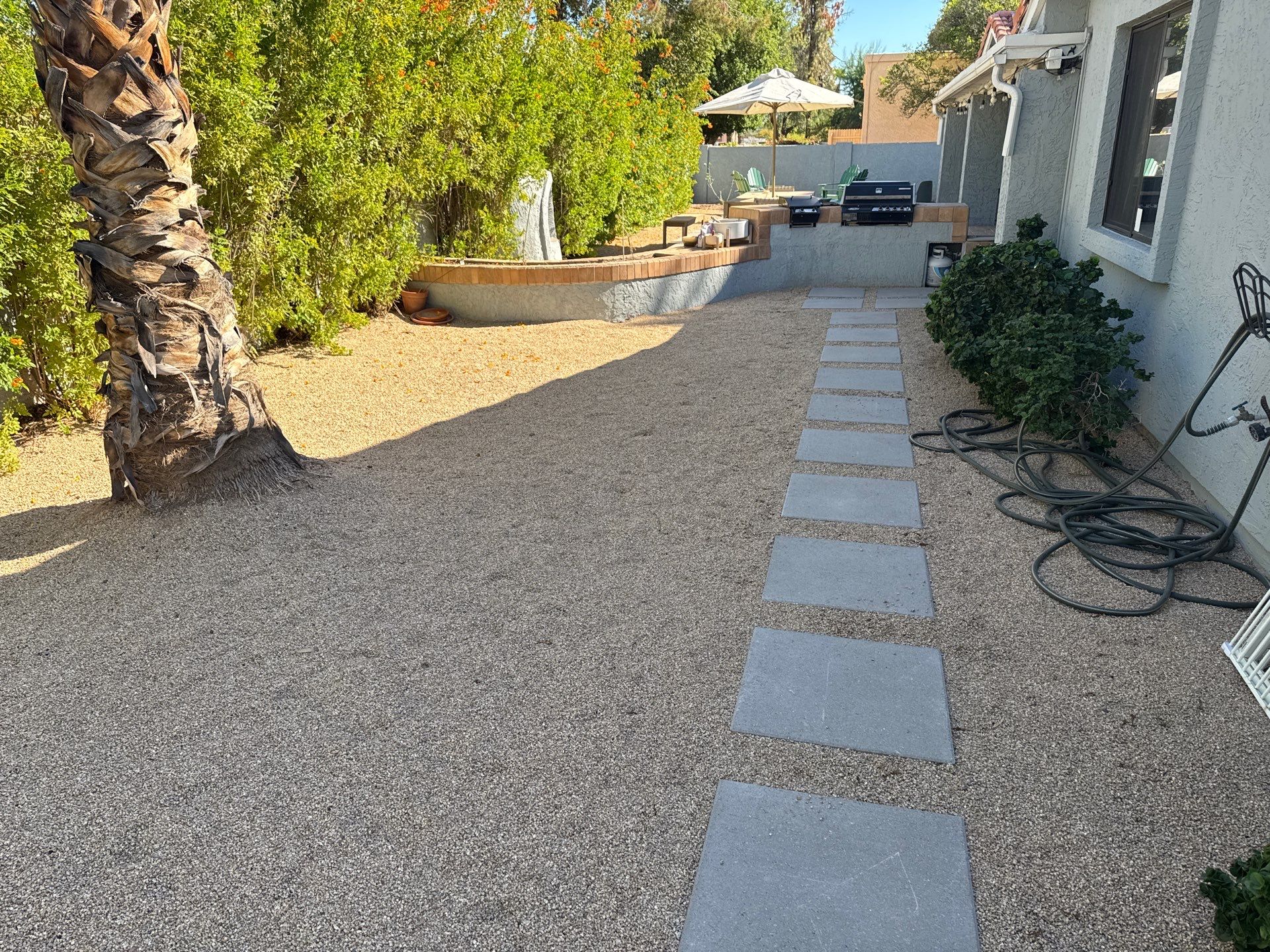
Closer to the house and the walkway is a great spot for raised garden beds. It's easy to get to, and you'll see them every time you walk out. You already use Vego beds, which are a great choice: sturdy, good looking, and they hold up well in our heat.
- Fill them right: use a quality raised bed mix, not bagged potting soil. Arizona Worm Farm has a great one, full of life.
- Top off every season: raised beds settle and the soil gets used up. Add 1 to 2 inches of compost every time you replant.
- Water on drip: a drip or soaker line on its own valve keeps the beds evenly moist, which matters a lot in our heat.
- Plant in the right season: fall is one of the best times to grow vegetables here. My Maricopa County planting guide lays out what to plant and when, month by month.
Pollinator Planter
Raised planter, full sun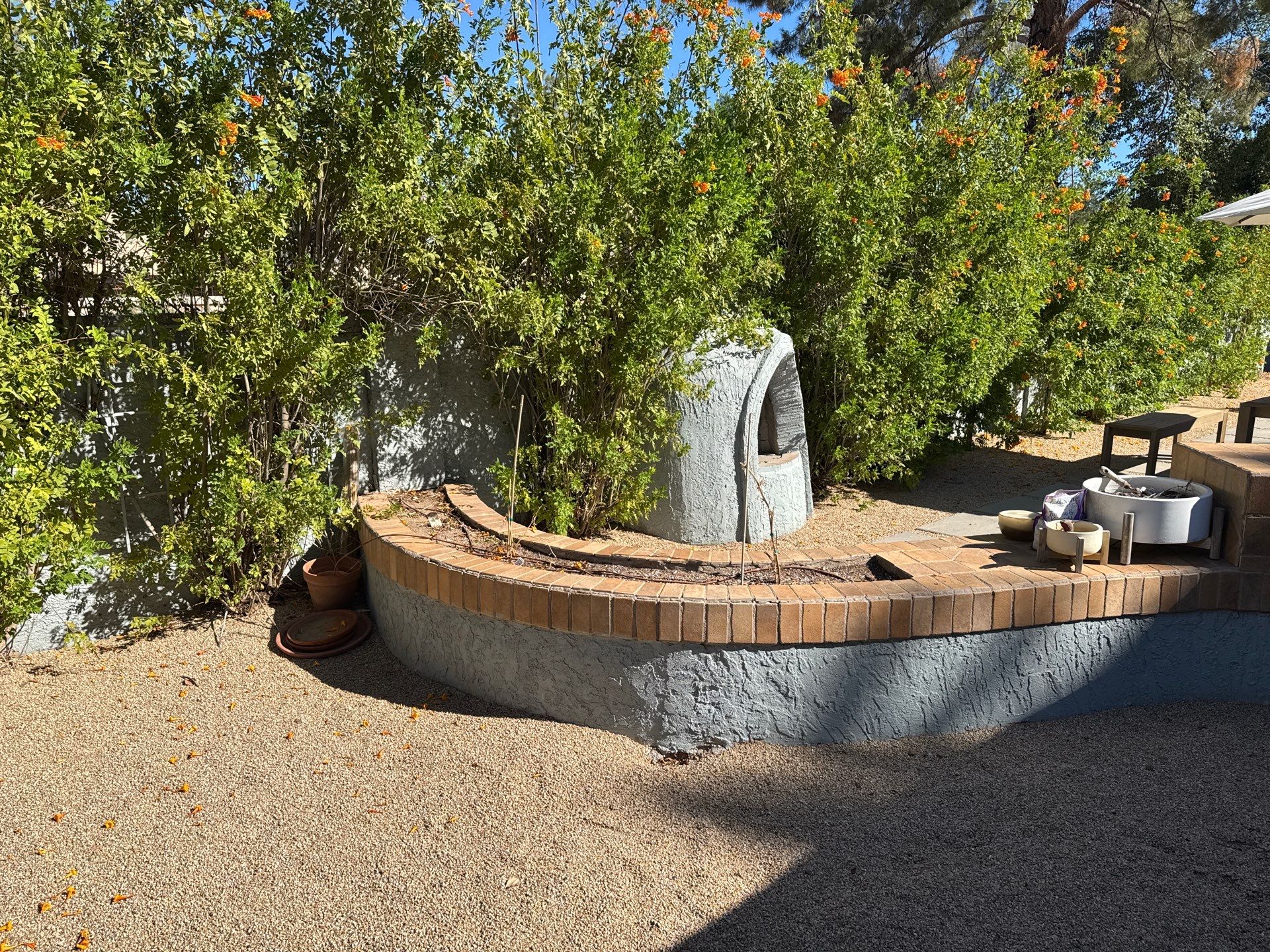
There's not a ton of space in this raised planter, so growing food here would be tough. It's a great spot for a native pollinator garden instead: plants that take the heat, get by on limited water, and bring in bees, butterflies, and hummingbirds all year. These are all perennials that come back year after year and fill in, so this planter becomes their permanent home. You can't fit all of these, so pick your favorites.

Desert Milkweed
Native, upright gray-green stems with pale yellow flowers, 3 to 4 feet. Another monarch and queen butterfly host plant.
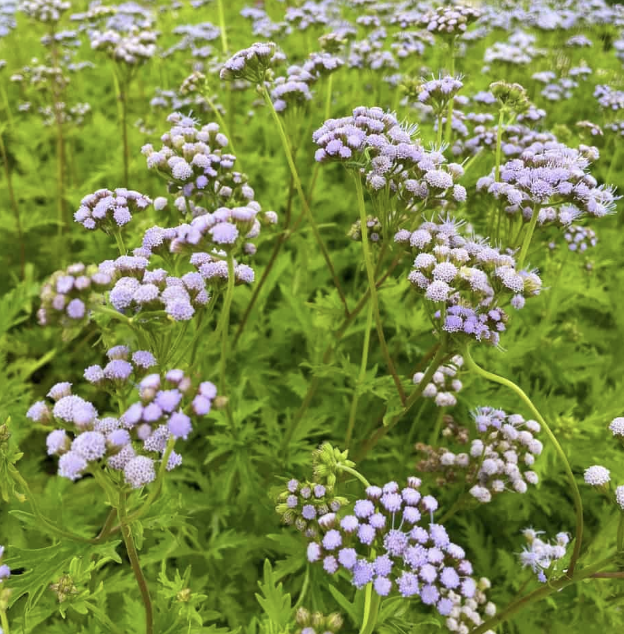
Greg's Mistflower
Fuzzy lavender-blue flowers that queen butterflies swarm in fall, 2 to 3 feet.
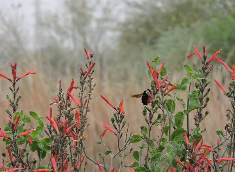
Chuparosa
Native, red tubular flowers winter through spring, 3 to 4 feet. Hummingbirds love it.
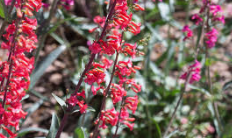
Penstemon
Native, tall red or pink flower spikes in spring, 2 to 3 feet. Another hummingbird favorite.

Globe Mallow
Native, apricot orange flowers through spring, 3 feet. Native bees love it.
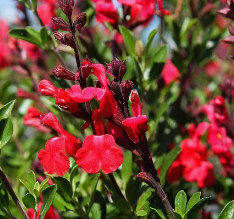
Autumn Sage
Red, pink, or purple flowers spring and fall, 2 to 3 feet. Compact and tough.
North-Facing House Wall
Back yard, mostly shade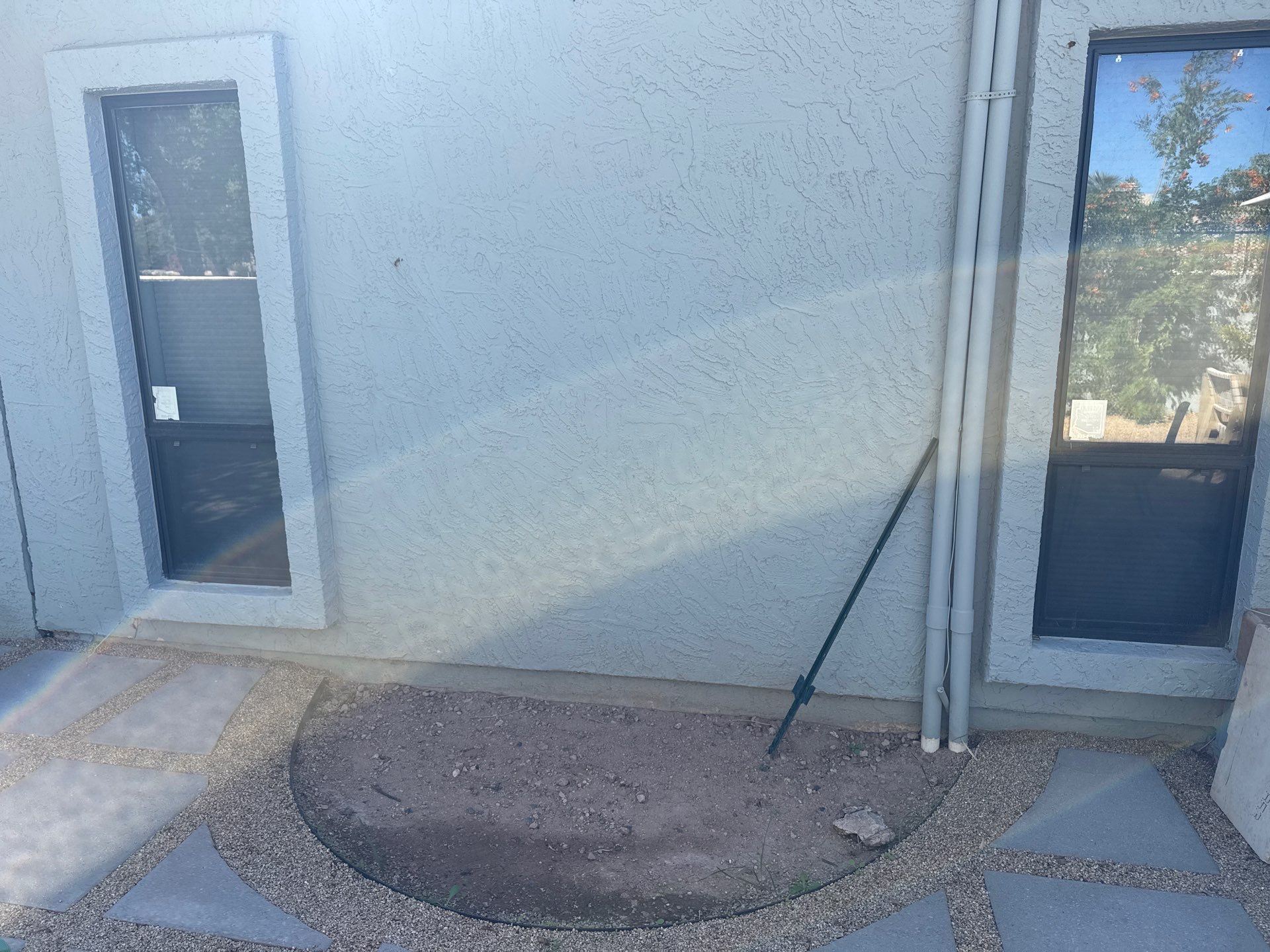
This wall faces north, so it gets quite a bit of shade. You'd like something to grow up the wall here. Skyflower is the first one I thought of. Any of these handle the shade on this side of the house.
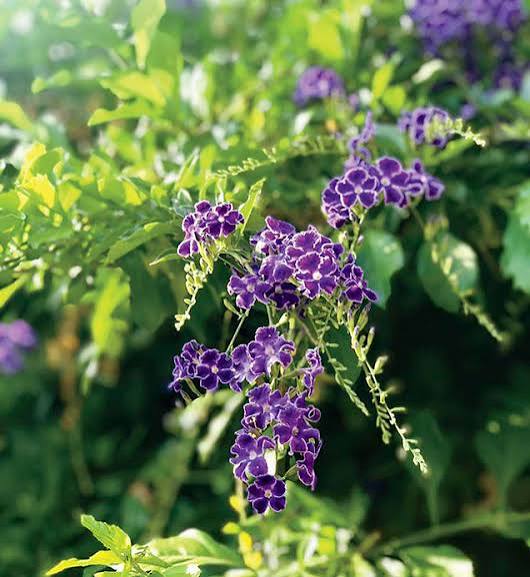
Skyflower (Duranta)
Clusters of purple-blue flowers and golden berries, 8 to 15 feet. A sprawling shrub you can train up the wall with a few ties or wires.

Creeping Fig
Self-clinging, tiny green leaves that cover the wall flat. Evergreen and happy in shade. Trim yearly to keep it in check.
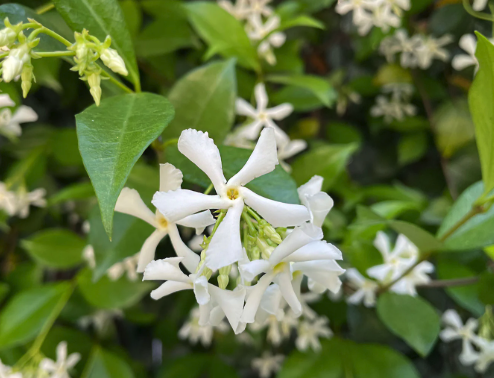
Star Jasmine
Fragrant white flowers in spring, evergreen, and does great in part shade. Give it a trellis or wires to climb.

Bower Vine
Glossy leaves and pink or white trumpet flowers, comfortable in part shade. Needs a trellis or wires.
Ground cover underneath
For the ground in front of the wall, something that takes shade and still looks good:

Purple Heart
Deep purple trailing foliage with small pink flowers. Spreads fast and is happy in shade.
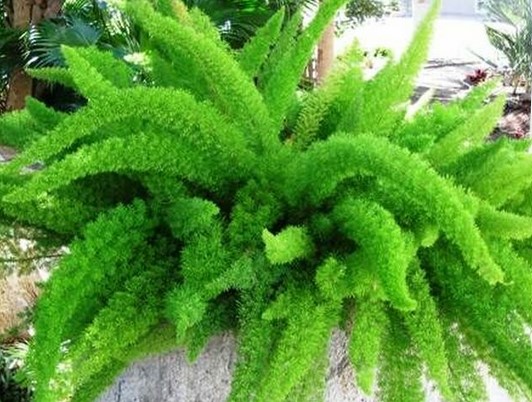
Foxtail Fern
Fluffy, upright plumes, 2 feet. One of the best plants for shade here.
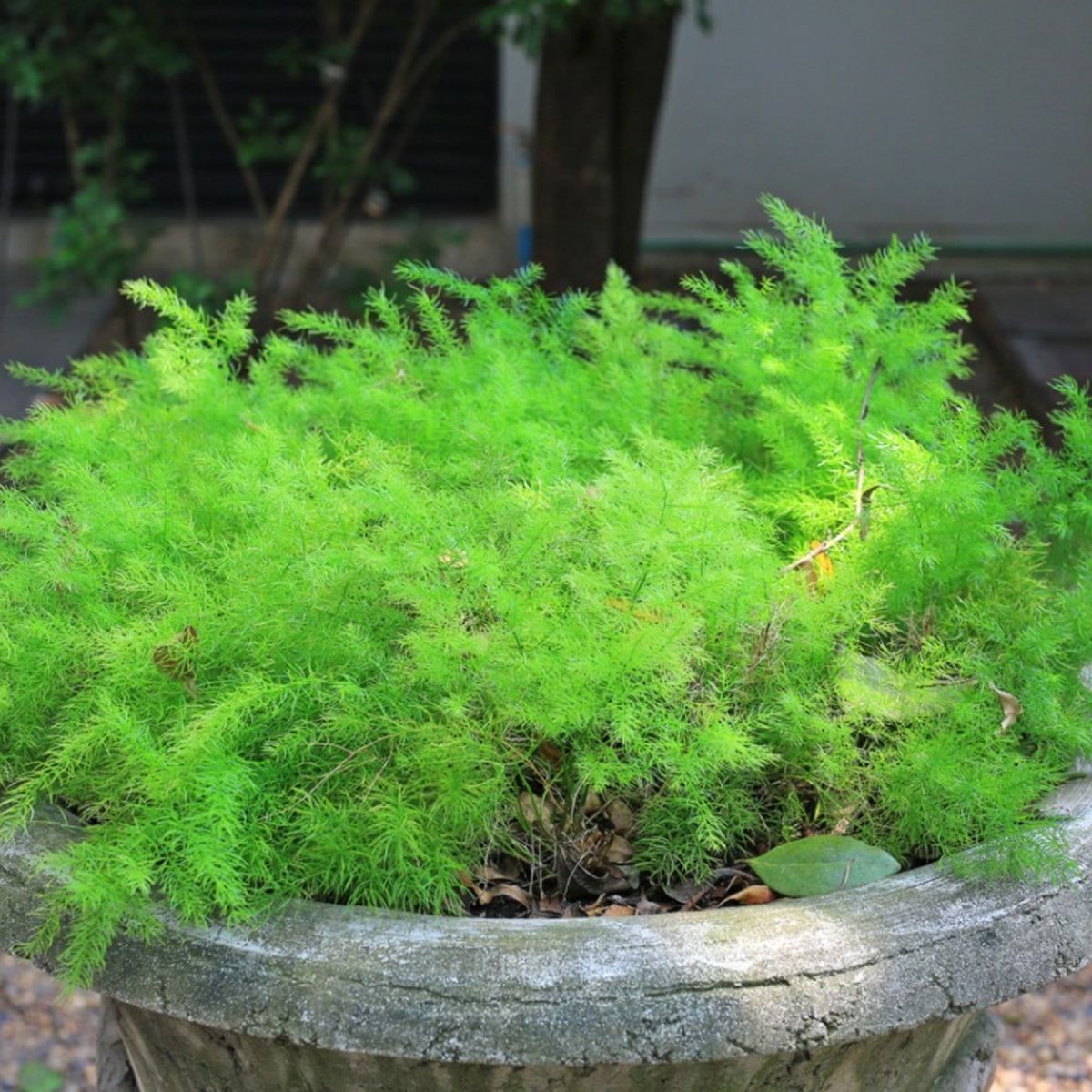
Asparagus Fern
Soft, airy green mounds, 2 to 3 feet. Thrives in shade and fills space quickly.
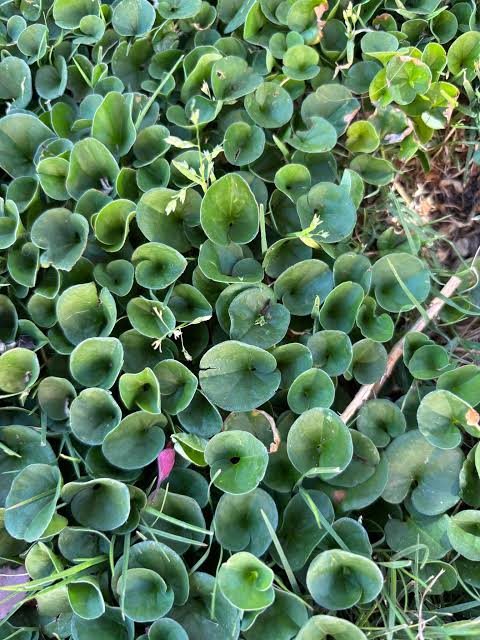
Dichondra
Low carpet of small round green leaves. Soft and lush in the shade.
The Struggling Fig Tree
Back yard, west facing wall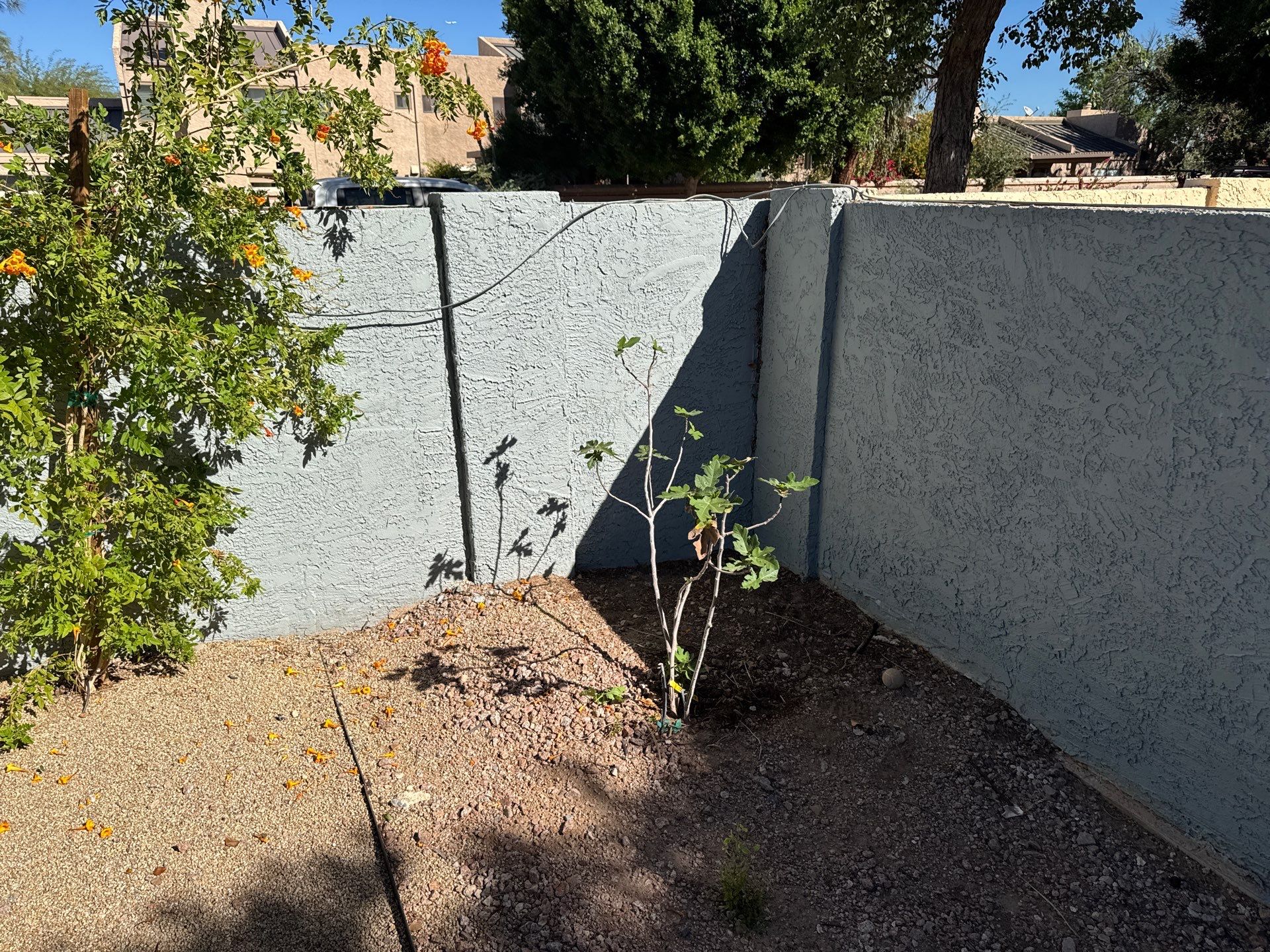
This fig is struggling, but I think it can be saved. A few things are working against it, and we need to fix all of them.
1. It's planted too deep
The root flare, where the trunk widens out into the main roots, should sit right at the surface. On this fig it's buried. When it's buried, soil and moisture sit against bark that was never meant to be underground, which invites rot and slowly stresses the tree. Pull the soil back by hand until you can clearly see the trunk flare out. A strong stream of water from a hose works great to blast the dirt away without damaging the bark.
This video shows why an exposed root flare matters, with real examples:
Video not loading? Watch it on YouTube.
2. It's surrounded by gravel
Pull the gravel back from around the fig and replace it with mulch (more on that in Section 09). Gravel holds heat against the roots, and figs like cool, rich soil.
3. It isn't getting enough water
The drip isn't doing the job. Figs need a lot of water spread across the whole root zone, and a couple of drip emitters can't deliver that. Bubblers would be much better here. They flood the water well and soak the whole root zone at once. We don't do irrigation, so Garrett is who I recommend for that swap: 480-678-9121.
4. It isn't being fed
Figs are heavy feeders, and this one isn't getting anything. Spread a generous layer of compost around it out to the edge of the branches, add worm castings every quarter, and feed it monthly with a good organic fertilizer. The Soil and Feeding section below has everything you need.

Fig
Sweet fruit in early summer and again in fall once it's healthy. Big, tropical-looking leaves and fast growth when it's fed and watered right.
Want us to handle it?
We can do the root flare excavation on the fig for $200, and our monthly fertilizing program (below) keeps it fed going forward. Garrett handles the bubbler conversion.
Cooling Down the Fig Tree Area
West facing wall, afternoon sun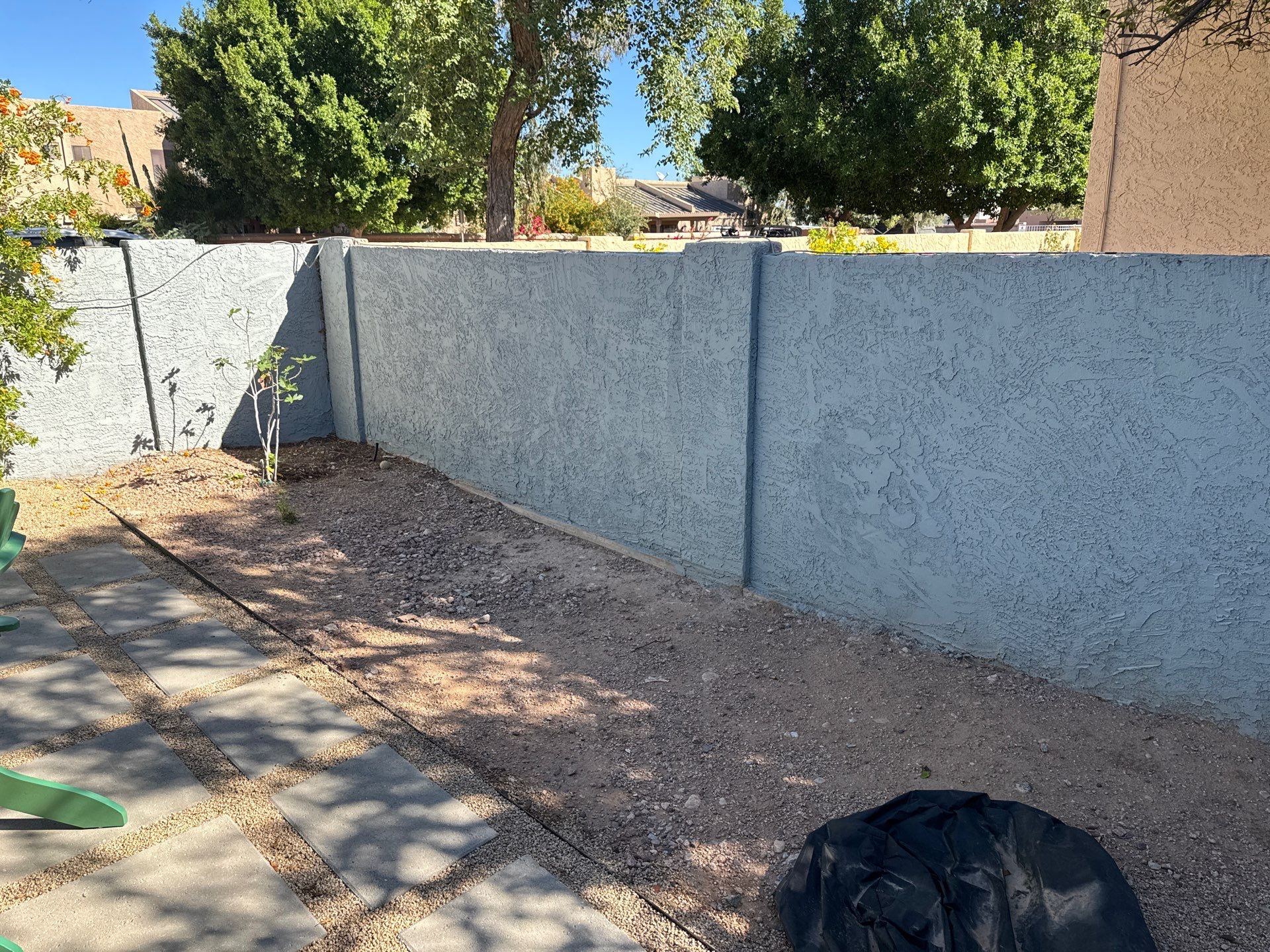
This is the same area where the fig tree is. It's up against a west facing wall, so it gets hit hard by the afternoon sun. You'd like to plant a few more trees here, which we'll get to in the next two sections. Before anything else goes in, this whole area needs to be cooled down.
- Get rid of all the rock. Rock soaks up heat all day and radiates it back onto the plants and the wall.
- Add compost as a top layer. Lay it right on top of the soil, an inch or two deep. No need to work it in. The soil life will pull it down for you.
- Mulch over the compost. 3 to 4 inches of mulch on top keeps the soil cool, holds moisture, and gives the fruit trees going in here a much better start.
For compost and mulch, I send everyone to Arizona Worm Farm. Measure the area, and their calculator will tell you how many cubic yards you need. If you'd rather have us do it, we deliver and spread mulch for $150 per cubic yard.
Fruit Tree South of the Fig
Back yard, afternoon sun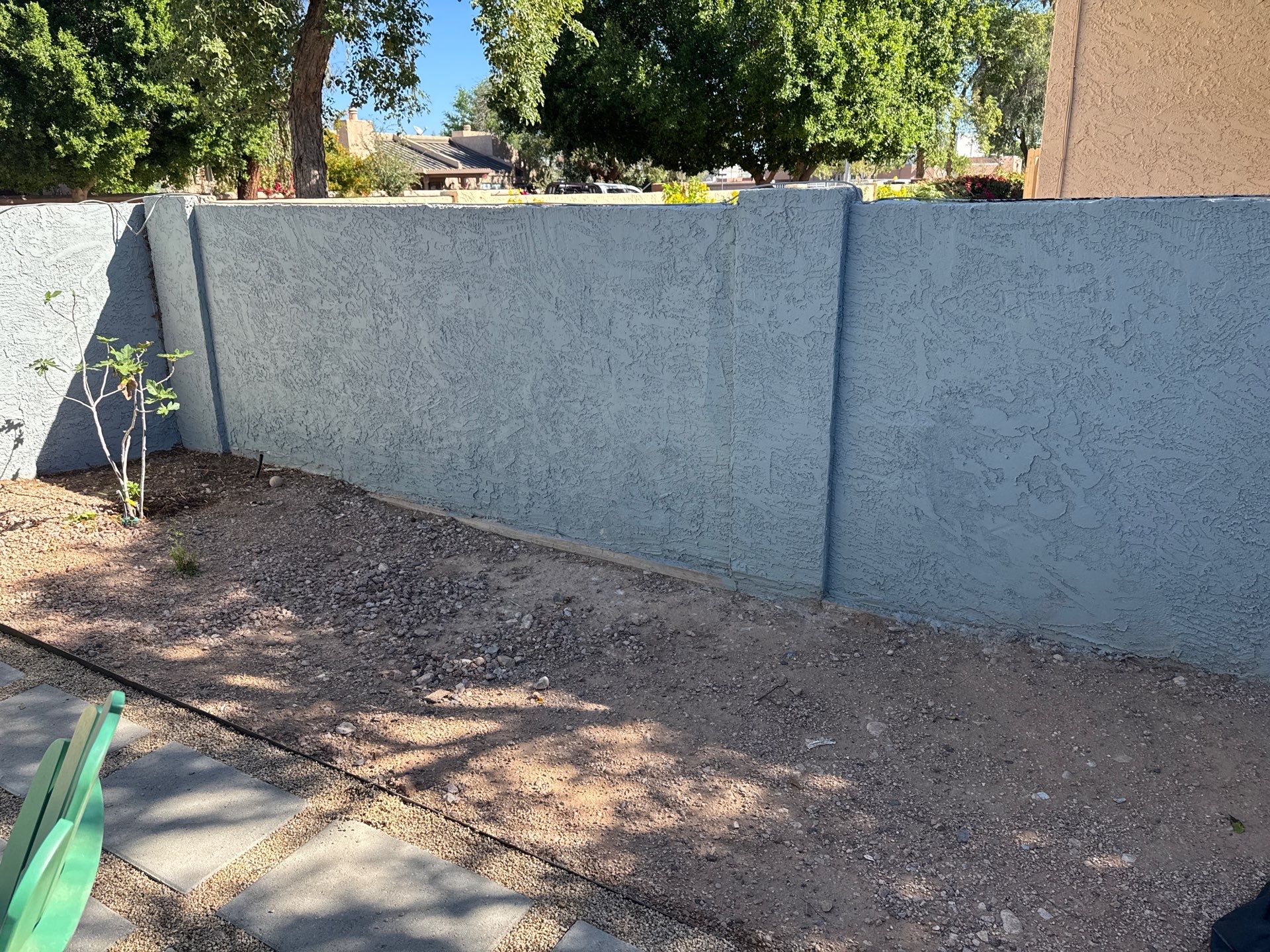
Right in the middle of this section, south of the fig, is a spot for another fruit tree. It has to handle the afternoon sun, so here are a few that do. Peach and guava work here just like in Section 04, and these others are great options too. Space this tree at least 8 feet from the fig so both have room.
Florida Prince Peach
Low chill, fruits reliably in our mild winters. Sweet peaches in May, 12 to 15 feet.
Guava
Fragrant, tropical fruit, evergreen, 10 to 15 feet. Frost protect it its first couple of winters.
Pomegranate (Parfianka)
Orange spring flowers and fruit in fall, 10 to 12 feet. Loves the heat.
Jujube
Sweet, apple-like fruit in late summer, 15 to 20 feet. One of the toughest fruit trees in full sun.
Barbados Cherry
Glossy evergreen shrub, 6 to 10 feet, with bright red cherries several times a year. Smaller than the others if space gets tight.
Mango Tree
South end of the mulched area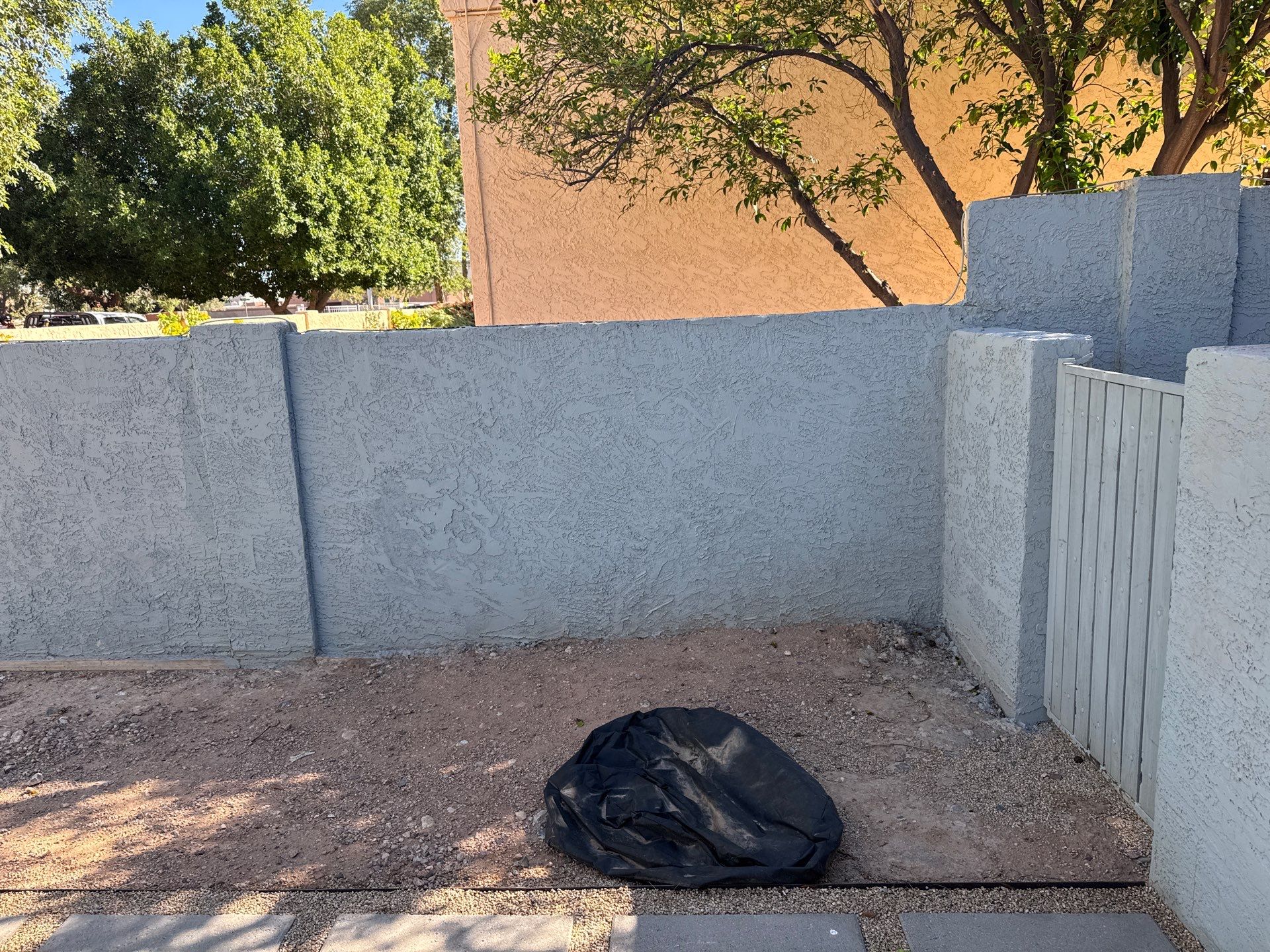
Further south, at the end of the section where the mulch is going down, is a great spot for a mango. It's a little more protected than the rest of the area. It's closer to the wall and the house, so it picks up warmth in the winter, and that matters a lot for a mango here.
- Get a seedling-grown mango, not grafted. They're more vigorous and handle our conditions better. Greenlife Nursery is where I'd get it.
- Timing: fall planting is fine as long as you can protect it from frost through its first winter. Cover it with frost cloth on cold nights. Otherwise, wait until early spring.
- Be patient: tropicals take longer to establish than desert plants. A slow first year is normal.

Mango
Big, glossy leaves, tropical look, and fruit in summer once established. Needs warmth, rich soil, and frost protection while young.
Front Yard: Replacing the Grass
Front yard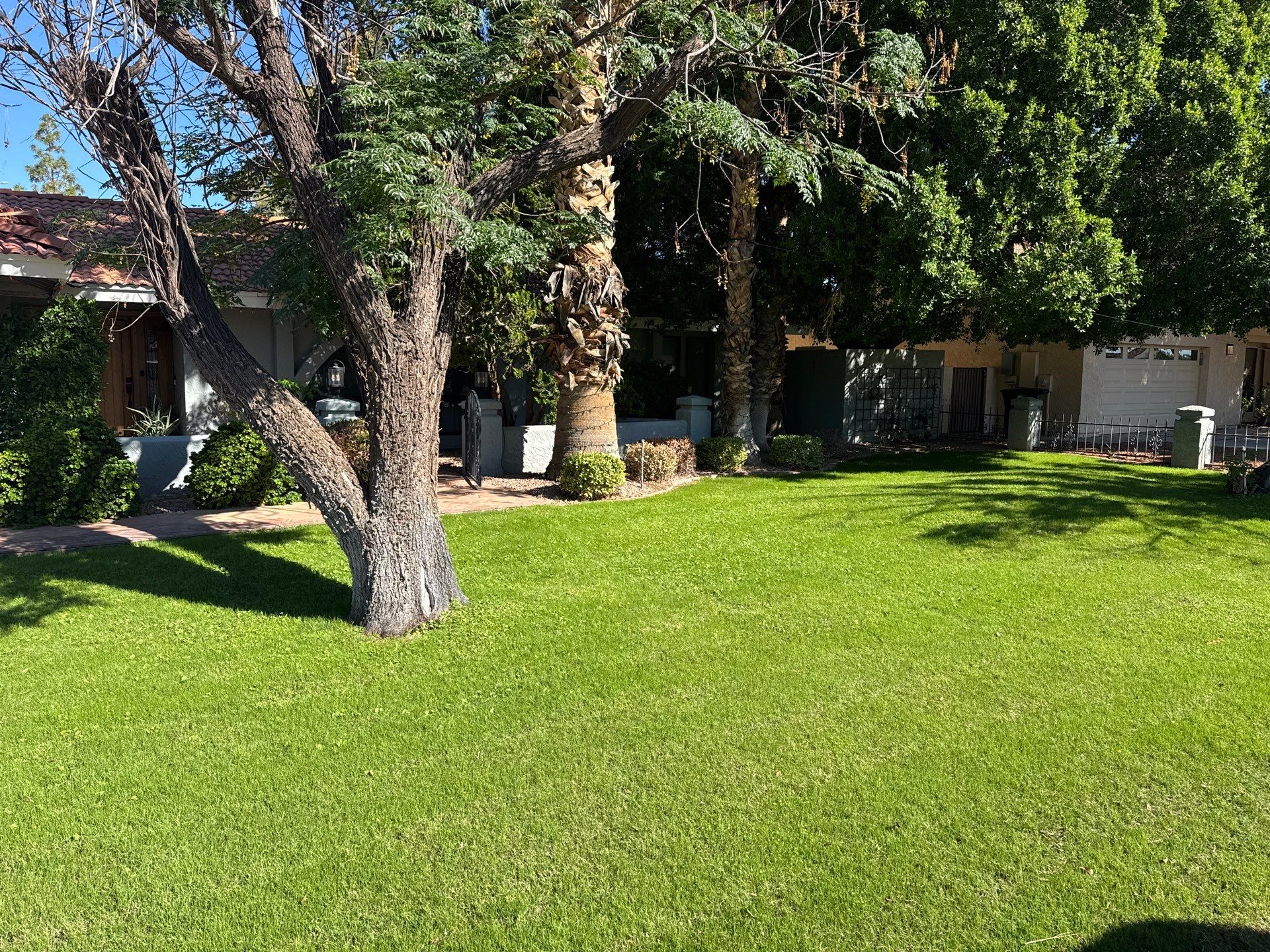
You don't want the grass anymore, and you'd love a busy, full, desert adapted landscape here instead. That's a great call. Here's how to get rid of the grass, and then a long list of plants that can take over the whole space.
How to get rid of the grass
- Stop watering it and mow it as low as it'll go.
- Smother it. Lay plain cardboard over the whole area (tape and labels removed), overlapping the edges by 6 inches or more so nothing pokes through. Soak the cardboard.
- Bury it in mulch. Put 4 to 6 inches of mulch on top of the cardboard. Over the next few months the grass dies underneath, and the cardboard and mulch break down into soil. No chemicals needed.
- Plant through it. When you're ready to plant, cut an X in the cardboard, dig your hole, plant, and tuck the mulch back around.
- Watch for runners. Bermuda is stubborn. Pull any shoots that sneak up through the edges as soon as you see them, and they'll give up.
Next summer, solarizing (covering the area with clear plastic during the hottest months) is another option for any stubborn patches. For the trees already in the front yard, keep the cardboard and mulch back about a foot from each trunk.
What to plant
The goal is for plants to completely take over where the grass was, so think in layers: ground covers that spread, low flowering shrubs, a few grasses and accents for texture, and larger shrubs to fill in. Plant them sporadically instead of in rows. It looks fuller and more natural. You can't fit all of these, so pick your favorites.
Ground covers that spread
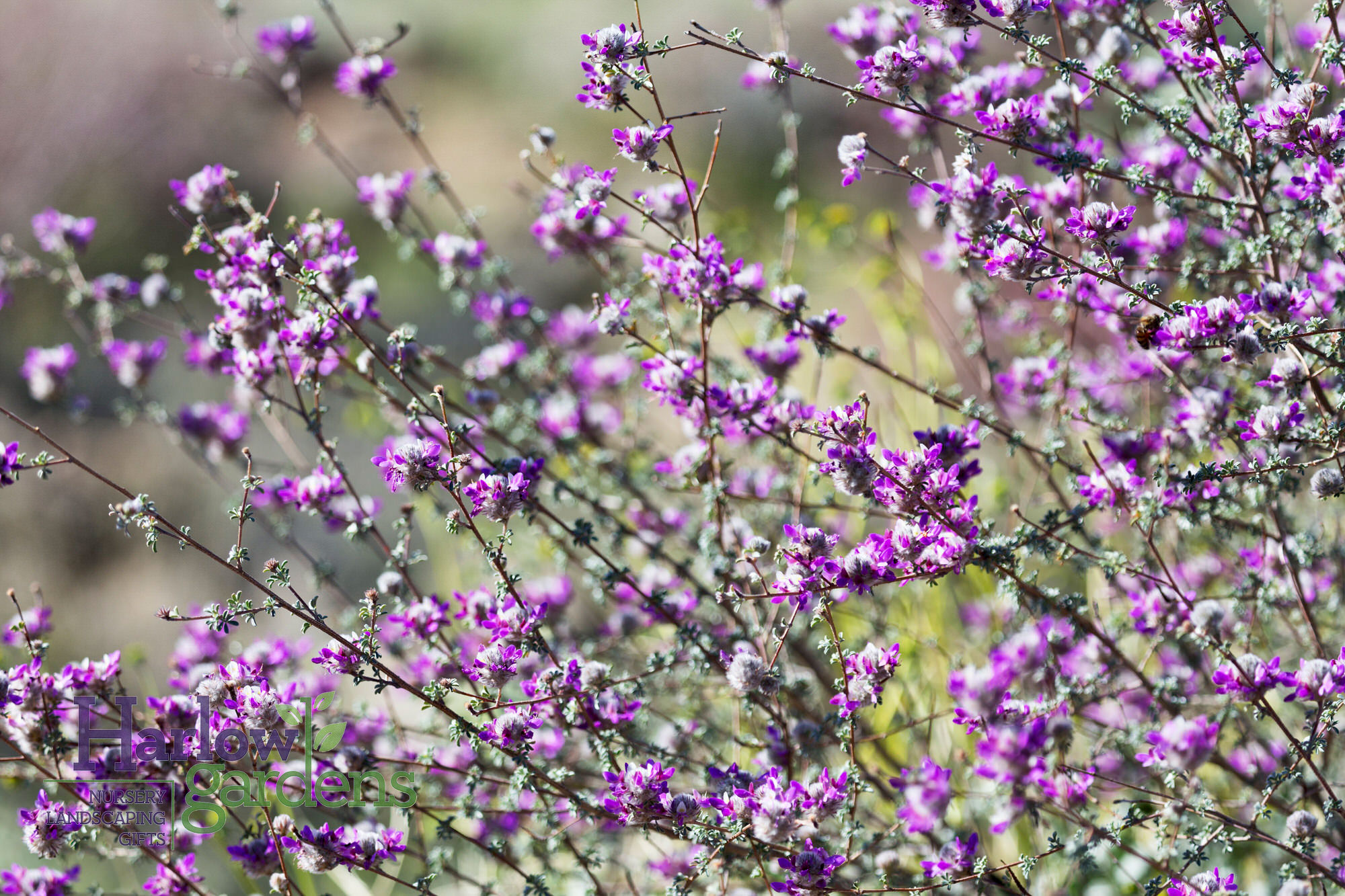
Trailing Indigo Bush
Native, silvery spreading mat with purple flowers, 1 foot tall, 6 to 8 feet wide.
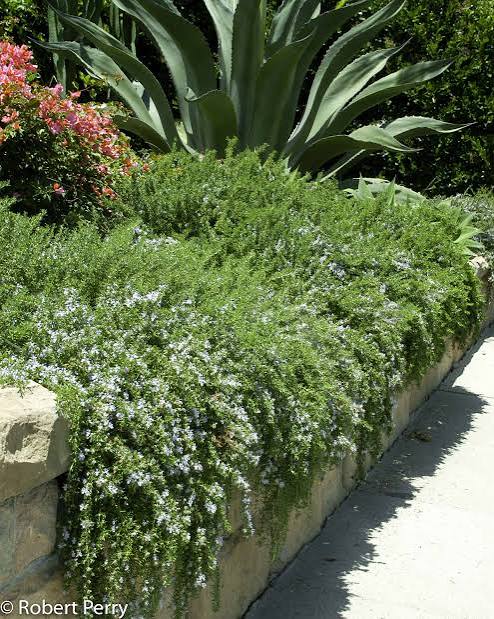
Trailing Rosemary
Evergreen, spreading, with blue flowers in winter and spring. Fragrant and tough.
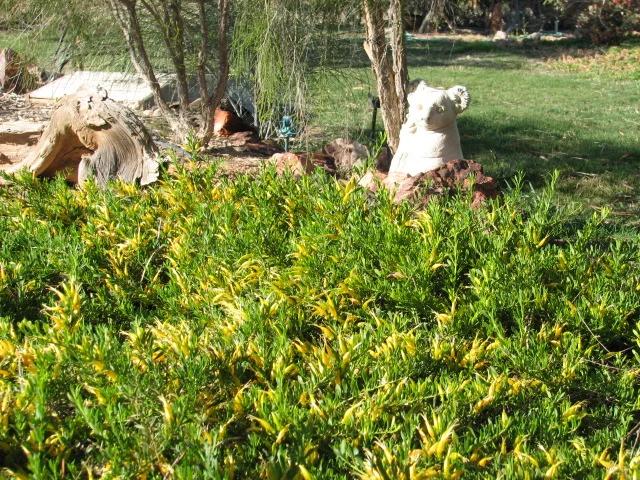
Emu Bush (Outback Sunrise)
Low, spreading, bright green, with yellow flowers in late winter. Great for hot spots.
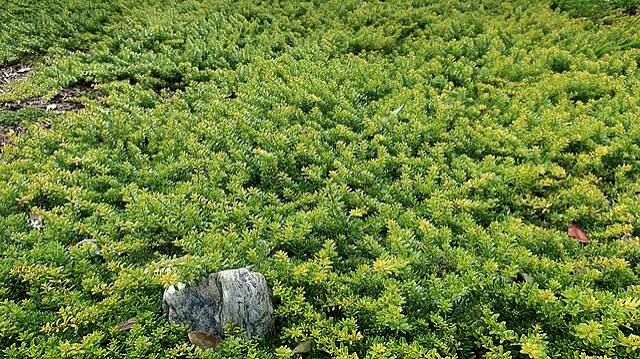
Myoporum
Fast, low, bright green carpet with small white flowers. Covers a lot of ground quickly.
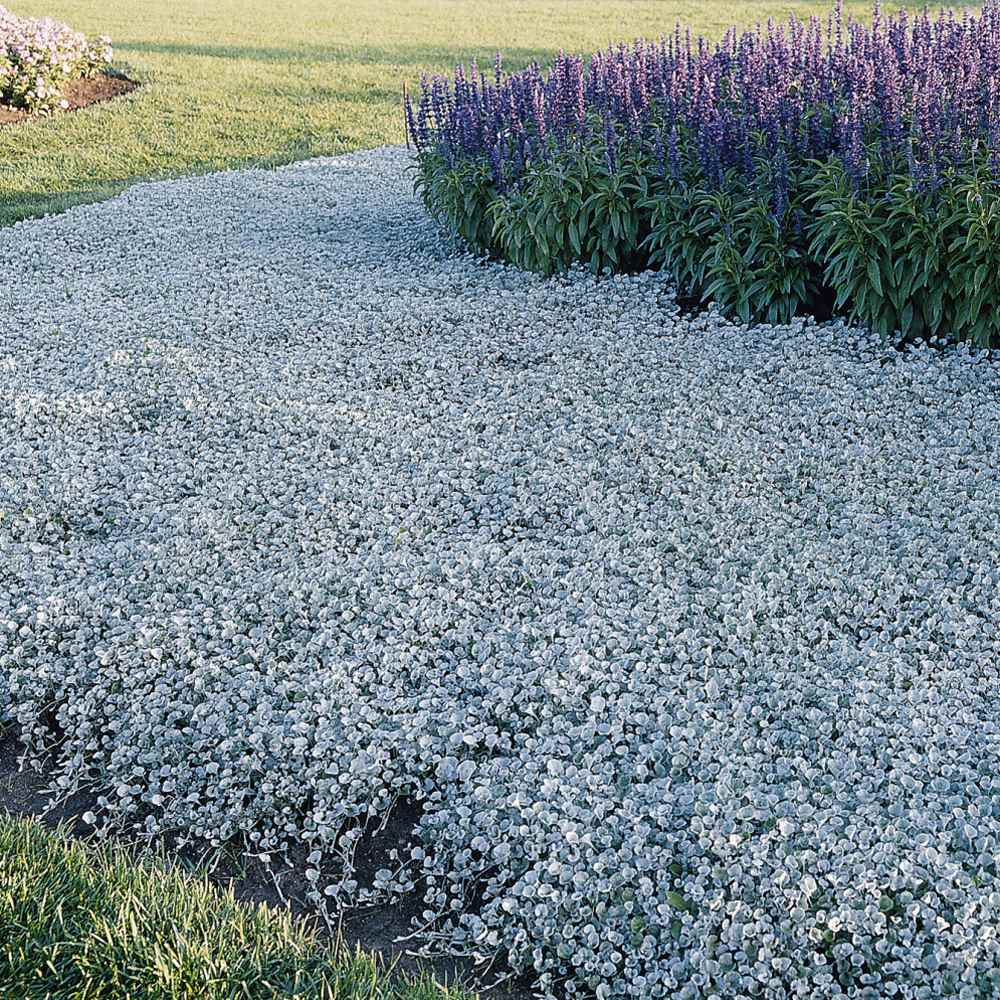
Silver Ponyfoot
Silvery, cascading ground cover. Great around rocks and under trees.
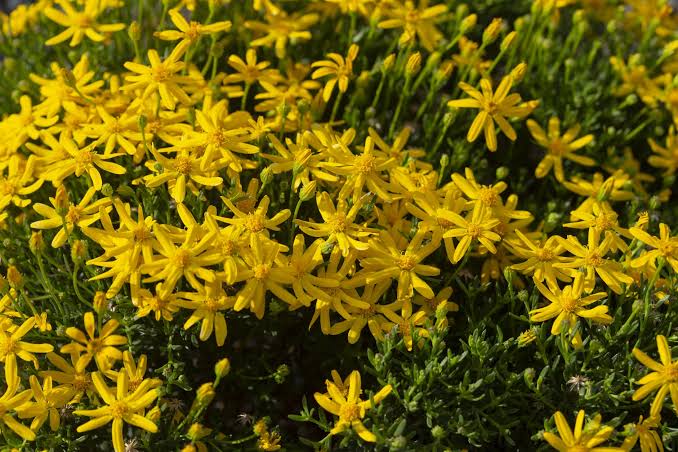
Damianita
Native, low mound with bright yellow daisies spring and fall, about 2 feet.
Low flowering shrubs
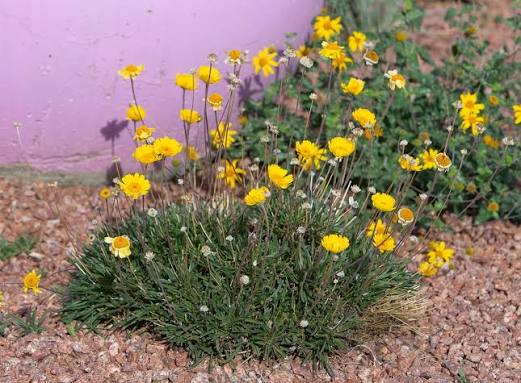
Angelita Daisy
Native, cheerful yellow daisies most of the year, about 1 foot. Great along edges.
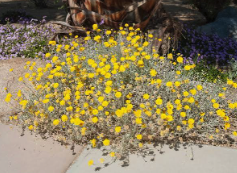
Desert Marigold
Native, bright yellow flowers spring through fall, 1 to 2 feet. Reseeds itself.
Globe Mallow
Native, apricot orange flowers through spring, 3 feet. Native bees love it.
Autumn Sage
Red, pink, or purple flowers spring and fall, 2 to 3 feet. Hummingbirds go straight for it.
Penstemon
Native, tall red or pink flower spikes in spring, 2 to 3 feet.
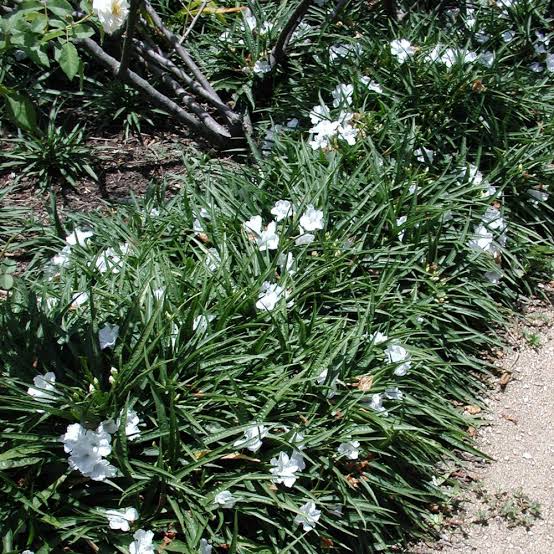
Desert Ruellia (white)
Native, white flowers spring through fall, 2 to 3 feet. Takes heat and part shade.
Grasses and accents
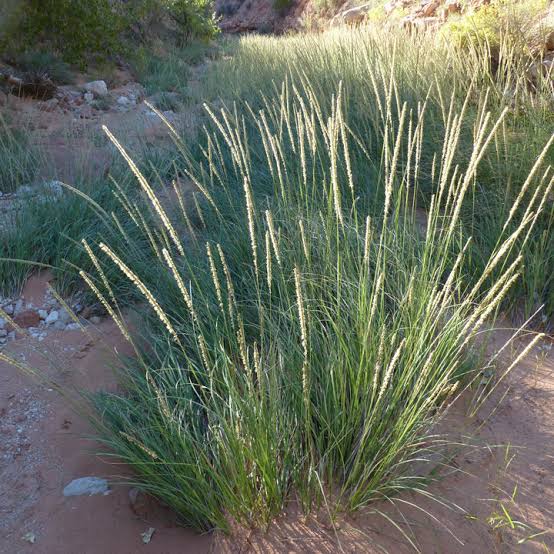
Deer Grass
Native, big fountain of fine green blades, 3 to 4 feet. Great texture.
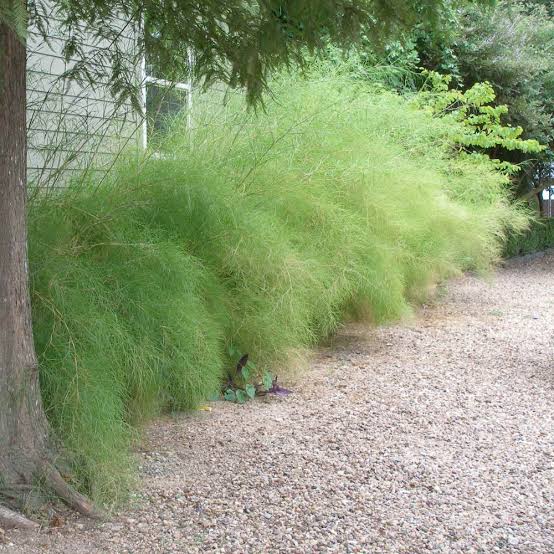
Bamboo Muhly
Soft, airy, bamboo-like green grass, 3 to 4 feet. Moves beautifully in the breeze.
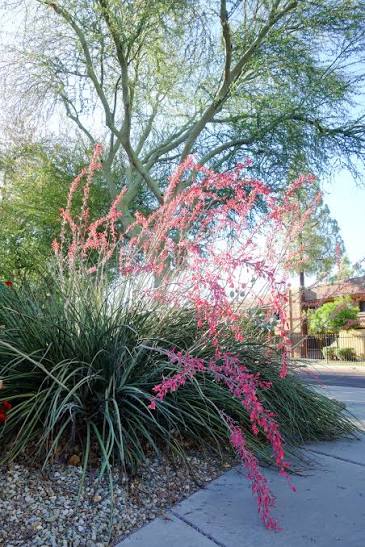
Red Yucca
Coral red flower spikes spring through fall on grassy clumps. Hummingbirds love it.
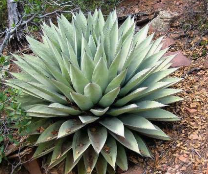
Perry's Agave
Blue-gray rosette, 2 to 3 feet. A clean, sculptural accent.
Larger shrubs to fill in
Baja Fairy Duster
Red powder-puff flowers most of the year, 3 to 4 feet. Hummingbirds love it.
Chuparosa
Native, red tubular flowers winter through spring, 3 to 4 feet.
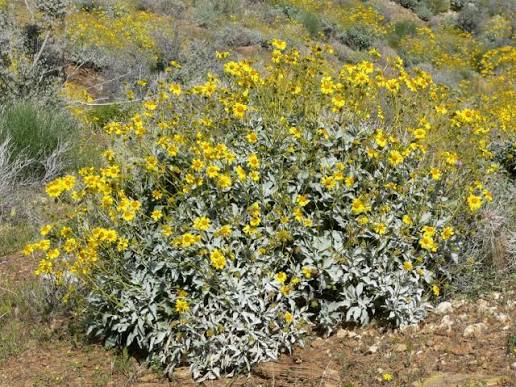
Brittlebush
Native, silver leaves and a burst of yellow daisies in spring, 3 feet.
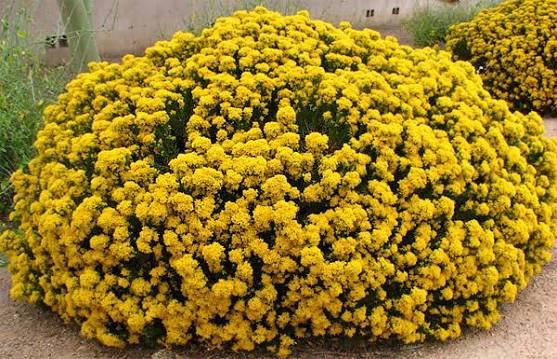
Turpentine Bush
Native, fine green foliage and yellow flowers in fall, 2 to 3 feet.

Texas Sage
Silvery or green foliage, purple flowers after summer rains, 4 to 6 feet.
Desert Milkweed
Native, upright stems with pale yellow flowers, 3 to 4 feet. Feeds monarch and queen butterflies.
Soil and Feeding
The whole yardEverything in your yard grows out of the soil, and healthy soil is alive. It's full of fungi, bacteria, and worms that break down organic matter and feed your plants. Most Phoenix yards are low on that life, especially under rock. Building it back up is the single biggest thing you can do for every plant you have, and it's how you get that lush look you're after. Here's how to do it yourself:
- Compost: spread a generous layer around the drip line of your trees (out where the branches end, not at the trunk) and in closer around your shrubs. Get it from Arizona Worm Farm.
- Worm castings: add a layer every quarter. They're packed with soil life and gentle enough to never burn anything.
- Organic fertilizer: use a good organic liquid fertilizer that's high in fulvic acid. The products I use are from Catalyst: Jenner 8, Organic Nitro Jen, and their kelp fertilizer. Find them at catalystproductgroup.com (click Products, then Home and Garden). They work great on grass too and really green it up.
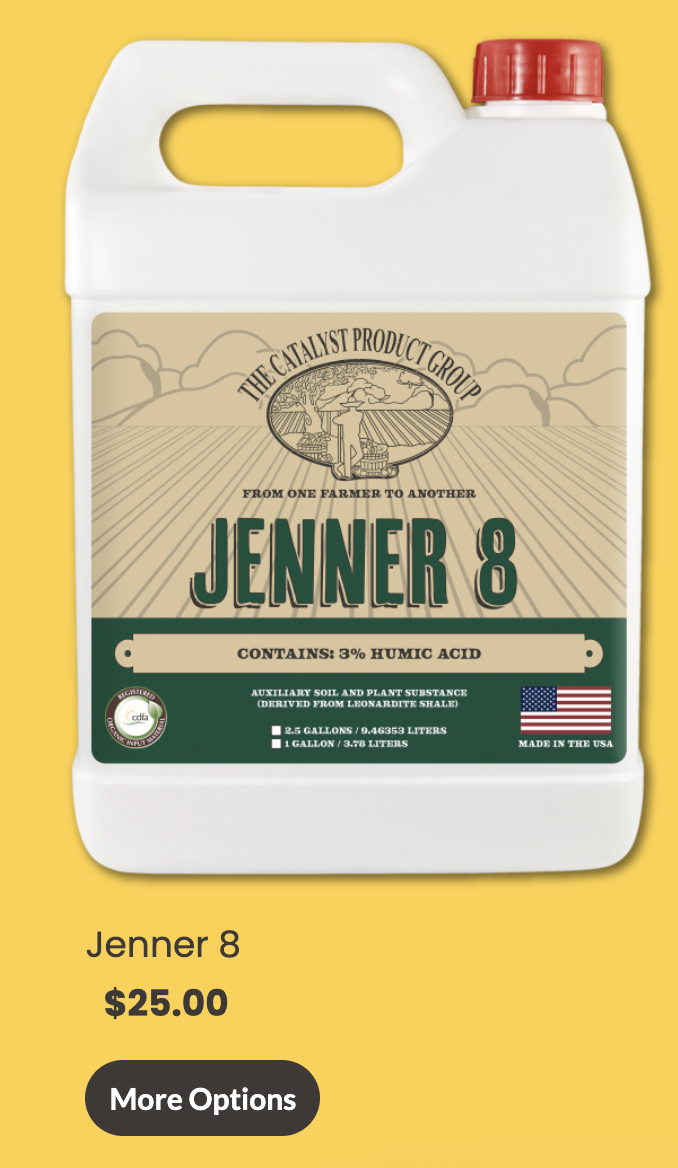
Jenner 8
Catalyst's all-around organic liquid blend, rich in fulvic acid to feed soil life.
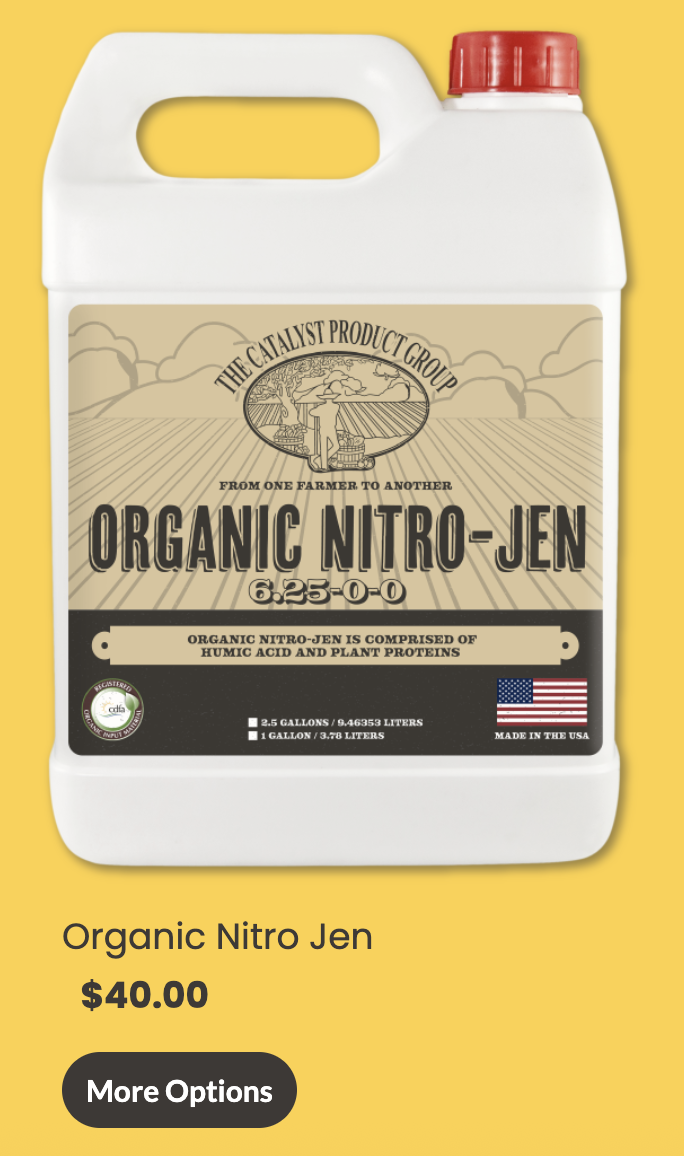
Organic Nitro Jen
Organic nitrogen for strong green growth on leafy plants and lawns.
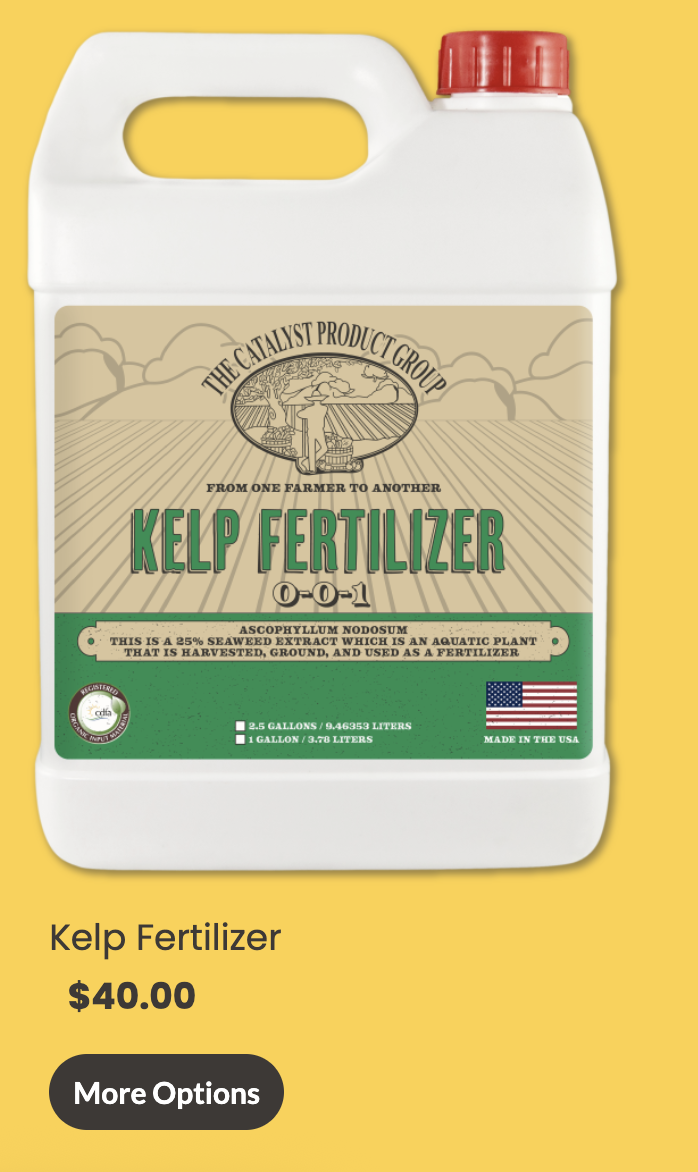
Kelp Fertilizer
Trace minerals and natural growth hormones that help plants handle heat stress.
Or we can handle it for you. Our monthly fertilizing program covers your backyard, front yard, and lawn: a liquid organic feeding every month, compost three times a year, and a recap video after each visit so you can see what we did.
Whole Yard Organic Feeding
Includes the front yard and lawn. Monthly liquid organic feeding, compost three times a year, and a recap video after every visit.
Text us to get startedGetting It Planted
You're welcome to take this list and plant it yourself. Fall is the best time of year to do it. If you'd rather have us do the planting, text us which options you like and I'll put together a planting proposal with pricing. You can see more about our planting services on our site.
For irrigation, including the bubblers for the fig and new lines for any trees, call Garrett: 480-678-9121.
As a consult client, you're already in the Garden Nerd Club, so you have direct access to me there. Reach out anytime with questions as you work through the yard.
Quick Reference
Compost, Mulch, Bed Mix
Arizona Worm Farm, plus their mulch calculator
Mango and Guava
Trees and Shrubs
Raised Beds
What to Plant and When
Organic Fertilizer
Irrigation
Garrett, 480-678-9121