
Daniel Pages
Thanks for having me out, Daniel. Your style came through clearly on the walk: desert adapted, but rare, unique, and different, not the typical stuff you see in every yard. I kept that in mind for every area below, and the plants marked "Native" are native to Arizona.
For a lot of those, it's worth a trip to Spadefoot Nursery in Tucson (2831 E Broadway Blvd, open Friday through Sunday). You can see what they have in stock on their website and reserve plants online for pickup. They grow almost entirely regionally native plants, plus edibles and what they call botanical curiosities, all with a focus on supporting wildlife, and they don't use pesticides. I think you'd really like it there.
Courtyard
Courtyard pots and awning
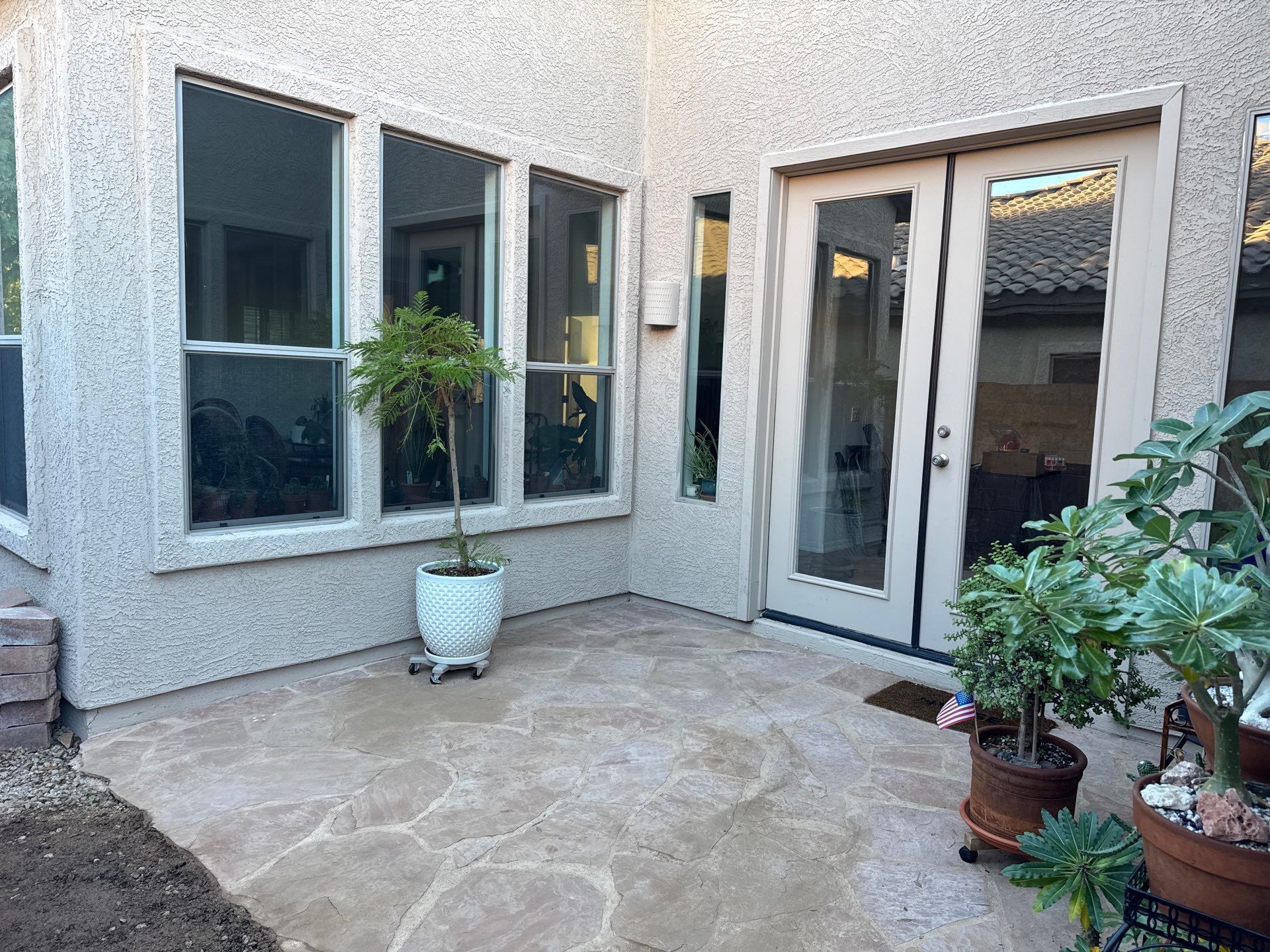
This little courtyard faces south, so it gets blasted with sun in summer and very little in winter when the sun is low. Kumquats and citrus in containers are a great fit, and here are a few more options that would work in pots and give you something different. Use the biggest pots you can (at least 20 inches across), with good drainage, and keep them off the flagstone on pot feet or a caddy so the roots don't cook.
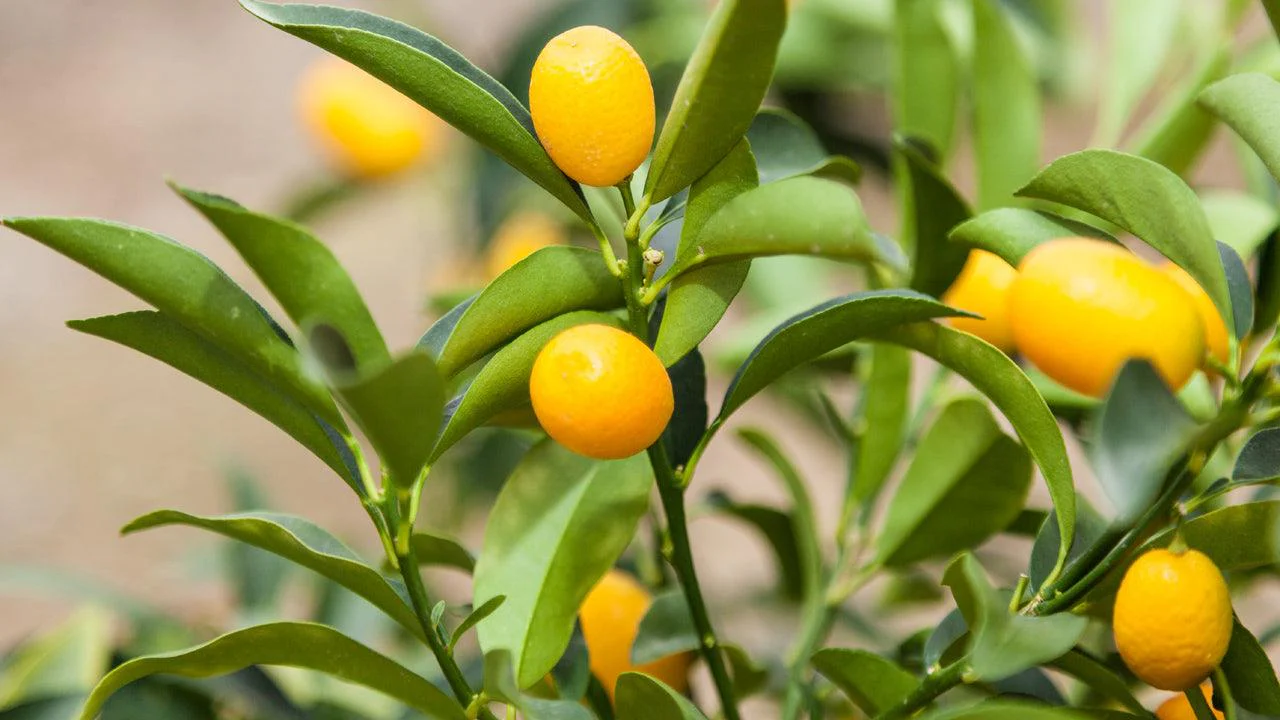
Kumquat
Small, glossy evergreen that loves a pot. Fruit you eat whole, peel and all, sweet skin and tart inside. Nagami (oval, tart) and Meiwa (round, sweeter) are the two to look for.
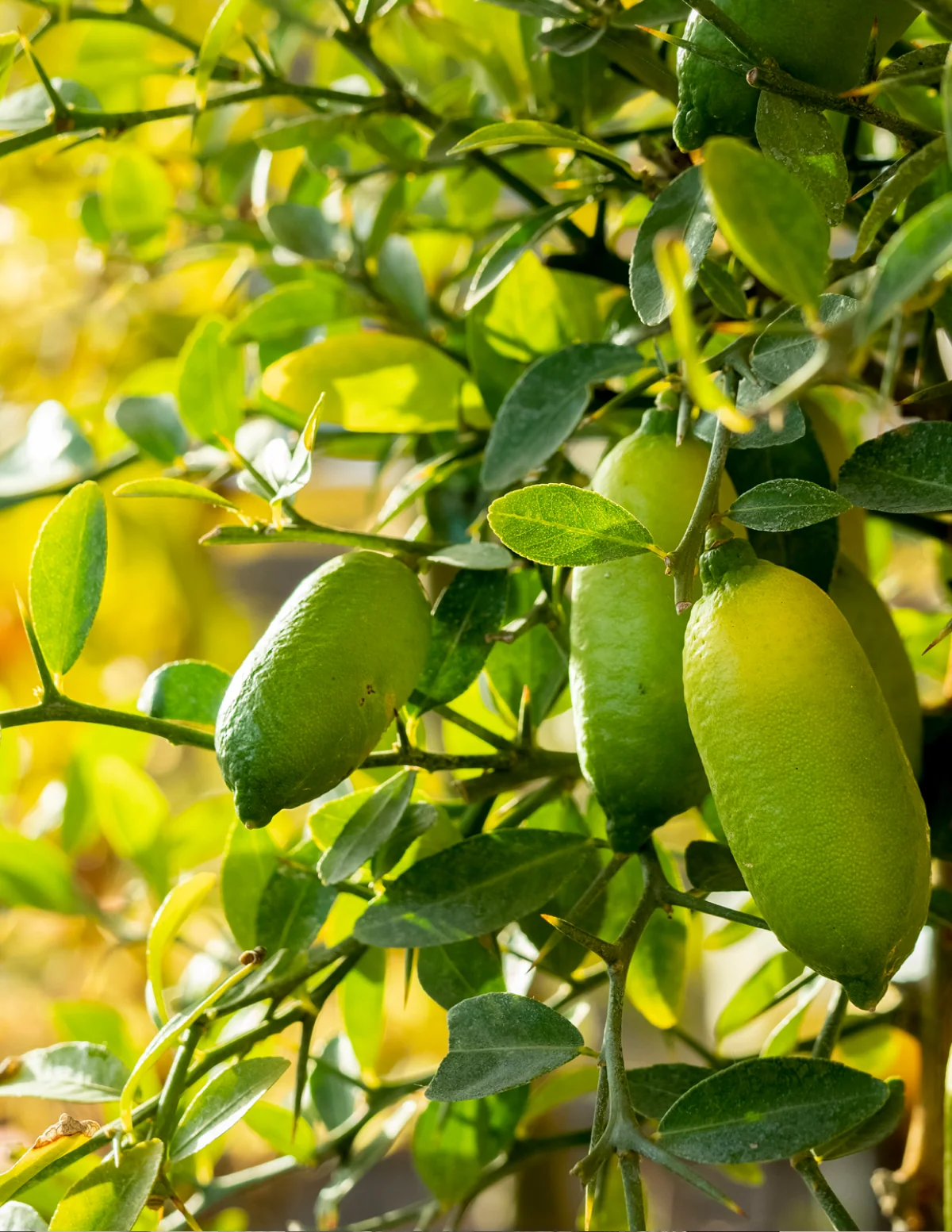
Australian Finger Lime
A true botanical curiosity. Thorny little tree with finger-shaped fruit full of tiny pearls of lime juice, sometimes called citrus caviar. Does well in a pot and likes a little afternoon relief in summer.
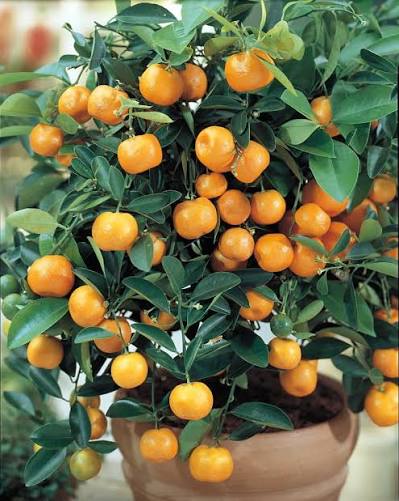
Calamondin
Ornamental-looking little citrus tree covered in small, tart orange fruit most of the year. One of the best citrus for containers.

Meyer Lemon
Compact, productive lemon that stays manageable in a big container. Sweeter and more fragrant than a regular lemon.
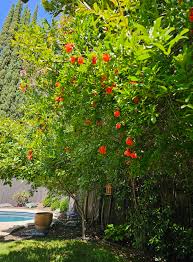
Dwarf Pomegranate (Nana)
Stays 3 to 4 feet with orange-red flowers all summer and little ornamental fruit. Handles full summer sun in a pot without blinking.
Container citrus needs more frequent feeding than citrus in the ground, since every watering flushes nutrients out of the pot. Greenfield Citrus Nursery has a great selection.
Vines for an awning
If you put an awning or shade structure over the courtyard, a vine on it would cut the summer sun and still let winter light in if you pick a deciduous one. Canyon grape and Thompson grape both drop their leaves in winter. Snapdragon vine gives lighter, dappled cover.
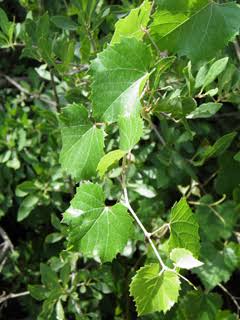
Canyon Grape
Arizona's native wild grape. Fast, big leaves for real shade over an awning or pergola, great fall color, and small fruit the birds love.
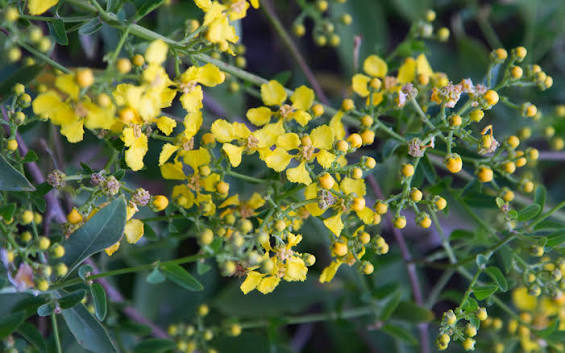
Yellow Orchid Vine
Sonoran native vine with bright yellow flowers spring through fall. After it blooms, the seed pods dry into shapes that look like little butterflies. Rarely used in Phoenix yards.
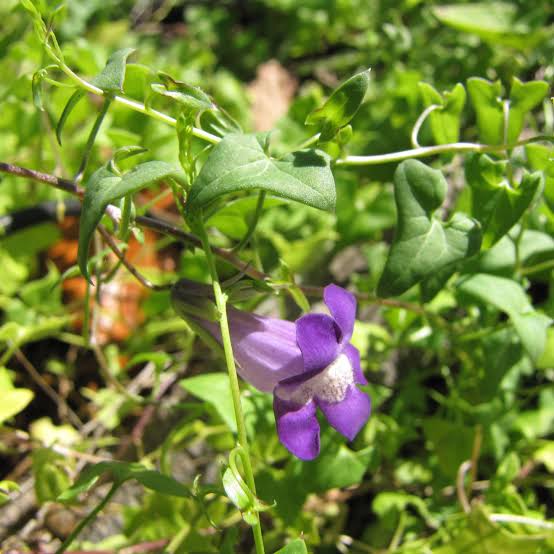
Snapdragon Vine
Delicate native vine with small purple snapdragon-like flowers. Light and airy, great for a trellis or awning where you want dappled cover rather than a solid wall of green. Can freeze back and returns.
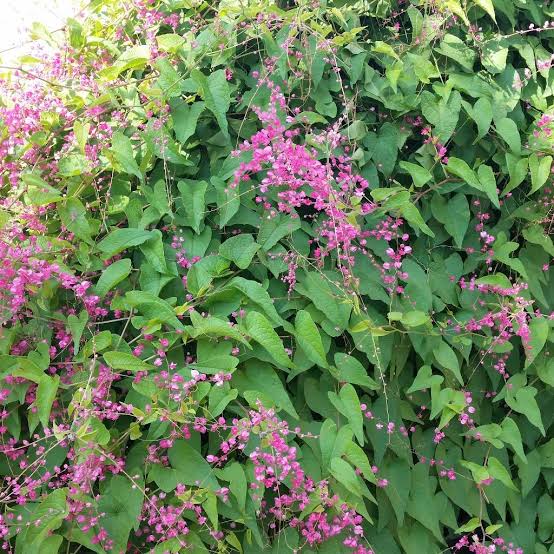
Coral Vine
Fast vine with sprays of pink flowers from summer into fall. Bees love it. It can freeze back in winter and regrows quickly in spring.
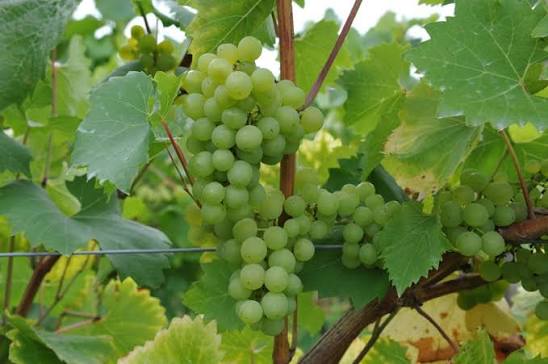
Thompson Seedless Grape
Classic edible grape. Vigorous, deciduous shade in summer, sun through in winter, and fruit in early summer.
Courtyard south-facing wall
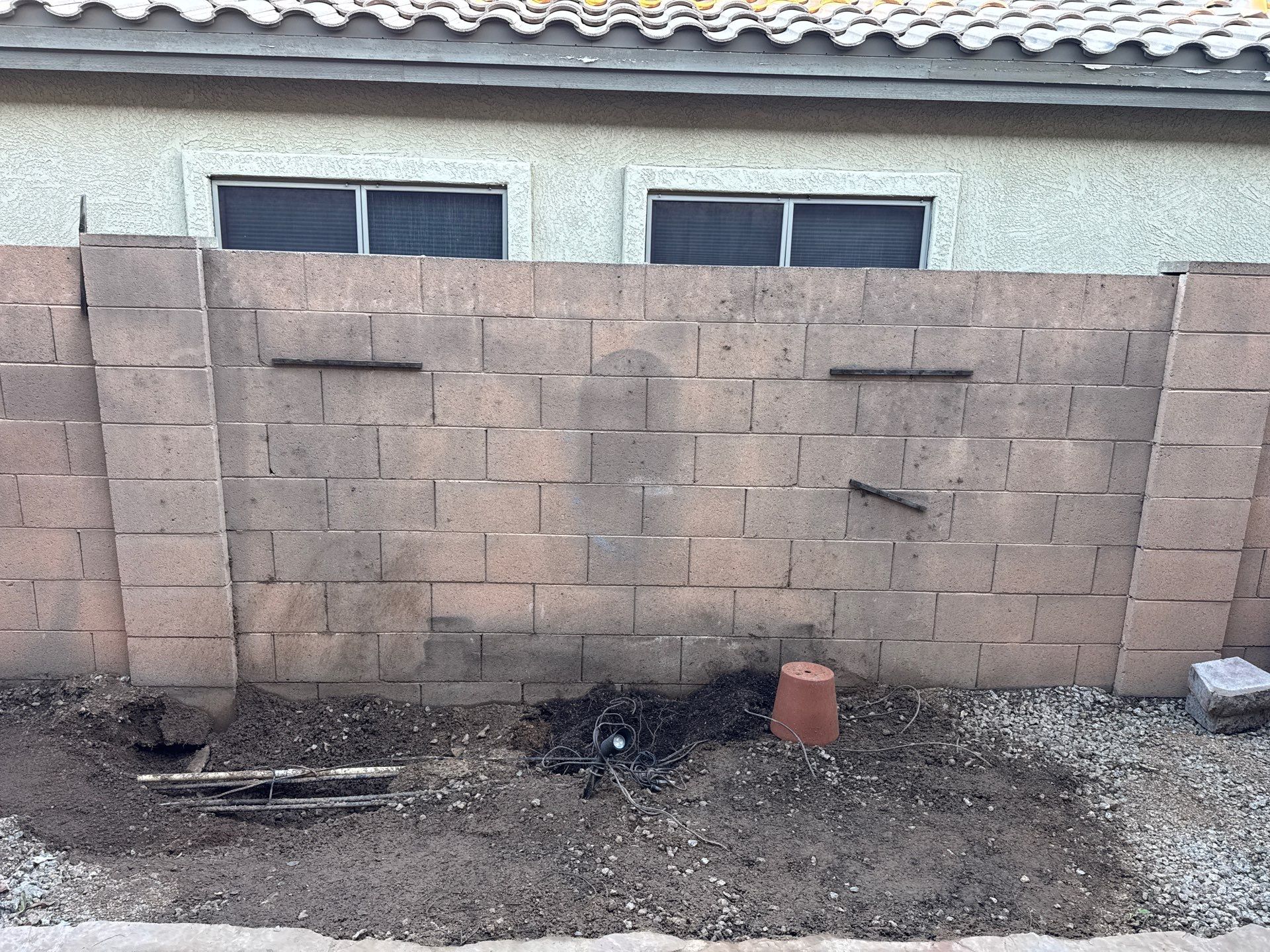
Same conditions on this wall: lots of shade in winter, lots of sun in summer. Cape honeysuckle would work well here, and tangerine crossvine is another good option. Here are a few more. Run wire or a trellis up the wall for anything that doesn't self-cling.
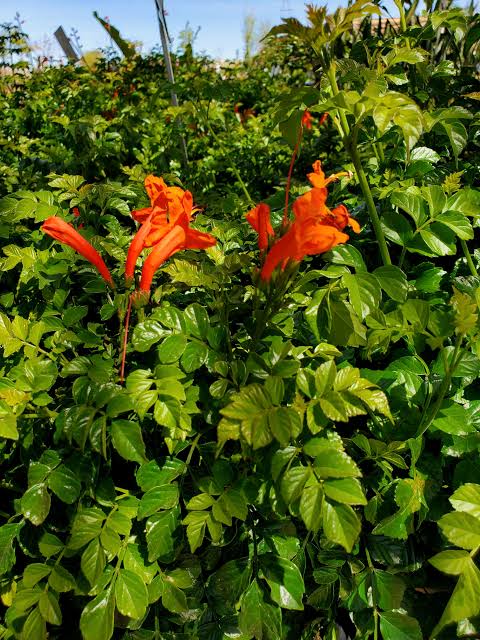
Cape Honeysuckle
Evergreen shrub-vine with orange trumpet flowers fall through spring. Works well here since this wall gets summer sun and winter shade. Train it up the wall and keep it thinned, not sheared.

Tangerine Crossvine
Evergreen vine with orange trumpet flowers in spring. Clings and climbs on its own, handles full sun, very tough.
Yellow Orchid Vine
Sonoran native vine with bright yellow flowers spring through fall. After it blooms, the seed pods dry into shapes that look like little butterflies. Rarely used in Phoenix yards.
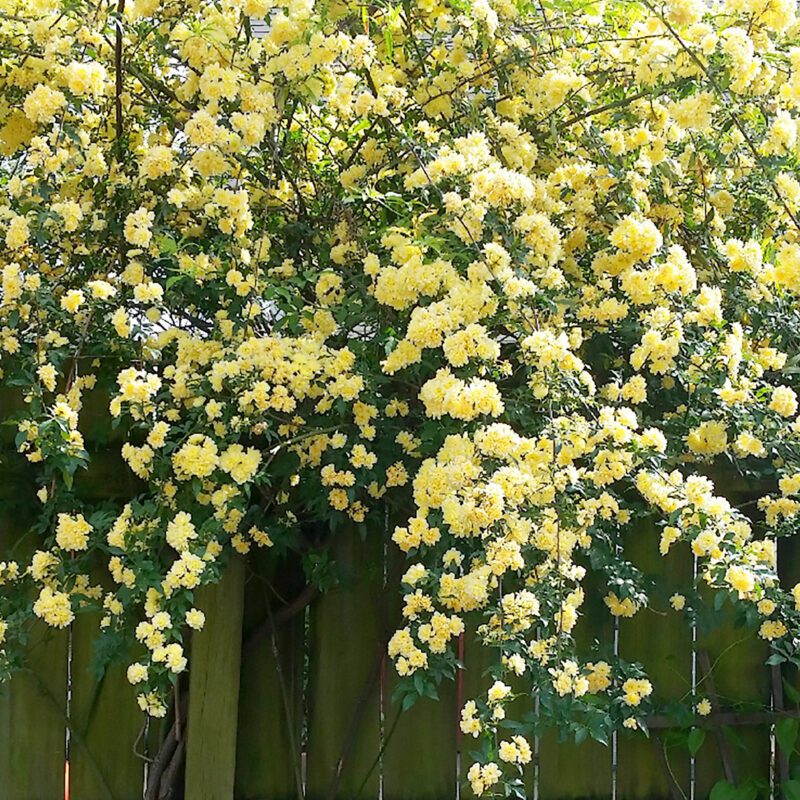
Lady Banks Rose
Thornless climbing rose with a huge flush of small yellow flowers in spring. Vigorous and tough once established.
Coral Vine
Fast vine with sprays of pink flowers from summer into fall. Bees love it. It can freeze back in winter and regrows quickly in spring.
Snapdragon Vine
Delicate native vine with small purple snapdragon-like flowers. Light and airy, great for a trellis or awning where you want dappled cover rather than a solid wall of green. Can freeze back and returns.
Backyard
South-facing patio wall
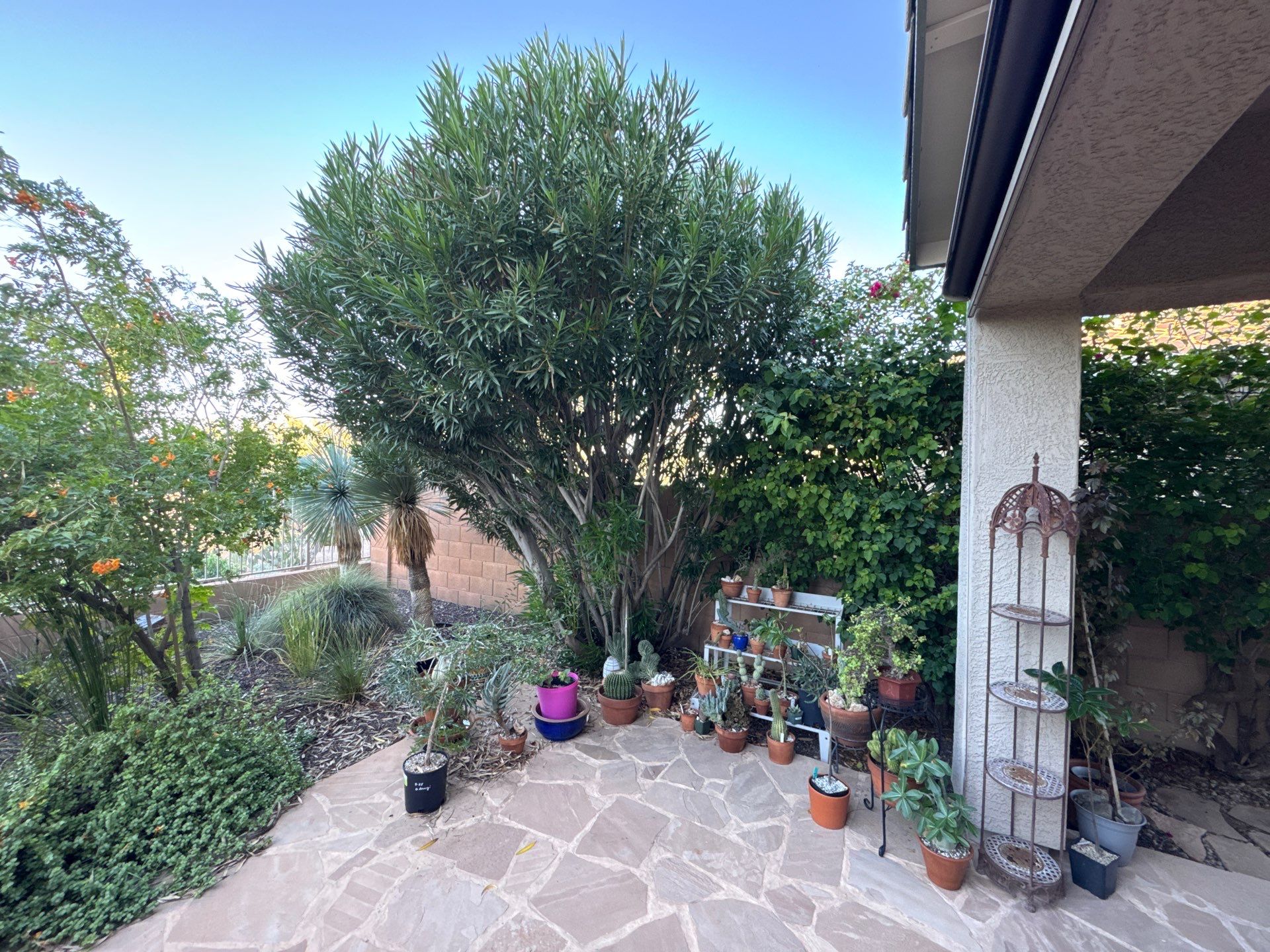
This oleander is coming out, and you like the bougainvillea next to it. My suggestion is to continue the bougainvillea all the way down the line. It loves this exposure and gives you color most of the year. If you want something different, here are some other options, including a couple of natives you don't see often.
Pick one plant and run it the full length so it reads as one clean line. Plant about 3 feet off the wall.
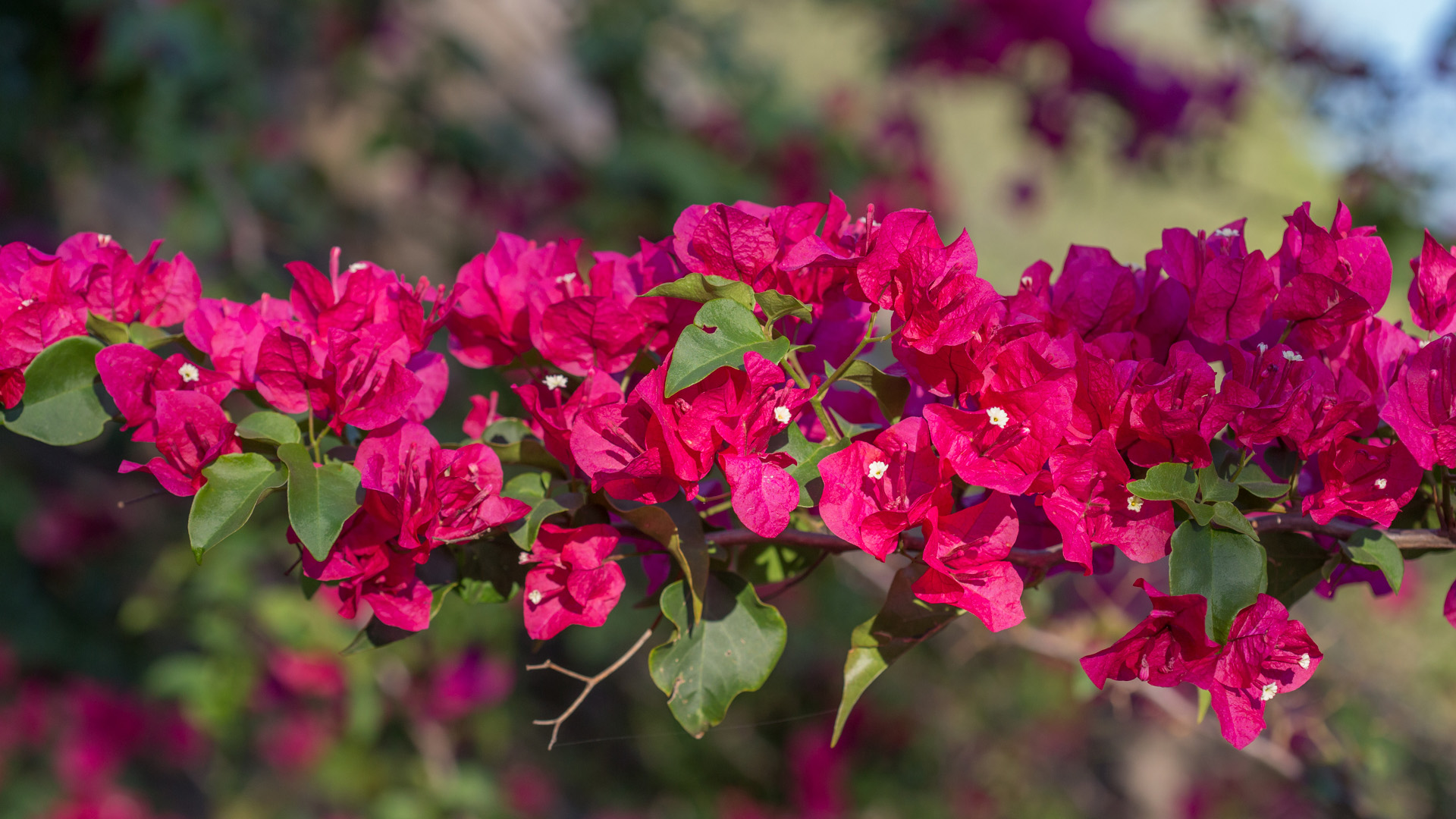
Bougainvillea
Huge color most of the year and thrives in full sun and heat. It can get nipped by frost in winter and comes back. Let it grow loose and natural rather than shearing it.
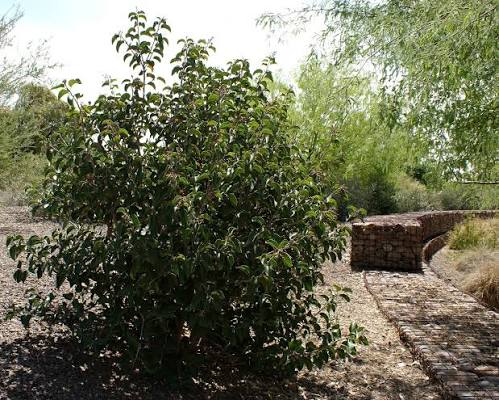
Sugar Bush
Native evergreen shrub with thick, glossy leaves and clusters of pinkish-white flowers in spring. Dense enough to make a real screen, and it takes less water than plants that aren't desert adapted. A rare sight in Phoenix yards.
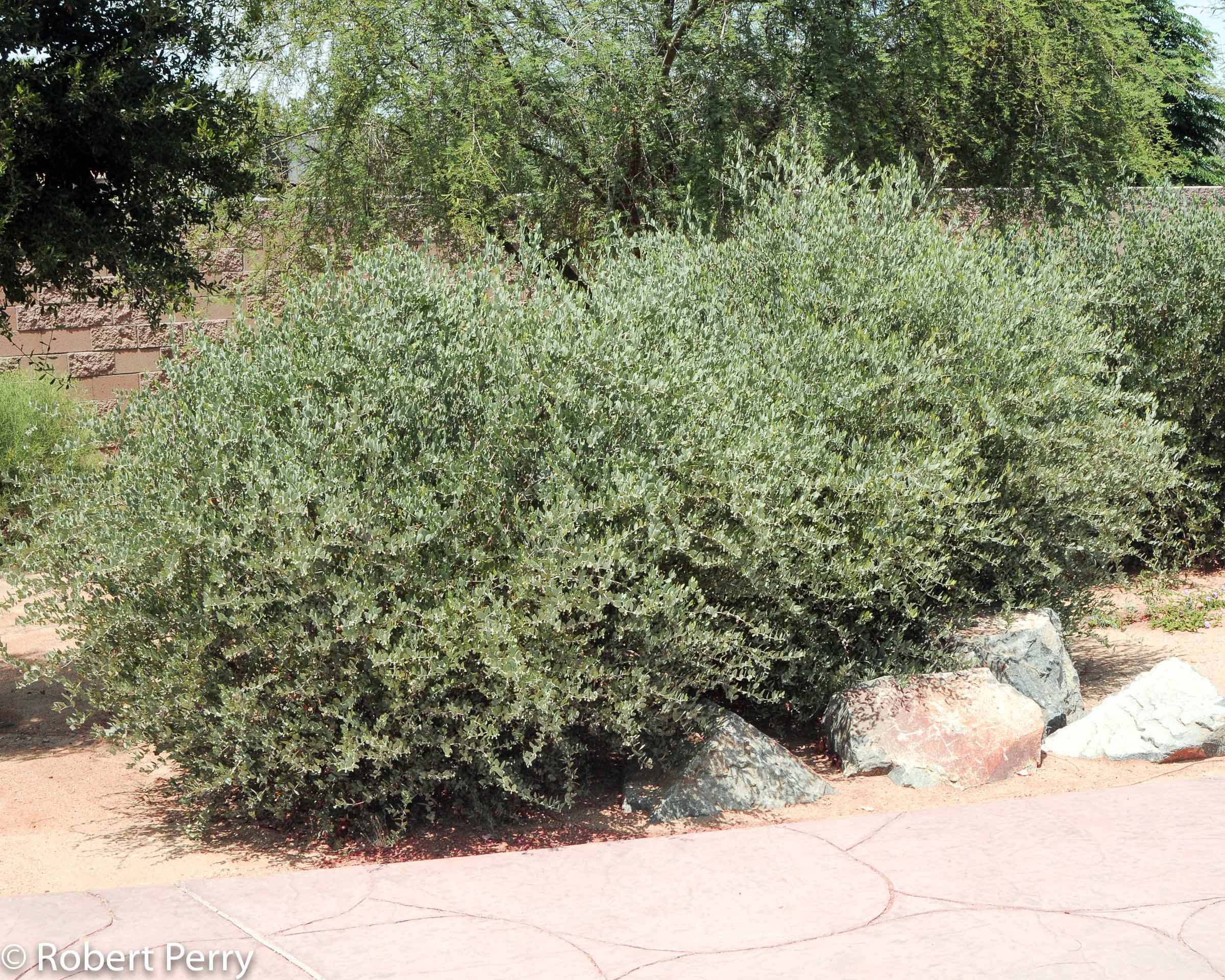
Jojoba
Native evergreen shrub with leathery blue-green leaves that makes a dense, natural hedge. Very tough in reflected heat, and the female plants make the seeds jojoba oil comes from. Most people never think of it as a hedge.
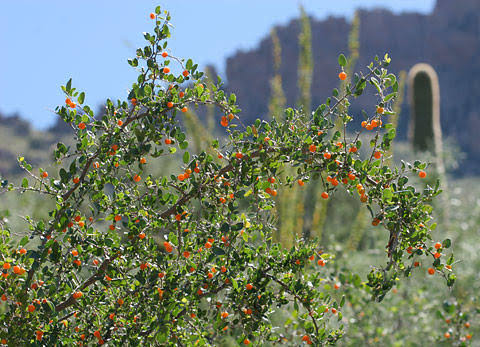
Desert Hackberry
Native, thorny, very dense shrub with tiny leaves and small orange berries that birds love. One of the best wildlife plants in the Sonoran Desert, and almost nobody plants it on purpose.
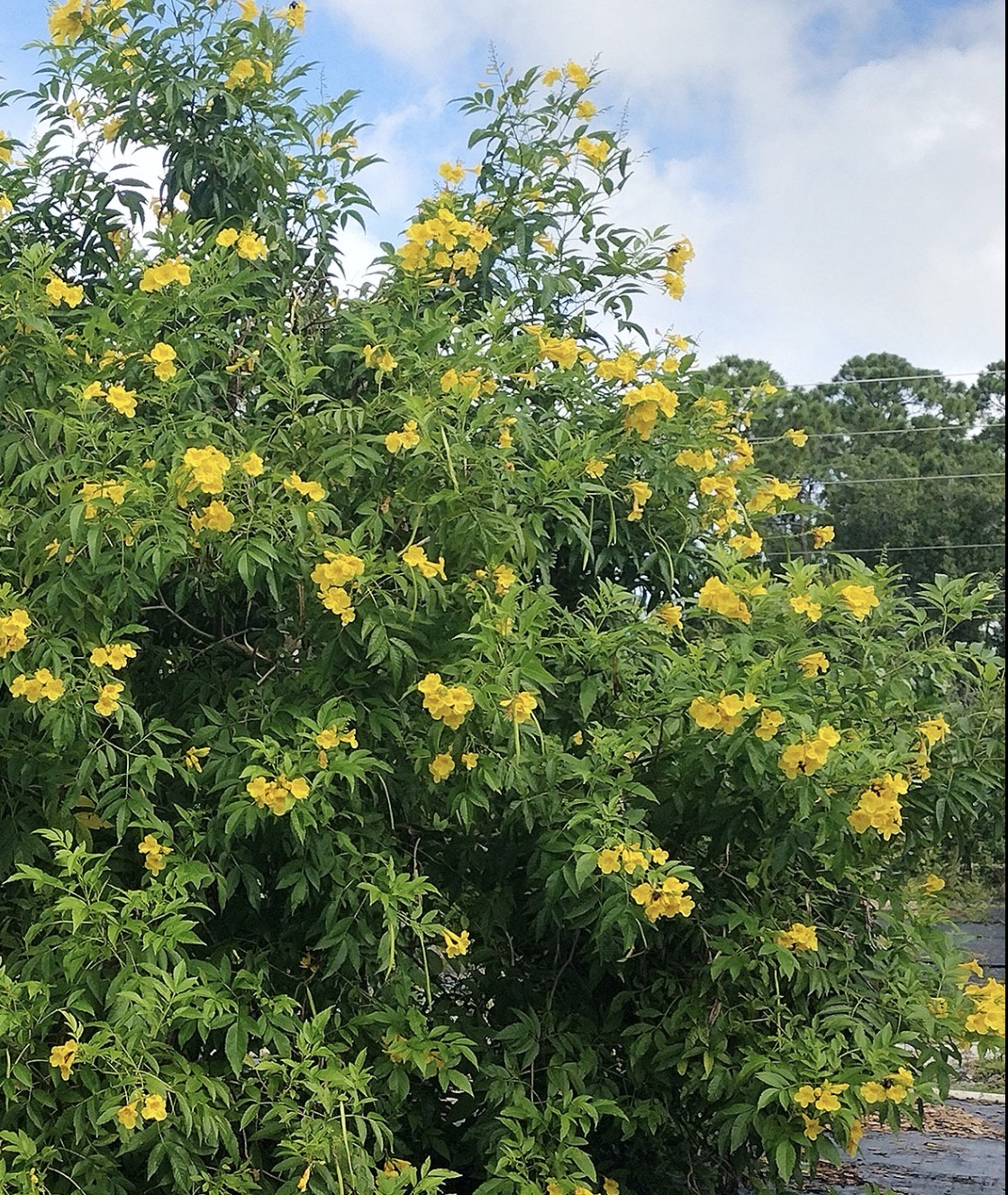
Native Yellow Bells
The Arizona native form of yellow bells (Tecoma stans var. angustata). Finer, narrower leaves and more cold hardy than the common nursery version, with the same yellow trumpet flowers spring through fall.

Arizona Rosewood
Native evergreen with dark green leaves. Dense, handles full sun and reflected heat, and makes a solid screen.

Orange Jubilee
Big clusters of orange trumpet flowers spring through fall. Hummingbirds love it and even nest in it.
West fence off the back patio
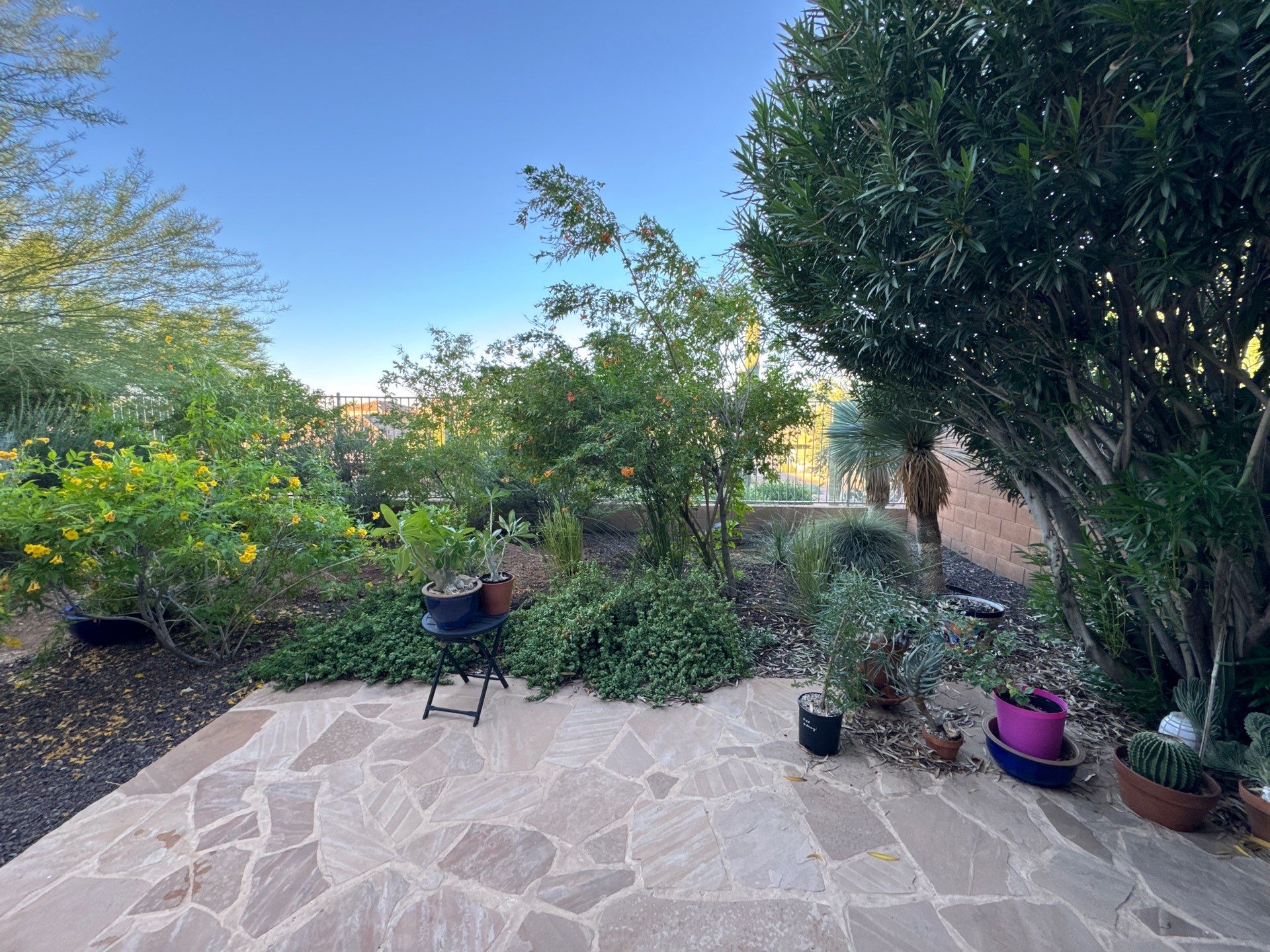
Standing outside the back door looking west, this area gets blasted with afternoon sun almost all year. You're okay taking most of what's here out, so my plan is a lower shrub hedge along the fence, something like Little Ollie, with vines on the fence itself growing up behind it. The vines give you height and block that afternoon sun without blocking the view the way a tall hedge would.
Low hedge
Black dalea is a great fit here: native, low, airy, and covered in purple in the fall. A few others in the same spirit are below too, all natives that stay low, handle full afternoon sun, and look natural without shearing. Space them 3 to 4 feet apart.
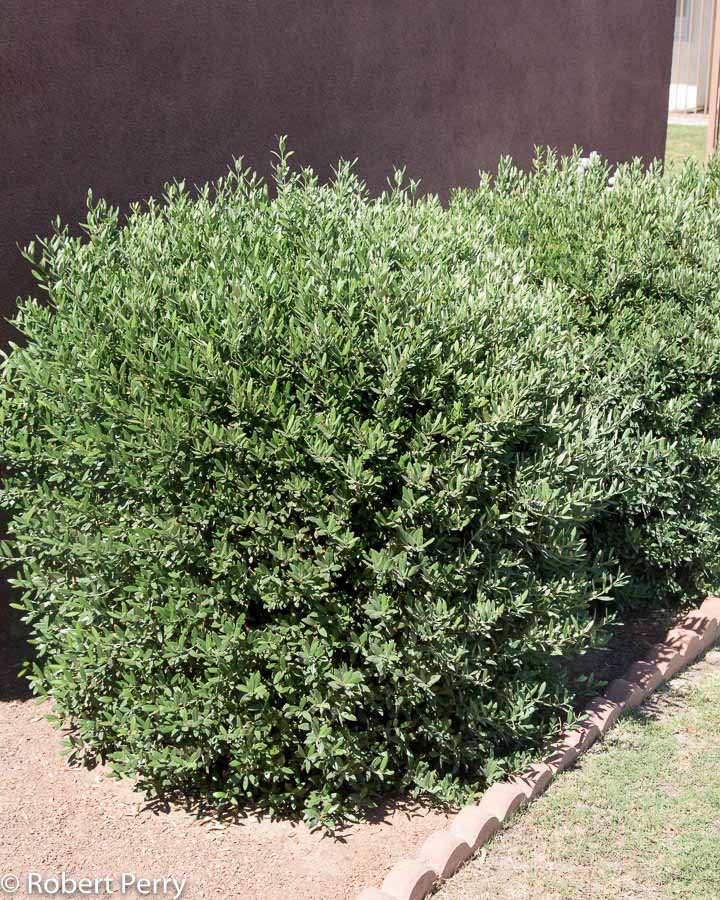
Little Ollie (Dwarf Olive)
Evergreen dwarf olive that stays around 4 to 6 feet with no fruit and no pollen. Takes full afternoon sun and keeps a neat shape without shearing.
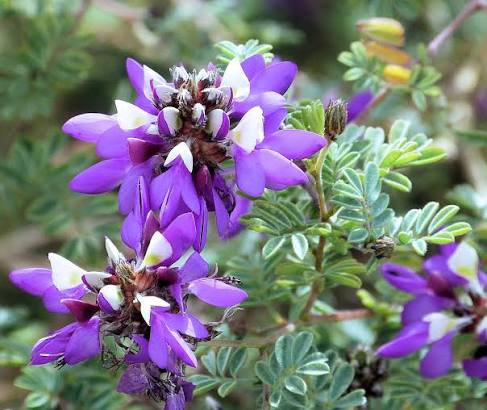
Black Dalea
Native, low, airy shrub with silvery fine leaves and deep purple flowers in fall. Stays about 3 feet tall and wide, handles full afternoon sun, and bees love it. A great natural low hedge.
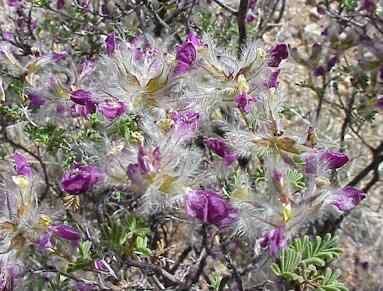
Feather Dalea
Native, small, open shrub with feathery purple and yellow flowers in spring. Stays 2 to 3 feet with a soft, wispy look.
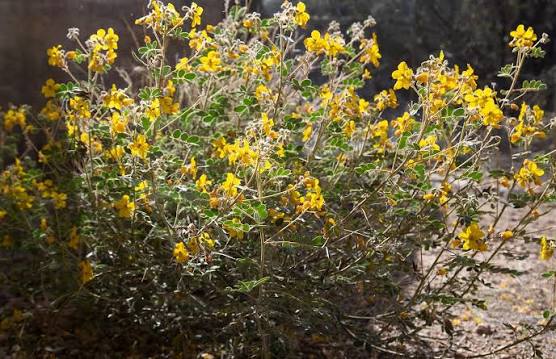
Desert Senna
Native low shrub (Senna covesii) with gray-green leaves and bright yellow flowers spring through fall. Stays about 2 feet and is a host plant for sulphur butterflies.
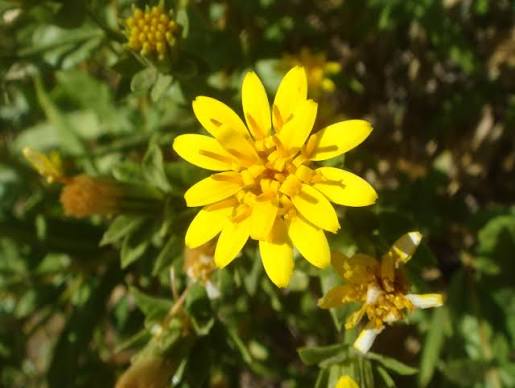
Trixis
Native shrub with bright green leaves and yellow flowers in late winter and spring, about 3 feet tall. Takes full sun and part shade, and it's rarely seen in yards.

Texas Sage
Silvery leaves and purple blooms after summer humidity. Look for compact varieties like Lynn's Legacy or Thunder Cloud for a lower hedge.
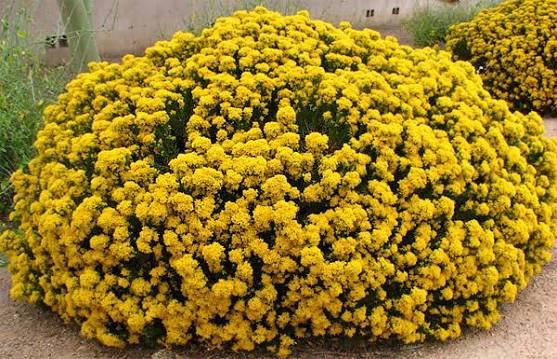
Turpentine Bush
Native, compact, bright green year round with yellow flowers in fall. Crush a leaf and you'll know where the name comes from.
Vines on the fence
Plant vines between the hedge plants, about 8 to 10 feet apart, and tie them in as they grow.
Tangerine Crossvine
Evergreen vine with orange trumpet flowers in spring. Clings and climbs on its own, handles full sun, very tough.
Yellow Orchid Vine
Sonoran native vine with bright yellow flowers spring through fall. After it blooms, the seed pods dry into shapes that look like little butterflies. Rarely used in Phoenix yards.
Coral Vine
Fast vine with sprays of pink flowers from summer into fall. Bees love it. It can freeze back in winter and regrows quickly in spring.
Bougainvillea
Huge color most of the year and thrives in full sun and heat. It can get nipped by frost in winter and comes back. Let it grow loose and natural rather than shearing it.
Snapdragon Vine
Delicate native vine with small purple snapdragon-like flowers. Light and airy, great for a trellis or awning where you want dappled cover rather than a solid wall of green. Can freeze back and returns.
Red push pistache
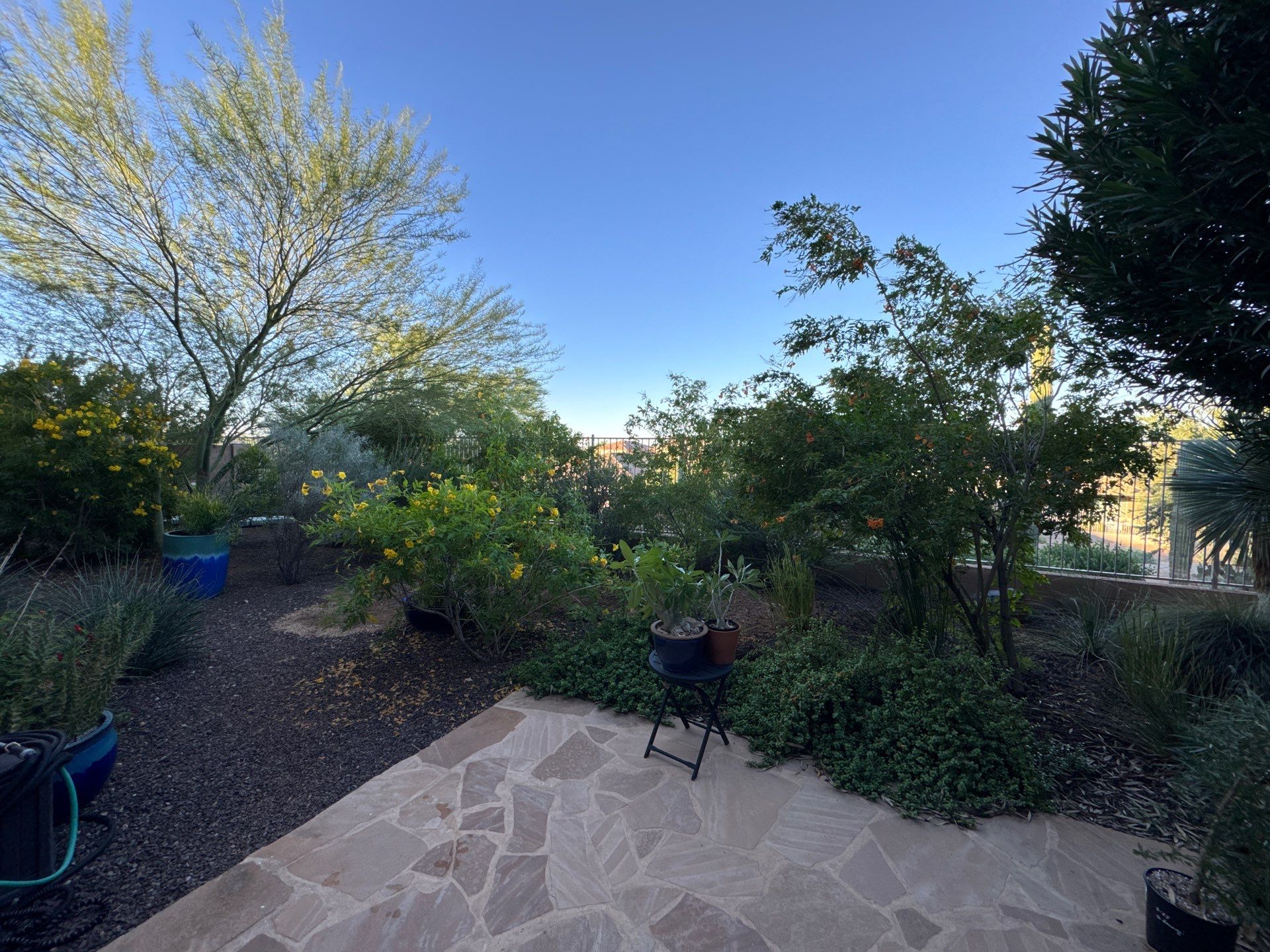
You really want a red push pistache, and I think one could go right here. Mulga acacia is another option if you want evergreen shade that stays a little smaller. It would tie in with what we're doing along the back wall, grow up to shade the house from that blasting afternoon sun, and give you great fall color. Go with a 15 gallon. Keep it at least 10 to 12 feet from the house.

Red Push Pistache
Fast growing shade tree with red new growth in spring and great fall color. Deciduous, so summer shade and winter sun on the house.

Mulga Acacia
Smaller evergreen tree with silvery needle-like leaves and yellow flowers in spring. Stays compact (15 to 20 feet) with a tidy shape, and handles the afternoon heat well.
Then plant a low ground cover around the tree, underneath the canopy, starting just outside the water well. As the tree fills in, that area will go from full sun to dappled shade, so these all handle both.
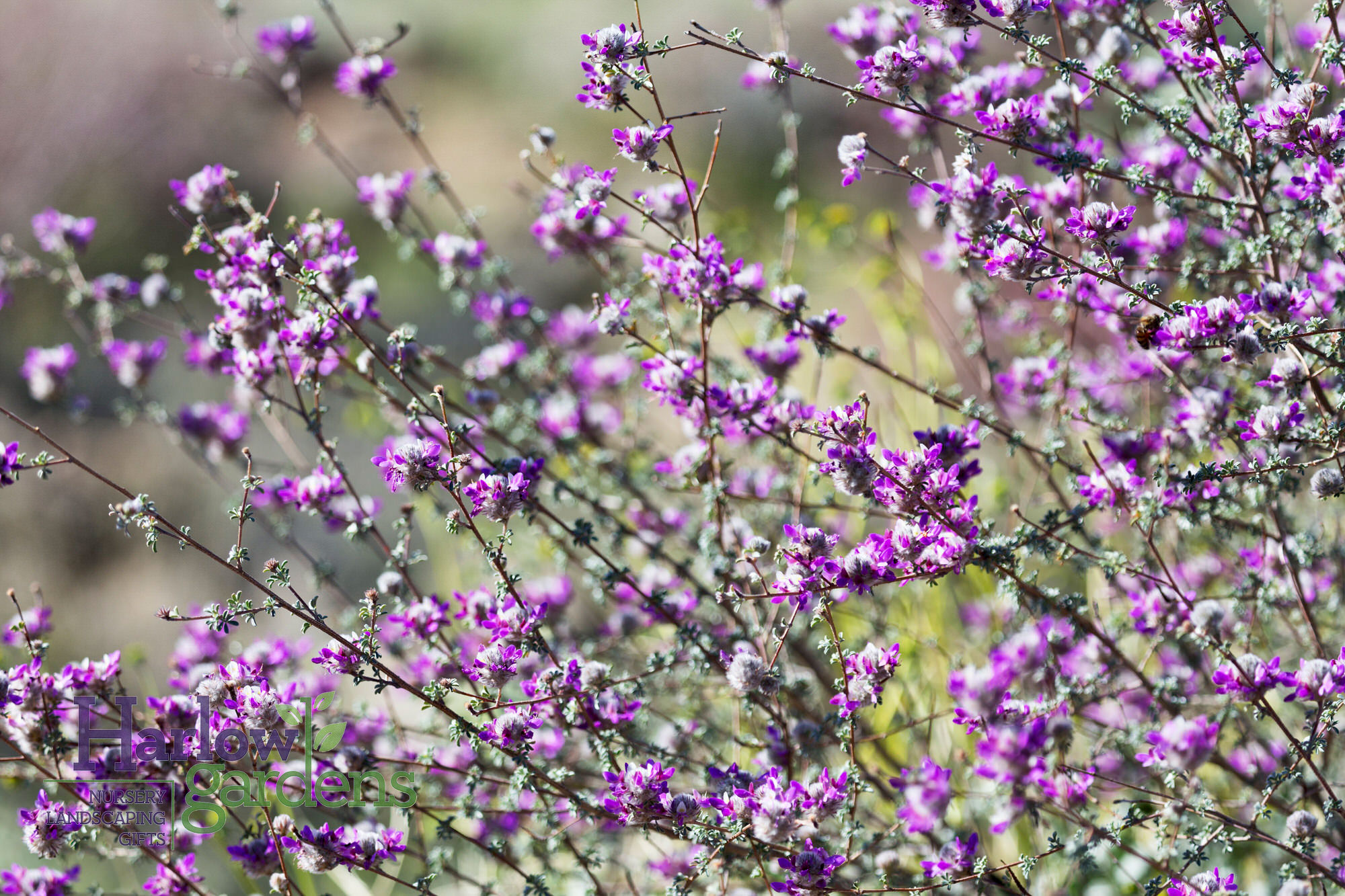
Trailing Indigo Bush
Low silvery ground cover with purple flowers in spring. Spreads wide and stays tidy.
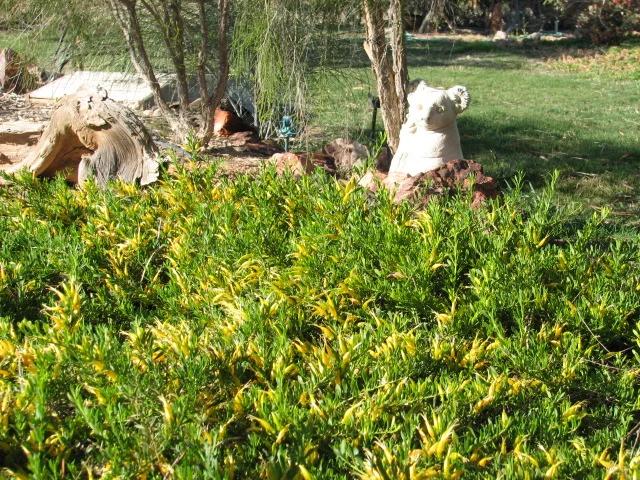
Sunrise Emu
Low spreading ground cover with gray green leaves and yellow flowers late winter into spring. One of my favorites for hot spots.
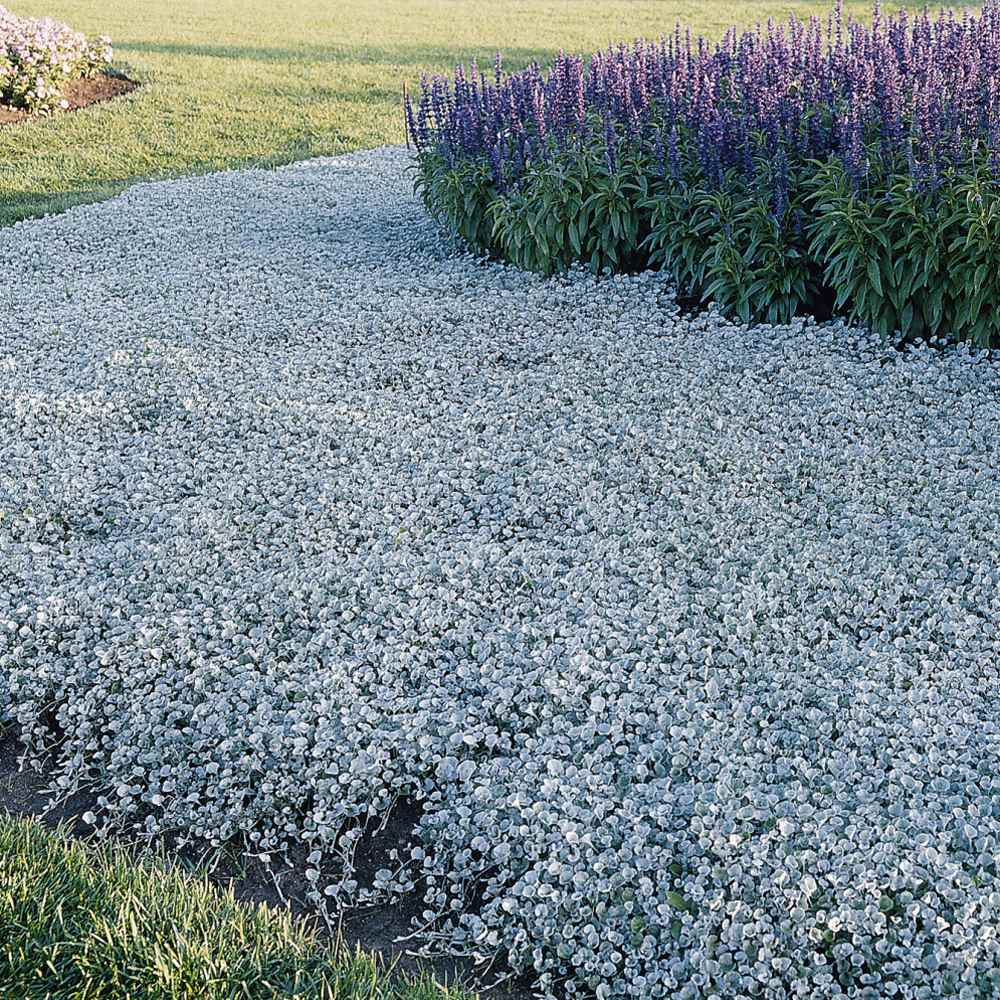
Silver Ponyfoot
Trailing silver ground cover with small round leaves. Does well in the dappled shade that will develop under the pistache.
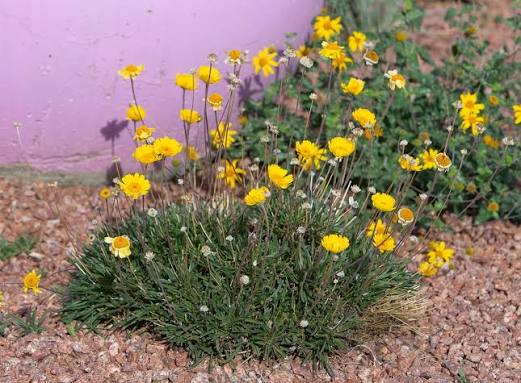
Angelita Daisy
Small mound of fine leaves with little yellow daisies almost all year.
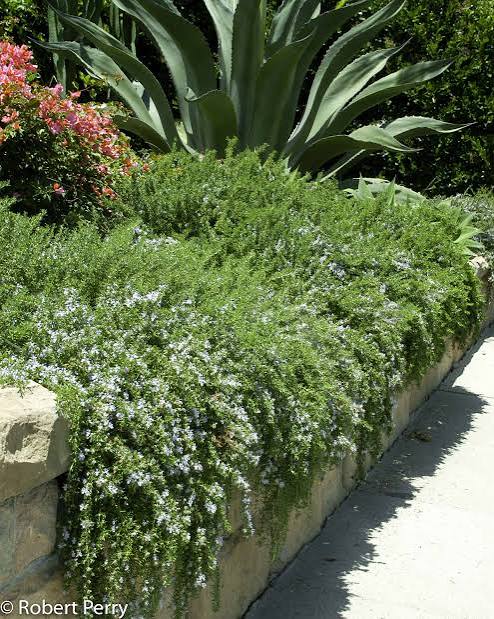
Trailing Rosemary
Low, spreading rosemary that drapes over edges. Fragrant, evergreen, small blue flowers.
Water well
Every tree gets a water well: pull the rock back about 3 feet from the trunk in every direction and build a shallow basin with a raised edge so water soaks down into the roots. Fill it with mulch instead of rock, keeping the mulch about a foot back from the trunk. Rock holds heat and bakes the roots; mulch keeps them cool, holds moisture, and feeds the soil.
West-facing house wall
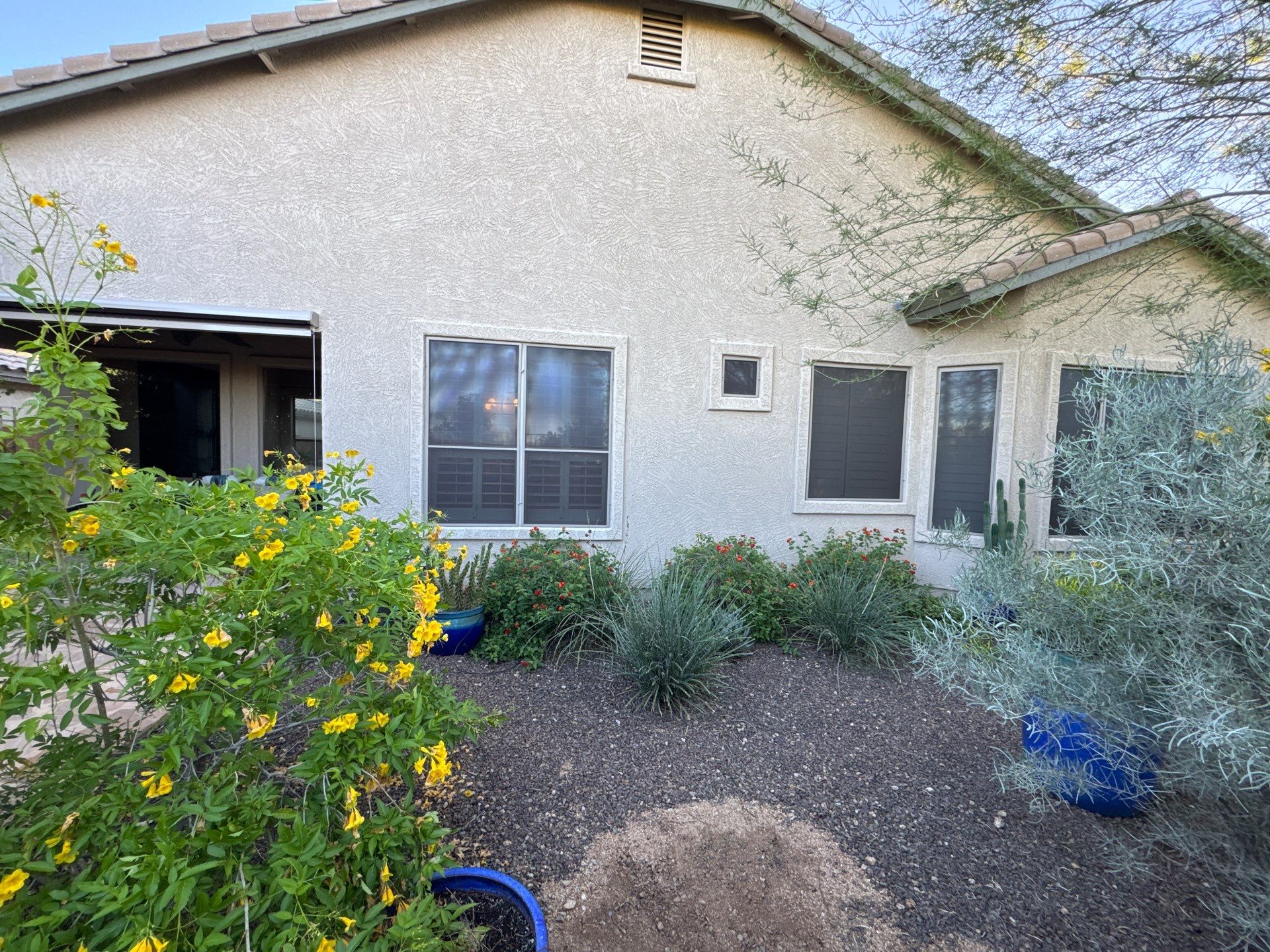
This west-facing wall gets blasted with afternoon sun. The lantana and red yucca can stay. For everything else, I leaned into the unusual natives that Spadefoot grows. Everything below grows well up against a house, has no aggressive roots to cause foundation issues, takes less water than plants that aren't desert adapted, and handles harsh afternoon sun. Keep plants about 3 feet off the foundation, and keep drip emitters at least 2 feet from the wall so you're not soaking the soil under the slab.
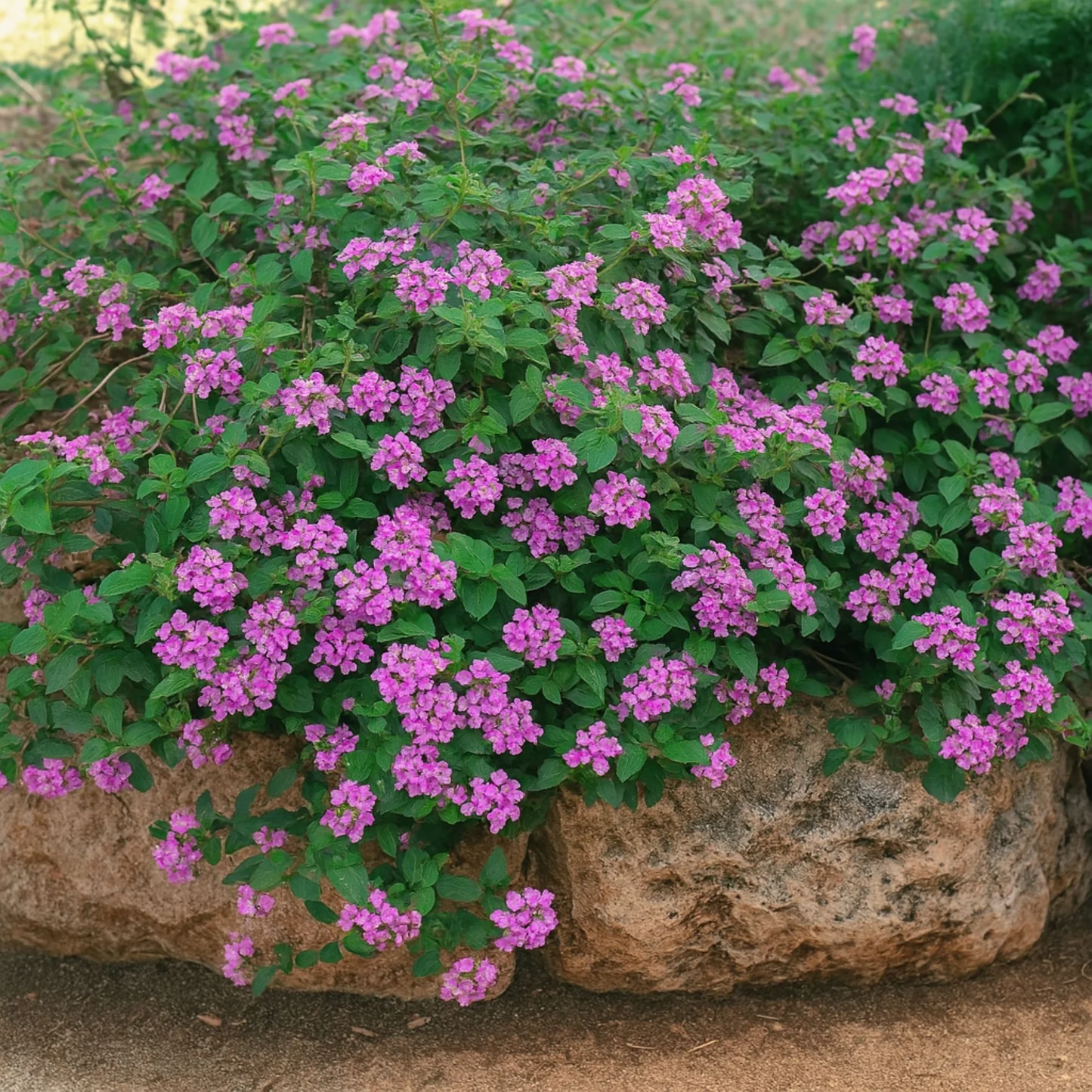
Lantana
Already doing well here. Handles the afternoon sun and flowers most of the year. Cut it back hard once in late winter, then leave it alone.
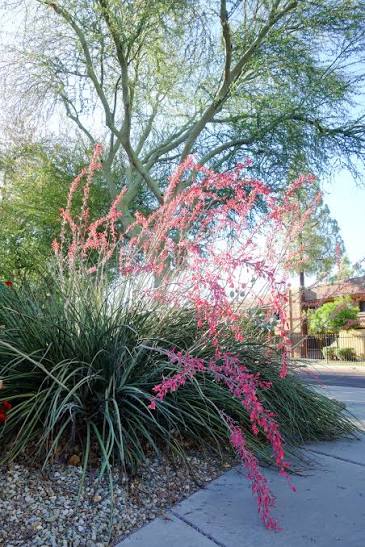
Red Yucca
Grass-like clumps with tall coral red flower spikes from spring into fall. No sharp tips.
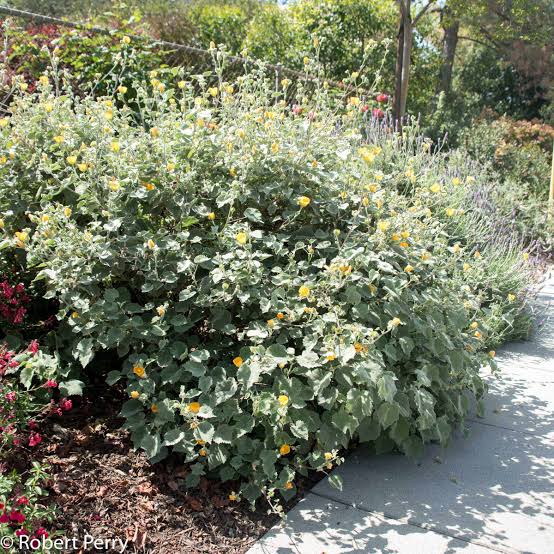
Indian Mallow
Native shrub with soft, fuzzy gray leaves and small apricot-orange flowers most of the warm season. Handles heat and reflected light, and native bees love it.
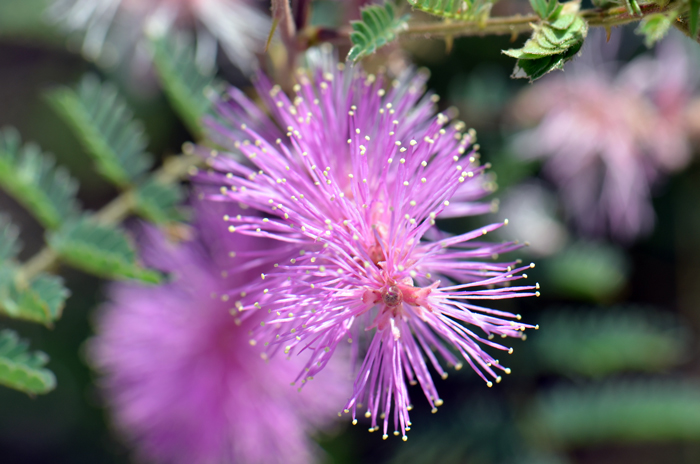
Velvet Pod Mimosa
Native shrub with fine, ferny leaves and fluffy pink puffball flowers after summer rains. Soft-looking but tough in full sun.
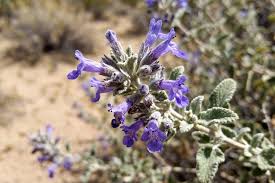
Desert Lavender
Native shrub with silvery, fragrant leaves and purple flower spikes. Bees love it, and it's rarely used in Phoenix landscapes.
Trixis
Native shrub with bright green leaves and yellow flowers in late winter and spring, about 3 feet tall. Takes full sun and part shade, and it's rarely seen in yards.
Desert Senna
Native low shrub (Senna covesii) with gray-green leaves and bright yellow flowers spring through fall. Stays about 2 feet and is a host plant for sulphur butterflies.
You can't fit all of these. Pick 3 or 4 favorites and repeat them through the space so it looks planned and full.
Under the palo verde
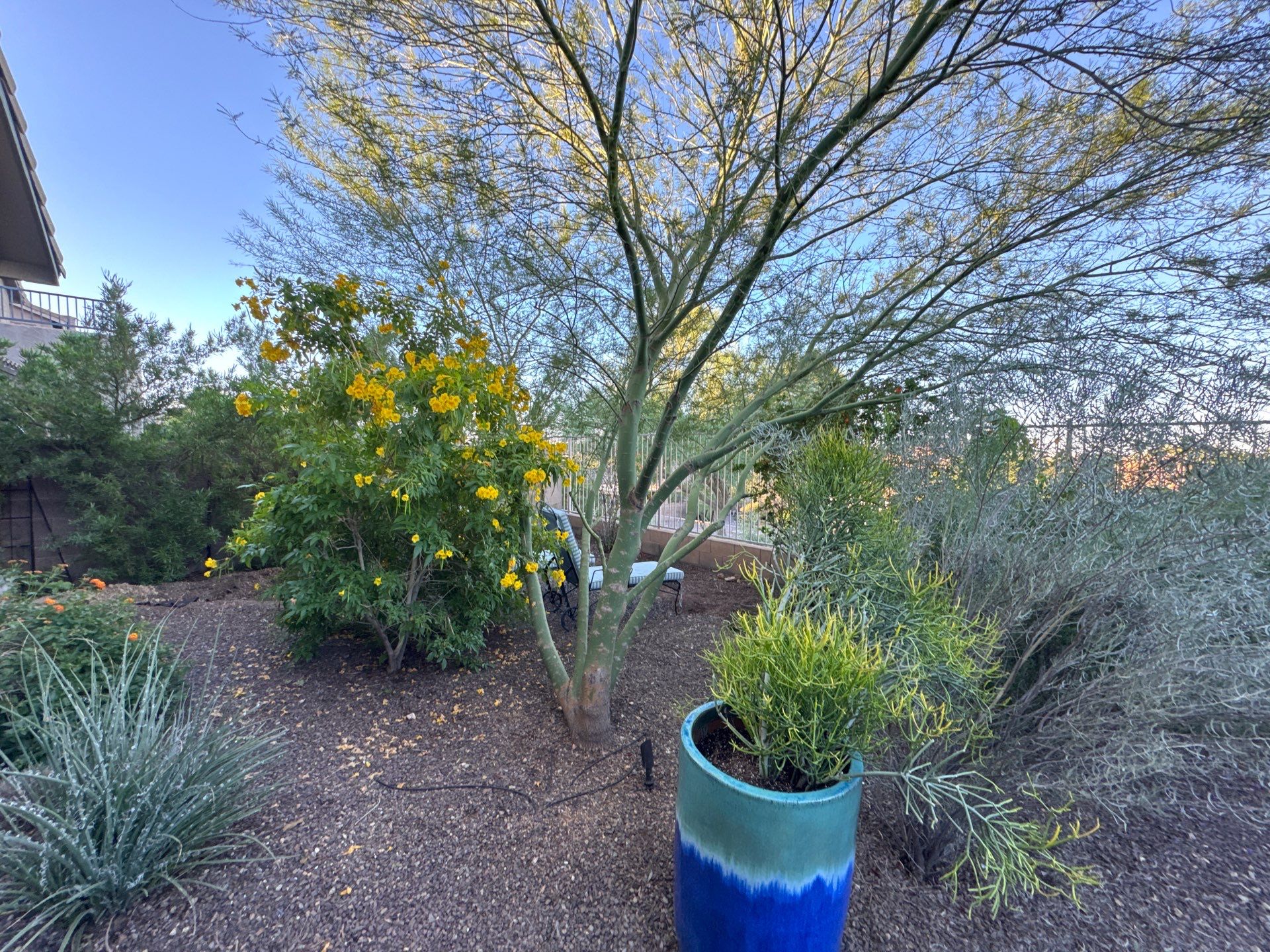
Under the palo verde, the goal is a higher canopy you can walk under and a space that's more functional to move around in. You're open to removing a lot of what's here, so here's how I'd approach it.
Raising the canopy
- Prune in late spring or early summer, after the spring bloom. Palo verdes heal fastest in warm weather.
- Remove the lowest limbs back to the trunk or a main branch, cutting just outside the branch collar (the slightly swollen ring where the branch meets the trunk). Never leave stubs and never cut flush.
- Raise it gradually. Take no more than about 25% of the canopy in one year. If it needs more, spread it over two or three seasons.
- While you're in there, take out dead wood and any branches crossing or rubbing.
- Never top it or shear the outside. For big limbs or anything you need a ladder for, King's Tree Service is who I recommend.
Making it walkable
Clear out the overgrown shrubs, then lay a simple path loop through the space, decomposed granite or flagstone to match the patio. Along the path, plant lower natives that won't grow into the walkway or block the view, and keep taller plants to the edges. That gives you a little shaded walk under the tree instead of a thicket.
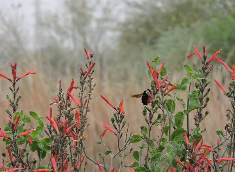
Chuparosa
Native shrub with green stems and red tubular flowers in winter and spring, when hummingbirds need them most.
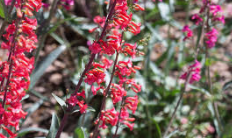
Penstemon
Tall spikes of red, pink, or purple flowers in spring. Parry's penstemon is the native pink one.
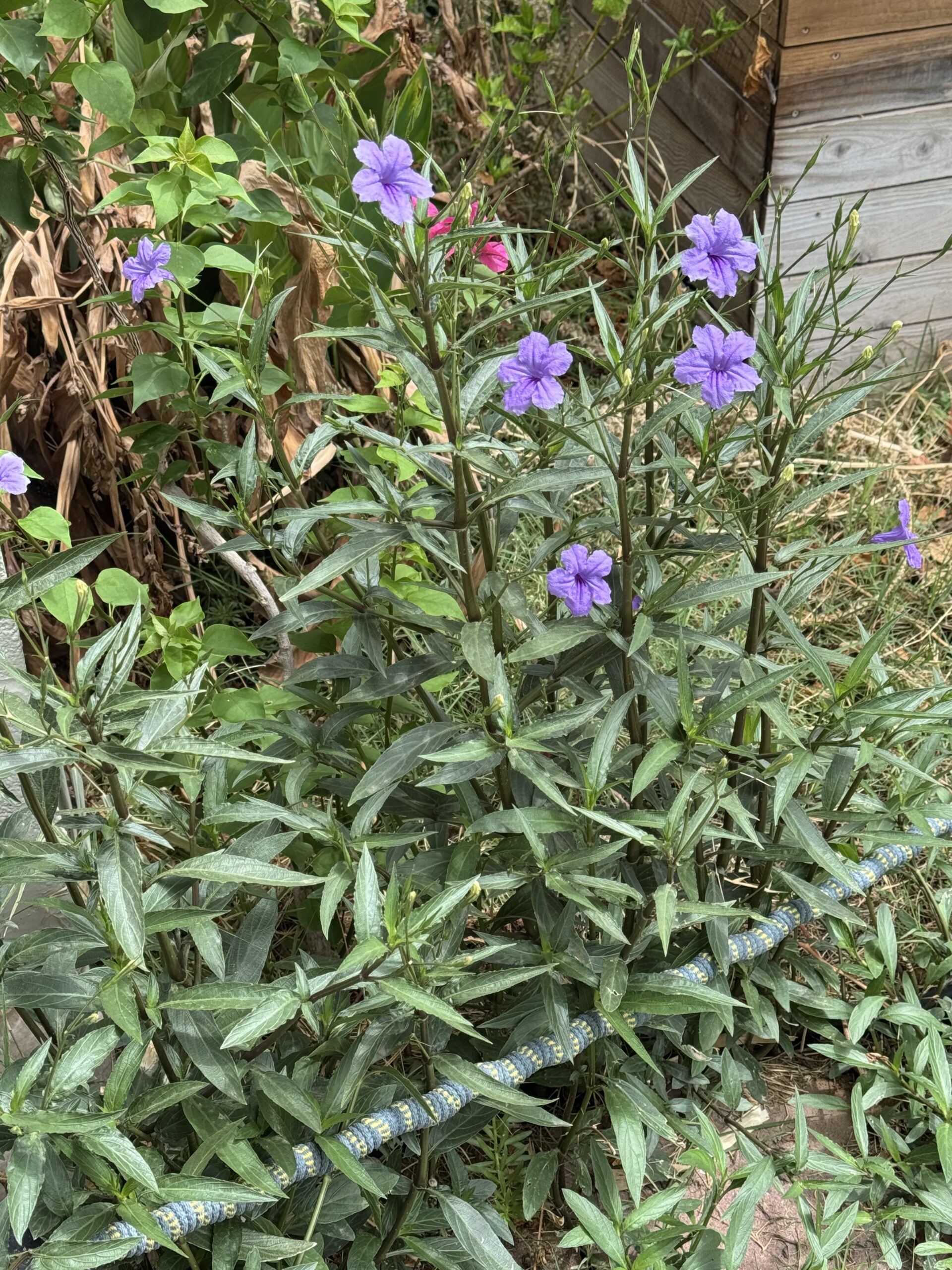
Baja Ruellia
Upright, bright green shrub covered in purple trumpet flowers most of the warm season.

Globe Mallow
Native perennial with apricot orange cup flowers in spring. Tough and reseeds a little.
Trailing Indigo Bush
Low silvery ground cover with purple flowers in spring. Spreads wide and stays tidy.

Desert Milkweed
Native milkweed with tall gray green stems and creamy flowers. A host plant for monarch butterflies.
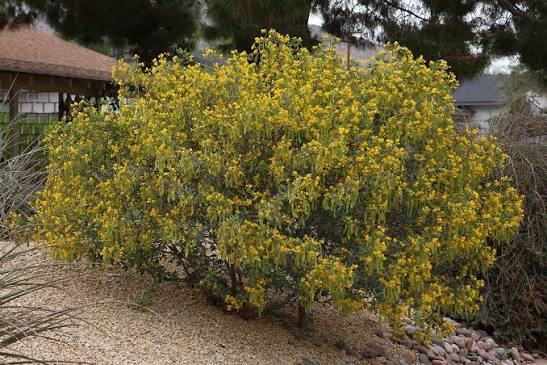
Green Feathery Senna
Fine, needle-like green leaves and yellow flowers in late winter and spring. Soft and airy.
You can't fit all of these. Pick 3 or 4 favorites and repeat them through the space so it looks planned and full.
For the outer edges of the space, where height won't get in the way, sweet almond bush adds fragrance and fills in nicely.
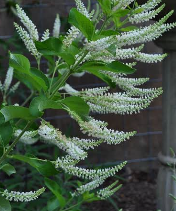
Sweet Almond Bush
Large shrub (6 to 8 feet) with spikes of tiny white flowers that smell like almond and honey, fall through spring. Bees and butterflies swarm it.
West fence line
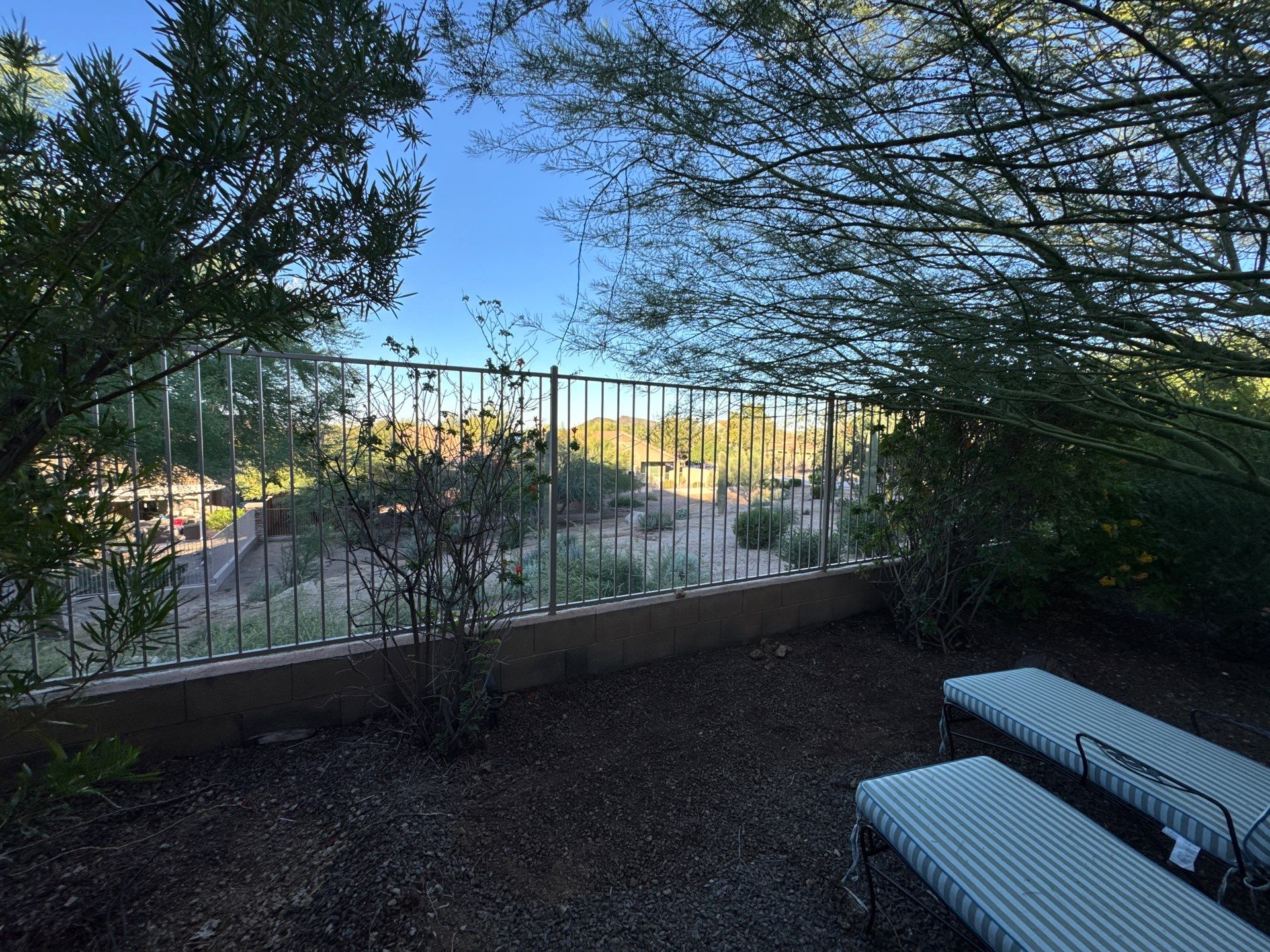
The two cape honeysuckle here are old and woody, partly from age and partly from not getting enough direct sun under the trees. This west-facing line still gets blasted in the afternoon where it's open. I'd replace them and run the same plant all the way down the line so it reads as one consistent hedge.
Sweet almond bush is a great choice here. Sugar bush and native yellow bells are two less common options that would give you a fuller screen.
Pick one plant and run it the full length so it reads as one clean line. Plant about 3 feet off the wall.
Sweet Almond Bush
Large shrub (6 to 8 feet) with spikes of tiny white flowers that smell like almond and honey, fall through spring. Bees and butterflies swarm it.
Sugar Bush
Native evergreen shrub with thick, glossy leaves and clusters of pinkish-white flowers in spring. Dense enough to make a real screen, and it takes less water than plants that aren't desert adapted. A rare sight in Phoenix yards.
Native Yellow Bells
The Arizona native form of yellow bells (Tecoma stans var. angustata). Finer, narrower leaves and more cold hardy than the common nursery version, with the same yellow trumpet flowers spring through fall.
Jojoba
Native evergreen shrub with leathery blue-green leaves that makes a dense, natural hedge. Very tough in reflected heat, and the female plants make the seeds jojoba oil comes from. Most people never think of it as a hedge.
Desert Hackberry
Native, thorny, very dense shrub with tiny leaves and small orange berries that birds love. One of the best wildlife plants in the Sonoran Desert, and almost nobody plants it on purpose.
Arizona Rosewood
Native evergreen with dark green leaves. Dense, handles full sun and reflected heat, and makes a solid screen.
Orange Jubilee
Big clusters of orange trumpet flowers spring through fall. Hummingbirds love it and even nest in it.
Side yard
Side yard between the house and block wall
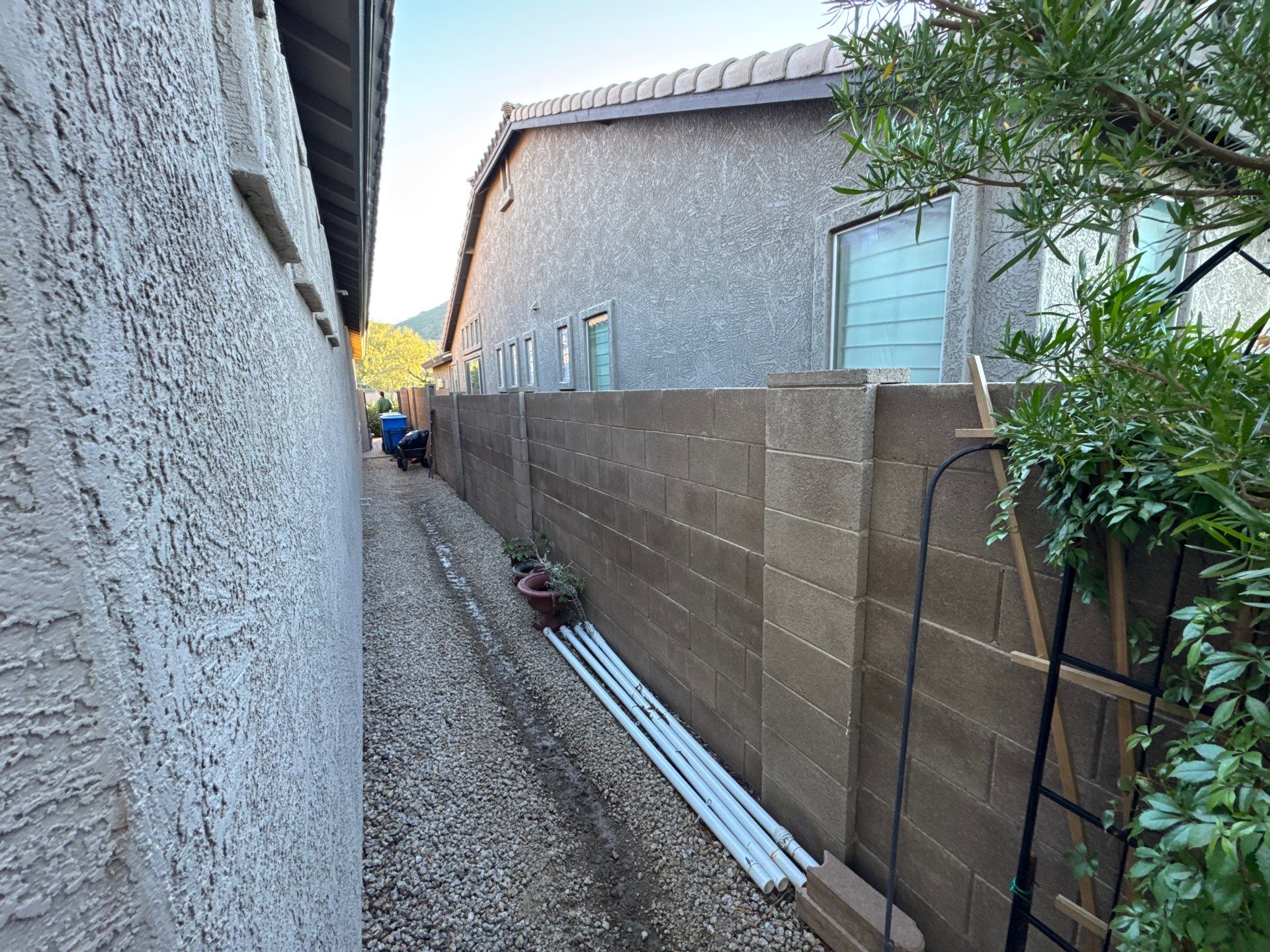
For this narrow space between the house and the block wall, hacienda creeper is what you're thinking, and it's what I'd recommend too. It self-clings, so no trellis needed, and it stays flat against the wall so the walkway stays open. Use the same plant on both walls, or mix and match. Space plants about 6 to 8 feet apart along each wall.
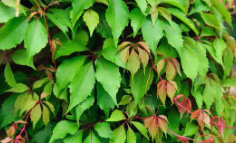
Hacienda Creeper
Self-clinging vine that covers a wall flat, green in summer and red in fall. My pick for this side yard.
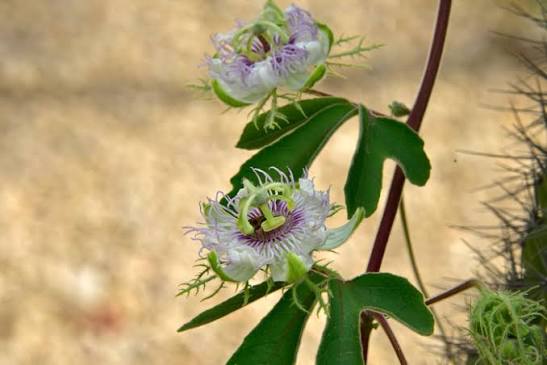
Native Passionflower
Arizona's native passionflower. Delicate, intricate flowers and a host plant for fritillary butterflies, so expect caterpillars, which is the point.
Tangerine Crossvine
Evergreen vine with orange trumpet flowers in spring. Clings and climbs on its own, handles full sun, very tough.
Yellow Orchid Vine
Sonoran native vine with bright yellow flowers spring through fall. After it blooms, the seed pods dry into shapes that look like little butterflies. Rarely used in Phoenix yards.
Snapdragon Vine
Delicate native vine with small purple snapdragon-like flowers. Light and airy, great for a trellis or awning where you want dappled cover rather than a solid wall of green. Can freeze back and returns.
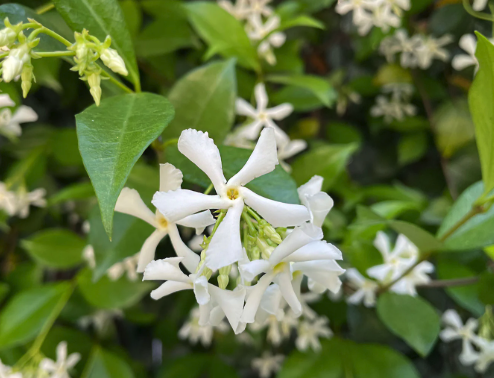
Star Jasmine
Evergreen vine with very fragrant white flowers in spring. Needs a trellis or wire to climb.
Bleeding Heart Vine
Twining vine with glossy leaves and clusters of white flowers with bright red centers that look like little hearts. Loves morning sun or bright shade and protection from afternoon heat. It's frost tender, so it may die back in a cold winter and return.
Native passionflower and bleeding heart vine need a trellis or wire to climb. Bleeding heart vine only works on the side of the passage that stays shaded in the afternoon.
Front yard
Small tree by the driveway
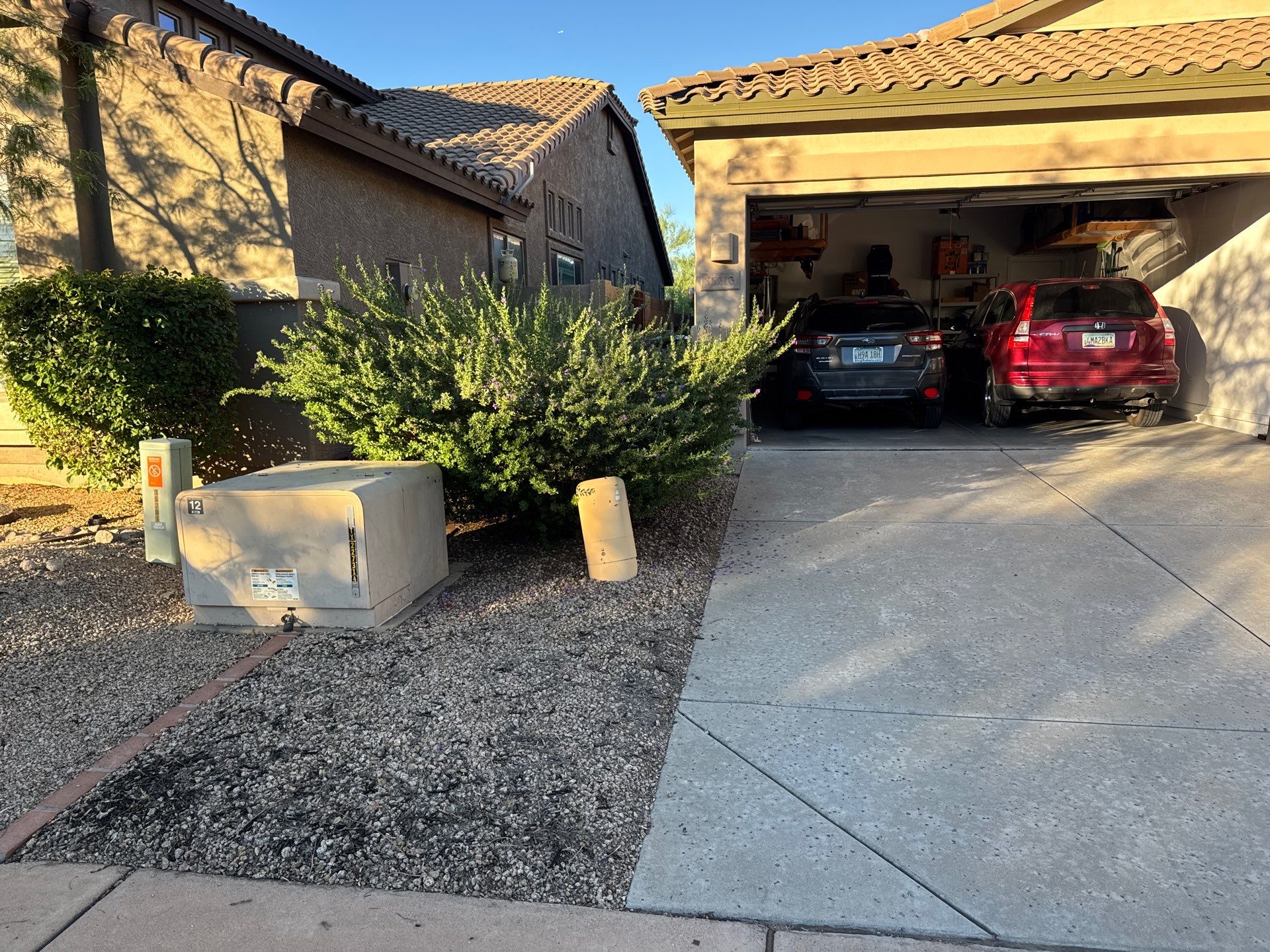
There are utility lines running through this bed where the sage is, so the tree here needs to be smaller, with roots that aren't invasive. Vitex is a great choice, and I like it a lot. Texas olive is another good one. Here are some other small to midsize trees with well-behaved roots, including a few you won't see in every yard.
Before you dig, call Arizona 811 (dial 811) to have the lines marked. It's free, and it tells you exactly how far off the lines you need to plant.
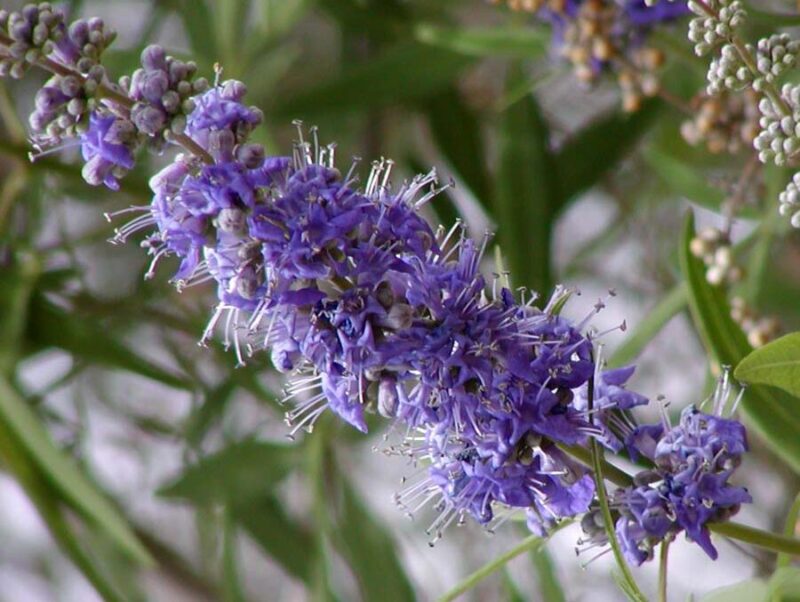
Vitex
Small tree with purple flower spikes all summer, a magnet for native bees and butterflies. Roots aren't aggressive, and it stays 15 to 20 feet.

Texas Olive
Small tree with large white flowers through the warm months and a well-behaved root system. Mostly evergreen here.
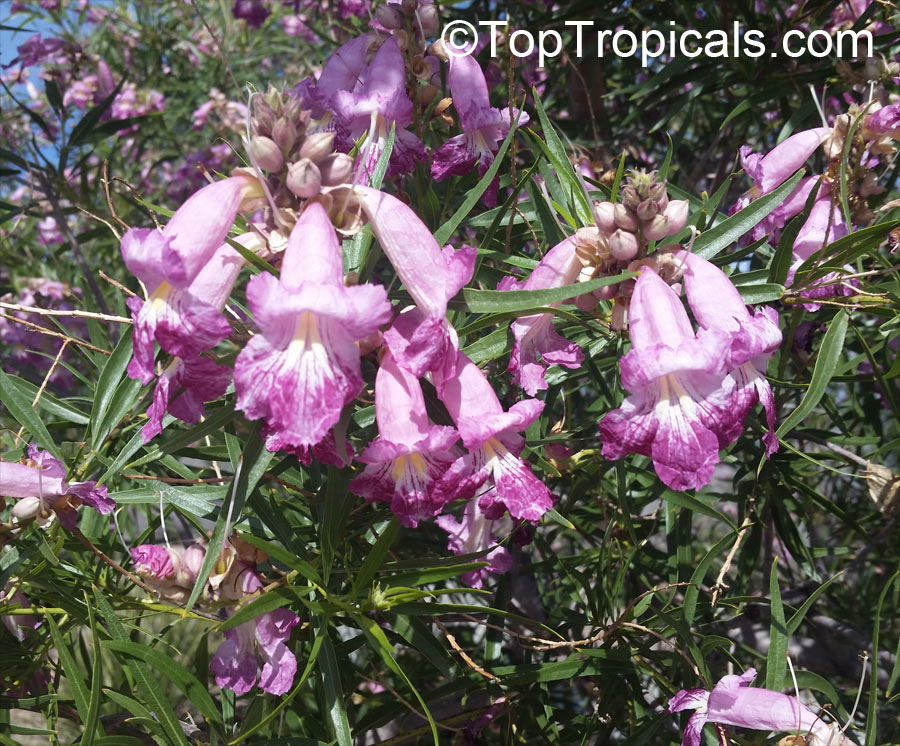
Desert Willow (Bubba or Burgundy)
Small native tree. Bubba and Burgundy have dark purple-burgundy flowers all summer. Light, airy shade and non-invasive roots.
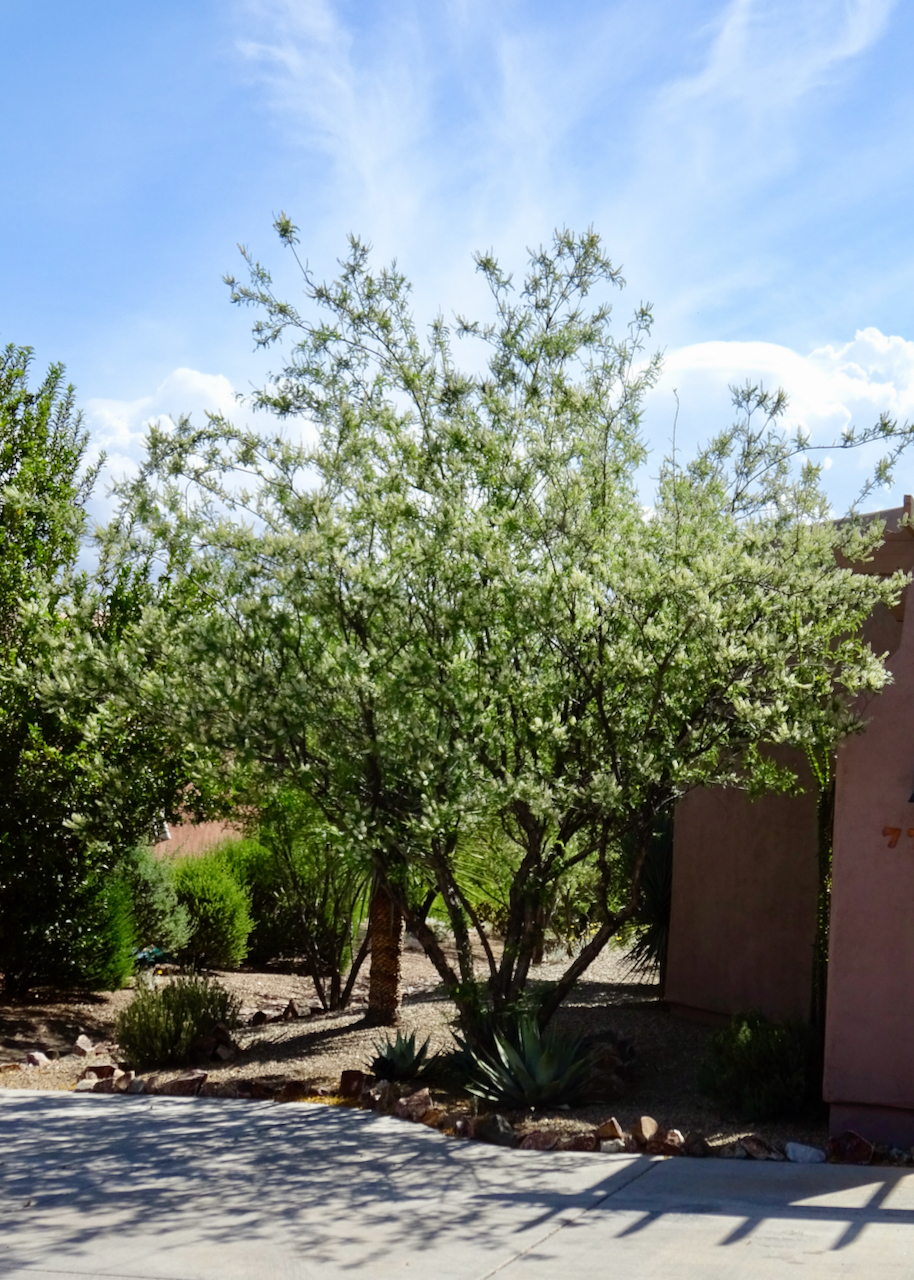
Kidneywood
Small native tree with fine, ferny leaves and fragrant white flower spikes after summer rains. Stays under 15 feet and almost nobody uses it.
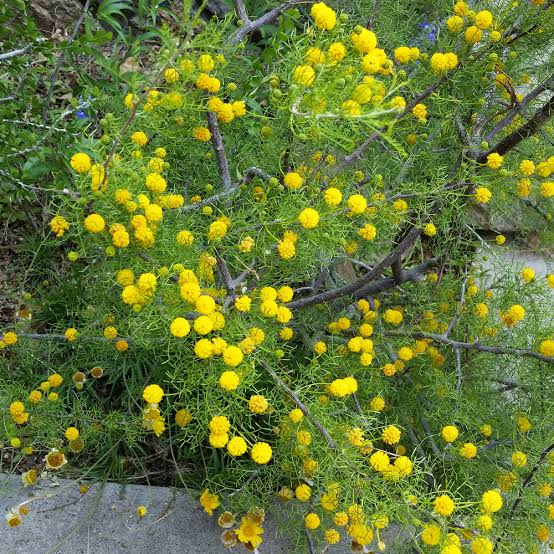
Golden Lead Ball Tree
Small tree with bright yellow puffball flowers off and on through the warm months. Fine, ferny leaves. Very few people here use it.
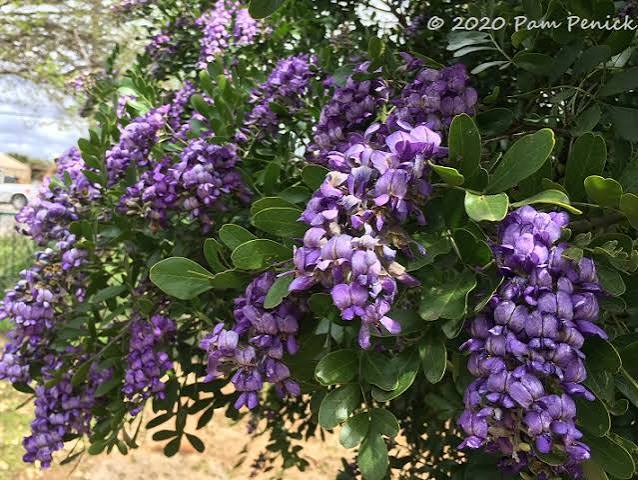
Texas Mountain Laurel
Evergreen small tree with purple flower clusters in early spring that smell like grape soda. Slow growing. The seeds are toxic.
Lower shrubs around it
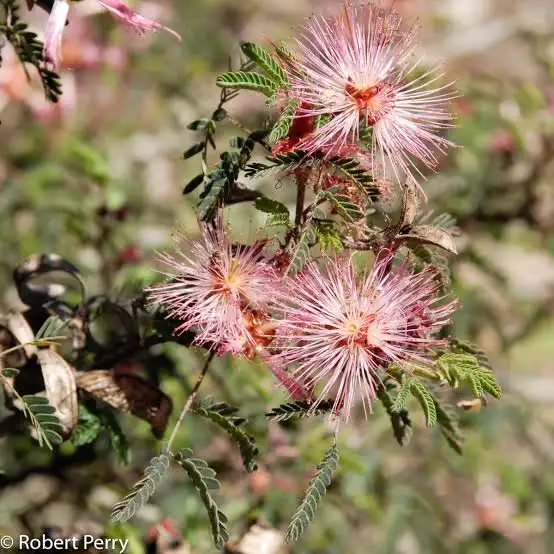
Pink Fairy Duster
Native low shrub with soft pink puffball flowers in spring. Stays small, perfect under a window.
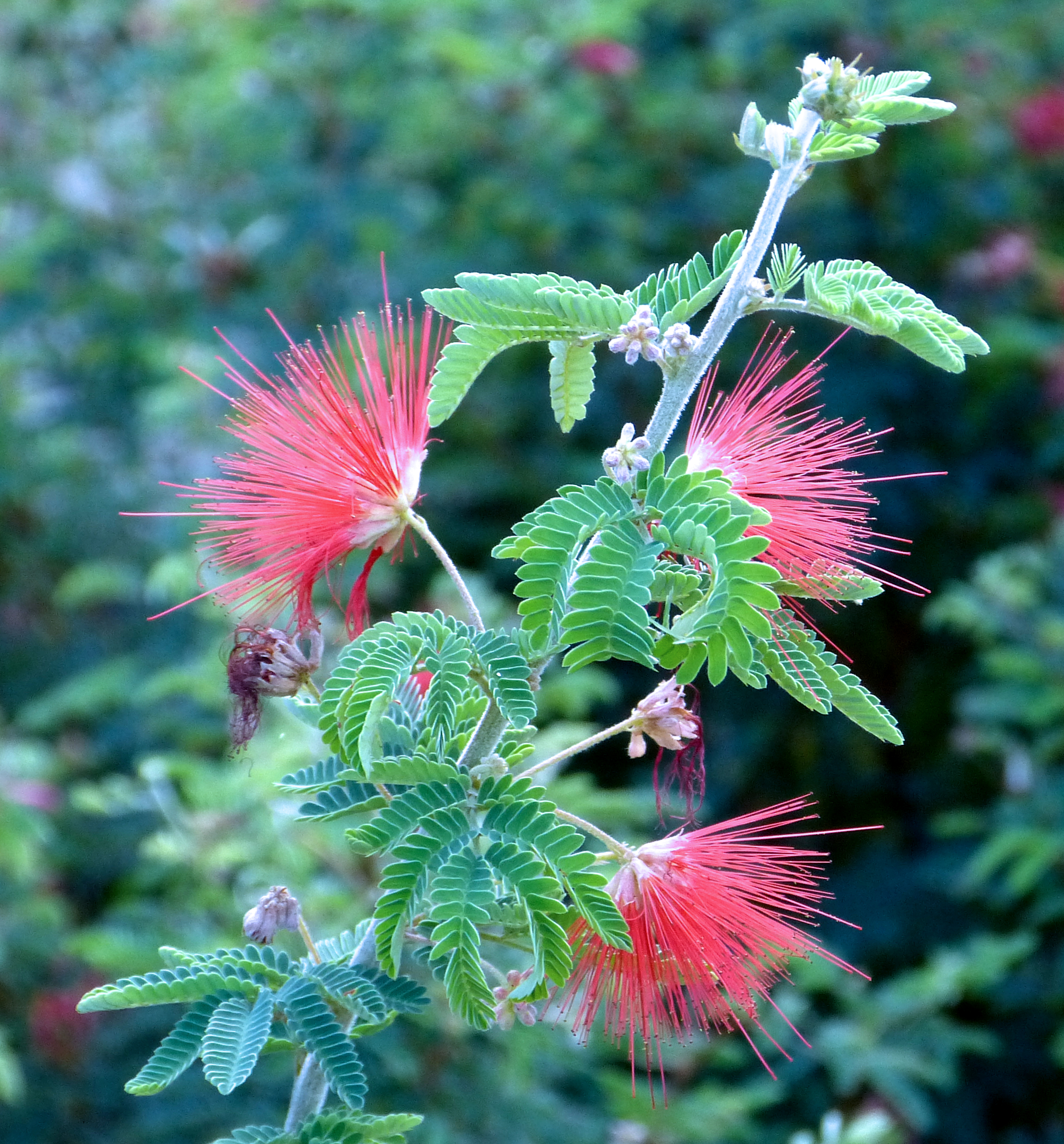
Baja Fairy Duster
Bright red puffball flowers most of the year and a hummingbird favorite. Open, airy shape.
Little Ollie (Dwarf Olive)
Evergreen dwarf olive that stays around 4 to 6 feet with no fruit and no pollen. Takes full afternoon sun and keeps a neat shape without shearing.
Turpentine Bush
Native, compact, bright green year round with yellow flowers in fall. Crush a leaf and you'll know where the name comes from.
Penstemon
Tall spikes of red, pink, or purple flowers in spring. Parry's penstemon is the native pink one.
Water well
Every tree gets a water well: pull the rock back about 3 feet from the trunk in every direction and build a shallow basin with a raised edge so water soaks down into the roots. Fill it with mulch instead of rock, keeping the mulch about a foot back from the trunk. Rock holds heat and bakes the roots; mulch keeps them cool, holds moisture, and feeds the soil.
East-facing front window
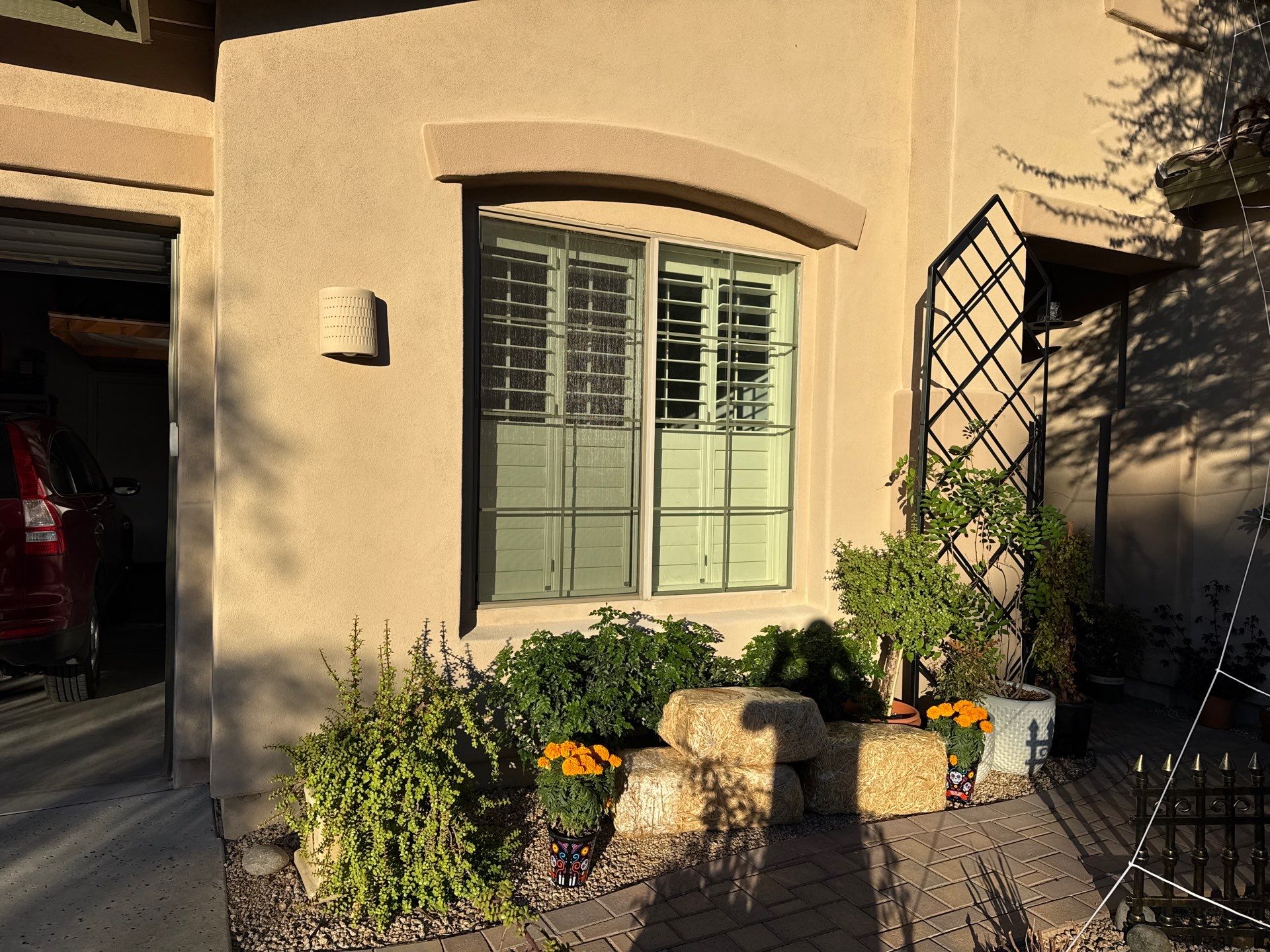
This spot right in front of the house faces east, so it gets morning sun and afternoon shade. Everything here stays low enough to sit under the window, around 2 to 4 feet.
Pink Fairy Duster
Native low shrub with soft pink puffball flowers in spring. Stays small, perfect under a window.
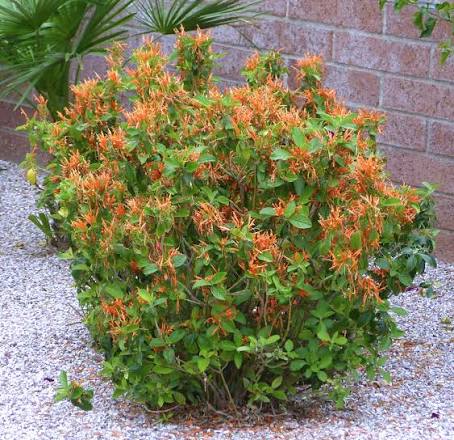
Mexican Honeysuckle
Soft, lime-green shrub with orange tubular flowers most of the year. Does great in morning sun or shade and stays under a window.
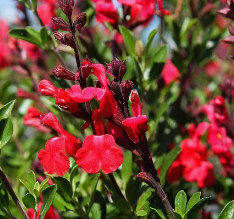
Autumn Sage
Small shrub with red, pink, or white flowers spring and fall. Loves morning sun.
Penstemon
Tall spikes of red, pink, or purple flowers in spring. Parry's penstemon is the native pink one.
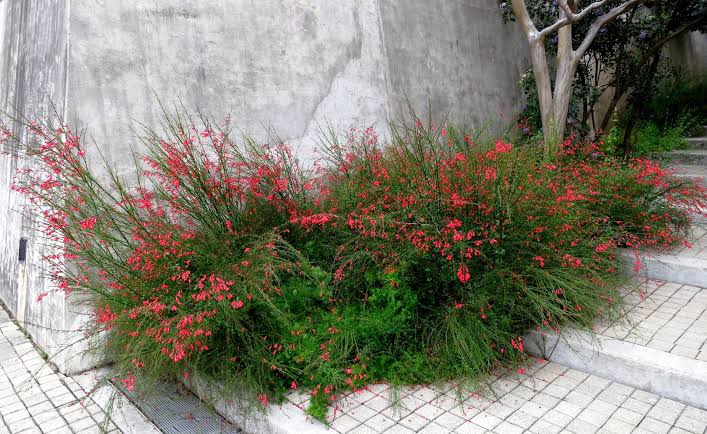
Firecracker Plant
Upright stems with bright red tubular flowers that hummingbirds love.
Baja Ruellia
Upright, bright green shrub covered in purple trumpet flowers most of the warm season.
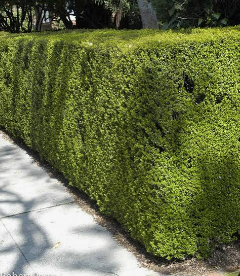
Dwarf Myrtle
Compact evergreen myrtle with small, fragrant leaves and white flowers. Stays low and dense, a good low hedge.
You can't fit all of these. Pick 3 or 4 favorites and repeat them through the space so it looks planned and full.
East-facing window with the vines
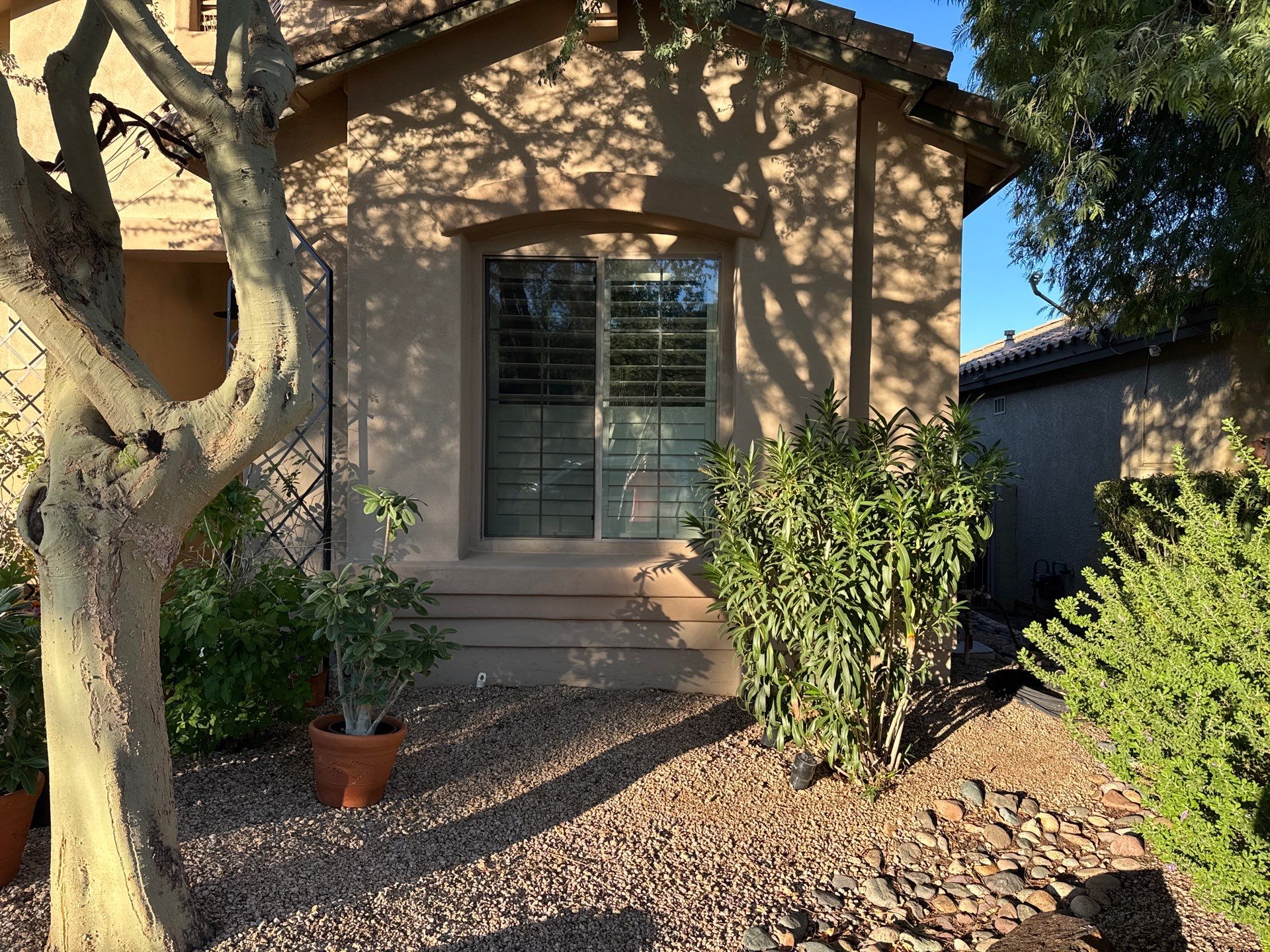
The oleander here is coming out. In its place, a lower shrub that grows under the window, and then vines on either side like you're already doing with the American wisteria. Morning sun and afternoon shade opens up some less common options here, both for the shrub under the window and for the vines.
Under the window
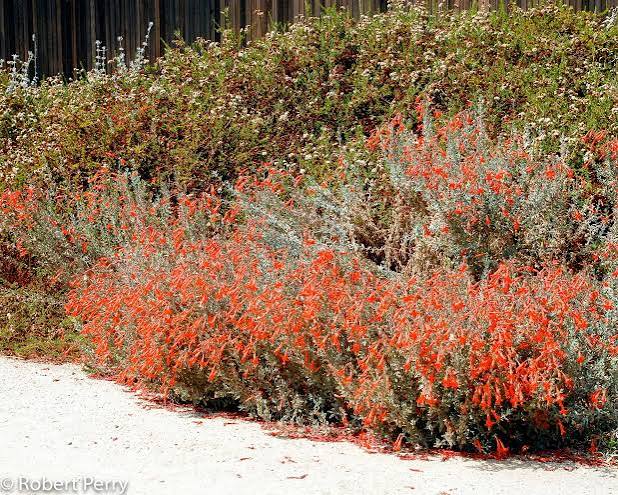
Desert Fuchsia
Native perennial with tubular scarlet flowers in late summer and fall, right when hummingbirds are migrating through. Likes morning sun and some afternoon relief.
Trixis
Native shrub with bright green leaves and yellow flowers in late winter and spring, about 3 feet tall. Takes full sun and part shade, and it's rarely seen in yards.
Feather Dalea
Native, small, open shrub with feathery purple and yellow flowers in spring. Stays 2 to 3 feet with a soft, wispy look.
Pink Fairy Duster
Native low shrub with soft pink puffball flowers in spring. Stays small, perfect under a window.
Mexican Honeysuckle
Soft, lime-green shrub with orange tubular flowers most of the year. Does great in morning sun or shade and stays under a window.
Vines on either side
Bleeding Heart Vine
Twining vine with glossy leaves and clusters of white flowers with bright red centers that look like little hearts. Loves morning sun or bright shade and protection from afternoon heat. It's frost tender, so it may die back in a cold winter and return.
Native Passionflower
Arizona's native passionflower. Delicate, intricate flowers and a host plant for fritillary butterflies, so expect caterpillars, which is the point.
Snapdragon Vine
Delicate native vine with small purple snapdragon-like flowers. Light and airy, great for a trellis or awning where you want dappled cover rather than a solid wall of green. Can freeze back and returns.
Yellow Orchid Vine
Sonoran native vine with bright yellow flowers spring through fall. After it blooms, the seed pods dry into shapes that look like little butterflies. Rarely used in Phoenix yards.
Canyon Grape
Arizona's native wild grape. Fast, big leaves for real shade over an awning or pergola, great fall color, and small fruit the birds love.
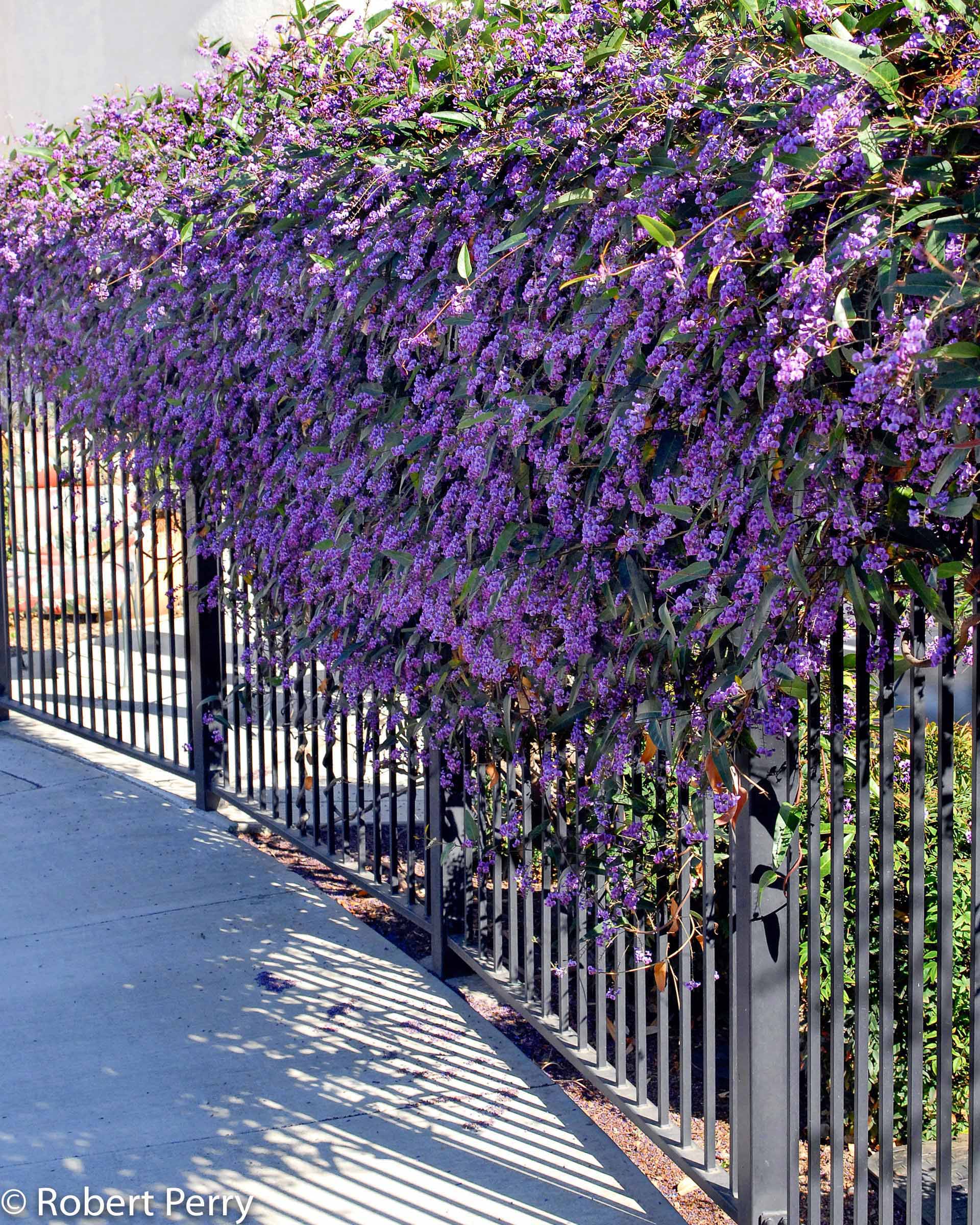
Purple Lilac Vine
Evergreen vine with purple flower clusters in late winter and early spring. Likes morning sun.
North-facing side of the house
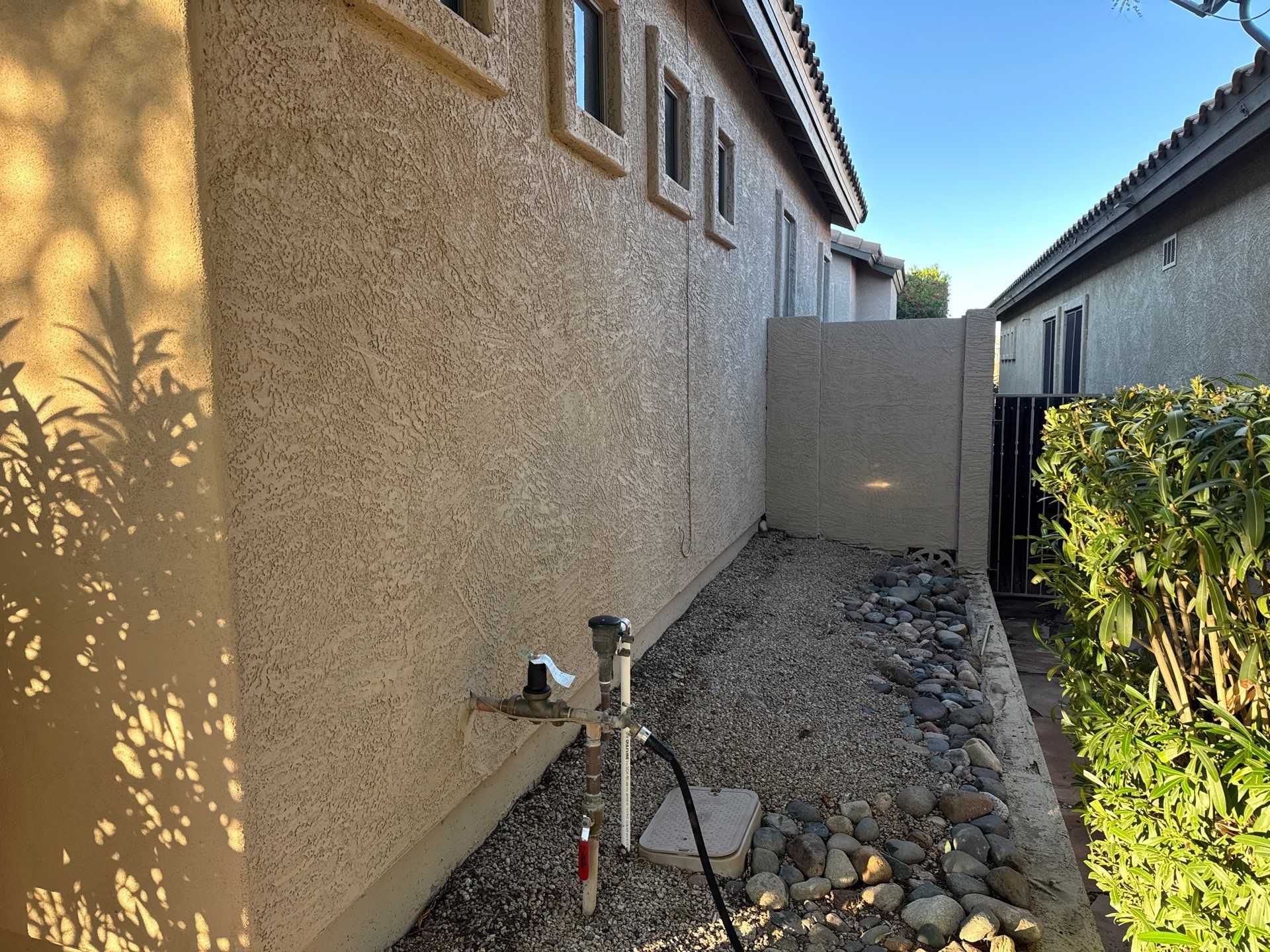
This side of the house faces north and gets a lot of shade. If you decide to do something here, these all handle shade and still look good. Keep them a couple of feet off the house and away from the hose bib.
Mexican Honeysuckle
Soft, lime-green shrub with orange tubular flowers most of the year. Does great in morning sun or shade and stays under a window.
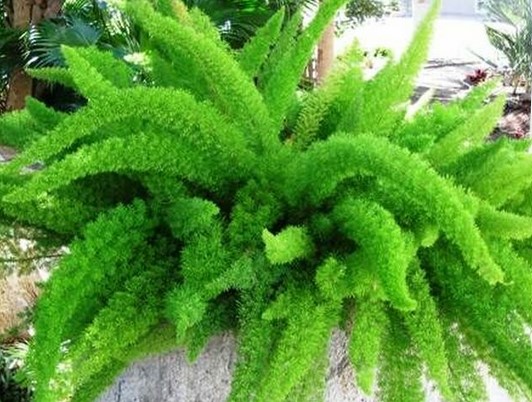
Foxtail Fern
Fluffy, upright plumes that look great in shade. Handles our heat in a shady spot.
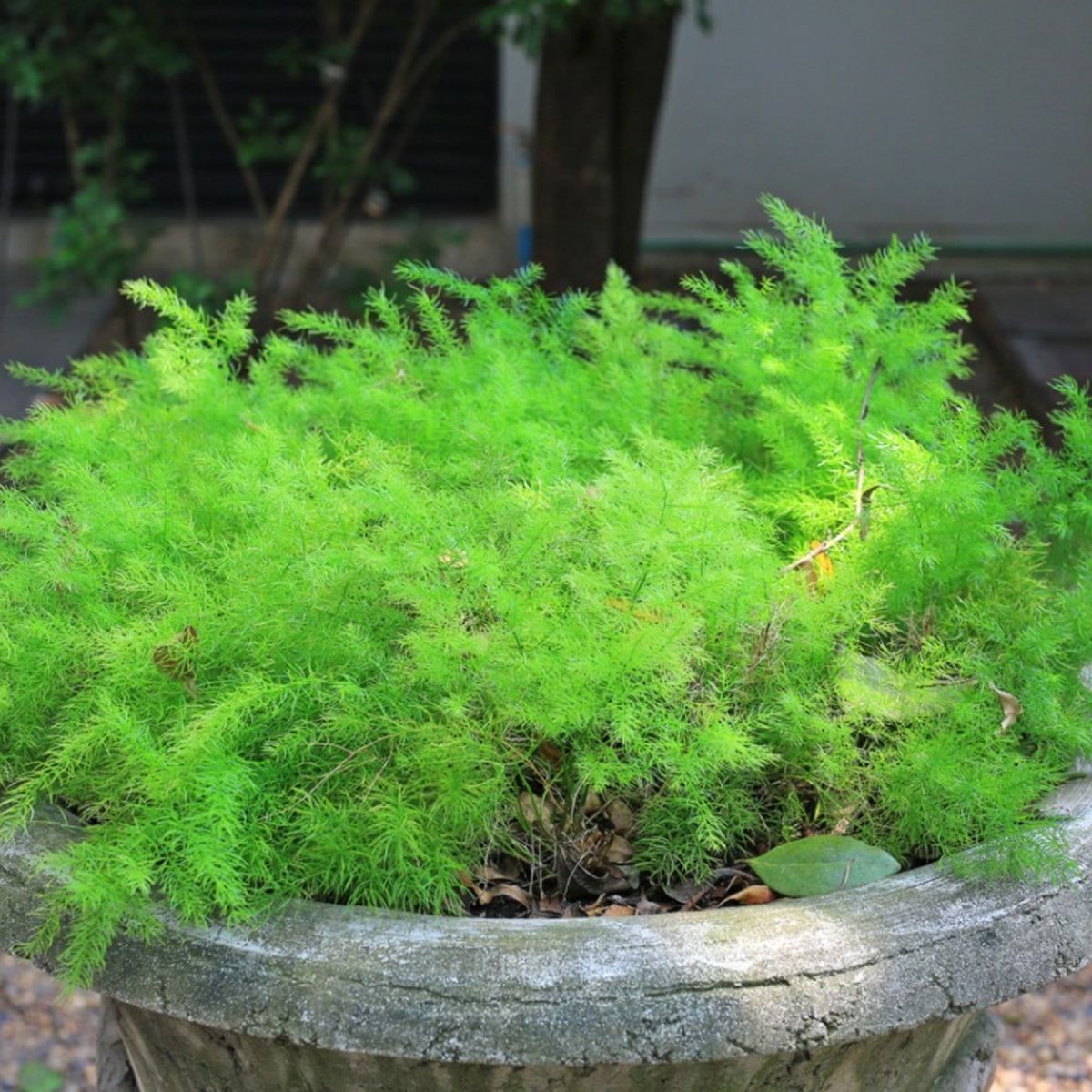
Asparagus Fern
Soft, feathery mounds that fill in shady areas fast.

Purple Heart
Deep purple leaves with small pink flowers. Spreads easily and brightens up shade.
Silver Ponyfoot
Trailing silver ground cover with small round leaves. Does well in the dappled shade that will develop under the pistache.
Bleeding Heart Vine
Twining vine with glossy leaves and clusters of white flowers with bright red centers that look like little hearts. Loves morning sun or bright shade and protection from afternoon heat. It's frost tender, so it may die back in a cold winter and return.
Star Jasmine
Evergreen vine with very fragrant white flowers in spring. Needs a trellis or wire to climb.
Front yard
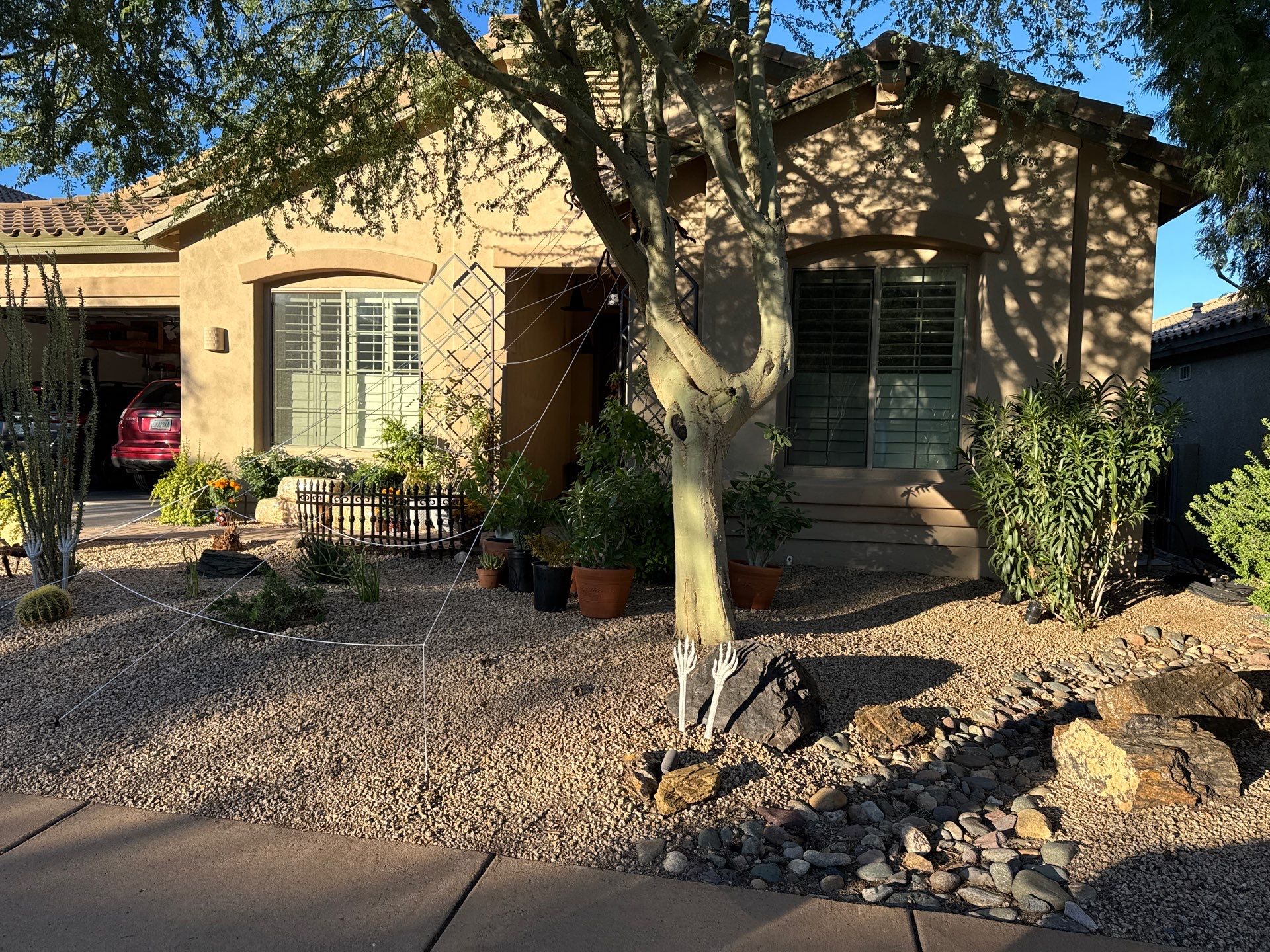
For the front yard overall, here are some options that fit your style: desert adapted, with a lot of unusual, sculptural plants mixed with natives that flower. Mixing a few strong accents (ocotillo, totem pole, agave) with softer flowering shrubs and grasses around them looks natural and gives the yard a lot of depth.
Sculptural accents
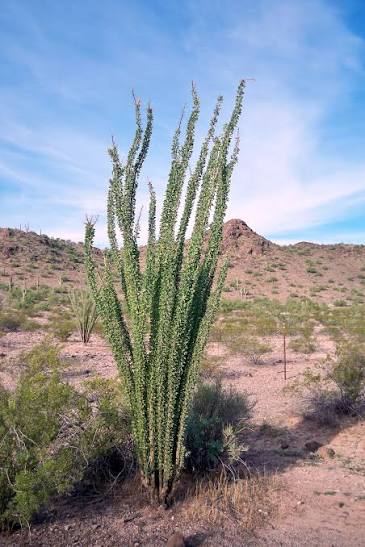
Ocotillo
Native living sculpture: tall, whip-like canes that leaf out after rain and tip with red flowers in spring. Hummingbirds love it.
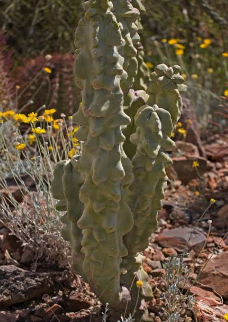
Totem Pole Cactus
Spineless, lumpy, sculptural columnar cactus. Unusual and very cool next to softer plants.
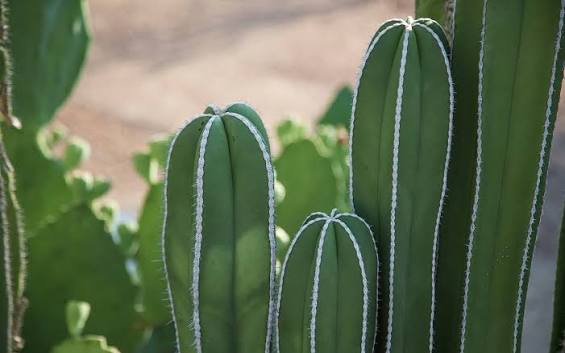
Mexican Fence Post Cactus
Tall, clean, ribbed columns. Great vertical accent.
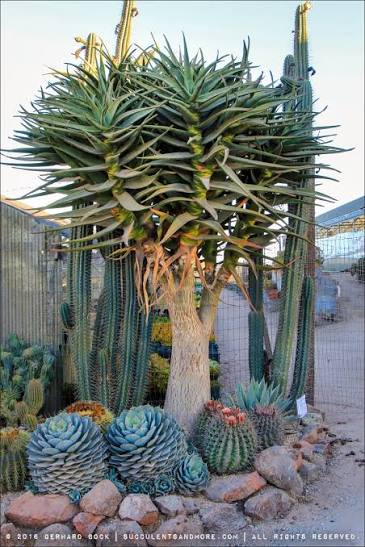
Hercules Agave
Big, upright agave with a strong architectural look. Rarely seen in yards.
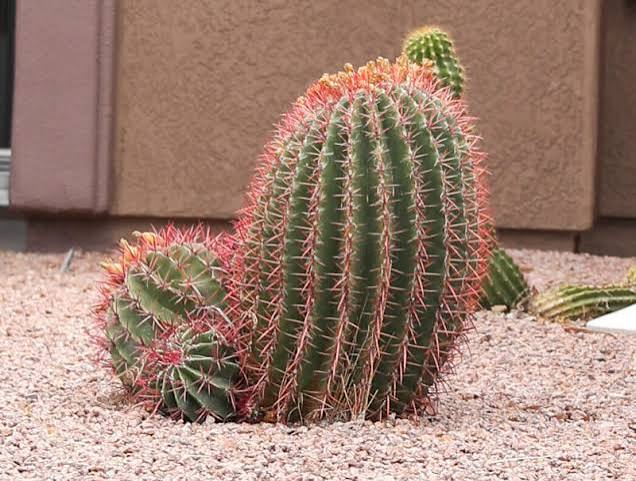
Fishhook Barrel Cactus
Native barrel cactus with hooked red spines and a crown of orange or yellow flowers in summer.
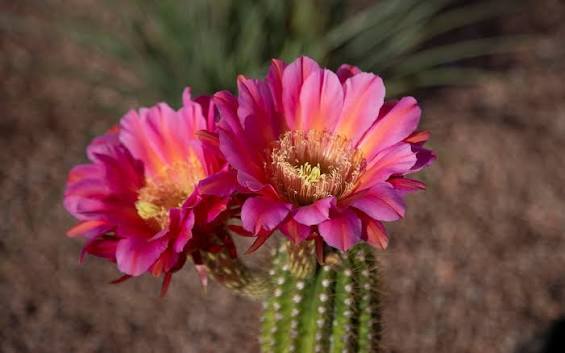
Hedgehog Cactus
Small clumping native cactus with huge magenta flowers in spring.
Flowering natives and grasses
Desert Lavender
Native shrub with silvery, fragrant leaves and purple flower spikes. Bees love it, and it's rarely used in Phoenix landscapes.
Sweet Almond Bush
Large shrub (6 to 8 feet) with spikes of tiny white flowers that smell like almond and honey, fall through spring. Bees and butterflies swarm it.
Chuparosa
Native shrub with green stems and red tubular flowers in winter and spring, when hummingbirds need them most.
Globe Mallow
Native perennial with apricot orange cup flowers in spring. Tough and reseeds a little.
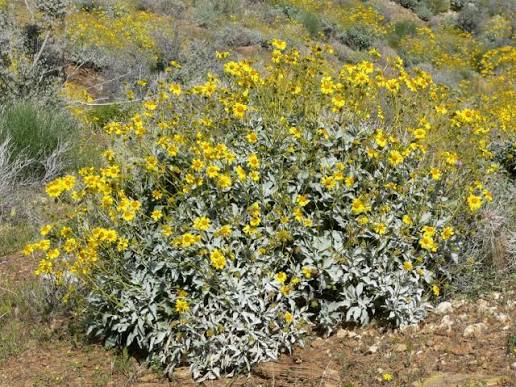
Brittlebush
Native silver-leaved mound covered in yellow daisies in spring.
Penstemon
Tall spikes of red, pink, or purple flowers in spring. Parry's penstemon is the native pink one.
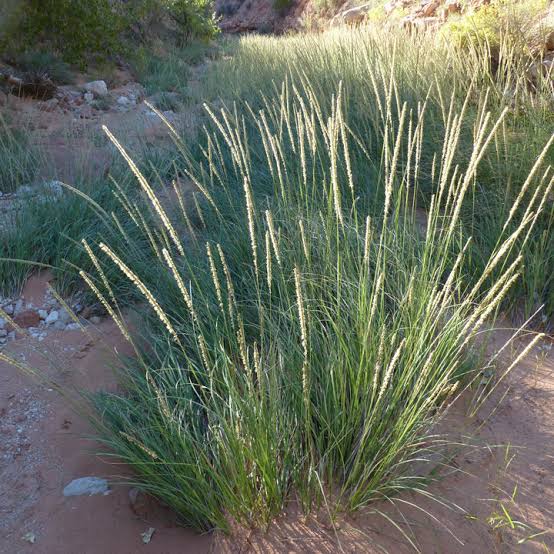
Deer Grass
Native bunch grass with a big fountain shape and tall flower spikes.
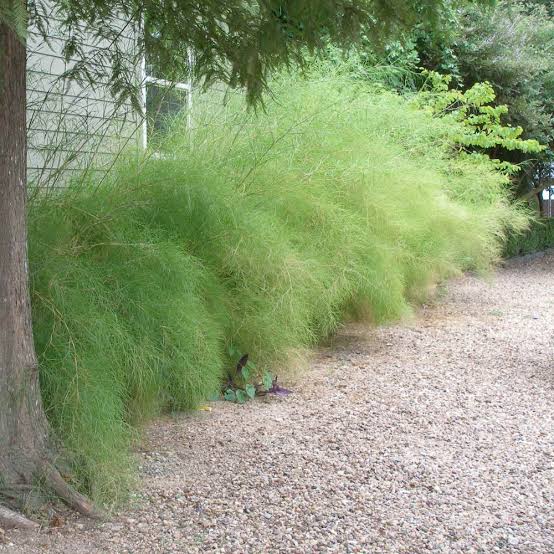
Bamboo Muhly
Tall, airy grass with fine, feathery leaves. Moves with every breeze.
Desert Milkweed
Native milkweed with tall gray green stems and creamy flowers. A host plant for monarch butterflies.
You can't fit all of these. Pick 3 or 4 favorites and repeat them through the space so it looks planned and full.
Street strip
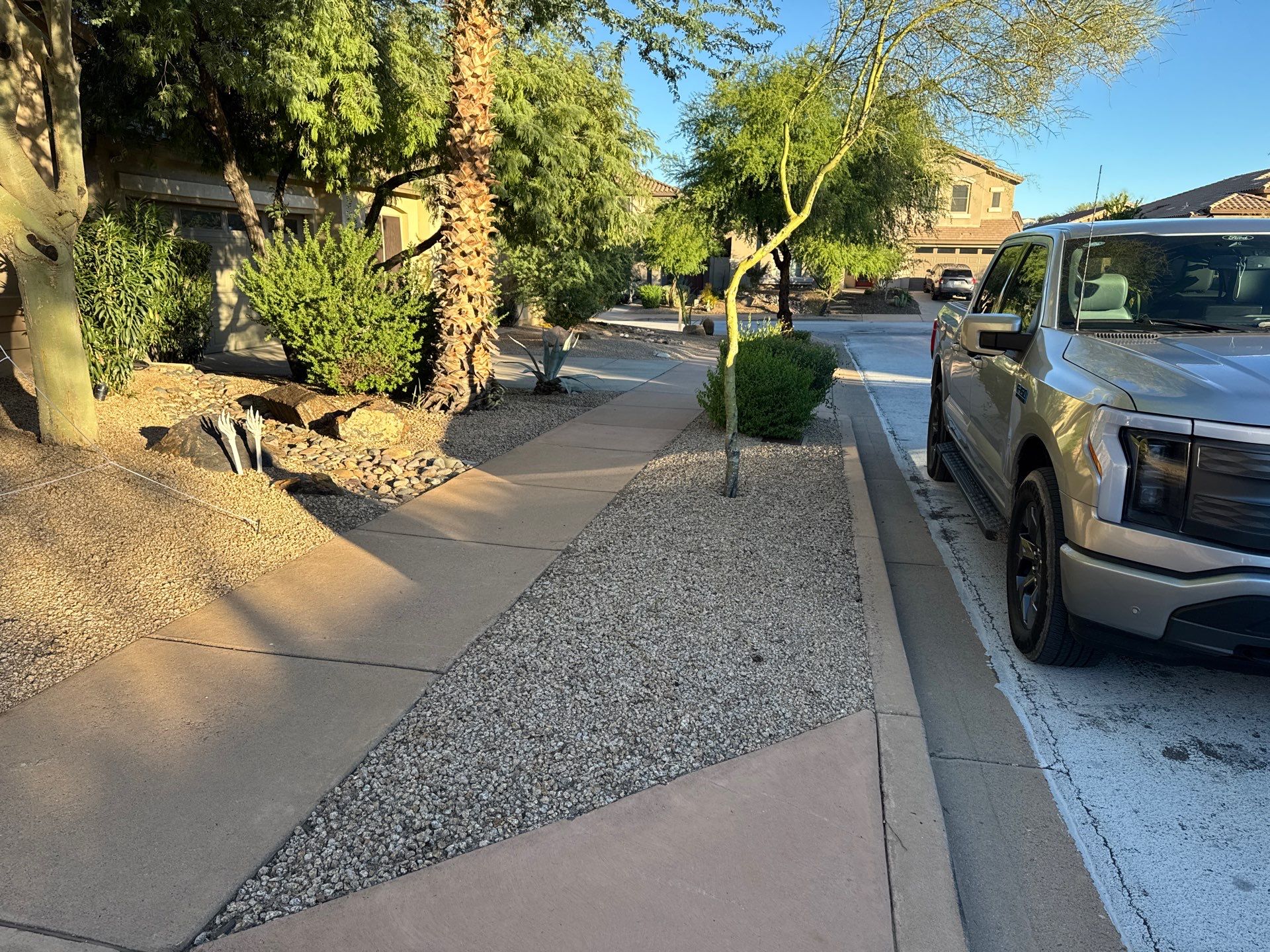
In this small strip in front of the house, you're thinking creosote, and I love that idea. It's native, evergreen, and that smell after a rain is hard to beat. Here are some other options that fit the same vibe. Since car doors open onto this strip, keep anything with spines (cactus, agave) out of it and stick to soft plants that stay under about 3 feet, except the creosote, which you can thin to stay airy.
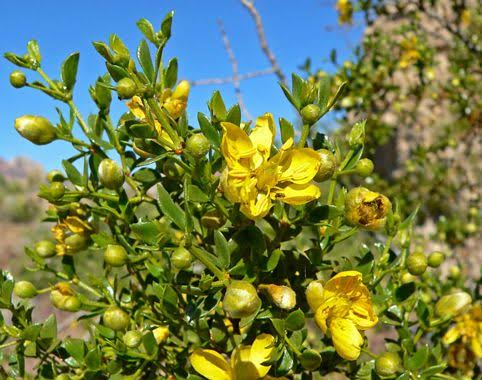
Creosote
The smell of rain in the desert. Native, evergreen, small yellow flowers, and it can be lightly thinned to keep it airy. Great choice for this strip.
Brittlebush
Native silver-leaved mound covered in yellow daisies in spring.
Globe Mallow
Native perennial with apricot orange cup flowers in spring. Tough and reseeds a little.
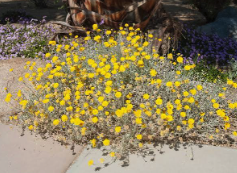
Desert Marigold
Native with soft gray leaves and bright yellow flowers spring through fall. Low and easy.
Turpentine Bush
Native, compact, bright green year round with yellow flowers in fall. Crush a leaf and you'll know where the name comes from.
Sunrise Emu
Low spreading ground cover with gray green leaves and yellow flowers late winter into spring. One of my favorites for hot spots.
Trailing Indigo Bush
Low silvery ground cover with purple flowers in spring. Spreads wide and stays tidy.
You can't fit all of these. Pick 3 or 4 favorites and repeat them through the space so it looks planned and full.
Planting everything above
Dig the hole as deep as the root ball and two to three times as wide. Backfill with your native soil and a tiny bit of compost mixed in. Then lay compost on top of the soil and mulch over the compost. Don't work it in. Keep mulch about a foot back from the trunk of every tree and shrub. In rock areas, pull the rock back to make room for the compost and mulch. Every tree gets a water well with mulch instead of rock.
Fertilizing
Everything in this write-up comes back to the soil. The desert adapted and native plants need very little feeding: mulch and a light layer of compost once a year is plenty. The potted citrus, the pistache, the bougainvillea, and the vines need regular feeding to stay healthy and handle the heat. Feeding is really about feeding the soil life. Fungi, bacteria, and worms break down organic matter and hand nutrients to the roots, all without synthetic fertilizers.
- Compost: Spread a generous layer around the drip line of the trees (out where the canopy ends, not against the trunk) and closer in around the shrubs and vines. Arizona Worm Farm is my go-to.
- Worm castings: Add a layer every quarter around the trees and shrubs, and top-dress the citrus pots.
- Organic fertilizer, monthly: These are the three Catalyst products I rotate through every month. You can order them online.
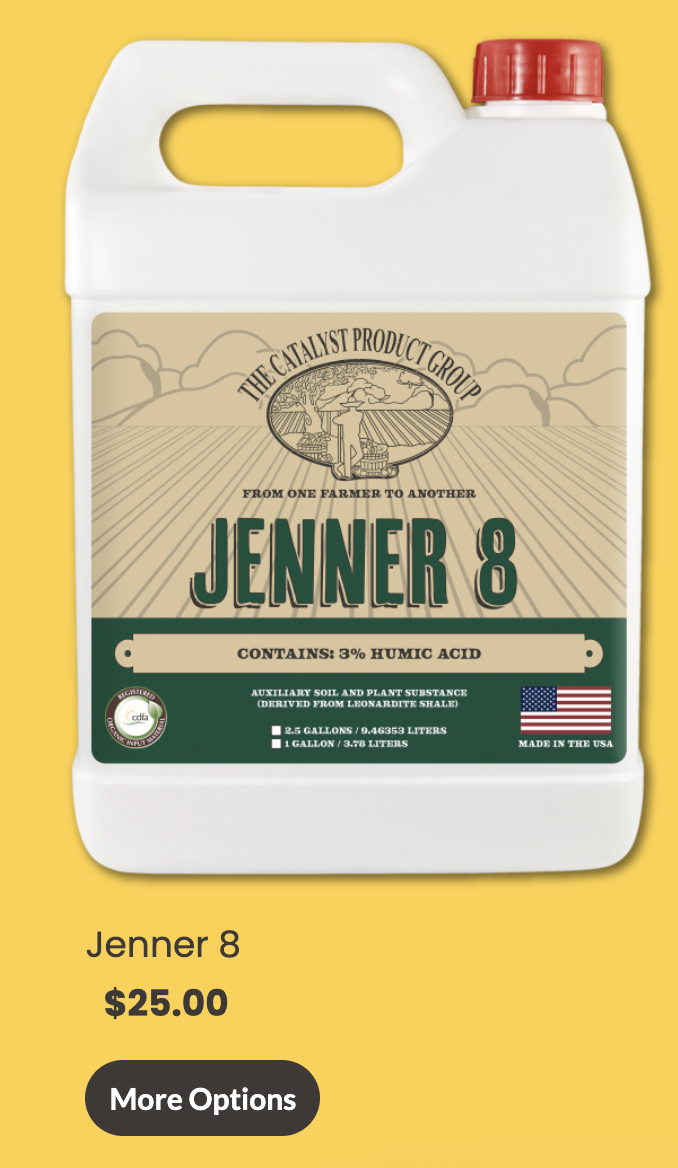
Catalyst Jenner 8
One of the three liquid products in my monthly rotation.
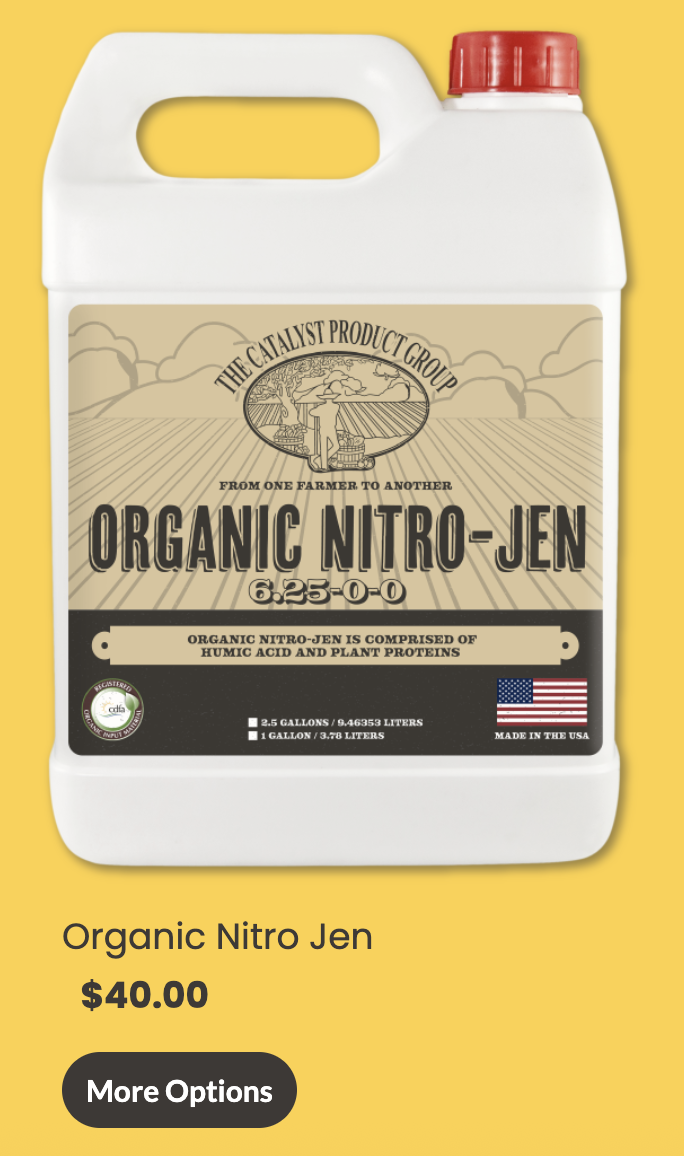
Catalyst Organic Nitro Jen
Organic nitrogen source, great for greening up leaves.
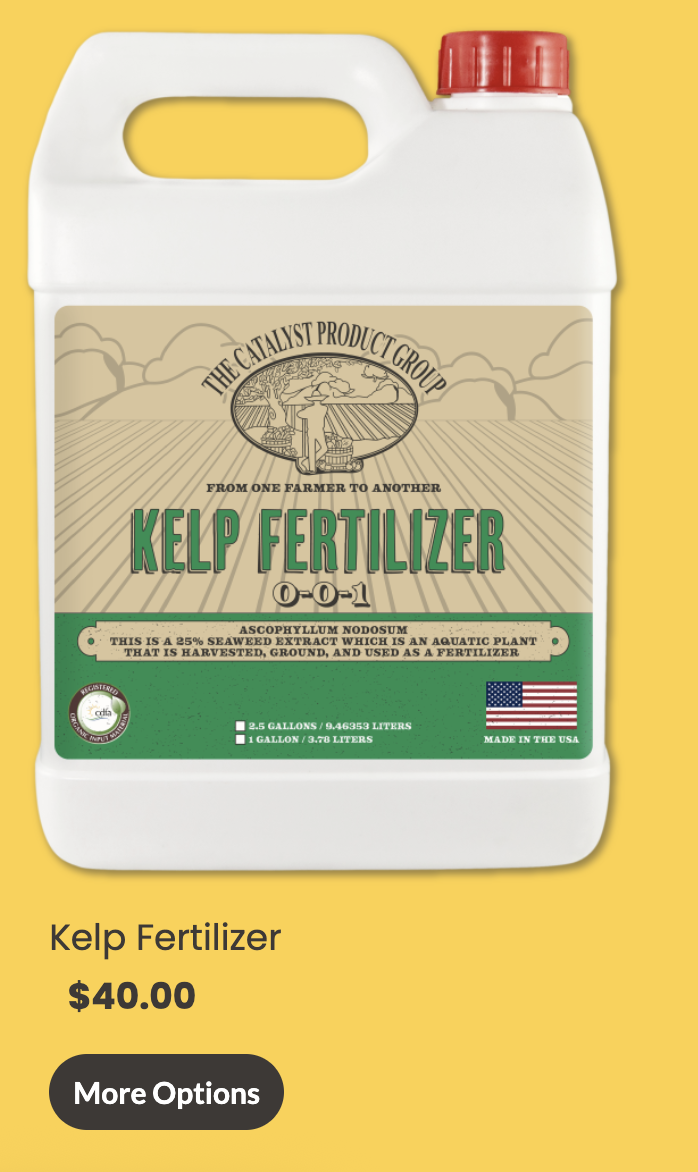
Catalyst Kelp Fertilizer
Kelp-based feed with trace minerals that helps plants handle heat stress.
Find them at Catalyst Product Group (click Products, then Home and Garden).
Or we can handle it
If you'd rather not think about it, we do this as a monthly service: a liquid organic feeding every month and compost three times a year, with a recap video after every visit.
Quick reference
- Native and rare plants: Spadefoot Nursery, 2831 E Broadway Blvd, Tucson
- Trees and shrubs: A&P Nursery or Whitfill Nursery
- Kumquats and container citrus: Greenfield Citrus Nursery
- Compost, mulch, and worm castings: Arizona Worm Farm
- Organic fertilizer: Catalyst Product Group
- Palo verde pruning: King's Tree Service
- Before digging by the driveway: Arizona 811 (dial 811)
- Irrigation and drip: Garrett, 480-678-9121
Next steps
As a consult client you're already in the Garden Nerd Club, so you have direct access to me there anytime you have a question while you work through this.
If you want to plant it yourself, everything you need is in here. If you'd rather have us do the planting, I can put together a planting proposal whenever you're ready. For anything with irrigation, call Garrett at 480-678-9121.