
Shawnie, here's what we covered
29645 N 70th Ave, Peoria, AZ 85383
Thanks for having me out to walk the yard. I put this together in the same order we walked it. As a consult client, you're already in the Garden Nerd Club, so you've got direct access to me in there anytime you have questions as you work through this.
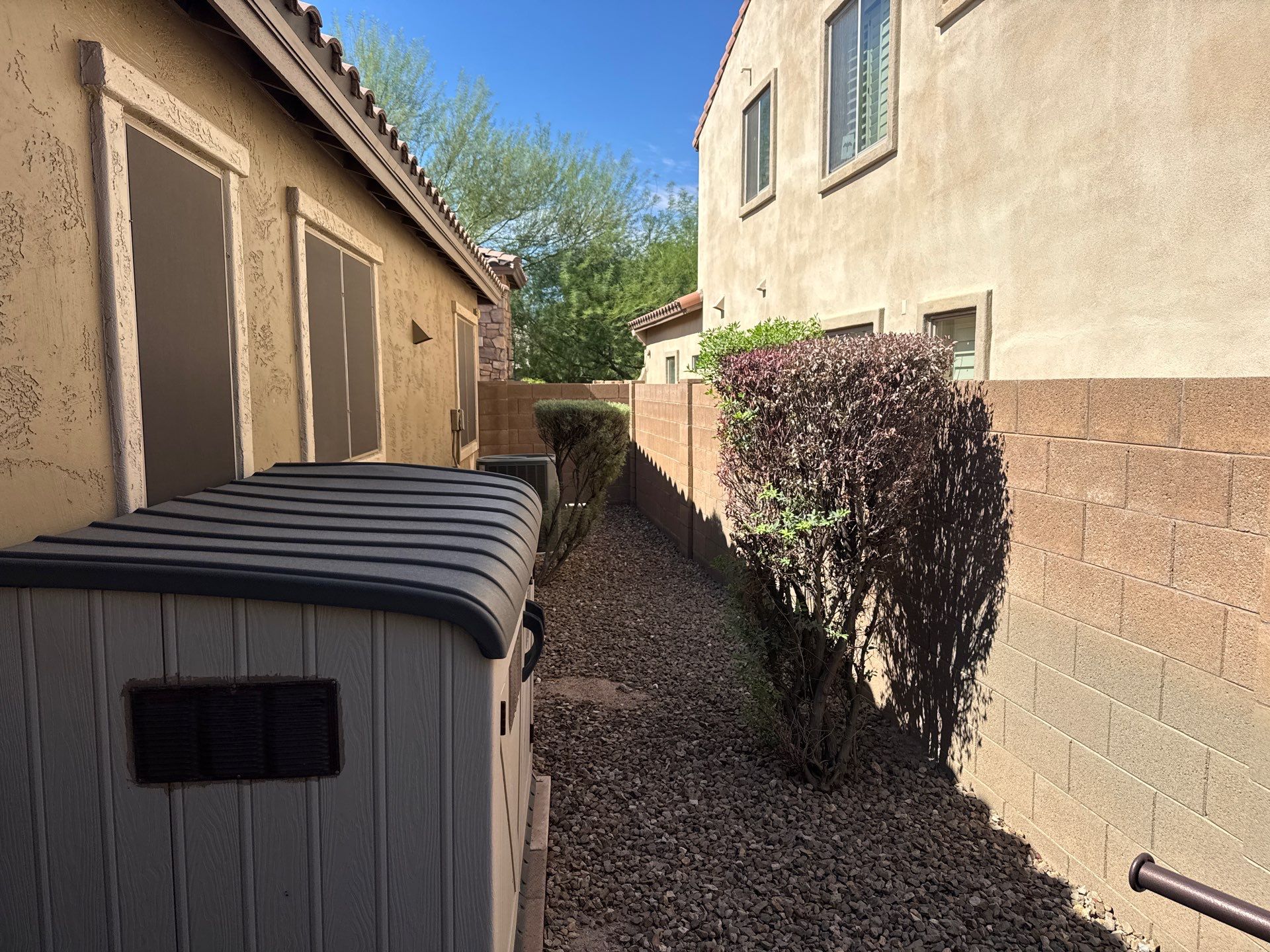
Line the wall, add two citrus trees
This wall is a great candidate for a full hedge line, any of the four below will work well here, and they all pair nicely together if you want to mix textures rather than run just one. Space 5-gallon shrubs about 4 to 5 ft apart so they grow together into a solid screen within a year or two rather than leaving gaps.
Along with the hedge, I'd add two citrus trees in this stretch. Give each about 8 ft of space from the wall and from each other so the canopies have room to fill out without crowding. Fall (October through early December) or early spring are the safest windows to plant citrus here, it lets the roots establish before either a hard cold snap or the summer heat hits. I get my citrus from Greenfield Citrus Nursery, they field-grow their trees in Arizona soil so they transition into your yard a lot better than trees grown elsewhere and shipped in.

Hopseed
Fast, thick, fills in within a season or two. Doesn't need much water once established.

Orange Jubilee
Fast growing, orange trumpet blooms most of the warm season, wants full sun.
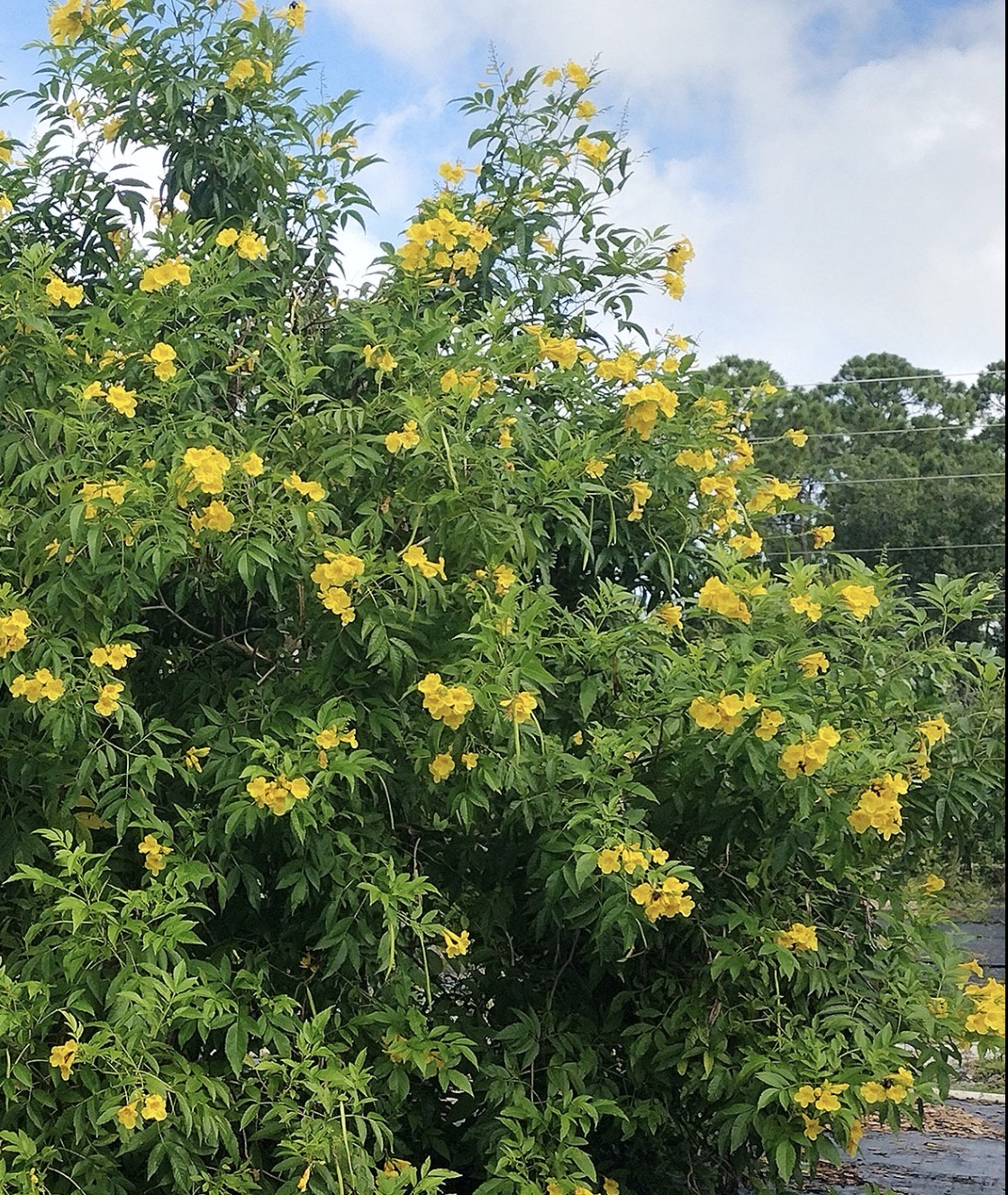
Yellow Bells
Fast, informal, yellow trumpet blooms spring through fall, easy to keep loose or lightly shaped.

Arizona Rosewood
Dense, upright, native, and the slowest grower of the four, but the longest lived.

Citrus
Two trees along this stretch, 8 ft apart. Several varieties to pick from depending on what you like to eat.

One more citrus here
This spot has good exposure for a third citrus tree on the property. I'd source it from Greenfield Citrus Nursery same as the others. Same planting window applies, fall or early spring, and it'll want a deep, wide water basin around the trunk for the first couple years while it's establishing.

Moving them from pots into the ground
Since these are already growing in pots, the goal when you transplant is to disturb the roots as little as possible, passion fruit doesn't like having its root system messed with. Dig the hole the same depth as the pot and only a bit wider, then slide the whole root ball out in one piece rather than shaking soil off it. If the roots are circling tightly at the bottom, gently tease apart just the outer edge, but leave the core of the root ball intact. Set it in at the same soil level it was at in the pot, not deeper, and backfill with native soil.
Build or set the trellis in place before you plant, or right after while the root ball is undisturbed, rather than working a trellis in around an already-settled plant later. A simple wood frame or a section of cattle panel works fine, it doesn't need to be anything fancy, just something sturdy enough for the vine to climb as it takes off. Water deeply right after planting and keep the soil consistently moist for the first few weeks while it re-establishes.

Passion Fruit
Vigorous climber once established, needs a trellis and gentle handling at transplant time.

Lemongrass as the anchor, ferns to spill over the edge
For this one, I'd go with Lemongrass as the main planting. It's evergreen here so it stays full and green year-round instead of dying back, and it's a genuinely useful plant to have right around a patio, the citronal oil in the leaves helps keep mosquitoes away while you're sitting out there.
Then for some texture spilling over the sides of the planter, Foxtail Fern and Asparagus Fern both work well. They stay green year-round, don't drop much litter, and give the planter a fuller, softer look without needing much upkeep.

Lemongrass
Evergreen anchor plant, helps repel mosquitoes around the patio.
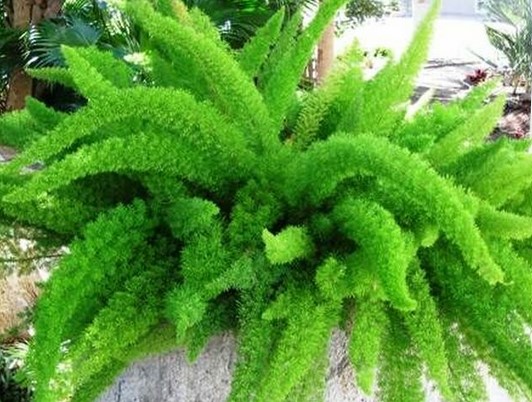
Foxtail Fern
Soft, spills nicely over the planter edge, stays green year-round.
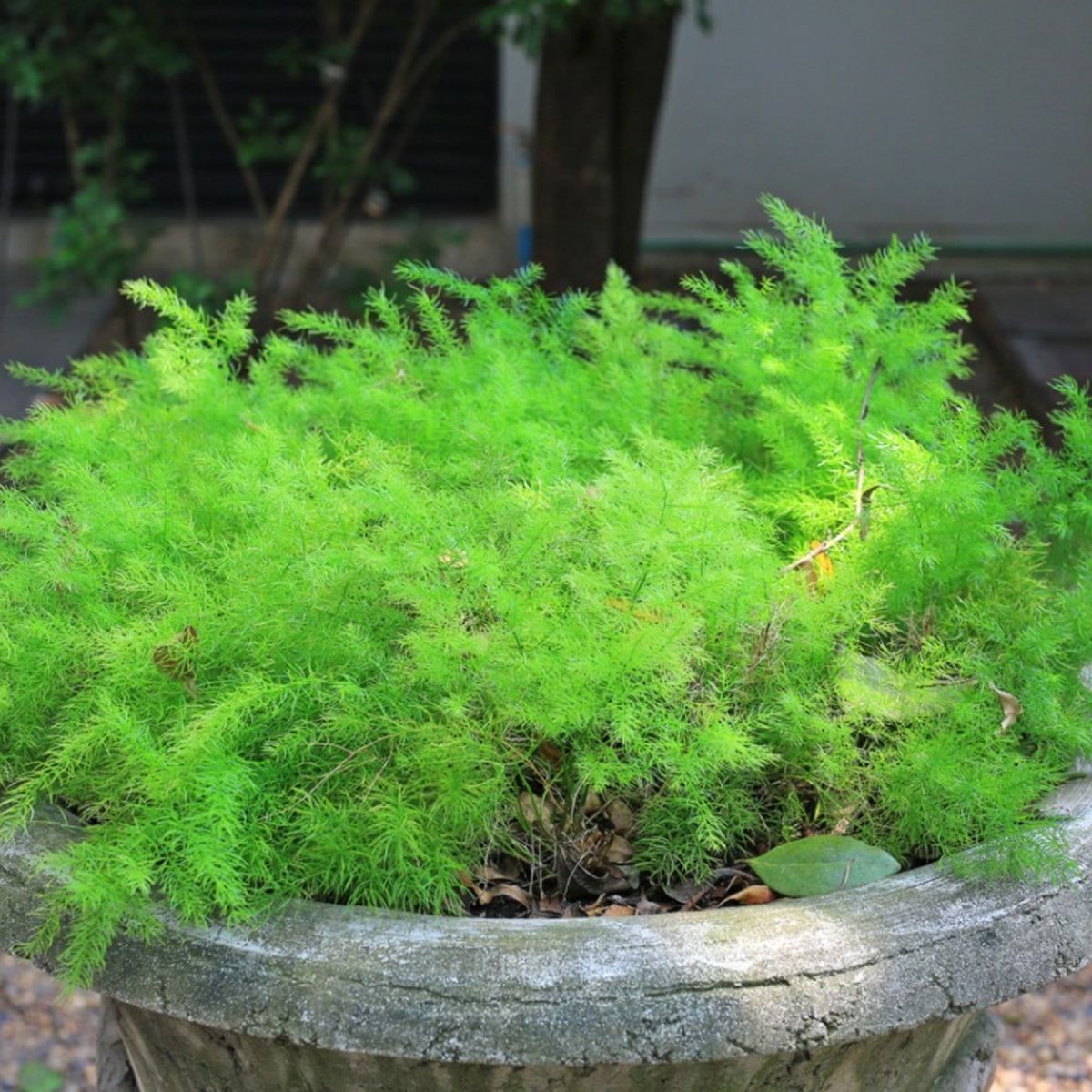
Asparagus Fern
Similar spilling habit, fills in fast, low litter.

Vegetables with companion flowers to keep pests down
I'd plant vegetables here mixed with some companion flowers, marigolds and similar are classic for this, they help repel a lot of common garden pests while also filling the bed in with color.
You don't need to dig out or remove what's currently in there, just top it with a fresh layer from Arizona Worm Farm. Working that in over the existing soil builds the biology back up without the extra labor of a full bed replacement. For what to actually plant and when, my Maricopa County planting guide breaks down the timing month by month for our climate.

Placement, contents, and fresh soil
For this planter, I'd place it somewhere that gets a break from the harshest afternoon sun if possible, that gives you more flexibility in what you can grow in it. It'll need a fresh set of soil, Arizona Worm Farm is what I'd use, their raised bed mix is built to actually support soil biology rather than just hold a plant upright. Once it's filled and placed, it's a good candidate for the same kind of seasonal color and pollinator planting we talked about for the other planter, or herbs if you'd rather have something useful right off the patio.

Cover it with a hedge
Same group of shrubs as the side yard wall works well here too. Space them 4 to 5 ft apart for a full hedge line, or mix two or three together for more visual variety along the run. All four are full sun plants, and once they're through their first summer, they'll be able to live off the grass sprinklers alone, you likely won't need a separate drip line for them. Just plan on giving them a deep soak every few weeks during the height of summer on top of that first year.
Orange Jubilee
Fast growing with orange blooms most of the year.
Yellow Bells
Fast, informal, covered in yellow trumpet blooms.
Arizona Rosewood
Dense, upright, and the longest-lived of the group.
Hopseed
Fastest of the four to fill in a gap.

Bermuda vs. St. Augustine
Both are common choices for a Valley backyard, but they perform pretty differently depending on your sun exposure and how the space gets used. Here's how they stack up.
Bermuda
- Best grass for full, unobstructed sun, this yard's exposure suits it well right now
- Very drought and heat tolerant once established
- Handles kids, pets, and heavy foot traffic better than St. Augustine
- Spreads aggressively by runners, will creep into beds if not edged regularly
- Goes dormant and turns brown in winter unless you overseed with rye
- Cheaper to install and generally cheaper to maintain long term
- Worth keeping in mind, the shade tree going in nearby will eventually cast more shade over part of this area as it matures, it'll be years before that's an issue, but Bermuda will start thinning out wherever that shade lands once the canopy fills in
St. Augustine
- Tolerates some shade far better than Bermuda, worth considering if any part of this area gets shaded part of the day
- Broader, coarser blade with a thick, lush look
- More prone to chinch bugs and certain fungal issues in our climate
- Doesn't bounce back from heavy foot traffic as quickly
- Stays greener slightly longer into fall than Bermuda without overseeding

Pull the curbing, cover the wall, add a shade tree
I'd pull this curbing out, it's boxing the bed in more than it needs to be, and use one of the climbing options below to green up the wall instead of leaving it bare block. I'd skip Creeping Fig here specifically, this spot gets more sun than it likes. Once that's in motion, this is also a good spot for a larger shade tree, any of the four below will give real canopy coverage here.

Tangerine Crossvine
Climbs the wall directly, orange trumpet blooms in spring.

Potato Vine
Fast climber, white to pale purple blooms, better fit for this much sun than Creeping Fig.

Coral Vine
Fast, pink summer blooms, handles full sun well.

Chinese Elm
40 to 50 ft tall and wide, semi-evergreen here.

Red Push Pistache
About 30 ft tall and 25 ft wide, deciduous, vivid red new growth and fall color.
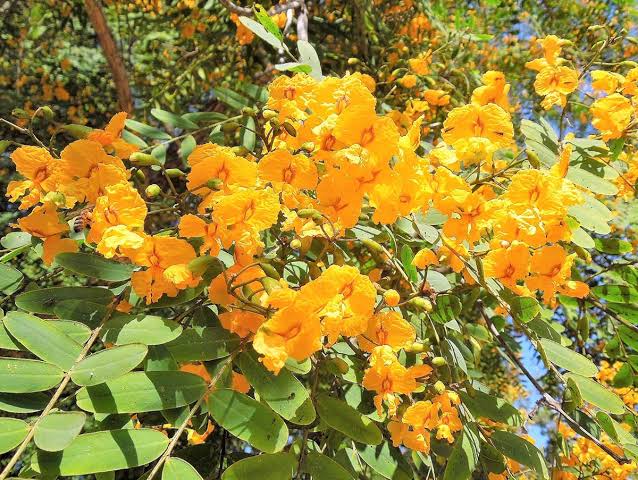
Tipu
30 to 40 ft tall and wide, evergreen most winters, big fast canopy with summer blooms.
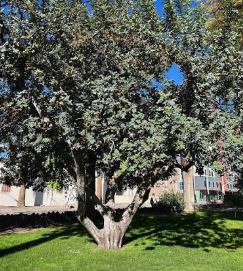
Carob
Dense, evergreen, slower growing but a very solid long-term shade tree.

Something that shades the house without getting too big
Desert Willow is my first thought here since it stays modest in size and still throws decent shade once it fills out. Here are a couple more that stay on the smaller side too if you want a different look or bloom color.
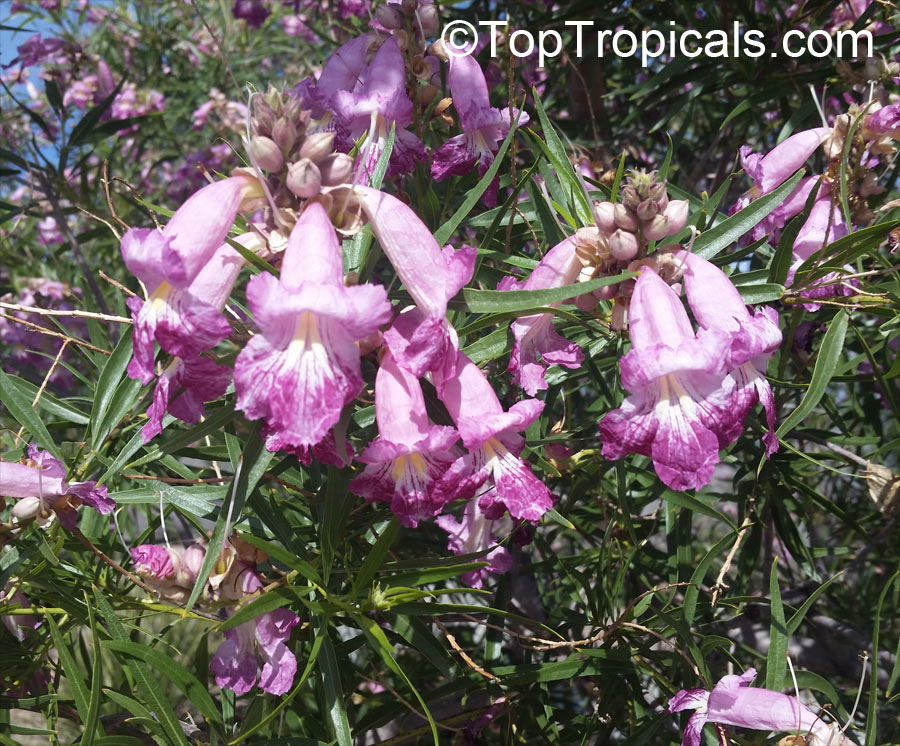
Desert Willow
15 to 25 ft tall, 10 to 15 ft wide, deciduous, orchid-like blooms all summer, doesn't need much water once established.
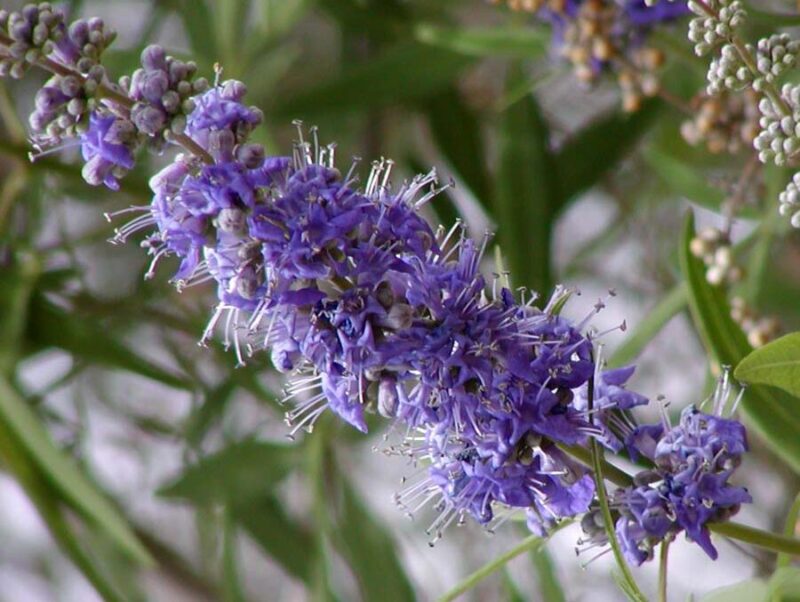
Vitex
Around 15 to 20 ft tall and wide, deciduous, purple flower spikes most of the summer.
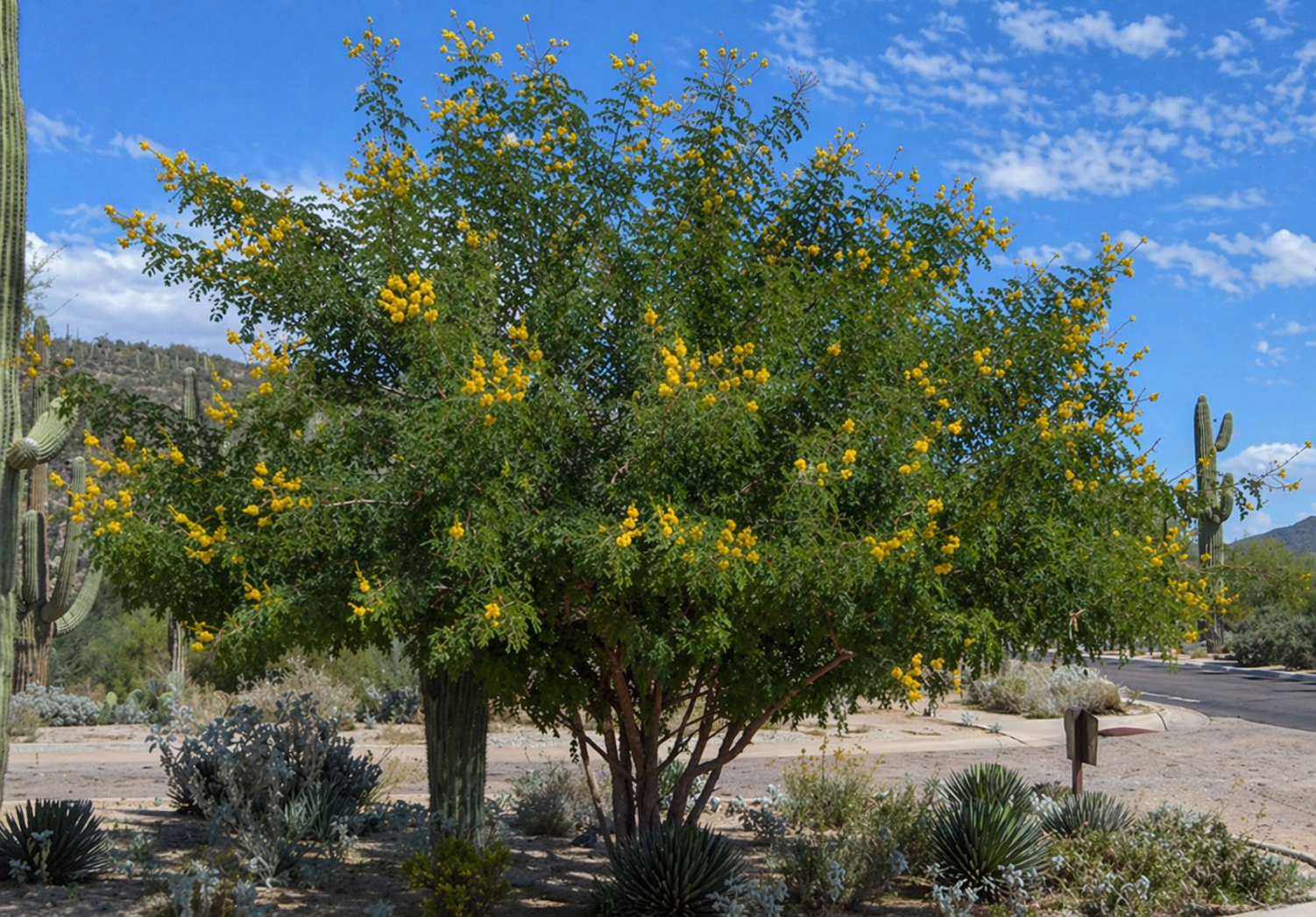
Cascalote
Around 20 ft tall and wide, semi-evergreen, bright yellow spring blooms.

Desert Willow, kept to 10-15 ft
Desert Willow again here, it's easy to keep pruned to that 10 to 15 ft range you're looking for while still getting some real afternoon shade onto the house. It's deciduous, so it'll go bare for a couple months in winter, but you get a long bloom season from spring through fall to make up for it, and it barely needs supplemental water once it's a year or two in the ground.
Desert Willow
Deciduous, orchid-like blooms all summer, easy to keep in the 10 to 15 ft range with light pruning.

Red Push Pistache, plus a couple more options
Red Push Pistache is my first pick for this strip, it's a striking tree with the red new growth in spring and good fall color later in the year. Here are a couple other options if you want something narrower or evergreen instead.
Red Push Pistache
My first pick, about 30 ft tall and 25 ft wide, deciduous with strong fall color.
Desert Willow
15 to 25 ft tall, 10 to 15 ft wide, deciduous, a narrower option if the strip is tight.
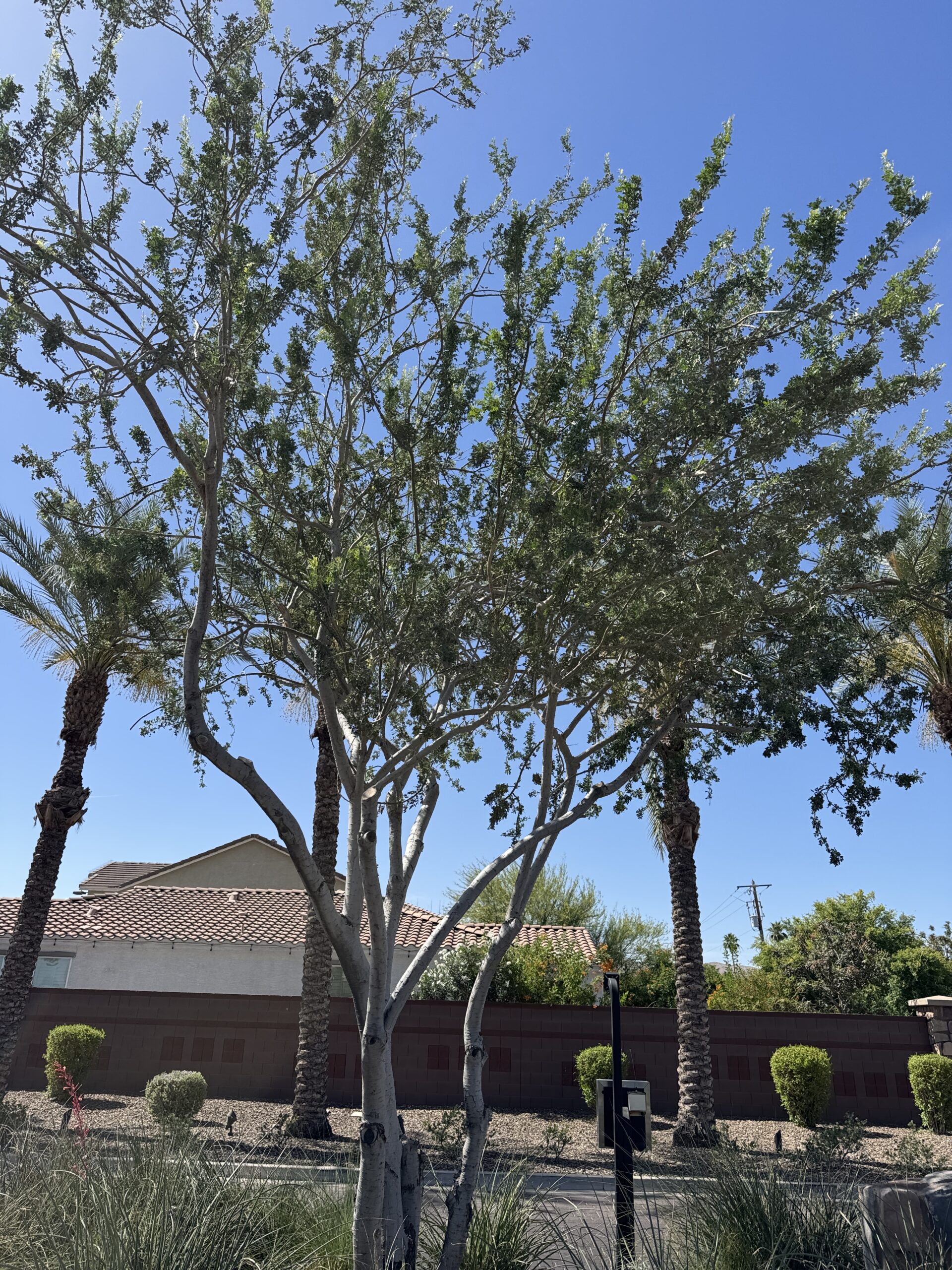
Desert Ironwood
Native, slow growing, evergreen, and doesn't need much water once established.

Color that can handle the afternoon exposure here
This bed is actually north-facing, but the wall's short enough that it still catches real afternoon sun, so I'm treating it more like a sun bed than a shade one. Ruellia is my desert-adapted pick here, it stays low, tough, and doesn't ask for much once it's in. Hibiscus and Canna Lily bring in bigger, more tropical-looking color if you want that contrast, both will need more regular water than the Ruellia to keep blooming through summer. I'd also pull the rock out of this bed and switch it to mulch, it'll hold moisture a lot better for whichever of these you plant.

Ruellia
Tough, desert adapted, handles this exposure with minimal water once established.

Hibiscus
Big tropical blooms, needs more regular water than the Ruellia to thrive here.

Canna Lily
Bold, tropical-looking bloom, also wants consistent moisture to perform well.

A tree for afternoon protection, with a shade sail to bridge the gap
Once these pavers come up, I'd plant a tree here for afternoon sun protection. Hong Kong Orchid is my first pick, it gets tall enough to throw real shade but doesn't have the aggressive, structure-lifting root system that some faster growing shade trees do, so it's a safer bet this close to the house.
Since it'll take a couple years for the canopy to fill in, I'd put up a shade sail over this area in the meantime. It gets you real relief right away and takes the pressure off everything else out here trying to grow in full, unblocked sun while the tree establishes.
For the back wall in this photo, I'd go with Tangerine Crossvine, it's fine with the current sun exposure and gives you spring blooms on top of the coverage. I'd hold off on Creeping Fig here specifically until the Hong Kong Orchid has grown in enough to take some of the intensity off this wall, it'll do better with a bit more shade than it's getting right now.

Hong Kong Orchid
My first pick, good shade size without an aggressive root system near the house.
Tangerine Crossvine
Fine with the current sun on the back wall, plant now.

Creeping Fig
Hold off here until the tree grows in and takes some sun off this wall.

Replace the shrub, and let's fill this area in more
Whatever's struggling here just isn't suited to the dappled light under the Palo Verde canopy. Beyond just swapping that one shrub out, I'd use this as a chance to fill the area in a bit more with a mix of these, all of them handle the filtered light here and bring real color and texture into a spot that's tough to plant.
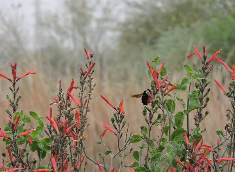
Chuparosa
Handles filtered shade well, red tubular blooms draw hummingbirds.
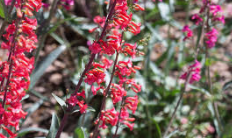
Penstemon
Good color under light canopy shade, tall spikes bees and hummingbirds both like.

Globe Mallow
Bright orange blooms, tolerates the filtered light here fine.
Ruellia
Genuinely prefers some shade, blooms most of the year here.
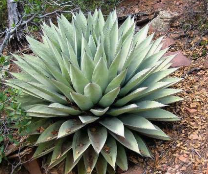
Perry's Agave
Native, sculptural, adds structure against all the softer bloomers here.
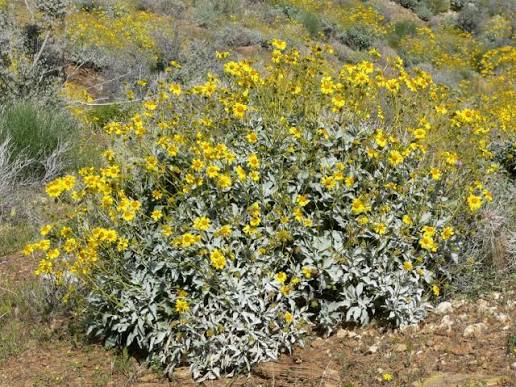
Brittlebush
Silvery foliage with yellow spring blooms, handles the filtered shade fine.
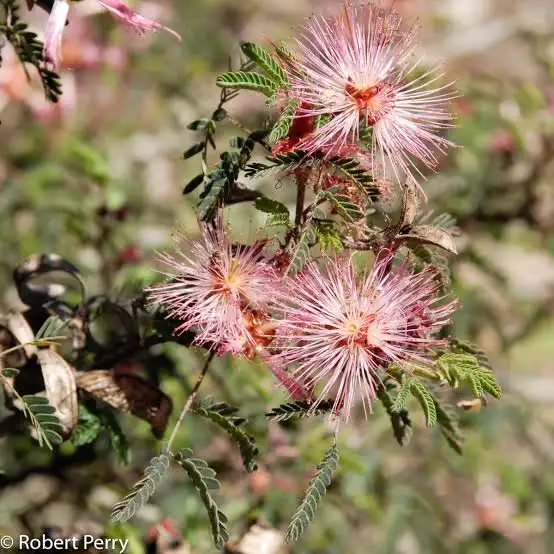
Pink Fairy Duster
Wispy pink blooms, stays compact, good filler between the larger pieces.
Give all of this a strong foundation
With this much new planting going in, healthy soil biology makes the difference between things surviving and things actually thriving. Quality compost and organic fertilizer build the microbial life that feeds your plants long term, rather than forcing growth with synthetic salts that don't do anything for the soil itself. A monthly program keeps that going year-round instead of a one-time boost.
Monthly Landscape Fertilizing
Liquid feeding every month, plus compost applied three times a year.
Text me to get startedStarting rate, exact price depends on total square footage, let me know if you'd like me to confirm the number for your yard.
Here's the order I'd tackle this in
Trees first, then cover the walls, then everything else, planters, ground covers, and the grass call. Text me whenever you're ready and I'll put together pricing for whichever areas you want to move on.
For turf or irrigation questions, Garrett is my go-to, you can reach him directly at 480-678-9121.