
Jessica, here's what we covered
890 W Zion Pl, Chandler, AZ 85248Thanks for having me out to walk the yard, there was a lot to cover. I put this together in the same order we walked it, backyard through front. As a consult client you're already in the Garden Nerd Club, so I'm happy to keep working through this list with you whenever you're ready.

Turf and rock out, real soil in
This area is going to become multiple raised garden beds. Once the turf and rock are pulled out, put down a couple inches of compost and mulch right on top of that, that combination is what turns this into soil that can actually grow food instead of just holding up decoration. Olle Gardens is a great source for the raised beds themselves, and Arizona Worm Farm is where I'd get the compost and raised bed mix to fill them. My Maricopa County planting guide will walk you through what to plant and when as the seasons change.

A fruit tree row alongside the garden beds
Right beside where the garden beds are going, this is the spot for your fruit tree row. Lemon Zest Mango would go here too, but I'd hold off on planting it until there's some established shade back here, mangoes want protection from full, unfiltered sun while they're young. Florida Prince Peach is ready to go in as soon as the rock is cleared and irrigation is set up. Orange also does well in this area, and around the garden beds too if you'd rather split it up, for variety selection Greenfield Citrus Nursery has a great selection to choose from. Avocado is on the list too, but this area needs a lot more shade established before that's realistic, we'll revisit it once the other trees have had time to fill in.
Same prep as everywhere else, the rock needs to come out first, then compost and mulch on top. Buy at 15-gallon size or smaller for all of these, and get them in the ground as soon as you're able, three to five years is the standard wait before fruit trees really start producing and filling out, so the sooner they're in, the sooner that clock starts.

Lemon Zest Mango
Hold off until there's established shade, wants protection from full sun while young.

Florida Prince Peach
Ready to plant once the rock is gone and irrigation is set, low chill hours, deciduous.

Orange
Grows well here or around the garden beds, Greenfield Citrus Nursery has the variety selection.
Avocado
Needs a lot more established shade first, we'll revisit once the other trees fill in.

Citrus out front for shade, bananas once that shade is established
This area gets a lot of sun and is currently just rock. Same first step as always, pull the rock, add compost, then mulch. I'd plant two citrus trees toward the front of this space to start building some shade. You've actually already got some citrus growing in pots, those are good candidates to move into the ground here, they'll be much happier long term with room to send roots out instead of staying confined. Just make sure they don't go in any deeper than they were sitting in the pot, planting citrus too deep is a common way to set them back right out of the gate. Lemon and a smaller lime variety can both go in right now too if you want to add more beyond what you're transplanting, no need to wait on those. Bananas can go in once the citrus here adds a little more shade, or they can also be planted right next to the house instead, they don't have invasive roots and they actually prefer staying warm through winter, so that spot against the house works well for them too.
I'd also add Wedelia as a ground cover through this area to help cool things down, same as we're doing over by the side yard rocks. Buy everything here at 15-gallon size or smaller, and get it all in the ground as soon as you can, three to five years is the standard wait before fruit trees really start producing, so the sooner it's in, the sooner that clock starts.
Lemon & Lime (small)
Both can be planted now, no need to wait on these.

Banana
Plant once the citrus adds some shade, or right next to the house, no invasive roots and likes staying warm in winter.

Wedelia (Yellow Dot)
Fast spreading groundcover, helps cool down this sunny area.

A large shade tree here protects the garden beds
This spot, just west of where the garden beds are going, needs a large shade tree. Without one, those beds are going to get blasted with more sun than most vegetables can handle through summer. Chinese Elm grows into a big, dense canopy fast, while Red Push Pistache grows a bit slower but gives you striking red fall color the elm doesn't. Either one works, just pick based on which look you'd rather have.

Chinese Elm
Fast growing, dense canopy, deciduous, gives afternoon shade quickly.

Red Push Pistache
Slower growing than the elm, deciduous, vivid red fall color.

Cover this wall, one plant for the whole length
This is the wall we're calling the south wall even though it actually faces north. I'd cover it with one hedge variety the full length rather than mixing, Hopseed, Orange Jubilee, or Arizona Rosewood would all work here. Of the three, Arizona Rosewood ends up looking the most like a dense ficus hedge if that's the look you're after, but it really comes down to your preference. Space whichever you choose three to four feet apart so it fills in as one solid hedge.

Hopseed
Fast, thick, and fills in quickly.

Orange Jubilee
Fast growing with orange blooms most of the year.

Arizona Rosewood
Densest look of the three, closest to a ficus hedge.
Pick one for this wall, space three to four feet apart, and run it the full length.

Cover the wall, then add two large trees for afternoon shade
Same hedge approach here, cover the wall completely with one of the varieties from the other wall sections. On top of that, this spot gets two very large shade trees to give afternoon shade to the pool and the patio behind the house. Chinese Elm is a good option, or Tipu if you want something bigger, Tipu grows both taller and faster than the elm will. If you end up liking Chinese Elm for the shade tree by the garden beds in section 04, I'd do Chinese Elm here too for these two, Chinese Elms planted somewhat close together in the same yard actually look really good side by side, so going with the same variety in both spots would tie the whole backyard canopy together.
Chinese Elm
Fast growing, dense canopy, deciduous.
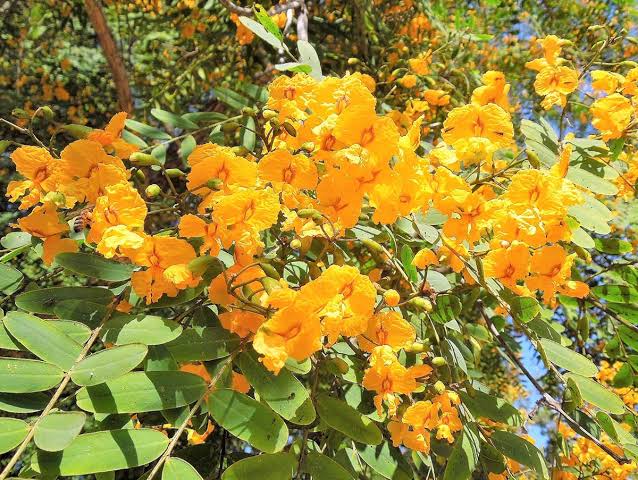
Tipu
Even faster and taller than the elm, yellow-orange blooms in summer.

Trim it professionally instead of planting under it
We'd talked about adding another tree underneath this mesquite, but I don't think that's necessary. If it just gets trimmed up professionally, I'd recommend King's Tree Service for that, this tree will be in good shape and keep giving good shade on its own, especially once the two new trees we're adding nearby fill in alongside it.

Stop pruning these and they'll finally give you shade
These Orange Jubilee behind the pool rock feature are being pruned into tight little circles, and that's exactly what's keeping them from doing their job. Left alone, Orange Jubilee will grow ten to fifteen feet tall and completely fill out this area, giving you the afternoon shade you're after behind the rock feature. The simplest fix here costs nothing, just stop shearing them and let them grow the way they want to.

Bamboo is a good alternative if you want something different
If you decide you don't want to just let the existing Orange Jubilee grow out, clumping bamboo is a solid alternative here, it grows tall quickly and gives you a completely different, tropical feel while still delivering the shade you want behind the rock feature. It would also end up growing taller than the Orange Jubilee does. One thing worth clearing up, clumping bamboo doesn't spread and take over the way a lot of people assume bamboo does, that reputation really belongs to running bamboo. Clumping stays right where you plant it, just make sure that's specifically what you're buying. Greenlife Nursery carries it.
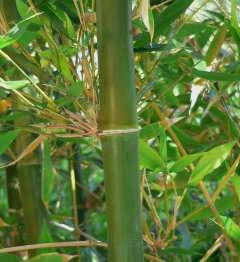
Bamboo (Clumping)
Fast, tall, and dense, make sure it's a clumping variety, not running.

San Marcos Hibiscus for now, more options once the trees fill in
This spot could use some color. Start by removing the rock and putting down compost and mulch like everywhere else. Right now this area gets intense sun, San Marcos Hibiscus handles that heat well and gives you soft yellow blooms most of the year. Once the new trees to the west of this spot get some size on them and start casting more shade, Canna Lily and Red Hibiscus would both be great additions, they just need more shade than this spot currently gets to really thrive.
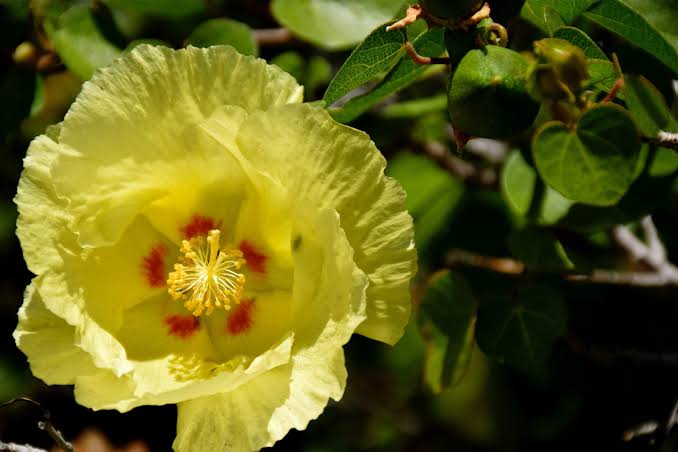
San Marcos Hibiscus
Soft yellow blooms most of the year, handles intense sun well, good for right now.

Canna Lily
Add once the trees fill in more shade here.

Red Hibiscus
Add once the trees fill in more shade here.
San Marcos Hibiscus now, Canna Lily and Red Hibiscus once the trees to the west fill in and shade this spot more.

Same hedge here, just keep the pool in mind
Once the fence is put back along here, I'd run one of the same hedge varieties we're using elsewhere, Orange Jubilee, Hopseed, or Arizona Rosewood. The one thing to factor in near the pool is keeping the hedge line back enough that it isn't dropping leaves or debris straight into the water as it grows, which any of these three handle fine as long as they're not planted right at the pool's edge.
Hopseed
Fast, thick, and fills in quickly.
Orange Jubilee
Fast growing with orange blooms most of the year.
Arizona Rosewood
Dense, upright, closest look to a ficus hedge.
Pick one for this run and keep it back a couple feet from the pool's edge.

A smaller ornamental tree for this spot
Once the turf here is removed and the concrete is extended, leave a hole for a smaller, more ornamental tree. Desert Willow or Hong Kong Orchid would both fit well, Desert Willow gives you orchid-like blooms all summer and doesn't need much water once established, while Hong Kong Orchid brings big purple blooms in the cooler months and stays semi-evergreen through most winters.
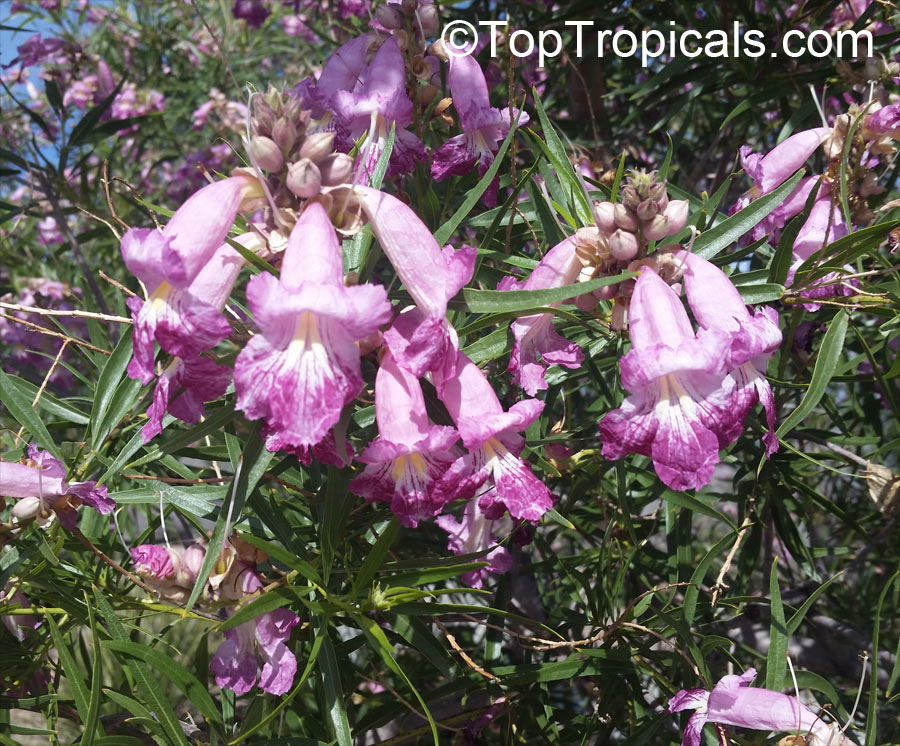
Desert Willow
Orchid-like blooms all summer, doesn't need much water once established.

Hong Kong Orchid
Purple orchid-like blooms in the cooler months, semi-evergreen.

Continue the hedge all the way to the west wall, and a tree in the corner
Once the fence goes back up here, I'd continue whichever hedge variety you've picked all the way back against the west facing wall so the whole run reads as one consistent line. In the corner right there, either a Red Push Pistache or a Chinese Elm would be a great fit, both give you a strong shade tree to anchor that corner.
Red Push Pistache
Vivid red fall color, well-shaped canopy.
Chinese Elm
Fast growing, dense canopy for heavier shade.

Tangerine Crossvine or Cat's Claw for the pergola
For the pergola, Tangerine Crossvine is my first thought, reliable coverage with orange blooms. Cat's Claw is another option, and normally I steer people away from it since it's an aggressive grower that can take over nearby structures, but since this pergola is freestanding out here with nothing next to it to invade, it's actually a good fit. Either one will need its own irrigation, plan for a bubbler or drip up in the pot itself rather than relying on the surrounding zone, and in summer expect to water it once, maybe twice a day since pots dry out fast.

Tangerine Crossvine
My first pick, reliable coverage with orange blooms.
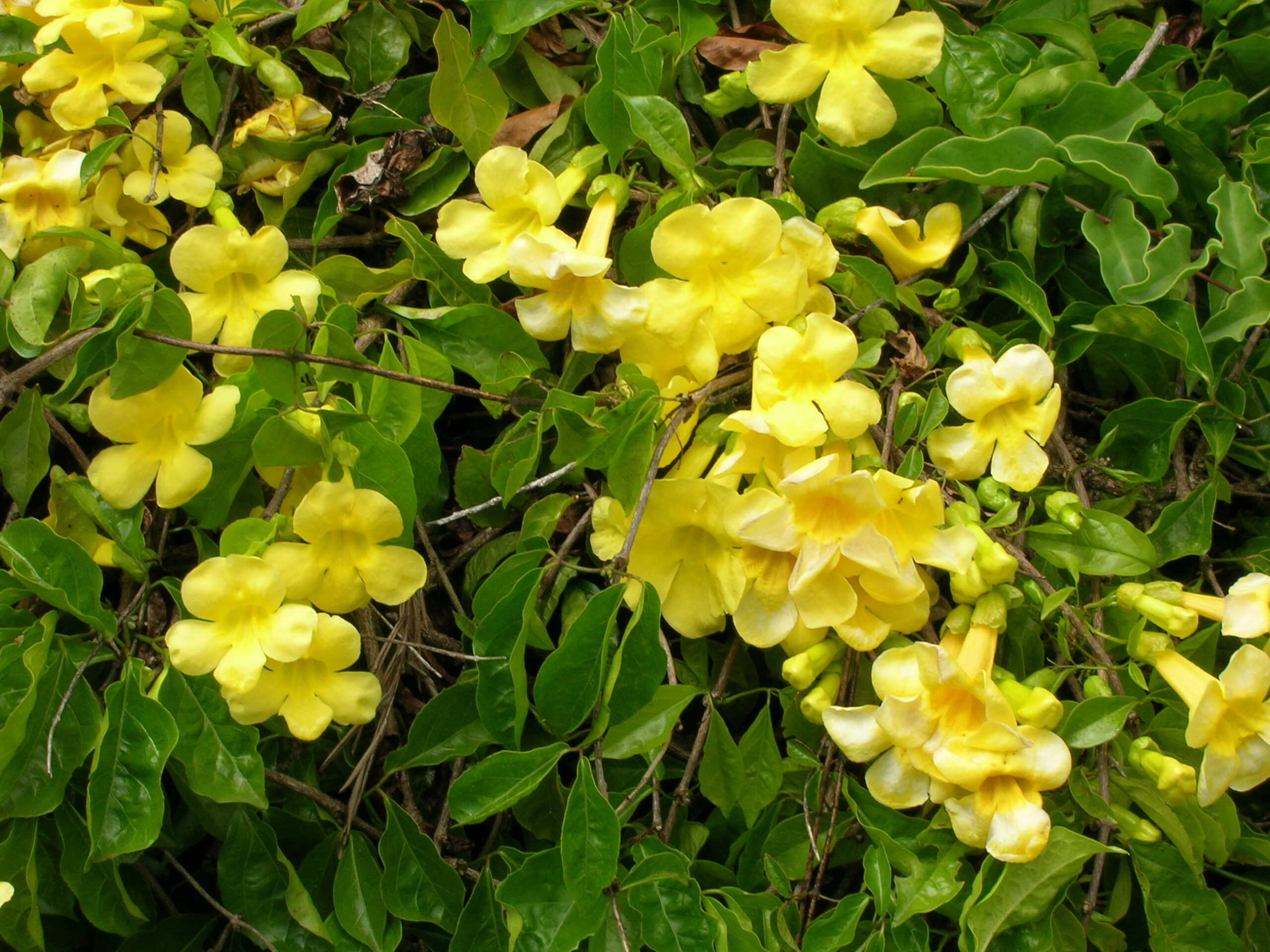
Cat's Claw
Aggressive grower, only recommended here since the pergola is freestanding.
Plan on watering the pot once or twice a day through summer, it'll dry out much faster than plants in the ground.

Iceberg Roses where the bottlebrush is now
Where the current bottlebrush is, roses are a good fit since this spot faces east and gets afternoon shade, which roses appreciate here more than full sun all day. Start by removing the rock, adding a layer of compost, then a layer of mulch. Iceberg Roses are my top pick, they'll grow the best out of the rose options for this spot. If you want more color variety, other rose varieties will work here too, they just won't perform quite as reliably as Iceberg will.
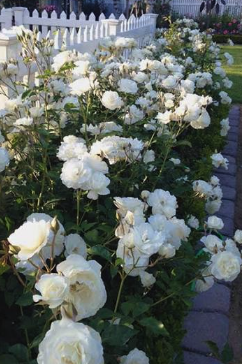
Iceberg Rose
My top pick for this spot, will grow the most reliably here.
Other rose varieties can work here if you want more color, but Iceberg is what I'd expect to perform best.

It's not dead, but it's time to take it out
This ash isn't actually dead, but it was planted too deep and it's never going to fully thrive here, it's just going to keep struggling. At this point it's time to take it out rather than keep waiting on it. Whatever tree goes in on the other side of the entry, which we'll cover next, I'd plant the same variety here too so the two sides read as a uniform pair instead of two different trees.

Ficus is my recommendation, Carob as a backup, same tree in both spots
The front yard needs two trees total, one where we're pulling the struggling ash and one in the middle of the front yard. I'd plant the same variety in both spots so they read as a matched pair. Ficus is my recommendation, that was one of the options you were considering, and a yard this size gives it plenty of room to grow into without any issues. If you decide you're not a fan of Ficus, Carob would be my next suggestion, it's a tough, well-shaped tree that handles our climate well.
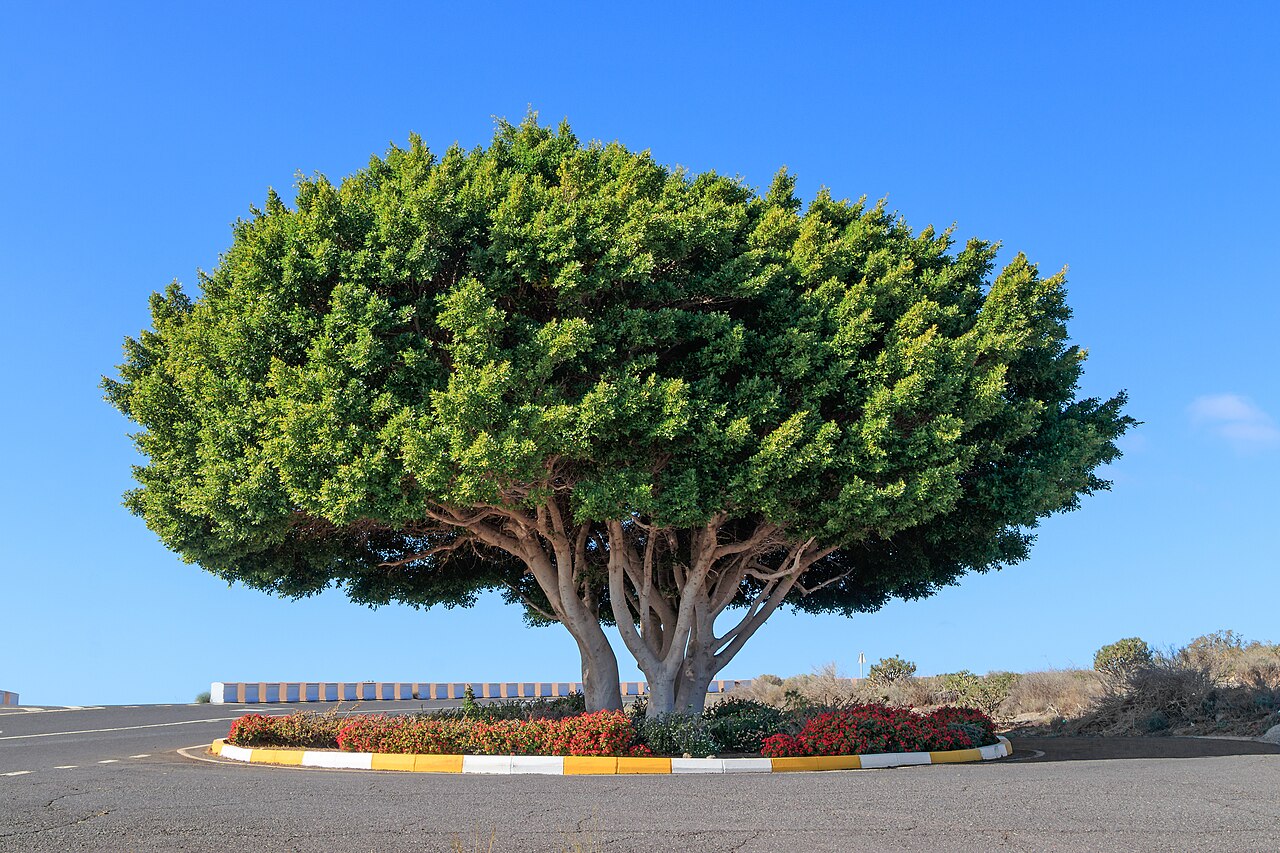
Ficus
My recommendation for both spots, plenty of room to grow in a yard this size.
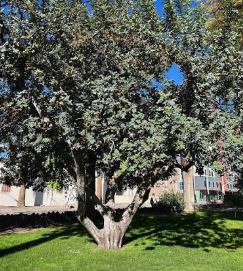
Carob
Backup option if Ficus isn't a fit, tough and well-shaped, evergreen.

Pull the lantana, deep water the boxwood back to health
You've got boxwood here already, with some lantana mixed in. I'd pull the lantana out and give the boxwood a good deep watering, it should recover and fill back in nicely on its own without needing to replace it. Simple fix, and it'll look great right at the entry once it bounces back.

Finish this wall with more Orange Jubilee
You've already got some Orange Jubilee established against this wall, and they all look like they're going to make it. I'd just continue with more Orange Jubilee along the rest of the wall to match what's there and turn the whole thing into one continuous hedge instead of a partial one.
Orange Jubilee
Matches what's already established here, fast growing with orange blooms most of the year.

Yellow Dot to cool this area down
All of this rock along the side yard is soaking up and radiating a lot of heat, so I'd bring in some ground cover to help cool it down and give it some life. Wedelia, also called Yellow Dot, is a great fit here, it's a fast spreading groundcover with bright yellow flowers that will fill in over the rock and cut down on how much heat this area holds onto.
Yellow Dot (Wedelia)
Fast spreading groundcover with bright yellow flowers, helps cool the area over rock.
Something to keep in mind once irrigation is sorted out
I know right now you're dealing with irrigation issues because of the fence work, so this isn't something to worry about starting yet. Once irrigation is back up and running, a monthly fertilizing program is worth considering for the whole property. Quality compost and organic fertilizer build the microbial life that actually feeds your plants long term, rather than forcing growth with synthetic salts, and a full landscape program keeps that going everywhere at once, grass included.
Monthly Landscape Fertilizing
Full landscape program, including the grass. Liquid feeding every month, plus compost applied three times a year.
No rush on this, once irrigation is fixed and running again, reach out and we can get this started.
Start with the trees, they take the longest to grow in
If you only start with one thing off this list, make it the trees. They take the longest to establish and fill out, so the sooner they're in the ground, the sooner everything else that depends on their shade, the garden beds, the lawn under them, the color beds nearby, gets to where it needs to be. From there, work through the rest in whatever order makes sense to you, the garden beds, the walls, or the pool area. We can advise you along the way in the Garden Nerd Club, or if you'd rather have help with any of it, planting or anything else, just reach out and I can get you pricing.
For turf or irrigation questions, Garrett is my go-to, you can reach him directly at 480-678-9121. For tree trimming on the mesquite, King's Tree Service is who I'd call, you can find them at kingstreeserviceaz.com.
You can also read more about how we plant at thegardennerd.org.