

Bess Johnson
Your plants are in. For the next few weeks, the only job is water. Here's exactly what to do.
Water early in the morning. Every watering should be a long, deep soak.
- 1Don't let the root ball dry out. Right now all the roots are still in the ball of soil that came in the pot. If that dries out, the plant struggles, even if the ground around it is damp.
- 2Water deep, not quick. Each watering should soak the whole root ball and the soil around it.
- 3Check before you water. Feel the soil right at the base of the plant.
- 4Don't skip watering after a rain. Our rain almost never soaks deep enough to count.
When to water
Start often, then slowly space it out. Each time you wait a little longer, the roots reach farther out into your soil to find water. That's what builds a strong plant.
| Dates | How often |
|---|---|
| Weeks 1 to 2Oct 21 to Nov 3 | Every 2 to 3 days |
| Weeks 3 to 4Nov 4 to Nov 17 | Every 4 to 6 days |
| Weeks 5 to 6Nov 18 to Dec 1 | Every 6 to 8 days |
| Weeks 7 to 8Dec 2 to Dec 15 | Every 8 to 12 days |
Water deep, every time
How often will change over the weeks. How deep never changes. A short, quick watering only wets the top few inches, and roots stay shallow where they dry out fast.
How to tell if it's working
- Leaves turning yellow and soft
- Drooping even though the soil is wet
- Soil stays soggy or smells sour
- Leaf edges turning brown and crispy
- Drooping that's still there the next morning
- Root ball dry two inches down
Looking ahead
You don't need any of this yet. It's here so you have it when the time comes.
Keep spacing it out
- Add a few more days between waterings every couple of weeks.
- Keep watering just as deep.
- Slide drip emitters out to the edge of the root ball so roots grow outward.
Frost nights
- On nights below about 32, cover the tropical plants with frost cloth or a sheet down to the ground. Cover at dusk, uncover in the morning. No plastic.
- Water the day before a freeze.
- Leave any frost damage on until mid March, then trim it off.
Warm weather
- As it heats up, plants drink more. Your first summer they'll need water about once a week, and the tropical plants more often than that.
- Text me in April and I'll help you set your summer schedule.
Fully settled in
- Shrubs and vines take 1 to 2 years to fully root in. The desert willow takes about 3.
- After that, they'll need water much less often.
Mulch and feeding
Every plant went in with compost on top. In the front your gravel stays, with a ring of wood mulch around each plant, and the backyard beds have wood mulch. That layer holds water and keeps the soil cool. Leave it on top, keep it about a foot back from the desert willow trunk, and top it up when it thins out.
About a month after planting, once new roots are growing, start feeding every month. If you want to do it yourself:

Catalyst Jenner 8
Organic liquid fertilizer that feeds the plant and the soil life at the same time.

Organic Nitro Jen
Organic nitrogen for strong green growth.
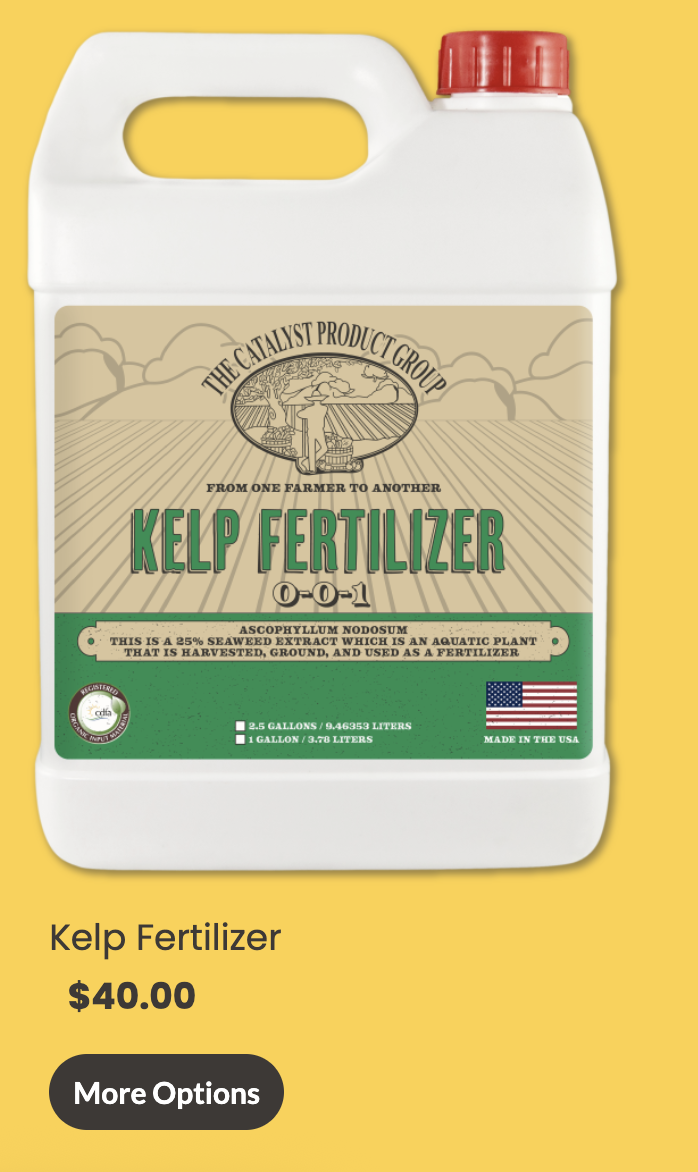
Kelp Fertilizer
Trace minerals that help new and moved plants handle transplant stress.
Find them at Catalyst Product Group. Click Products, then Home and Garden.
If something looks off, send me a photo. It's much easier to catch a watering problem in the first few weeks than to fix it later. As a client you're already in the Garden Nerd Club, so you've got direct access to me there too.
New planting schedule adapted from AMWUA, Water Use It Wisely, and the University of Arizona Water Wise program.