
Yolanda, here's what we covered
2549 E Camina Plata, Gilbert, AZ 85298Thanks for having me out to walk the yard. I put this together in the same order we walked it. As a consult client you're already in the Garden Nerd Club, so I'm happy to keep working through this list with you whenever you're ready.

Excavate the root flare on this fig
This fig needs a root flare excavation. Start by pulling all the grass away from the base, then dig down carefully until you can see the root flare, that's the point where the trunk widens out and the first major roots start branching off. A lot of trees get planted too deep or have soil and mulch piled up over that flare over the years, and it needs to be exposed to breathe properly.
Once it's exposed, if you're not sure which roots need pruning, snap a photo and post it in the Garden Nerd Club, I'll take a look and walk you through exactly what to cut. After you're done digging and pruning, feed it with quality compost and give it a good deep soak. It wouldn't hurt to add a little mulch back around the base afterward too, just keep it pulled back a foot from the trunk so it's not piled up against it again.

Since you're fine losing the fence, a hedge is a great replacement
You mentioned you're not a fan of this fence along the driveway and you're okay taking it out, so I'd replace it with a hedge instead. You've got options depending on how tall and colorful you want it. Hopseed and Little Ollie (a dwarf olive) both take pruning well and are easy to keep low and tidy if you want something compact along the driveway. Texas Sage and Baja Fairy Duster bring color into the mix at a similar low-to-medium size, Texas Sage with silvery foliage and purple blooms, Baja Fairy Duster with wispy red blooms. If you'd rather have more height and screening, Orange Jubilee and Yellow Bells will grow taller and fuller, both fast growers with color most of the year on top of it.

Hopseed
Keeps low and tight with pruning, fast and thick.
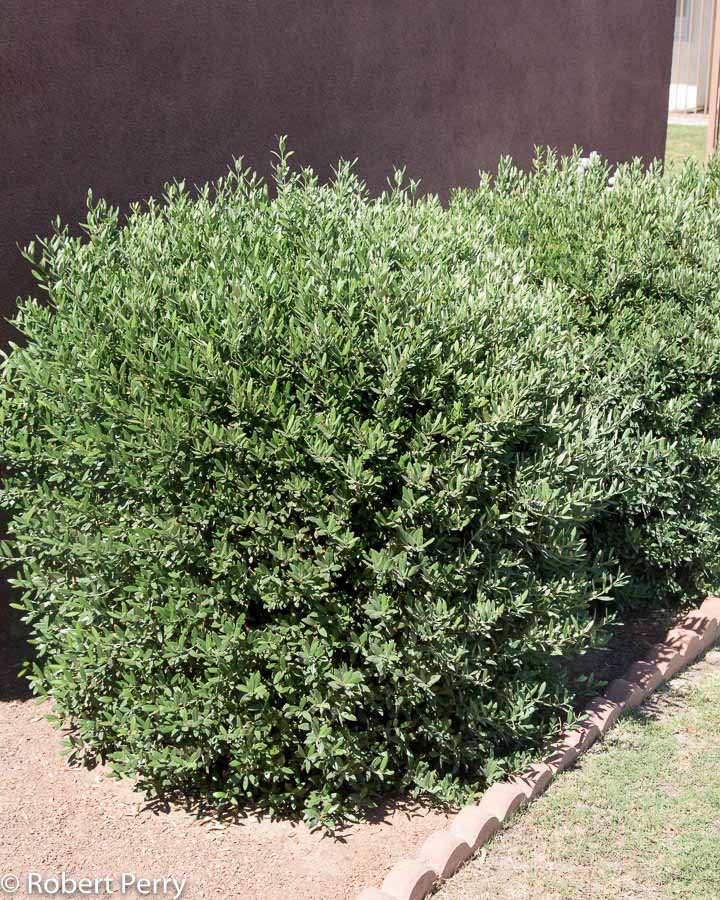
Little Ollie (Dwarf Olive)
Stays compact and low, tough and low maintenance.

Texas Sage
Silvery foliage with purple blooms, doesn't need much water once established.
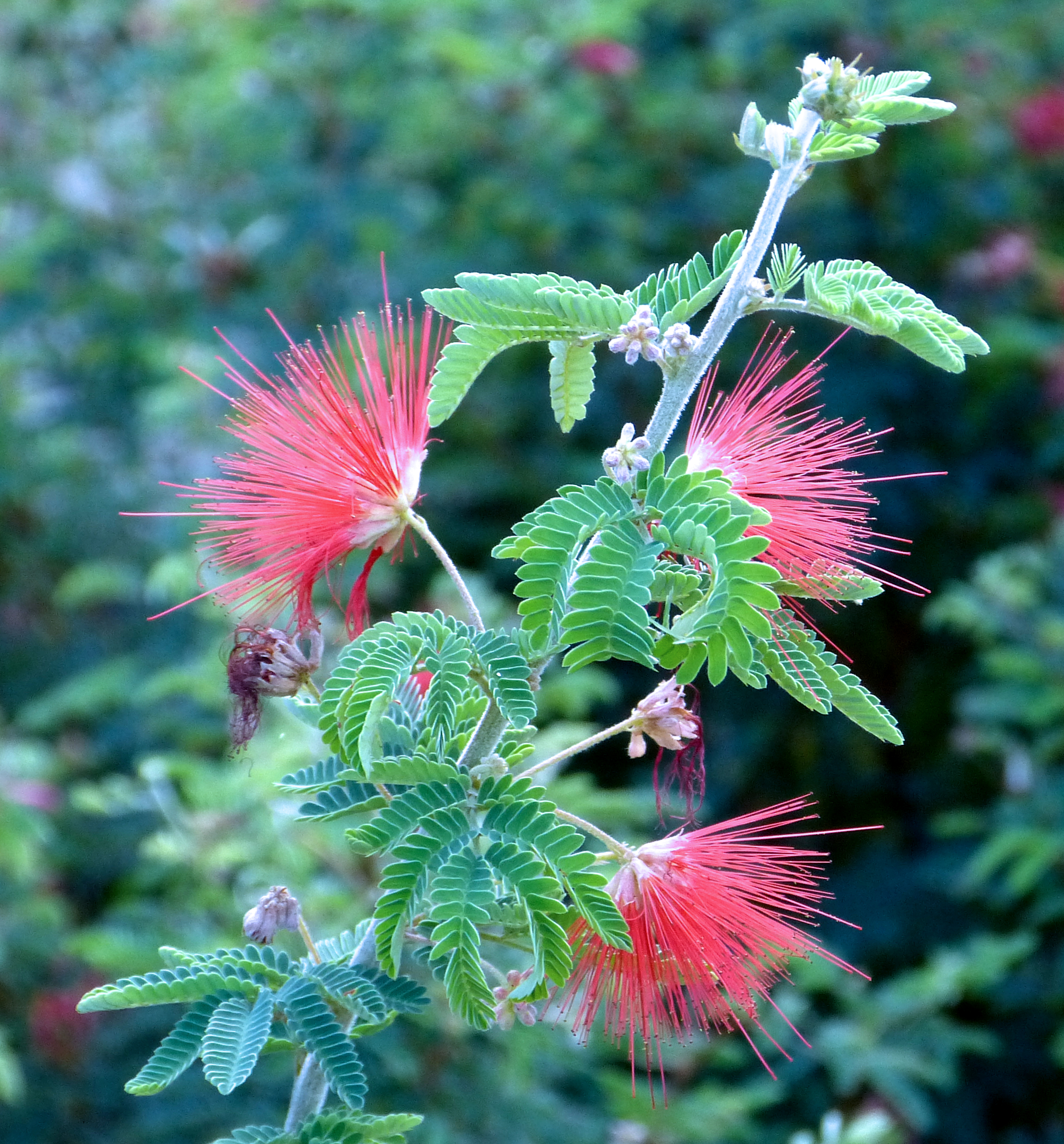
Baja Fairy Duster
Wispy red blooms, stays small and compact.

Orange Jubilee
Grows taller and fuller, orange blooms most of the year.
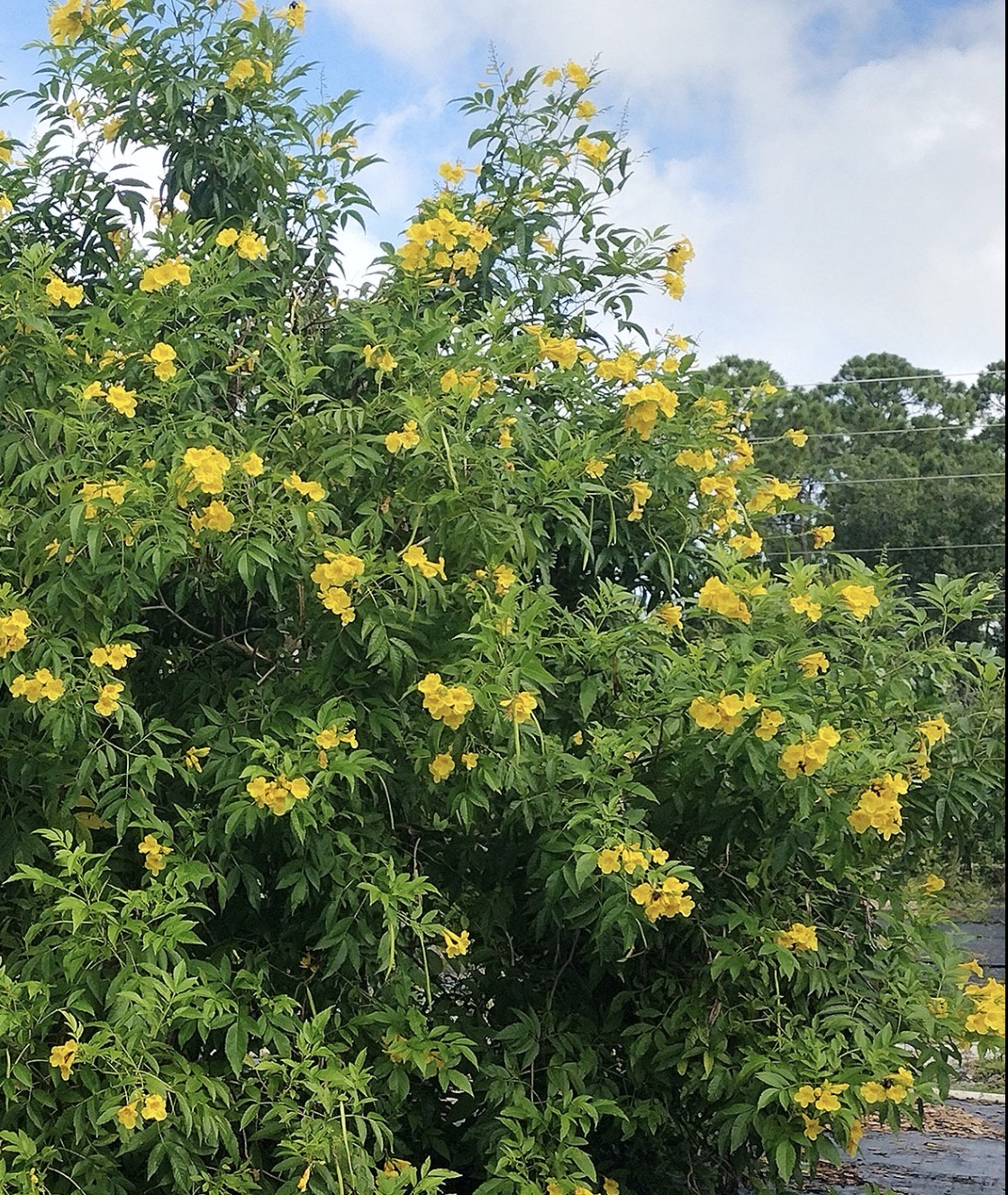
Yellow Bells
Grows taller and fuller, covered in yellow trumpet blooms through the warm months.
Go low with Hopseed or Little Ollie, add color with Texas Sage or Baja Fairy Duster, or go taller with Orange Jubilee or Yellow Bells, whichever fits the look you want at the entry.

Build the soil here before anything else
Before planting into this area, the priority is to stack and pile as much organic matter here as you can, that's what's going to break down over time and turn this back into usable soil with real structure to it. Layer in compost, mulch, whatever organic material you can get your hands on, and pile it on generously rather than a thin layer. Wildflowers work great mixed in as a cover crop too if you want some color out of it while all that material is breaking down. Water the pile every few days, that's not to grow anything specifically, it's to keep the organic matter itself moist so it actually breaks down instead of just sitting there dry.

Feed the grass and fill in the thin spots
Back here, I'd top the whole lawn with a layer of compost to add organic matter and feed the soil underneath. For the rough or thin patches specifically, composted chicken manure is a great spot treatment to bring those areas back. Underneath the trees where it's too shaded for grass to hold on, clover is a much better fit, it tolerates shade well and still gives you green ground cover instead of bare dirt. The end of September is a great time to get clover seed down. Rake the soil lightly to loosen it up first, then spread the seed so it makes good contact with the soil.
When you mow, let the clippings fall and stay on the lawn instead of bagging them, they break down quickly and feed the soil right back, it's a free source of organic matter you're already producing. I'd also bump the mower height up and keep the grass a little longer than you might be used to, longer grass shades its own roots, which helps it look more lush, grow in thicker, and get by on less water.

These Orange Jubilee aren't getting enough sun here
This wall faces north and it's also getting dappled shade from the trees nearby, so it just doesn't get the sun Orange Jubilee needs to thrive, that's why these are struggling. For a spot like this, Creeping Fig is a great option, it's a vine that actually prefers filtered light and shade and will climb and cover the wall directly. Star Jasmine is another good vine choice here, it handles shade well too and gives you fragrant white blooms on top of the coverage. If you'd rather go with a shrub instead of a vine, Twisted Myrtle handles shade much better than Orange Jubilee does and would be a solid swap here. Gardenia is another shrub option worth considering, it won't get as tall as Twisted Myrtle, but you get fragrant white blooms out of it in exchange.

Creeping Fig
Climbing vine that prefers filtered light and shade, a natural fit for this wall.
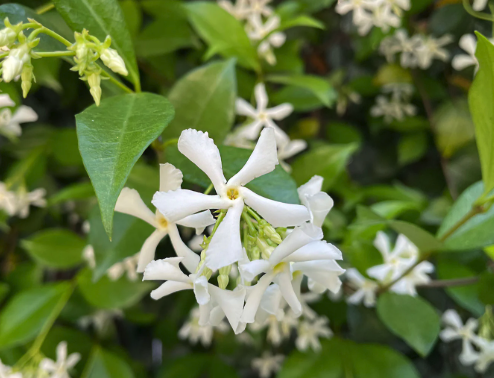
Star Jasmine
Shade tolerant climbing vine with fragrant white blooms.

Twisted Myrtle
Handles shade much better than Orange Jubilee, dense evergreen shrub option for this wall.
Gardenia
Won't grow as tall as Twisted Myrtle, but rewards you with fragrant white blooms.
The existing Orange Jubilee here isn't a lost cause, but it'll never fill in properly with the light it's getting, better to swap it for something that actually wants this exposure.

Two different treatments here, beds and the ground around them
Inside the actual garden beds, I'd put down about an inch of woodchips over the soil. It holds moisture in so you're not watering as often, keeps the soil temperature more even, and as it slowly breaks down it feeds everything growing in the bed with more nutrients over time.
On the ground around the beds, you've got grass working its way in that we need to deal with differently. I'd lay cardboard down there first, then a heavier layer of woodchips on top. The only other ways to really get rid of grass like this are poison, which I'd rather avoid, or full shade, which isn't an option here since the beds themselves need sun to grow anything. Just don't weed whack it, that only cuts the top growth and leaves the rhizomes underground to spread right back. Dig in and pull the rhizomes out at the root, that's the only way to get rid of it for good.

A Hong Kong Orchid tree fits great here
This corner is a great spot for a Hong Kong Orchid tree. It's a smaller ornamental tree with big purple orchid-like blooms in the cooler months and stays semi-evergreen through most of our winters. The one thing to watch closely on this one is planting depth. It's not as simple as matching the depth it was growing at in the nursery pot, a lot of nursery trees are already planted too deep in their containers to begin with. Instead, find and expose the root flare on the tree before you plant it, and make sure that flare ends up sitting above grade once it's in the ground, not buried.

Hong Kong Orchid
Purple orchid-like blooms in the cooler months, semi-evergreen, find the root flare and plant it above grade.

Pretty much all of these trees need the same treatment
Most of the trees back here need a root flare excavation, same process as the fig tree, pull the grass back from the trunk and dig down until you can see where the trunk widens into the first roots. Now, in September, is a great time to take this on since we're heading into cooler weather. After you dig each one out, give it a good deep soak to help it recover. Here's the video walking through exactly how to find and expose the flare, and how to tell which roots actually need pruning.
If you run into questions on any specific tree once it's dug out, post a photo in the Garden Nerd Club and I'll help you sort out what to prune.

Lean into color here since this spot isn't changing
This gravel bed isn't going anywhere, so let's make it work for you with desert adapted pollinator plants that bring real color. Desert Milkweed, Chuparosa, Globe Mallow, Pink Fairy Duster, and San Marcos Hibiscus all thrive in a hot, exposed spot like this one and will pull in butterflies, hummingbirds, and bees while giving you blooms through a good chunk of the year. This is all in addition to the Bottlebrush and Aloe you've already got established here, mix and match however you like, everything on this list plays well together.

Desert Milkweed
Tough, upright, and a magnet for monarchs and other pollinators.
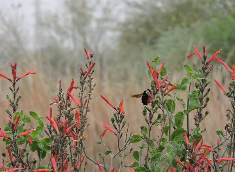
Chuparosa
Red tubular blooms hummingbirds can't resist, thrives in full heat.

Globe Mallow
Bright orange blooms, tough and easy, great pollinator draw.
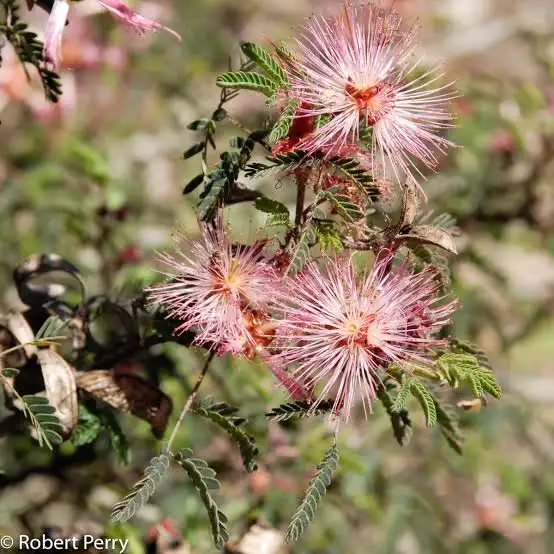
Pink Fairy Duster
Wispy pink blooms, stays small and compact, good pollinator draw.
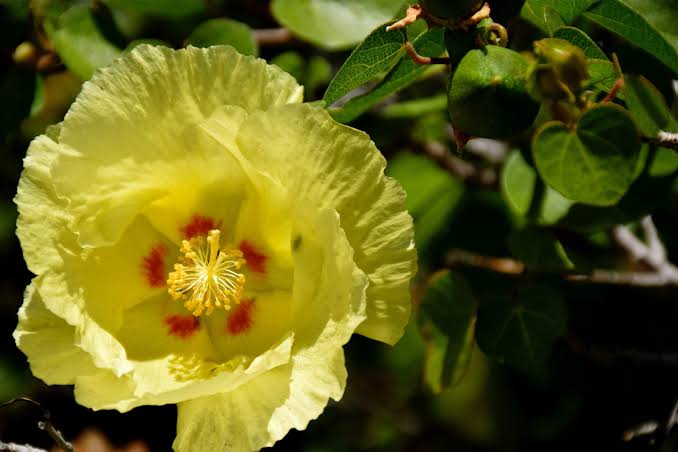
San Marcos Hibiscus
Soft yellow blooms most of the year, desert adapted and easy going.
You don't need all of these, pick your favorites and mix them in with the Bottlebrush and Aloe that are already here.

Ruellia is my first pick, here are a few backups too
Right up against the house here, I'd go with Ruellia first, it's low growing, blooms most of the year, and holds up well in a bed like this. If you want some other options to consider, Pencil Cactus brings a completely different, sculptural look if you want some vertical interest, and Firecracker Plant is another good pick if you want to bring in hummingbirds with something a little more upright.
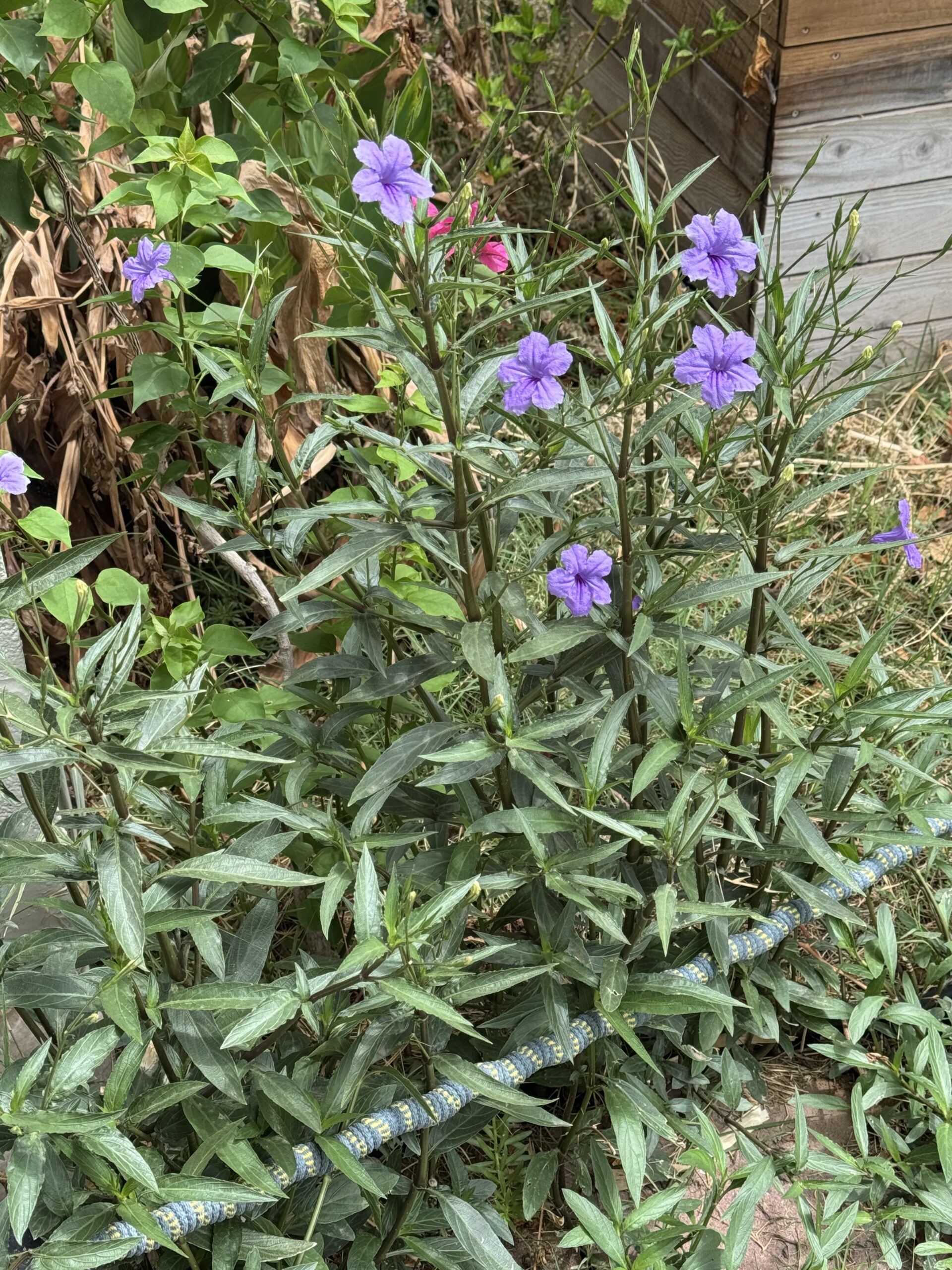
Ruellia
My first pick, low growing groundcover form, blooms most of the year.
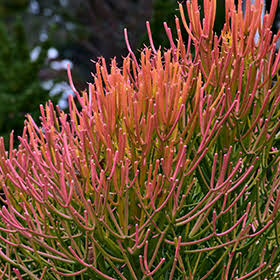
Pencil Cactus
Sculptural, upright, thin pencil-like stems for a totally different look.
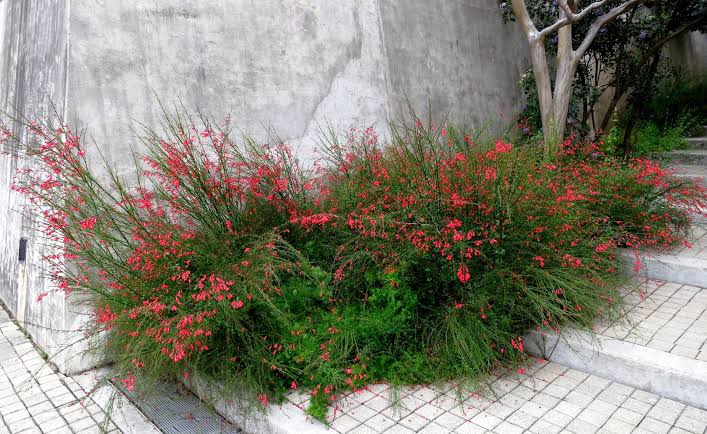
Firecracker Plant
More upright habit, tubular red-orange blooms that bring in hummingbirds.
Ruellia's my recommendation, but any of these three would work well right up against the house.
A full-yard fertilizing program built on soil biology
With this much going into the ground, whether it's new trees, new hedges, garden beds, or the lawn, everything performs better long term when the soil underneath it is actually alive. Quality compost and organic fertilizer feed the microbial life in the soil, which in turn feeds your plants, rather than forcing growth with synthetic salts that can burn through that biology over time. It's a slower, steadier way to build a yard that actually gets healthier every year instead of needing more and more input just to stay the same.
For a property like yours, I'd run a monthly program that covers the grass and every plant on this list, trees, hedges, garden beds, all of it, on one consistent feeding schedule. That includes a liquid feeding every month to keep things moving, plus compost applied three times a year to keep building the soil itself.
Monthly Landscape Fertilizing
Covers the grass and all plants on the property. Liquid feeding every month, plus compost applied three times a year.
Text me to get startedIf you'd rather skip the grass and only cover the plants and trees, let me know and I can adjust the price down to reflect that instead.
Let's tackle this in whatever order makes sense
There's a lot here, so pick what matters most to you first, the root flare work, the walls, or the beds. Plenty of this you can take on yourself with guidance from me in the Garden Nerd Club, and if any part of it is something you'd rather have help with, planting, root flares, whatever it is, just let me know and I can put pricing together for you.
For turf or irrigation questions, Garrett is my go-to, you can reach him directly at 480-678-9121.
You can also read more about how we plant at thegardennerd.org.