
Anita Stephens
1243 E Hackamore St, Mesa, AZ 85203
Here's everything we covered on our walk, area by area in the order we walked it, plus fruit tree, grapevine and lawn care, and how to feed your soil.
Mango on the West Wall
West facing, next to the fig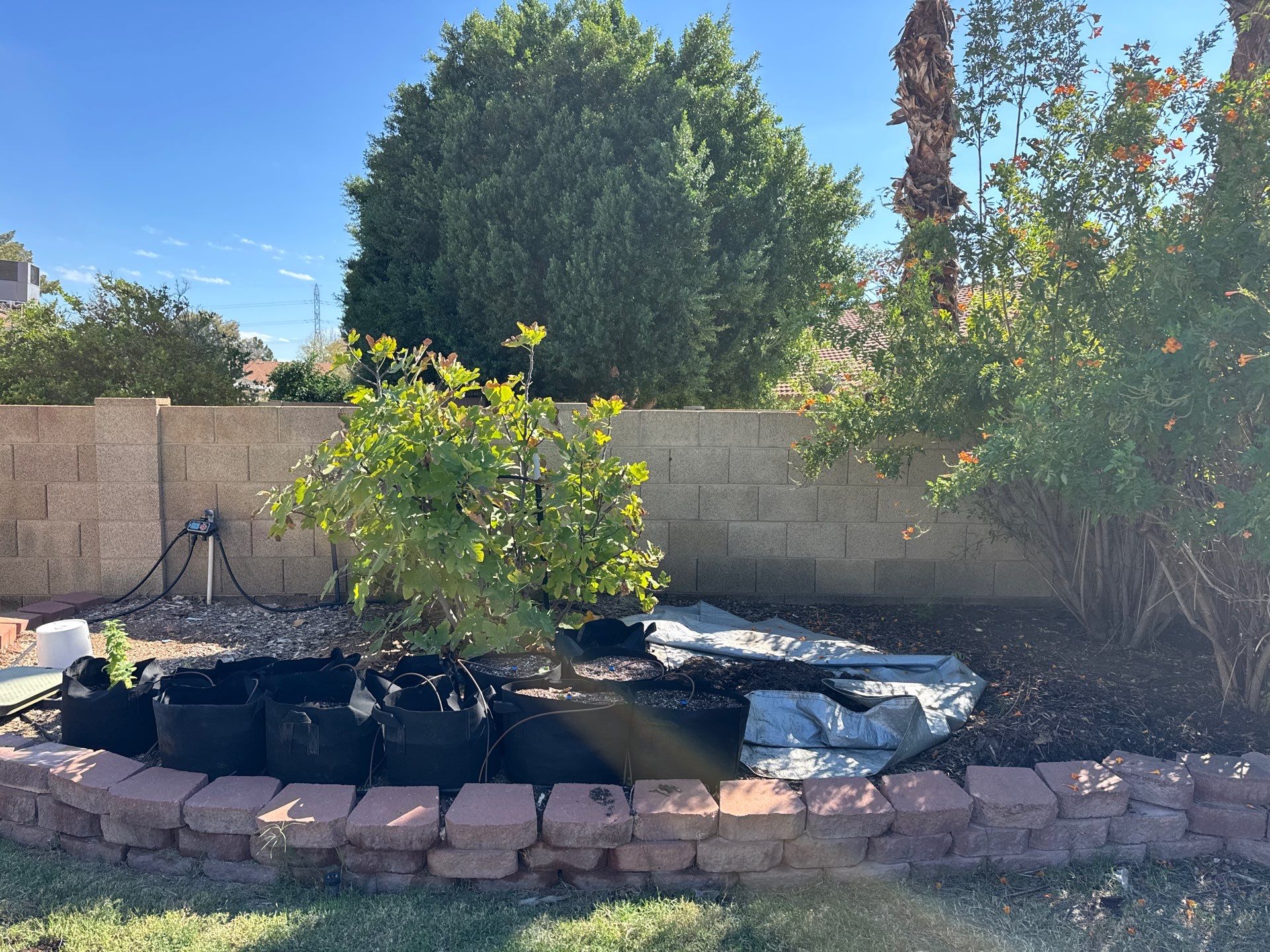
Right here on the west-facing wall next to the fig, you could plant a mango. It will need to be fed constantly to be happy here, but it can do really well.

Mango
Big glossy leaves, beautiful new red growth, and fruit in summer. Grows 15 to 25 feet here and can be kept smaller with pruning.
Varieties that do well here: Kent and Sweet Tart are both great picks. Glenn, Nam Doc Mai, Valencia Pride, and Pickering (a dwarf that stays around 8 to 10 feet) are also good options.
- Buy: Greenlife Nursery has the best mango selection. Seedling-grown mangos tend to do better here than grafted ones.
- Timing: fall planting works if you cover it on frost nights through winter. Otherwise, wait and plant in early spring after the frost risk.
- Protection: mangos are tropical. Cover with frost cloth on nights below about 35 degrees, and use shade cloth on the west side for the first summer or two.
- Feeding: mangos need to be fed constantly to be happy here. Compost out to the drip line, worm castings every quarter, and organic fertilizer every month. That's exactly what our monthly fertilizing service covers (see the feeding section).
- Patience: tropicals take longer to settle in than desert trees, and some leaf burn the first year is normal.
Bermuda Grass Care Guide
Lawn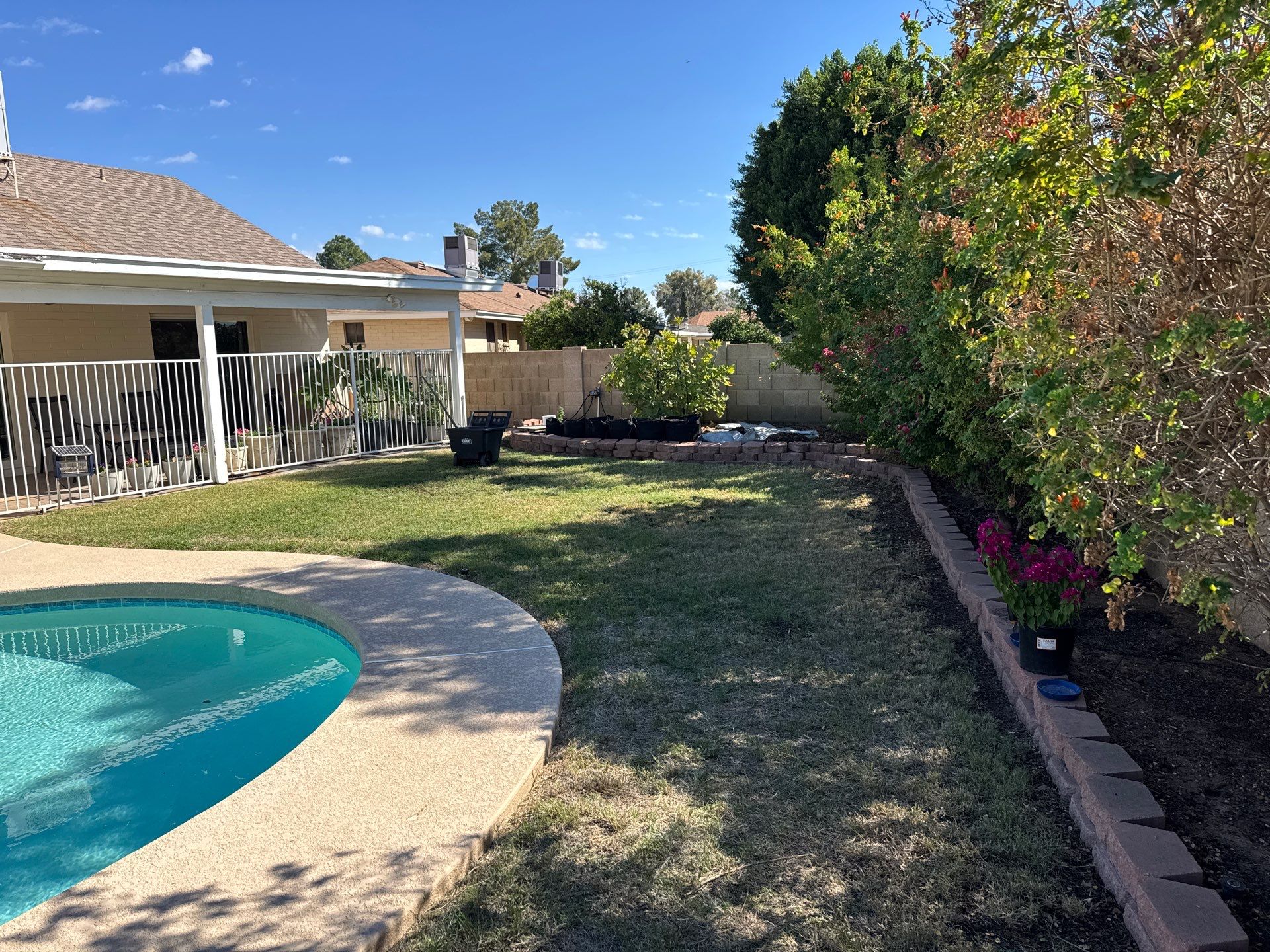
You don't love the Bermuda, but since it's here, here's how to take care of it so it looks its best. This assumes you're not overseeding with winter grass, so it will go dormant and turn tan in winter. That's normal.
| Season | Water | Mow | Feed |
|---|---|---|---|
| Fall October to mid November | Cut back to 2 times a week as nights cool, then once a week as it starts to go tan | Weekly until growth slows, raise the height a little the last few mows | Last organic feeding in October |
| Winter (dormant) Mid November to March | Once every 3 to 4 weeks, a deep soak, just to keep the roots alive | None needed | None |
| Spring green-up Late March to April | Start back at once a week when nights stay above about 60 degrees, building to 2 times a week | Scalp it once low (about 1/2 inch) and rake out the dead thatch to let sun reach the soil, then mow weekly | Start monthly organic feeding once it's actively greening, plus a thin layer of compost |
| Summer May to September | 3 times a week, deep. Early morning. | Weekly at 1 to 1.5 inches | Monthly organic feeding |
- How much water: enough to soak 6 inches deep each time. Put a few tuna cans out when the sprinklers run. About 1/2 inch in the cans per watering in summer is a good target.
- Feeding: skip synthetic lawn fertilizers. A thin layer of compost in spring and monthly organic feeding build the soil so the grass stays green and thick. The Catalyst product in the feeding section works great on grass and really greens it up.
- Mowing: never take off more than a third of the blade at once, and keep the blades sharp.
- Aerate once a year in late spring if the soil feels hard. It lets water and air get down to the roots.
If you'd like us to take care of feeding, we can do just the landscape or the landscape plus the lawn. Pricing for both is in the feeding section below.
Grapevines Along the Pool Fence
Pool fence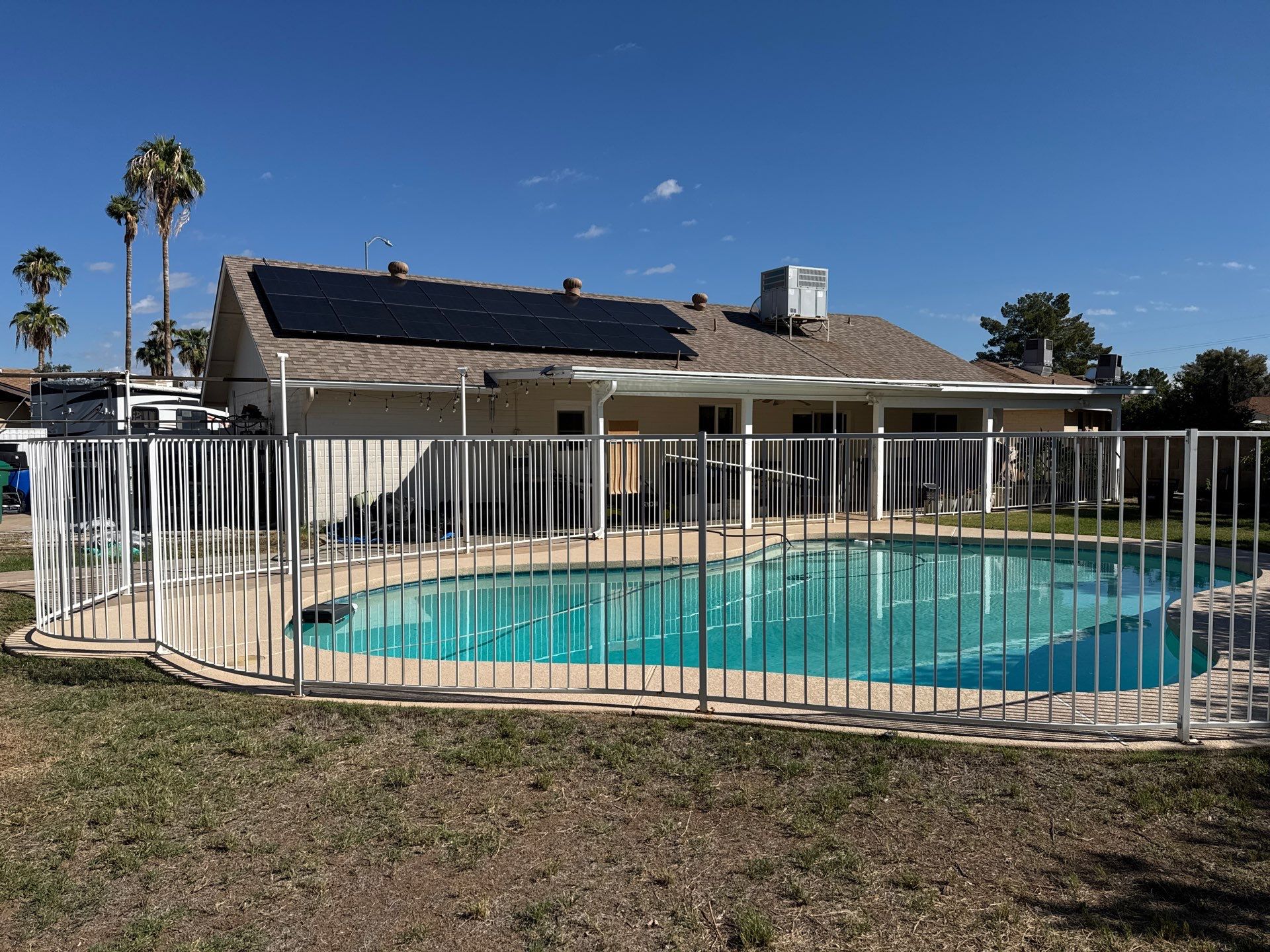
Along the pool fence would be a great spot for grapevines. Two of the best for our area are Flame Seedless and Thompson Seedless. Both handle our heat and produce well.
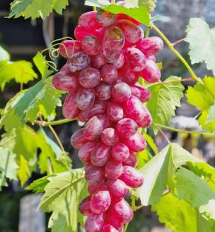
Flame Seedless Grape
Crisp, sweet red seedless grapes. Ripens early (June), before the worst of the summer heat. Very productive here.
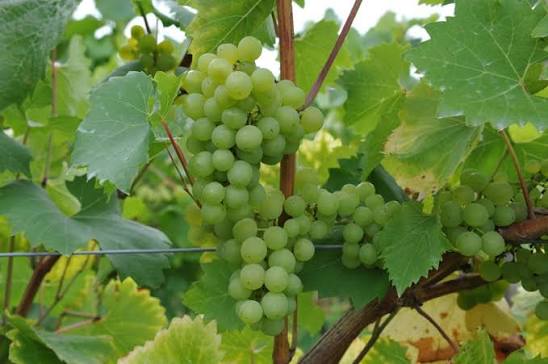
Thompson Seedless Grape
The classic green seedless grape. Sweet and great fresh or for raisins. Ripens in July. Vigorous grower.
Planting
- Plant now through early spring, 6 to 8 feet apart along the fence.
- Backfill with native soil plus a little compost, lay compost on top of the soil, then mulch over it.
- Each vine only needs one emitter. Use an adjustable emitter set high enough to give the vine a good deep soak, placed about a foot from the base.
- Check the pool barrier rules for your city before training vines on a pool fence. Keep the vines trained along the fence so they don't create footholds, and expect some leaf drop in the pool in late fall.
Care
- Water: deep watering once or twice a week in summer, every 2 to 3 weeks in winter while dormant. Cut back a little as the grapes ripen for sweeter fruit.
- Feeding: compost in late winter and monthly organic feeding from spring through summer.
- Sun protection: let leaves shade the fruit clusters. Don't strip leaves in summer or the grapes will sunburn.
- Birds: throw bird netting over the vines a few weeks before harvest.
Pruning guide (January, while dormant)
- Year one: pick the strongest shoot and train it up to the top of the fence as your trunk. Cut everything else off.
- Year two: at the top, train two arms (cordons) horizontally along the fence, one each direction.
- Every year after (Thompson Seedless): Thompson fruits best with cane pruning. Each January keep 2 to 4 healthy canes from last year's growth along the arms, shorten each to about 12 to 15 buds, and cut all other growth off. Leave a short 2-bud stub next to each cane to grow next year's canes.
- Every year after (Flame Seedless): Flame does well with spur pruning. Along the arms, cut last year's shoots back to short spurs with 2 to 3 buds each, spaced 6 to 8 inches apart.
It feels like you're cutting off a lot. That's normal. Grapes fruit on new growth, and hard winter pruning is what gives you big, sweet clusters.
More Fruit Trees in the Back
Back yard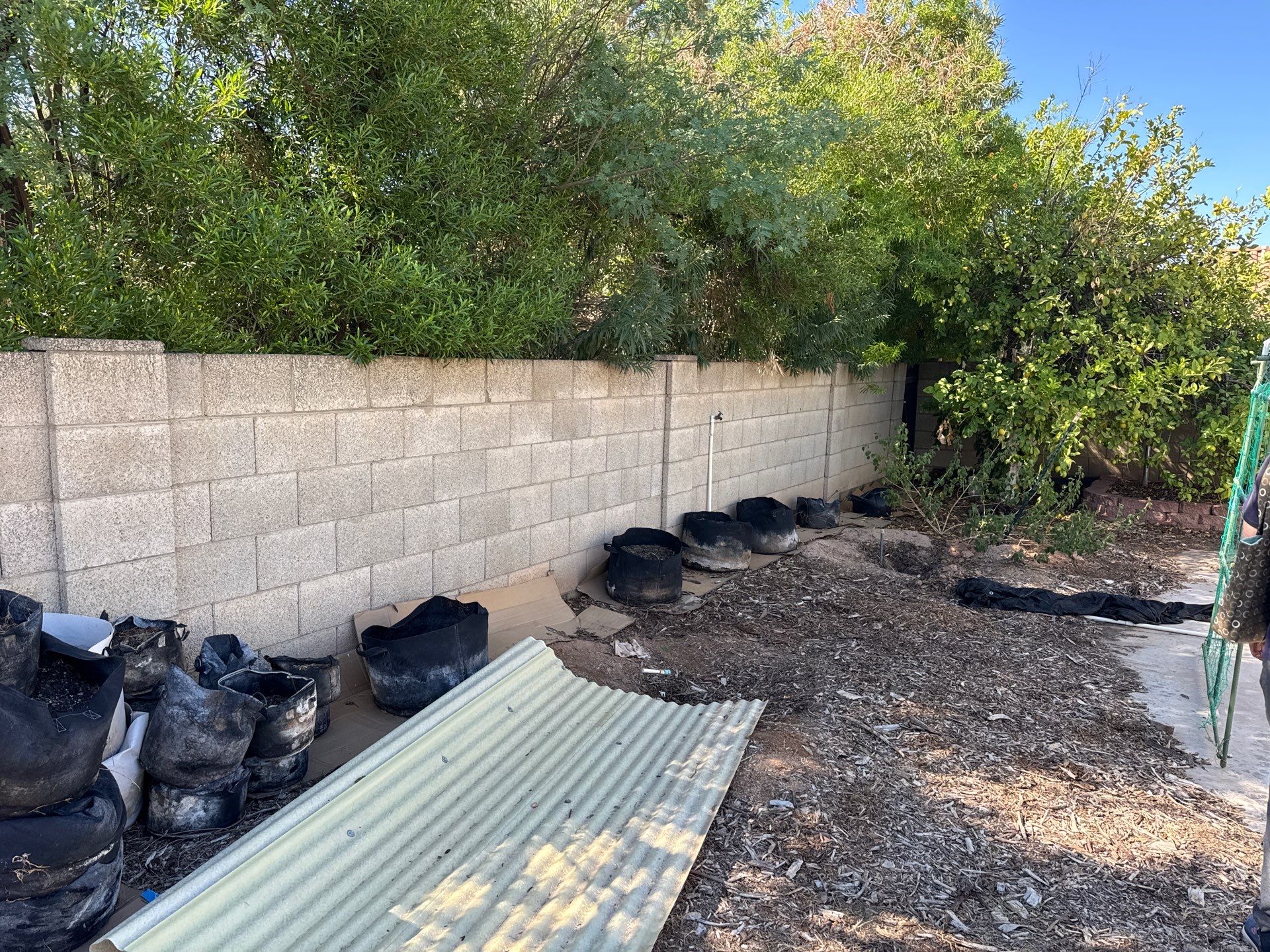
Back in this area is a great spot for more fruit trees. You like apricot, peach, and fig, and all three will do great here.
One thing to consider: the neighbor's trees are overgrown along this side and can shade this area. Fruit trees want at least 6 hours of direct sun to produce well, so plant them where they'll get the most open sky, and keep an eye on how much shade comes over the wall as the neighbor's trees grow.
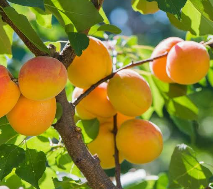
Apricot
Katy apricot is the one I'd suggest. Low chill, so it fruits reliably with our mild winters. Sweet fruit in May. 12 to 15 feet.

Peach (Florida Prince)
Florida Prince is the one I'd suggest. Low chill, ripens in May before the heat. 12 to 15 feet, keep it pruned open.
Figs

Fig
Figs love our heat, grow fast, and you'll be picking fruit in a year or two. 10 to 15 feet, can be kept smaller with winter pruning.
Fig varieties that do well here: Black Mission, Brown Turkey, Kadota, Panachee (Tiger Stripe), and Violette de Bordeaux.
- Spacing: about 10 to 12 feet apart.
- Pruning: apricot, peach and fig are all pruned in winter while dormant (January). Keep peach and apricot open in the center and around 8 to 10 feet tall so the fruit is easy to reach.
- Fruit thinning: peaches and apricots set more fruit than they can carry. Thin to one fruit every 6 inches when they're marble size for bigger, sweeter fruit.
- Sunburn: paint the trunks with white latex paint mixed half and half with water.
Replacing the Pomegranate
Back yard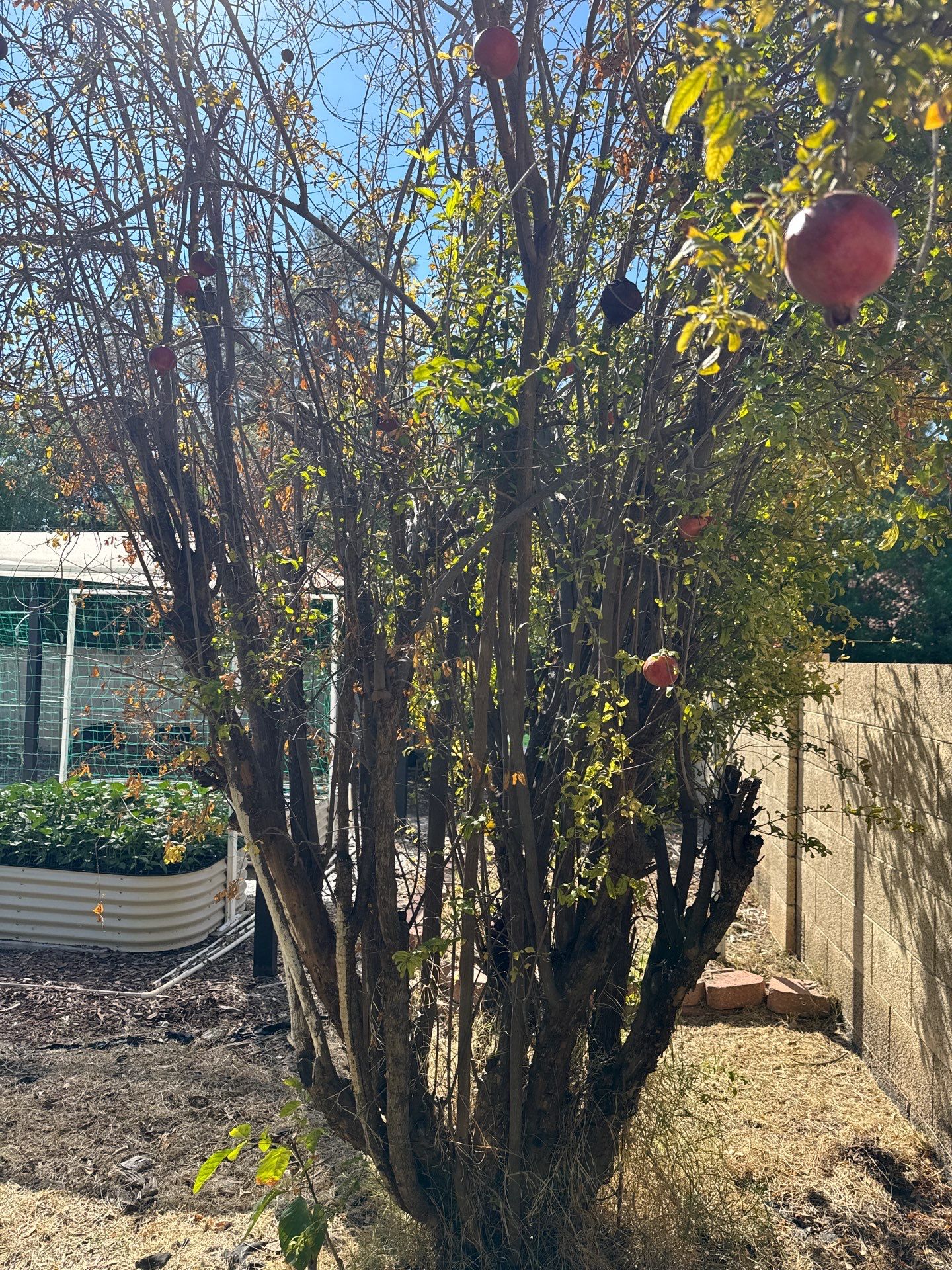
Right here where the pomegranate is, a mango would work once the pomegranate is gone. There's also a volunteer ash tree growing here that would work as well and would give some afternoon shade, so you can decide which you prefer. This would also be a good spot for bananas.
Mango
A great fit once the pomegranate is out. See the mango varieties and care in section 01.
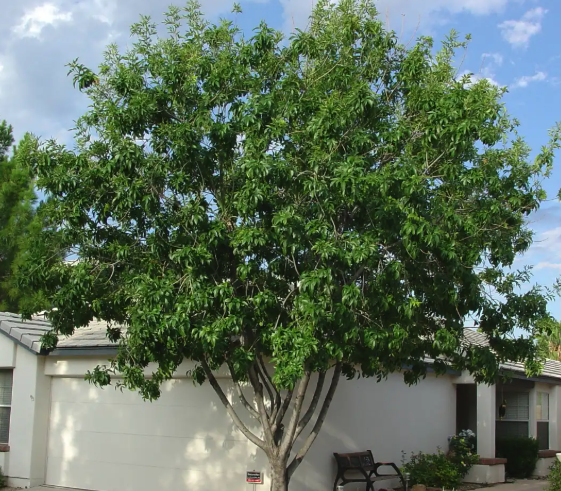
Arizona Ash
The volunteer that's already here. Fast growing shade tree, 30 to 40 feet, that would give afternoon shade. If you keep it, make sure the root flare stays exposed and give it deep, infrequent water.

Banana
Big tropical leaves and a lush look, and you can get fruit here with the right care. Bananas want regular water, a lot of compost, and monthly feeding. Plant a clump of 2 or 3 together so they shelter each other, and expect the leaves to tatter in wind and freeze back in a cold winter. They come back from the base in spring.
Removing the pomegranate
To get rid of the pomegranate, cut it at soil level and then grind the stump. Pomegranates sucker heavily from the roots, so if you don't grind the stump, it's going to keep coming back. We don't do removals, so this would be you or a landscaper. After the stump is ground, fill the hole with native soil and let it settle a few weeks before planting.
Citrus Water Wells and Root Flares
All citrus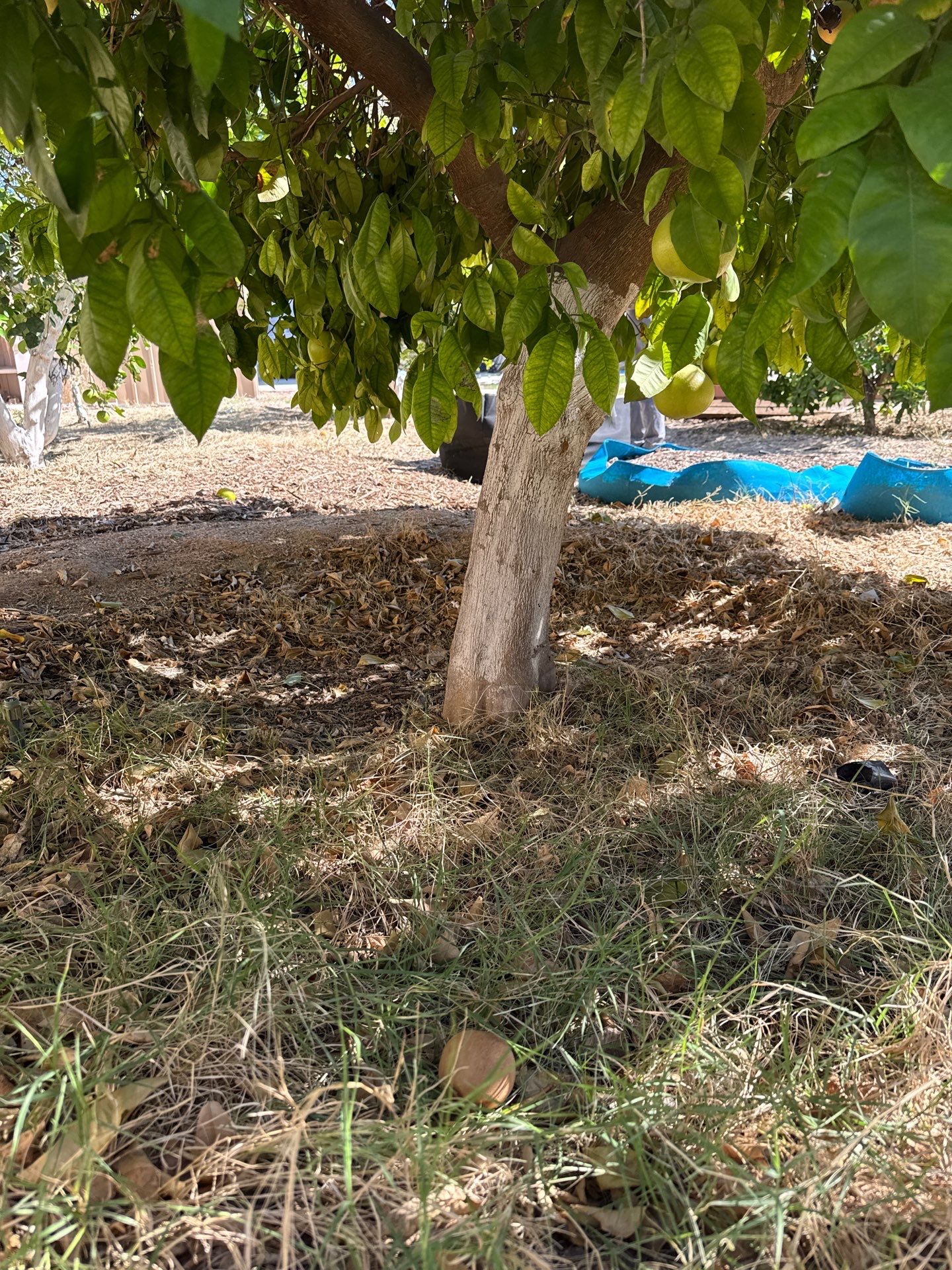
On this citrus and all the citrus trees, there are a few things to do:
- Build defined water wells. Use your native clay soil to make a berm 4 to 6 inches high in a ring around each tree, 3 to 5 feet across (wider as the tree grows). The well holds water in place so it soaks deep instead of running off.
- Expose the root flare. Pull everything back from the base: rock, soil, mulch. The root flare is where the trunk widens into the roots, and it should sit right at the soil line. A strong stream of water from the hose will blast the dirt away. A buried flare keeps the bark wet and can lead to rot and girdling roots.
- Feed at least quarterly. At a minimum, spread quality compost out to the drip line every quarter. Citrus are heavy feeders and respond fast. If you sign up for our fertilizer service, we'll take care of it monthly.
This video shows why an exposed root flare matters, with real examples. If it doesn't load, watch it on YouTube here.
Inside the well, lay compost on top of the soil and cover it with mulch, keeping it a few inches off the trunk. Move the emitters out toward the edge of the canopy, not at the trunk.
Spot for Another Lime Tree
Back yard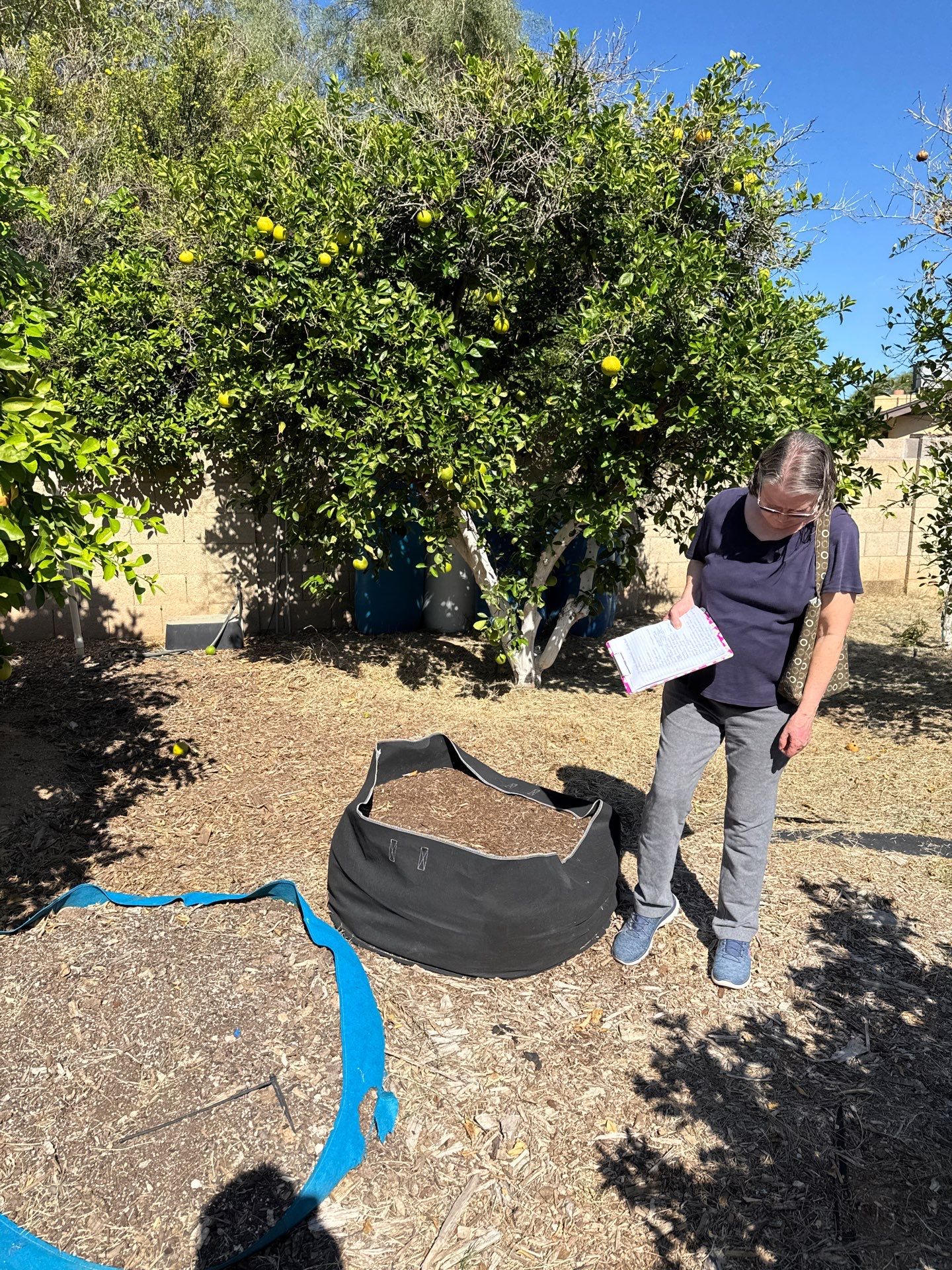
Right where you were standing is a great place for another lime tree. The best place to buy citrus is Greenfield Citrus Nursery. They grow all their trees here in the Valley, and you can browse all their varieties online.
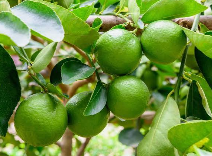
Lime
Bearss lime is the most reliable here: seedless, juicy, and productive. Mexican (Key) lime has more flavor but is more frost sensitive. Plant now through spring, about 8 feet from other trees, and cover it on frost nights.
Plant with the root flare right at the soil line (see section 10), build a water well, and let the canopy grow low to shade its own trunk.
Smothering the Grass
Back yard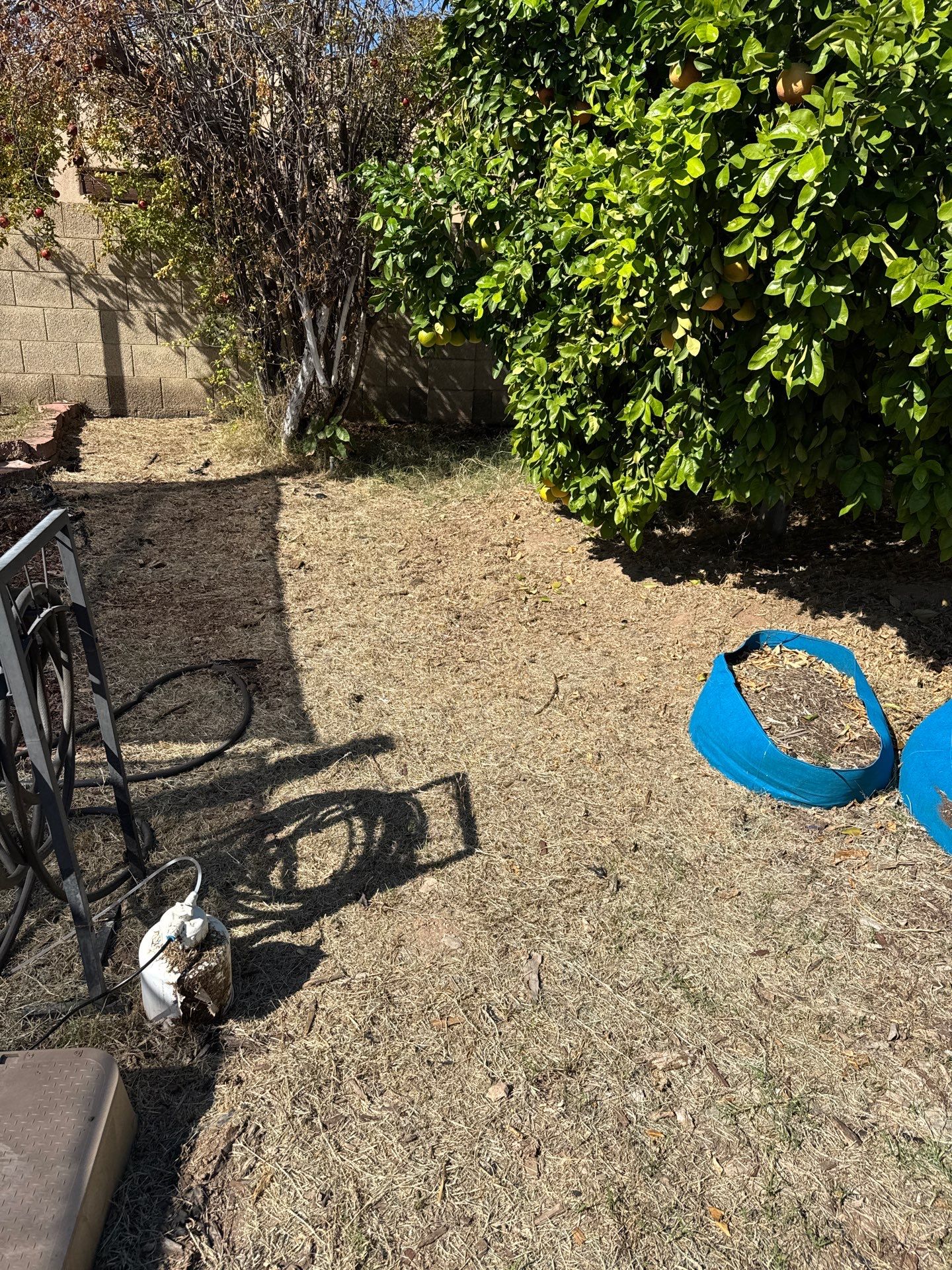
To get rid of the grass in this area, here's the plan you talked about:
- Cardboard. Lay down as much cardboard as possible, overlapping the edges by 6 inches so no light gets through. Remove any tape and plastic labels. Wet it down well.
- Mulch. Pile a thick layer of mulch over the cardboard. The thicker the better; aim for at least 6 inches.
- Pull runners. This won't kill the Bermuda completely, but it smothers most of it. As soon as you see runners poking through or creeping in from the edges, pull them right away.
- Wait. After about six months, most of the grass should be gone, and the cardboard will have broken down and fed the soil underneath.
An edging barrier along the lawn edge helps keep new runners from creeping back in.
Vines for the Wall
Back yard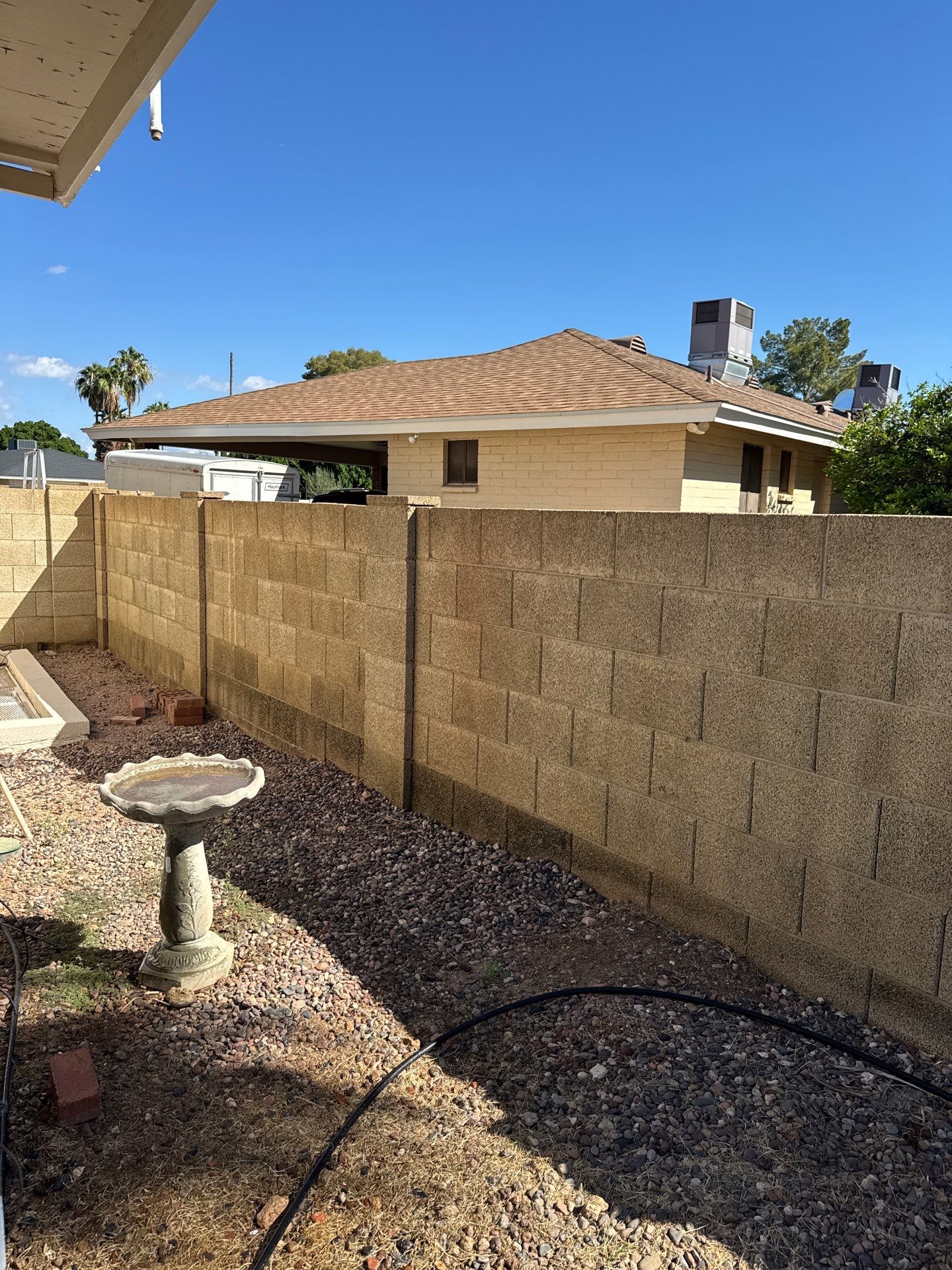
Here are good vine options for this wall, and what each one needs to climb:

Tangerine Crossvine
Self-clinging, no trellis needed. Grabs the block with small tendrils. Evergreen with orange trumpet flowers in spring. Takes full sun and heat.

Bower Vine
Needs a trellis or wires to twine on. Glossy evergreen leaves with pink or white trumpet flowers spring through fall. Appreciates some afternoon shade.
Hacienda Creeper
Self-clinging, no trellis needed. Covers the wall with green leaves that turn red in fall, then drops its leaves for winter. Very fast and tough.
For the bower vine, run galvanized wire horizontally every 12 to 18 inches across the wall with eye screws. It's inexpensive and almost invisible once the vine fills in.
Planting Depth for Every New Tree
All new trees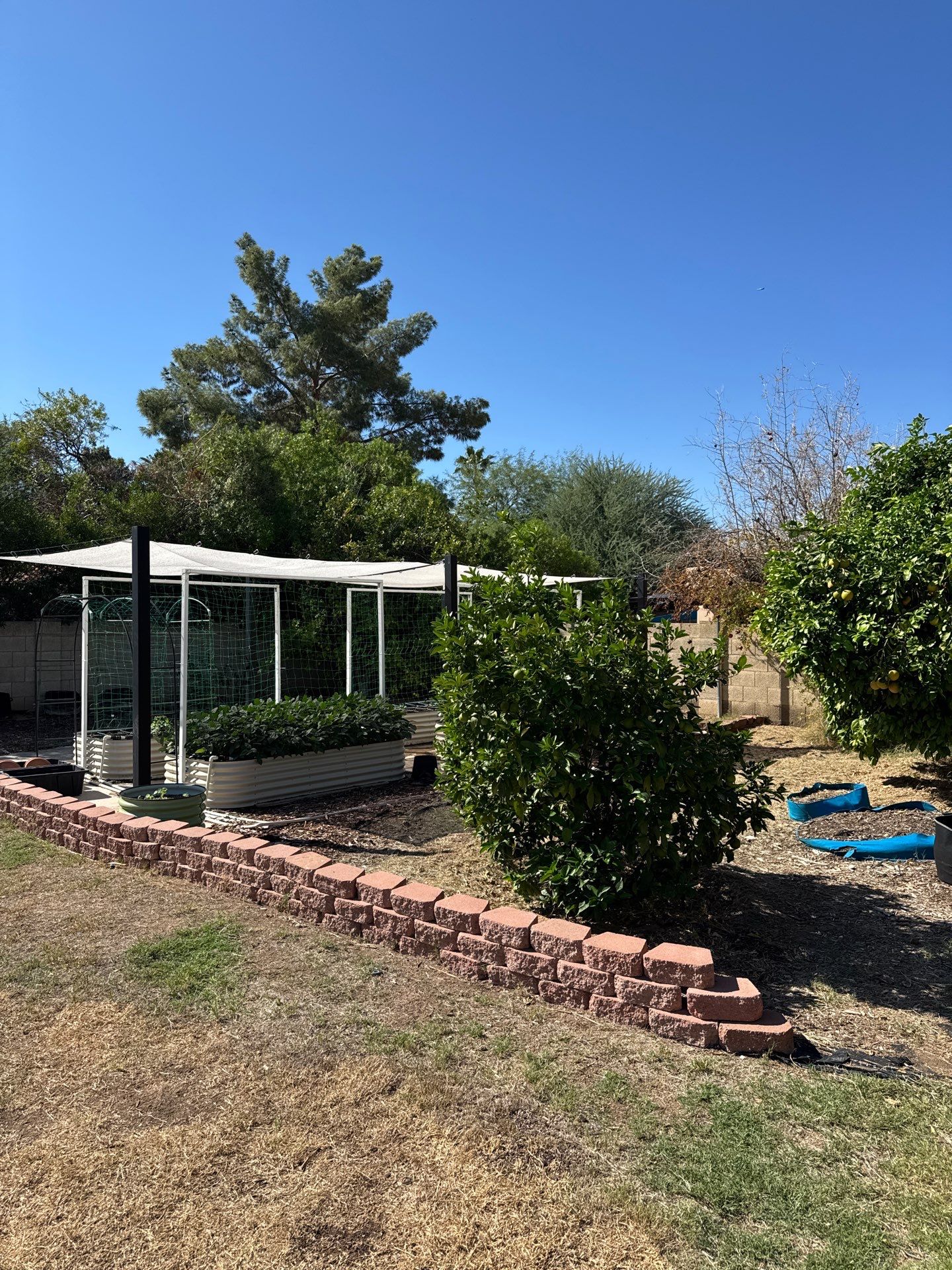
For every new tree you plant, this is the most important thing to get right: plant to the root flare, not to the soil level in the nursery pot.
Nursery trees are very often potted too deep, with the root flare buried an inch or several inches under the soil in the pot. If you plant at the same depth it came in, you're burying the flare from day one.
- Find the flare first. Before you plant, scrape or wash the soil off the top of the root ball until you find where the trunk widens out and the first main roots start.
- Dig to that depth. Dig the hole so the flare sits right at, or even slightly above, the surrounding soil once planted. Never deeper. Dig two to three times as wide as the root ball.
- Loosen circling roots. Tease out any roots circling the outside of the root ball.
- Backfill with your native soil plus a little compost, lay compost on top of the soil, and then mulch over the compost. Keep the mulch a foot back from the trunk.
- Build a water well and water it in deeply.
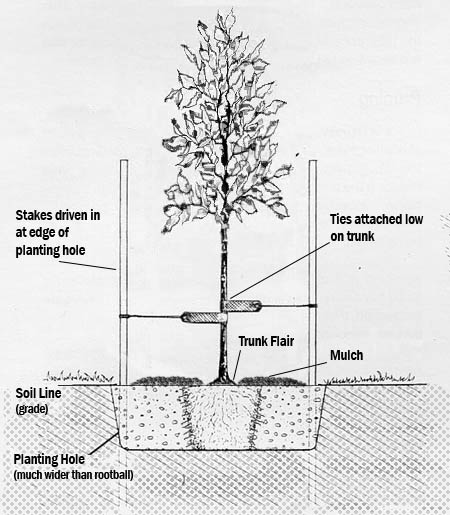
Proper tree staking
If a new tree needs staking, use two stakes on opposite sides with loose, flexible ties so the trunk can still move. Remove the stakes after the first year.
Ornamental Tree for the Front
Front yard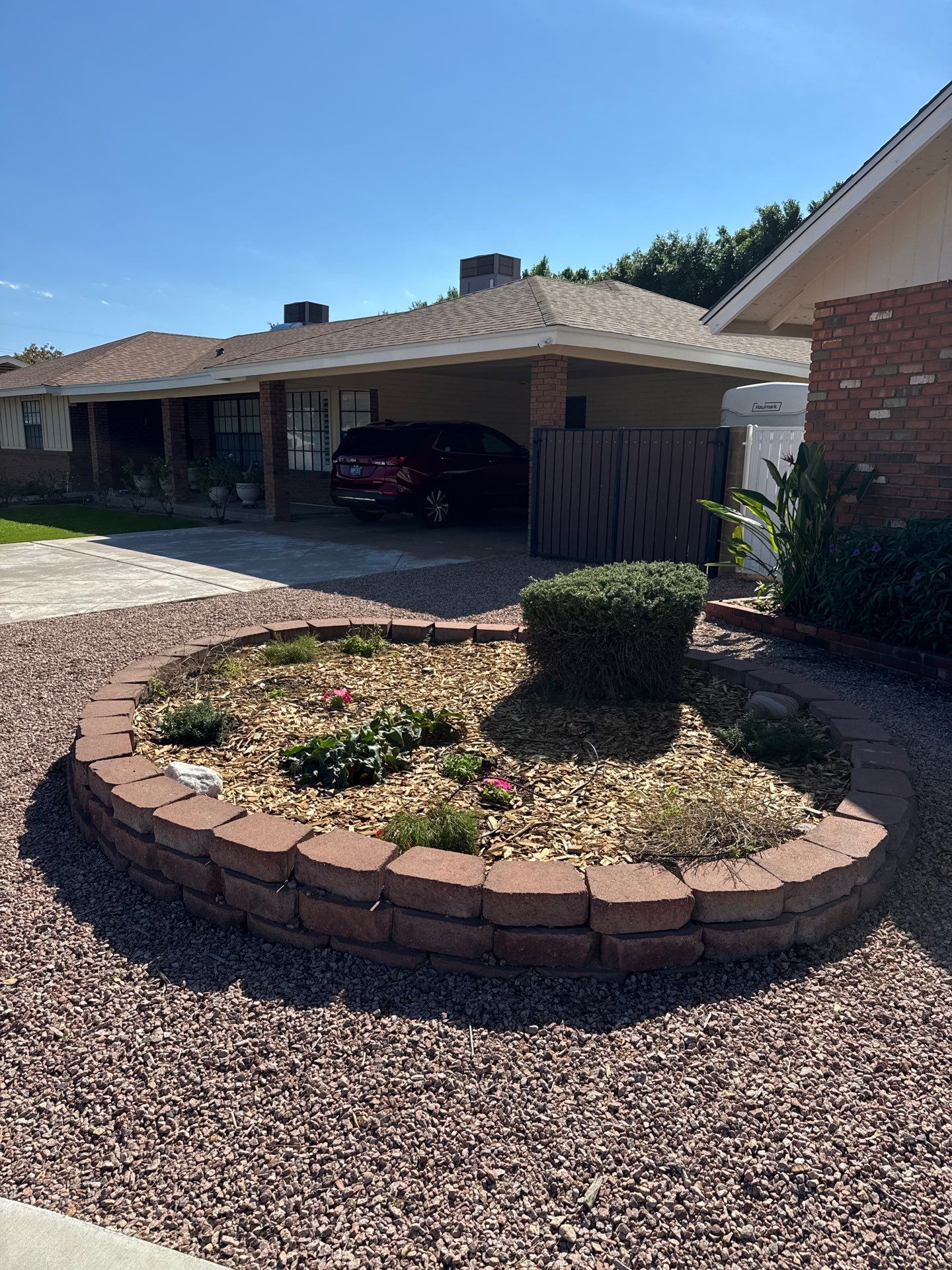
Right here in front of the house, you're looking for a smaller, more ornamental tree. Texas olive was the first one I thought of. Desert willow works too, but it loses its leaves in winter. Here are a few other smaller ornamental trees that hold their leaves:

Texas Olive
My first pick. Evergreen with big white flowers off and on through the warm season. Stays 15 to 20 feet with a rounded canopy.

Mulga Acacia
Evergreen with soft silvery leaves and yellow flowers. 15 to 20 feet with a narrower shape.
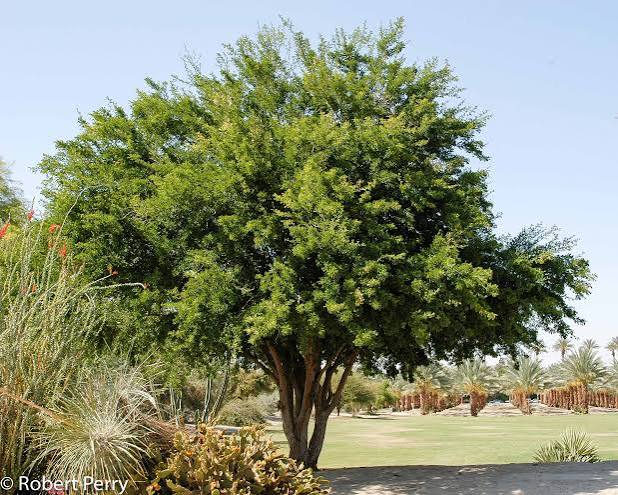
Texas Ebony
Evergreen with a dense, dark green canopy. Slow growing, 15 to 25 feet. Has thorns, so keep it off the walkway.
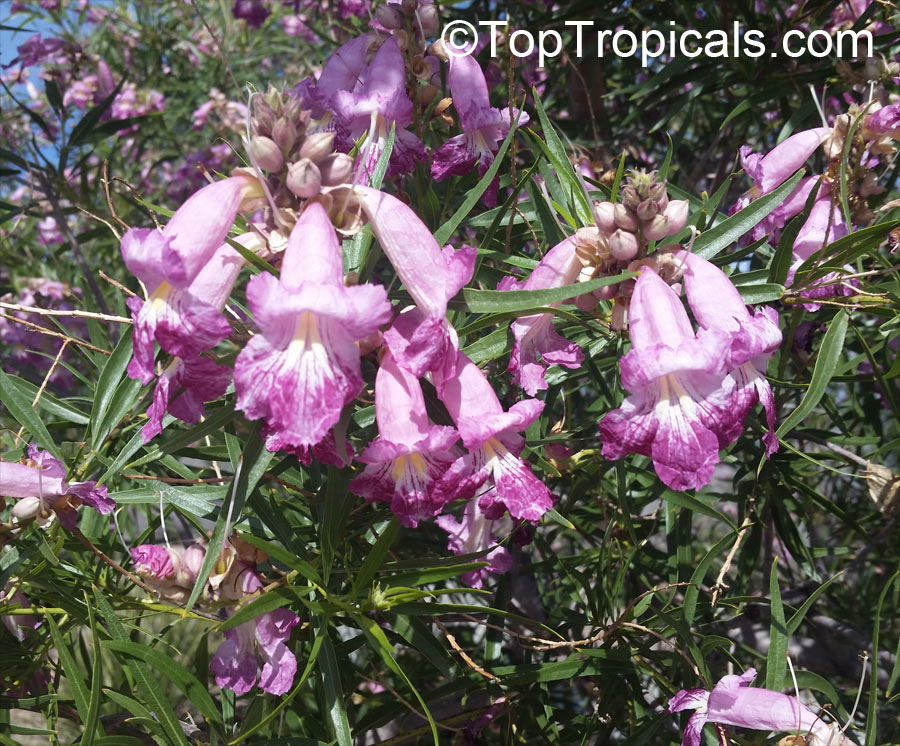
Desert Willow
Native with orchid-like flowers all summer. Loses its leaves in winter, which is the trade-off.
Go with a 15 gallon tree and follow the planting depth steps in section 10.
Hummingbird and Pollinator Plants Out Front
Front yard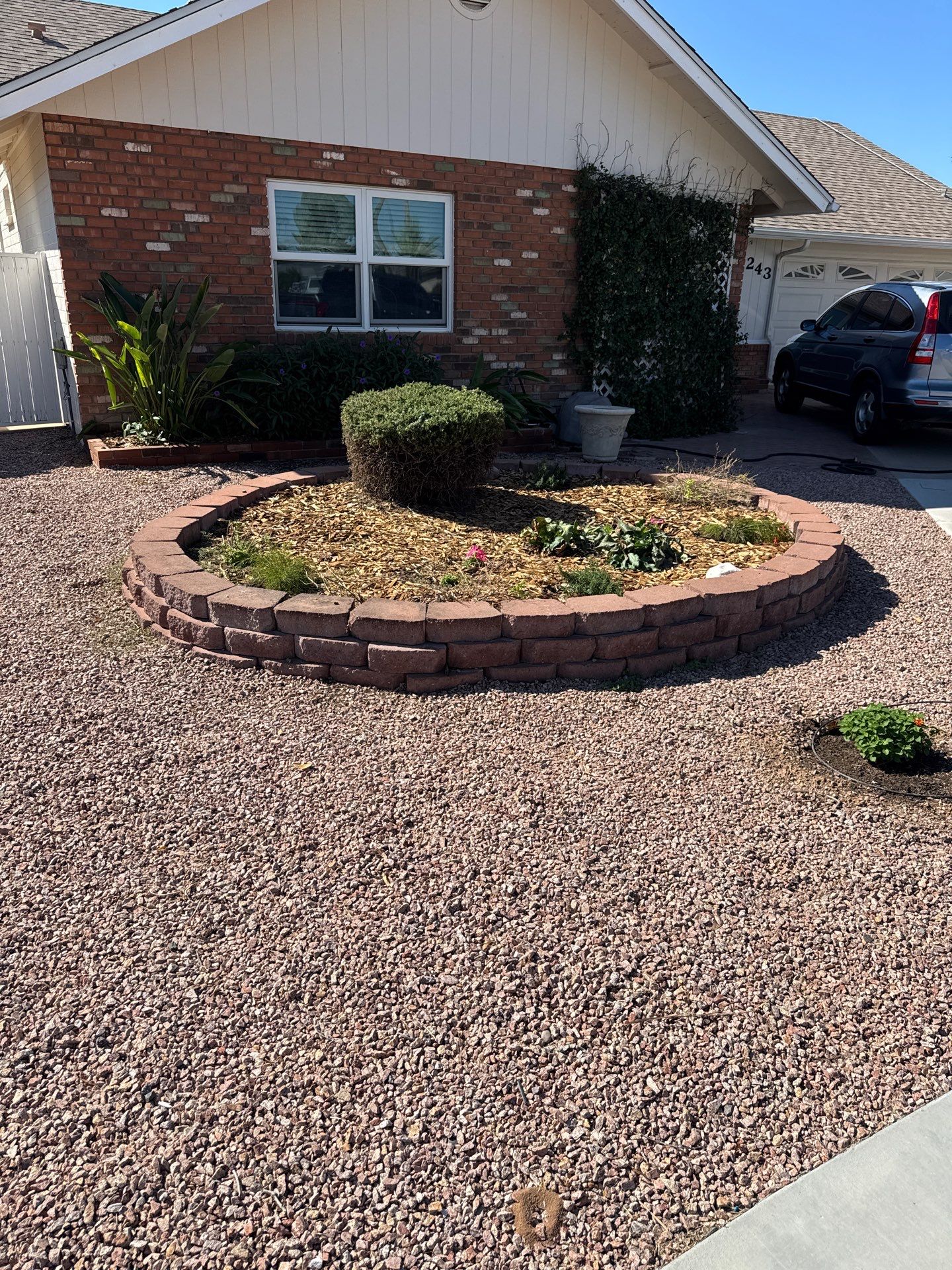
Here in the front, here are desert adapted plants that flower and bring in hummingbirds and other pollinators:
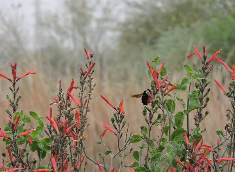
Chuparosa
Native, red tubular flowers through winter and spring. Hummingbirds fight over it. 3 to 4 feet.
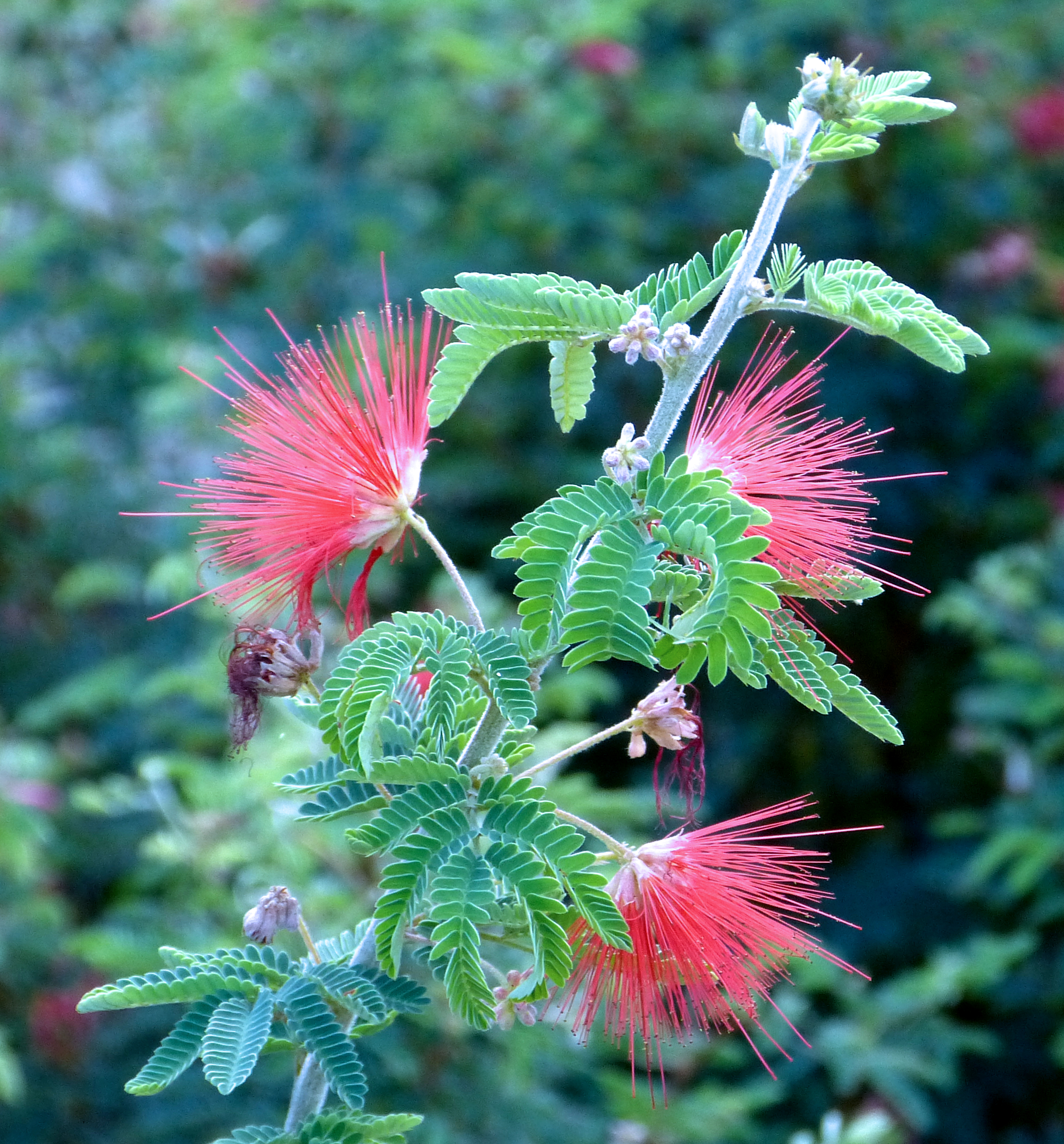
Baja Fairy Duster
Red puffball flowers most of the year, 3 to 5 feet. Hummingbird favorite.
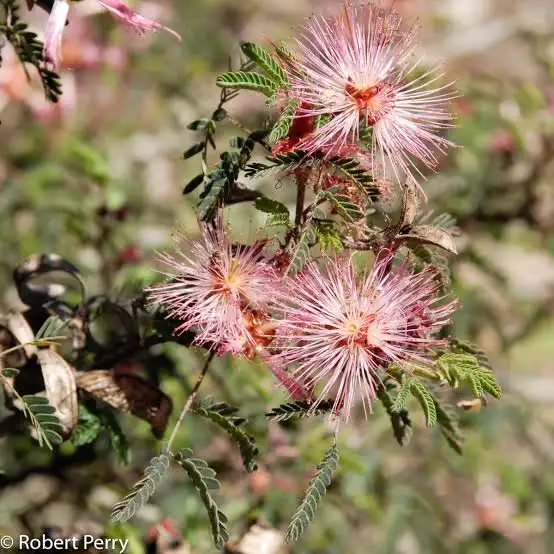
Pink Fairy Duster
Native, soft pink flowers in late winter and spring. 2 to 3 feet.
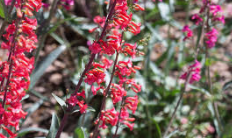
Penstemon
Tall red, pink or purple flower spikes in spring. Hummingbird magnet.
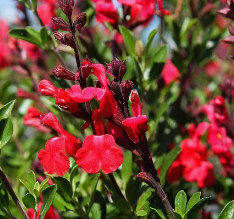
Autumn Sage
Red, pink or white flowers spring and fall. Bees and hummingbirds love it.
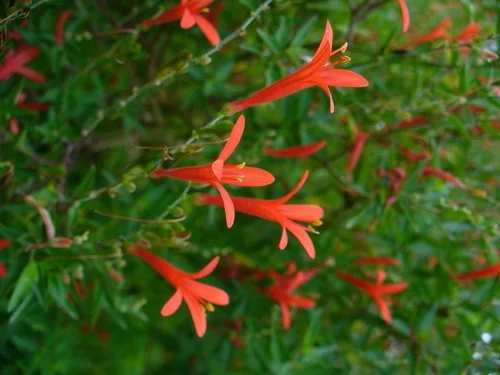
Desert Honeysuckle
Orange tubular flowers spring through fall, 3 to 5 feet.
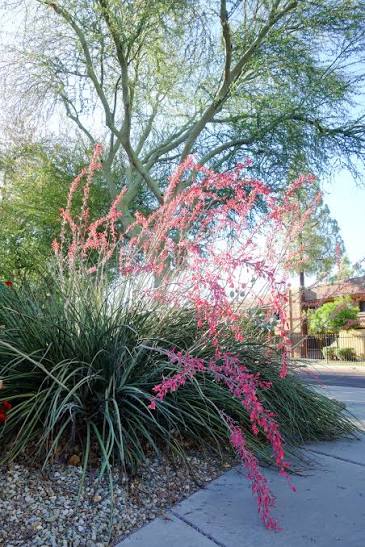
Red Yucca
Coral-red flower stalks spring through fall. Hummingbirds visit all summer.

Desert Milkweed
Native host plant for monarch and queen butterflies.
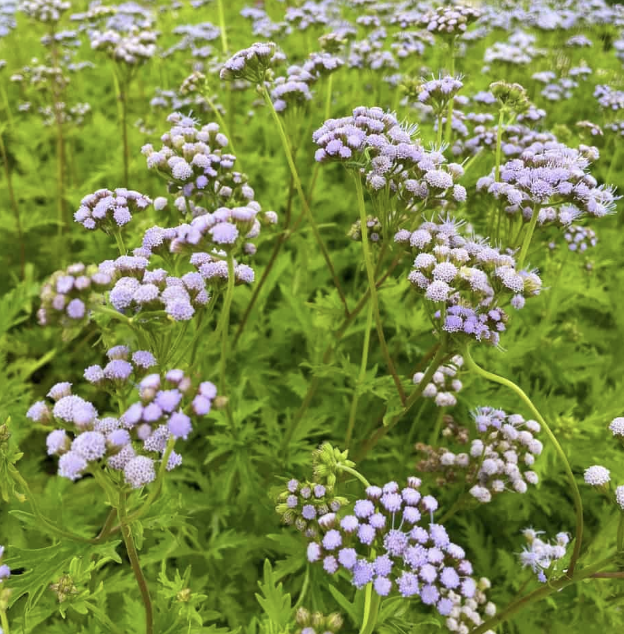
Greg's Mistflower
Purple-blue flowers in fall covered in queen butterflies.

Globe Mallow
Native, apricot-orange flowers in spring. Native bees love it.
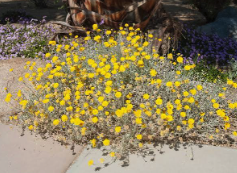
Desert Marigold
Bright yellow daisies most of the year. Reseeds.
You can't fit all of these. Pick your favorites and group 2 or 3 of each together.
Lantana to Cover the Rock
Front yard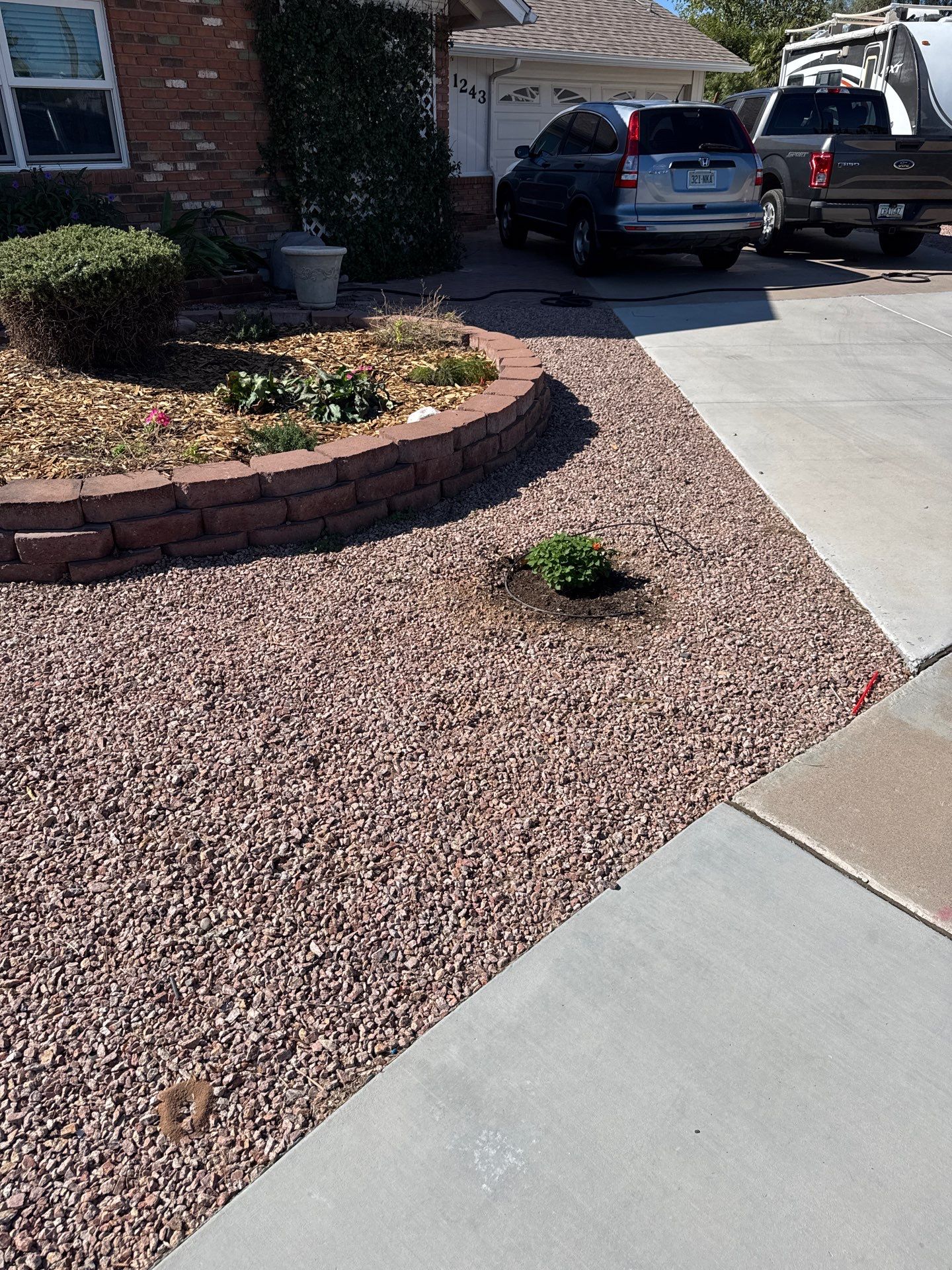
You planted lantana here, which is great. Since you like it, I'd plant three or four more all around the rock area to completely cover the rock and cool the area down.
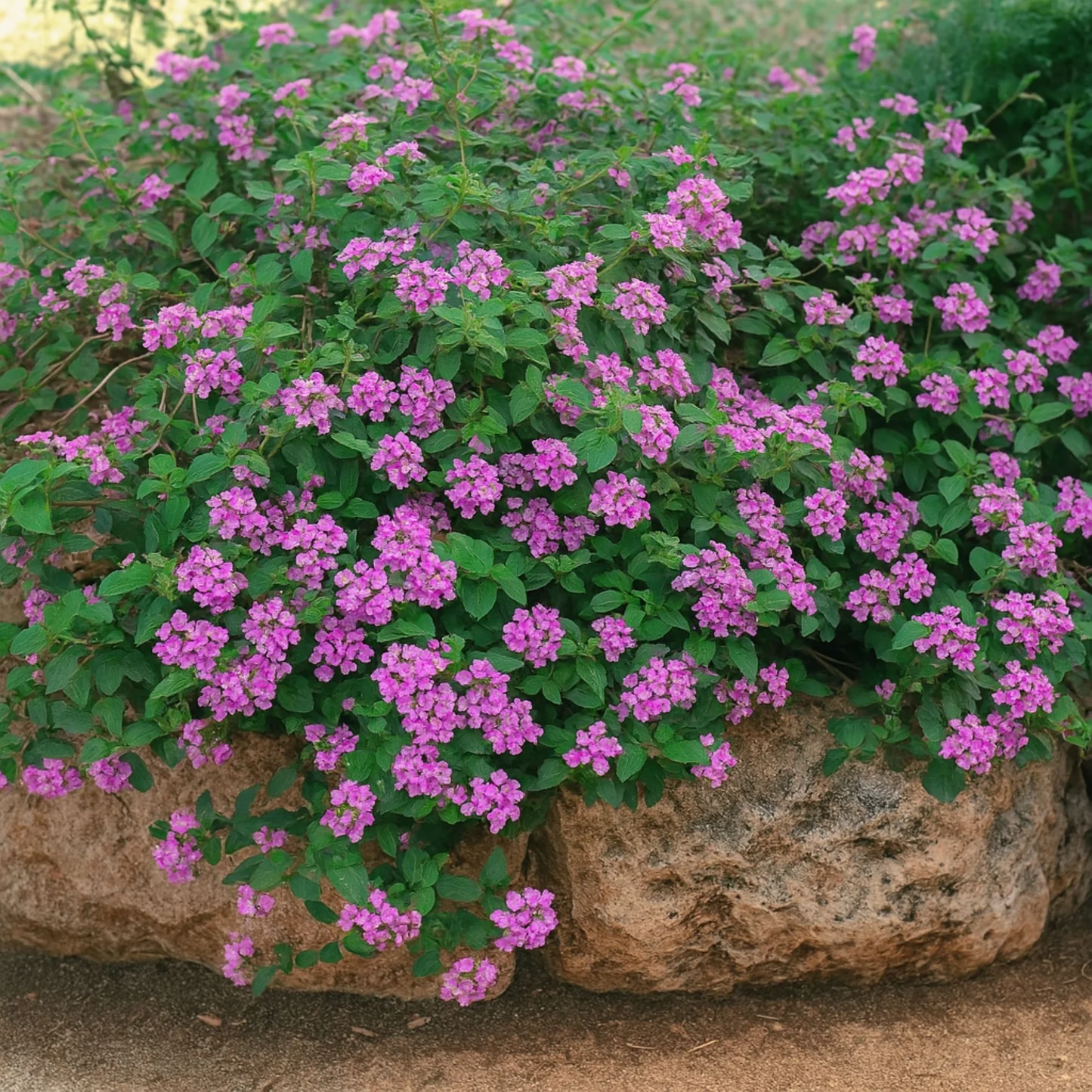
Lantana
Mounds 2 feet tall and 4 to 6 feet wide with nonstop color all warm season. Plant 4 to 5 feet apart to fill in fast. Cut back by about a third in late winter after the frost risk.
Bare rock soaks up heat all day and radiates it back at night. Covering it with plants makes a real difference in how hot the yard feels.
Soil and Feeding
For the whole yardMost of what struggles in the Valley comes back to the soil. Our native soil is low in organic matter and soil life, and healthy soil biology is what actually feeds plants and holds water. Here's how to do it yourself:
- Compost. Spread a generous layer of compost around the drip line of every tree (the edge of the canopy) and closer in around shrubs. Do this a few times a year, then cover it with mulch. Arizona Worm Farm has great compost.
- Worm castings every quarter. A few handfuls around each plant, watered in. Castings are packed with soil life.
- Organic fertilizer monthly. Use a good organic fertilizer high in fulvic acid. The ones I use and recommend are from Catalyst: Jenner 8, Organic Nitro Jen, and their kelp fertilizer. Mix and apply monthly. This is great for the citrus, the fruit trees, the mango, and the grapes.
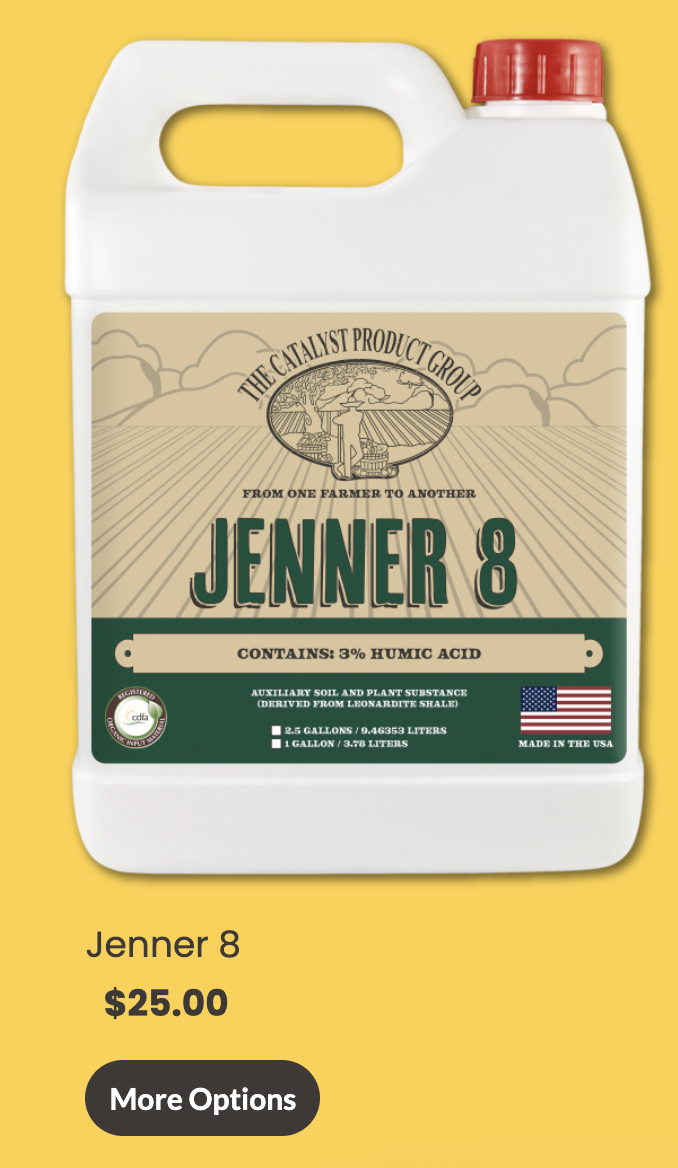
Jenner 8
Fulvic acid-rich organic fertilizer that feeds the soil biology and helps plants take up nutrients.
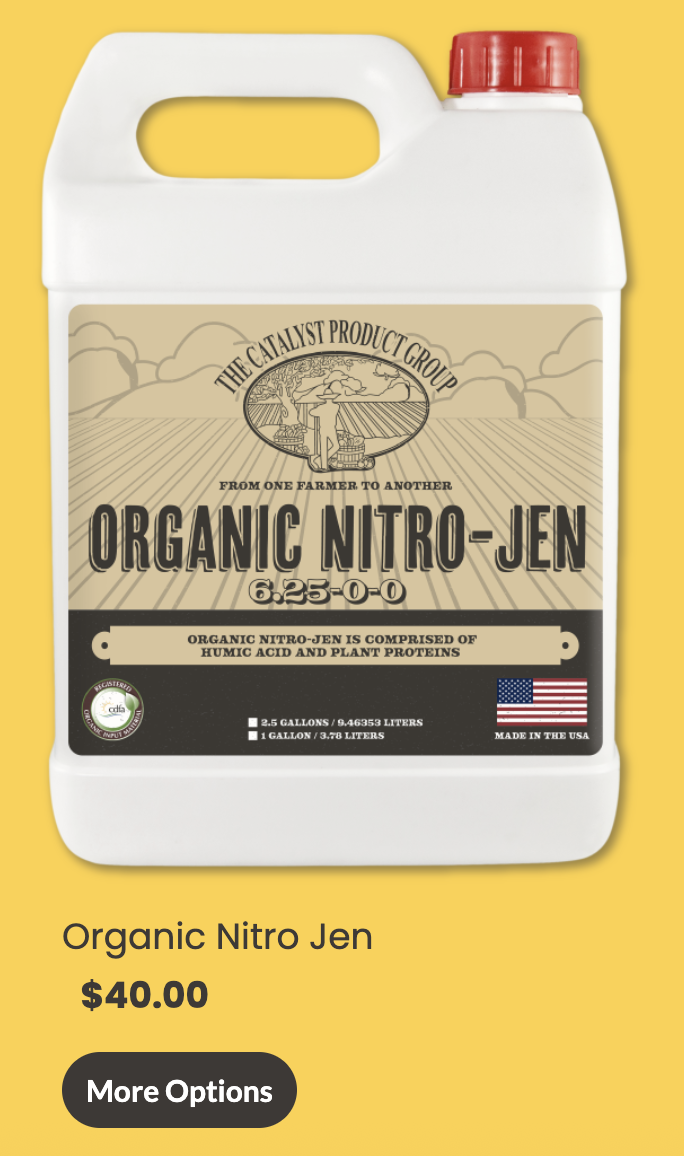
Organic Nitro Jen
Organic nitrogen to push healthy green growth. Great for citrus and fruit trees.
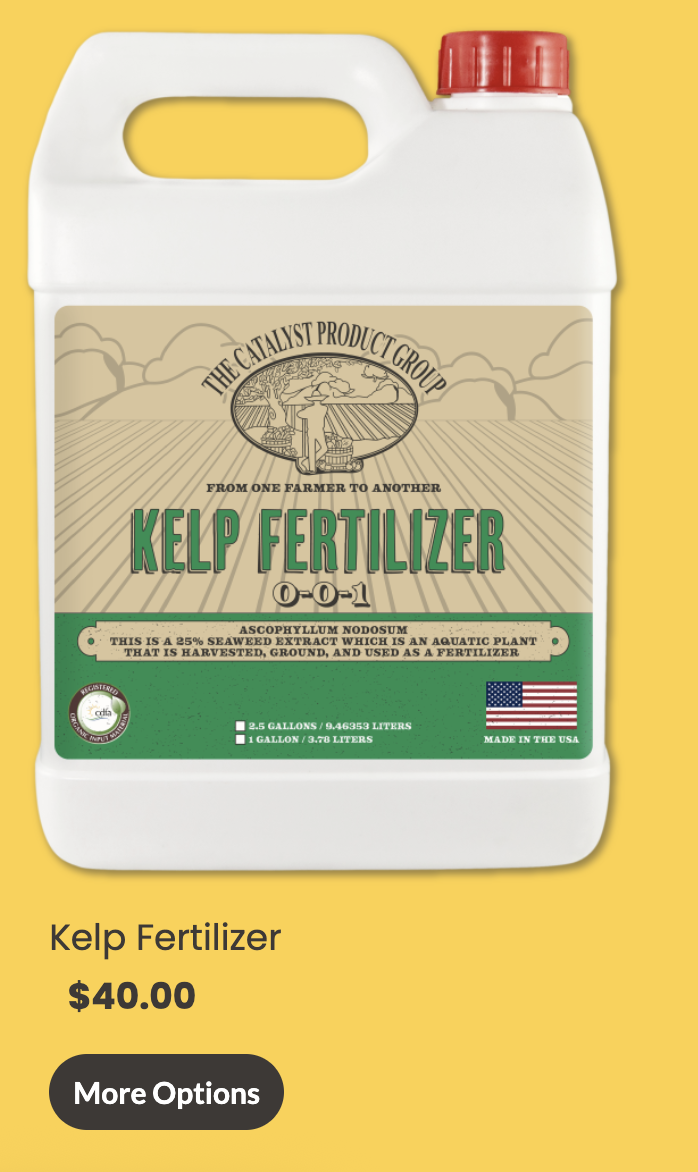
Kelp Fertilizer
Trace minerals and natural growth hormones that help plants handle heat and stress.
Find them at catalystproductgroup.com. Click Products, then Home and Garden.
Or let us handle it
Monthly Landscape Fertilizing
- Monthly organic liquid feeding of every tree, shrub, and vine
- Compost applied 3 times a year
- A recap video after every visit
Landscape and Bermuda Fertilizing
- Everything in the landscape program
- Monthly organic liquid feeding of the Bermuda, which works great on grass and really greens it up
- A recap video after every visit
Quick Reference
Compost, mulch and worm castings
Citrus trees
Mangos and tropicals
Fruit trees, grapes and plants
A&P Nursery
Organic fertilizer
Catalyst Product Group (Products, then Home and Garden)
Why root flares matter
Next Steps
Thanks for having me out, Anita. You have a lot of room for fruit here, between the mango, the grapes, and the new fruit trees, and it's a great time of year to get started.
If you want to do the planting yourself, everything you need is in here. As a consult client, you're already in the Garden Nerd Club, so you have direct access to me there. Post photos as you go and ask me anything.
We also do planting. Whenever you're ready, whether that's this season or down the road, let me know which plants you like for each area and I can put together a planting proposal. We don't do irrigation, so for adding emitters or running drip to new areas, Garrett is great: 480-678-9121.