
The Garden Nerd · Consultation Recap
Peggy Ross
3800 E San Miguel Ave, Paradise Valley, AZ 85253 · November 18, 2026
Thanks for having me out, Peggy. This write-up covers the shaded courtyard, the ficus and Texas ebonys (stakes, drip emitters, and pruning), filling in the open rock in the front, proper pruning for the Texas sage, Little Ollies, boxwoods, bougainvillea, and oleanders, swapping rock for mulch, and how to water the right way.
Everything is numbered in the order we walked. Every plant I suggest has its own card, and the ones native to our desert are tagged Native.
As a consult client, you're already in the Garden Nerd Club, so you have direct access to me there anytime questions come up.
Front Courtyard
The courtyard: plants for part shade
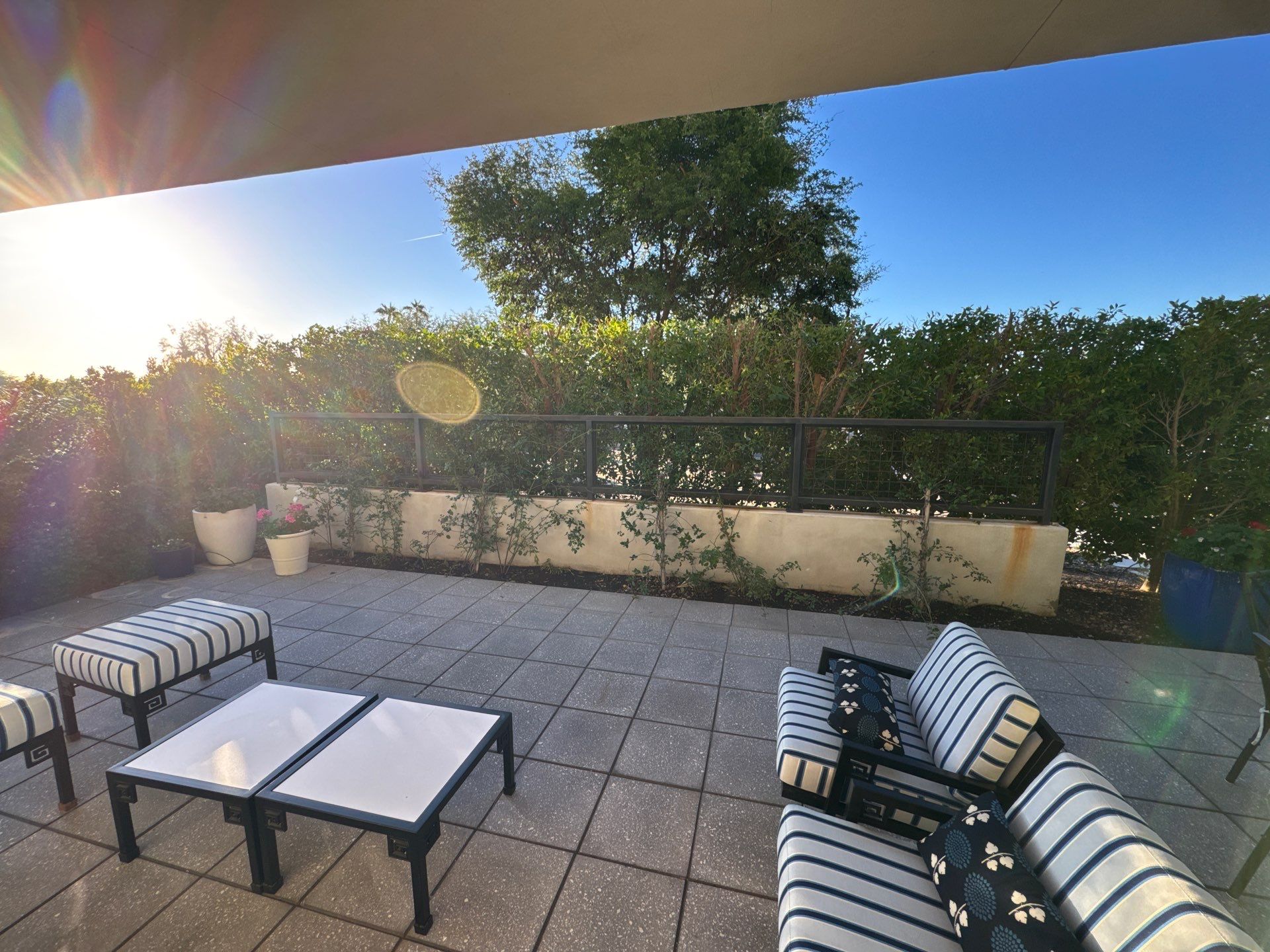
This is your main area of concern. The courtyard faces south, but the big Texas ebony and the ficus hedge in front of it block most of the sun. In summer it picks up a little more as the sun shifts, but in winter there's little to no direct sun at all.
That's why the roses are struggling here. Roses want at least 6 hours of direct sun to grow and flower well, and they won't get that in this spot no matter how they're cared for. I'd move them somewhere sunnier in the yard, or replace them.
It isn't full shade, though. It's filtered light with a few hours of sun, more in summer. So lean into plants that do well in part shade. Cape plumbago, the ferns, and purple heart are all great here. Firecracker plant, ruellia, and fuchsia girl cuphea are practical, easy choices that flower well in this light. For something a little different, slipper plant gives you a sculptural clump of smooth green stems with red flowers, and firesticks add a bold, upright accent in the spots that get the most sun. In this light they'll stay more green than red, with orange tips in winter.
A hedge along the retaining wall
Along the low retaining wall under the railing, I'd pull out the thin plants that are there now and fill the bed with one continuous hedge. That gives the patio a full, soft green base along the whole wall instead of a few scattered stems. Here are two ways it could look. Both handle the filtered light here and flower for much of the year.
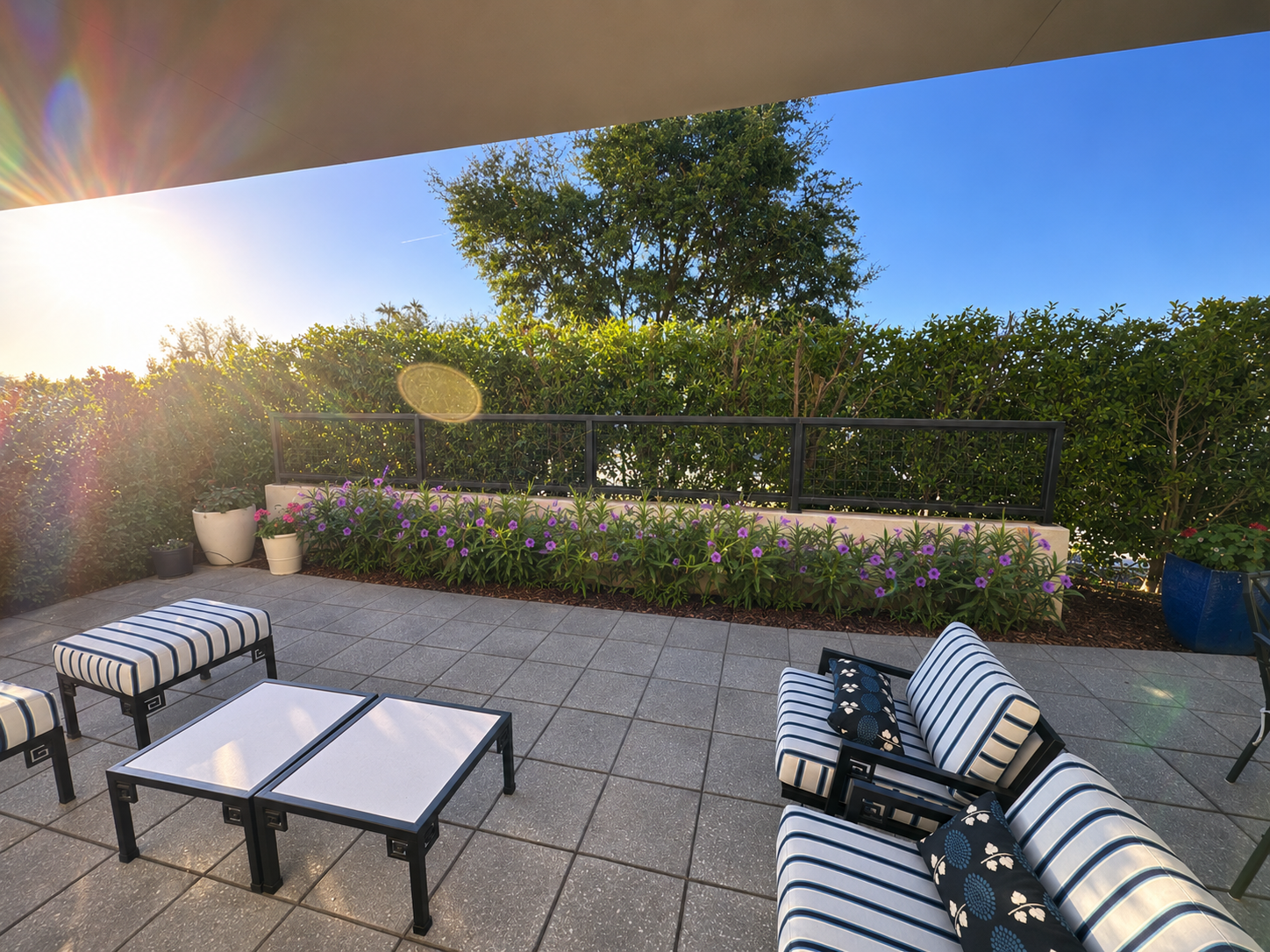
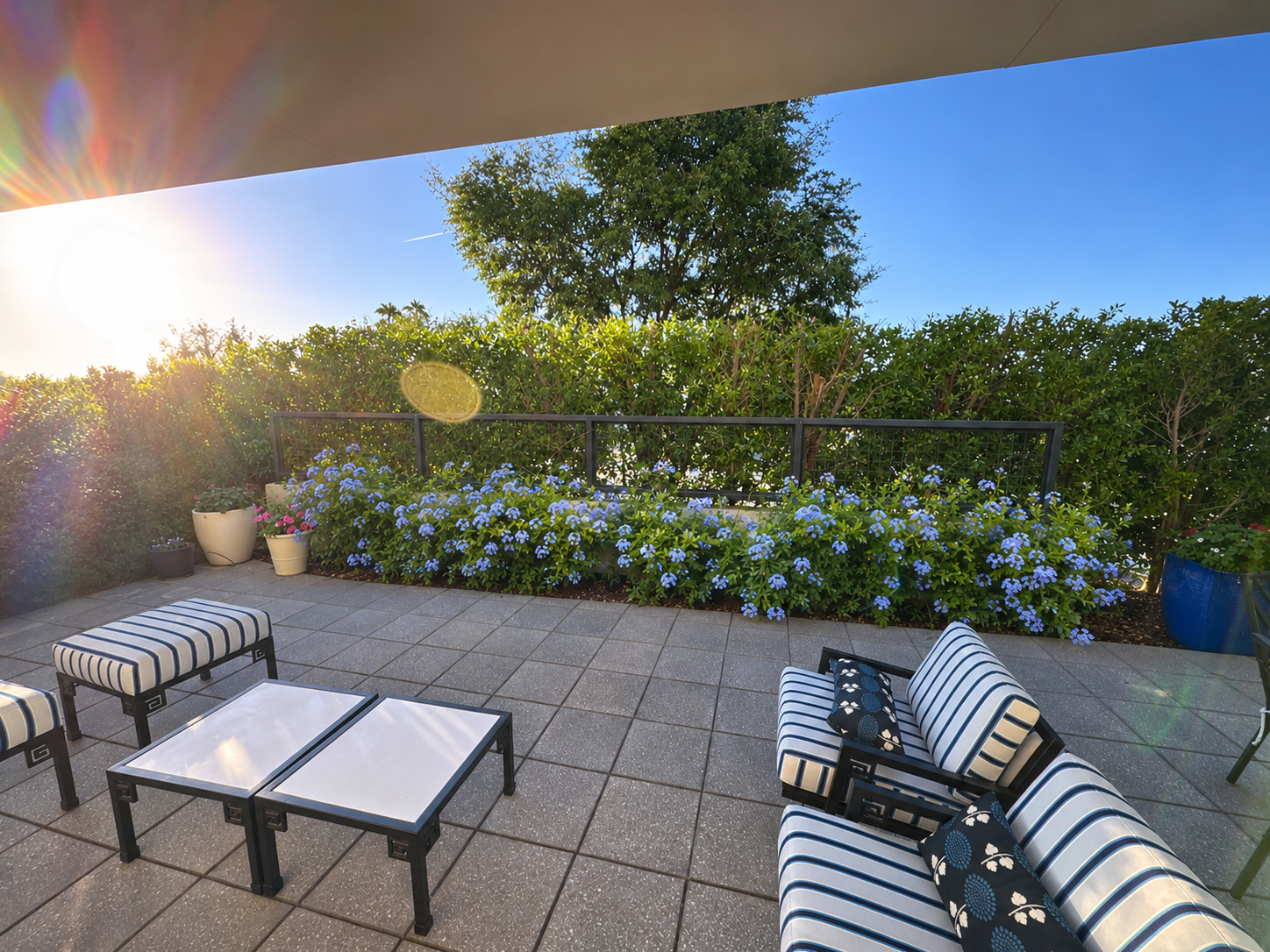
These are AI renderings, meant to help you see the vision. They aren't exact, so the real plants, sizes, and spacing will look a little different.
Plant them about 3 ft apart in a single row so they grow together into one hedge, with mulch down at the base. Let them grow loose and natural, and just thin out a few of the oldest stems once a year in late winter to keep them full.
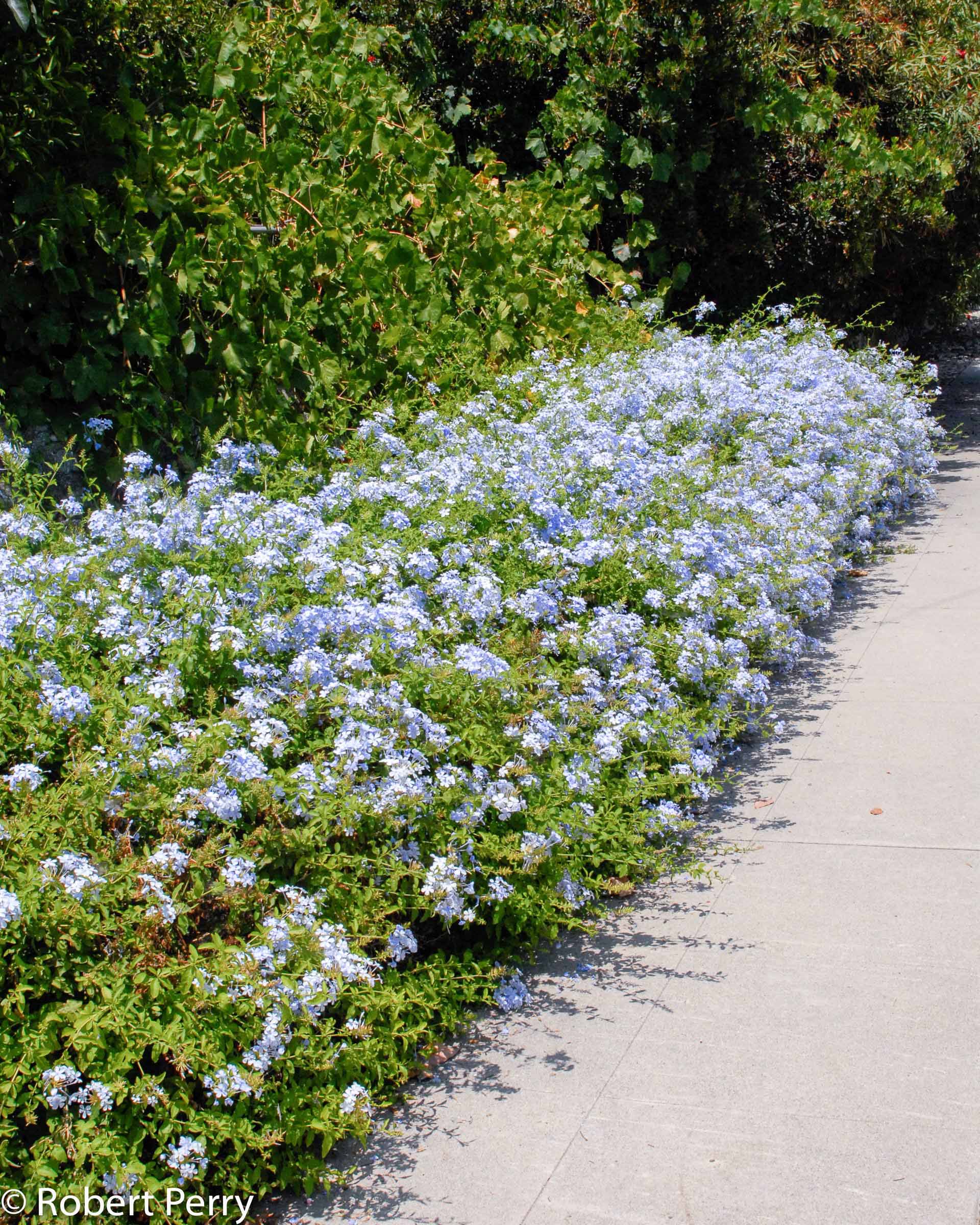
Cape Plumbago
Sky-blue flowers spring through fall. Does well with the morning sun and afternoon shade you get on an east wall. Keep it thinned so it doesn't crowd the path.
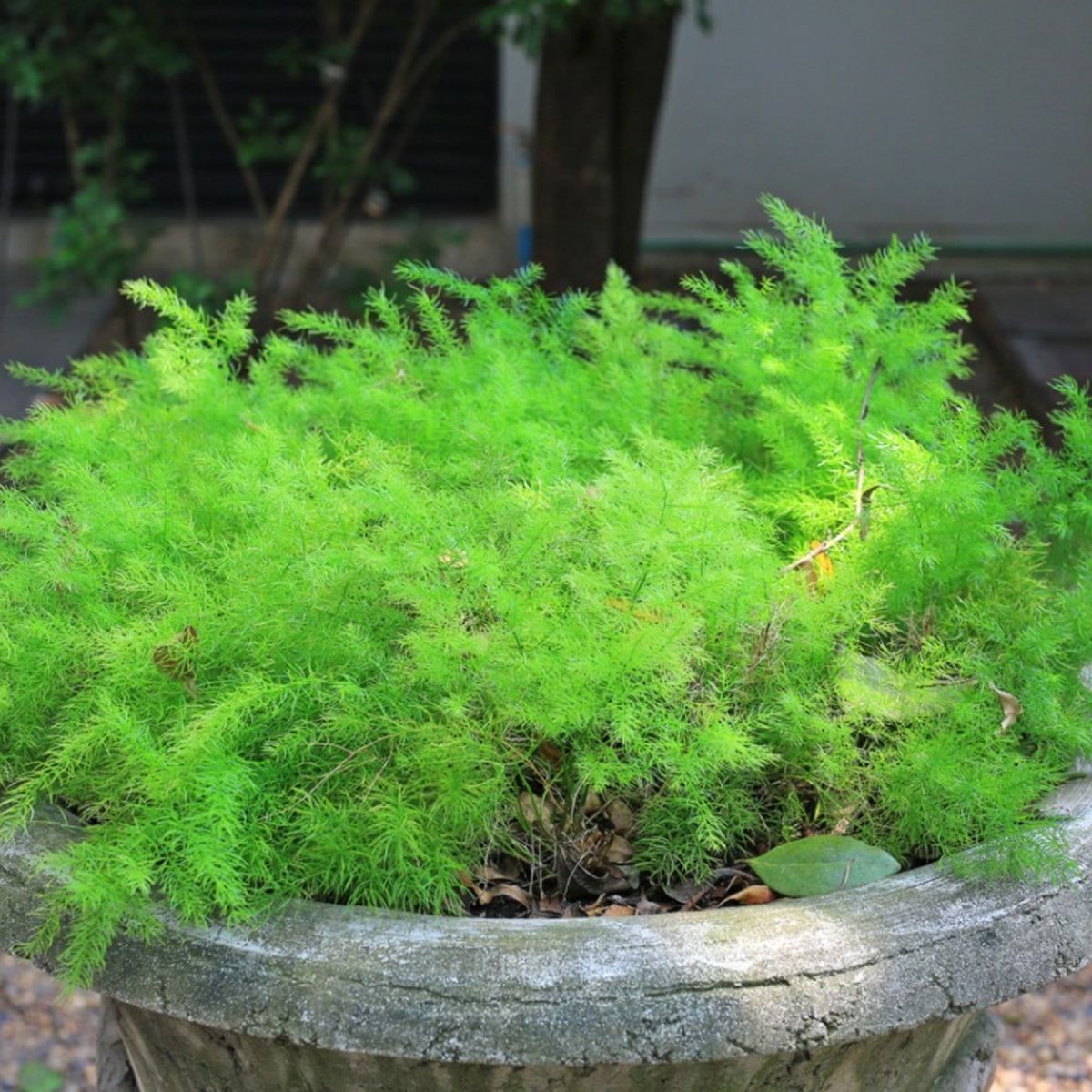
Asparagus Fern
Soft, feathery green mound that loves shade. A tough, easy way to make a shady strip feel lush.
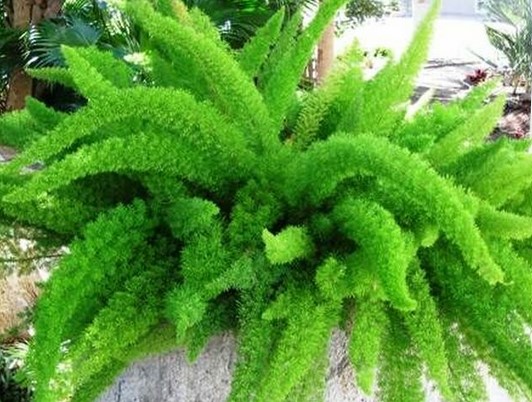
Foxtail Fern
Upright fluffy plumes that look like green foxtails. Clean, neat shape and very easy in shade.

Purple Heart
Deep purple groundcover that brightens up a shady spot. Spreads slowly to fill in and is easy to pull back if it wanders.
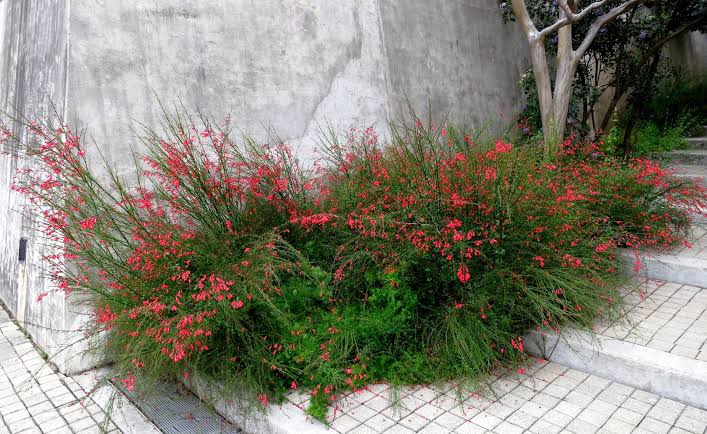
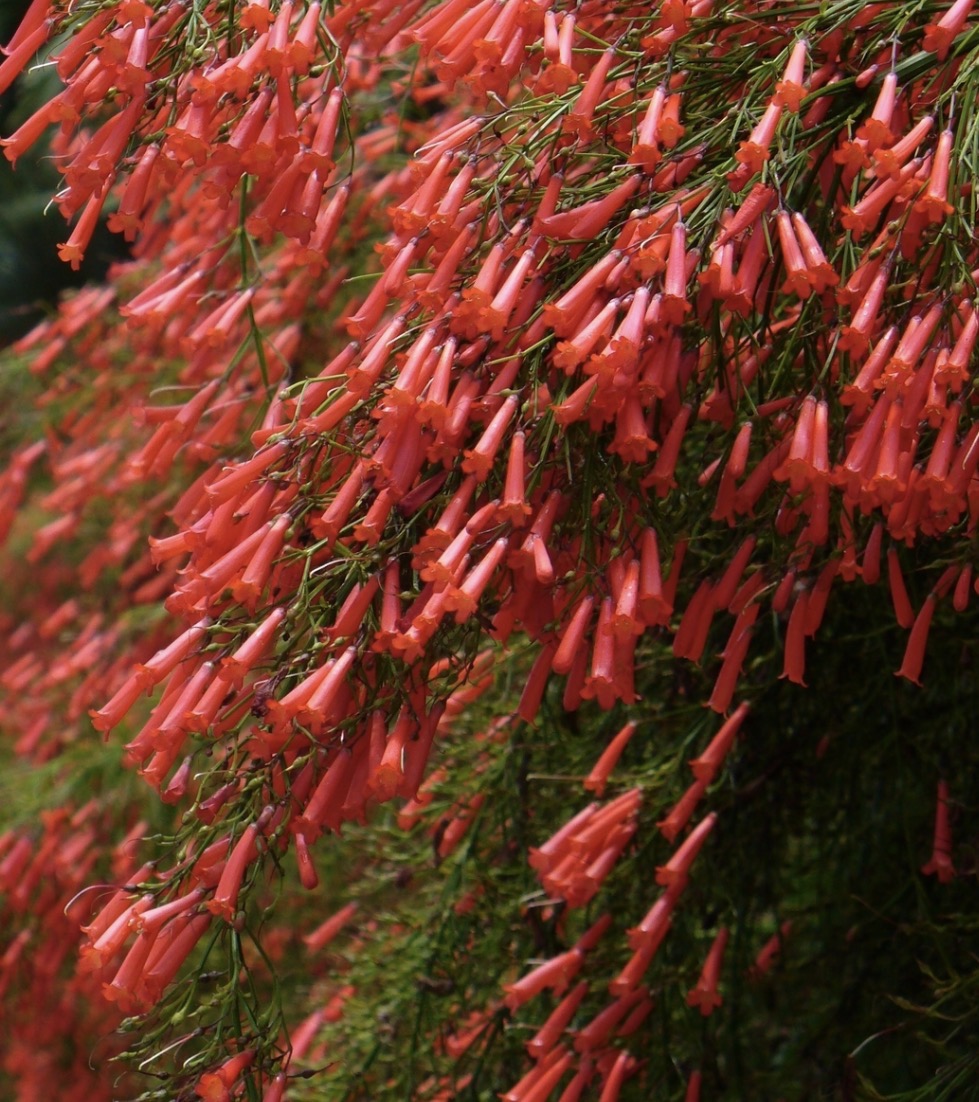
Firecracker Plant
Arching green stems with little red tube flowers most of the year. Handles part shade and brings hummingbirds in.
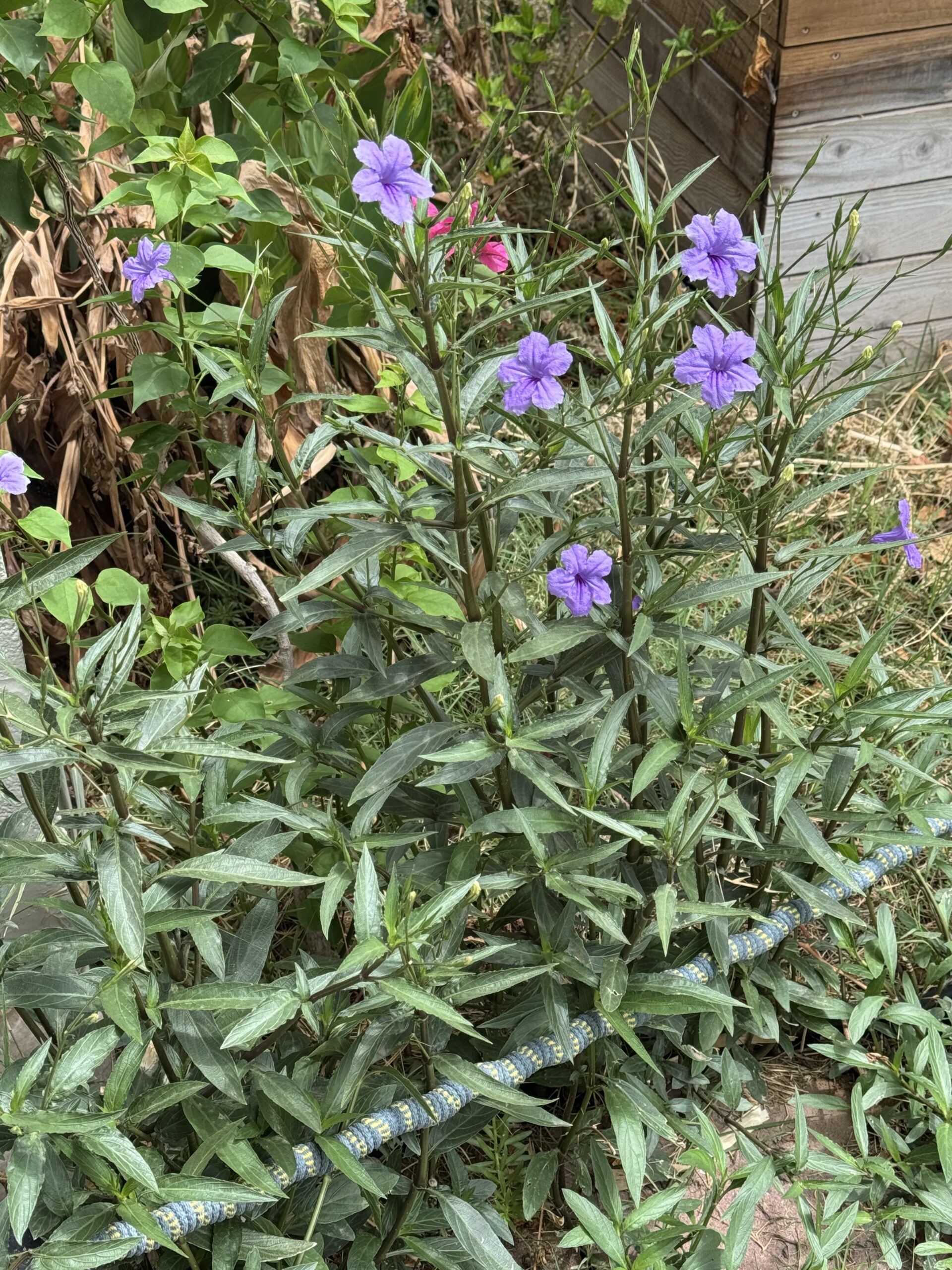
Ruellia
Ask for the dwarf 'Katie' type. It stays a tidy 1 ft mound with purple flowers and doesn't spread like the tall Mexican petunia ruellia, which can get invasive.
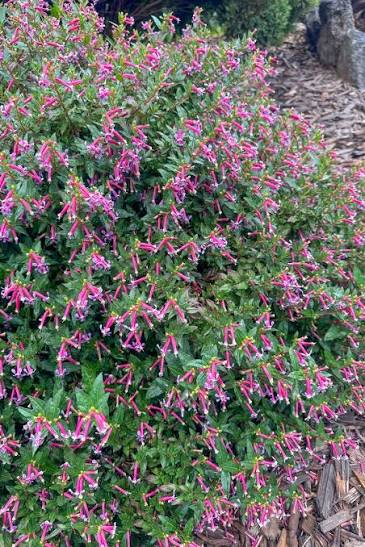
Fuchsia Girl (Cuphea)
A tidy little mound covered in bright fuchsia tubular flowers most of the year. Hummingbirds love it, and it's happy with a few hours of sun.
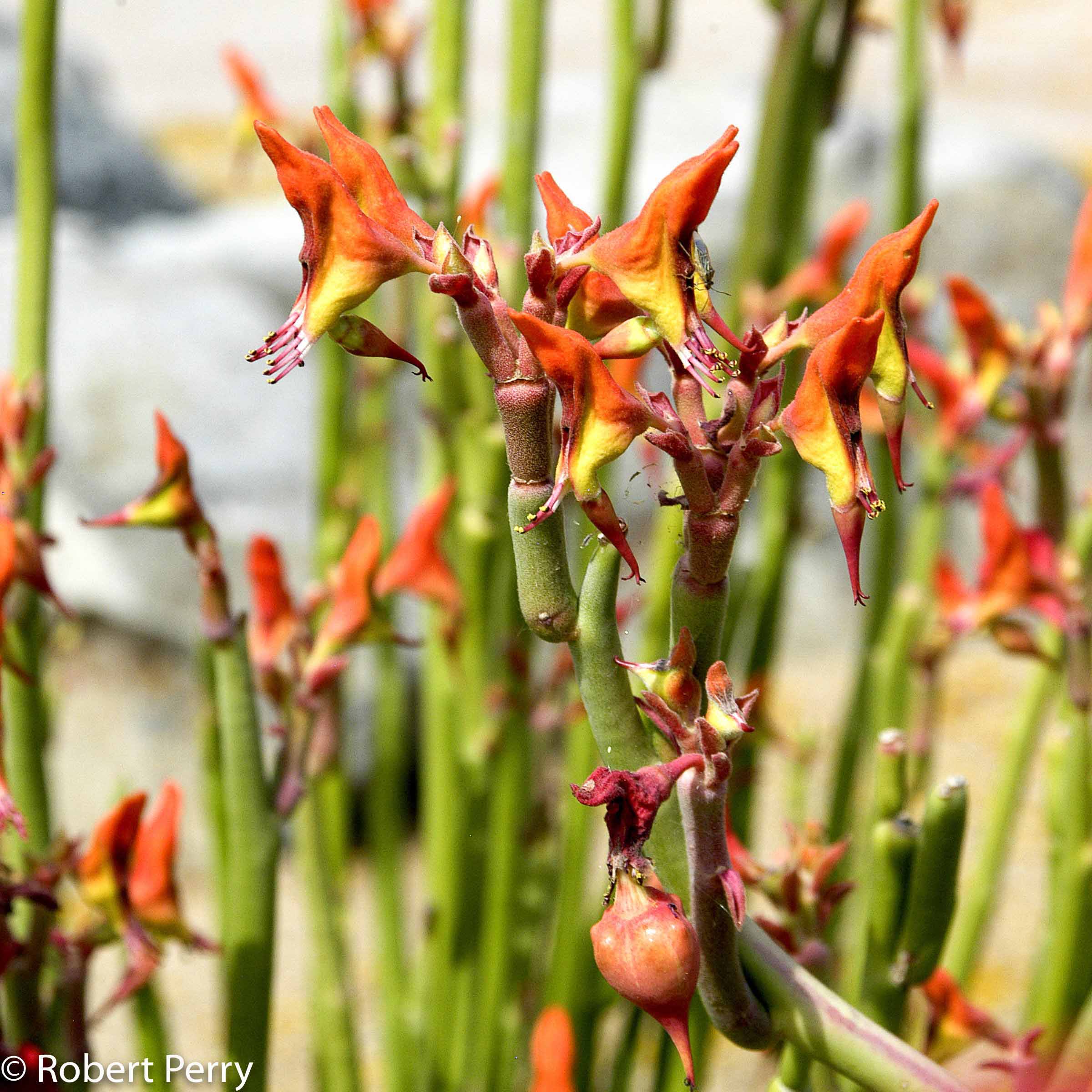
Slipper Plant
A clump of smooth, pencil-thick green stems with little red slipper-shaped flowers that hummingbirds go after. Sculptural, low care, and one of the few succulents that's happy in filtered light.
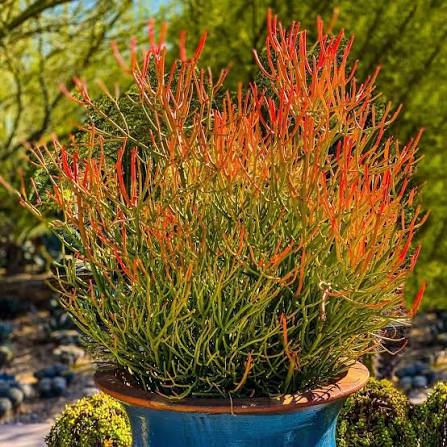
Firesticks
Pencil-like stems that turn red-orange in cool weather. Bold color with zero litter. The milky sap irritates skin, so keep it back from where people brush past.
Less sun means the soil dries out slower, so water this area less often than the sunny parts of the yard. Check that it's dry a couple of inches down before watering again.
The ficus row: stakes need to come out
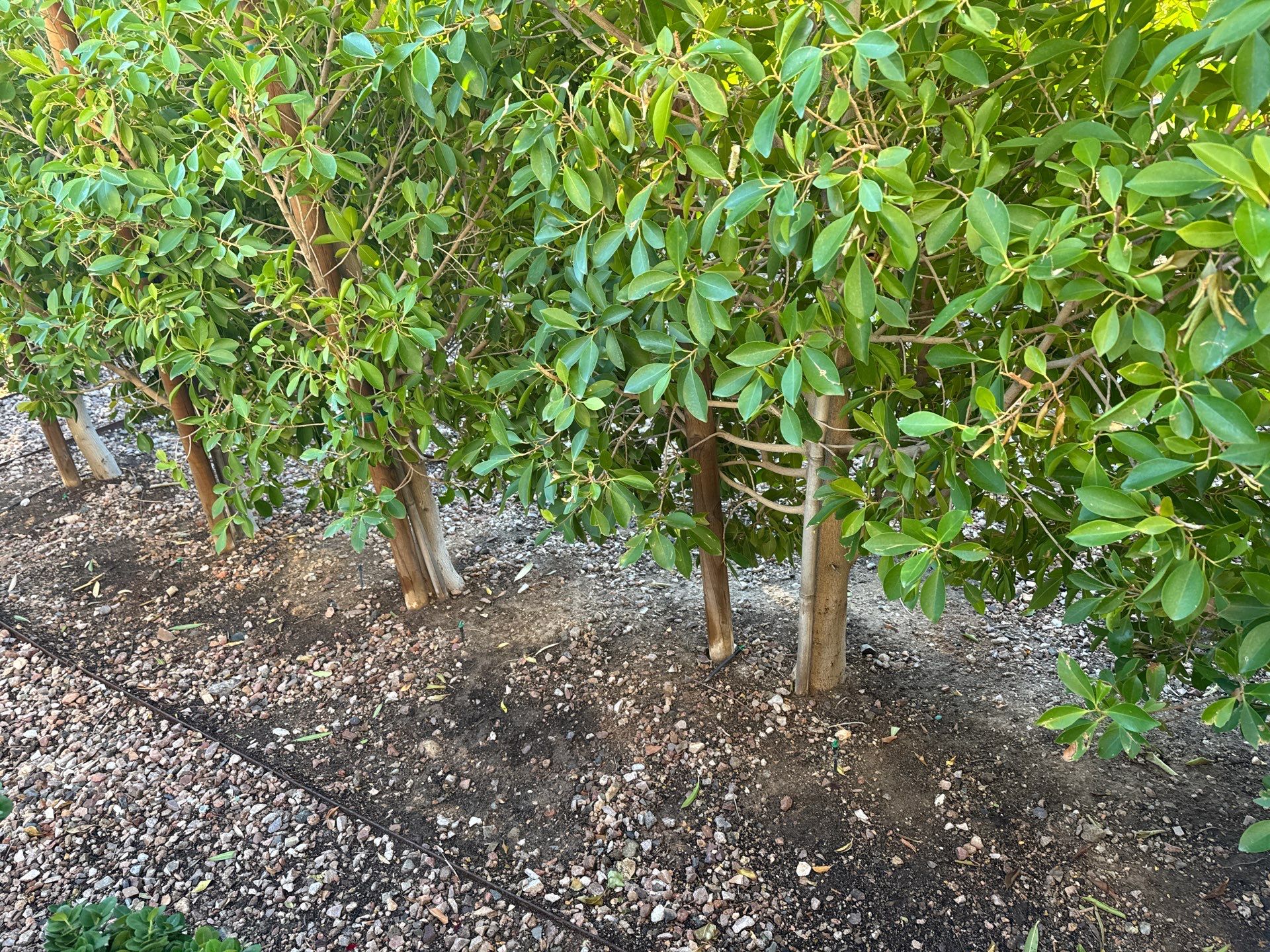
On this row of ficus lining the front patio and courtyard, each tree still has the nursery stake right next to it, and some have larger stakes too. All of those need to come out. These trees are mature enough now that they don't need any staking.
Why the stakes need to come out
- A tree that's staked tight can't sway in the wind, and that movement is what tells it to build a thick, strong trunk and roots. Trees left staked too long end up with thin trunks that can't hold themselves up.
- A stake right against the trunk rubs the bark, and as the trunk grows it starts growing into the stake or the tie, which cuts into the tree like a belt.
- Stakes are meant to come out after the first year. These trees are established enough that they don't need any.
- To remove them, cut any ties first, then pull or cut the stake at ground level. If a tie has grown into the bark, cut it carefully and leave any embedded piece rather than tearing the bark.
Bare soil: mulch or a living groundcover
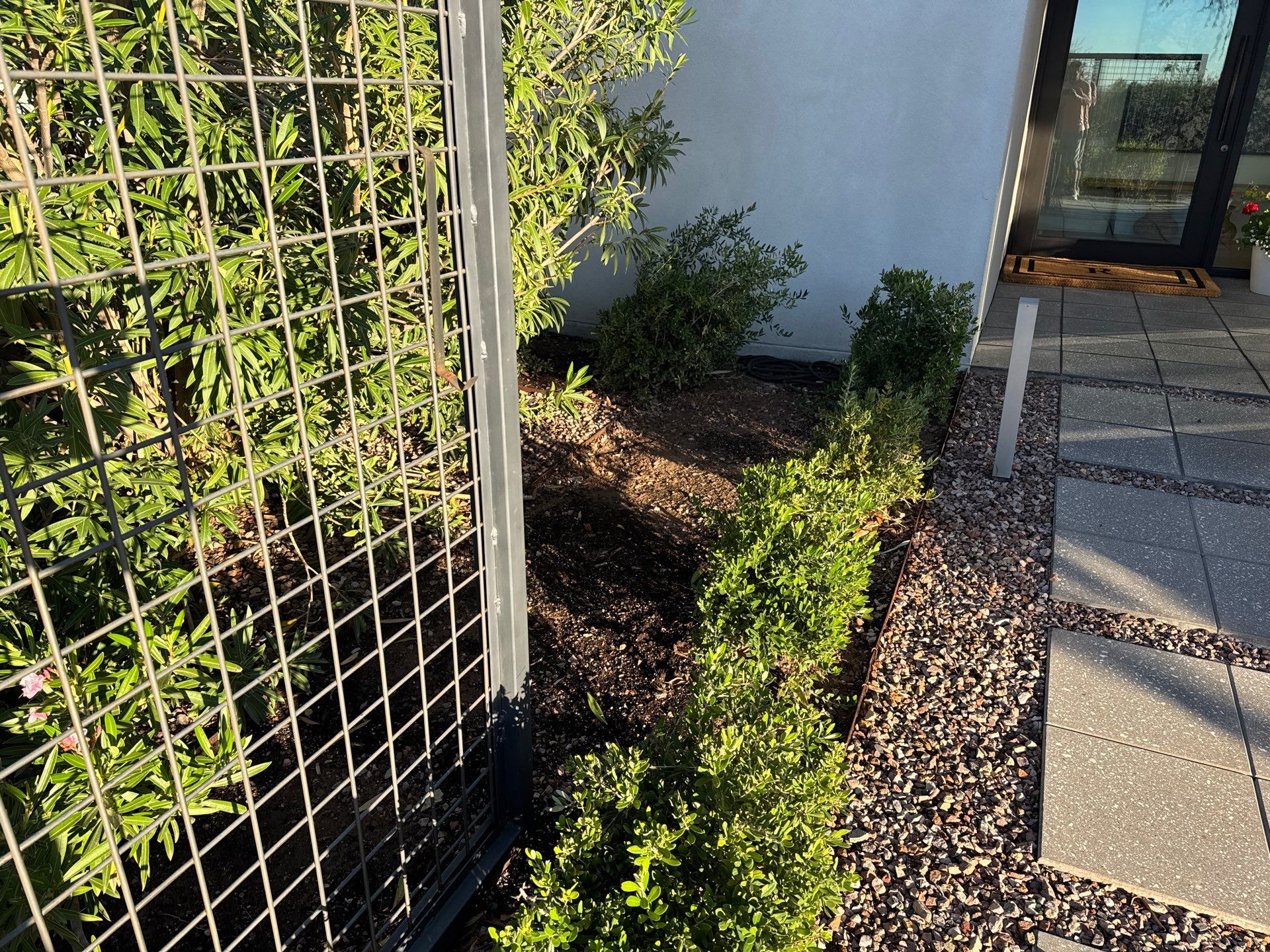
Anywhere there's bare soil, like this area, we want to do one of two things: put down wood mulch, or plant a living groundcover. Bare soil bakes in the sun, loses water fast, and the soil life underneath dies off.
Wood mulch is the easiest and lowest maintenance option. Spread 3 to 4 inches, kept a few inches back from trunks and stems. It shades the soil, holds moisture so you water less, and feeds the soil as it breaks down. Arizona Worm Farm carries good mulch.
A living groundcover does the same job and looks green and finished. These are clean, simple, and low maintenance:
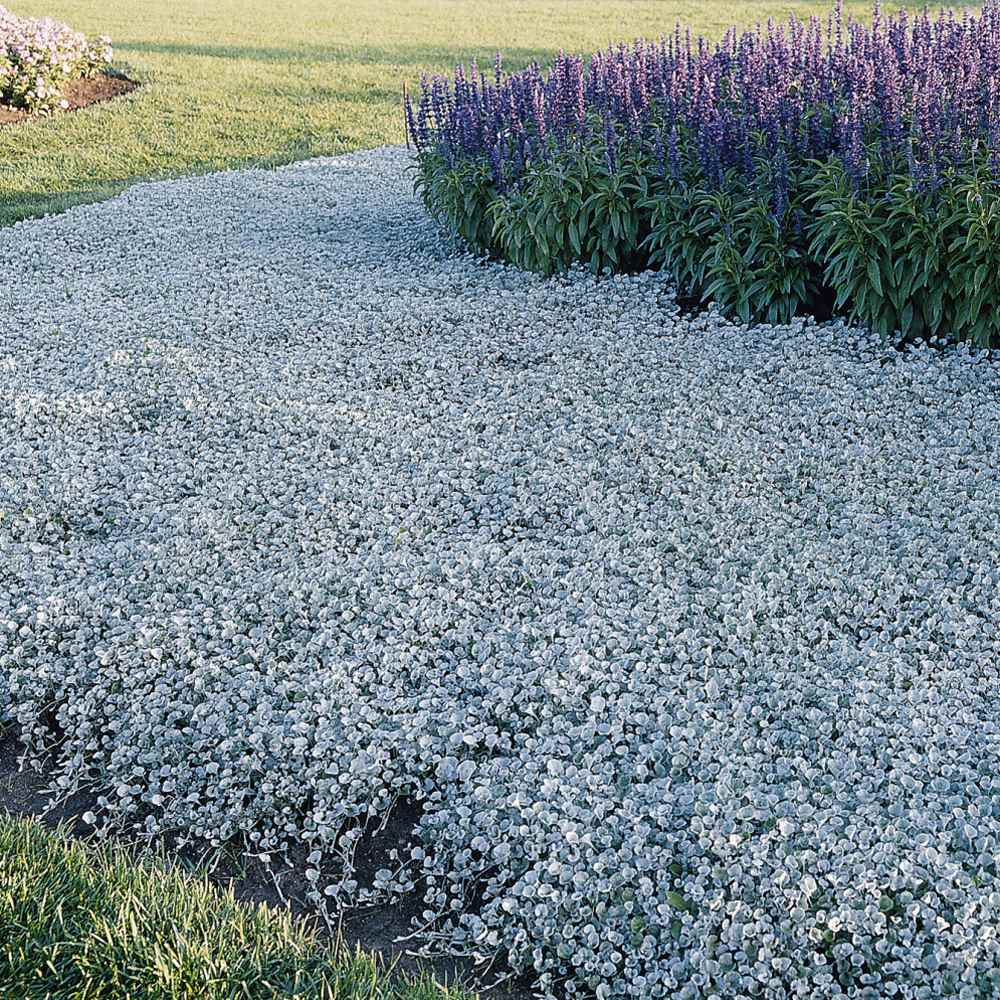
Silver Ponyfoot
Soft silver leaves that trail and spill. A cool, bright contrast against mulch and green plants.
Purple Heart
Deep purple groundcover that brightens up a shady spot. Spreads slowly to fill in and is easy to pull back if it wanders.
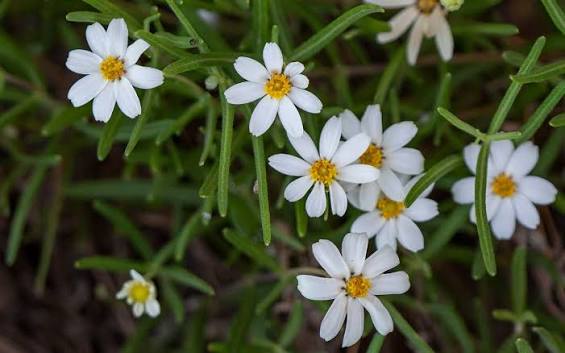
Blackfoot Daisy
Low native mound covered in small white daisies most of the year. It likes a little shade from the hottest afternoon sun. Don't overwater it.
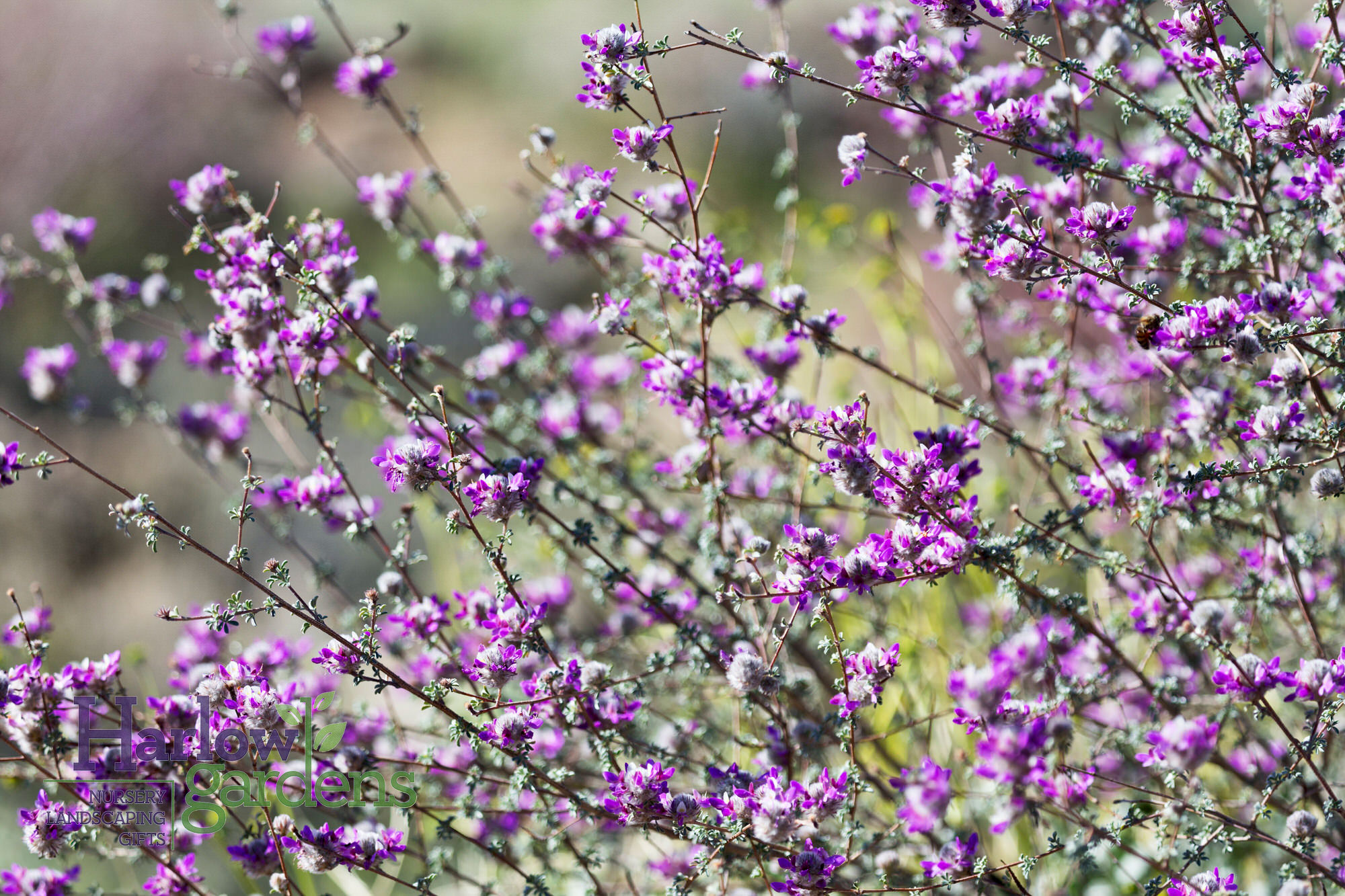
Trailing Indigo Bush
Silver groundcover with purple flowers in summer. Great for covering ground under the trees and softening around boulders without getting tall.
Better vines for the fence
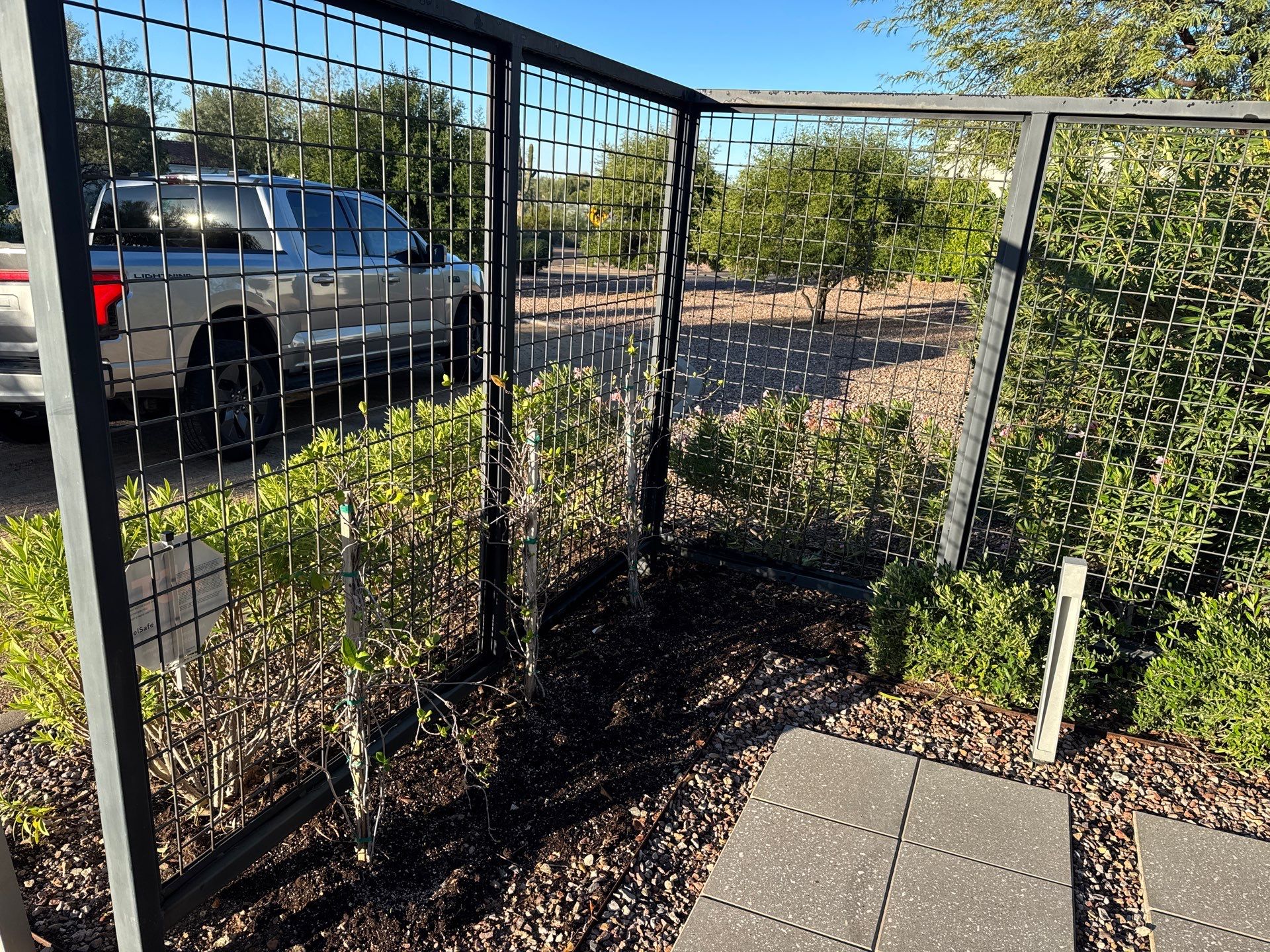
The star jasmine here isn't doing great. This fence gets a decent amount of sun, and there are a number of vines that will do much better here. If you want the vine to take over the whole fence, you really only need two. Tangerine crossvine is my first choice: it grows fast, flowers orange in spring, stays evergreen, and climbs on its own. Plant one at each end and let them meet in the middle.
Put wood mulch down along the base of the fence too. It'll help whatever you plant get established much faster.

Tangerine Crossvine
My top pick for this fence. Orange trumpet flowers in spring, glossy evergreen leaves, and it clings on its own. Two of them will cover the whole fence.
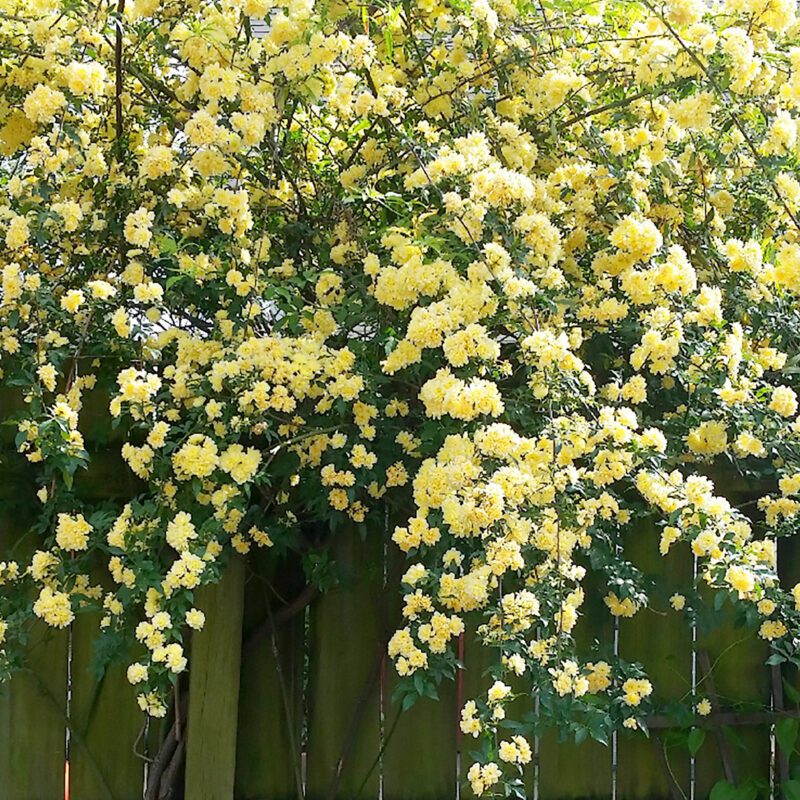
Lady Banks Rose
Thornless climbing rose with masses of small, lightly fragrant flowers in spring. Very vigorous, so it covers an arch fast.
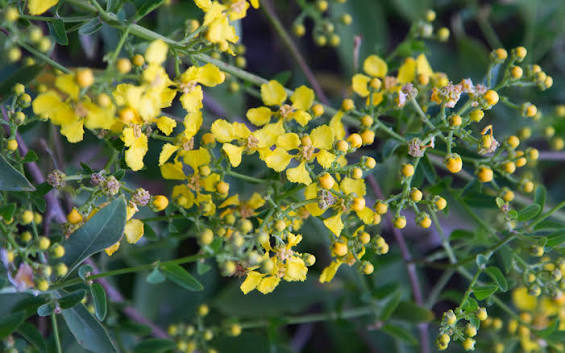
Yellow Orchid Vine
Bright yellow orchid-like flowers spring through fall and interesting papery seed pods. Takes west sun well.
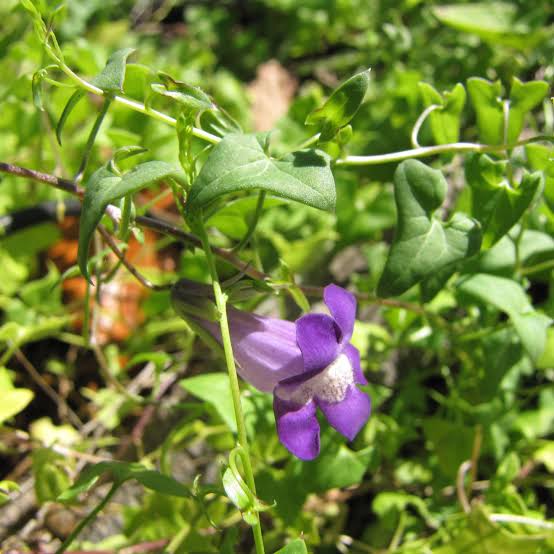
Snapdragon Vine
A light, delicate vine with purple snapdragon-like flowers spring through fall. Stays small, so the flowers stay at eye level instead of up at the top.
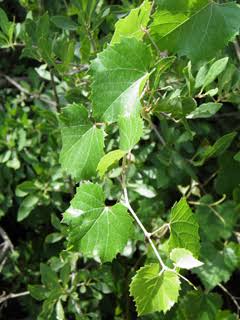
Arizona Canyon Grape
Native grape vine with big leaves and small fruit the birds love. Covers a wall fast and drops its leaves in winter.
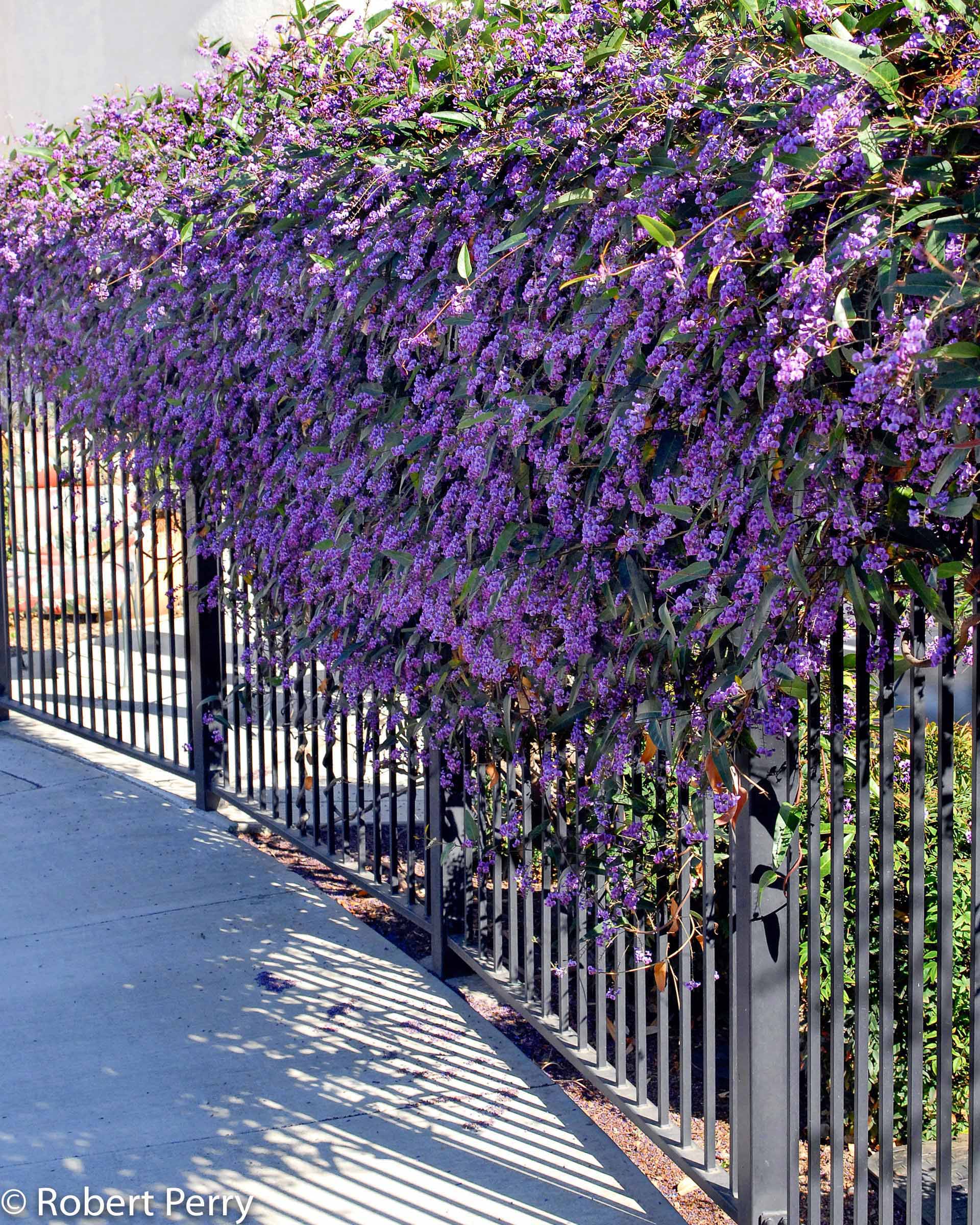
Purple Lilac Vine
Purple flower clusters in late winter and spring, right along the vine. Moderate grower that stays in bounds and handles shade on the cooler side.
Ficus: stake and emitter against the trunk
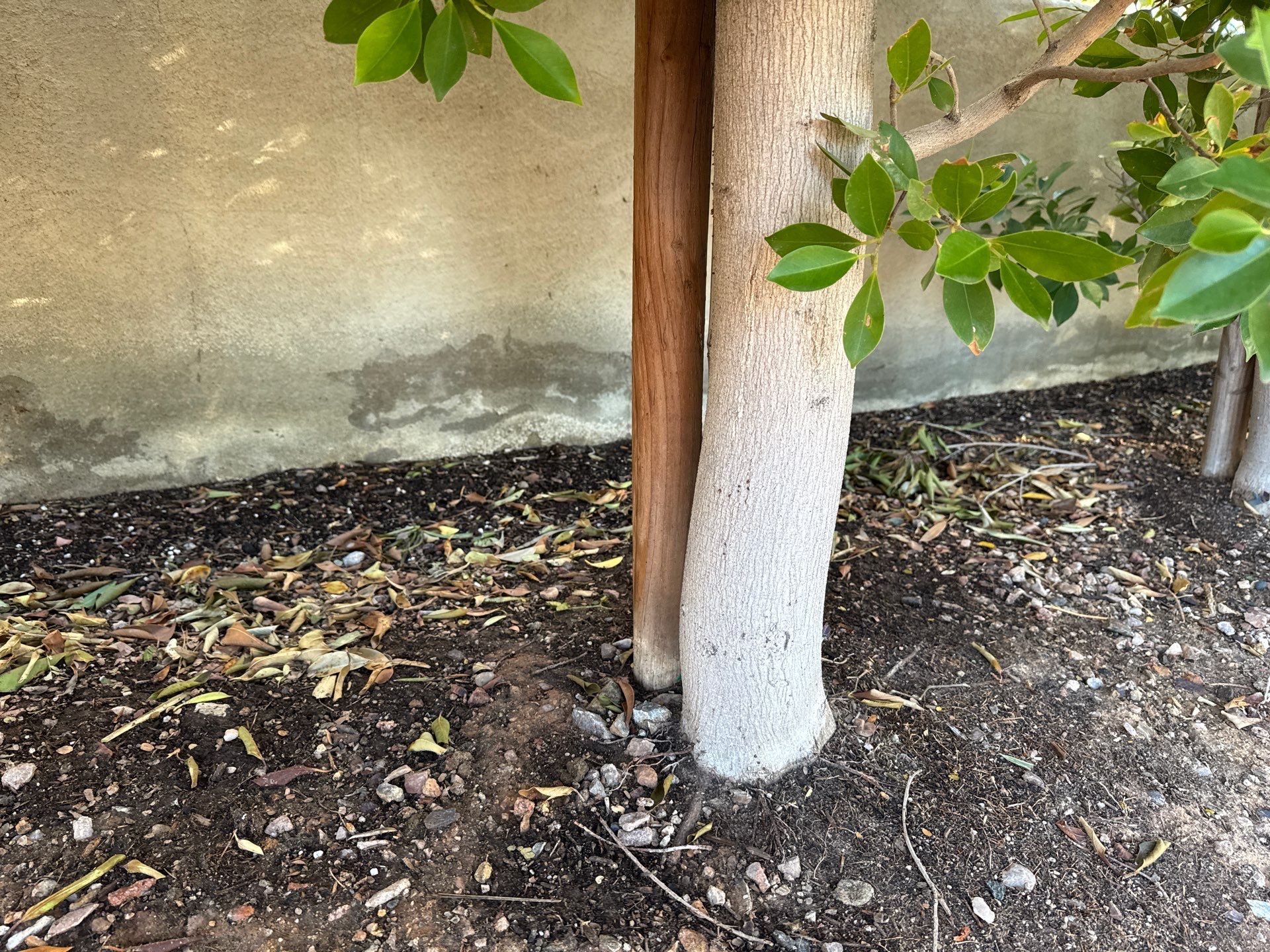
This is another ficus with the stake and the drip emitter right up against the trunk. Both need to be pulled away. Left like this, they'll start to stunt the tree's growth.
Where the drip emitters should go
- The roots that take up water and nutrients (the feeder roots) aren't at the trunk. They're out at the drip line, the edge of the tree's canopy, and beyond.
- An emitter at the trunk keeps the base of the tree wet, which invites rot, and trains the roots to stay in a small circle instead of spreading out to anchor the tree.
- Move the emitters out to the drip line, and add more as the tree grows so there's a ring of them around the canopy edge rather than one or two at the trunk.
- As the canopy spreads, move the emitters out with it. Garrett can extend the lines if needed.
Front Yard
Texas ebony: move the emitter to the drip line
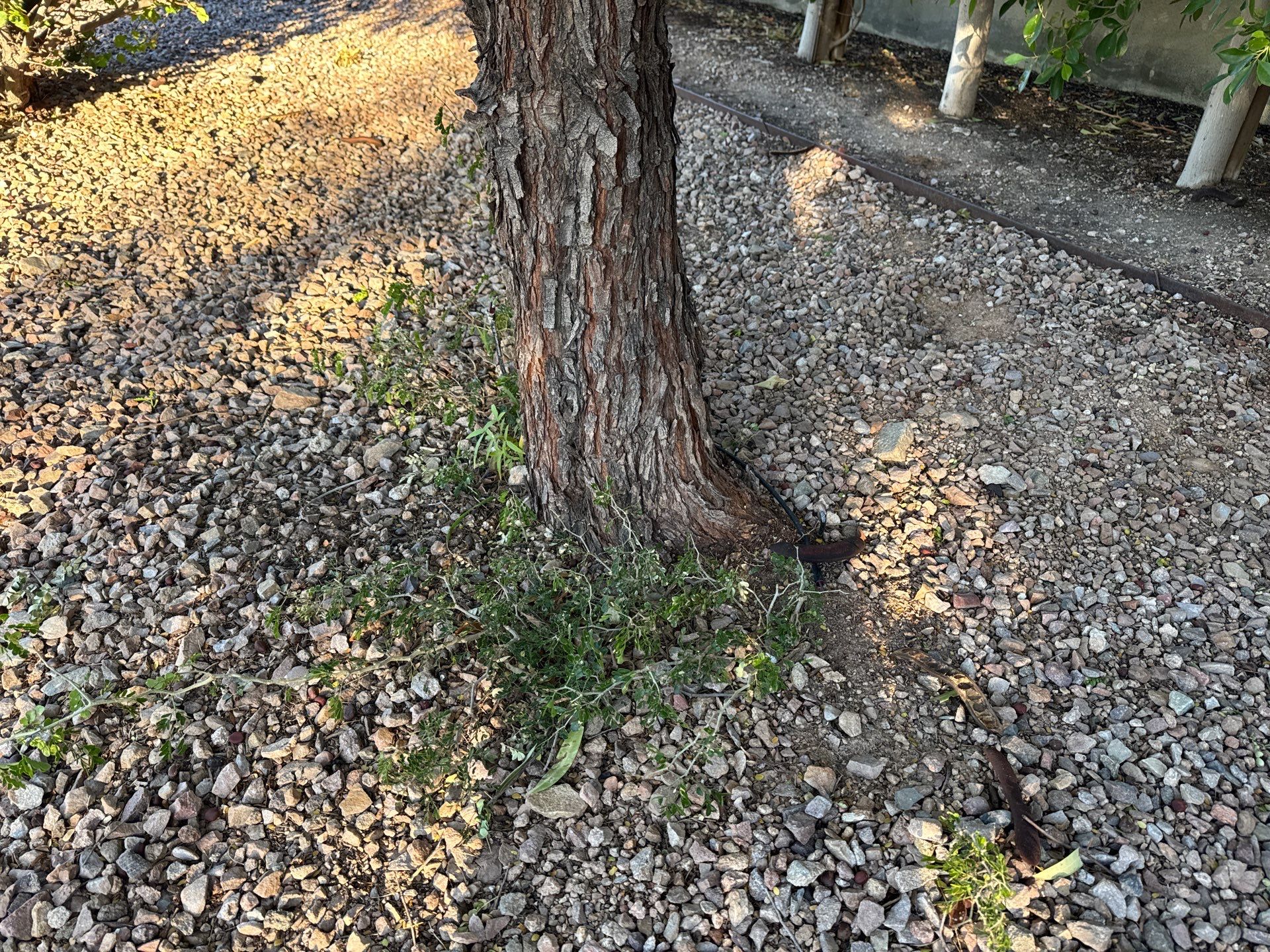
Same thing on this Texas ebony. The drip emitter is right up next to the trunk, and it needs to come out to the drip line, the edge of the tree's canopy. That's where the feeder roots are, the ones that take up water and nutrients.
Where the drip emitters should go
- The roots that take up water and nutrients (the feeder roots) aren't at the trunk. They're out at the drip line, the edge of the tree's canopy, and beyond.
- An emitter at the trunk keeps the base of the tree wet, which invites rot, and trains the roots to stay in a small circle instead of spreading out to anchor the tree.
- Move the emitters out to the drip line, and add more as the tree grows so there's a ring of them around the canopy edge rather than one or two at the trunk.
- As the canopy spreads, move the emitters out with it. Garrett can extend the lines if needed.
Texas sage: reduction cuts, not hedging
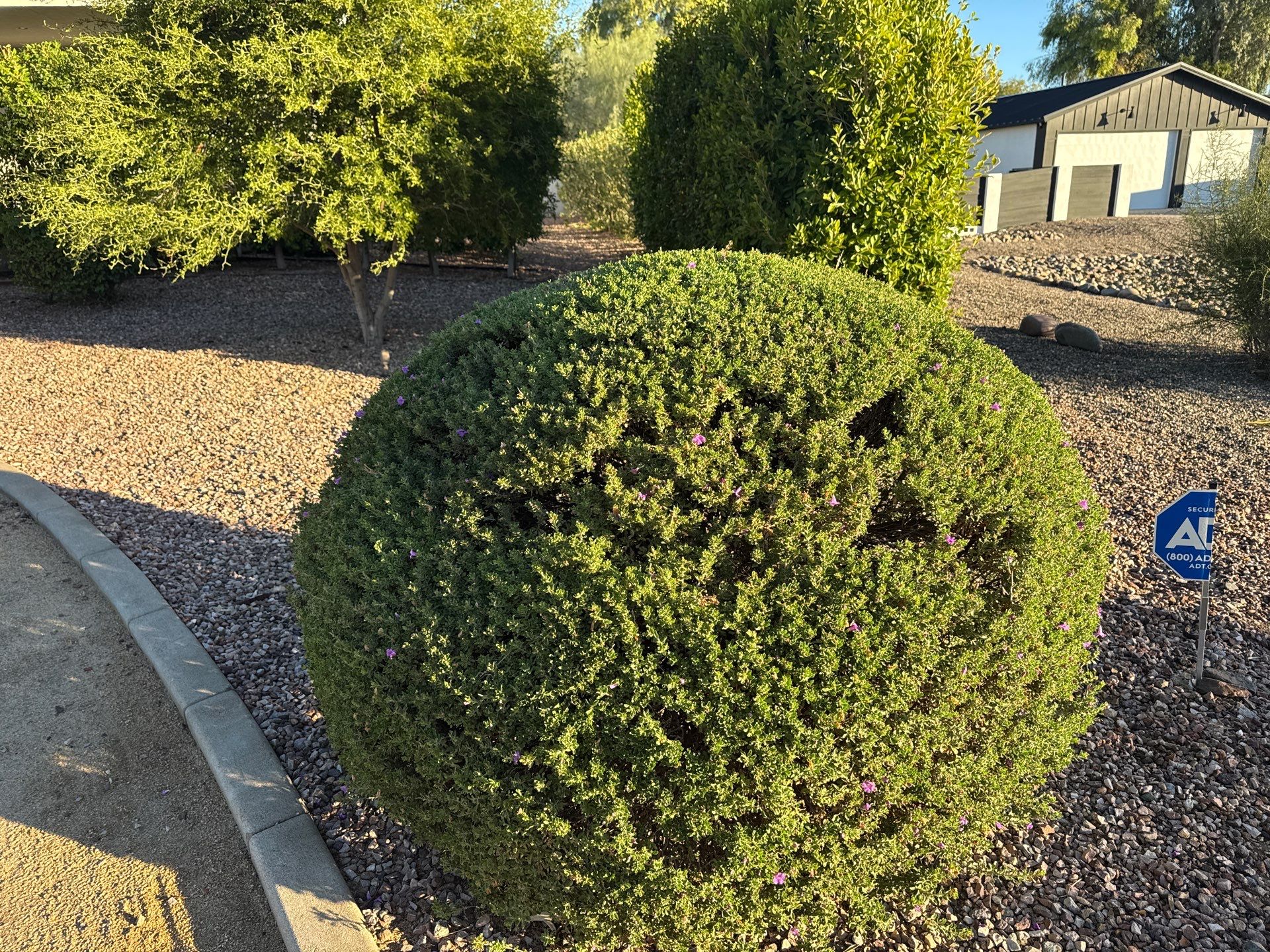
Right now the Texas sage is pruned into balls in some spots and cylinders in others. These will look much better, live longer, and flower a lot more if, instead of hedging them, you make reduction cuts. Shearing cuts off the tips where Texas sage forms its flowers, and it builds a thick outer shell with dead, leafless wood inside.
How to prune Texas sage
- When: Once a year in spring, after the last frost (March into April). If one needs a little more control, a light second pass in early summer is fine. That's it; they don't need more than that.
- Reduction cuts: Instead of cutting the outside all over, reach in and cut the longest, oldest branches back to where they meet a side branch or down near the base. That lowers and narrows the plant while keeping its natural shape.
- Take out the oldest wood: Remove a few of the thickest, woodiest stems at the base each year. New growth fills in from the bottom.
- No more than a third of the plant in one year.
- If they're very overgrown: Bring them back over two or three years rather than all at once.
Once they're growing naturally, they'll flower purple after the summer rains and look full and soft instead of boxed in.

Texas Sage
Silver leaves and purple flowers that pop after summer rains. Left to grow in its natural shape, it flowers far more than when it's sheared.
Little Ollies: prune, don't hedge
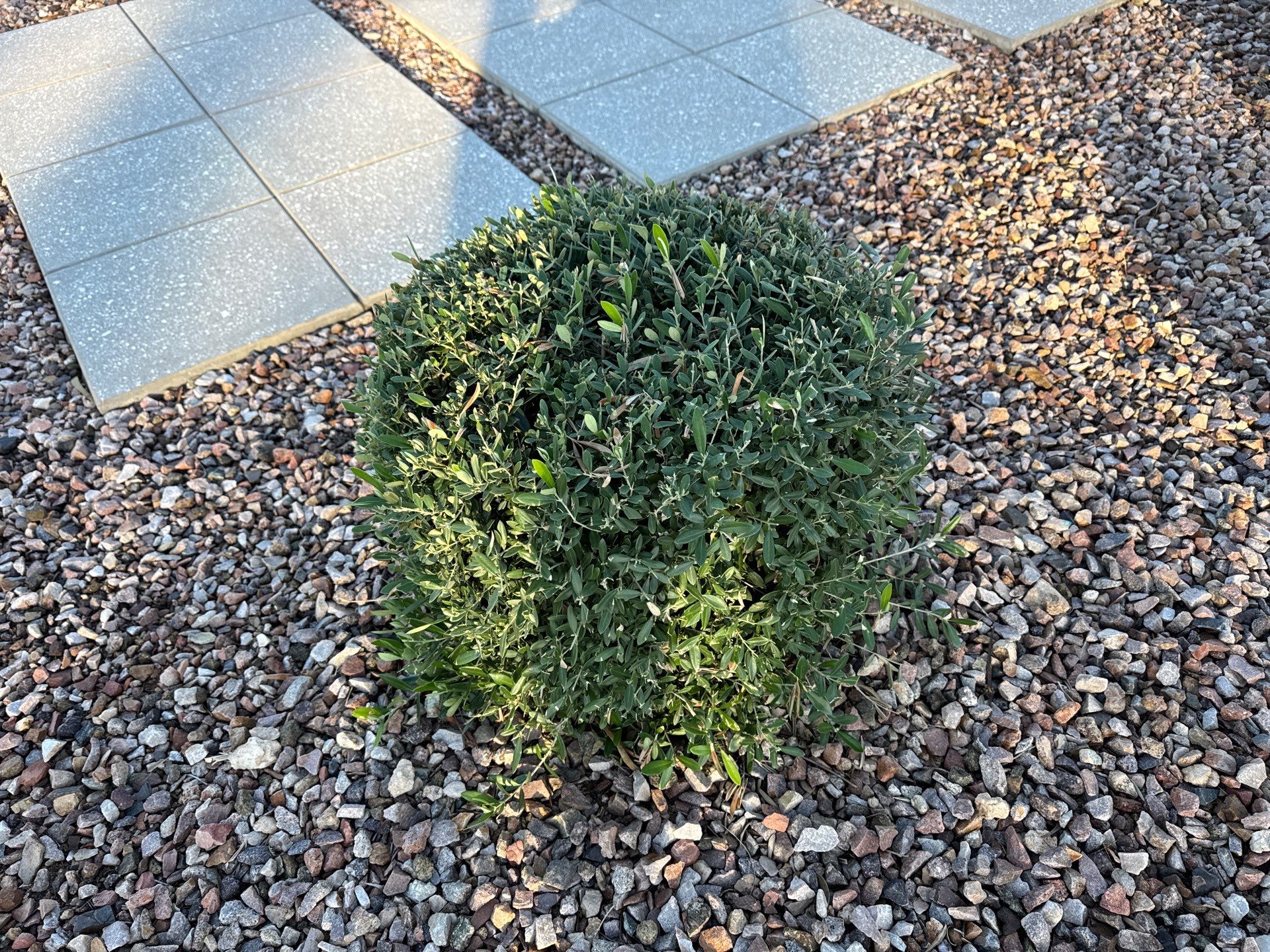
Same thing with the Little Ollies. They're being hedged instead of pruned. Little Ollie naturally grows into a neat, rounded shape on its own, so it needs very little.
- When: Once a year in late winter or early spring.
- How: Reach in and thin a few branches back to where they meet a larger branch. That lets light into the middle so it stays green all the way through instead of just a shell on the outside.
- Height: If one is too tall, cut the tallest branches back to a side branch inside the plant rather than flat-topping it.
- Skip the hedge trimmer. Hand pruners and a light touch keep them looking natural.
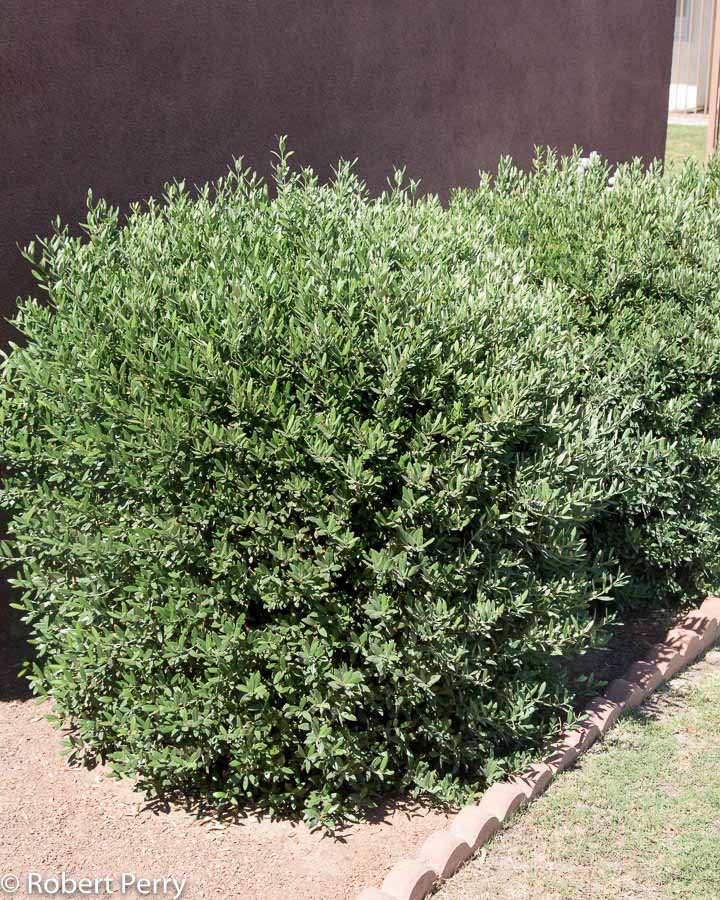
Little Ollie
A dwarf olive that stays a neat, dense, gray-green mound with no fruit and no pollen. Handles full sun against the house and takes less water than plants that aren't desert adapted. Very clean look.
The front yard: filling in the open rock
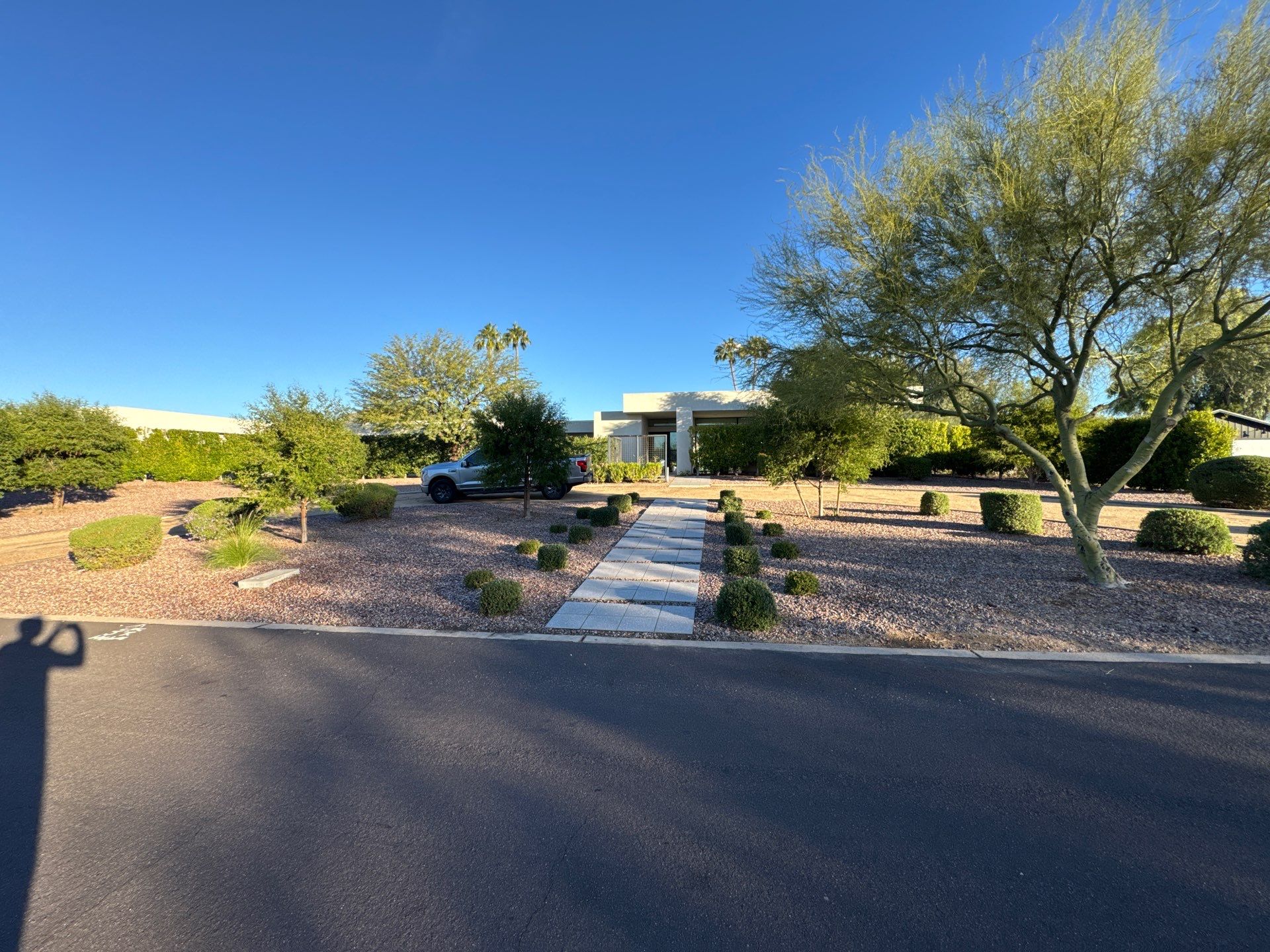
The front yard has a lot of wide open, hot rock, and that's something we can fix. I don't know how full you want things, so here are a number of options. You already have some fountain grass, which I like if you like that style, and pink muhly grass would pair really well with it.
Here's how the front could look with pink muhly filling in the open rock between the shrubs, in loose groups on both sides of the walkway.
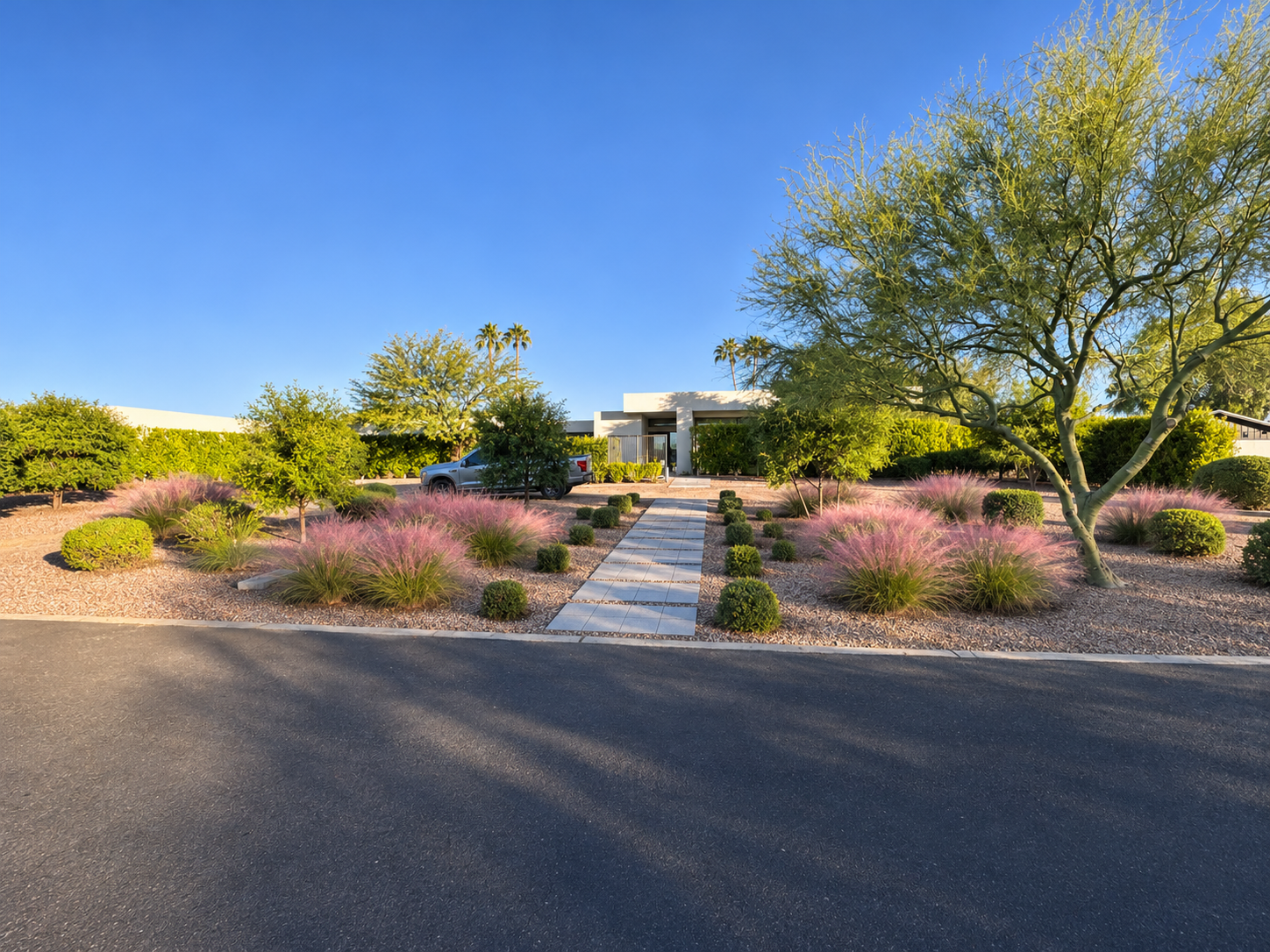
This is an AI rendering, meant to help you see the vision. It isn't exact, so the real plants, sizes, and spacing will look a little different.
Spacing
- Space plants by their mature width so they just touch when full grown: grasses about 4 ft apart, small shrubs 3 to 4 ft, larger shrubs 5 to 6 ft.
- Plant in loose groups of three or five and repeat the same few plants across the yard. Desert plantings look fuller and more natural when placement is a little sporadic rather than in rows.
- Lower plants up front near the driveway and walkways, taller ones farther back.
- Pull the rock back into a small water well around each new plant, with mulch inside.
Pruning the grasses
Fountain grass and muhly only need one cut a year: in late winter, before new growth starts, cut them back to about 6 inches. They come back clean and full. Through the year, leave them alone, and never shear them into balls.
Fountain Grass
The fountain grass you already have. Arching leaves and plumes most of the warm season. Cut back to about 6 inches in late winter before new growth starts, never sheared into a ball through the year.
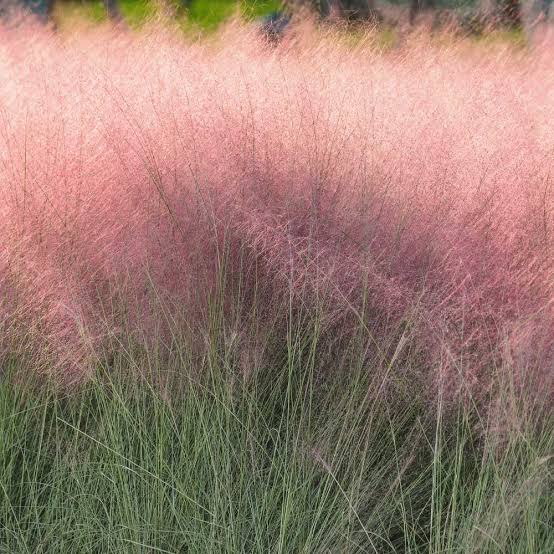
Muhly Grass
Pink, cloud-like plumes in fall that glow when the sun is behind them. Soft movement that breaks up the rock. Cut it back to about 6 inches in late winter and it comes back clean every spring.
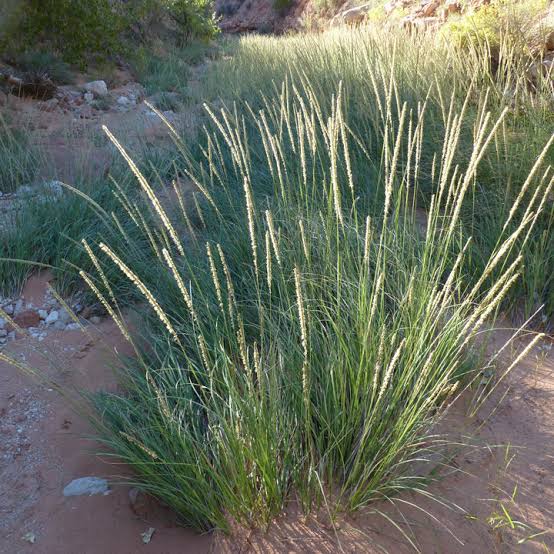
Deer Grass
Native bunch grass with deep, fibrous roots that hold soil in place. One of the best plants for a slope or the edge of a wash.
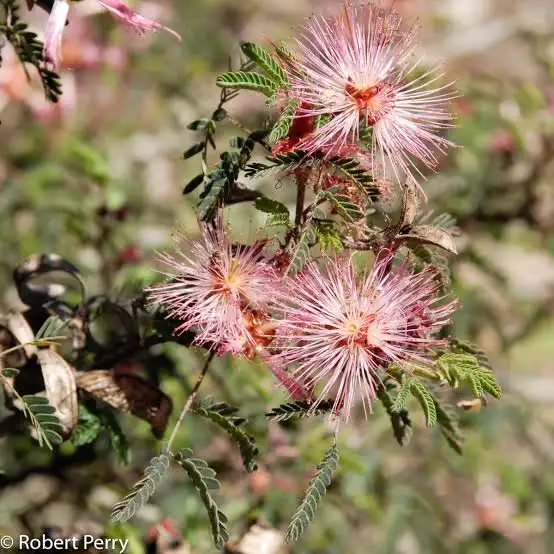
Pink Fairy Duster
Native, with pink powder-puff flowers in late winter and spring. Small, airy, and takes very little water once it settles in.
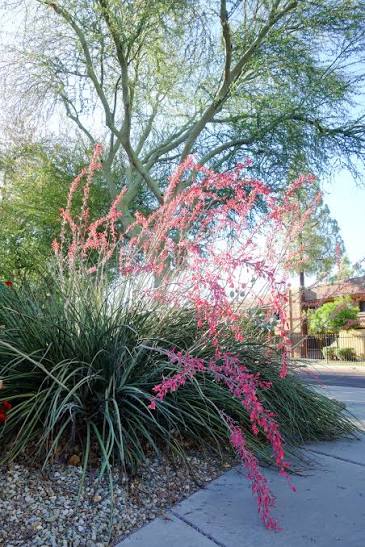
Red Yucca
Grassy clump with coral flower spikes from spring into fall. Hummingbirds love it, and it drops almost nothing, which makes it perfect near the pool.
Texas ebony: the stake is growing into the trunk
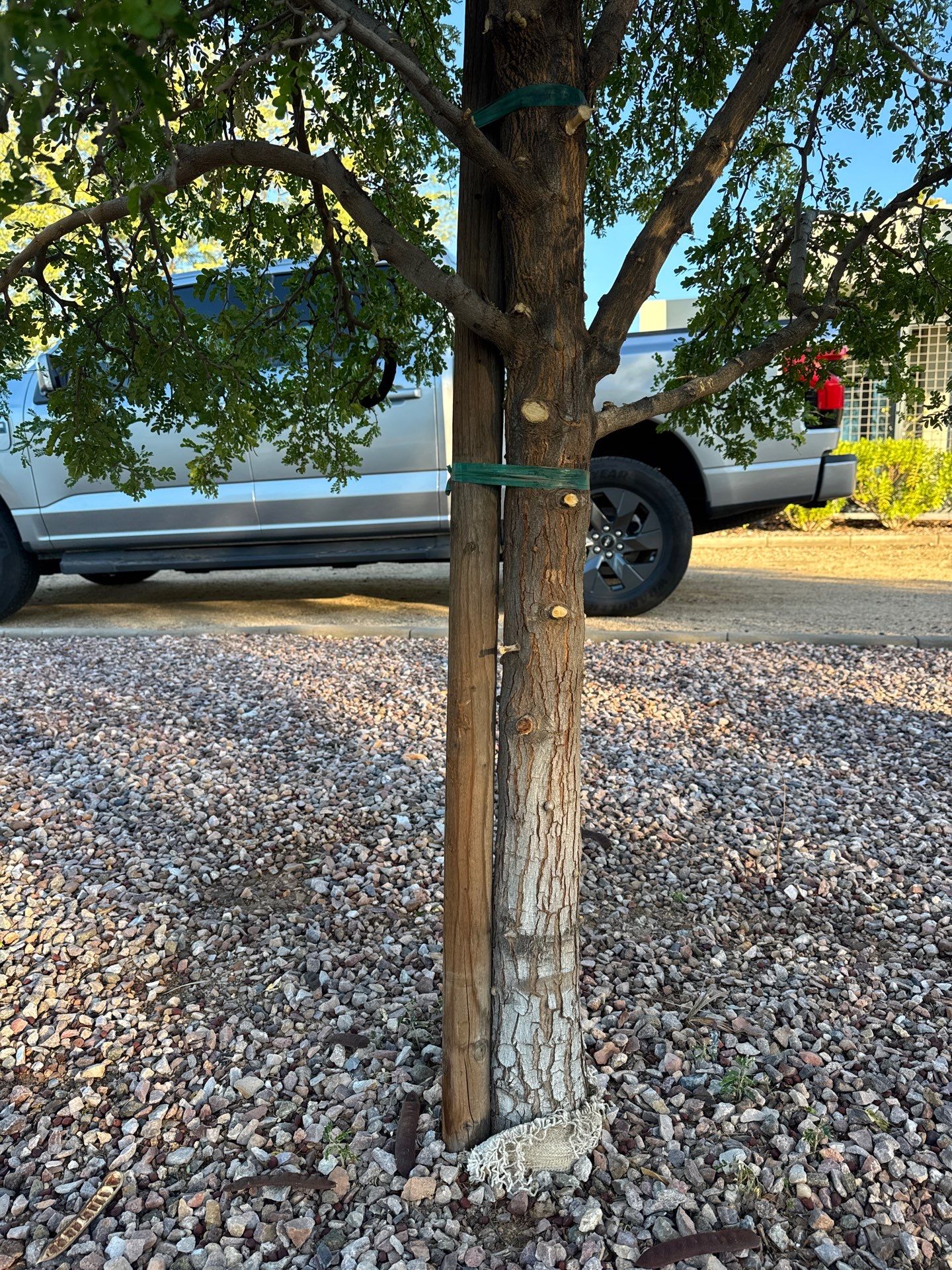
On this Texas ebony, just like with the ficus up front, the stake is right next to the trunk, and the trunk is already starting to grow into it. It needs to come out as soon as possible, along with the stakes on the other trees.
Why the stakes need to come out
- A tree that's staked tight can't sway in the wind, and that movement is what tells it to build a thick, strong trunk and roots. Trees left staked too long end up with thin trunks that can't hold themselves up.
- A stake right against the trunk rubs the bark, and as the trunk grows it starts growing into the stake or the tie, which cuts into the tree like a belt.
- Stakes are meant to come out after the first year. These trees are established enough that they don't need any.
- To remove them, cut any ties first, then pull or cut the stake at ground level. If a tie has grown into the bark, cut it carefully and leave any embedded piece rather than tearing the bark.
Pulling the rock back from all the trees
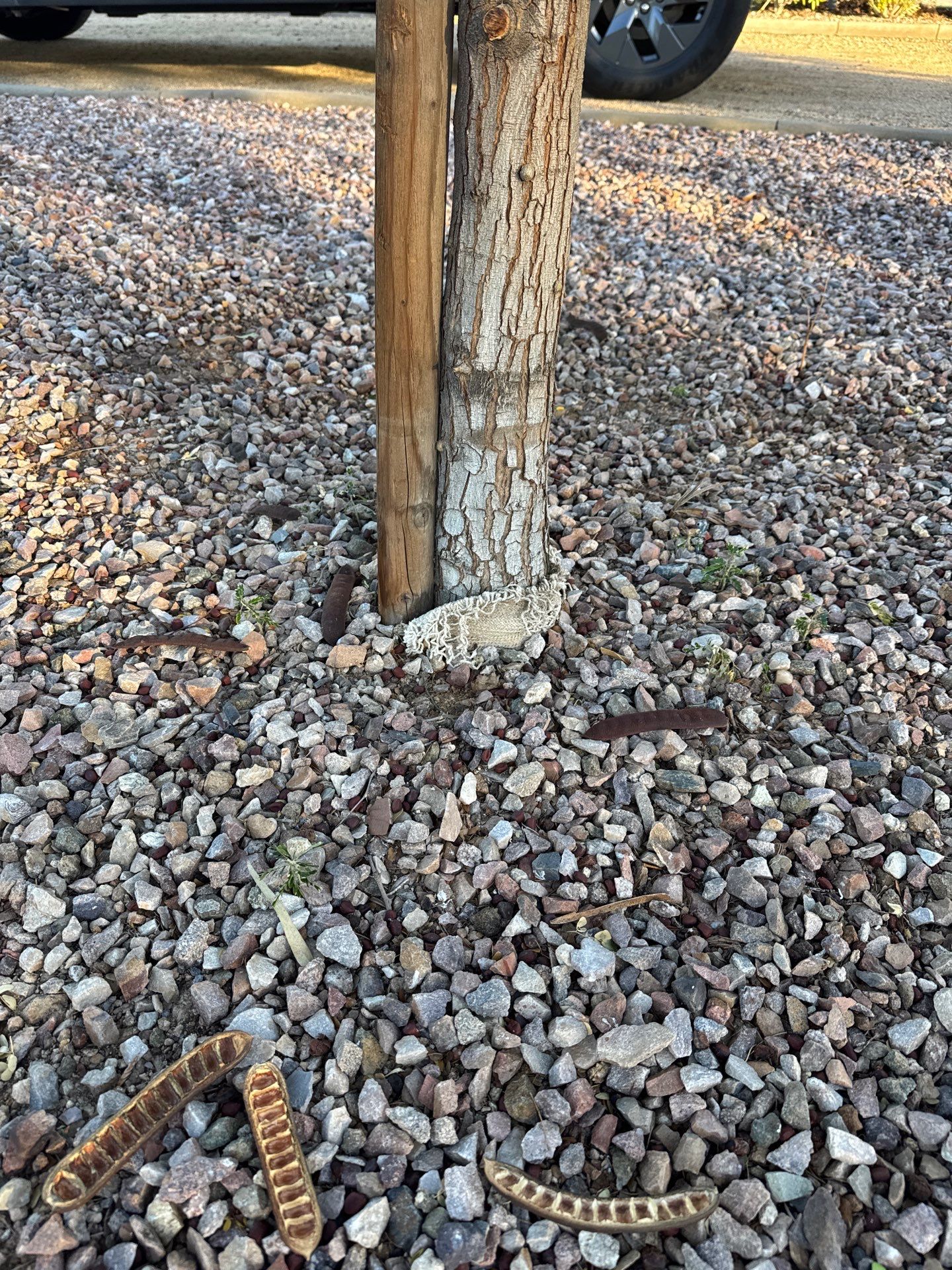
This goes for all of your trees, not just this one. They'll do better if the rock is pulled back from the trunk into a nice water well, so the rock isn't sitting there cooking and baking them. Rock holds heat against the trunk and the roots all day.
- Pull the rock back from each trunk into a water well about 3 ft across on young trees, wider on bigger ones.
- Keep the base of the trunk clear so the root flare (where the trunk widens into the roots) stays exposed and dry.
- If you don't like the look of bare soil in the wells, put down wood mulch or plant a living groundcover inside them.
How to properly plant and stake a tree
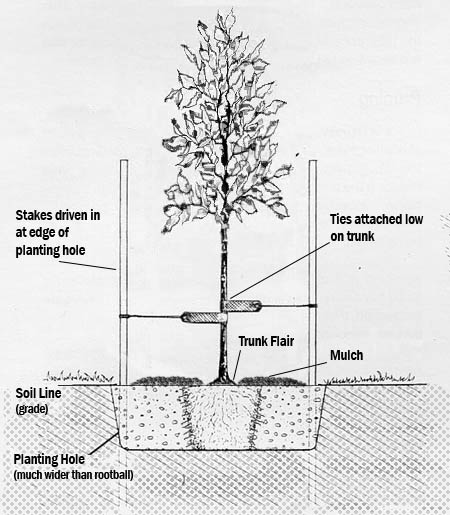
- Dig wide, not deep. Dig the hole only as deep as the root ball and two to three times as wide. The root flare (where the trunk widens into the roots) should sit right at the soil line, or even an inch above it. Never bury the trunk.
- Loosen the roots. Tease out any roots circling the root ball, and cut any that wrap around the trunk.
- Backfill with native soil. Use the soil you dug out with just a little compost mixed in, so the roots grow out into the surrounding soil instead of staying in a pocket of rich mix. Water it in as you fill to settle out air pockets.
- Two stakes, outside the root ball. Drive two stakes into firm ground on opposite sides of the tree, outside the root ball, lined up across the direction of the strongest wind. Never put a stake right against the trunk.
- Tie low and loose. Attach the tree to each stake with a soft, flexible tie (a wide rubber strap or tree tie, never wire or rope) at the lowest point where the tree stands up on its own, usually about a third of the way up the trunk. Leave enough slack that the trunk can sway a few inches. That movement is what builds a strong trunk.
- Take them out after a year. Once the tree has rooted in, usually 6 to 12 months, remove the ties and stakes. Check the ties every few months in the meantime so they're never cutting into the bark.
- Finish with a water well and mulch. Build a well out to the edge of the root ball, then lay compost and wood mulch inside it, kept a few inches back from the trunk.
Purple Heart
Deep purple groundcover that brightens up a shady spot. Spreads slowly to fill in and is easy to pull back if it wanders.
Angelita Daisy
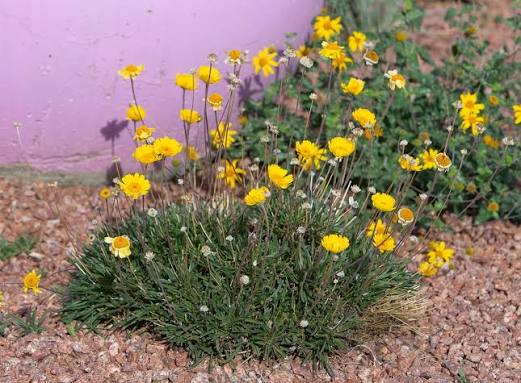
Tight little mound with yellow daisies almost all year. One of the cleanest edging plants we have here.
Trailing Indigo Bush
Silver groundcover with purple flowers in summer. Great for covering ground under the trees and softening around boulders without getting tall.
Silver Ponyfoot
Soft silver leaves that trail and spill. A cool, bright contrast against mulch and green plants.

Yellow Dot (Wedelia)
Glossy green groundcover with small yellow daisy flowers most of the year. Fills a water well quickly and stays lush. It can grow fast and overtake nearby plants once established, so give it room and pull it back from the edges as needed.
Removing the volunteer palo verde
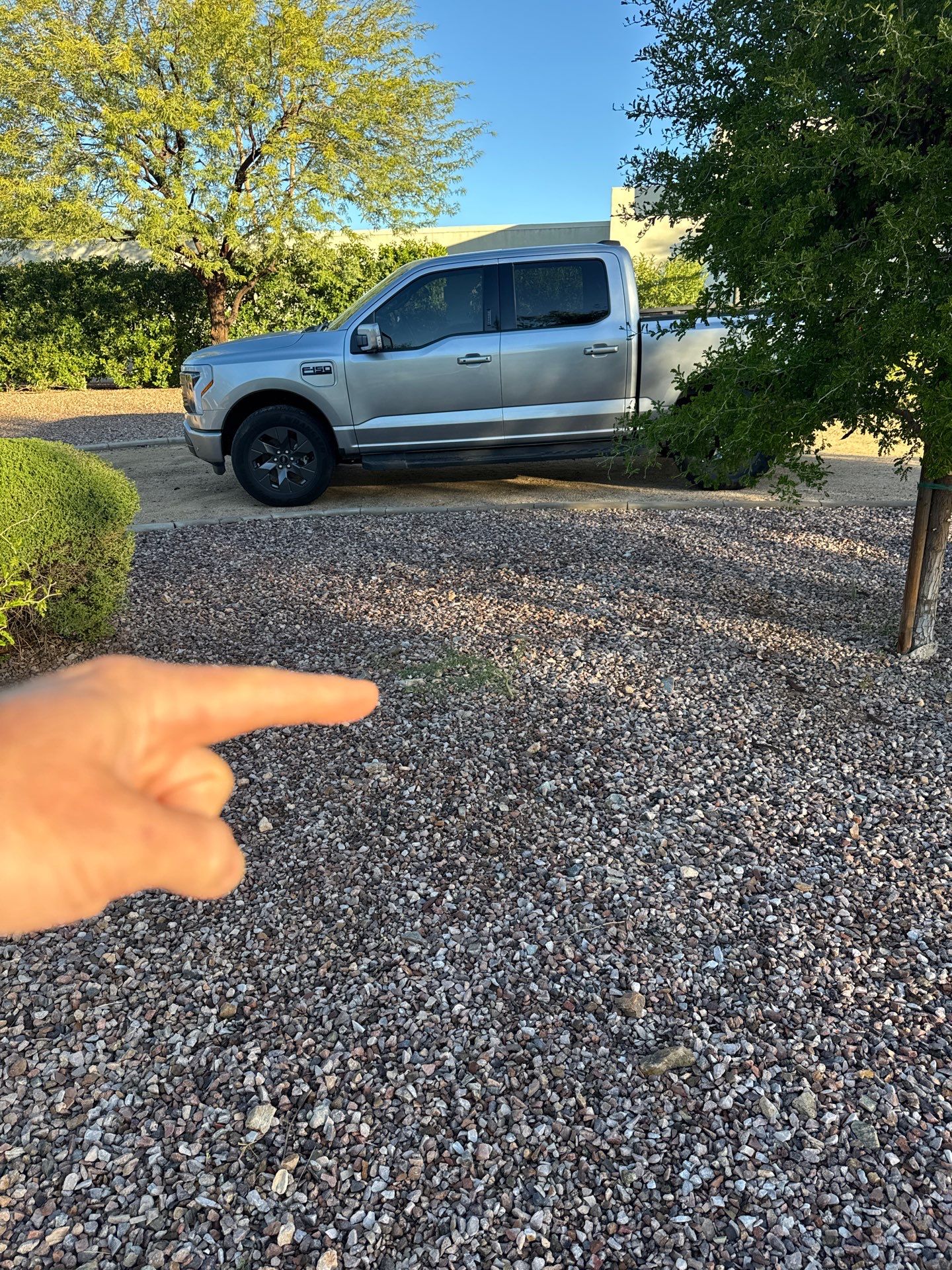
This looks like a volunteer palo verde that came up on its own between the two Texas ebonys. It's not the best place for it. As it grows it'll crowd both ebonys and compete with them for light, water, and root space. I'd remove it as soon as possible, while it's still small and easy to pull, roots and all.
The front side yard: color and pollinators
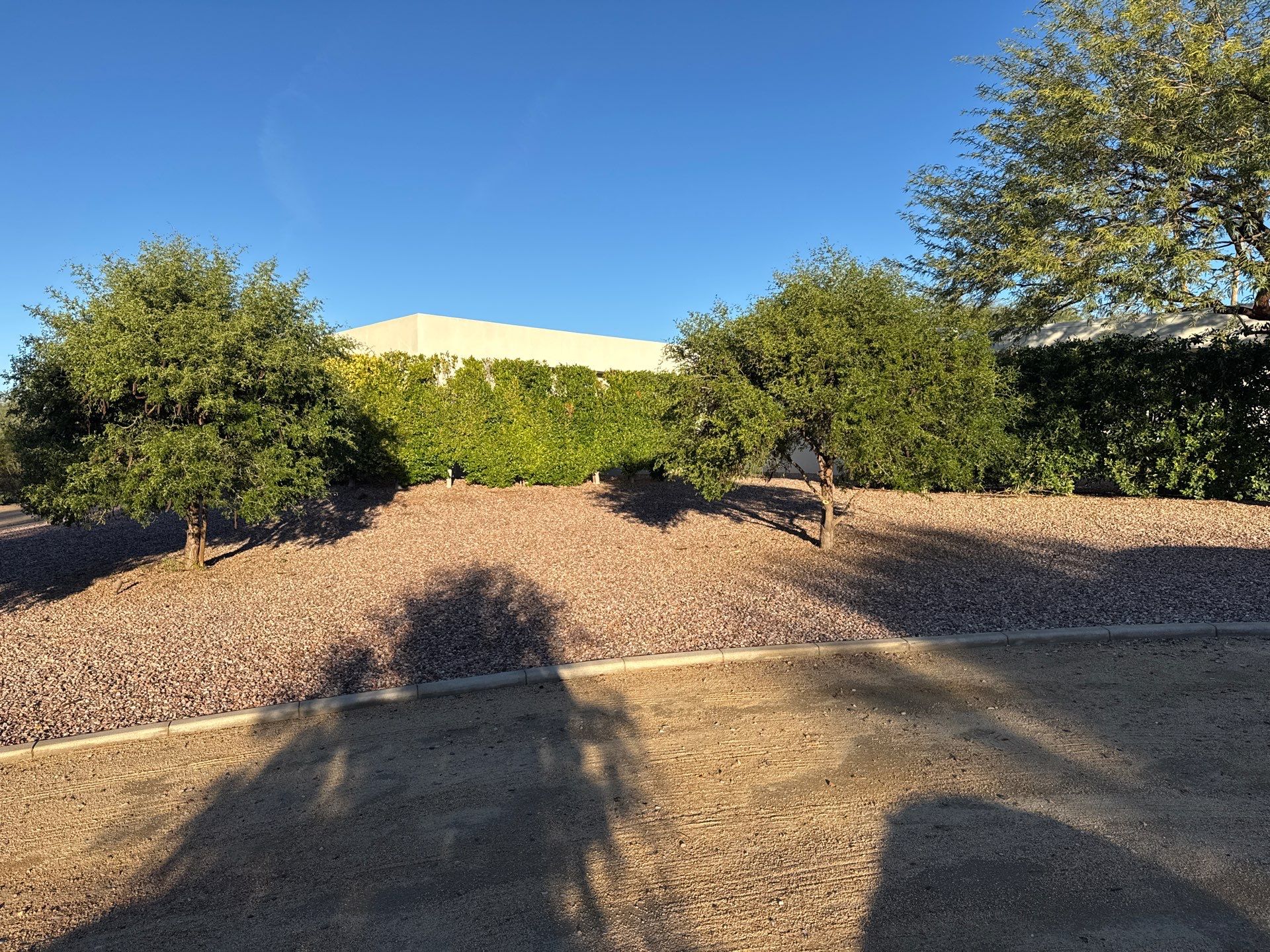
This is the front side yard. Same story: lots of wide open space and hot rock baking everything. I'd do the same thing here as in the main front yard: pollinator plants and colorful plants spaced sporadically to fill in the area. All of these take less water than plants that aren't desert adapted, and as they fill in, they'll really start to cut down on the heat.
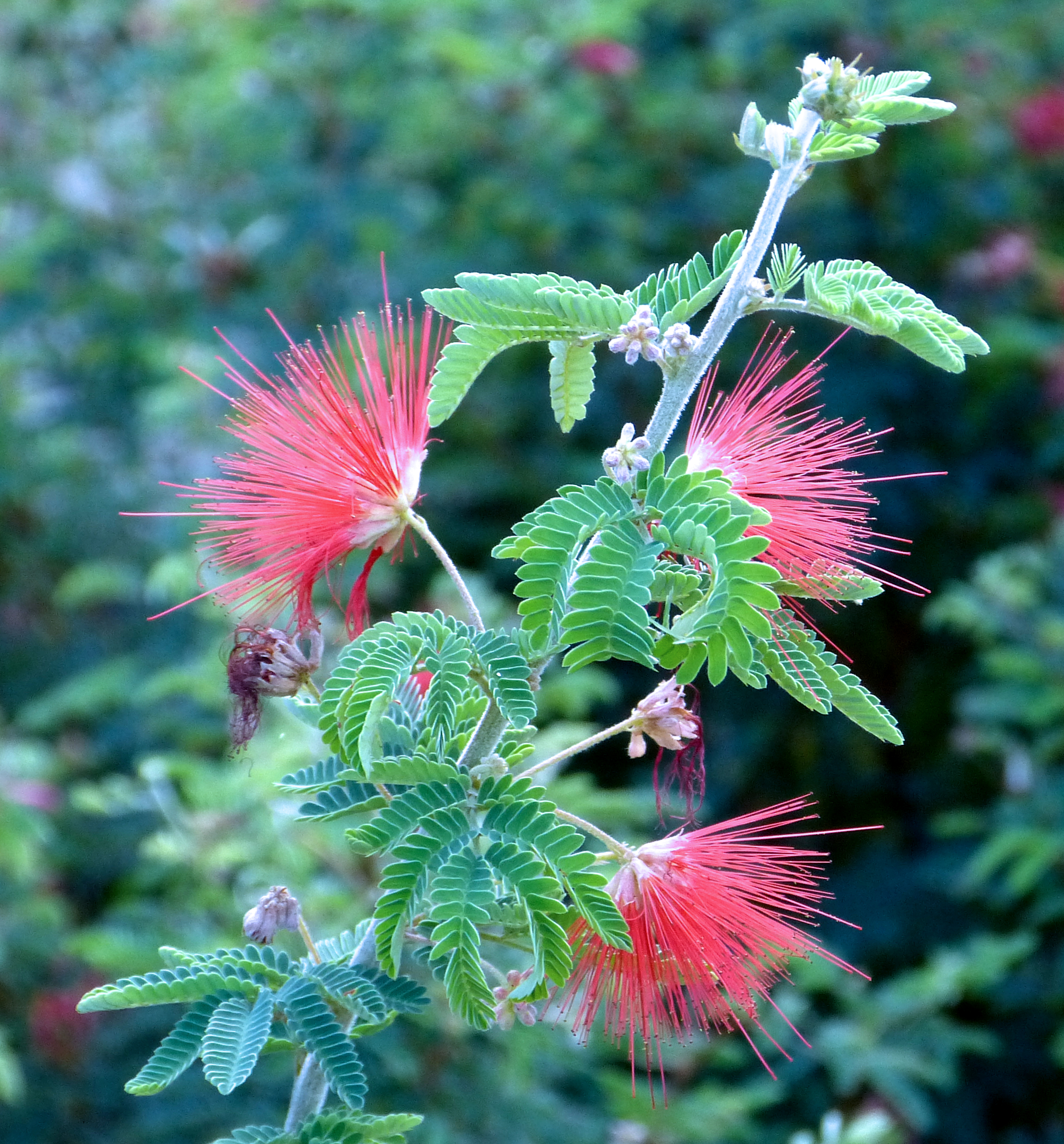
Baja Fairy Duster
Red puff flowers most of the year and one of the best hummingbird plants you can grow here. Good mid-size shrub for the layer under the trees.
Pink Fairy Duster
Native, with pink powder-puff flowers in late winter and spring. Small, airy, and takes very little water once it settles in.
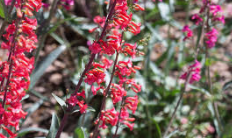
Penstemon
Tall spring flower spikes in pink, red, or purple that hummingbirds love. Low rosette the rest of the year, so it keeps things clean. Reseeds lightly.

Globe Mallow
Native, with bright orange cup flowers in spring that native bees love. Cut it back by about half after the spring bloom to keep it looking tidy instead of rangy.

Desert Milkweed
Upright gray-green stems with cream flowers, and the host plant for monarch and queen butterflies. Very clean, vertical look. Plant it in the ground, not in raised beds.
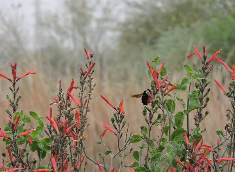
Chuparosa
Native, with red tubular flowers through winter and spring. Hummingbirds will defend it. Goes in the ground, not in raised beds.
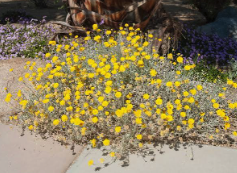
Desert Marigold
Native, with bright yellow daisies most of the year over soft gray leaves. Small and low, so it's great along edges.
Angelita Daisy
Tight little mound with yellow daisies almost all year. One of the cleanest edging plants we have here.
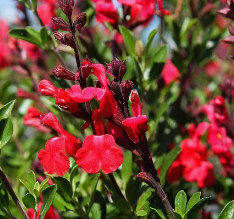
Autumn Sage
Red or pink flowers in spring and fall that hummingbirds love. A great cottage-garden look that still fits the desert.
Ficus care: mulch, pruning, and feeding
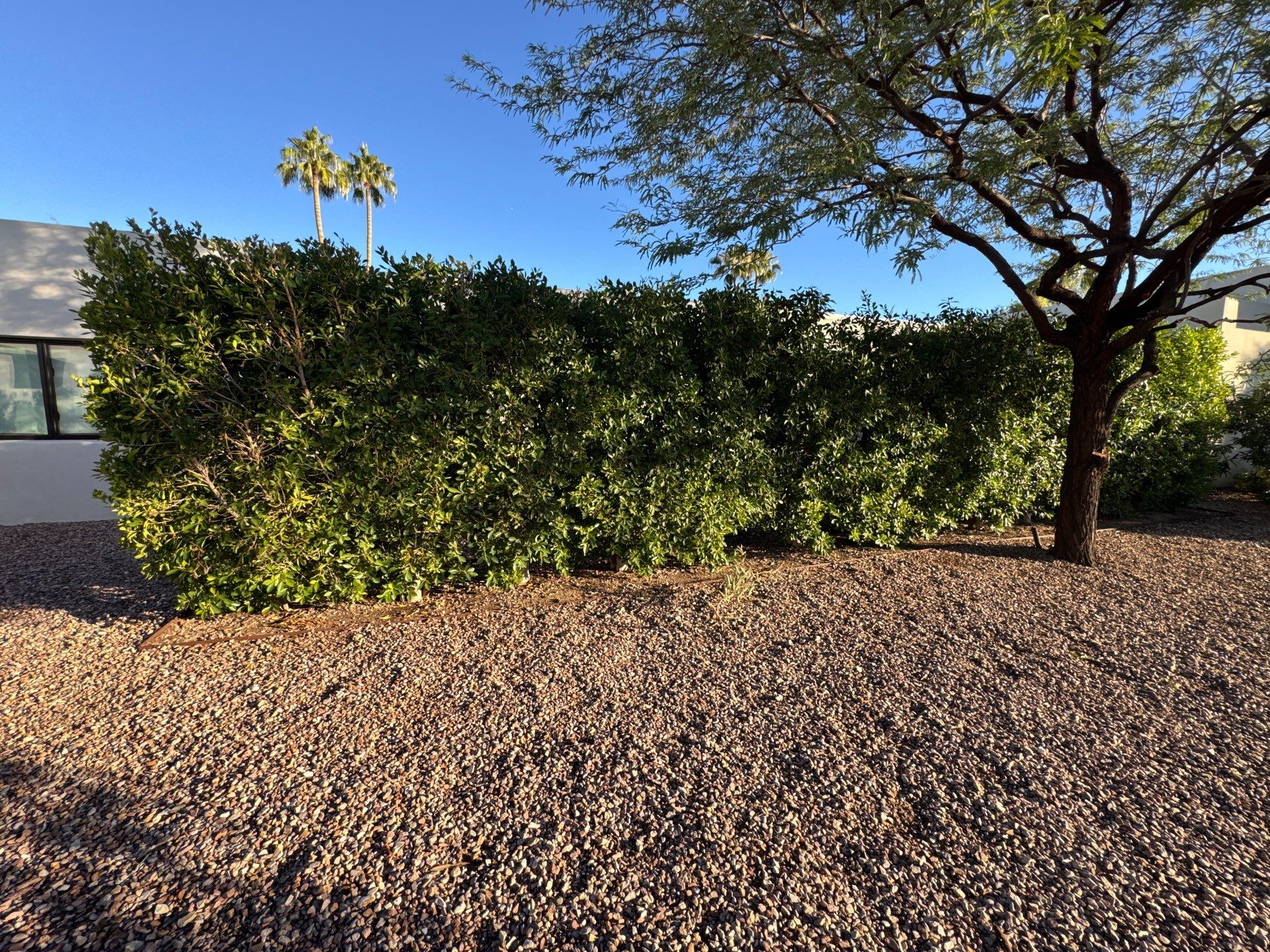
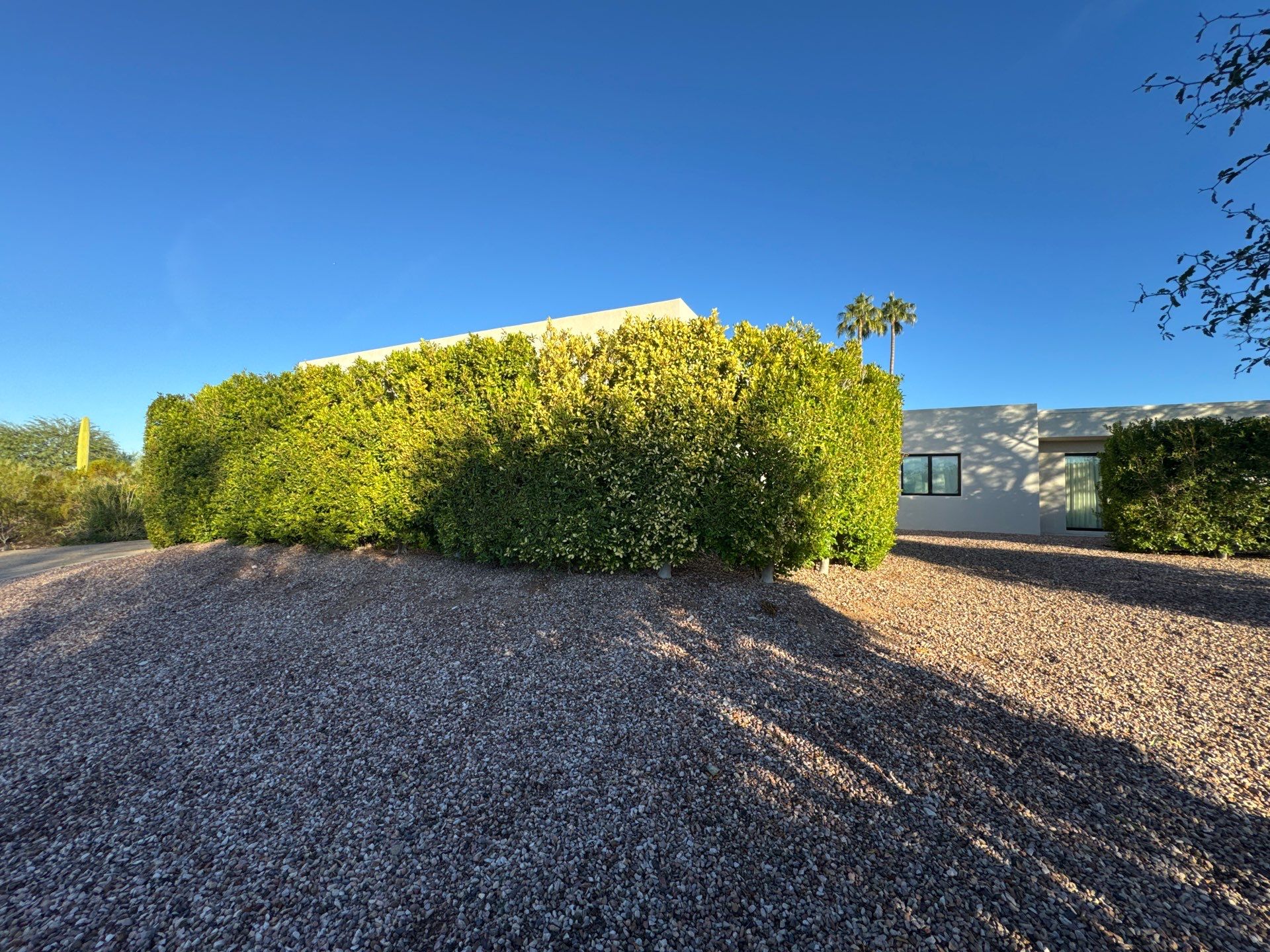
These notes apply to all of your ficus. On this row, wood mulch is the best thing to put down, and all the stakes need to come out. The ficus on the slope is a little trickier, but if you add a border along the low side to hold the mulch in place and then mulch inside it, that will help it a lot. That one especially gets blasted by the afternoon sun, so mulch to hold in moisture will make it much happier.
Pruning ficus
Pruning the wrong way is the number one killer of ficus here, so this is the most important part.
- When: Spring, from about March through May, when the tree is actively growing and recovers quickly.
- Never prune hard in summer. Opening up a ficus in June through August exposes the bark and branches that were shaded, and they sunburn badly. Sunburned bark cracks and lets in borers and disease. This is how most ficus here end up dying.
- Avoid pruning in winter, too. Fresh cuts and new growth are easily damaged by frost.
- Thin, don't shear. Remove whole branches back to where they start rather than shearing the outside. Keep the canopy full enough to shade the trunk and main branches.
- No more than about 20% of the canopy in a year.
- Don't strip the inside (lion tailing). Leave the inner branches and leaves; they protect the tree from sun.
- For big ficus or anything high up, have King's Tree Service do it.
Feeding ficus
- Spread compost out to the drip line, under the mulch, a few times a year: late winter, late spring, and early fall.
- Add worm castings every quarter.
- Feed monthly with a good organic fertilizer high in fulvic acid (see the feeding section below).
- Water deep and infrequently with emitters at the drip line (see the watering section below).
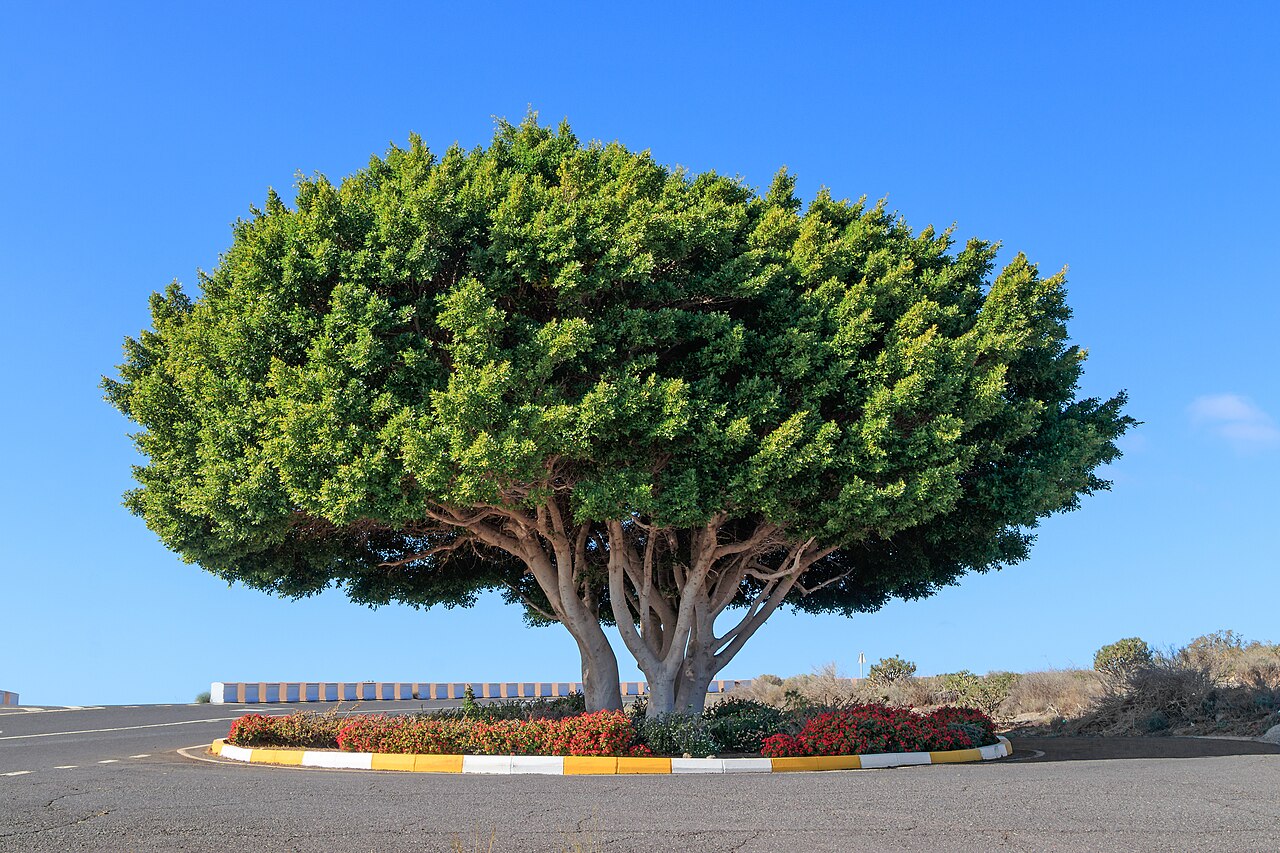
Ficus (tree form)
Dense, glossy evergreen shade and screening. Ficus are tough here as long as they're pruned at the right time and the canopy stays full enough to shade the trunk.
King's Tree Service: kingstreeserviceaz.com
Backyard
Backyard mesquite: mulch in the well
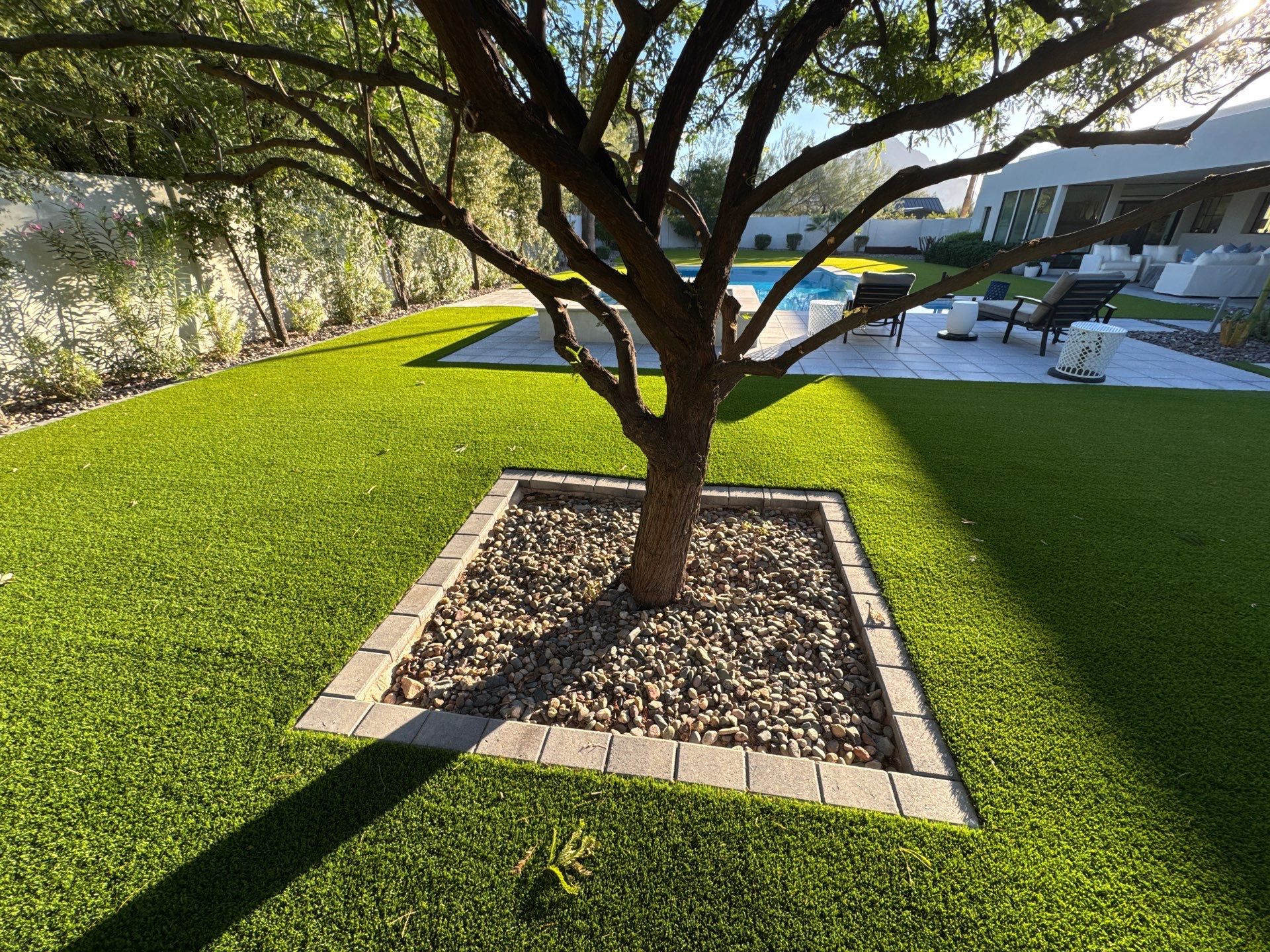
Let's talk about the backyard a little. Right now the water well under the mesquite tree is filled with rock, which cooks in the sun and isn't good for the tree. I'd get rid of the rock and put wood mulch in the well instead, 3 to 4 inches deep and kept a few inches back from the trunk.
Like we talked about out front, the drip emitter should be moved as far away from the trunk as it can go while still being inside the water well, out toward the edge of the canopy where the feeder roots are.
Back wall: swap the rock for mulch
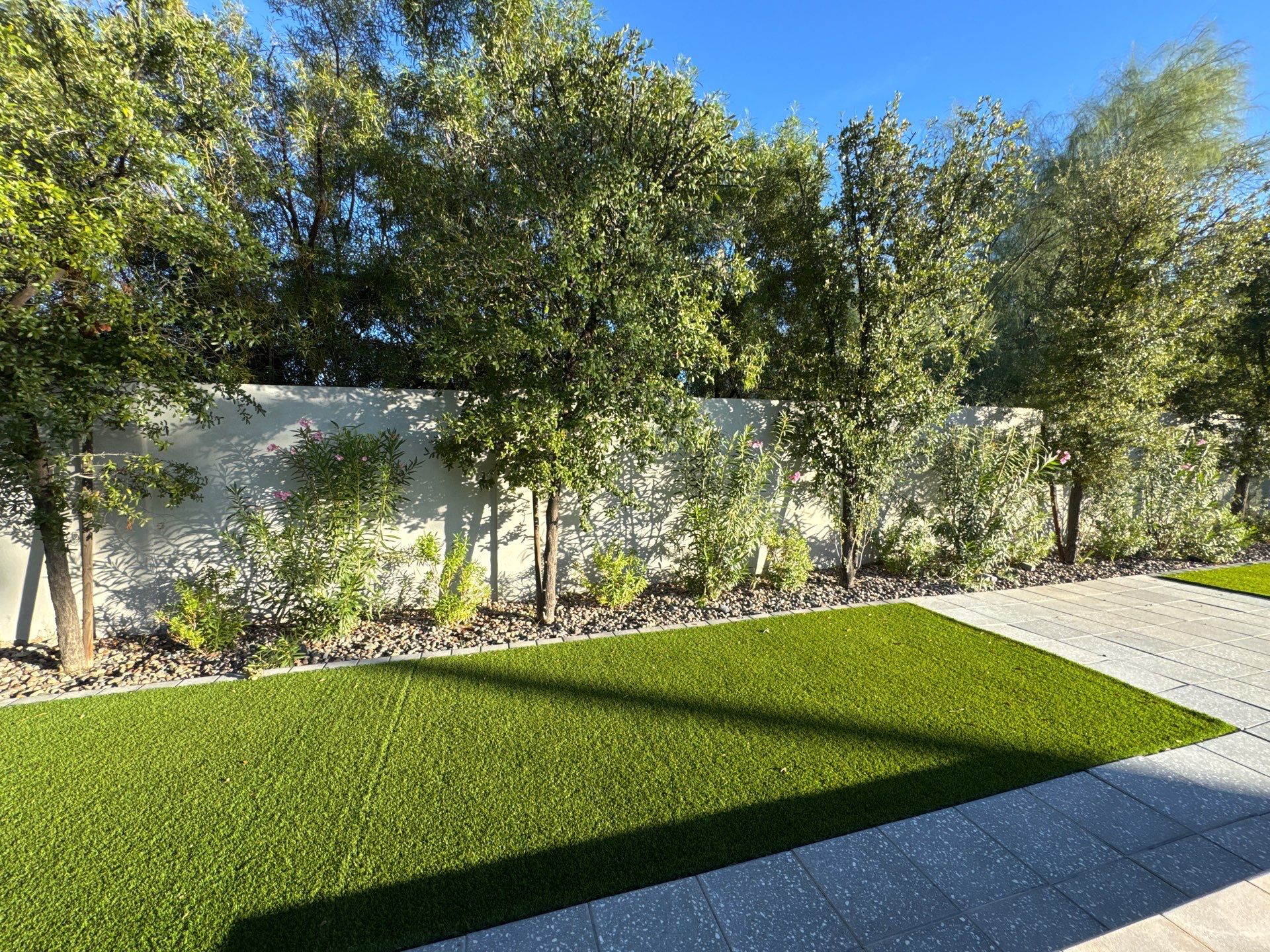
Same thing along the back wall. It's not necessary, but things will grow much better and be happier, and you'll use less water, if the rock comes out and wood mulch goes down instead. Not the end of the world, but it would definitely help.
Boxwoods: pruning and feeding
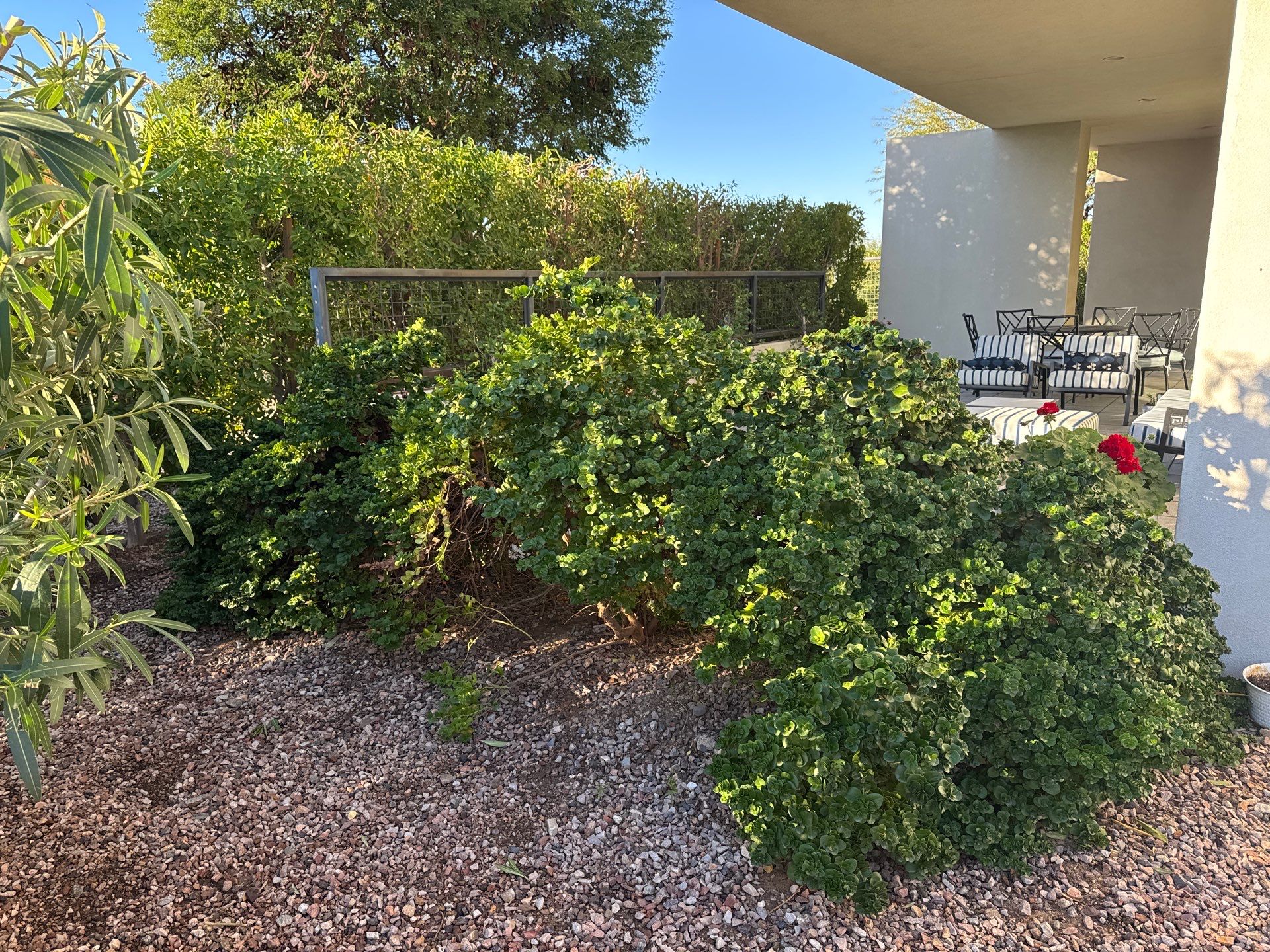
On these boxwoods, the one in the middle looks a little rough, and there are a lot of dead spots in the middle of the plants. That usually comes from shearing: the outside gets so dense that no light reaches the inside, and the inner leaves die off.
Pruning boxwood
- When: Late winter into early spring, before new growth starts. A light touch-up in early summer is okay; avoid pruning in late summer and fall so new growth isn't hit by heat or frost.
- Thin to let light in. Reach into the plant and cut out some small branches back to a larger branch, opening "windows" through the outer shell. Light reaching the middle brings the inside back to green.
- Clean out the dead wood inside the plants.
- Shape lightly afterward if you like the formal look, but keep the bottom a little wider than the top so the lower branches get light.
Feeding boxwood
- Compost around the base, a couple inches out from the stems, a few times a year.
- Worm castings every quarter.
- Monthly organic fertilizer high in fulvic acid. Boxwoods often yellow in our alkaline soil, and building the soil biology helps them take up the nutrients that are already there.
- Mulch to keep the roots cool; boxwood roots are shallow and suffer when they dry out.
Watering: the right way and why
Watering is one of the biggest things you can change to make everything in the yard healthier, and it usually means using less water, not more.
The idea: deep and infrequent
Water deeply, then let the soil dry partway before watering again. A long, slow soak pushes water down deep, and the roots follow it. Deep roots stay cooler, handle heat better, and anchor the plant. Short, frequent waterings only wet the surface, so the roots stay shallow where the soil is hottest, and salts build up in the root zone. Deep watering also flushes those salts down below the roots.
How deep
- Trees: 2 to 3 ft deep.
- Shrubs: 18 to 24 inches deep.
- Groundcovers and small plants: about 12 inches deep.
- To check, push a long screwdriver or a soil probe into the ground a few hours after watering. It slides in easily through moist soil and stops where it's dry.
How often (established plants)
- Summer (June to September): trees every 7 to 14 days, shrubs every 5 to 7 days.
- Spring and fall: trees every 14 to 21 days, shrubs every 7 to 10 days.
- Winter: trees about once a month, shrubs every 14 to 21 days.
- Change the frequency with the seasons, but keep the run time long enough to reach the right depth every time. Adjust your timer at least four times a year.
- Don't skip watering after a rain. Our rains rarely soak in deep enough to count.
Where
Emitters go at the drip line, the edge of the canopy, not at the trunk. That's where the roots that take up water are. Mulch over the root zone holds that water in so it lasts longer.
Bougainvillea: pruning for more flowers
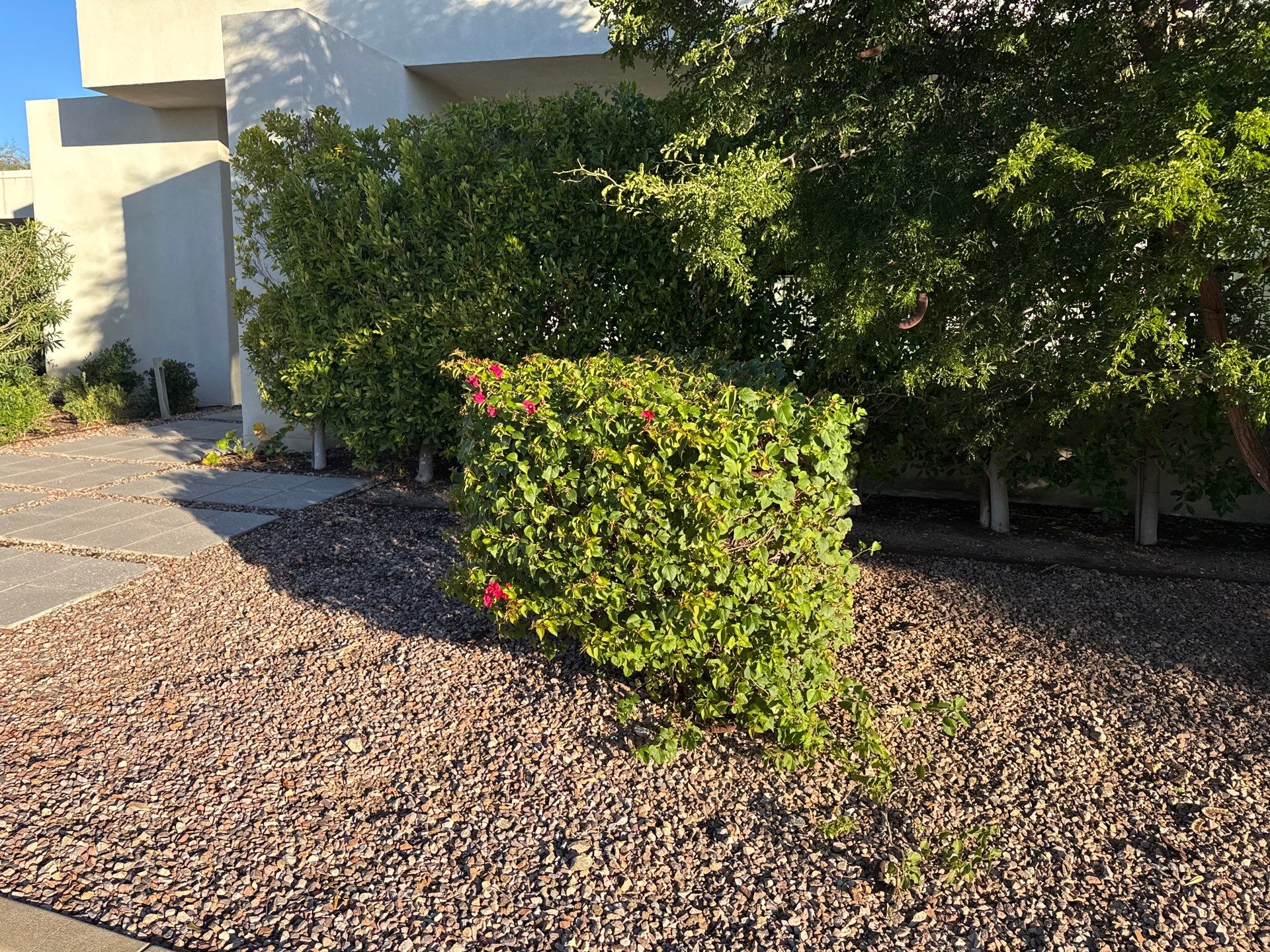
The bougainvillea will look so much better with proper pruning. Bougainvillea flowers on new growth, so the way you prune decides how many flowers you get.
- Main prune: Late winter, after the last frost (late February into March). Cut out any frost-damaged or dead wood first.
- Thin it out: Remove a few of the oldest, woodiest stems at the base, and any branches that cross or grow back into the plant. Then shorten long canes back to a side branch to shape it.
- Light tip pruning through the warm season: after each flush of flowers, snip the ends of the stems back a few inches. That pushes new growth, and new growth means more flowers.
- Avoid shearing it into a box. That cuts off the tips where it's about to bloom.
- Wear gloves and long sleeves; the thorns are sharp.
- Bougainvillea flowers best when it's kept a little on the dry side. Too much water and fertilizer means lots of leaves and fewer blooms.
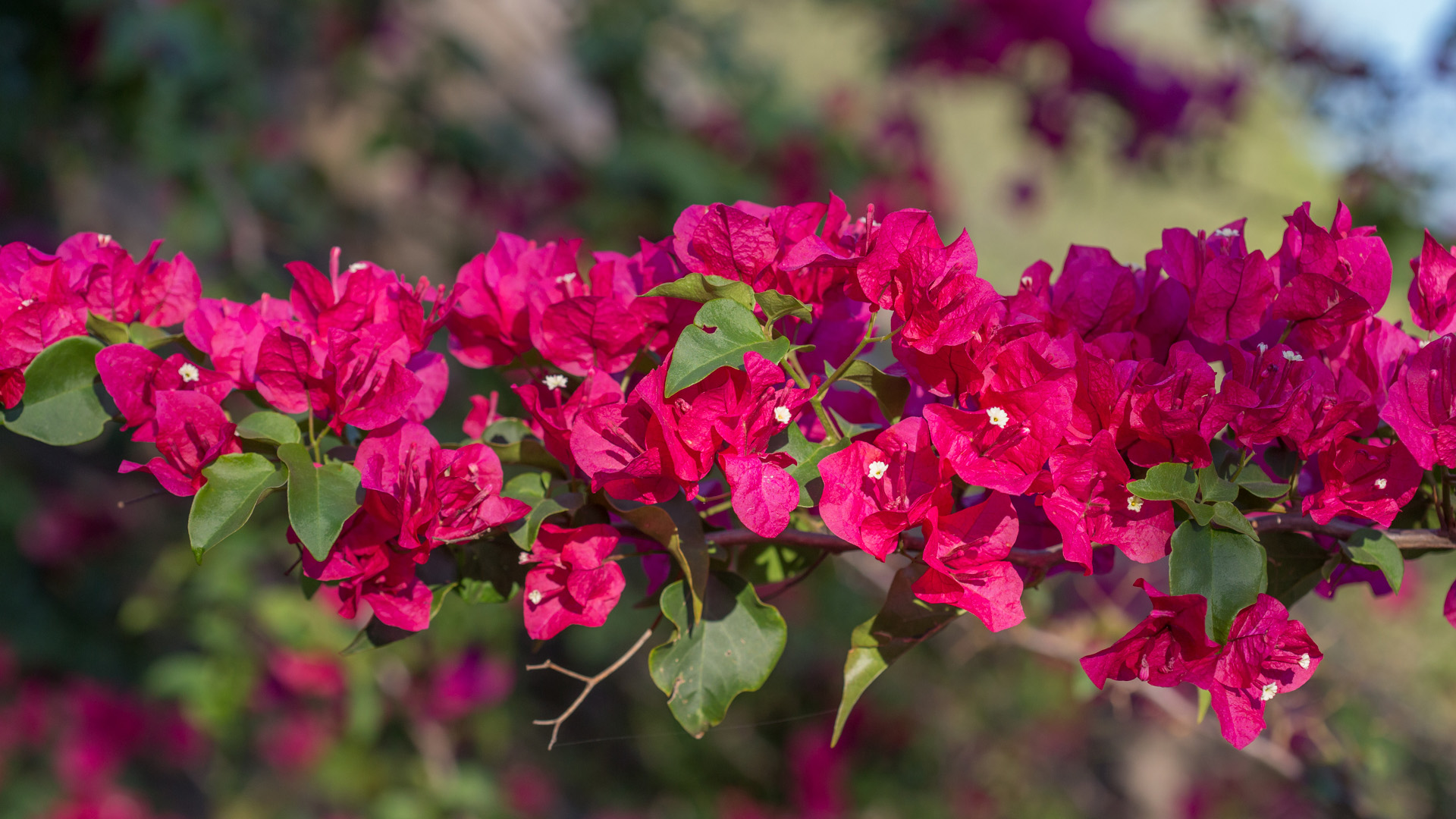
Bougainvillea
Blooms best with full sun and kept a little on the dry side. Too much water and shade means more leaves and fewer flowers.
Oleander: when and how to prune
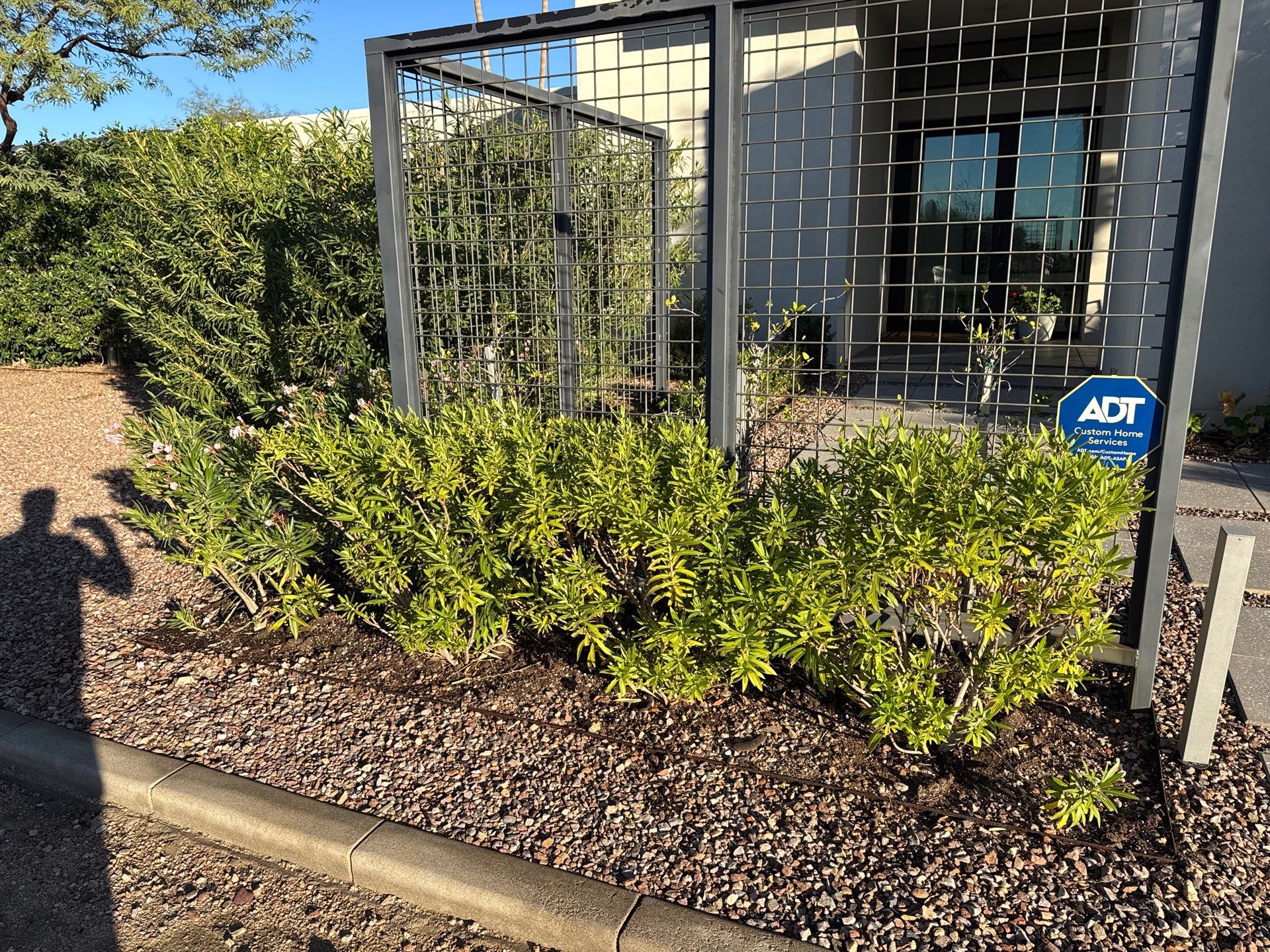
Last, the oleanders. You have a lot of them around the yard, and it looks like they're being topped. That's fine to do, but proper pruning instead of straight hedging will keep them fuller, healthier, and flowering more. This is one of the main things I see across the yard: hedging instead of pruning.
When to prune
- Main prune: Late winter to early spring, after the last frost (late February into March), or right after the big spring bloom.
- Avoid late summer and fall heavy pruning; new growth won't harden off before winter.
How to prune
- Topping for height: When you bring the height down, cut each stem just above a leaf node or a side branch, a little below the height you want, rather than flat across with a hedge trimmer. That way it branches out and fills in from where you cut.
- Renewal cuts: Each year, cut about a third of the oldest, thickest stems all the way to the ground. New shoots come up from the base, which keeps the bottom full instead of bare and leggy.
- Thin the inside: Remove dead, crossing, and weak stems so light gets into the plant.
- Very overgrown oleanders can be cut back hard, down to 12 to 24 inches, in late winter. They come back quickly and fuller.
- Wear gloves. The sap is toxic and can irritate skin, so wash your hands and tools afterward.
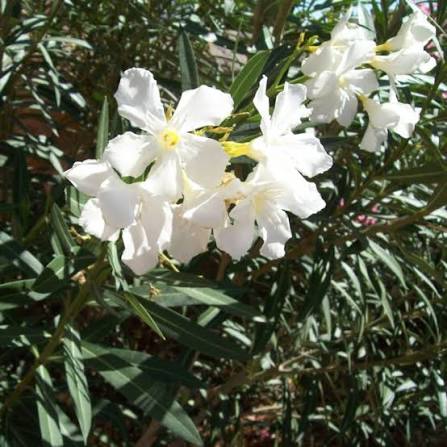
Oleander (white)
Evergreen, tough, and covered in flowers from spring through summer. Responds really well to renewal pruning, coming back fuller from the base.
Lining the U-shaped driveway
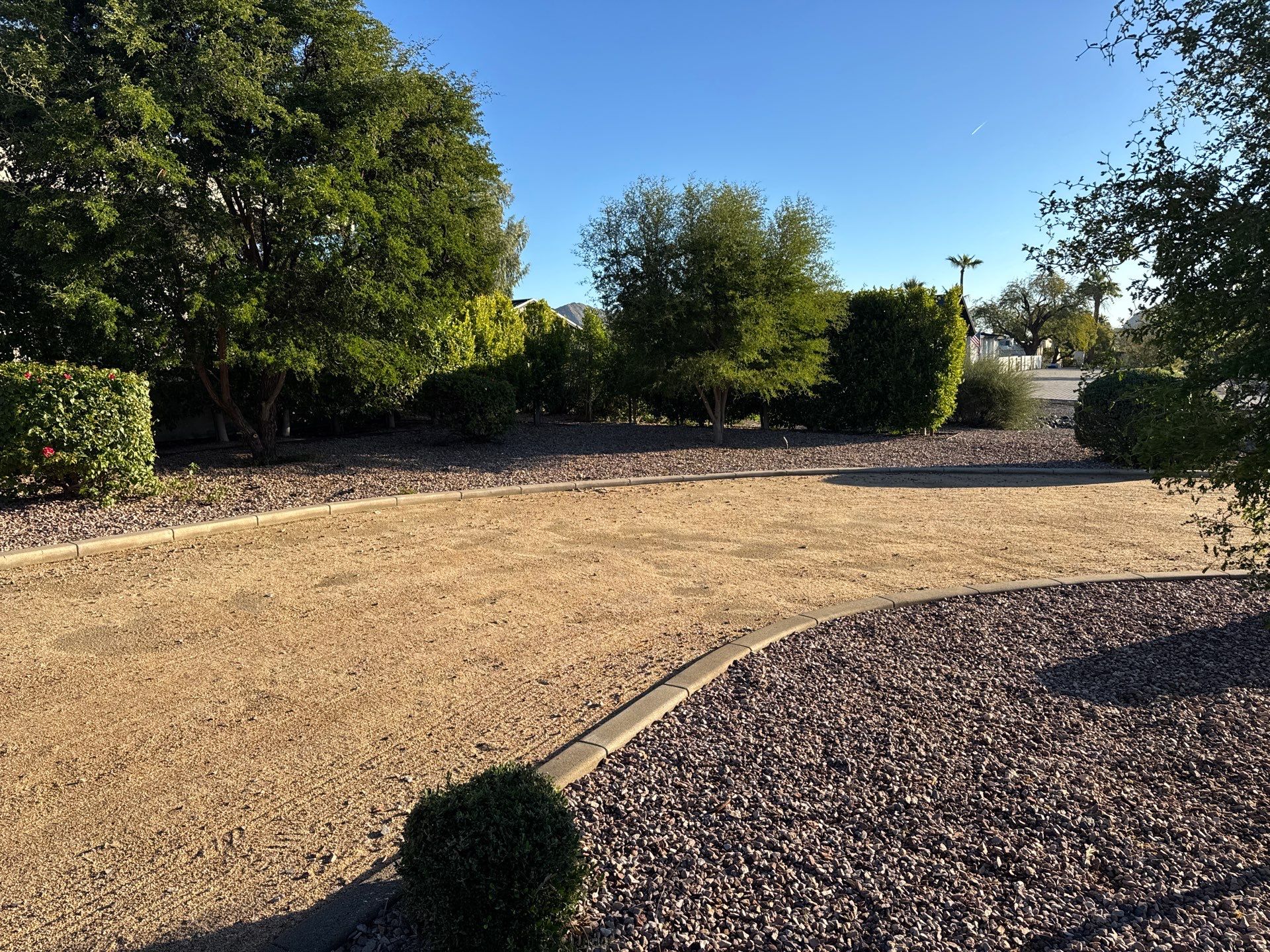
I don't know how much you want to add, but lining the U-shaped driveway with plants would look really good, so here's a suggestion. A repeating planting of tall, spiky plants along both sides of the U ties the whole front together and frames the house.
- Go with upright, spiky plants that grow tall but stay narrow at the base, 3 to 4 ft, so they frame the drive without sprawling into it. Mexican bush sage is the anchor, with its long purple flower spikes from late summer through fall. Keep them back from the inside corners of the U so they don't block sight lines when you're pulling in and out.
- Set them about 2 ft back from the driveway edge so they can spill a little without getting run over.
- Pick two or three of these and repeat them all the way around, in a loose rhythm rather than a straight row. Mexican bush sage with desert milkweed or deer grass between them gives you a tall, airy line of purple and green that moves in the breeze.
- Cut the Mexican bush sage back to about 6 inches in late winter, and the deer grass too. Both come back full in spring.
- Pull the rock back into a small water well around each one, with mulch inside.
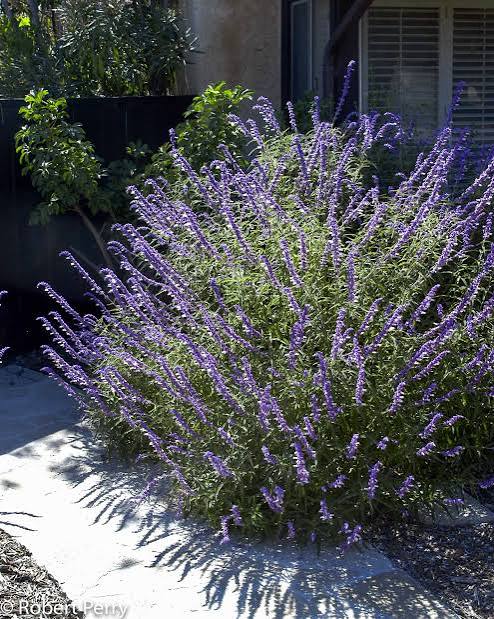
Mexican Bush Sage
Velvety purple flower spikes in fall and spring that hummingbirds and bees love. Great at the back of a bed against the house. Cut it back in late winter.
Desert Milkweed
Upright gray-green stems with cream flowers, and the host plant for monarch and queen butterflies. Very clean, vertical look. Plant it in the ground, not in raised beds.
Deer Grass
Native bunch grass with deep, fibrous roots that hold soil in place. One of the best plants for a slope or the edge of a wash.
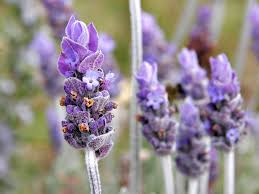
Lavender
Purple flower spikes and silver gray leaves with a great smell. Go with Spanish or French lavender, which handle our heat much better than English lavender, and give it good drainage.
Firesticks
Pencil-like stems that turn red-orange in cool weather. Bold color with zero litter. The milky sap irritates skin, so keep it back from where people brush past.
Soil and Feeding
Feeding the soil
A lot of what we saw, from the ficus to the boxwoods, gets better when the soil is alive. Instead of feeding the plants directly with synthetics, we feed the soil biology: the fungi, bacteria, and other life that break down organic matter and hand nutrients to the roots. Good compost, mulch, and organic fertilizer are how you build that.
Doing it yourself
- Compost: Spread compost generously around the drip line of the trees (out where the edge of the canopy is, since that's where the feeder roots are), and closer in around the shrubs. Arizona Worm Farm has great compost.
- Worm castings: Add worm castings every quarter. They're packed with biology and gentle enough you can't overdo them.
- Organic fertilizer: Once a month, use a good organic fertilizer high in fulvic acid. These are the ones I use from Catalyst Product Group (catalystproductgroup.com, click Products, then Home and Garden).

Catalyst Jenner 8
Organic fertilizer high in fulvic acid. Feeds the plant and the soil life at the same time.

Catalyst Organic Nitro Jen
Organic nitrogen to push healthy green growth, especially on new plantings and trees.

Catalyst Kelp Fertilizer
Kelp brings trace minerals and natural growth hormones that help roots establish and handle heat stress.
Or let us handle it
Monthly Landscape Fertilizing
$202/month
We come out every month and spray our organic liquid blend across the whole landscape, plus compost three times a year. After each visit you get a recap video of what we did and anything we noticed.
Next Steps
Where to go from here
First: Get the stakes off the ficus and Texas ebonys, pull the volunteer palo verde, and move the drip emitters out to the drip lines. Those are quick fixes that make a big difference.
Doing it yourself: Everything above is laid out so you can work through it at your own pace. As a consult client, you're already in the Garden Nerd Club, so you have direct access to me there. Send me photos as you go, or share this write-up with whoever maintains the yard so they're pruning the same way.
Having us do it: The Garden Nerd does planting. Whenever you're ready to fill in the front yard or line the driveway, let me know and I'll put together a planting proposal.
Irrigation: Moving and adding emitters out to the drip lines is a job for Garrett. Call him at 480-678-9121.
Quick Reference
Quick reference
Thanks again for having me out, Peggy. You have a lot of great plants already; most of what we talked about is getting them the right care, like pruning instead of hedging, mulch instead of hot rock, and water where the roots are. Do that and the whole yard will look fuller and healthier. I'm in the Garden Nerd Club whenever you need me.
Michael
The Garden Nerd
The Garden Nerd · Organic soil health, fertilizing, consulting, and planting · Mesa, Arizona · thegardennerd.org