
Timothy Hazelton
Backyard
West side tree
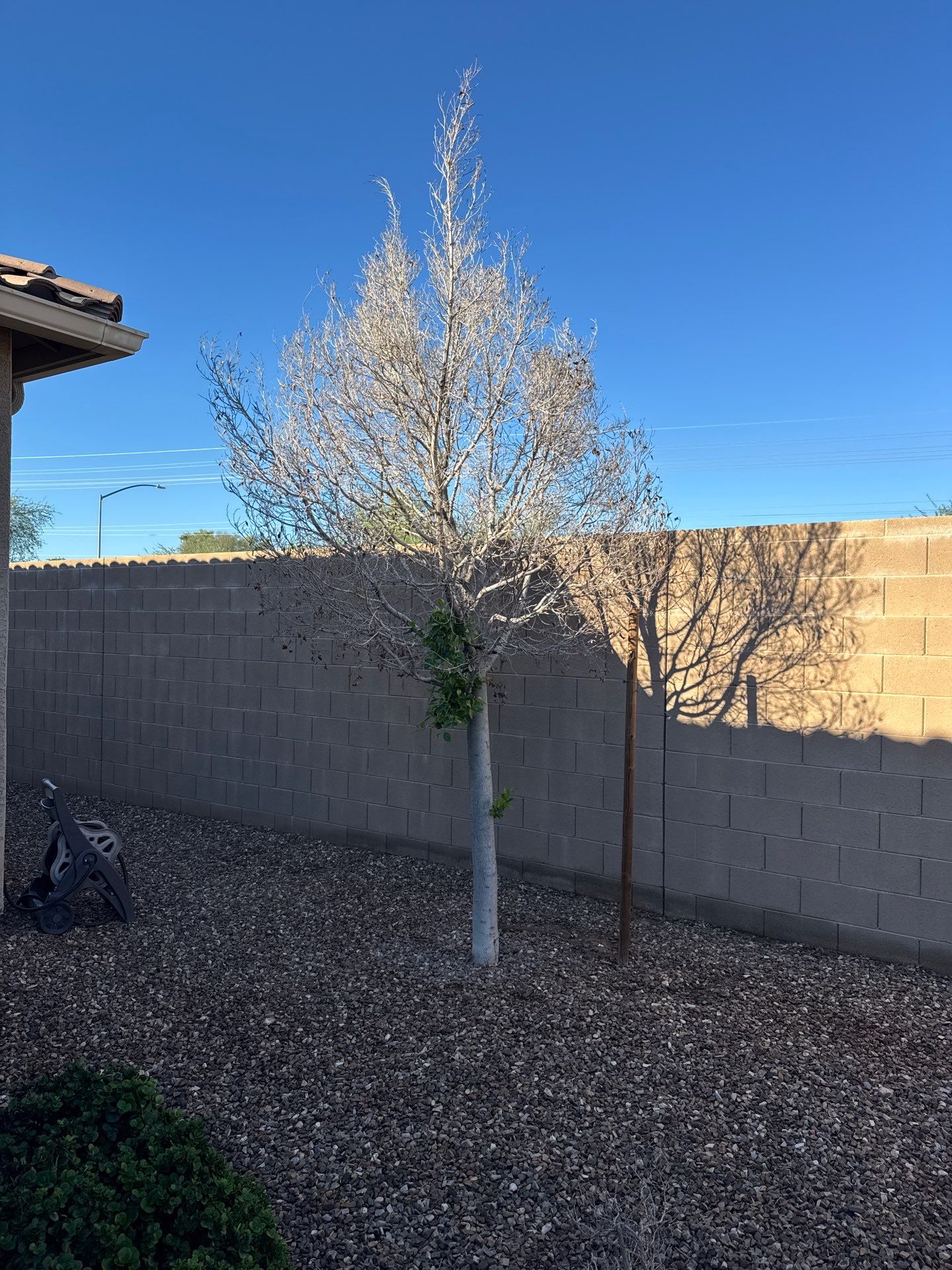
This ficus is done. I wouldn't put any money into trying to bring it back. Have it cut down and leave the stump. It doesn't need to be ground out; just plant the new tree right beside it.
I do want a tree to stay in this spot. It's blocking afternoon sun on the house, and losing that shade will make the house and this side of the yard noticeably hotter. Go with a 15 gallon tree. Smaller trees root in faster and end up healthier long term than a big boxed tree.
Red push pistache, like you already have in other spots, is a great option. It's deciduous, so it gives you summer shade and lets winter sun through. If you'd rather have shade year round, here are some evergreen options. Since this spot sits between the house and the wall, look at the mature width and keep the tree as far off the foundation as the space allows.

Red Push Pistache
Fast growing shade tree with red new growth in spring and great fall color. It drops its leaves in winter, so you get summer shade and winter sun on the house. Plant this fall as a 15 gallon.
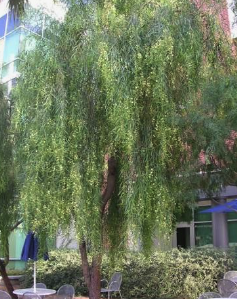
Willow Acacia
Evergreen with long, weeping, willow-like leaves and a narrow upright form. The best fit for a tighter spot between a house and a wall because it grows up more than out.
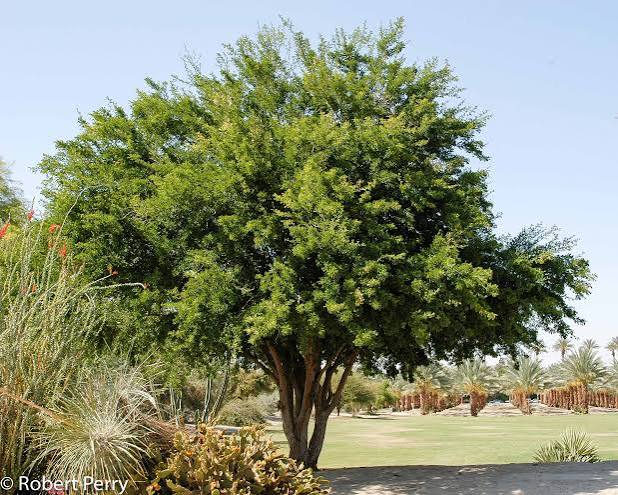
Texas Ebony
Evergreen with small dark leaves and an upright, dense shape. Slow to moderate growth, very tough in reflected heat, and it has thorns, so keep it off walkways.

Mulga Acacia
Smaller evergreen tree from Australia with silvery needle-like leaves and yellow spring flowers. Stays compact (15 to 20 feet), handles heat well, and keeps a tidy shape without much pruning.
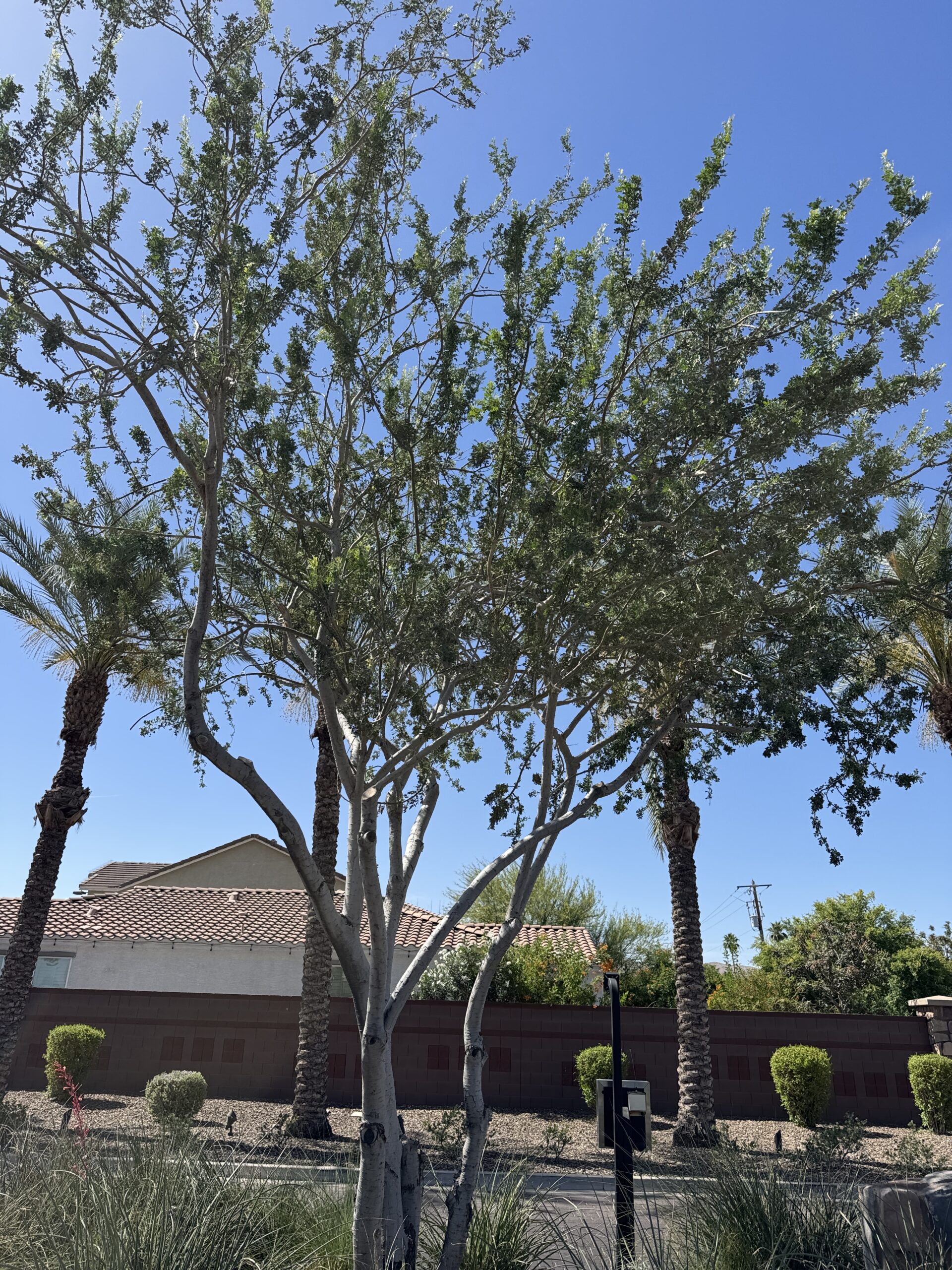
Desert Ironwood
Native Sonoran evergreen with gray green leaves and lavender flowers in spring. Slow growing but extremely long lived, and it feeds a lot of local wildlife. Takes less water than trees that aren't desert adapted.

Chinese Elm
Semi-evergreen (holds most of its leaves through a mild winter), fast growing, with a graceful rounded canopy and attractive peeling bark. A strong choice when you want shade quickly.
Water well for the tree
Pull the rock back at least 3 feet from the trunk in every direction and build a water well: a shallow basin with a raised edge so water soaks down into the root zone instead of running off. Fill the well with mulch instead of rock, keeping it about a foot back from the trunk. Rock holds heat and bakes the roots; mulch keeps them cool, holds moisture, and feeds the soil as it breaks down. This makes a real difference in the tree's health.
Patio bed with bottlebrush and boxwood
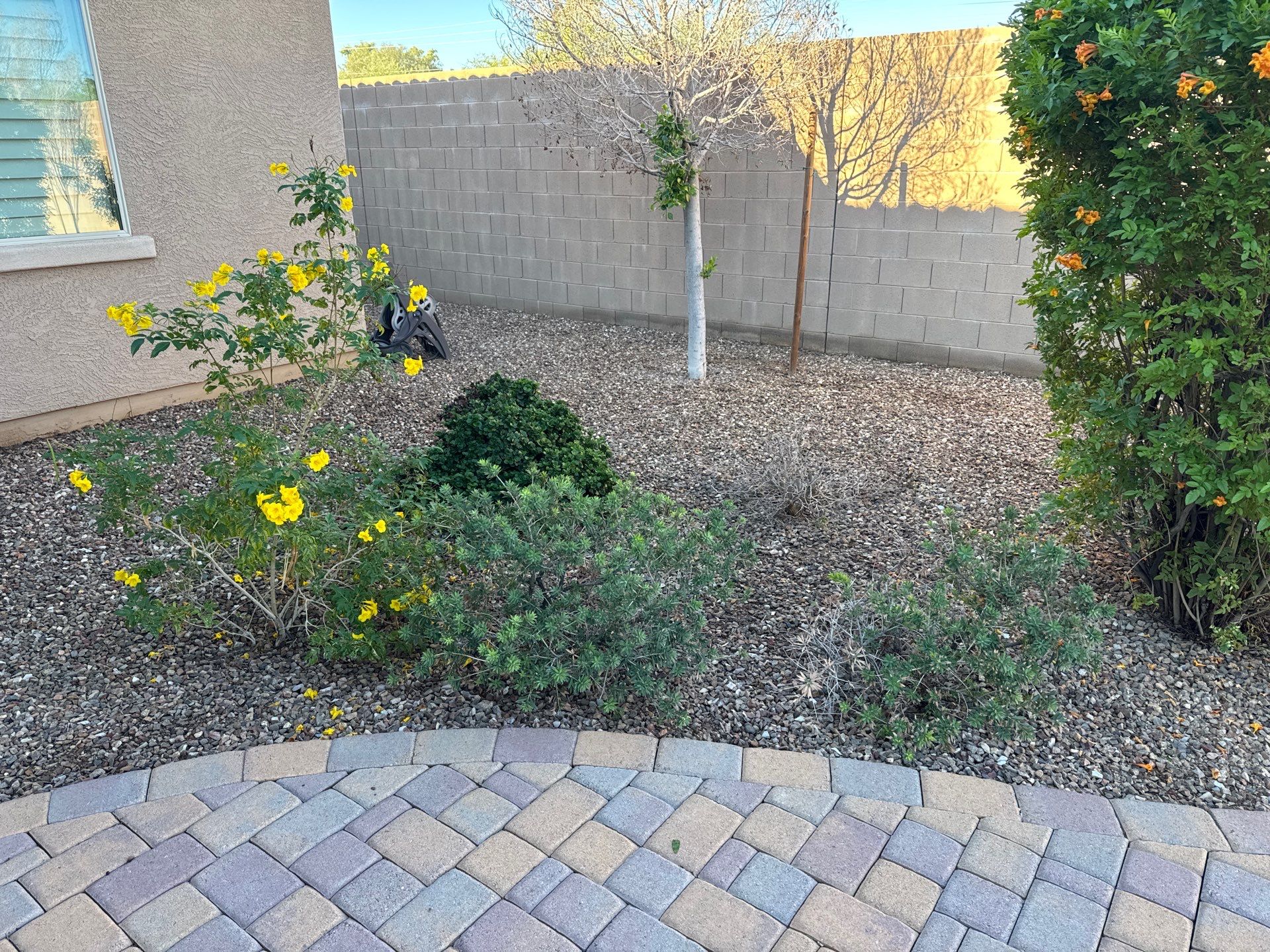
The boxwood on the right is completely dead, and that's not surprising here. Boxwood doesn't handle the reflected heat coming off the rock and pavers. The Little John bottlebrush in this bed are hanging on, but they're struggling for the same reason. If any of them keep declining, pull them and use the options below.
Everything here handles reflected heat, looks good most of the year, and needs very little from you once it's established. Leave about 2 feet between the pavers and the plant so it can grow without getting cut back constantly.
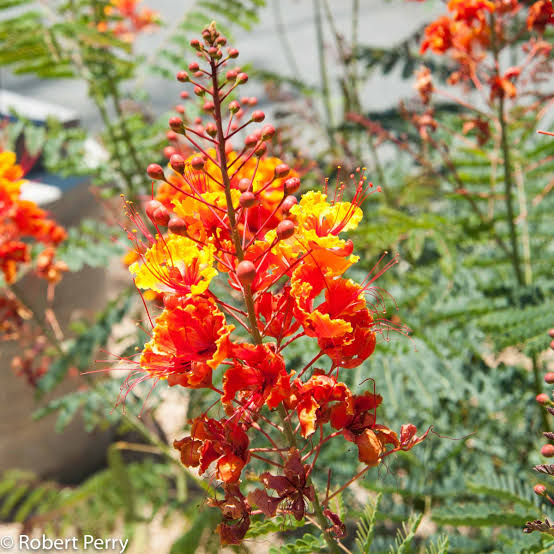
Red Bird of Paradise
Big orange and red flower clusters from late spring through fall. Loves full sun and reflected heat. Cut it back once in late winter and let it grow natural the rest of the year.

Texas Sage
Silvery leaves and purple blooms after summer humidity. One of the toughest shrubs in reflected heat. Never shear it; let it keep its loose natural shape and it will flower much more.
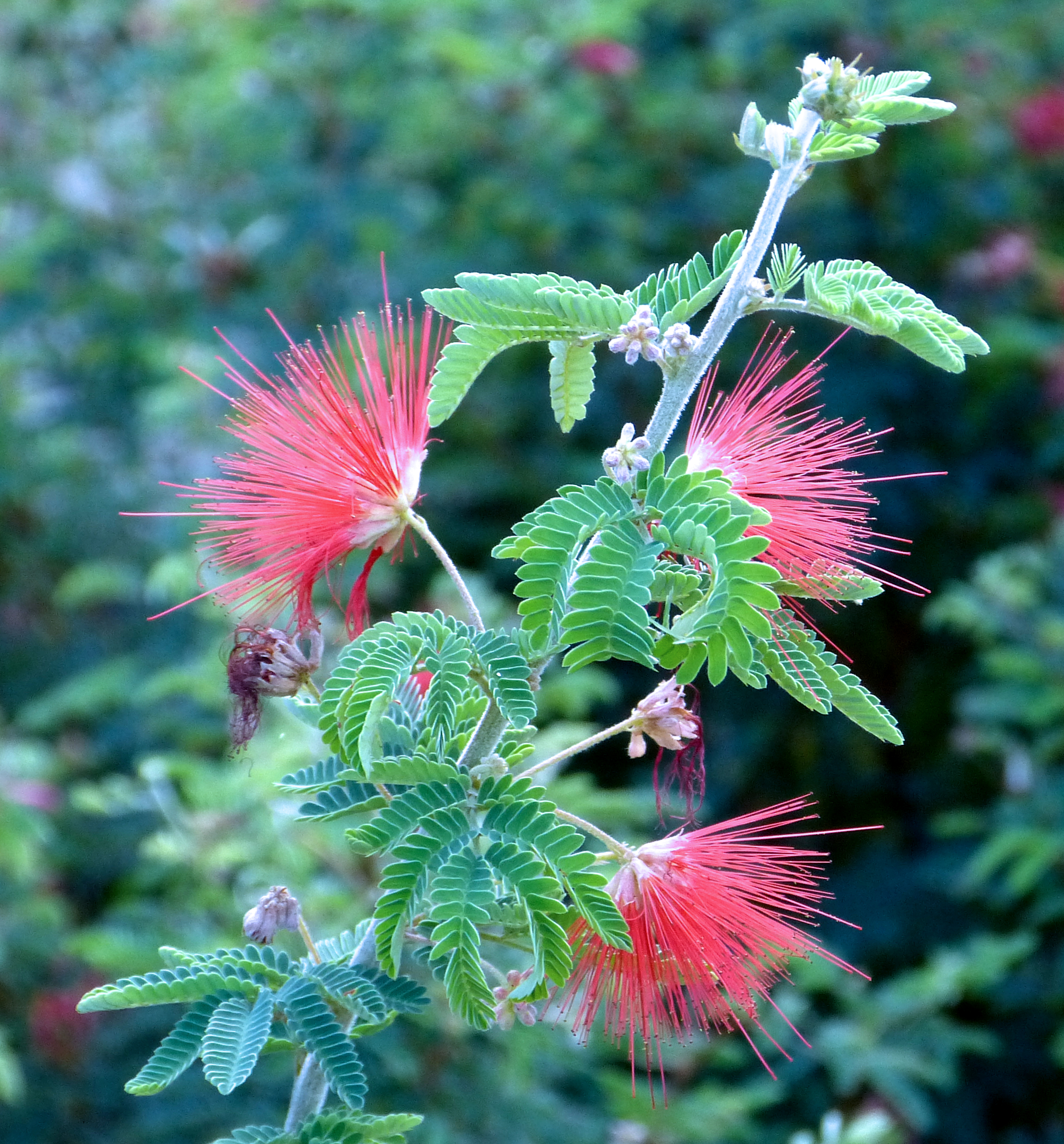
Baja Fairy Duster
Bright red puffball flowers most of the year and a hummingbird magnet. Medium sized, open shape, and it handles heat off rock and pavers very well.

Globe Mallow
Native perennial with apricot orange cup flowers in spring. Fast to fill a gap, takes heat with no problem, and reseeds a little on its own.
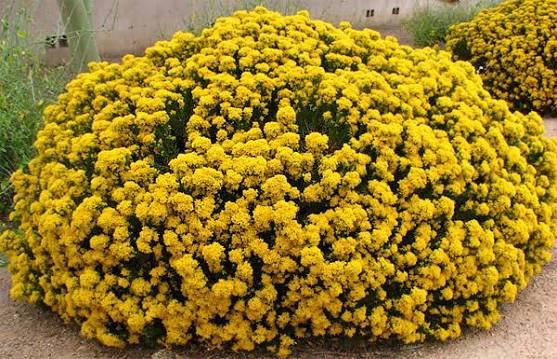
Turpentine Bush
Native, compact, bright green year round with a flush of yellow flowers in fall. Low maintenance and handles reflected heat well.
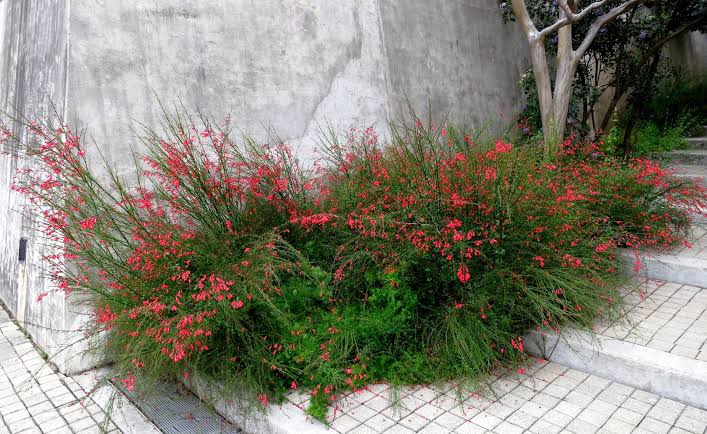
Firecracker Plant
Upright stems with bright red tubular flowers that hummingbirds love. Takes full sun and heat, and gives you a different texture from the rounded shrubs.
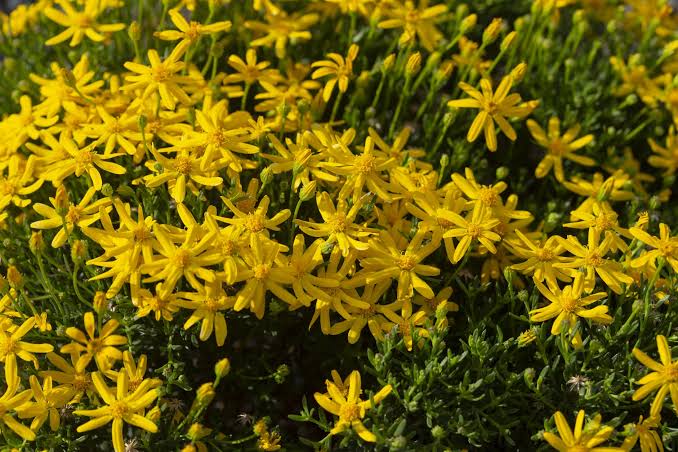
Damianita
Low mound of fine, bright green leaves covered in yellow daisies in spring and fall. Stays under 2 feet, perfect along edges and in front of bigger shrubs.
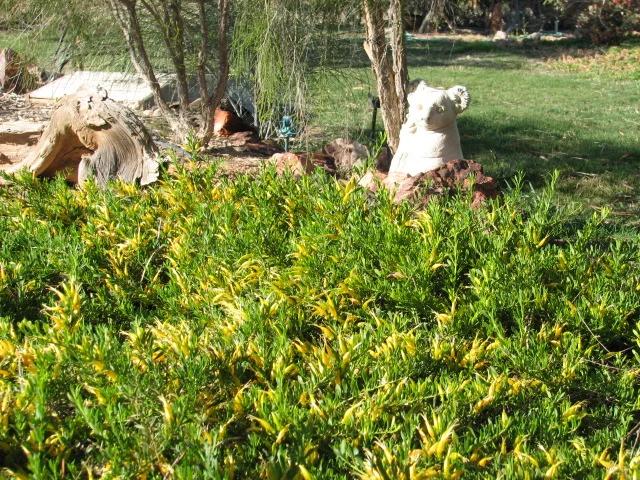
Yellow Emu Bush (Outback Sunrise)
Low spreading ground cover with gray green leaves and yellow flowers in late winter and spring. One of my favorites for the hottest spots in the yard.
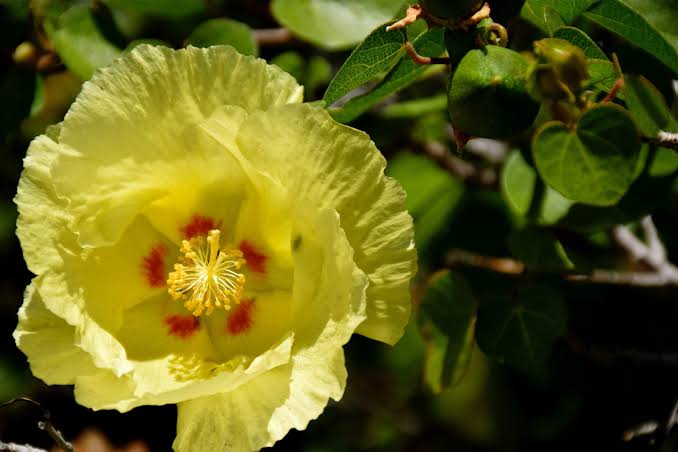
San Marcos Hibiscus
Low, mounding shrub with lavender pink flowers most of the year. Takes heat well and stays small enough for a walkway edge.
You can't fit all of these. Pick 3 or 4 favorites and repeat them through the space so it looks planned and full.
The young tree in this bed should get a water well too.
Water well for the tree
Pull the rock back at least 3 feet from the trunk in every direction and build a water well: a shallow basin with a raised edge so water soaks down into the root zone instead of running off. Fill the well with mulch instead of rock, keeping it about a foot back from the trunk. Rock holds heat and bakes the roots; mulch keeps them cool, holds moisture, and feeds the soil as it breaks down. This makes a real difference in the tree's health.
Pool wall hedge
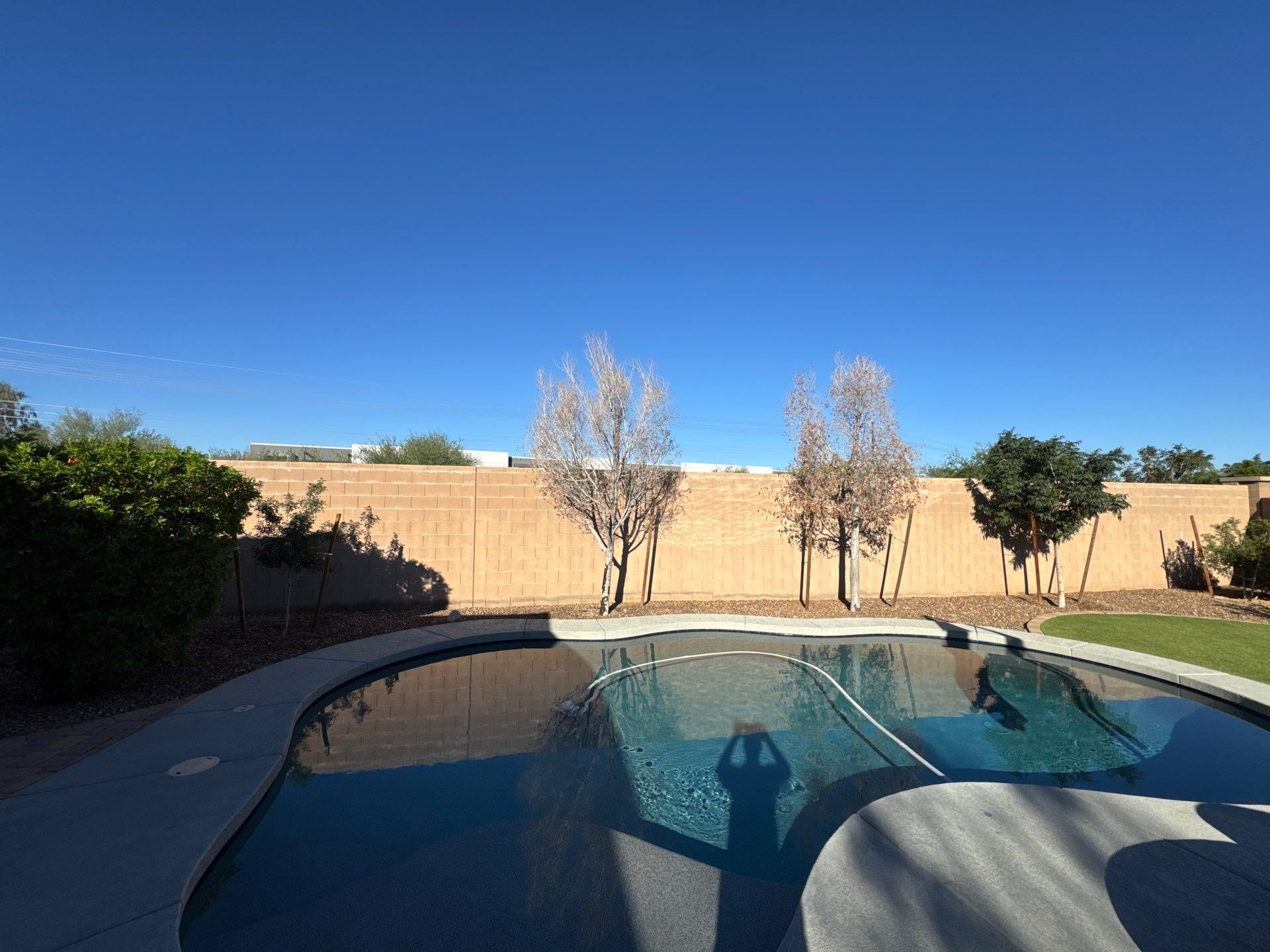
The ficus along this wall are dead, and that's not a bad thing. Ficus roots that close to the pool would have caused problems with the pool shell and plumbing over time. You can cut them low and leave the stumps.
Instead, I recommend a hedge that covers the wall and stops the reflected heat bouncing back toward the pool and patio. Pick one plant and run it the full length of the wall so it reads as one clean hedge. All three of these drop very little, which keeps your pool cleaner. I'd skip yellow bells and orange jubilee right here because their flowers and leaves end up in the water.
Spacing: hopseed 4 to 5 feet apart, Arizona rosewood 5 to 6 feet, twisted myrtle about 4 feet.

Hopseed
Fast growing evergreen hedge with narrow bright green leaves. Grows tall and full enough to cover a block wall, and it drops very little, which matters next to a pool.

Arizona Rosewood
Native evergreen hedge with dark green leaves. Dense, handles full sun and reflected heat, and makes a solid screen. Takes less water than plants that aren't desert adapted.

Twisted Myrtle
Evergreen with small glossy leaves that have a slight twist, and fragrant white flowers. Stays a little more compact and refined looking than hopseed or rosewood.
Back corner
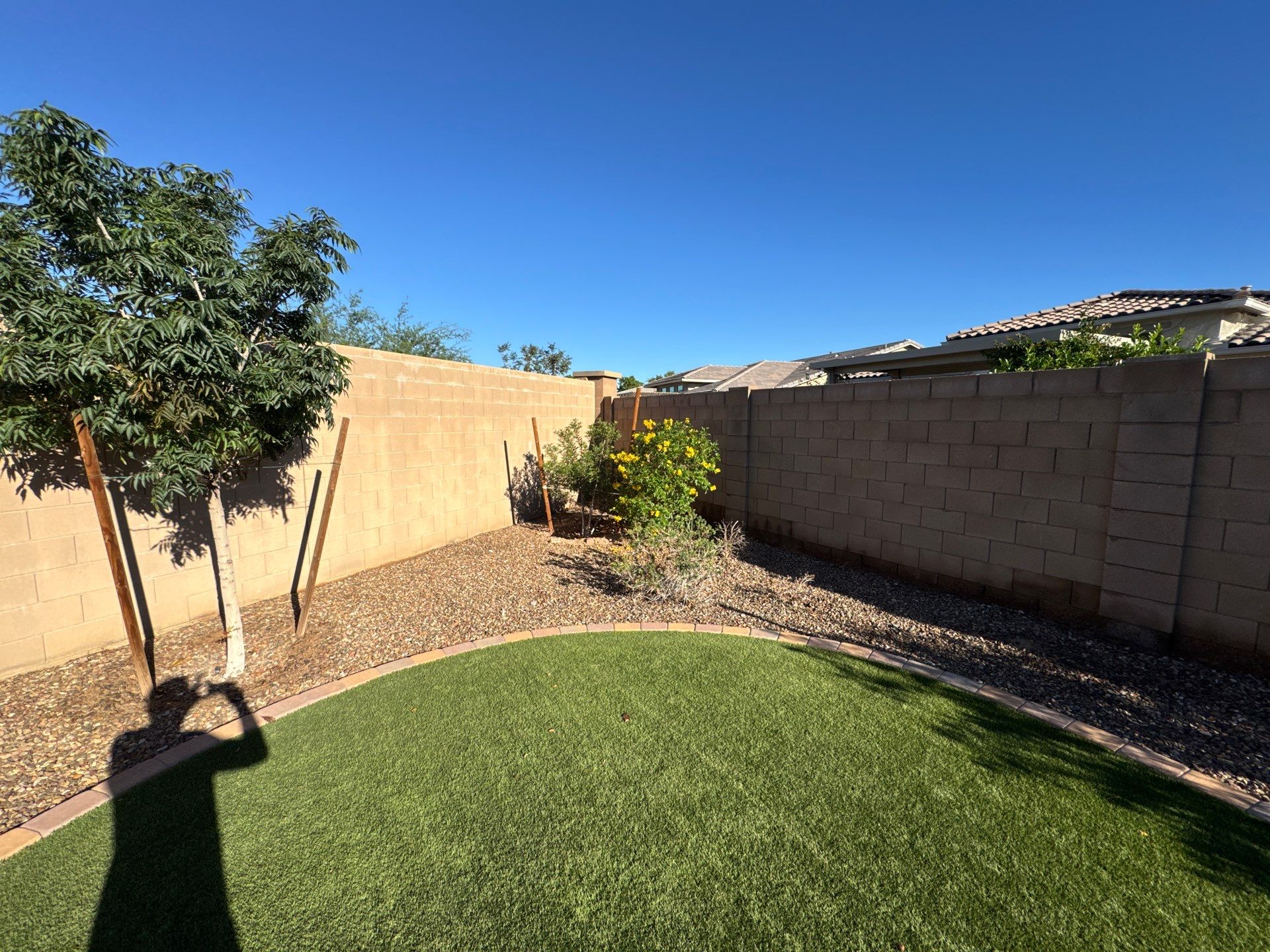
Same story in this corner: the Little John bottlebrush isn't doing great. Two walls meeting in a corner trap and reflect a lot of heat, so this spot needs plants built for it. Any of these will do better here and still look good.
Red Bird of Paradise
Big orange and red flower clusters from late spring through fall. Loves full sun and reflected heat. Cut it back once in late winter and let it grow natural the rest of the year.
Texas Sage
Silvery leaves and purple blooms after summer humidity. One of the toughest shrubs in reflected heat. Never shear it; let it keep its loose natural shape and it will flower much more.
Baja Fairy Duster
Bright red puffball flowers most of the year and a hummingbird magnet. Medium sized, open shape, and it handles heat off rock and pavers very well.
Chuparosa
Native shrub with green stems and red tubular flowers in winter and spring that hummingbirds go crazy for. Loves heat.
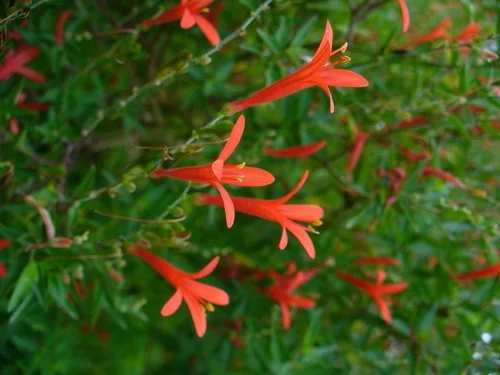
Desert Honeysuckle
Native shrub with orange tubular flowers from summer into fall. Easy, takes heat well, and brings in hummingbirds.
Globe Mallow
Native perennial with apricot orange cup flowers in spring. Fast to fill a gap, takes heat with no problem, and reseeds a little on its own.
Turpentine Bush
Native, compact, bright green year round with a flush of yellow flowers in fall. Low maintenance and handles reflected heat well.
San Marcos Hibiscus
Low, mounding shrub with lavender pink flowers most of the year. Takes heat well and stays small enough for a walkway edge.
You can't fit all of these. Pick 3 or 4 favorites and repeat them through the space so it looks planned and full.
The tree in this corner should get a water well as well.
Water well for the tree
Pull the rock back at least 3 feet from the trunk in every direction and build a water well: a shallow basin with a raised edge so water soaks down into the root zone instead of running off. Fill the well with mulch instead of rock, keeping it about a foot back from the trunk. Rock holds heat and bakes the roots; mulch keeps them cool, holds moisture, and feeds the soil as it breaks down. This makes a real difference in the tree's health.
Back wall yellow bells
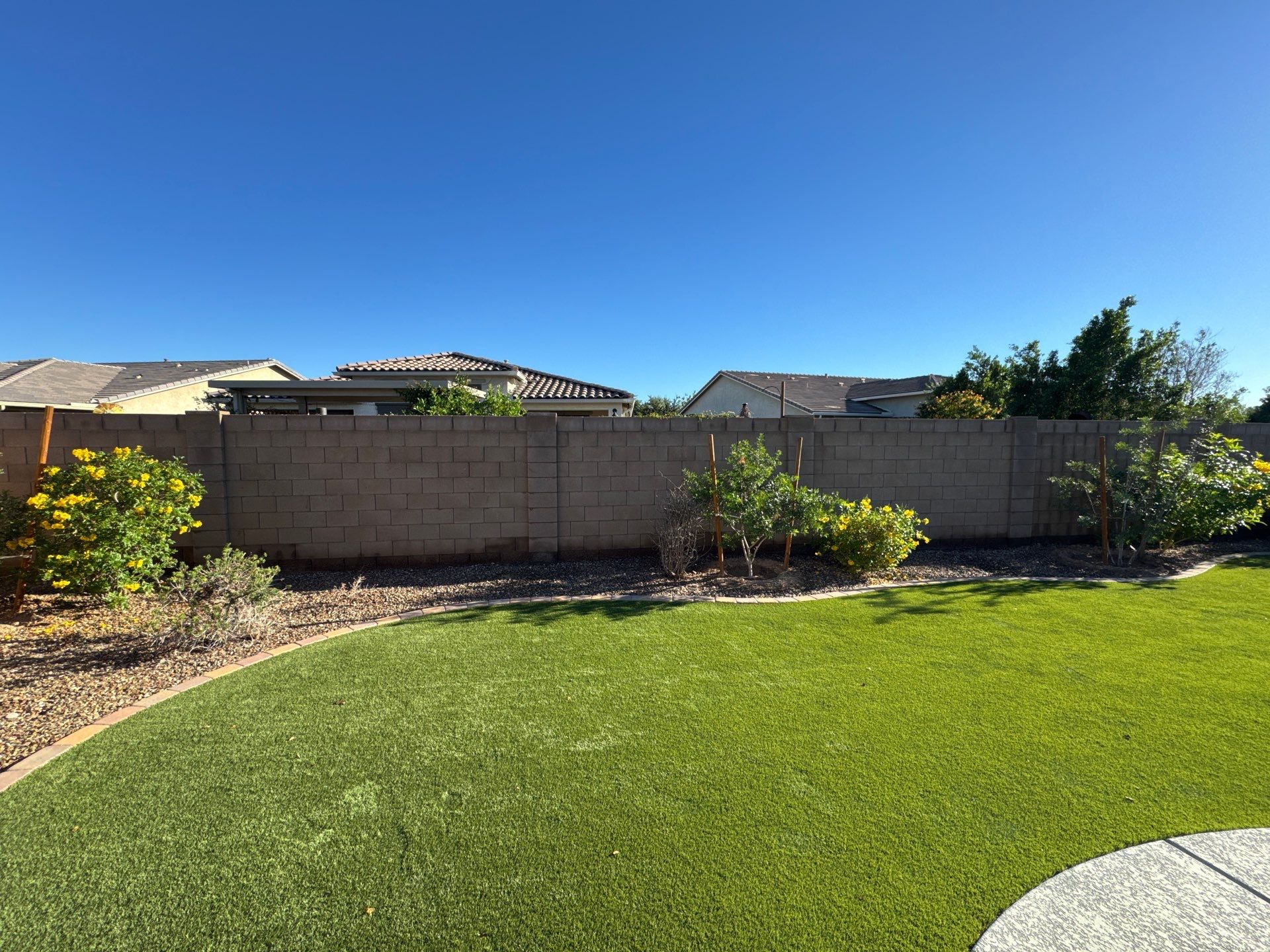
You already have a few trees and some yellow bells along this wall, and you like the yellow bells, so my suggestion is to keep going with them and fill the whole wall in. They're easy, they take the heat, they're green year round, and they flower from spring into fall.
Fill the gaps between the trees, spacing them 5 to 6 feet apart and about 3 feet off the wall. Let them grow into their natural shape instead of shearing them flat. Sheared yellow bells lose most of their flowers.
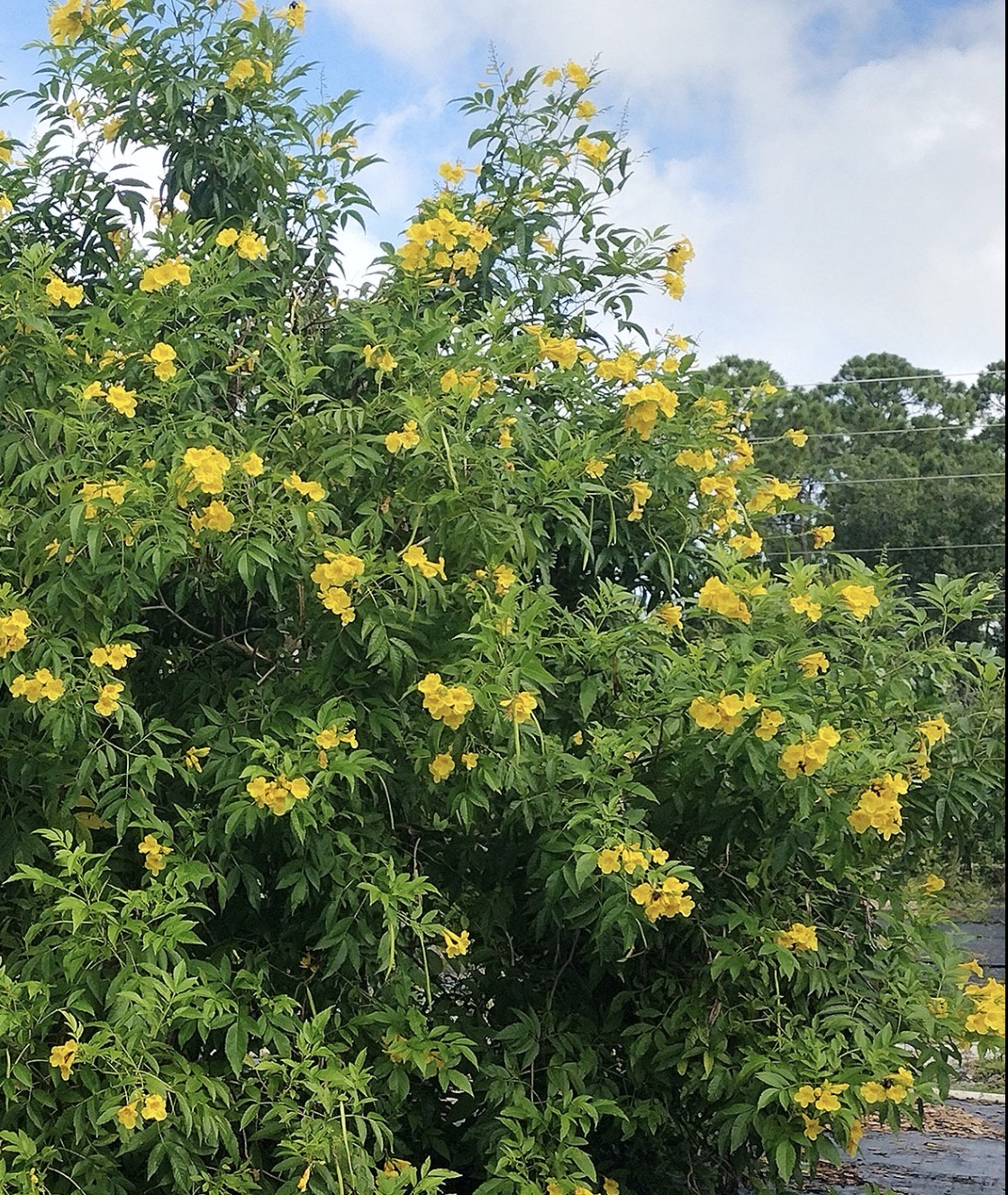
Yellow Bells
Fast growing, green year round, and covered in yellow trumpet flowers from spring to fall. Space them 5 to 6 feet apart and about 3 feet off the wall.
The trees along this wall should each get a water well too.
Water well for the tree
Pull the rock back at least 3 feet from the trunk in every direction and build a water well: a shallow basin with a raised edge so water soaks down into the root zone instead of running off. Fill the well with mulch instead of rock, keeping it about a foot back from the trunk. Rock holds heat and bakes the roots; mulch keeps them cool, holds moisture, and feeds the soil as it breaks down. This makes a real difference in the tree's health.
Stepping stone pathway
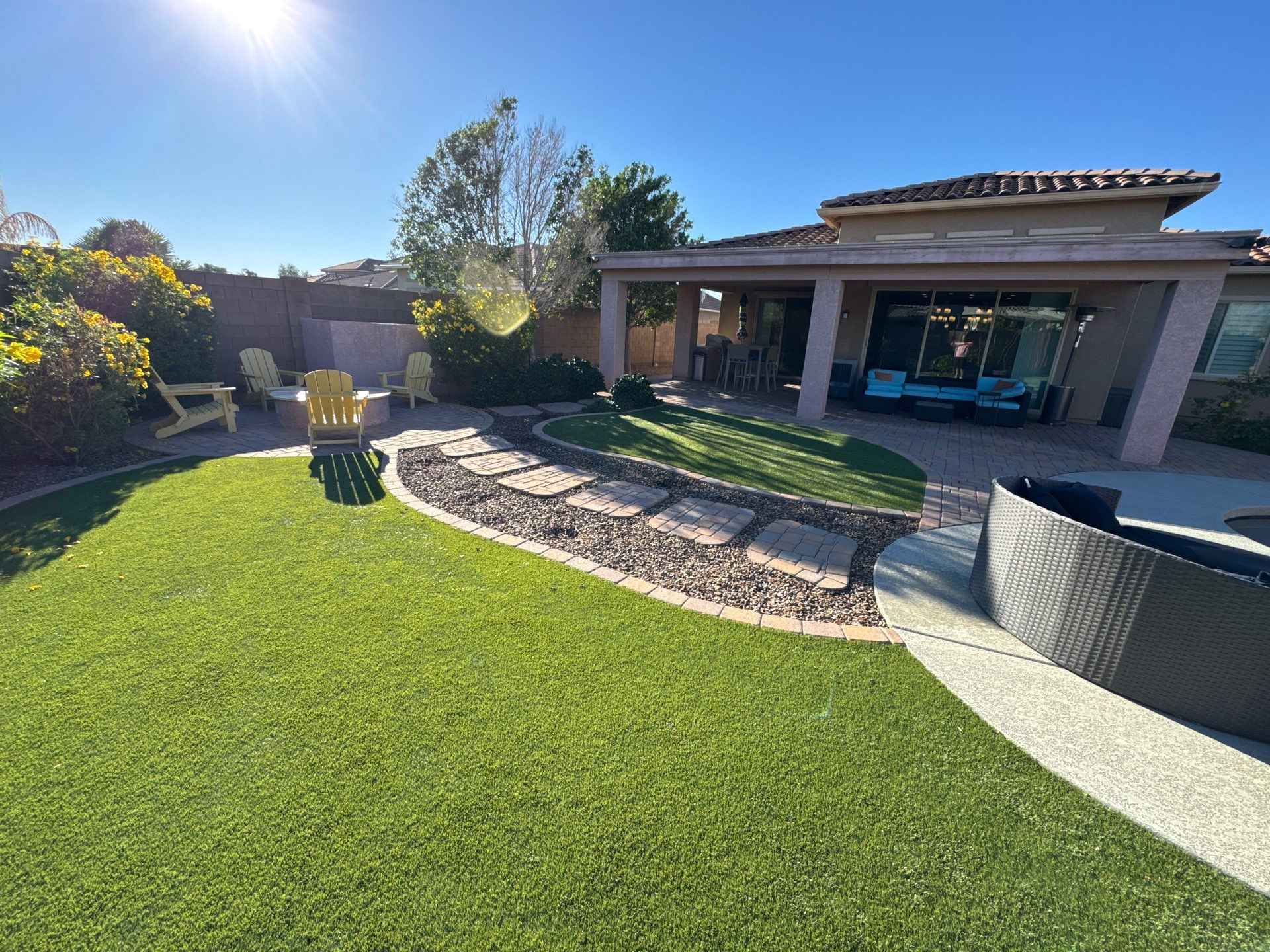
This pathway gets blasted. It sits in full sun next to the artificial turf, the pavers, and the rock, and all three hold and throw heat. That's why things haven't made it here before. The plants for these spots need to handle the hottest conditions in the yard.
There are four planting spots on each side of the walkway. San Marcos hibiscus is my first pick: it stays low, flowers most of the year, and takes the heat. The rest are low growing ground covers that can handle it too. Keep each plant about a foot back from the turf edge.
Timing matters here. Planting this fall gives the roots the whole cool season to get established before summer. Make sure each spot actually has a working emitter before planting. If anything looks off with the drip, Garrett can check it.
San Marcos Hibiscus
Low, mounding shrub with lavender pink flowers most of the year. Takes heat well and stays small enough for a walkway edge.
Yellow Emu Bush (Outback Sunrise)
Low spreading ground cover with gray green leaves and yellow flowers in late winter and spring. One of my favorites for the hottest spots in the yard.
Damianita
Low mound of fine, bright green leaves covered in yellow daisies in spring and fall. Stays under 2 feet, perfect along edges and in front of bigger shrubs.
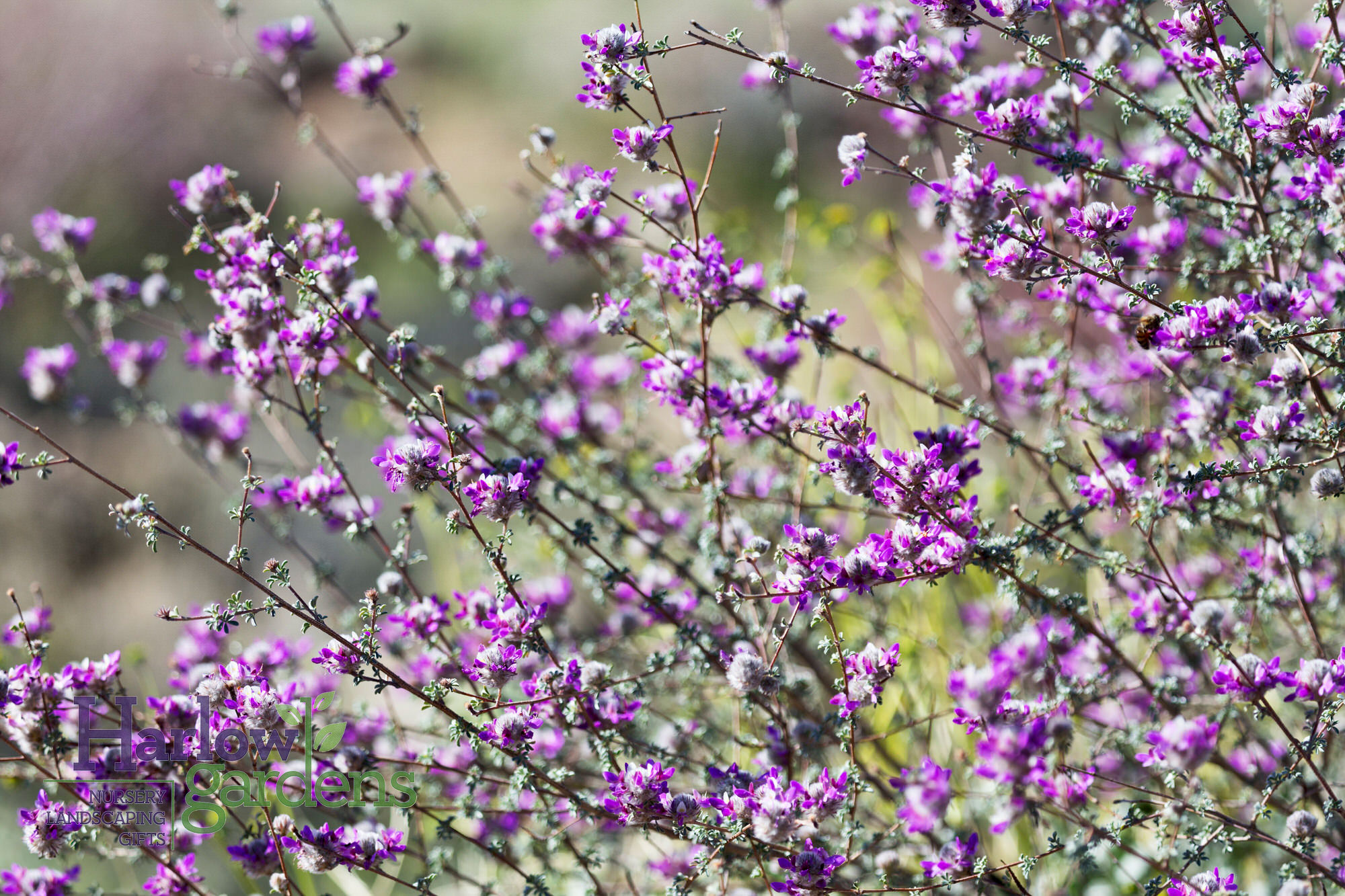
Trailing Indigo Bush
Low silvery ground cover with purple flowers in spring. Spreads wide and stays tidy. A nice soft contrast against green hedges.
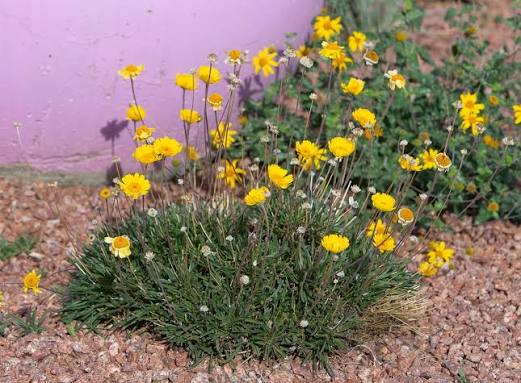
Angelita Daisy
Small mound of fine leaves with little yellow daisies almost all year. Very easy and stays low.
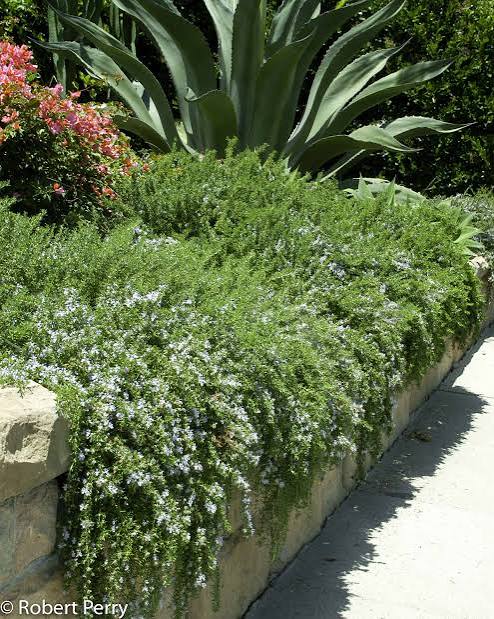
Trailing Rosemary
Low, spreading rosemary that drapes over edges. Fragrant, evergreen, small blue flowers, and great in heat.
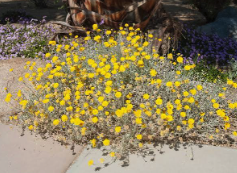
Desert Marigold
Native with soft gray leaves and bright yellow flowers spring through fall. Low and easy, and it reseeds a little.
You can't fit all of these. Pick 3 or 4 favorites and repeat them through the space so it looks planned and full.
Patio ficus
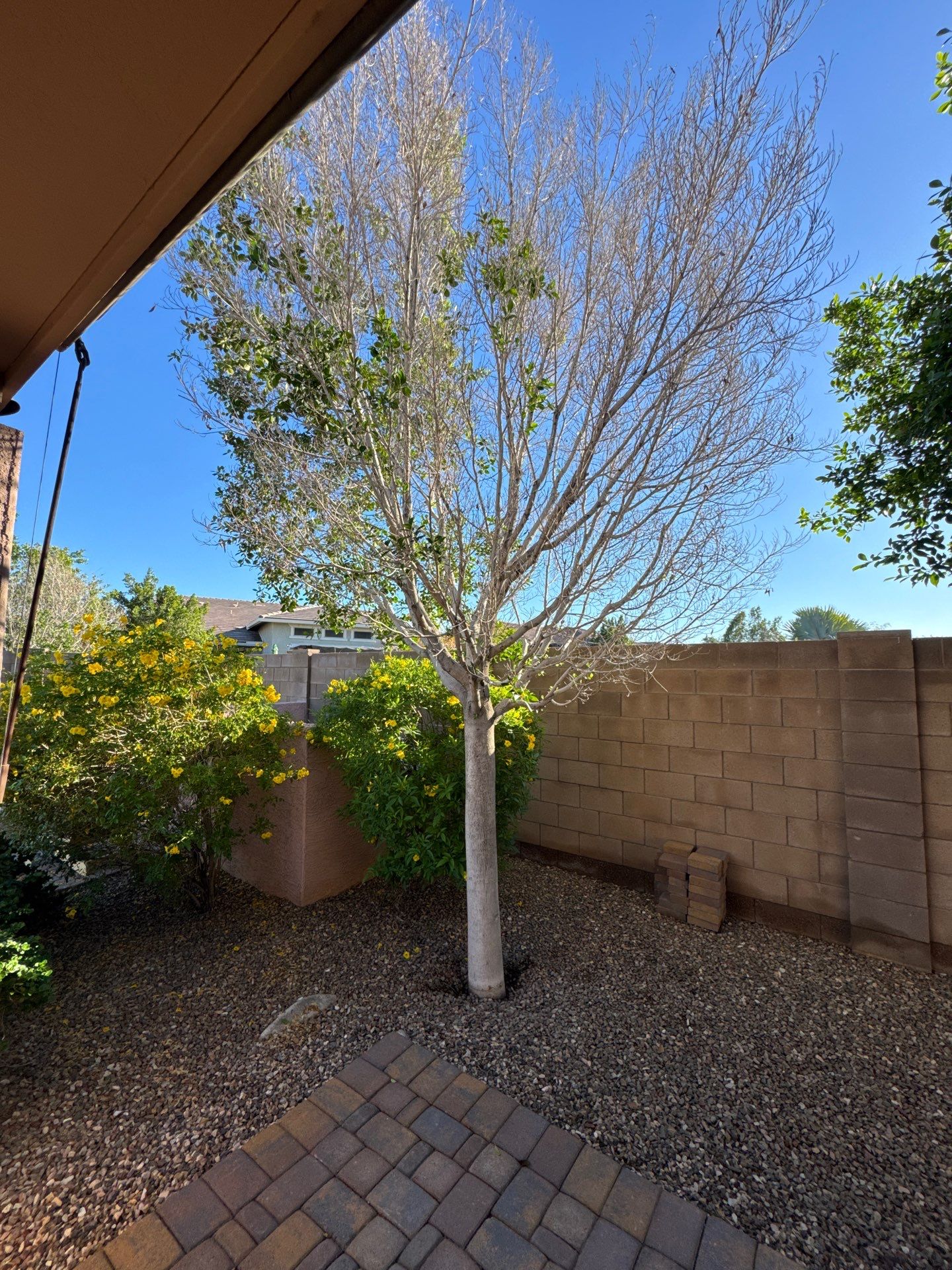
Unfortunately, this ficus is a goner. Our Tree Recovery Program is an option (details in the tree work section below), but I'd rather see you spend that money on a new tree. Cut it down, leave the stump, and plant a 15 gallon beside it. In a year or two the new tree will be in better shape than this one would ever get back to.
Here are some options that do well in this kind of spot and take the heat off the wall and patio.
Red Push Pistache
Fast growing shade tree with red new growth in spring and great fall color. It drops its leaves in winter, so you get summer shade and winter sun on the house. Plant this fall as a 15 gallon.
Chinese Elm
Semi-evergreen (holds most of its leaves through a mild winter), fast growing, with a graceful rounded canopy and attractive peeling bark. A strong choice when you want shade quickly.

Texas Olive
Smaller tree with large white flowers through the warm months. Mostly evergreen here, takes heat well, and stays a manageable size for a patio corner.
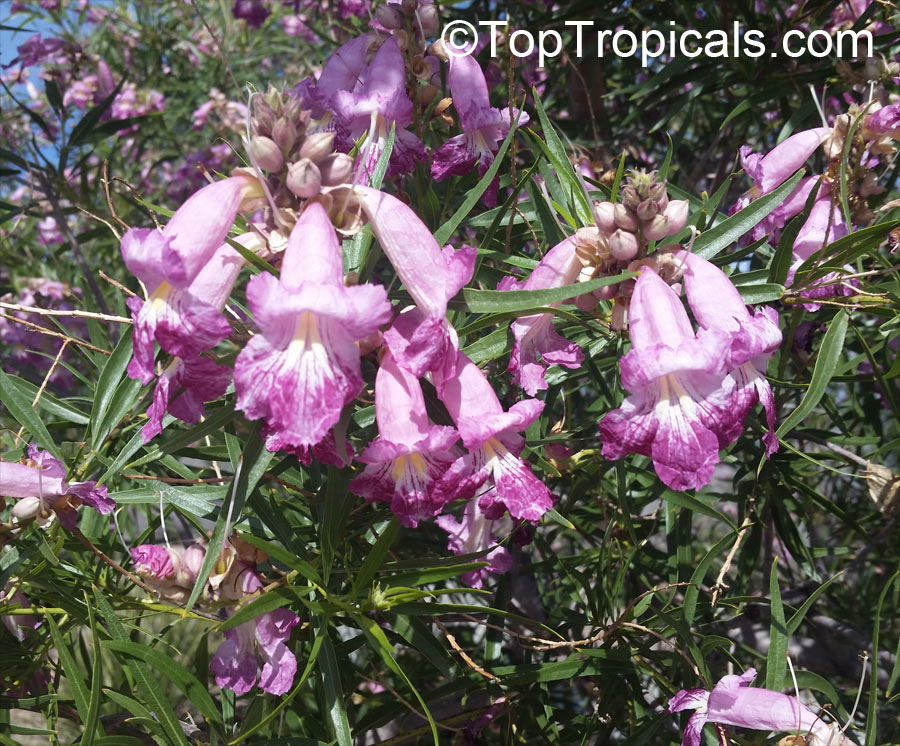
Desert Willow
Native, smaller tree with orchid-like pink and purple flowers through summer. Light, airy shade and a natural shape. Drops leaves in winter.
Texas Ebony
Evergreen with small dark leaves and an upright, dense shape. Slow to moderate growth, very tough in reflected heat, and it has thorns, so keep it off walkways.
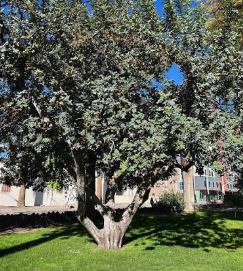
Carob
Evergreen, dense, dark green canopy that gives heavy year round shade. It gets wide over time (30 feet or more), so it only fits where it has room to spread. Takes less water than trees that aren't desert adapted.
Water well for the tree
Pull the rock back at least 3 feet from the trunk in every direction and build a water well: a shallow basin with a raised edge so water soaks down into the root zone instead of running off. Fill the well with mulch instead of rock, keeping it about a foot back from the trunk. Rock holds heat and bakes the roots; mulch keeps them cool, holds moisture, and feeds the soil as it breaks down. This makes a real difference in the tree's health.
Side yard
Side yard ficus
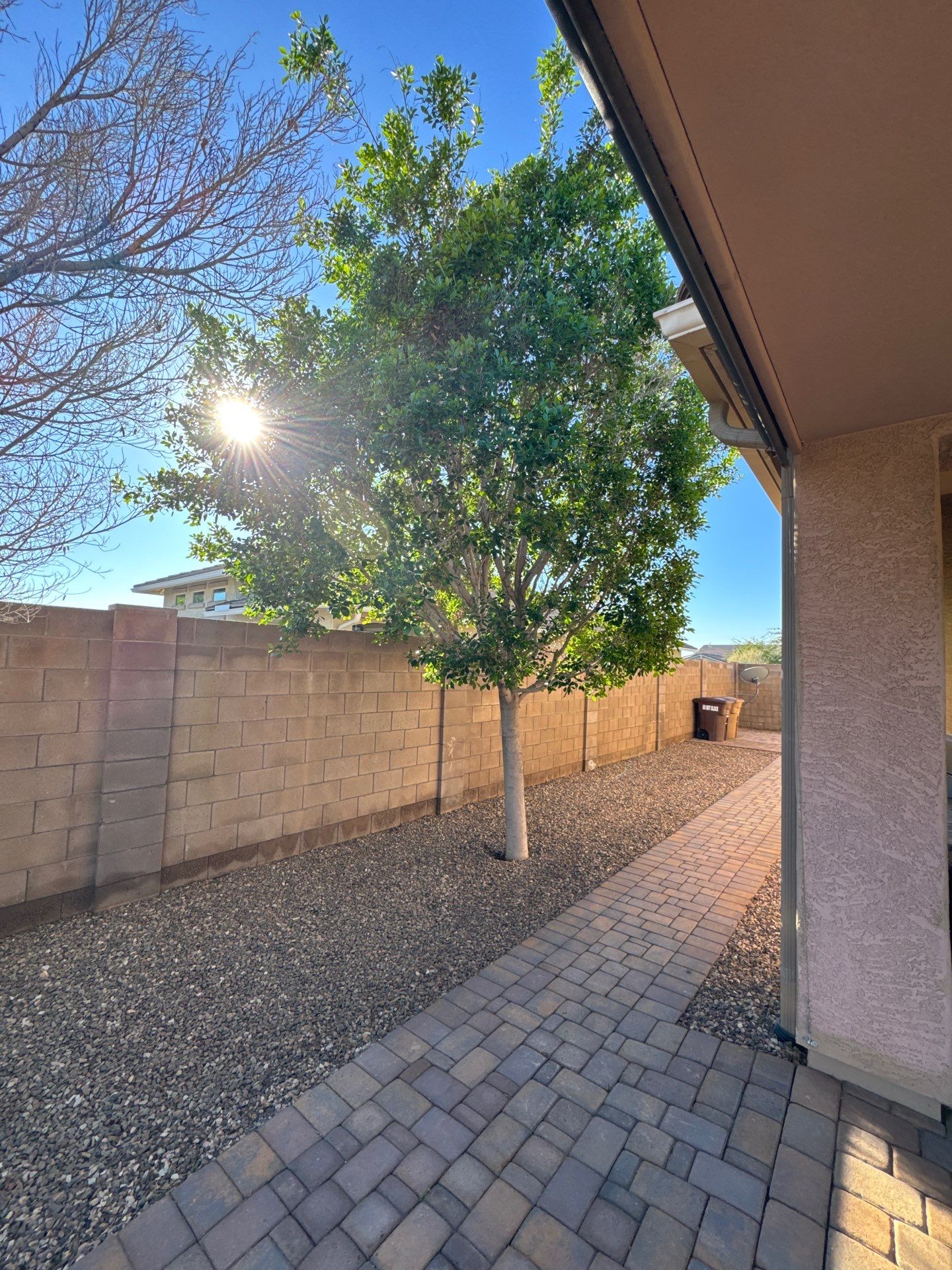
This ficus I think can be saved. The root flare isn't buried as deep as some of the others, but it's still covered, and it would benefit from a root flare excavation.
The root flare is where the trunk widens out into the main roots. It's supposed to sit at or just above the soil line. When it's buried under soil and rock, the bark stays wet, the roots can't breathe, and roots start circling and girdling the trunk. This video shows why an exposed root flare matters, with real examples.
Can't see the video? Watch it on YouTube.
If you want to do it yourself, a strong stream of water from a hose will blast the soil away from the base of the trunk without damaging the bark. Keep going until you see the roots flare out from the trunk.
Either way, this tree needs a water well.
Water well for the tree
Pull the rock back at least 3 feet from the trunk in every direction and build a water well: a shallow basin with a raised edge so water soaks down into the root zone instead of running off. Fill the well with mulch instead of rock, keeping it about a foot back from the trunk. Rock holds heat and bakes the roots; mulch keeps them cool, holds moisture, and feeds the soil as it breaks down. This makes a real difference in the tree's health.
Tree Recovery Program
For this tree, I'd also look at our full year Tree Recovery Program. It's four quarterly visits: a deep root liquid injection (25 gallons) at the first and last visits, and compost plus composted chicken manure at the two middle visits. It rebuilds the soil life around the roots so the tree can actually recover instead of just hanging on. Pricing is in the tree work section below.
Front yard
Front yard red push pistache
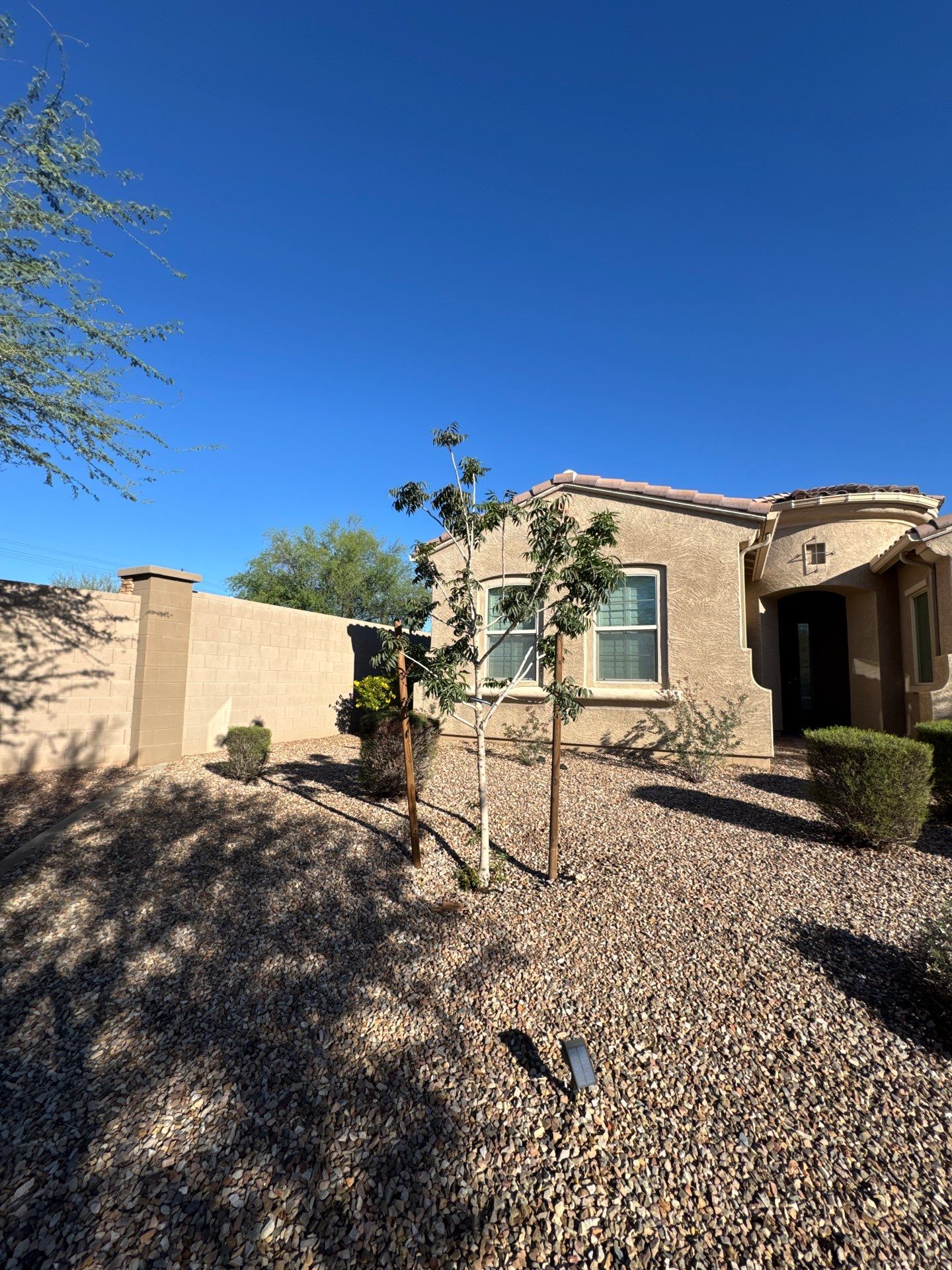
This red push pistache is struggling a little. It isn't as full as it should be, it's planted a bit too deep, and it's covered with rock. I recommend a root flare excavation (see the video in the side yard ficus section above), and a water well.
Water well for the tree
Pull the rock back at least 3 feet from the trunk in every direction and build a water well: a shallow basin with a raised edge so water soaks down into the root zone instead of running off. Fill the well with mulch instead of rock, keeping it about a foot back from the trunk. Rock holds heat and bakes the roots; mulch keeps them cool, holds moisture, and feeds the soil as it breaks down. This makes a real difference in the tree's health.
Because it's a newer tree, I don't think it needs the full Tree Recovery Program. Exposing the flare, switching the rock for a mulch well, and keeping it fed should be enough to turn it around.
Front yard shrubs and empty spots
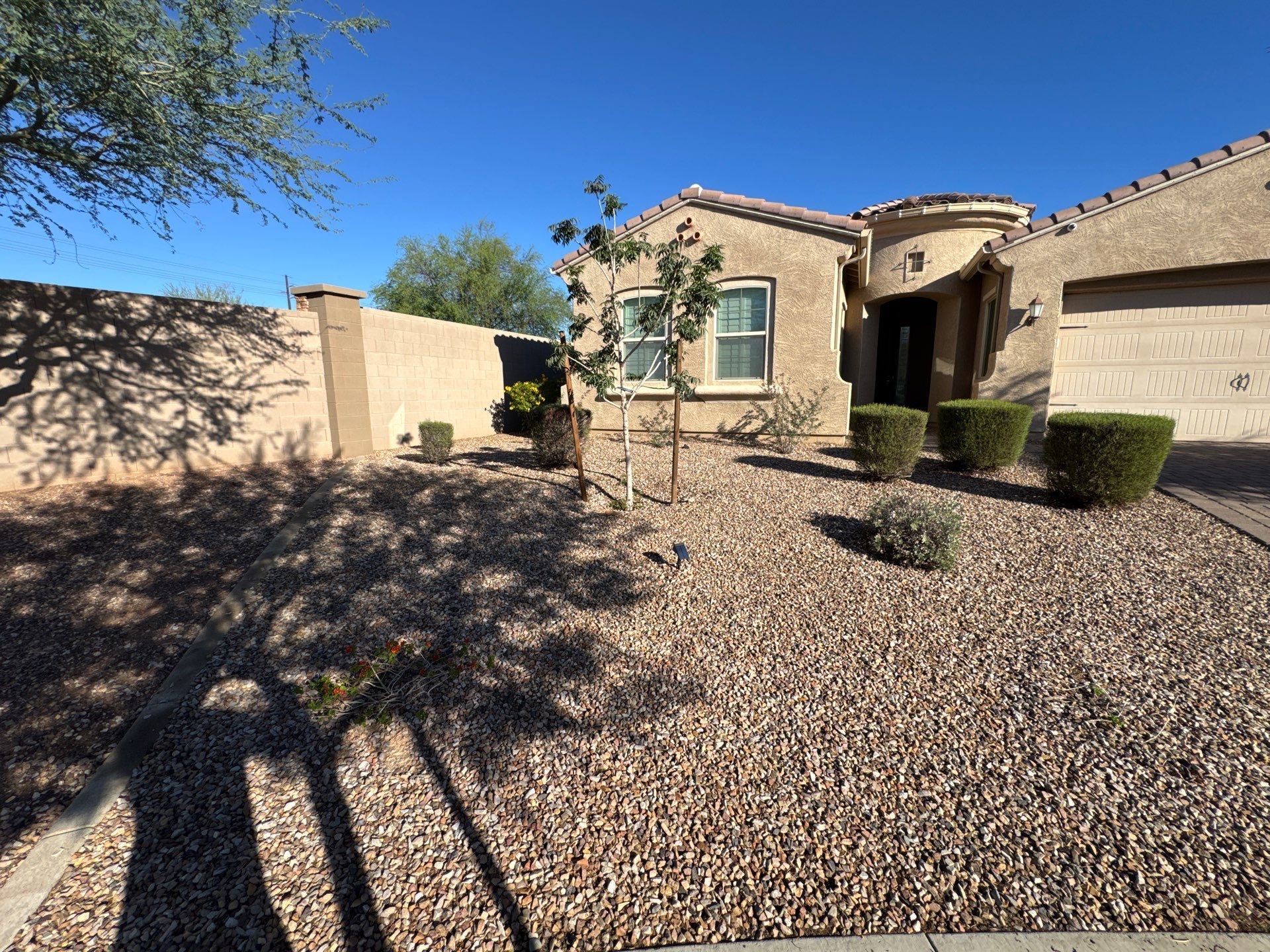
All around the front yard there are two or three empty spots, and the lantana and some of the other shrubs aren't growing well. The biggest issue I see is pruning. Ask your landscaper to stop pruning so often. Every time a shrub gets sheared, it loses the leaves it uses to make food and the buds it would flower from, and it has to spend its energy regrowing instead of rooting and filling in. Do that every few weeks and you get a slow decline, which is exactly what's happening here.
What to tell your landscaper: thin, don't shear. Take out a few longer branches back to where they meet another branch, a couple of times a year at most, and let the plants keep their natural shape. Lantana is the exception: cut it back hard once in late winter after the last frost, then leave it alone for the rest of the year.
For the empty spots, here are some options that fit the front yard and handle the sun.
Red Bird of Paradise
Big orange and red flower clusters from late spring through fall. Loves full sun and reflected heat. Cut it back once in late winter and let it grow natural the rest of the year.
Texas Sage
Silvery leaves and purple blooms after summer humidity. One of the toughest shrubs in reflected heat. Never shear it; let it keep its loose natural shape and it will flower much more.
Baja Fairy Duster
Bright red puffball flowers most of the year and a hummingbird magnet. Medium sized, open shape, and it handles heat off rock and pavers very well.
Globe Mallow
Native perennial with apricot orange cup flowers in spring. Fast to fill a gap, takes heat with no problem, and reseeds a little on its own.
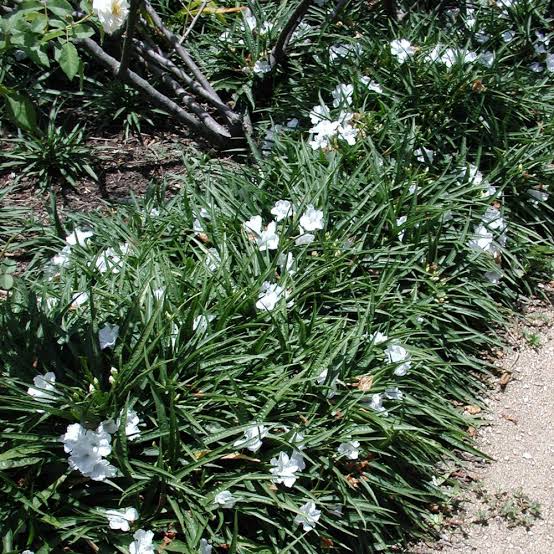
Desert Ruellia
Upright shrub with white or purple flowers. Fills in fast and handles the heat.
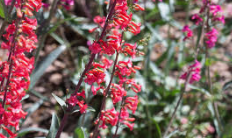
Penstemon
Tall spikes of red, pink, or purple flowers in spring. Hummingbirds love them, and they add height between rounded shrubs.
Planting everything above
Dig the hole as deep as the root ball and two to three times as wide. Backfill with your native soil and a tiny bit of compost mixed in. Then lay compost on top of the soil and mulch over the compost. Don't work it in. Keep mulch about a foot back from the trunk of every tree and shrub. In rock areas, pull the rock back to make room for the compost and mulch. Every tree, new or existing, gets a water well with mulch instead of rock.
Tree work pricing
Two trees on the property need root flare work: the side yard ficus and the front red push pistache. You have two ways to go.
What a root flare excavation includes: exposing the buried root flare, pulling the rock back from the trunk, and building a water well filled with mulch. It's a one-time job per tree. Normally it's $200 per tree, and the second tree in the same visit gets 5% off.
What the Tree Recovery Program includes: a full year of care for one tree, four quarterly visits. Deep root liquid injections at the first and last visits, compost and composted chicken manure at the two middle visits. It's $550 per tree for the year. Any tree enrolled in the program gets its root flare excavation for $150 instead of $200.
Option 1: Root flare excavations only
Option 2: Ficus in the Tree Recovery Program, plus the pistache root flare
This is the one I recommend for the ficus. The pistache is newer and only needs the root flare work.
The root flare excavations are one-time costs. If you want to keep the ficus in the program after the first year, it's $550 per year from then on. The patio ficus could also go into the program for $550, but as I said above, I'd put that money toward a new tree.
Fertilizing
Everything in this write-up comes back to the soil. The desert adapted plants in the yard need very little feeding: mulch and a light layer of compost once a year is plenty. The rest is a different story. The ficus, the red push pistache, the yellow bells, the lantana, the hibiscus, and any new tree you plant all need regular feeding to stay healthy and handle the heat. Feeding is really about feeding the soil life. Fungi, bacteria, and worms break down organic matter and hand nutrients to the roots, all without synthetic fertilizers.
Doing it yourself
- Compost: Spread a generous layer around the drip line of the trees (out where the canopy ends, not against the trunk) and closer in around the shrubs. Arizona Worm Farm is my go-to.
- Worm castings: Add a layer every quarter around the trees and shrubs.
- Organic fertilizer, monthly: These are the three Catalyst products we rotate through every month. You can order them online.

Catalyst Jenner 8
One of the three liquid products in our monthly rotation.

Catalyst Organic Nitro Jen
Organic nitrogen source in our monthly rotation, great for greening up leaves.
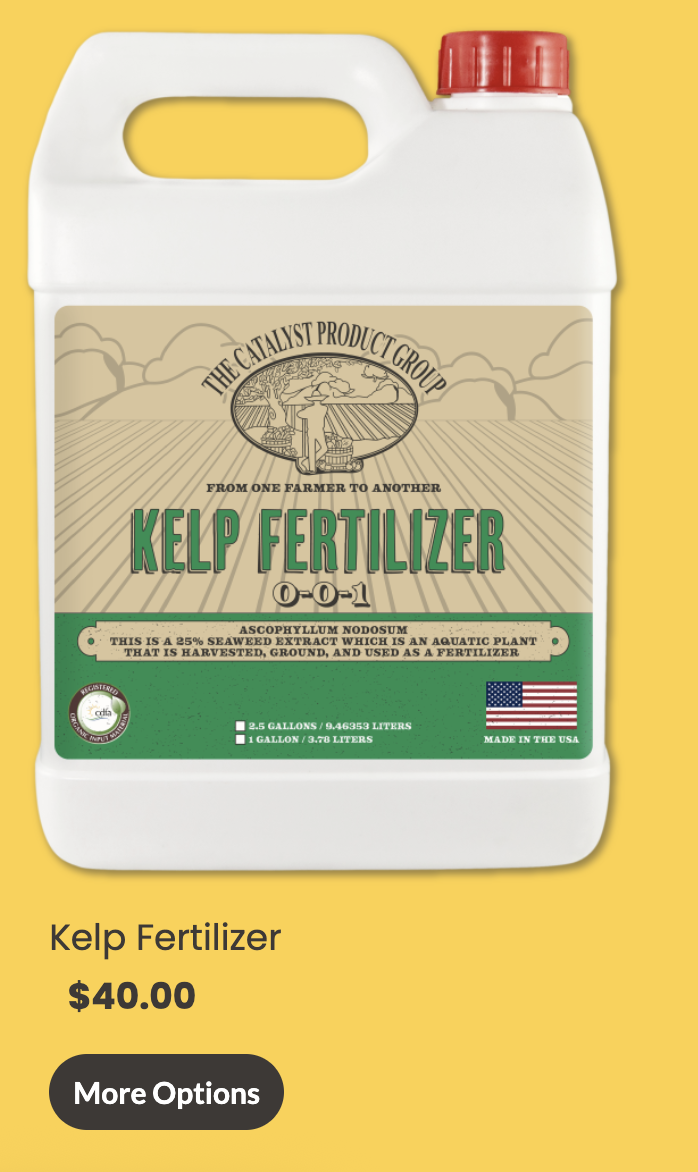
Catalyst Kelp Fertilizer
Kelp-based feed with trace minerals that helps plants handle heat stress.
Find them at Catalyst Product Group (click Products, then Home and Garden).
Or we can handle it
If you'd rather not think about it, we do this as a monthly service: a liquid organic feeding every month and compost three times a year, with a recap video after every visit.
Quick reference
- Compost, mulch, and worm castings: Arizona Worm Farm
- Trees and shrubs: A&P Nursery or Whitfill Nursery
- Organic fertilizer: Catalyst Product Group
- Irrigation and drip checks: Garrett, 480-678-9121
- Why root flares matter: Root flare video
Next steps
Thanks again for having me out, Timothy. As a consult client you're already in the Garden Nerd Club, so you have direct access to me there anytime you have a question while you work through this.
If you want to plant it yourself, everything you need is in here. If you'd rather have us do the planting, I can put together a planting proposal whenever you're ready. For anything with irrigation, call Garrett at 480-678-9121.