
Kate Henrikson
Thanks for having me out, Kate. Here's everything we covered as we walked the yard, in the order we walked it, starting in the backyard and finishing out front. The big picture: cover the walls, build a canopy of mesquite, tuck fruit trees and bananas into the right spots, and fill in with natives that bring color and pollinators without a lot of upkeep.
Backyard Fruit Tree Zone by the Oleander
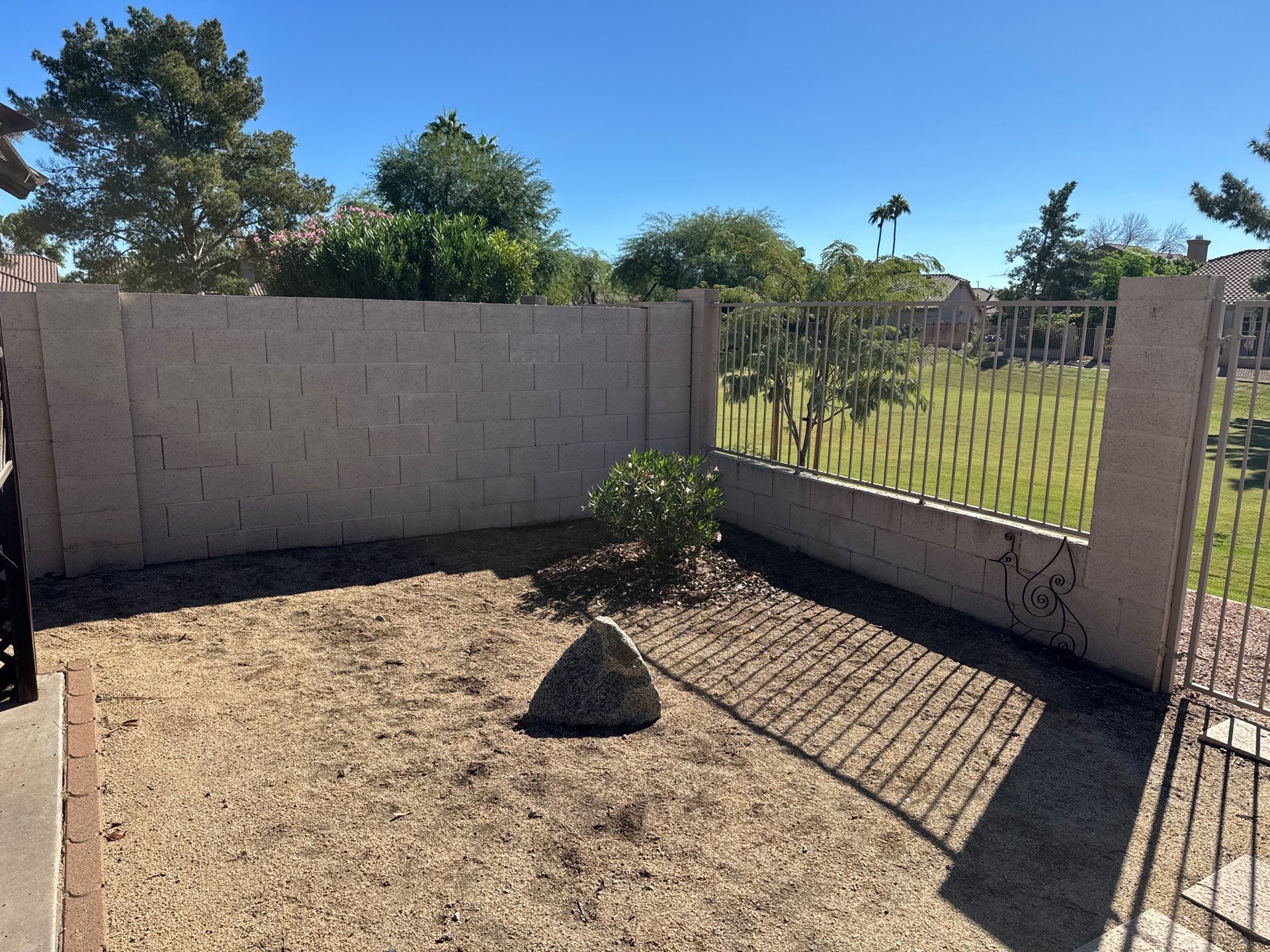
This is your fruit tree zone. There's room for two fruit trees here, one on either side of the oleander. You liked the idea of citrus, peaches, and figs, and all three will do well here. Here's everything that would work.

Citrus
Oranges, tangerines, and mandarins all do great here. Evergreen, fragrant spring blossoms, and fruit in winter when nothing else is producing. Plant 8 feet apart.

Lemon Tree
Meyer lemon is the easiest and sweetest for home use. Produces heavily and stays a manageable size.
Lime
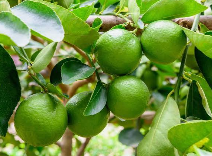
Mexican or Bearss lime. A little more frost tender than other citrus, so give it the warmest spot or cover it on frost nights.
Grapefruit
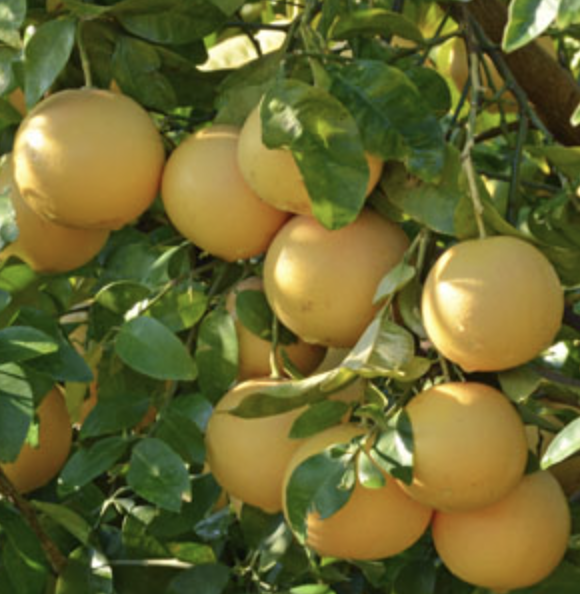
Rio Red or Ruby Red. Big tree, big harvest, and the fruit holds on the tree for months.
Kumquat
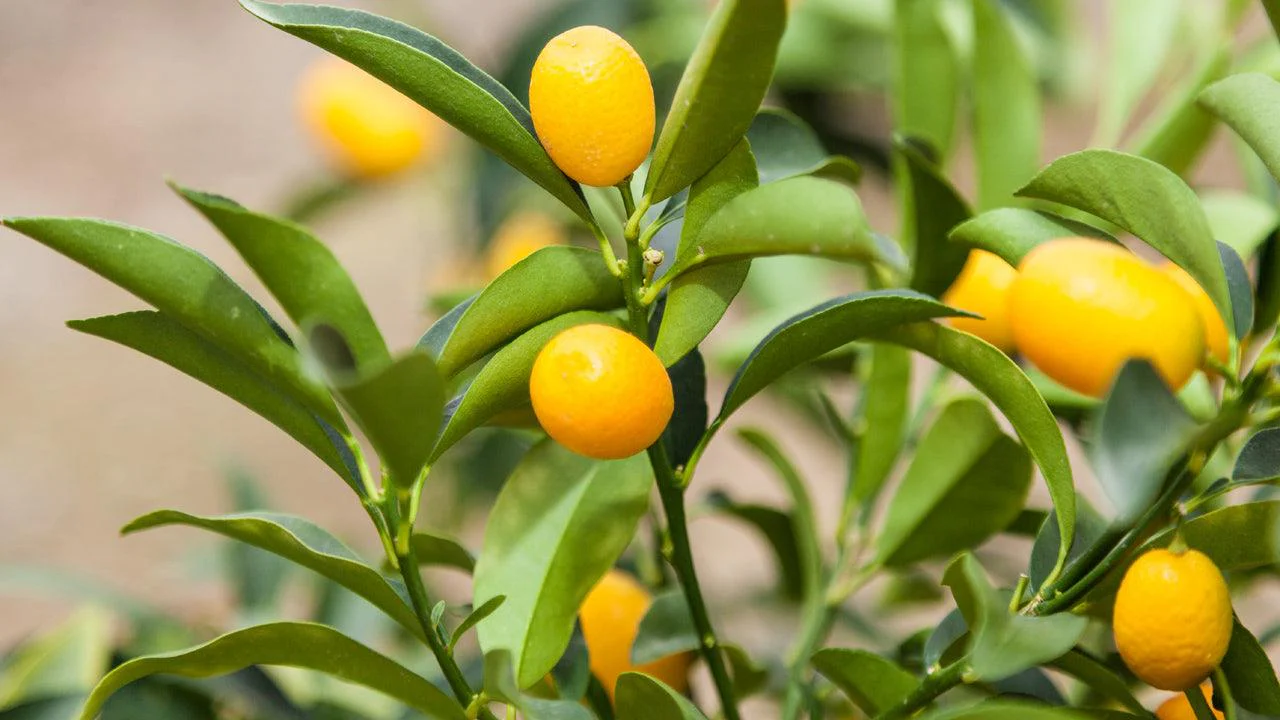
Small, tidy citrus you eat skin and all. The most cold hardy of the citrus and great if space is tight.

Peach (Florida Prince)
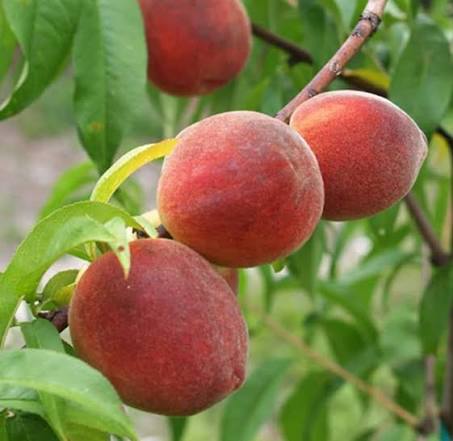
Low chill peach that actually fruits reliably in the Valley. Ripens in May before the real heat. Deciduous, so it lets winter sun through.
Desert Gold Peach
Another low chill peach that does well here, clingstone with sweet yellow fruit in late spring.

Fig
One of the easiest fruit trees for the desert. Black Mission and Brown Turkey are reliable here. Two crops a year, handles the heat, and can be kept smaller with winter pruning.
Where to buy. For citrus, go to Greenfield Citrus Nursery in Mesa. They grow their own trees for our climate and the quality is the best in the Valley. For peaches and figs, A&P Nursery carries good low chill varieties. I recommend 15 gallon trees. Smaller trees establish faster and end up better long term than big boxed trees.
When to plant. Peaches and figs can go in anytime from now through February while they're dormant. Citrus can go in now too, but have frost cloth ready for the first winter, or wait until late February or March once frost danger is past.
How to plant. Dig the hole as deep as the root ball and two to three times as wide. Set the tree so the top of the root ball sits level with the ground or slightly above, never deeper. Backfill with your native soil and just a tiny bit of compost mixed in. Then lay compost on top of the soil around the tree and mulch over the compost. Don't work it in. Keep the mulch back about a foot from the trunk. Space the trees about 8 feet from the oleander and each other so they have room to fill out.
How to water. Deep and infrequent is exactly the right goal, and that's where you'll end up. The first year is different though, because the roots are still just the size of the pot. Here's how to get there:
- First 8 weeks: water every 2 to 3 days, soaking the root ball and the soil just around it.
- Rest of the first year: stretch it out to every 5 to 7 days in the warm months and every 10 to 14 days in winter.
- Year two and on: deep and infrequent. Soak the soil down to about 3 feet every 7 to 10 days in summer and every 2 to 3 weeks in winter. Push a long screwdriver or rebar into the soil after watering. It should slide in easily to about 2 to 3 feet.
- As the tree grows, move the emitters out to the edge of the canopy (the drip line). That's where the feeder roots are, not at the trunk.
- Don't skip a watering after rain. Our rain rarely soaks in deep enough to count.
Care. Let citrus keep its low branches (the skirt). They shade the trunk and that's where most of the fruit is. If any trunk is exposed to the afternoon sun, paint it with white latex paint mixed 50/50 with water to prevent sunburn. Peaches get a light thinning cut each winter to keep the center open, and thin the baby fruit to about 6 inches apart in spring so the rest size up. Figs need very little pruning beyond keeping them the size you want. Feed all of them monthly with compost and organic fertilizer (see Soil and Feeding below).
Backyard Walls: Shrubs and Vines
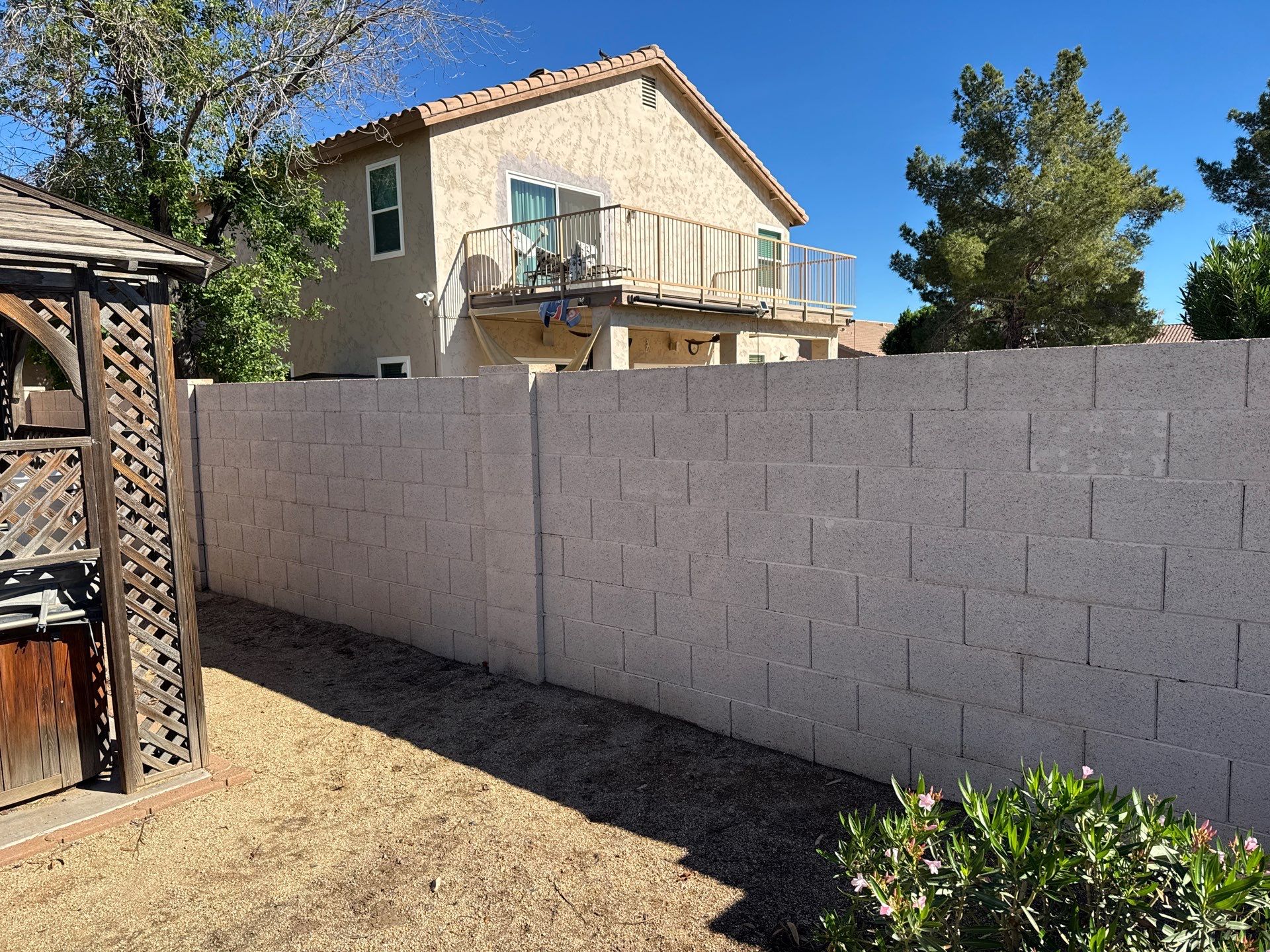
This wall, and really all the walls in your backyard, should be covered with either a shrub hedge or vines. Covered walls stop soaking up and radiating heat, which cools the whole yard down, and they give the birds and pollinators somewhere to live. Here are the shrub options. You can stick with one or mix a few.
Shrubs for wall coverage

Arizona Rosewood
Native evergreen that grows 10 to 15 feet tall and about as wide. My go-to for covering a block wall. Dense, takes full sun and reflected heat, white spring flowers for the pollinators, and it never needs shearing.

Hopseed
Dense, upright evergreen, 10 to 12 feet, that fills in fast and handles full sun and reflected heat. One of my favorites for covering a block wall. Narrow enough that it doesn't eat up the yard.

Orange Jubilee
Fast growing, 8 to 12 feet, with big clusters of orange trumpet flowers from spring through fall. Hummingbirds are on it all day. Can freeze back in a hard winter and comes right back in spring.
Yellow Bells
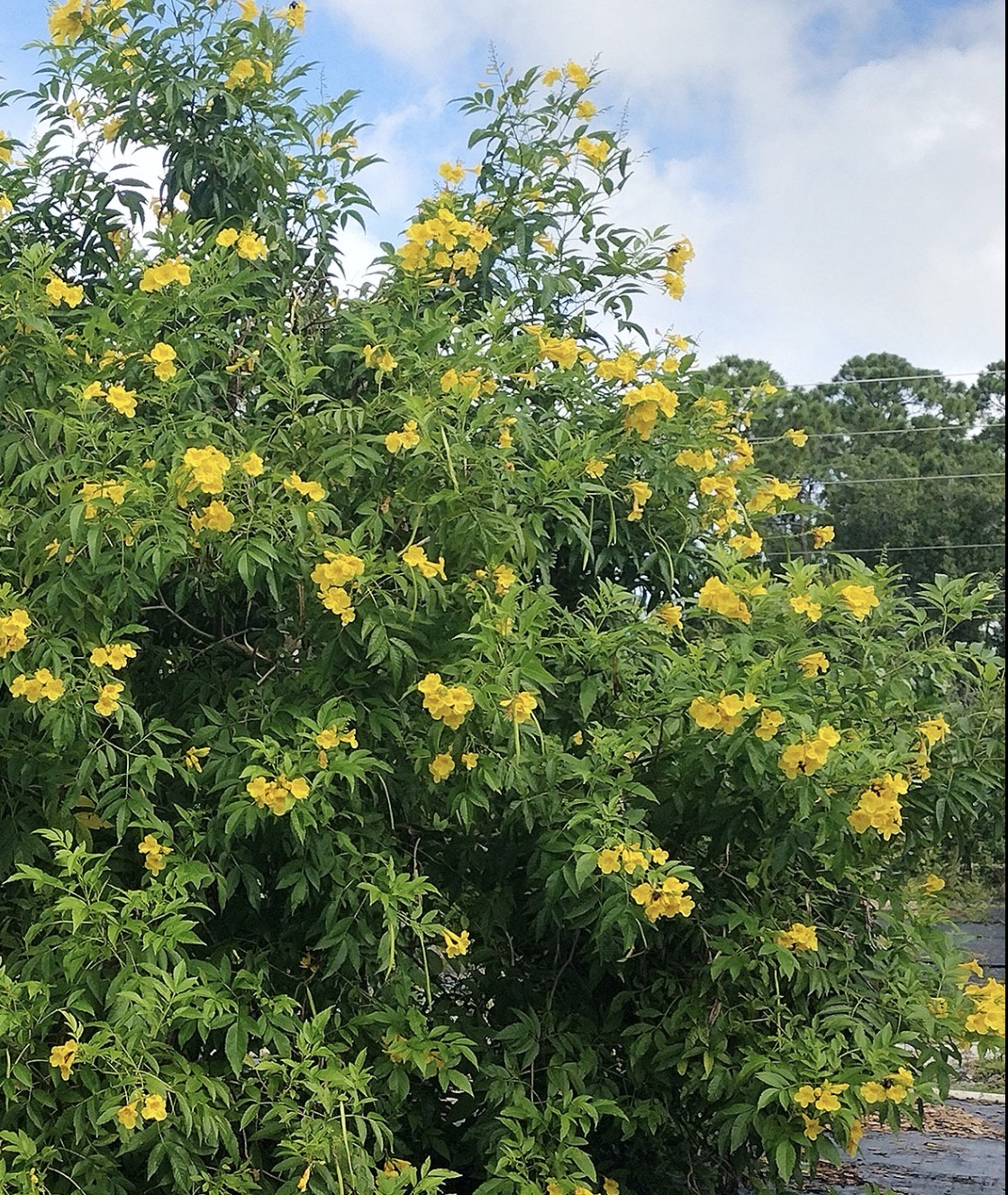
Tecoma stans. The yellow variety is native to the Sonoran Desert. Bright yellow trumpet flowers spring through fall, 8 to 12 feet, and a hummingbird and bee magnet.

Twisted Myrtle
Evergreen with small, twisted, fragrant leaves and white summer flowers. Grows 6 to 8 feet, dense and tidy, and takes the heat. Bees love the flowers.
Vines for wall coverage
Hacienda Creeper
Self-clinging vine with small leaves that hug the wall flat. Takes full sun and reflected heat, turns red in the cool months. Great where space is tight.

Tangerine Crossvine
Self-clinging vine that grabs onto block or stucco without wires. Evergreen, orange trumpet flowers in spring, handles full sun and heat. One of my favorites for walls.

Bower Vine
Pandorea. Glossy leaves and pink and white trumpet flowers. Prefers some afternoon shade, so it's a good fit for a covered or partly shaded spot.
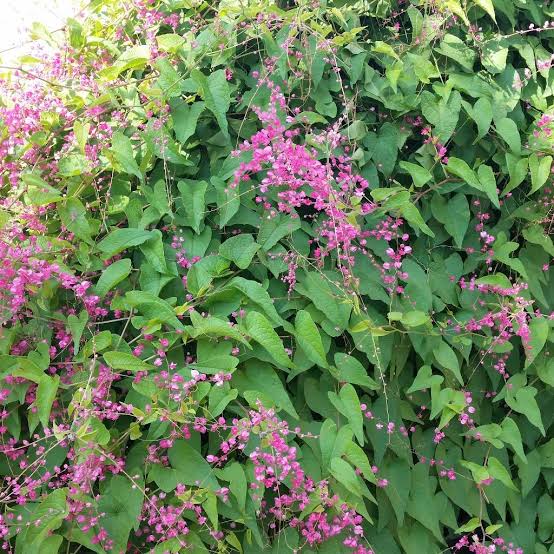
Coral Vine (Mexican Creeper)
Fast summer vine with sprays of pink flowers late summer through fall. Bees love it. Freezes back to the ground in winter and returns in spring, so it covers in the hot months and opens up in the cool months.
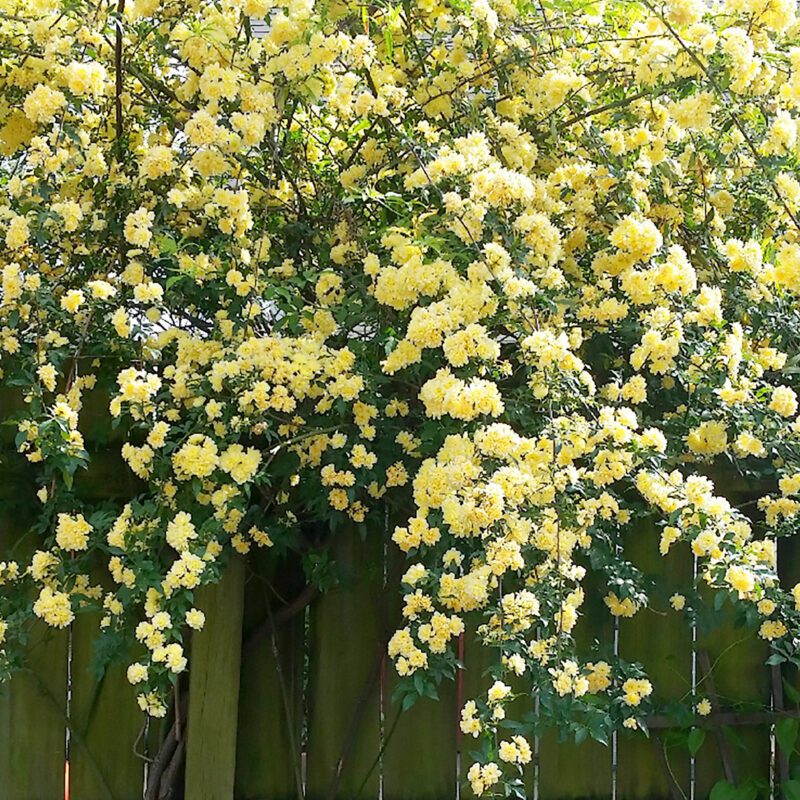
Lady Banks Rose
Nearly thornless climbing rose with a huge flush of small yellow or white flowers in spring. Vigorous, evergreen here, and tough in the heat once rooted. Needs something to lean on or tie to.
Plant shrubs about 6 to 8 feet apart and 3 to 4 feet off the wall. Vines go right at the base of the wall about 8 to 10 feet apart. Hacienda creeper and tangerine crossvine cling to the block on their own. Bower vine, coral vine, and Lady Banks rose need a few wires or eye hooks on the wall to climb.
Banana Spot
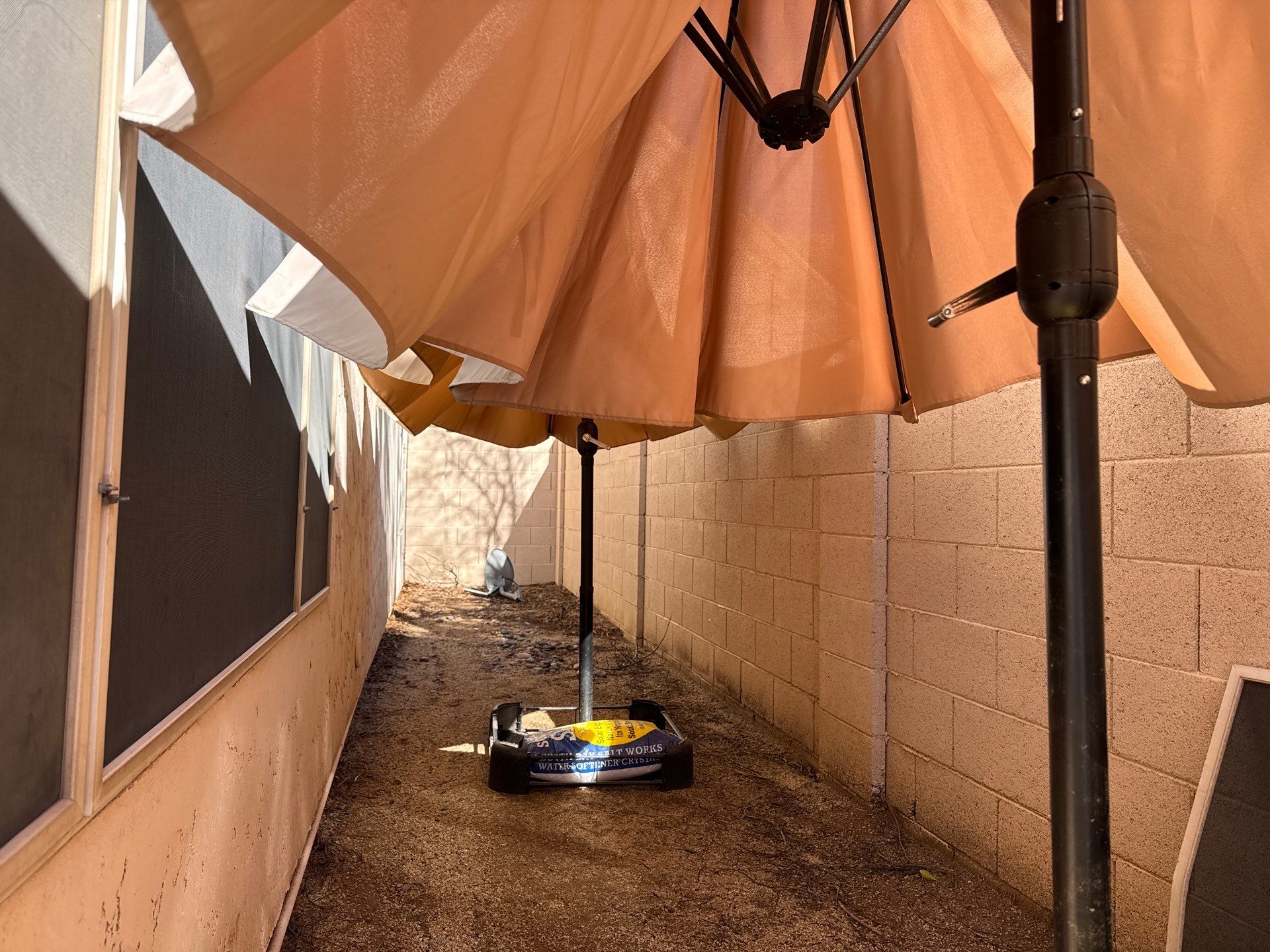
This back corner is a perfect spot for bananas. It's protected, and bananas love being tucked in close together.

Banana
Big tropical leaves and real fruit if you feed it. Ice Cream (Blue Java), Dwarf Cavendish, Goldfinger, and Raja Puri are good choices for here since they handle our cooler winters better.
Mulch the whole area first. Cover this entire area with a thick layer of mulch, 4 to 6 inches. Bananas have shallow roots that want cool, moist, rich soil, and mulch does all three. Arizona Worm Farm has great mulch and compost.
Planting. Plant in a group of three to five about 4 to 6 feet apart so they shade and protect each other. Plant them in spring (March to April) once frost danger is past, so they have the whole warm season to root in. Same planting method as everything else: native soil with a tiny bit of compost, compost on top, mulch over that.
Feeding. Bananas are heavy feeders. If you don't feed them, you'll get leaves but no fruit. Here's what to do:
- Compost: 2 to 3 inches of compost spread over the whole area every couple of months during the growing season (spring through fall). Pull the mulch back, lay the compost down, put the mulch back.
- Composted chicken manure: a few handfuls around each plant once a month from April through September.
- Organic liquid fertilizer: every two weeks in the warm months with Catalyst Jenner 8 or Organic Nitro Jen. The kelp fertilizer once a month helps with the heat.
- Worm castings: every quarter.
- Back off the feeding from November through February when they slow down.
Watering. They want lots of water in the heat. Deep watering every 2 to 3 days in summer and once a week or so in winter. Never let the soil dry out completely in summer.
Getting fruit. Each stalk fruits once, usually in its second year. Let one or two pups (the shoots at the base) grow on to replace each main stalk and cut the others off at the ground. After a stalk fruits, cut it down to the ground and chop it up as mulch right there. When frost hits, the leaves will burn. Leave them on until spring as protection, then cut off the brown leaves once it warms up.
Pergola Over the Hot Tub
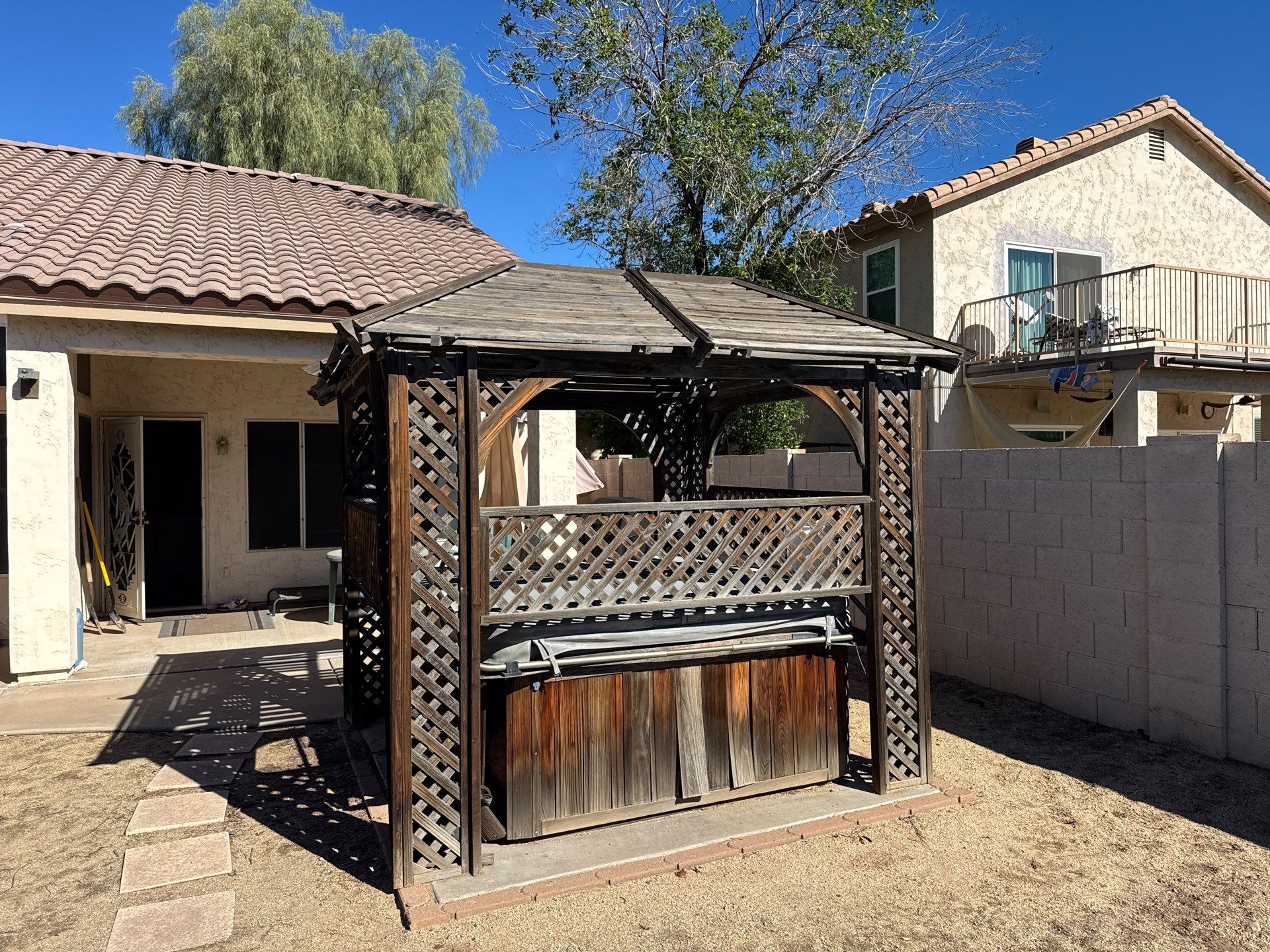
Here are vines that can grow up and over this pergola. Deciduous vines like grapes give you full shade in summer and let the sun in during winter when the hot tub is getting the most use. If you go with grapes, know that they'll drop some fruit and leaves into the hot tub area.
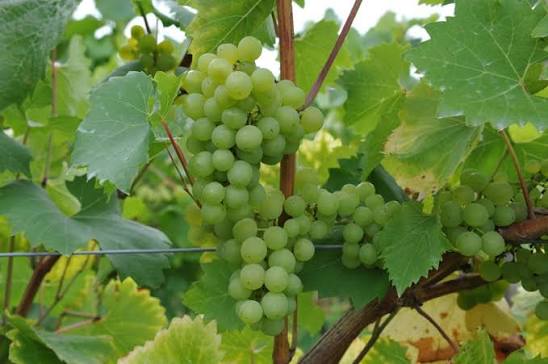
Thompson Seedless Grape
Classic green table grape that covers a pergola fast. Deciduous, so it shades you in summer and lets the sun in for winter.
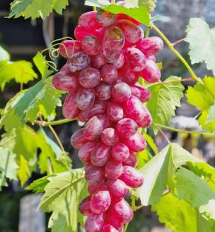
Flame Seedless (Red Flame) Grape
Red table grape that ripens early summer. Great over a pergola, same summer shade and winter sun as the Thompson.
Lady Banks Rose
Nearly thornless climbing rose with a huge flush of small yellow or white flowers in spring. Vigorous, evergreen here, and tough in the heat once rooted. Needs something to lean on or tie to.
Bower Vine
Pandorea. Glossy leaves and pink and white trumpet flowers. Prefers some afternoon shade, so it's a good fit for a covered or partly shaded spot.
Coral Vine (Mexican Creeper)
Fast summer vine with sprays of pink flowers late summer through fall. Bees love it. Freezes back to the ground in winter and returns in spring, so it covers in the hot months and opens up in the cool months.
Tangerine Crossvine
Self-clinging vine that grabs onto block or stucco without wires. Evergreen, orange trumpet flowers in spring, handles full sun and heat. One of my favorites for walls.
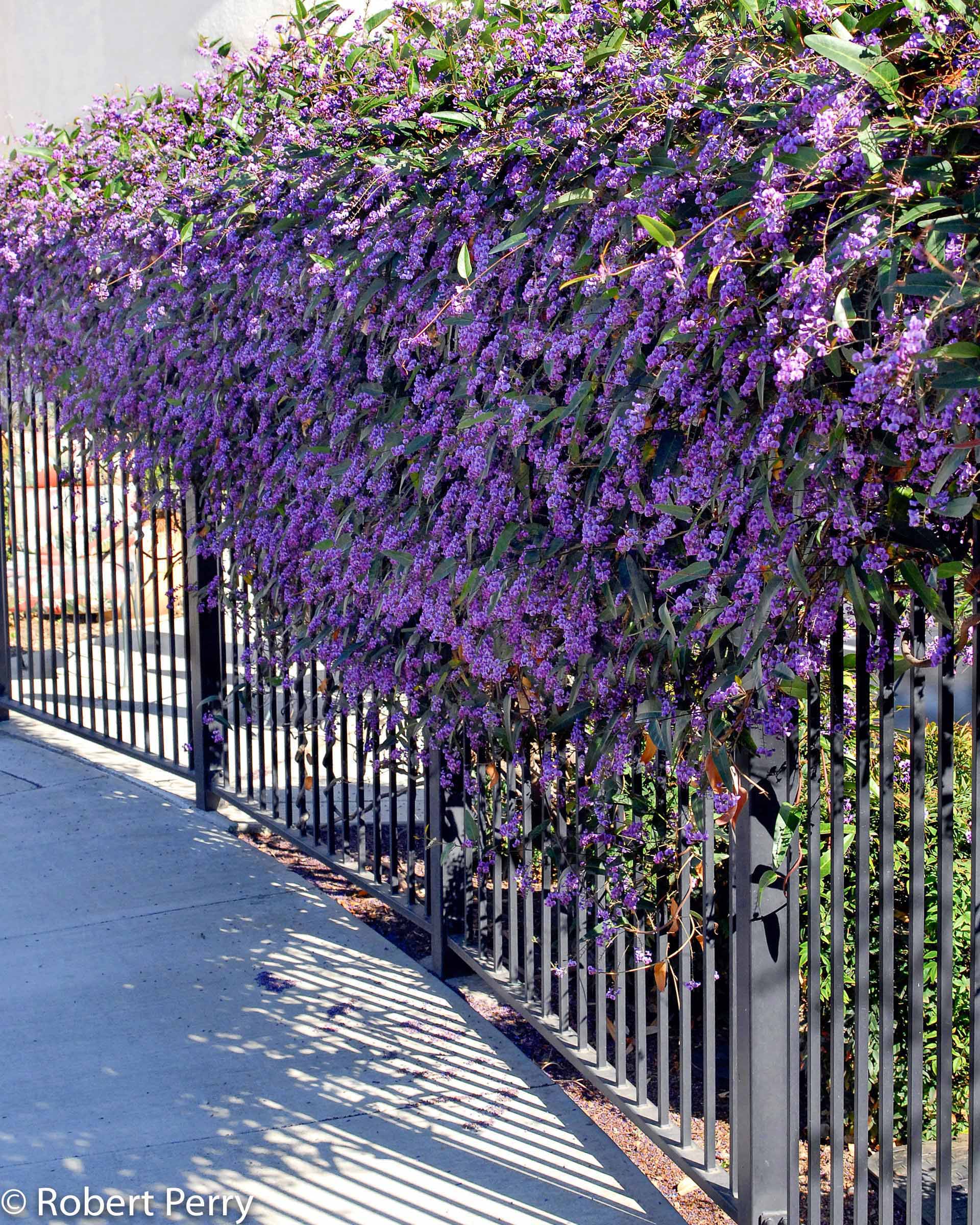
Purple Lilac Vine
Hardenbergia. Evergreen vine with purple flowers in late winter and early spring, right when not much else is blooming. Likes some shade, light and easy to keep on a trellis.
If you remove the pergola, I'd plant another mesquite tree here. That way the whole backyard ends up enveloped under a canopy of mesquite trees, with filtered shade over everything.
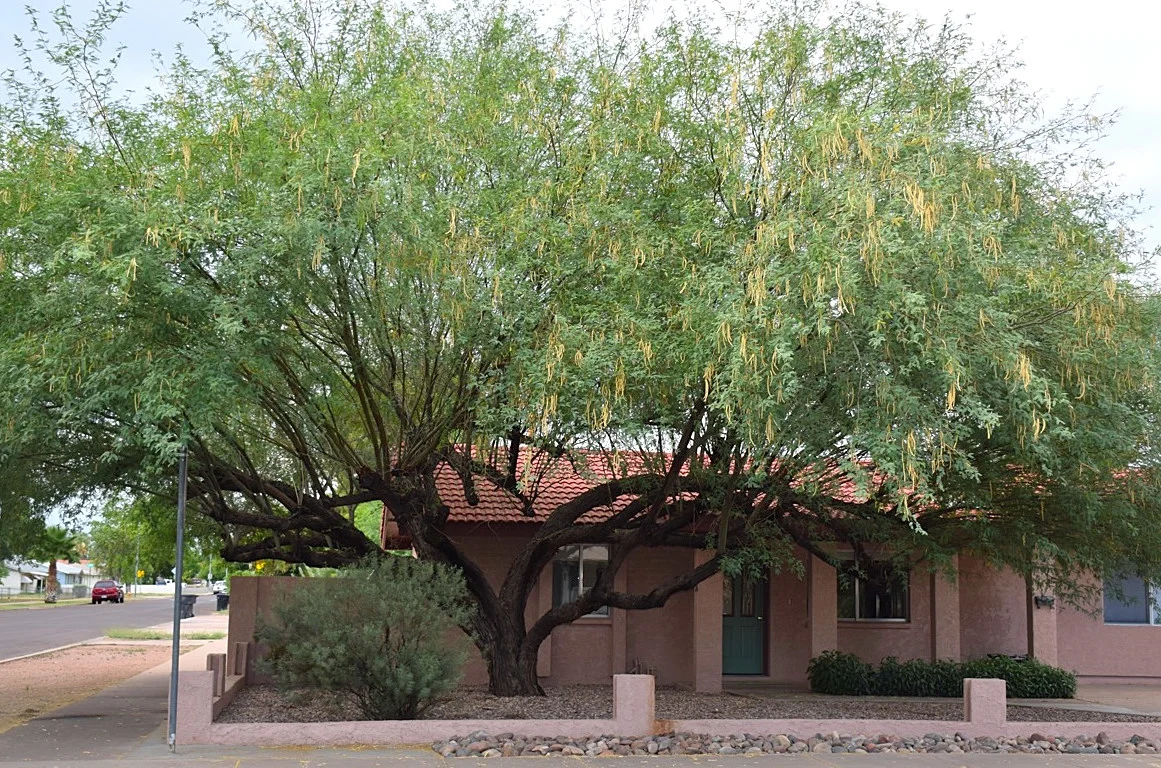
Velvet Mesquite
Our native mesquite. Fast growing, 25 to 30 feet with a wide, airy canopy that gives filtered shade. I recommend the native velvet mesquite over the hybrids because it supports local wildlife the hybrids don't. Spring catkins feed the bees.
Mesquite Trees and Trimming
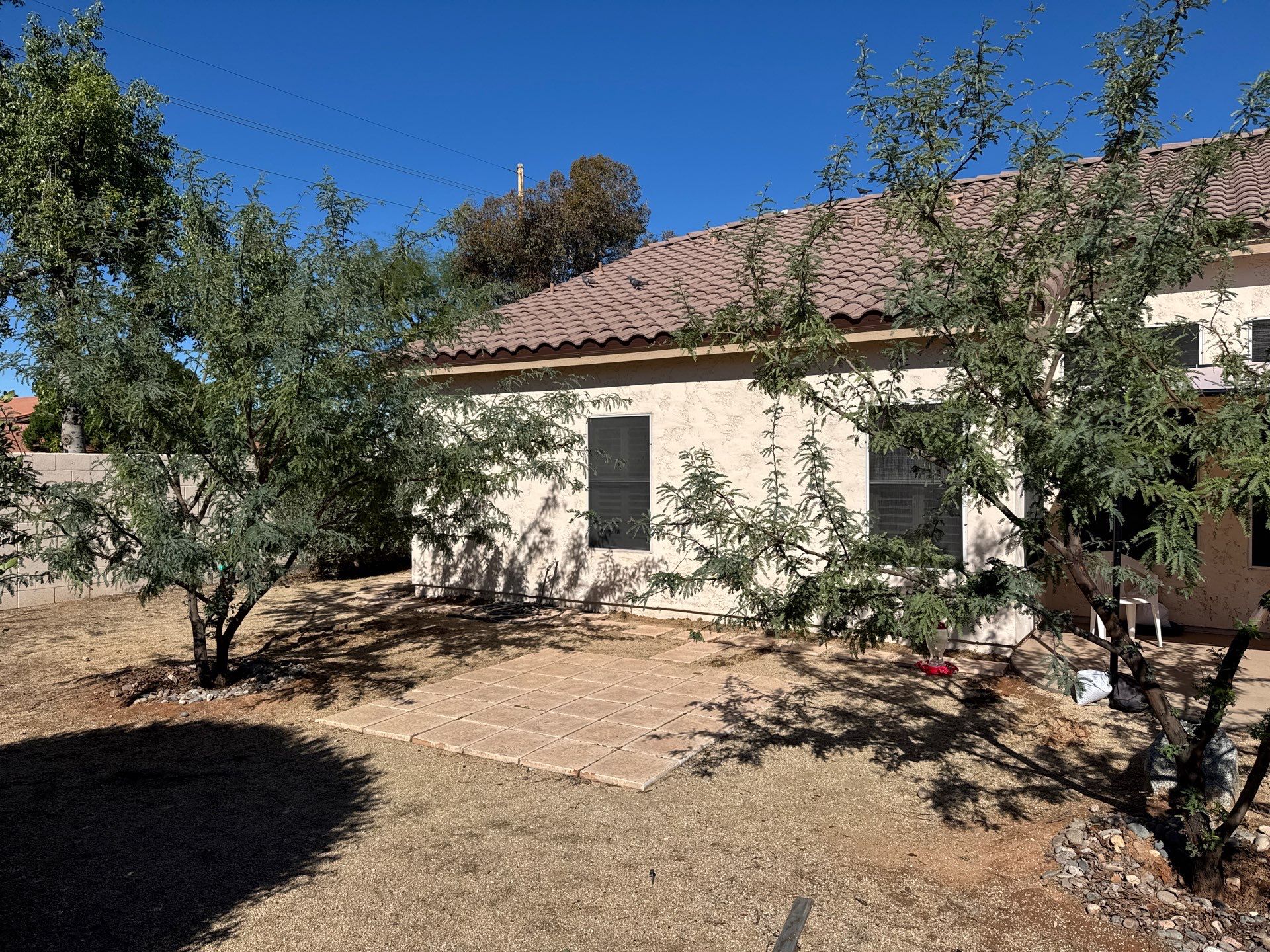
You've got a good idea of how to trim these. Everything you were thinking about will work. Here are some more guidelines to go with it.
- Thin, don't shear. Make each cut back to a branch junction or the trunk. No topping, and no stripping all the inner branches so the foliage is only at the tips (called lion-tailing). That makes the branches heavy at the ends and more likely to snap.
- Take out what doesn't belong first: dead wood, branches that cross or rub, branches growing back toward the center, and suckers coming off the base.
- Don't take more than about 20 to 25 percent of the canopy in a year. Mesquites respond to heavy cuts by pushing out a lot of fast, weak growth.
- Timing: late winter through spring is ideal. A light thinning in early summer before monsoon helps the wind pass through the canopy so it's less likely to blow over. Avoid heavy cuts in the heat of summer.
- Raising the canopy: if you want to walk under it, remove the lower limbs gradually over a few years instead of all at once.
- Clean cuts just outside the branch collar (the slightly swollen ring where the branch meets the trunk). No wound sealer needed.
For anything big, like large limbs over the house or structural work up high, I recommend King's Tree Service. They're certified arborists and they do it right.
South-Facing House Wall
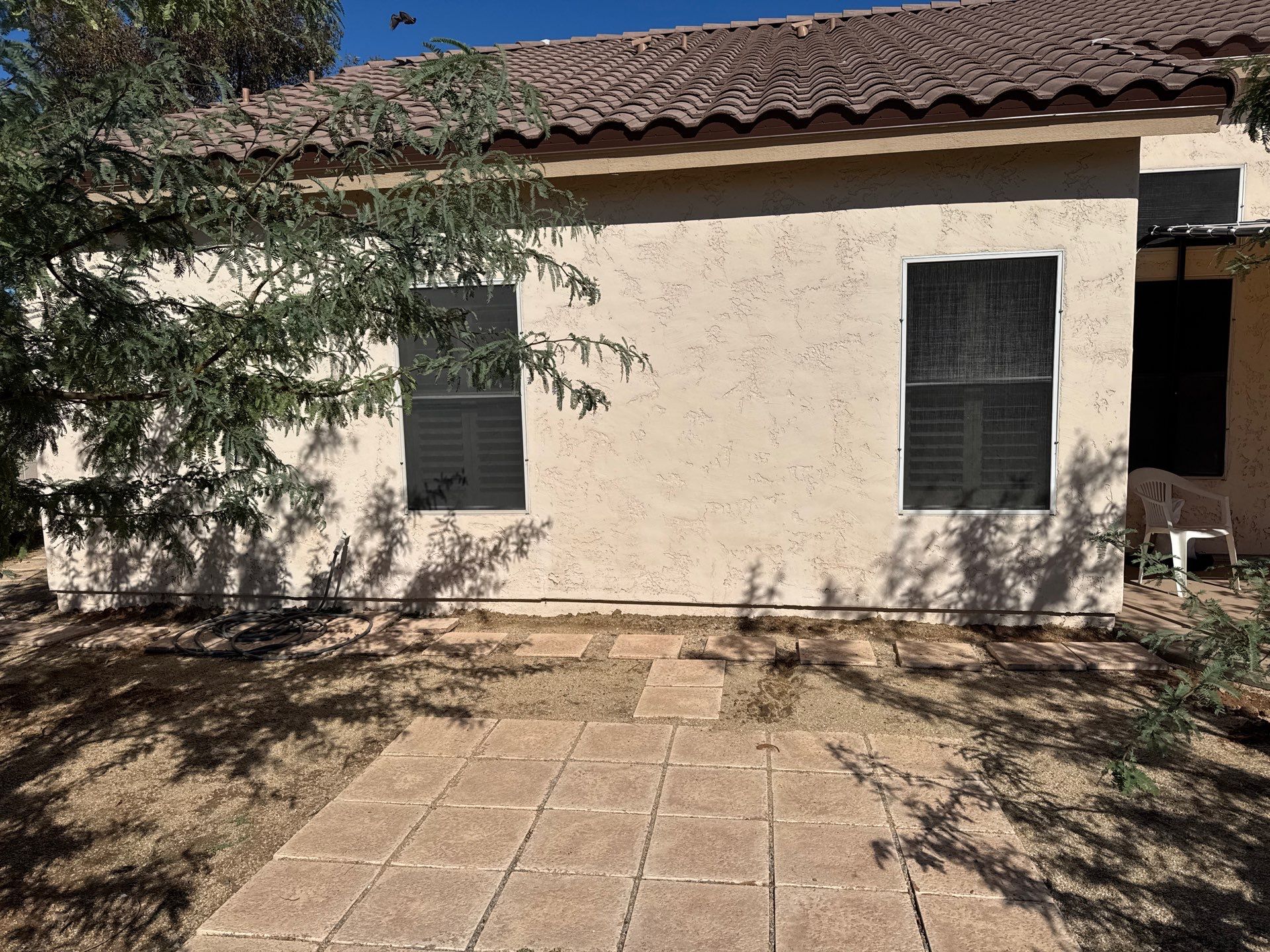
This is the south-facing wall of the house, so it takes full sun all day. You liked the idea of ruellia, and it's a great option here. Here are a few other native and desert adapted plants that can take the southern sun and won't need regular irrigation once they're rooted in. Give them deep water through their first summer, then they can get by on rainfall plus an occasional deep soak in the hottest stretch.
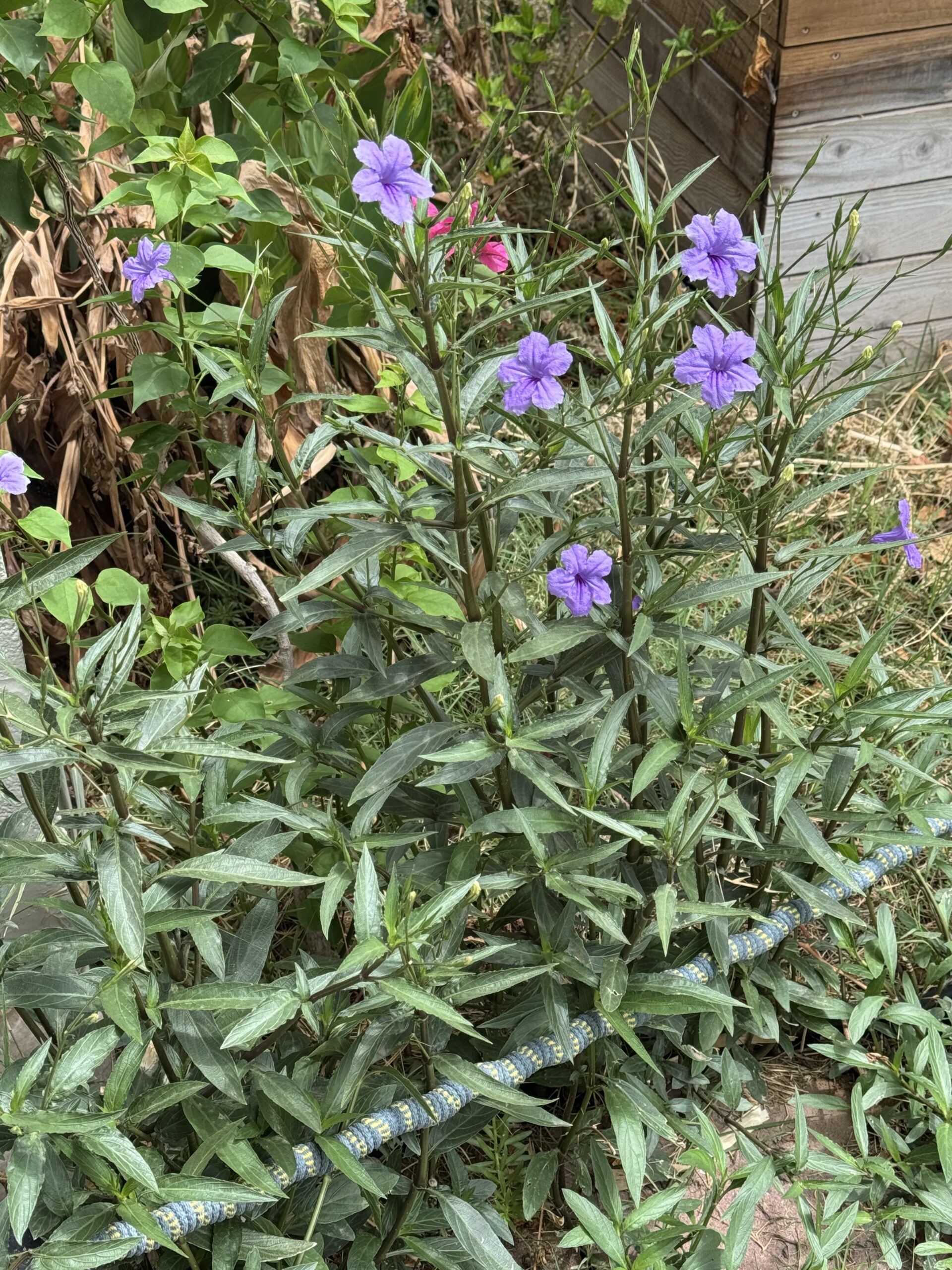
Ruellia
Desert ruellia with purple trumpet flowers spring through fall. Tough, 3 to 4 feet, handles full sun and reflected heat, and gets by on very little water after its first summer.
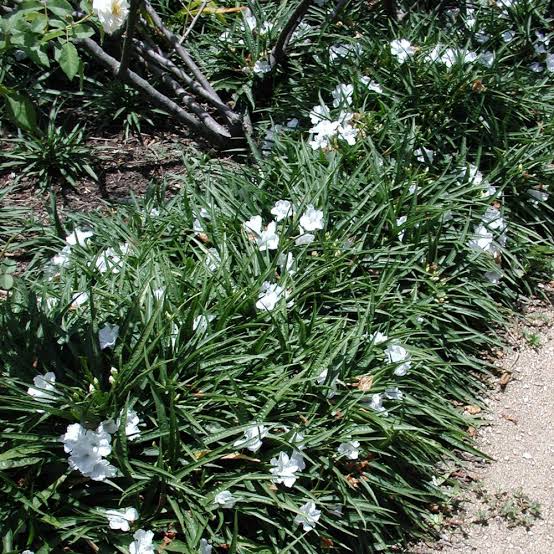
Desert Ruellia (white)
Small native shrub with white flowers, 2 to 3 feet. Fills in nicely between bigger plants.

Globe Mallow
Native with orange cup shaped flowers in spring, 2 to 4 feet. Native bees depend on it.
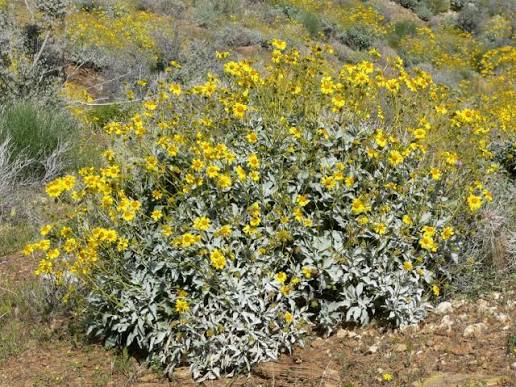
Brittlebush
Native silver mound, 3 feet, covered in yellow daisies in late winter and spring. Feeds a lot of native bees.
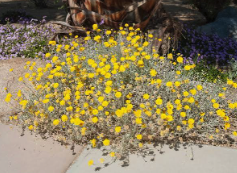
Desert Marigold
Native with silvery leaves and bright yellow flowers, about 1 to 2 feet. Reseeds a little, which is a good thing in a pollinator area.
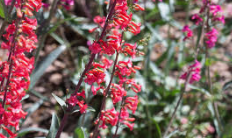
Penstemon
Upright flower spikes in spring, 2 to 4 feet, with a small footprint. Hummingbirds and native bees love them. Great for narrow spots.
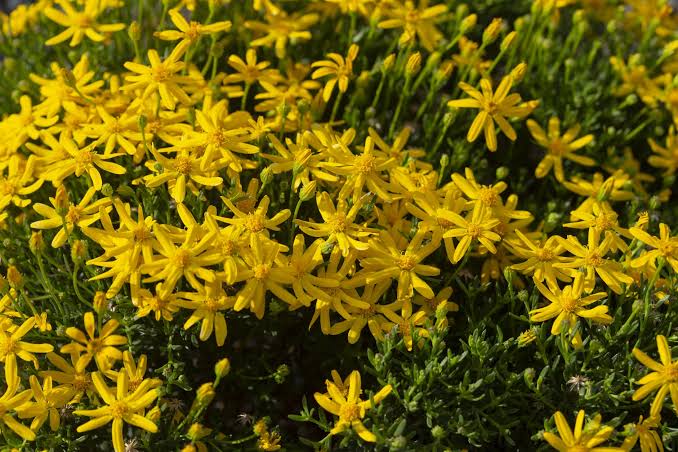
Damianita
Low, fragrant mound about 1 to 2 feet with bright yellow daisies in spring and fall. Loves hot, sunny, tight spots.
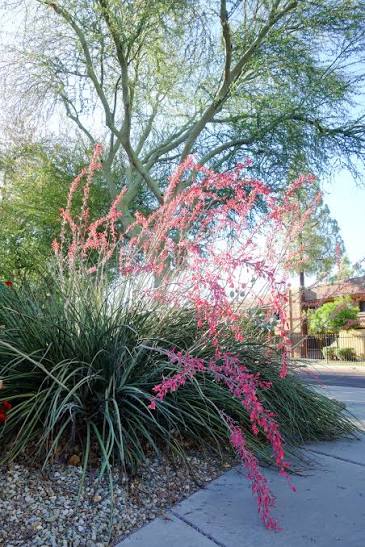
Red Yucca
Clean, grassy clump about 3 feet with tall coral flower spikes the hummingbirds love. Fibrous, shallow roots and very little litter, so it's great near a pool or a foundation.
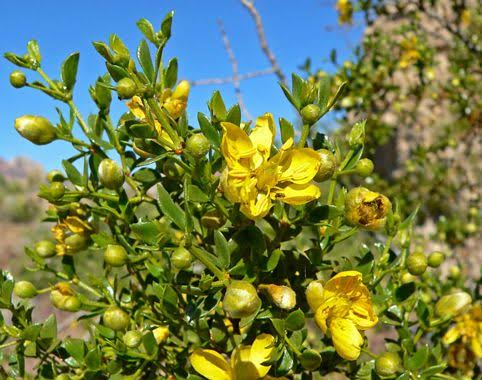
Creosote
The smell of rain in the desert. Native evergreen, 4 to 8 feet, with small yellow flowers and fuzzy seed balls. Once it's rooted in, it can live on rainfall plus an occasional deep soak in summer.
Keep them a few feet off the wall so they have room to grow into their natural shape, and space them 3 to 4 feet apart.
Back Wall with Fruit Trees
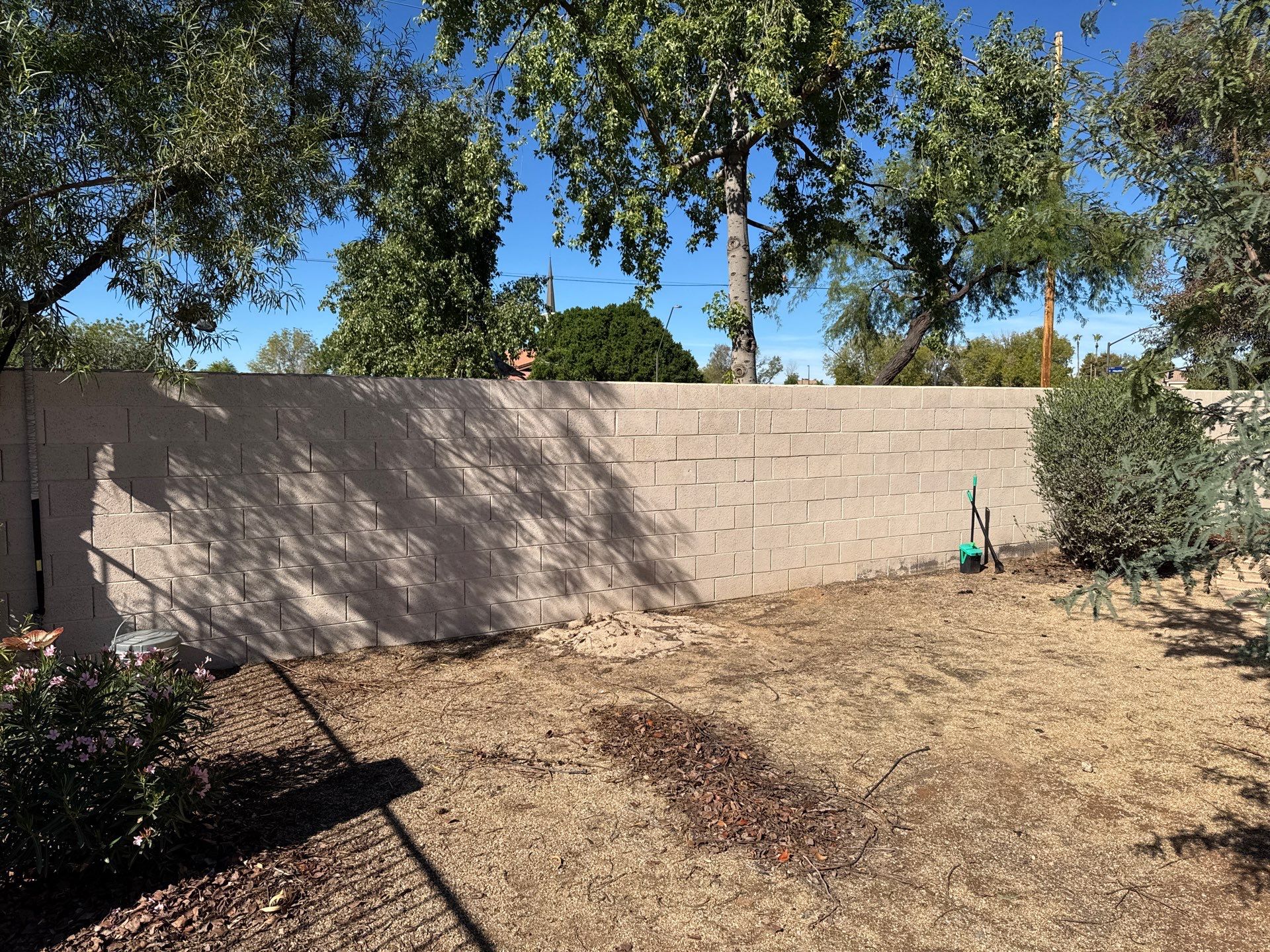
Same thing on this wall. Cover it with any of the shrubs or vines from the other backyard walls.
Shrubs for wall coverage
Arizona Rosewood
Native evergreen that grows 10 to 15 feet tall and about as wide. My go-to for covering a block wall. Dense, takes full sun and reflected heat, white spring flowers for the pollinators, and it never needs shearing.
Hopseed
Dense, upright evergreen, 10 to 12 feet, that fills in fast and handles full sun and reflected heat. One of my favorites for covering a block wall. Narrow enough that it doesn't eat up the yard.
Orange Jubilee
Fast growing, 8 to 12 feet, with big clusters of orange trumpet flowers from spring through fall. Hummingbirds are on it all day. Can freeze back in a hard winter and comes right back in spring.
Yellow Bells
Tecoma stans. The yellow variety is native to the Sonoran Desert. Bright yellow trumpet flowers spring through fall, 8 to 12 feet, and a hummingbird and bee magnet.
Twisted Myrtle
Evergreen with small, twisted, fragrant leaves and white summer flowers. Grows 6 to 8 feet, dense and tidy, and takes the heat. Bees love the flowers.
Vines for wall coverage
Hacienda Creeper
Self-clinging vine with small leaves that hug the wall flat. Takes full sun and reflected heat, turns red in the cool months. Great where space is tight.
Tangerine Crossvine
Self-clinging vine that grabs onto block or stucco without wires. Evergreen, orange trumpet flowers in spring, handles full sun and heat. One of my favorites for walls.
Bower Vine
Pandorea. Glossy leaves and pink and white trumpet flowers. Prefers some afternoon shade, so it's a good fit for a covered or partly shaded spot.
Coral Vine (Mexican Creeper)
Fast summer vine with sprays of pink flowers late summer through fall. Bees love it. Freezes back to the ground in winter and returns in spring, so it covers in the hot months and opens up in the cool months.
Lady Banks Rose
Nearly thornless climbing rose with a huge flush of small yellow or white flowers in spring. Vigorous, evergreen here, and tough in the heat once rooted. Needs something to lean on or tie to.
Then in front of the wall, you can space two to three fruit trees, depending on how much you want to take on and how much fruit you want. All the same options as the other fruit tree zone work here: citrus, peach, and fig. Barbados cherry is another great option to add here.
Citrus
Oranges, tangerines, and mandarins all do great here. Evergreen, fragrant spring blossoms, and fruit in winter when nothing else is producing. Plant 8 feet apart.
Lemon Tree
Meyer lemon is the easiest and sweetest for home use. Produces heavily and stays a manageable size.
Lime
Mexican or Bearss lime. A little more frost tender than other citrus, so give it the warmest spot or cover it on frost nights.
Grapefruit
Rio Red or Ruby Red. Big tree, big harvest, and the fruit holds on the tree for months.
Kumquat
Small, tidy citrus you eat skin and all. The most cold hardy of the citrus and great if space is tight.
Peach (Florida Prince)
Low chill peach that actually fruits reliably in the Valley. Ripens in May before the real heat. Deciduous, so it lets winter sun through.
Desert Gold Peach
Another low chill peach that does well here, clingstone with sweet yellow fruit in late spring.
Fig
One of the easiest fruit trees for the desert. Black Mission and Brown Turkey are reliable here. Two crops a year, handles the heat, and can be kept smaller with winter pruning.
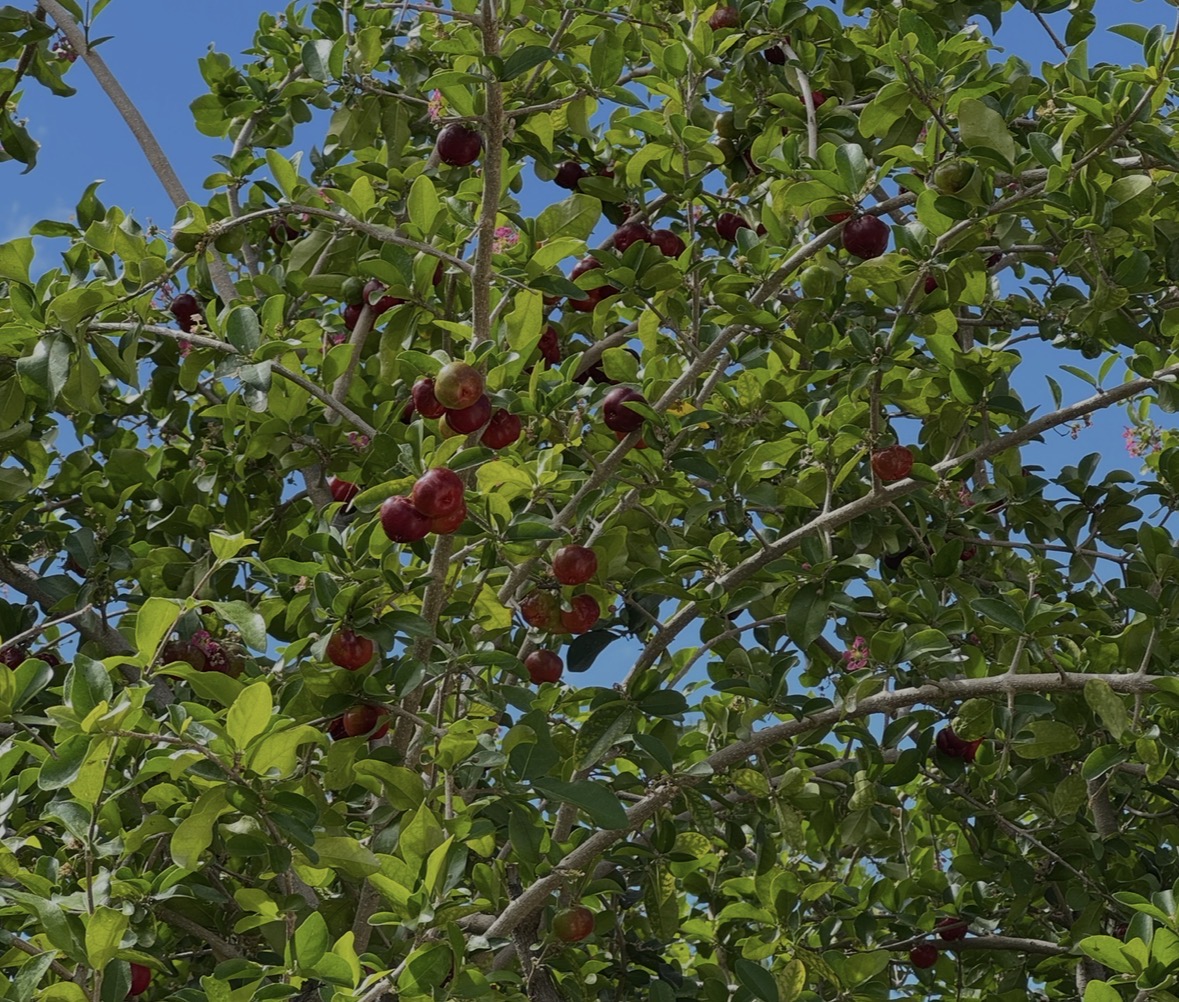
Barbados Cherry
Large shrub or small tree, 8 to 10 feet, with bright red cherries loaded with vitamin C. Pink flowers several times a year. It does best with a little afternoon protection, and it fits nicely up against a wall.
Keep the fruit trees about 8 feet apart and at least 6 feet out from the wall hedge so neither one crowds the other. The planting, watering, and care steps are the same as the first fruit tree zone: plant at grade, native soil with a tiny bit of compost, compost and mulch on top, and water deeply, more often the first year and then deep and infrequent.
The HOA Trees: Fern of the Desert
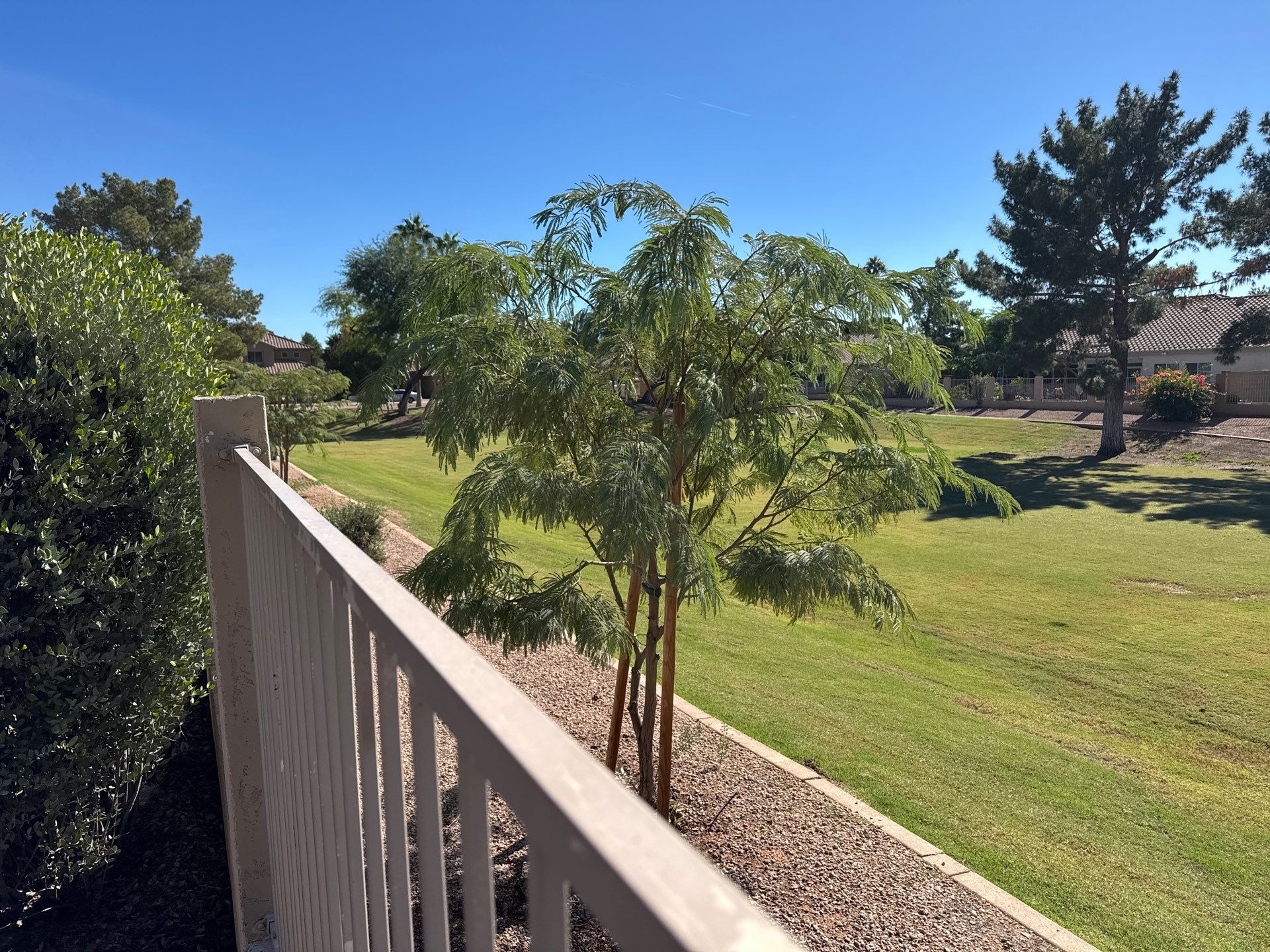
The trees the HOA planted on the other side of your fence are fern of the desert. Here's what to expect from them long term.
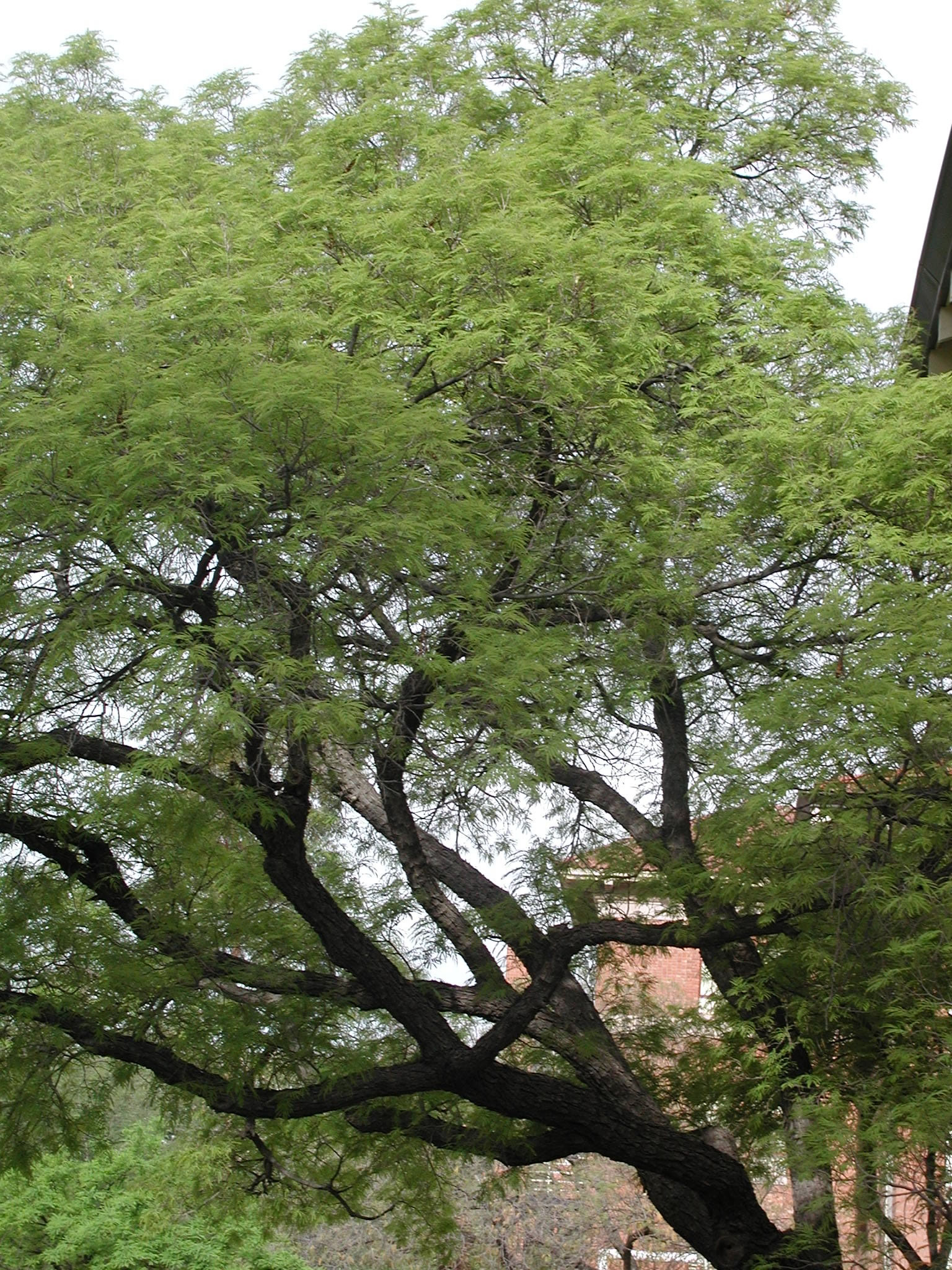
Fern of the Desert
Lysiloma. Semi-evergreen tree with soft, fern-like leaves and creamy white puffball flowers in spring. Usually 12 to 15 feet tall and about as wide here, often multi-trunk. Gives light, dappled shade. A hard frost can drop the leaves and they come right back in spring.
They'll grow to about 12 to 15 feet tall and about as wide, with a soft, open canopy of tiny fern-like leaves. They flower with creamy white puffballs in late spring that the bees love, followed by flat brown seed pods. They stay mostly evergreen, but a hard frost can drop the leaves until spring. They give light, filtered shade, so whatever you plant along that side of the fence will still get a good amount of sun. They're a great choice and they're native to the Sonoran Desert region.
Backyard Natives to Pepper Throughout
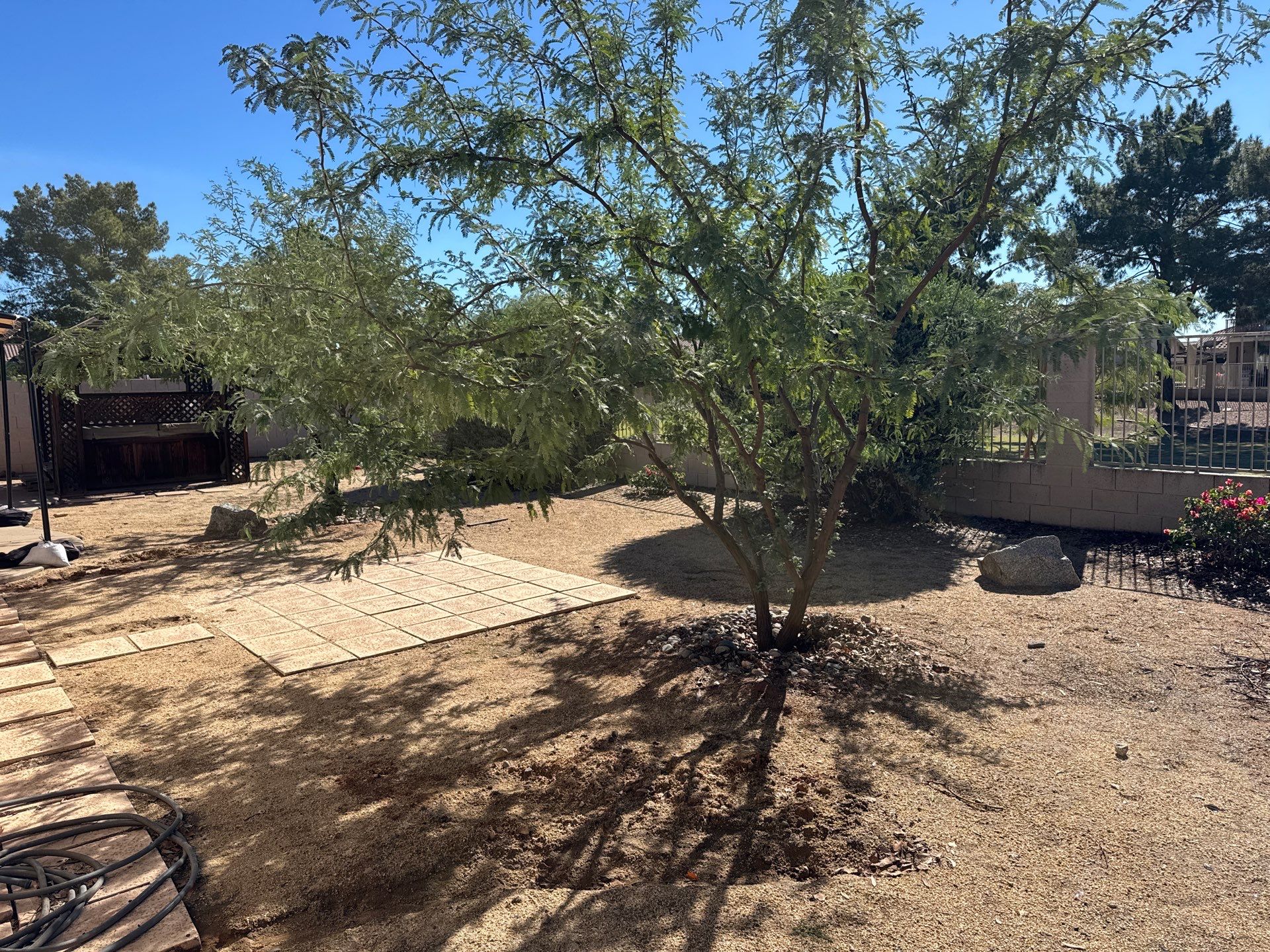
Overall in your backyard, we don't want to crowd up the space. These are desert adapted plants you can pepper wherever you like throughout the yard to bring in color, hummingbirds, butterflies, and bees.
Globe Mallow
Native with orange cup shaped flowers in spring, 2 to 4 feet. Native bees depend on it.

Desert Milkweed
Upright gray-green stems, 3 to 4 feet. A host plant for monarch and queen butterflies. Every pollinator garden here should have some.
Chuparosa
Native with red tubular flowers through winter and spring, when hummingbirds need it most. 3 to 4 feet, loose and natural.
Penstemon
Upright flower spikes in spring, 2 to 4 feet, with a small footprint. Hummingbirds and native bees love them. Great for narrow spots.
Desert Marigold
Native with silvery leaves and bright yellow flowers, about 1 to 2 feet. Reseeds a little, which is a good thing in a pollinator area.
Brittlebush
Native silver mound, 3 feet, covered in yellow daisies in late winter and spring. Feeds a lot of native bees.
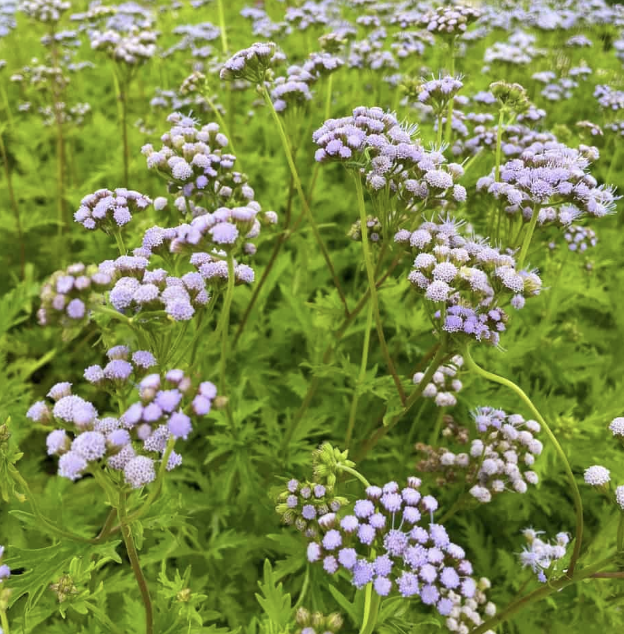
Greg's Mistflower
Fuzzy lavender flowers that are a butterfly magnet, especially queens in the fall. 1 to 2 feet and spreading. Handles some shade.
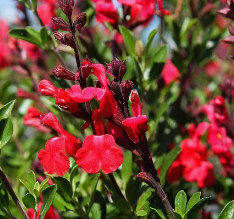
Autumn Sage
Salvia greggii. 2 to 3 feet with red, pink, or coral flowers spring through fall. A hummingbird favorite that fits small spaces.
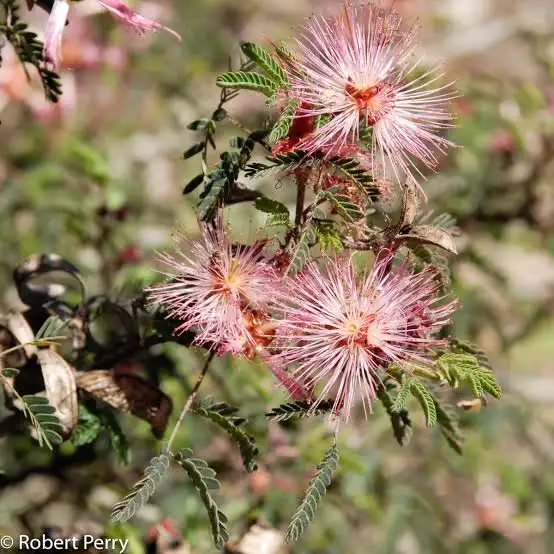
Pink Fairy Duster
Native, airy shrub about 2 to 3 feet with soft pink puffball flowers in spring. Hummingbirds and bees both use it.
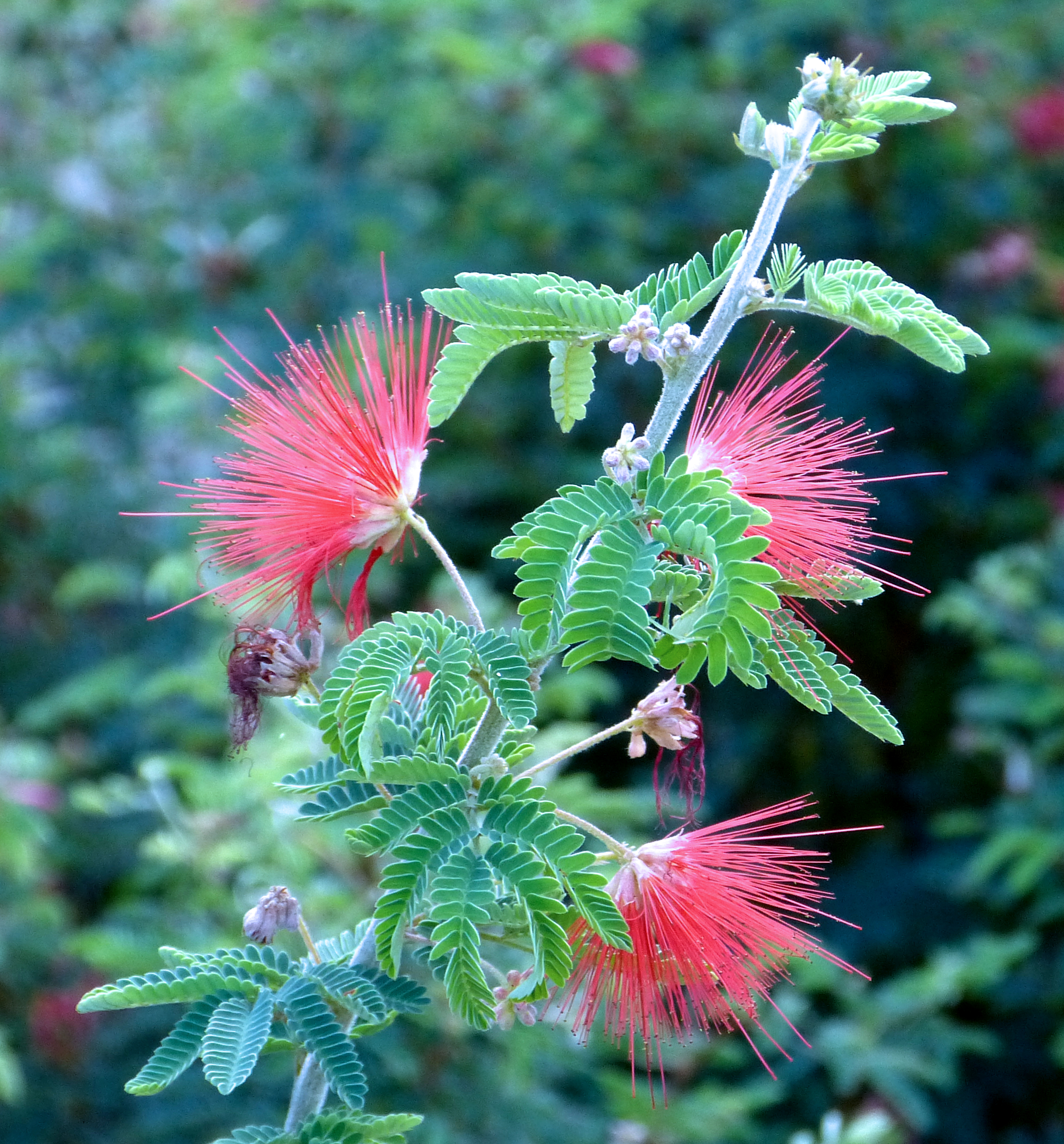
Baja Fairy Duster
Red puffball flowers almost year round, 3 to 5 feet. Hummingbirds visit it all day. Handles full sun and heat.
Damianita
Low, fragrant mound about 1 to 2 feet with bright yellow daisies in spring and fall. Loves hot, sunny, tight spots.
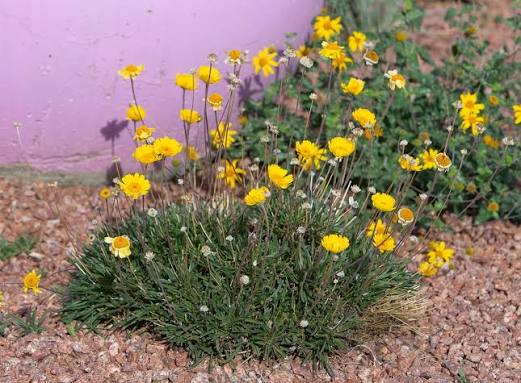
Angelita Daisy
Tidy 1 foot mound with yellow daisies nearly year round. Takes reflected heat and stays small.
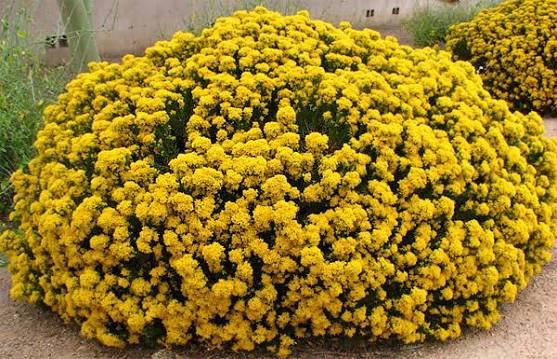
Turpentine Bush
Native, 2 to 3 feet, covered in yellow flowers in the fall when pollinators need late season food.
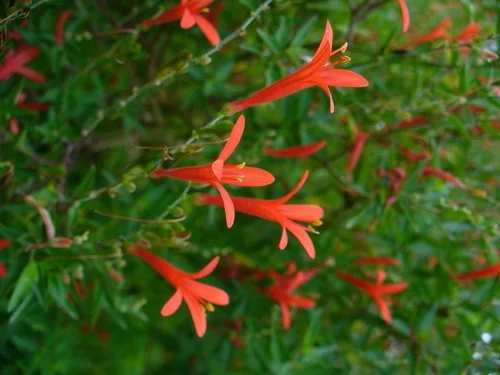
Desert Honeysuckle
Anisacanthus. Orange flowers summer into fall, 3 to 4 feet. Tough and a hummingbird favorite.
Ruellia
Desert ruellia with purple trumpet flowers spring through fall. Tough, 3 to 4 feet, handles full sun and reflected heat, and gets by on very little water after its first summer.
Desert Ruellia (white)
Small native shrub with white flowers, 2 to 3 feet. Fills in nicely between bigger plants.
Red Yucca
Clean, grassy clump about 3 feet with tall coral flower spikes the hummingbirds love. Fibrous, shallow roots and very little litter, so it's great near a pool or a foundation.
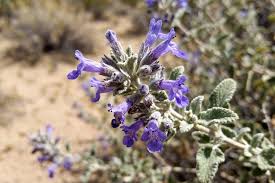
Desert Lavender
Native, fragrant gray shrub, 4 to 6 feet, with small purple flowers the bees go crazy for.

Texas Sage
Silver or green leaves with flushes of purple flowers after summer humidity. 4 to 6 feet if you let it grow naturally. Thrives in full sun and heat and takes far less water than plants that aren't desert adapted.
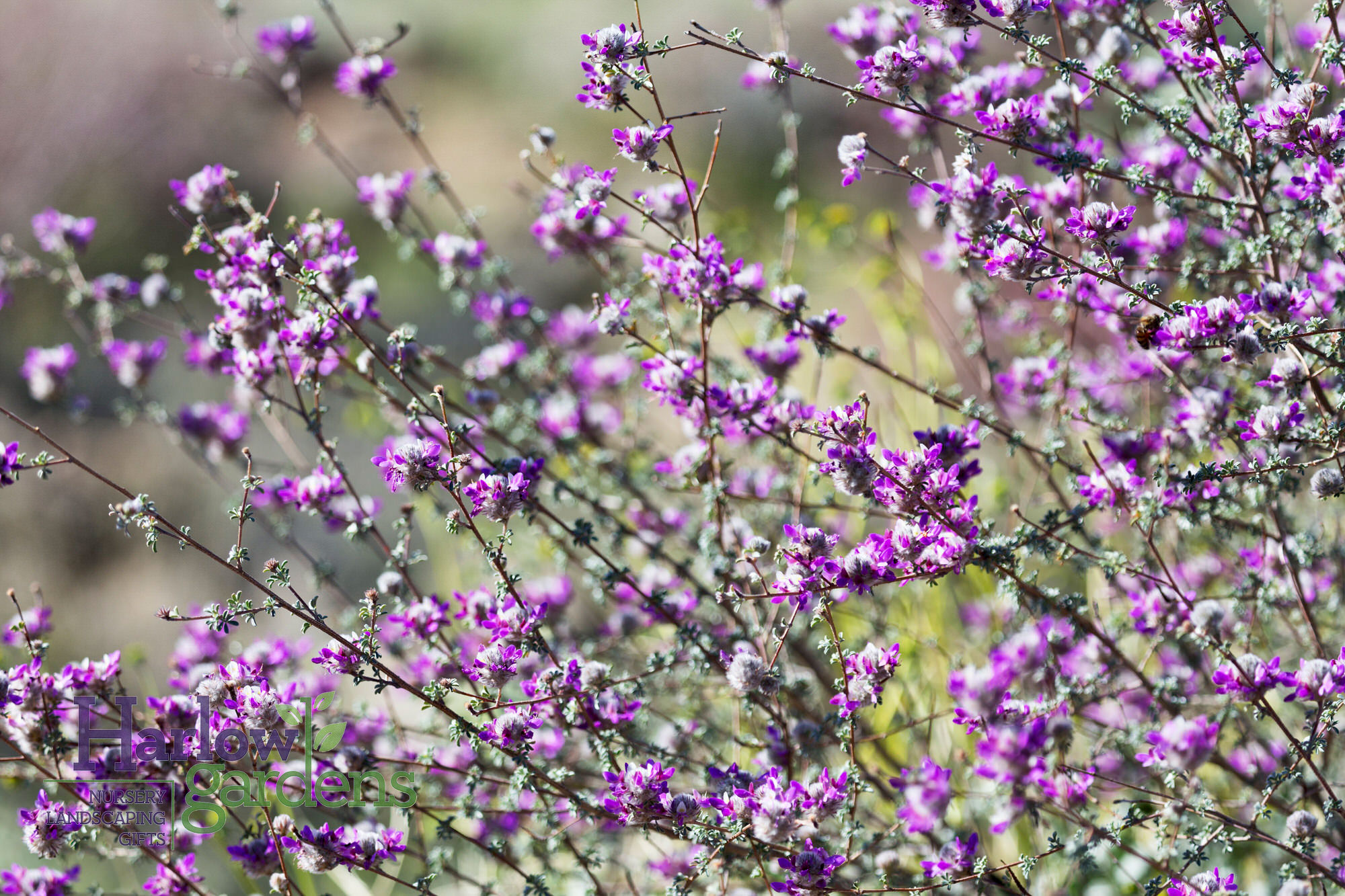
Trailing Indigo Bush
Low, silvery spreading shrub about 1 to 2 feet with purple spring flowers. Takes full sun and reflected heat.
Creosote
The smell of rain in the desert. Native evergreen, 4 to 8 feet, with small yellow flowers and fuzzy seed balls. Once it's rooted in, it can live on rainfall plus an occasional deep soak in summer.
You can't fit all of these, so pick your favorites. Plant in loose groups of three or five rather than straight rows, put the lower growing ones near walkways and under trees, and don't stress about exact placement. A little randomness looks fuller and more natural.
Another Wall: Afternoon Sun
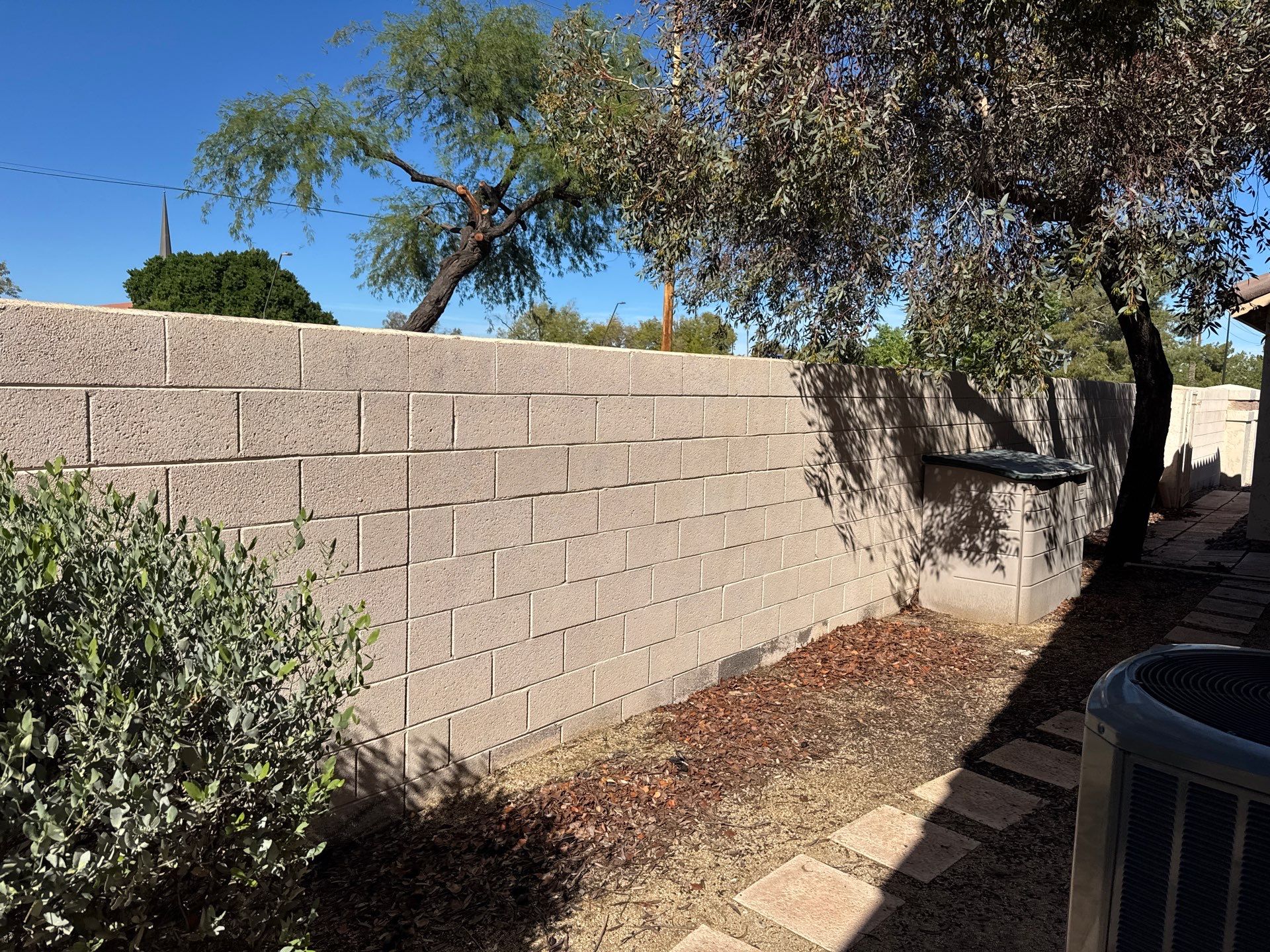
Here's another wall. I'd line it with the same options we've given for the other walls. It'll cool everything down and give you relief from the afternoon sun.
Shrubs for wall coverage
Arizona Rosewood
Native evergreen that grows 10 to 15 feet tall and about as wide. My go-to for covering a block wall. Dense, takes full sun and reflected heat, white spring flowers for the pollinators, and it never needs shearing.
Hopseed
Dense, upright evergreen, 10 to 12 feet, that fills in fast and handles full sun and reflected heat. One of my favorites for covering a block wall. Narrow enough that it doesn't eat up the yard.
Orange Jubilee
Fast growing, 8 to 12 feet, with big clusters of orange trumpet flowers from spring through fall. Hummingbirds are on it all day. Can freeze back in a hard winter and comes right back in spring.
Yellow Bells
Tecoma stans. The yellow variety is native to the Sonoran Desert. Bright yellow trumpet flowers spring through fall, 8 to 12 feet, and a hummingbird and bee magnet.
Twisted Myrtle
Evergreen with small, twisted, fragrant leaves and white summer flowers. Grows 6 to 8 feet, dense and tidy, and takes the heat. Bees love the flowers.
Vines for wall coverage
Hacienda Creeper
Self-clinging vine with small leaves that hug the wall flat. Takes full sun and reflected heat, turns red in the cool months. Great where space is tight.
Tangerine Crossvine
Self-clinging vine that grabs onto block or stucco without wires. Evergreen, orange trumpet flowers in spring, handles full sun and heat. One of my favorites for walls.
Bower Vine
Pandorea. Glossy leaves and pink and white trumpet flowers. Prefers some afternoon shade, so it's a good fit for a covered or partly shaded spot.
Coral Vine (Mexican Creeper)
Fast summer vine with sprays of pink flowers late summer through fall. Bees love it. Freezes back to the ground in winter and returns in spring, so it covers in the hot months and opens up in the cool months.
Lady Banks Rose
Nearly thornless climbing rose with a huge flush of small yellow or white flowers in spring. Vigorous, evergreen here, and tough in the heat once rooted. Needs something to lean on or tie to.
Same spacing as the other walls: shrubs 6 to 8 feet apart and 3 to 4 feet off the wall, vines 8 to 10 feet apart at the base.
The Hot Side of That Wall
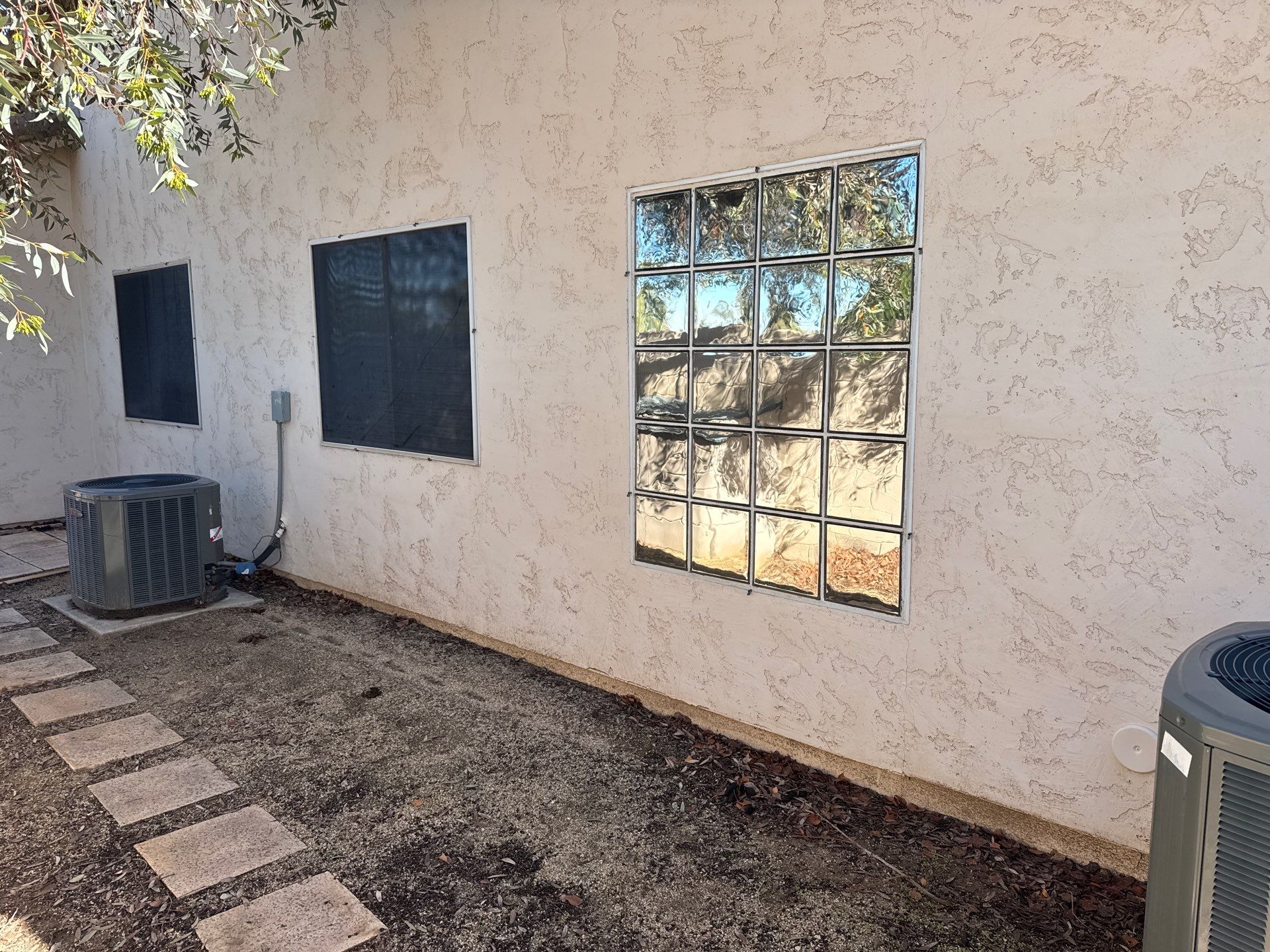
This is the other side of that wall. It gets blasted by the afternoon sun. Once the hedge on the other side is established and you have some shade going, other things can go here. Long term, this could be a great spot for bananas. For now, here are a few ideas for things that can take the full blast.
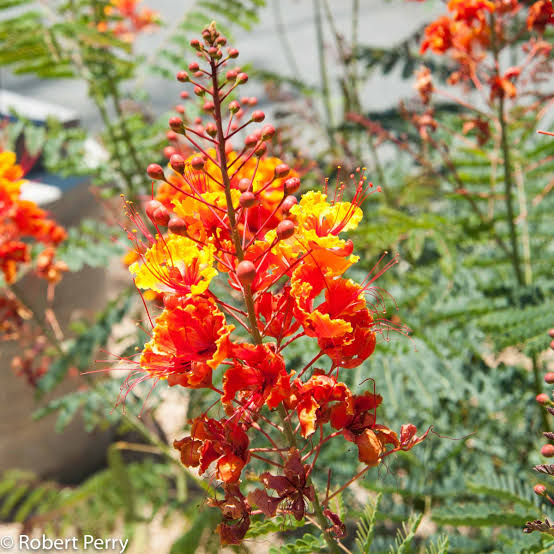
Red Bird of Paradise
Big red and orange flower clusters all summer, 6 to 8 feet. Loves full sun. Butterflies and hummingbirds both visit.
Texas Sage
Silver or green leaves with flushes of purple flowers after summer humidity. 4 to 6 feet if you let it grow naturally. Thrives in full sun and heat and takes far less water than plants that aren't desert adapted.
Baja Fairy Duster
Red puffball flowers almost year round, 3 to 5 feet. Hummingbirds visit it all day. Handles full sun and heat.
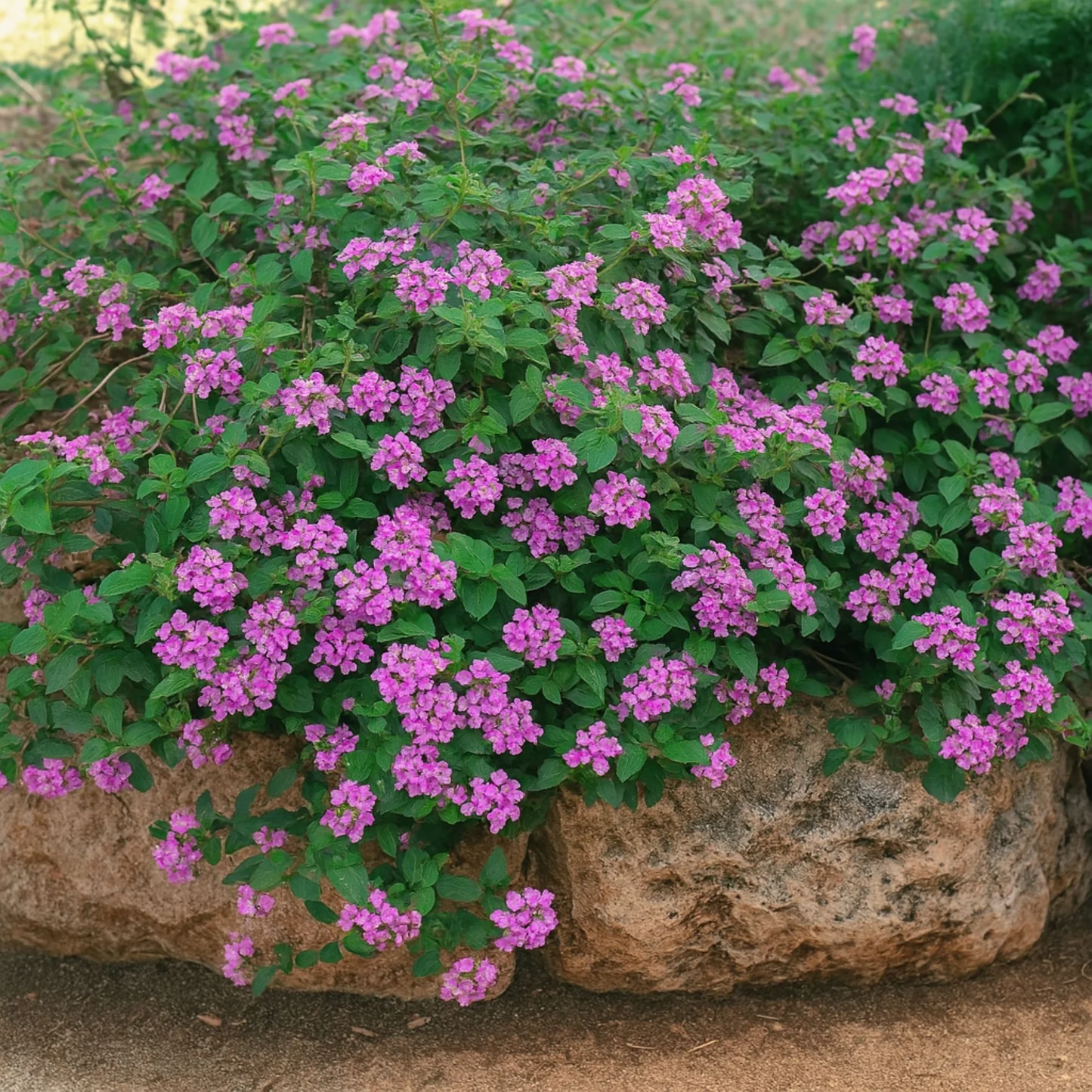
Lantana
Low, spreading color machine for hot spots. Purple, yellow, or orange flowers nearly year round. Butterflies love it. Can freeze back in a hard winter and comes right back.
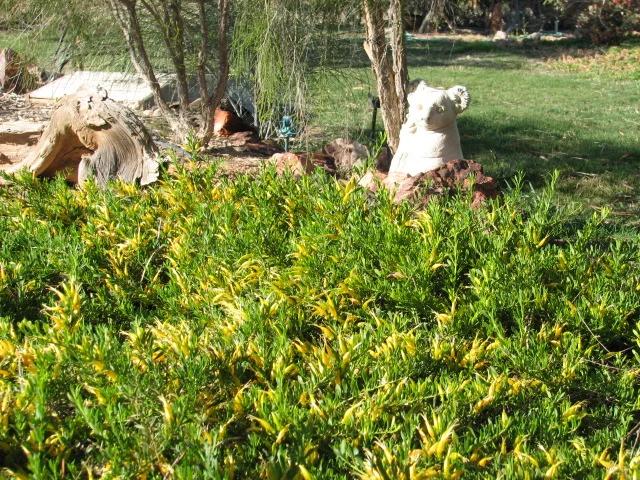
Emu Bush (Outback Sunrise)
Low, spreading Australian shrub about 2 feet tall with yellow flowers in winter and spring. Handles blasting afternoon sun and reflected heat like a champ.
Red Yucca
Clean, grassy clump about 3 feet with tall coral flower spikes the hummingbirds love. Fibrous, shallow roots and very little litter, so it's great near a pool or a foundation.
When you get to the banana stage, follow the same mulch, feeding, and watering steps in the Banana Spot section above.
Gutters and a Rain Barrel
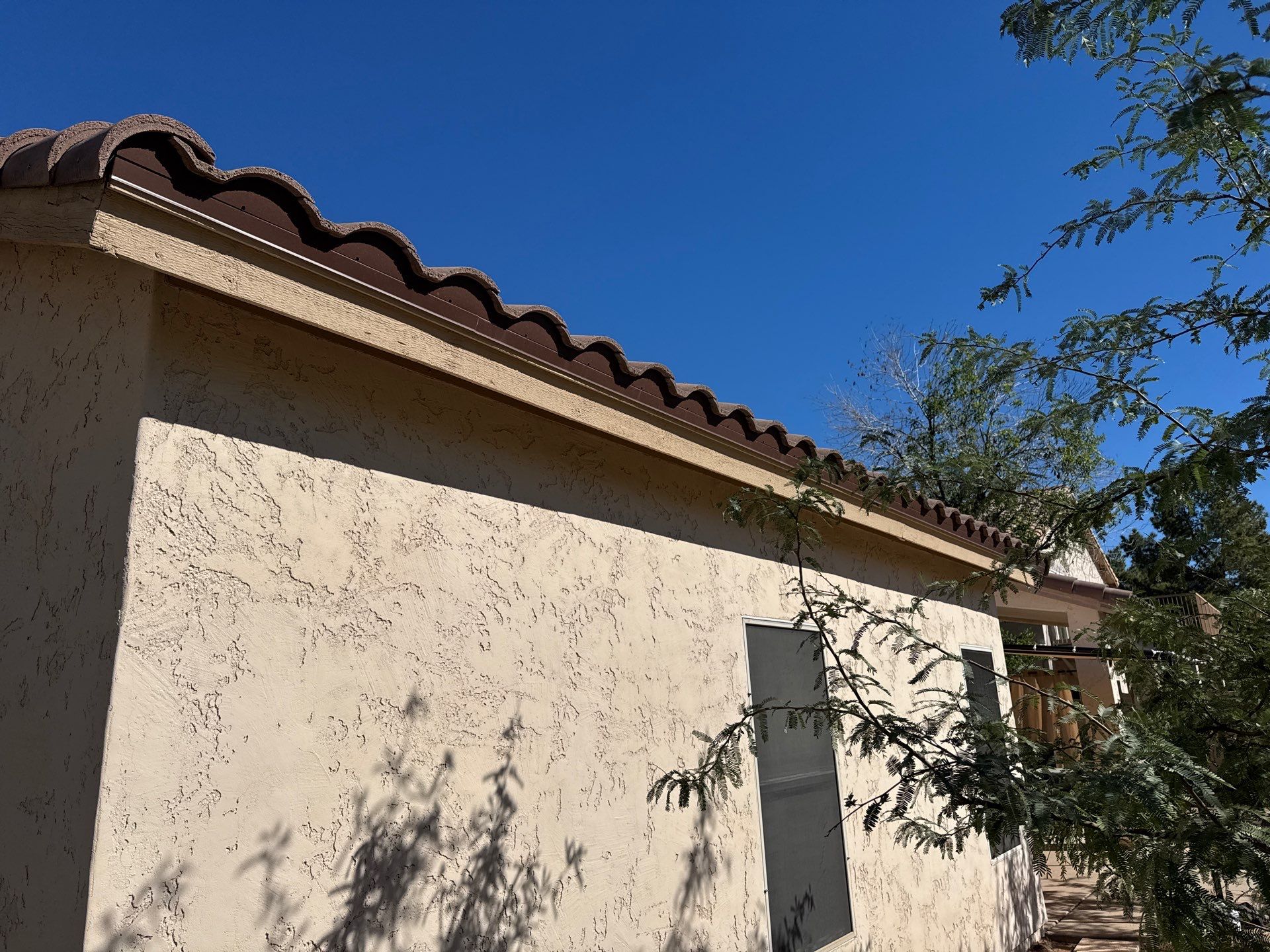
Gutters on this roofline would be great, even if they just run down into a 55 gallon barrel. A quick rule of thumb: one inch of rain on 1,000 square feet of roof is about 600 gallons, so a barrel fills fast. That's why the overflow matters as much as the barrel.
- Use a food grade 55 gallon drum with a tight lid and a fine screen over the inlet to keep mosquitoes and debris out.
- Set it up on blocks so you get some gravity pressure at the spigot and can fit a watering can underneath.
- Add an overflow fitting near the top with a hose attached, and run that hose wherever you want the extra water to go, like the base of a tree, the fruit trees, or a shallow basin around a shrub.
- Use the barrel water on your plants within a week or two. Rain water is great for them since it doesn't carry the salts our tap water does.
Desert Willow
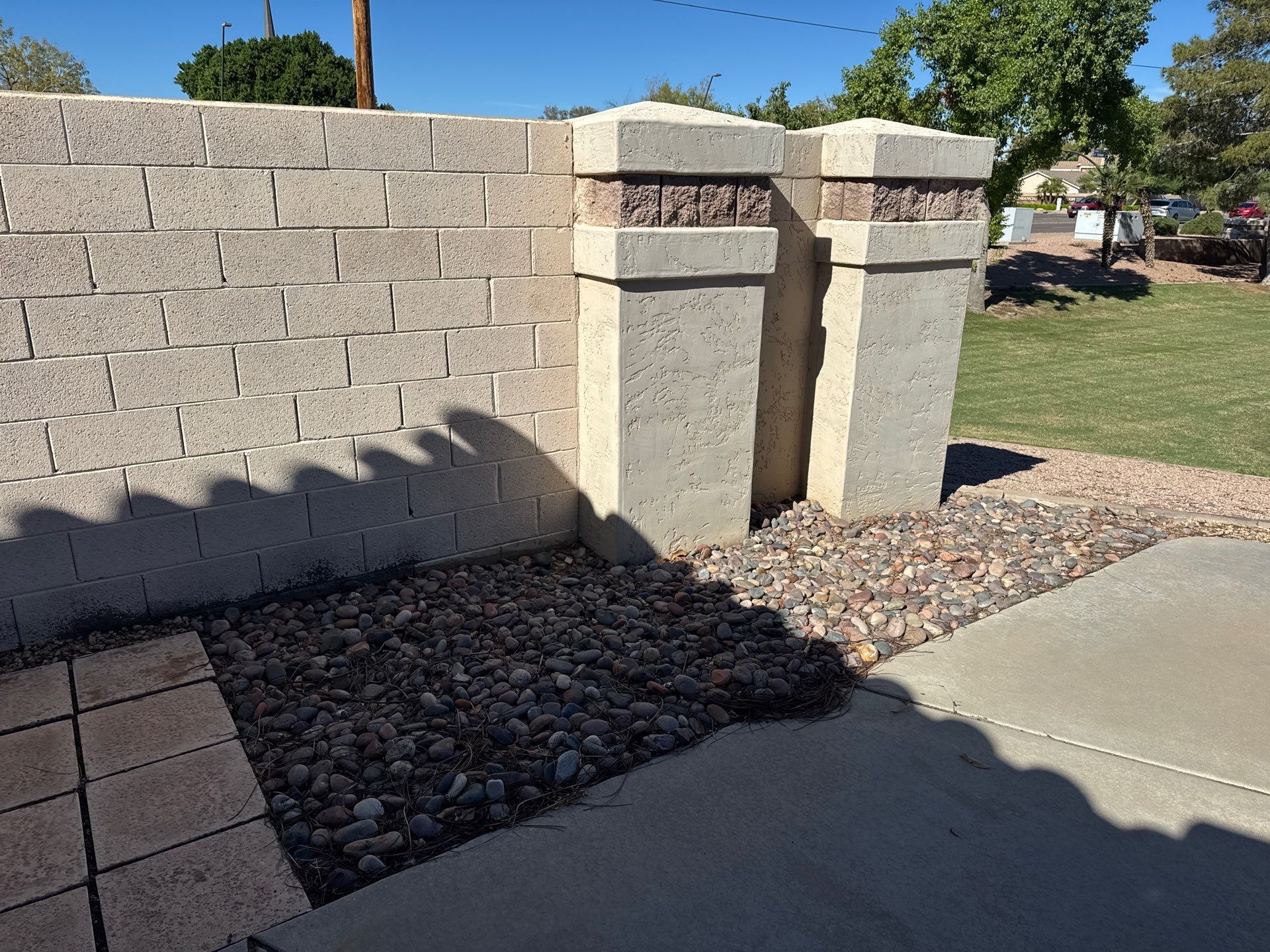
A desert willow here is a great option. I would plant it.
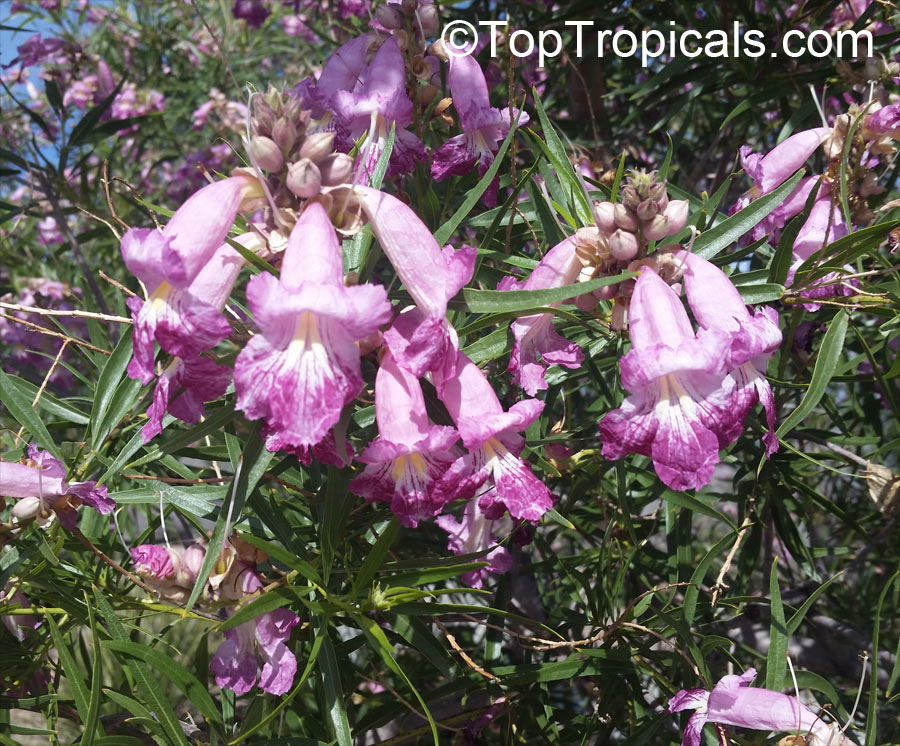
Desert Willow
Native small tree, 15 to 25 feet, with orchid-like pink, purple, or white flowers all summer that the hummingbirds and bees work constantly. Deciduous, so it gives summer shade and lets winter sun through.
Go with a 15 gallon tree. Plant it with the top of the root ball level with the ground, backfill with native soil and a tiny bit of compost, then compost and mulch on top, keeping the mulch a foot back from the trunk. It will need deep water through its first summer, every 3 to 4 days in the heat. After that you can mostly let it be. It takes far less water than trees that aren't desert adapted, and an occasional deep soak during the hottest dry stretches keeps it flowering.
SRP Free Tree Spot
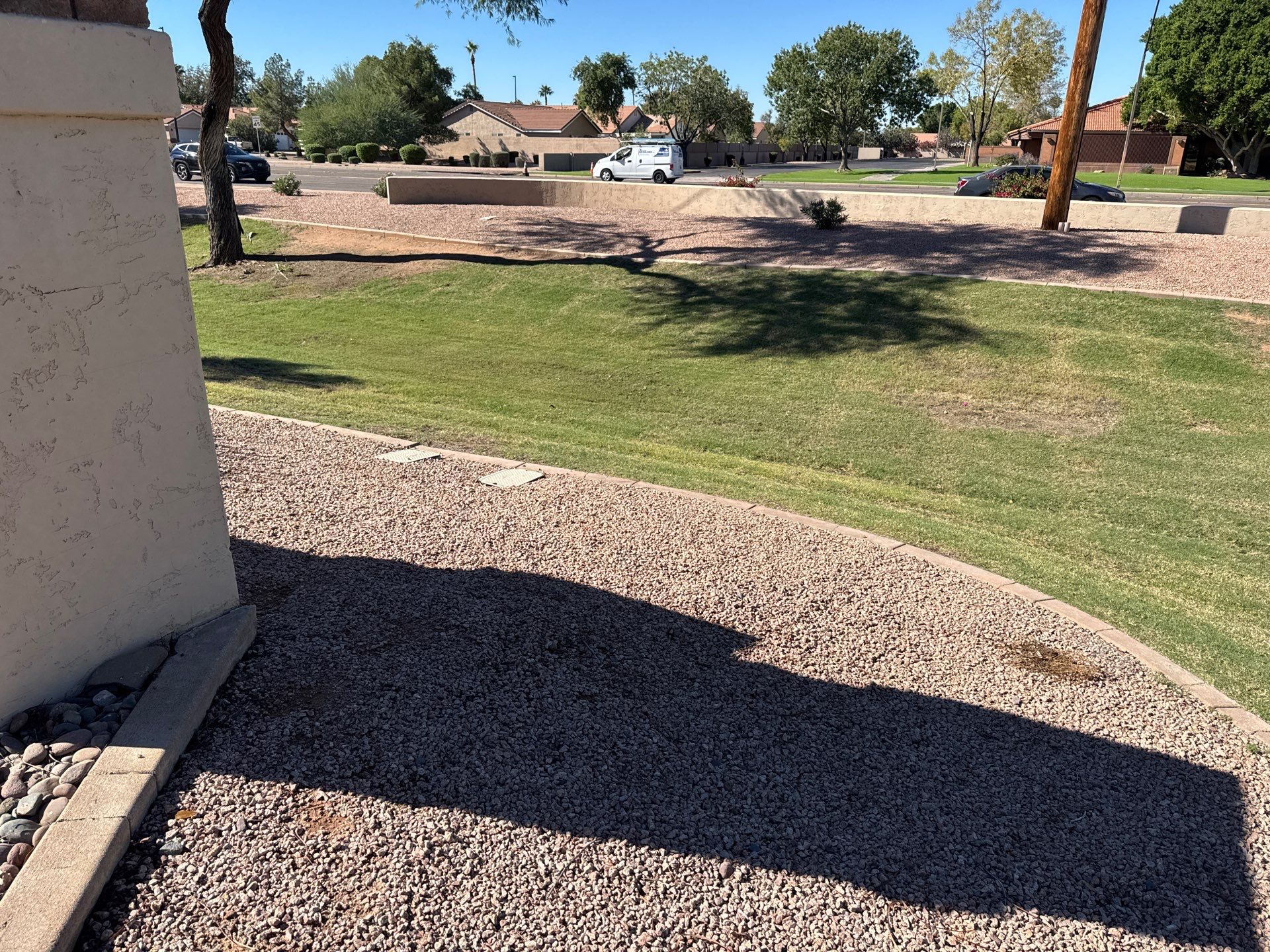
One of the free trees you get from SRP can go right here. It's just outside your area in the HOA, and since the HOA won't put another tree here, you'll plant it yourself. SRP customers can get up to two free desert adapted shade trees after a short online workshop. Details are at srpnet.com/shadetrees.
Finding your drip line. Look for the closest plants to this spot that already have emitters. You'll usually see a small black 1/4 inch tube coming up next to the plant. Follow that tube back and gently dig a few inches down. It will connect to a larger 1/2 inch black poly line running under the rock or dirt. Follow that line toward the tree spot.
Adding drip for the tree.
- With the water off, punch a hole in the 1/2 inch line with a drip punch tool (any hardware store has them) and push in a barbed connector.
- Run 1/4 inch tubing from the connector to the tree. Bury it a couple of inches so the sun doesn't break it down.
- Put 2 emitters on the root ball to start, 1 or 2 gallons per hour each. As the tree grows, add more emitters and move them out to the edge of the canopy.
- The next time the system runs, check that the new emitters are dripping before you bury the tubing for good.
- Since it's on a line watering established plants, the new tree will likely need extra deep watering with a hose through its first summer.
If you run into trouble or the line isn't where you expect, call Garrett at 480-678-9121. He's who I trust for irrigation.
Along the Driveway
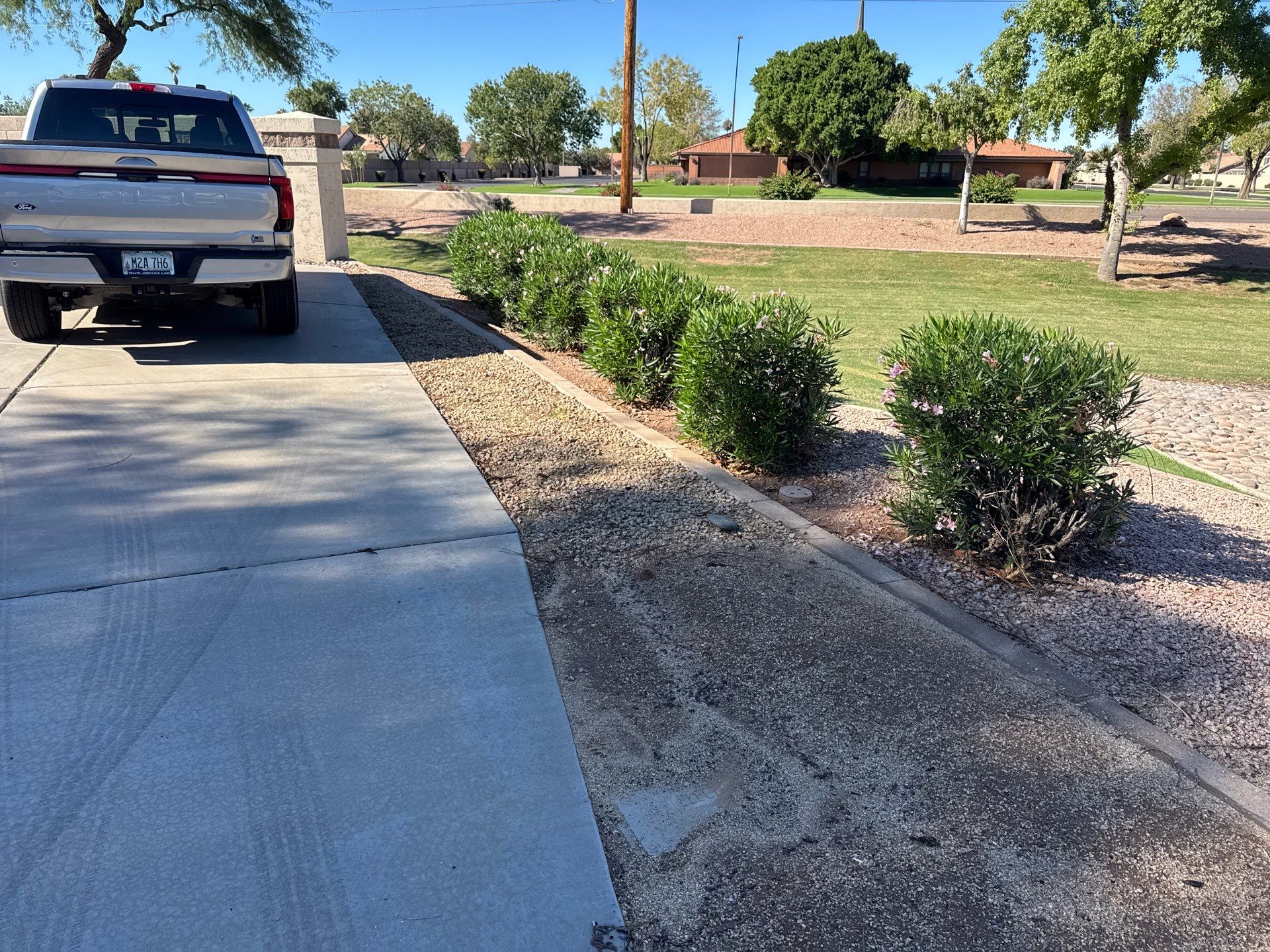
Down this side of your driveway, something desert adapted like more ruellia would work great. You want plants that only need water through the first summer and then can be fine on their own. Here are more options besides ruellia.
Ruellia
Desert ruellia with purple trumpet flowers spring through fall. Tough, 3 to 4 feet, handles full sun and reflected heat, and gets by on very little water after its first summer.
Desert Ruellia (white)
Small native shrub with white flowers, 2 to 3 feet. Fills in nicely between bigger plants.
Globe Mallow
Native with orange cup shaped flowers in spring, 2 to 4 feet. Native bees depend on it.
Brittlebush
Native silver mound, 3 feet, covered in yellow daisies in late winter and spring. Feeds a lot of native bees.
Desert Marigold
Native with silvery leaves and bright yellow flowers, about 1 to 2 feet. Reseeds a little, which is a good thing in a pollinator area.
Damianita
Low, fragrant mound about 1 to 2 feet with bright yellow daisies in spring and fall. Loves hot, sunny, tight spots.
Angelita Daisy
Tidy 1 foot mound with yellow daisies nearly year round. Takes reflected heat and stays small.
Turpentine Bush
Native, 2 to 3 feet, covered in yellow flowers in the fall when pollinators need late season food.
Penstemon
Upright flower spikes in spring, 2 to 4 feet, with a small footprint. Hummingbirds and native bees love them. Great for narrow spots.
Red Yucca
Clean, grassy clump about 3 feet with tall coral flower spikes the hummingbirds love. Fibrous, shallow roots and very little litter, so it's great near a pool or a foundation.
Creosote
The smell of rain in the desert. Native evergreen, 4 to 8 feet, with small yellow flowers and fuzzy seed balls. Once it's rooted in, it can live on rainfall plus an occasional deep soak in summer.
Keep the lower ones (damianita, angelita daisy, desert marigold) along the driveway edge and the taller ones (ruellia, brittlebush, creosote) farther back so nothing pokes into the car. Space them 3 to 4 feet apart.
Front Yard Natives
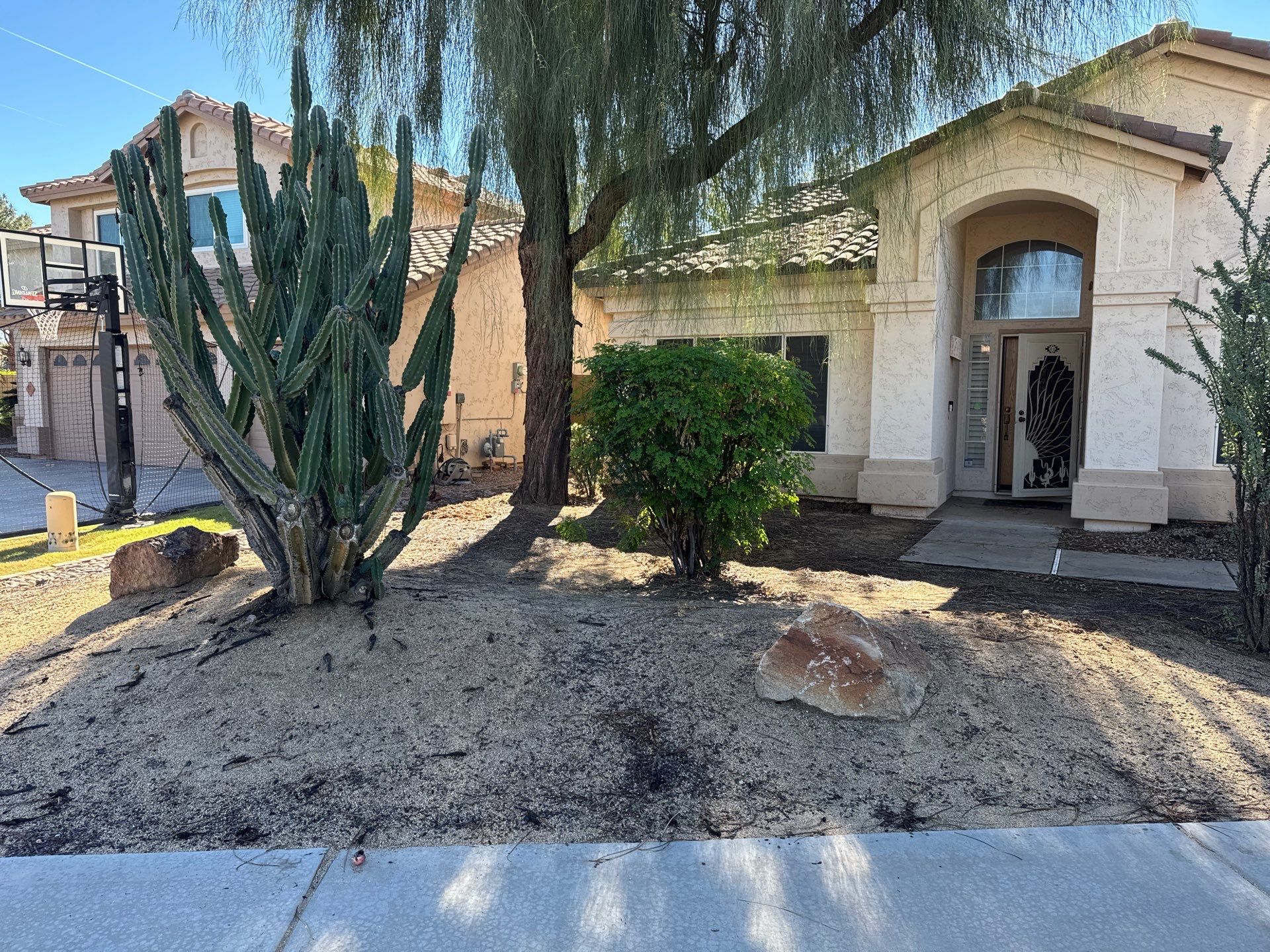
Here in the front yard, here's the full list of desert adapted native plants that won't take much upkeep and will bring in color and pollinators.
Globe Mallow
Native with orange cup shaped flowers in spring, 2 to 4 feet. Native bees depend on it.
Desert Milkweed
Upright gray-green stems, 3 to 4 feet. A host plant for monarch and queen butterflies. Every pollinator garden here should have some.
Chuparosa
Native with red tubular flowers through winter and spring, when hummingbirds need it most. 3 to 4 feet, loose and natural.
Penstemon
Upright flower spikes in spring, 2 to 4 feet, with a small footprint. Hummingbirds and native bees love them. Great for narrow spots.
Desert Marigold
Native with silvery leaves and bright yellow flowers, about 1 to 2 feet. Reseeds a little, which is a good thing in a pollinator area.
Brittlebush
Native silver mound, 3 feet, covered in yellow daisies in late winter and spring. Feeds a lot of native bees.
Greg's Mistflower
Fuzzy lavender flowers that are a butterfly magnet, especially queens in the fall. 1 to 2 feet and spreading. Handles some shade.
Autumn Sage
Salvia greggii. 2 to 3 feet with red, pink, or coral flowers spring through fall. A hummingbird favorite that fits small spaces.
Pink Fairy Duster
Native, airy shrub about 2 to 3 feet with soft pink puffball flowers in spring. Hummingbirds and bees both use it.
Baja Fairy Duster
Red puffball flowers almost year round, 3 to 5 feet. Hummingbirds visit it all day. Handles full sun and heat.
Damianita
Low, fragrant mound about 1 to 2 feet with bright yellow daisies in spring and fall. Loves hot, sunny, tight spots.
Angelita Daisy
Tidy 1 foot mound with yellow daisies nearly year round. Takes reflected heat and stays small.
Turpentine Bush
Native, 2 to 3 feet, covered in yellow flowers in the fall when pollinators need late season food.
Desert Honeysuckle
Anisacanthus. Orange flowers summer into fall, 3 to 4 feet. Tough and a hummingbird favorite.
Ruellia
Desert ruellia with purple trumpet flowers spring through fall. Tough, 3 to 4 feet, handles full sun and reflected heat, and gets by on very little water after its first summer.
Desert Ruellia (white)
Small native shrub with white flowers, 2 to 3 feet. Fills in nicely between bigger plants.
Red Yucca
Clean, grassy clump about 3 feet with tall coral flower spikes the hummingbirds love. Fibrous, shallow roots and very little litter, so it's great near a pool or a foundation.
Desert Lavender
Native, fragrant gray shrub, 4 to 6 feet, with small purple flowers the bees go crazy for.
Trailing Indigo Bush
Low, silvery spreading shrub about 1 to 2 feet with purple spring flowers. Takes full sun and reflected heat.
You can't fit all of these, so pick your favorites. Plant in loose groups of three or five rather than straight rows, put the lower growing ones near walkways and under trees, and don't stress about exact placement. A little randomness looks fuller and more natural.
Wildflower seed. Right now through early December is the perfect time to scatter native wildflower seed in the open spaces. Lupine, poppies, and desert bluebells come up in late winter and spring. A&P Nursery carries a good desert wildflower mix. Rake it lightly into the soil and keep it damp until it sprouts.
North-Facing Corner: Shade
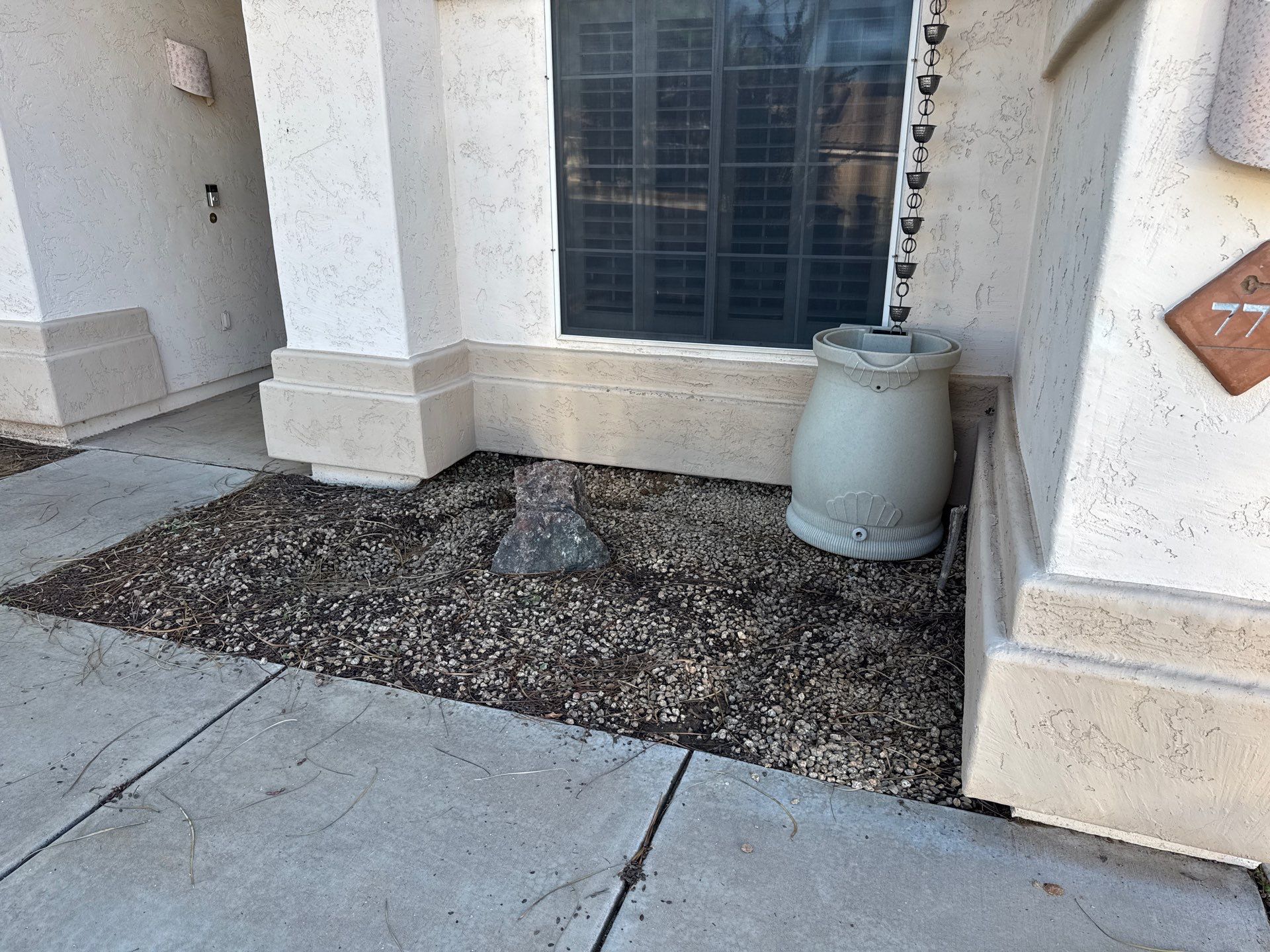
This north face hardly ever gets any sun at all. Here are plants that do well in mostly shade.
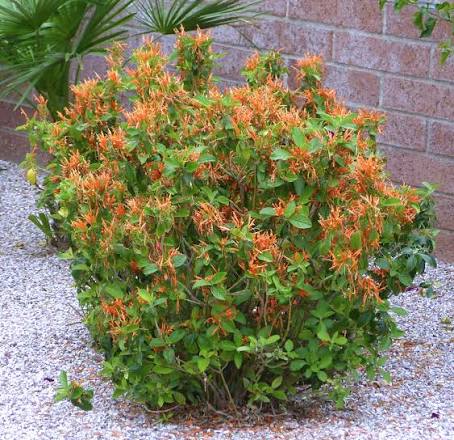
Mexican Honeysuckle
Orange tubular flowers almost year round and soft green leaves. Does very well in the filtered shade under a tree. Hummingbirds love it.
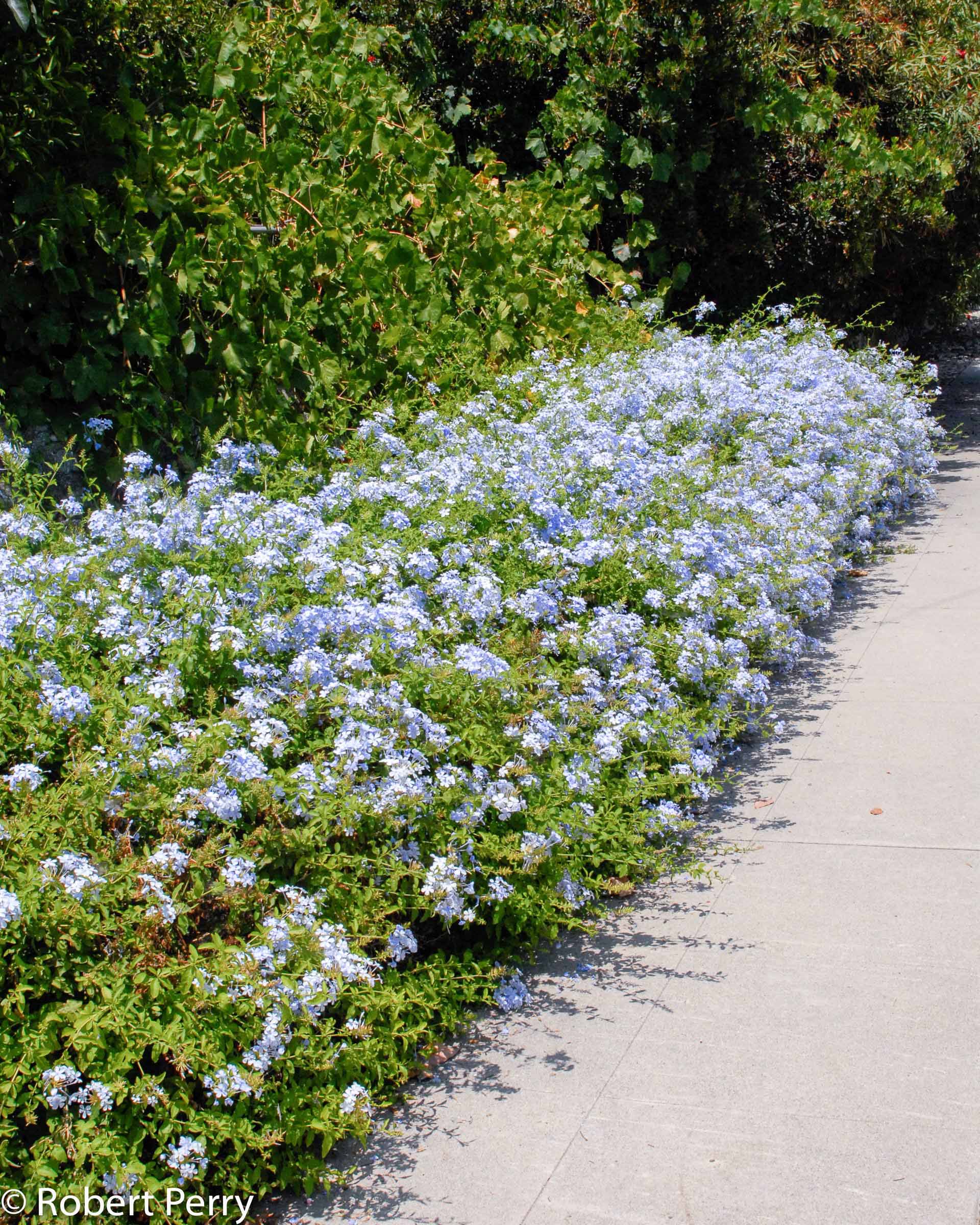
Cape Plumbago
Soft, mounding shrub with sky blue flowers most of the year. Happy in part shade, 4 to 6 feet tall and wider. Can lean on a wall and climb a bit if you let it.
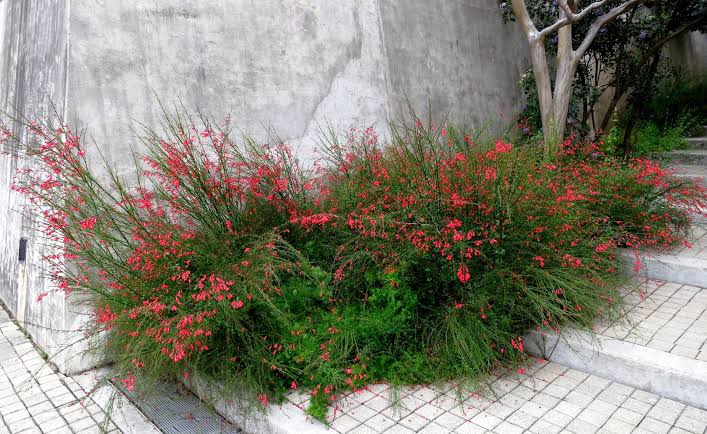
Firecracker Plant
Russelia. Cascading green stems with red tubular flowers that hummingbirds go after constantly. Takes shade well, 3 to 4 feet. Nice in front of a taller shrub.
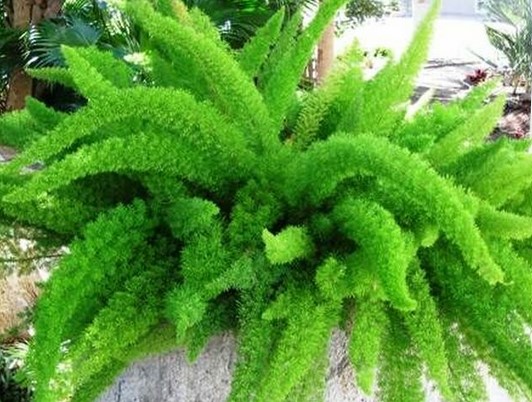
Foxtail Fern
Upright plumes of bright green, 2 to 3 feet. Loves shade and gives a soft, lush look at the base of a wall.
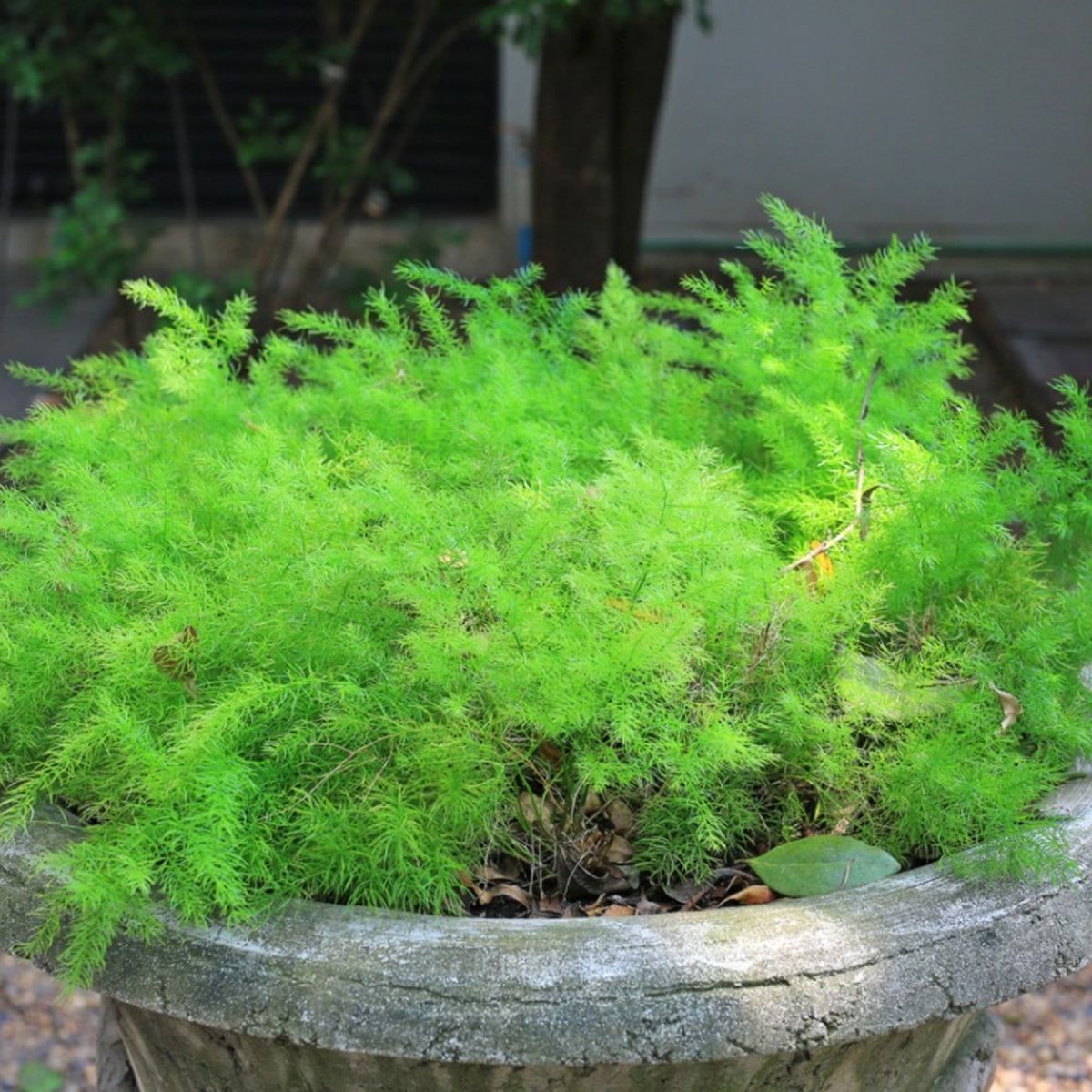
Asparagus Fern
Airy, feathery groundcover-style fern for shady spots. 2 to 3 feet, fills in gaps under taller shrubs.
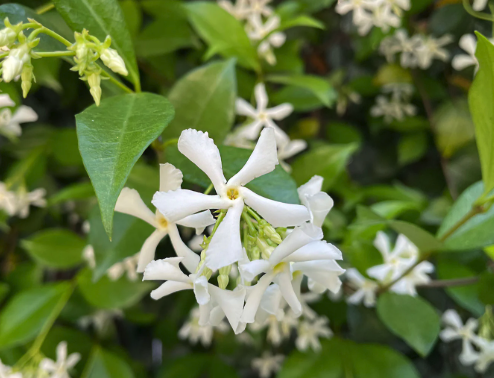
Star Jasmine
The vine you have now. Fragrant white flowers in spring, evergreen, good in part shade. It needs steady, deep water to get established, which is likely what it was missing.
Mexican honeysuckle and firecracker plant still bring in the hummingbirds even in the shade. Ferns are great tucked in front of the taller plants.
Under the Front Window: Desert Sage Hedge
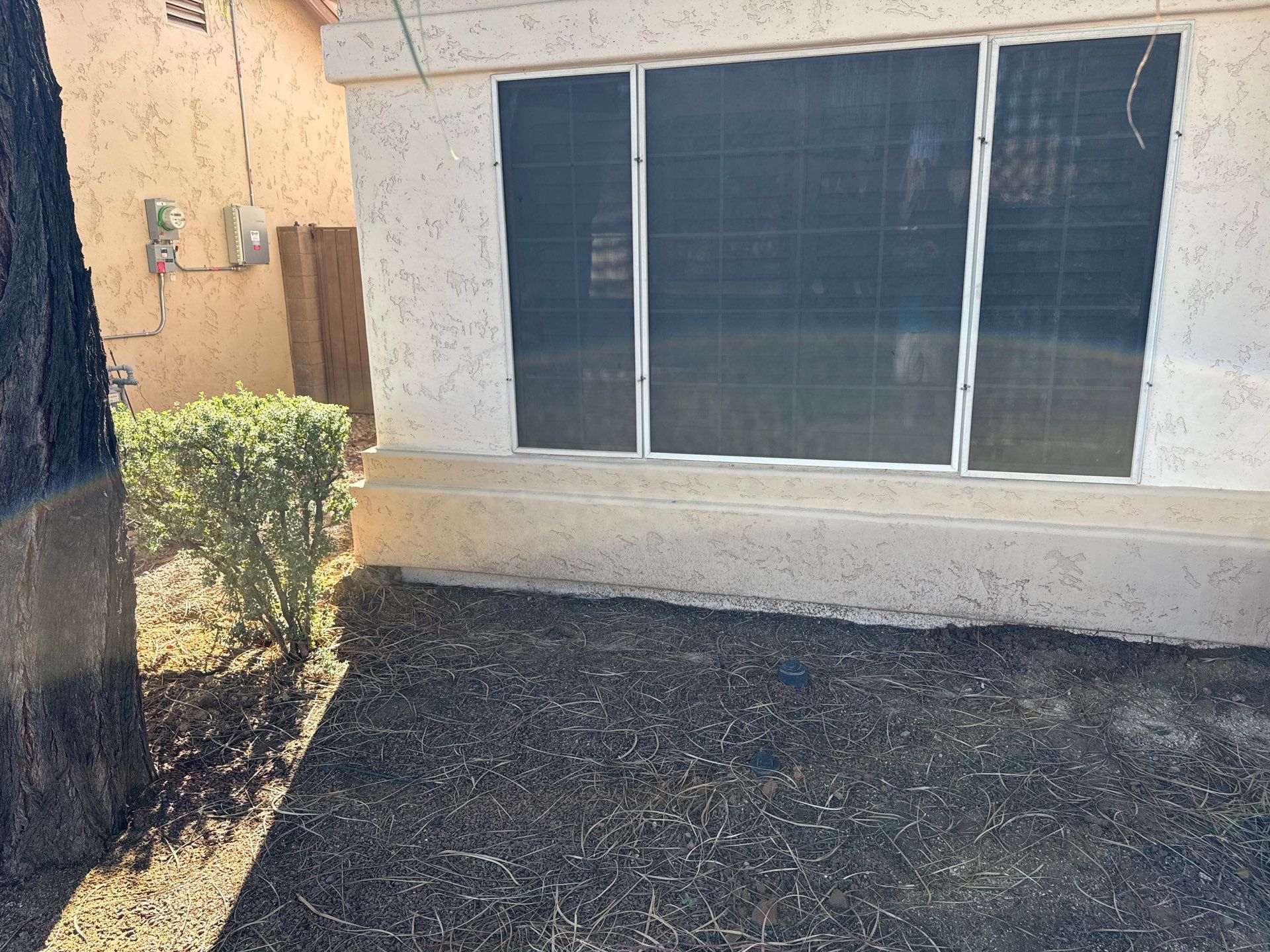
To the left there's a desert sage that looks great right now. I'd continue that hedge all the way in front of your window so you have one continuous hedge of desert sage. Plant them about 4 to 5 feet apart and let them grow together naturally. No shearing into boxes or balls. Left alone, they flower much more. Here are a few other options too.
Texas Sage
Silver or green leaves with flushes of purple flowers after summer humidity. 4 to 6 feet if you let it grow naturally. Thrives in full sun and heat and takes far less water than plants that aren't desert adapted.
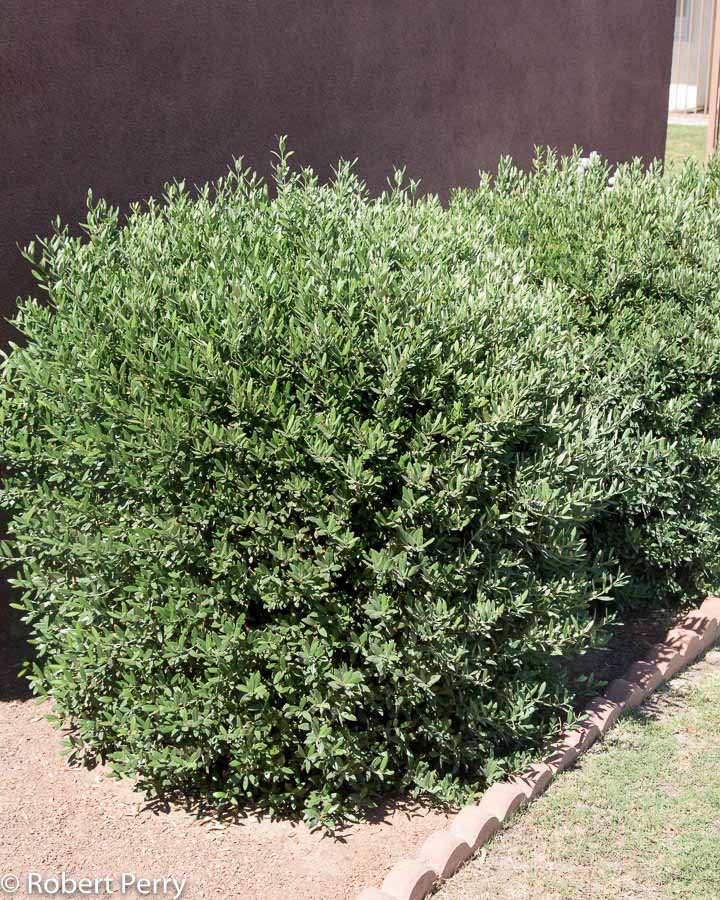
Little Ollie
Dwarf olive that stays dense and evergreen, 4 to 6 feet. No fruit and no pollen mess. Handles full sun and reflected heat by the pool.
Twisted Myrtle
Evergreen with small, twisted, fragrant leaves and white summer flowers. Grows 6 to 8 feet, dense and tidy, and takes the heat. Bees love the flowers.
Desert Ruellia (white)
Small native shrub with white flowers, 2 to 3 feet. Fills in nicely between bigger plants.
Soil and Feeding
Everything in this write-up comes down to the soil. Healthy soil full of life means stronger roots, better flowering, fewer pests, and plants that handle the heat. Here's how to do it yourself, and below that, what it looks like if we take care of it for you.
Doing it yourself:
- Compost. Spread a generous layer of quality compost around the drip line of the eucalyptus and any other trees, and closer in around shrubs. Two to three times a year. Arizona Worm Farm has great compost.
- Worm castings. Sprinkle worm castings around your plants every quarter. They're loaded with biology and gentle enough for anything.
- Organic fertilizer. Use a good organic liquid fertilizer that's high in fulvic acid, monthly. I recommend Catalyst Jenner 8, Organic Nitro Jen, and their kelp fertilizer.
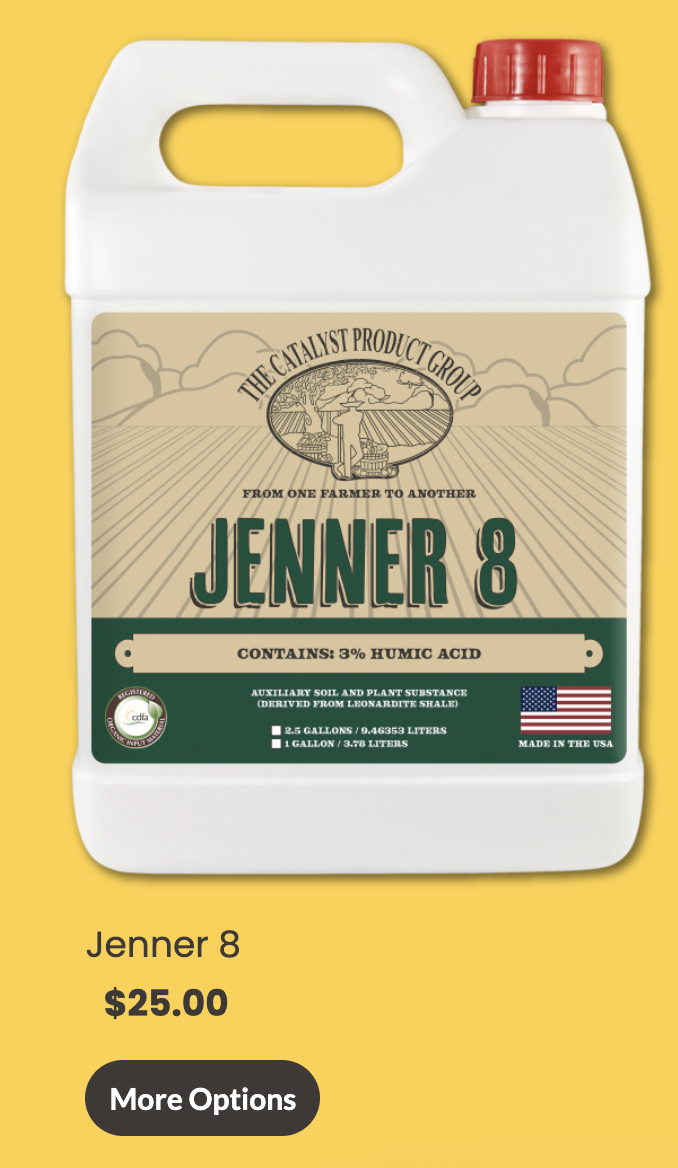
Catalyst Jenner 8
All-around organic feed for the whole landscape.
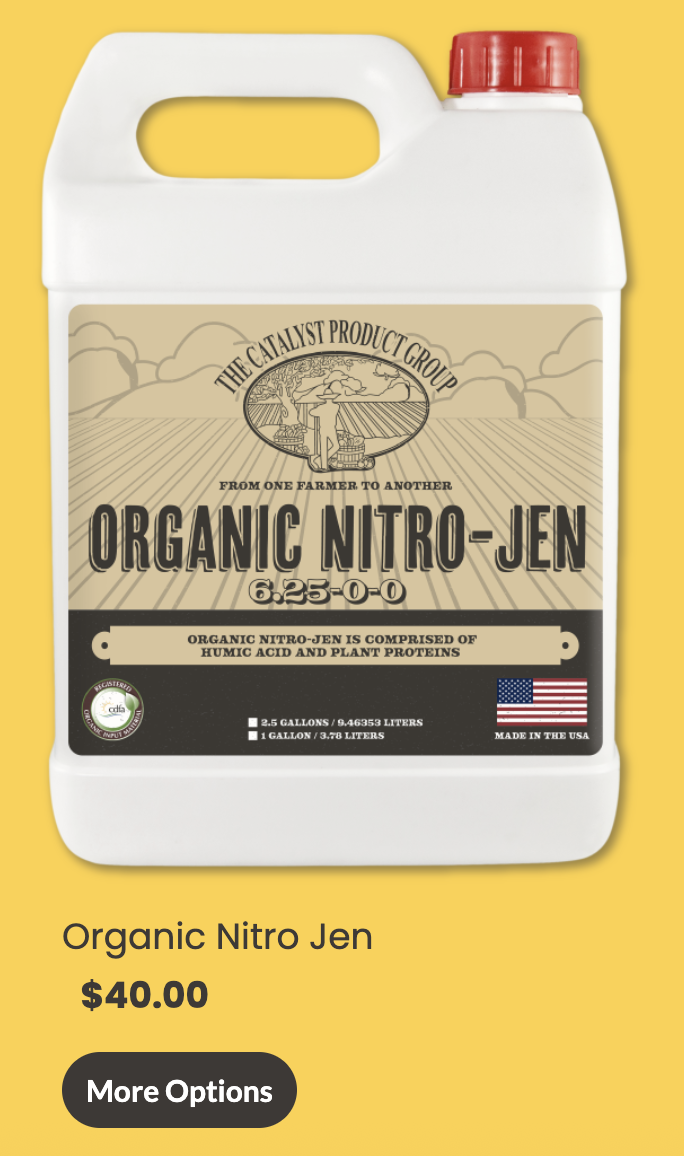
Catalyst Organic Nitro Jen
Organic nitrogen for strong green growth.
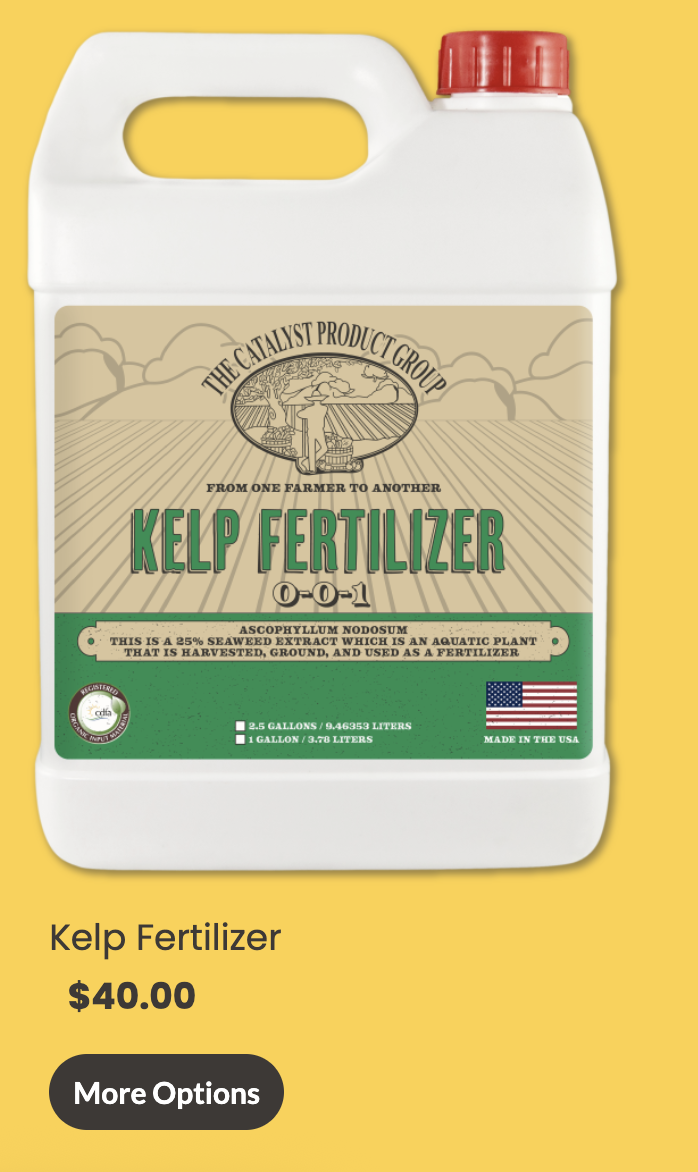
Catalyst Kelp
Trace minerals and natural growth hormones. Helps with heat stress.
You can find these at Catalyst Product Group. Click Products, then Home and Garden.
Or we can do it for you. Our monthly fertilizing program covers the whole landscape with a liquid organic spray every month plus compost three times a year, and you get a recap video after every visit.
Liquid organic feeding every month, compost three times a year, recap video after each visit.
Text us to get startedMore details here: Monthly Fertilizing.
Next Steps
You've got two good ways to go from here.
- Do it yourself. Everything you need is in this write-up. You're already in the Garden Nerd Club as a consult client, so you have direct access to me there. Post photos as you go and ask questions anytime.
- Have us plant it. We do planting. Pick the plants you like from each area, send them over, and I'll put together a planting proposal with pricing. No rush, whenever you're ready.
For anything irrigation related, call Garrett at 480-678-9121. We don't do any irrigation work ourselves.