

Amy Jacober
Here's everything we talked about
Thanks for having us out, Amy. Everything is laid out below in the order we walked the yard, and every plant suggestion has its own card so you can see what it looks like and why it fits that spot.
Back Wall: Replacing the Oleander
Full sunPrivacy screenThe oleander along the back wall is very old and very woody, and it just doesn't look great anymore. I agree with you on pulling it out. Old oleander like this rarely comes back nicely from a cut back, and it's going to keep getting bare at the bottom.
My main pick for this wall is green hopseed. It grows fast, stays evergreen, takes the full sun on that wall without complaint, and makes a soft, full screen that looks natural instead of clipped. Space them about 6 to 7 feet apart. Go closer to 6 feet if you want it to close in and look full sooner, closer to 7 if you're fine with it taking a little longer to knit together.
Go with 5 gallon plants. Don't spend the money on anything larger. Hopseed grows fast, and a 5 gallon roots in quickly and catches up to a bigger plant within a season or two.
Arizona rosewood is a great alternative if you want something a little denser and slower, or you can mix the two along the wall.

Green Hopseed
Evergreen screening shrub that reaches 10 to 15 feet tall and about 6 to 8 feet wide. Takes less water than plants that aren't desert adapted once it's rooted in, handles full western and southern sun, and has a light, airy look. Let it grow into its natural shape rather than shearing it flat and it will stay full to the ground.

Arizona Rosewood
Dense, dark green evergreen screen that reaches 10 to 15 feet tall and about 8 to 10 feet wide. A little slower than hopseed but very full from top to bottom, with white spring flowers and red fall color on some leaves. Handles full sun and takes less water than plants that aren't desert adapted. Space about 7 to 8 feet apart.
West-Facing Garage Wall
West facingHot afternoon sunRight now this spot has orange jubilee. It's very old, very tall, hard to keep under control in that space, and woody at the bottom. Orange jubilee loves this kind of heat, which is why it got so big, but the full size version is just too much plant for this spot.
A great swap is Sparky Tecoma. It's a smaller cultivar in the same family as orange jubilee, so it loves that same west-facing heat and blooms just as hard, but it stays a more manageable size and fits the space without constant cutting. The flowers are multicolored too, red-orange with golden yellow throats, which looks great against a wall and keeps the hummingbirds coming.
Space them about 4 to 5 feet apart along the garage. Plant in the fall or spring, not summer, so they have time to root in before the heat.


Sparky Tecoma
Compact Tecoma that stays roughly 4 to 6 feet tall and wide. Bicolor red-orange and yellow flowers from spring through fall, glossy green leaves, and it thrives in reflected west heat. Same easy care as orange jubilee in a size that fits against a garage.

Orange Jubilee (What's There Now)
Gets 10 to 15 feet tall and wide when it's happy, which is why yours has outgrown the spot. Great plant in a big open area, just too large here.
Chinese Elms: Root Flares
3 treesDIY friendlyYou have three mature Chinese elms back here. They're not in bad shape, but at the base you can see some of the root flare and not nearly enough of it. These are older trees, and over the years soil has built up around the trunks.
The root flare is where the trunk widens out into the roots, and it's meant to sit at or just above the soil. When it's buried, the bark stays wet, it can start to rot, and roots can start growing up and around the trunk instead of out into the soil. Those are called girdling roots, and over time they choke the tree off like a belt that keeps getting tighter.
The video below shows why an exposed root flare matters, with real examples of what buried flares and girdling roots look like.

Video not loading? Watch it on YouTube.
How to open up the root flare
- Work very gently around the base of each tree. Use a hand trowel, a stiff brush, or your hands, not a shovel jammed in close to the trunk.
- A strong stream of water from a hose works really well for blasting the dirt away without damaging the bark or the roots.
- Keep going until you see the trunk flare out into the main roots. That's your target grade.
- As you go, look for any roots growing up and over the root flare or wrapping around the trunk. Small ones can be cut cleanly with sharp loppers or a pruning saw.
- If you find a large girdling root, or one that's as thick as your wrist, don't cut it yourself. Send me a photo in the Garden Nerd Club and we'll take care of it.
- Once it's open, leave the flare exposed. When you mulch, keep the mulch at least a foot back from the trunk.
If you'd rather not do this yourself, we can do the root flares on all three for you. Just text me.
Deep watering the elms
Trees this size need deep water to stay healthy, and the little bit they get from the lawn sprinklers and nearby drip only wets the top few inches. Shallow water keeps the roots up near the surface, where they dry out fast and get stressed in the heat. Here's how to give them a good deep soak:
- Set a hose at the base of the tree on a slow drip, just a trickle, so the water soaks in instead of running off.
- Do this in all four corners around each tree, out toward the edge of the canopy where the feeder roots are, not right up against the trunk.
- Let it run long enough to soak about 3 feet down. That usually takes a few hours per spot. Push a long screwdriver or soil probe into the ground afterward. If it slides in easily to about 3 feet, you're there.
- Move the hose to the next corner and repeat until you've done all four.
- Deep water like this about once a month in the cooler months and every 1 to 2 weeks in the summer.
East-Facing Wall
East facingGood amount of shadeThis wall faces east and gets a decent amount of shade, which opens up some plants that would struggle on the hot side of the yard. You mentioned you've had cape plumbago before and liked it, and it's a perfect fit here. Morning sun and afternoon shade is exactly what it wants.
Hibiscus would also do really well on this wall. If you want more height, go with a red hibiscus, which gets taller and fuller. If you want something a little shorter and lower to the ground, a yellow variety is the way to go. You can also mix plumbago and hibiscus along the wall for a blue, red, and yellow combo.
Space plumbago about 4 to 5 feet apart and hibiscus about 4 feet apart.
I've added a handful more options below that all like this kind of east wall with some shade. You can't fit all of these, so pick your favorites and mix two or three along the wall.

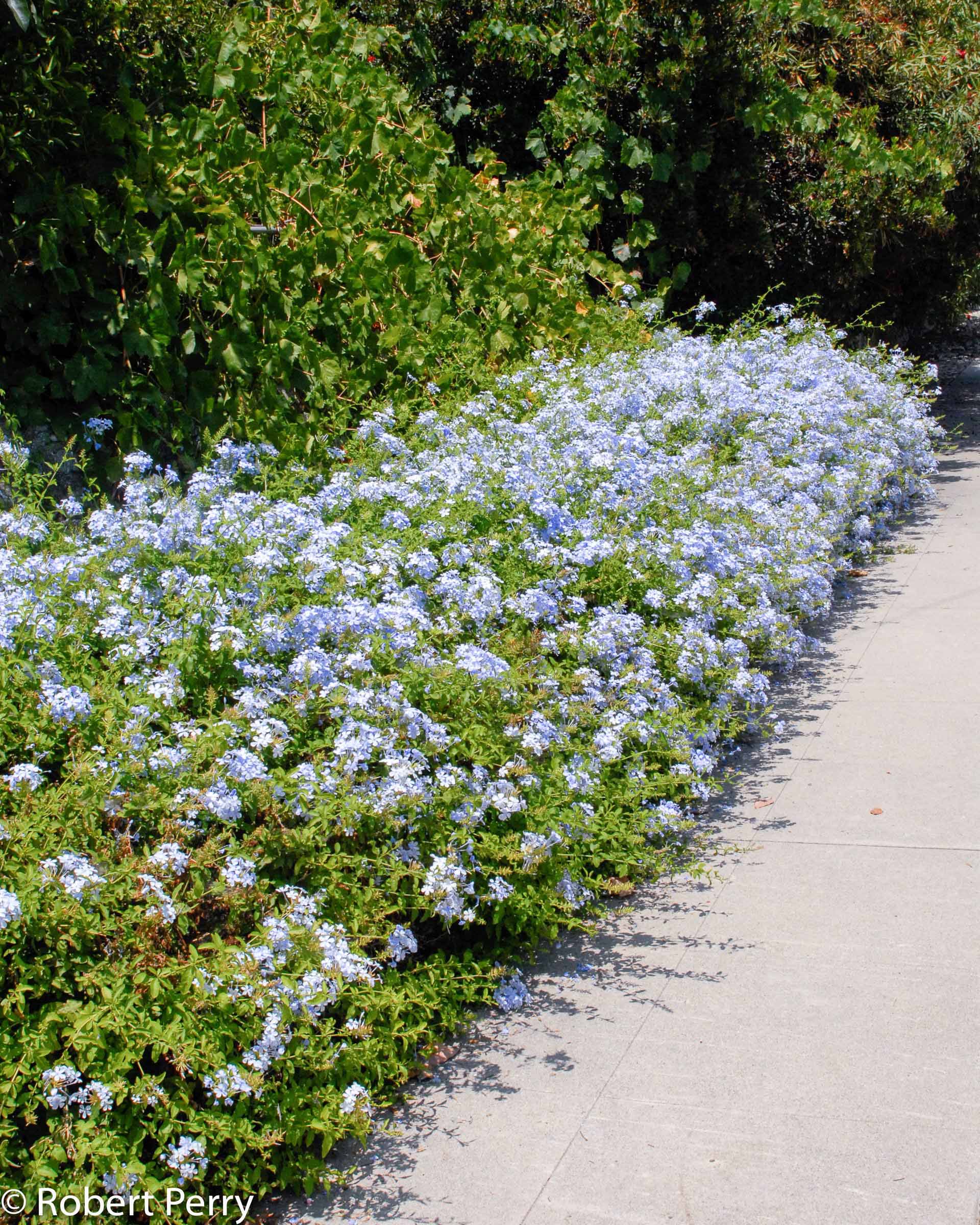
Cape Plumbago
Soft mounding shrub, about 4 to 6 feet tall and wide, covered in sky blue flowers most of the year. Loves east exposure. It can get nipped on cold nights, but it bounces right back in spring.
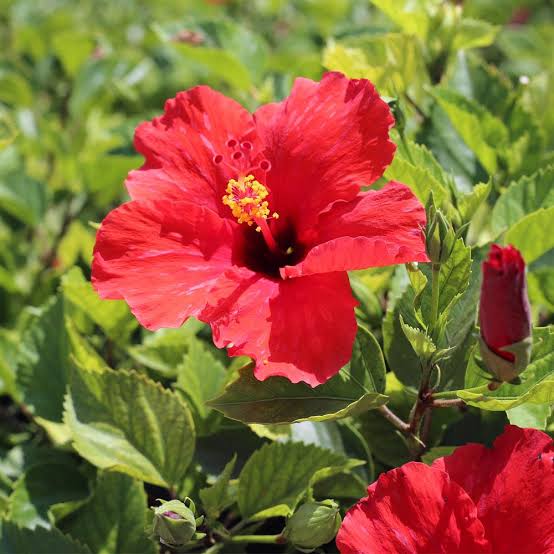
Red Hibiscus
Big tropical blooms and glossy leaves, and it can reach 6 to 8 feet against a wall. The pick if you want height and a little more privacy. Cover it on frost nights.

Yellow Hibiscus
Same tropical look in a lower growing variety, usually staying around 3 to 5 feet. Great if you want to keep this area lower and more open.
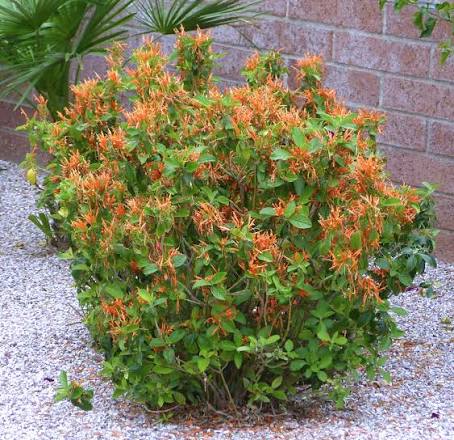
Mexican Honeysuckle
Soft, bright green shrub about 3 to 4 feet tall with orange tubular flowers almost year round. One of the best flowering plants for shade here, and hummingbirds are on it constantly. Space about 3 to 4 feet apart.
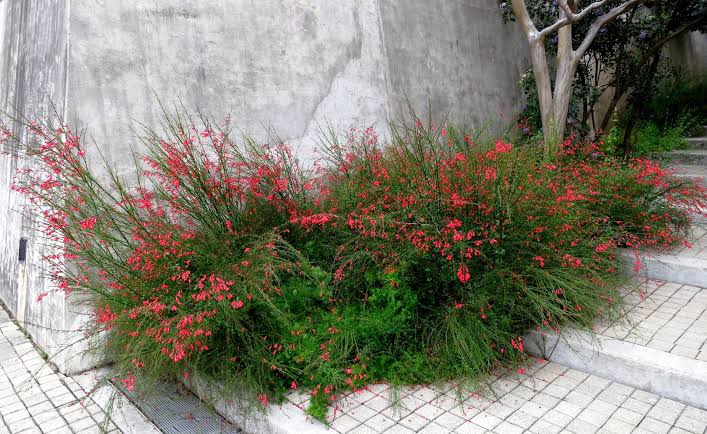
Firecracker Plant
Fine, rush-like stems that arch over and cover themselves in little red tubular flowers. Stays about 3 to 4 feet and does great with morning sun and afternoon shade. Nice in front of taller shrubs.
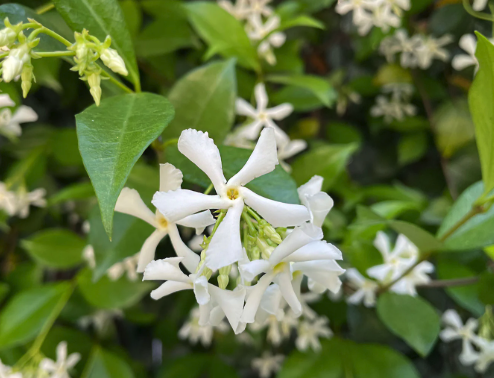
Star Jasmine
Evergreen vine with glossy leaves and very fragrant white flowers in spring. Give it a simple wire or trellis on the wall and it will cover it. Loves east exposure. Space about 5 to 6 feet apart.

Bower Vine
Lush, tropical looking vine with pink and white trumpet flowers from spring into fall. Does best out of the harsh afternoon sun, which makes this wall a good spot for it. Needs a trellis or wire to climb.
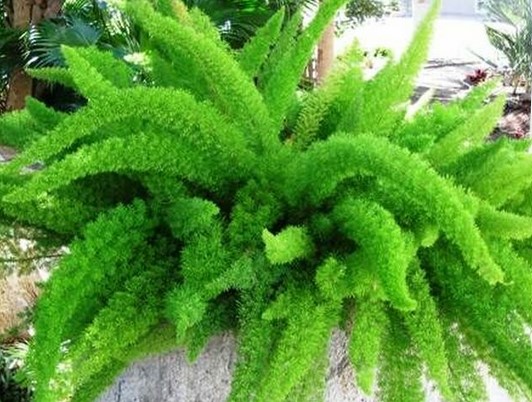
Foxtail Fern
Upright, fluffy plumes about 2 feet tall that give a soft, lush look in shady spots. Great as a lower layer in front of plumbago or hibiscus.
Skyflower Area
East facingReset + add moreJust a little north of the last spot, still on the east-facing wall, you have skyflower. It's a good plant for this spot. It just needs a proper reset, and more of them would fill this stretch out nicely.
Resetting the existing skyflower
- Timing: wait until after frost danger has passed, around late February to March. Skyflower is frost sensitive, and pruning before that can expose new growth to cold damage.
- Thin, don't shear: follow each long or crossing branch back to where it meets a larger branch or the base, and cut there. Skip the hedge trimmers, since shearing makes a dense outer shell with bare wood inside.
- Take out the oldest wood: remove a few of the oldest, woodiest stems right at the base. That pushes fresh growth from the bottom and keeps it full low down.
- How much: taking it back by about a third is a solid reset. If it's really woody and leggy, it can handle a harder cut down to 18 to 24 inches and it will regrow fast once the weather warms.
- After that, let it grow into its natural shape and it will flower much better.
For adding more, extra skyflower would tie in nicely with what's there. Mock orange is another good option for this spot if you want something a little different, and I've added a few more below that all do well on an east wall with some shade. You can't fit all of these, so pick your favorites.

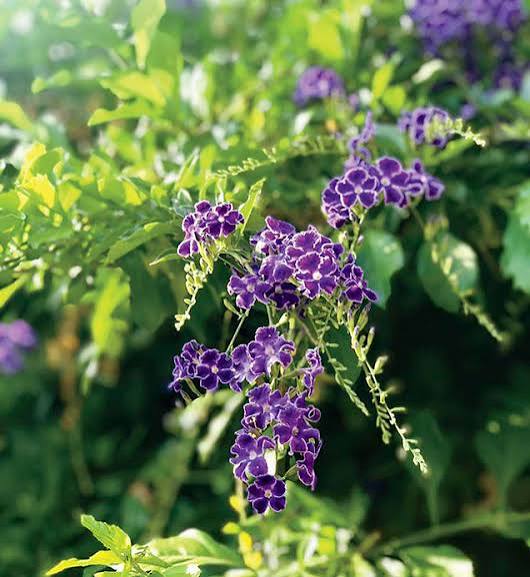
Skyflower (Duranta)
Fast growing shrub with cascading purple flowers and golden berries, getting about 6 to 10 feet tall. Does great with morning sun and afternoon shade. Space new ones about 5 to 6 feet apart.
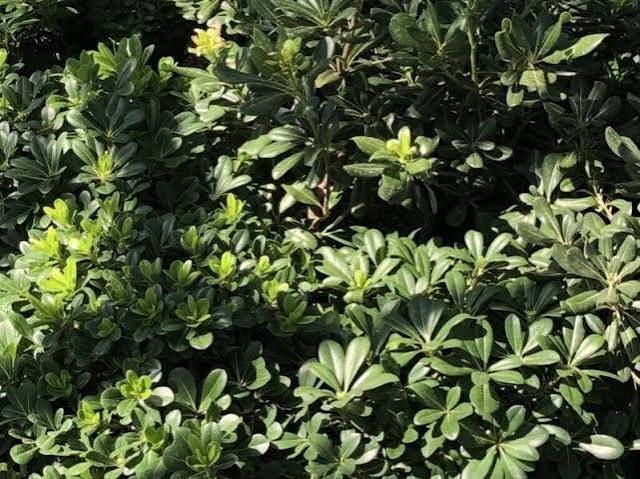
Mock Orange (Pittosporum)
Dense evergreen shrub with glossy leaves and clusters of white flowers in spring that smell like orange blossoms. Grows about 6 to 10 feet tall and handles shade well, so it's very happy on an east wall. Space about 5 to 6 feet apart.
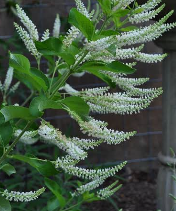
Sweet Almond Bush
Airy shrub about 6 to 8 feet tall with long spikes of white flowers in fall that smell like vanilla and almond. Butterflies and bees love it. Space about 5 to 6 feet apart.
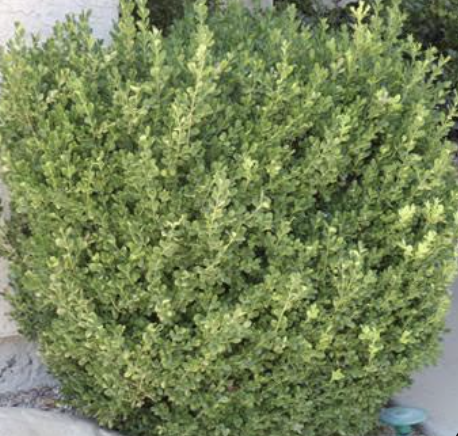
Japanese Privet
Glossy, dense evergreen that makes a solid green backdrop 8 to 10 feet tall. Very dependable in partial shade. Space about 5 feet apart if you want it to grow together into a hedge.
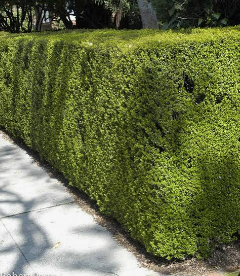
Dwarf Myrtle
Compact, fine-leaved evergreen that stays around 3 to 5 feet with fragrant white flowers. A good pick if you want this stretch a little lower. Space about 3 to 4 feet apart.
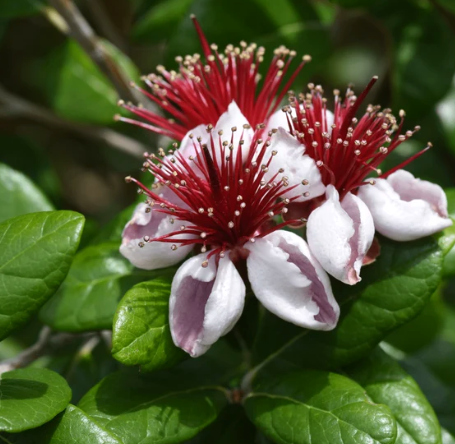
Pineapple Guava
Silvery green evergreen shrub about 8 to 10 feet tall with edible pink and red flower petals in spring and sweet fruit in fall. Makes a great screen and handles morning sun with afternoon shade well.
Replacing the Lost Chinese Elm
New shade tree15 gallonA mature Chinese elm used to be in this spot. It died, and the tree that replaced it didn't last long either. My suggestion is to go back with another Chinese elm. It matches the three you already have, gives you symmetry, and fills the hole in the canopy so the whole backyard feels shaded again.
Go with a 15 gallon tree. It's tempting to buy the biggest box you can, but smaller trees root in faster and end up healthier and often bigger long term than large boxed trees. If there's a stump from the old tree, you don't need to grind it. Just plant beside it.


Chinese Elm
Semi-evergreen shade tree with a graceful, weeping canopy and attractive mottled bark. Grows 30 to 40 feet tall and wide and handles Phoenix heat well. A proven tree in your yard already.
Planting it right
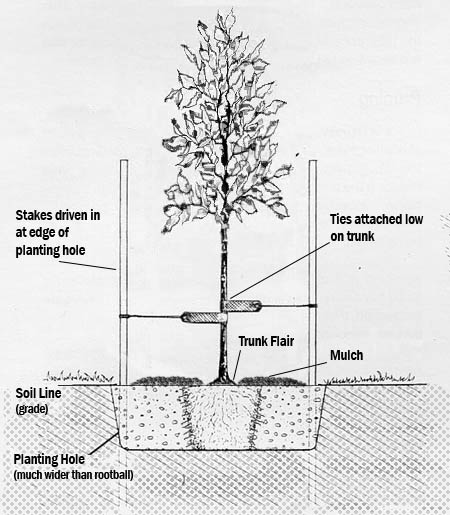
- Dig wide, not deep: make the hole 2 to 3 times as wide as the root ball but only as deep as the root ball. The tree should sit on solid, undisturbed soil so it doesn't sink.
- Find the root flare first: before it goes in the ground, brush the soil off the top of the root ball until you find where the trunk flares out. Nursery trees are often potted too deep. That flare should sit at or slightly above grade, never buried. This is exactly what happened to the elms in Section 3, so it's worth getting right from day one.
- Loosen circling roots: if roots are circling the outside of the root ball, tease them out or make a few shallow vertical cuts so they grow outward.
- Backfill: use the native soil you dug out with just a tiny bit of compost mixed into the hole. Water as you backfill to settle the soil and get rid of air pockets.
- Top it off: lay compost on top of the soil around the tree, then mulch over the compost. Don't work it in. Keep the mulch at least a foot back from the trunk.
- Stake loosely: use two stakes on opposite sides with flexible ties set low enough that the trunk can still move a bit in the wind. That movement builds a stronger trunk. Remove the stakes after about a year.
Watering a newly planted tree
The biggest thing with a new tree is not letting the root ball dry out. The root ball is the potting soil it came in, and it dries out faster than the soil around it, so even if the ground looks damp, the roots can be thirsty. Water deep, and water less often as it settles in.
- Weeks 1 to 2: water deeply every 2 to 3 days.
- Weeks 3 to 4: every 4 to 6 days.
- Weeks 5 to 6: every 6 to 8 days.
- Weeks 7 to 8: every 8 to 12 days, depending on weather.
- How deep: each watering should soak 24 to 36 inches down. A long, slow soak does that, not a quick sprinkle. A soil probe or a long screwdriver is an easy way to check. It should push in easily to that depth after watering.
- Don't skip a watering just because it rained. Our rain rarely soaks in deep enough to count.
- As the tree grows, the water needs to move out with the canopy. Ask Garrett to set up the emitters so they can be moved or added out toward the drip line over time.
Planting now in the fall is perfect timing. The tree gets all winter and spring to build roots before its first summer.
Grass Under the Elms
Heavy shadeLawn alternativeRight now the grass under the Chinese elms is struggling across the board, and the reason is simple: too much shade. Bermuda needs full sun to grow, and under a canopy like this it thins out, goes patchy, and never fills back in no matter how much you water or feed it. On top of that, the elm roots are competing with it for water.
Instead of fighting it, I'd switch to something that actually likes shade. Dichondra or clover are the two best options for under these trees. Both stay low, stay green, handle the shade, and are much softer underfoot than Bermuda.
Which one to pick
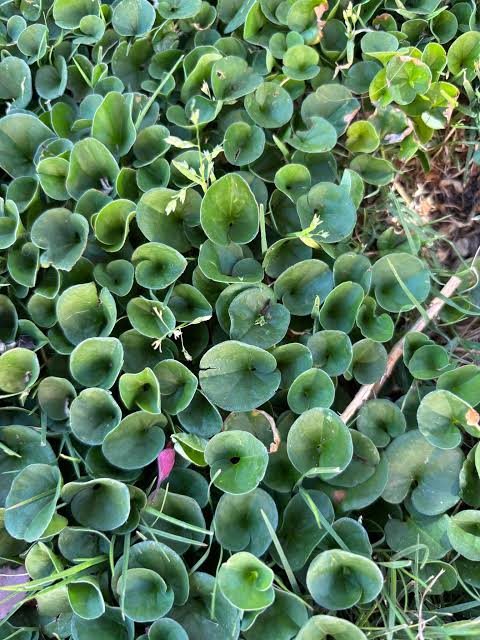
- Dichondra if you want the most lawn-like look. It makes a dense, soft carpet of little round leaves, loves shade, and handles light to moderate foot traffic. It does want consistent moisture, so it needs to be on sprinklers.
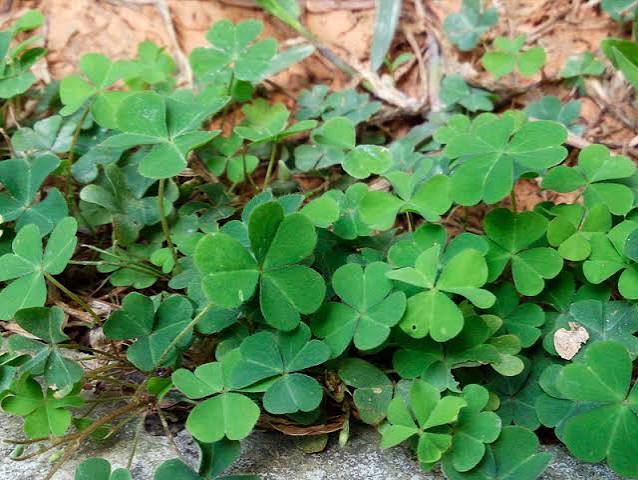
- Clover if you want the easiest option. It fills in fast, stays green through most of the year, and pulls nitrogen out of the air and puts it into the soil, which feeds the elms too. It handles kids and dogs better than dichondra. Microclover stays shorter and tighter if you want a more uniform look.
- You can also blend the two, or plant clover in the high traffic areas and dichondra in the shadiest spots.
Dichondra
Low, creeping ground cover about 1 to 2 inches tall with small kidney shaped leaves. Thrives in shade and rarely needs mowing. Best seeded in spring once the soil warms up (March to April), or planted from flats any time outside of summer.
Clover
White clover or microclover stays green, fills in fast, and improves the soil as it grows. Handles shade and foot traffic well. Fall is the best time to seed it here, so right now (October through November) is perfect timing.
How to put it in
- Clear it out: scalp or pull the struggling grass so the seed can make contact with the soil. You don't need to till, and you shouldn't dig around the elm roots.
- Prep the surface: rake the top inch loose and spread a thin layer of compost (about a quarter inch) over the area. Keep the compost and seed off the elm trunks so you don't rebury the root flares.
- Seed: spread the seed at the rate on the bag, then lightly rake it in or press it down so it's in contact with the soil.
- Water to germinate: keep the top of the soil damp with short, frequent waterings until it sprouts, usually 1 to 2 weeks. Once it's up and growing, back off to deeper, less frequent waterings so it roots down.
- Feed it: the Catalyst products in the Feeding section below work great on dichondra, clover and grass, and really green it up.
If your sprinklers in this area need adjusting for even coverage under the trees, give Garrett a call at 480-678-9121.
Aloe Vera
Use it moreLess waterI love that you have aloe vera back here, and it's clearly happy. You have the right light for it in this part of the yard, bright morning sun with some afternoon protection. I'd use it more around the yard as a low accent in front of shrubs, along edges, and in the gaps between larger plants.
The one thing to keep in mind is watering. Aloe takes a lot less water than the shrubs and trees around it, and too much water is what kills it, not too little. So:
- Don't put it on the same emitters as thirsty plants like hibiscus or a new tree. Either keep it on its own line or set it far enough from emitters that it only catches a little.
- Plant it a little high in loose, well-drained soil. Skip the heavy compost layer right at its base.
- Yours will keep making pups (small offshoots at the base). Pull those off with a bit of root and replant them wherever you want more. Free plants.
- Cover it on hard frost nights. The leaves can get damaged in the upper 20s.

Aloe Vera
Succulent with thick, gel-filled leaves, about 1 to 2 feet tall, with tall yellow flower spikes in winter and spring that hummingbirds love. Spreads by pups, so it's easy to fill in an area from the plants you already have.
Raised Garden Beds
East sideVegetable gardenOn the east side of the house you have three raised garden beds set up. The one thing I noticed is that part of the concrete runs through here, so half of each bed is sitting over it. That half isn't going to drain the same or let roots go as deep, and the concrete heats up and bakes that side of the bed in summer.
There are skinnier raised beds available that can go right up against the wall, so you don't have to deal with the concrete at all. Long, narrow beds around 18 to 24 inches wide work great in a side yard, since you can reach everything from one side, and the east exposure gives you morning sun with afternoon protection, which is ideal for a lot of what grows here.
For beds, I recommend Olle Gardens. Their metal raised beds are modular, so you can set them up in a long, narrow shape that fits right along the wall. They're tall enough to give roots real depth, they won't rot like wood, and they hold up to our sun for years. They also look clean, which is nice in a side yard you walk through.
For soil, go with the raised bed mix from Arizona Worm Farm. It's a quality blend with plenty of compost and biology in it, which is what makes vegetables really take off. Raised bed soil settles and breaks down over time, so when the beds drop an inch or two, top them off with more of their mix, plus some worm castings, before each planting season.
For what to plant and when, here's my Maricopa County planting guide. Right now is a great time for leafy greens, carrots, beets, peas, broccoli, and herbs.

Feeding the Whole Yard
Everything in this yard, from the elms to the new shrubs, does best when the soil is alive. Healthy soil biology is what makes nutrients available to plants, holds water longer, and keeps roots strong through the summer. Here's how to do it yourself:
- Compost: spread compost generously around the drip line of the trees (out under the edge of the canopy, where the feeder roots are) and closer in around shrubs. I recommend Arizona Worm Farm.
- Worm castings: add worm castings every quarter. They're packed with biology and gentle enough to use around everything.
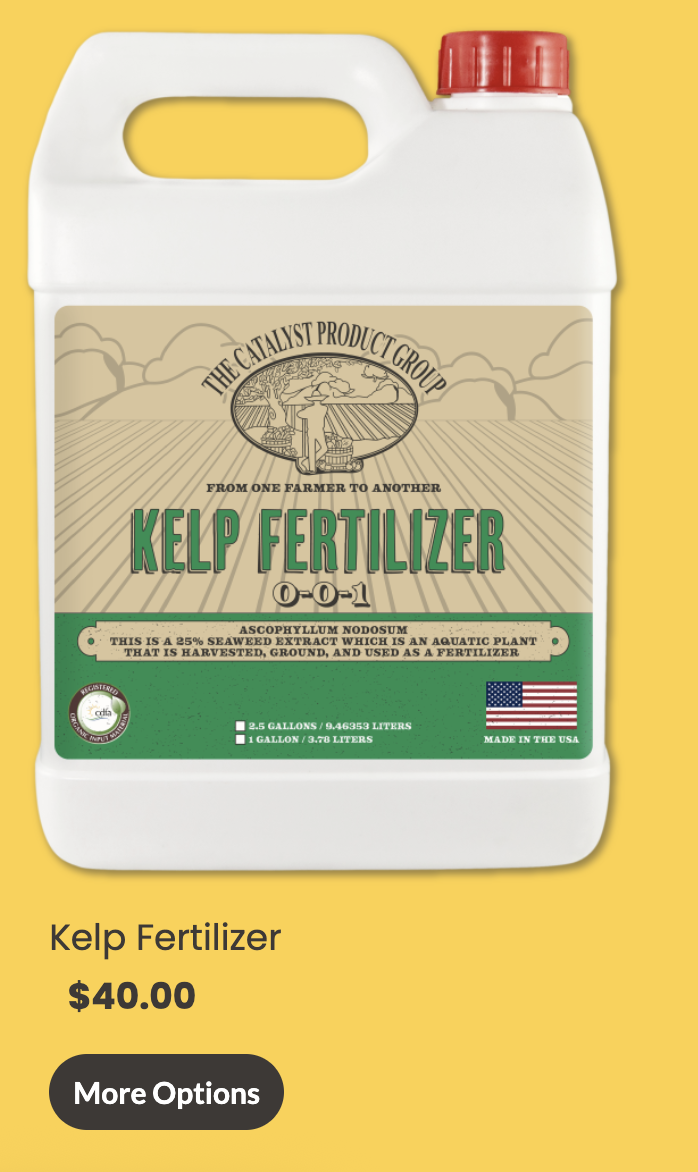
- Organic fertilizer: feed monthly with a good organic fertilizer that's high in fulvic acid. The ones I use are from Catalyst: Jenner 8, Organic Nitro Jen, and their kelp fertilizer. You can find them here (click Products, then Home and Garden).

Jenner 8
Organic fertilizer high in fulvic acid that feeds the soil biology and the plant at the same time.

Organic Nitro Jen
Organic nitrogen to push healthy green growth, especially useful for new plantings getting established.
Kelp Fertilizer
Trace minerals and natural growth compounds that help plants handle heat and stress.
Monthly Fertilizing Program
- Monthly liquid organic feeding for the whole landscape
- Compost applied three times a year
- A recap video after every visit so you know what we did and what we saw
Where to go from here
You can take this write-up and do as much of it yourself as you want. As a consult client, you're already in the Garden Nerd Club, so you have direct access to me there. Post photos, ask questions, and I'll help you along the way.
When you're ready to plant, we do planting too. If you'd like, I can put together a planting proposal for any or all of these areas whenever the timing works for you. Just text me.
For anything irrigation related, including new emitters for the back wall and the new elm, call Garrett at 480-678-9121.
You can see more about our planting services at thegardennerd.org.
Everything in one spot
Thanks again, Amy
It was great walking the yard with you. Reach out anytime in the Garden Nerd Club, and follow along for more tips.