
Carla Rush
9902 E Olla Ave, Mesa, AZ 85212
Thanks for having me out. Below is everything we walked through, in the order we walked it: shade trees for the hot west side, covering your block walls with plants the hummingbirds will love, vines for the pergola and swing, mulch, watering, and feeding.
Replacing the Tree That Died
Back yard lawn, 10 to 20 feet from the house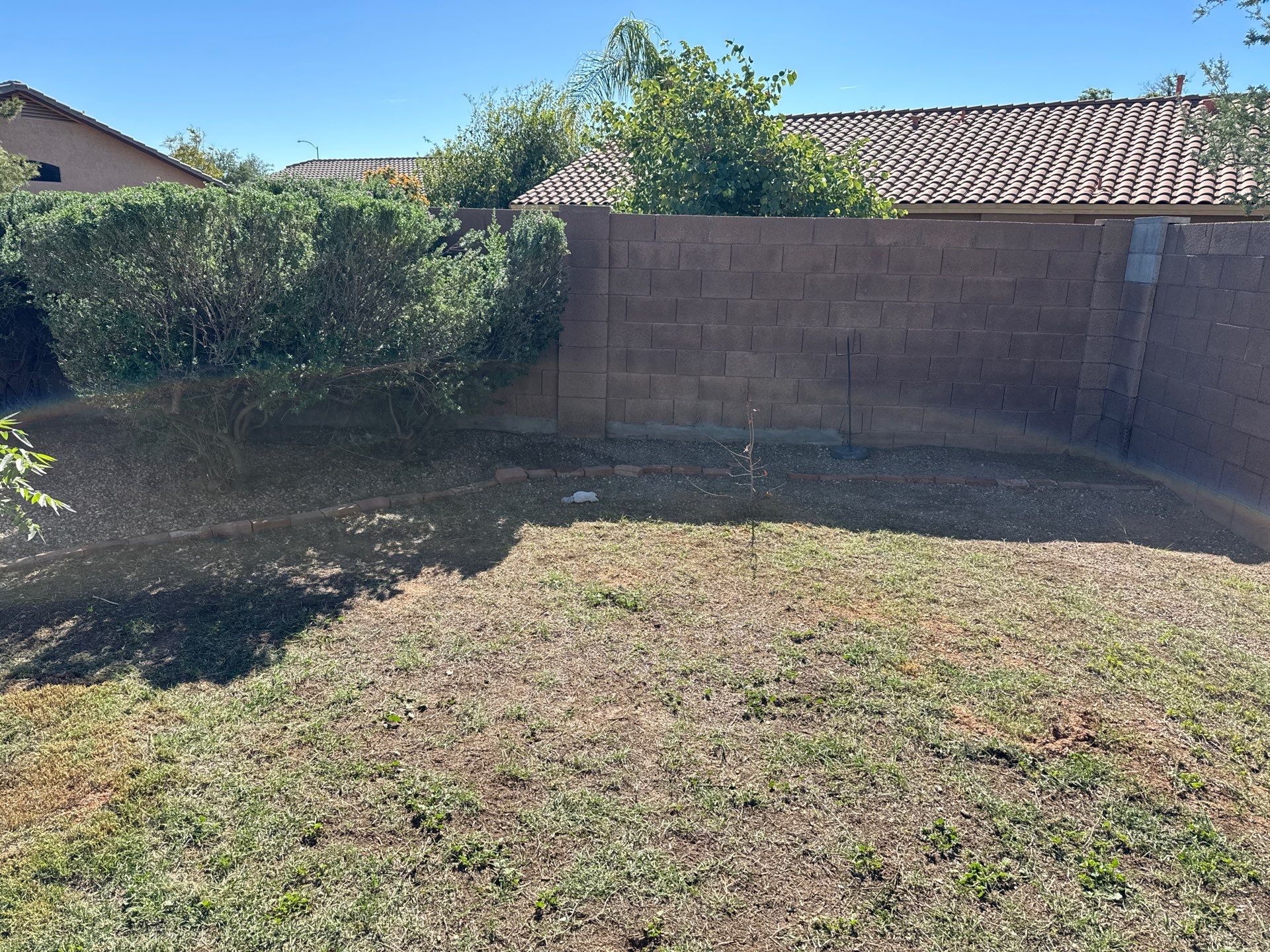
You want a tree back here that gives you real shade, and there's enough room for one with the house 10 to 20 feet away. You already have a red push pistache to the north, so my first pick is a second red push pistache. They'll match, and as they grow their canopies can knit together into one big shade line. Red push stays well behaved around a house, and it gives you some of the best fall color you can get in the Valley.
I'd go with a 15 gallon tree. Smaller trees settle in faster and almost always end up stronger long term than a big boxed tree. Because it's in the lawn, give it a defined water well with mulch inside it so the grass stays off the trunk (more on that in Section 08).

Red Push Pistache
Matches the one you already have. Rounded canopy, 25 to 30 feet, red new growth in spring and bright fall color. Deciduous, so you get winter sun.
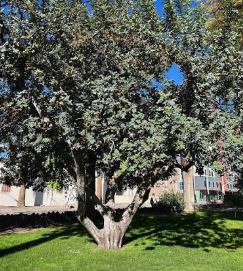
Carob
Evergreen, dense, dark green shade year round, 25 to 35 feet. The pods are safe for dogs. Takes less water than trees that aren't desert adapted.
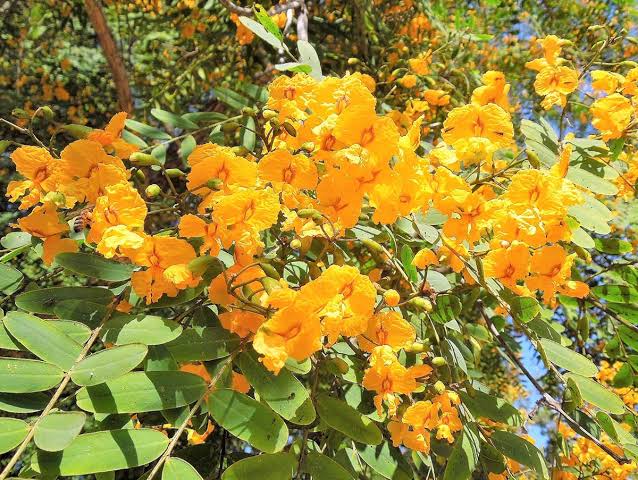
Tipu
Fast growing, wide umbrella of shade with yellow flowers in late spring. 25 to 35 feet. Semi-evergreen here.
The Sage That Was Cut Back
Side of the house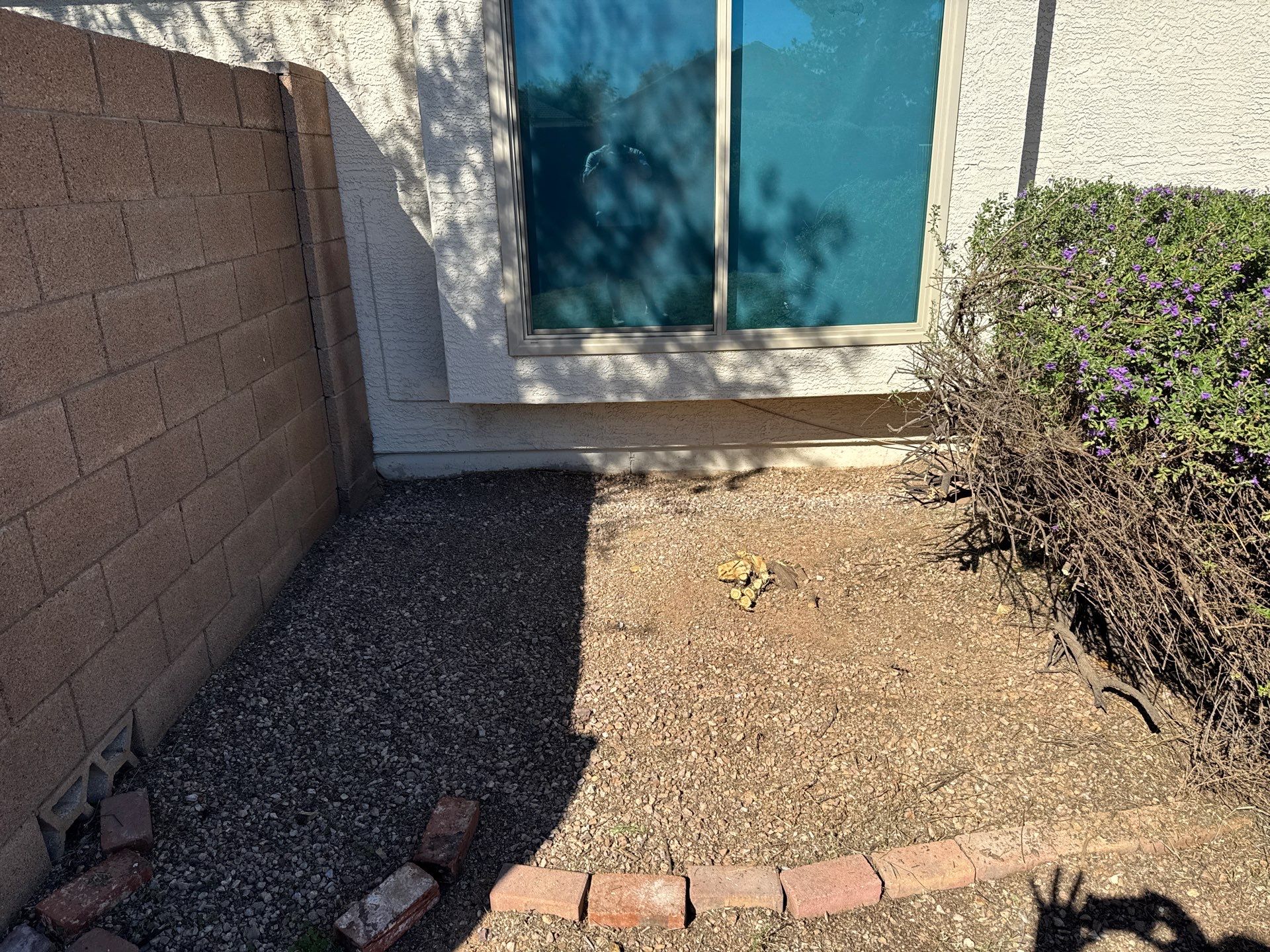
This sage was cut way down, but the root system is still in good shape and it's already starting to come back. No need to replace it.
Give it a good deep soak about once a week until it really gets moving. A slow hose trickle at the base for 20 to 30 minutes, enough to wet the soil about 18 inches down, is what pushes it to put out new growth. Once it's leafed back out, it can go back on the regular shrub schedule in Section 16.
Shade Tree Near the Pool
Back yard, by the raised bed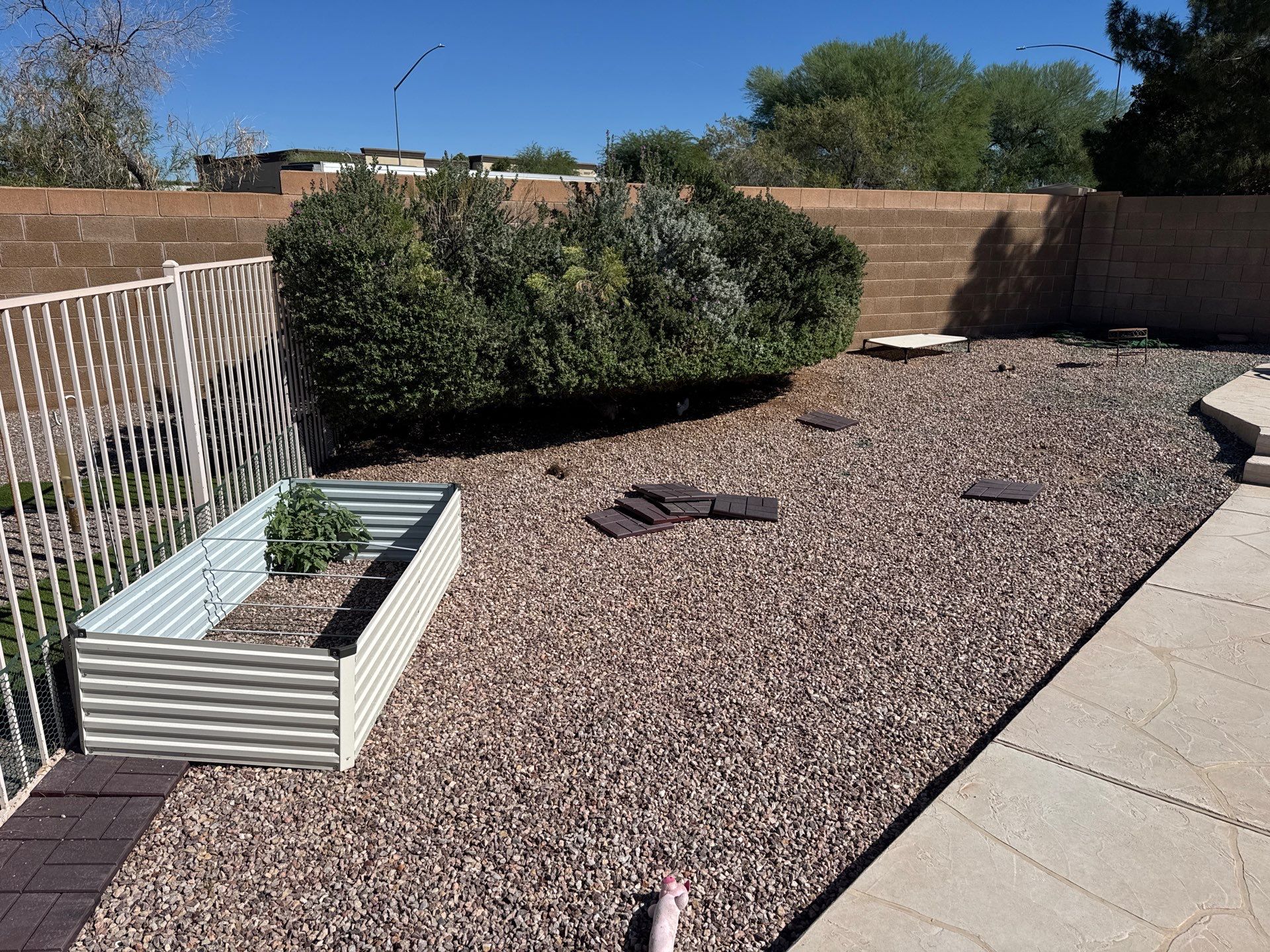
This is a good spot for another tree that gets big enough to give real shade. It's close enough to the pool that we want two things: roots that won't cause problems with the decking or plumbing, and a tree that doesn't drop a ton of leaves into the water. Here are four that check both boxes.

Mulga Acacia
Evergreen and upright, 15 to 20 feet. Fine silvery leaves and very little litter. Non-aggressive roots, a classic pool-side tree here.
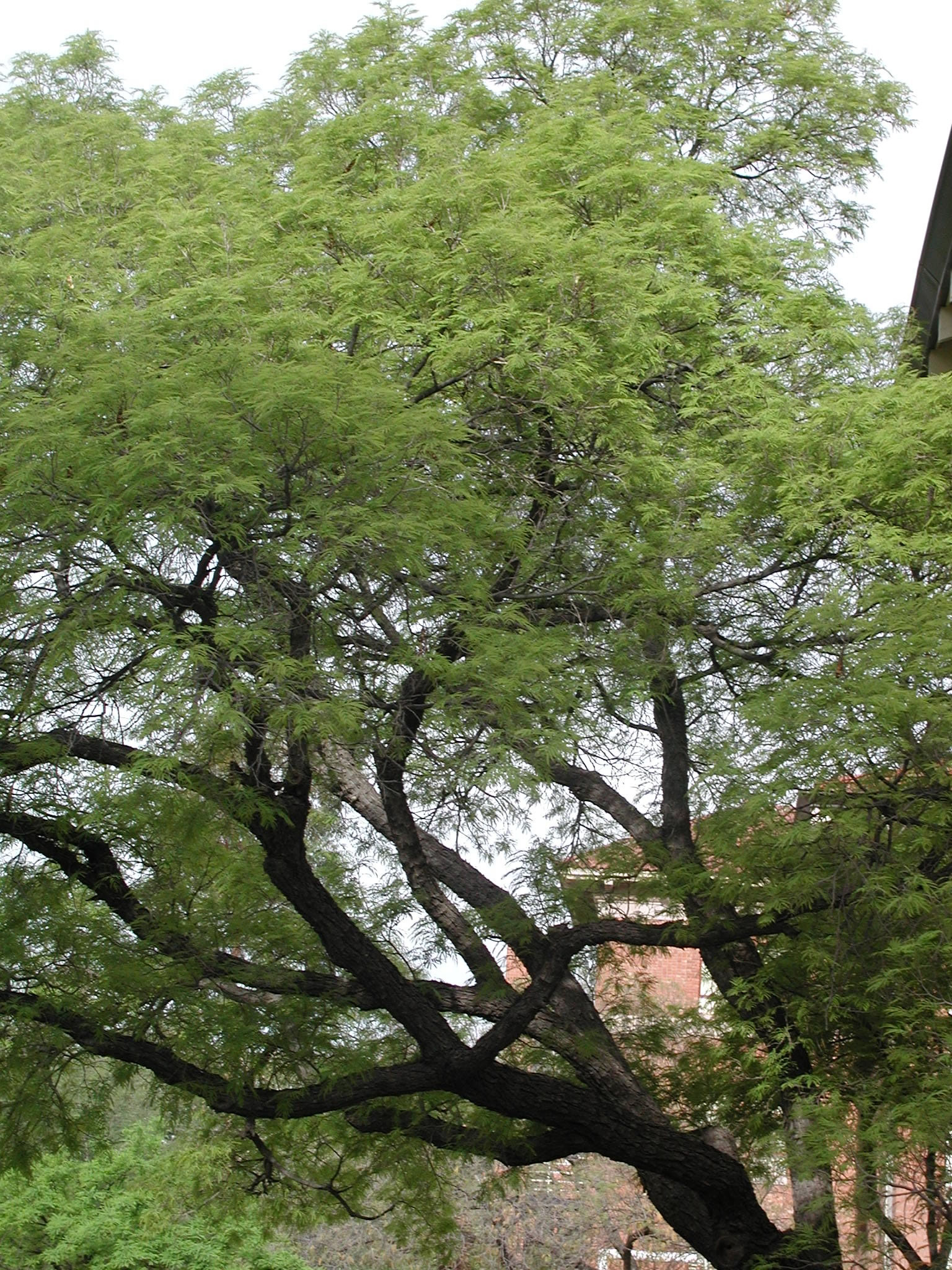
Fern of the Desert
Soft, feathery canopy, 12 to 15 feet. The tiny leaflets disappear into the rock instead of clogging a skimmer. Semi-evergreen.
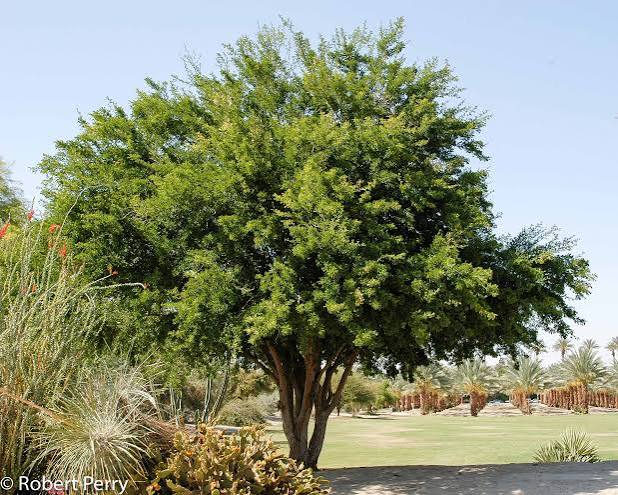
Texas Ebony
Evergreen, dense, dark green, 15 to 25 feet, slow and tidy. It does have small thorns on the branches, so it's best set back a few feet from where people walk.
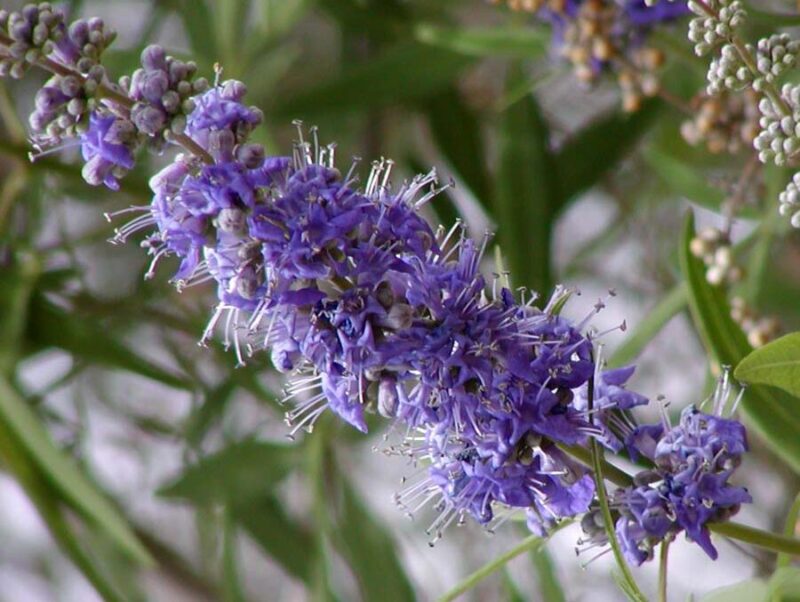
Chaste Tree (Vitex)
Purple flower spikes all summer, 15 to 20 feet, bees love it. Deciduous, so you'll have one cleanup in fall, but very little mess the rest of the year.
Pool Area Back Wall
Back yard, and every wall in the yard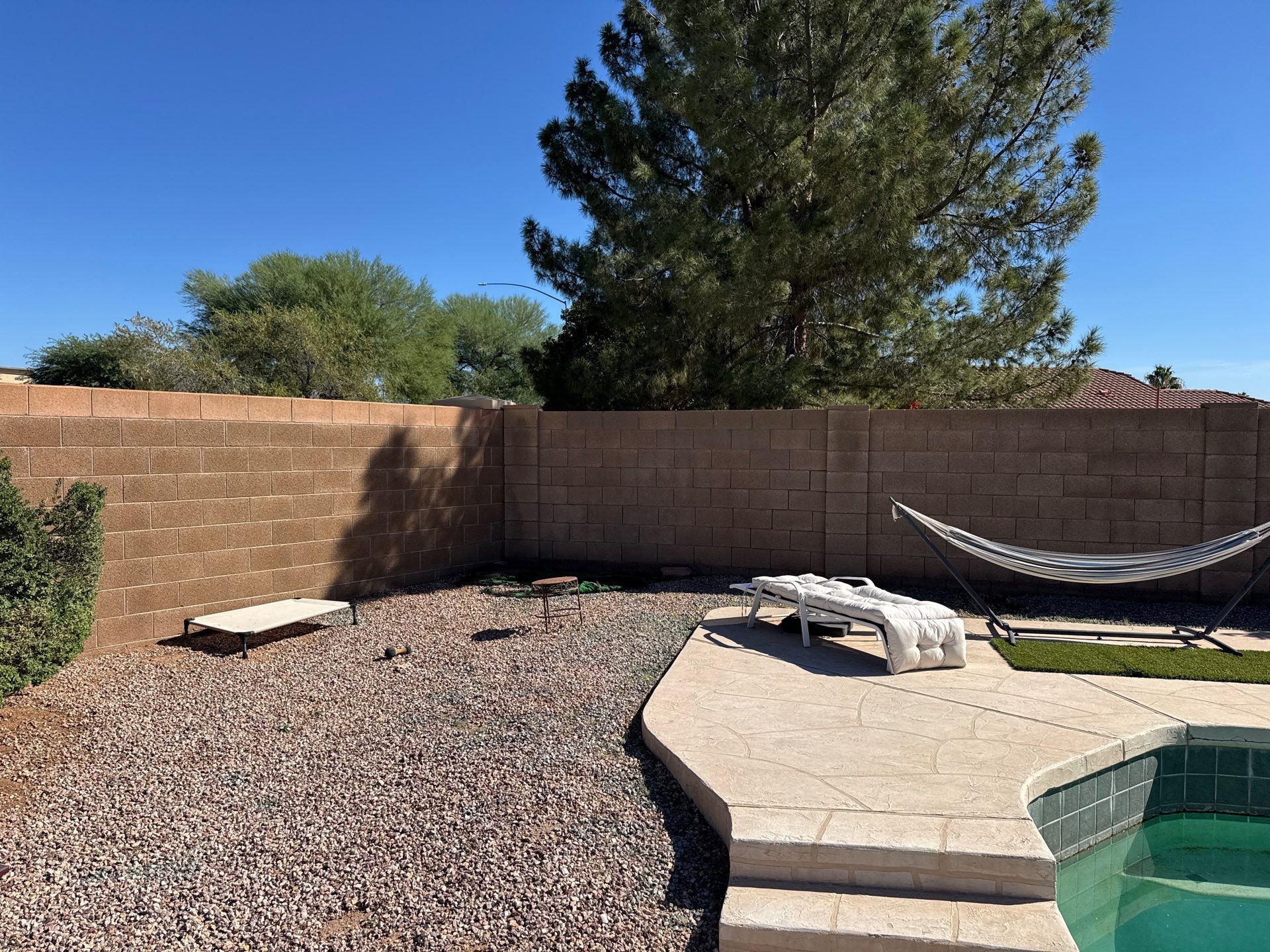
This wall, and really every block wall in your yard, should be covered. Bare block soaks up heat all day and throws it back at you in the evening. Plants along the base shade the block itself and cool the whole yard down.
Arizona rosewood and hopseed are the easy, evergreen options. Since you love hummingbirds and pollinators, orange jubilee and yellow bells are great here too, and they work on every other wall in the yard. You can mix and match: a few of each along a long wall looks fuller and more natural than one long uniform row.

Arizona Rosewood
Native evergreen screen, 10 to 15 feet. Space about 6 to 8 feet apart. Small white flowers in spring.

Hopseed
Fast, dense evergreen hedge, 8 to 12 feet. Space about 5 to 6 feet apart. Handles reflected heat off block well.

Orange Jubilee
Big orange trumpet flowers spring through fall, 8 to 10 feet. A hummingbird magnet. Space about 5 to 6 feet apart.
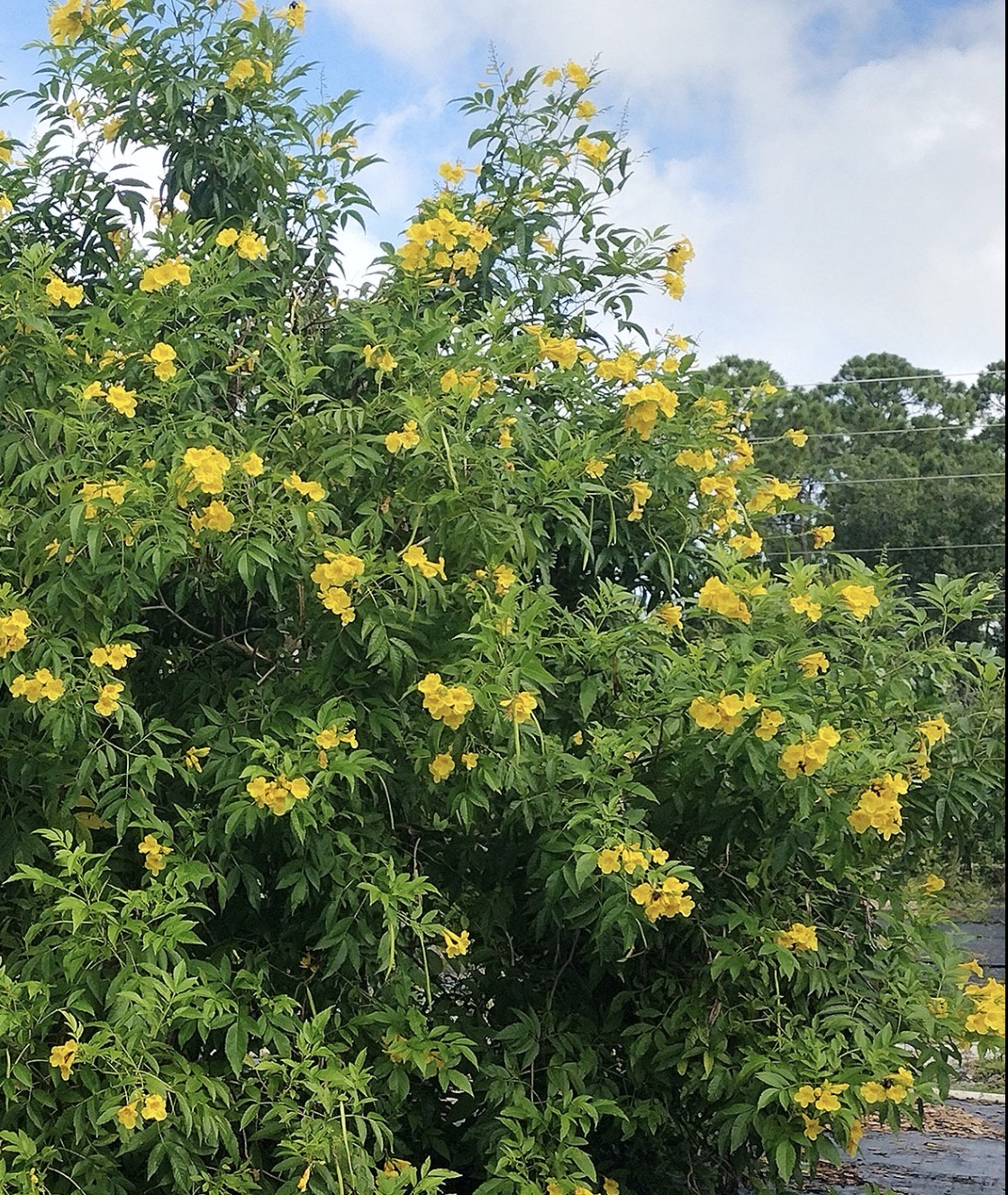
Yellow Bells
Bright yellow trumpet flowers spring through fall, 6 to 10 feet. Bees and hummingbirds both use it. Space about 6 feet apart.
Your Sage Hedge
Back yard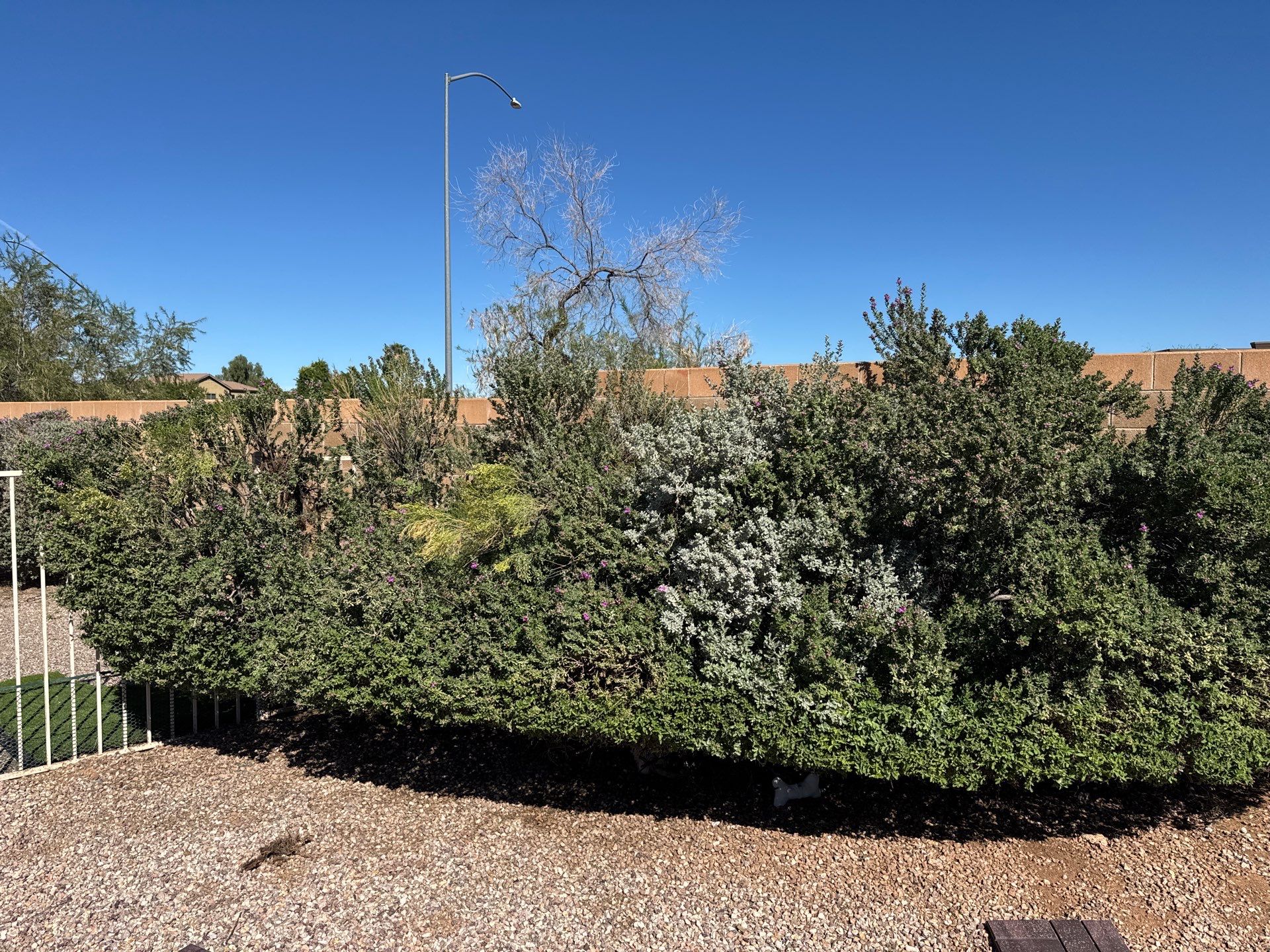
This hedge is awesome. It's a mix of two sages: White Cloud, the lighter silvery one, and Texas Ranger, the greener one. There's no issue having them together, so keep it as is.
The only thing I'd do is a decent prune back at the end of February. Take it down by about a third, and cut inside the shrub rather than shearing the outside into a box. That opens it up, regenerates new growth from the inside, and keeps it full instead of woody and hollow in the middle. Skip any heavy pruning in summer, since that's when it puts on its flower show after rain and humidity.
Planters Along the Pool Fence
No automatic irrigation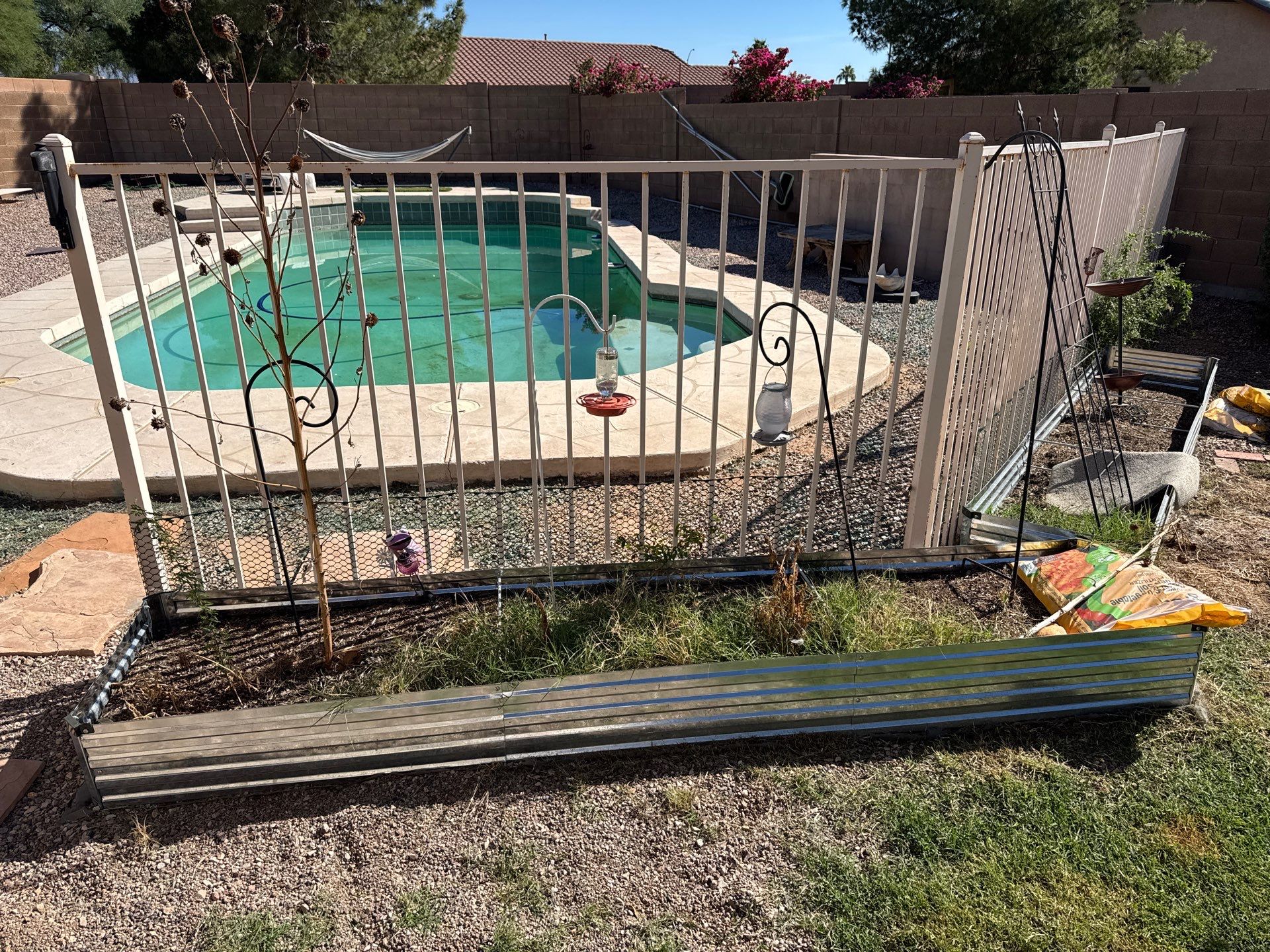
These planters don't have automated irrigation, so they need plants that get by on very little water and very little effort from you, but still give you something growing and bring in pollinators.
Plant them now in fall so winter does the work of rooting them in. For the first few weeks, hand water deeply two or three times a week, then taper to once a week through winter and spring. Once they've been through a summer, most of these only need a deep drink every week or two in the heat and very little the rest of the year.
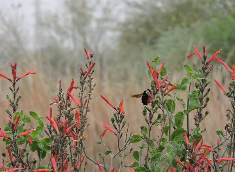
Chuparosa
Native, red tubular flowers winter through spring, when little else is blooming. Hummingbirds love it. 3 to 4 feet.

Desert Milkweed
Native, upright gray-green stems with pale yellow flowers spring through fall, 3 to 4 feet. A host plant for monarch and queen butterflies.
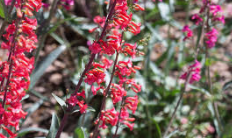
Penstemon
Native, tall spikes of red or pink flowers in spring, another hummingbird favorite. 2 to 3 feet. Reseeds itself.

Globe Mallow
Native, apricot orange cup flowers most of spring. Native bees love it. 3 feet, silvery leaves.
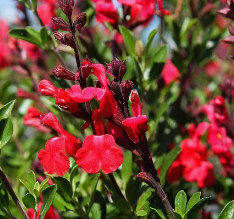
Autumn Sage
Small red, pink, or purple flowers spring and fall, 2 to 3 feet. Tough, compact, and hummingbirds go straight for it.
Desert Willow
Back yard, rock bed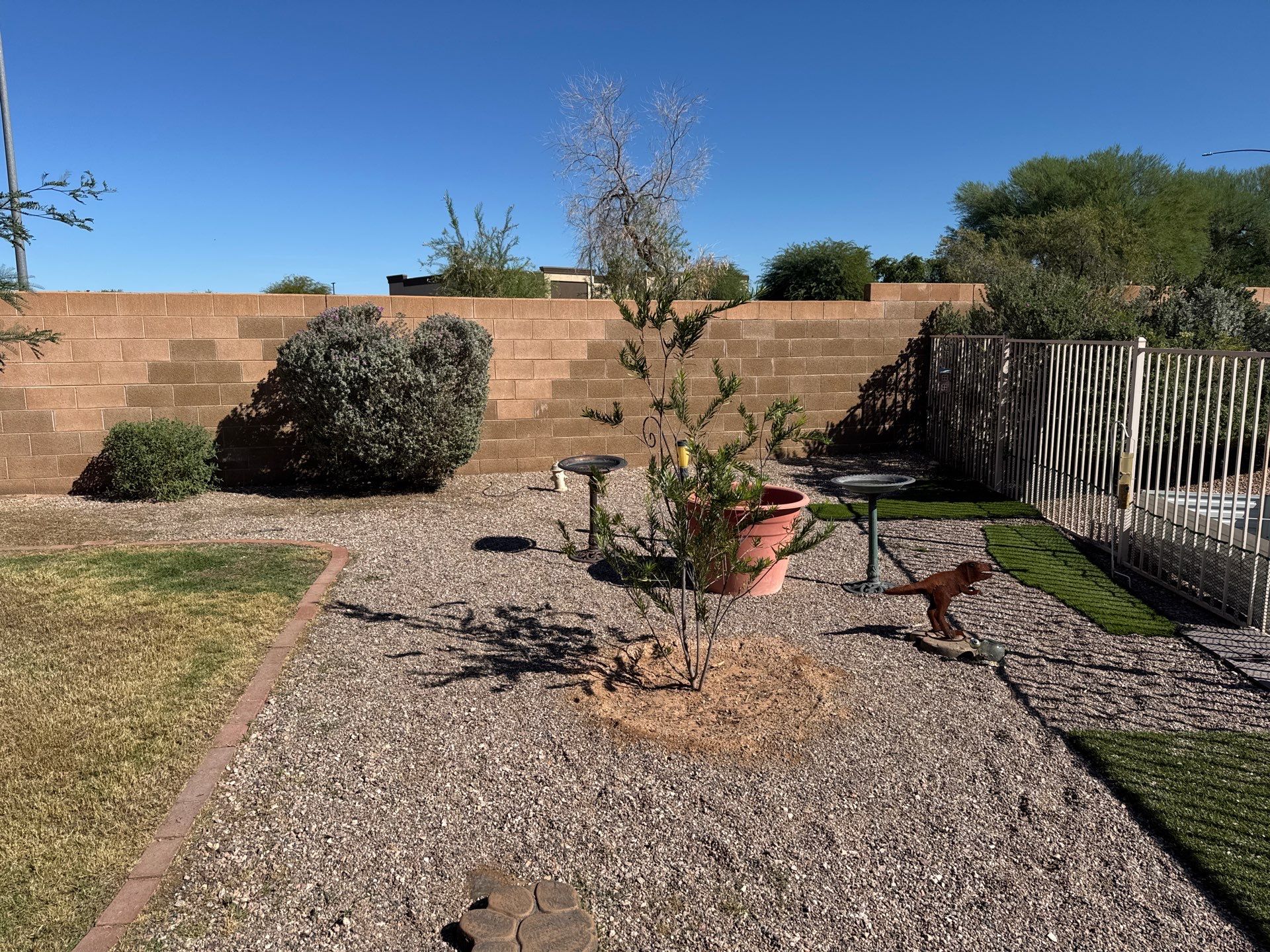
Expose the root flare
The soil needs to be pulled back from the base of this tree until the root flare is clearly visible. The root flare is where the trunk widens out into the main roots, and it should sit right at the surface. When it's buried, the bark stays wet against soil it was never meant to touch, which invites rot and slowly stresses the tree. Pull the soil and rock back by hand or with a small trowel until you see the trunk start to flare out. A strong stream of water from a hose works great to blast the dirt away without damaging the bark.
This video shows why an exposed root flare matters, with real examples:
Video not loading? Watch it on YouTube.
Watering through winter
Desert willow is deciduous. Once it starts dropping its leaves this winter, stop watering it. It's dormant and doesn't need it. Wait until it starts pushing new growth in March or April, then go back to a deep watering once a week through the warm months.
Build a bigger water well
If you don't have time for a slow hose soak, or it's just not something you'll think about, make the water well around the tree much bigger. Build a low berm of soil out near the edge of the canopy so you can fill the basin once and let it soak in. That one fill gets water down deep across the whole root zone instead of just at the trunk. Keep mulch inside the well, and keep it back about a foot from the trunk.
Mesquite in the Lawn
Back yard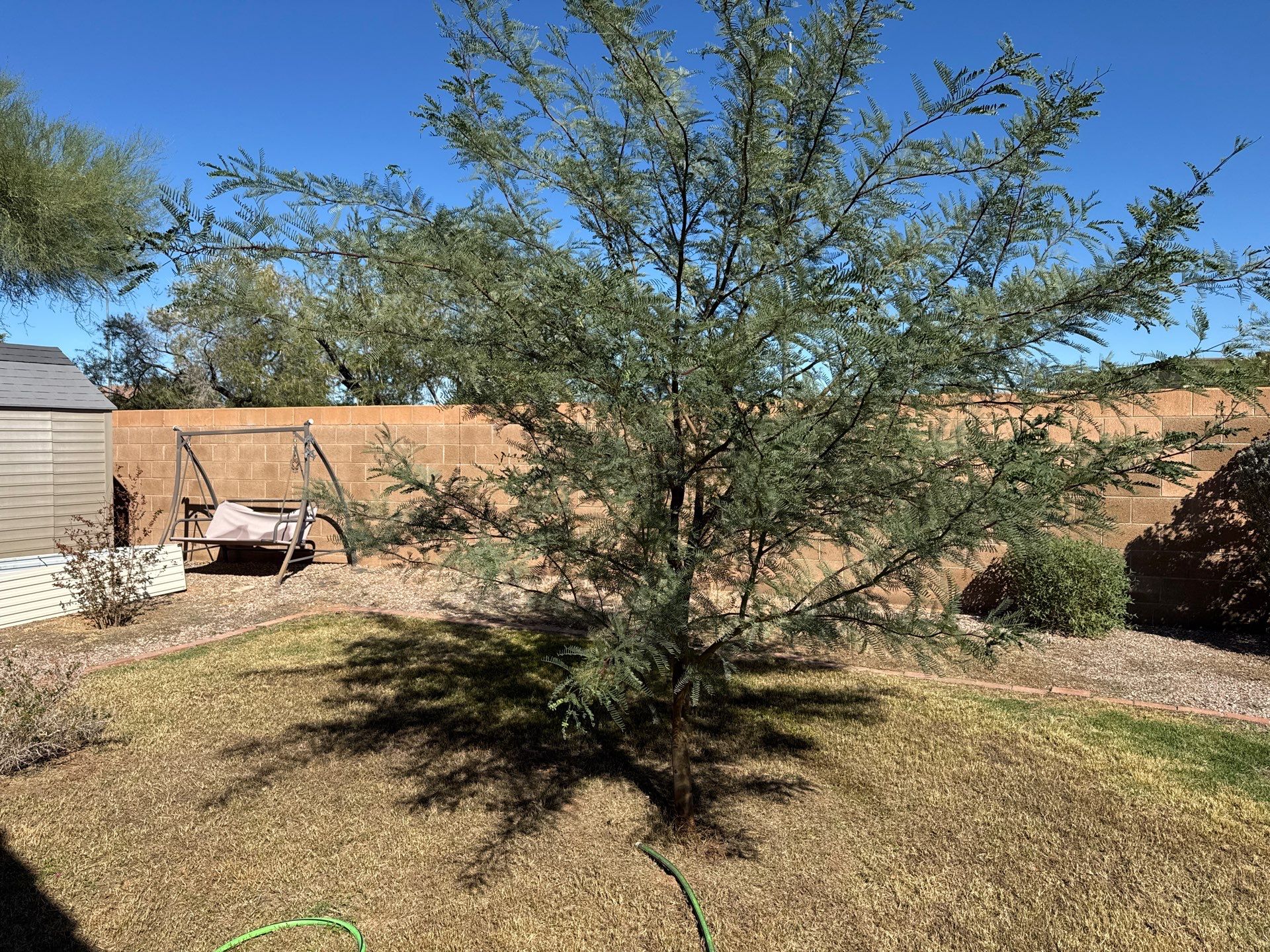
Same idea as the desert willow: make the water well around this mesquite much bigger, so you can fill it once and get a deep soak across the root zone.
Because it's sitting in the lawn, it needs a clearly defined water well with mulch inside it. Right now the grass grows right up against the trunk. That grass competes with the tree for water and nutrients, and every time it gets mowed or trimmed near the base, the bark takes a beating. Cut a clean circle out of the grass at least 3 to 4 feet out from the trunk, build a low berm at the edge, and fill the inside with 3 to 4 inches of mulch, kept back a foot from the trunk.
This tree also definitely needs a root flare excavation. Pull everything back, grass, soil, and all, until you find the root flare, just like the desert willow in Section 07. A hose with a strong stream is the easiest way to clear it.
Back Wall
Back yard, behind the sage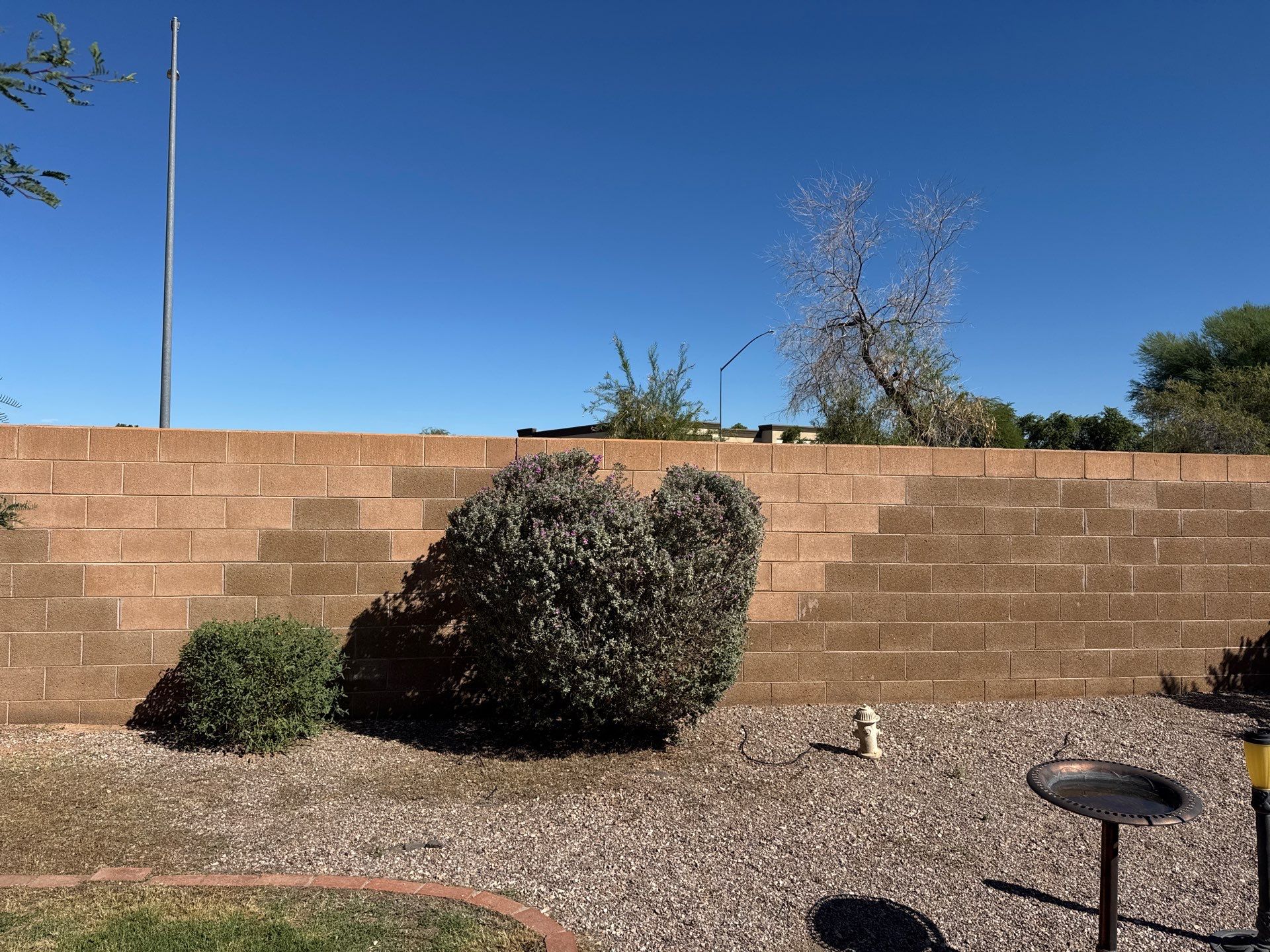
This back wall should be covered too. You already have sage here and you like it, so my first suggestion is to continue it all the way down the line and cover the entire wall with sage. It already looks great in your yard, it's easy, and it'll tie this wall in with the hedge in Section 05. Plant them about 5 to 6 feet apart.
If you'd like some variety, these all work here too, and you can mix and match.

Texas Sage
Continue what you have. White Cloud or Texas Ranger, 5 to 8 feet, purple or white blooms after summer rains.
Hopseed
Fast, dense evergreen hedge, 8 to 12 feet. Space about 5 to 6 feet apart.
Arizona Rosewood
Native evergreen screen, 10 to 15 feet. Space about 6 to 8 feet apart.
Orange Jubilee
Orange trumpet flowers spring through fall, 8 to 10 feet. Hummingbirds love it.
Feeding Your Non-Native Shrubs
Back yard lawn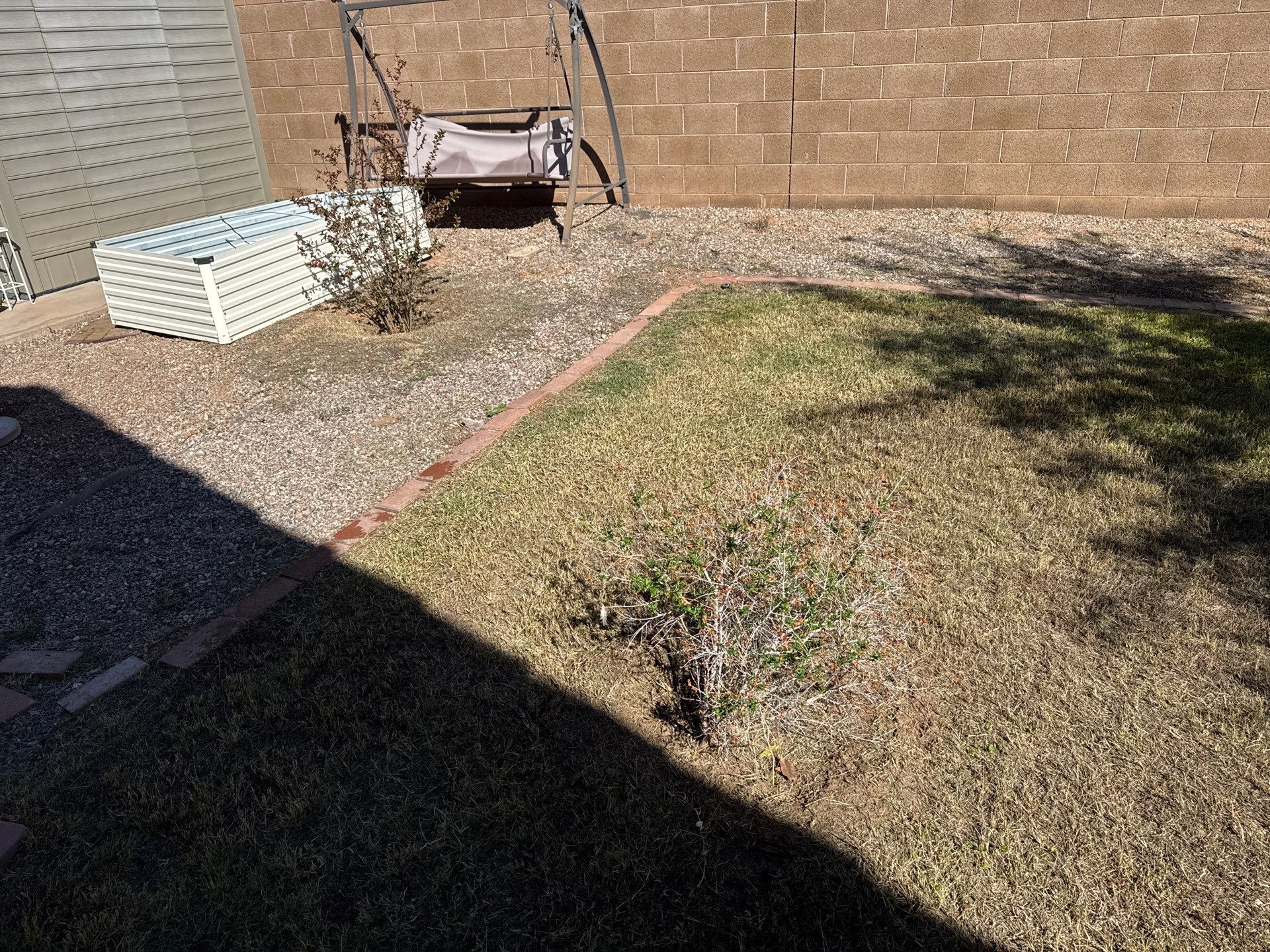
This shrub, and any other non-native shrubs in your yard, will do so much better with constant feeding. Desert natives are built for our lean soil. Plants from other places aren't, and they show it with thin growth and pale leaves.
The fix is simple. Once a month, throw a couple of handfuls of good compost down around the base, out toward the edge of the branches, and water it in. That steady supply feeds the soil life around the roots, and the soil life feeds the plant. It makes a huge difference over a season.
For compost, I send everyone to Arizona Worm Farm. Their compost is the real deal, full of life, and it's a fun stop if you've got kids. More on feeding in the Soil and Feeding section below.
Mulch Around the Perimeter
Back yard, dog area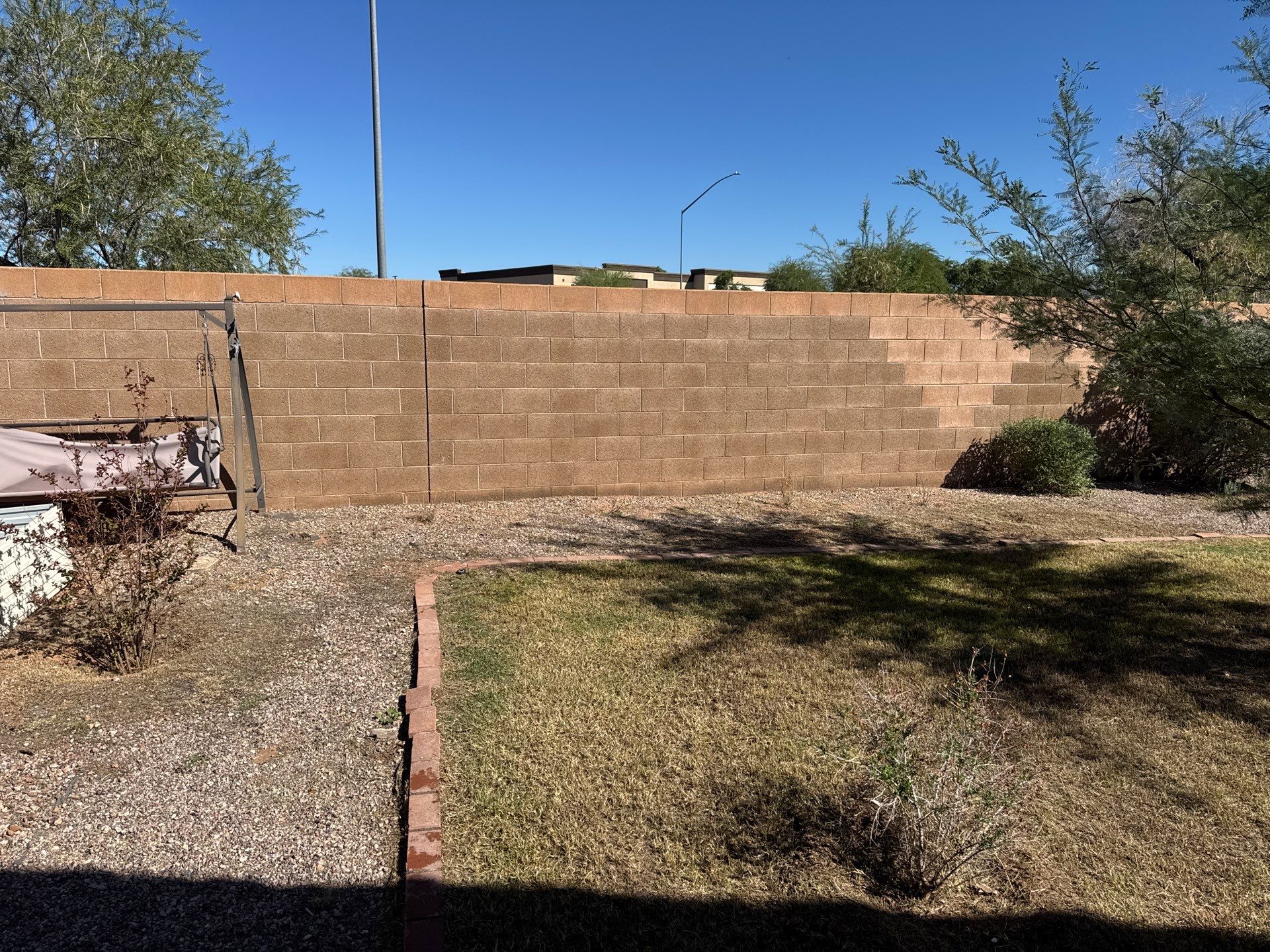
This whole area around the perimeter of the yard could use a lot of mulch, 3 to 4 inches deep. Mulch keeps the soil cooler, holds moisture, and breaks down over time into the living soil your plants need. Rock does the opposite: it bakes in the sun and radiates heat.
- How much: for the dog area, I'm thinking about 4 cubic yards should be fine. For the rest of the perimeter, measure the length and width of each strip and put it into the calculator on the Arizona Worm Farm website. They'll tell you exactly how many cubic yards you need.
- Over the rock: you can put the mulch directly on top of the rock, as long as the rock isn't too deep.
- Weed fabric comes out first. Any fabric under the rock needs to be pulled before the mulch goes down. Fabric blocks the mulch from ever reaching the soil, so it never builds anything underneath.
Vines for the Pergola
East facing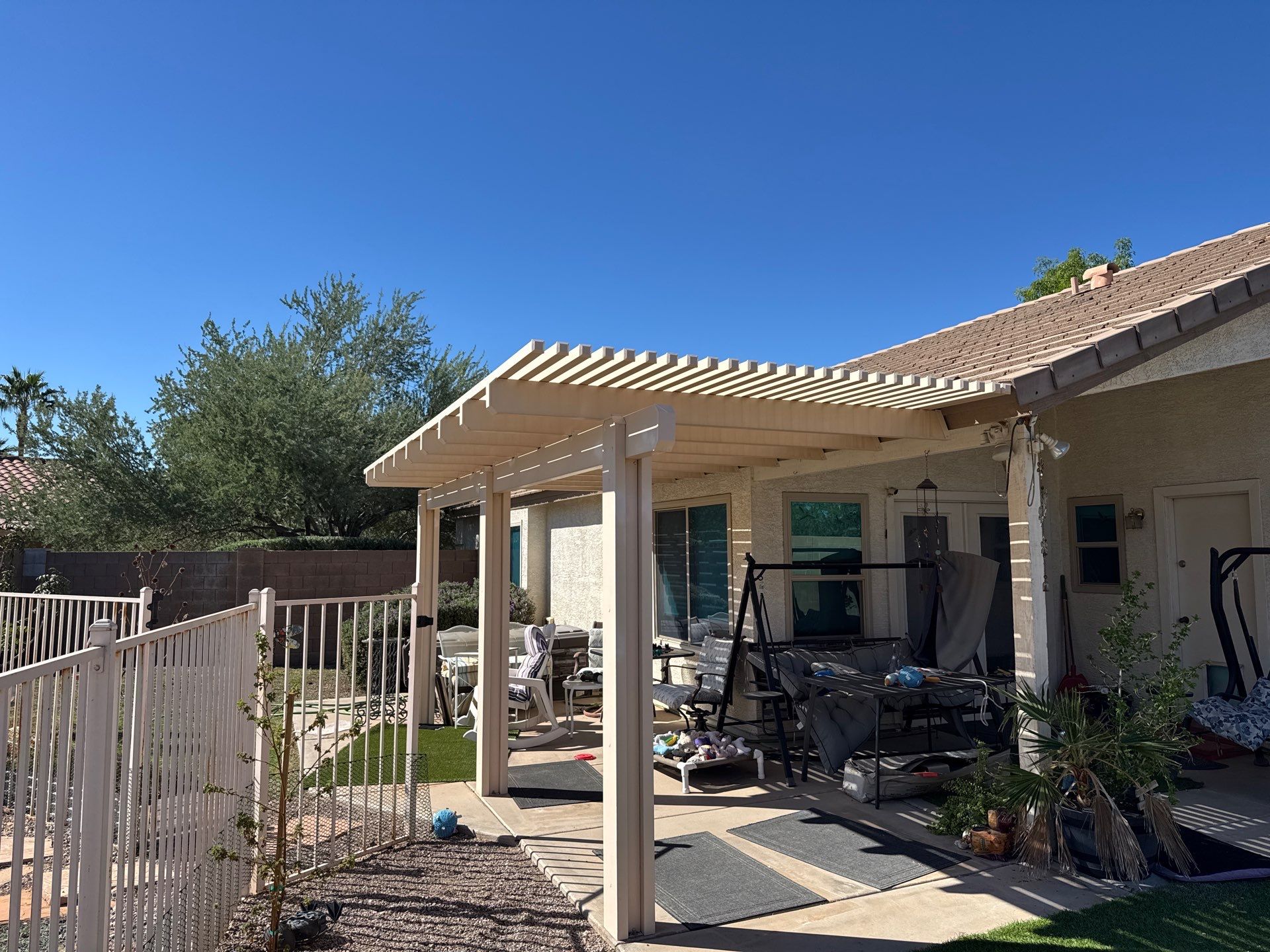
The pergola faces east, so it gets the gentler morning sun and shade in the afternoon. A vine planted right in the ground at the base of each column can climb up and over the top and turn it into living shade. Any of these three will do it. Plant one per column, about 6 to 12 inches out from the base, and tie the first few shoots to the column until they take hold.
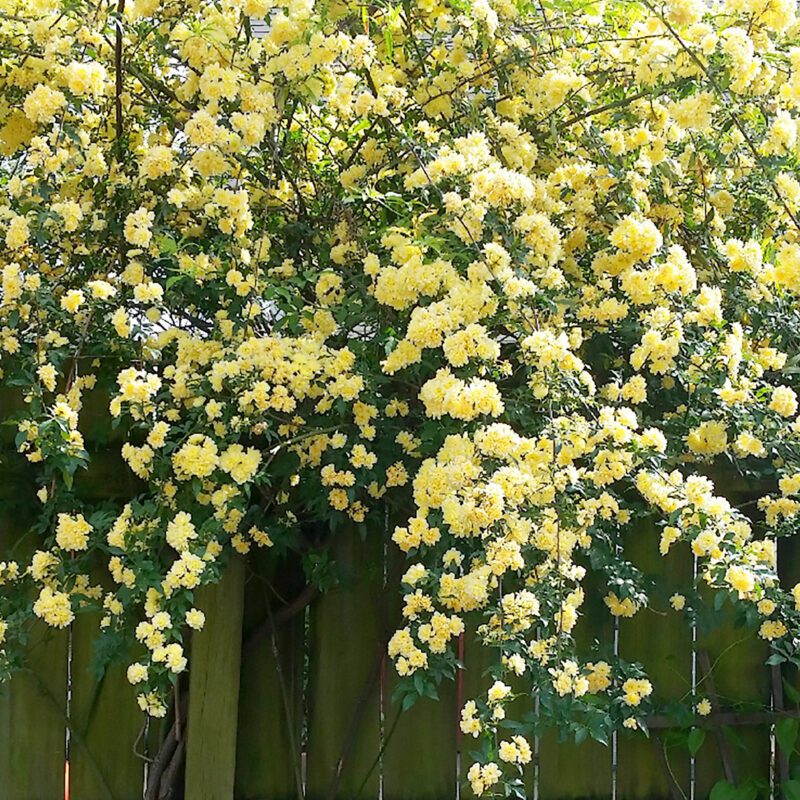
Lady Banks Rose
Thornless climbing rose covered in small yellow or white flowers in spring. Vigorous, evergreen, and very easy here.

Tangerine Crossvine
Self-clinging, orange trumpet flowers heaviest in spring. Fast, mostly evergreen, and hummingbirds love it.
Hacienda Creeper
Self-clinging leafy vine with great fall color. Fast coverage and handles heat well. Deciduous in winter.
Vines Over the Swing
Back yard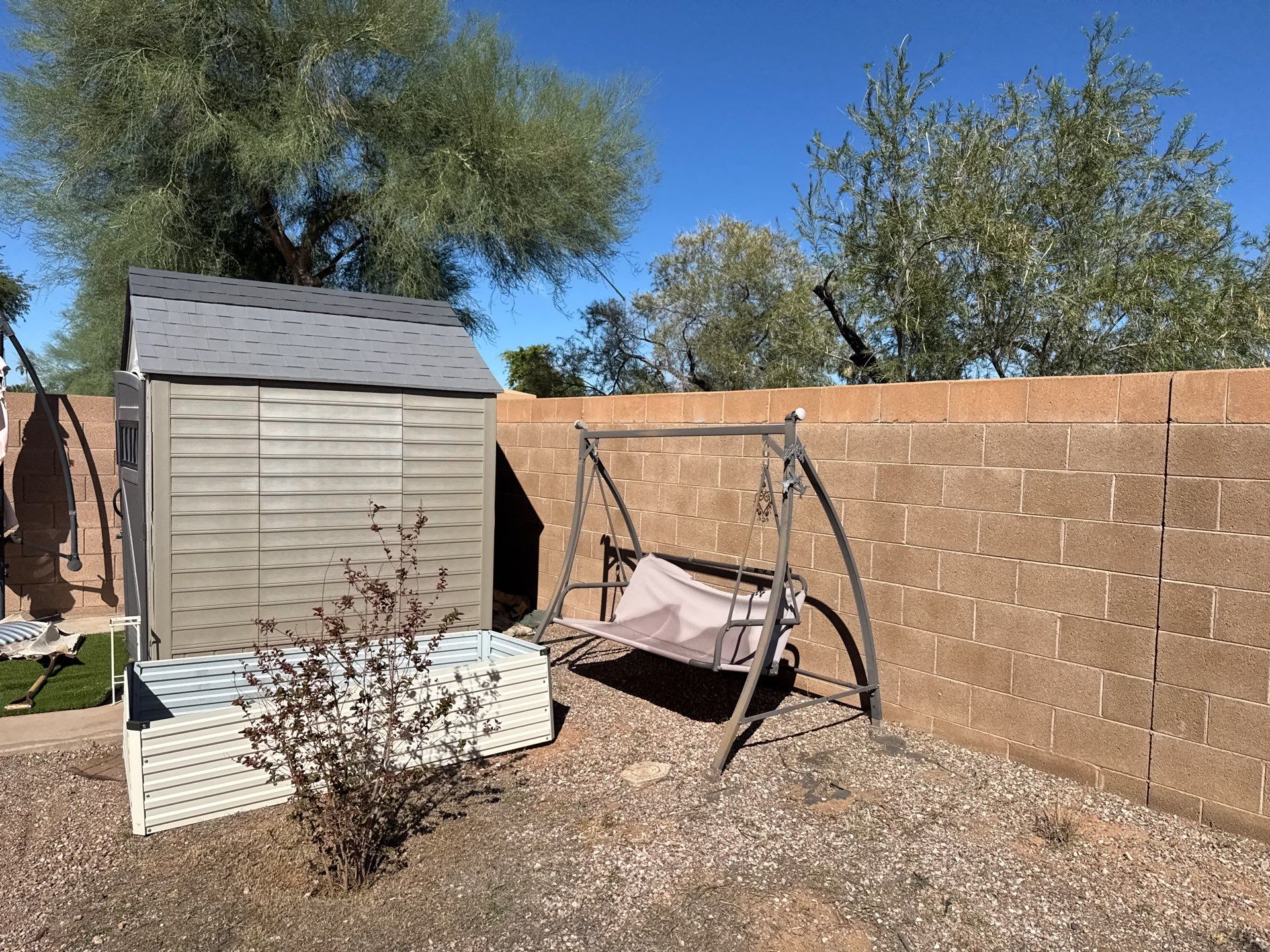
Same idea here. A vine planted at the base of the swing frame can grow up and over it and give you a shaded spot to sit. Plant one at each end of the frame and guide the shoots up the legs and across the top as they grow.
Lady Banks Rose
Thornless climbing rose with small yellow or white flowers in spring. Easy, vigorous, evergreen.
Tangerine Crossvine
Orange trumpet flowers in spring, fast and mostly evergreen. A hummingbird favorite.
Hacienda Creeper
Leafy vine with great fall color, fast coverage. Deciduous in winter.
Upright Shade Tree by the AC Unit
Back yard, west sun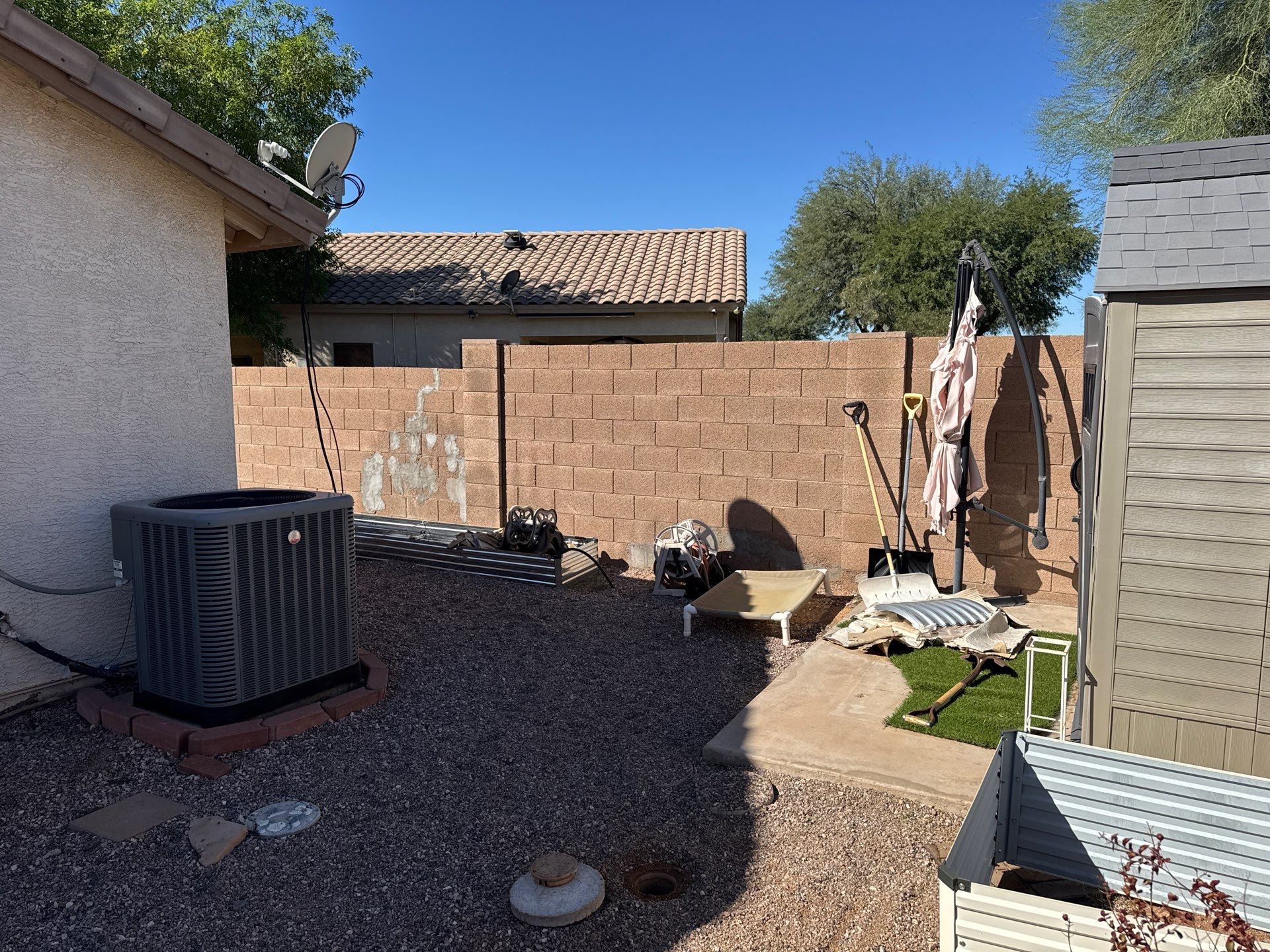
This area needs a tree that grows more upright than wide, so it fits the space while still blocking that hard afternoon sun from the west. Shade on the AC unit is a bonus, since it runs more efficiently when it isn't baking. Keep the tree at least 6 to 8 feet from the unit so you still have room to service it.
Red Push Pistache
Upright oval canopy, 25 to 30 feet. Red spring growth and fall color. Deciduous, so you get winter sun.
Mulga Acacia
Naturally upright and narrow, 15 to 20 feet. Evergreen silvery foliage, very little litter.
Carob
Evergreen, dense year-round shade, 25 to 35 feet. Can be limbed up over time to stay more upright.
Texas Ebony
Evergreen, dense, 15 to 25 feet, slow and tidy. Small thorns on the branches.
West Wall
Back yard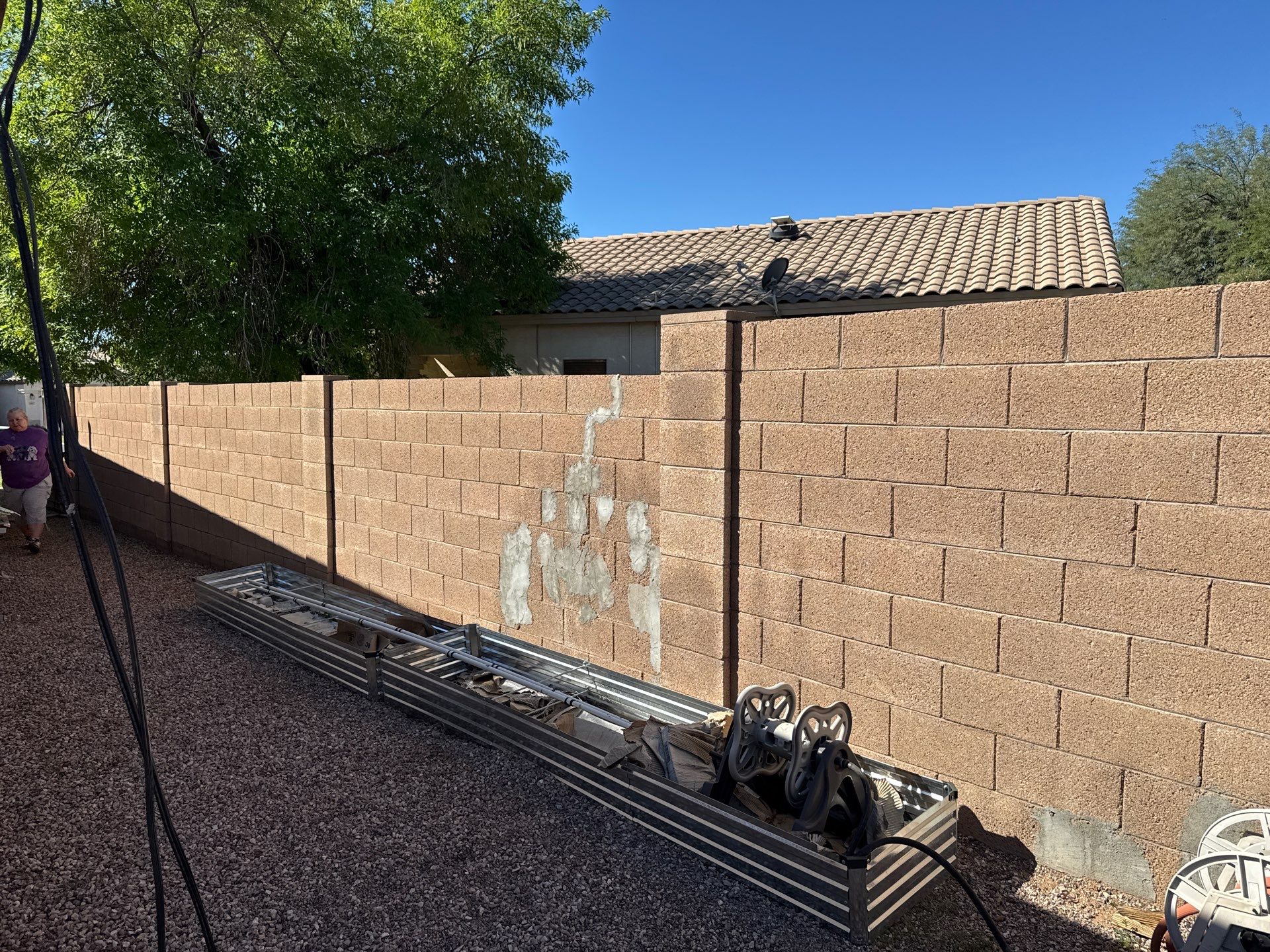
All the way down this wall, same thing. Covering it cools down this whole corner of the yard. Mix and match for a fuller, more natural look.
Hopseed
Fast, dense evergreen hedge, 8 to 12 feet. Space about 5 to 6 feet apart.
Arizona Rosewood
Native evergreen screen, 10 to 15 feet. Space about 6 to 8 feet apart.
Orange Jubilee
Orange trumpet flowers spring through fall, 8 to 10 feet. Hummingbirds love it.
Yellow Bells
Bright yellow trumpet flowers spring through fall, 6 to 10 feet. Great for pollinators.
Watering and Your Irrigation Controller
Side of the house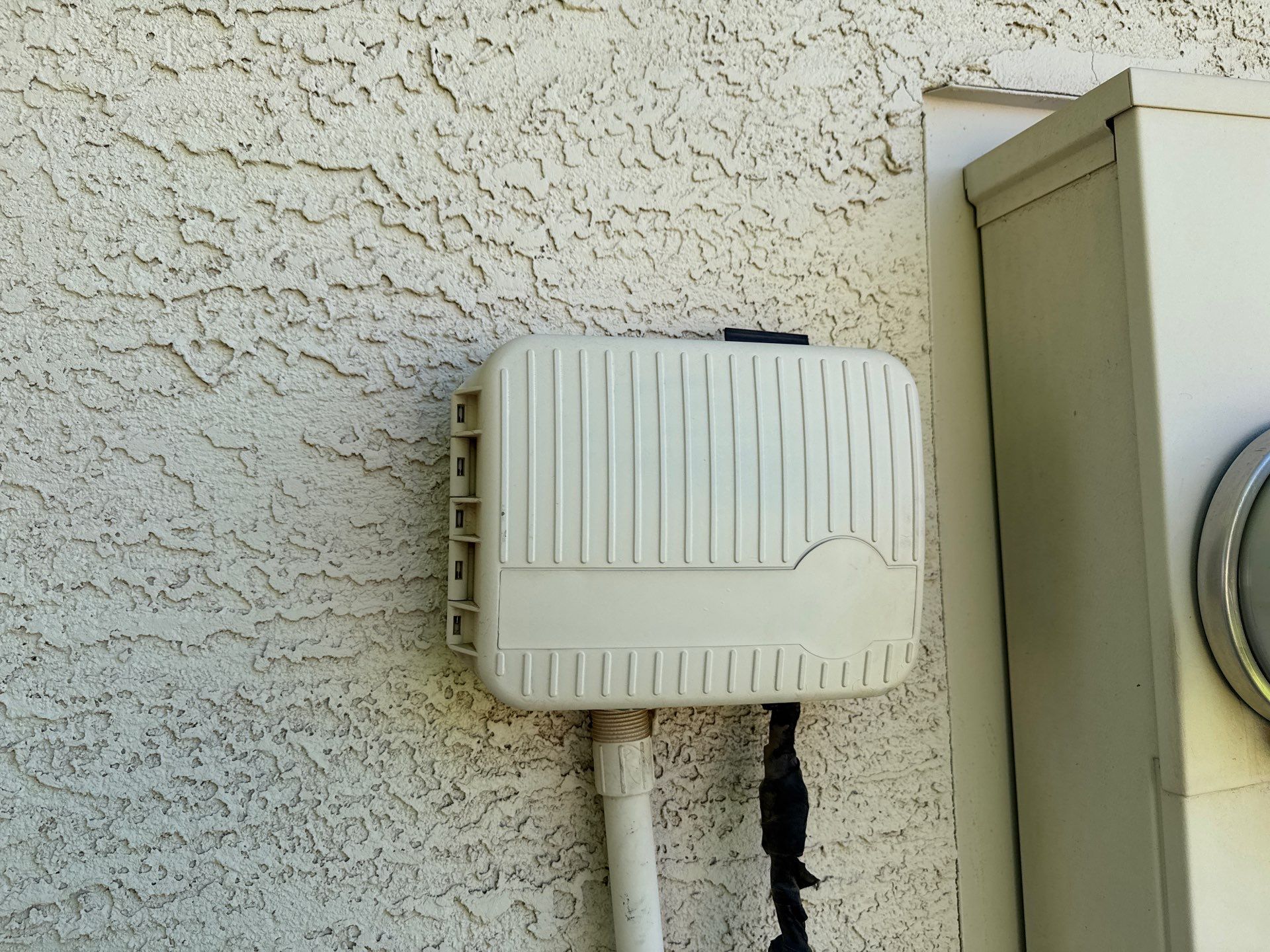
The key with everything in your yard is to water deep and less often. Deep watering trains roots to go down where the soil stays cool and moist. Short, frequent watering keeps roots shallow, right where they cook in summer. Your grass and your drip should always be on separate valves and separate programs, since they need completely different schedules.
| Summer | Spring & Fall | Winter | Soak to | |
|---|---|---|---|---|
| Grass | Every 2 to 3 days | Every 4 to 7 days | Every 2 to 3 weeks while dormant | 6 to 8 inches |
| Desert adapted shrubs | Every 7 to 10 days | Every 10 to 14 days | Every 3 to 4 weeks | 18 to 24 inches |
| Desert adapted trees | Every 10 to 14 days | Every 14 to 21 days | About once a month | 24 to 36 inches |
The exception is the desert willow: once its leaves drop, it gets no water until new growth shows up in spring (Section 07). To check depth, push a long screwdriver or a piece of rebar into the soil a few hours after watering. It slides in easily through wet soil and stops where the water stopped.
Upgrading to an Orbit B-hyve controller
If you replace this box, an Orbit B-hyve is a solid, affordable smart controller. It connects to your Wi-Fi, so you set and change every program from an app on your phone instead of standing at the box. It's easy to set up separate grass and drip programs, adjust by season, and run a valve manually when you want to check a line. It can also adjust for weather, but I'd turn off the automatic rain skip. Our rain rarely soaks in deep enough to replace a real watering.
We don't do irrigation, so Garrett is who I recommend for the install: 480-678-9121.
Front Yard Shade Tree
Front yard, along the driveway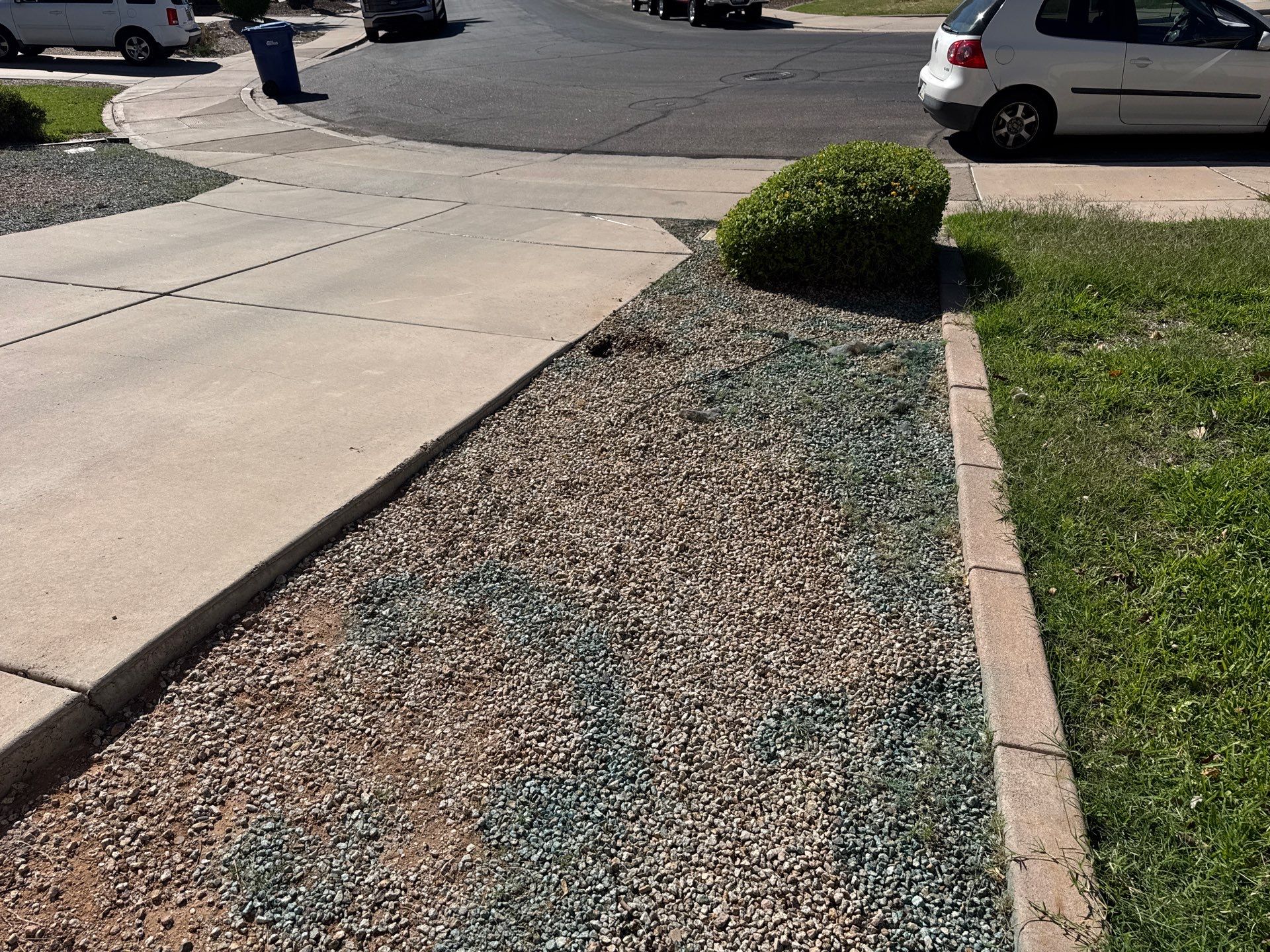
This strip is a good spot for a tall tree that can grow up and shade the front of the house from the western sun. Plant it at least 5 to 6 feet from the driveway and sidewalk so the trunk and roots have room. A 15 gallon is the right size to start.
Red Push Pistache
Upright canopy, 25 to 30 feet. Red spring growth and great fall color. Well behaved near hardscape.
Tipu
Fast, tall, wide umbrella of shade with yellow flowers in late spring. 25 to 35 feet.
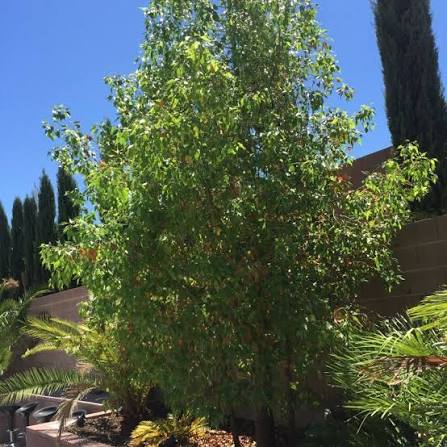
Bottle Tree
Tall and upright with a thick trunk, 30 to 40 feet. Evergreen, glossy leaves and clusters of small bell flowers in late spring.
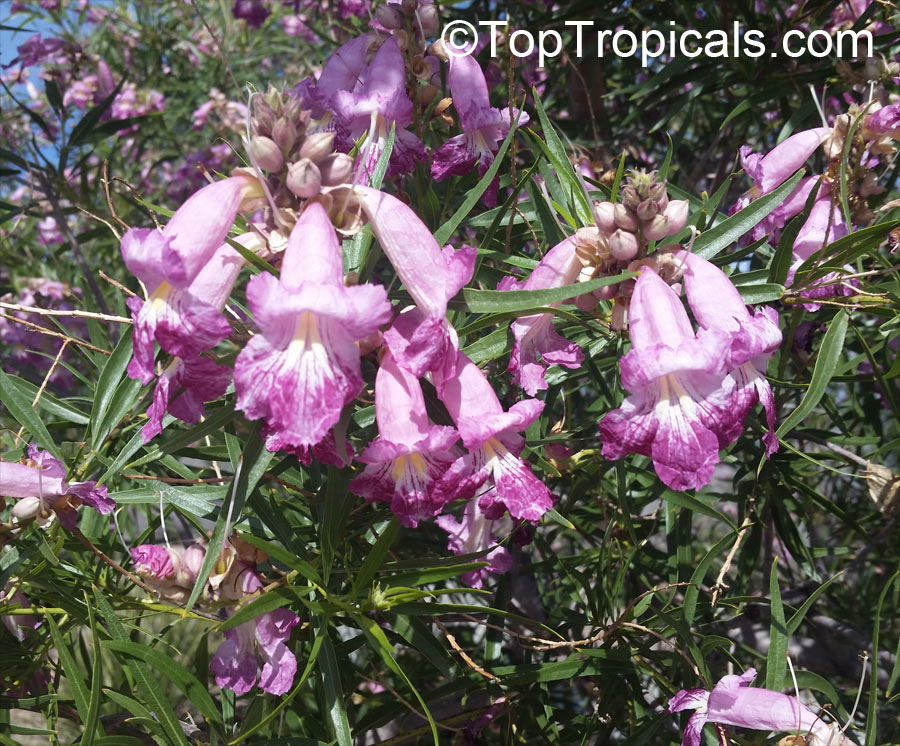
Desert Willow
Native, trumpet flowers through the warm months that hummingbirds love, 15 to 25 feet. Deciduous, so you get winter sun.
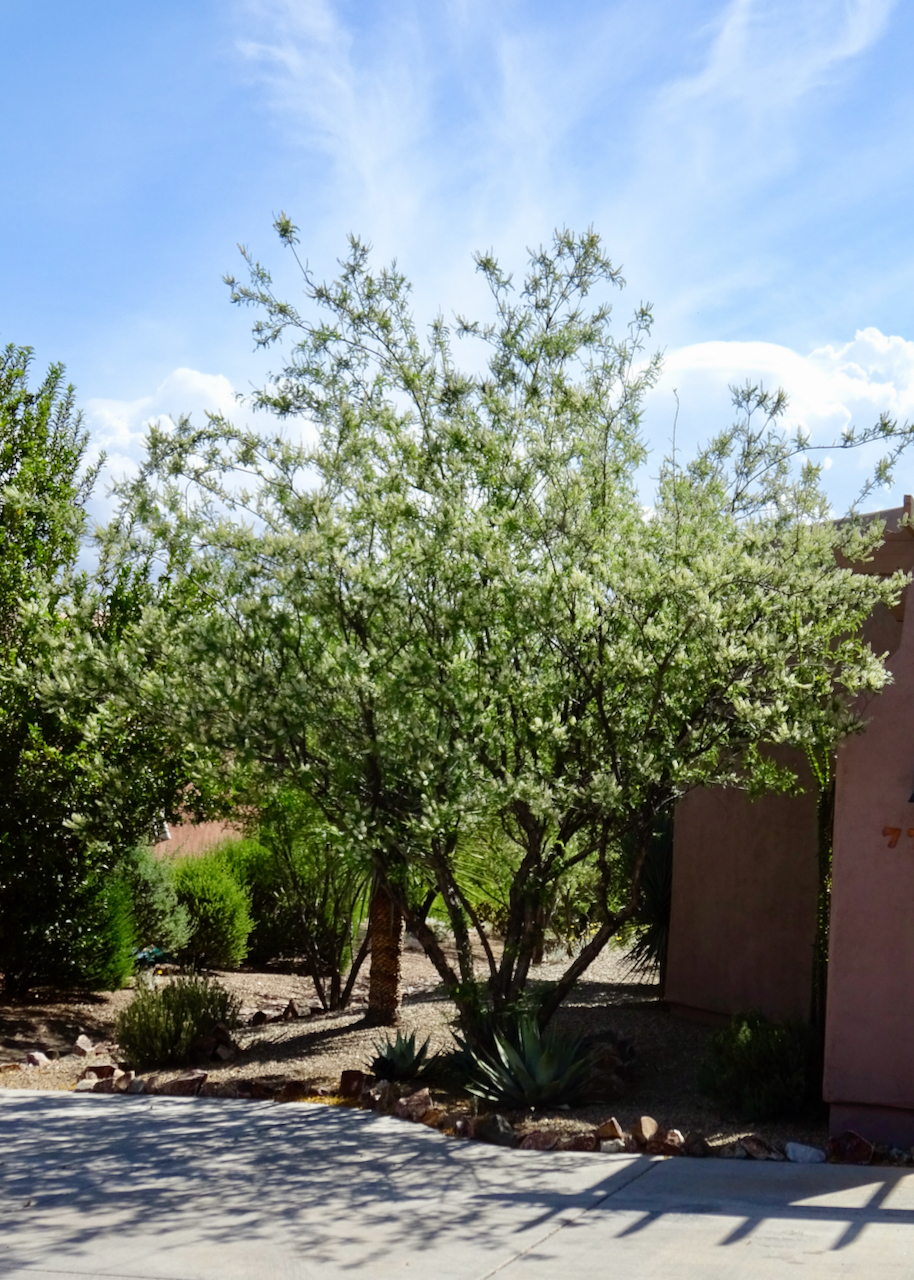
Kidneywood
Native to our area, fragrant white flower spikes that draw butterflies and bees, 10 to 15 feet. Deciduous in winter.
Replacing the Ruellia
Front yard, under the ironwood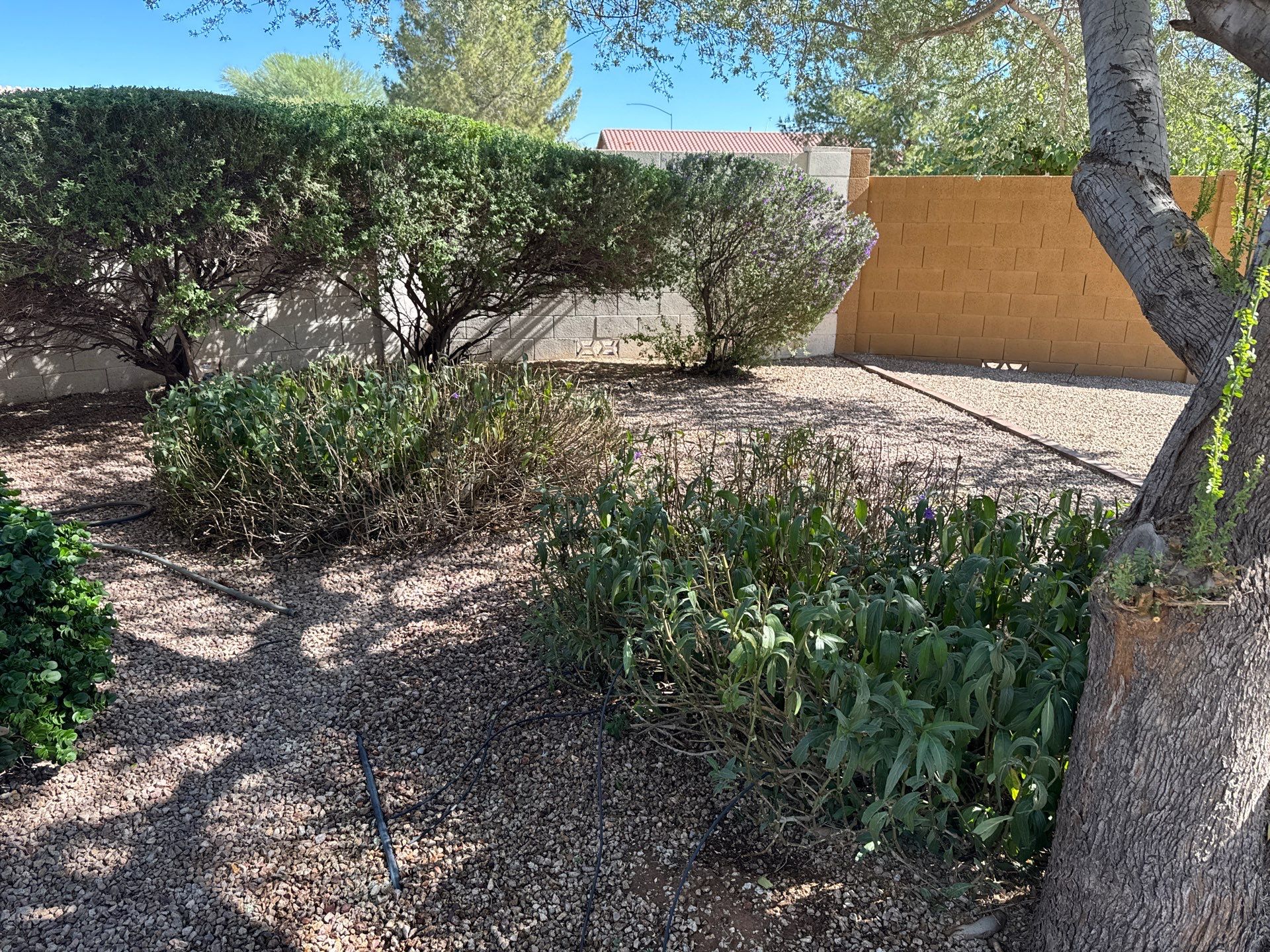
This bed sits in the shade of the ironwood but still picks up some afternoon sun. That's a good spot for plants that handle part shade and still flower. Any of these can replace the ruellia. Mixing two or three of them looks fuller and gives you blooms across more of the year.
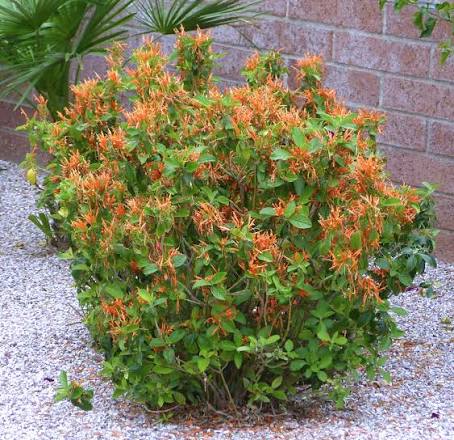
Mexican Honeysuckle
Orange tubular flowers most of the year, 3 to 4 feet. Happiest in part shade, and hummingbirds visit constantly.
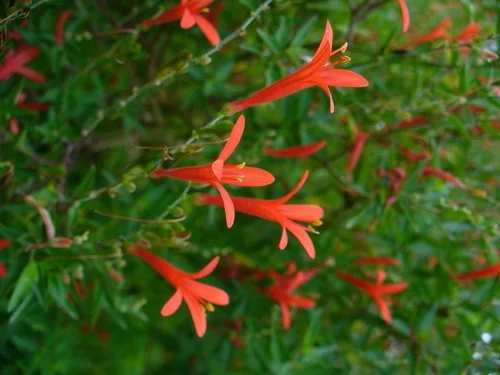
Desert Honeysuckle
Native, orange flowers summer through fall, 3 to 4 feet. Handles the shift from shade to afternoon sun well.
Autumn Sage
Red, pink, or purple flowers spring and fall, 2 to 3 feet. Compact and tidy for a front bed.
Chuparosa
Native, red flowers winter through spring, 3 to 4 feet. Brings hummingbirds to the front yard too.
Soil and Feeding
The whole yardEverything in your yard grows out of the soil, and healthy soil is alive. It's full of fungi, bacteria, and worms that break down organic matter and feed your plants. Most Phoenix yards are low on that life, especially under rock. Building it back is the single biggest thing you can do for every tree, shrub, and patch of grass you have. Here's how to do it yourself:
- Compost: spread a generous layer around the drip line of your trees (out where the branches end, not at the trunk) and in closer around your shrubs. Get it from Arizona Worm Farm.
- Worm castings: add a layer every quarter. They're packed with soil life and gentle enough to never burn anything.
- Organic fertilizer: use a good organic liquid fertilizer that's high in fulvic acid. The products I use are from Catalyst: Jenner 8, Organic Nitro Jen, and their kelp fertilizer. Find them at catalystproductgroup.com (click Products, then Home and Garden).
- Your lawn: the Catalyst products work great on grass too and really green it up.

Jenner 8
Catalyst's all-around organic liquid blend, rich in fulvic acid to feed soil life.

Organic Nitro Jen
Organic nitrogen for strong green growth on leafy plants and lawns.
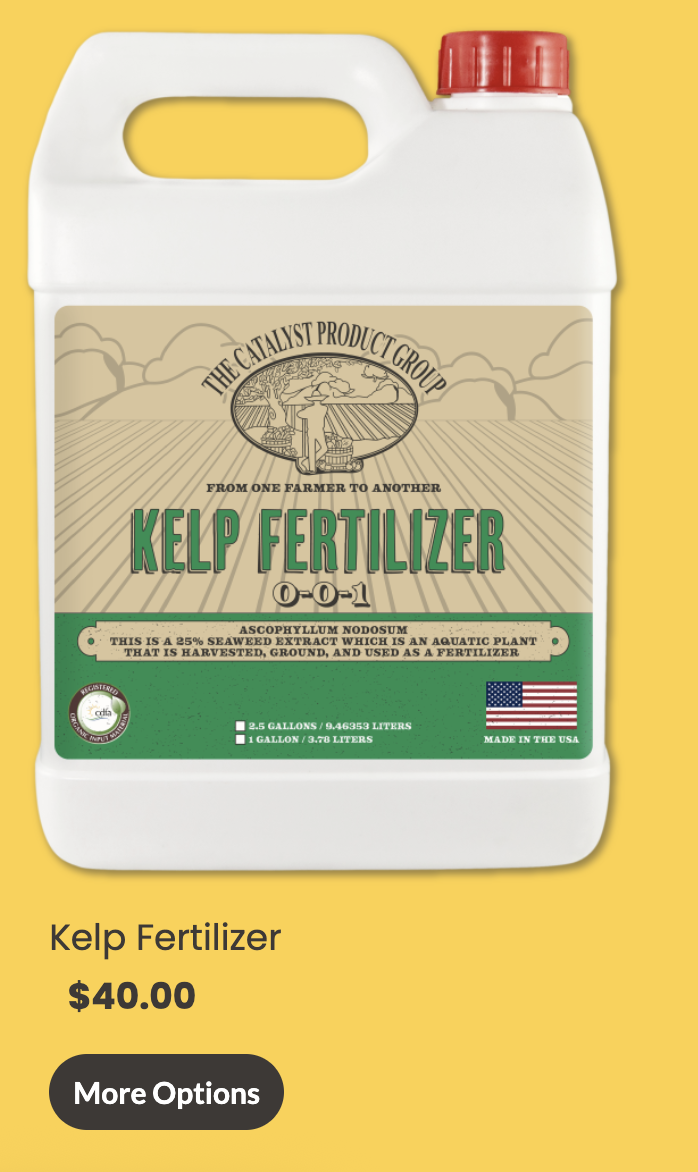
Kelp Fertilizer
Trace minerals and natural growth hormones that help plants handle heat stress.
Or we can handle it for you. Our monthly fertilizing program covers the whole yard: a liquid organic feeding every month, compost three times a year, and a recap video after each visit so you can see what we did.
Whole Yard Organic Feeding
Monthly liquid organic feeding, compost three times a year, and a recap video after every visit.
Text us to get startedGetting It Planted
You're welcome to take this list and plant it yourself. Fall is the best time of year to do it. If you'd rather have us do the planting, text us which options you like and I'll put together a planting proposal with pricing. You can see more about our planting services on our site.
For any irrigation work, new lines for trees, or the controller swap, call Garrett: 480-678-9121.
As a consult client, you're already in the Garden Nerd Club, so you have direct access to me there. Reach out anytime with questions as you work through the yard.
Quick Reference
Compost and Mulch
Arizona Worm Farm, plus their mulch calculator
Irrigation
Garrett, 480-678-9121
Organic Fertilizer
Catalyst Product Group: Jenner 8, Organic Nitro Jen, Kelp