
Heath Daley
3974 E Grand Canyon Pl, Chandler, AZ 85249
Here's everything we covered on our walk, area by area in the order we walked it, plus watering guidance for every season and how to feed your soil so everything comes back stronger.
Side Yard Citrus
North side yard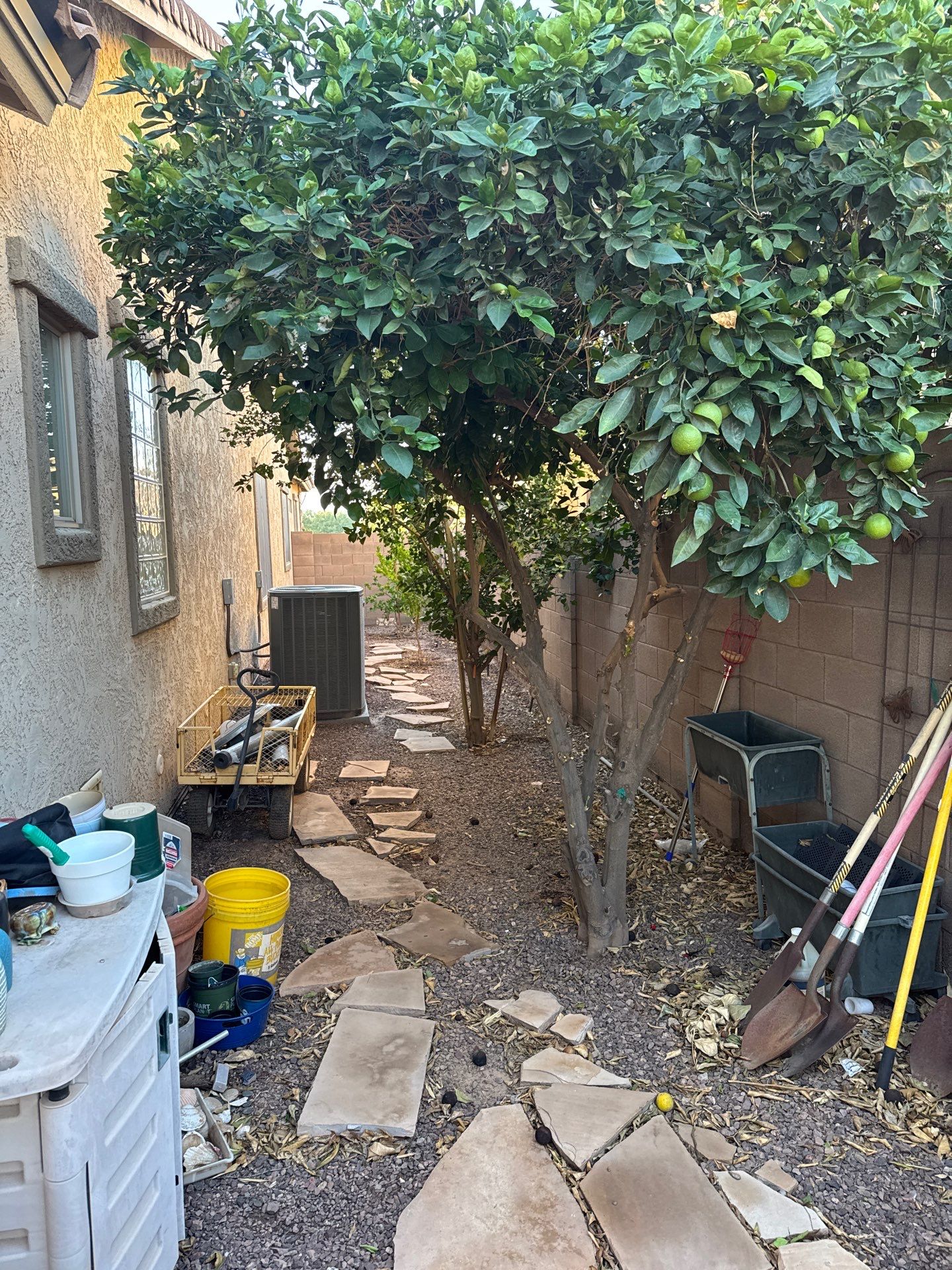
Your citrus all look good, and that's a great sign. There are a few things I'd do to set them up to keep getting better.
Expose the root flares
The root flare is where the trunk widens out into the roots. On a healthy tree it should be visible right at the soil line. On all of these, it's buried under soil and rock. When the flare stays buried, the bark there stays wet and can rot, and over time roots start circling and choking the tree. The easiest way to fix it: pull the rock back and use a strong stream of water from a hose to blast the dirt away from the base until you can see the flare where the roots start to spread.
This video shows why an exposed root flare matters, with real examples. If it doesn't load, watch it on YouTube here.
Build a water well and mulch it
- Pull the rock back from each trunk and build a water well as wide as the space allows. This is a tight spot between the house and the fence, so do what fits. Even a well 2 to 3 feet across, centered on the trunk, makes a real difference. Where there's more room, take it out 3 to 4 feet.
- Lay compost on top of the soil, then cover it with 2 to 3 inches of mulch. No need to work it in.
- Keep the mulch a few inches back from the trunk. Never pile it up against the bark.
Rock heats up and holds that heat right against the roots. Mulch keeps the soil cooler, holds moisture, and feeds the soil life that feeds the tree.
Spread out the emitters
Move the drip emitters out from the trunk so they're spread around the whole well, especially out toward the edge of the canopy (the drip line). That's where the feeder roots are. Water dripping right at the trunk keeps the bark wet and doesn't reach the roots doing the work. As the trees grow, keep moving emitters out and add a few more.
Check the emitter on the larger orange tree. One of its emitters looked clogged. Run the system and watch it. If little or no water is coming out, pull it, rinse out any debris or mineral buildup, and pop it back in, or just replace it. They're inexpensive, and a clogged emitter means that side of the tree isn't getting watered.
North-Facing Bed by the Window
North facing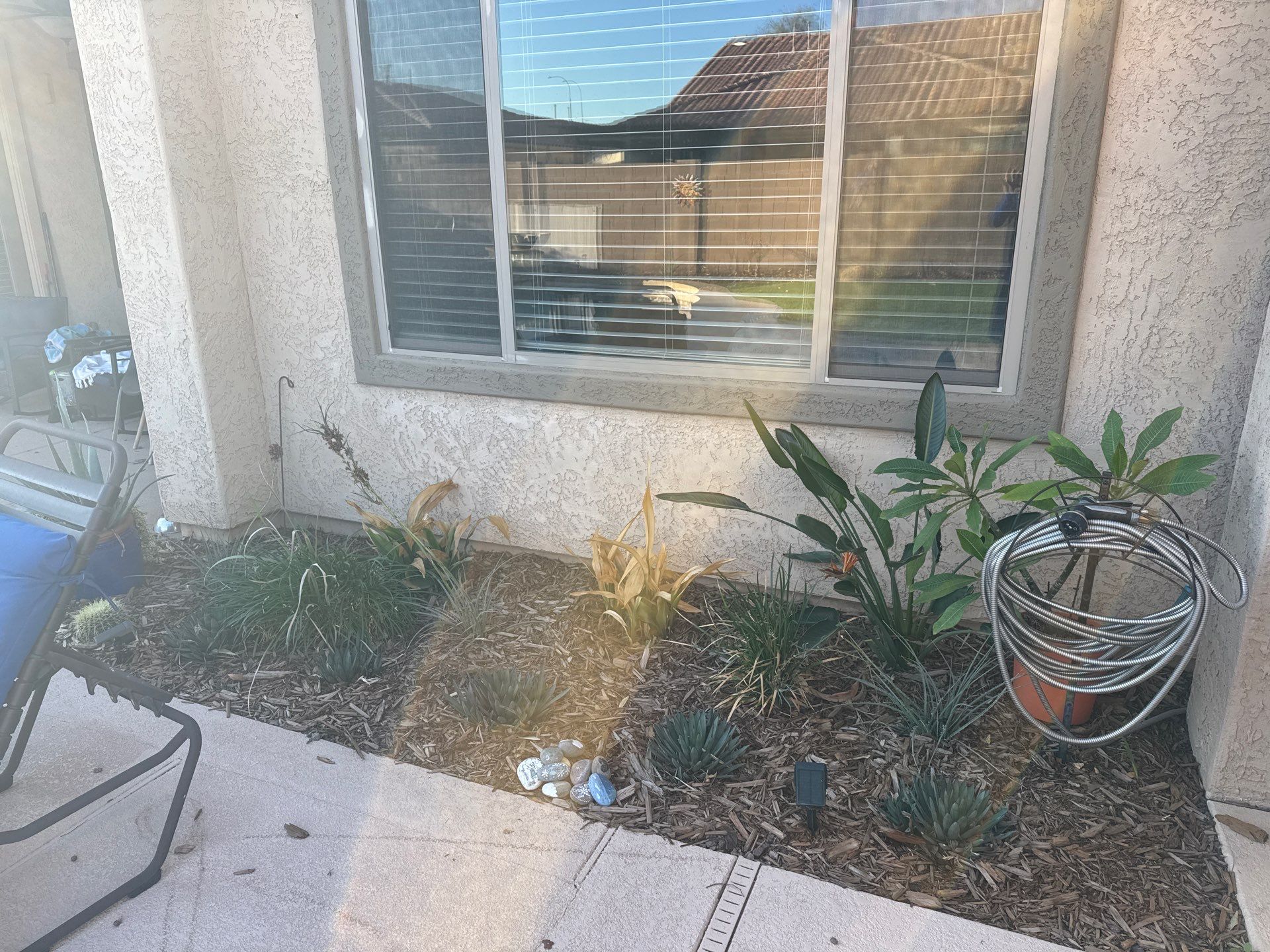
The plumeria can go right in the ground here, and it will do just fine. It'll drop its leaves in winter, which is normal, and leaf back out in spring. Keep it on the dry side through winter, since wet, cold soil is what rots plumeria.
I'd pull the other plants that aren't loving life here and replace them with bird of paradise, which is perfect for a north wall. Beyond that, I wouldn't do too much in this bed. If you want more tropical options for this side of the house, here are the ones that do well with the softer light on a north wall:
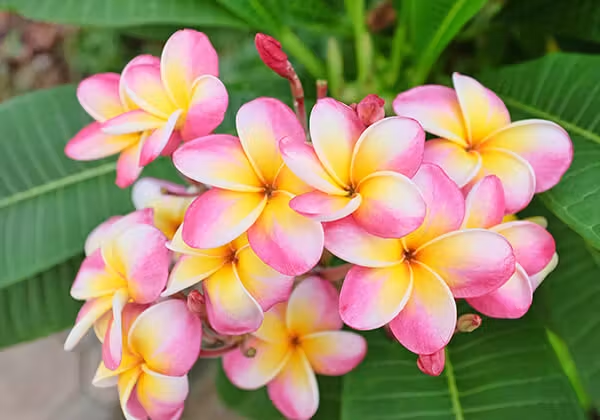
Plumeria
Fine in the ground in this spot. Drops leaves in winter and comes back in spring. Water lightly in the cool months, regularly in the warm ones.
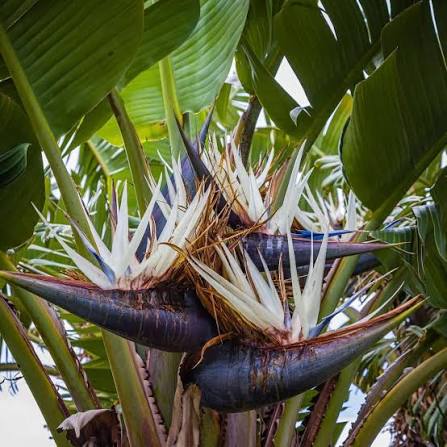
Bird of Paradise
Strelitzia. Big, banana-like leaves that give an instant tropical look, with white and blue flowers. Perfect for a north wall and my first pick for replacing what's struggling here. It grows tall over time, so it also adds height against the wall. Plant 5 to 6 feet apart.
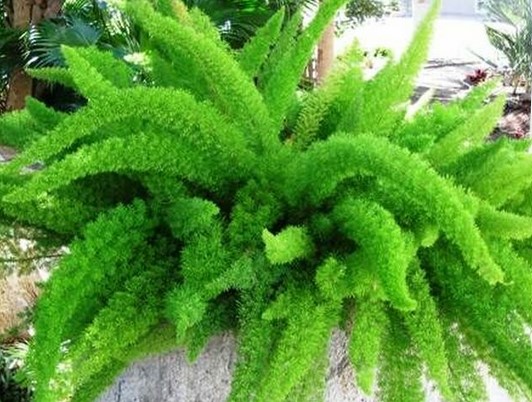
Foxtail Fern
Soft, bright green plumes about 2 feet tall. Great filler in front of bigger plants and easy in shade.
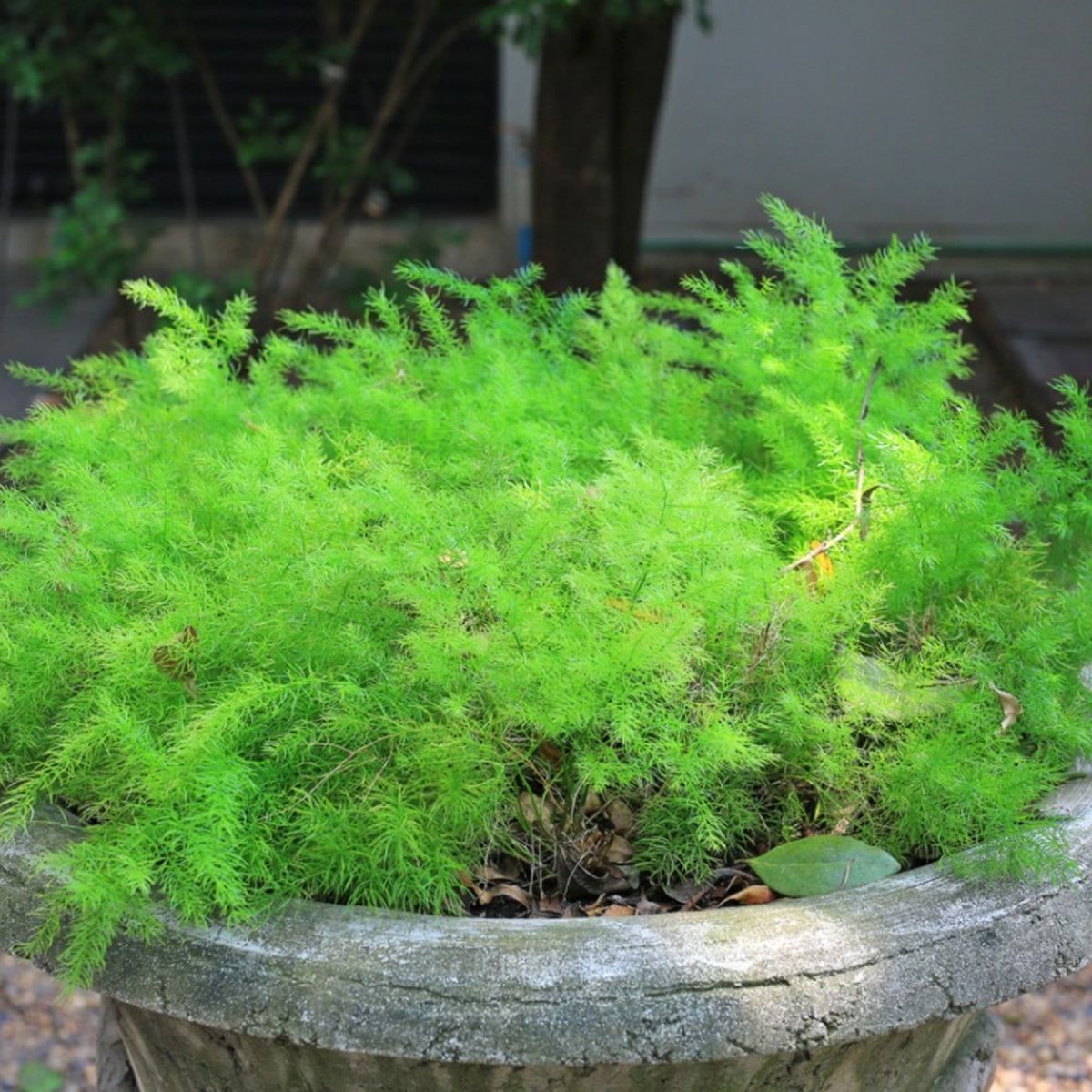
Asparagus Fern
Airy, cascading green texture, about 2 to 3 feet. Takes shade and fills in fast. Pairs well with foxtail fern.

Canna Lily
Big tropical leaves and bold red, orange, or pink flowers. Spreads into a clump, 3 to 5 feet tall. Cut spent stalks to the ground to keep it tidy.
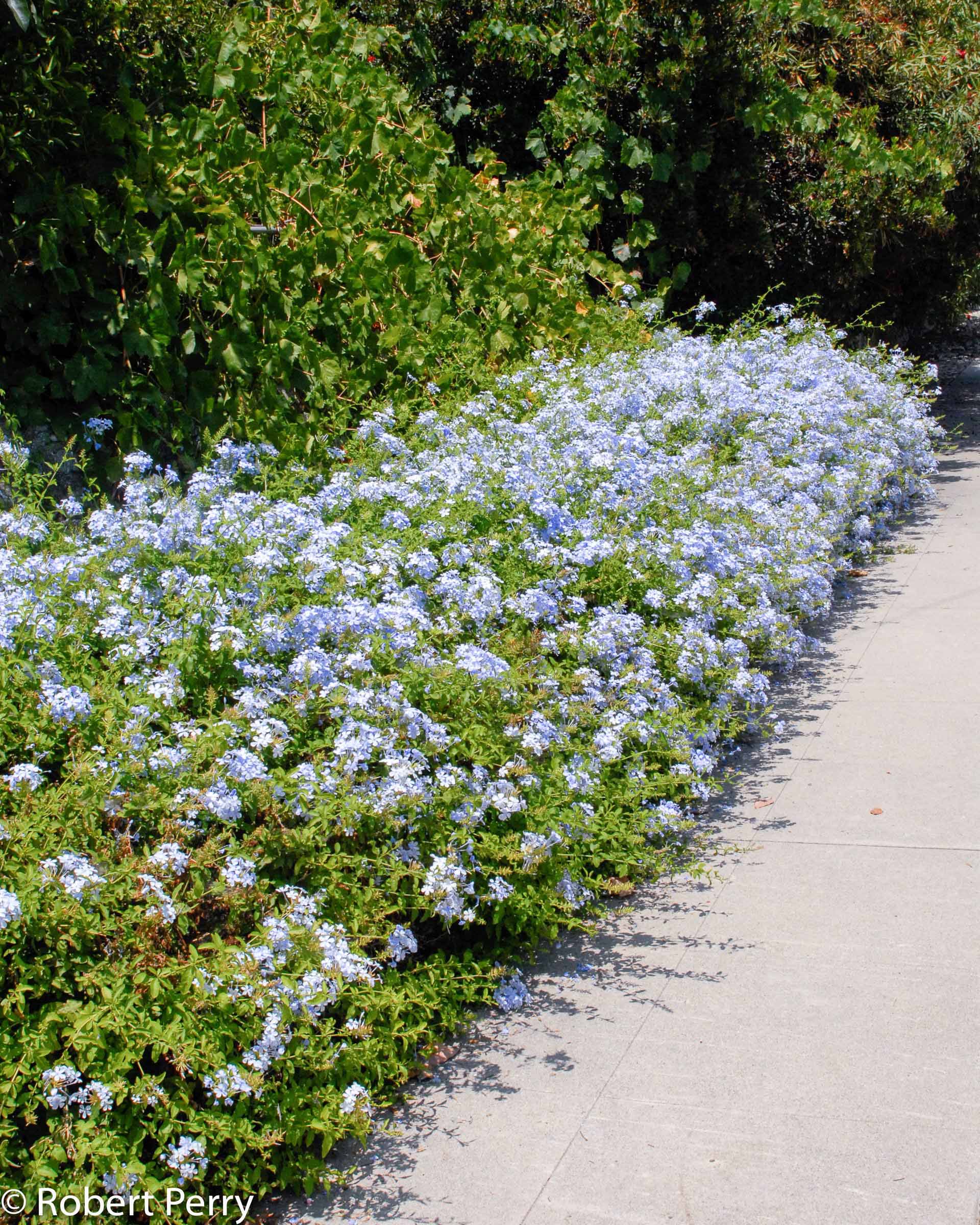
Cape Plumbago
Sky blue flowers most of the year, mounding to 3 to 4 feet. Does really well with afternoon shade.
You can't fit all of these. Pick your favorites and repeat a few of them for a fuller look.
East-Facing Wall and Pygmy Date Palms
East facing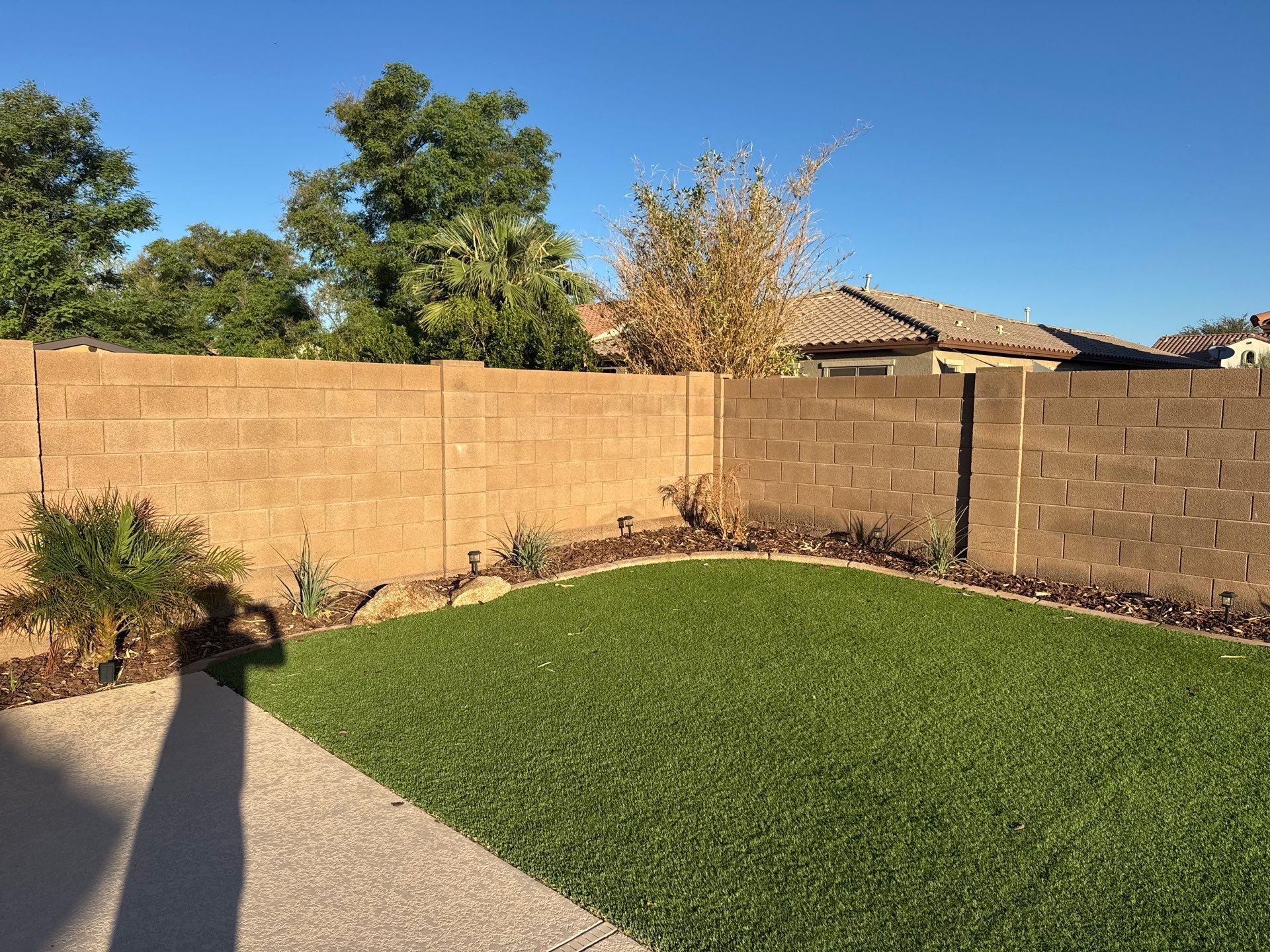
Some of the pygmy date palms along this wall made it through the summer and some aren't looking great. For now, don't do anything with them. Keep doing what you're doing and give them time. Palms recover slowly, and we won't really know until spring. If any of them haven't pushed new green growth from the center by spring, that's when you can take them out.
East-facing is one of the best exposures in the Valley for tropical plants: morning sun and afternoon shade. Since you like tropical and color, here's what will do well here. Plumeria works great in this spot too.
Plumeria
Tropical flowers with an amazing fragrance all summer. Loves morning sun and afternoon shade. Drops leaves in winter and comes back in spring.
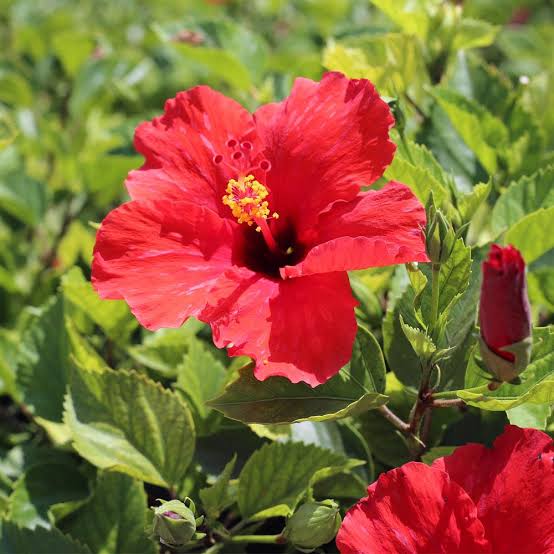
Red Hibiscus
Big, glossy leaves and huge red flowers. East-facing is the ideal spot for hibiscus. Red varieties do best here; other colors tend to struggle. 4 to 6 feet.
Canna Lily
Bold leaves and bright flowers, 3 to 5 feet. Spreads into a clump that fills space quickly.
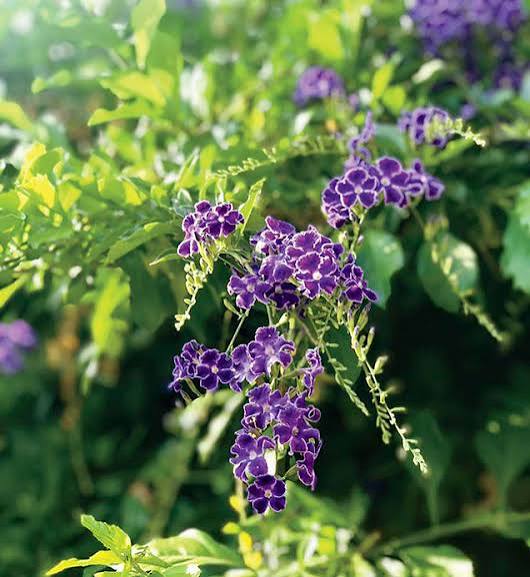
Skyflower
Purple flower clusters followed by golden berries. Gets 6 to 8 feet and can be kept as a hedge along the wall.
Cape Plumbago
Sky blue flowers most of the year, 3 to 4 feet. Great in front of taller plants.
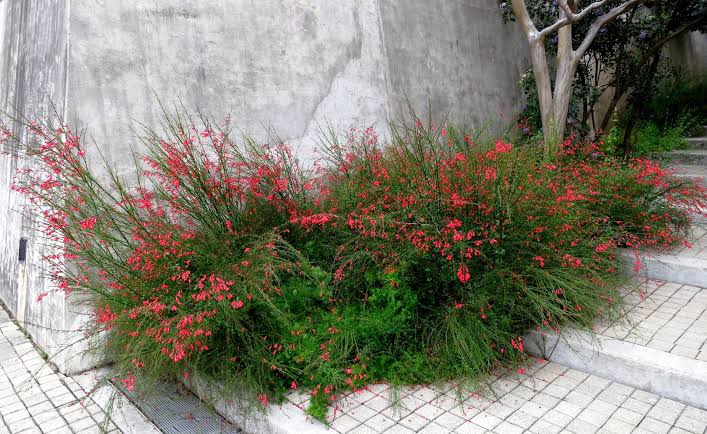
Firecracker Plant
Red tubular flowers on arching stems, 3 to 4 feet. Hummingbird magnet.
You can't fit all of these. Pick your favorites.
South-Facing Back Wall
South facing, narrow space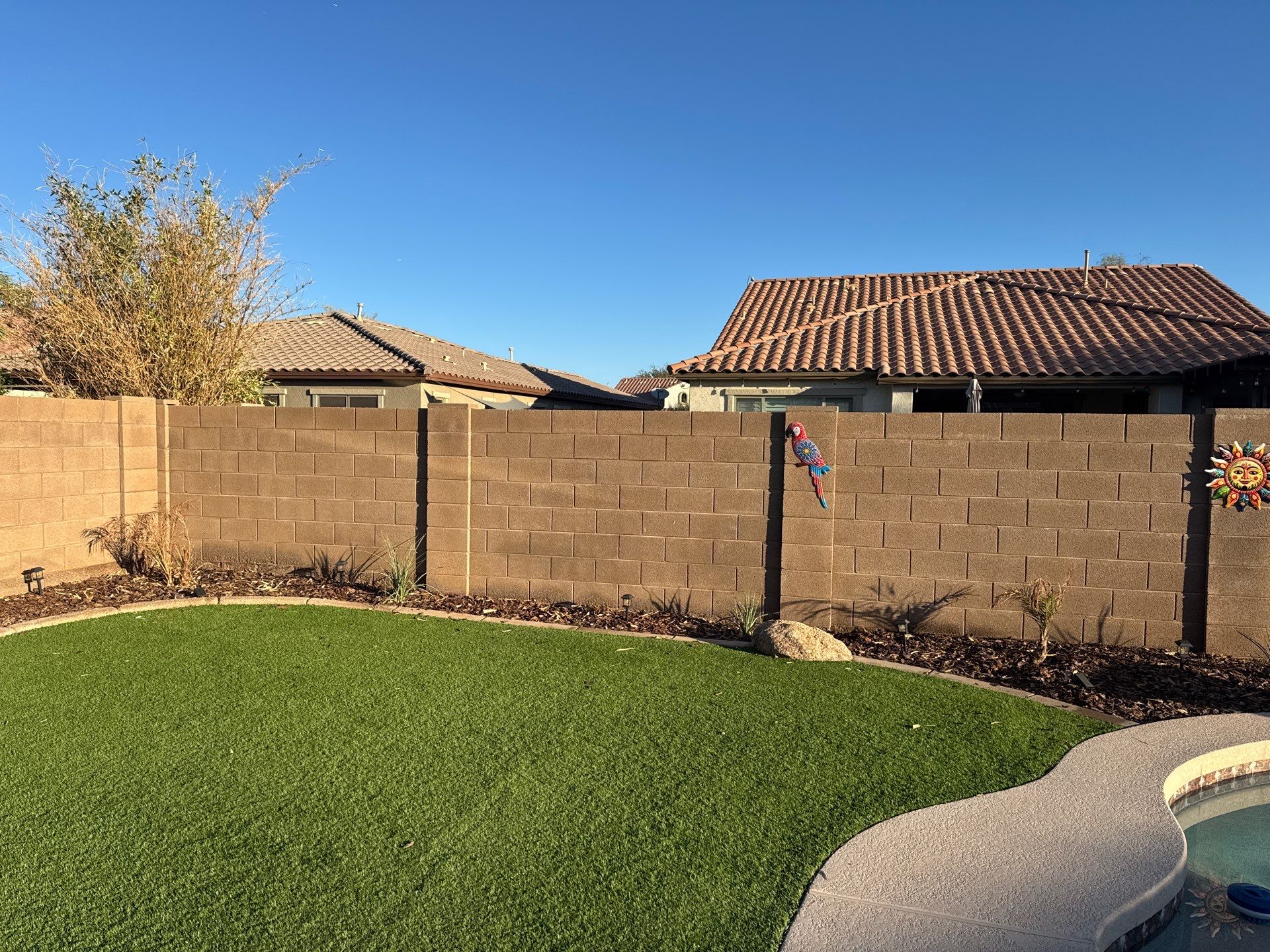
This wall gets full sun all day plus the heat bouncing off the block, and there isn't a lot of room between the turf and the wall. So the best fits are plants that grow up rather than out, or vines that cover the wall itself. Here are tropical, colorful options that will handle it:

Torch Glow Bougainvillea
An upright, narrow bougainvillea that grows like a column instead of a sprawling shrub. Perfect for tight spaces. Red-magenta flowers, 6 to 8 feet tall, 3 to 4 feet wide. Plant 4 to 5 feet apart.
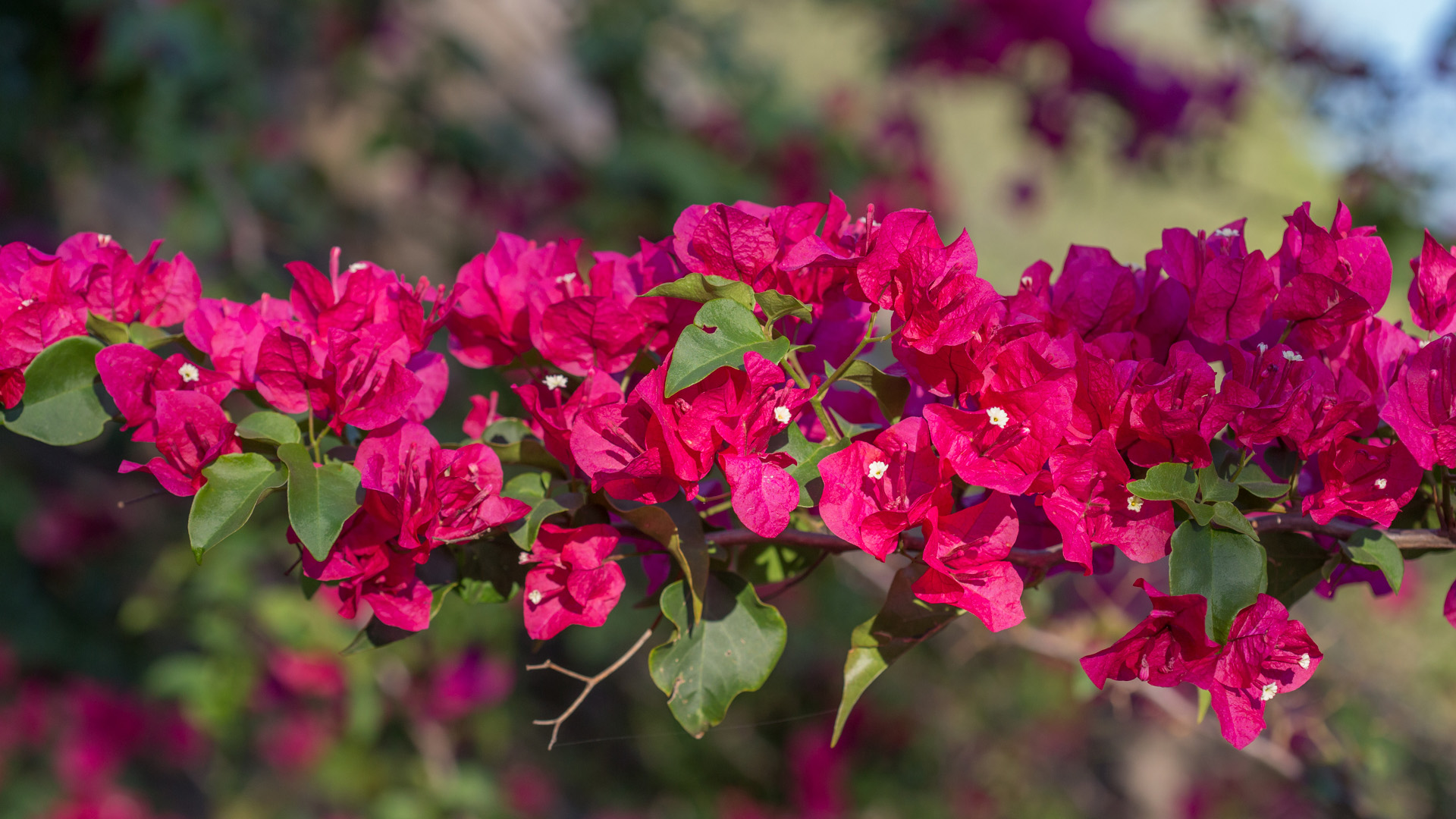
Bougainvillea
Standard bougainvillea trained flat on the wall. Tie the canes to the block as they grow and it stays in a narrow footprint. Huge color.

Tangerine Crossvine
A vine that self-clings to block, so it takes almost no ground space. Orange trumpet flowers in spring, evergreen, loves full sun.
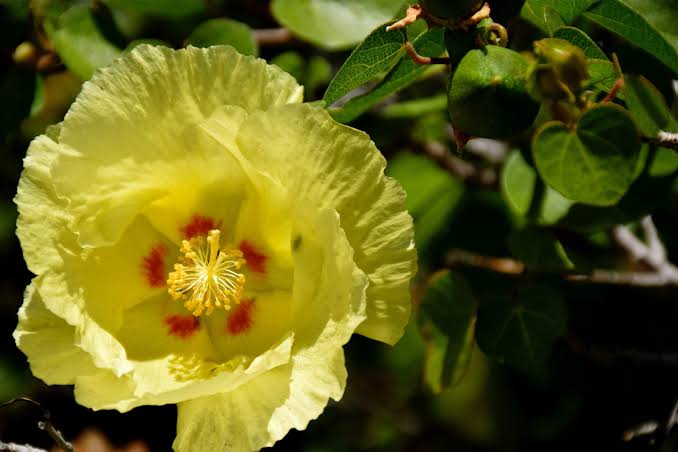
San Marcos Hibiscus
A hibiscus that loves full sun. Bright yellow flowers with a red center, 3 to 5 feet. Takes much less water than tropical hibiscus.
Totem Pole Cactus
Smooth, spineless columns with a sculpted look. Grows straight up with almost no width, so it fits this tight space perfectly and handles the reflected heat off the wall.
Pencil Cactus
Upright and narrow with orange-red stems in the cooler months. Fun color and a tropical look in very little space.
Space is tight here, so pick one or two and repeat them along the wall.
Pool Planter and Pygmy Date Palms
Hot afternoon sun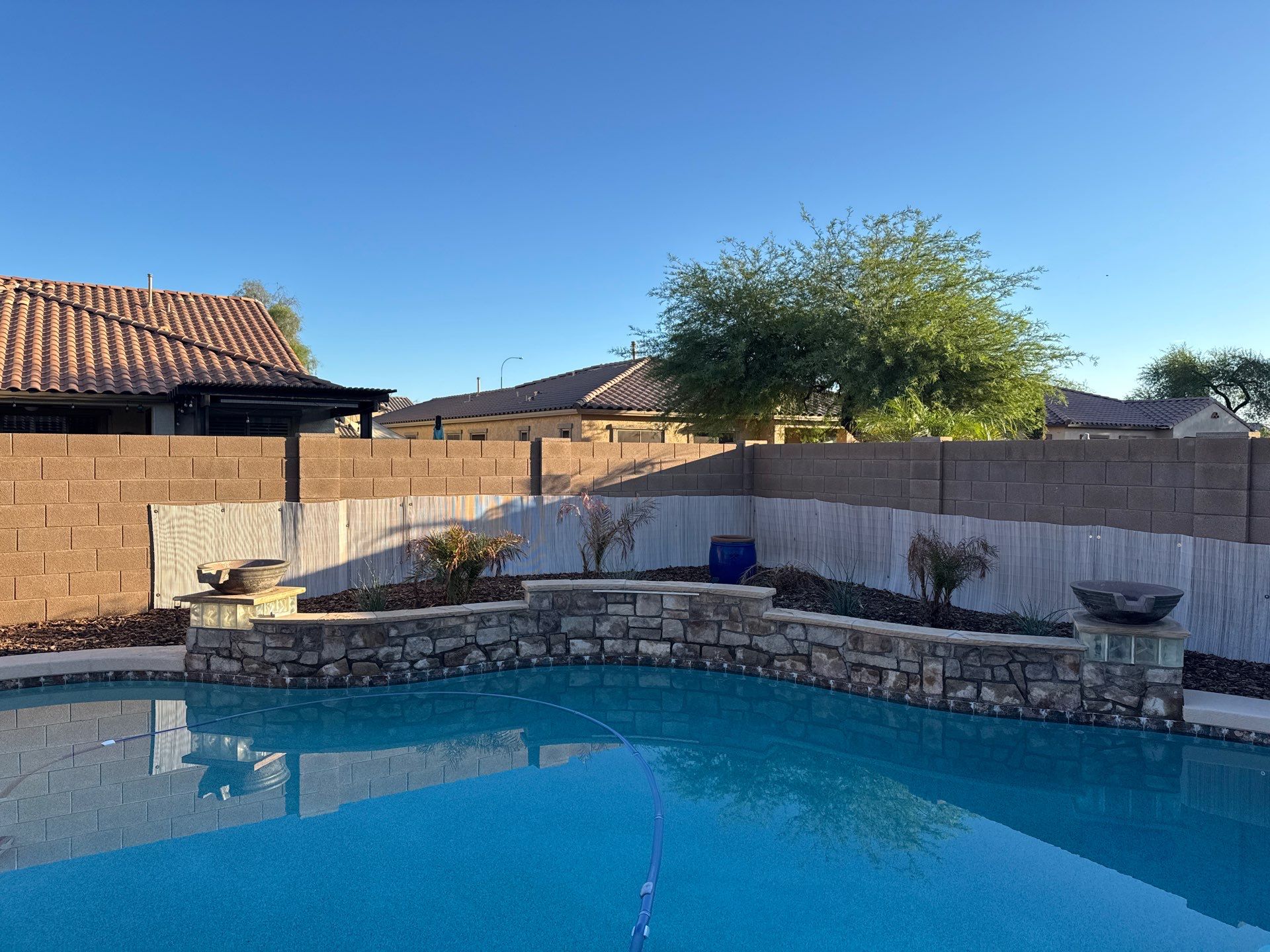
A few pygmy date palms back here are looking better than others. Keep doing what you're doing and keep feeding them (see the fertilizing section below). Palms are slow to show improvement, so give them through spring before making any calls.
For more tropical color in this planter, these all take the hot afternoon sun and still look good and colorful:
San Marcos Hibiscus
My top pick here. The tropical hibiscus look with yellow and red flowers, but built for full afternoon sun. 3 to 5 feet.
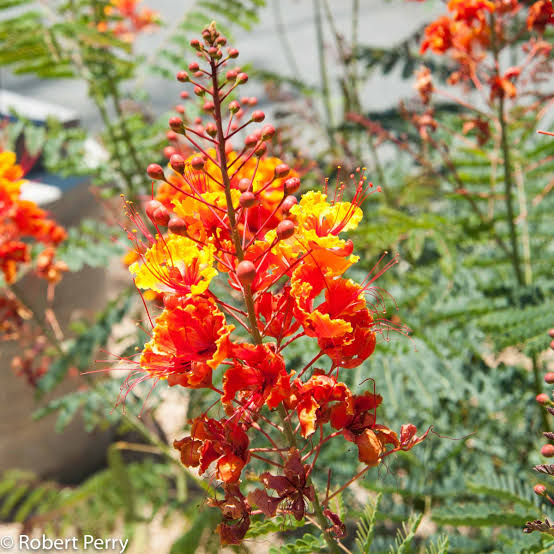
Red Bird of Paradise
Red, orange and yellow flowers all summer long, the hotter the better. 6 to 8 feet, cut back hard in late winter.
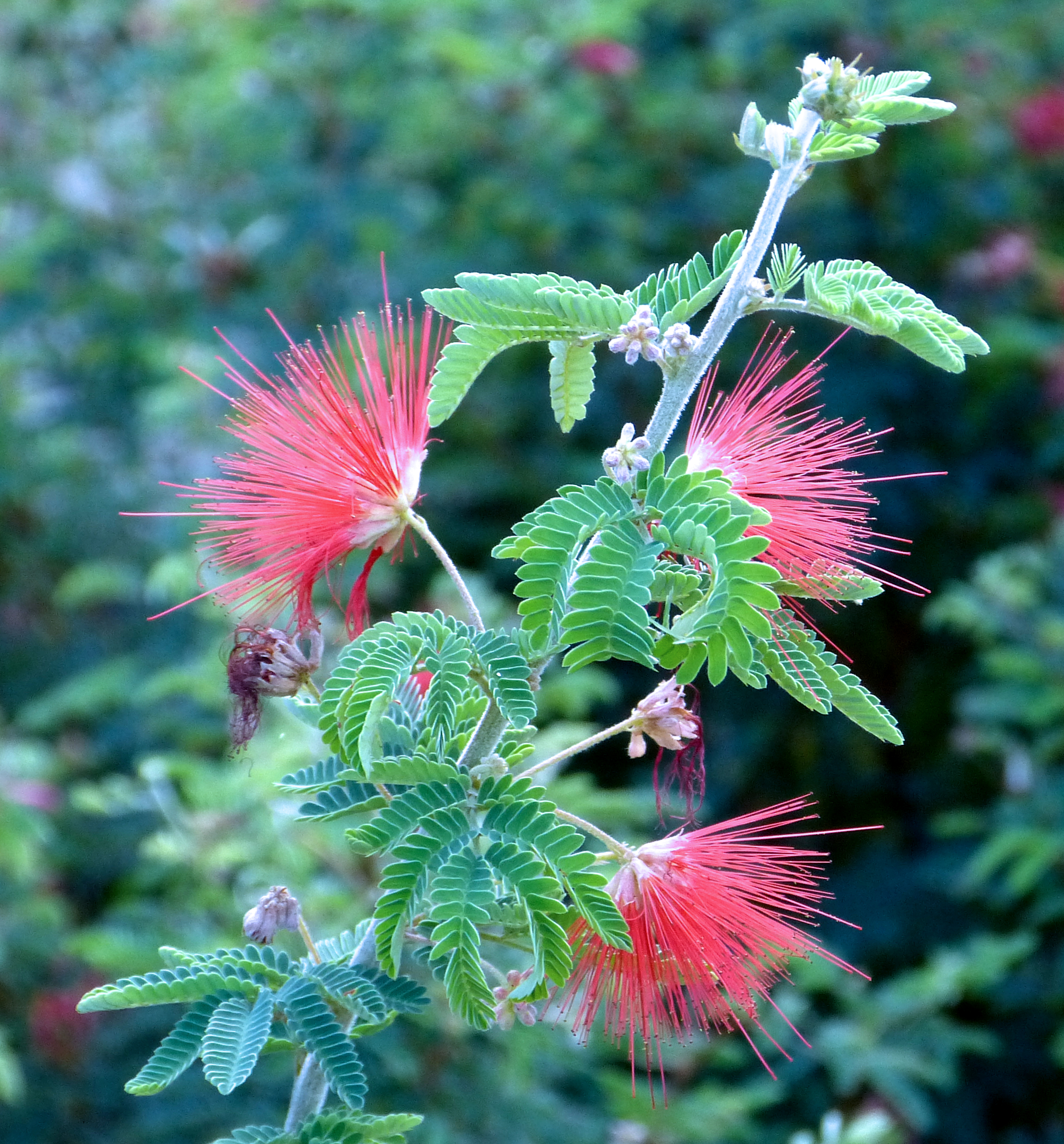
Baja Fairy Duster
Red puffball flowers most of the year, hummingbirds love it. 3 to 5 feet. Very little litter, which is nice near a pool.
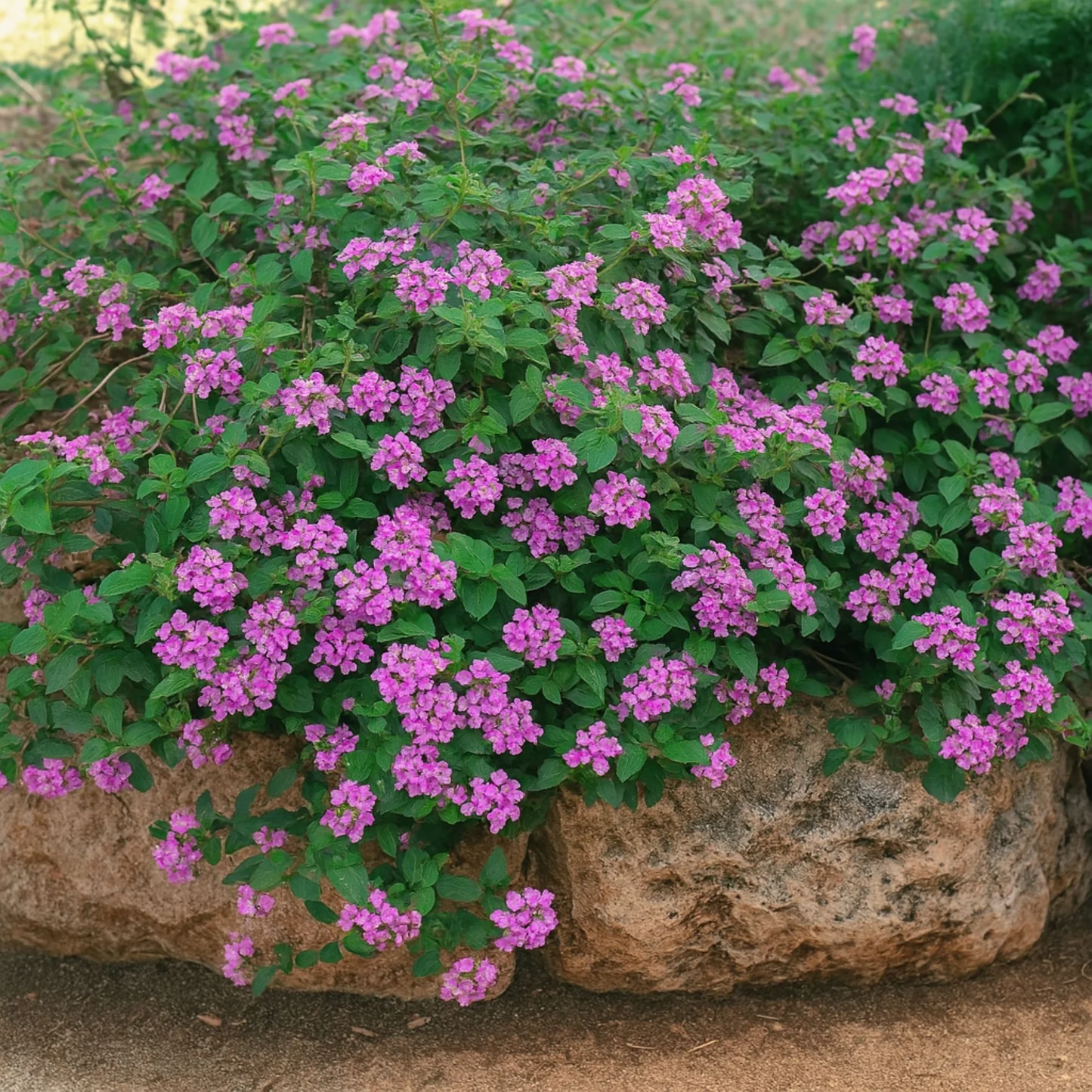
Lantana
Nonstop color spilling over the planter edge. Comes in yellow, orange, purple and mixed colors.
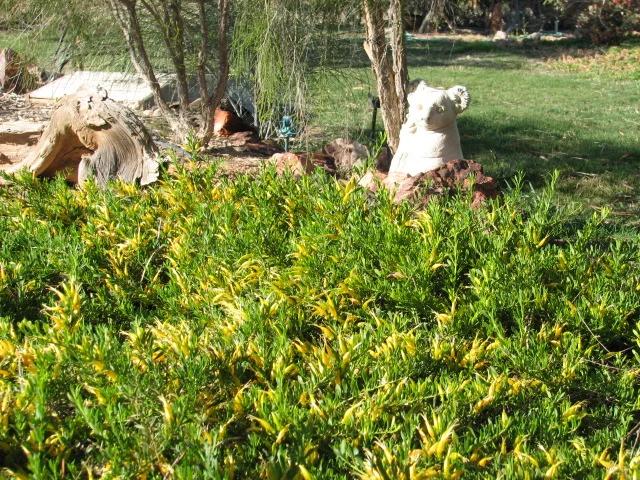
Emu Bush (Outback Sunrise)
Low and spreading with orange flowers in late winter and spring. Nice for the front edge of the planter.
Torch Glow Bougainvillea
Upright and compact, so you get bougainvillea color without the sprawl. Some bract drop, so I'd keep it toward the back of the planter.
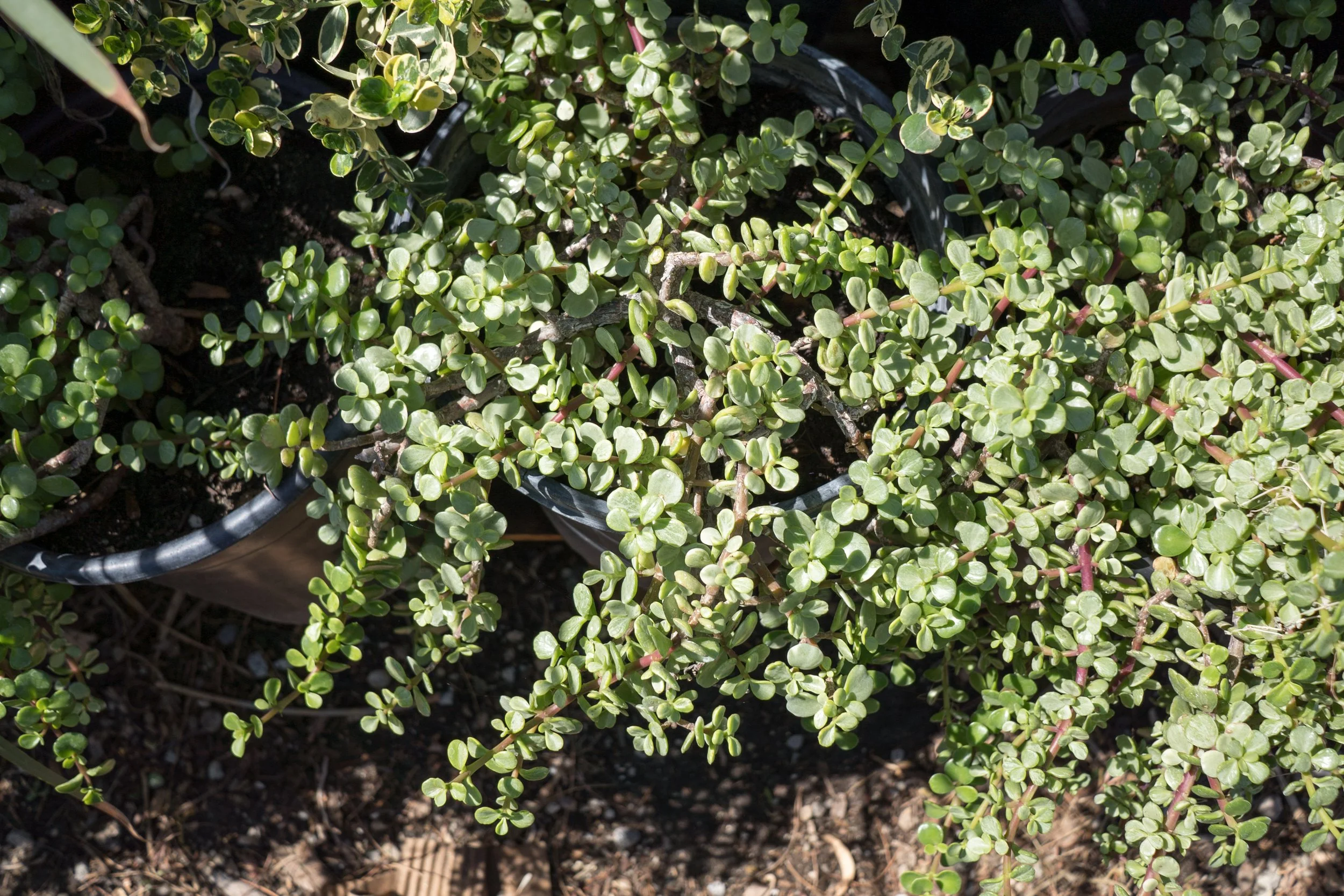
Elephant Food
A succulent with a tropical, jade-like look. Takes the heat and stays neat. Good filler between palms.
Pencil Cactus
Upright orange-red stems for color all winter. Very little space needed.
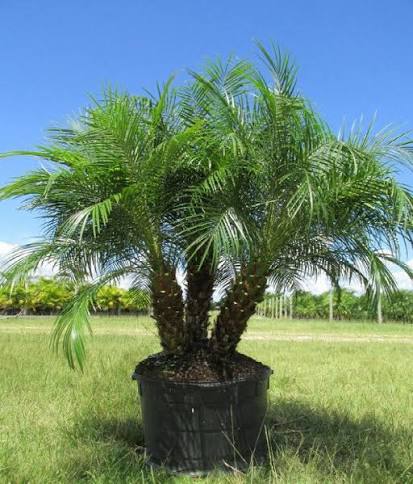
Pygmy Date Palm
If you want to keep the palm theme, replacements can go in next spring once you know which ones didn't make it.
You can't fit all of these. Pick your favorites.
Lining the Block Walls
Back yard walls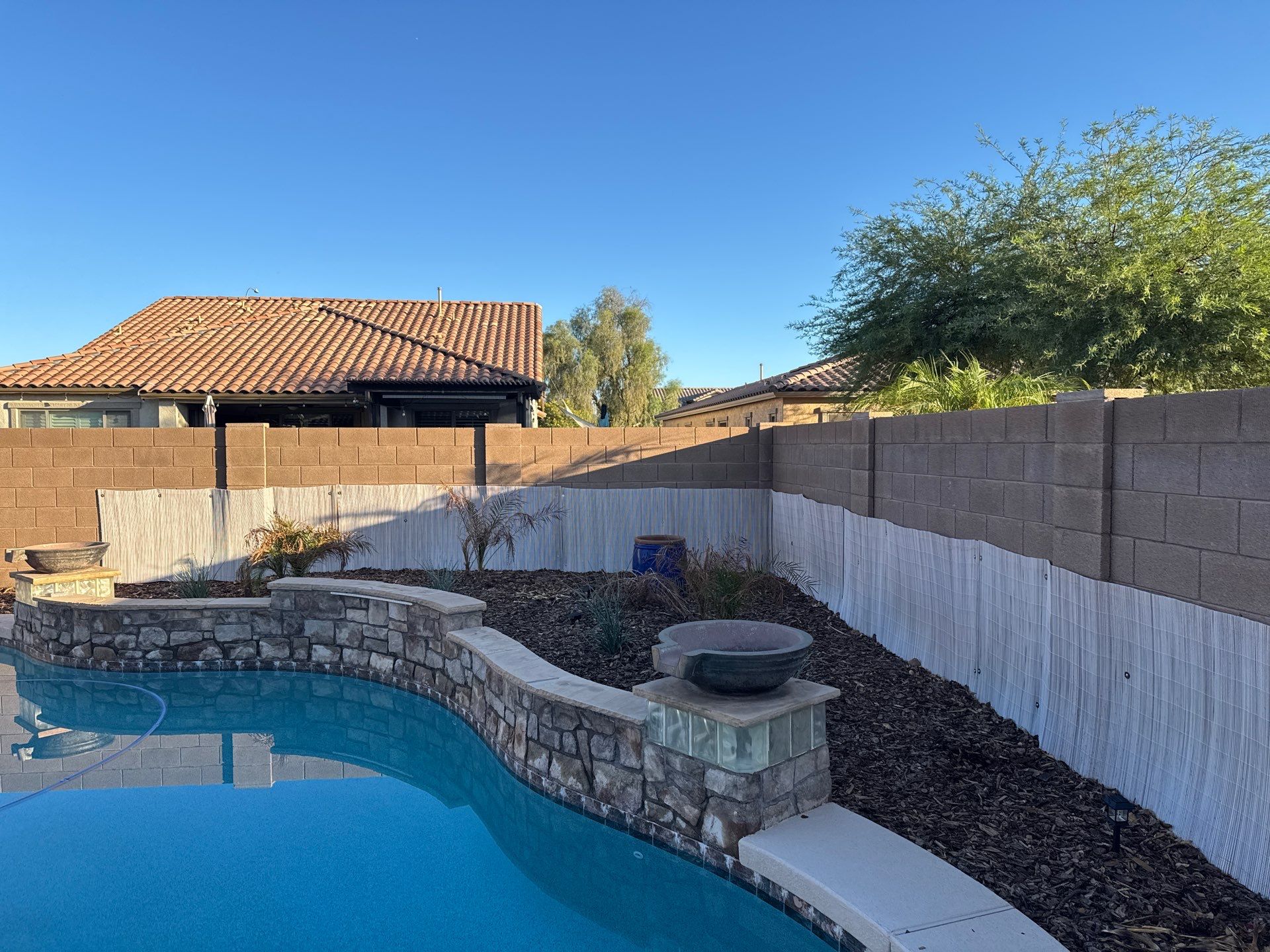
Lining these block walls is the single biggest thing you can do back here. Covered walls stop soaking up and radiating heat, and that shade and cooler air will help everything in front of them that struggled this summer survive and be much happier.
Bougainvillea in all different colors is a great idea. Here are my standard wall options too, and you can mix and match them along the same wall:
Bougainvillea
The one you were already thinking about, and it's a great call for a hot block wall. Mixing colors (red, magenta, orange, white) along one wall looks fantastic. Plant 6 to 8 feet apart and tie the canes to the wall as they grow. Near the pool, expect some bract drop in the water during big bloom flushes.

Hopseed
My go-to for a dense, evergreen green wall. Grows fast to 10 to 12 feet, takes full sun and reflected heat, and needs very little shaping. Plant 5 to 6 feet apart for a solid screen.

Arizona Rosewood
Native, evergreen and very dense, with a slightly softer look than hopseed. Gets 10 to 15 feet tall. Space 6 to 8 feet apart. Birds love it.

Orange Jubilee
Big trumpet-shaped orange flowers from spring through fall, hummingbirds all over it. Fast to 8 to 10 feet, plant 5 to 6 feet apart. It can freeze back in a hard winter but bounces right back.
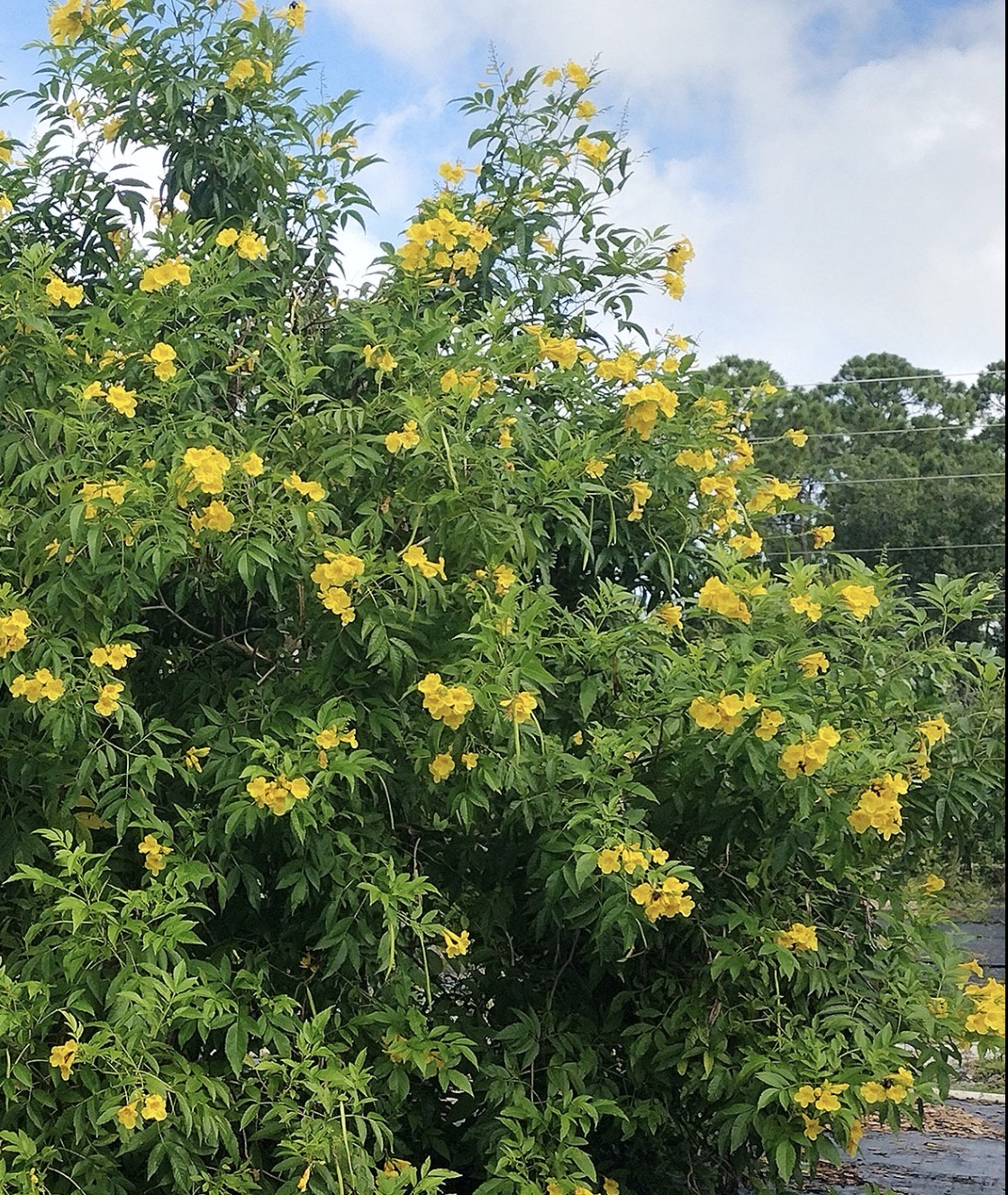
Yellow Bells
Same family and same look as orange jubilee, but bright yellow. Mixing yellow bells and orange jubilee along the same wall gives you a ton of color for months. Plant 5 to 6 feet apart.
Spacing tip: plant on drip with 2 to 3 emitters per plant, set about a foot off the root ball, and keep them a couple of feet out from the wall so the roots have room. Plant at the same depth they were in the pot.
North-Facing Bed Past the Patio
North facing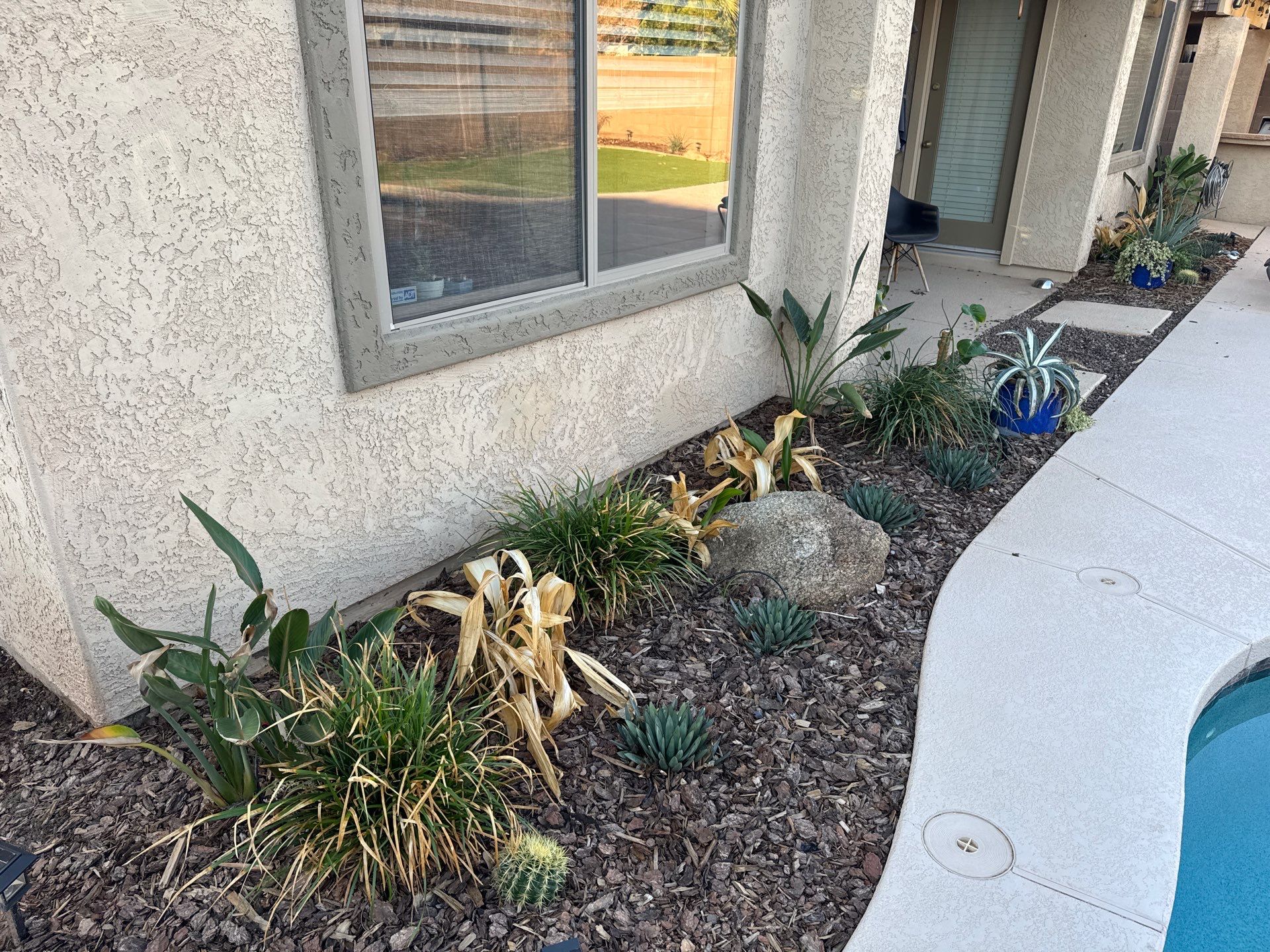
Everything looks good in this bed. Same idea as the other north side: I'd just add more bird of paradise to fill it in.
Bird of Paradise
Strelitzia. Big tropical leaves and white and blue flowers. Tuck them in between what's already there, about 4 to 5 feet apart, to fill in the bed and add some height.
Red Hibiscus
West end of the wall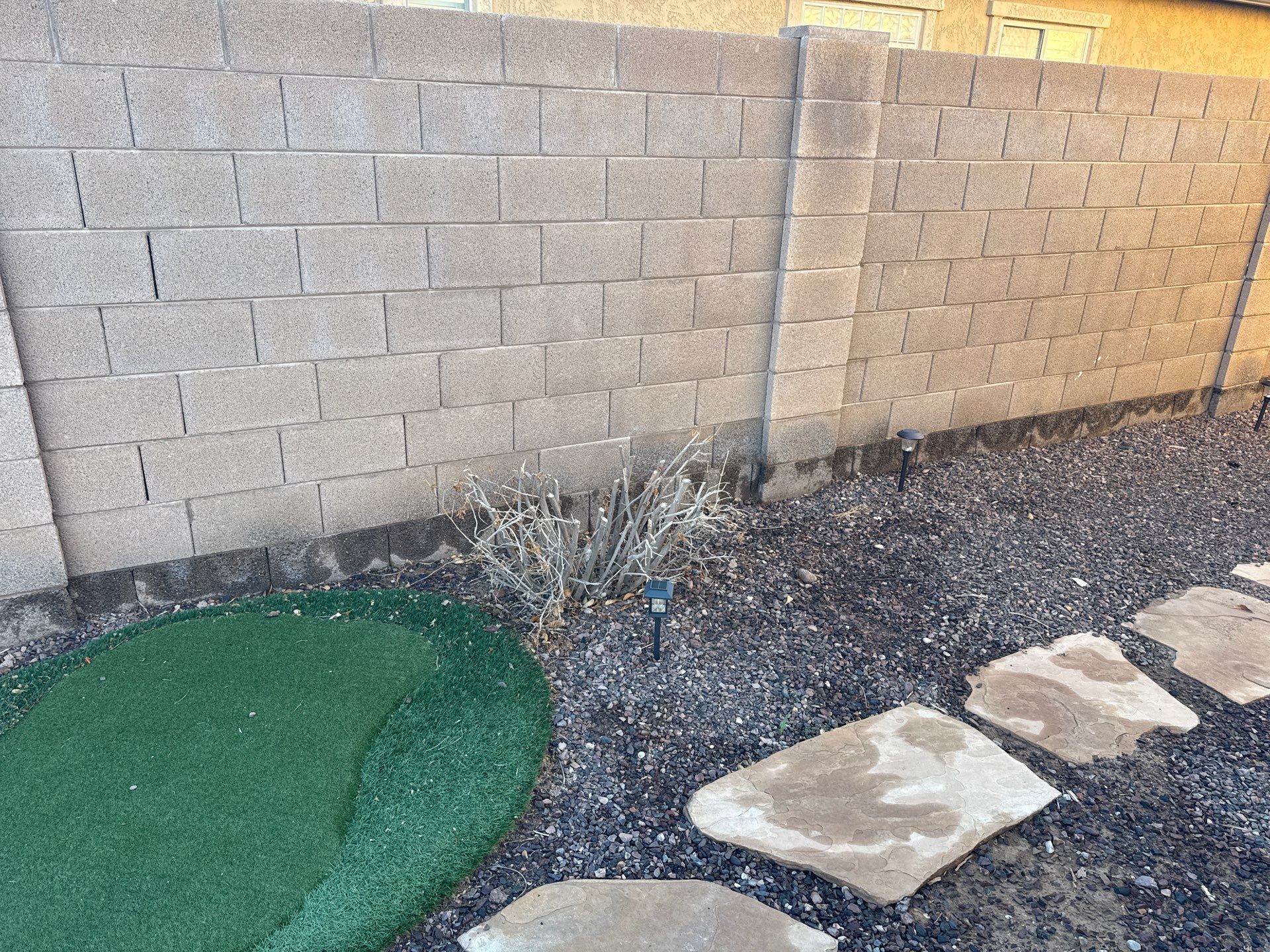
This red hibiscus is the right plant, it just didn't need to be pruned so heavily. I'd move it about five feet to the south. It will be much happier there because it will get more afternoon shade.
- When to move it: now through early November so it can root in before it gets cold, or wait until March.
- How: dig a wide root ball, replant at the same depth, water it in deeply, then lay compost and mulch on top. Expect some leaf drop for a few weeks; that's normal transplant stress.
- Pull the rock back and mulch. Once it's in its new spot, pull the rock away in a ring a few feet around the base, lay compost on the soil, and cover it with mulch. Rock holds heat right against the roots; mulch keeps them cool and moist.
- Pruning going forward: just a light shaping in spring after the frost risk. Hibiscus blooms on new growth, so heavy cuts cost you flowers.
Red Hibiscus
Red varieties do best in the Valley. Morning sun and afternoon shade is the sweet spot.
Whatever you choose for covering the block walls in the pool area, you can also extend it all the way down this line. Same options:
Bougainvillea
The one you were already thinking about, and it's a great call for a hot block wall. Mixing colors (red, magenta, orange, white) along one wall looks fantastic. Plant 6 to 8 feet apart and tie the canes to the wall as they grow. Near the pool, expect some bract drop in the water during big bloom flushes.
Hopseed
My go-to for a dense, evergreen green wall. Grows fast to 10 to 12 feet, takes full sun and reflected heat, and needs very little shaping. Plant 5 to 6 feet apart for a solid screen.
Arizona Rosewood
Native, evergreen and very dense, with a slightly softer look than hopseed. Gets 10 to 15 feet tall. Space 6 to 8 feet apart. Birds love it.
Orange Jubilee
Big trumpet-shaped orange flowers from spring through fall, hummingbirds all over it. Fast to 8 to 10 feet, plant 5 to 6 feet apart. It can freeze back in a hard winter but bounces right back.
Yellow Bells
Same family and same look as orange jubilee, but bright yellow. Mixing yellow bells and orange jubilee along the same wall gives you a ton of color for months. Plant 5 to 6 feet apart.
Honeysuckle on the West Wall
West facing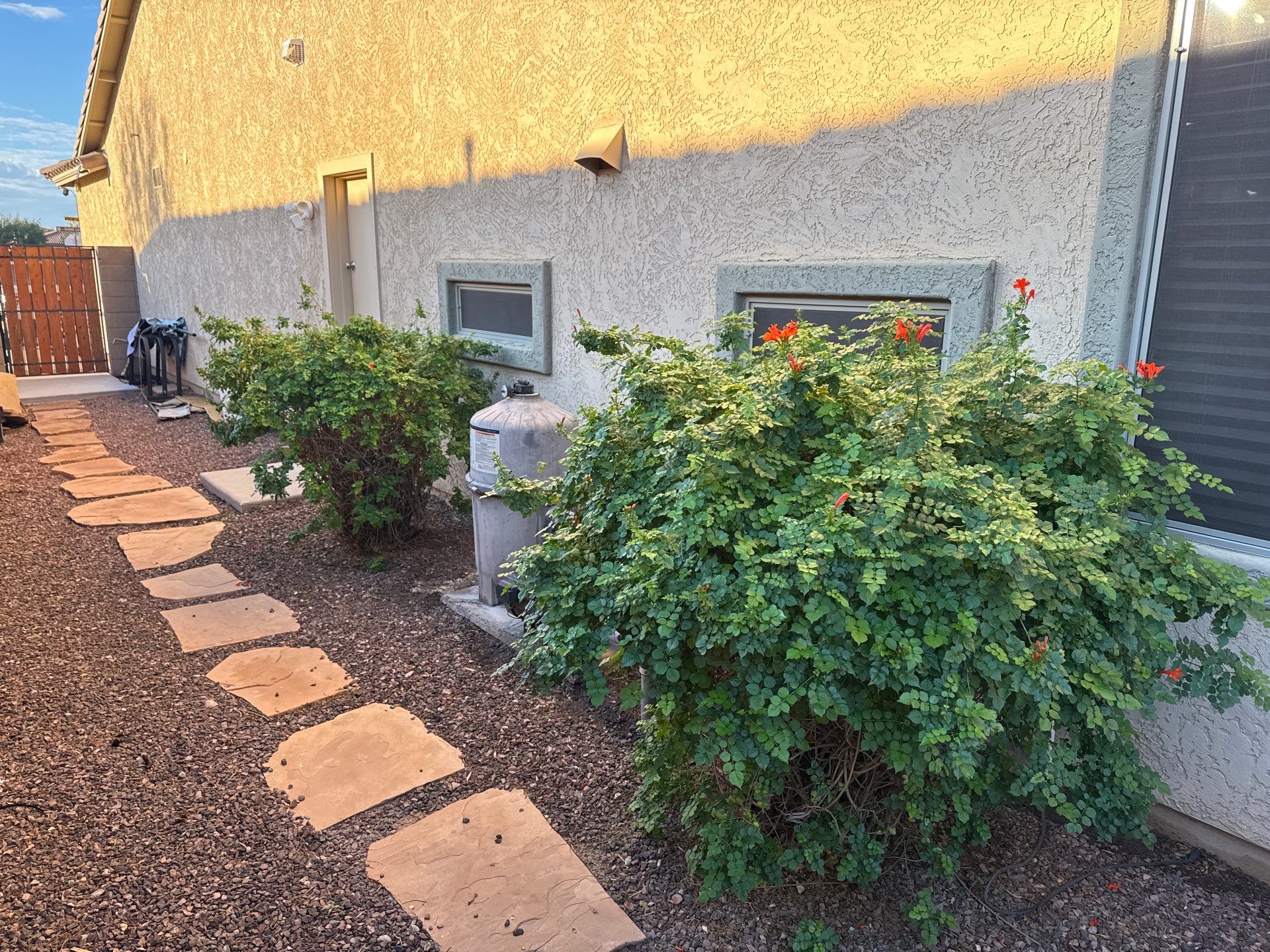
You like the honeysuckle, and it's a good fit for this hot west wall. It only needs a hard cut back about once a year, in late winter once the frost risk is over, and that's it. It'll fill right back in and bloom all season.
If you want other options that will grow on this west wall, these all handle the afternoon heat:
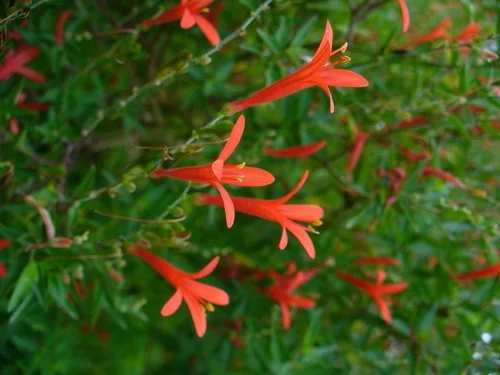
Desert Honeysuckle
What you have now. Orange tubular flowers spring through fall, hummingbirds love it. 3 to 5 feet.

Texas Sage
Silvery leaves and purple flower flushes after summer humidity. 5 to 6 feet. Let it grow natural; don't shear it into a ball.
Red Bird of Paradise
The hotter the better. Red and orange flowers all summer, 6 to 8 feet.
Baja Fairy Duster
Red puffball flowers most of the year, 3 to 5 feet. Stays neat.
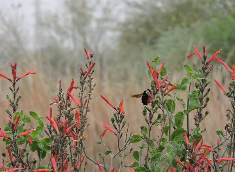
Chuparosa
Native with red tubular flowers in winter and spring, when most things aren't blooming. 3 to 4 feet.
Orange Jubilee
Big orange flowers spring through fall, 8 to 10 feet if you want height on the wall.
Yellow Bells
Bright yellow version of orange jubilee. Same size and care.
Hopseed
If you'd rather have solid green coverage on this wall, hopseed handles west sun with no trouble.
You can't fit all of these. Pick your favorites.
Replacing the Sissoo Tree
West side of the house, front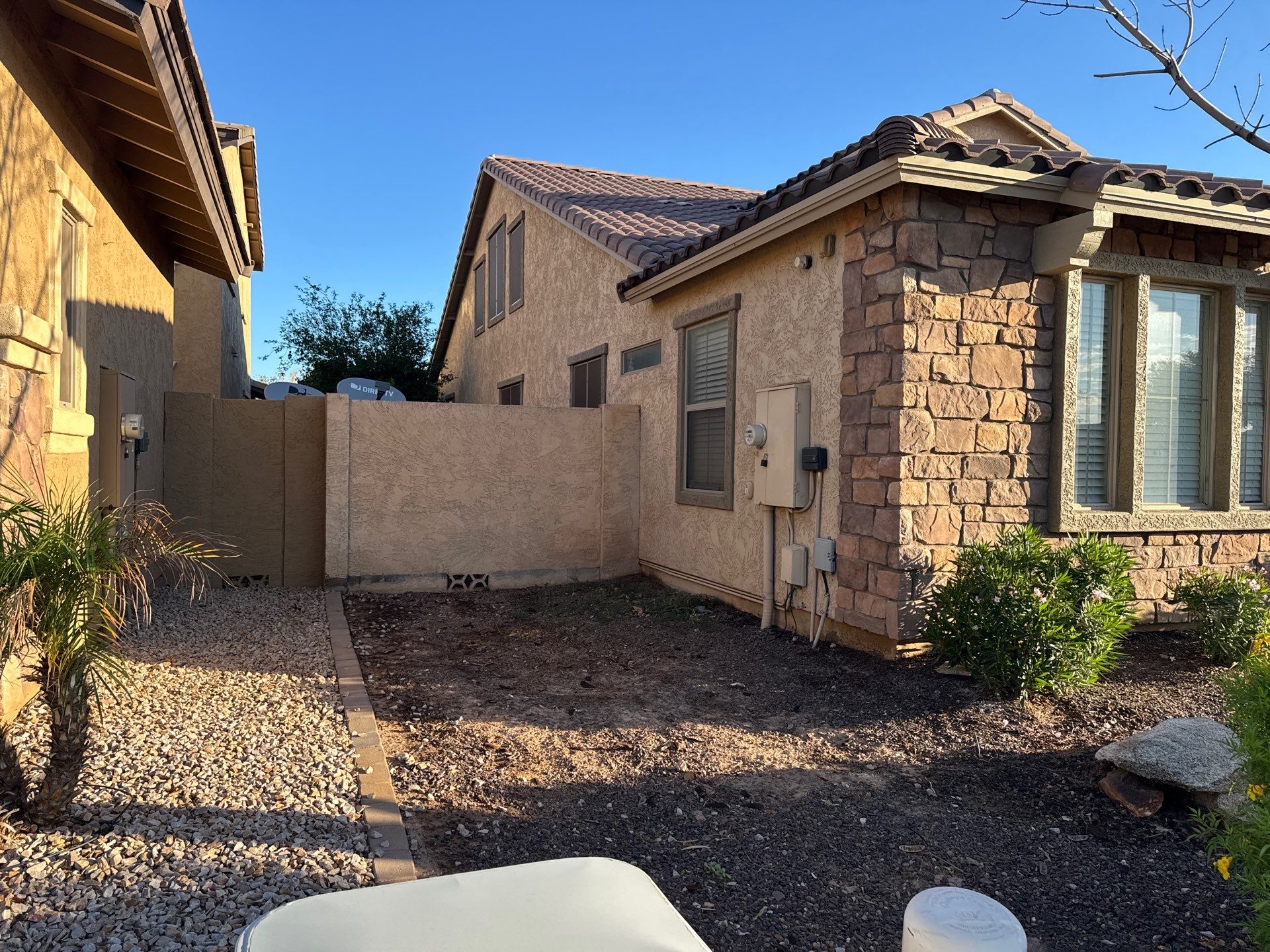
You used to have a large sissoo here. Sissoos get huge and have aggressive surface roots, so replacing it with something smaller is the right move, especially with your neighbor's house about 20 feet to the west. A tree here will shade the west side of your house through the hottest part of the day.
All of these stay a reasonable size, have roots that won't go after your foundation, and won't have branches reaching over the roof. Plant about 8 to 10 feet out from the house.
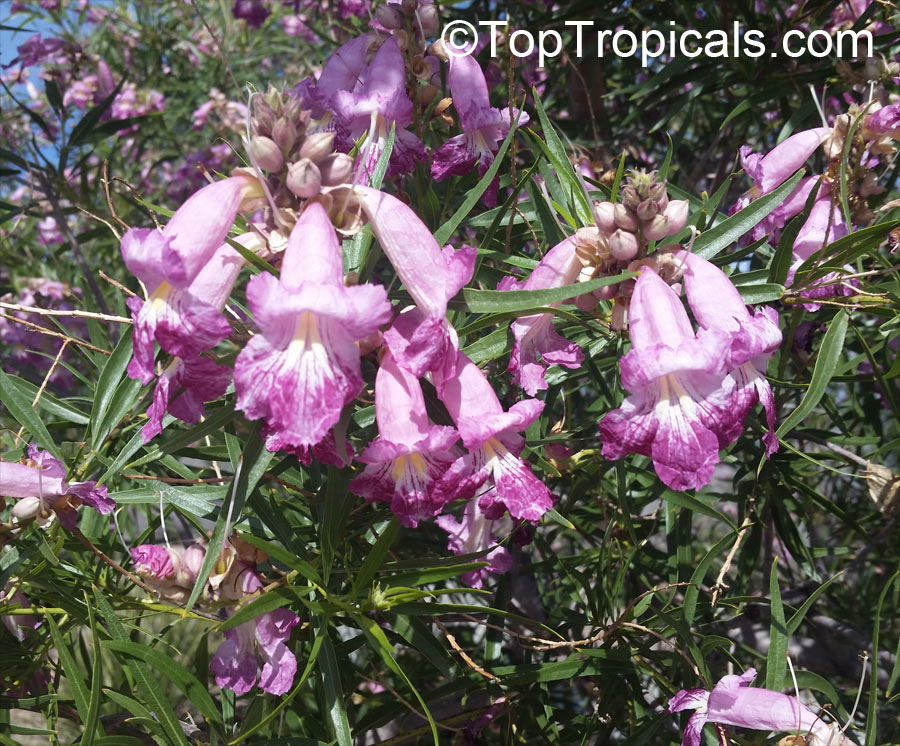
Desert Willow
Native, 15 to 25 feet, with orchid-like pink and purple flowers all summer. Light, airy shade. Deciduous in winter, which lets winter sun in.

Texas Olive
Evergreen with big white flowers off and on through the warm season. Stays around 15 to 20 feet. Dense, rounded canopy.

Mulga Acacia
Evergreen, 15 to 20 feet, with a narrower shape that fits between houses. Soft silvery leaves and yellow flowers.
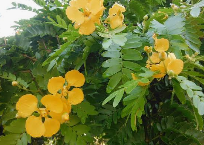
Verawood
Bright yellow flowers in spring and summer, 15 to 20 feet. Slow to moderate growth and a tidy shape.
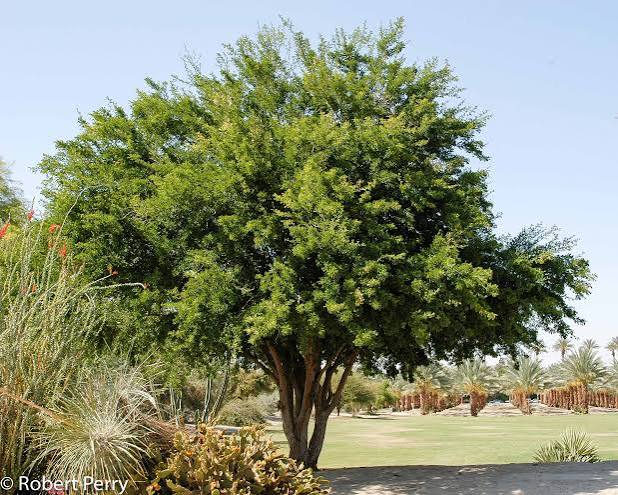
Texas Ebony
Dense, dark green evergreen canopy, 15 to 25 feet. Slow growing and very tough. It has thorns, so keep it away from walkways.
I recommend a 15 gallon tree. Smaller trees establish faster and end up better trees long term than a big box tree. If the old stump is still there, no need to grind it. Just plant beside it. Sissoo will sometimes push up suckers from old roots for a while; pull them as they show up.
Planting: dig the hole as deep as the root ball and two to three times as wide. Backfill with your native soil plus a little compost, then lay compost on top of the soil and mulch over the compost. Keep the mulch a foot back from the trunk, and make sure the root flare sits right at the soil line.
Front Ash Tree
Front yard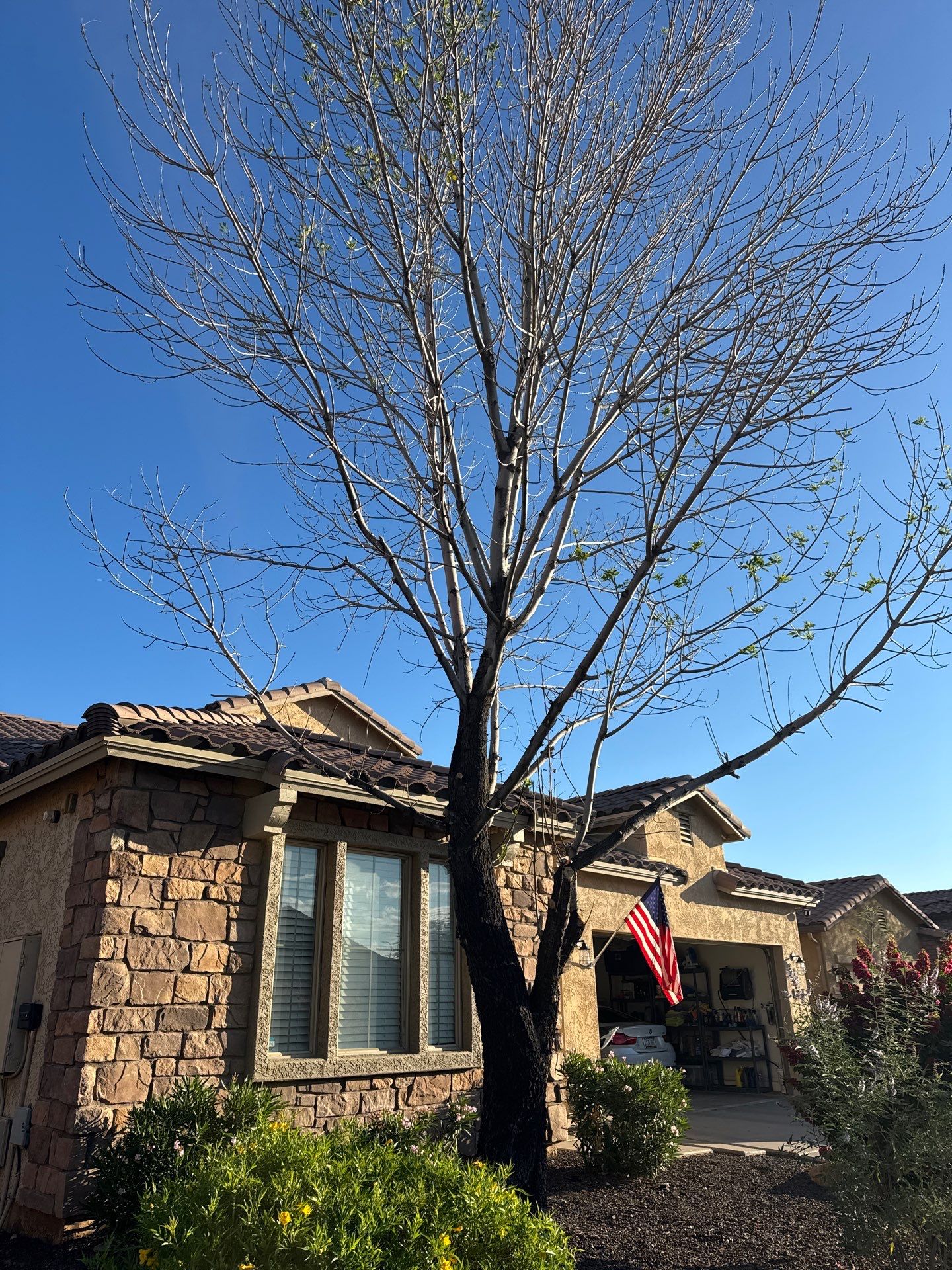
Good news: this ash looks like it's coming back. A few things will help it keep recovering, especially now that we're into the cooler season when trees put energy into their roots.
- Give it a long, slow deep soak. Put the hose on a very slow drip near the drip line and let it run for a day or two straight. That pushes water 2 to 3 feet down where the deep roots are. Move the hose to a different spot around the tree every several hours. Repeat once a month through winter.
- Pull the rock back, same as the citrus. I know this is the front yard and the HOA likes rock, but even pulling it back in a ring 4 to 5 feet around the trunk, adding compost, and covering it with mulch will make a big difference. Mulch reads clean and finished in a front yard.
- Check the root flare. Ash trees in the Valley are very often planted too deep. While the rock is pulled back, blast the soil at the base with a strong stream from the hose and make sure you can see the flare where the roots spread. The video in section 01 shows why this matters.
- Feed the soil. Compost out at the drip line and the organic feeding in the fertilizing section below will help it rebuild.
The Vitex Tree
Front yard, south facing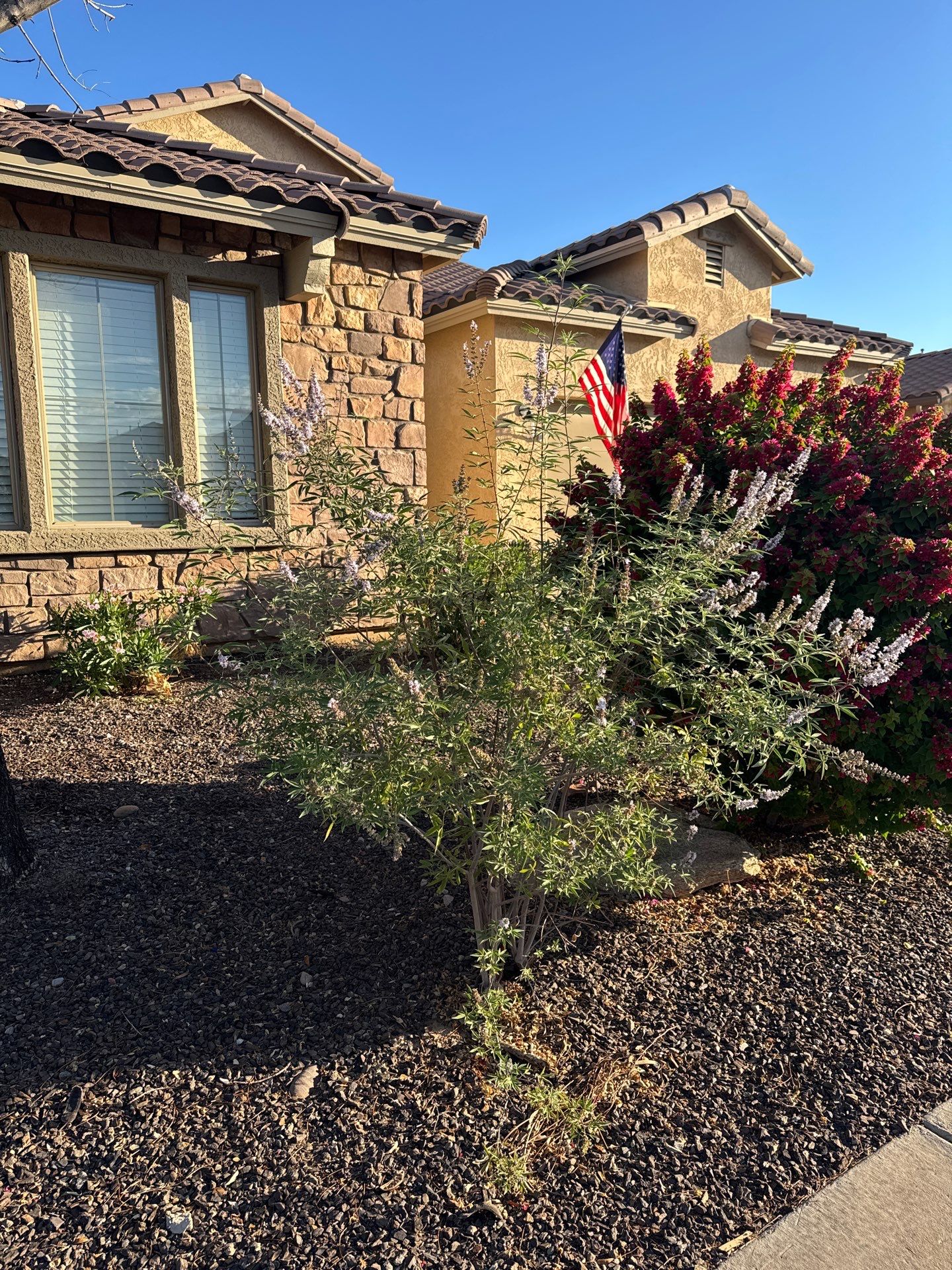
This is a vitex, also called a chaste tree. It's a multi-trunk small tree that gets about 15 to 20 feet tall and wide, with long spikes of purple-blue flowers from spring through summer. Bees and butterflies love it, it takes full sun and heat, and it drops its leaves in winter. Its look leans a little more Mediterranean than desert.
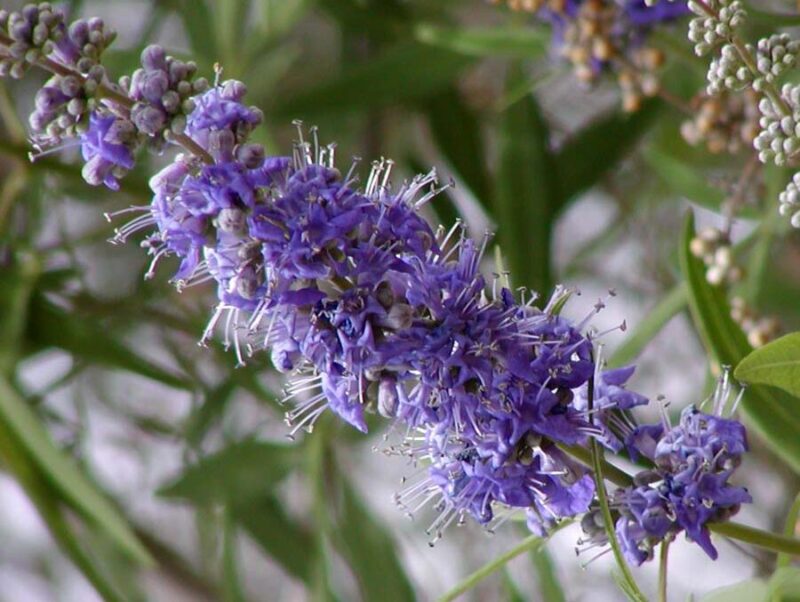
Vitex
Great pollinator tree, takes the heat, and drops its leaves in winter.
Caring for it
- Pruning: in late winter, while it's bare, take out dead wood and any branches crossing or rubbing. Let it keep its natural vase shape rather than shearing it.
- Water: deep and infrequent, on the same schedule as your other trees (see the watering section).
- Feeding: compost out at the drip line a few times a year and the monthly organic feeding in the soil and feeding section.
- Seed pods and spent flower spikes can be clipped off after bloom if you want it tidier.
Front Yard Plant Palette
South facing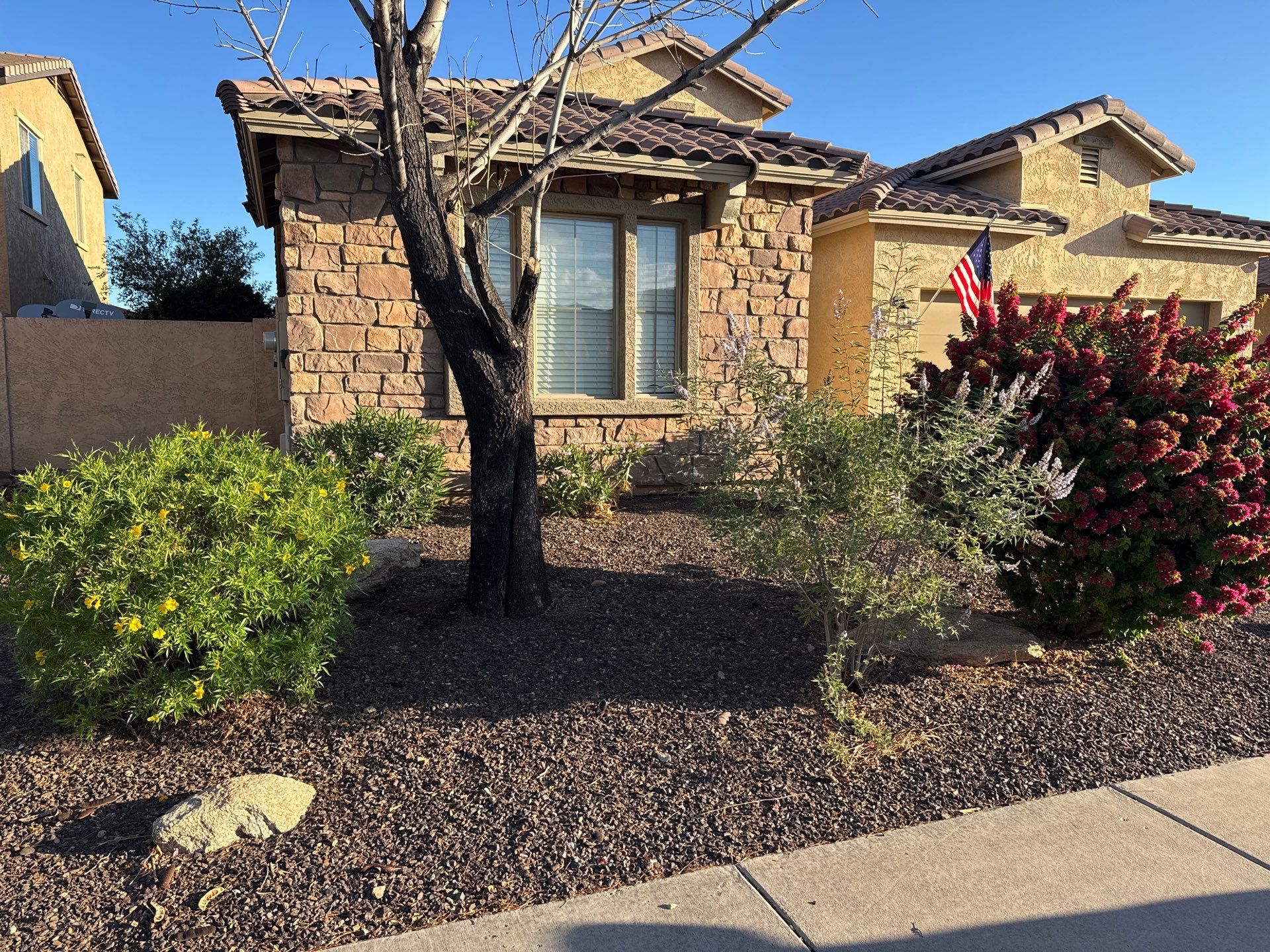
Overall, your front yard faces south, so it gets full sun all day. Since you're planning on taking out most of what's there and starting fresh, here's a full palette of plants that will thrive in this exposure. All of these are desert adapted, so they take less water than plants that aren't, and they give you color through every season.
For a natural, full look, use a lot of different plants and don't stress about perfect placement. Scattered groupings look fuller than straight rows. Keep the lower plants near the walkway and driveway, and the larger shrubs toward the house and the edges.
Larger shrubs (4 to 8 feet)
Texas Sage
Silvery leaves and purple flower flushes after summer humidity. 5 to 6 feet. Let it grow natural rather than shearing.
Red Bird of Paradise
Red and orange flowers all summer, loves the heat. 6 to 8 feet. Cut back hard in late winter.
Yellow Bells
Bright yellow trumpet flowers spring through fall. 6 to 8 feet.
Orange Jubilee
Orange trumpet flowers spring through fall. 6 to 10 feet.
Baja Fairy Duster
Red puffball flowers most of the year, 3 to 5 feet. Hummingbird favorite.
Chuparosa
Native, red flowers through winter and spring. 3 to 4 feet.
Flowering perennials (1 to 3 feet)
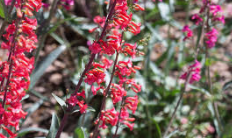
Penstemon
Tall flower spikes in red, pink, or purple in spring. Hummingbirds love them.

Globe Mallow
Native with apricot-orange cup flowers in spring. Reseeds itself.
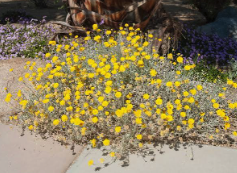
Desert Marigold
Bright yellow daisies most of the year. Reseeds naturally.
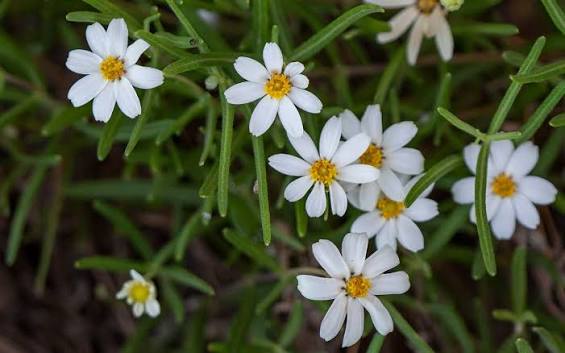
Blackfoot Daisy
Low mound of small white daisies, blooms almost nonstop. Great near the walkway.
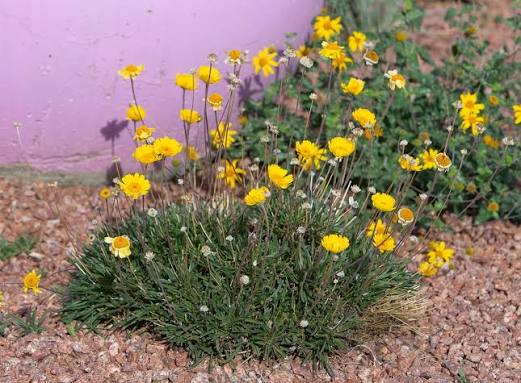
Angelita Daisy
Tidy mound of yellow daisies almost year-round.
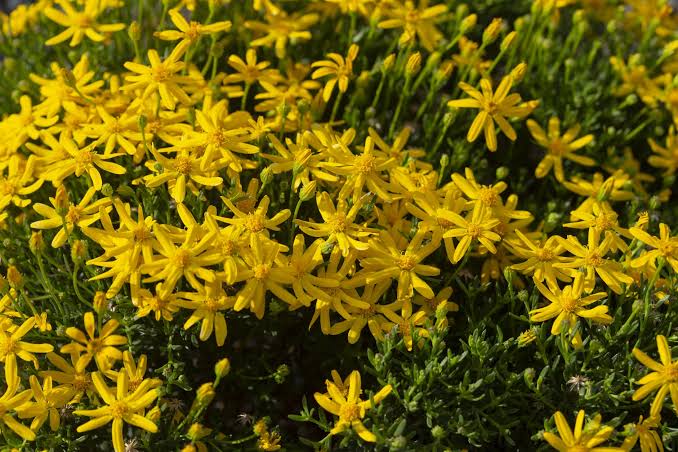
Damianita
Low, fragrant, with golden yellow flowers in spring and fall.
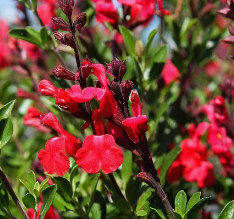
Autumn Sage
Red, pink or white flowers spring and fall. 2 to 3 feet.
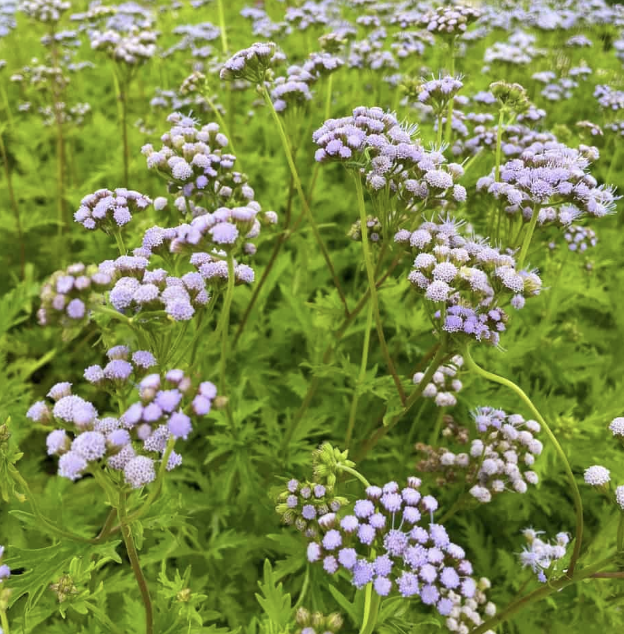
Greg's Mistflower
Purple-blue flowers in fall that are covered in queen butterflies. 2 to 3 feet. Spreads, so give it room.

Desert Milkweed
Upright gray-green stems with cream flowers. The host plant for monarch and queen butterflies.
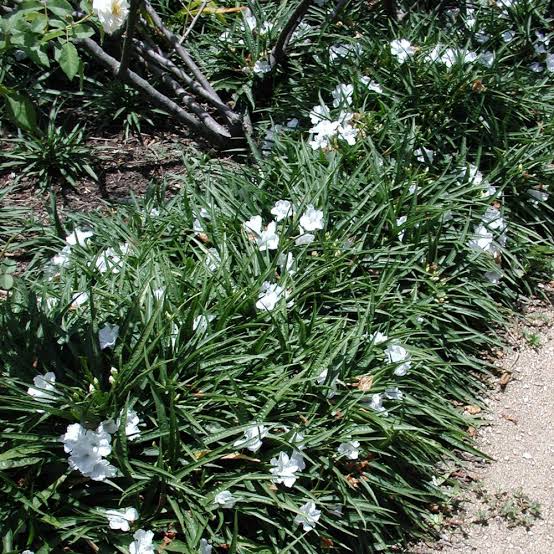
Desert Ruellia (white)
Upright with white flowers through the warm season. 3 to 4 feet.
Accents and succulents
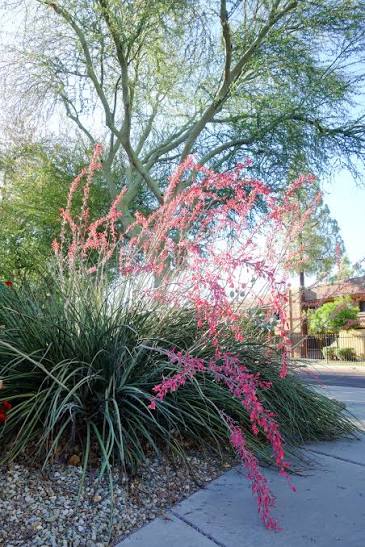
Red Yucca
Grassy clumps with tall coral-red flower stalks spring through fall. Hummingbirds love it.
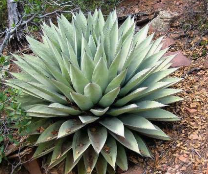
Perry's Agave
Blue-gray rosette, about 2 to 3 feet. A clean focal point. Keep it away from walkways.
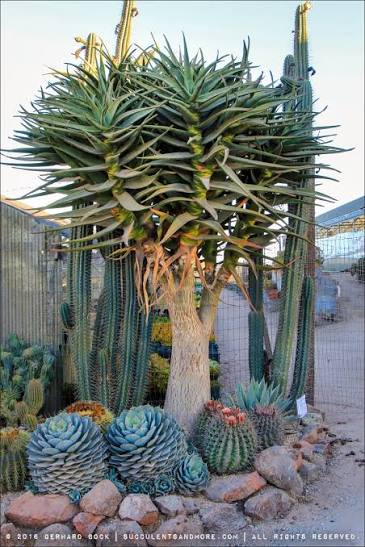
Hercules Agave
Tall, upright and sculptural, with smooth leaf edges. A dramatic statement plant.
Totem Pole Cactus
Smooth, spineless columns with a lumpy, sculpted look. Great vertical accent.
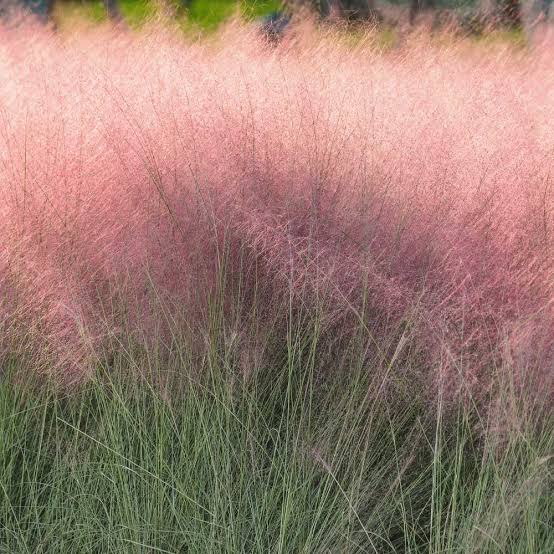
Muhly Grass
Fine textured grass with a pink-purple haze of flowers in fall.
Groundcovers
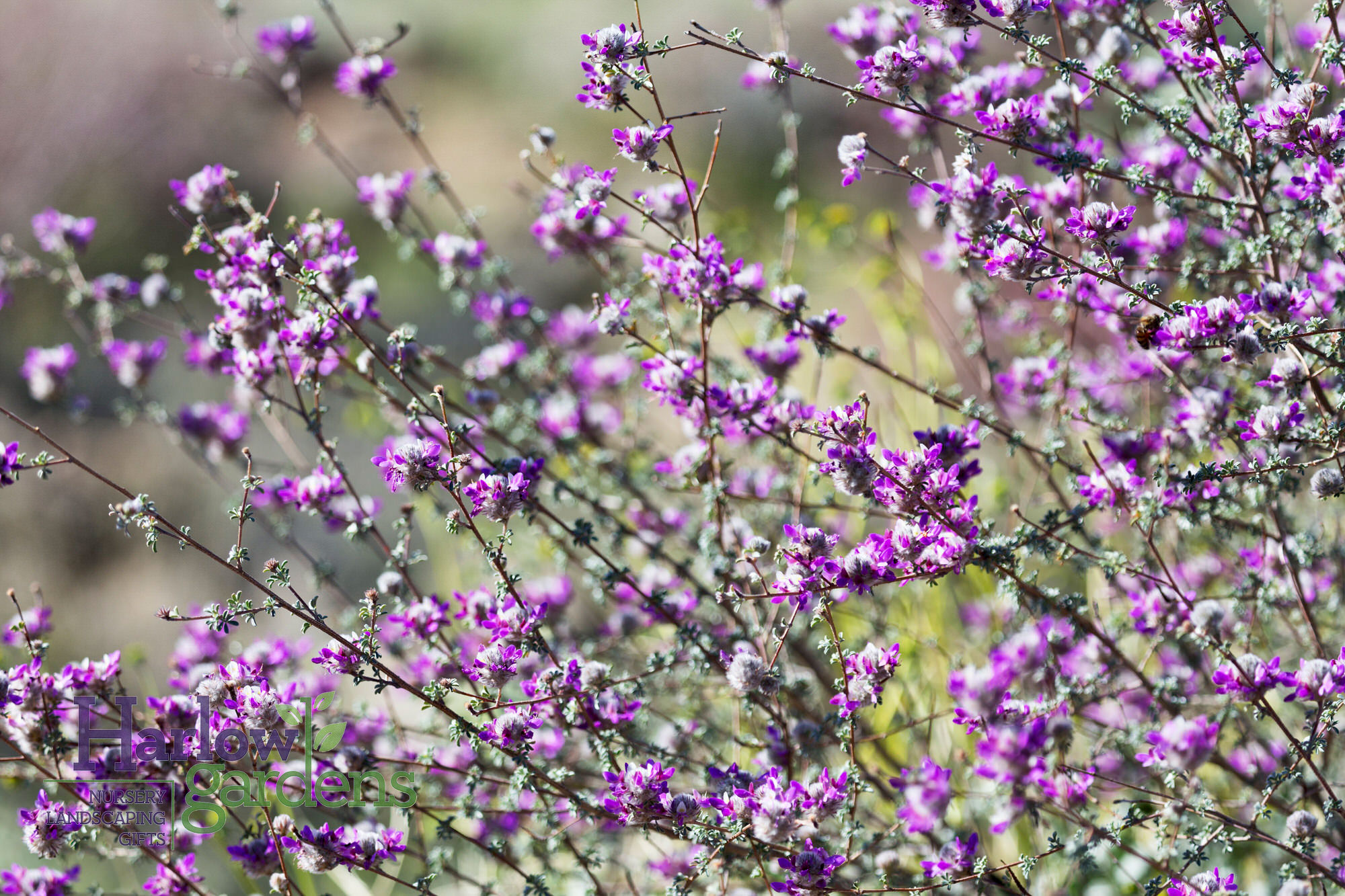
Trailing Indigo Bush
Low, spreading native with purple flowers in spring. Covers a lot of ground.
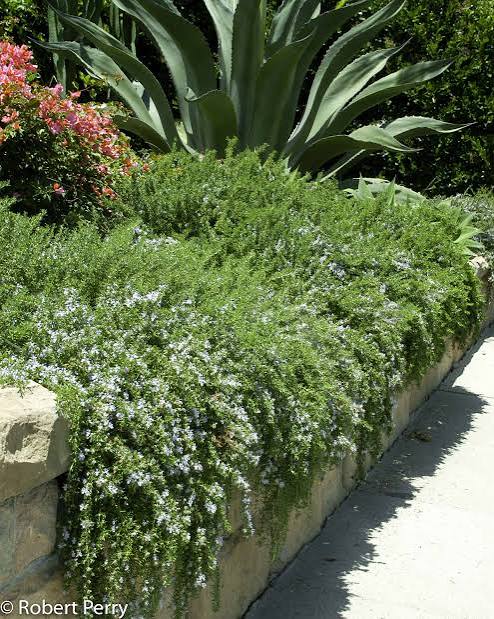
Trailing Rosemary
Spills over edges and rocks, blue flowers in winter and spring. Edible too.
Lantana
Low mounds of nonstop color all warm season. Freezes back in winter and comes back.
Emu Bush (Outback Sunrise)
Low spreading with orange flowers late winter into spring.
You can't fit all of these. Pick your favorites and repeat them in groups of 3 or 5 so it reads as intentional.
Planting: plant at the same depth as the pot. Backfill with your native soil plus a little compost in the hole, lay compost on top of the soil, then mulch over the compost. No need to work anything in. Keep mulch a few inches back from stems. Fall (now) through early spring is the best time to plant everything on this list. If your HOA reviews front yard changes, run the plant list by them first.
Watering Through the Seasons
For the whole yard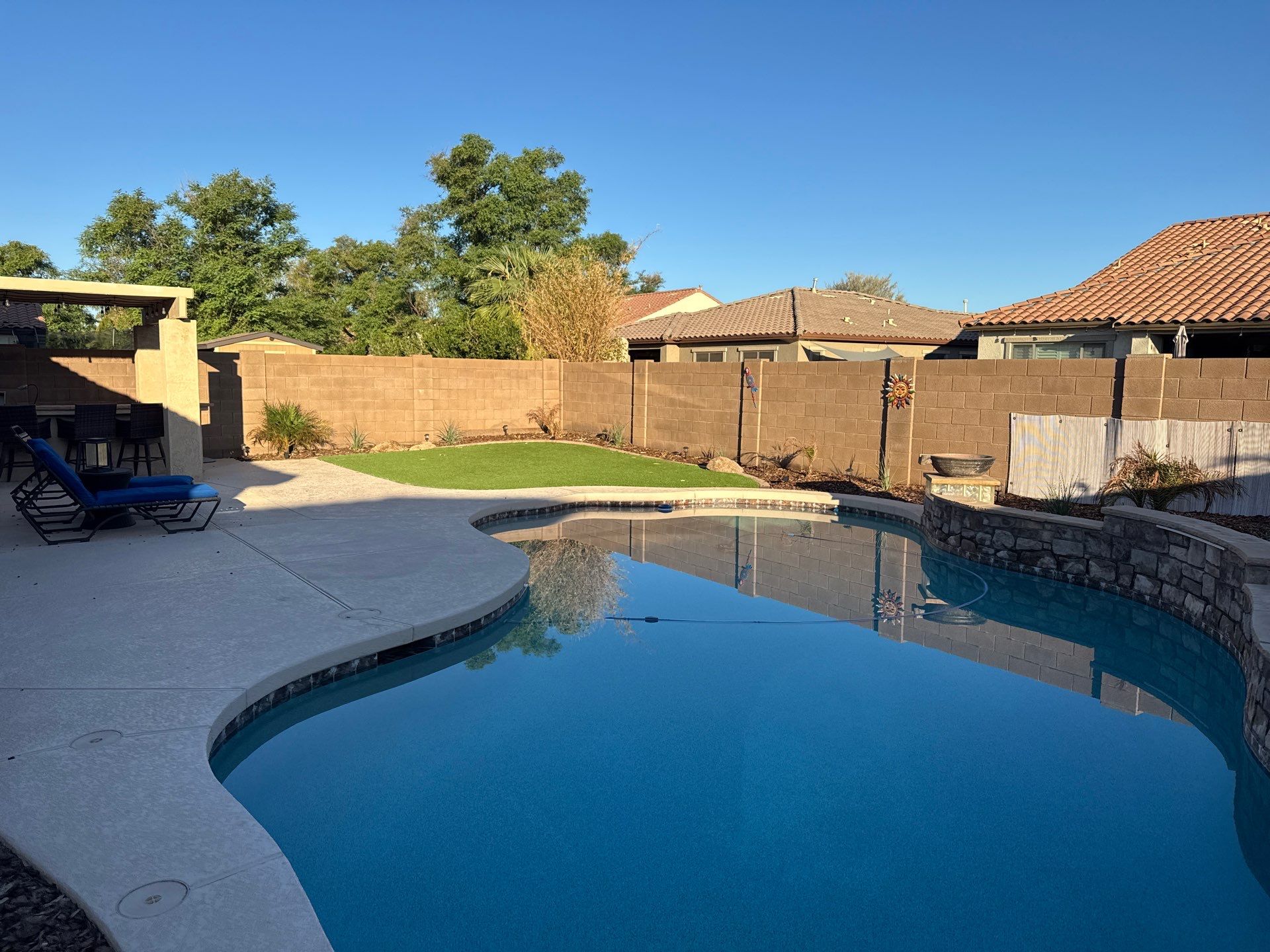
You mentioned you weren't sure if some of what died this summer was from too much water or too little. Here's general guidance so you have a good feel for it going forward.
First, your current setup is good. Trees at 90 minutes twice a week is good output for summer, and shrubs at 60 minutes twice a week is solid too. Bumping the shrubs back to once a week now that it's cooling off is the right instinct. I also really like that you have spider emitters on a lot of your plants. They spread water around the root zone instead of dumping it in one spot. Just keep moving the emitter ends out as plants grow, so the water stays out at the edge of the canopy where the feeder roots are.
Seasonal schedule
Run times stay about the same all year. What changes is how often you water. The goal every time is a deep soak: about 2 to 3 feet deep for trees and 1 to 2 feet for shrubs.
| Season | Trees (90 min) | Shrubs (60 min) |
|---|---|---|
| Summer June to September | 2 times a week | 2 to 3 times a week |
| Fall October to November | Once a week | Once a week |
| Winter December to February | Every 2 to 3 weeks | Every 10 to 14 days |
| Spring March to May | Once a week, building to twice by May | 1 to 2 times a week |
- Water early in the morning so the water soaks in before the heat of the day.
- Don't skip watering after a rain. Our rain rarely soaks in deep enough to count.
- Anything newly planted needs water more often for its first few months (every 2 to 3 days in warm weather) until the roots spread out.
- Tropicals like hibiscus, plumeria, and bird of paradise want a little more water than the desert plants. Plumeria is the exception in winter: keep it on the dry side once it drops its leaves.
- Mulch over the soil cuts evaporation dramatically. That's another reason to pull the rock back.
How to tell if you're overwatering or underwatering
Signs of underwatering
- Wilting in the afternoon that hasn't recovered by the next morning
- Crispy, brown leaf edges and tips
- Leaves dropping while the soil is dry
- Soil dry 6 inches down
Signs of overwatering
- Yellowing leaves, usually starting with the older ones
- Wilting even though the soil is wet
- Soggy soil that stays wet for days, sometimes with a sour smell
- Mushrooms, algae, or green slime around emitters
- Soft, mushy stems or bark at the base
The easiest test: push a long screwdriver or a soil probe into the ground a few hours after watering. It should slide in easily to about 2 feet near trees and 1 to 2 feet near shrubs. If it stops short, water isn't getting deep enough, so run longer. Before the next watering, dig down 4 to 6 inches with your finger. If it's still wet, wait a day or two. If it's bone dry well before your next cycle, water more often.
Also check emitters a couple times a year. A clogged emitter can quietly starve one plant while the rest of the line looks fine, and a broken one can flood a plant. Garrett is who I send people to for irrigation: 480-678-9121.
Soil and Feeding
For the whole yardMost of what struggles in the Valley comes back to the soil. Our native soil is low in organic matter and soil life, and healthy soil biology is what actually feeds plants and holds water. Here's how to do it yourself:
- Compost. Spread a generous layer of compost around the drip line of every tree (the edge of the canopy) and closer in around shrubs. Do this a few times a year, then cover it with mulch. Arizona Worm Farm has great compost.
- Worm castings every quarter. A few handfuls around each plant, watered in. Castings are packed with soil life.
- Organic fertilizer monthly. Use a good organic fertilizer high in fulvic acid. The ones I use and recommend are from Catalyst: Jenner 8, Organic Nitro Jen, and their kelp fertilizer. Mix and apply monthly. This is great for the citrus, the palms, the ash, and everything you plant new.

Jenner 8
Fulvic acid-rich organic fertilizer that feeds the soil biology and helps plants take up nutrients.

Organic Nitro Jen
Organic nitrogen to push healthy green growth. Great for the palms and citrus.
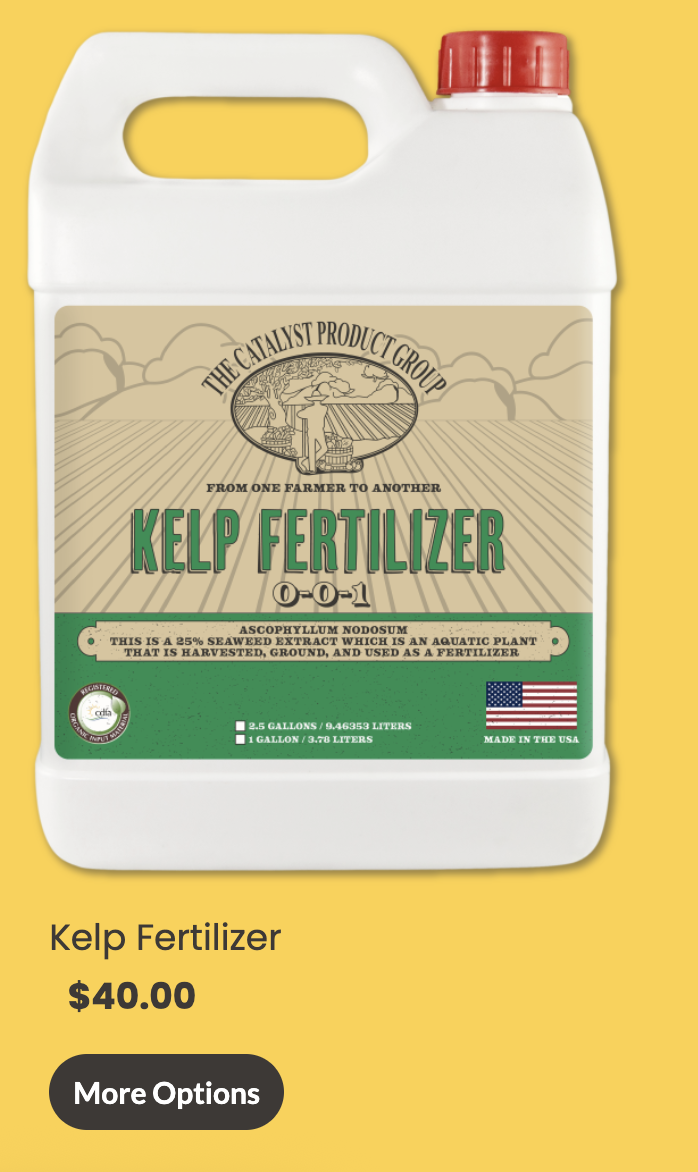
Kelp Fertilizer
Trace minerals and natural growth hormones that help plants handle heat and stress.
Find them at catalystproductgroup.com. Click Products, then Home and Garden.
Monthly Landscape Fertilizing
- Monthly organic liquid feeding of every tree, shrub, and palm
- Compost applied 3 times a year
- A recap video after every visit so you know exactly what we did
Quick Reference
Compost, mulch and worm castings
Tropicals (hibiscus, plumeria, bird of paradise)
Greenlife Nursery, right next door to Arizona Worm Farm
Trees, shrubs and desert plants
A&P Nursery
Organic fertilizer
Catalyst Product Group (Products, then Home and Garden)
Irrigation
Garrett: 480-678-9121
Why root flares matter
Next Steps
Thanks for having me out, Heath. You have a great setup to work with, and once the walls are covered and the rock is pulled back from the trees, I think you'll see a big difference next summer.
If you want to do the planting yourself, everything you need is in here. As a consult client, you're already in the Garden Nerd Club, so you have direct access to me there. Post photos as you go and ask me anything.
We also do planting. Whenever you're ready, whether that's this season or down the road, let me know which plants you like for each area and I can put together a planting proposal. We don't do irrigation, so for adding emitters or running drip to new areas, Garrett is great: 480-678-9121.