
Thanks for having me out, Erin. Below is everything we went over, in the order we walked the yard, with the details on each so you have it all in one place.
As a consult client, you're already in the Garden Nerd Club, so you have direct access to me there. If questions come up while you work through any of this, ask me there anytime.
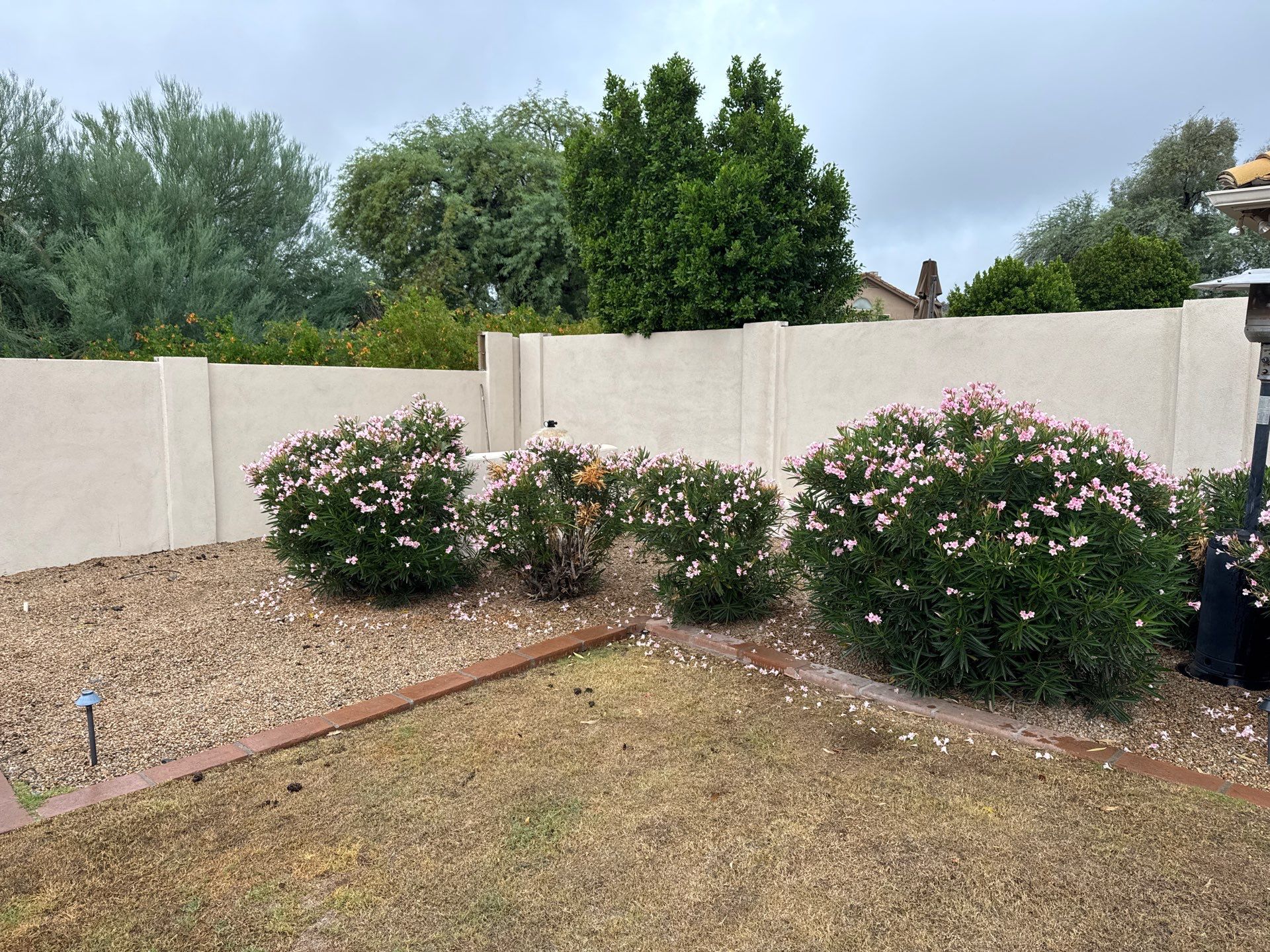
Resetting the two struggling oleanders
Two of the oleanders in the middle aren't doing great. They're old, they've been pruned a lot, and there's a lot of dead wood that's getting diseased. The best move is to cut them back to the ground. Now is a good time of year to do it.
You could replace them instead, but I don't think that's the best option. Oleanders come back strong from a hard cut, and these already have big root systems, so they'll regrow much faster than new plants would.
- Cut both back to about 6 to 12 inches from the ground with loppers or a pruning saw.
- Haul off all the cut and diseased wood. Don't leave it lying around the base.
- Wipe your tools with rubbing alcohol when you're done so nothing spreads to the healthy oleanders.
- Give them a deep watering, plus compost and mulch around the base. They'll push out fresh growth over the next couple of months.
- As they regrow, let them fill in naturally rather than shearing them.
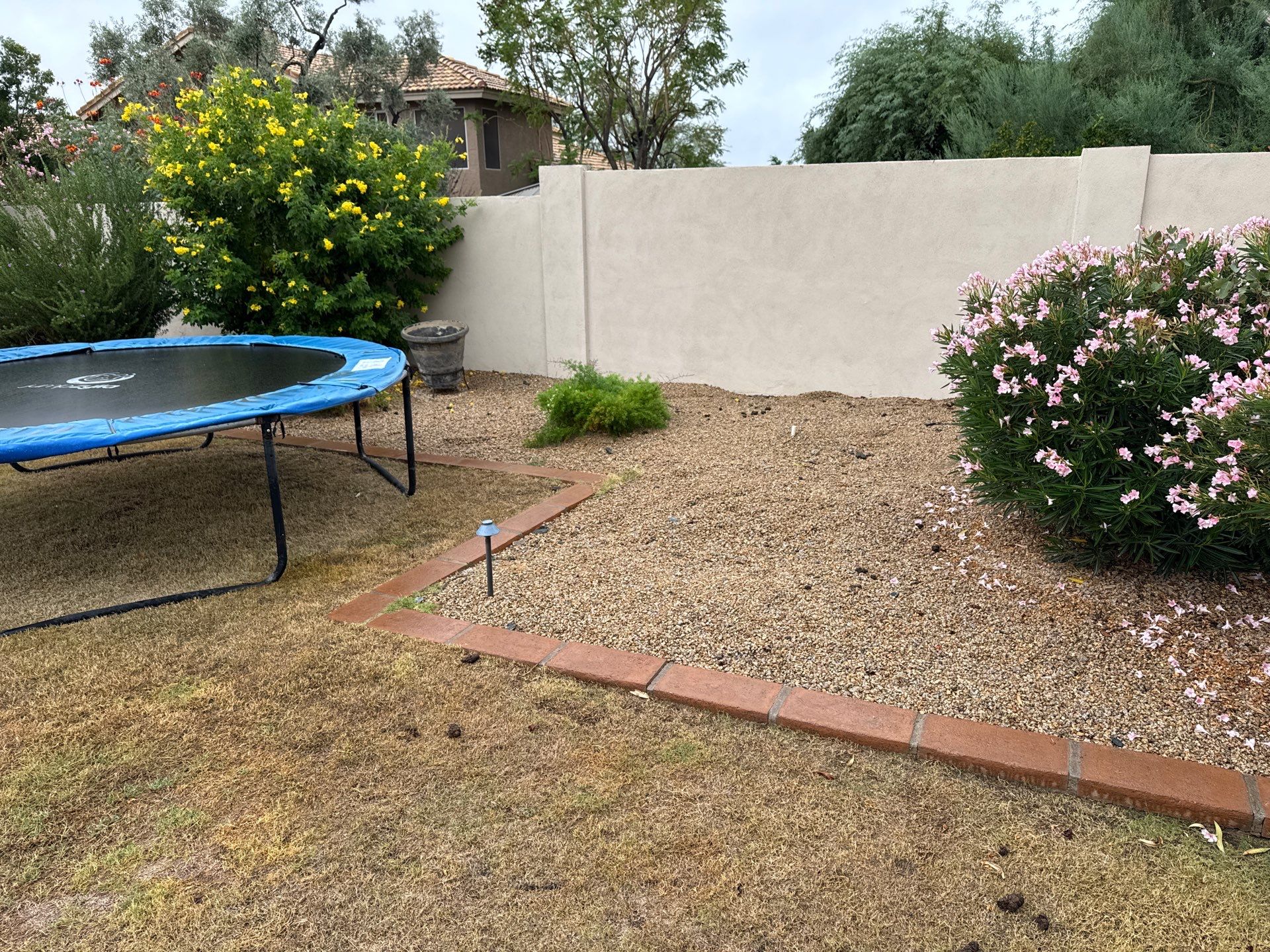
Asparagus fern along the pavers
You already have some asparagus fern here. Run it the full length of the bricks and pavers to finish the line. It'll add dimension, fill things in, make the yard look greener, and help cool it down.
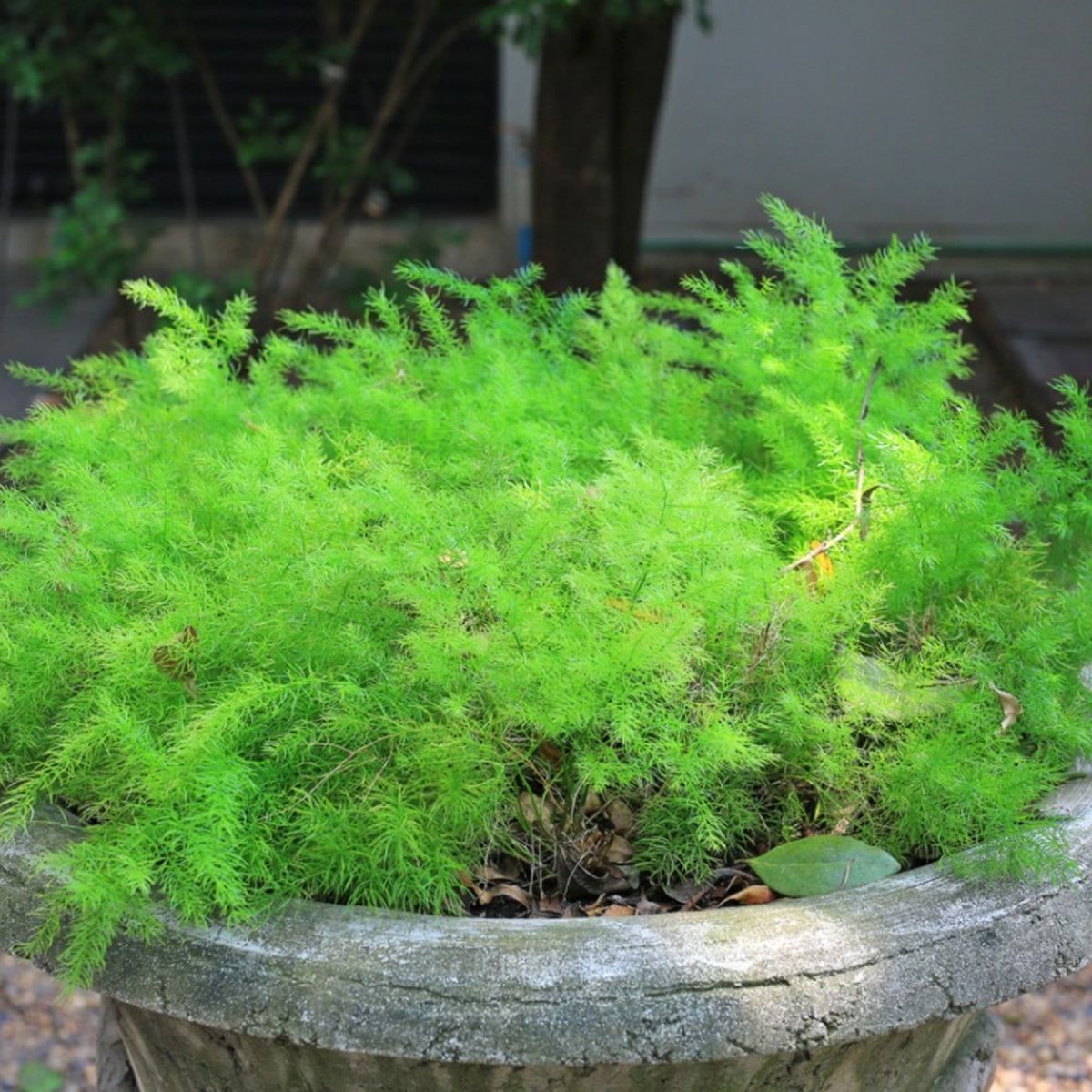
Asparagus Fern
Soft, airy, bright green mound that loves shade. Tough once established and fills a spot quickly.
- Space them about 2 to 3 feet apart so they grow together into one soft border.
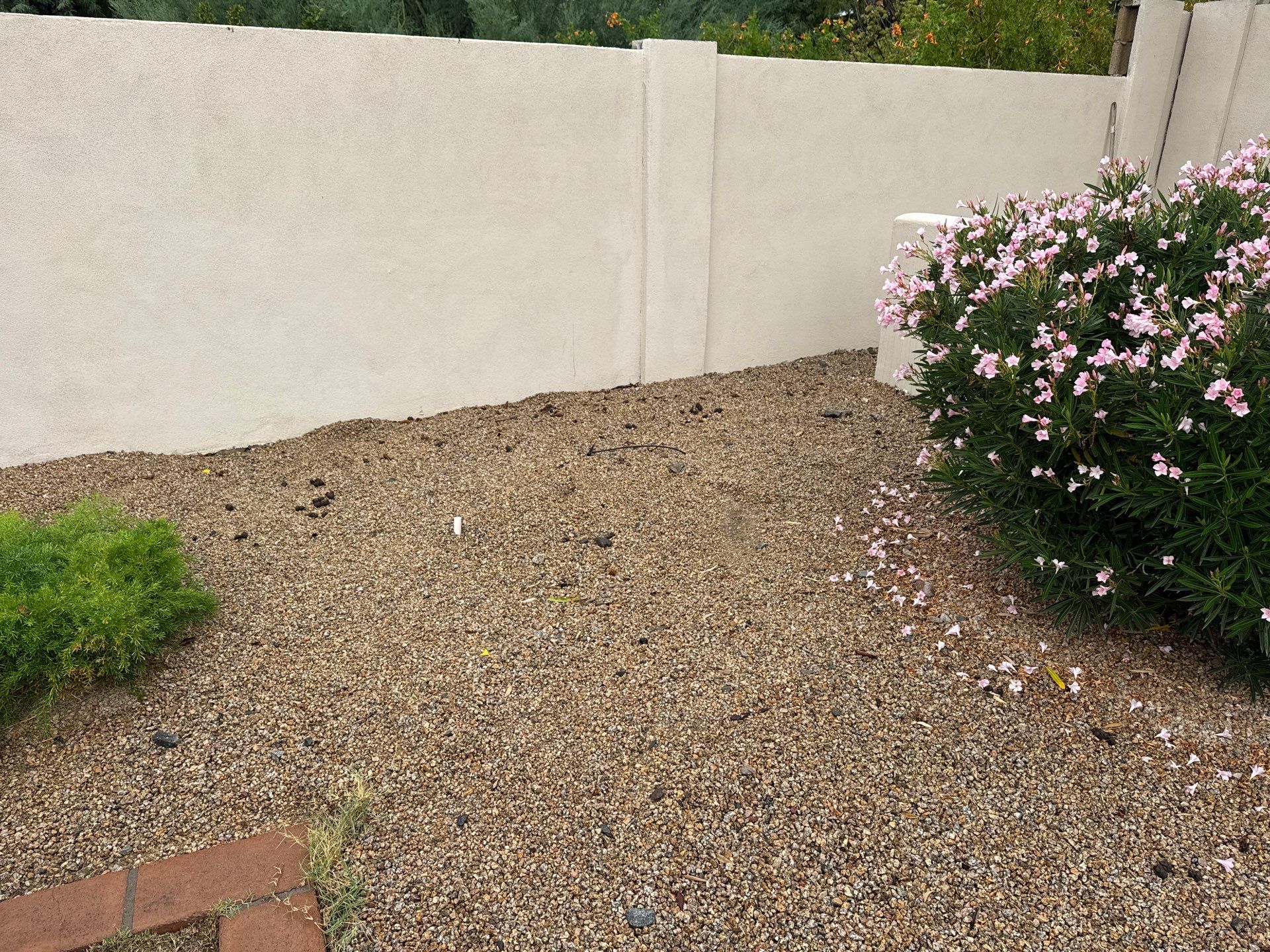
A new lime tree
You'd like to replace the grapefruit that was here with a lime tree. Mexican key lime and Bearss lime are the two best choices. I'd get it from Greenfield Citrus Nursery. They have the healthiest citrus trees in the Valley.
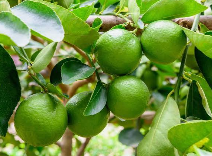
Mexican Key Lime
Small, very aromatic limes that are the classic for key lime pie and cooking. Very productive, but the most frost tender citrus, so it needs cover on cold nights. Has thorns.
Bearss Lime
Larger, seedless limes, the kind you find in the grocery store. More cold hardy than Mexican key lime and nearly thornless. Fruits mostly in fall and winter.
Planting
Plant it so the root flare, where the trunk widens into the roots, sits slightly above the ground. Citrus planted too deep slowly decline. This video shows why it matters.
Can't see the video? Watch it on YouTube.
- Size: start with a 15 gallon tree. Smaller trees establish faster and end up better long term.
- Planting: dig the hole two to three times as wide as the root ball but no deeper. Backfill with native soil plus a tiny bit of compost, lay compost on top, then mulch over it, held a foot back from the trunk.
- Wide water well: build a low ring of soil out 3 to 4 feet around the tree and fill it with mulch. As the tree grows, move the ring outward to stay at the edge of the canopy.
- Sunburn: if the tree comes with cardboard wrapped around the trunk, leave it on for the first year or so.
- Frost: limes are frost tender, especially the Mexican key lime. Cover it with frost cloth on cold nights.
- First year fruit: pull off any fruit the first year so it puts that energy into roots.
Watering is covered in the Watering section and feeding in the Fertilizing section below.
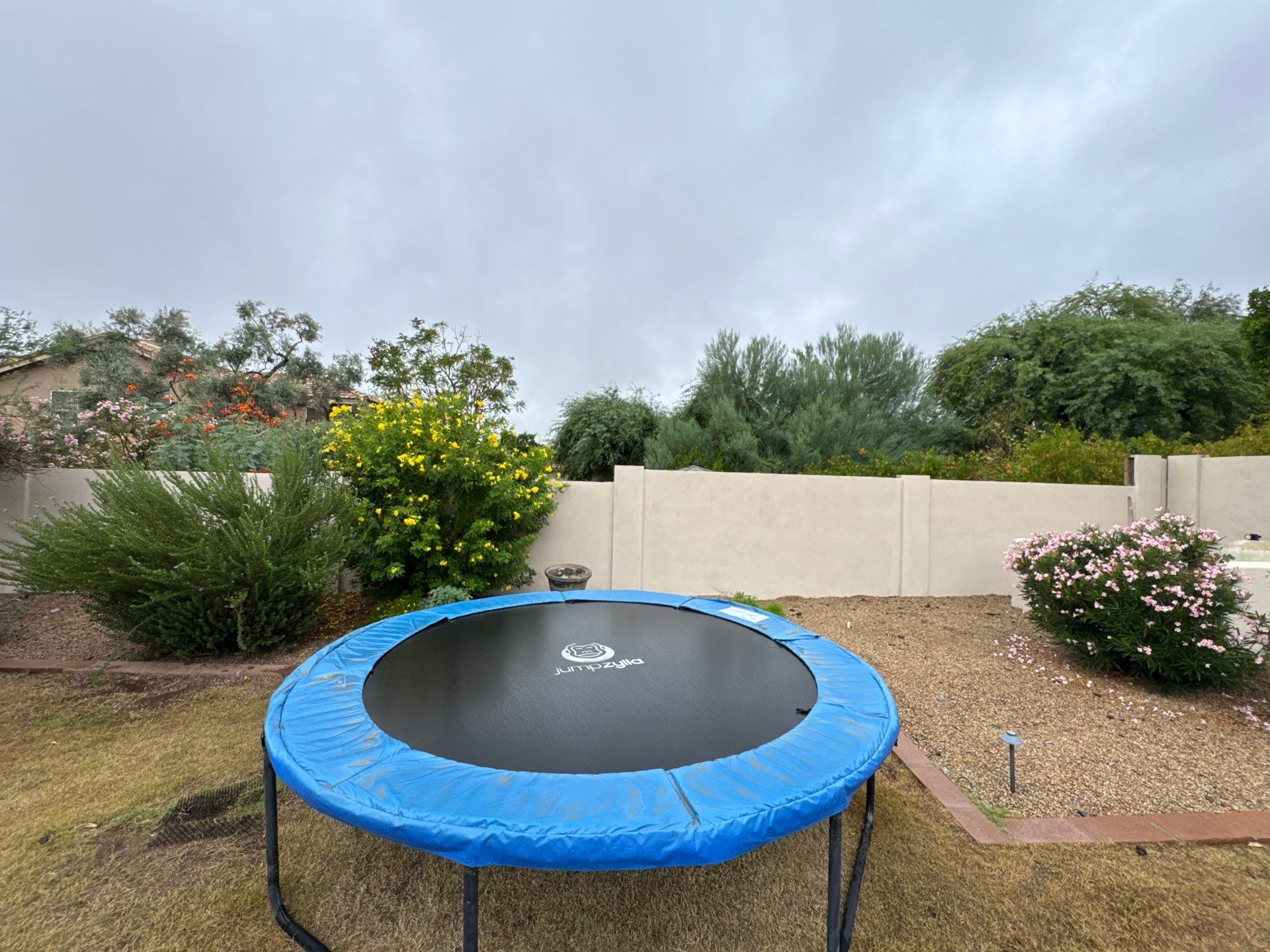
More yellow bells along the back wall
You already have one yellow bells along this wall. Adding one or two more would fill in the area and cover the whole back wall. That also cuts down the heat coming off the wall, which will help the new lime tree.
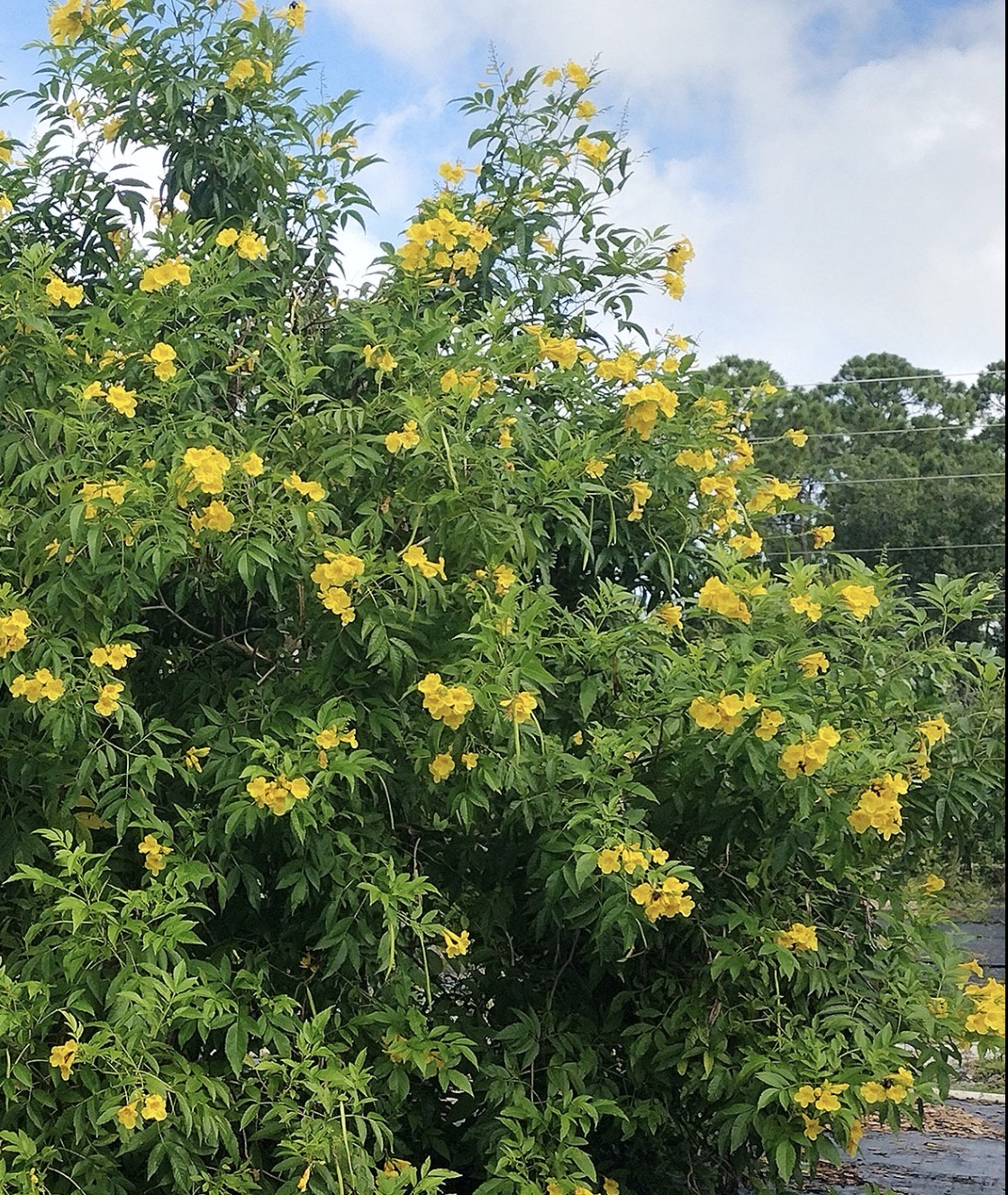
Yellow Bells
Bright yellow trumpet flowers spring through fall on lush green foliage, 8 to 12 feet tall. Takes full sun and heat and handles some shade. A hard freeze can nip it back. Plant 5 to 6 feet apart.
- Space them about 5 to 6 feet from the existing one so they grow together into one hedge.
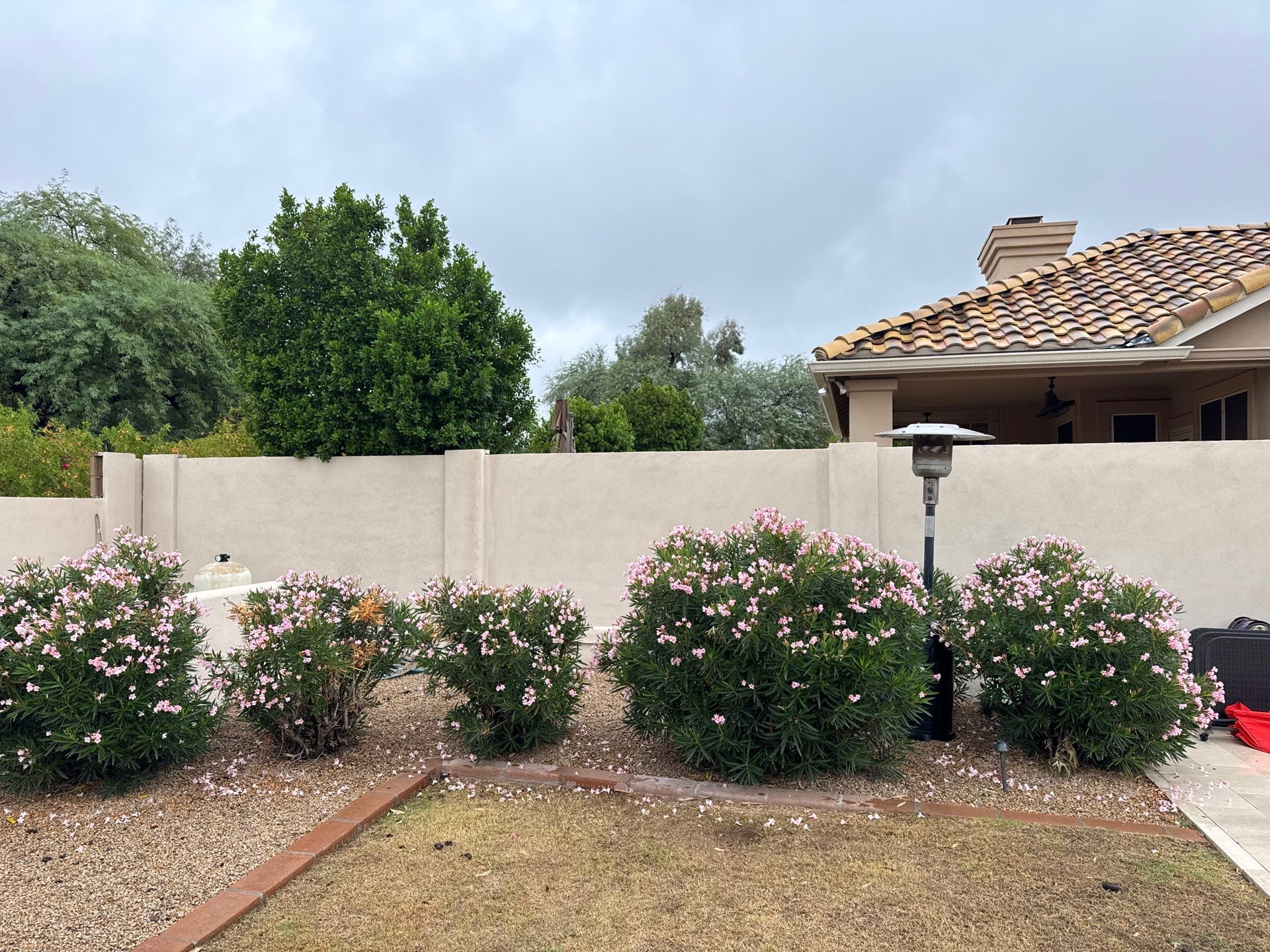
Vines for the east wall
Up against this wall, vines would work great. It's east facing, so it gets morning sun and afternoon shade, which opens up a lot of options. Here's each vine and whether it needs a trellis.
Self clinging, no trellis needed

Tangerine Crossvine
Evergreen vine with orange trumpet flowers in spring and on and off through the year. Self clinging, so it doesn't need a trellis, and it covers a wall fast.
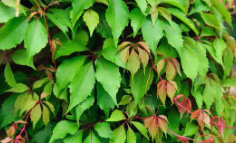
Hacienda Creeper
Self clinging with small leaves that hug the wall tight, and it turns red in fall. No trellis needed.
Need a trellis or wires
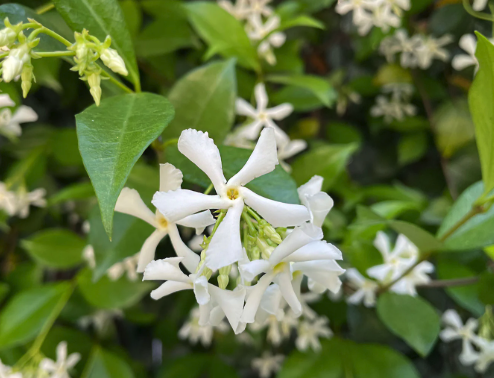
Star Jasmine
Evergreen vine with glossy leaves and very fragrant white flowers in spring. Does best with afternoon shade. Needs a trellis or wires to climb.

Bower Vine
Lush evergreen vine with pink or white trumpet flowers spring through fall. Happiest with afternoon shade. Needs a trellis to twine on.
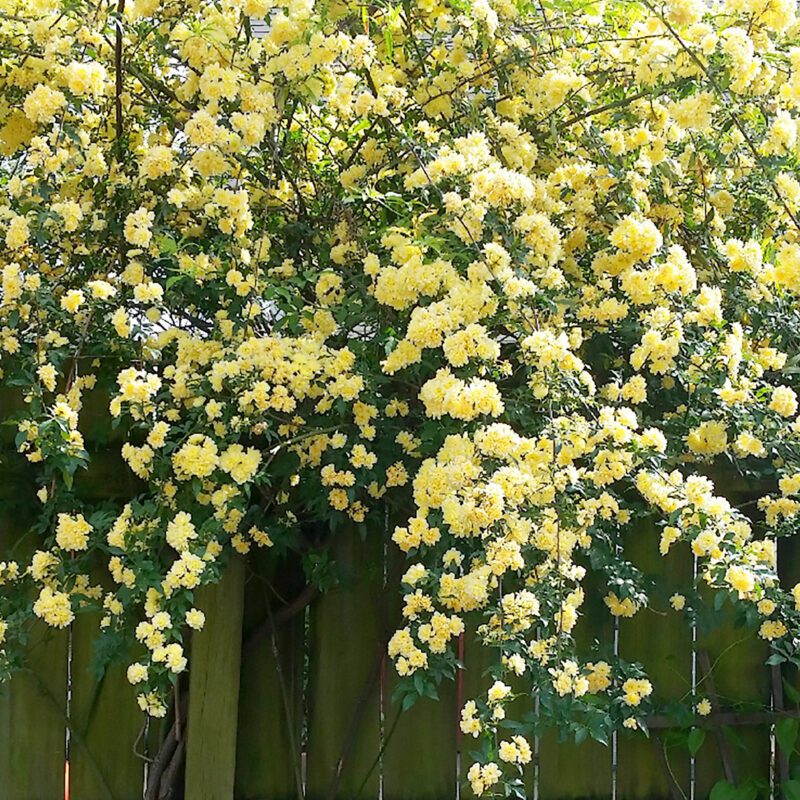
Lady Banks Rose
Thornless climbing rose covered in small yellow flowers in spring. Vigorous and tough. Needs a trellis or wires and a few ties to get started.
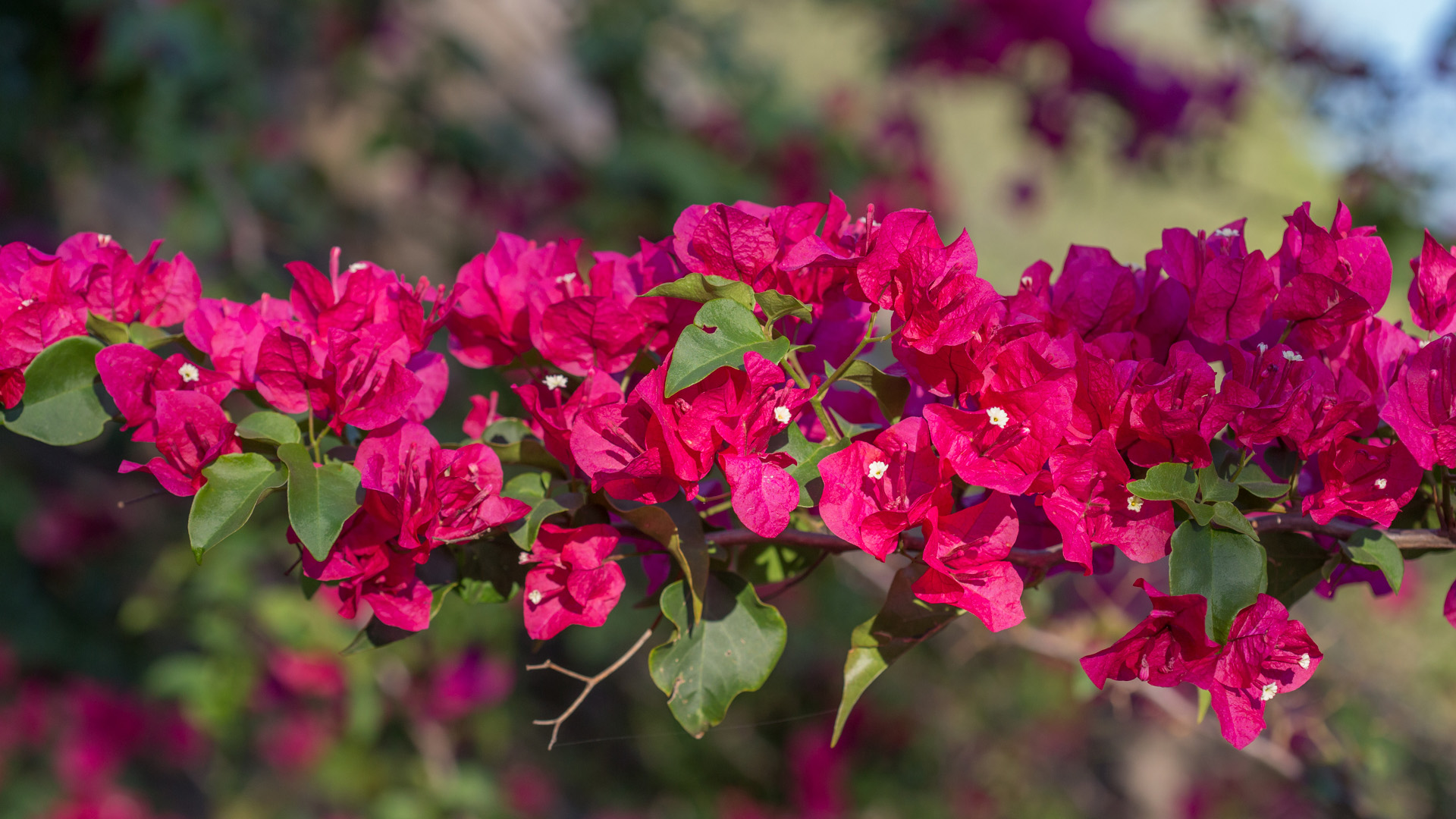
Bougainvillea
Covered in color most of the year. It doesn't climb on its own, so tie the canes to a trellis or wires as it grows. Can get frost nipped, then flushes back in spring.
- For the ones that need support, a trellis or a few horizontal wires on brackets a few inches off the wall works well. Tie the first canes loosely as they grow.
You can't fit all of these. Pick your favorites and repeat them along the wall.
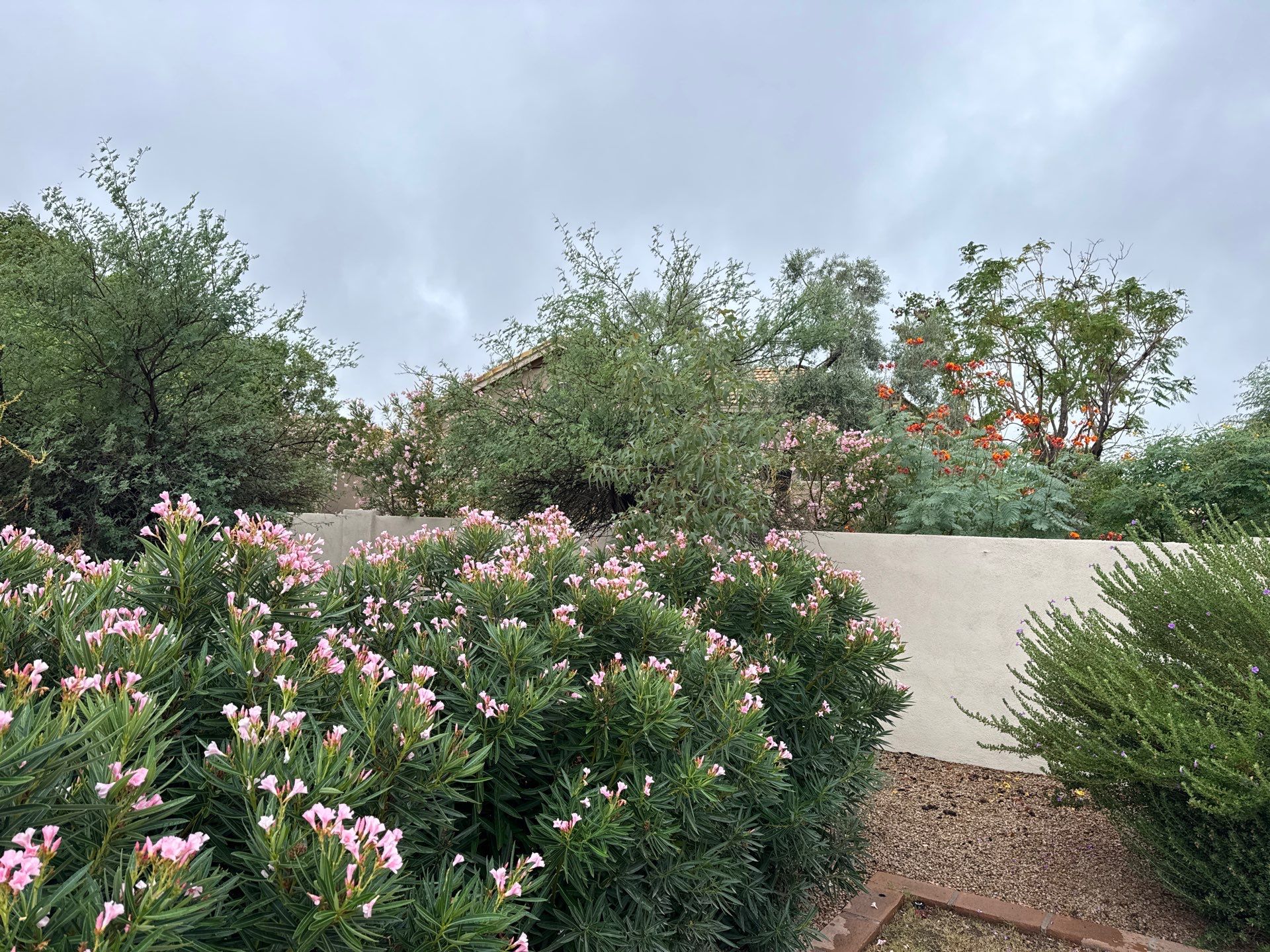
Get the bottle tree out
There's a big bottle tree growing up out of the middle of this oleander. Get it out as soon as possible, before it gets any bigger and harder to remove.
- Dig it out with as much of the root as you can.
- If it's too big to dig, cut it off at the base and keep cutting any new sprouts as they come up until it gives up.
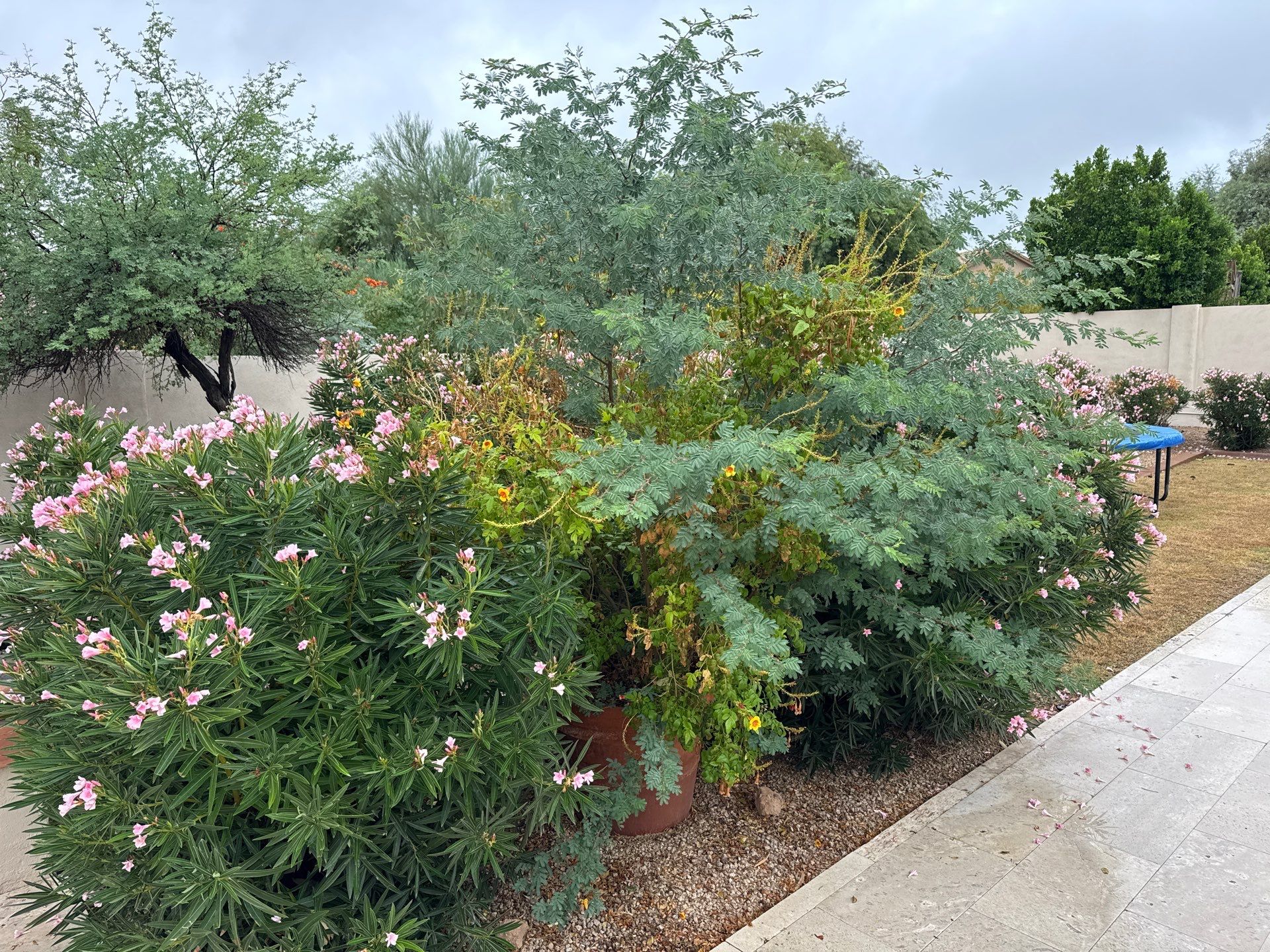
The mesquite in the pot
In this container, there's a mesquite growing along with a yellow bells or orange jubilee. The mesquite has put roots down into the ground below the pot. Here's how to get rid of it so the orange jubilee can grow back.
- Cut the roots that are growing out of the bottom of the pot into the ground.
- Cut the mesquite off at the soil level in the pot.
- That should be enough to kill it. Cut off any new sprouts that come up after.
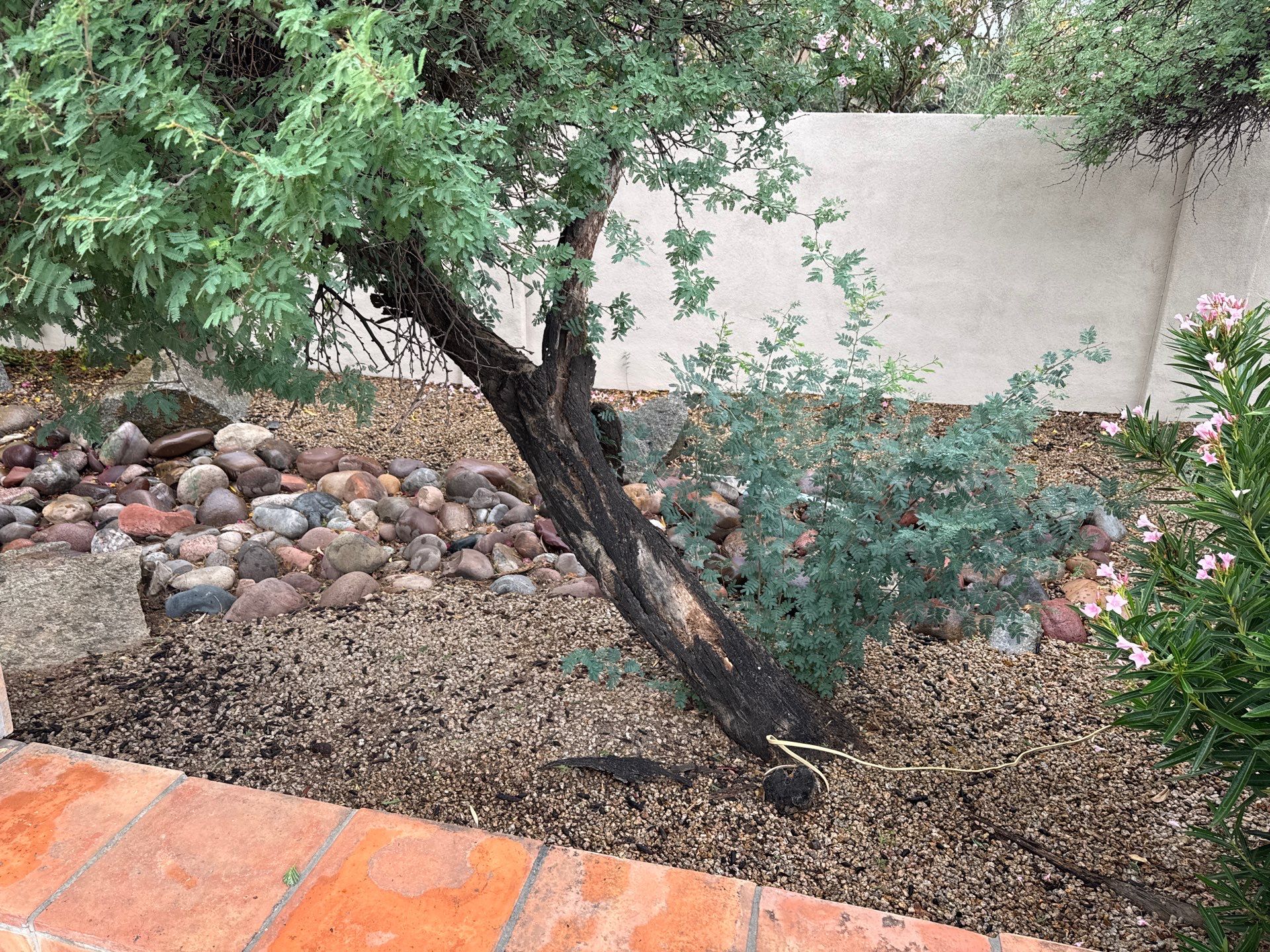
The mesquite with splitting bark
The bark splitting on this mesquite is a little bit of a concern, but I think it's salvageable.
- Cut the base shoots: cut off all the shoots coming up from the base. They pull energy away from the main tree.
- Deep soak: put the hose on a slow drip for 24 hours, and repeat about every three months. That deep soak is what helps the tree recover.
- Keep an eye on it: if the split widens or the canopy above it starts dying back, send me a photo in the Garden Nerd Club.
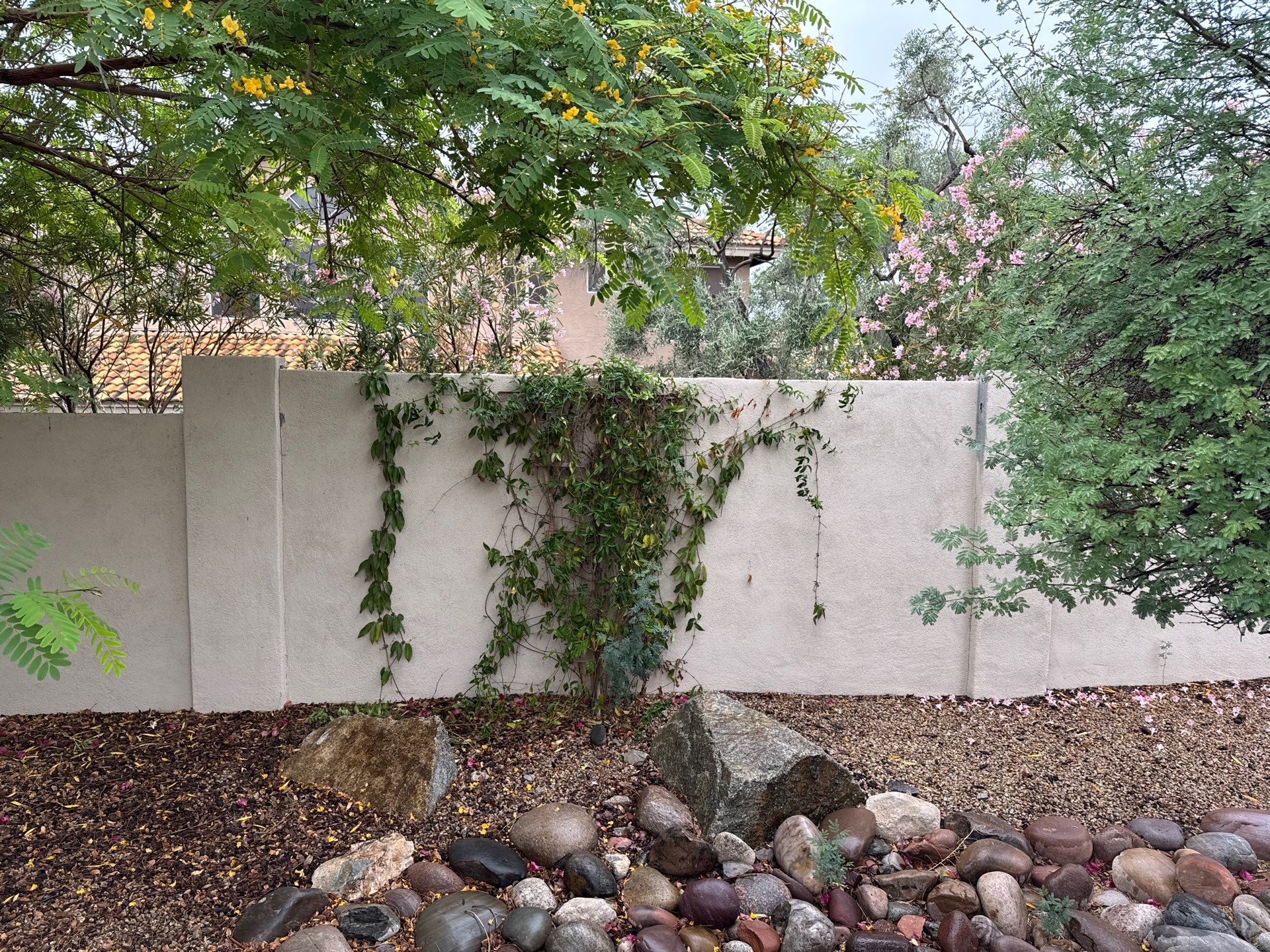
The tangerine crossvine
This tangerine crossvine looks good. A few things will help it even more.
- Pull back the rock around the base and lay mulch down instead. It keeps the roots cooler and feeds the soil.
- Pull out the mesquite seedling growing right at the base of the trunk.
- Give it a trellis. With something to lean on, it'll spread about 10 feet in either direction and cover the wall.
Tangerine Crossvine
Evergreen vine with orange trumpet flowers in spring and on and off through the year. Self clinging, so it doesn't need a trellis, and it covers a wall fast.
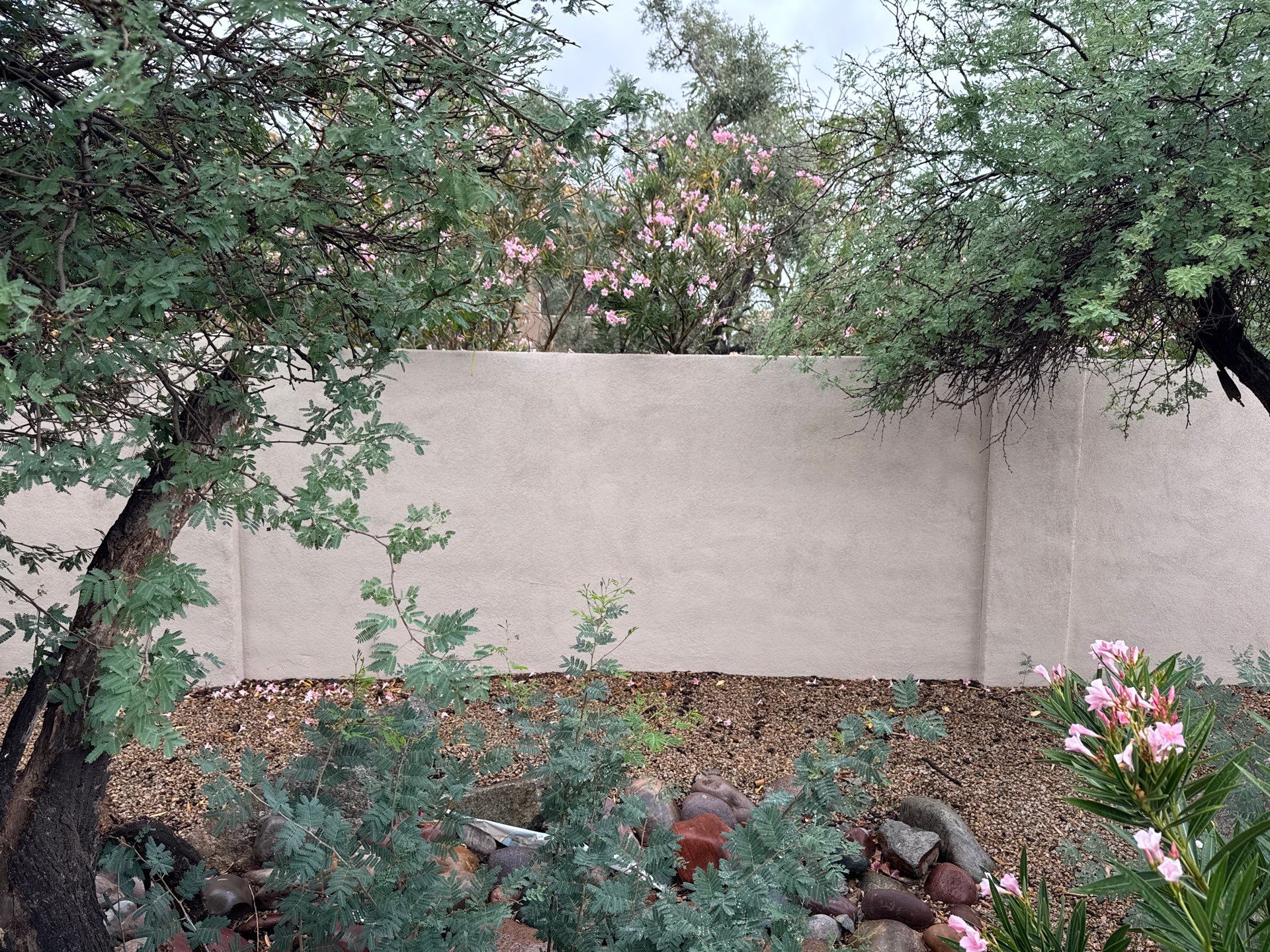
Another tangerine crossvine
Back here, adding another tangerine crossvine would really help cover the wall and make it look good.
Tangerine Crossvine
Evergreen vine with orange trumpet flowers in spring and on and off through the year. Self clinging, so it doesn't need a trellis, and it covers a wall fast.
- Plant about a foot off the wall and lean it in. It clings on its own once it reaches the block.
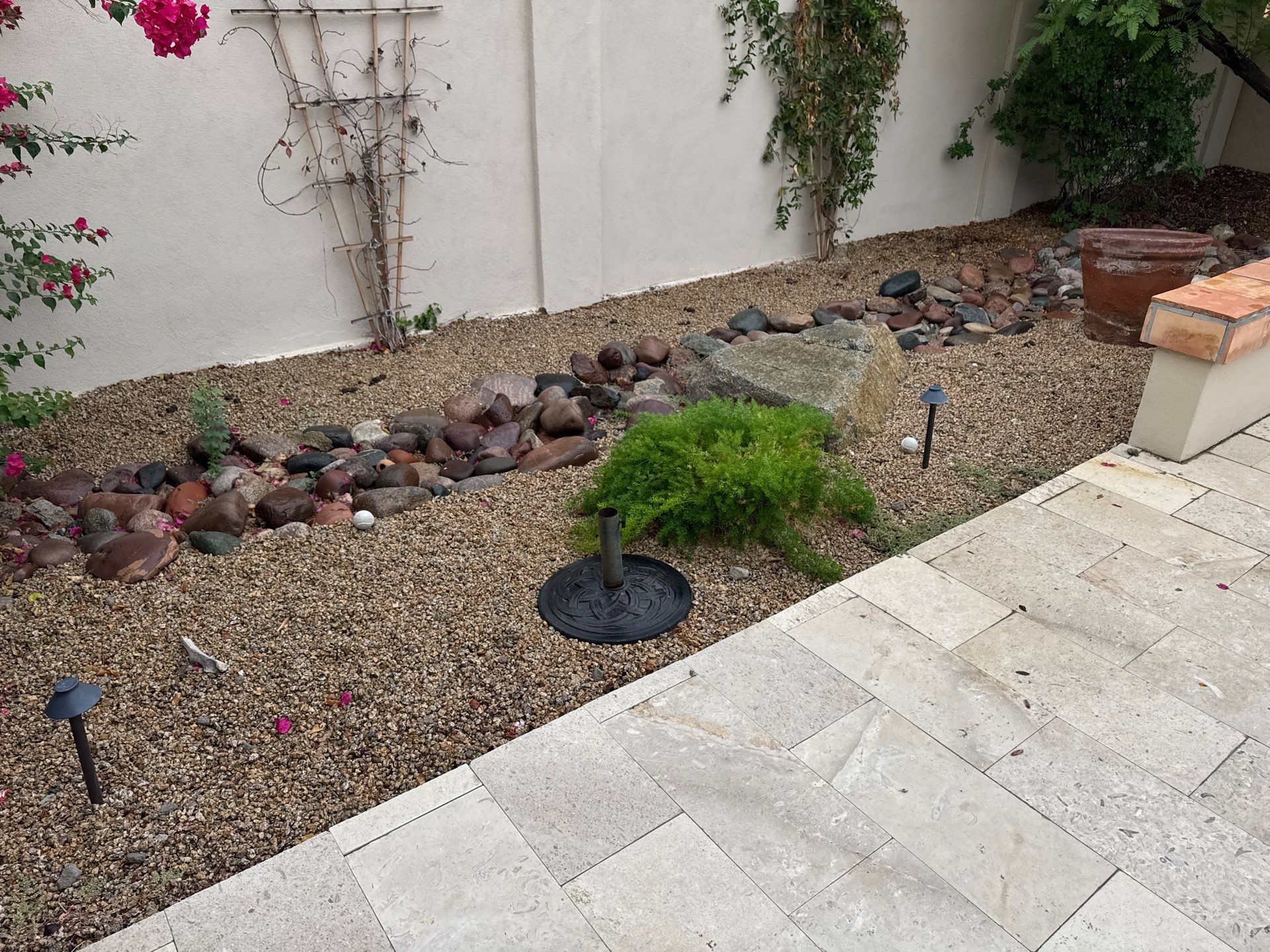
Lining the pathway with asparagus fern
There's just one asparagus fern here. Planting two or three more would completely line the pathway. It'll instantly make things look greener and cool things down.
Asparagus Fern
Soft, airy, bright green mound that loves shade. Tough once established and fills a spot quickly.
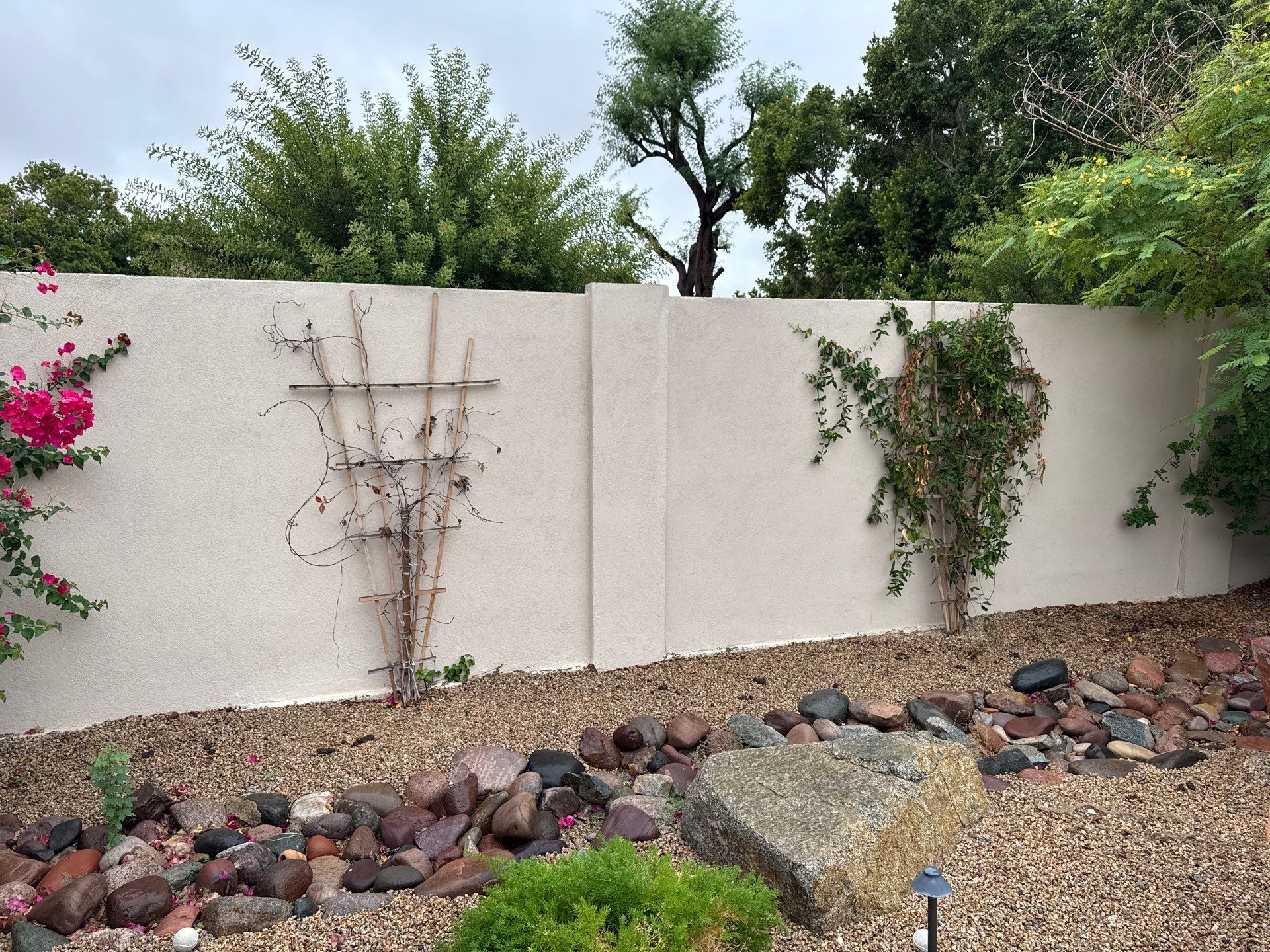
Swap the dead jasmine for bougainvillea
Here you have two vines, a tangerine crossvine and a dead jasmine. Replace the dead jasmine with a bougainvillea, and leave the tangerine crossvine as it is for now.
Bougainvillea
Covered in color most of the year. It doesn't climb on its own, so tie the canes to a trellis or wires as it grows. Can get frost nipped, then flushes back in spring.
- Tie the bougainvillea canes to the trellis as it grows. It doesn't climb on its own.
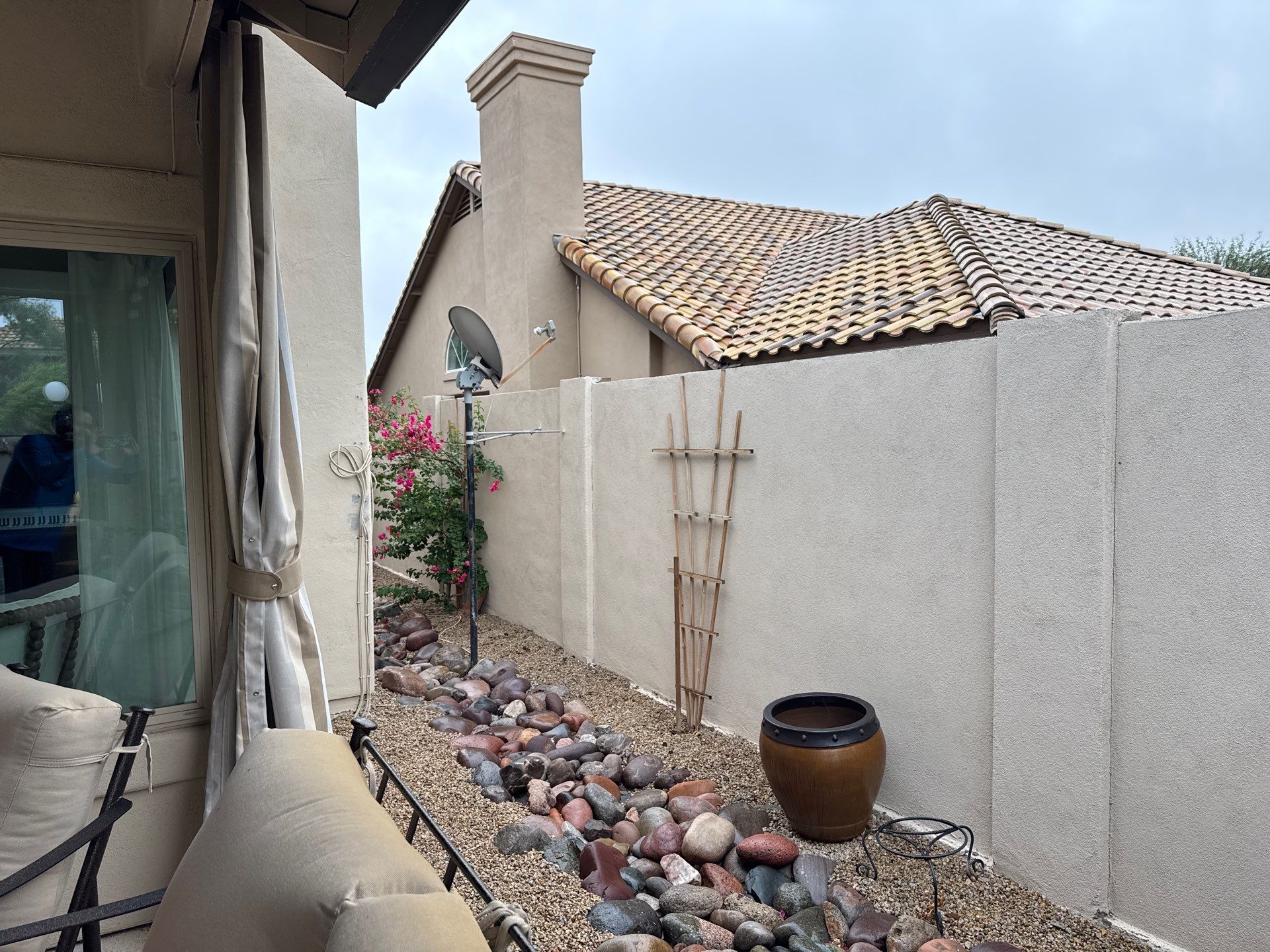
Crossvine on the empty trellis, jasmine in the corner
Back in here there's one empty trellis. That's where the tangerine crossvine can go.
Where the bougainvillea is now, the one you're moving over to replace the dead jasmine, put the star jasmine. This little cove between the wall and the house gets a lot more shade, and jasmine will do much better back here than out in the sun.
Tangerine Crossvine
Evergreen vine with orange trumpet flowers in spring and on and off through the year. Self clinging, so it doesn't need a trellis, and it covers a wall fast.
Star Jasmine
Evergreen vine with glossy leaves and very fragrant white flowers in spring. Does best with afternoon shade. Needs a trellis or wires to climb.
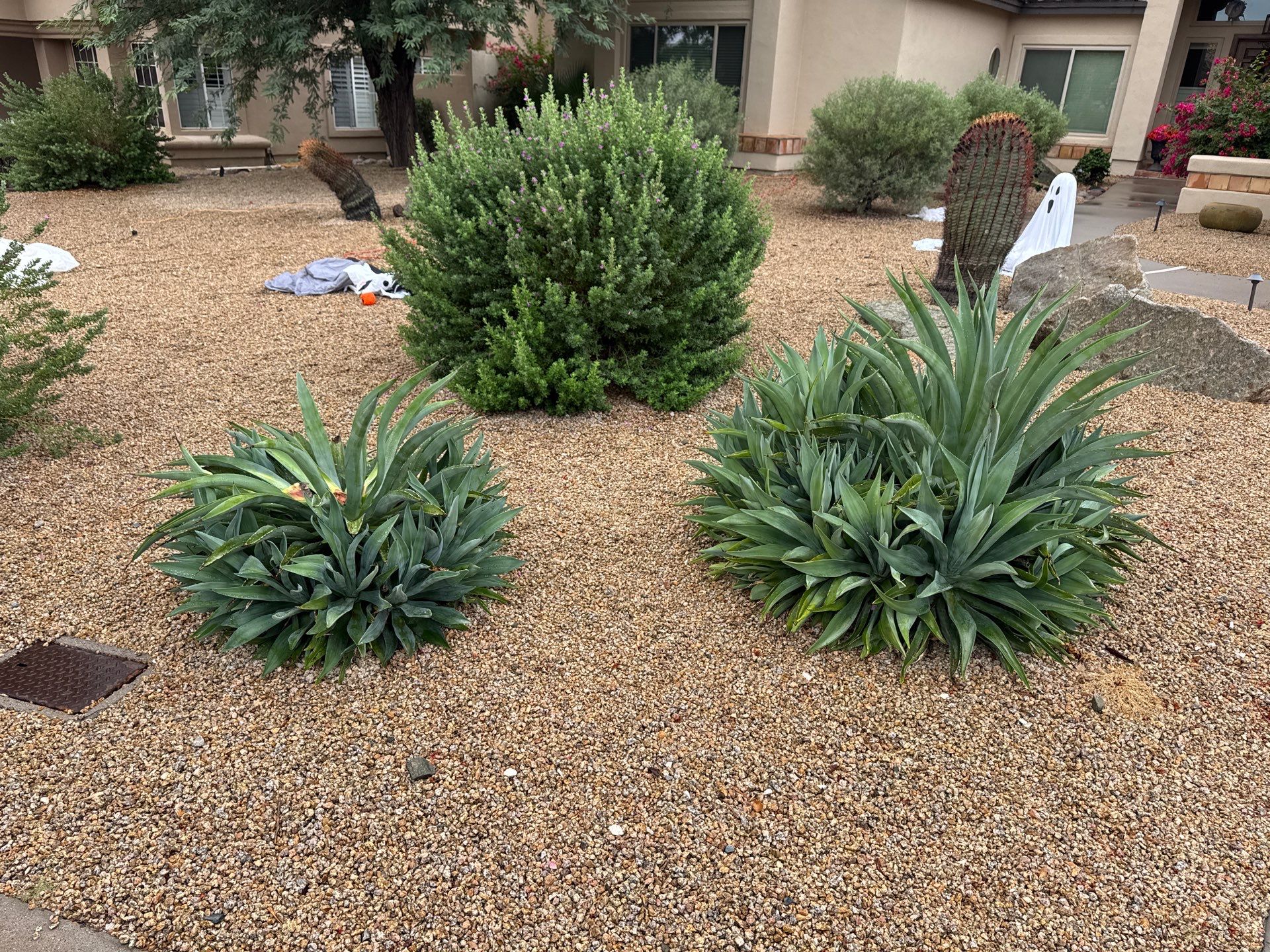
Spreading the agave pups
These agave are growing by pups, so both mounds will keep getting bigger and spreading over time. That means free plants.
- Push a shovel straight down between the pup and the mother plant to cut it free.
- Lift the pup out. It'll have a few roots attached.
- Replant it anywhere you like. Right off the front door where the boxwoods are now is a good spot.
- Water it in lightly, then go easy on water until it settles.
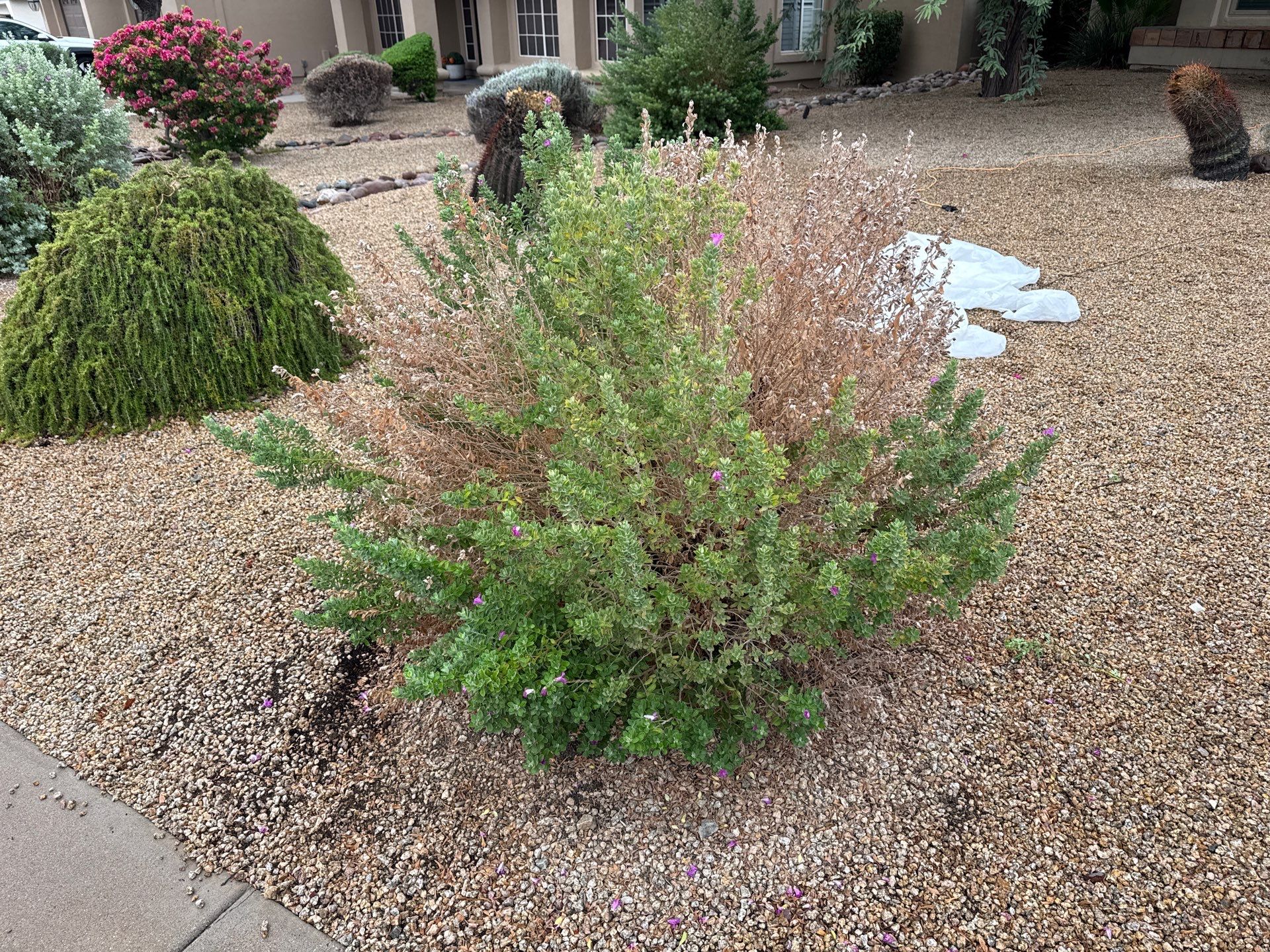
Cutting back the sage
This sage has a lot of dieback. Sometimes that just happens. Now is a good time for a hard prune down close to the base. It should send up fresh new growth and look really good.
- Cut it back to about 6 to 12 inches with loppers.
- Clear out the dead wood from the center.
- After that, let it grow back into its natural shape instead of shearing it.

Texas Sage
Silvery foliage with flushes of purple flowers after summer rains. Takes full sun and takes less water than plants that aren't desert adapted.
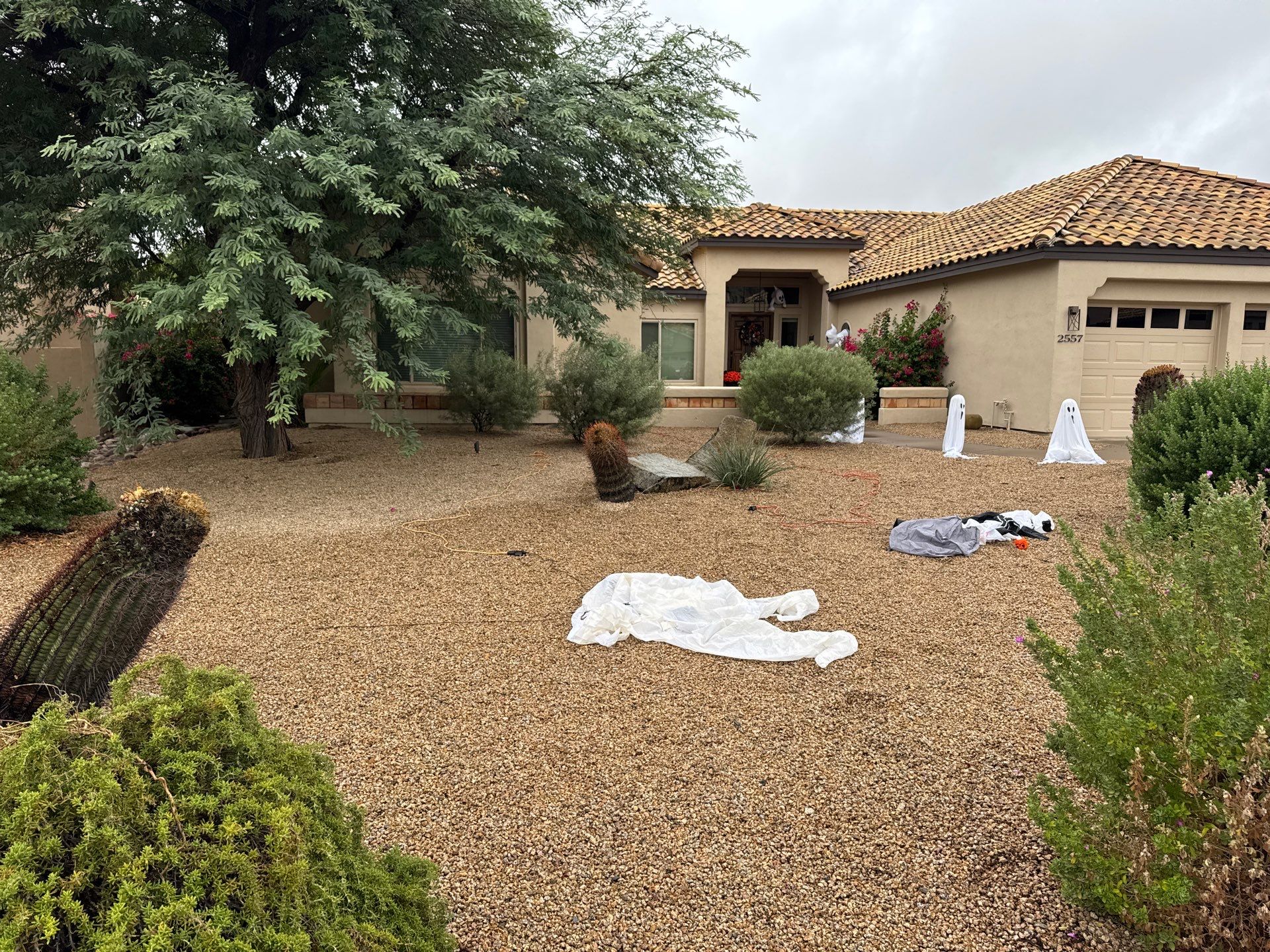
More color in the front yard
For the front yard, here are a lot of options for more color that match the desert look. It faces east, so it's a good sun orientation for all of these. They're natives and desert adapted flowering plants like chuparosa that will do well and look great here.
Chuparosa
Native with green stems and red tubular flowers through winter and spring. A hummingbird favorite that stays green and takes the heat.

Globe Mallow
Native with silvery leaves and cup shaped orange flowers in spring. Native bees love it.
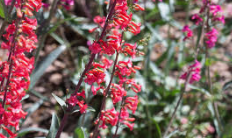
Penstemon
Tall flower spikes in red, pink, or purple in spring. Hummingbirds and native bees love it. Plant in fall for spring blooms.
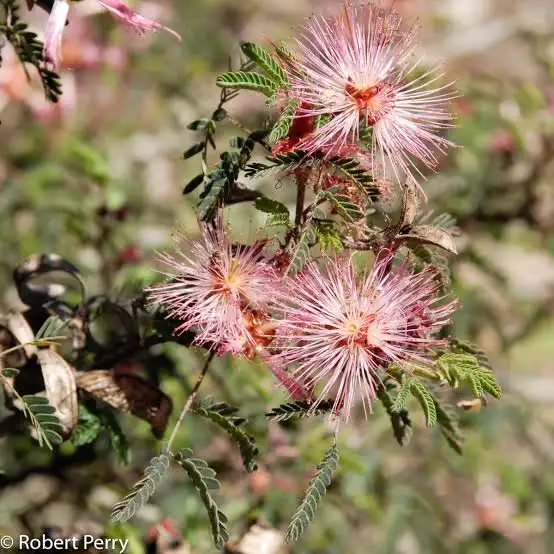
Pink Fairy Duster
Native, low and airy, 2 to 3 feet, with soft pink puffball flowers in late winter and spring.
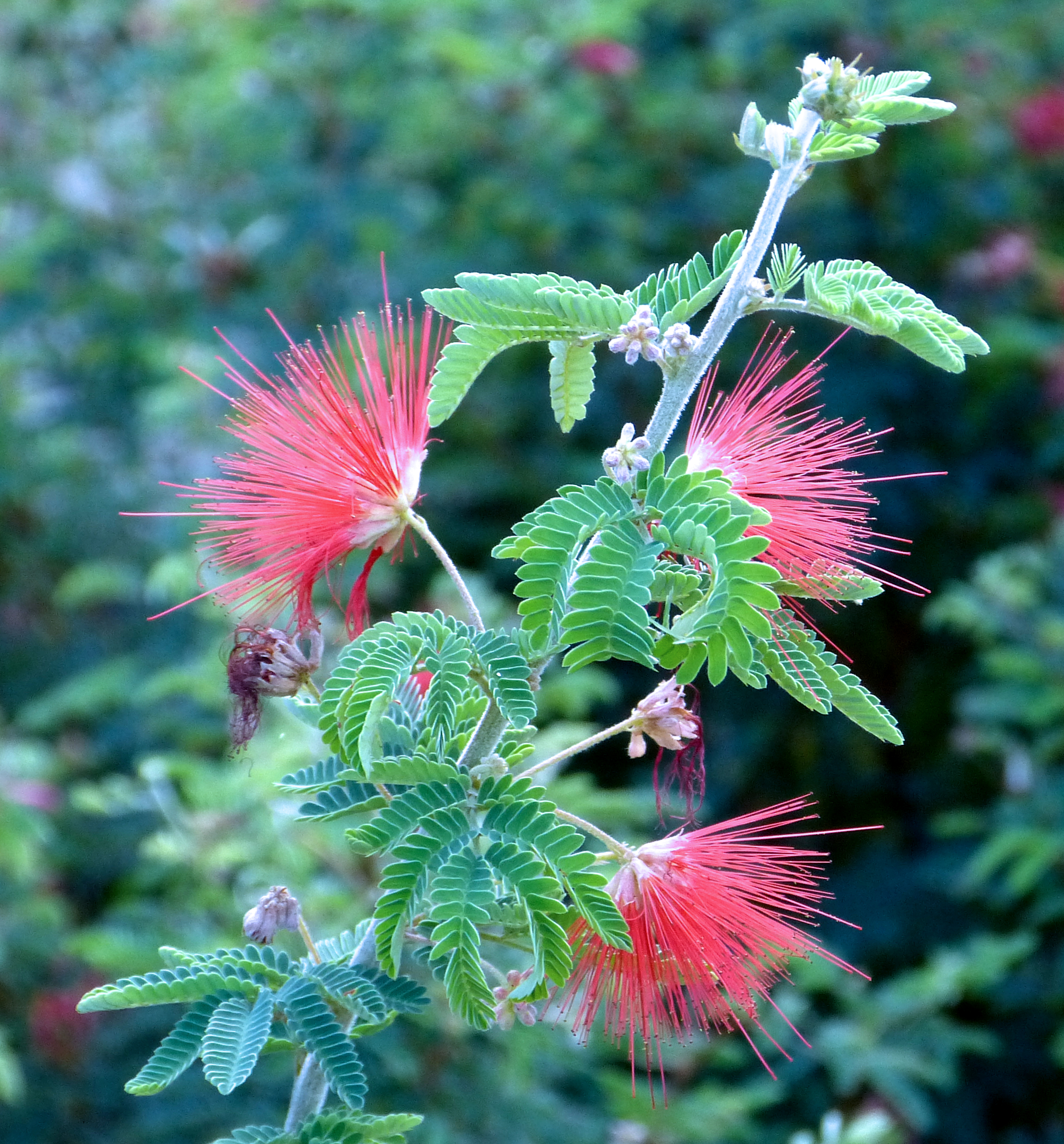
Baja Fairy Duster
3 to 4 feet tall with bright red puffball flowers most of the year that hummingbirds love. Takes full west sun and can be lightly sheared into a loose, informal hedge.
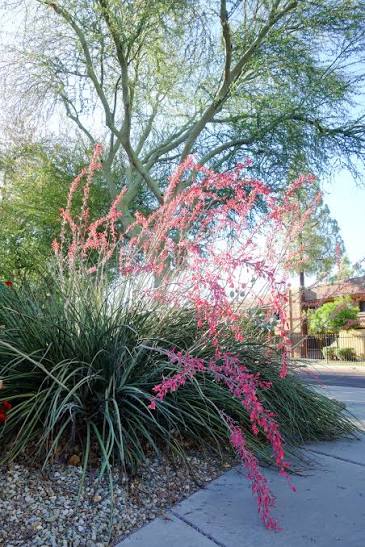
Red Yucca
Grassy clumps with tall coral red flower spikes spring through fall. Adds height and color without getting big, and hummingbirds love it.
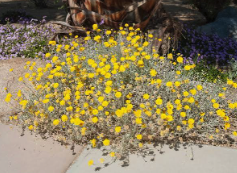
Desert Marigold
Low mound of gray leaves with bright yellow daisies most of the year. Reseeds itself and keeps color going.
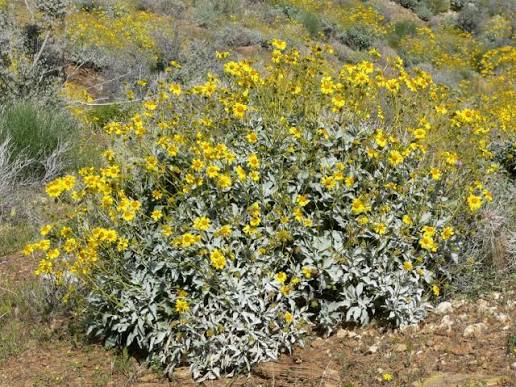
Brittlebush
Native, silvery mound covered in bright yellow daisies in late winter and spring.
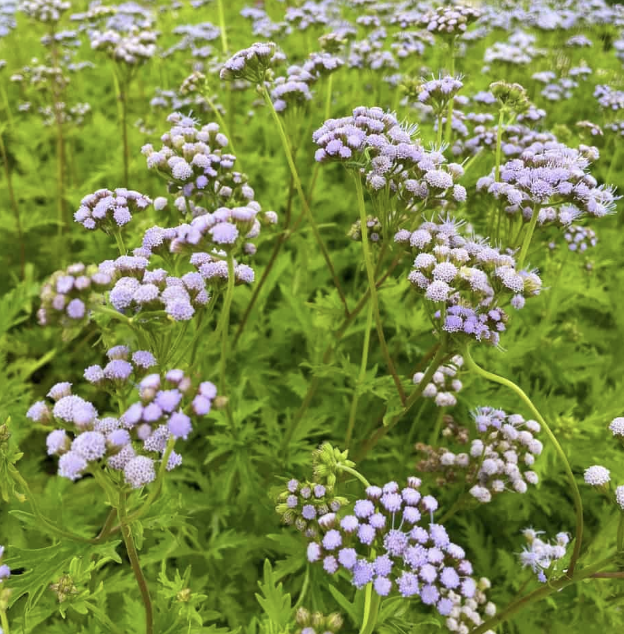
Gregg's Mistflower
Soft, mounding native covered in fuzzy purple flowers spring through fall. Butterflies swarm it.

Desert Milkweed
Native, upright gray green stems with cream flowers, 3 to 4 feet. Adds vertical dimension and feeds monarch and queen butterflies.
My approach with a desert landscape is to add a lot of different plants for diversity. They don't need to be strategically placed. A little sporadic looks good and fuller. Keep lower growing plants near walkways and under trees. Other than that, just do your thing and don't stress about placement.
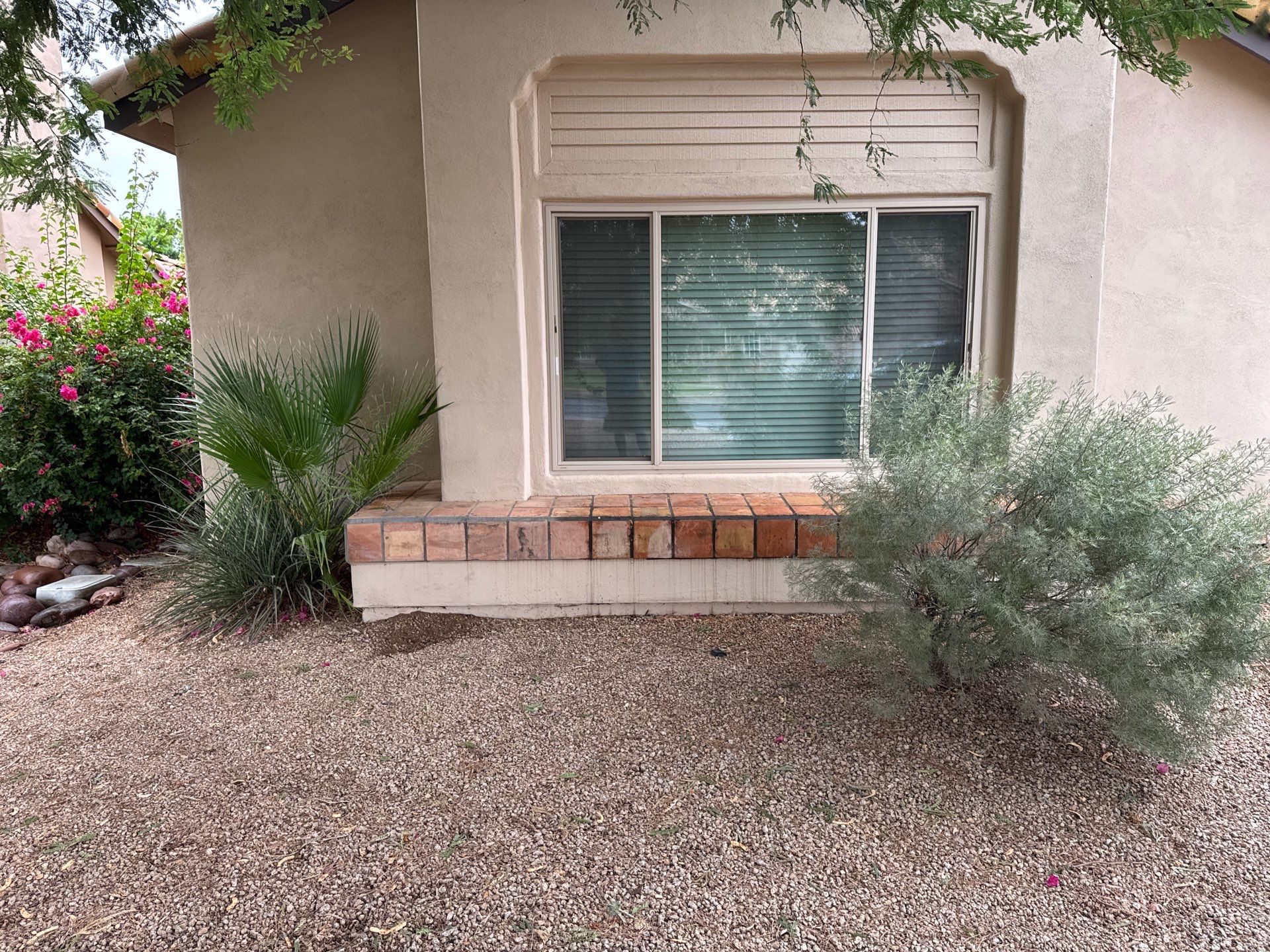
Shade plants under the mesquite
Up against the house under the mesquite, there's a lot of shade. You used to have hibiscus here, and it's a good option again. Here are a few others that handle shade too.
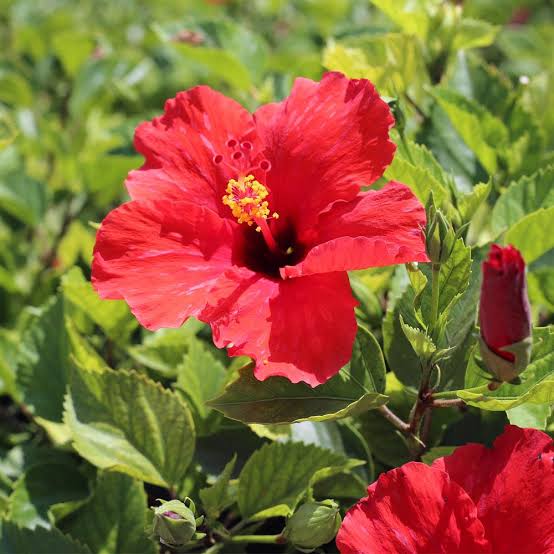
Red Hibiscus
Big tropical flowers most of the warm season. Happiest with morning sun and protection from the afternoon heat, which this east side gives it. Cover it on frost nights.
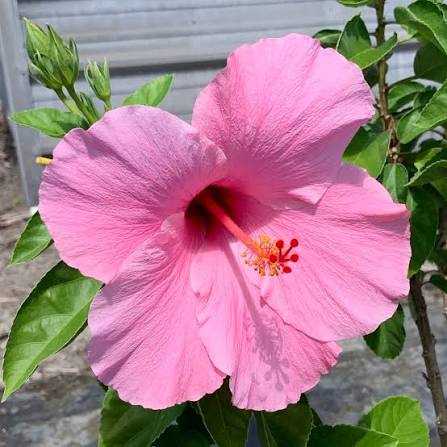
Pink Hibiscus
Same care as the red. Mix the two colors for a fuller tropical look.
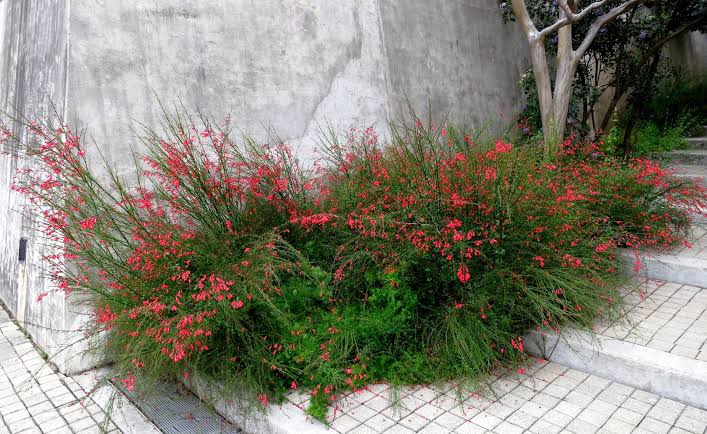
Firecracker Plant
Arching green stems with bright red tubular flowers most of the year. Handles sun or part shade and hummingbirds love it.
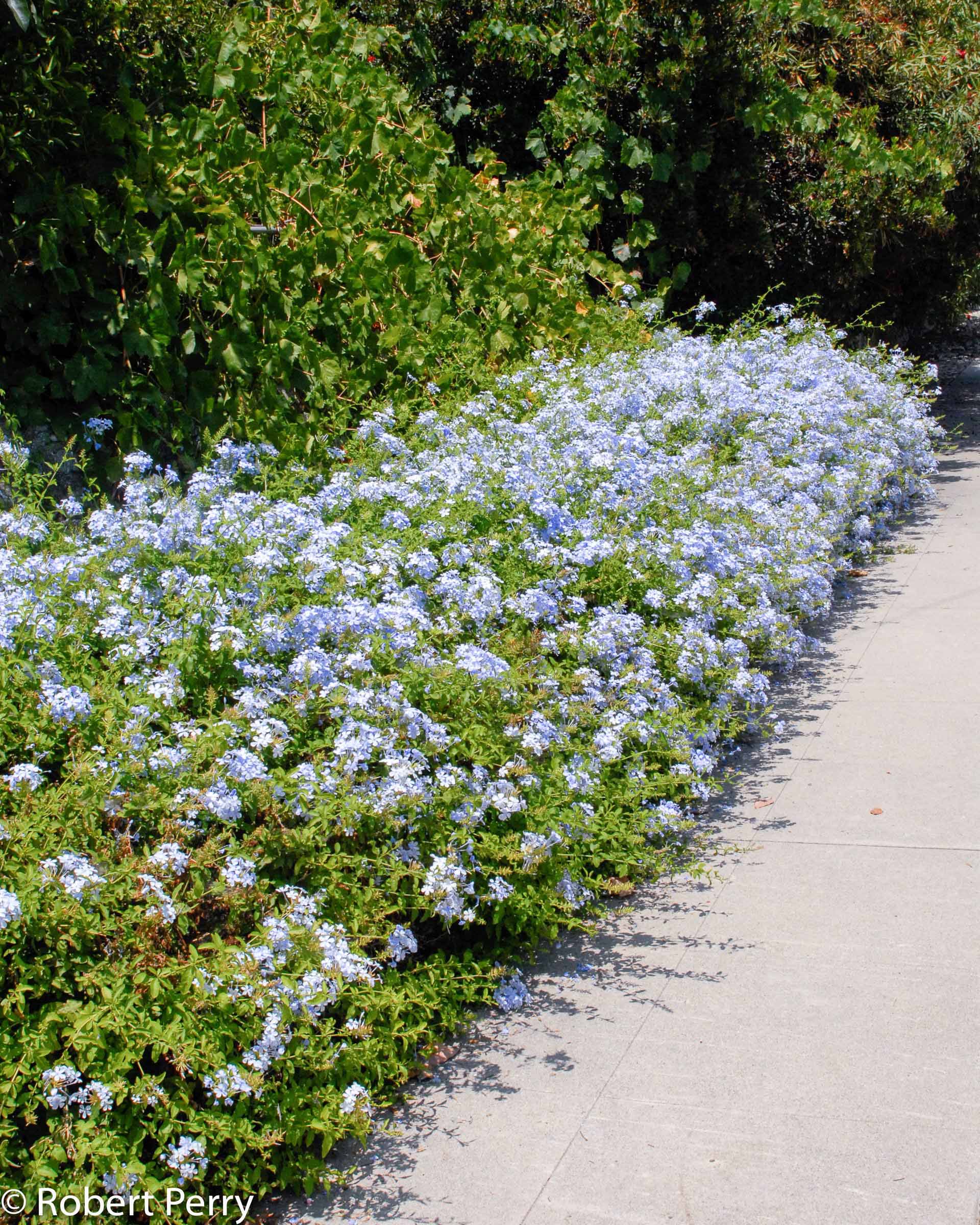
Cape Plumbago
Mounding, 3 to 4 feet, with sky blue flowers spring through fall. Holds a hedge shape well and takes full sun with regular water.
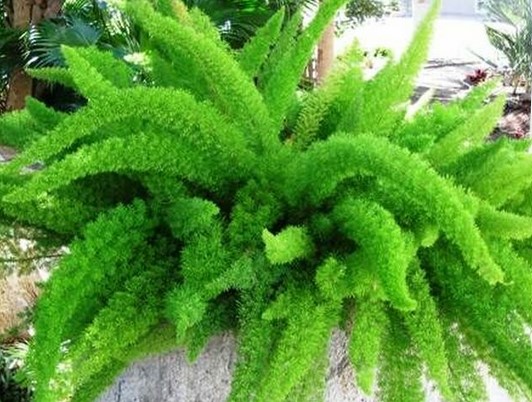
Foxtail Fern
Upright plumes of bright green, about 2 feet tall. One of the best permanent plants for a shady spot.
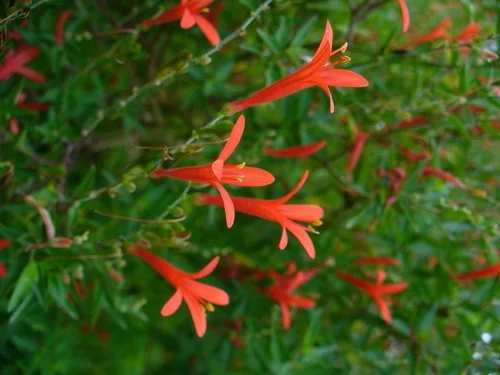
Desert Honeysuckle
Native, 3 to 4 feet, with orange tubular flowers summer through fall. Handles the filtered shade under a tree.
You can't fit all of these. Pick a few favorites and repeat them so it looks intentional.
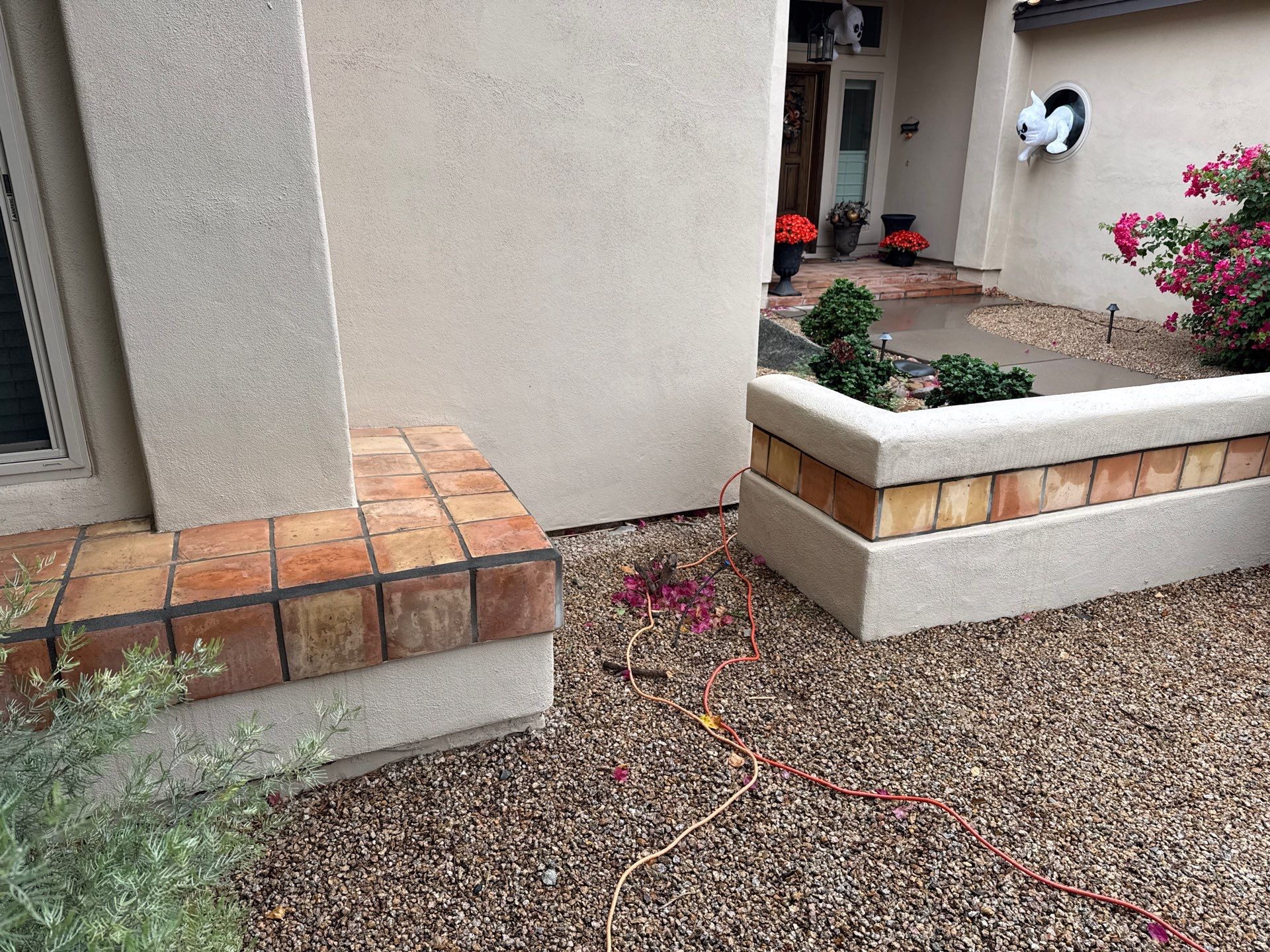
Something against the house where the drip is
Right here it looks like something used to be planted, and there's already a drip line. This is a good spot for something up against the house that's not too big or invasive but adds color and some dimension.
Red Yucca
Grassy clumps with tall coral red flower spikes spring through fall. Adds height and color without getting big, and hummingbirds love it.
Firecracker Plant
Arching green stems with bright red tubular flowers most of the year. Handles sun or part shade and hummingbirds love it.
Baja Fairy Duster
3 to 4 feet tall with bright red puffball flowers most of the year that hummingbirds love. Takes full west sun and can be lightly sheared into a loose, informal hedge.
Desert Milkweed
Native, upright gray green stems with cream flowers, 3 to 4 feet. Adds vertical dimension and feeds monarch and queen butterflies.
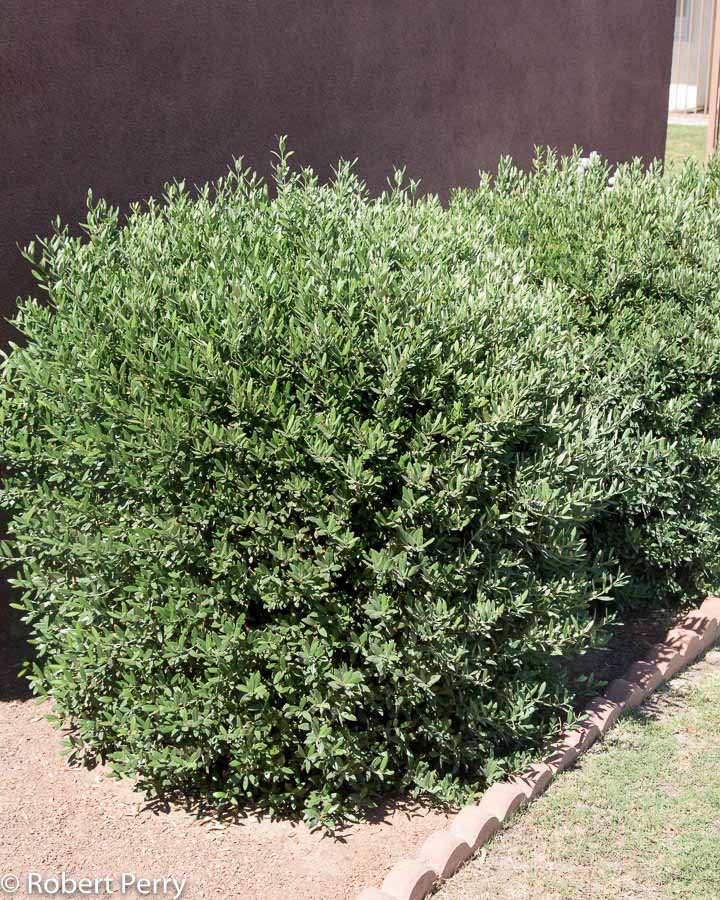
Little Ollie (Dwarf Olive)
Dwarf, fruitless olive with dense silvery green leaves. Naturally 4 to 6 feet, but it shears easily to hold at 3 feet, or it can be trained as a small tree. No fruit, no pollen, very low litter.
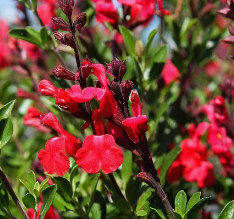
Autumn Sage
Compact, 2 to 3 feet, with red, pink, or coral flowers fall through spring. Takes full sun and can be sheared into a tidy low border.
You can't fit all of these. Pick a few favorites and repeat them so it looks intentional.
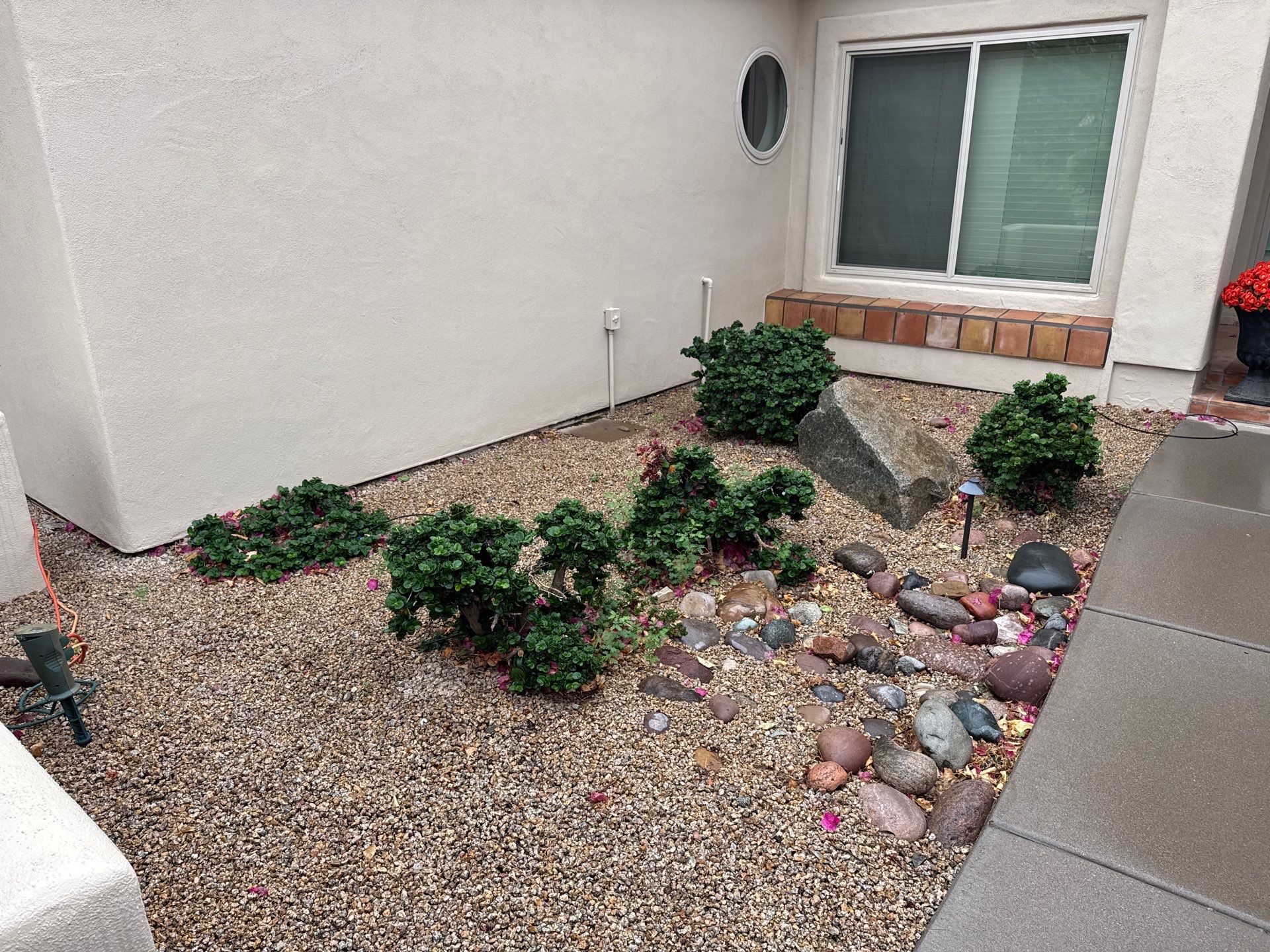
Filling the gaps by the front door
Here with the upright boxwoods by the front door, this is where the agave pups can go to fill in the gaps. Here are some other options too. Nothing that grows too big or too fast or needs a lot of maintenance, just things that stay green and stay put.
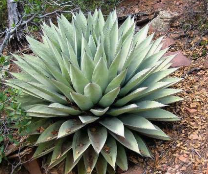
Agave (from your pups)
Compact rosette that stays put, takes almost no maintenance, and you already have pups to transplant for free.
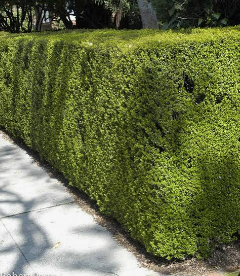
Dwarf Myrtle
Compact myrtle, 3 to 4 feet tall and wide, with small glossy leaves. Holds a tight, clean shape with little effort and drops very little, which makes it great by the pool. Plant about 3 feet apart.
Little Ollie (Dwarf Olive)
Dwarf, fruitless olive with dense silvery green leaves. Naturally 4 to 6 feet, but it shears easily to hold at 3 feet, or it can be trained as a small tree. No fruit, no pollen, very low litter.
Foxtail Fern
Upright plumes of bright green, about 2 feet tall. One of the best permanent plants for a shady spot.
Red Yucca
Grassy clumps with tall coral red flower spikes spring through fall. Adds height and color without getting big, and hummingbirds love it.
You can't fit all of these. Pick a few favorites and repeat them so it looks intentional.
Watering
Almost everything in the yard is desert adapted, so it does best with deep, infrequent watering. The one exception is the new lime tree, which needs more.
The desert plants
- Deep and infrequent: long waterings that soak the root zone, then let the soil dry before the next one.
- Summer: about every 7 to 10 days.
- Spring and fall: about every 10 to 14 days.
- Winter: every 2 to 3 weeks.
The lime tree
- First month: fill the water well every 2 days.
- Through the first year: 2 times a week, a little more in the heat of summer.
- Once established: every 7 to 10 days in winter, about weekly in spring and fall, and every 3 to 5 days in summer.
- Put the lime on its own bubbler or valve if you can, so it gets its extra water without overwatering the desert plants.
Push a long screwdriver into the soil after watering to check. It slides easily through wet soil and stops where it's dry.
Fertilizing
The desert plants need very little feeding, but the lime tree, the oleanders you're cutting back, and the vines will all do much better with fed soil. Feeding is really about feeding the soil life. Fungi, bacteria, and worms break down organic matter and hand nutrients to the roots, all without synthetic fertilizers. Here's the exact approach I use, so you can do it yourself.
- Compost, and be generous. On trees, spread it in a wide ring around the drip line, the outer edge of the canopy where most of the feeder roots are, from about halfway in to a couple feet past the edge. On shrubs, hedges, and vines, put it closer in, from a few inches off the stems out about a foot past the edge of the plant. Go 1 to 2 inches deep, and if you're unsure, go thicker rather than thinner. You really can't overdo quality compost. Do this three times a year: late winter (February), early summer (May), and fall (October).
- Worm castings every quarter. Every three months, scatter worm castings over the same areas: a few cups around each shrub and a couple pounds around the drip line of each tree. Castings are loaded with beneficial microbes that bring the soil to life. When it lines up with a compost round, put the castings down first and the compost right over them.
- A good organic fertilizer. These are the three products we use and recommend, all from Catalyst. Apply them at the label rate on the schedule each one gives.
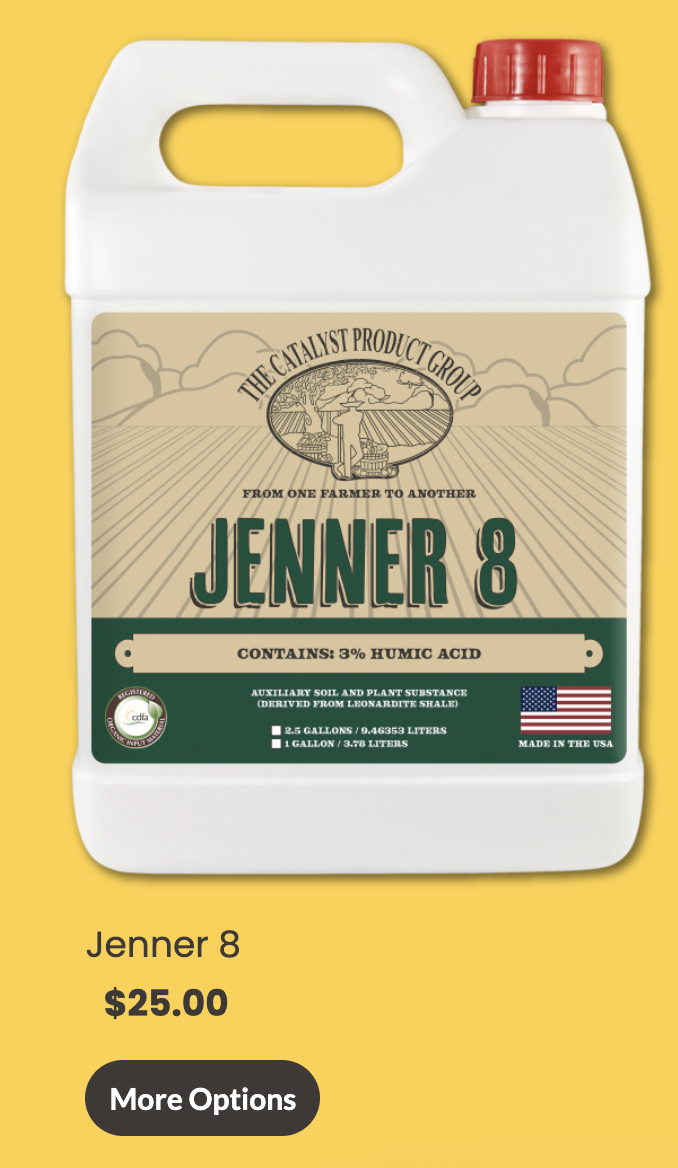
Jenner 8
Liquid organic feed for the whole landscape.
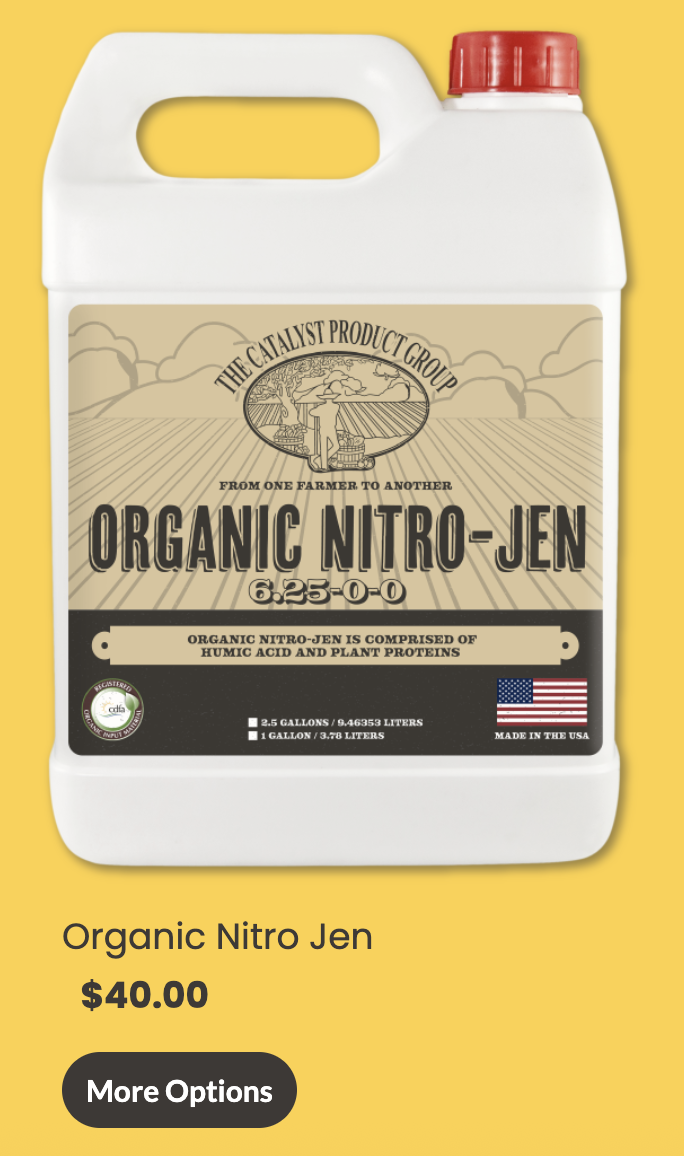
Organic Nitro Jen
Organic nitrogen to push healthy green growth.
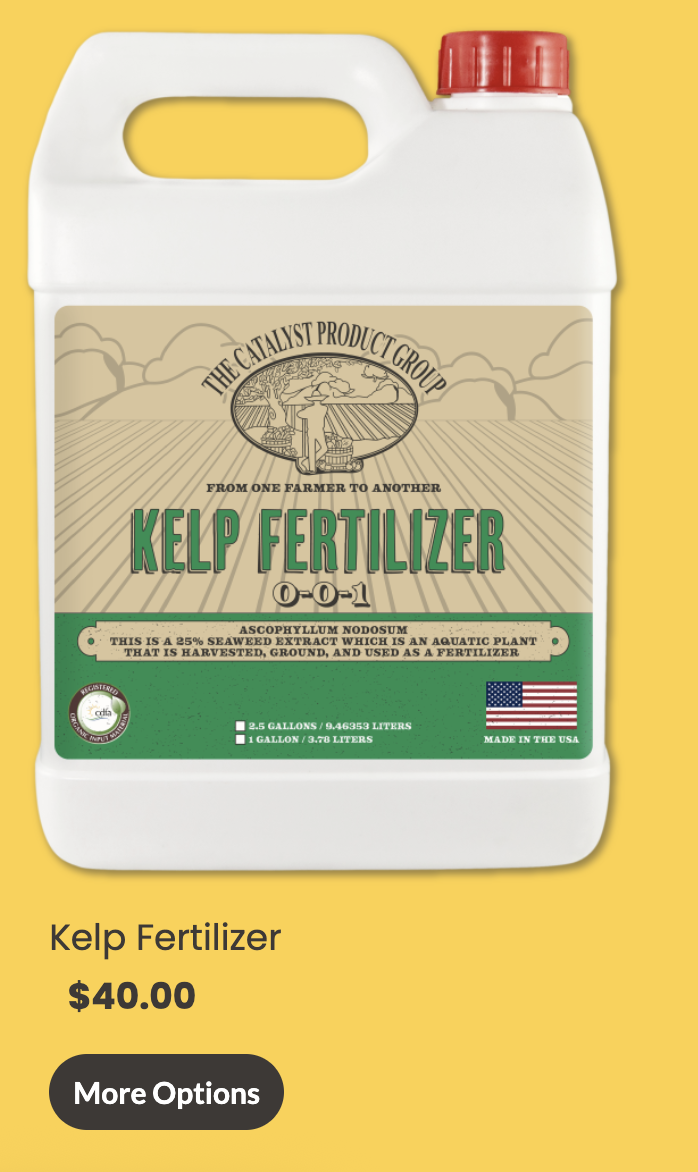
Kelp Fertilizer
Kelp based feed that supports roots and overall plant health.
You can find all three on the Catalyst website. Click Products, then Home and Garden.
- Water it all in. Give everything a deep watering right after you put it down so it soaks into the root zone.
- Mulch over the top. Mulch goes over the compost to keep it moist and cool so the soil life can do its work. Hold it a foot back from trunks and stems. No need to work any of it into the soil.
Compost, worm castings, and mulch are all at Arizona Worm Farm.
If you'd rather we handle it
Our monthly landscape fertilizing program feeds the whole yard for you.
- Covers all the plants in the yard and the grass
- Monthly compost based liquid feeding across the full landscape
- Compost applications three times a year
- A recap video sent to you after each visit
Quick reference
Organic fertilizers
Catalyst (Products, then Home and Garden)Compost, mulch, worm castings
Arizona Worm FarmLime tree
Greenfield Citrus NurseryRoot flare video
Why the root flare mattersOrange jubilee video
Watch on YouTubeIrrigation
Garrett: 480-678-9121Questions
Ask me anytime in the Garden Nerd ClubNext steps
You can take this list and do it yourself, and I'm right there in the Garden Nerd Club if you want a second set of eyes along the way. If you'd rather have us handle the planting or the pruning, I can put together a proposal for you.
For anything irrigation related, call Garrett at 480-678-9121.
You can see more of what we do on our planting services page.