
Michelle Hansen
Thanks for having me out, Michelle. Below is everything we went over, in the order we walked the yard, with the details on each so you have it all in one place.
As a consult client, you're already in the Garden Nerd Club, so you have direct access to me there. If questions come up while you work through any of this, ask me there anytime.
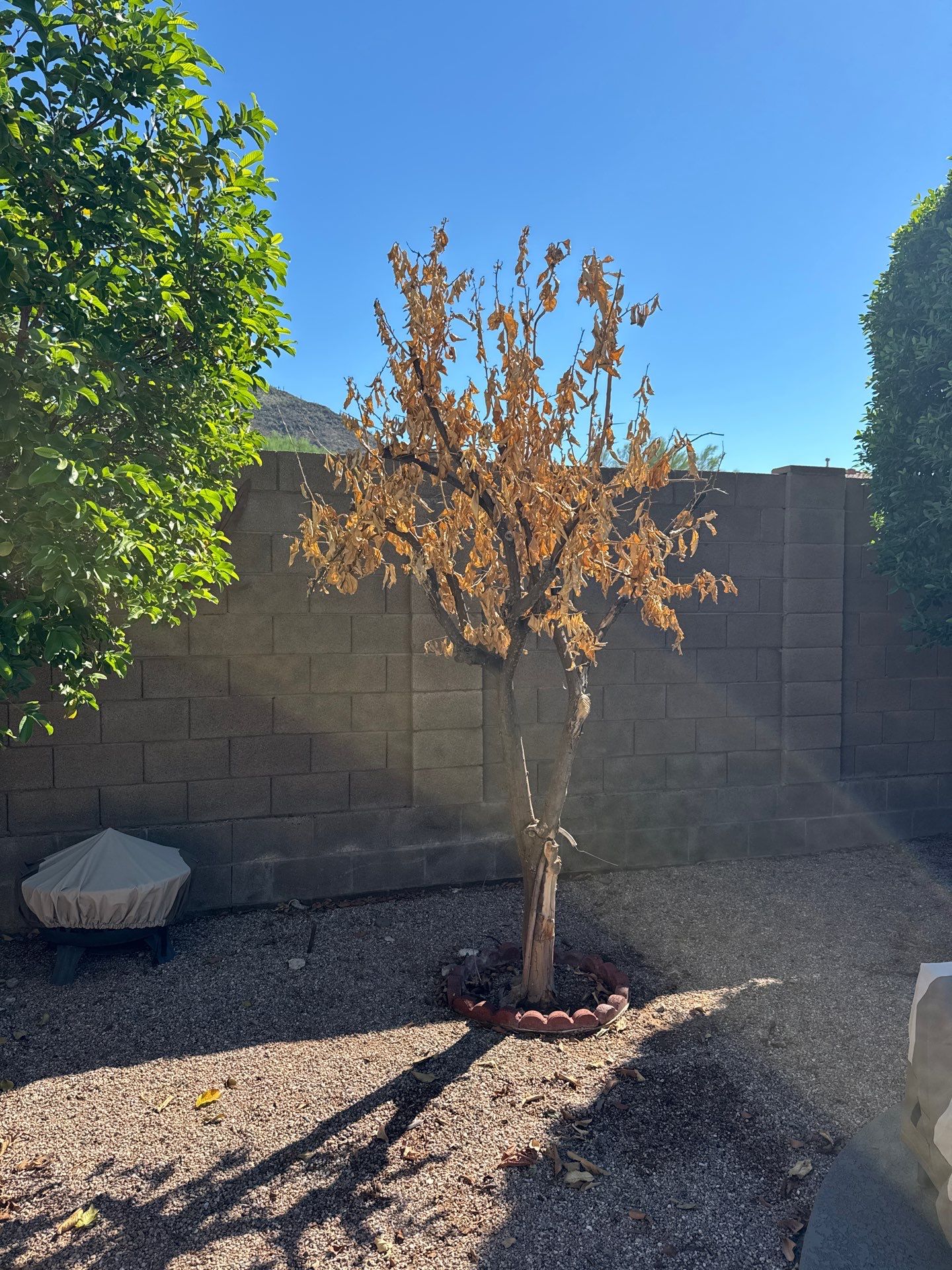
Replacing the lemon tree
This lemon tree is dead and needs to come out. Another lemon will do great here with the right planting and watering.

Lemon
Evergreen, fragrant blooms in spring, and fruit most of the year. Meyer and Lisbon lemons both do well here. Citrus are heavy feeders and do best with deep water and lots of compost.
Planting
- The old tree: cut it down. The stump doesn't need to be ground out. Plant the new tree right beside it. Old roots in the ground aren't an issue.
- Size: start with a 15 gallon tree. Smaller trees establish faster and always end up being better trees long term than big boxed ones.
- Planting: find the root flare, where the trunk widens into the roots, before you dig, and set the tree so the flare sits slightly above the surrounding ground. Dig the hole two to three times as wide as the root ball but no deeper. Backfill with native soil plus a tiny bit of compost, lay compost on top, then mulch over it, held a foot back from the trunk.
- Water well: build a low ring of soil around the tree, out to about 3 feet, so water pools over the roots and soaks down.
- Sunburn: citrus bark burns easily. If the tree comes with cardboard wrapped around the trunk, leave it on for the first year or so, until the tree grows in enough to shade its own trunk.
- First year fruit: pull off any fruit that sets the first year so the tree puts that energy into roots.
Watering
- First month: fill the water well every 2 days.
- After that, through the first year: fill it 2 times a week, a little more often in the heat of summer.
- Once established: every 7 to 10 days in winter, about weekly in spring and fall, and every 3 to 5 days in summer. Fill the water well each time so it soaks deep.
Greenfield Citrus Nursery is a great place to get a healthy lemon tree.
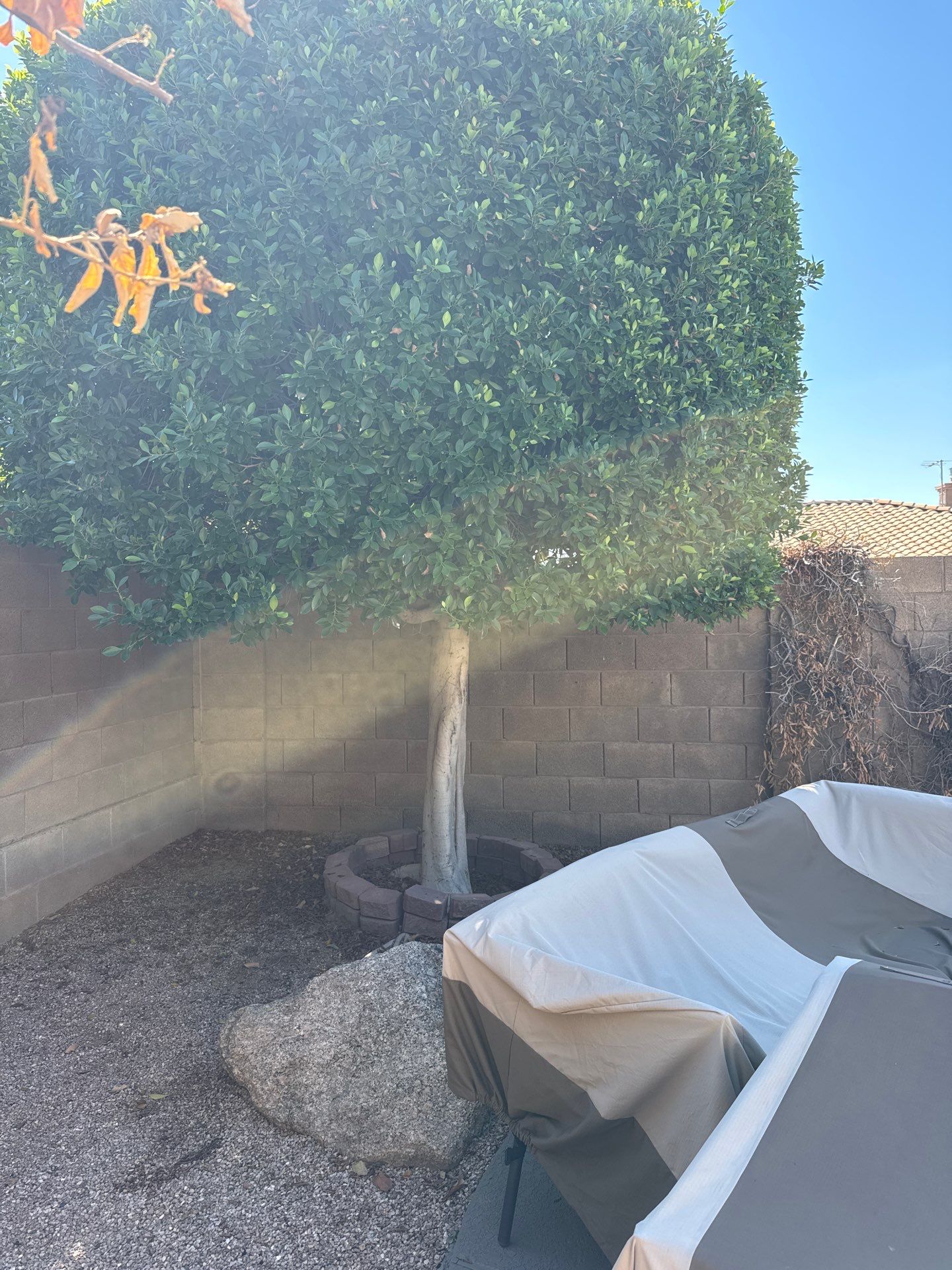
The ficus tree: widen the water well and move the emitters
This ficus is looking good, and the root flare is exposed well, which is exactly what you want. This video shows why that matters, with real examples.
Can't see the video? Watch it on YouTube.
What it needs
- Take out the brick ring. It's holding the water right at the trunk, but the roots that actually drink are out under the edge of the canopy.
- Extend the water well out to the drip line, the outer edge of the canopy, with a low ring of soil.
- Pull the rock out of the ring and put mulch down inside it if you can. Mulch keeps the root zone cool and moist and feeds the soil as it breaks down, while rock just holds heat.
- Move the drip emitters out to the canopy edge so the water lands where the feeder roots are.
- Add one more drip line to give it more water overall. A tree this size needs more than it's getting.
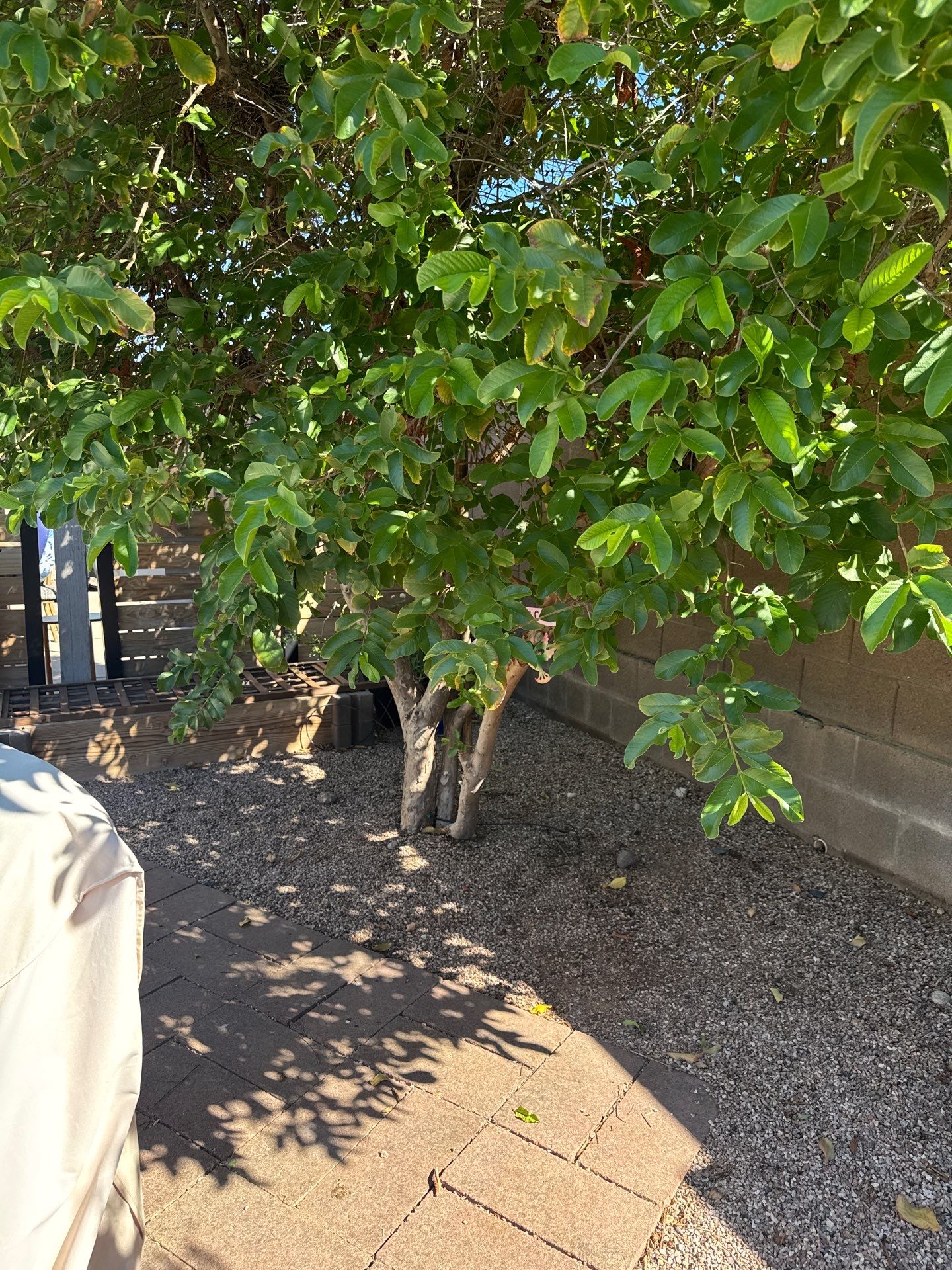
Expose the guava's root flare
The root flare on this guava isn't exposed and needs to be. When soil and rock sit against the trunk, the bark stays wet, starts to rot, and roots can begin circling and choking the trunk.
- Pull the rock back a couple of feet from the trunk.
- Pull the dirt back from the base. A strong stream of water from a hose blasts it away fast, then finish with a hand trowel or your fingers.
- Keep going until you find the root flare, where the trunk widens out and the first big roots head sideways.
- Leave it exposed, with the soil sloping gently away from the trunk. Don't fill it back in.
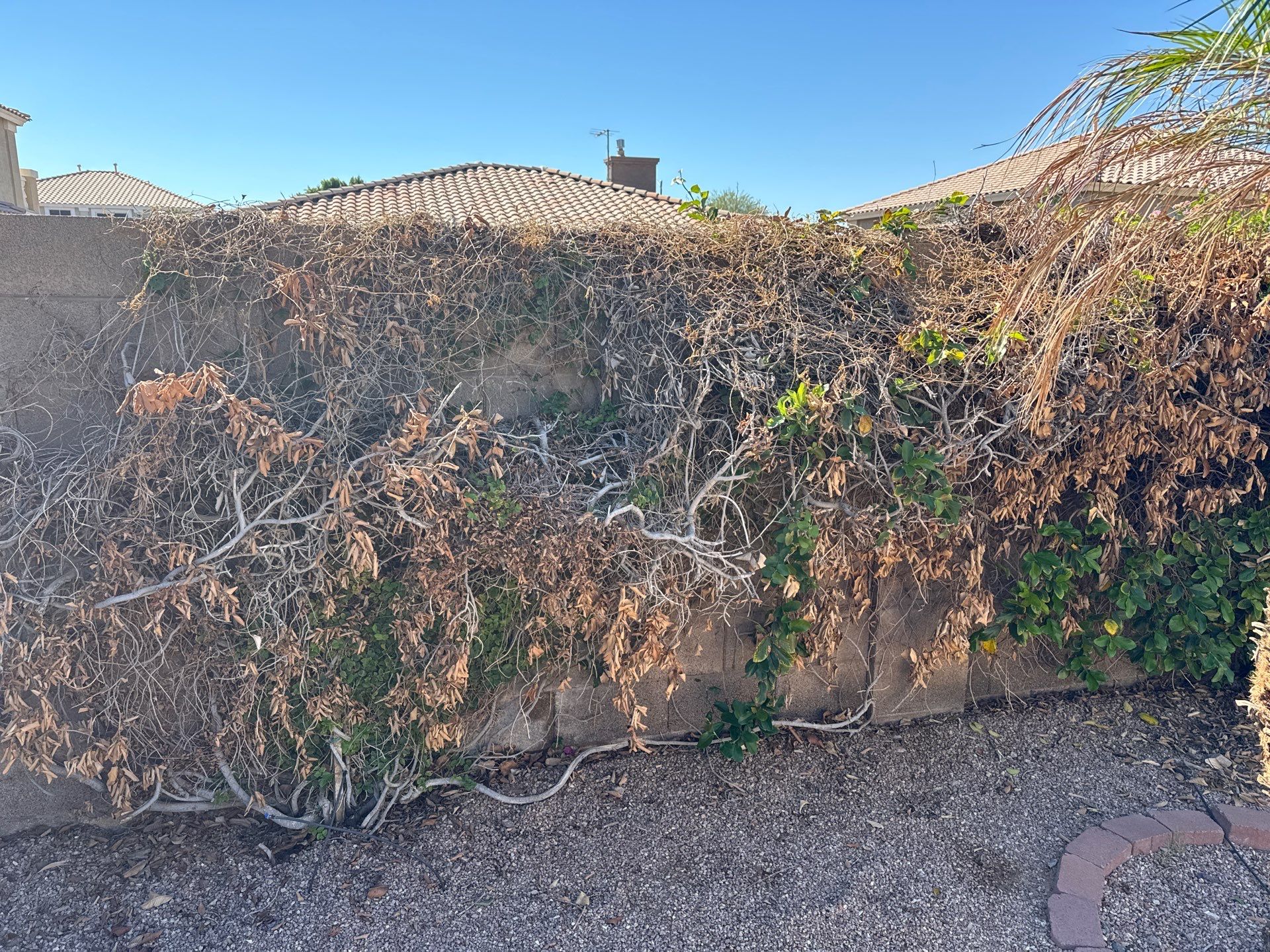
Bringing the vines back
These vines can still work here, but they need a few things.
- In about three weeks, cut out the dead. Go easy. Pull off everything that's clearly dead, but leave a little rather than risk cutting into branches that are still alive. Scratch the bark with your thumbnail if you're unsure: green underneath is alive.
- Feed with the composted chicken manure I gave you. Throw a few handfuls down around each trunk.
- Deep soak. Put the hose on a slow drip at each one and leave it for 24 hours so it really soaks into the ground.
After that, the watering change in the Watering section below is what will keep them coming back.
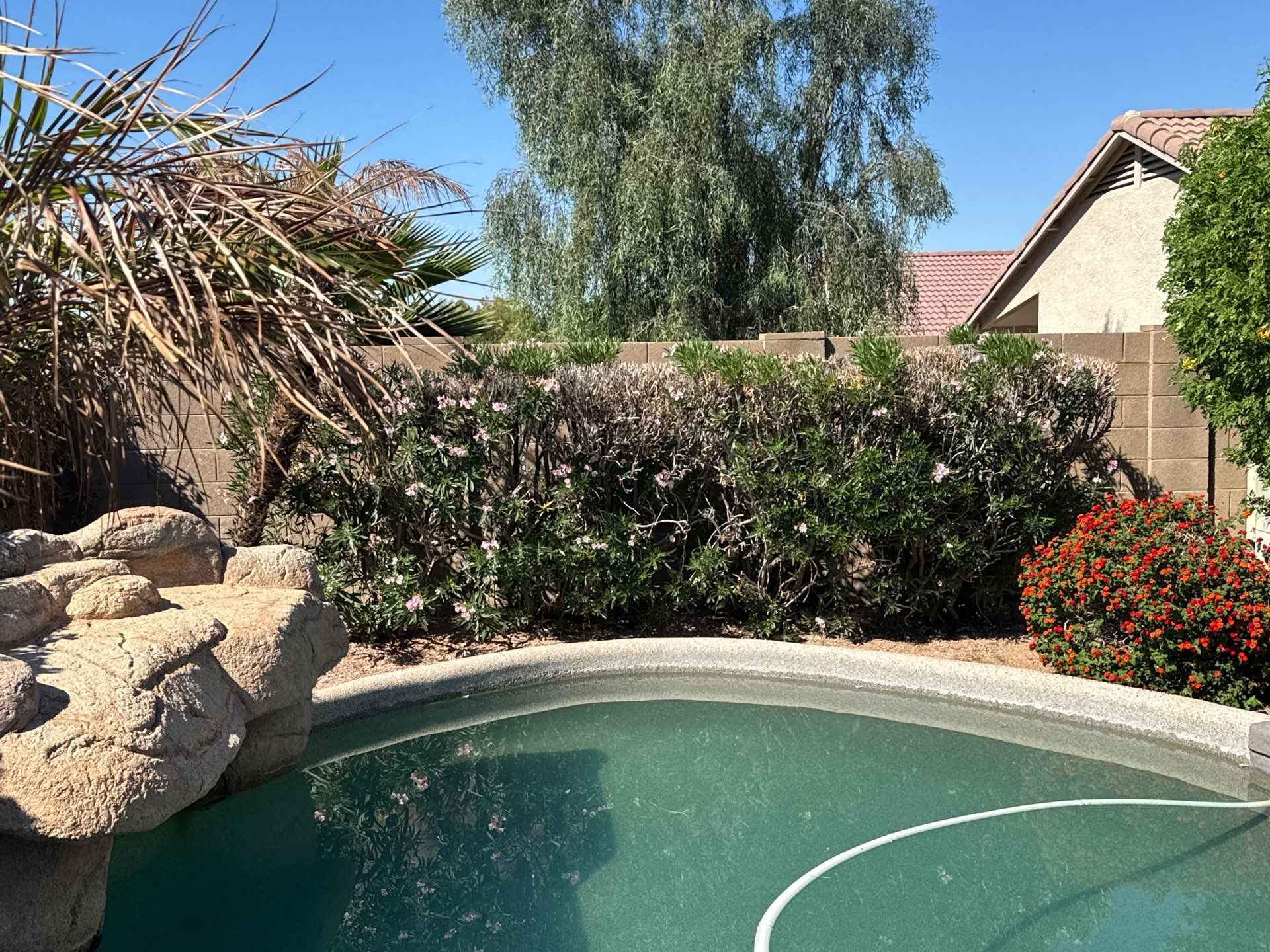
The oleander: more water and less pruning
Same thing with the oleander. They need more water, and they need to stop being sheared and pruned so much. Let them grow naturally.
- Pruning: once or twice a year is all they need, at the end of summer and at the end of winter. Other than that, let them be. Constant shearing is what's keeping them thin and stressed.
- In about three weeks, cut out the dead. Go easy. Pull off everything that's clearly dead, but leave a little rather than risk cutting into branches that are still alive. Scratch the bark with your thumbnail if you're unsure: green underneath is alive.
- Feed with the composted chicken manure I gave you. Throw a few handfuls down around each trunk.
- Deep soak. Put the hose on a slow drip at each one and leave it for 24 hours so it really soaks into the ground.
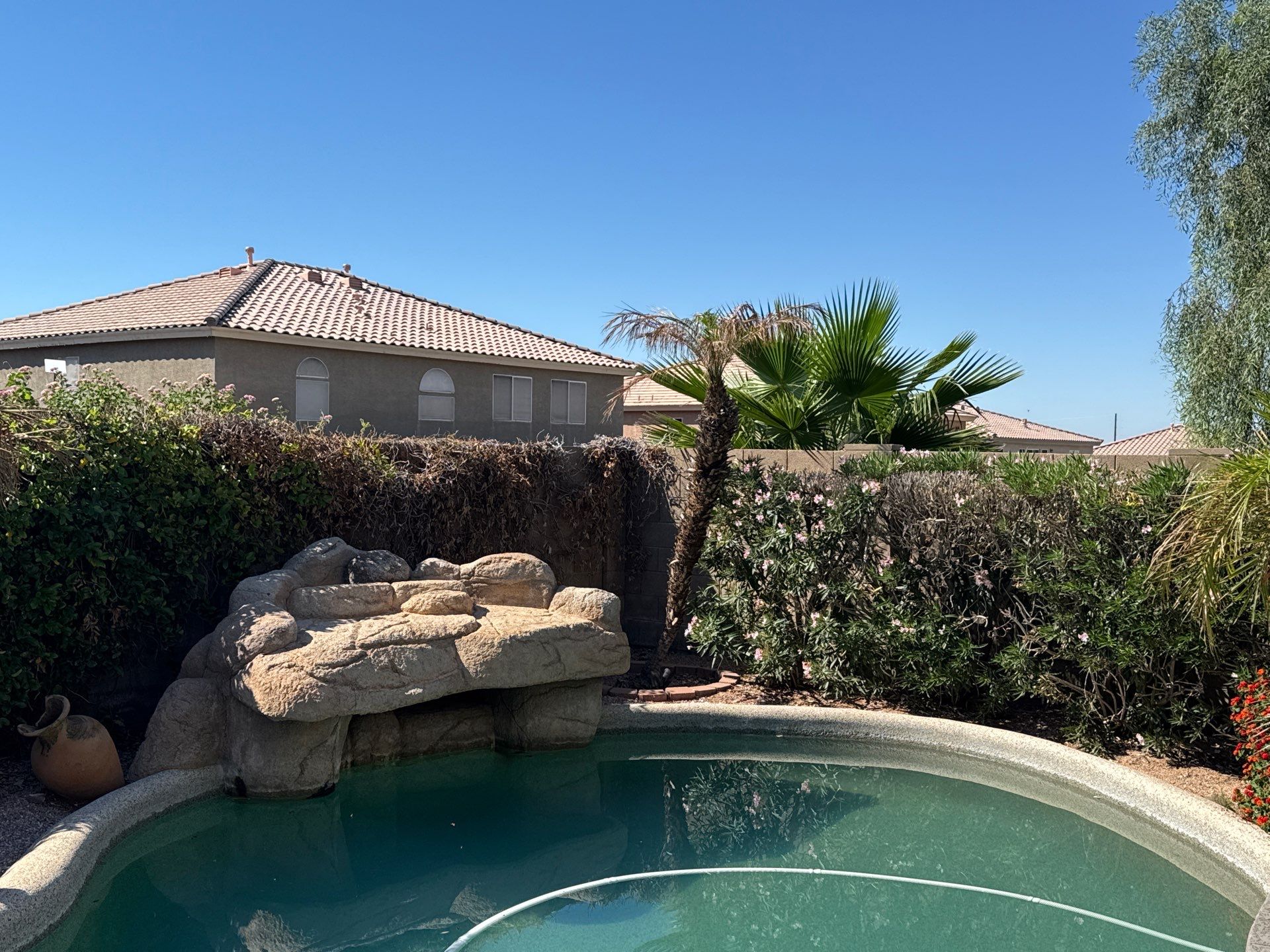
A shade tree where the palm is
Back in the corner where the palm tree is, I'd take the palm out and put in a tree that gives some shade. Desert willow would go really well here, and so would an Arizona rosewood trained as a small tree. Since it's right by the pool, here are a few other smaller, more ornamental trees too.
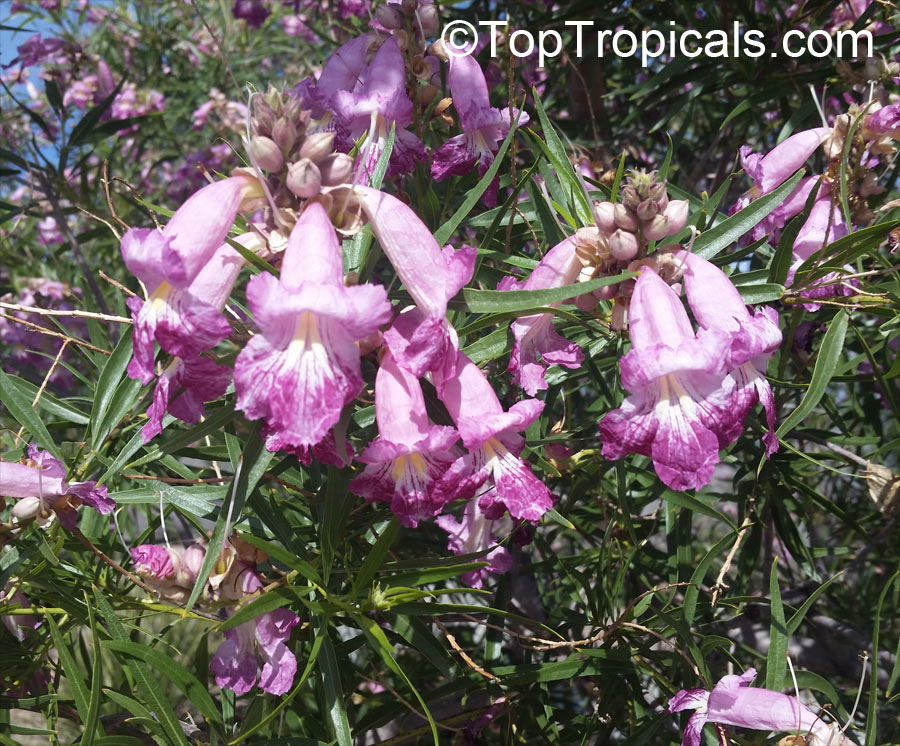
Desert Willow
Native, 15 to 25 feet, with orchid like trumpet flowers in pink, purple, or white all summer. Light, airy canopy that loses its leaves in winter. A great small accent tree.

Arizona Rosewood (tree form)
Native evergreen with dark, glossy leaves, trained up as a small multi trunk tree, 12 to 15 feet. Very low litter, which makes it a great fit right by the pool.

Mulga Acacia
Australian native, 15 to 20 feet, with fine silvery green evergreen leaves and yellow flower spikes in spring. Low litter, tough in full sun, and takes less water than plants that aren't desert adapted.
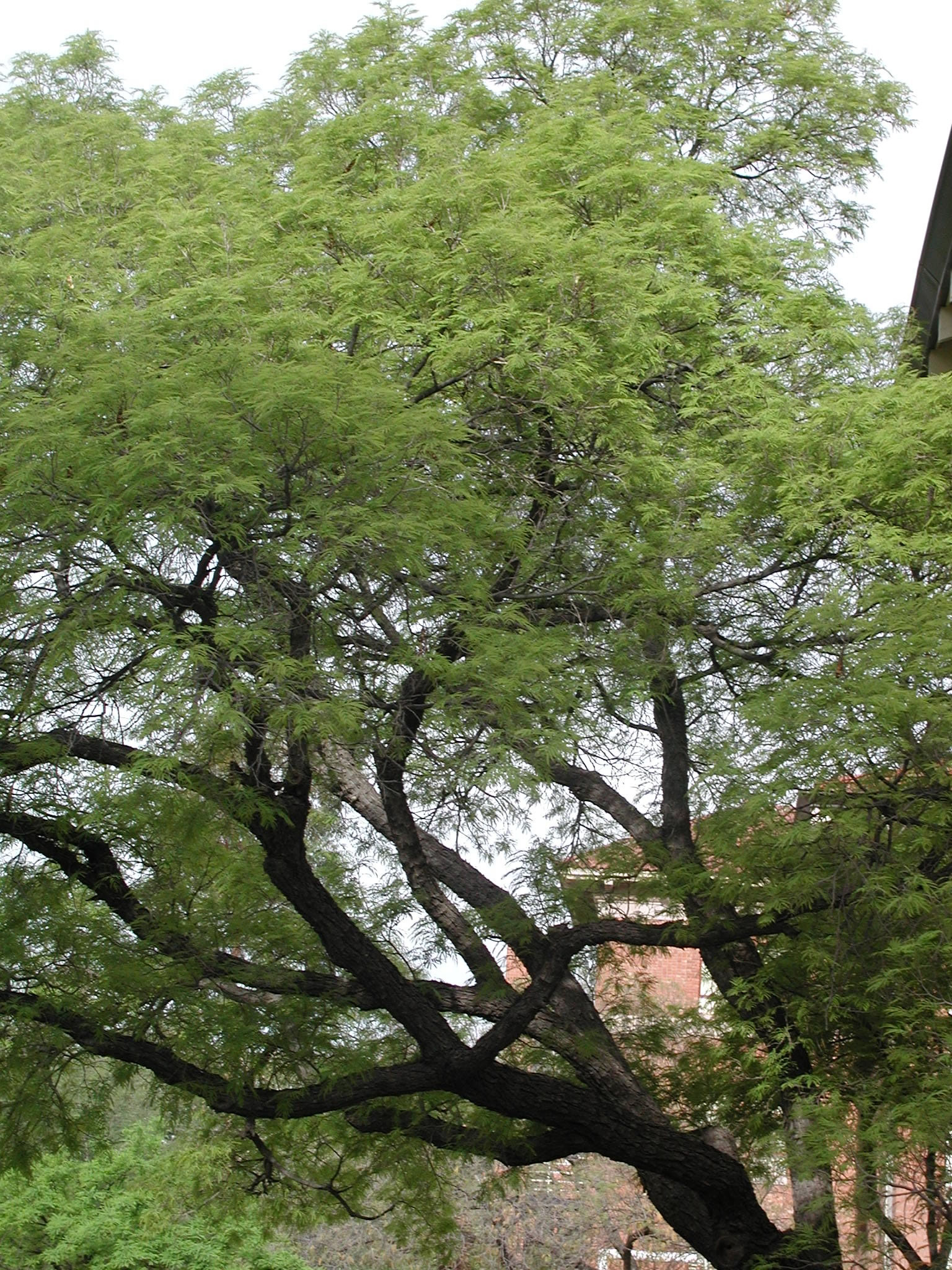
Fern of the Desert
Native, 15 to 20 feet, with fine, fernlike evergreen leaves and creamy flower spikes in late spring. Soft and graceful, and it never gets too big for a spot by the patio.
- Size: start with a 15 gallon tree. Smaller trees establish faster and always end up being better trees long term than big boxed ones.
- Planting: find the root flare, where the trunk widens into the roots, before you dig, and set the tree so the flare sits slightly above the surrounding ground. Dig the hole two to three times as wide as the root ball but no deeper. Backfill with native soil plus a tiny bit of compost, lay compost on top, then mulch over it, held a foot back from the trunk.
- Keep it a few feet back from the pool edge so the roots stay clear of the decking and plumbing.
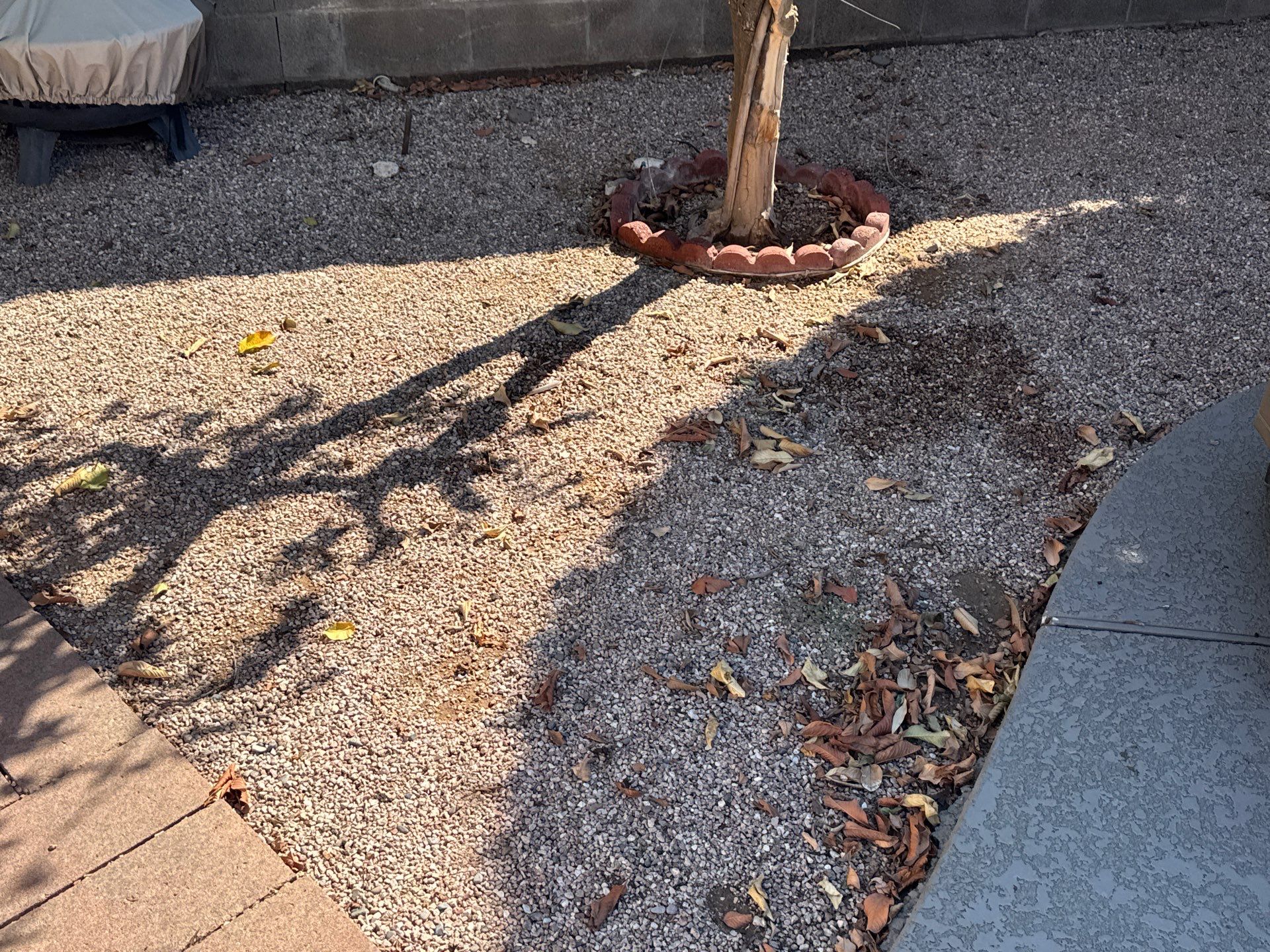
Ground cover to cover the rock
Here and in the next area, you want ground cover to cover up all the rock. You like the look of yellow dot, so that's a great start. Emu bush is another good one, and here are a few more.
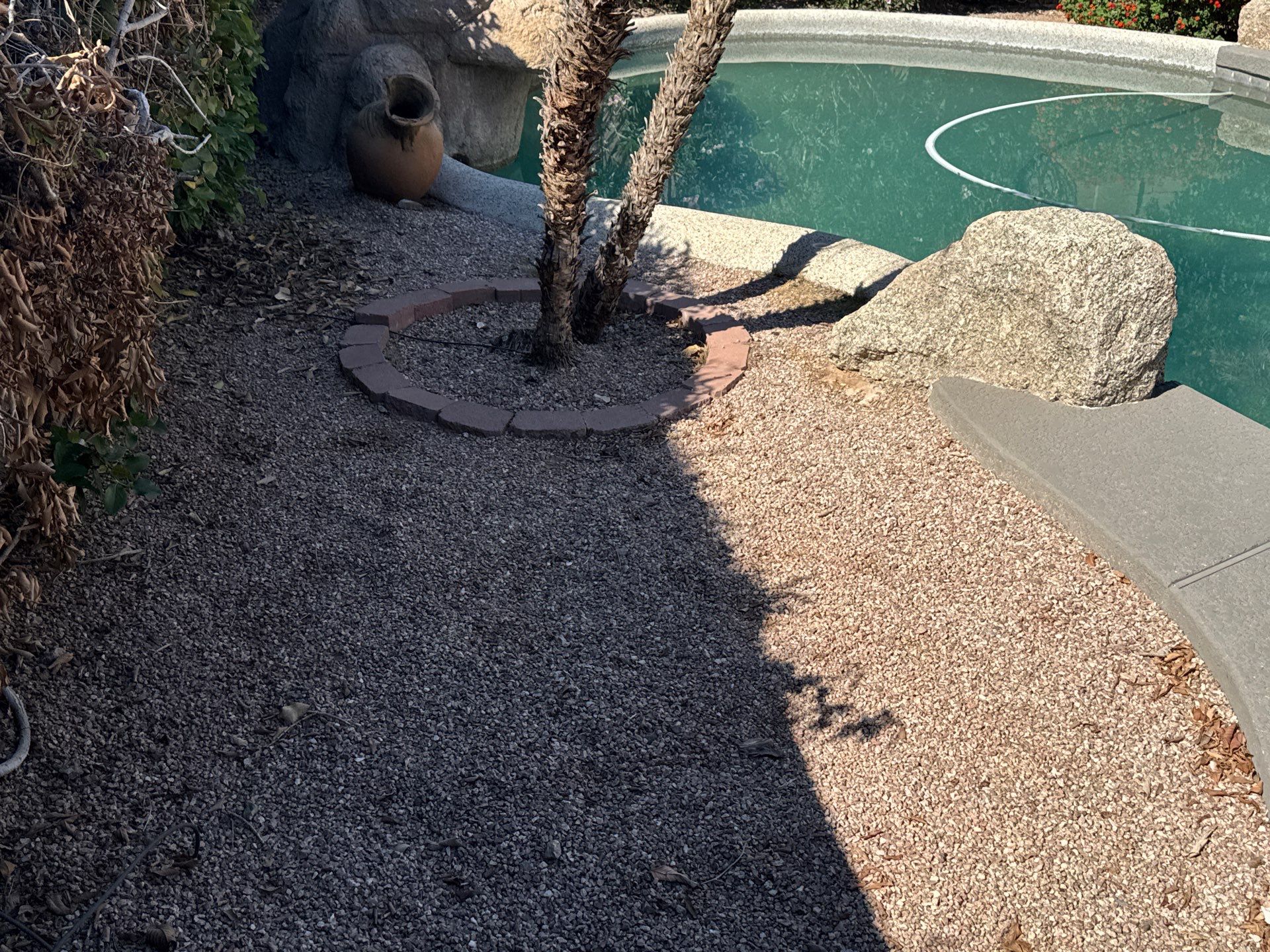

Yellow Dot
Fast, bright green mat with little yellow daisy flowers most of the year. Covers rock quickly and cools the ground underneath. One of the greenest options here.
Emu Bush (Outback Sunrise)
Low and spreading, under a foot tall and 4 to 6 feet wide. Gray green leaves with orange red flowers winter through spring that hummingbirds love. Takes full sun and reflected heat and drops very little.
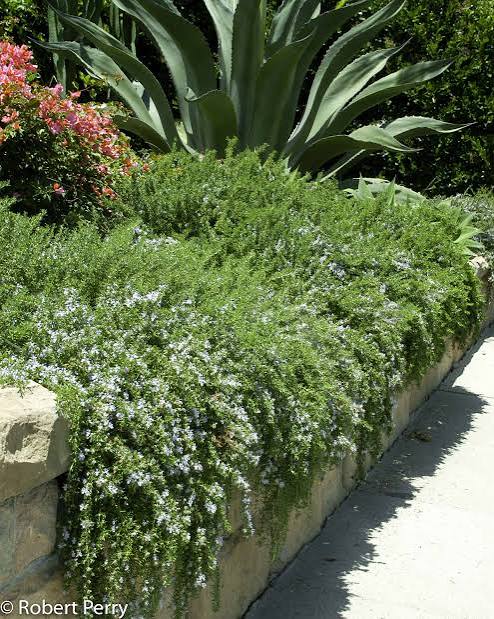
Trailing Rosemary
Spills and spreads 4 to 6 feet with blue flowers bees love in winter and spring. Takes full sun and reflected heat, and you can cook with it.
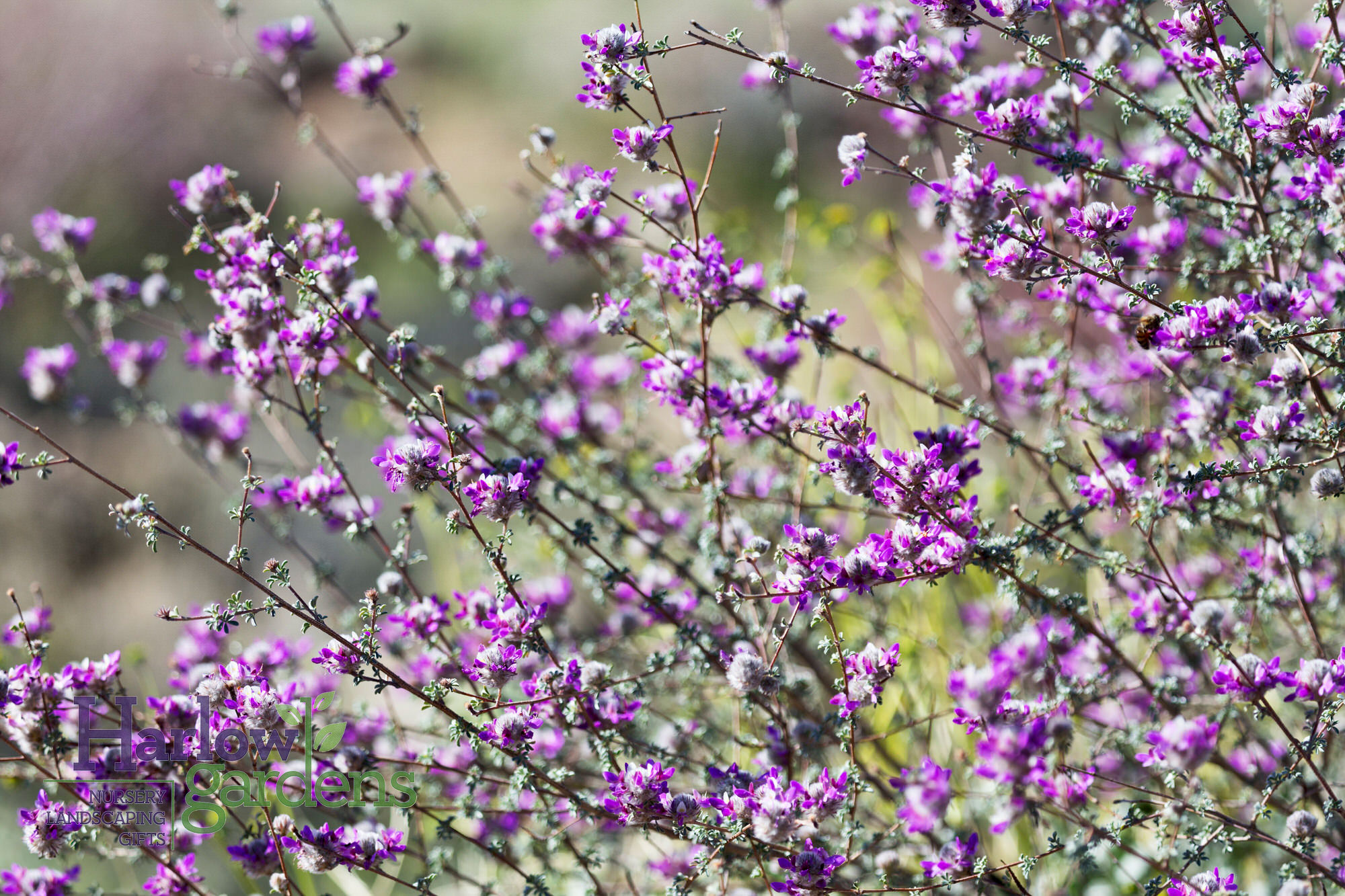
Trailing Indigo Bush
Native groundcover with silvery foliage that hugs the ground and small purple flowers in spring. Very low water and handles reflected heat off concrete really well.
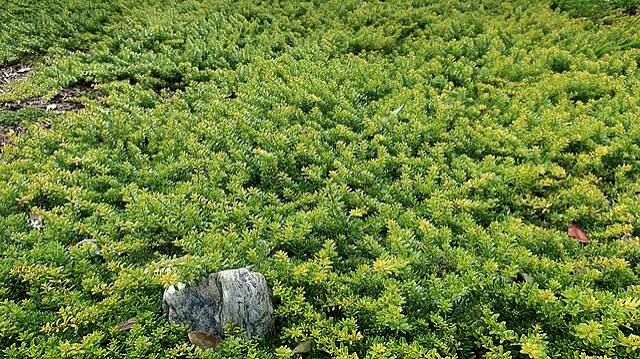
Myoporum
Dense, lush green mat that spreads 6 to 9 feet wide with small white flowers. Fastest way to cover a lot of ground with fewer plants. Space them 5 to 6 feet apart.
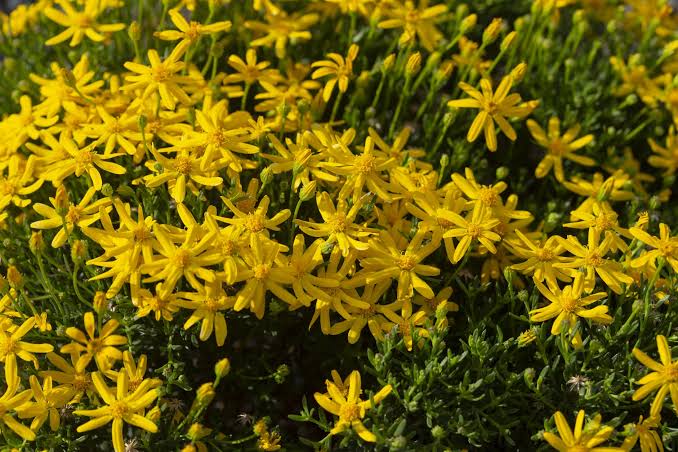
Damianita
Low, tidy mound of fine green foliage covered in golden yellow flowers in spring and fall. Stays about a foot tall and 2 feet wide.
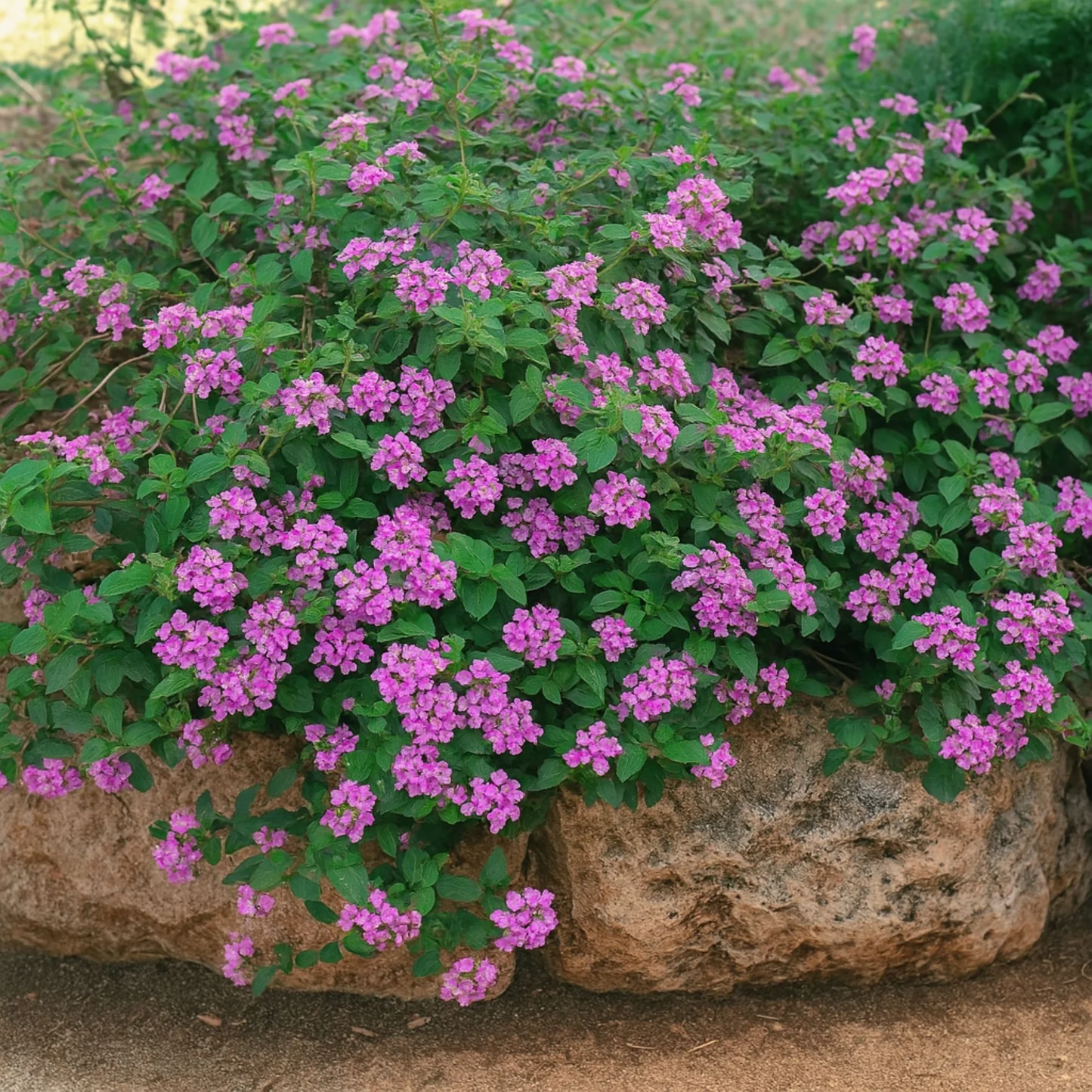
Trailing Lantana
Purple or white flowers spring through fall and a magnet for butterflies. Spreads 4 to 6 feet per plant and takes full sun and reflected heat.
You can't fit all of these. Pick a few favorites and repeat them so it looks intentional.
- Pull the rock back where you plant each one, plant into the soil, and tuck the rock back around it, leaving a few inches clear of the stems.
- Give each plant its own emitter, and water a bit more often the first few weeks until they root in and start spreading.
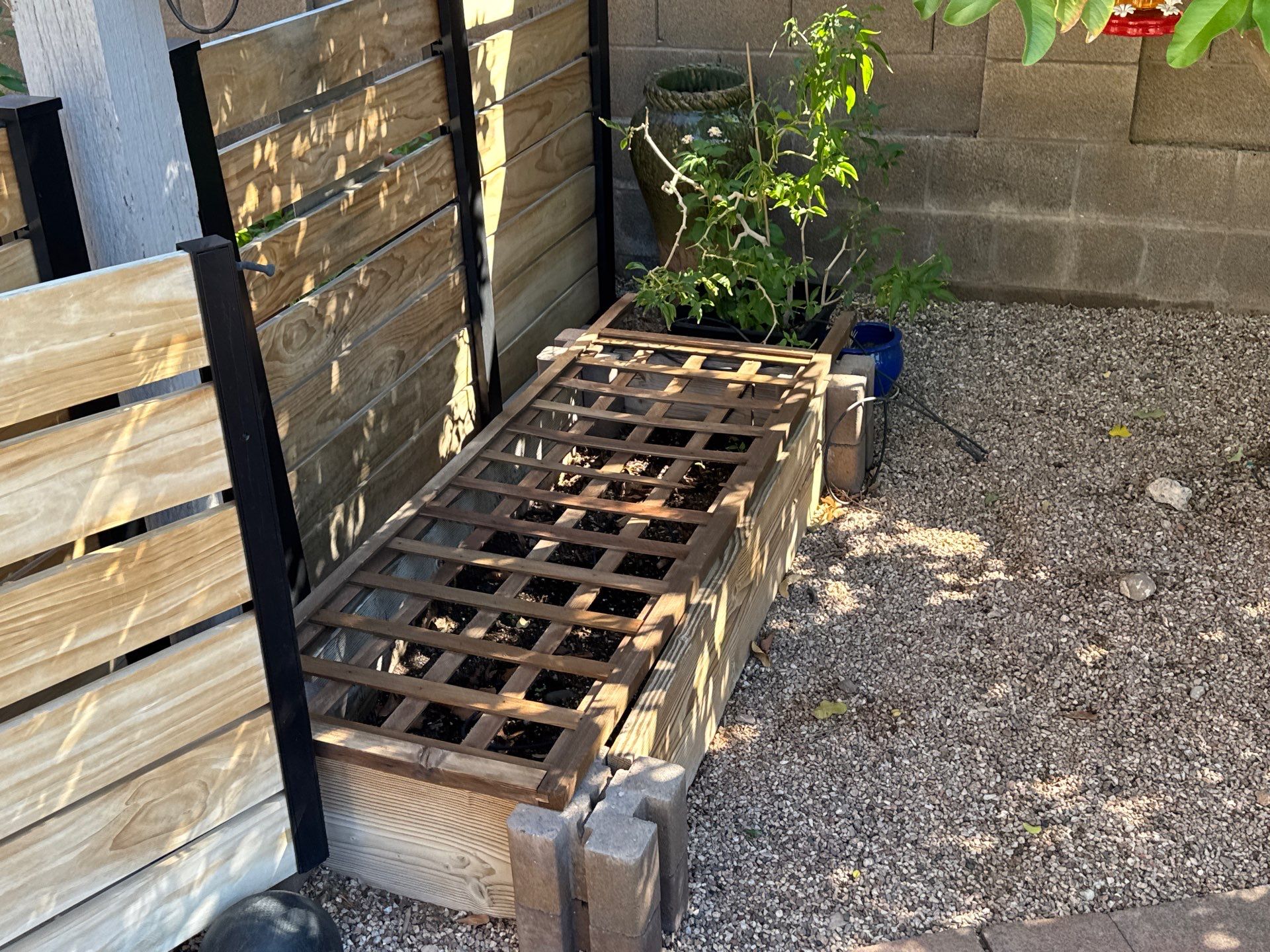
Plant in the ground instead of the raised bed
This raised bed planter is a good start, but things will do better in the ground. Soil in the ground stays cooler and holds moisture longer than a raised box in our heat.
- Quality soil matters most: whether it's in the ground or a bed, everything comes down to the soil. Cheap bagged soil is mostly dead filler. Good compost is full of life, and that's what grows healthy plants.
- Where to get it: Arizona Worm Farm has great compost and garden soil. Work a few inches of compost into the ground before you plant, and add more each season.
- What to plant and when: use my Maricopa County planting guide. Fall is one of the best times to grow here.
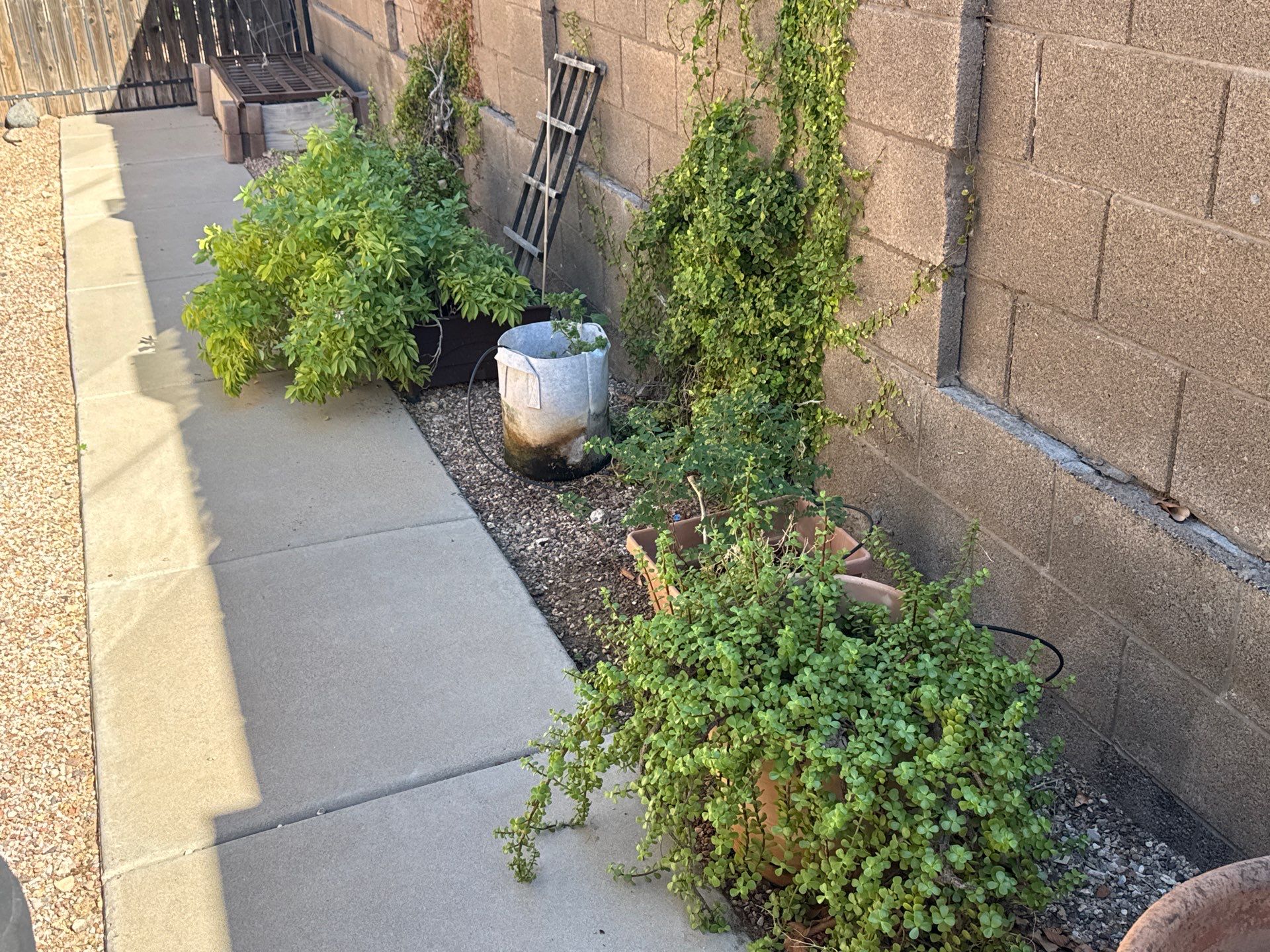
Grow in the ground here too
This is where you've tried growing things in raised beds before. It'll do much better in the ground.
- Pull out the rock.
- Spread a few inches of compost over the soil.
- Put mulch down on top of the compost.
- Plant right through the mulch into the compost and soil.
Use my Maricopa County planting guide to know what to plant and when.
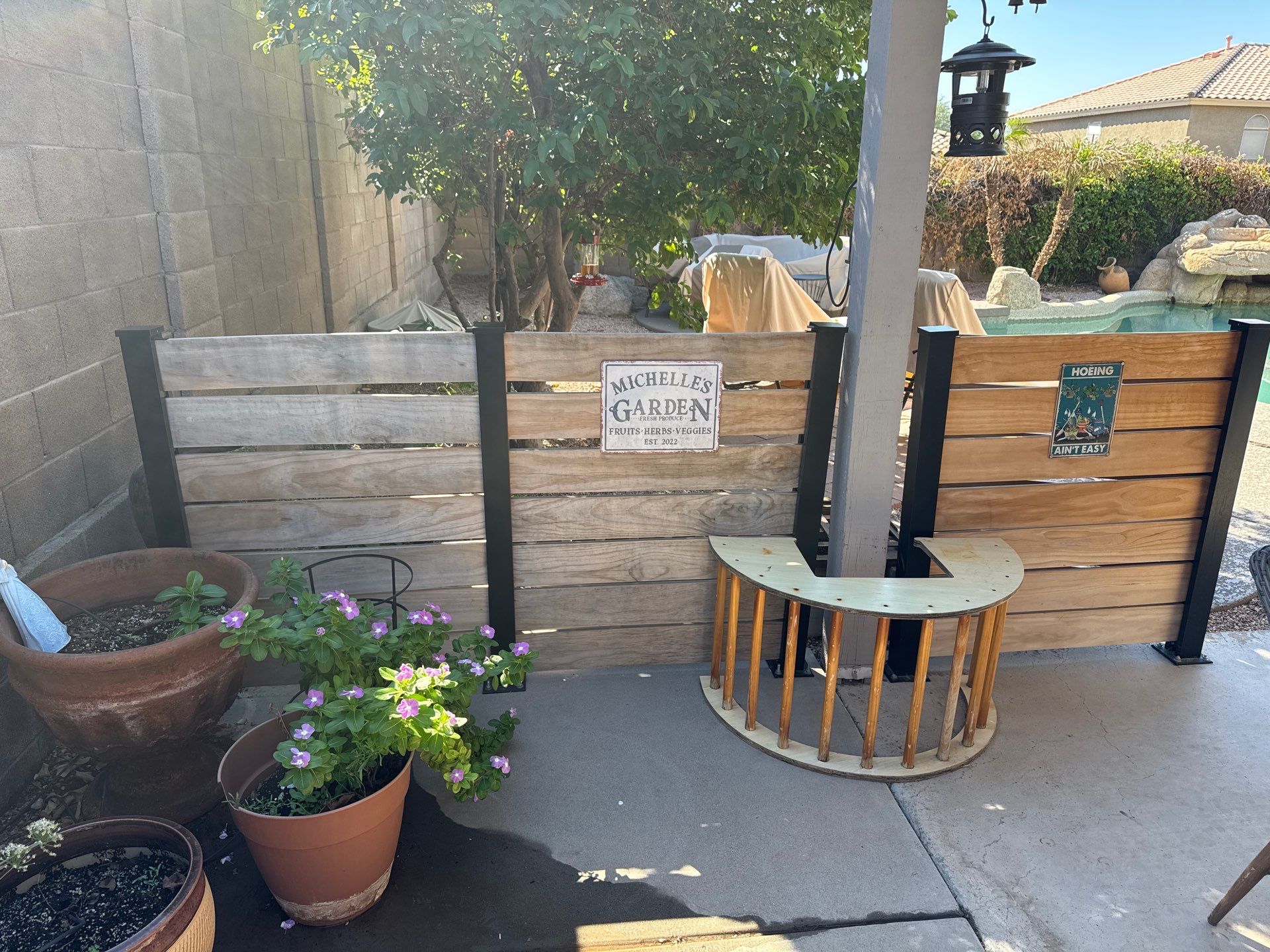
A vine for the fence
You want to grow a vine around this fence, and that would work great. Plant it on the back side of the fence, where you can plant it in the ground. Star jasmine is the best option here. It'll give you a nice scent from the flowers while you're out on the patio. Tangerine crossvine is another option.
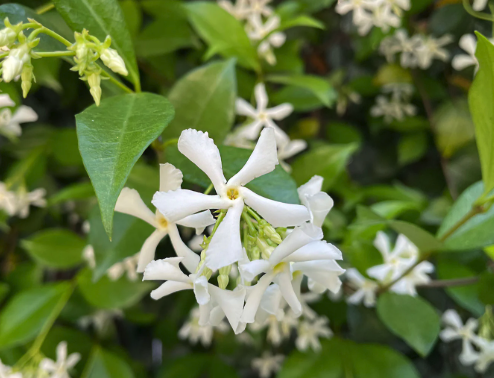
Star Jasmine
My favorite here. Evergreen vine with glossy leaves and clusters of white, very fragrant flowers in spring. You'll smell it from the patio.

Tangerine Crossvine
Evergreen vine with orange trumpet flowers in spring and on and off through the year. Self clinging, fast, and takes the heat.
- Plant about a foot out from the fence and lean the vine in toward it.
- Tie the first stems loosely to the fence as they grow, then let it climb and spread on its own.
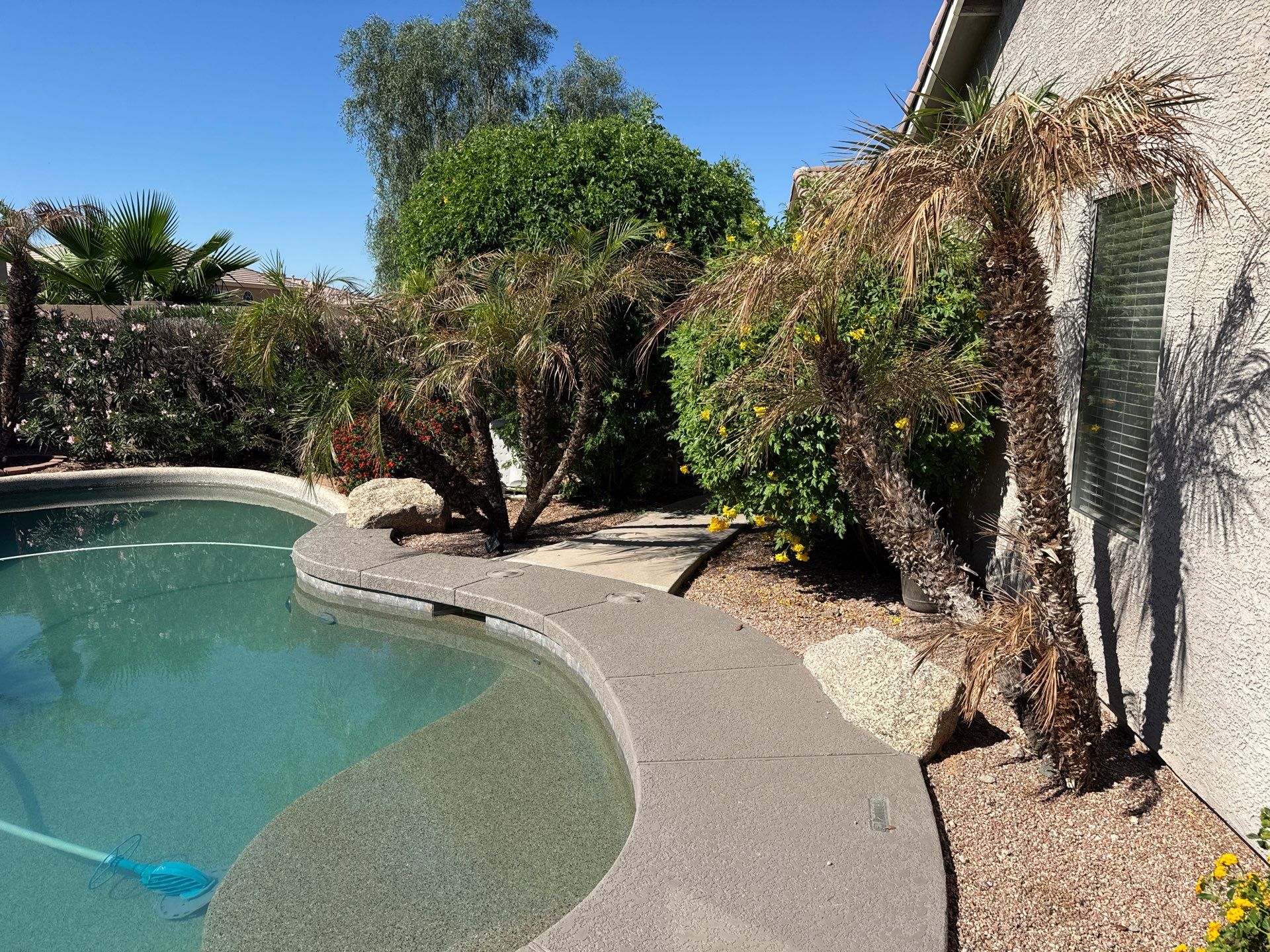
Pull the rock and put down mulch
Anywhere you can, getting rid of the rock and putting down mulch is going to help all the plants and cool things down. Rock soaks up heat all day and radiates it back out all night. Mulch keeps the soil cool and moist and feeds it as it breaks down.
- How deep: it doesn't have to be thick. Even an inch or two makes a real difference, and any mulch is much better than rock. Go 3 inches where you can.
- Over rock: wherever possible, pull the rock and put mulch down instead. Where the rock is just a thin layer, you can lay mulch right on top of it.
- What kind: natural wood mulch. Arborist chips, a mix of wood and leaves, are the best for the soil. Skip dyed mulch.
- Compost first: for the best results, spread an inch of compost and lay the mulch over it. No need to work either one in.
- Keep it back: a few inches off shrub stems and a foot back from tree trunks.
- Top it up: mulch breaks down and feeds the soil, which is the point. Add a fresh inch or two every year.
- Where to get it: Arizona Worm Farm has good mulch and compost. We can also deliver and spread it for you at $150 per cubic yard.
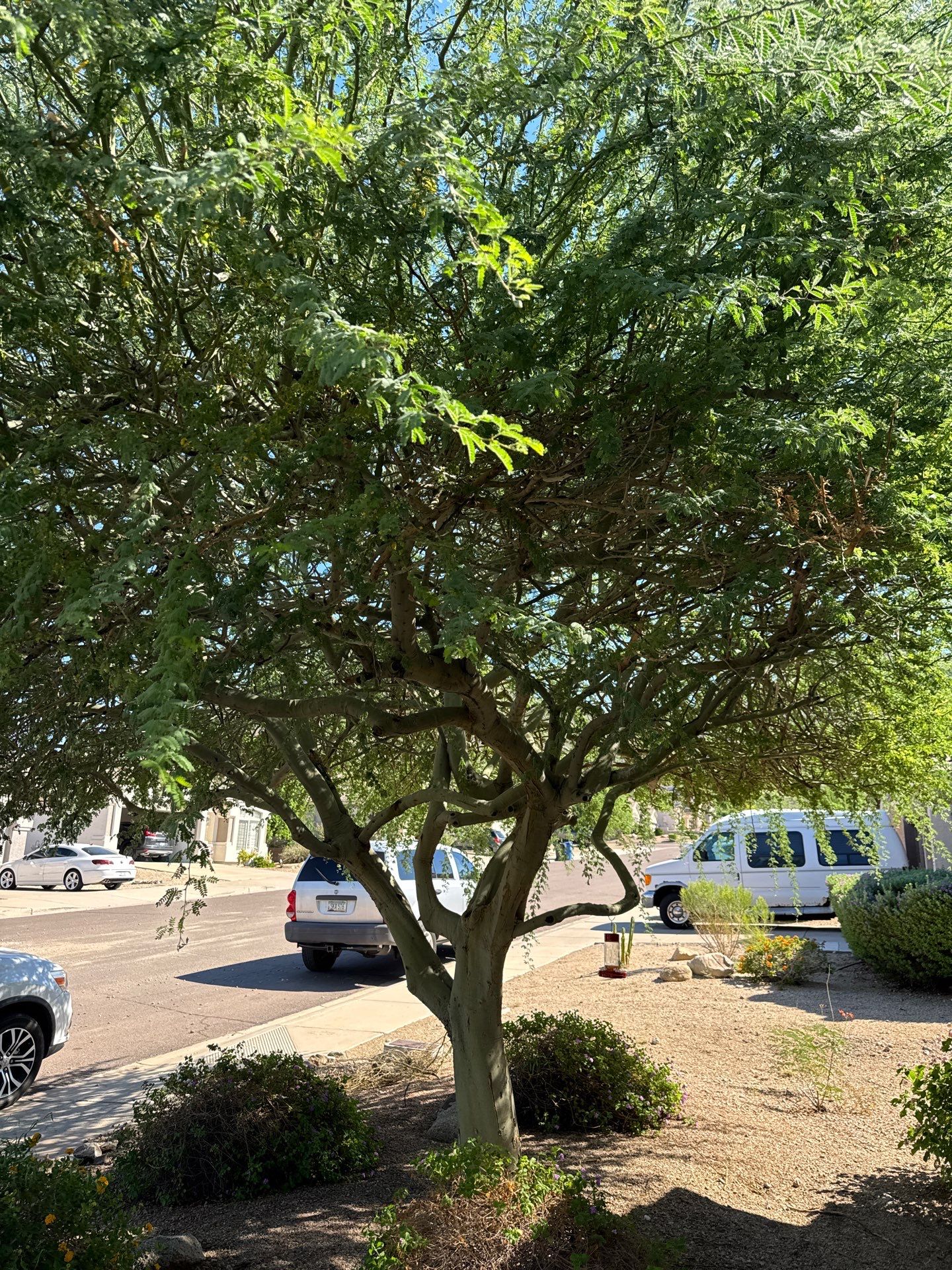
Get the palo verde pruned
This palo verde could use a really good trim. It's very top heavy, with a lot of crossing branches and long, leggy branches. That's setting it up to break or fall in a windstorm. I'd have a certified arborist come out and prune it.
I recommend King's Tree Service. I'm not sure if they come out this far, but it's worth reaching out to them.
- What good pruning looks like: thinning the canopy so wind passes through, taking out crossing branches, shortening the long leggy limbs, and keeping the tree's natural shape.
- What to avoid: topping, or stripping out all the inside branches so only tufts are left at the ends.
- How much: a good arborist won't take more than about a quarter of the canopy at once.
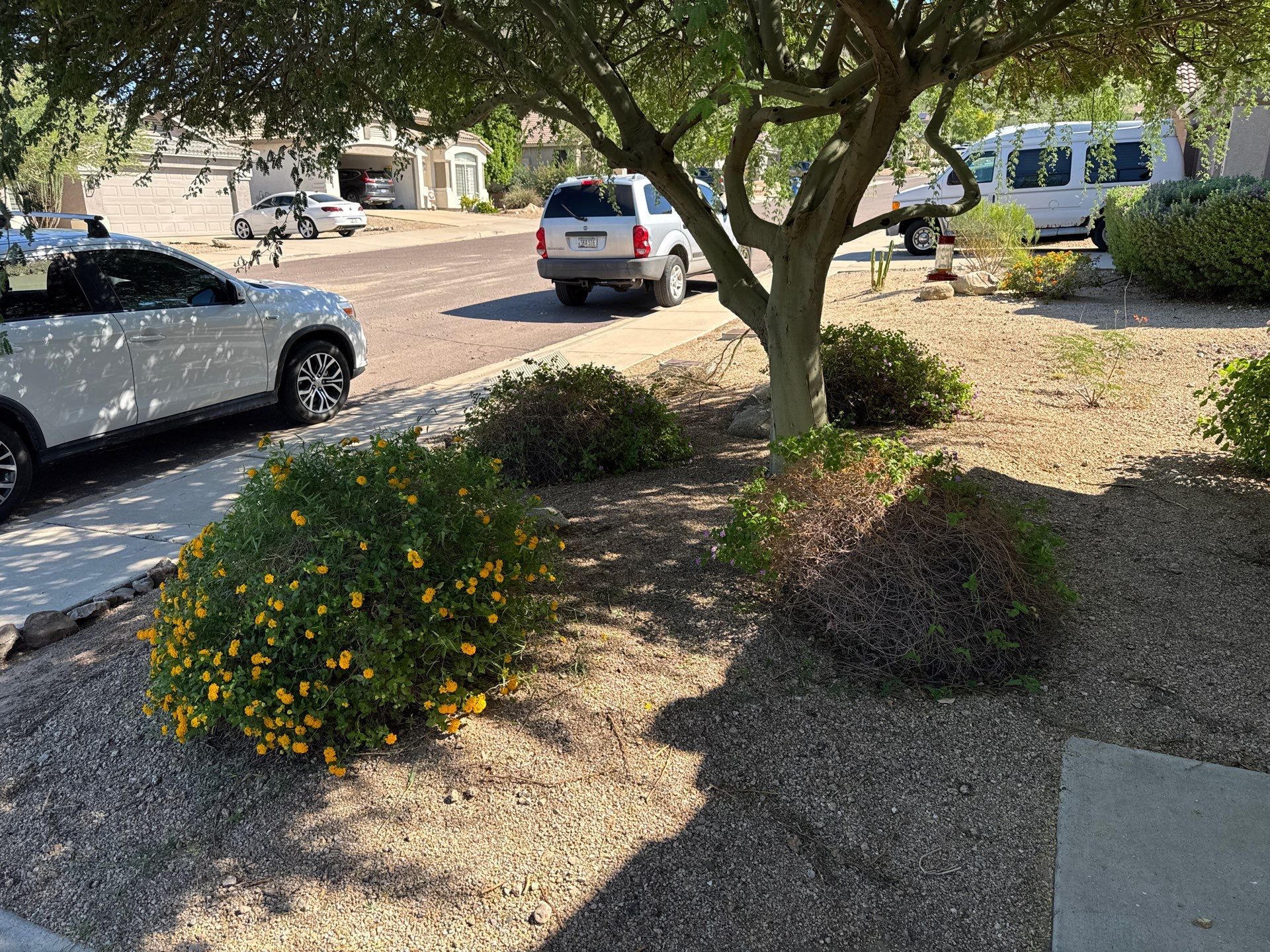
Reset the lantana
All of these lantana could use a good reset. At the end of winter, cut them back hard, close to the ground. From there, just let them grow.
- When: late February, once frost danger has passed.
- After that: they don't need to be hedged or shaped. Twice a year at most is plenty. Lantana looks best and flowers most when it's left to grow naturally.
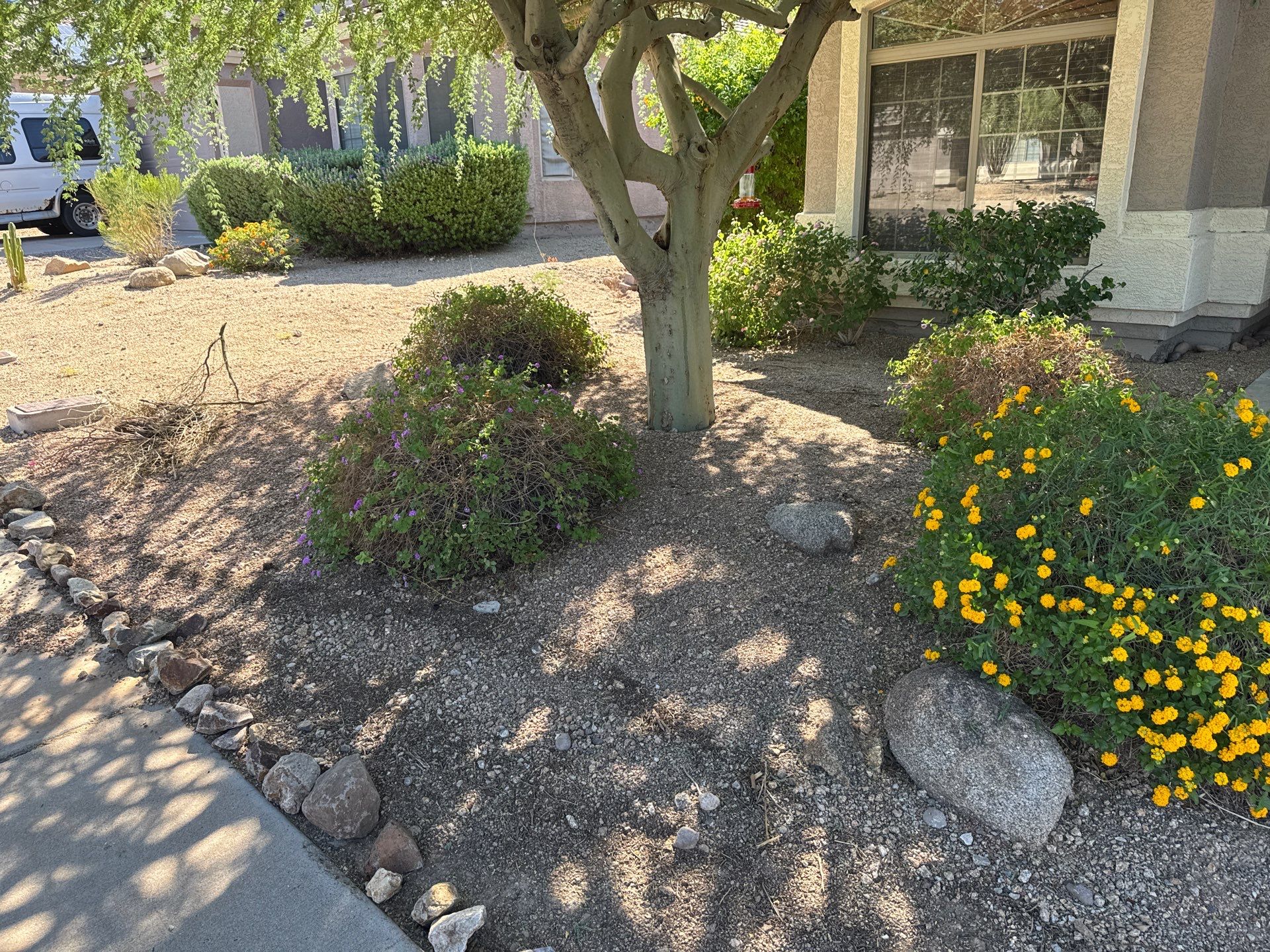
Ground cover and native pollinators
Here you want to cover the ground and get things as green as possible. Native pollinator plants like chuparosa and globe mallow work great, along with emu bush and other desert adapted plants that fill in and cover the ground.
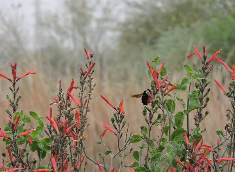
Chuparosa
Native with green stems and red tubular flowers through winter and spring. A hummingbird favorite and stays green most of the year.

Globe Mallow
Native with silvery leaves and cup shaped orange flowers in spring. Native bees love it.
Emu Bush (Outback Sunrise)
Low and spreading, under a foot tall and 4 to 6 feet wide. Gray green leaves with orange red flowers winter through spring that hummingbirds love. Takes full sun and reflected heat and drops very little.
Yellow Dot
Fast, bright green mat with little yellow daisy flowers most of the year. Covers rock quickly and cools the ground underneath. One of the greenest options here.
Myoporum
Dense, lush green mat that spreads 6 to 9 feet wide with small white flowers. Fastest way to cover a lot of ground with fewer plants. Space them 5 to 6 feet apart.
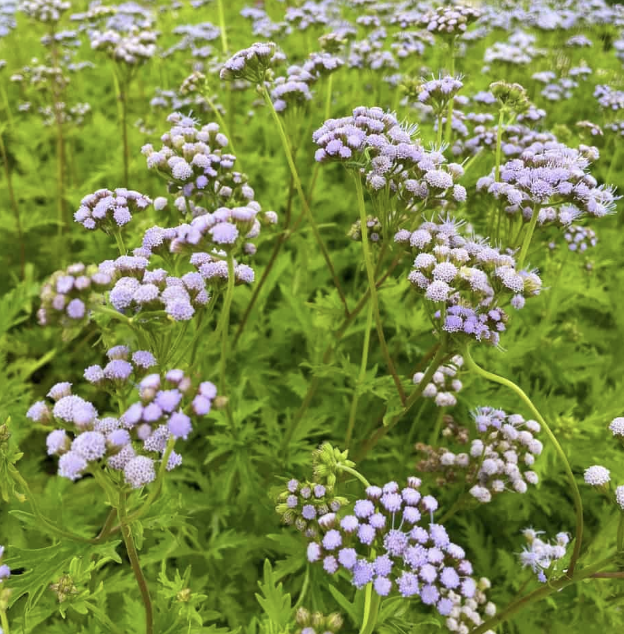
Gregg's Mistflower
Soft, mounding native covered in fuzzy purple flowers spring through fall. Butterflies swarm it. Spreads over time and fills space.
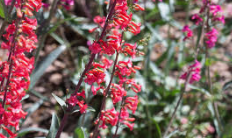
Penstemon
Tall flower spikes in red, pink, or purple in spring. Hummingbirds and native bees love it. Plant in fall for spring blooms.
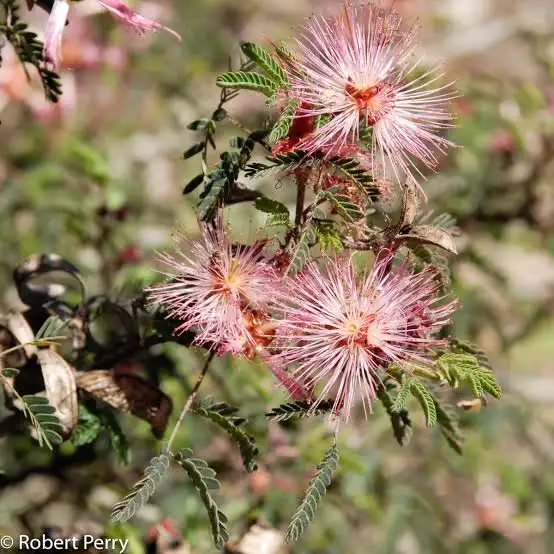
Pink Fairy Duster
Native, low and airy, 2 to 3 feet, with soft pink puffball flowers in late winter and spring. Bees and hummingbirds love it.
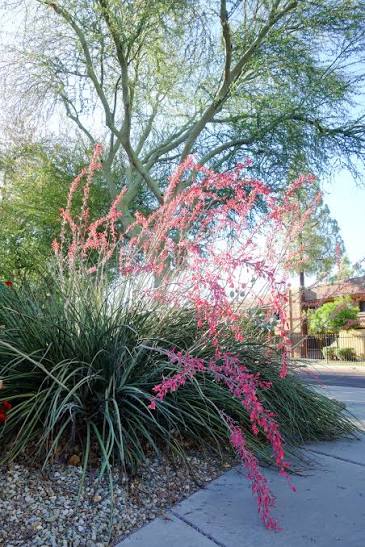
Red Yucca
Grassy clumps with tall coral red flower spikes spring through fall. A hummingbird magnet and extremely tough in full sun.
My approach with a desert landscape is to add a lot of different plants for diversity. They don't need to be strategically placed. A little sporadic looks good and fuller. Keep lower growing plants near walkways and under trees. Other than that, just do your thing and don't stress about placement.
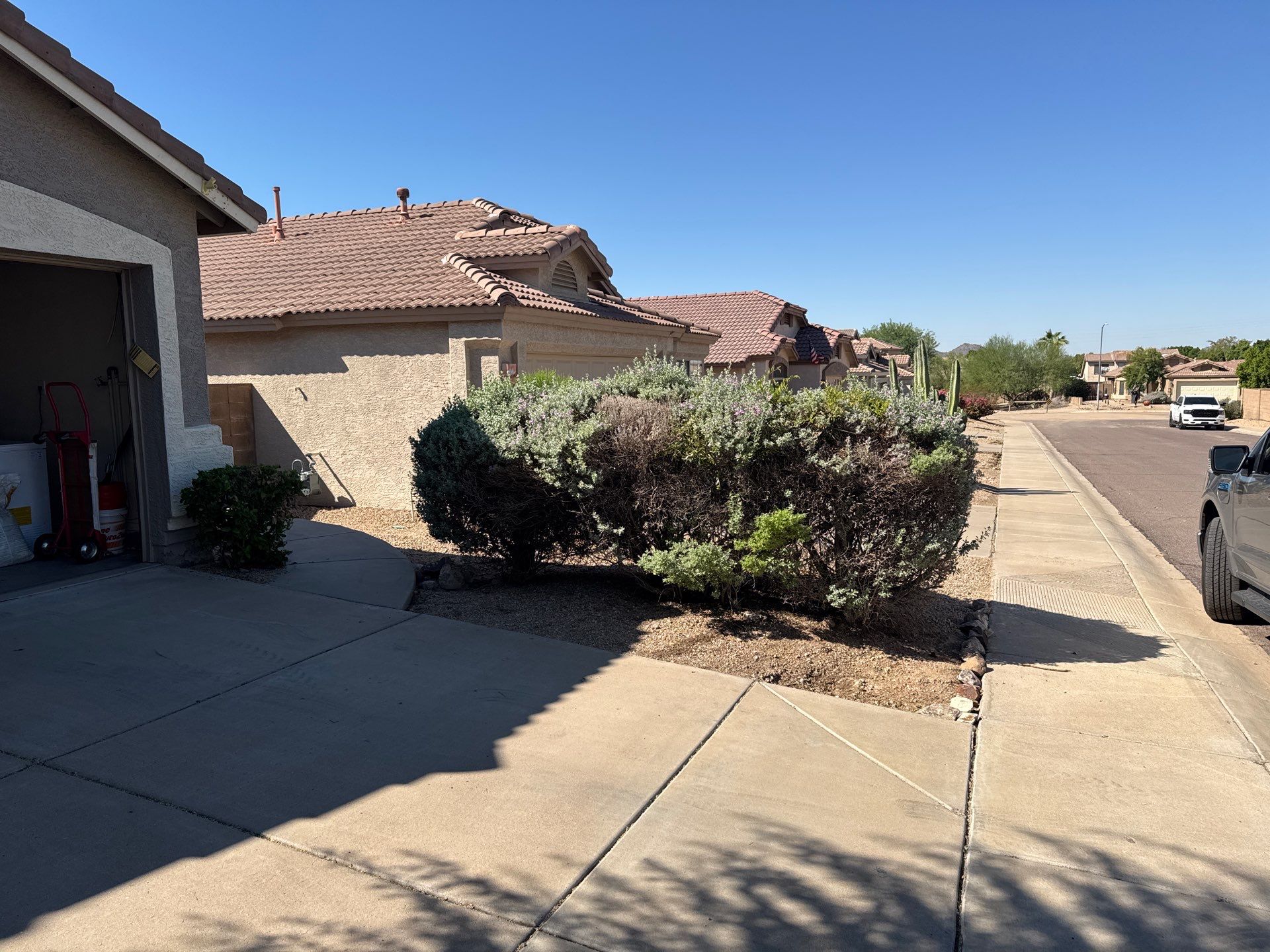
Replacing the sage with a hedge
This sage has just been overpruned, which is why it looks the way it does. Since you don't like it, here are some other options. This spot faces west and gets blasted by sun all day, so these all take full sun and work as a hedge around 6 feet tall. Hopseed and Arizona rosewood are both great choices.

Hopseed
Fast growing native evergreen that fills in to a dense 8 to 12 foot screen. Stays fairly narrow and upright, so it fits tighter spots. Takes less water than plants that aren't desert adapted and handles reflected heat off a block wall. Plant 4 to 5 feet apart.
Arizona Rosewood
Native evergreen with dark, glossy leaves that grows 10 to 15 feet tall. Dense, tidy, very low litter, and one of the best screens for full sun and reflected heat. Plant 5 to 6 feet apart.

Twisted Myrtle
Dense, fine textured evergreen with small glossy leaves and a light fragrance, 6 to 8 feet tall. Shears into a clean formal hedge or can be left natural. Handles full sun and part shade, and drops very little. Plant about 4 feet apart.
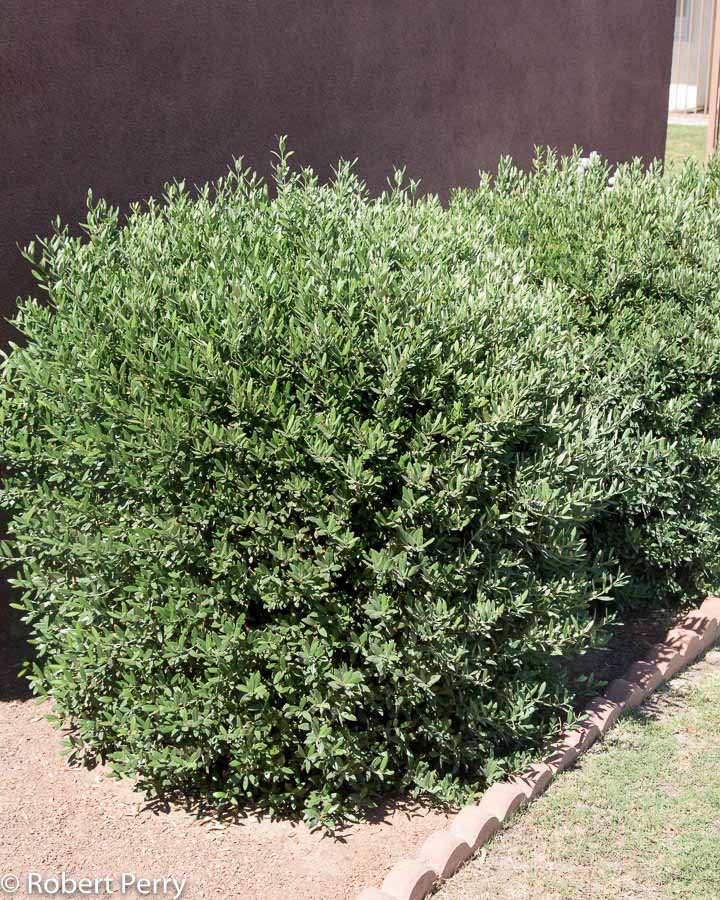
Little Ollie (Dwarf Olive)
Dwarf, fruitless olive with dense silvery green leaves. Naturally 4 to 6 feet, but it shears easily to hold at 3 feet, or it can be trained as a small tree. No fruit, no pollen, very low litter.

Orange Jubilee
Fast and lush, with big clusters of orange trumpet flowers spring through fall that hummingbirds love. Grows 10 to 12 feet tall. A hard freeze can nip it back, but it grows right back in spring. Plant 4 to 5 feet apart.
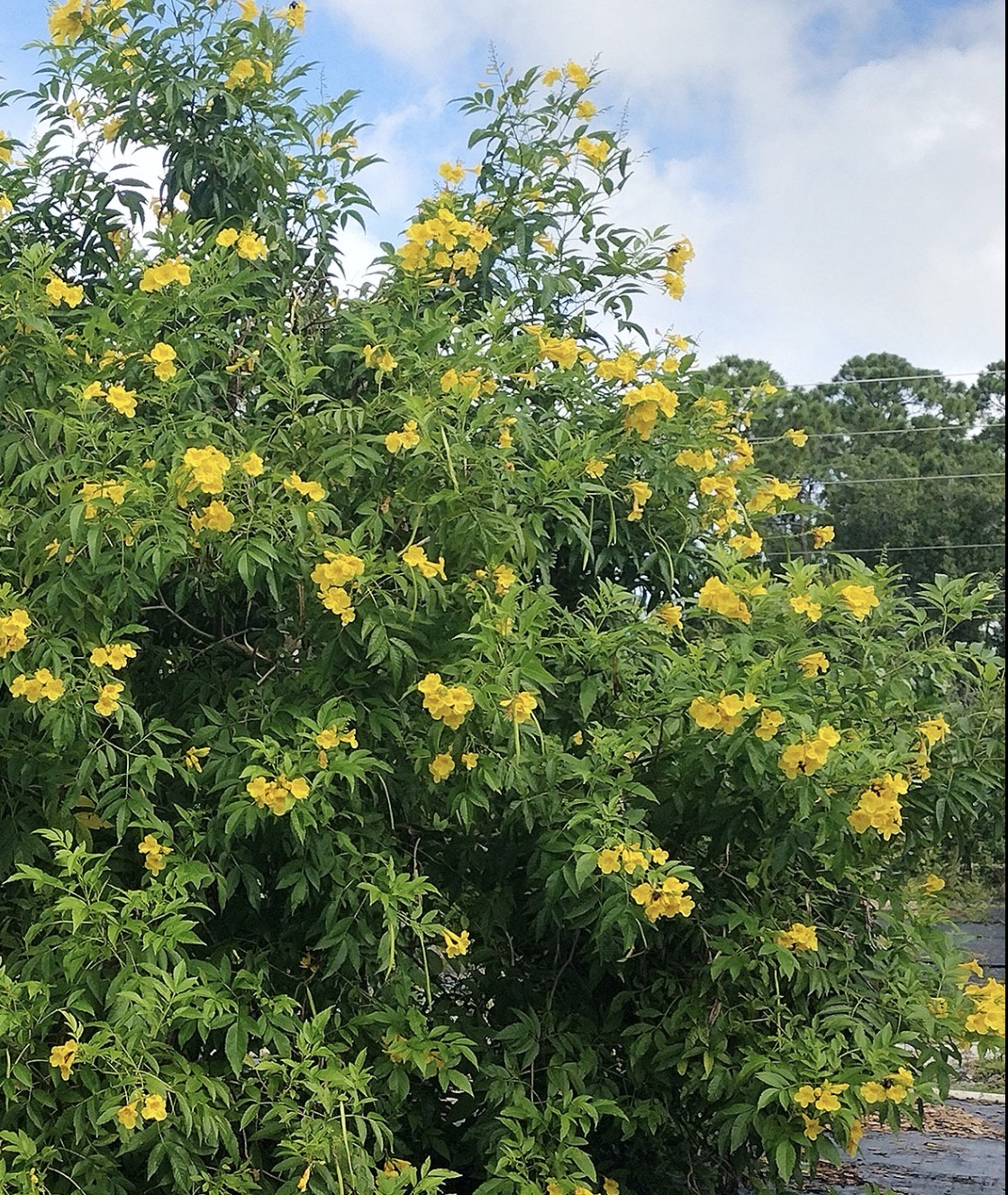
Yellow Bells
Bright yellow trumpet flowers spring through fall on lush green foliage, 8 to 12 feet tall. Takes full sun and heat and handles some shade. A hard freeze can nip it back. Plant 5 to 6 feet apart.
You can't fit all of these. Pick a few favorites and repeat them so it looks intentional.
- Space them 4 to 5 feet apart so they grow together into one hedge.
- Let them grow up and fill in, then lightly shape the outside to hold them around 6 feet. Avoid tight shearing.
- Backfill with native soil plus a tiny bit of compost, lay compost on top, then mulch, a foot back from the trunks.
Watering
Watering is the main issue I saw. Right now everything is getting watered once a day for 30 minutes. That's too often and too short. The water only wets the top few inches, so the roots stay shallow near the hot surface, and the plants stress out every afternoon.
Ideally, water every 3 days for an hour to an hour and a half. Less frequent, longer waterings push water deep into the ground, and the roots follow it down where the soil stays cooler and moister.
- Drippers at the tree line: move all the irrigation drippers out to the drip line, the outer edge of each tree's and shrub's canopy. That's where the feeder roots are. Water dripping right at the trunk mostly misses them.
- Deep and infrequent: water less often, but for longer periods each time. That's what gets the water down deep where the roots can use it.
- How to tell: push a long screwdriver into the soil after a watering. It slides easily through wet soil and stops where it's dry. Shrubs should be wet about 12 inches down, trees 18 to 24 inches.
- Mulch helps: mulch holds that moisture in the soil instead of letting it bake out through the rock.
Fertilizing
Everything in this write-up comes back to the soil. Feeding is really about feeding the soil life. Fungi, bacteria, and worms break down organic matter and hand nutrients to the roots, which is what helps the vines and oleander bounce back, keeps the ficus and guava healthy, and gets the new lemon established, all without synthetic fertilizers. Here's the exact approach I use, so you can do it yourself.
- Compost, and be generous. On trees, spread it in a wide ring around the drip line, the outer edge of the canopy where most of the feeder roots are, from about halfway in to a couple feet past the edge. On shrubs, hedges, and vines, put it closer in, from a few inches off the stems out about a foot past the edge of the plant. Go 1 to 2 inches deep, and if you're unsure, go thicker rather than thinner. You really can't overdo quality compost. Do this three times a year: late winter (February), early summer (May), and fall (October).
- Worm castings every quarter. Every three months, scatter worm castings over the same areas: a few cups around each shrub and a couple pounds around the drip line of each tree. Castings are loaded with beneficial microbes that bring the soil to life. When it lines up with a compost round, put the castings down first and the compost right over them.
- A good organic fertilizer. These are the three products we use and recommend, all from Catalyst. Apply them at the label rate on the schedule each one gives.

Jenner 8
Liquid organic feed for the whole landscape.

Organic Nitro Jen
Organic nitrogen to push healthy green growth.
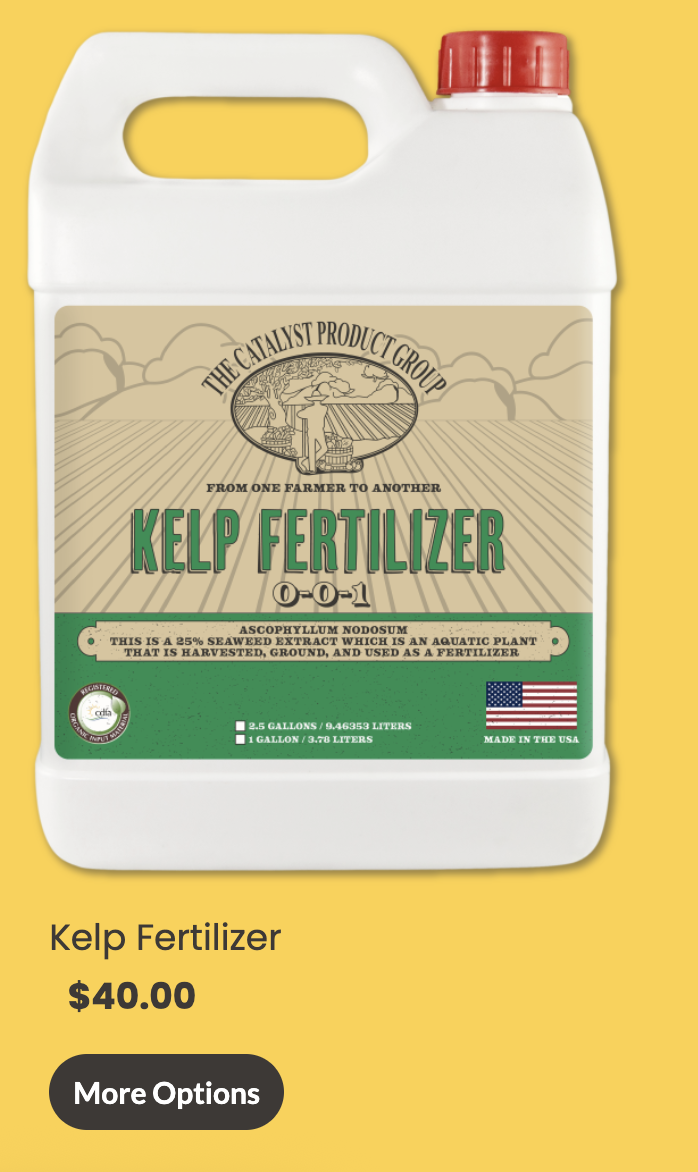
Kelp Fertilizer
Kelp based feed that supports roots and overall plant health.
You can find all three on the Catalyst website. Click Products, then Home and Garden.
- Water it all in. Give everything a deep watering right after you put it down so it soaks into the root zone.
- Mulch over the top. Mulch goes over the compost to keep it moist and cool so the soil life can do its work. Hold it a foot back from trunks and stems. No need to work any of it into the soil.
Compost, worm castings, and mulch are all at Arizona Worm Farm.
If you'd rather we handle it
Our monthly landscape fertilizing program feeds the whole yard for you.
- Covers the trees, vines, oleander, hedges, and the rest of the landscape
- Monthly compost based liquid feeding across the full landscape
- Compost applications three times a year
- A recap video sent to you after each visit
Quick reference
Organic fertilizers
Catalyst (Products, then Home and Garden)Compost, mulch, worm castings, soil
Arizona Worm FarmLemon tree
Greenfield Citrus NurseryWhat to plant and when
Maricopa County planting guideArborist
King's Tree ServiceRoot flare video
Why the root flare mattersIrrigation
Garrett: 480-678-9121Questions
Ask me anytime in the Garden Nerd ClubNext steps
You can take this list and do it yourself, and I'm right there in the Garden Nerd Club if you want a second set of eyes along the way. If you'd rather have us handle the planting, like the new lemon, the hedge, and the ground covers, I can put together a planting proposal for you.
For anything irrigation related, call Garrett at 480-678-9121.
You can see more of what we do on our planting services page.