
Kelly Jean Buckley
2324 E Laurel Ln · Phoenix, AZ 85028
Thanks for having me out. Here's everything we covered, including the questions on your list, with plant options for each spot.
Wall Under the Chinese Elm
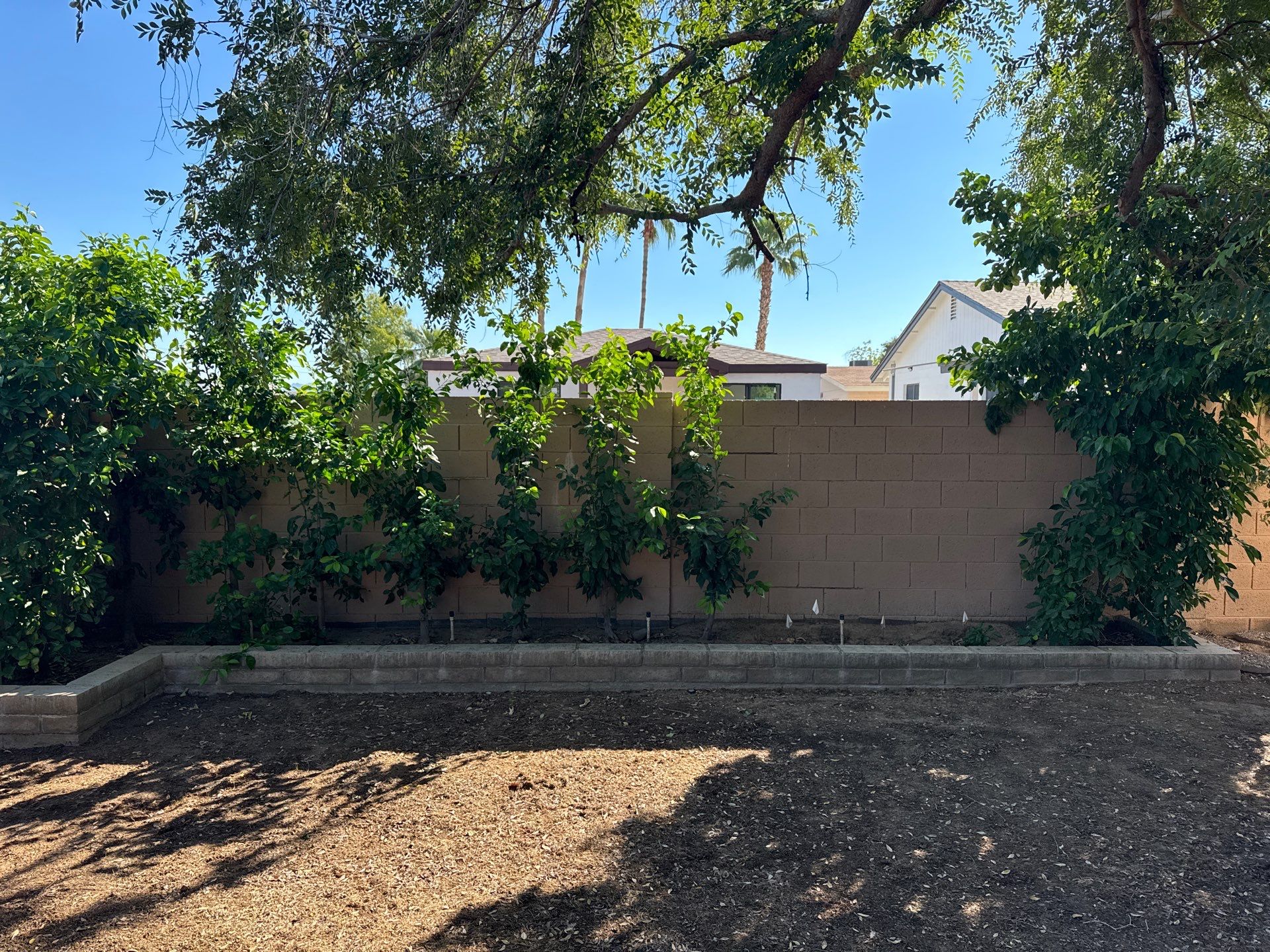
With the sour oranges coming out, this wall opens up for something you'll actually enjoy. The elm gives this spot filtered light and some shade through part of the day, so the best fits are plants that like a little protection. Since you weren't sure which direction you wanted to go, I've given you a lot of options here, from fruit to flowers to that lush tropical look. I left banana and apple off, since you don't like them.
The elm's roots will compete for water here, so give each new plant its own well and water it deeply rather than relying on the elm's water.

Guava
You mentioned you love guava, and this spot works well for it. It handles the filtered light under the elm and still fruits. Kept pruned, it stays a full, bushy shape against the wall. Cover it on frost nights the first couple of winters.
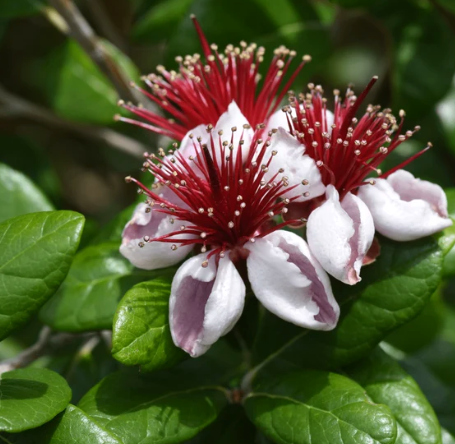
Pineapple Guava
Silvery green leaves, edible flower petals in spring, and fruit in the fall that tastes like pineapple and mint. More cold hardy than regular guava and happy in part shade. Makes a great dense screen against a wall.
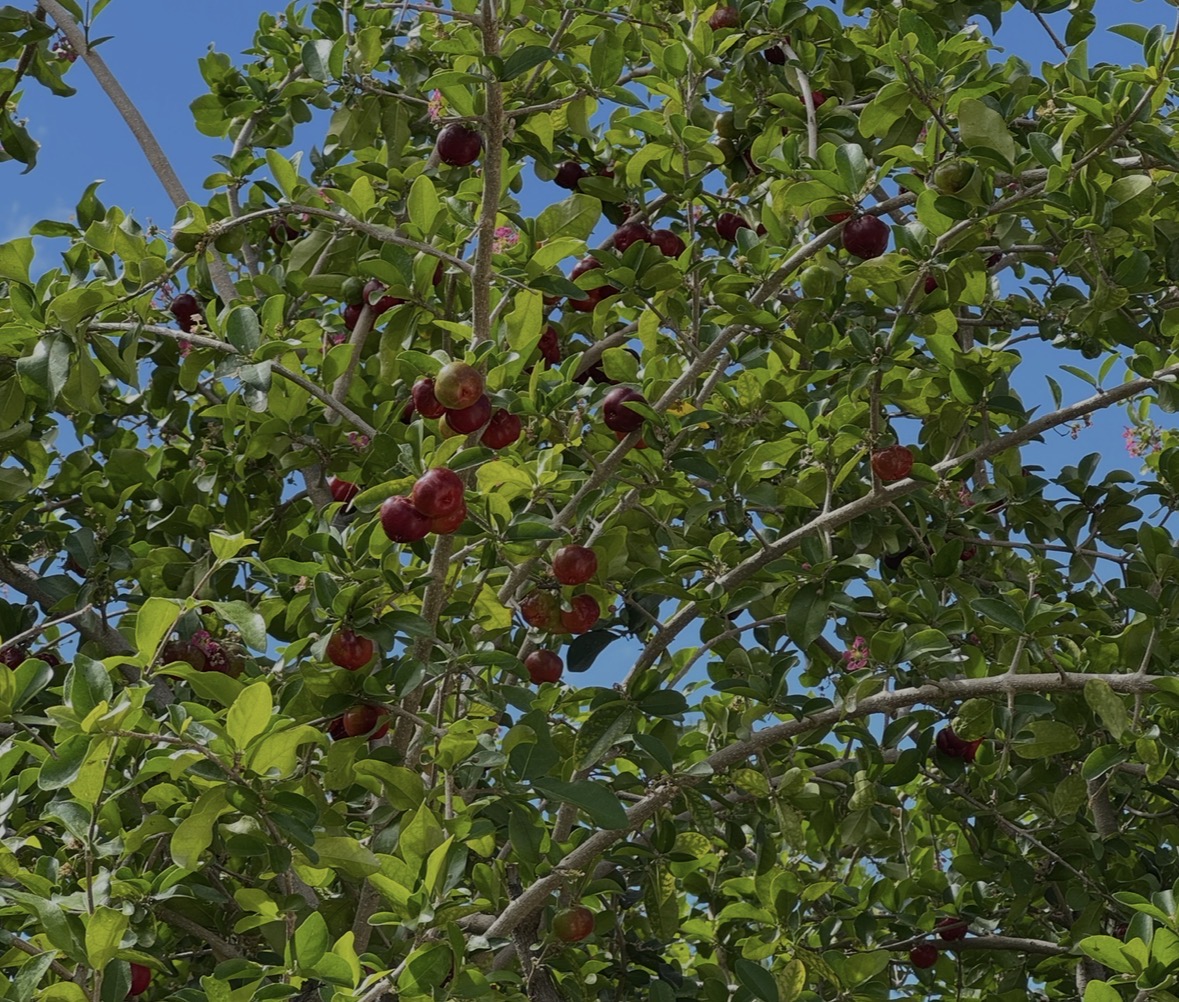
Barbados Cherry
Bright red cherries several times a year and a dense, glossy hedge. Does well in part shade. Space them about 4 ft apart if you want a solid row.
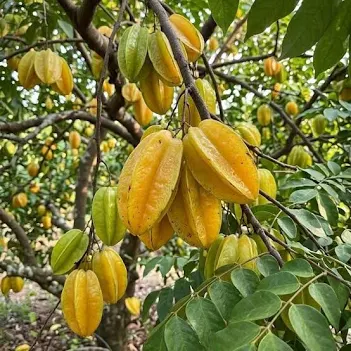
Star Fruit
A true tropical that actually prefers some protection from the full afternoon sun, so the elm's canopy helps it here. Needs frost protection in winter.

Passion Fruit
Covers the wall and gives you fruit. Run a few horizontal wires along the block for it to climb. Cover it on frost nights the first couple of winters.

Mango
I know you're on the fence about mango, so it's here as an option, not a must. It can work under the edge of the elm since it likes protection from the harshest sun, but it's the fussiest one on this list. It needs frost protection every winter and consistent deep water.
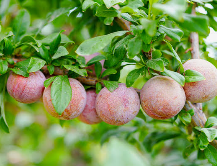
Plumcot
A cross between a plum and an apricot, with sweet fruit in late spring before the summer heat. It fruits best with the most sun, so put it at the end of the wall that gets the most light. Prune each winter while it's bare to keep the size down.
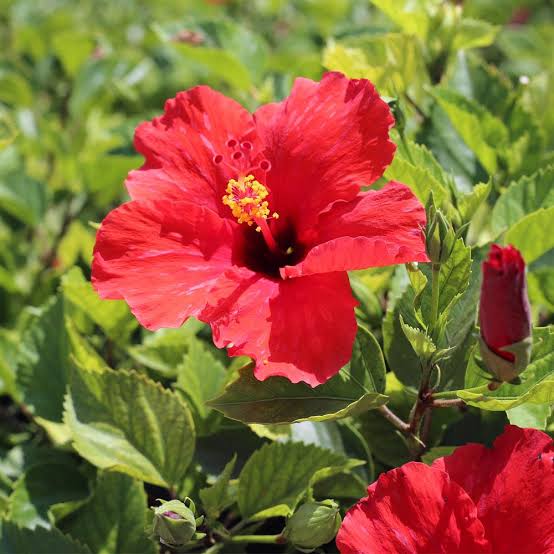
Red Hibiscus
Big tropical flowers most of the warm season. Happiest with morning sun and protection from the afternoon heat, which the elm gives it here. Cover it on frost nights.
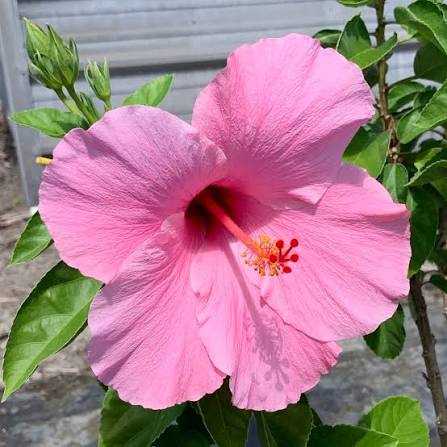
Pink Hibiscus
Same care as the red. Mix the two colors for a fuller tropical look.
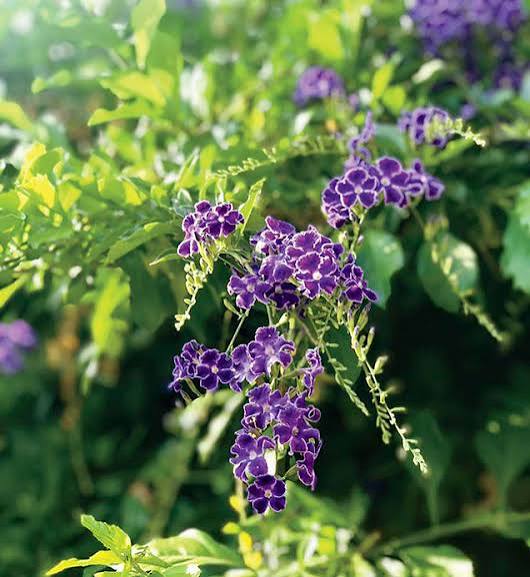
Duranta (Skyflower)
Sprays of purple blue flowers and golden berries, with fast, lush growth. Handles part shade well and makes a full screen against a wall. Butterflies love it.
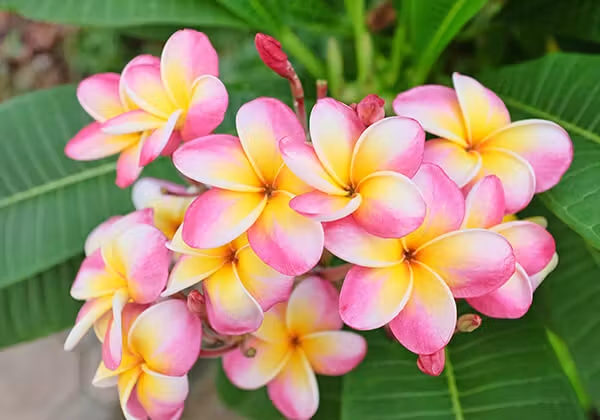
Plumeria
Fragrant flowers all summer. It wants morning sun, afternoon protection, and soil that drains fast. Water it deeply but let it dry out between waterings, and keep it on the dry side in winter.
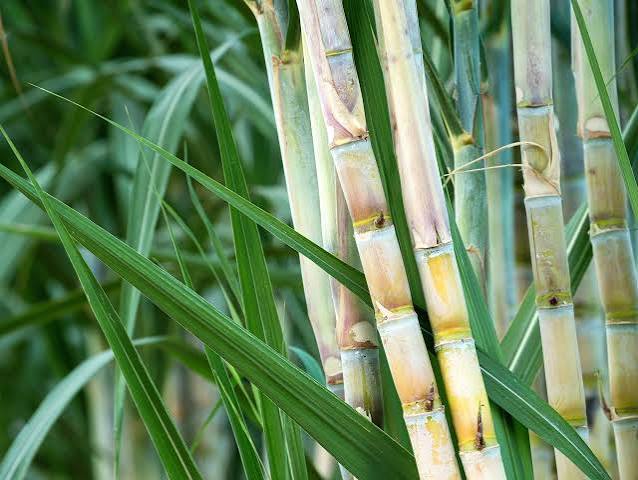
Sugar Cane
Tall, leafy canes that give a lush, tropical look, and you can harvest and chew them. Loves heat, regular water, and compost. Frost burns it back, but it regrows from the base.
Sweet Almond Bush
Spikes of tiny white flowers with a strong, sweet almond scent from spring through fall. Bees and butterflies love it. Handles part shade and it takes a lot less water than something that isn't desert adapted.
You can't fit all of these. Pick your favorites and repeat them along the wall.
Seabreeze Bamboo and Tropical Trees
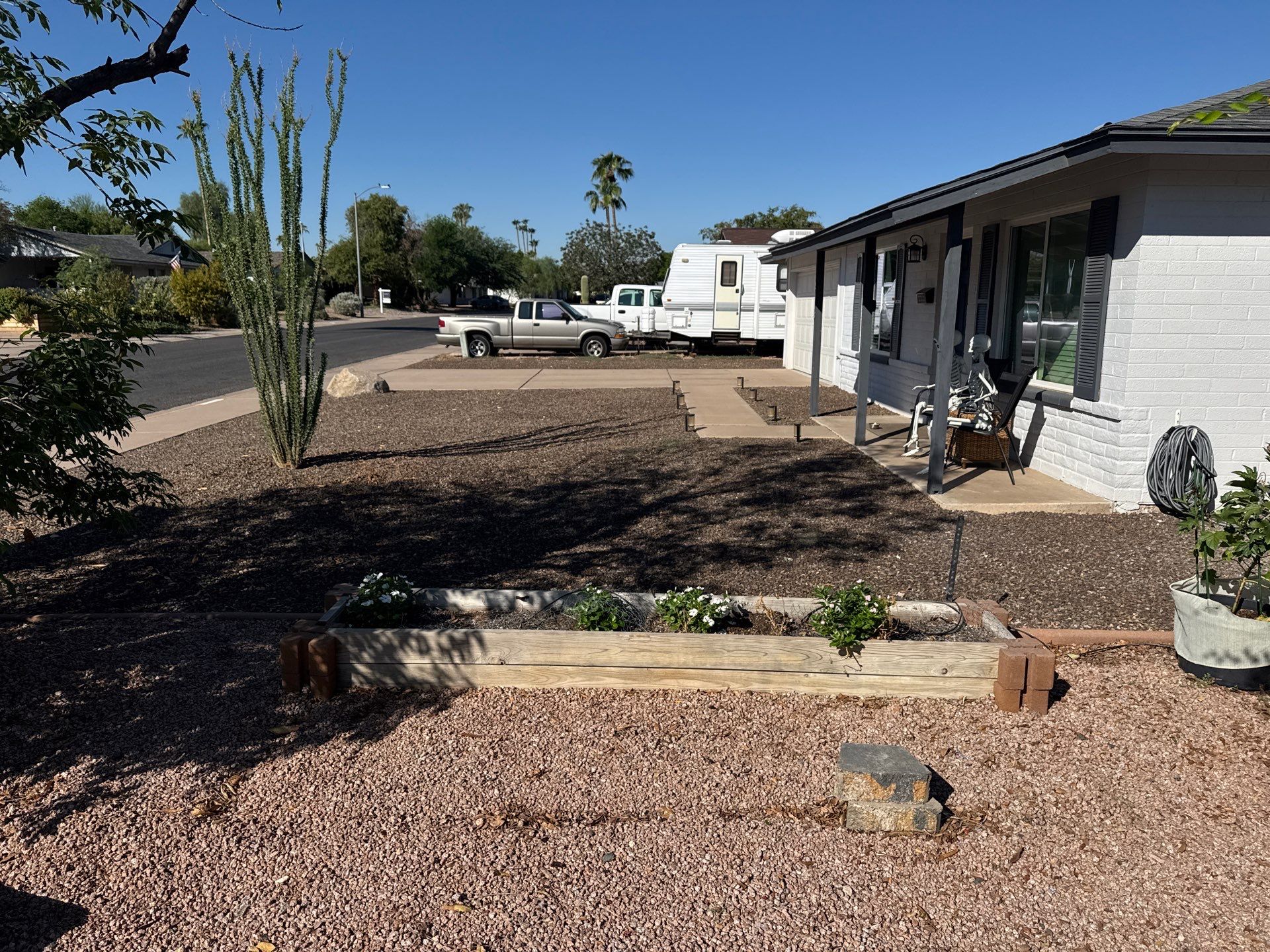
This west-facing area is where the Seabreeze bamboo goes.
Your bamboo questions
- Barrier: You don't need one. Seabreeze is a clumping bamboo, so it widens slowly instead of sending runners across the yard. If the clump ever spreads past where you want it, cut out the edge canes and roots with a sharp spade.
- How many: Two plants will fill this space. Space them about 5 to 6 ft apart and they'll grow together into one dense screen.
- Water: Bamboo wants more water than the rest of the front yard, so put it on its own valve. Give each plant 2 bubblers to start. As the clumps widen, add more so the water covers the full width of each clump.
- Filling the hole: Backfill with the native soil you dug out plus a small amount of compost. Then lay compost on top around the plant and mulch over it.
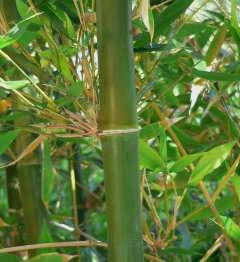
Seabreeze Bamboo
Grows as a tight clump instead of running, which is why it's one of the best screening bamboos for here. Fills in dense and fast, and handles wind and full sun once established.
Silk floss in front of the bamboo
When we talked, I wasn't sure a silk floss or a plumeria would work right in front of the bamboo, on its east side. I think the silk floss will work great there. The key is to get it planted as soon as you can, so it has time to grow up and outpace the bamboo before the bamboo fills in. Starting with a larger tree helps too. A plumeria would also work in front, since the bamboo shades it from the harsh afternoon sun, which it loves.
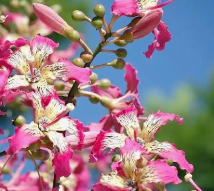
Silk Floss
Big pink flowers in the fall and a green, thorny trunk. Plant it in front of the bamboo, on the east side, as soon as you can so it gets a head start and outpaces the bamboo. Starting with a larger tree helps too. Keep the trunk away from walkways because of the thorns.
Plumeria
Fragrant flowers all summer. On the east side of the bamboo it gets morning sun, and the bamboo shades it from the harsh afternoon sun, which is exactly what it wants. Give it soil that drains fast and keep it on the dry side in winter.
Tree North of the Bamboo
To the north of the bamboo, you asked for suggestions on a tree to fill in the area and make it feel more tropical. These all fit the space and handle the heat. Leave 15 to 20 ft between a large tree and the bamboo clump so neither one crowds or shades out the other.
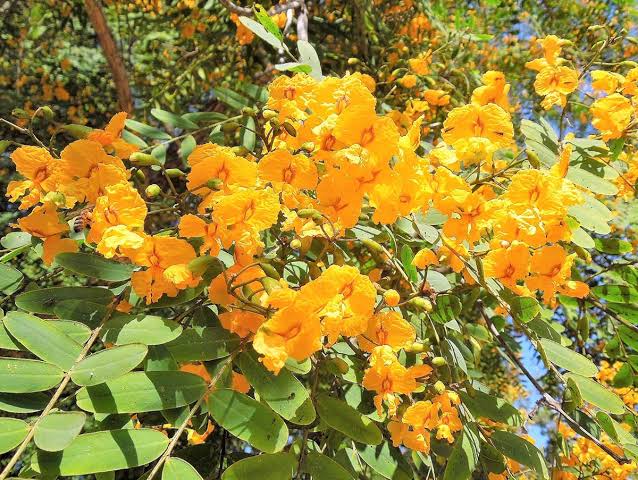
Tipu
Yellow flowers in late spring and a wide, airy canopy that gives that lush look fast. Grows quickly and handles the west sun well.
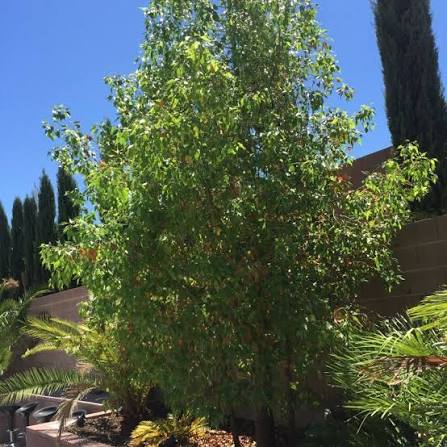
Bottle Tree
Fairly narrow and upright with glossy leaves, so it fits a tighter space than most shade trees. Takes the heat and the afternoon sun well.
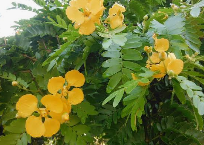
Verawood
Bright green, almost tropical looking leaves and yellow flowers through spring and summer. Smaller than the tipu or silk floss, so it's a good fit if you want the look without a huge canopy.
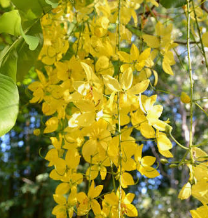
Golden Shower
Long hanging chains of yellow flowers in summer, about as tropical as it gets here. It's frost tender, so it needs protection on cold nights while it's young.
Guava
You mentioned you love guava, and it would fit right into a lush, tropical look here. Cover it on frost nights the first couple of winters.
Front Door Bed Extension
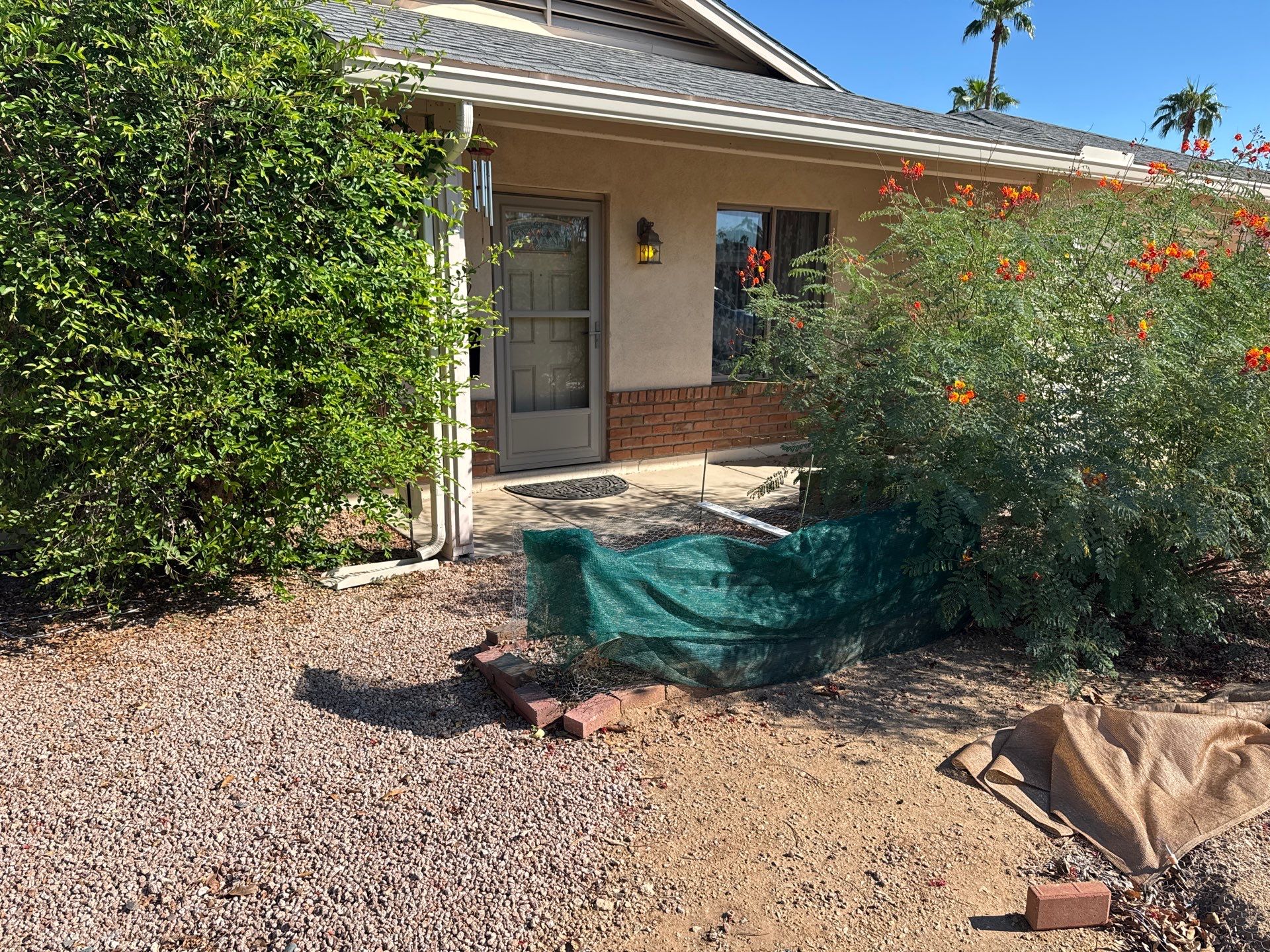
As you extend this bed, the west side needs something that grows to about 6 ft and gives good afternoon shade. Once that's in, you can fill the rest of the bed with hibiscus. Bottlebrush is too big for this spot, like you thought.
For the west side
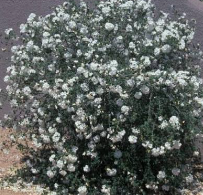
Little Leaf Cordia
Your idea, and a good one. Small white flowers most of the year, dense branching, and it takes a lot less water than something that isn't desert adapted. It handles the full west sun so the hibiscus behind it doesn't have to.

Texas Sage
Silver leaves and purple flowers after the summer rains. Very tough on a hot west side and it takes a lot less water than something that isn't desert adapted. Let it keep its natural shape instead of shearing it.

Twisted Myrtle
Dense, dark green, and upright, so it makes a solid wall of shade without taking up much width. Easy to keep right around 6 ft.

Orange Jubilee
Orange trumpet flowers from spring into fall and it handles reflected heat very well. Here's my video on it: Orange Jubilee.
Duranta (Skyflower)
Sprays of purple blue flowers and golden berries, with fast, lush growth. Handles the west sun and fills in quickly to give the bed behind it afternoon shade.
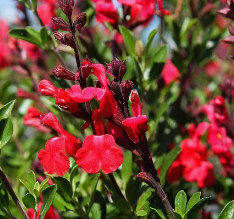
Autumn Sage
Red, pink, or coral flowers fall through spring, and very tough in full west sun. It stays small, so it may not get as big as you want or give as much afternoon shade as the others.
For the rest of the bed
Once the west side is shaded, tropical hibiscus will be happy here. This bed is another good spot for a plumeria, on the east side of the screen.
Red Hibiscus
Big tropical flowers most of the warm season. Happiest with morning sun and protection from the afternoon heat, which is exactly what the screen on the west side gives it.
Pink Hibiscus
Same care as the red. Mix the two colors for a fuller tropical look.
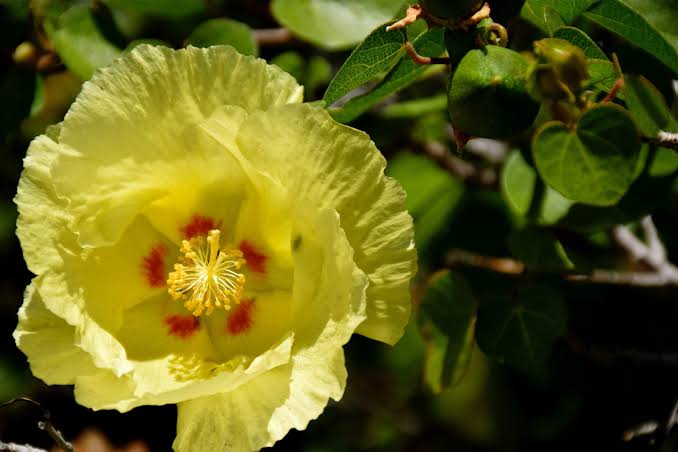
San Marcos Hibiscus
A desert hibiscus with yellow flowers and a red center, and it takes a lot less water than something that isn't desert adapted. Mixes in well with the tropical hibiscus for the hibiscus look you want.
Plumeria
Fragrant flowers all summer. It wants morning sun, afternoon protection, and soil that drains fast. Water it deeply but let it dry out between waterings, and keep it on the dry side in winter.
Putting this bed on its own timer with bubblers is the right call. The hibiscus want more frequent water than the desert plants in the rest of the yard, and this way you can water them without overwatering everything else.
Ash Tree
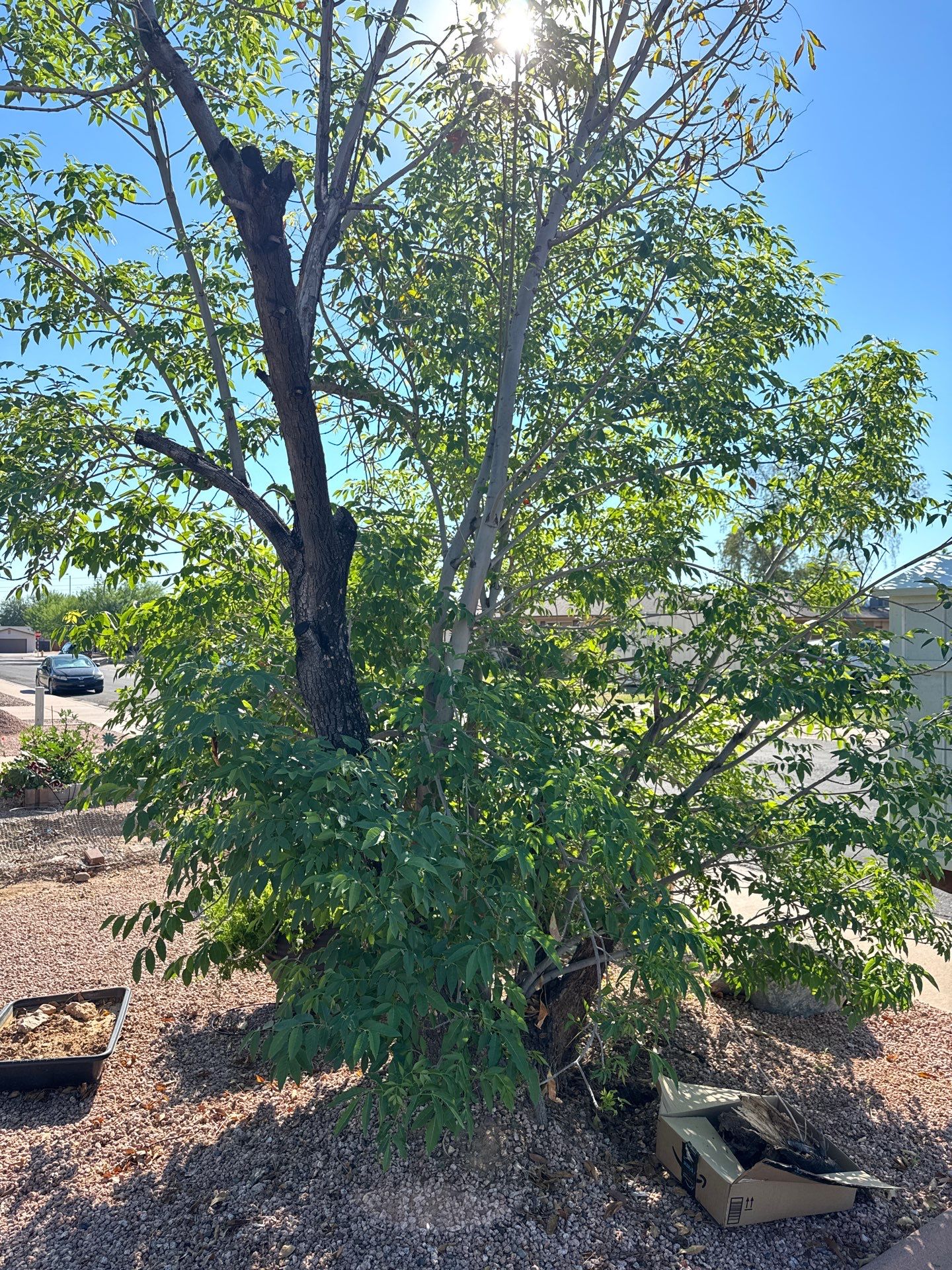
This ash is really struggling, and there's rot in the trunk. Here's how to give it the best chance:
- Pull back everything around the base. Rake the rock and gravel away from the trunk, then pull the soil back until you can see the root flare, where the trunk widens out into the roots. A strong stream of water from a hose will blast the dirt away without hurting the roots.
- Build a water well. Make a ring of soil out at the edge of the canopy, not tight against the trunk. That's where the feeder roots are.
- Compost, then mulch. Spread compost inside the well, then mulch over it. Keep the mulch a foot back from the trunk.
- Prune in December or January. Once the tree is dormant, cut out all the dead wood.
This video shows why an exposed root flare matters, with real examples. Watch on YouTube.
With rot already in the trunk, I'd have a certified arborist look at the dead wood and the structure before you prune. For that I'd call King's Tree Service.
Other Trees for the Front Yard
Here are some other trees that would work well in your front yard.

Red Push Pistache
Red new growth in spring, great fall color, and solid shade in summer. A good, tough shade tree.
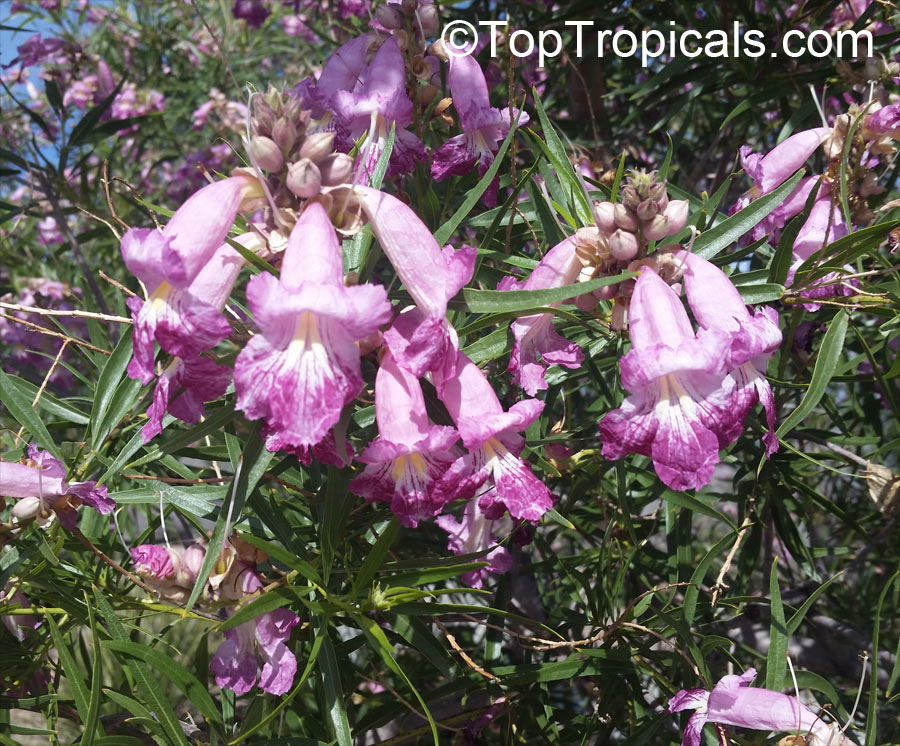
Desert Willow
Orchid-like flowers all summer that bring in hummingbirds. A native, and it takes a lot less water than something that isn't desert adapted.
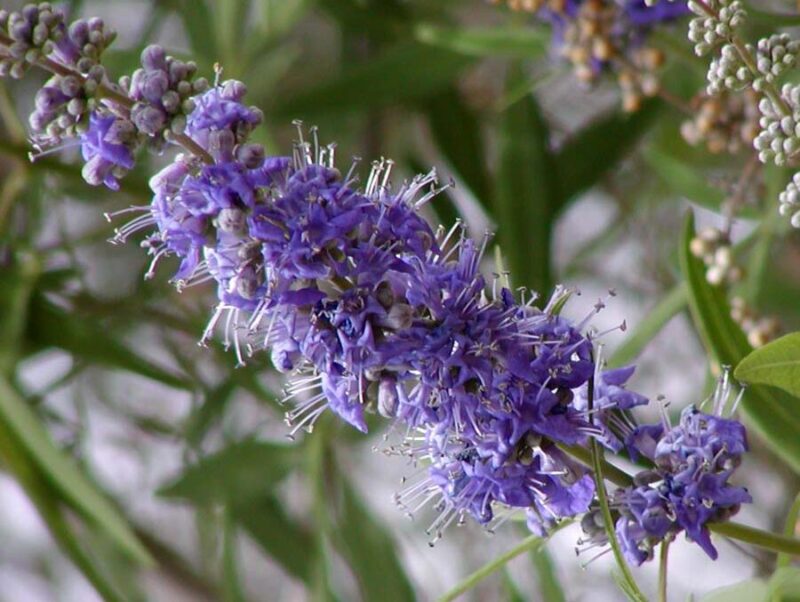
Vitex
Purple flower spikes all summer and very tough in full sun. A good medium-size tree.

Texas Olive
White flowers on and off through the warm season and dark green leaves year round. Handles heat and full sun well. Not a true olive, so no pollen issues.
Fertilizing
Everything here, the bamboo especially, does better when the soil underneath is alive. Feeding is really about feeding the soil life. Fungi, bacteria, and worms break down organic matter and hand nutrients to the roots, which is what keeps the bamboo dense, the hibiscus blooming, and the new trees growing strong, all without synthetic fertilizers. Here's the exact approach I use, so you can do it yourself.
- Compost, and be generous. On trees, spread it in a wide ring around the drip line, the outer edge of the canopy where most of the feeder roots are, from about halfway in to a couple feet past the edge. On shrubs and the bamboo, put it closer in, from a few inches off the stems out about a foot past the edge of the plant. Go 1 to 2 inches deep, and if you're unsure, go thicker rather than thinner. You really can't overdo quality compost. Do this three times a year: late winter (February), early summer (May), and fall (October).
- Worm castings every quarter. Every three months, scatter worm castings over the same areas: a few cups around each shrub and a couple pounds around the drip line of each tree. Castings are loaded with beneficial microbes that bring the soil to life. When it lines up with a compost round, put the castings down first and the compost right over them.
- A good organic fertilizer. These are the three products we use and recommend, all from Catalyst. Apply them at the label rate on the schedule each one gives.
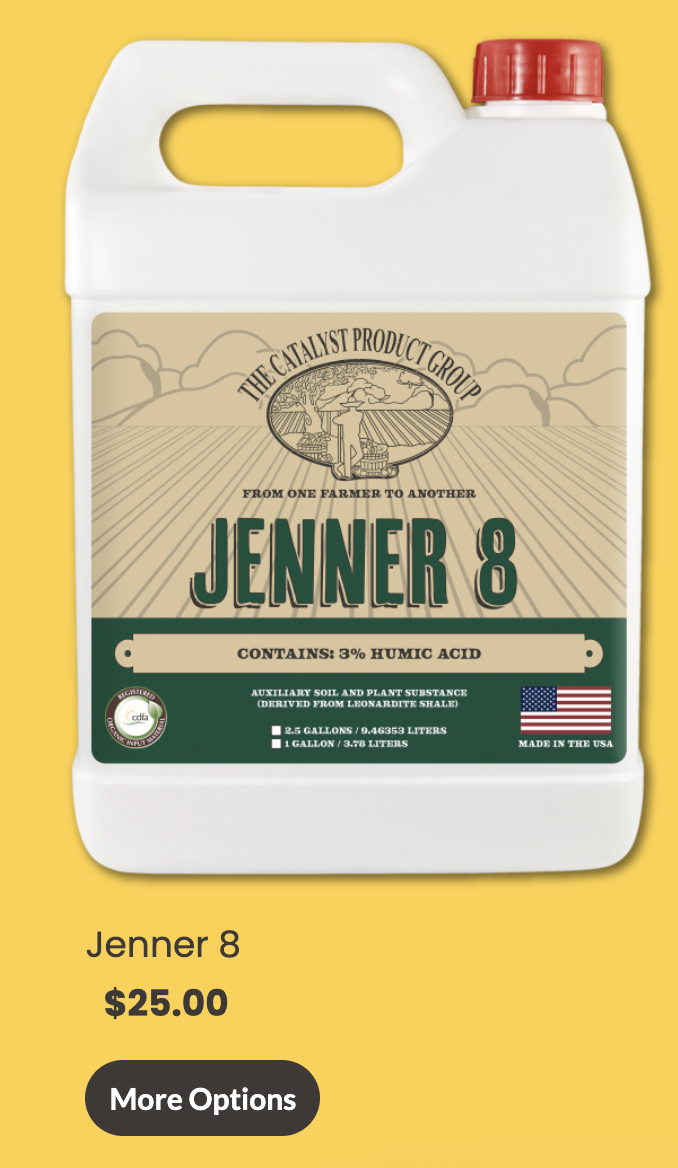
Jenner 8
Liquid organic feed for the whole landscape.
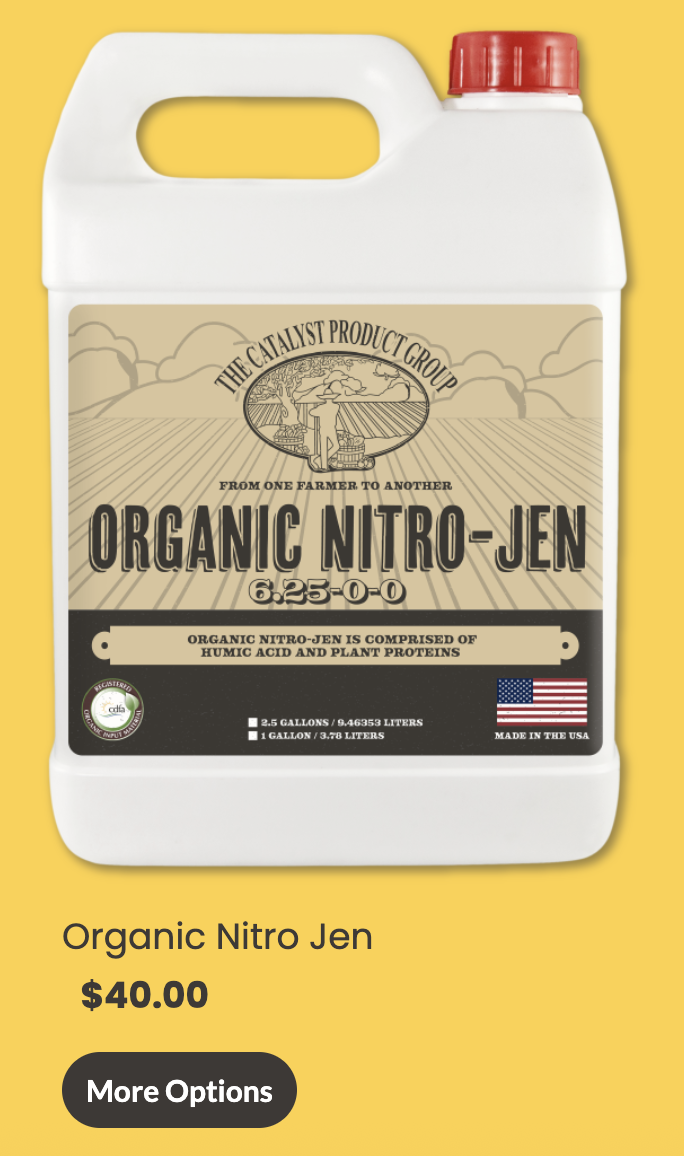
Organic Nitro Jen
Organic nitrogen to push healthy green growth.
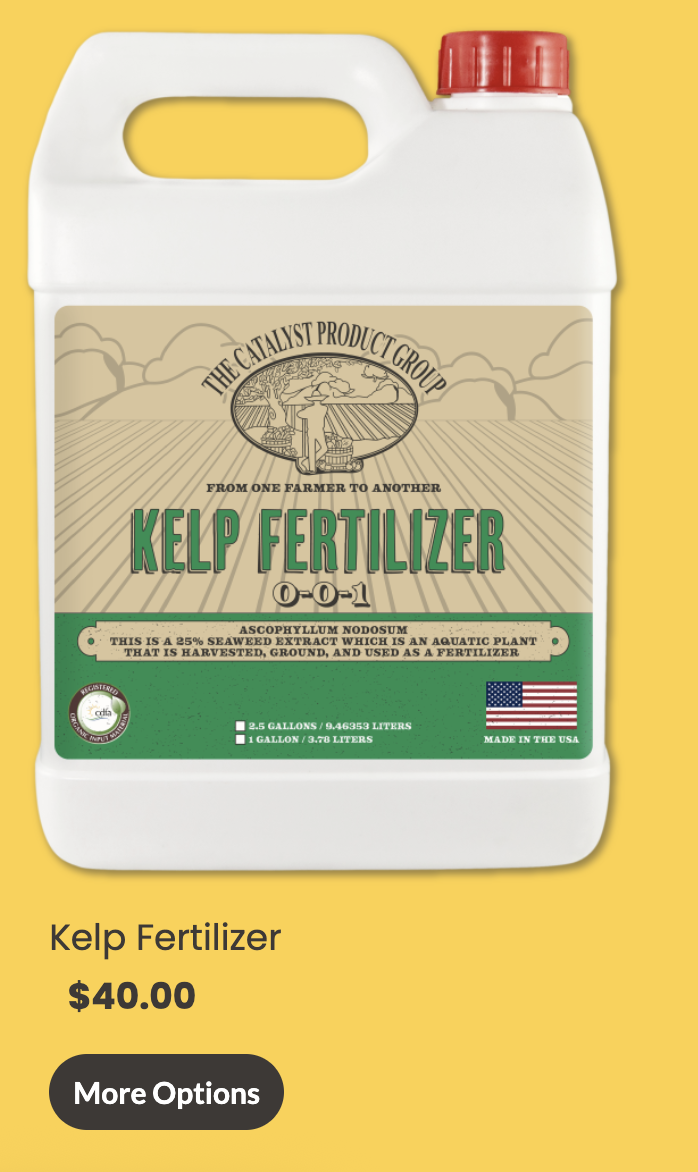
Kelp Fertilizer
Kelp based feed that supports roots and overall plant health.
You can find all three on the Catalyst website. Click Products, then Home and Garden.
- Water it all in. Give everything a deep watering right after you put it down so it soaks into the root zone.
- Mulch over the top. Mulch goes over the compost to keep it moist and cool so the soil life can do its work. Hold it a foot back from trunks and stems. No need to work any of it into the soil.
Compost, worm castings, and mulch are all at Arizona Worm Farm. ChipDrop is a great source for free mulch.
If you'd rather we handle it
You mentioned being interested in having us feed just the bamboo. Our minimum is $99, and that's a lot to pay for us to come out and only feed the bamboo. So you have two good options. For that same $99, we can feed the rest of your plants too, not just the bamboo. Or you can follow the program above on your own, which costs much less.
All of your plants, bamboo included. A liquid feeding every month plus compost three times a year, and a recap video after every visit.
Text me to startA single feeding for all of your plants, bamboo included. A good boost to get the new plantings going.
Text me to bookHow to Plant
Wherever you can, pull the gravel and replace it with mulch. It keeps the soil cool and feeds it as it breaks down.
Backfill each hole with the native soil you dug out plus a small amount of compost. Then lay compost on top of the soil around the plant and mulch over the compost. Don't work it in. Keep the mulch a foot back from the trunk.
Quick Reference
Organic fertilizers
Catalyst (Products, then Home and Garden)Compost and castings
Arizona Worm FarmFree mulch
ChipDropTrees and shrubs
A&P NurseryArborist
King's Tree ServiceIrrigation
Garrett: 480-678-9121Root flare video
Why the root flare mattersQuestions
Ask me anytime in the Garden Nerd ClubNext Steps
As a consult client, you're already in the Garden Nerd Club, so you have direct access to me there anytime you have a question or want a second set of eyes.
You can take this list and do it yourself with the Club behind you. If you'd rather have us handle the planting, I can put together a planting proposal for you.
For the bubblers and the new timer zones, call Garrett at 480-678-9121.
You can see more of what we do on our planting services page.