
Thanks for having me out, Katie. Below is everything we went over, in the order we walked the yard, with the details on each so you have it all in one place.
As a consult client, you're already in the Garden Nerd Club, so you have direct access to me there. If questions come up while you work through any of this, ask me there anytime.
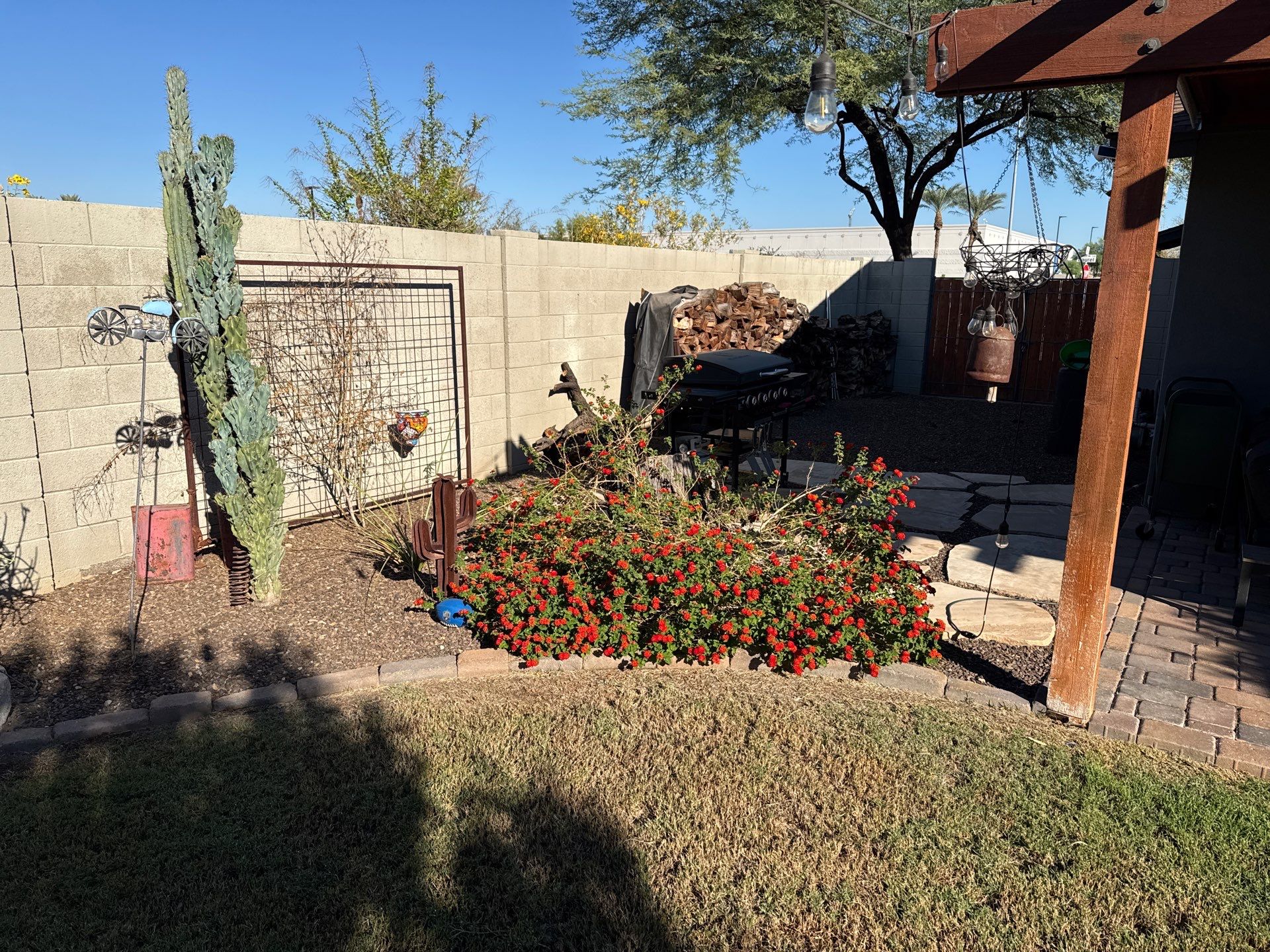
A new shade tree where the big mesquite was
There used to be a very large mesquite here, and the stump is still there. This spot needs another tree that grows fast and gives good shade. Here are some options.
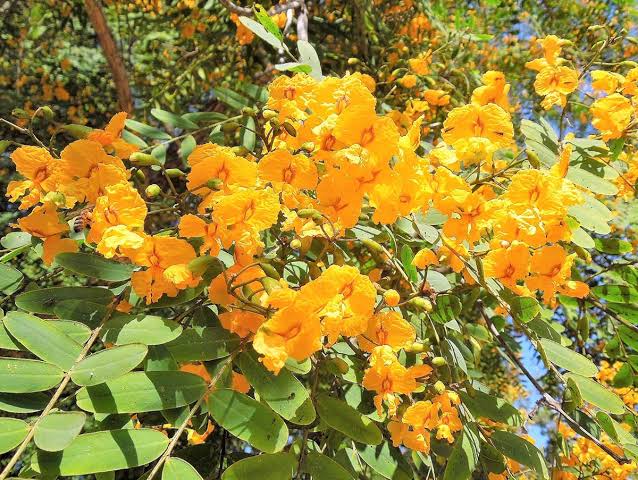
Tipu
Fast growing shade tree with a wide umbrella canopy and yellow flowers in late spring, 30 to 50 feet. Gives serious shade fast. It drops some leaves and pods, which is fine out in the lawn.

Mulga Acacia
Australian native, 15 to 20 feet, with fine silvery green evergreen leaves and yellow flower spikes in spring. Fast, tough in full sun and heat, and takes less water than plants that aren't desert adapted.

Chinese Elm
Fast growing, semi evergreen shade tree with a wide, graceful canopy, 40 to 50 feet. Handles full west sun and does well in a lawn. The bark gets a pretty mottled look as it matures.
Willow Acacia
Evergreen with long, weeping leaves and a more upright shape, 20 to 30 feet. Fast, handles full sun, stays green all year, and takes less water than plants that aren't desert adapted.
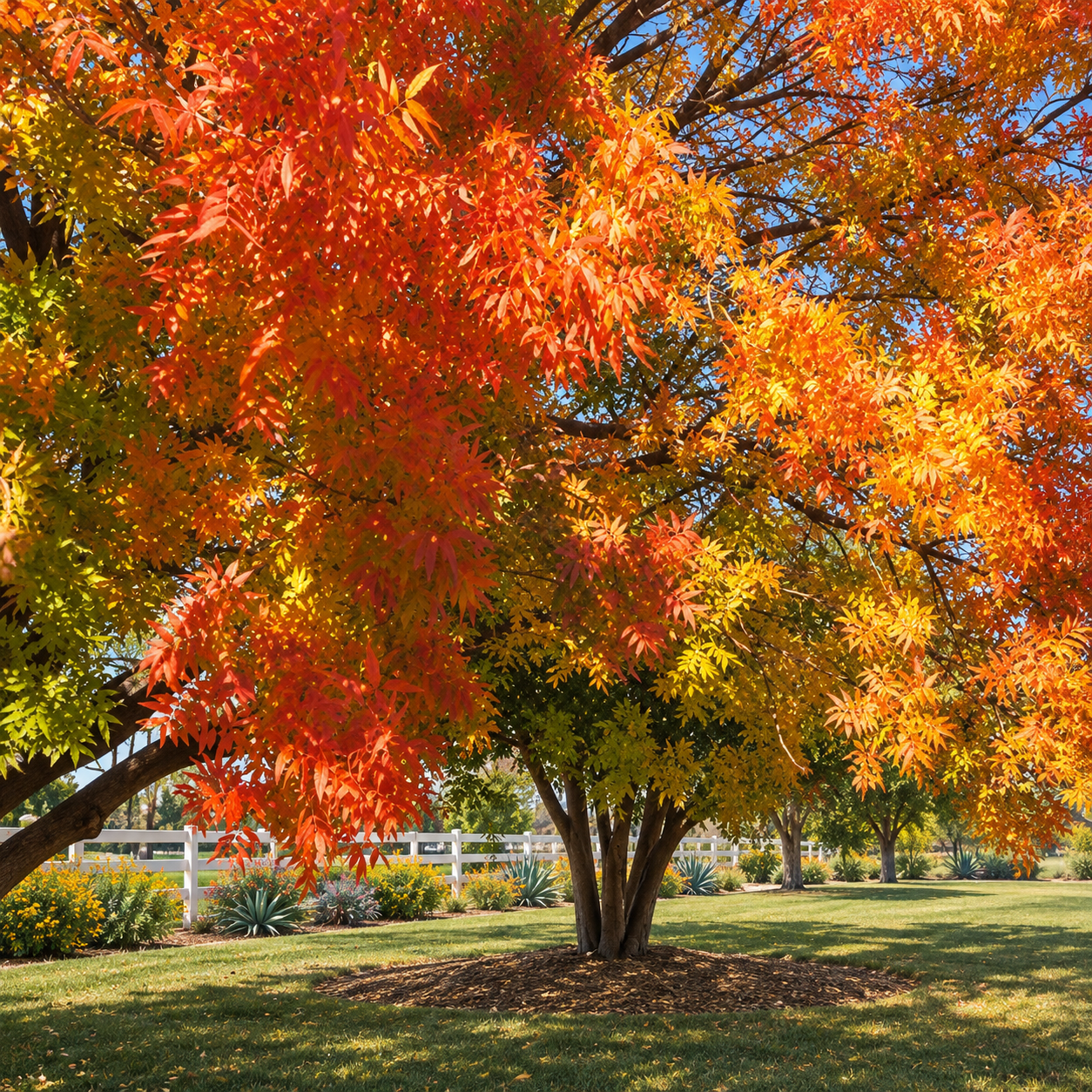
Red Push Pistache
Medium shade tree, 25 to 40 feet, with red new growth in spring and great fall color. Handles full west sun and heat, does well in a lawn, and is low litter.
- The stump: it doesn't need to be ground out. You can plant the new tree right to the side of it. Old roots in the ground aren't an issue.
- Size: start with a 15 gallon tree. Smaller trees establish faster and always end up being better trees long term than big boxed ones.
- Planting: set the tree so the root flare, where the trunk widens into the roots, sits slightly above the surrounding ground, never buried. Backfill with native soil plus a tiny bit of compost, lay compost on top, then mulch over the compost, held a foot back from the trunk.
- Water: a deep, slow soak once or twice a week the first year, then stretch it out as it settles in.
Ground cover underneath
For underneath the tree, foxtail fern and asparagus fern are both great options. They'll fill in soft and green and do even better as the tree grows in and the shade comes in.
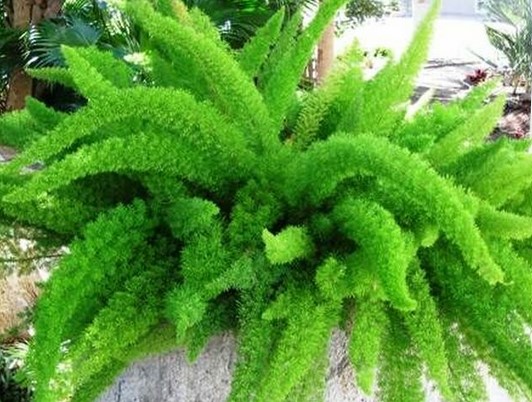
Foxtail Fern
Upright plumes of bright green, about 2 feet tall. One of the best options for a shady spot by the door.
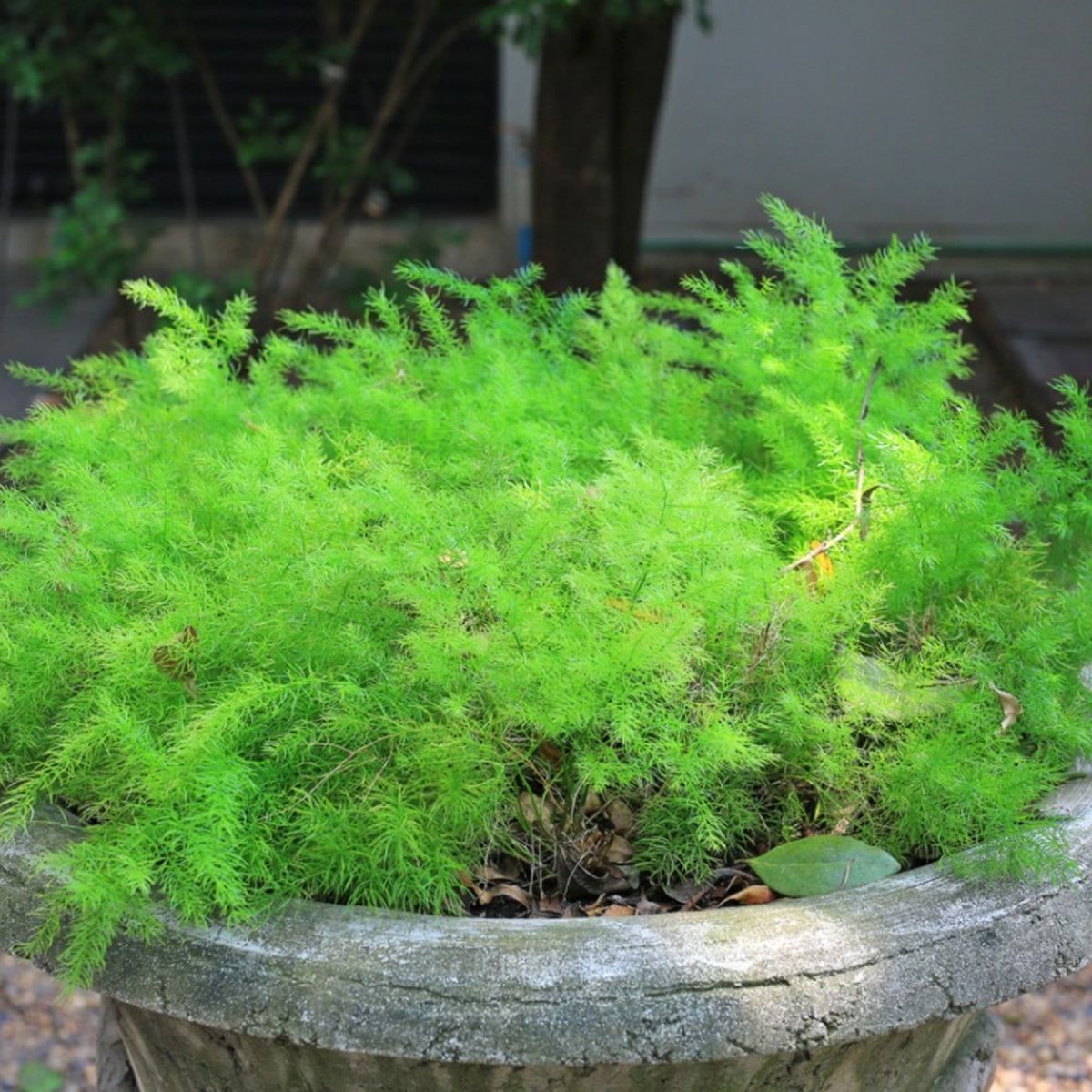
Asparagus Fern
Soft, airy, bright green mound that loves shade. Tough once established and fills a spot quickly.
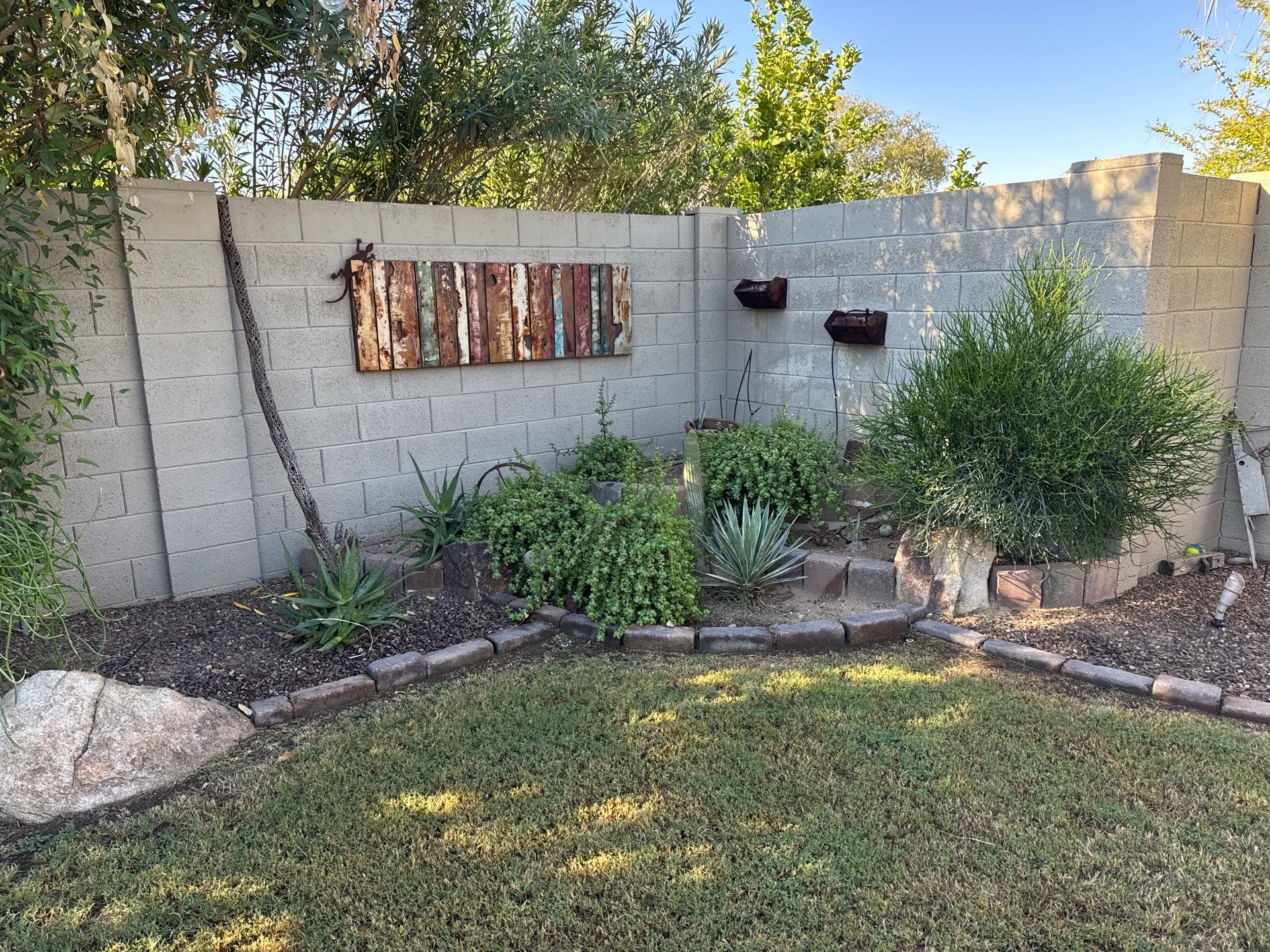
Filling in around the elephant food
This corner faces north and east, and there's a lot of empty space between the elephant food. Native plants like Gregg's mistflower, chuparosa, and globe mallow, along with a few other desert adapted plants, will fill it in, make it look more lush, and add lots of color.
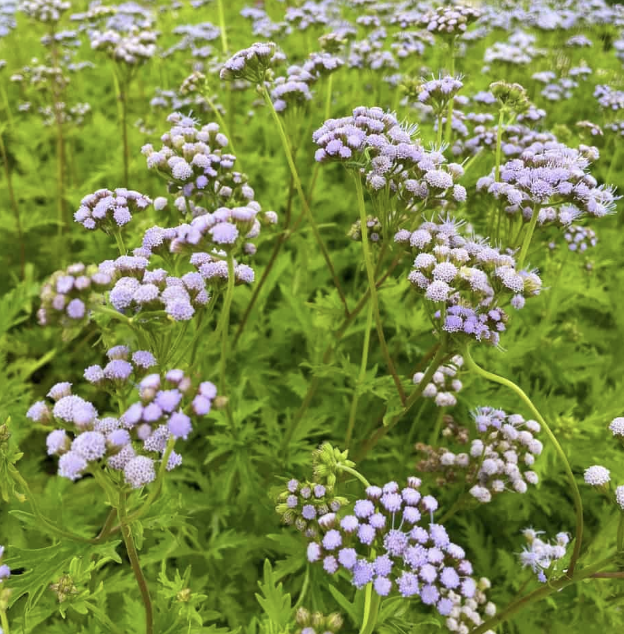
Gregg's Mistflower
Soft, mounding native covered in fuzzy purple flowers spring through fall. Butterflies swarm it. Does well in sun or part shade and spreads over time.
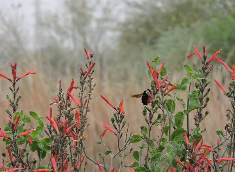
Chuparosa
Native with green stems and red tubular flowers through winter and spring. A hummingbird favorite, handles sun or part shade.

Globe Mallow
Native with silvery leaves and cup shaped orange flowers in spring. Native bees love it. Best where it gets good sun.
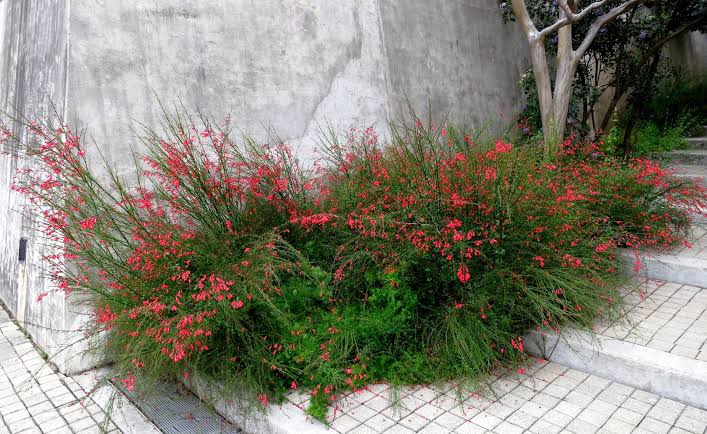
Firecracker Plant
Arching green stems with bright red tubular flowers most of the year. Handles part shade well and hummingbirds love it.
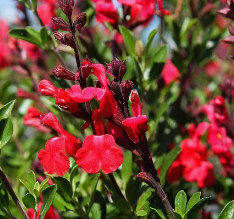
Autumn Sage
Compact, 2 to 3 feet, with red, pink, or coral flowers fall through spring. Takes full sun and can be sheared into a tidy low border.
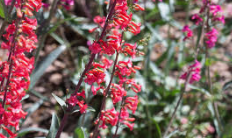
Penstemon
Tall flower spikes in red, pink, or purple in spring. Hummingbirds and native bees love it. Plant in fall for spring blooms.
You can't fit all of these. Pick a few favorites and repeat them so it looks intentional.
Vinca for extra color
Vinca is another good way to add color here. They're usually sold as seasonal flowers, but with our warm winters and the warm pocket in this corner against the wall, they can last multiple years. It's best to wait until spring to plant them.
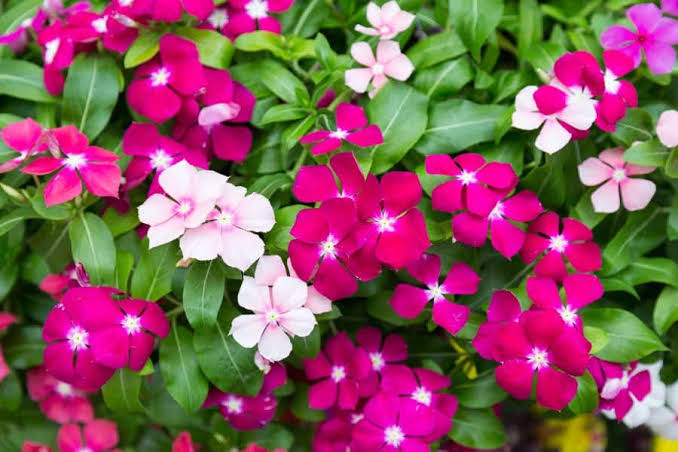
Vinca
Bright, nonstop flowers in pink, white, red, or purple on glossy green leaves. Sold as a seasonal flower, but in a warm pocket like this one against the wall it can come back for multiple years.
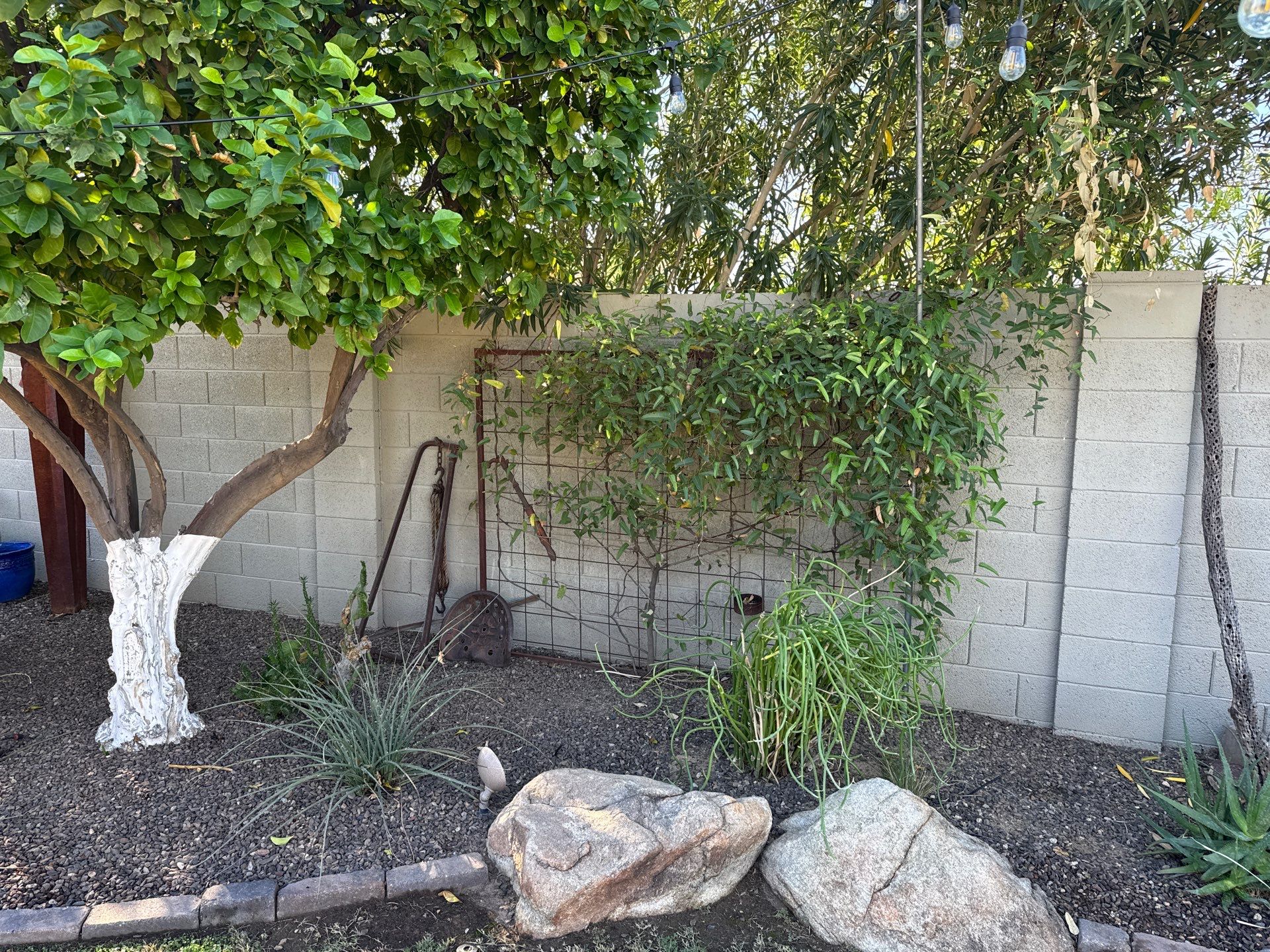
The lilac vine and other options for the shade
The lilac vine here is growing okay, but with all the shade it gets, it's never going to look super great. Feeding it with quality compost will help.
If you'd like to try something that handles the shade better, star jasmine is my favorite option, for the color and the smell. Here are a few other options too.
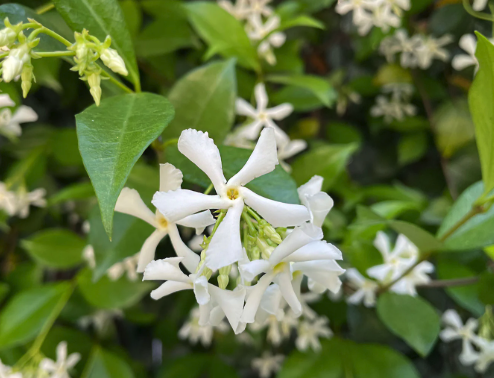
Star Jasmine
My favorite here. Evergreen vine with glossy leaves and clusters of white, very fragrant flowers in spring. Does well in shade and part shade and fills in a trellis nicely.

Bower Vine
Lush evergreen vine with glossy leaves and pink or white trumpet flowers spring through fall. Prefers shade or part shade.

Creeping Fig
Self clinging, so no trellis needed. Grows into a flat, dense green wall and handles shade well. Trim once or twice a year to keep it in bounds.

Tangerine Crossvine
Evergreen vine with orange trumpet flowers in spring and on and off through the year. Self clinging and fast, and it handles part shade, which makes it a great fit under the citrus.
Feeding is covered in the Fertilizing section below.
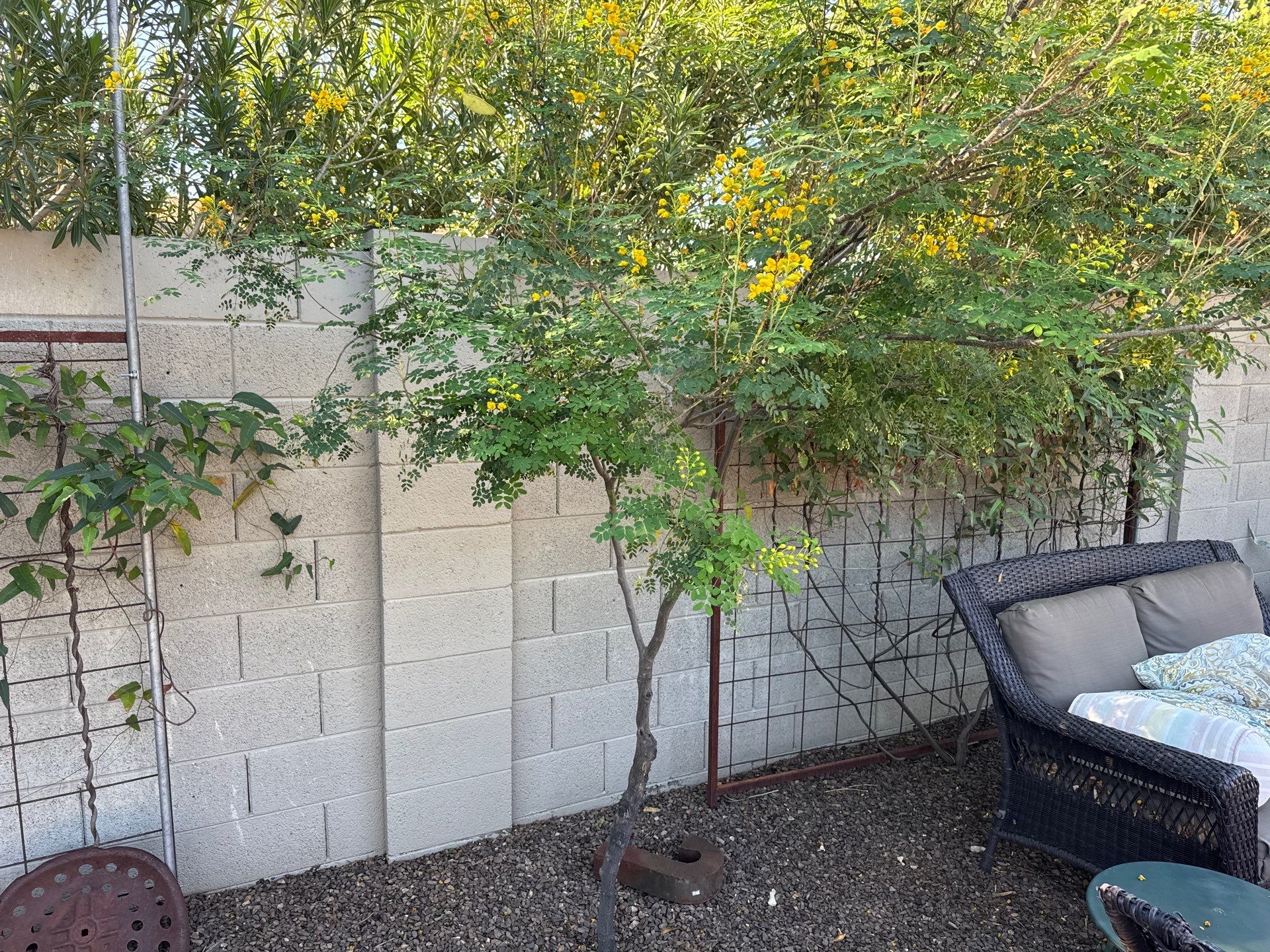
The tree that's planted too deep
This tree isn't growing as big as the one next to it, and it's buried a little too deep. A root flare excavation would help. It seems healthy, so this isn't the first priority, but it's worth doing. Feeding and building the soil will help a lot too.
The root flare is where the trunk widens out into the roots. When it's buried, the bark stays wet, starts to rot, and roots can begin circling the trunk. Trees in that situation often just stall out and stay small. This video shows why it matters, with real examples.
Can't see the video? Watch it on YouTube.
How a root flare excavation works
- Pull the rock and mulch back a couple of feet from the trunk.
- Use a strong stream of water from a hose to blast the soil away from the base, then follow up with a hand trowel or your fingers. A shovel can damage the roots.
- Keep going down until you see the trunk widen out and the first big roots heading sideways.
- Cut away any small roots wrapping around the trunk, and any nursery twine or wire.
- Leave the flare at or just above the surrounding grade, slope the soil gently away from the trunk, and don't fill it back in.
If you'd rather have us do it, we can quote the excavation for you. Just text me.
Feeding and building the soil around it is covered in the Fertilizing section below.
The skyflowers
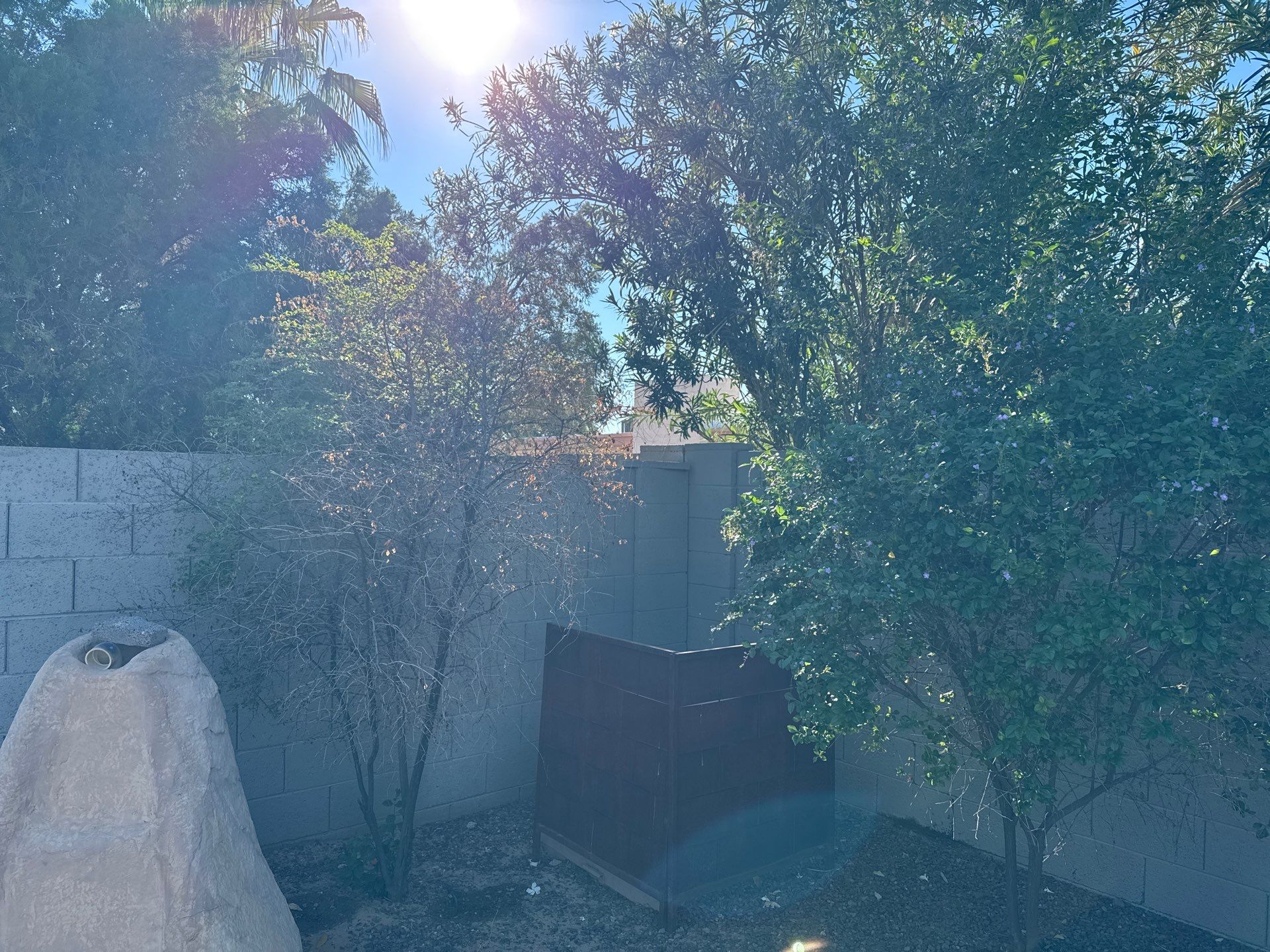
You have two skyflowers side by side. One is doing great and the other not so much, but the struggling one looks like it's trying to come back.
- Cut out the dead wood. Now is a good time to take off everything you know for sure is dead. Scratch the bark with your thumbnail: green underneath is alive, brown and dry is dead. Cut back to live wood so the new growth has room to come through.
- Deep soak it. Put the hose on a very slow drip at the base and let it run for 24 hours so it really soaks in.
- Feed it. Compost and mulch around the base will help it push new growth.
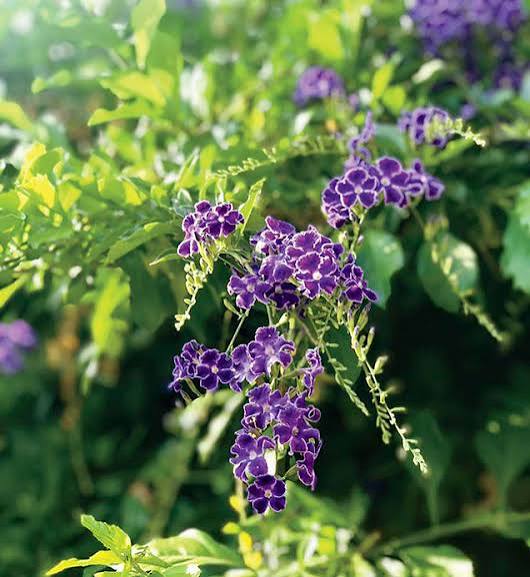
Skyflower
Fast evergreen shrub with sprays of purple blue flowers and golden berries. Bounces back well from dieback once it's watered and fed.
Ground cover for the empty, sunny ground
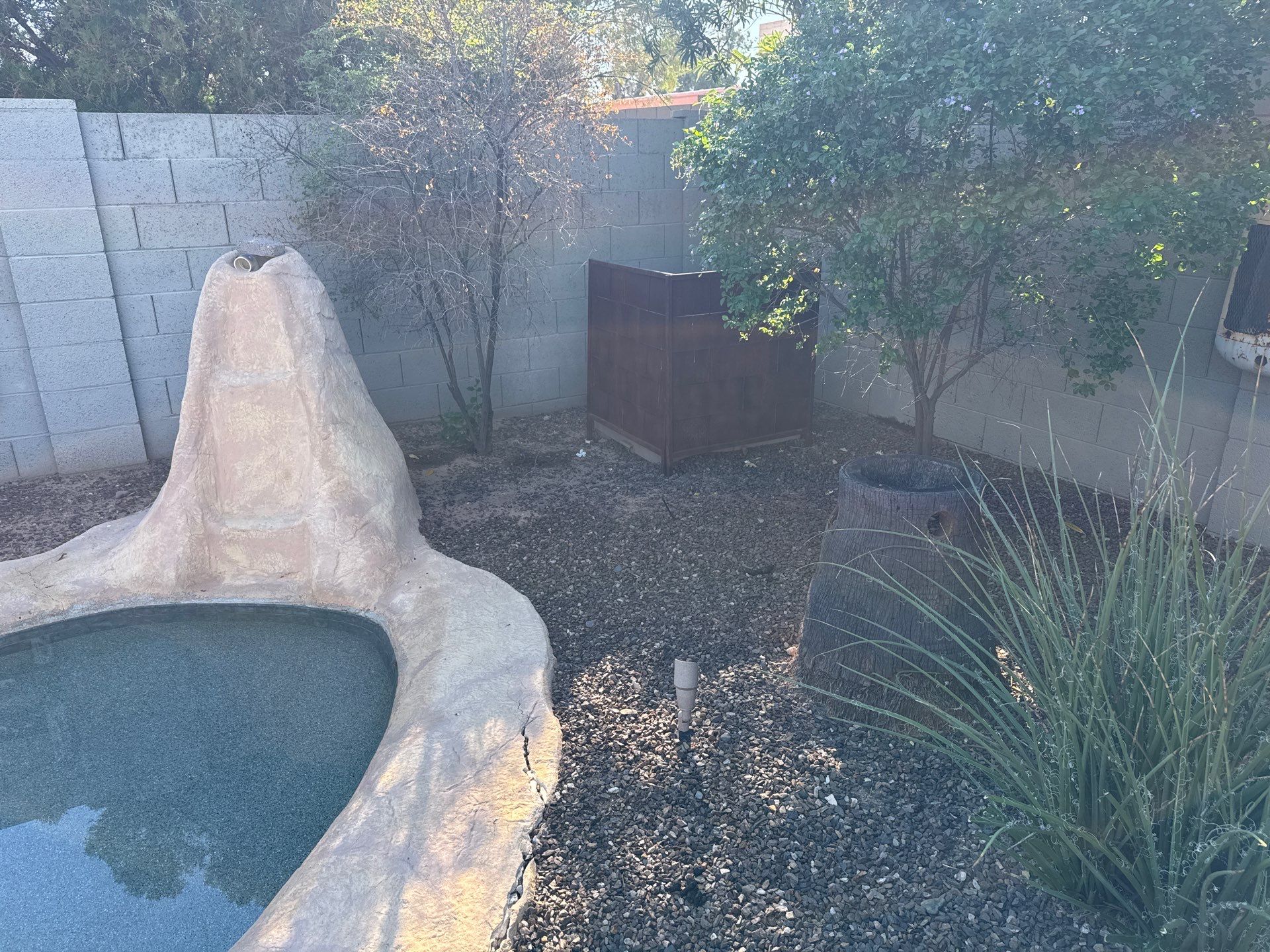
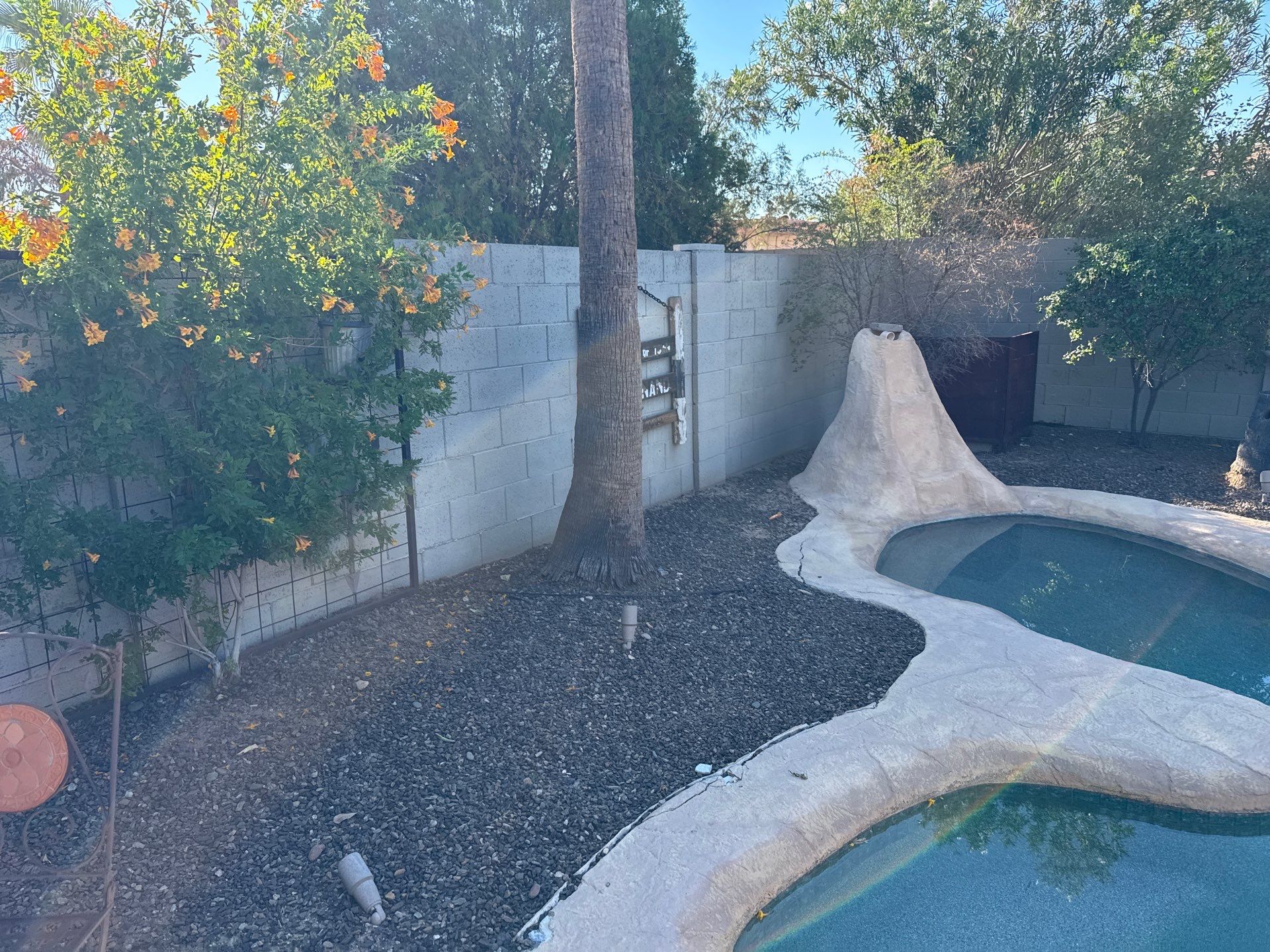
There's a lot of empty ground with rock in this area. It gets blasted by the afternoon sun, and the rock holds a lot of heat. Adding ground cover will shade the rock and cool the whole area down.
Yellow dot, emu bush, and trailing rosemary are all good options, along with a few other desert adapted ground covers that spread quickly and cover the ground.

Yellow Dot
Fast, bright green mat with little yellow daisy flowers most of the year. Covers ground quickly and cools the soil underneath. Takes a bit more water than the others here.
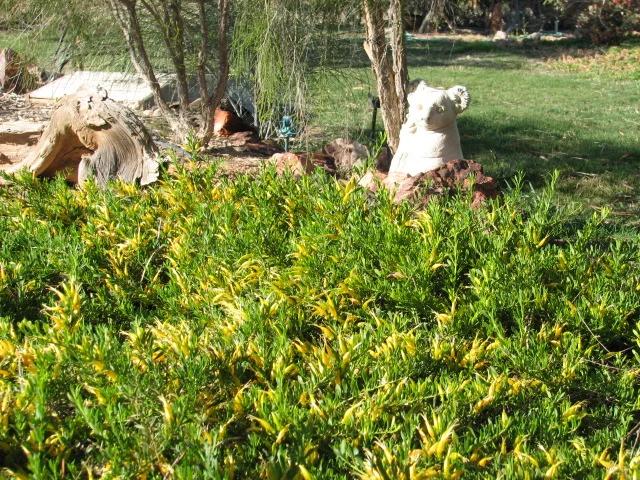
Trailing Emu Bush (Outback Sunrise)
Low and spreading, under a foot tall and 4 to 6 feet wide. Gray green leaves with orange red flowers winter through spring that hummingbirds love. Takes full sun and reflected heat and drops very little.
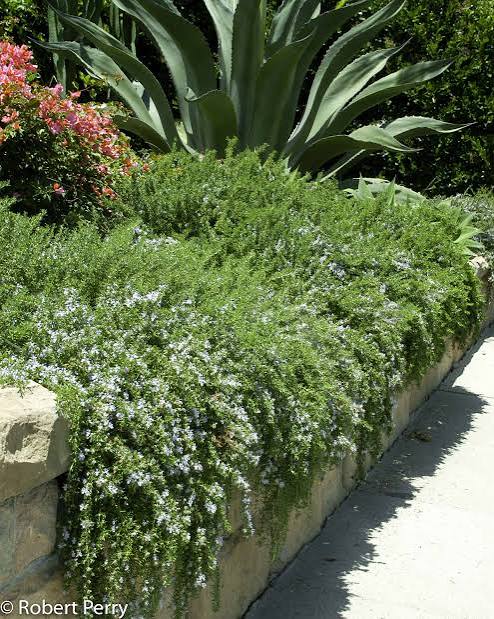
Trailing Rosemary
Spills and spreads 4 to 6 feet with blue flowers bees love in winter and spring. Takes full sun and reflected heat, and you can cook with it.
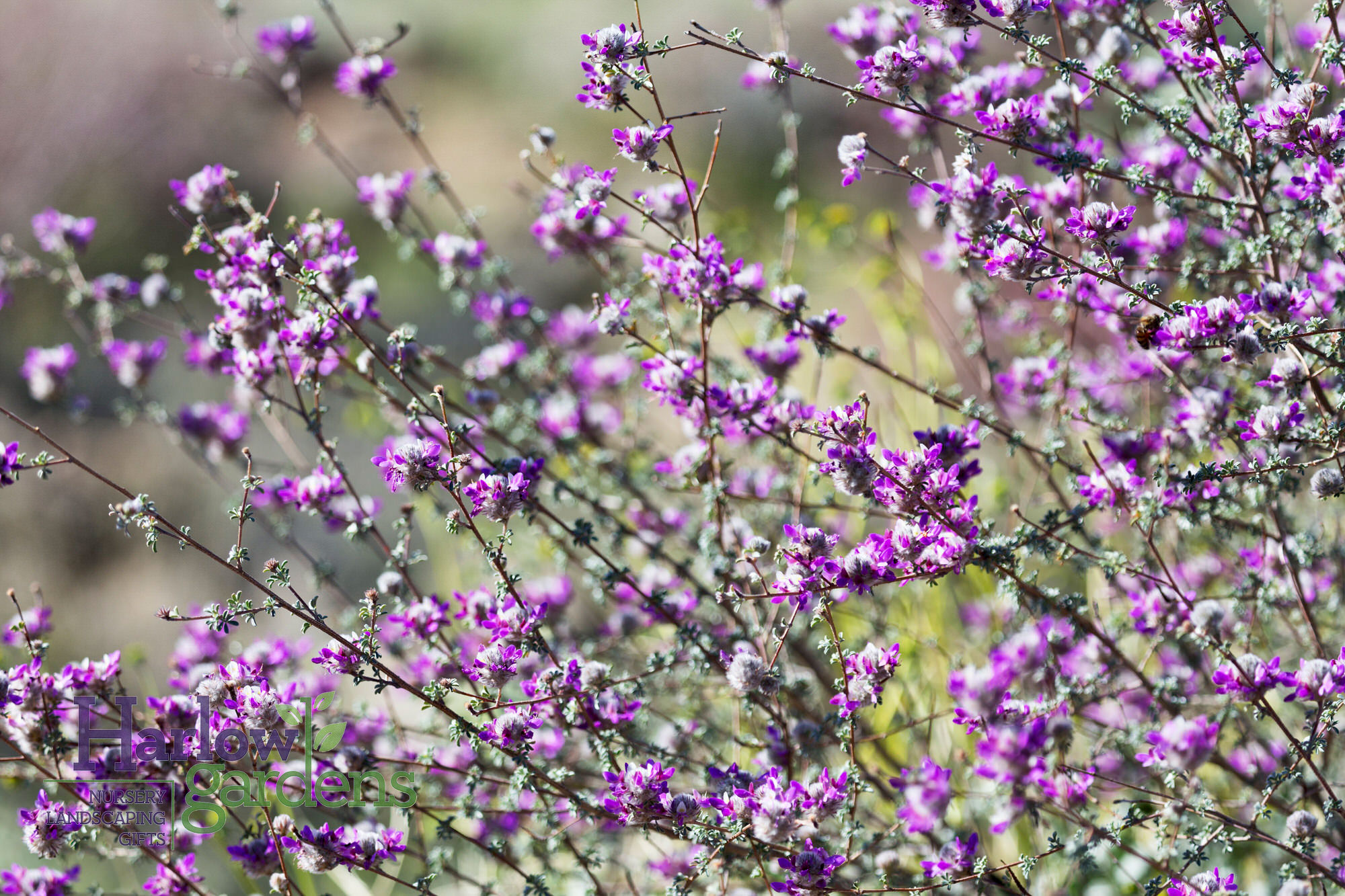
Trailing Indigo Bush
Native groundcover with silvery foliage that hugs the ground and small purple flowers in spring. Very low water and handles reflected heat off concrete really well.
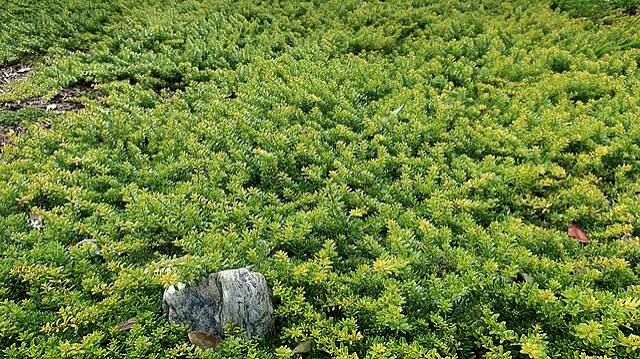
Myoporum
Dense, lush green mat that spreads 6 to 9 feet wide with small white flowers. Fastest way to cover a lot of ground with fewer plants. Space them 5 to 6 feet apart.
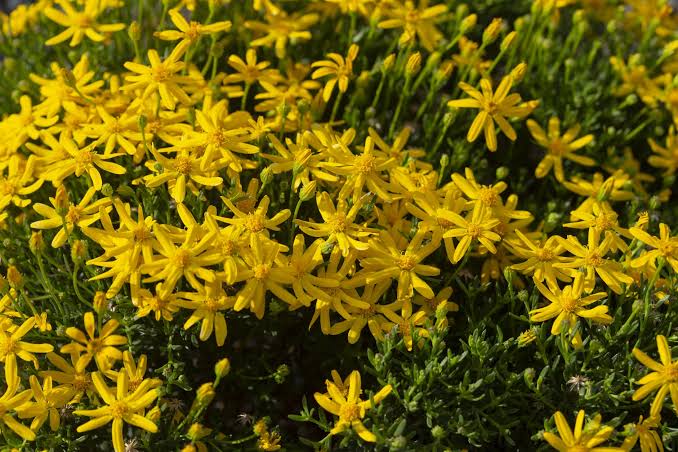
Damianita
Low, tidy mound of fine green foliage covered in golden yellow flowers in spring and fall. Stays about a foot tall and 2 feet wide.
You can't fit all of these. Pick a few favorites and repeat them so it looks intentional.
- Pull the rock back where you plant each one, plant into the soil, and tuck the rock back around it, leaving a few inches clear of the stems.
- Give each plant its own emitter, and water a bit more often the first few weeks until they root in and start running.
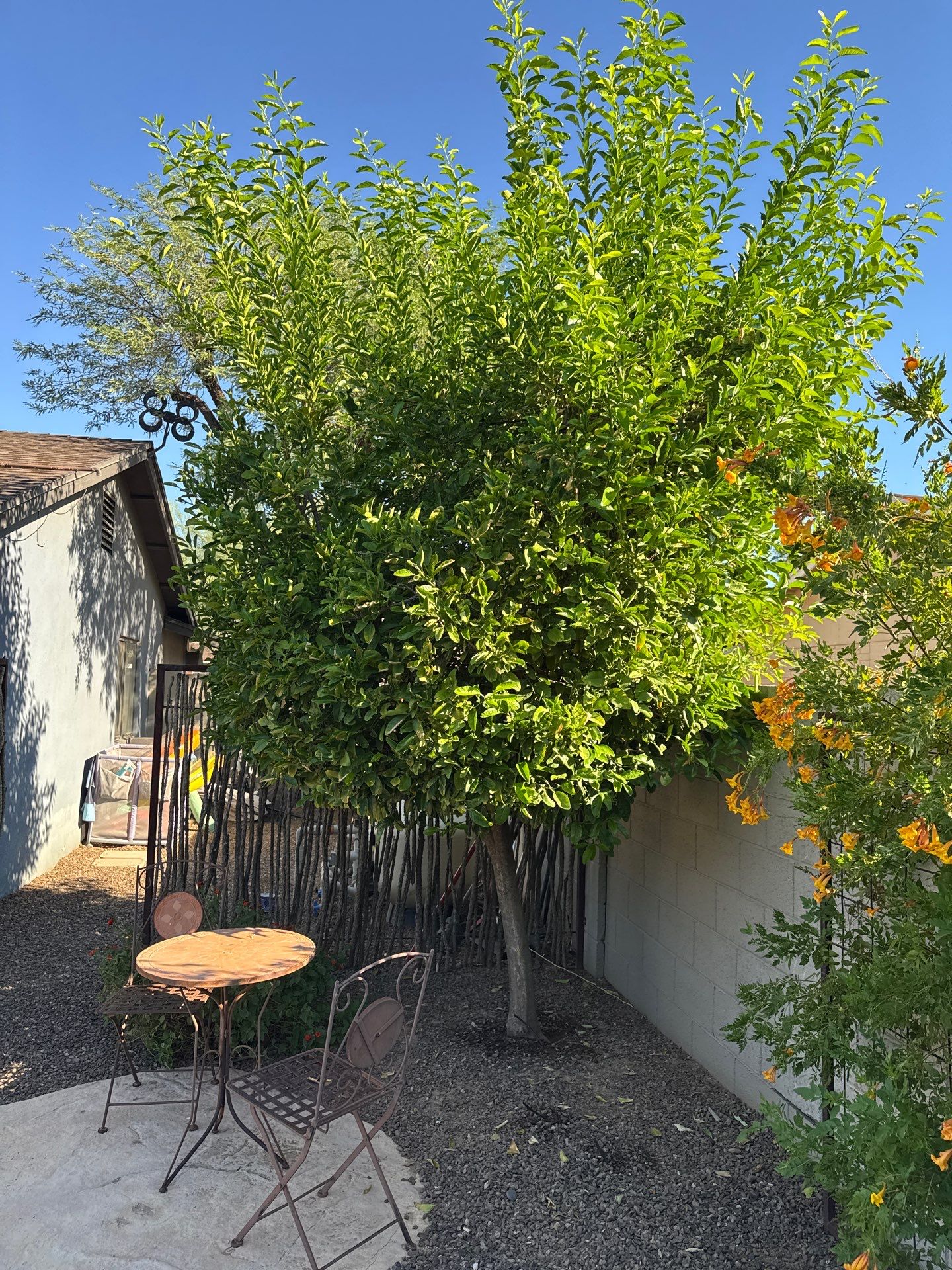
Stop shearing the citrus
The landscaper needs to stop shearing this citrus tree and let it grow more freely. Shearing does two things. It burns the leaves, because every cut leaves damaged edges and exposes the inside of the tree to the sun. And it stops fruit production, because the tree never gets a chance to bud out. Citrus flowers come on new growth, and shearing keeps cutting that growth off.
What to tell the landscaper
- No more shearing or hedging this tree.
- Only take out dead wood, branches that cross or rub, and any shoots coming from below the graft near the base of the trunk.
- Leave the low branches. They shade the trunk, and citrus bark sunburns easily.
- If something has to come off for clearance, cut that branch back to where it meets a bigger one, rather than shearing the outside.
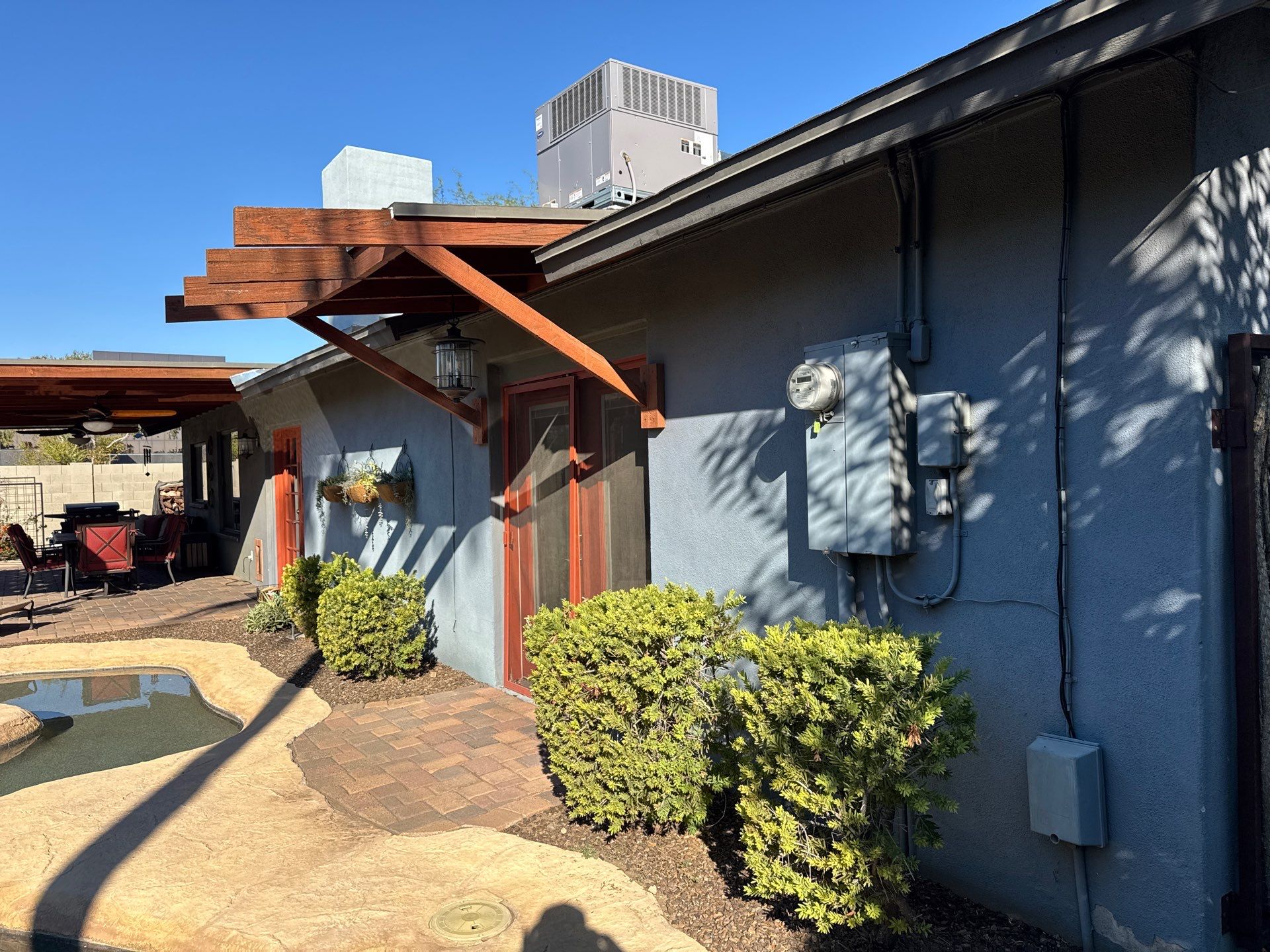
Water and feed the bottlebrush
These bottlebrush are doing okay. They could use a bit more water, and they could be fed. For bottlebrush to look really good and stay dense and deep green, they like a good feeding at least every quarter, and even better once a month.
- More water: give them a deeper soak, slow and long enough that the water gets 18 to 24 inches down, rather than short frequent watering.
- Monthly feeding: the Catalyst liquids in the Fertilizing section below can go on monthly for the best color. At minimum, feed every quarter.
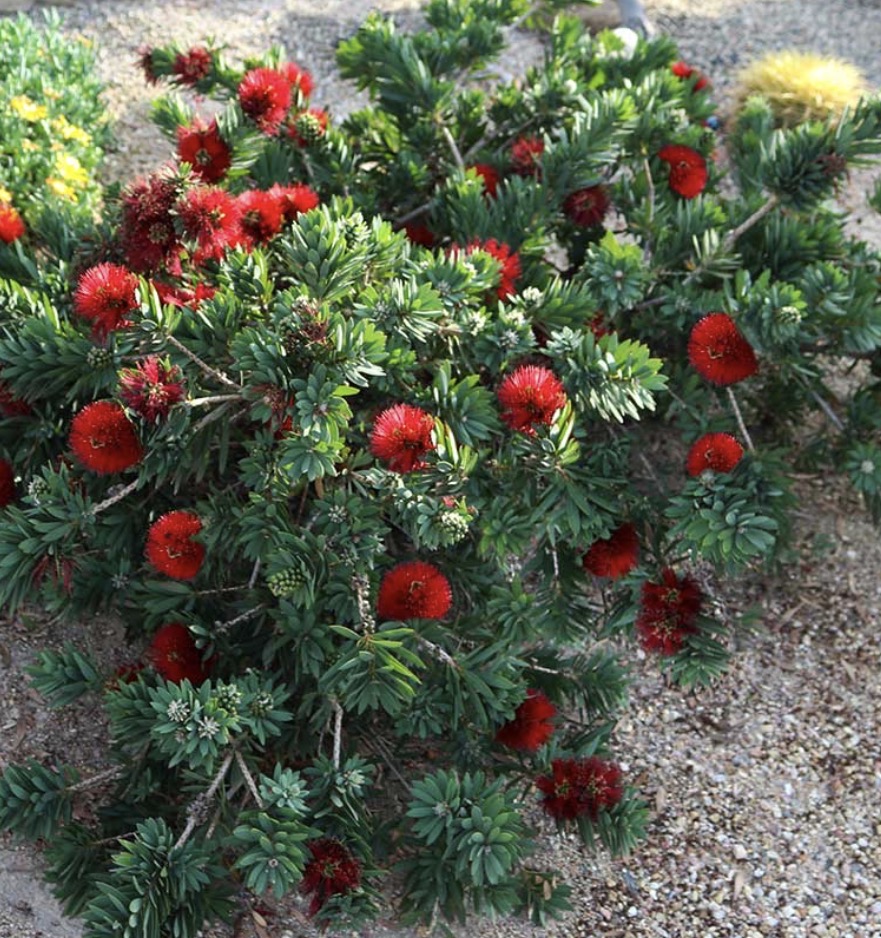
Bottlebrush
Evergreen with bright red, bottlebrush shaped flowers in spring that hummingbirds love. Stays dense and deep green with regular feeding and deep water.
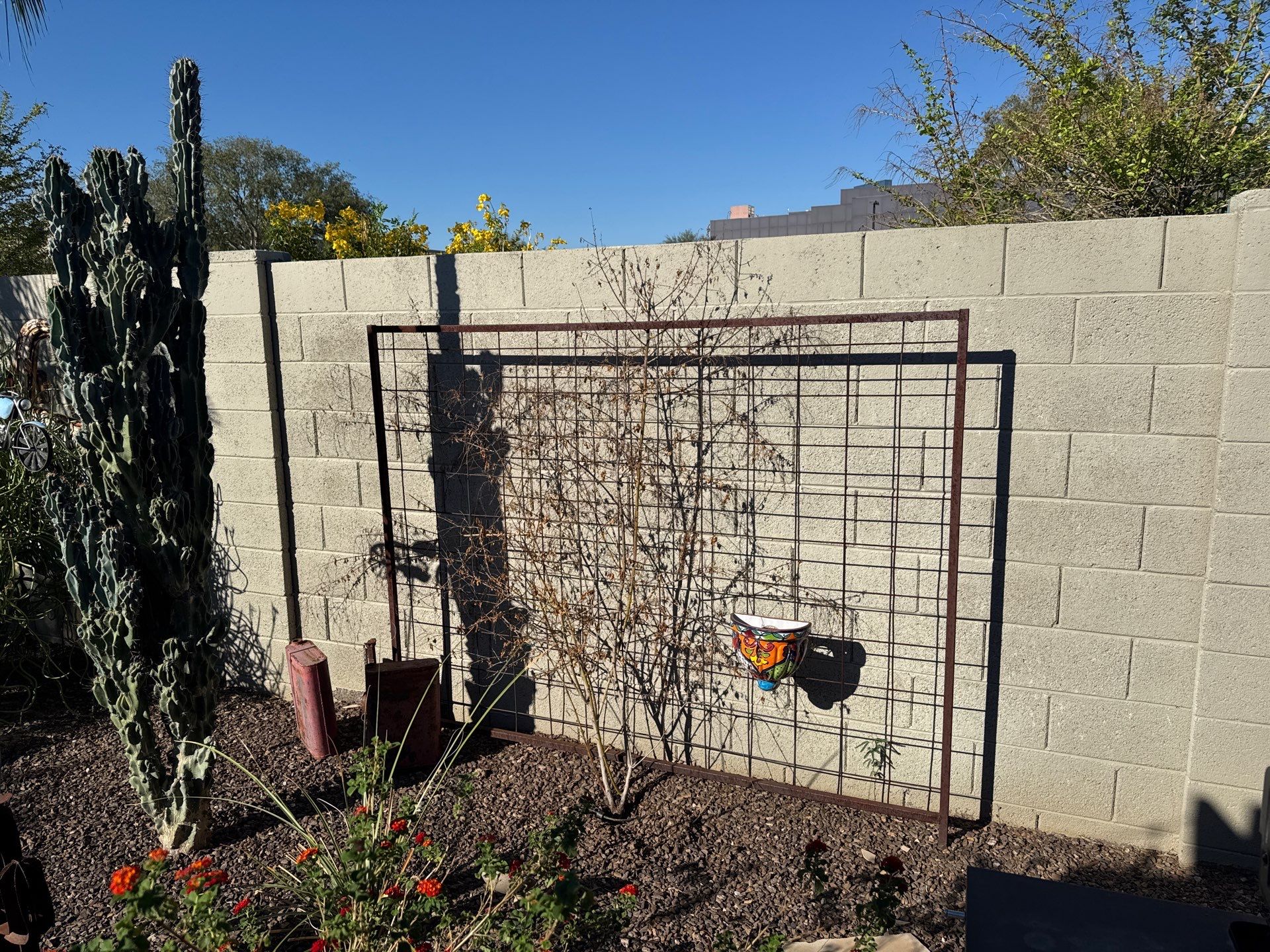
A vine for the trellis
The orange jubilee here didn't make it. It looks like it was planted too deep. Orange jubilee would work here again if you want to replace it, just planted at the right depth. It doesn't need the trellis. Don't try to weave it in. Just let it grow in front of the trellis on its own. Here are a few other options too, for the trellis itself.
This is an east facing wall. It gets good morning sun and is shaded by the afternoon, which is a great spot for most vines.

Orange Jubilee
Fast and lush, with big clusters of orange trumpet flowers spring through fall that hummingbirds love. Grows 10 to 12 feet tall. A hard freeze can nip it back, but it grows right back in spring. Plant 4 to 5 feet apart.
Star Jasmine
My favorite here. Evergreen vine with glossy leaves and clusters of white, very fragrant flowers in spring. Does well in shade and part shade and fills in a trellis nicely.
Tangerine Crossvine
Evergreen vine with orange trumpet flowers in spring and on and off through the year. Self clinging and fast, and it handles part shade, which makes it a great fit under the citrus.
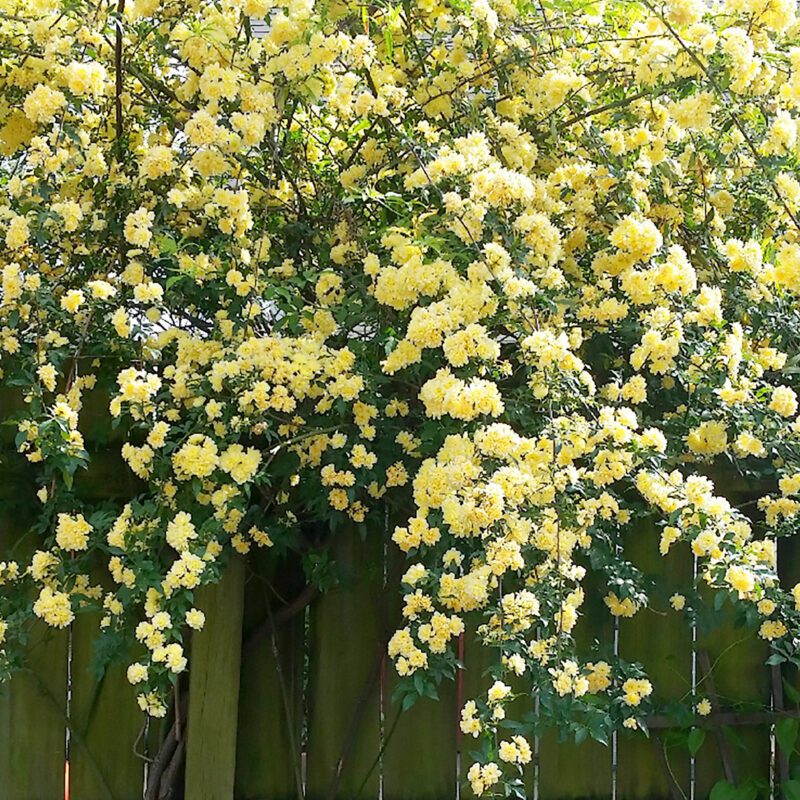
Lady Banks Rose
Thornless climbing rose covered in small yellow flowers in spring. Vigorous and tough, and it trains easily onto a trellis.
Bower Vine
Lush evergreen vine with glossy leaves and pink or white trumpet flowers spring through fall. Prefers shade or part shade.
- Whatever goes in, plant it with the root flare slightly above grade. Find the flare in the pot before you dig, and don't bury the trunk. That's what took out the last one.
- For the vines, plant about a foot out from the base of the trellis and lean them in. Tie the first canes loosely as they grow.
- Orange jubilee is a shrub, not a vine, so give it a couple feet in front of the trellis and let it grow up on its own.
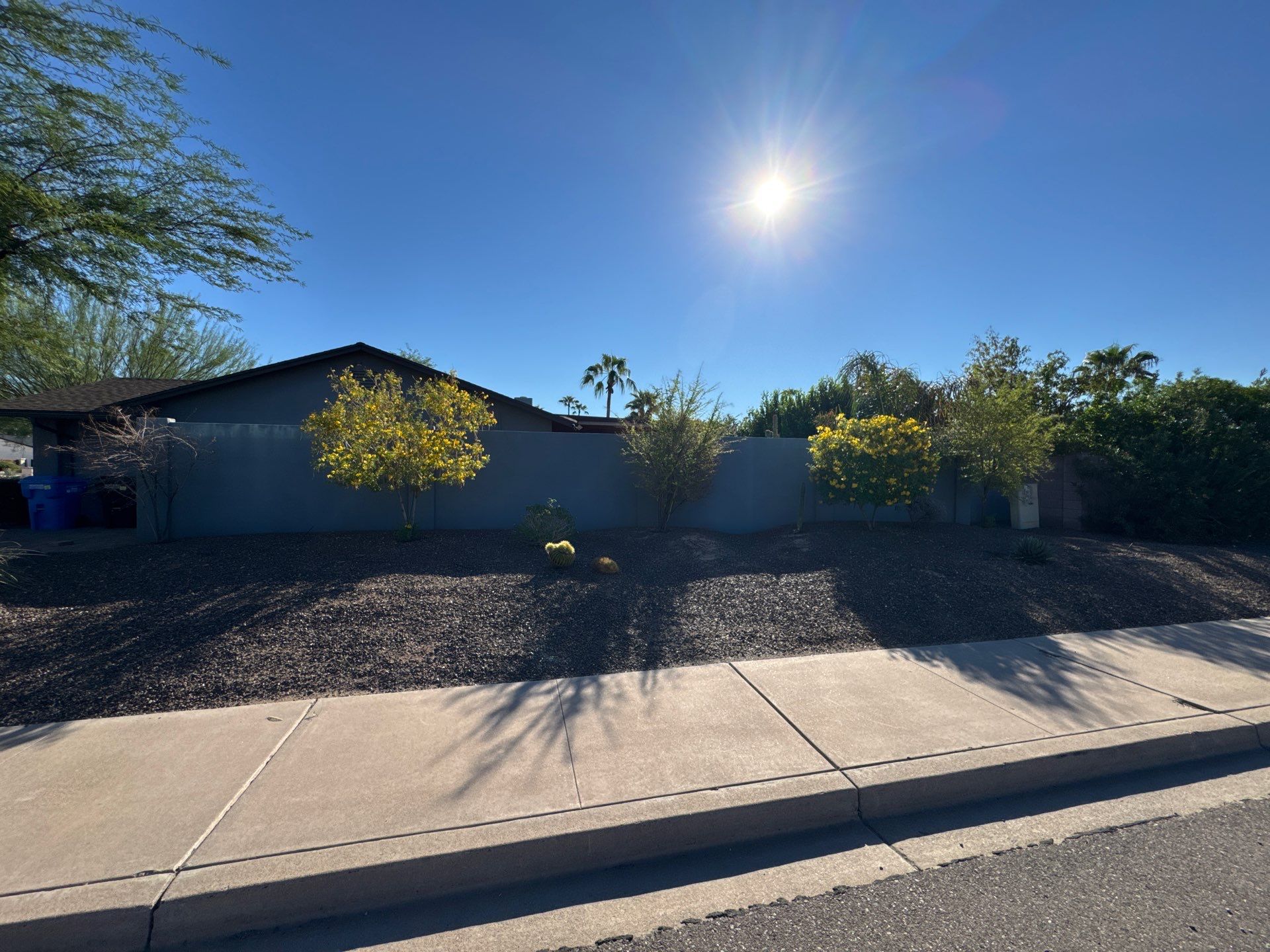
A yellow bells hedge along the wall
This side yard is a tough spot because it gets blasted by the afternoon sun. The yellow bells here, the yellow sister of orange jubilee, seem to be thriving, you like them, and they look really good.
Since the other plants along here are struggling, I'd fill in the whole wall with a hedge of yellow bells instead. It probably wouldn't take more than two or three more, and they'd fill in really nicely, cover the wall completely, and give you easy color.
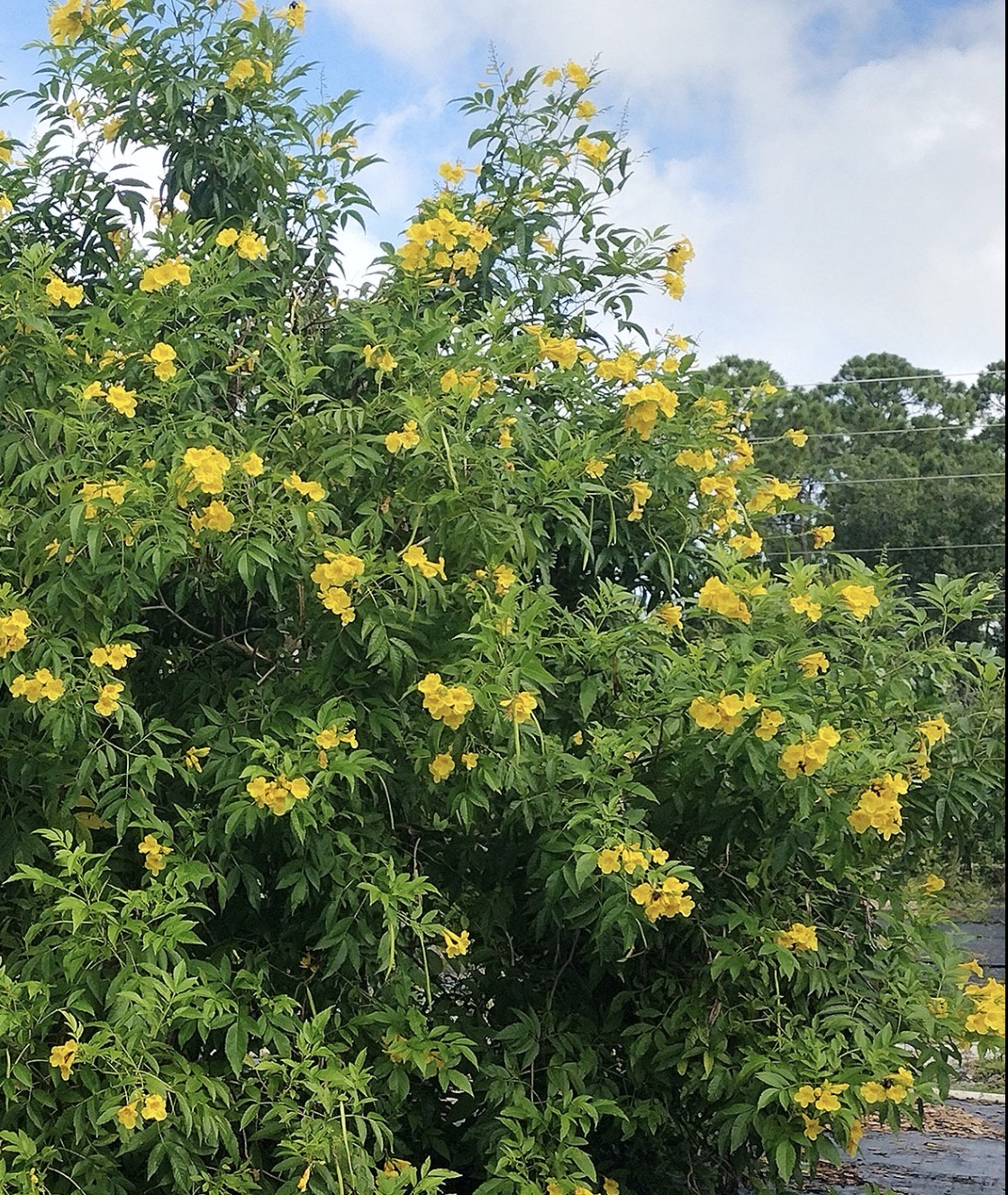
Yellow Bells
Bright yellow trumpet flowers spring through fall on lush green foliage, 8 to 12 feet tall. Takes full sun and heat and handles some shade. A hard freeze can nip it back. Plant 5 to 6 feet apart.
Another option is to line the wall with hopseed or Arizona rosewood. A hedge lining the wall cools the area on both sides of it, and it looks good too.

Hopseed
Fast growing native evergreen that fills in to a dense 8 to 12 foot screen. Stays fairly narrow and upright, so it fits tighter spots. Takes less water than plants that aren't desert adapted and handles reflected heat off a block wall. Plant 4 to 5 feet apart.

Arizona Rosewood
Native evergreen with dark, glossy leaves that grows 10 to 15 feet tall. Dense, tidy, very low litter, and one of the best screens for full sun and reflected heat. Plant 5 to 6 feet apart.
- Space the new ones about 5 to 6 feet apart, matching the ones you have, so they grow together into one continuous hedge.
- Plant now through fall so they can root in before summer. Backfill with native soil plus a tiny bit of compost, compost on top, then mulch, a foot back from the trunks.
- Water new ones deeply two to three times a week for the first few weeks, then stretch it out.
- Let them grow in before shaping them. A hard freeze can nip them back, but they flush right back out in spring.
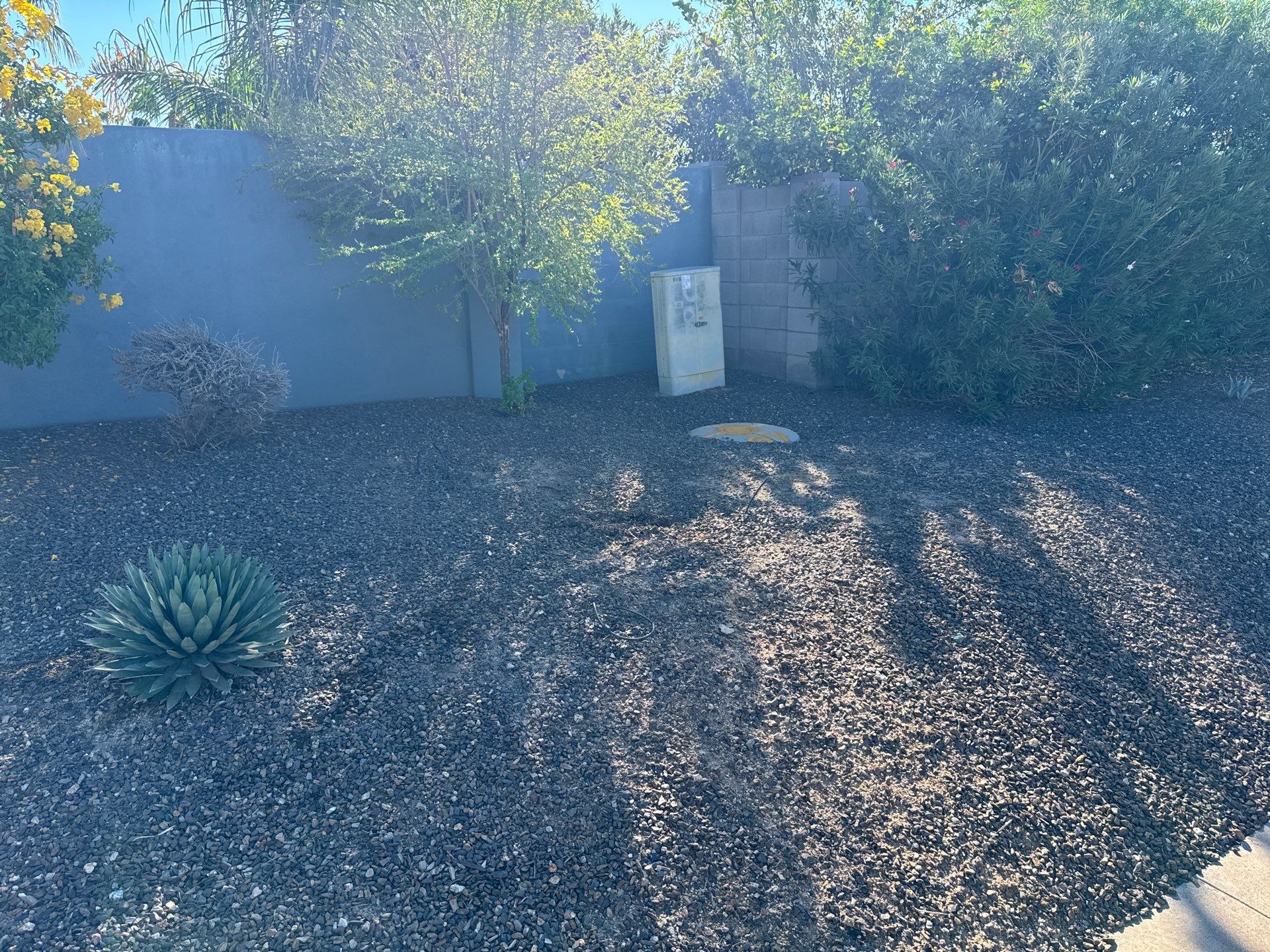
A new shade tree, and the volunteer mesquite
There used to be a mesquite tree here. I'd definitely replant another tree that will grow and give shade. Since you already have a number of mesquites, here are some other desert adapted trees that grow well and give good shade.
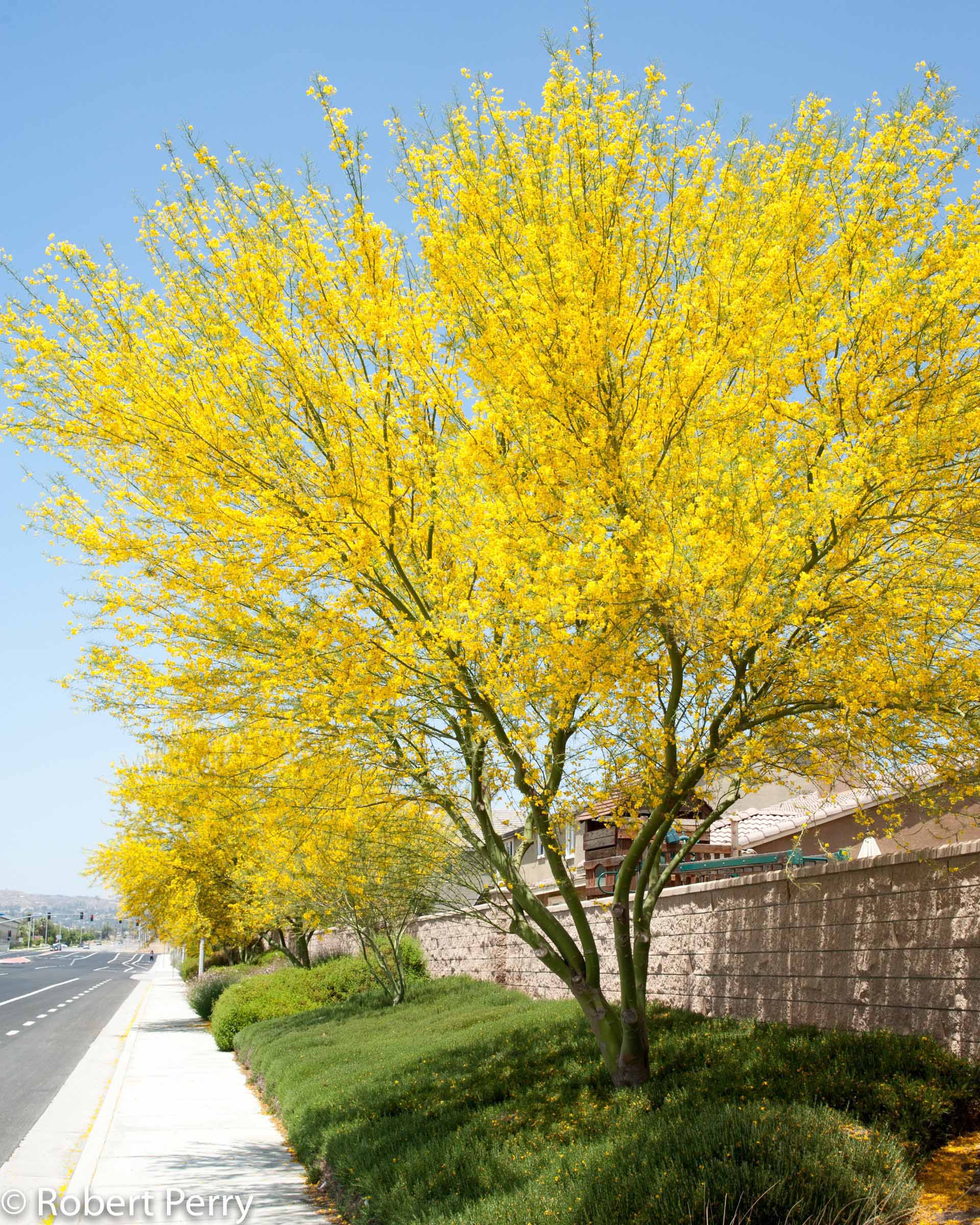
Desert Museum Palo Verde
Fast growing native hybrid, 20 to 30 feet, with green bark, a wide canopy, and a big show of yellow flowers in spring. Thornless, takes full sun and heat, and takes less water than plants that aren't desert adapted.
Willow Acacia
Evergreen with long, weeping leaves and a more upright shape, 20 to 30 feet. Fast, handles full sun, stays green all year, and takes less water than plants that aren't desert adapted.
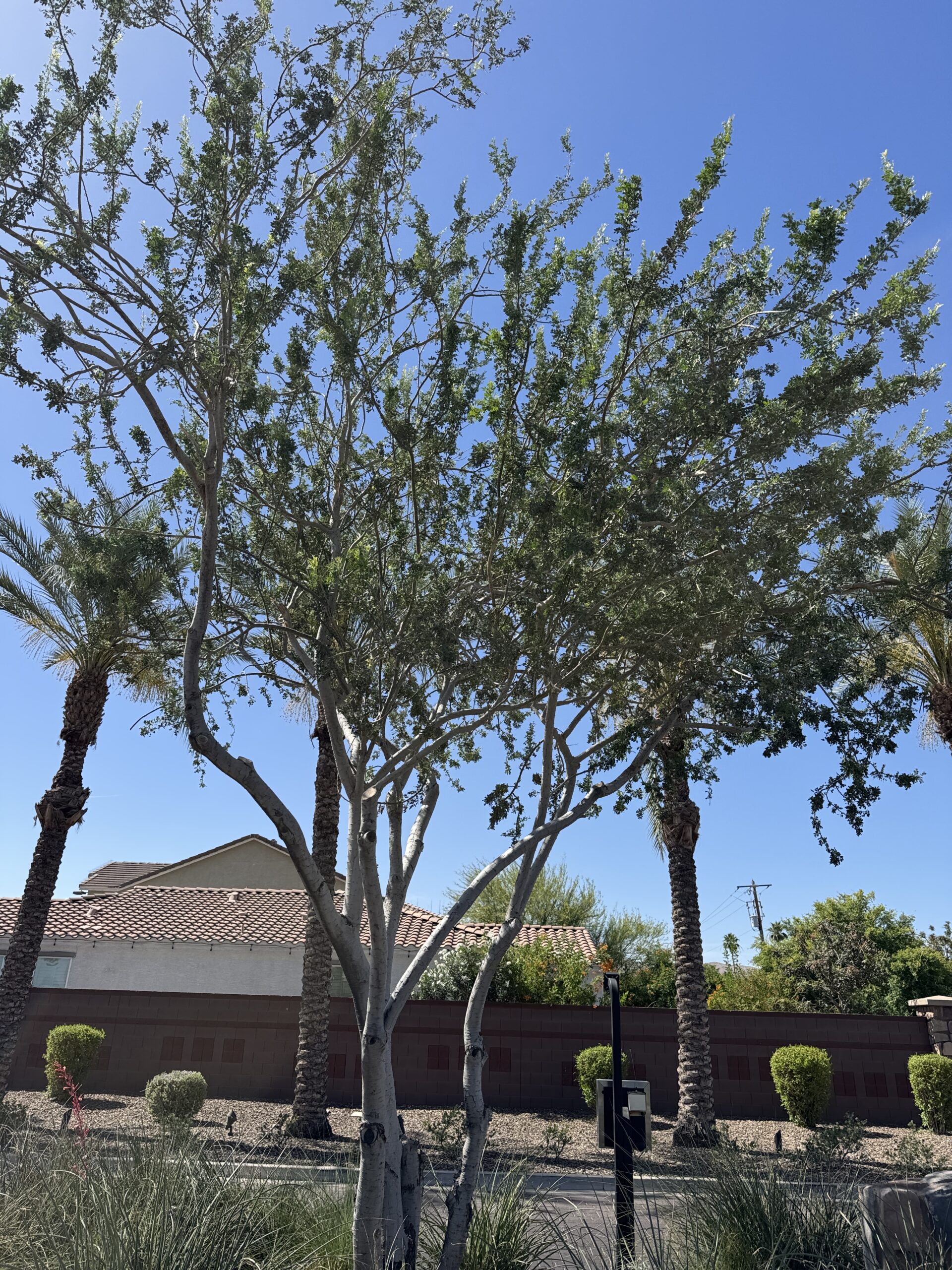
Desert Ironwood
Native evergreen, 20 to 30 feet, with dense gray green shade and lavender flowers in spring. Slower to start, but one of the longest lived, toughest shade trees for the desert.
Red Push Pistache
Medium shade tree, 25 to 40 feet, with red new growth in spring and great fall color. Handles full west sun and heat, does well in a lawn, and is low litter.
- Leave clear space around the utility box so it stays accessible.
- The stump: it doesn't need to be ground out. You can plant the new tree right to the side of it. Old roots in the ground aren't an issue.
- Size: start with a 15 gallon tree. Smaller trees establish faster and always end up being better trees long term than big boxed ones.
- Planting: set the tree so the root flare, where the trunk widens into the roots, sits slightly above the surrounding ground, never buried. Backfill with native soil plus a tiny bit of compost, lay compost on top, then mulch over the compost, held a foot back from the trunk.
- Water: a deep, slow soak once or twice a week the first year, then stretch it out as it settles in.
The volunteer mesquite
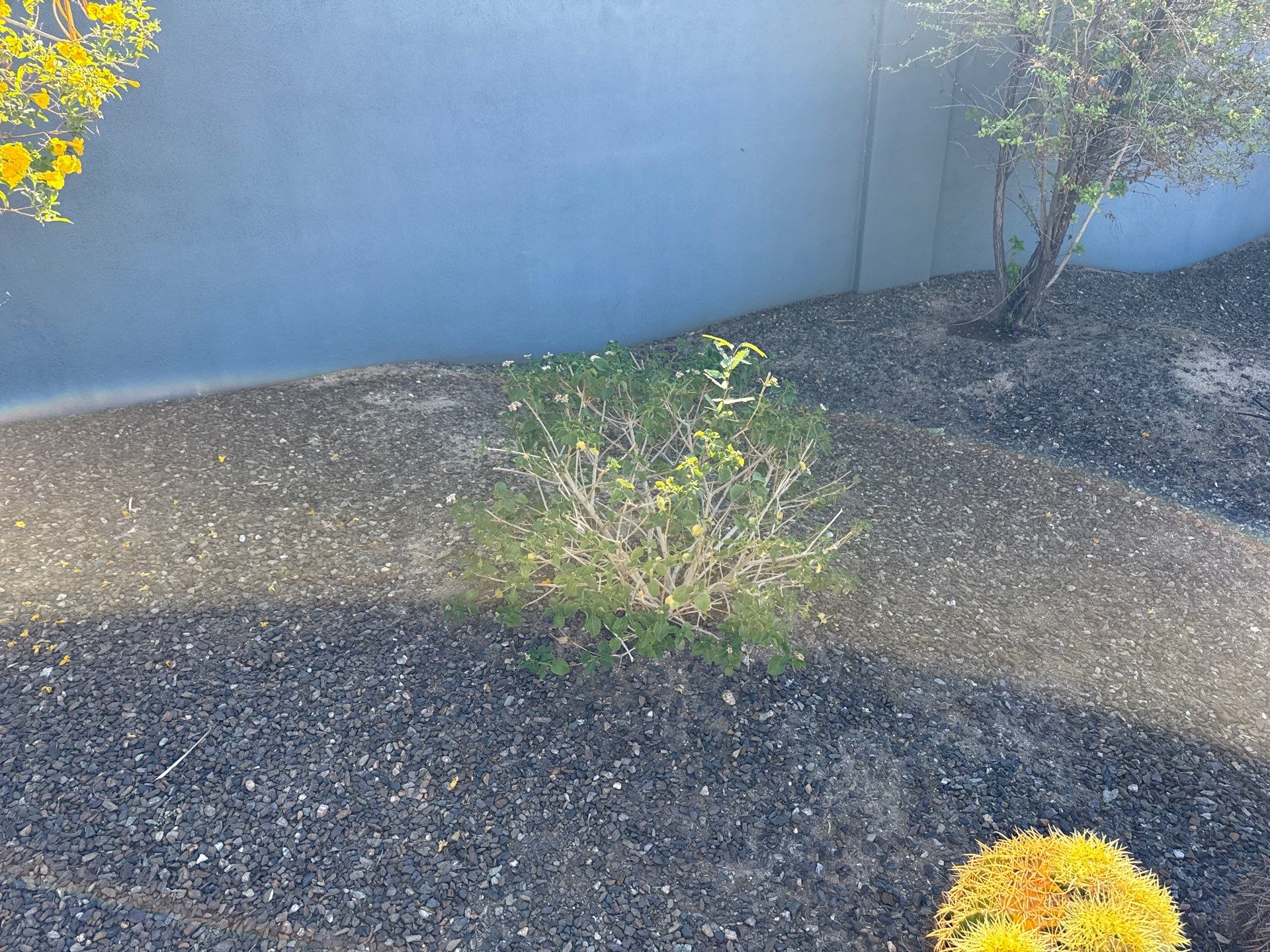
In this same area, next to the lantana, there's a volunteer mesquite coming up, and it's actually in the perfect spot. If you're up for it, I'd just let it keep growing. Trees that start as volunteers tend to survive really well, because their roots grow exactly where they want from day one, with no pot and no transplant shock.
- Pick the strongest upright stem as the main trunk and cut off competing ones at the base.
- Remove low side branches gradually as it grows, a few each year, so it develops a clean trunk.
- Give it an occasional deep soak, and keep rock and mulch back from the base.
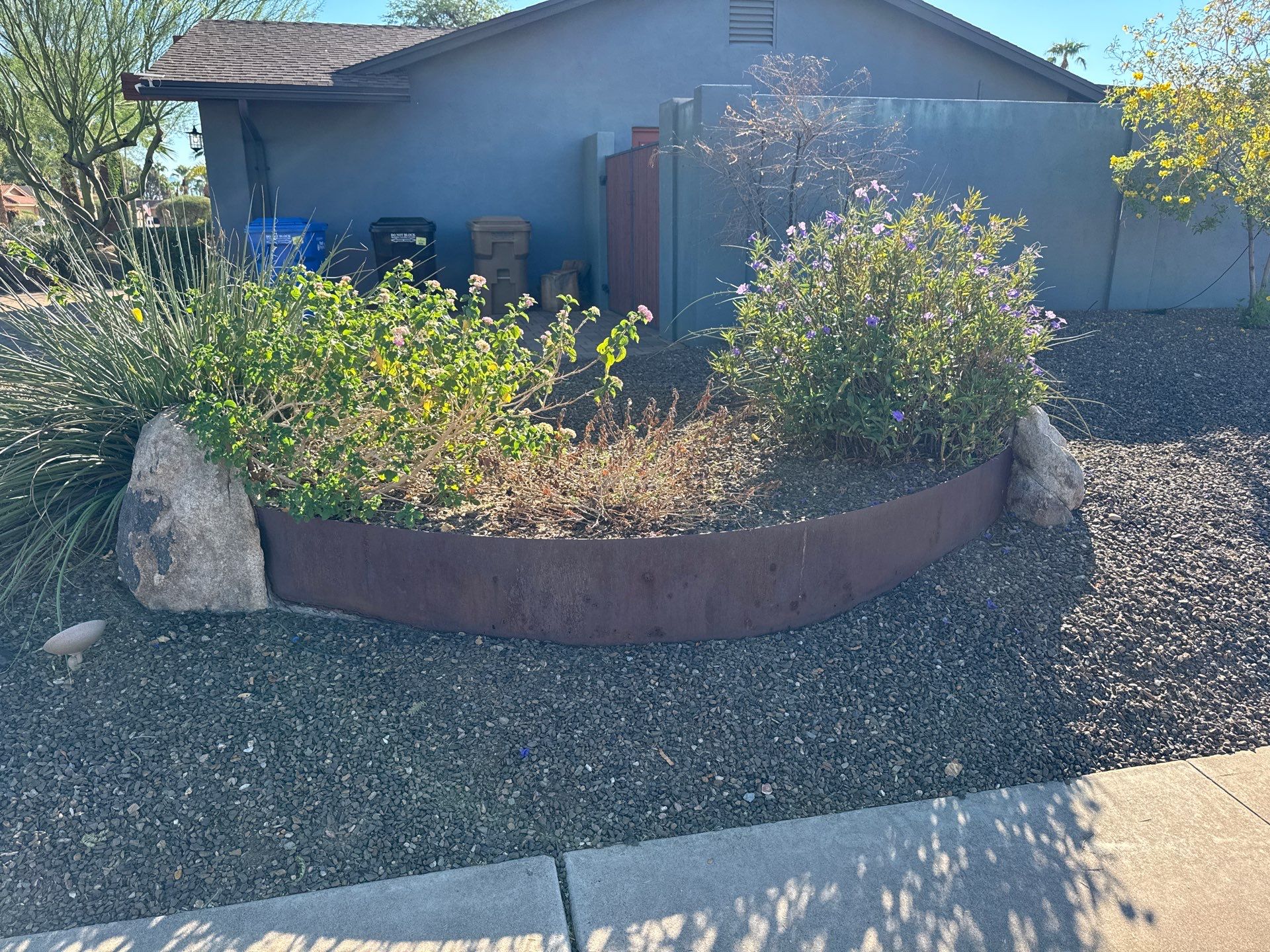
Plants for the retaining walls
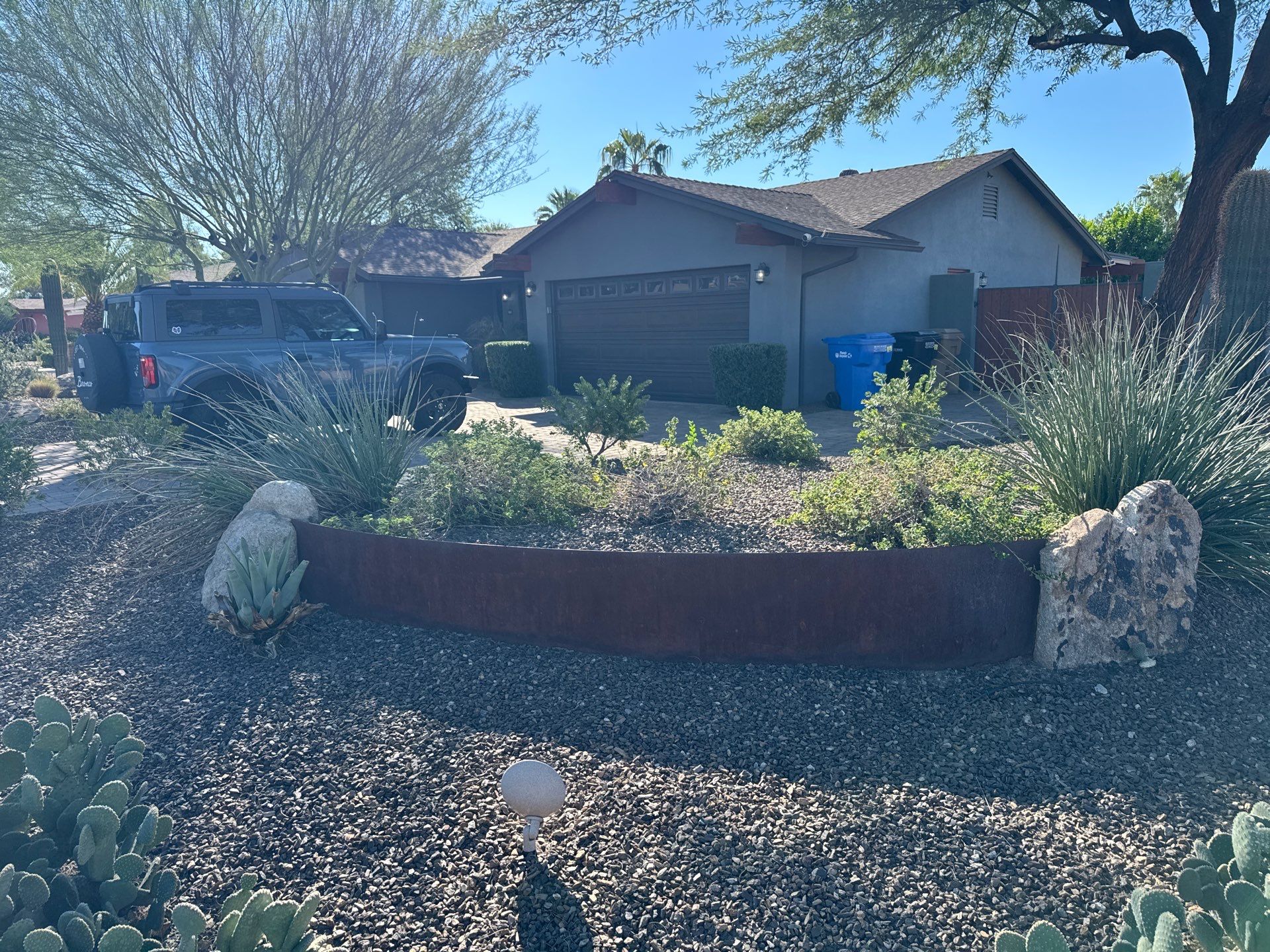
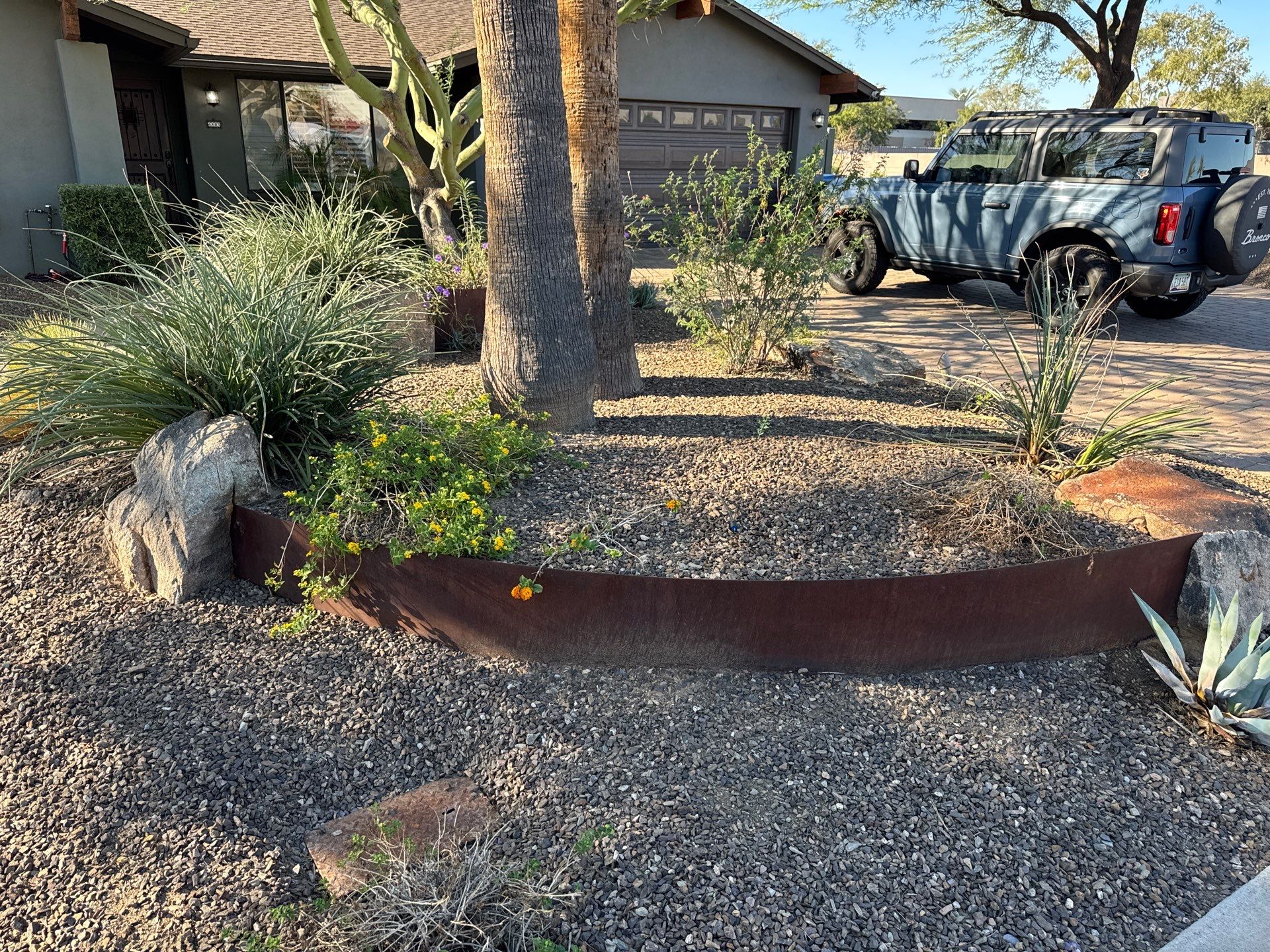
Here's one list for all of the retaining walls out front. Elephant food works great, and you have some in the backyard, so you can propagate it easily. Low growing ruellia in pink and white is another good option, and there are a few more desert adapted plants that stay low, add color, and spill over the edge of the wall.
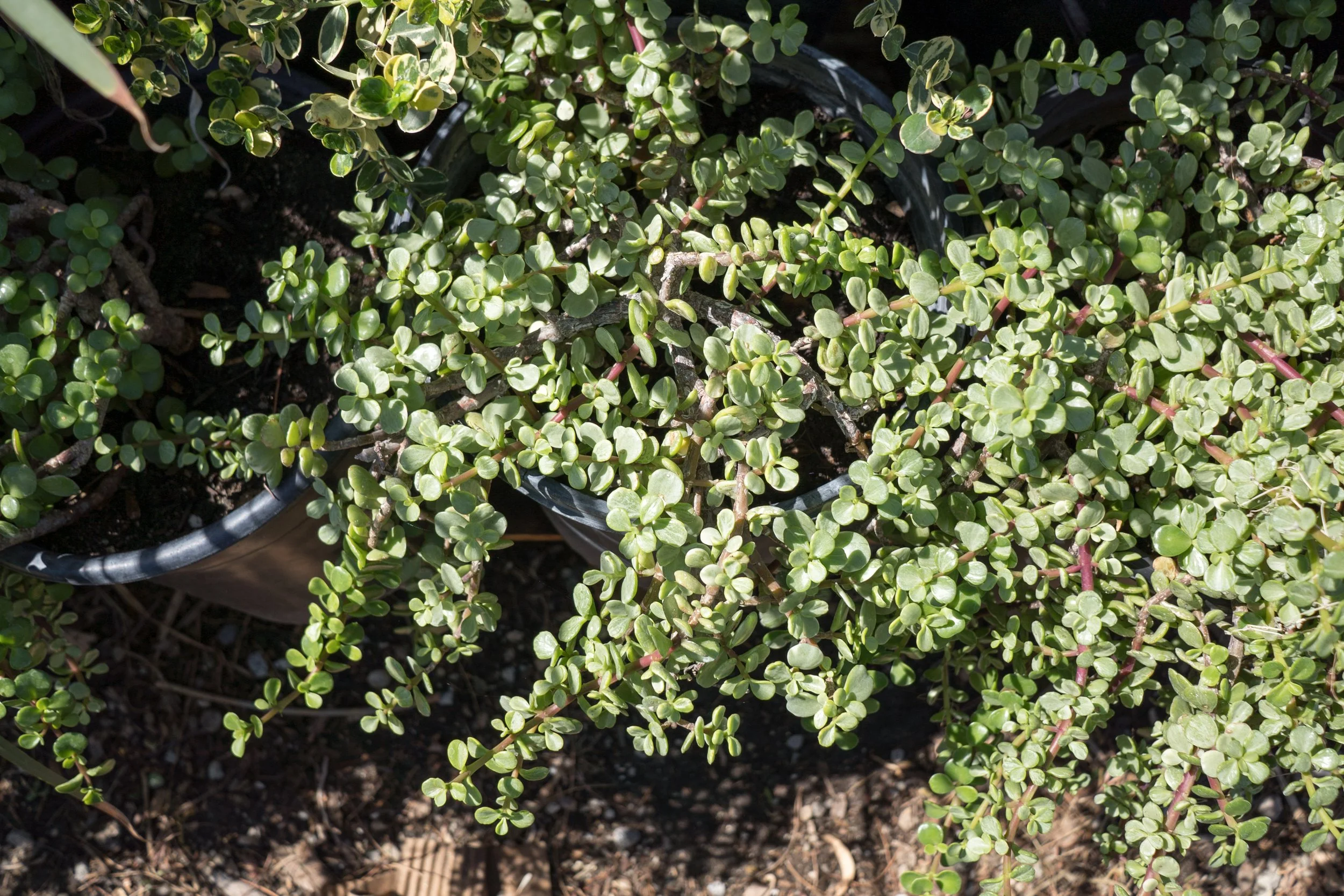
Elephant Food
Thick, round succulent leaves on trailing stems that spill nicely over a wall. Takes less water than plants that aren't desert adapted and roots easily from cuttings.
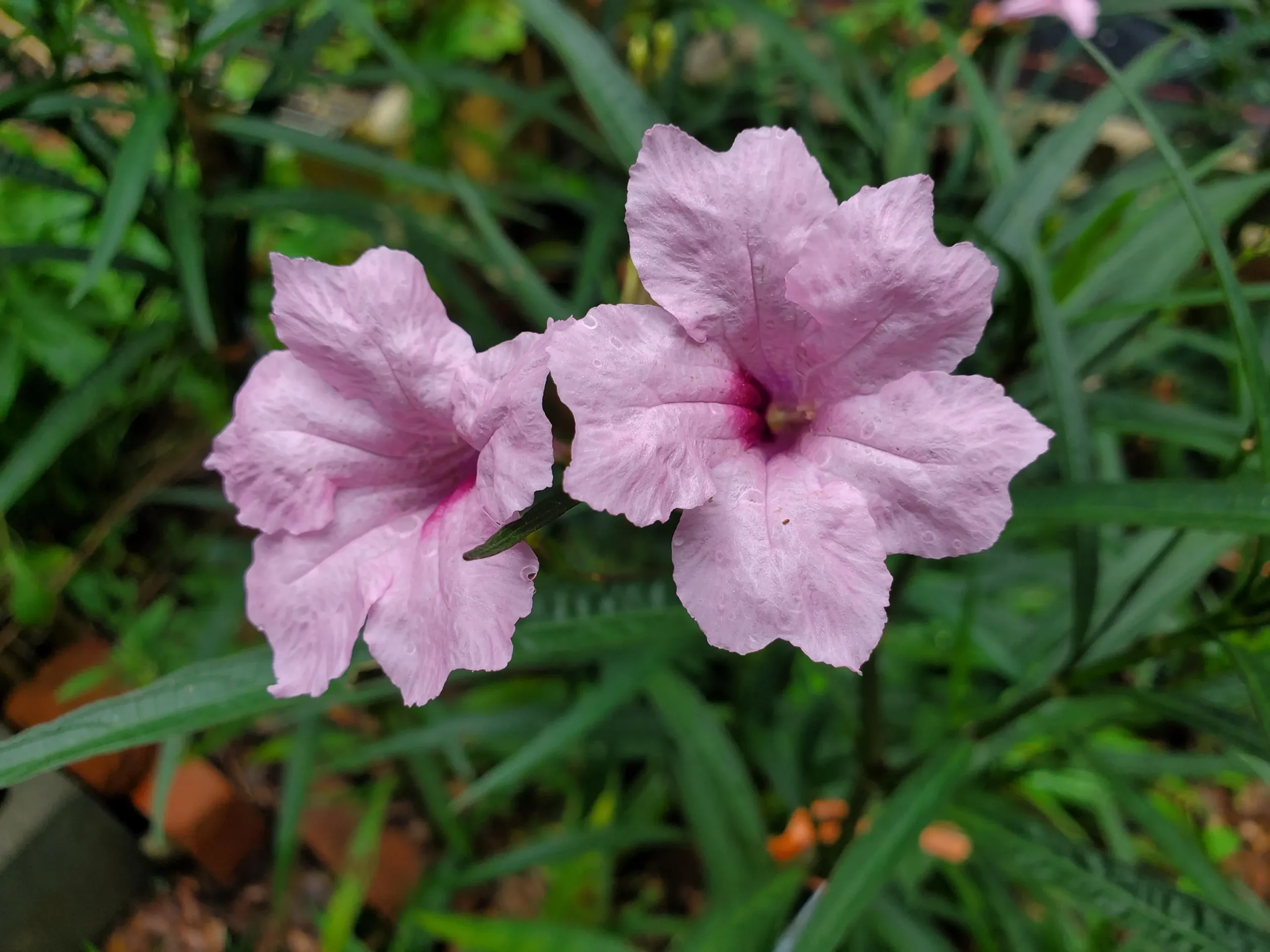
Pink Ruellia
Low growing ruellia with pink flowers spring through fall. Stays low and spills over the edge. Pairs nicely with the white.
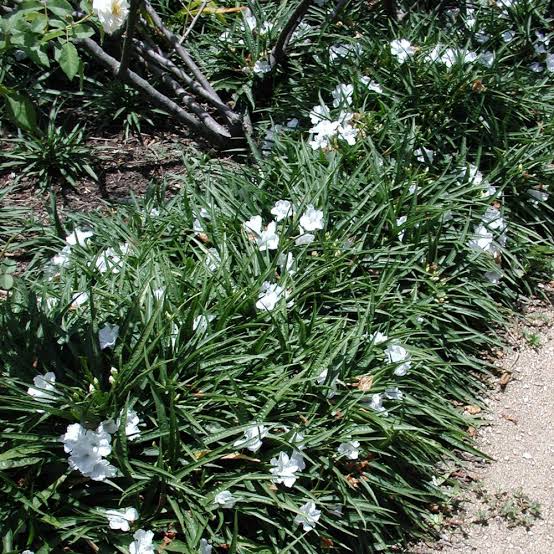
Desert Ruellia (white)
Low growing ruellia with white flowers spring through fall. Stays close to the ground and softens the edge of a wall.
Trailing Rosemary
Spills and spreads 4 to 6 feet with blue flowers bees love in winter and spring. Takes full sun and reflected heat, and you can cook with it.
Trailing Indigo Bush
Native groundcover with silvery foliage that hugs the ground and small purple flowers in spring. Very low water and handles reflected heat off concrete really well.
Trailing Emu Bush (Outback Sunrise)
Low and spreading, under a foot tall and 4 to 6 feet wide. Gray green leaves with orange red flowers winter through spring that hummingbirds love. Takes full sun and reflected heat and drops very little.
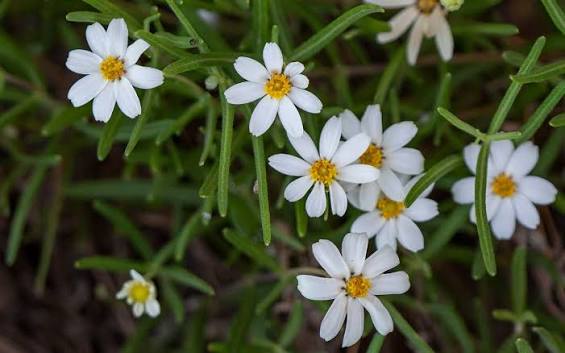
Blackfoot Daisy
Native, white daisy flowers almost all year, under a foot tall. Spills nicely over an edge. Hates being overwatered.
Damianita
Low, tidy mound of fine green foliage covered in golden yellow flowers in spring and fall. Stays about a foot tall and 2 feet wide.
You can't fit all of these. Pick a few favorites and repeat them so it looks intentional.
Propagating the elephant food
- Snip 4 to 6 inch pieces from the plants in the backyard, from spots where they're full.
- Set the cuttings somewhere shady for 2 to 5 days so the cut end dries and seals over.
- Push them 1 to 2 inches into the soil along the front edge of the retaining walls, so they'll trail over as they grow.
- Water lightly and keep the soil just barely moist for 3 to 4 weeks until they root. Fall is a perfect time for this.
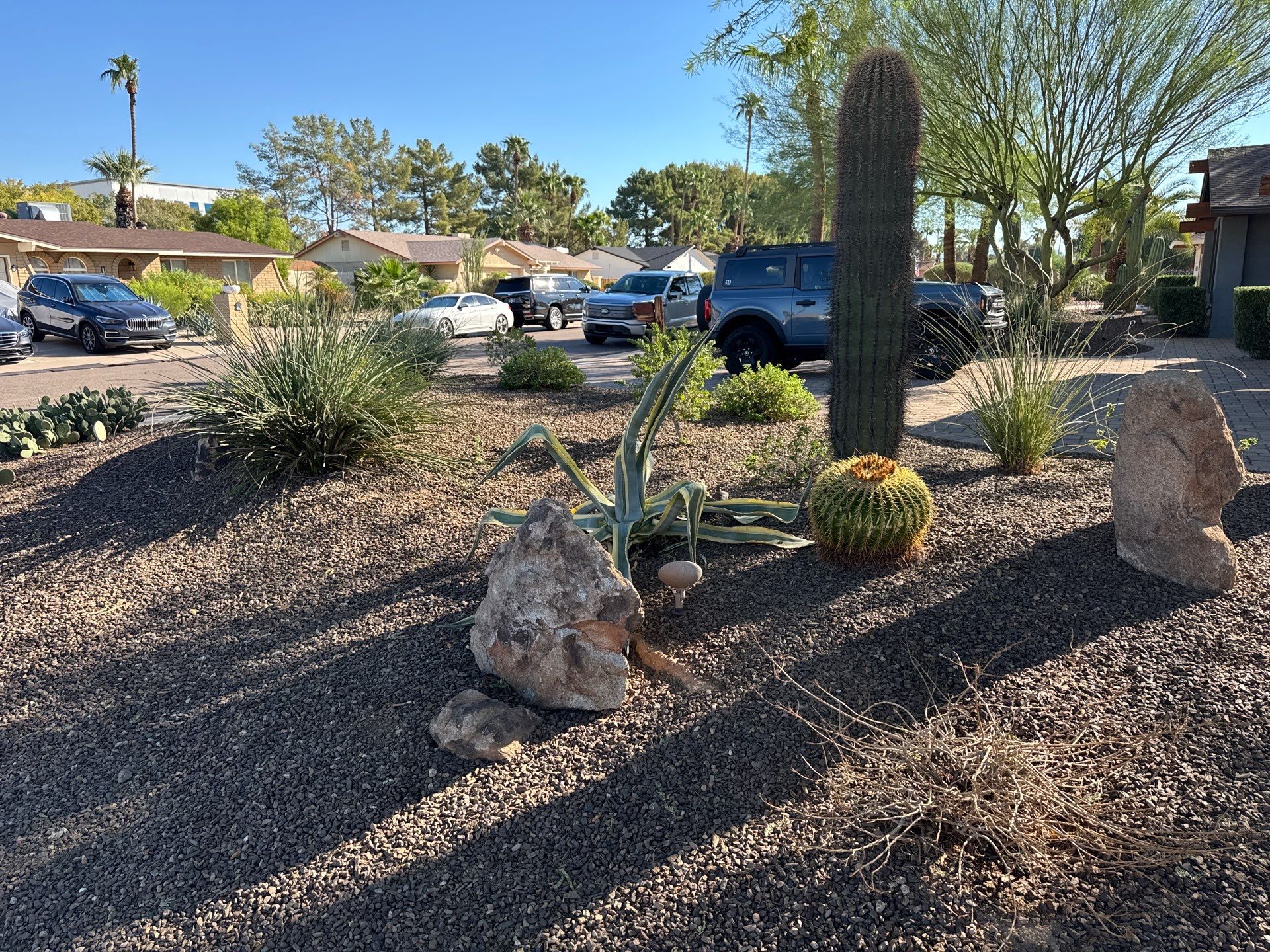
Replacing the plants that didn't make it
Overall, more desert adapted plants will grow well here and replace the ones that have died. Here are some good options that handle full sun and take less water than plants that aren't desert adapted.
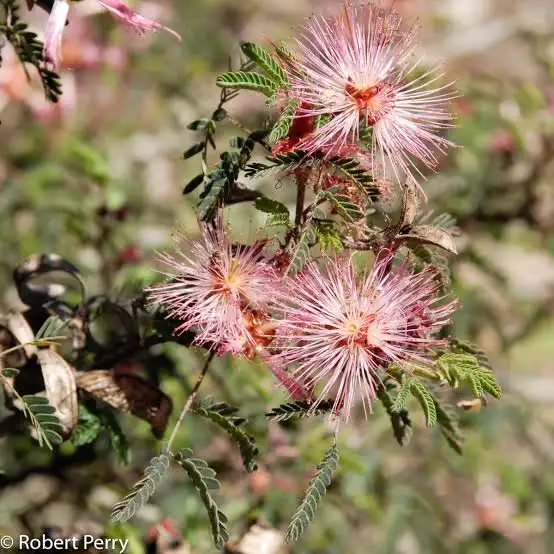
Pink Fairy Duster
Native, low and airy, 2 to 3 feet, with soft pink puffball flowers in late winter and spring. Pairs well with your red fairy duster.
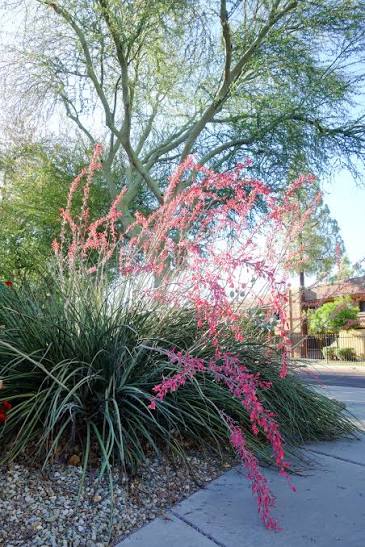
Red Yucca
Grassy clumps with tall coral red flower spikes spring through fall. Hummingbirds love it. Extremely tough in full sun.
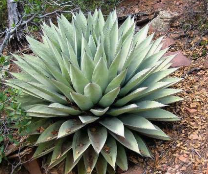
Perry's Agave
Compact, blue gray agave with a clean rosette shape. A strong structural plant that takes full sun and very little water.
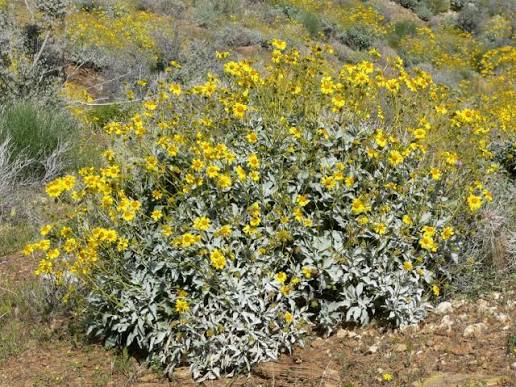
Brittlebush
Native, silvery mound covered in bright yellow daisies in late winter and spring. Fast to fill space.
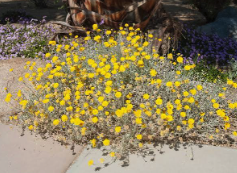
Desert Marigold
Low mound of gray leaves with bright yellow daisies most of the year. Reseeds itself and keeps color going.
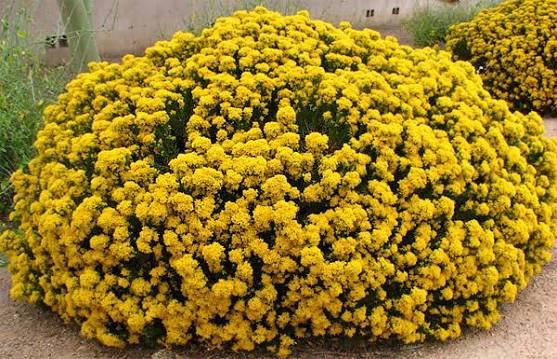
Turpentine Bush
Native, rounded, about 3 feet, bright green with a blanket of yellow flowers in fall. Fills empty spots fast.
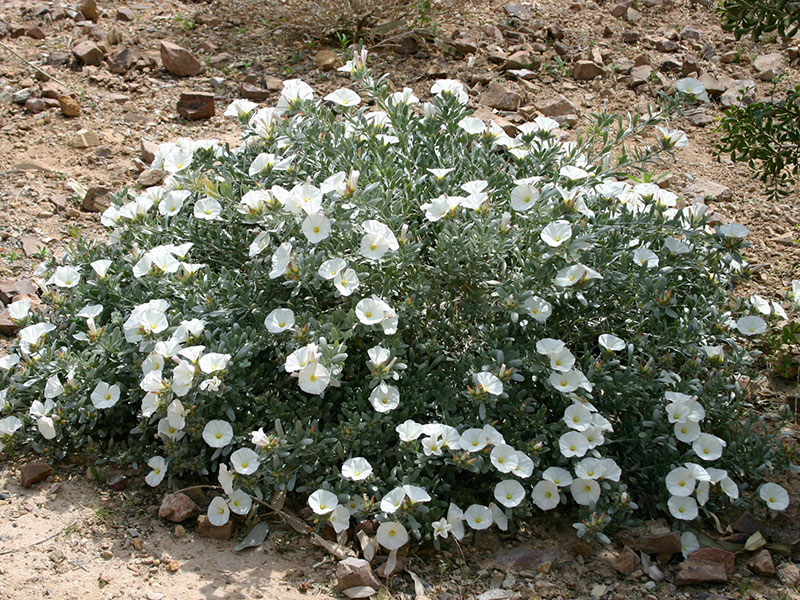
Bush Morning Glory
Silvery mound with white flowers spring through fall. Soft texture and takes full sun and reflected heat.

Texas Sage
Silvery foliage with flushes of purple flowers after summer rains. Larger varieties like Green Cloud reach 6 to 8 feet; compact varieties stay 3 to 4 feet. Loves full west sun and hates being overwatered.
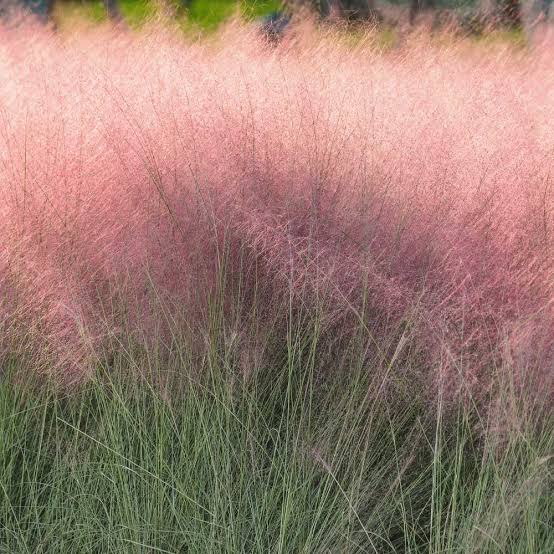
Pink Muhly Grass
Fine green clumps that turn into clouds of pink in fall. Great mixed in with flowering shrubs.
My approach with a desert landscape is to add a lot of different plants for diversity. They don't need to be strategically placed. A little sporadic looks good and fuller. Keep lower growing plants near walkways and under trees. Other than that, just do your thing and don't stress about placement.
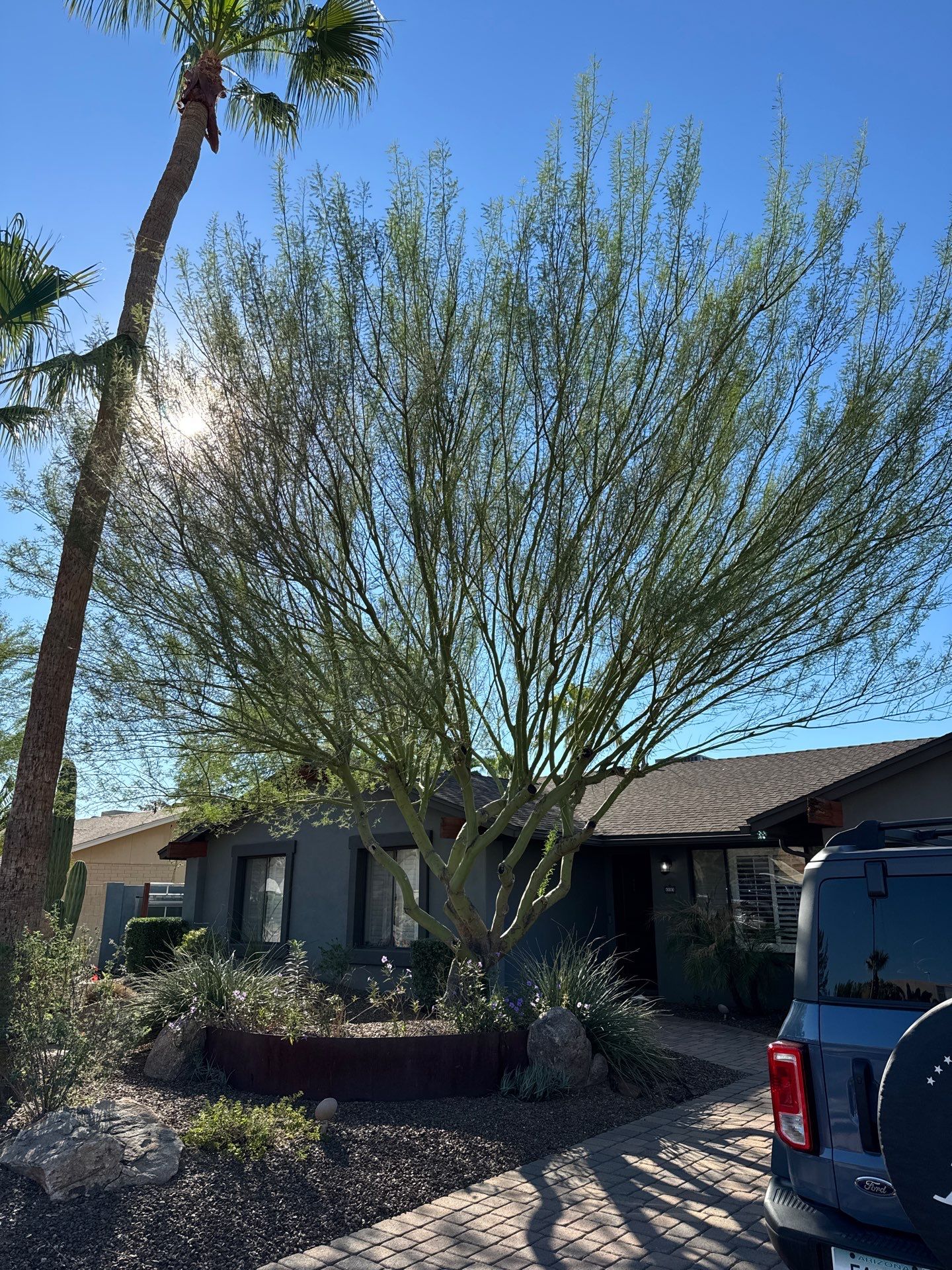
Get the palo verde pruned
This palo verde isn't in horrible shape health wise, but it needs a very good pruning, and I'd get it done as soon as possible. A canopy this full catches a lot of wind, which is how palo verdes split and blow over in monsoon storms.
I recommend King's Tree Service.
- What good pruning looks like: thinning the canopy so wind passes through, taking out dead wood and crossing branches, and keeping the tree's natural shape.
- What to avoid: topping, or stripping out all the inside branches so only tufts are left at the ends.
- How much: a good arborist won't take more than about a quarter of the canopy at once.
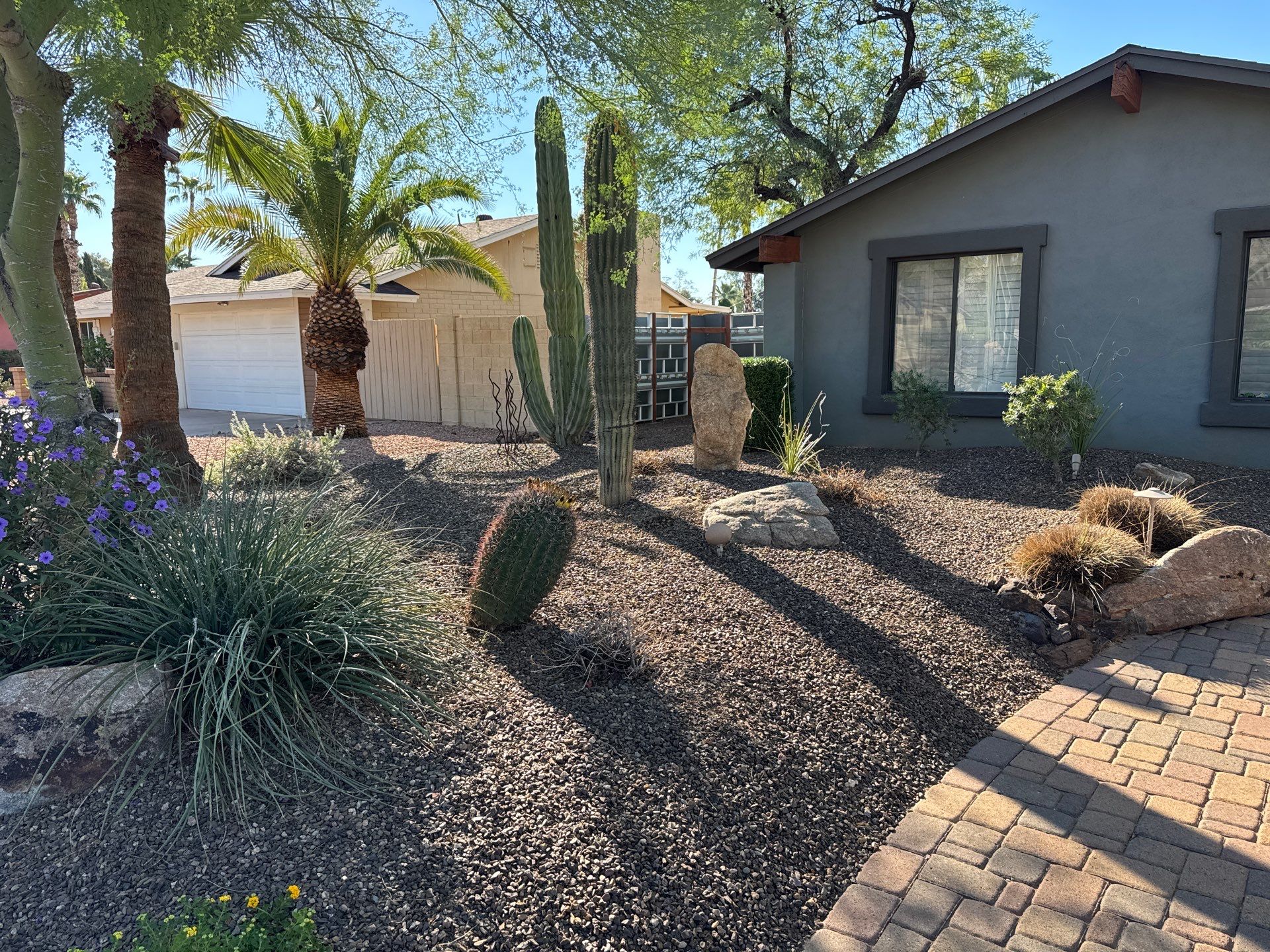
Desert plants to fill in the front yard
Here are some desert adapted plants that will help fill in the front yard. You already have a red fairy duster, so the pink fairy duster would pair nicely with it. Globe mallow, chuparosa, and Gregg's mistflower are all great fits too.
Pink Fairy Duster
Native, low and airy, 2 to 3 feet, with soft pink puffball flowers in late winter and spring. Pairs well with your red fairy duster.
Globe Mallow
Native with silvery leaves and cup shaped orange flowers in spring. Native bees love it. Best where it gets good sun.
Chuparosa
Native with green stems and red tubular flowers through winter and spring. A hummingbird favorite, handles sun or part shade.
Gregg's Mistflower
Soft, mounding native covered in fuzzy purple flowers spring through fall. Butterflies swarm it. Does well in sun or part shade and spreads over time.
Brittlebush
Native, silvery mound covered in bright yellow daisies in late winter and spring. Fast to fill space.
Penstemon
Tall flower spikes in red, pink, or purple in spring. Hummingbirds and native bees love it. Plant in fall for spring blooms.
My approach with a desert landscape is to add a lot of different plants for diversity. They don't need to be strategically placed. A little sporadic looks good and fuller. Keep lower growing plants near walkways and under trees. Other than that, just do your thing and don't stress about placement.
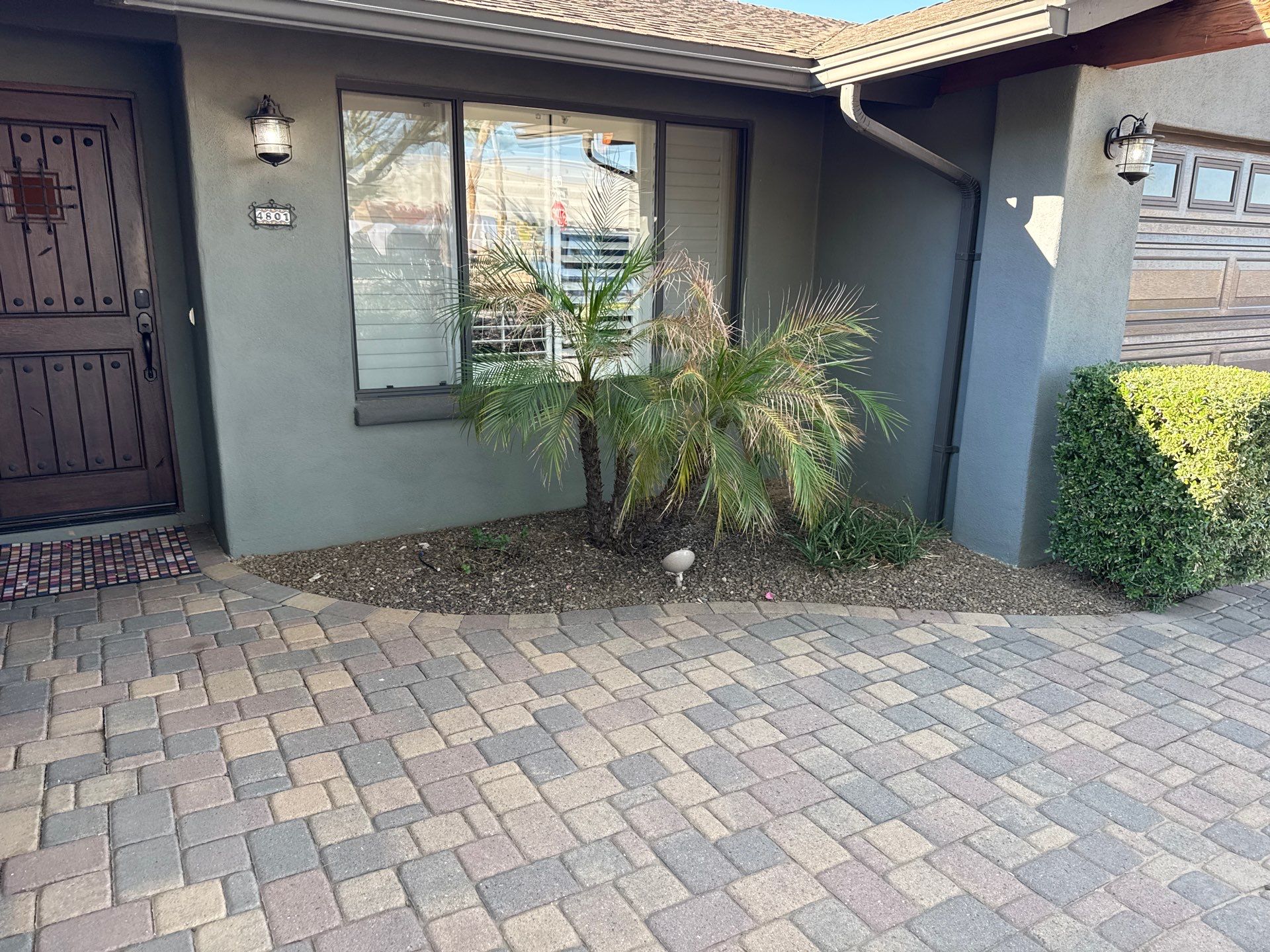
Ground cover by the front door
Right by the front door faces north and gets quite a bit of shade. Here are some ground covers that will thrive here.
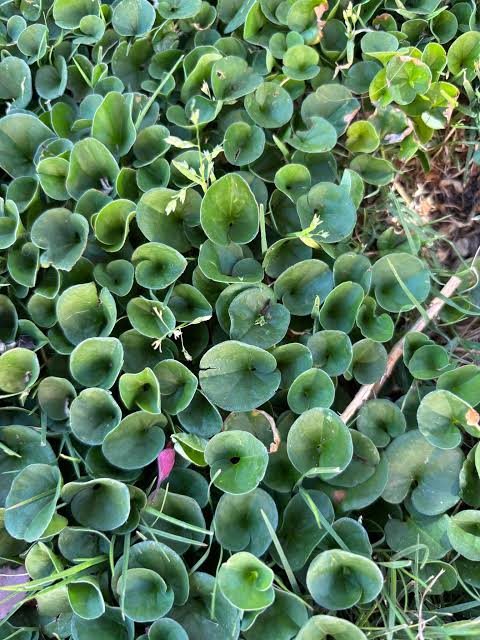
Dichondra
Low, soft carpet of small round green leaves. One of the best ground covers for shade. Likes regular water.
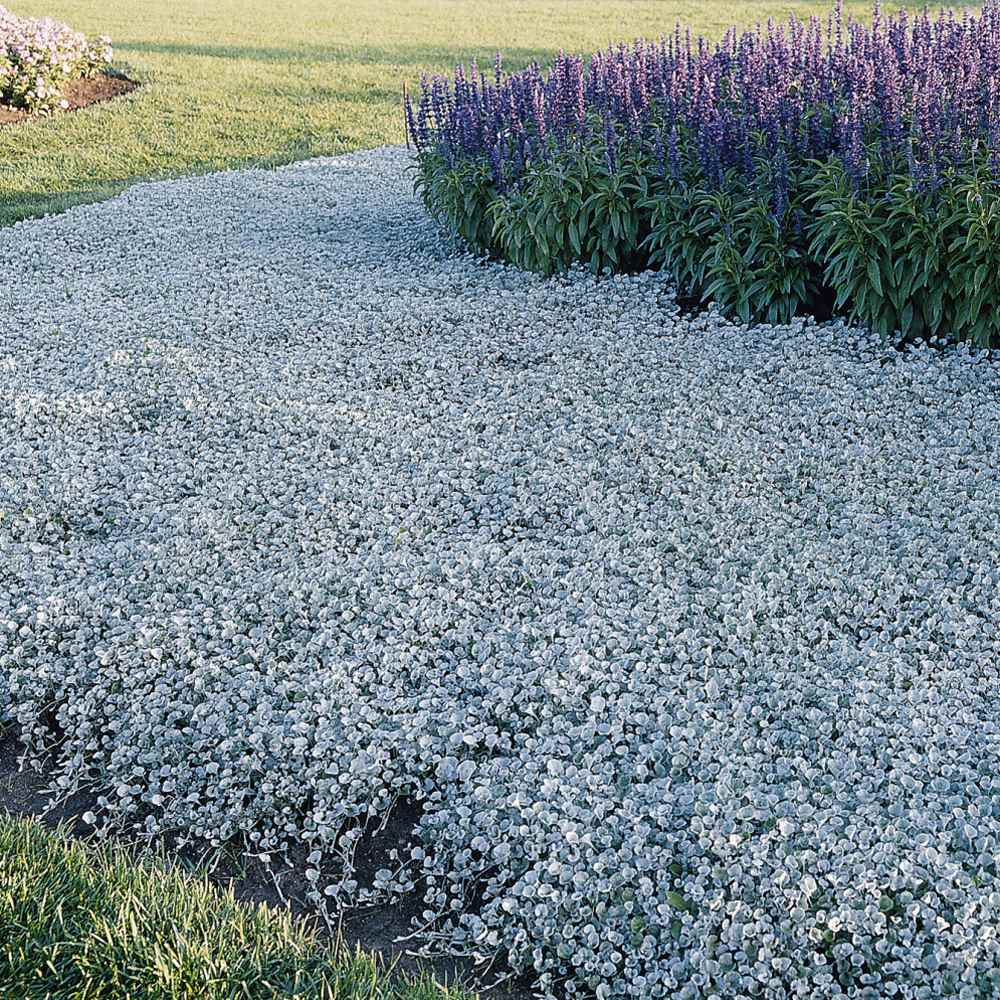
Silver Ponyfoot
Trailing silver leaves that form a soft mat and spill over edges. Handles part shade and looks great against pavers.
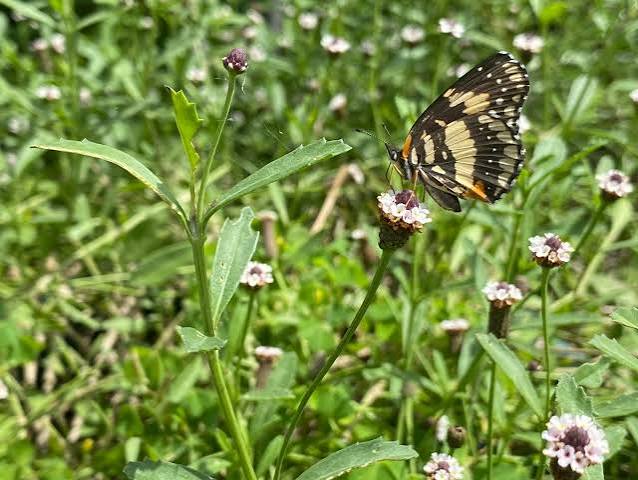
Frogfruit
Native, low, spreading mat with tiny white flowers that pollinators love. Handles shade or sun and light foot traffic.

Purple Heart
Trailing purple foliage with small pink flowers. Spreads fast and handles shade by the house well.
Asparagus Fern
Soft, airy, bright green mound that loves shade. Tough once established and fills a spot quickly.
Foxtail Fern
Upright plumes of bright green, about 2 feet tall. One of the best options for a shady spot by the door.
You can't fit all of these. Pick a few favorites and repeat them so it looks intentional.
- Shade plants still need consistent water while they fill in. Make sure each one has an emitter.
- An inch of compost and mulch around them will help them spread faster.
Fertilizing
Everything in this write-up comes back to the soil. Feeding is really about feeding the soil life. Fungi, bacteria, and worms break down organic matter and hand nutrients to the roots, which is what helps new trees establish, keeps the bottlebrush dense and green, helps the citrus fruit, and helps plants like the skyflower and the vine bounce back, all without synthetic fertilizers. Here's the exact approach I use, so you can do it yourself.
- Compost, and be generous. On trees, spread it in a wide ring around the drip line, the outer edge of the canopy where most of the feeder roots are, from about halfway in to a couple feet past the edge. On shrubs, hedges, and vines, put it closer in, from a few inches off the stems out about a foot past the edge of the plant. Go 1 to 2 inches deep, and if you're unsure, go thicker rather than thinner. You really can't overdo quality compost. Do this three times a year: late winter (February), early summer (May), and fall (October).
- Worm castings every quarter. Every three months, scatter worm castings over the same areas: a few cups around each shrub and a couple pounds around the drip line of each tree. Castings are loaded with beneficial microbes that bring the soil to life. When it lines up with a compost round, put the castings down first and the compost right over them.
- A good organic fertilizer. These are the three products we use and recommend, all from Catalyst. Apply them at the label rate on the schedule each one gives.

Jenner 8
Liquid organic feed for the whole landscape.

Organic Nitro Jen
Organic nitrogen to push healthy green growth.
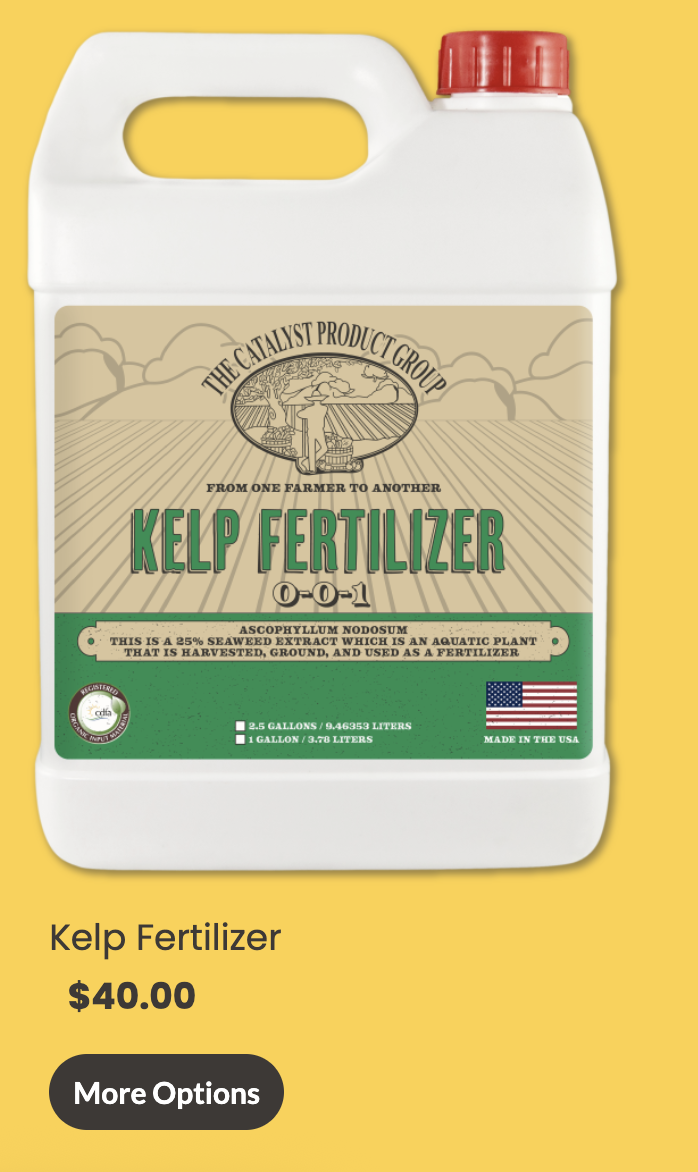
Kelp Fertilizer
Kelp based feed that supports roots and overall plant health.
You can find all three on the Catalyst website. Click Products, then Home and Garden.
- Water it all in. Give everything a deep watering right after you put it down so it soaks into the root zone.
- Mulch over the top. Mulch goes over the compost to keep it moist and cool so the soil life can do its work. Hold it a foot back from trunks and stems. No need to work any of it into the soil.
Compost, worm castings, and mulch are all at Arizona Worm Farm.
If you'd rather we handle it
Our monthly landscape fertilizing program feeds the whole yard for you.
- Covers the trees, citrus, bottlebrush, vines, and the rest of the landscape
- Monthly compost based liquid feeding across the full landscape
- Compost applications three times a year
- A recap video sent to you after each visit
Quick reference
Organic fertilizers
Catalyst (Products, then Home and Garden)Compost, mulch, worm castings
Arizona Worm FarmArborist pruning
King's Tree ServiceRoot flare video
Why the root flare mattersOrange jubilee video
Watch on YouTubeIrrigation
Garrett: 480-678-9121Questions
Ask me anytime in the Garden Nerd ClubNext steps
You can take this list and do it yourself, and I'm right there in the Garden Nerd Club if you want a second set of eyes along the way. If you'd rather have us handle the planting or the root flare excavation, I can put together a proposal for you.
For anything irrigation related, call Garrett at 480-678-9121.
You can see more of what we do on our planting services page.
