
Your Yard, Leyla
Thanks for having me out. This is everything we walked through, written down so you have it in one place. The short version: a few plants to fill in the front, resets on the shrubs and the oleanders this winter, a hedge on the walls, native pollinator beds where the ground is bare, a real shade tree for the west side, and a plan to get the raised bed producing this fall.
Groundcover, a few resets, and better plants against the house
Low voltage landscape lighting
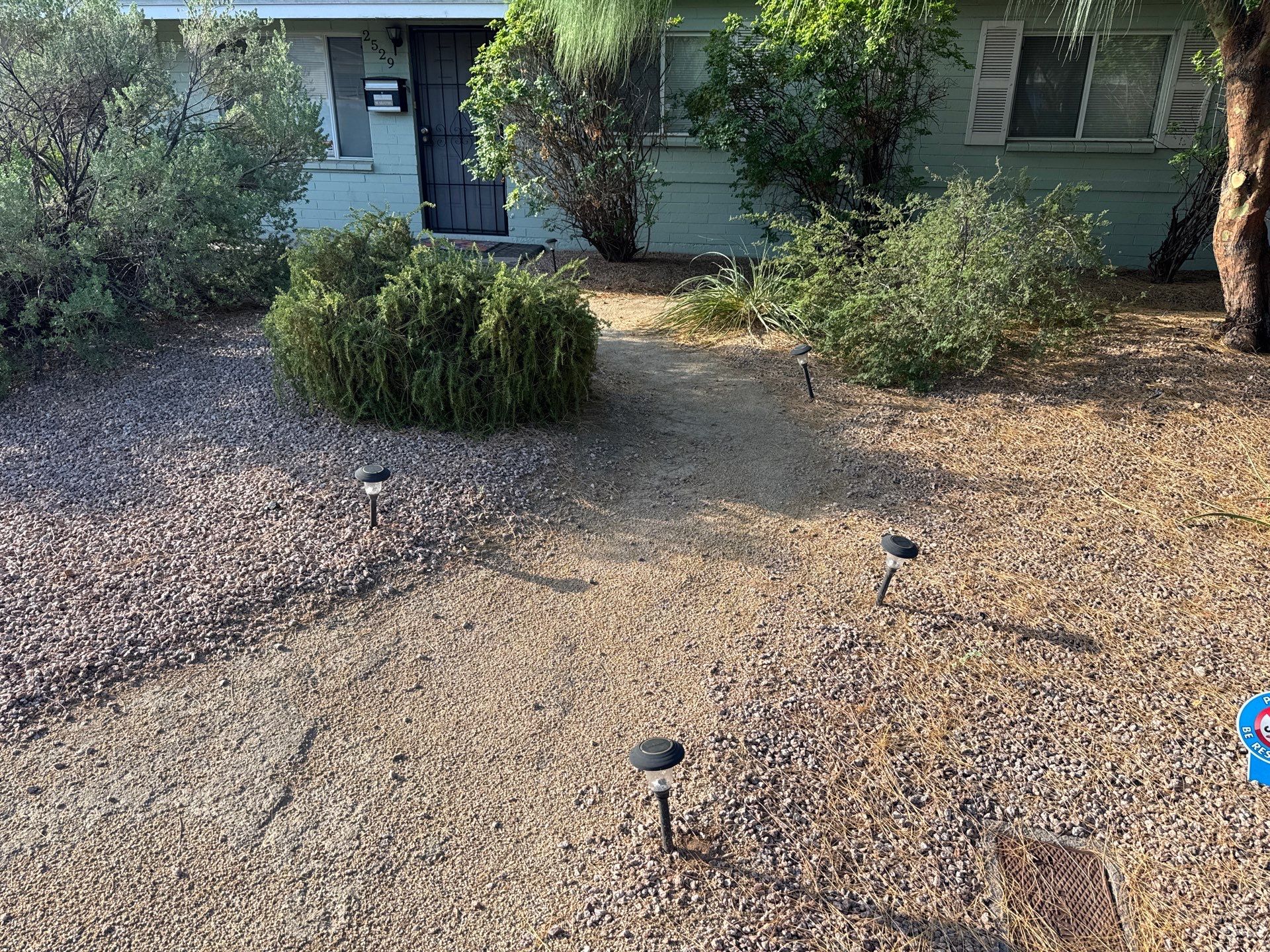
The front would look great lit at night, and low voltage lighting is the way to do it. It's safe, cheap to run, and easy to add to. Garrett, the irrigation guy I work with, does lighting as well. His number is at the bottom of this page.
A few more lantana for groundcover

This open stretch of gravel needs something living in it. A few more lantana will spread and cover this area in a season or two. They'll give you color most of the year and make the whole front read as finished from the street. Mix in a few globe mallow for height and a hit of orange.
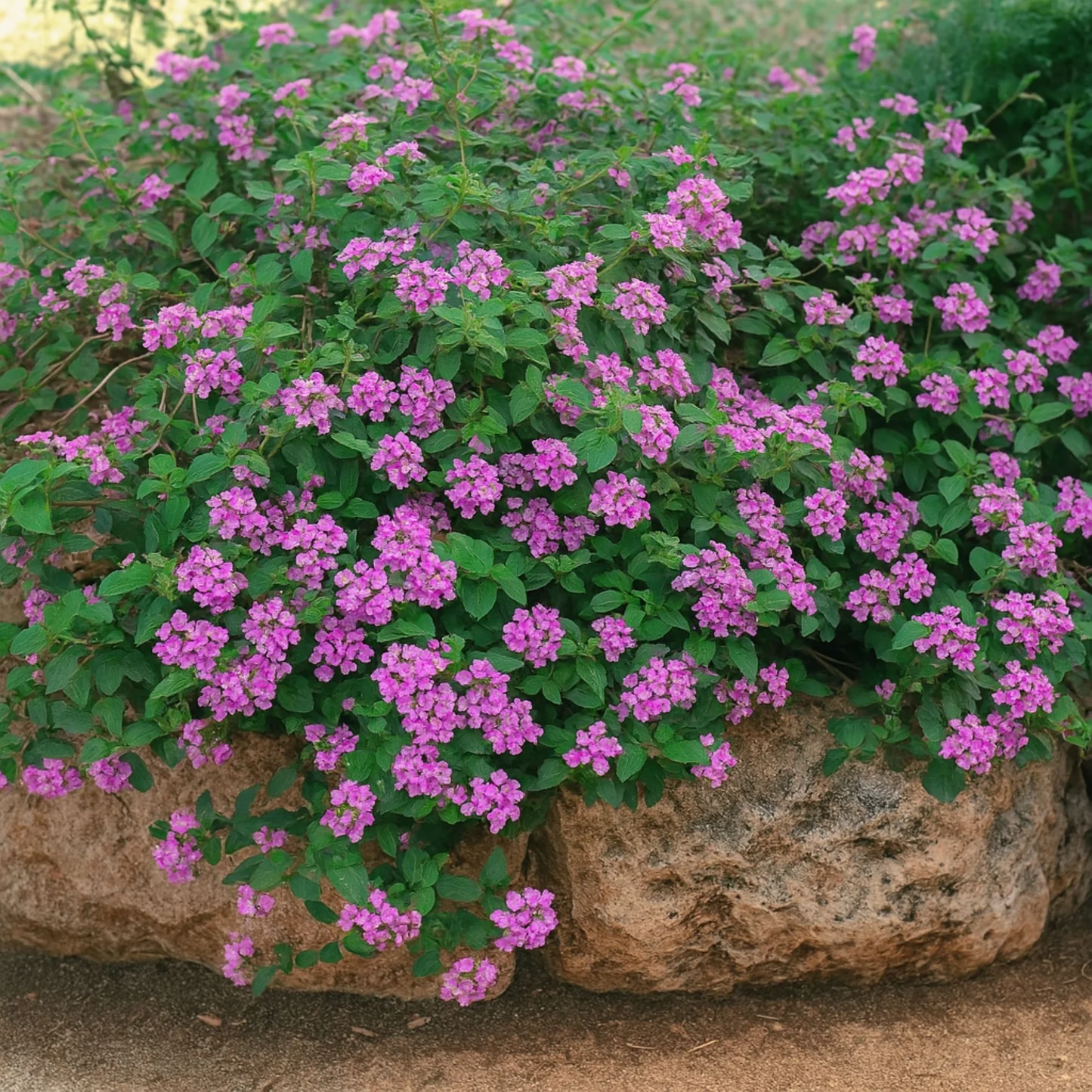
Lantana
Nonstop color from spring until frost, purple, yellow, or mixed, and butterflies all over it. Trailing types stay low and spread wide, which is what you want for groundcover.

Globe Mallow
Native, orange cup-shaped flowers in big flushes spring and fall, gray-green leaves, 3 feet tall and wide. One of the toughest color plants we have.
Reset these this winter

These shrubs have gotten leggy and woody. They don't need replacing, they need a reset. This winter, cut back the dead, woody growth hard and let them push fresh from the base. They'll look rough for a couple of months and then come back fuller and tighter than they've been in years.
Plant the shade

The area under this tree is bare and it doesn't have to be. Perry's agave gives it structure and looks good in the filtered light. Then fill around it with groundcovers that don't mind shade. All of these will do fine under a canopy.
Perry's Agave
Tight blue-gray rosette, stays compact, and gives the area under the tree some structure. Fine with the filtered light under a canopy.

Yellow Dot
Low, glossy green mat with small yellow daisies nearly year round. One of the few groundcovers that's happy in shade, so it's a natural under a tree.
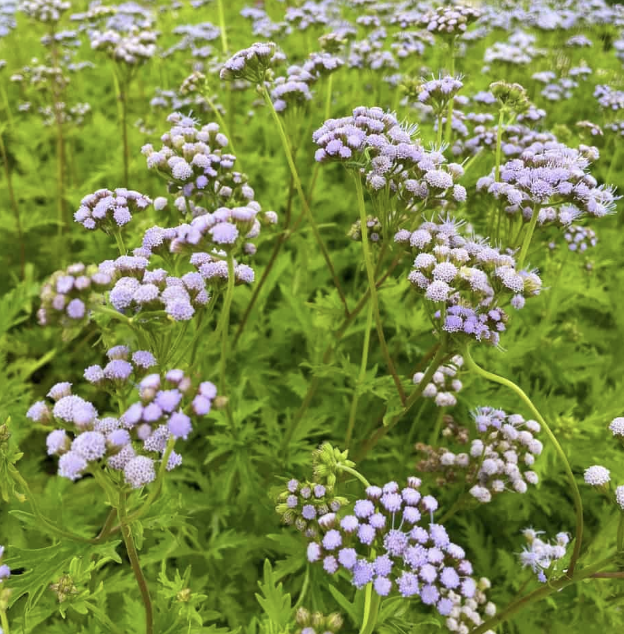
Gregg's Mistflower
Low and spreading, lavender-blue flowers spring into fall, and the single best butterfly plant on this list. Takes part shade well.
Replace the honeysuckle

The honeysuckle here is struggling, and it's not your fault. This is a north facing wall with a tree over it, so this bed barely sees direct sun. Honeysuckle wants more light than that. Japanese privet and twisted myrtle are the two plants I'd put here instead. Both stay clean and evergreen against the house, and both are happy in shade. I'm leaving the sun lovers off this list on purpose. Hopseed, Arizona rosewood, and orange jubilee would all struggle here the same way the honeysuckle has.
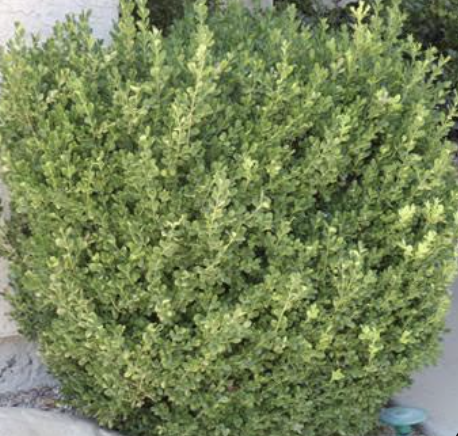
Japanese Privet
Dense, glossy, evergreen, and clean looking against the house. Grows 8 to 10 feet, takes shearing well if you want it formal, and handles the part shade on this side.

Twisted Myrtle
Evergreen, dark green, twisted upright branching that looks sculptural even unpruned. Fragrant white flowers in summer. 6 to 8 feet, slow and steady.
Green the other side of the house
Hopseed or Arizona rosewood

Same thing we talked about for the purple wall in the backyard. A hedge of hopseed along this side of the house will cover the wall, give you privacy, and take the heat off the block. Arizona rosewood is the alternative if you'd rather have something slower and denser, and orange jubilee is the pick if you want flowers and speed.

Hopseed
Native, fast, evergreen, 8 to 12 feet. The workhorse hedge for this climate. Green or purple leaf forms.

Arizona Rosewood
Native, dense, dark green, white flower clusters in spring. Slower than hopseed but very long lived and never needs much of anything.

Orange Jubilee
Fastest option and the most color. Orange trumpet flowers most of the warm season, hummingbirds all over it. Cut back hard in late winter to keep it full.
Cover the walls, reset the oleanders, plant for the pollinators, and get the garden going
The backyard has good bones: the purple walls, the fountain, the patio, and a couple of trees that just need care. The plan is a hedge on the wall, resets on what's overgrown, native pollinator beds where it's bare, a real shade tree on the west side, and a raised bed that actually produces.
Hedge of hopseed

This wall wants a hedge. Hopseed is my pick. It's fast, evergreen, native, and in two seasons it'll be a solid green wall in front of the purple. Plant them 3 to 4 feet apart. Arizona rosewood is the other option if you'd rather have something denser and longer lived, with a little less speed. Orange jubilee is the third option if you'd rather have flowers on that wall than a solid green screen.
Hopseed
Native, fast, evergreen, 8 to 12 feet. The workhorse hedge for this climate. Green or purple leaf forms.
Arizona Rosewood
Native, dense, dark green, white flower clusters in spring. Slower than hopseed but very long lived and never needs much of anything.
Orange Jubilee
Fastest option and the most color. Orange trumpet flowers most of the warm season, hummingbirds all over it. Cut back hard in late winter to keep it full.
Reset the oleanders

These oleanders are overgrown and full of dead wood, but they're tough and they'll take a hard reset. Do it this winter.
- Cut back a good portion. A third to half is fine. Oleanders come back from hard pruning better than almost anything.
- Cut out all the dead and woody branches all the way to the base. That opens the plant up and lets light into the center.
- Deep soak afterward. Put the hose at the base and let it run slow for a few hours.
- Feed it. Organic fertilizer and a layer of compost around the base. The soil biology is what fuels the regrowth.
- After that, prune less. Only as often as you need to keep the area clear. They'll flower more and live longer.
Native pollinator shrubs

Same treatment here as the native bed on the other side of the yard. Desert adapted shrubs that bring in the pollinators, look colorful, and can take the full sun for the next few years while the new shade tree gets established. All the options are listed below.
The strategy here is to plant a lot. You're starting from scratch, and the more you put in the ground now, the faster this bed establishes and the sooner it starts shading out the Bermuda grass. You may lose a few plants along the way. That's part of the process, not a sign you did something wrong. Plant heavy, replace what doesn't make it, and in a couple of seasons this fills in solid.
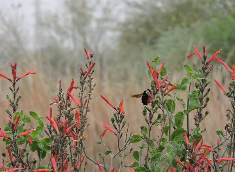
Chuparosa
Sonoran native, red tubular flowers through the cooler months when little else is blooming. Hummingbirds live on it. 3 to 4 feet, full sun and reflected heat are fine.
Globe Mallow
Native, orange cup-shaped flowers in big flushes spring and fall, gray-green leaves, 3 feet tall and wide. One of the toughest color plants we have.
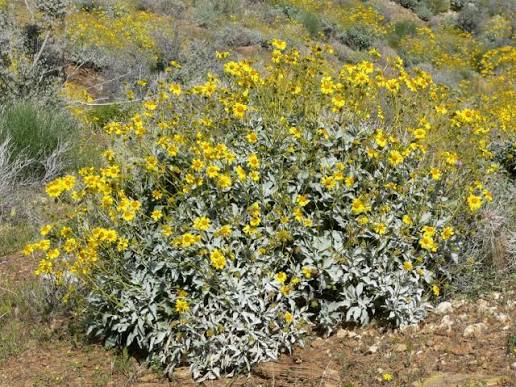
Brittlebush
Silver-gray mound about 3 feet across, covered in yellow daisies late winter into spring. Classic Sonoran look, almost impossible to kill.
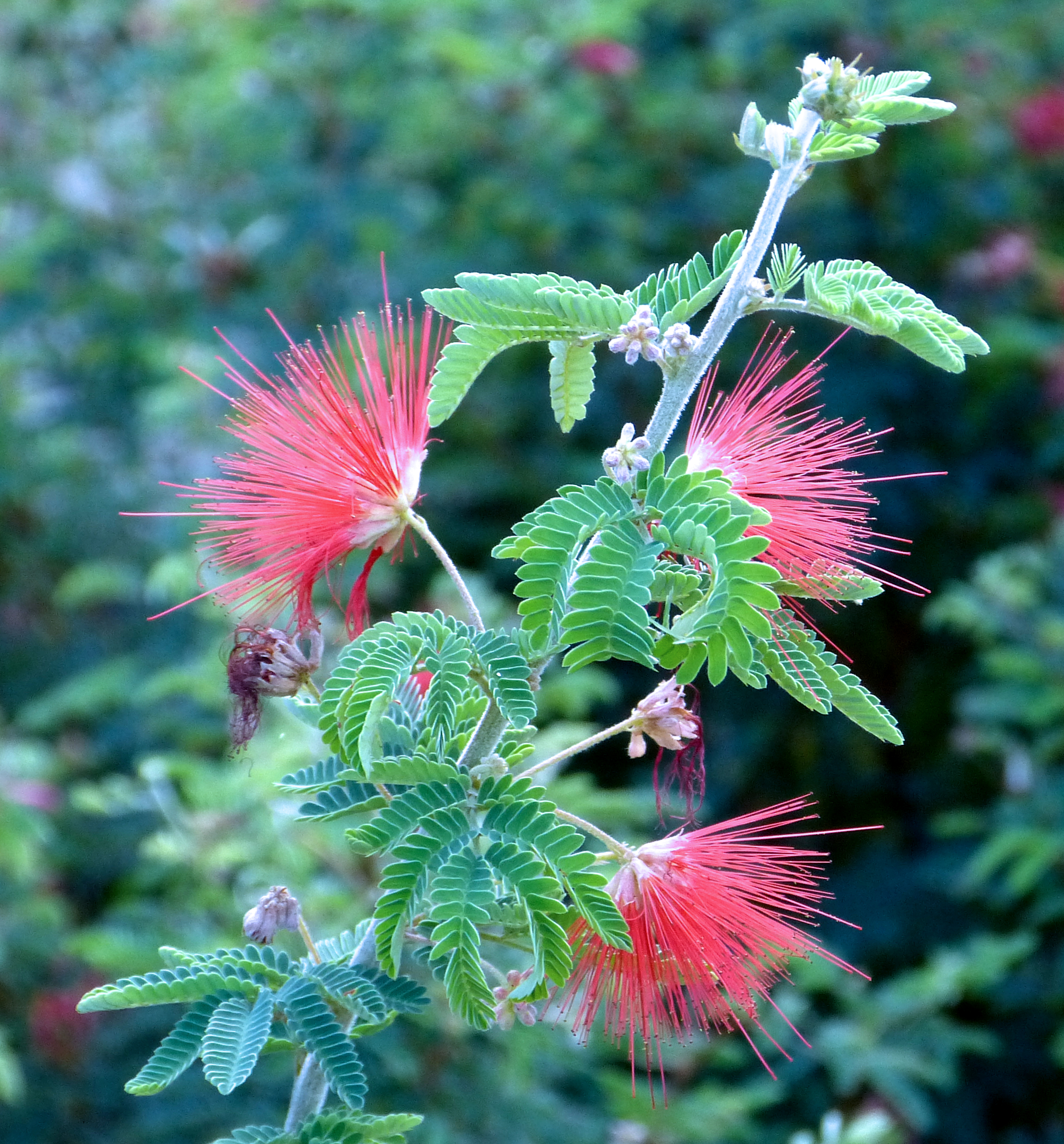
Baja Fairy Duster
Red powder-puff flowers most of the year, fine textured foliage, 4 to 5 feet. Hummingbirds and butterflies both work it.

Desert Milkweed
Upright gray-green stems, cream flowers, and the host plant for monarch and queen butterflies. Looks architectural even out of bloom.
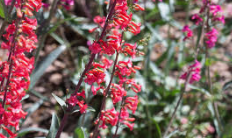
Penstemon
Tall spikes of pink or red tubular flowers in spring. Hummingbirds work these constantly. Reseeds and fills in over time.
A big shade tree for the afternoon sun

This side takes the afternoon sun and it needs a real tree, something that grows large and throws shade over the yard and the house by mid afternoon. Three good choices. Red Push pistache is clean, tough, and gives you fall color. Tipu is bigger and faster with one of the best canopies in town. Chinese elm is a fast grower with a wide, graceful spread. Any of the three will change how this yard feels in summer. We're leaving mesquite off the list here.

Red Push Pistache
Tough, clean, and one of the few trees here with real fall color. New growth comes in red, leaves go orange and red in November. 30 to 40 feet, no fruit, no mess.
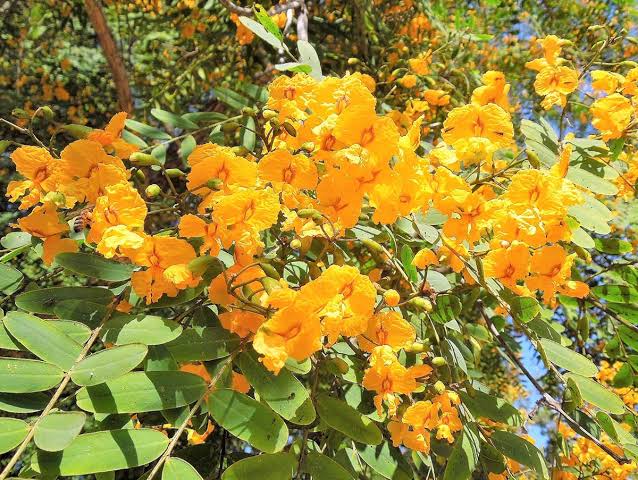
Tipu
Fast, big, and one of the best shade canopies in the Valley. Ferny leaves, yellow flowers in early summer, 35 to 50 feet with a wide spread. Give it room and it will cover that whole west side.

Chinese Elm
Fast, graceful, mottled bark, and a wide canopy that throws a lot of shade. Semi-evergreen here, so it holds most of its leaves through winter. Handles the heat and takes off quickly once established.
Get the grass out, then make it a vegetable bed

This raised bed is full of Bermuda grass right now, which means it's full of roots and runners too. Once you get the grass out, and I'd go all the way down and pull as much root as you can, this becomes a working vegetable bed. Top it off with a few bags of raised bed mix from the Arizona Worm Farm to bring the biology back, then plant it using the Maricopa County planting guide. Expect the Bermuda to try to come back for a season. Pull it as you see it and it'll give up.
The new raised garden bed

This is where you want to put a new raised bed, and it's a good spot for one. Here's how I'd do it.
- The bed. Olle Garden Beds are the ones I recommend. Galvanized steel, food safe, modular so you can size them to the space, and they last for decades. The 17-inch height is plenty for vegetables.
- Fill it. Raised bed mix from the Arizona Worm Farm (their Growing in the Garden Raised Bed Mix). It's the best soil in the Valley for this and it comes alive with biology. Fill to within a couple inches of the top.
- Plant it. Use the Maricopa County planting guide for what goes in when. Fall is one of our two best seasons and it starts now. Lettuce, greens, kale, broccoli, carrots, beets, radishes, peas, onions, and herbs like cilantro and parsley all go in over the next few weeks.
- Care for it. Water deeply and consistently, mulch the surface with straw or fine wood chips to keep the soil cool and moist, and top dress with compost every few months. Feed with organic fertilizer, never synthetic. Healthy soil grows healthy food.
Cool it down and bring the pollinators in

The fountain deserves something growing around it. Plants here will cool the area, soften the fence and the stone, and draw in butterflies and hummingbirds. Ruellia is my first pick. It'll grow right up around the base and bloom purple every day of the warm season. A few others that work in the same spot are listed with it.
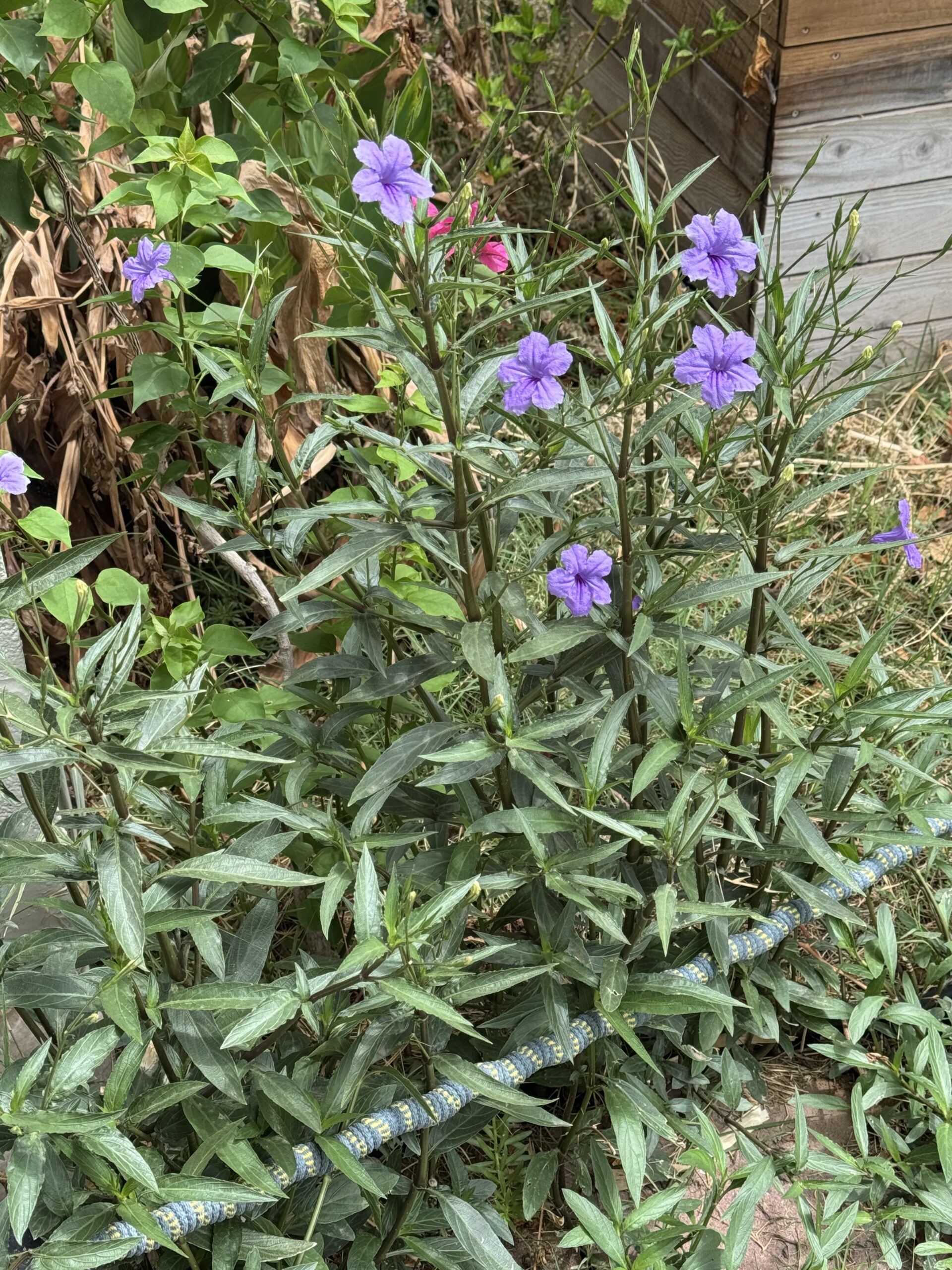
Ruellia
Purple flowers every day of the warm season, green upright foliage, and it loves the moisture around a fountain. Dwarf types stay about a foot tall and spread to fill in. It'll grow right up to the base and soften the whole thing.
Gregg's Mistflower
Low and spreading, lavender-blue flowers spring into fall, and the single best butterfly plant on this list. Takes part shade well.
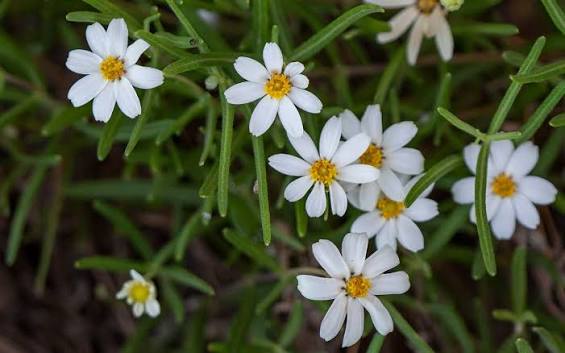
Blackfoot Daisy
Low mounding native, under a foot tall, small white daisies almost year round. Needs sharp drainage and sun.
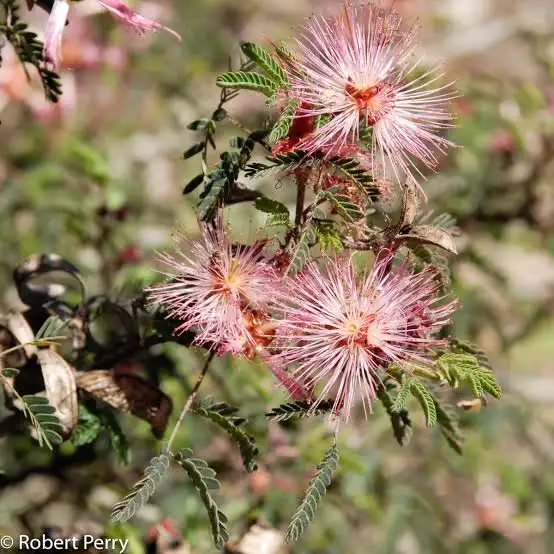
Pink Fairy Duster
Native, low and airy, 2 to 3 feet, with pink powder-puff flowers late winter into spring and again in fall. Hummingbirds and butterflies both work it, and it stays small enough to tuck around the fountain without crowding it.
The mimosa volunteer

This volunteer is a mimosa, also called a silk tree, and my take is you can keep it. It's pretty, it grows fast, and it'll flower pink in early summer. What you need to know is that it's going to turn into an actual tree, 25 to 30 feet with a wide spread, not a shrub. It's a little close to the walkway, but I don't think that's a deal killer, and where it sits it'll end up throwing nice shade on the house. Give it room, pull the stone and shrubs back from it as it grows, and prune it for structure early so it builds a strong frame.
Chuparosa, globe mallow, and friends

This bed gets the native treatment. Chuparosa and globe mallow are the anchors, both tough as nails and both loaded with flowers. Fill in around them with a few more desert adapted shrubs from the list below. All of them handle full sun and reflected heat, and all of them bring in the pollinators.
Chuparosa
Sonoran native, red tubular flowers through the cooler months when little else is blooming. Hummingbirds live on it. 3 to 4 feet, full sun and reflected heat are fine.
Globe Mallow
Native, orange cup-shaped flowers in big flushes spring and fall, gray-green leaves, 3 feet tall and wide. One of the toughest color plants we have.
Brittlebush
Silver-gray mound about 3 feet across, covered in yellow daisies late winter into spring. Classic Sonoran look, almost impossible to kill.
Baja Fairy Duster
Red powder-puff flowers most of the year, fine textured foliage, 4 to 5 feet. Hummingbirds and butterflies both work it.
Desert Milkweed
Upright gray-green stems, cream flowers, and the host plant for monarch and queen butterflies. Looks architectural even out of bloom.
Penstemon
Tall spikes of pink or red tubular flowers in spring. Hummingbirds work these constantly. Reseeds and fills in over time.
Deep water it

This desert willow is young and it needs deep water to build a root system that'll carry it through summer. Skip the frequent light watering. Once a week or so, set a hose at the base and let it run slow for a couple of hours so the water gets down deep. That teaches the roots to follow it down, and a desert willow with deep roots barely needs you after a few years.
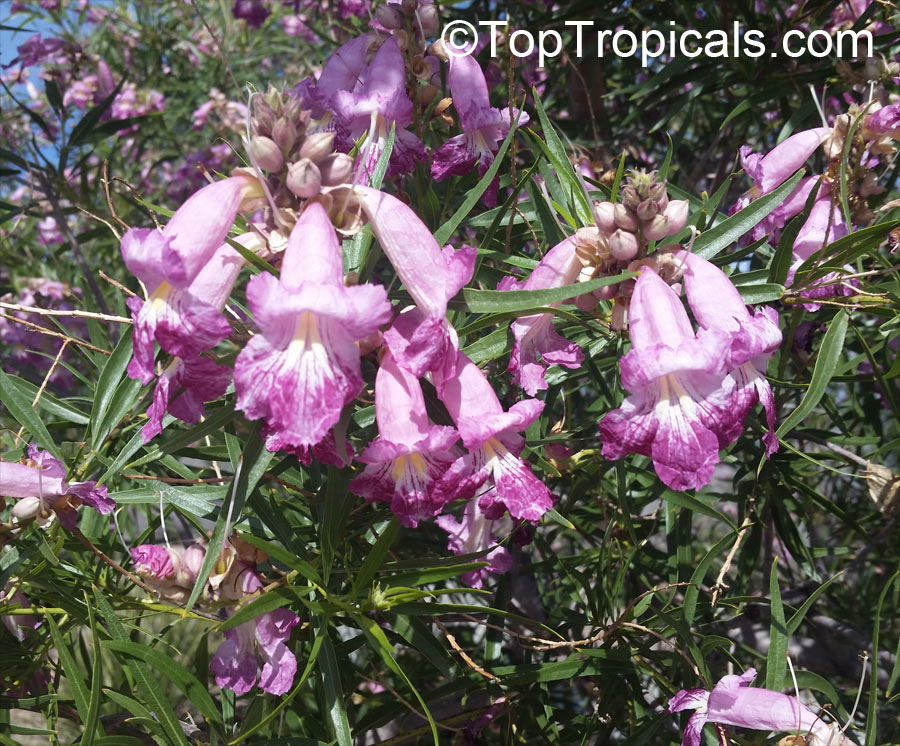
Desert Willow
Native, fast growing, pink to purple orchid-like flowers spring through fall. Light, open canopy.
Where this goes next
Take a look through this and think about which options feel right, especially the shade tree and what goes against the house out front. If you'd like me to put together a planting proposal with pricing, just let me know. If you'd rather plant it yourself, I'll get you added to the Garden Nerd Club where you can ask questions as you go and I'll walk you through it.
For the low voltage lighting, and for getting irrigation run to the new beds and the hedge, reach out to Garrett, the irrigation guy I work with. He's at 480-678-9121.
Questions on anything here, just reach out. You can also read more about how we plant at thegardennerd.org.
