
Your Backyard & Front Yard Planting Plan
Based on our consultation, here's what we'd recommend, area by area. Each area is priced on its own, so you can take these on all at once or in phases, whatever works for you.
3307 E Piro St, Phoenix, AZ 85044
Citrus Tree Root Flare

Your citrus tree's root flare needs to be dug out. Here's a video showing why this matters and what it looks like, but we can also take care of it for you. As part of that service, we pull the rock back away from the trunk, shape a proper water well, and finish it with mulch.
This spot is also surrounded by rock right now, which holds a lot of heat. To cool it down, we'd recommend adding a ground cover planting in that space.

Yellow Dot
Wedelia trilobataA low, spreading ground cover that fills in fast and stays under a foot tall, so it won't compete with the citrus tree's canopy. It holds small yellow, daisy-like blooms most of the year and stays green through mild winters. It takes full sun and reflected heat off the surrounding rock well, and doesn't need much water once established, which makes it a good fit for cooling down a hot, exposed pocket like this one.
Hopseed Hedge Along the Block Wall

The block wall on the east side, facing west, runs about 50 feet. We'd cover the whole thing with a Hopseed hedge, planted every 3 feet so it fills in quickly.

Hopseed
Dodonaea viscosaA fast growing, dense evergreen shrub, one of the best options we have for covering a bare wall quickly. It takes shearing well if you want a clean, tailored hedge line, or it can be left looser for a fuller look. It handles full sun and the reflected heat off a block wall without issue, and doesn't need much water once established. Planted every 3 feet, it fills in and closes the gaps between plants within a season or two.
Plant count is an estimate based on the wall length and spacing, we'll confirm the exact count on site.
Hopseed Hedge Around the Pool Walls

Moving into the pool area, we'd continue the same Hopseed hedge along the block walls facing west and north. Combined, those two walls run about 107 feet. We're quoting this area separately since it's a good candidate to tackle in its own phase.
There are also plants and vines growing along these walls right now that need to come out before we can plant. We're not including that removal in this quote. Your regular landscaper will likely be able to do it for less than we would, but we're happy to quote it too if you'd rather have us handle it.
Hopseed
Dodonaea viscosaSame hedge as the east wall, continued around the pool. It's dense and evergreen, so it'll fully screen these walls once it fills in, and it stands up well to the heat and glare this area gets off the water and pavement. It doesn't need much water once established, and at 3.5 foot spacing it closes in at a steady, reliable pace without leaving gaps for long.
Plant count is an estimate based on wall length and spacing, we'll confirm the exact count on site. Sago and vine removal is not included.
Shade Tree by the Table and Chairs

Right outside the pool area, where the table, chairs, and concrete pad are, we'd plant a tree. It'll shade that sitting area, give the pool some afternoon shade, and act as a focal point when you look out the back window into the yard. Since it's front and center like that, we want something more ornamental here.
Our first choice is a Desert Willow. Texas Mountain Laurel would be a solid second choice if you'd rather go that direction, but we'd lean toward the Desert Willow for this spot.
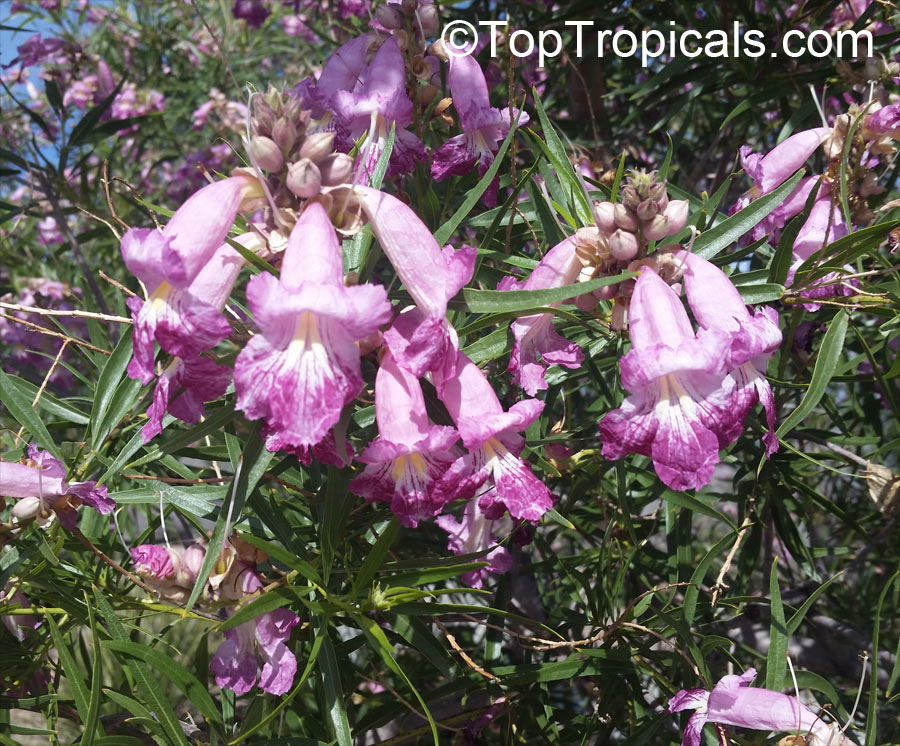
Desert Willow
Chilopsis linearisA native, deciduous tree with a light, airy canopy and an open branching habit, which is exactly what makes it good as a focal point rather than a dense screen. From spring through summer it's covered in orchid-like pink and white blooms that draw hummingbirds. It doesn't need much water once established and handles our summer heat well. Texas Mountain Laurel, our second choice, is a slower growing evergreen with fragrant purple blooms in spring, a denser and more compact form if you'd rather have year-round foliage over the airier look.
Shade Tree in the Open Rock Area

In the open rock area on the west side, we'd plant another tree, this one larger, to provide more shade. This spot gets good afternoon sun, so a bigger canopy here will make a real difference. We'd recommend a Tipu tree for this location.
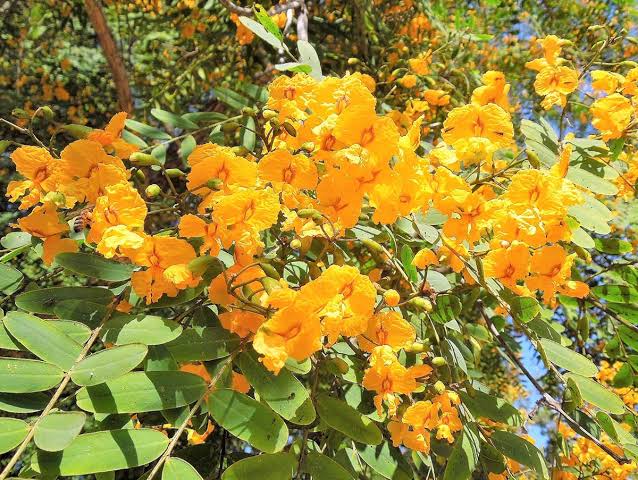
Tipu Tree
Tipuana tipuA fast growing tree with a wide, spreading canopy, one of the better options when the goal is maximum shade rather than a tidy ornamental shape. It's semi-evergreen here, holding most of its leaves through mild winters, and puts on clusters of yellow flowers in late spring. It'll need regular water while it establishes, then settles into a more moderate water need once it's grown in, and its size makes it well suited to a bigger open space like this one.
Two Shade Trees and a Hedge Along the Back Wall

This area gets hit hard by afternoon sun and runs hot, so we want something tough enough to hold up long term while still giving you good shade. Two trees will fill this area in well.
We've got three good options for this spot. Take a look below and let us know which two you'd like, whether that's two of the same tree or a mix.
On the wall behind these trees, facing east, we'd continue the Hopseed hedge. That section of wall runs about 45 feet, planted at 3.5 feet apart.

Red Push Pistache
Pistacia 'Red Push'A fast growing shade tree with a rounded, dense canopy. New growth comes in a striking red before settling into deep green for summer, then it shifts to orange and red again in fall, giving this spot color through more of the year than most shade trees offer. It's a seedless male selection, so there's no messy fruit drop to deal with. It doesn't need much water once established and handles the heat this corner gets without trouble.

Chinese Elm
Ulmus parvifoliaA fast growing tree with a graceful, arching canopy that throws dense shade once it fills in. The bark exfoliates in mottled patches as it matures, giving the trunk some visual interest beyond just the canopy. It holds its leaves through mild winters and doesn't need much water once established, making it a reliable pick for a hot, exposed corner like this one.
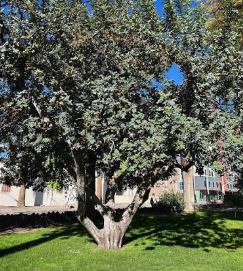
Carob
Ceratonia siliquaA slower growing but tough evergreen tree with a dense, rounded canopy that holds its foliage year round rather than dropping leaves in winter. It stands up well to heat and reflected sun off the block wall, and it doesn't need much water once established. It's a longer-lived, lower-maintenance option if you'd rather have full canopy coverage in every season.
Hopseed
Dodonaea viscosaThe same hedge used on the other walls, continued here to screen the block wall behind the new trees. Dense and evergreen, it takes full sun and heat well, and doesn't need much water once established.
Hedge plant count is an estimate based on wall length and spacing, we'll confirm the exact count on site. Let us know which two trees you'd like and we'll update this before scheduling.
Two Native Shade Trees

In the main portion of the front yard, east of the driveway, we'd add two native trees, one further out toward the east side of the yard and one closer to the middle. Both would be Ironwood. These are tough, native trees that hold up well here and don't need much water once established.
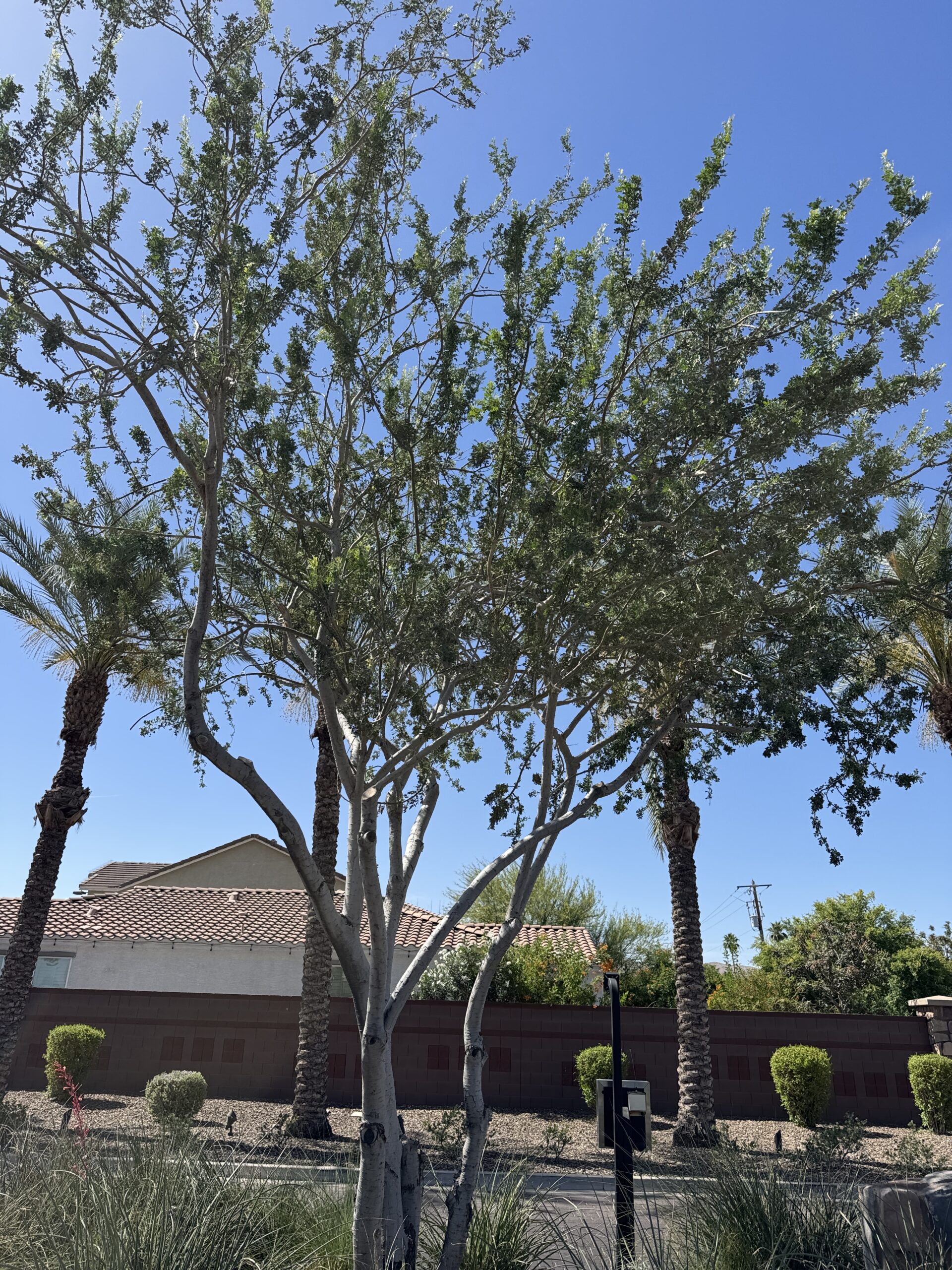
Desert Ironwood
Olneya tesotaOne of the toughest native trees for the Valley, with a dense canopy and a slower, steady growth rate. It puts on clusters of light purple flowers in late spring and holds its gray-green foliage most of the year. It's slow to get going compared to a Mesquite or Tipu, but it's also one of the longest-lived trees you can plant here, and it doesn't need much water once established, so it's a solid, low-maintenance choice for the front yard.
Large Shade Tree

On the west side of the front yard, we'd add another large shade tree. This spot gets good sun exposure and could use a bigger canopy. We'd recommend Mesquite for this location, a native tree with a light, lacy canopy that still provides solid shade.
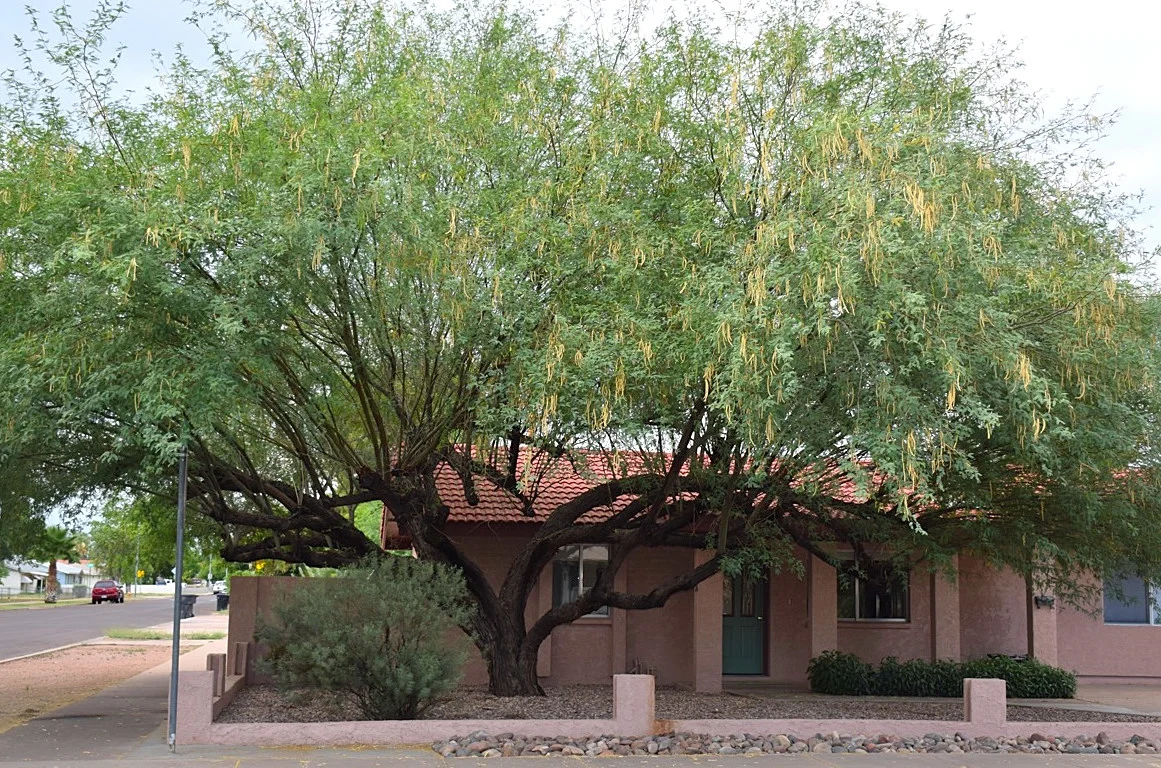
Mesquite
ProsopisNative, tough, with a light lacy canopy that still provides solid shade over this part of the yard. It doesn't need much water once established and holds up well in a hot, exposed spot like this one.
All Areas at a Glance
Each area above is priced to stand on its own. Here's everything together for reference, in case it's helpful to see the full picture.
Let us know which areas you'd like to start with, or if you'd like to do it all at once.