
Hi Shari,
here's your yard recap.
Here's everything we walked through together, area by area, so you have it all in one place as you get to work.
We covered a lot of ground, so this is organized by area, starting in the backyard and moving to the front. A few things are worth keeping in mind across the whole project before anything goes in the ground.
Before you plant anything new
- Get irrigation out there first. Before any of the new plantings go in, it's worth extending your irrigation to cover these areas. I'm happy to pass along the name of the irrigation guy I use if that helps.
- Backfill with compost. When it's time to plant, backfill each hole with about 25% compost. Feel free to check in with me in the Garden Nerd Club before you plant so I can walk through any final details with you.
- Mulch around the drip line. Once everything is in the ground, mulch around the drip line of each new plant. It holds moisture and keeps the root zone cooler, which matters a lot in these hot, wall-lined spots.
Backyard
West-facing block wall, guest house divider

On the west-facing block wall separating the guest house from the rest of the backyard, a hedge here will go a long way toward cooling that wall down. Hopseed, Arizona rosewood, and orange jubilee will all do great in this spot and take well to being kept trimmed into a hedge shape. It really just comes down to which look you like best.

Hopseed
- Evergreen, fast growing
- Handles reflected heat well
- Doesn't need much water once established

Arizona Rosewood
- Evergreen, Arizona native
- Holds a tidy, dense hedge line
- Doesn't need much water once established

Orange Jubilee
- Fast growing, showy bloomer
- Orange trumpet flowers spring-fall
- Attracts hummingbirds
Citrus tree

We started digging out the root flare on your citrus tree, and it needs to come down further before the flare is properly exposed. Extending the water well and making it wider will help give the roots more room to breathe as we go. Here's a video I put together that walks through why root flares matter and how to find yours: Root Flare Basics.
Extend and widen the water wellShrubs under the palo verde

The shrubs growing under your palo verde are getting pruned more than they need. Cutting back to once or twice a year will make them much happier, and you'll get more flowers out of them too. The baja fairy duster in there isn't as full and lush as it could be, so give it a hard prune this winter, clear out the woody and dead growth from the center, and let it reset. It'll come back fuller.
Prune 1-2x per year · hard prune baja fairy duster this winterSissoo tree

Unfortunately, the sissoo needs to come down. The roots are spreading and sprouting up all over, and it's time to take it out. Since those roots will keep suckering even after the tree is gone, this is a good one to bring an arborist in on, both for the removal and to deal with the roots properly. In its place I'd plant a mesquite. Remember that 15 gallon trees are the sweet spot, not too small, but small enough that the roots aren't girdled and can spread and grow quickly. A Chinese elm is another option, it's deciduous so you'll lose the leaves in winter, but it's still a solid choice. My vote is the mesquite, it fits the vibe of your backyard better.
Recommend an arborist for removal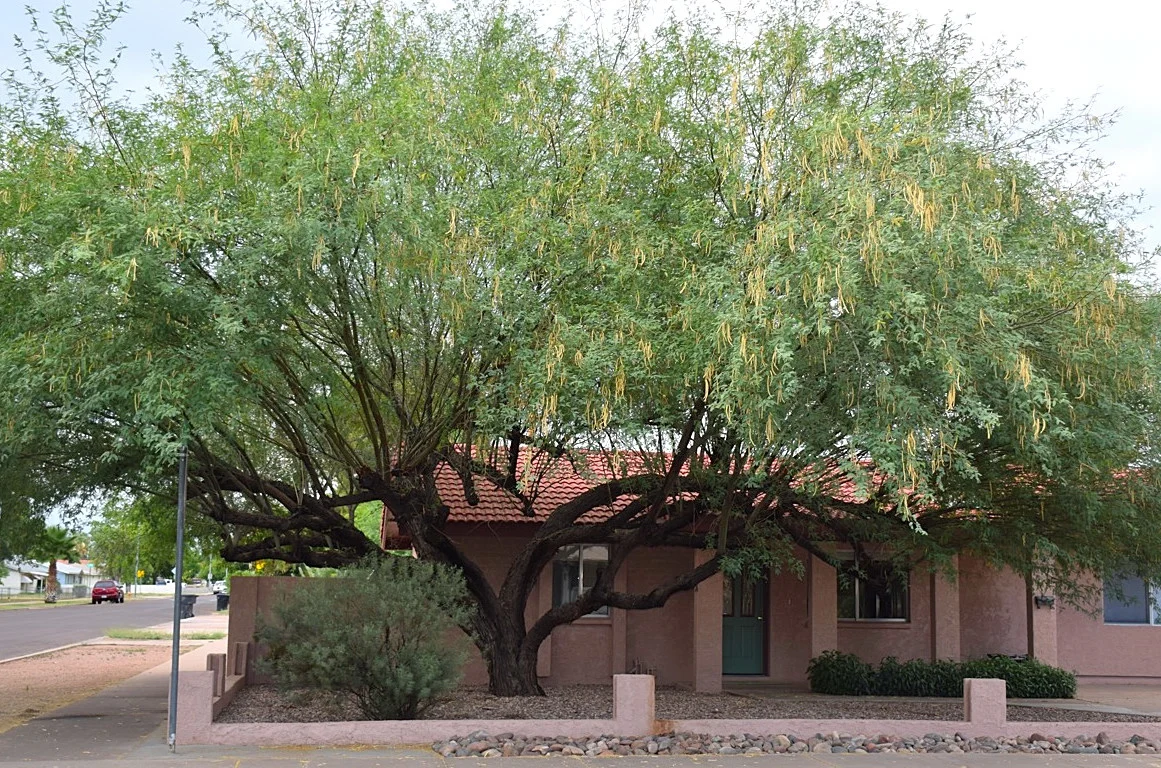
Mesquite (recommended)
- 15 gallon is the sweet spot
- Fast growing, filtered shade
- Doesn't need much water once established

Chinese Elm
- Fast growing shade tree
- Deciduous, bare in winter
- Wants a bit more regular water
Narrow strip, west side of the house

For the narrow strip on the west side of the house, we talked about running vines on both walls. On the wall against the house, facing west, lady banks rose will do fine here, it's one of my favorite vines to run against a block wall. On the other side, the fence wall facing east, hacienda creeper is the pick. It will grab onto the block wall on its own, but will also appreciate a trellis, and although it's semi-deciduous, it gives some nice fall color. Together these will fill the space in with greenery and color and help cool it down. Let's get the vines in first before deciding on a ground cover, so we don't end up crowding the area.

Lady Banks Rose (house wall)
- Vigorous, thornless climber
- Heavy spring bloom, yellow or white
- Light pruning after flowering

Hacienda Creeper (fence wall)
- Self-clinging, grabs on its own
- Red-orange color in fall
- Appreciates a trellis for support
North-facing cinder block wall, west end

On the west end of the north-facing cinder block wall that separates the guest house from the rest of the yard, a desert willow up against the fence works well. Not too large for the space, but large enough to provide some shade, cool the area down, and add some color.
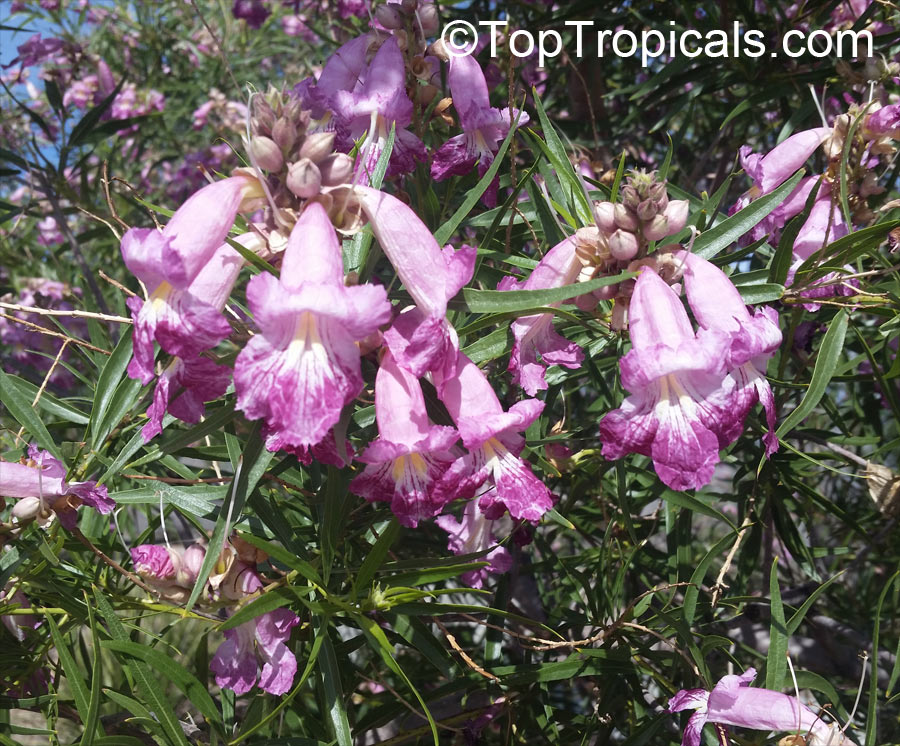
Desert Willow
- 15 gallon
- Pink-burgundy blooms spring-fall
- Attracts hummingbirds
Covering the rest of that wall

We also want to cover the rest of this wall, same as the west-facing side. You can continue the same hedge we talked about there, or go with a vine instead, tangerine crossvine would work great here (it would need a trellis), and lady banks rose would work too. My vote is keeping the same hedge going on all sides for a cleaner, more uniform look, but it's your call.

Tangerine Crossvine
- Needs a trellis
- Orange-red spring blooms
- Attracts hummingbirds
East side of the same wall

Further down the same wall on the east side, out front, there's room for a larger shade tree. Since you'll already have a palo verde and a new mesquite going in, a fern of the desert tree keeps things in the same desert family while adding a bit of variety.

Fern of the Desert
- Fine, feathery foliage
- Soft, filtered shade
- White puffball blooms in spring
Guest house side, south-facing wall

On the other side of that wall, in the guest house area, it gets hot fast between the house walls, the concrete and rock, and the block wall itself. On the south-facing wall there's enough room for either a hedge or a vine, any of the hedges or vines we've already talked about will work well here.
Hedge or vine, same options as aboveCorner, guest house area

In the corner where the east and south walls meet, there's room for a smaller ornamental tree. A vitex or a Texas olive would both look great there. Another citrus tree could work too, since you already have one to the south of this spot. The ground here is all dirt right now, a ground cover like yellow dot would fill it in nicely and help cool the area down.
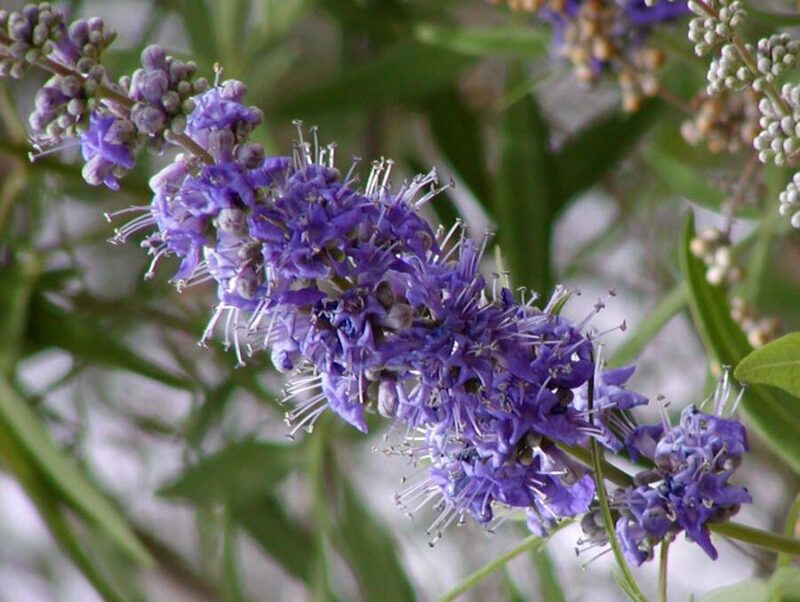
Vitex
- Multi-trunk ornamental
- Lavender-blue blooms all summer
- Draws bees and butterflies

Texas Olive
- Evergreen to semi-evergreen
- Large white blooms most of the year
- Doesn't need much water once established

Yellow Dot (ground cover)
- Low, spreading, fills in fast
- Yellow blooms most of the year
- Helps cool bare soil
Oleander hedge, west-facing wall

The oleander hedge on the west-facing wall stops about 10 feet short of the end. Continuing it with more oleander finishes the look and keeps everything uniform.
Extend hedge with more oleanderFront Yard
Jacaranda trees

Your two jacaranda trees would benefit from pulling the soil back away from the trunks to expose the root flare. They'll also do a lot better with regular feeding. Compost every 3-4 months goes a long way toward building the soil biology they're rooted in, and they love a nice deep soak as well.
Expose root flare · compost every 3-4 months · deep soaksTrees on either side of the yard

I'd add a desert ironwood on each end of the front yard. You'll hear that they grow slowly, and compared to a lot of trees, they do. But with consistent irrigation they pick up the pace quite a bit more than people expect.
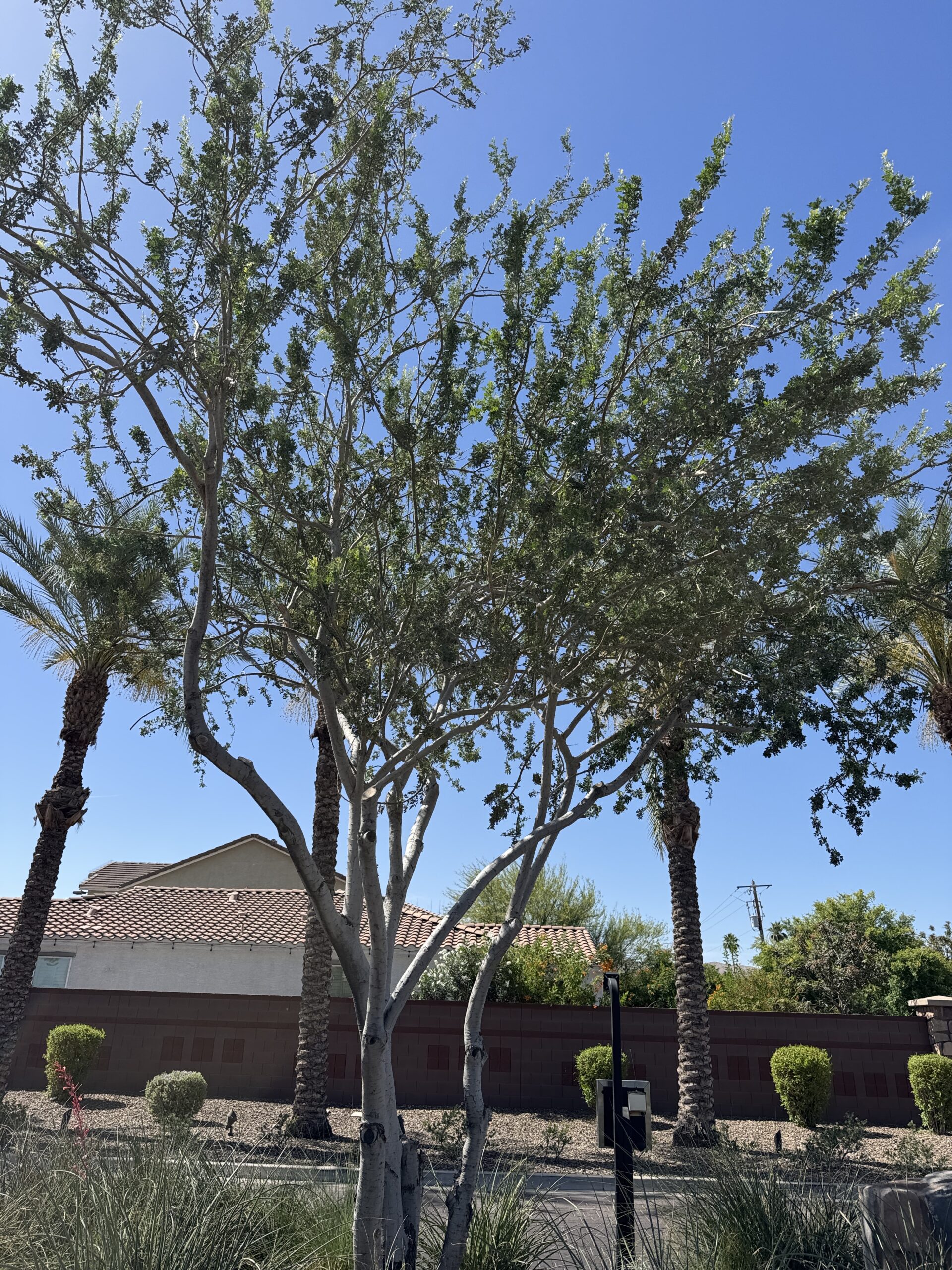
Desert Ironwood
- Long living native, one on each end
- Lavender-pink blooms in late spring
- Faster growth with consistent water
Filling in the front yard

For the rest of the yard, fill it in with desert adapted and native shrubs that bring in wildlife and add color. I don't stress much about exact placement with this kind of planting, a more sporadic, natural layout works well and doesn't need much water once established. Here's the list: Greg's mistflower, desert milkweed, chuparosa, penstemon, globe mallow, and desert marigold, with one or two Perry's agave mixed in for structure.
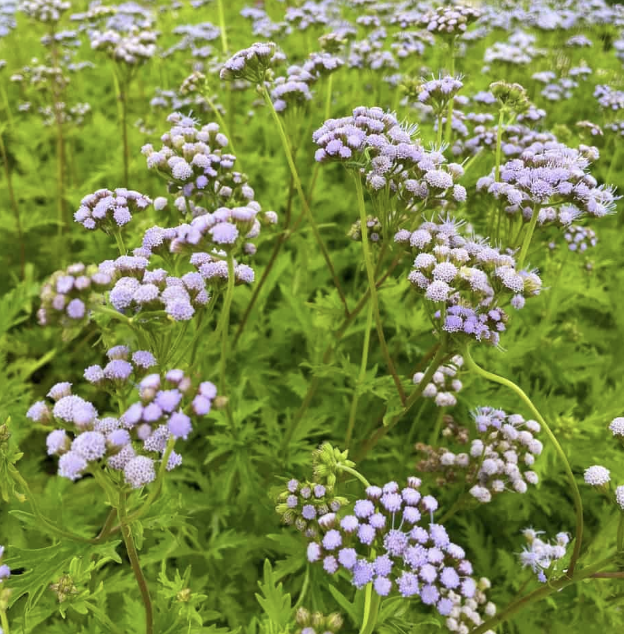
Greg's Mistflower
- Purple-blue blooms
- Butterfly favorite, incl. monarchs

Desert Milkweed
- Upright, blue-green stems
- Key monarch host plant
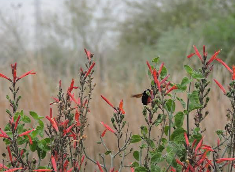
Chuparosa
- Red-orange blooms most of the year
- Hummingbird favorite

Penstemon
- Tall spikes, pink to magenta
- Draws hummingbirds

Globe Mallow
- Orange, coral, or pink blooms
- Reseeds on its own over time

Desert Marigold
- Bright yellow, nearly year-round
- Short-lived but reseeds readily

Perry's Agave (1-2)
- Compact, silvery-blue rosette
- Adds year-round structure
Monthly Fertilizing
Everything above only keeps looking good if the soil underneath it does. Your jacarandas, your citrus, the new hedges and trees going in, all of it establishes faster and stays healthier when the soil is being fed consistently, not just once or twice a year. That's what this service is built to do.
Monthly Applications
We apply an organic liquid blend across your whole property every month, with compost added a few times a year. Front yard, backyard, and the lawn all get fed on the same schedule, nothing gets skipped.
A Video After Every Visit
After each visit, you get a short video walking through what was done and how things are looking. No wondering what happened while you were away, you see it.
Garden Nerd Club Included
Direct access to me any time something looks off, a leaf on the citrus, a new hedge not filling in, a question about the mesquite. Send a photo, get a real answer. Included free, a $37 a month value.
Why Feeding the Soil Matters Here
- Faster establishment. With this much new planting going in, hedges, vines, trees, ground cover, biologically active soil is what gets roots settled in and growing instead of sitting stressed for a season.
- Healthier long-term growth. We build the soil biology with organic compost and fertilizer, not synthetic feed. It's a slower approach up front, but it's the one that keeps paying off year after year instead of fading between applications.
- Everything on one program. Your jacarandas, the citrus, the mesquite, the new hedges, and the lawn all get cared for together instead of piecemeal, so nothing falls through the cracks.
Monthly Organic Fertilizing
Full property, front yard, backyard, and lawn
That covers everything from our walkthrough. Photos for each area will get dropped in above once I have them.
Questions on any of this? Just reply and we'll walk through it together.