
Your Yard Plan, 344 E Scott Ave
Thanks for having me out to walk the property. Here's a recap of everything we covered, plus some options to think through. These are my initial thoughts, if any of it doesn't land for you or you want more directions to consider, just say the word and I'll put together more.
Root Flare Inspection
Every tree on the property should get checked to confirm the root flare is exposed at the base. Buried root flares are one of the most common causes of long-term tree decline out here, and it's an easy thing to fix early before it becomes a bigger problem.
This can be done in fall. Doing it now protects the health and lifespan of the trees you already have.
Leaning Tree Succession Plan
The existing tree in the side yard is leaning and growing sideways, but it's giving good shade to the house, so there's no reason to take it down yet. Instead, plant the new tree right alongside it now and let it start growing while the current tree is still up.
The old tree keeps providing shade in the meantime, and that shade actually helps protect the new tree while it's getting established. Once the new tree is tall enough to give its own shade, that's the time to take the old one down.
 Matches existing vibe
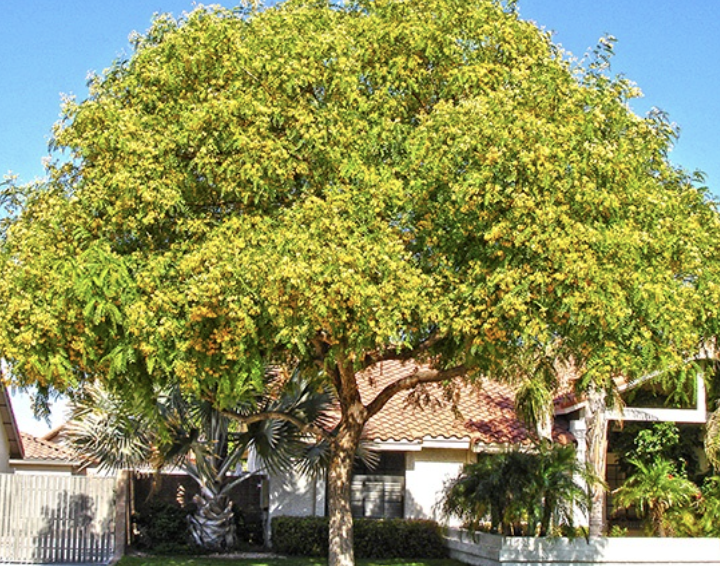
Tipu Tree
Same feel as a jacaranda. Fast growing, showy flowers, lush foliage, and it'll fit right in with the rest of the landscape.
 Low maintenance
Chinese Elm
Fast growing and easy to maintain. Loses its leaves for a short stretch in winter, sometimes not even all of them.
 Out of the ordinary
Royal Poinciana
A super tropical, beautiful tree if you want something different. Grows fast and loves heat, and it would do great with flood irrigation. It is cold sensitive, so a hard freeze can knock back some foliage, but it always comes back.
Front of House Planter
For the small planter on the east side of the house, I'd suggest a mix of roses and hibiscus, with cape plumbago worked in as well. East-facing means morning sun and afternoon shade, which all three of these handle well, and together they give you a good mix of bloom color and texture through the season.

Roses
Classic color and bloom, does well with the morning sun this spot gets.
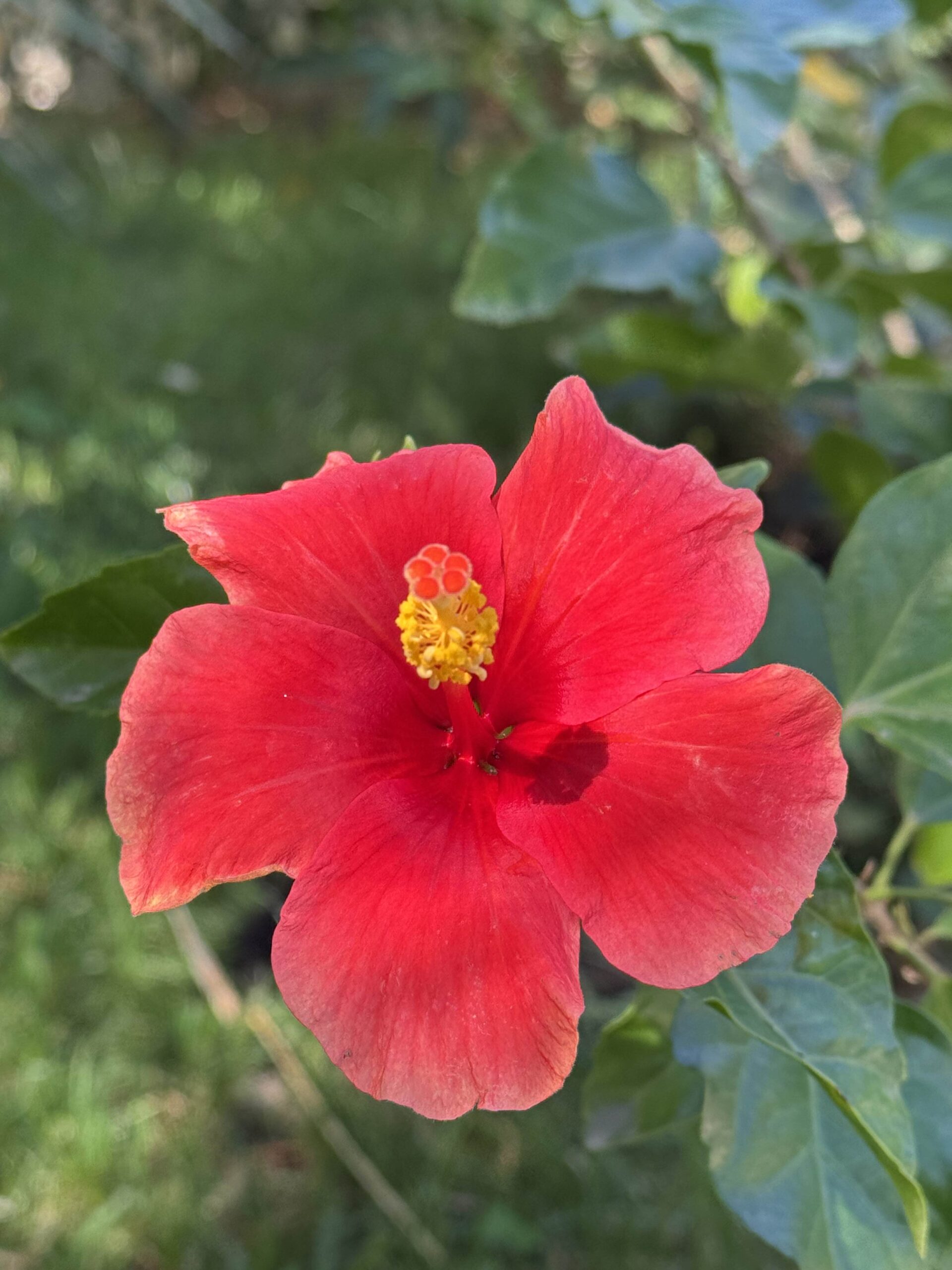
Hibiscus
Big, bold blooms and a long flowering season in our heat.
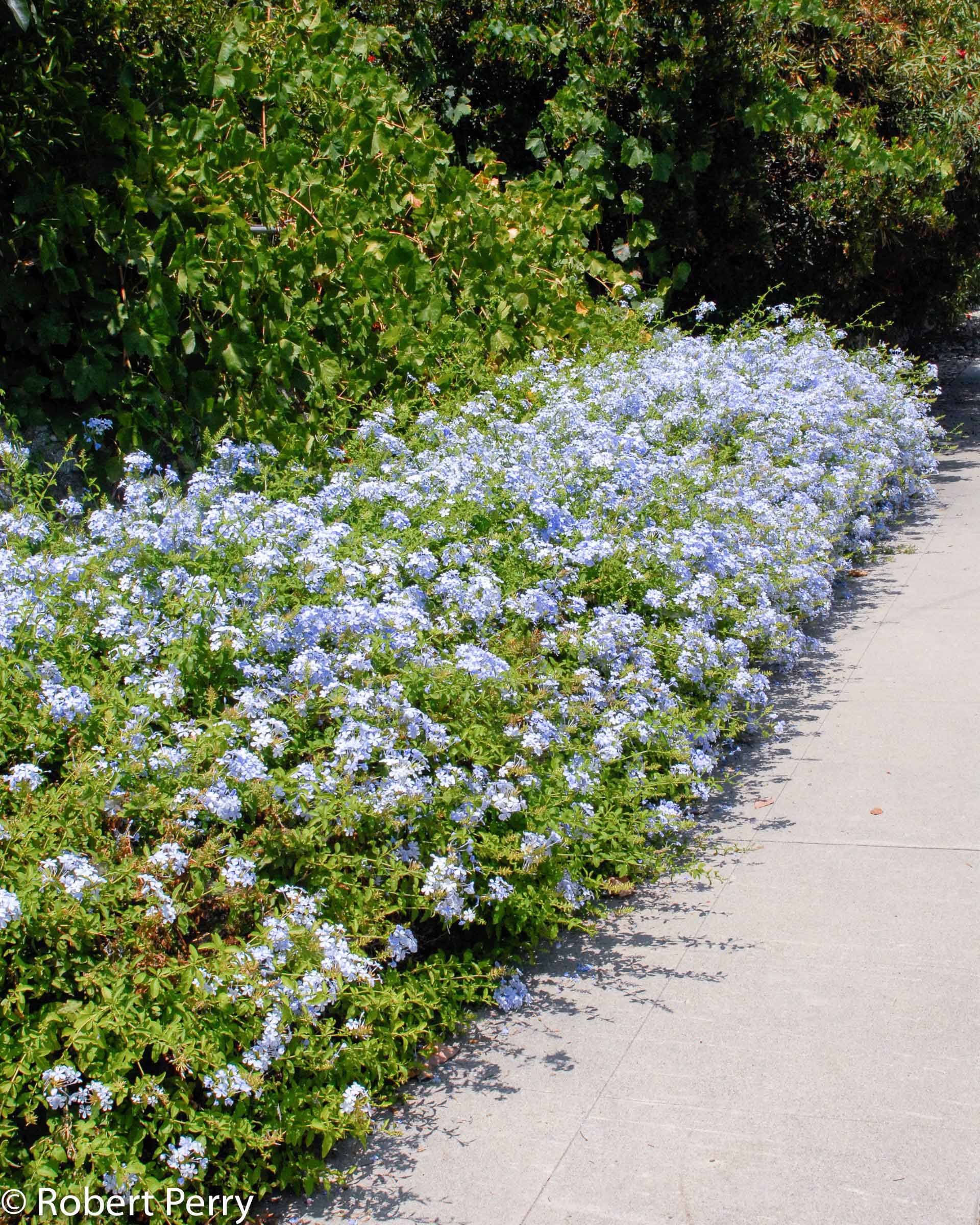
Cape Plumbago
Soft blue blooms nearly year round, low maintenance and low water once established.
Hedge Options
You've already got orange jubilee going along this wall. You could just continue that pattern for a full green wall hedge, it looks good, doesn't ask for much water, and doesn't take much maintenance. The one thing to stay on top of is tipping the branches so they don't get long and lanky, that's what encourages them to fill in bushier instead of leggy.
 Continue current pattern
Orange Jubilee
Low water, low maintenance, and matches what's already established along the wall. Tip young branches regularly to keep it full instead of leggy.
 Clean, formal look
Twisted Myrtle
If you want a cleaner, more manicured hedge look instead of the looser orange jubilee style, twisted myrtle is the option.


Canna Lily + Purple Heart
For a more tropical feel along the wall, canna lily works well with purple heart mixed in underneath as a groundcover. Good color and texture contrast.
Vines
Both the east wall in the backyard and the south-facing wall by the pool are good spots for vines. They'll cool the yard down quickly and add a lot of greenery without much fuss. Good options for either spot:

Tangerine Crossvine
Fast coverage with clusters of orange trumpet blooms.

Lady Banks Rose
Thornless, vigorous, and covered in small yellow or white blooms come spring.

Grapes
Dense coverage plus actual fruit for the table.

Passion Fruit
Fast, lush growth with fragrant flowers and fruit as a bonus.
Peach & Pomegranate

Peach — Florida Prince

Pomegranate — Parfianka
For the peach, go with Florida Prince, it's the best low-chill option for our climate and the fruit is genuinely good. For the pomegranate, go with Parfianka, or really any variety other than Wonderful.
Both can be bought bareroot at A&P in January. If you don't want to wait that long, you can also go end of September and buy them in normal containers instead. Either way, plant above grade and make sure the root flare is exposed from the start.
For the pomegranate specifically, decide up front whether you want it grown as a bush or a tree, and start pruning toward that shape from the beginning. Check back in each winter for pruning guidance, and feel free to ask in the Garden Nerd Club when it's time to plant, I'm happy to walk through it.
That covers everything from our walkthrough. These are just initial thoughts, if you want more options for any of these spots, or something here doesn't feel right for the space, let me know and I'll put together more.
Beyond this planting plan, The Garden Nerd also runs a monthly organic soil fertilizing service to keep everything on the property, new and existing, healthy from the ground up. If that's something you want to look into, you can read more at thegardennerd.org/garden-nerd-planting-services.