
Nancy, here's what I found in your yard
Thanks for having me out to 6847 E Lafayette Blvd. We covered a lot of ground, so I broke it down into the same order we walked it. Some of this is quick and cheap to fix, some of it is a longer-term investment, so tackle whatever makes sense for you first. Nothing here has to happen all at once.

Dig it out and give it room to breathe
Your kumquat is buried too deep, so I want to dig it out and reset it at the right level. Once that's done it'll also benefit from a feeding of quality compost and organic fertilizer, plus a fresh layer of mulch to protect the soil around it.
This spot has always been a tough one to grow in. You've tried jasmine here before and it didn't take, but that was before these trees filled in and added shade. I think jasmine is worth trying again now that the light has changed, and I'd also look at a shade-loving groundcover to fill in underneath.
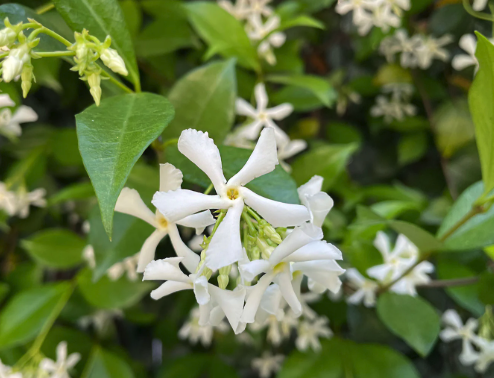
Star Jasmine
Worth another shot now that this spot has more shade. Fragrant, evergreen, fills in as a groundcover or low climber.
Society Garlic
Low, tidy clumps with purple blooms, handles shade well. Photo coming.
Asparagus Fern
Soft, fills in fast under trees, thrives in the shade this spot gets now. Photo coming.

Root flare excavation
This one's buried too deep too. That's pretty common with irrigation over time, soil and mulch just keep piling up against the trunk. A root flare excavation uncovers the base of the tree so it can breathe and take up water the way it's supposed to. This tree, the kumquat, and the lime out front would all benefit from the same treatment.
Video not loading? Watch it here: youtu.be/mLCVVxdvxU8

Build up strength instead of covering it every summer
You've been covering these with shade cloth the last few summers so they don't scorch, and that's worked, but I'd rather solve this from the soil up. A heavier layer of mulch and more regular compost gives the plants the reserves they need to handle the heat on their own. Now's actually a good time to pull the cloth off and let them get some real summer sun again before we head into fall.

Time for a good pruning
These are overdue for a proper prune. I'd recommend Spencer with King's Tree Service, he's who I send all my clients to for this kind of work. Give him a call and he can get you scheduled.

More water, more feeding, let it climb
These need the water upped, and they need to be fed more often with quality compost and organic fertilizer to keep pushing new growth. Once we've got them stronger, let the vine start climbing up and over the fence. Once that fence is fully covered, they'll be a lot happier without all that reflected heat bouncing back at them.

This one's done, let's replace it
I wouldn't put any more resources into this tree, it's not coming back. Pull it out, and now through the end of September is a great time to get a new one in the ground. I'd go with a Florida Prince Peach, it doesn't need nearly as many chill hours as most peach varieties to produce fruit here, which makes it one of the few that actually performs well in the Valley.

Florida Prince Peach
Low chill hours needed, the one peach variety I actually recommend for our climate.

Time for a formal hedge instead
These roses are old and spent, and honestly this spot is just too hot for them now with all the reflected heat off the patio. It doesn't have to be a tight clipped hedge either, here are a few directions, from formal to something with more color and movement.
Pick whichever style fits, you don't need more than one.
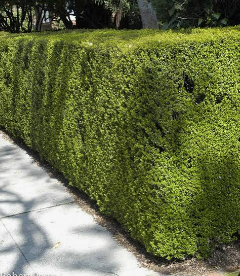
Dwarf Myrtle
Dense, clean, and easy to keep at a formal three to four feet.
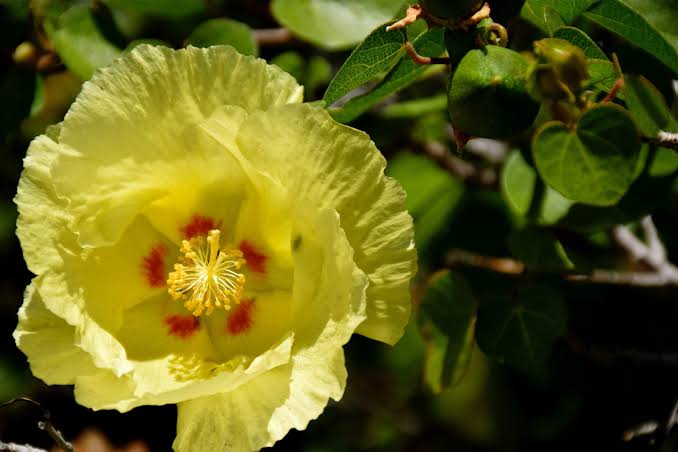
San Marcos Hibiscus
A looser, informal look with soft yellow blooms most of the year instead of a clipped hedge line.

Dwarf Bottlebrush
Fine, weeping texture with red bottlebrush blooms that draw hummingbirds.
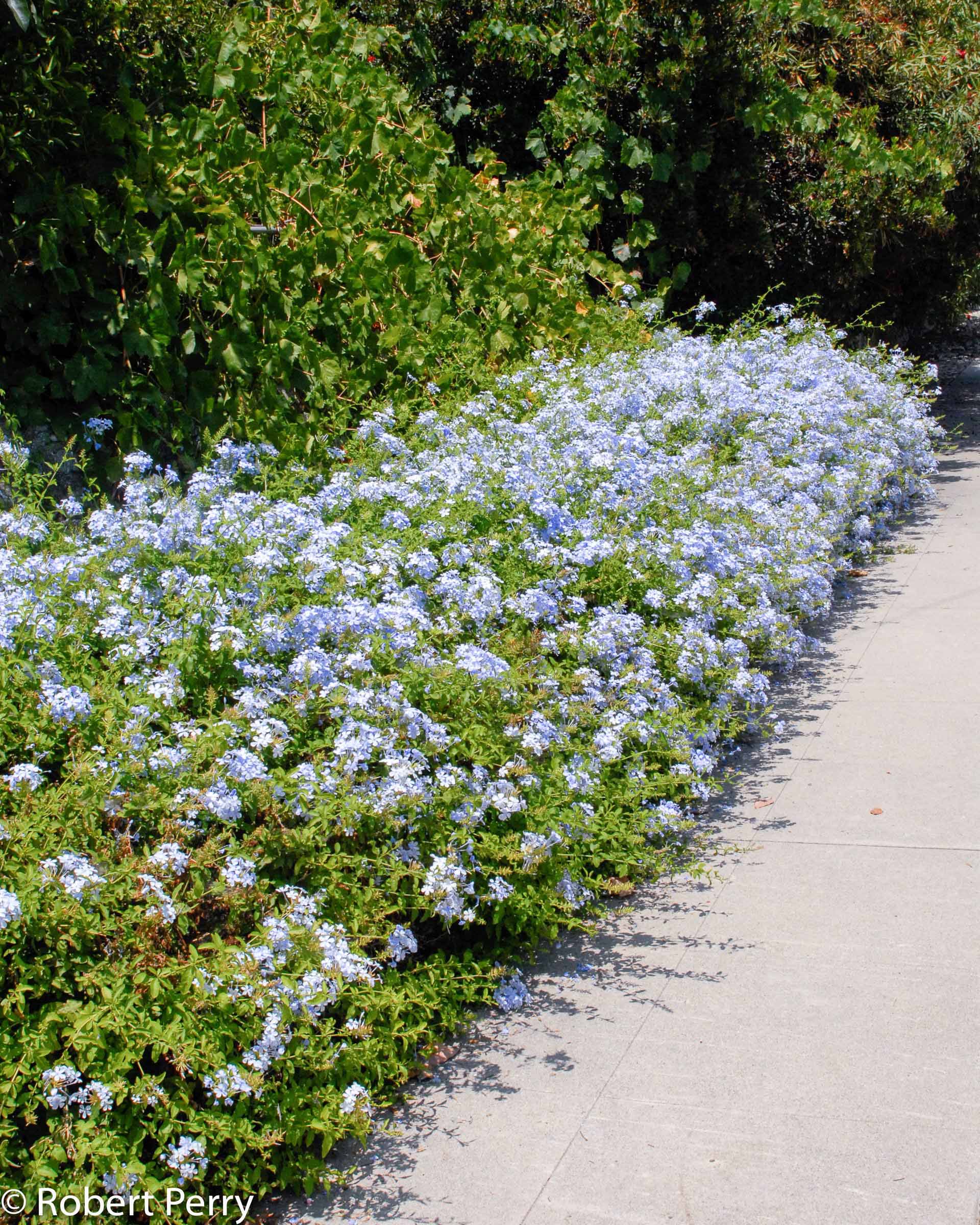
Cape Plumbago
Soft powder-blue blooms nearly year-round, informal and easy to keep loose or lightly shaped.

Pineapple Guava
Silvery evergreen foliage, edible fruit, and it takes shearing well if you want it tidier.

Simplify it and it'll look a lot cleaner
This bed has always been a hard spot, it faces west and gets blasted by afternoon sun. But your honeysuckle and sage are genuinely thriving here, so let's lean into what's already working instead of fighting it. I'd pull the yellow dot ground cover and the lavender, since they're not doing much for the space.
Honestly, the cleanest look, and probably what I'd recommend, is picking just one of the two and running it as a full hedge the whole length of the bed. Either a full run of honeysuckle or a full run of sage would read a lot more intentional than the mixed planting that's there now.
If you'd rather add some variety instead, here are a couple other options that can actually handle this much afternoon sun.

Natal Plum
Tough broadleaf shrub, handles full west sun fine, white flowers and edible fruit, works clipped or informal.

Arizona Rosewood
Dense, upright, and built for this kind of heat and sun. Clips easily into a clean hedge line too.

Orange Jubilee
Loves full sun, this exposure is actually exactly what it wants. Fast growing with orange blooms most of the year.

Sour orange struggled here, let's try something built for the shade
You've tried sour orange along this wall before and it just never got going, the pine trees are casting too much shade for citrus to work here. This is genuinely a low-light spot, so I'm sticking to things that actually want that kind of shade rather than plants that just tolerate a little of it. Pine needle drop also makes the soil more acidic over time, and a couple of these actually prefer that.
Dwarf Myrtle
One of the few hedge options that still stays dense in real shade, not just part shade.
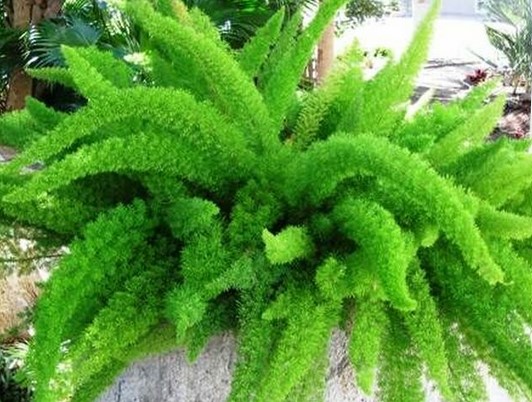
Foxtail Fern
Actually likes the low light and slightly acidic soil under pines. Soft, full, low-growing screen.

Xylosma
Glossy broadleaf shrub bred for exactly this, shady spots under tree canopy.

Pittosporum
Unlike the west-facing bed, this is exactly the kind of shade Pittosporum actually prefers.
Cape Plumbago
Blooms a bit lighter with this much shade, but still fills in well and gives you some color under the pines.

Doing good, but same root flare issue
This one is otherwise healthy, but it's buried way too deep just like the tangelo and kumquat. A root flare excavation here will let it grow bigger and live a much longer life, it's an easy fix for a tree that's already off to a good start.

Too much shade for jubilee here, let's switch it up
These orange jubilee aren't doing great, which makes sense since they're sitting under a pine tree and getting shaded by the olive tree on top of that, if it's too shady for jubilee, it's too shady for most sun-loving hedge plants too. This is the same low-light situation as the pine fence line, so the same shade-loving options apply here. If you want more height against this wall, Ficus benjamina is also worth considering.
Dwarf Myrtle
Full, dense coverage even with the extra shade from the olive tree.
Foxtail Fern
Thrives in this kind of low light, soft texture against the wall.
Xylosma
Bred for shady spots like this, glossy and full.

Ficus Benjamina
The weeping fig, not the Indian laurel fig (Ficus microcarpa nitida) you see sheared into tight formal hedges all over the Valley. Benjamina has a softer, drooping habit and thinner leaves, it grows tall for real height and screening here, but it's not meant to be kept as a stiff clipped hedge the way Indian laurel is, and it's more sensitive to hard frost.
Three trees need root flare excavations
The kumquat, the front yard tangelo, and the lime tree all have the same issue, soil buildup around the trunk from years of irrigation. A root flare excavation on each one uncovers the base so the tree can breathe, take up water properly, and grow into a bigger, longer-lived tree.
Root Flare Excavation
All three trees together, or one at a time, whatever works for your budget.
Text me to scheduleThe fastest way to see all of this improve
Almost everything we walked through today comes back to the same thing: healthy soil biology. Quality compost and organic fertilizer build the microbial life in your soil that actually feeds your plants, rather than forcing growth with synthetic salts. A monthly program keeps that going year-round instead of a one-time boost.
Monthly Landscape Fertilizing
Liquid feeding every month, plus compost applied three times a year, for your full yard.
Text me to get startedHowever you want to tackle this
Some of what we covered you can do yourself, some of it I'm happy to handle for you. As a consult client you're already in the Garden Nerd Club, so you've got ongoing plant care guidance and priority scheduling as you work through this list. If you'd rather I just handle the planting, text me and I'll put together a full proposal with pricing for whichever areas you want done.
For turf or irrigation questions, Garrett is my go-to, you can reach him directly at 480-678-9121.