
Consult Write-Up · September 24, 2026
Sarah Trimble
3914 W Altadena Ave, Phoenix, AZ 85029
Thanks for having me out. Everything we talked about is below, in the order we walked it: the pool area first, then the backyard lawn and beds, and around to the front yard. Since you'd rather grow food than purely ornamental plants, I leaned that direction everywhere it made sense.
01 · Back wall along the pool
Food plants with some height

This strip between the pavers and the block wall is narrow, so everything here is picked to fit that space and handle the heat coming off the pool deck. They're listed in the order I'd lean, starting with the easiest.
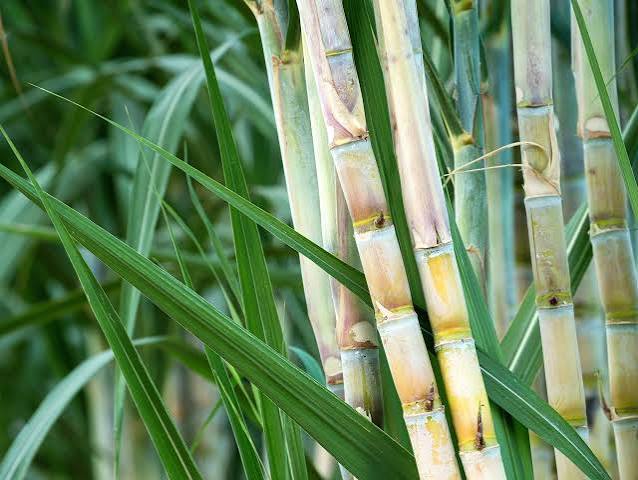
1. Sugarcane
The easiest option for this spot. It doesn't mind the heat and sun, grows fast, takes the least water of anything here, and gets as tall as the wall. It's in the grass family, so the roots aren't invasive. It also grows straight up and barely sticks out, which leaves you the most walking space along the pool.
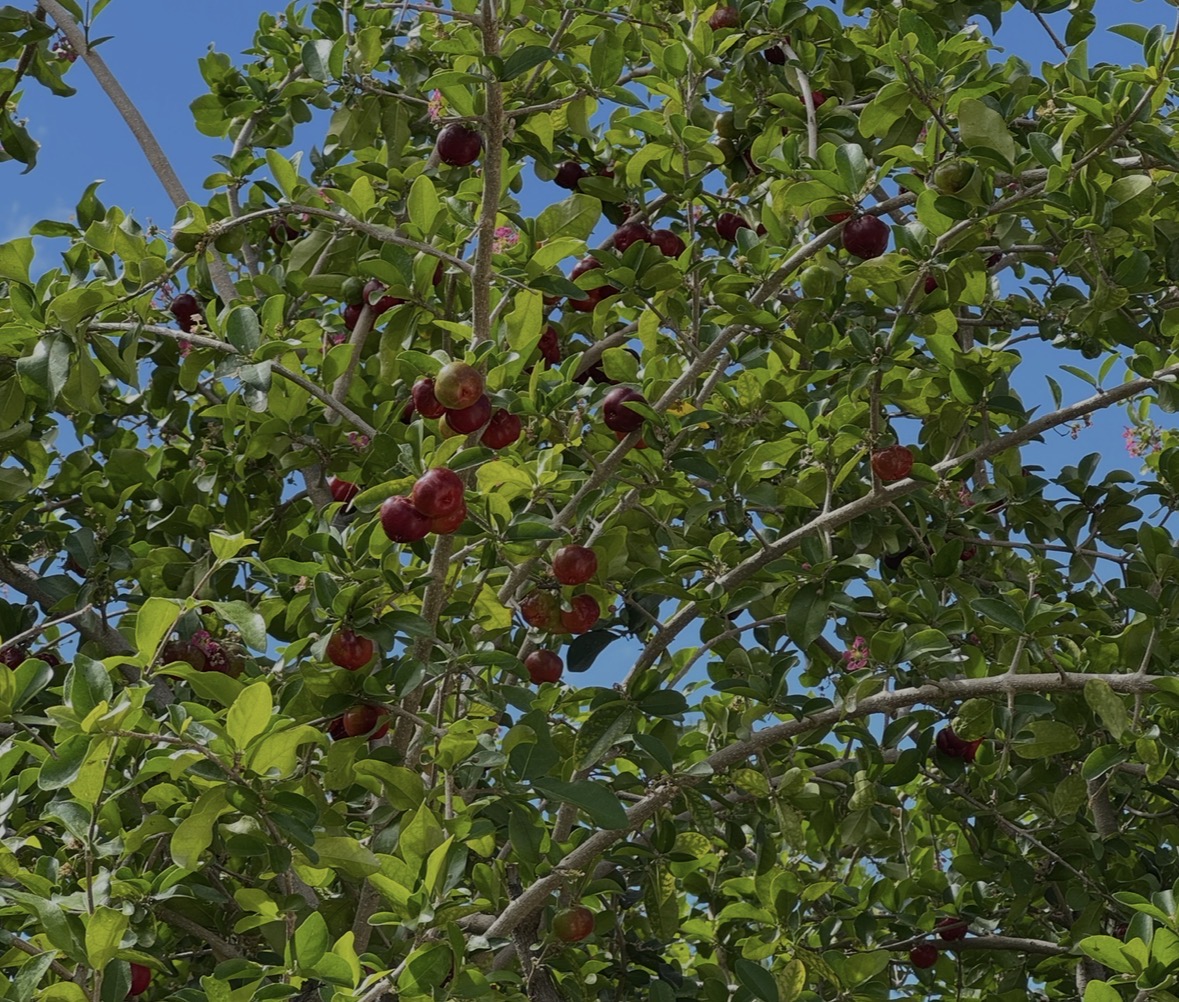
2. Barbados Cherry
Loves the sun and heat, isn't a water hog, hedges fairly well, and gives you fruit. It sticks out further than the sugarcane, and you do get some fruit drop. Most of the cherries fall before they're ripe, so it isn't a big mess, and the birds carry off a lot of them.

3. Hopseed
Thinner than the Barbados cherry and takes to trimming really well, so you can keep it tight to the wall. Uses little water and has non-invasive roots. The only downside is it doesn't give you food.
A more ambitious option
If you want a challenge, you could plant mangos every 4 to 5 feet along this wall with canna lilies in between. It's harder to get going and takes more work to keep everything pruned to the space, but it's a fun project for someone who likes to be hands-on. Ask Eddie for a picture of his mangos along his block wall and next to his pool. It's a good look at what this can turn into.

Mango
Seedling-grown mangos hold up better here than grafted. Planted 4 to 5 feet apart, they shade and protect each other. Cover them on frost nights for the first few winters. Greenlife Nursery is my go-to.

Canna Lily
Fills the gaps between the mangos with big tropical leaves and bright flowers. Fast growing and easy to cut back.
02 · Pool corner
Round out the corner for a small tree

You wanted more height in this corner, and a small fruit tree fits well. Rounding out the corner gives you a bigger planting pocket. Aim for at least 4 feet by 4 feet of open soil so the roots have somewhere to go and the trunk isn't jammed against the wall.
This is where I'd put a mango. The corner gives it more room to grow, and whatever you plant to the west of it along the same wall will give it a little protection. It may struggle some its first summer, but once it's rooted in it should settle. Guava works in the same corner and takes the heat a little better. Fig and pomegranate are good choices here too.
Mango
Seedling-grown holds up better than grafted here. Expect it to suffer a bit its first summer. Cover it on frost nights for the first few winters. Available at Greenlife Nursery.

Guava
Takes the heat a little better than mango. Easy to keep at 8 to 10 feet with pruning, evergreen, fruit in fall and winter. Protect it on nights below about 28°F for the first couple of winters.

Fig
Handles heat and cold better than any tropical, grows fast, and gives you fruit by the second summer. Deciduous, so expect a leaf drop in winter.
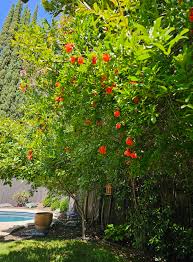
Pomegranate (Parfianka)
Very heat tough, orange flowers in spring, fruit in fall. I go with Parfianka over Wonderful because it holds up better against leaf-footed bugs here.
03 · West-facing wall
Sugarcane, hopseed, or Arizona rosewood for the afternoon sun

With the pavers moving back, you'll have the same narrow strip to plant here as along the pool wall. This wall faces west, so it takes brutal afternoon sun, and that narrows the list. Sugarcane, hopseed, and Arizona rosewood are the ones that will do best. Any of them can carry the whole wall.
From there you can layer in a few smaller shrubs in front, and San Marcos hibiscus is a great one for that. It stays low, flowers most of the warm season, and handles the heat.
Sugarcane
Fast, tall, and barely sticks out from the wall. Takes the heat and sun with the least water of anything on the list. Non-invasive roots.
Hopseed
Tough evergreen screen that takes afternoon sun and trims tight to the wall. Uses less water than plants that aren't desert adapted.

Arizona Rosewood
Native evergreen with dense, dark green leaves that takes full west sun without complaint. Grows upright and can be trimmed to stay tight against the wall. Uses less water than plants that aren't desert adapted.
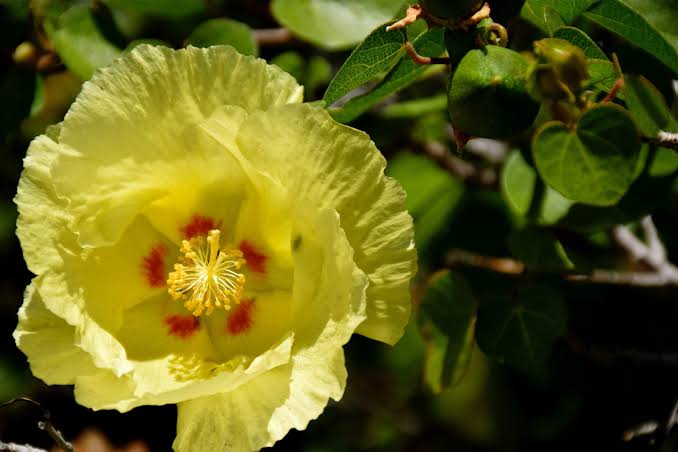
San Marcos Hibiscus
Low, layered in front of the taller plants. Lavender flowers through the warm months and handles the west sun.
04 · Backyard lawn
Lawn care, St. Augustine, and clover

Taking care of what you have
Healthy grass starts with the soil underneath it. Topdress with a thin layer of quality compost once or twice a year, spring and fall, and rake it down into the turf. Pair that with an organic liquid feed during the growing season and you're building the soil biology that keeps grass thick and green without synthetic fertilizer.
Water deeply and less often rather than a little every day, so the roots chase the water down. Mow on the higher side in summer, which shades the soil and holds moisture.
Converting to St. Augustine
St. Augustine is a thicker, softer-looking grass that handles shade better than Bermuda. You don't have to tear out the whole lawn to switch. Lay down a few rolls in the corners of the yard and let it grow. It spreads by runners and will slowly take over the Bermuda. If you're patient, it will win out. The one rule is no winter rye overseeding once you start, since the rye competes with the St. Augustine while it's trying to spread.
Lay the rolls from late spring through summer when the soil is warm. Evergreen Turf and West Coast Turf are the places to buy it.
Watch my St. Augustine videoClover
Clover stays green, feels soft underfoot, and pulls nitrogen out of the air to feed itself and the soil. It seeds best in fall, which is right now, and can be mixed into your existing lawn. The two things to know: it flowers and draws bees, which matters with bare feet around a pool, and it thins out under heavy traffic and in full summer sun without some shade.
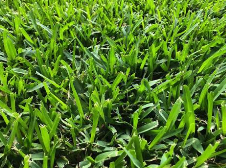
St. Augustine
Shade tolerant, thick and lush. Lay a few rolls in the corners and let it take over the Bermuda. No winter rye overseeding. Buy from Evergreen Turf or West Coast Turf.
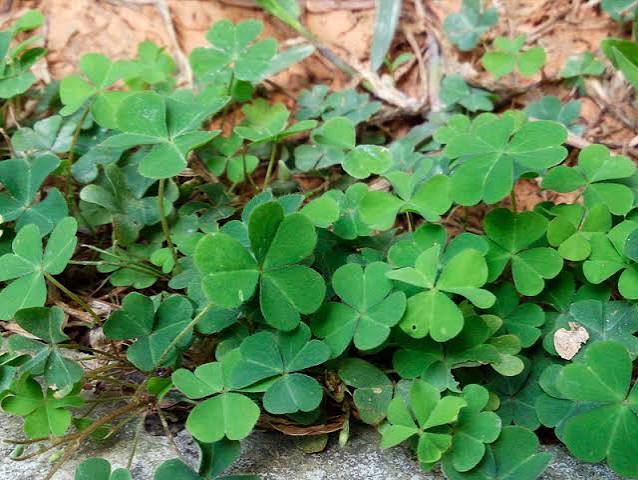
Clover
Soft, green, and builds nitrogen in the soil. Seed it in fall. Draws bees when it flowers.
05 · Back wall bed
Looking good, just expose the root flares

This bed is in great shape. The only thing I'd do is find the root flares on the trees and dig them out. The root flare is where the trunk widens as it meets the roots, and it should sit right at the soil line. When soil or mulch gets piled over it, the bark stays damp and the tree slowly struggles. Pull the soil back by hand or with a trowel until you see that flare, then keep mulch a foot away from the trunk going forward.
06 · Along the sidewalk
A citrus hedge

A citrus hedge will absolutely work here, as long as you're willing to keep up with trimming to hold it small. Plant the trees every 5 to 6 feet. That's tighter than you'd space citrus in an orchard, which is what lets the canopies grow together into a hedge.
- Set it back. Keep the trunks at least 3 feet off the sidewalk so you aren't cutting the hedge back constantly.
- Pick compact varieties. Meyer lemon, kumquat, Satsuma mandarin, and Bearss lime all stay smaller and respond well to shaping. You can use one variety for a uniform look or mix them for a harvest spread across the year.
- Trim lightly, often. A light shaping after each harvest keeps it tight. Avoid cutting the lower branches up high, since that skirt shades the trunks from sunburn.
- Timing. Fall works well now, with frost cloth on freeze nights the first winter, or wait until February or March.

Citrus Hedge
Meyer lemon, kumquat, Satsuma mandarin, or Bearss lime, planted 5 to 6 feet apart. Source from Greenfield Citrus Nursery.
07 · Side of the house
Bananas along the wall

Bananas would do really well up against this wall. Their roots aren't invasive, so they won't cause problems for the foundation, and if you ever need to paint, you can cut them right to the ground and they'll grow back in a season.
You can plant these now. Up against the house they'll stay warm through the winter, which gives them a head start. Space them about 6 to 8 feet apart so each clump has room to fill in. Bananas are heavy feeders, so feed them a lot: plenty of compost, composted chicken manure, and steer manure on top of the root zone, then mulch. Give them plenty of water through summer too. Frost will brown the leaves in winter. Leave the damage on until spring as protection, then cut it back once the weather warms.
For fruit here, look at Ice Cream (Blue Java), Dwarf Cavendish, or Raja Puri, which is compact and handles cold better than most.

Banana
Ice Cream, Dwarf Cavendish, or Raja Puri. Fast, tropical, and easy to cut back. Available at Greenlife Nursery.
08 · Grapes
Pruning your grapes this winter

Grapes fruit on new growth that comes off last year's wood, so a hard winter prune is what keeps them producing. It feels like a lot, but you'll typically remove 80 to 90 percent of last year's growth.
- When: mid-January to mid-February, while the vine is fully dormant and before the buds swell.
- Keep the main arms. Leave the trunk and the permanent horizontal arms (cordons) that run along the wall.
- Spur pruning (most common): cut each of last season's canes back to a short spur with 2 buds, spacing spurs about 6 inches apart along the arms. Each bud sends out a new shoot that fruits.
- Cane pruning: some varieties, like Thompson Seedless, fruit poorly from spurs. For those, keep 2 to 4 healthy canes with 10 to 15 buds each, plus a short renewal spur next to each, and remove the rest.
- Clean up: remove dead, crossing, and weak wood, and anything growing off the trunk below the arms.
If you're not sure which method your variety needs, spur prune the first year and watch how it fruits. In summer, go easy on thinning leaves, since that canopy shades the grapes from sunburn. Add compost around the base in late winter after pruning.
09 · Front yard by the street
A bottle tree

The bottle tree is a solid choice for this spot, and it's one you see all over the Phoenix area for good reason. It's evergreen, grows upright to around 30 to 40 feet with a 20 to 30 foot spread, handles our heat and cold, and takes less water than trees that aren't desert adapted once it's rooted in. The trunk thickens toward the base as it ages, which is where the name comes from. The one downside is the seed pods, which have fine hairs inside that can irritate skin, so wear gloves when you clean them up.
A few placement notes: keep it at least 15 feet from the house, give the fire hydrant clear space so the canopy and trunk never crowd it, and cut a mulched ring 4 to 6 feet across out of the lawn so the grass isn't competing with the young tree.
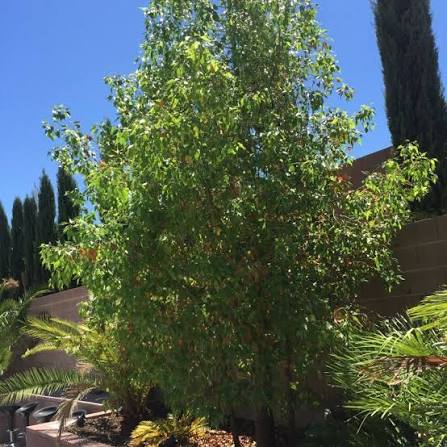
Bottle Tree (Brachychiton populneus)
Evergreen, upright, and tough in both heat and cold. 30 to 40 feet tall at maturity. Available at A&P Nursery.
10 · Front of the house
Privacy for the new patio bed

With the patio extension, you'll have a garden bed about 3 feet deep. The goal is something that gives you privacy from the street and looks good right off the patio, without getting so big it swallows the bed. Plant down the middle so there's room on both sides.
You can't fit all of these, so pick your favorites. Mixing two or three gives you more color and interest than one solid hedge.
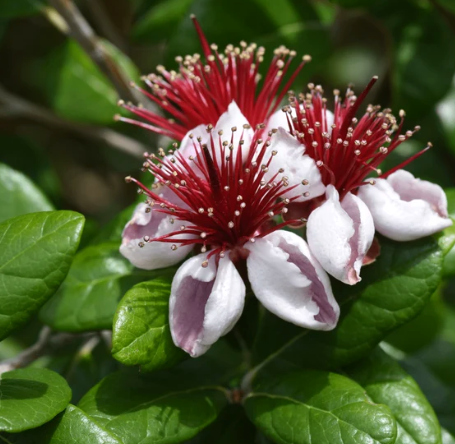
Pineapple Guava
Grey-green evergreen shrub that hedges well at 5 to 6 feet. Edible flower petals in spring and fruit in fall. A good food option that stays in scale with the bed.
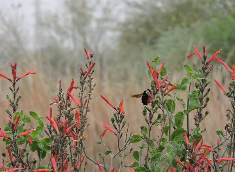
Chuparosa
Native with red tubular flowers from winter into spring that hummingbirds love. Loose and airy, 3 to 5 feet.

Red Hibiscus
Big red tropical blooms right off the patio. Likes regular water and appreciates some afternoon shade. Cover on frost nights.
San Marcos Hibiscus
Smaller and tougher than tropical hibiscus, with lavender flowers through the warm season. Good for layering in front.
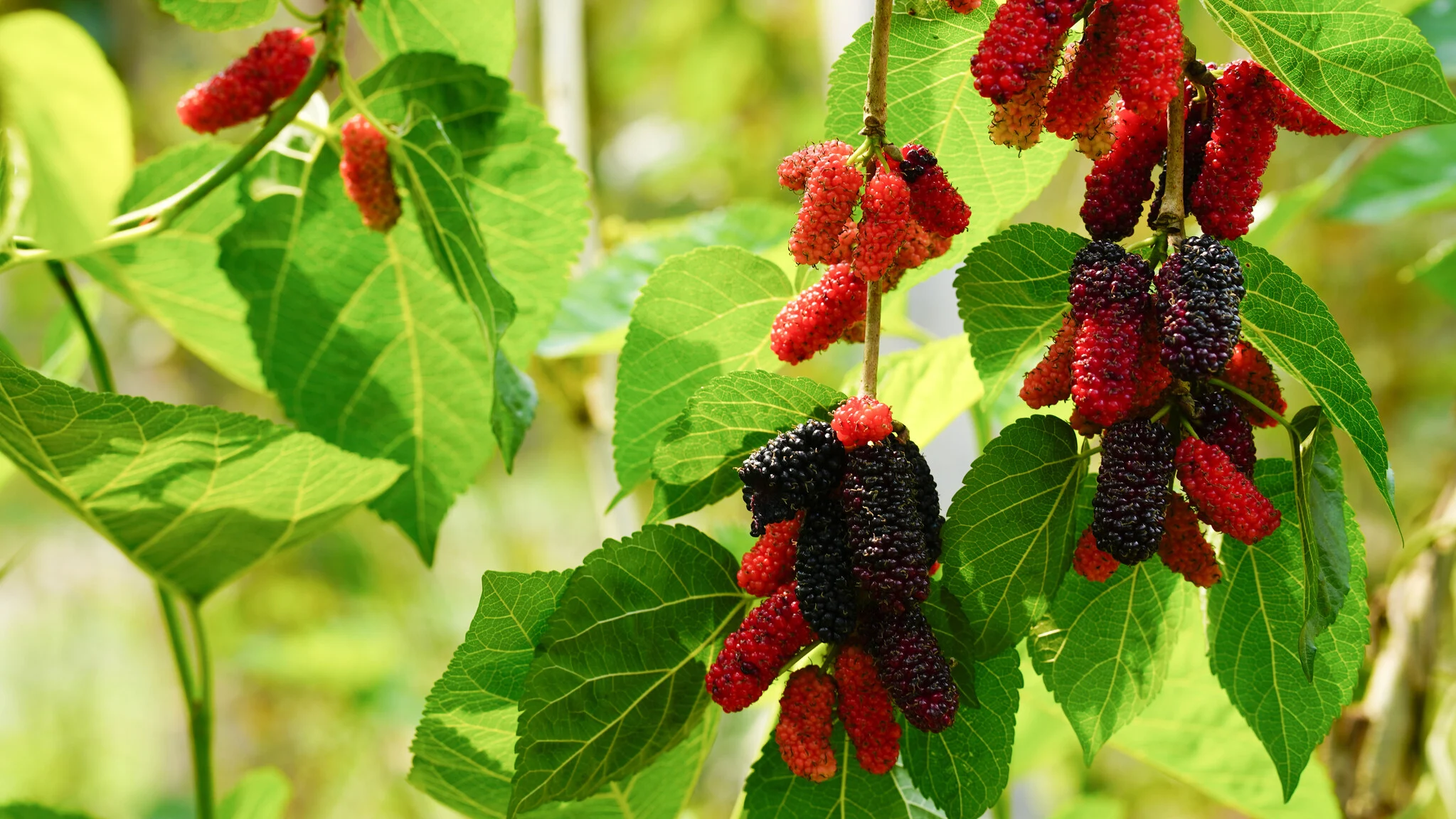
Dwarf Everbearing Mulberry
Stays shrub-sized, 4 to 6 feet, and fruits on and off through the warm season. Easy food right off the patio.
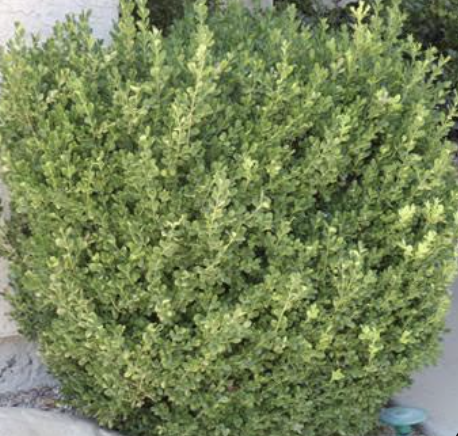
Japanese Privet
Glossy evergreen that handles shade and can be kept narrow and tall with regular trimming. A clean, classic hedge look.
Hopseed
Upright, tough, and fast in full sun. Keep it trimmed on the sides to fit the 3 foot bed.
11 · Front lawn
Dichondra, clover, or St. Augustine

Under the front trees, the grass is thinning out because Bermuda needs full sun. Any of these three will handle that shade better. The right pick comes down to how the space gets used.
- Dichondra is the softest and most lush, a low carpet of round leaves that loves shade. It doesn't take much foot traffic and needs regular water. Seed it in fall or spring.
- Clover stays green, builds nitrogen in the soil, and handles moderate traffic. It flowers and draws bees. Seed it in fall.
- St. Augustine is the most lawn-like of the three and takes the most foot traffic. It goes in as sod, late spring through summer.
You can mix clover or dichondra in under the trees and keep regular grass in the sunnier sections.
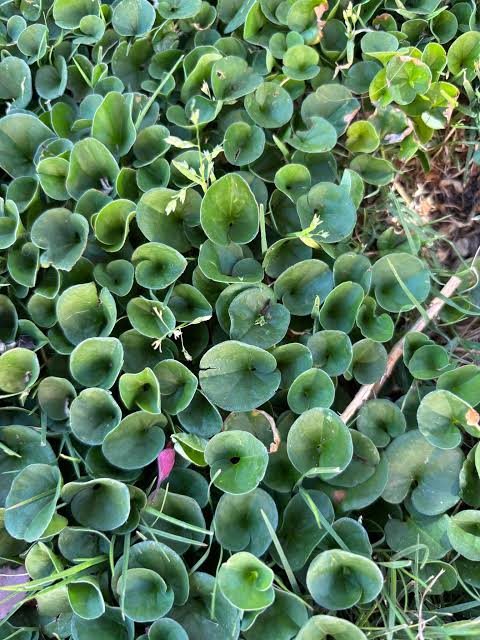
Dichondra
Soft, lush, loves shade. Light foot traffic only.
Clover
Stays green and feeds the soil. Moderate traffic. Draws bees.
St. Augustine
The most lawn-like, handles shade and foot traffic. Sod in late spring or summer.
12 · Established trees
Root flares on the established trees

Even on the established trees, it's still worth finding the root flares and digging them back out. Mulch and soil piled against the trunk hold moisture on bark that's meant to stay dry, and over time that weakens the tree. October, November, and December are a good window for this work, while the trees are under less stress.
Same approach as the back wall bed: clear the soil and mulch back until the flare shows, and keep mulch a foot away from the trunk.
13 · Front of the new patio
A spot for the star fruit
The star fruit goes out in front of where the new patio will be, to the east of the citrus and to the north of the Vitex tree. Tucked in there, it gets protection from the house, the patio, and the trees around it while it's young. Over time it can grow up and over the roof line and porch line, but it'll do that when it's ready.
Star fruit is a true tropical, so a few things matter:
- Frost. Young trees get damaged below about 30°F. Cover it on frost nights for the first few winters.
- Afternoon sun. Full afternoon sun scorches the leaves, so the shelter in this spot helps.
- Wind. The branches are brittle and the leaves tear easily, another reason this protected pocket works.
- Soil. It likes slightly acidic soil and ours runs alkaline, so keep plenty of compost on top of the root zone to keep the leaves green.
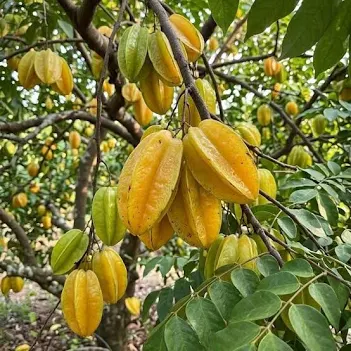
Star Fruit (Carambola)
Evergreen tropical, 10 to 15 feet in our climate. Needs frost protection and a sheltered spot. Greenlife Nursery is the place to look.
Soil and feeding
Feeding the soil, not just the plants
Everything in this yard does better when the soil underneath it is alive. Compost brings in the fungi, bacteria, and other organisms that break down organic matter, hold water, and hand nutrients to the roots. That matters even more with tropicals like mango, bananas, and star fruit, which are hungry plants in alkaline desert soil. Arizona Worm Farm is my go-to for compost and mulch.
If you'd like us to take care of it, our monthly fertilizing program covers the whole landscape with an organic liquid feed every month and compost three times a year, and you get a recap video after each visit.
Monthly Fertilizing Program
$136 / month
Monthly organic liquid feeding, compost applied three times a year, and a recap video after every visit.
Text me to get startedPlanting method
How to plant
Backfill mostly with your native soil, with just a small amount of compost mixed into the hole, so the roots grow out into the ground they'll actually live in. Then lay quality compost on top of the soil around each plant and mulch over it, without working either one in. Keep mulch about a foot back from any trunk. The compost feeds the soil biology from the top down, the same way it happens in nature.
Next steps
As a consult client, you're already in the Garden Nerd Club, so you have direct access to me there for questions as you work through any of this. If you'd rather have us do the planting, let me know which pieces you want and I'll put together a planting proposal with pricing.
For irrigation to the new trees and beds, or help with a lawn conversion, reach out to Garrett, the irrigation guy I work with, at 480-678-9121.
You can read more about how we plant at thegardennerd.org.