
Your planting plan, Theresa
711 S Revolta Cir, Mesa, AZ 85208Twelve plants across the front and back yard: four trees for shade and color, a hopseed screen along the south side, and some hummingbird plants by the front door. Everything below is matched to the numbers on your drawing.

Front yard
One shade tree to replace the firesticks, and a splash of red by the front door.
Front yard tree
Where the firesticks are now.
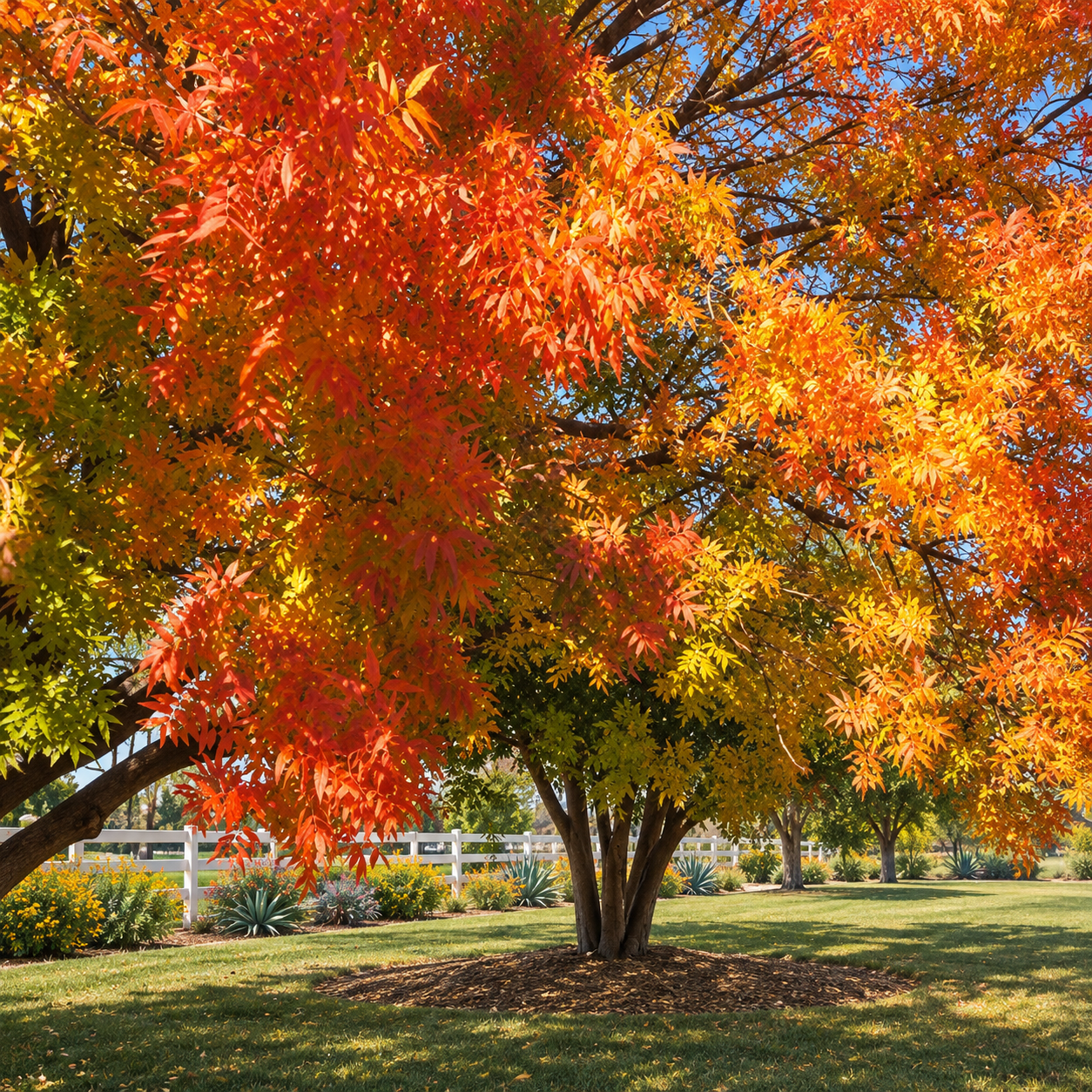
Red Push Pistache
1 × 15 gallonThis is one of my favorite front yard trees for the Valley. New growth comes in red every spring, the canopy is a clean dense green all summer, and in late fall it turns red and orange, which is about as close to real fall color as we get here.
It handles reflected heat off the street and driveway well and takes less water than shade trees that aren't desert adapted. Expect it to reach around 25 to 30 feet tall and wide over time, so it'll grow into real shade for the front of the house. It drops its leaves in winter, which lets the sun in when you want it.
Front door planter
Two on the north side of the planter, one on the south side.
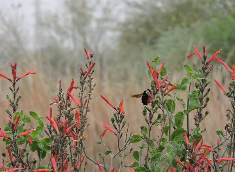
Chuparosa
3 × 5 gallonChuparosa is a Sonoran native with bright green stems and red tubular flowers that show up from winter into spring, right when hummingbirds need them most. Plant these by the front door and you'll have hummingbirds zipping past you every time you walk out.
It grows into a loose mound about 3 to 4 feet tall and wide. It's a permanent perennial that fills in over time, so it works well in a planter where it has room to spread. If it gets leggy after a hot summer, a light trim in late summer keeps it full.
Backyard
Two kinds of shade trees, a living screen along the south side, and a bird of paradise to fill the northeast corner.
Backyard shade tree
Location 2 on your drawing.
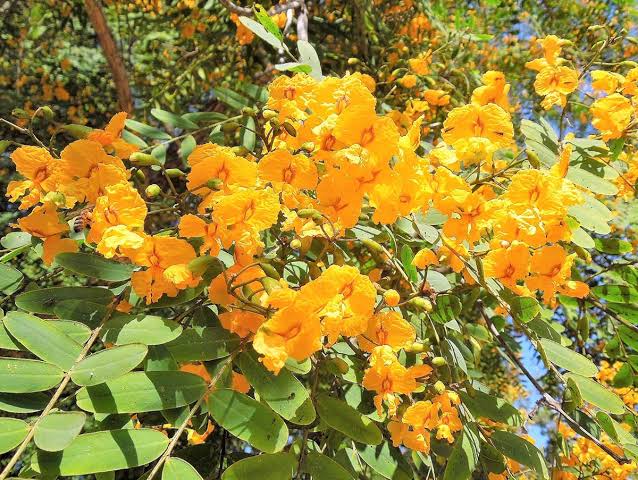
Tipu
1 × 15 gallonTipu is the tree to plant when you want shade and you want it soon. It's a fast grower with a wide, umbrella shaped canopy and soft, fern-like leaves that give a light dappled shade. In late spring it covers itself in yellow flowers.
It gets big, eventually 30 feet or more and just as wide, so this spot gives it the room it needs. It's mostly evergreen here and may thin out for a short stretch in late winter before the new leaves push.
South side trees
South side of the backyard, just east of the hopseed.
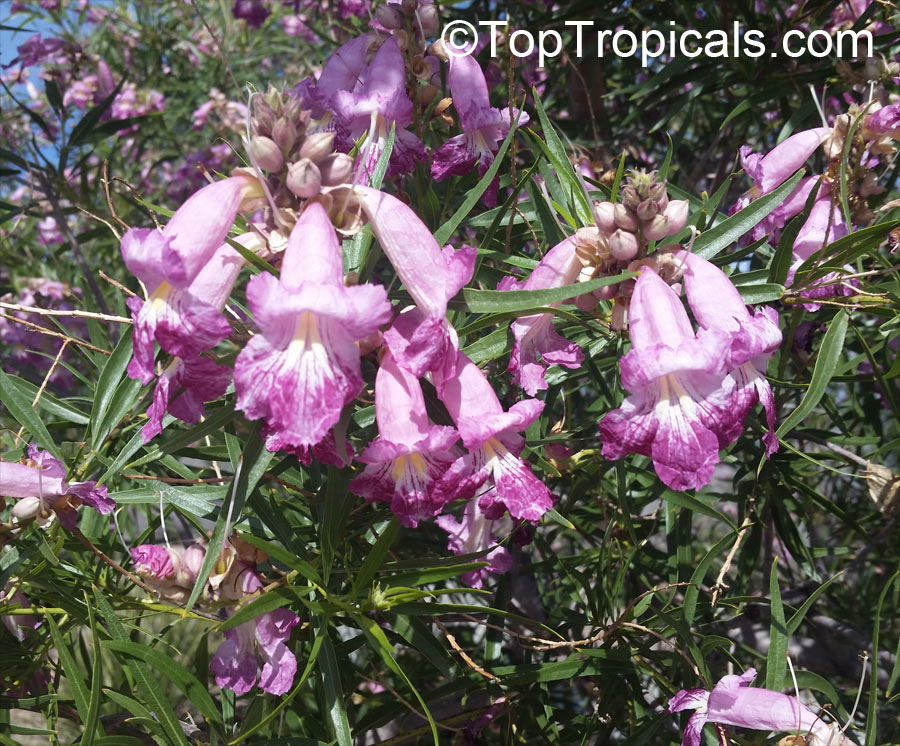
Desert Willow
2 × 15 gallonDesert willow is a native tree with long, narrow leaves and orchid-like flowers in pink and purple from late spring through summer. Bees and hummingbirds love it, and it blooms during the hottest part of the year when most other plants have stopped.
These grow to about 15 to 20 feet with an open, airy canopy that gives filtered shade without blocking everything underneath. They take less water than trees that aren't desert adapted and drop their leaves in winter. Planting two side by side makes a nice soft canopy along that south wall.
South side screen
South side of the backyard, west of the desert willows.

Hopseed
4 × 5 gallonHopseed is my go-to for covering a wall. It's evergreen, grows fast and upright, and fills in to make a solid green screen. It can reach 10 to 12 feet if you let it, or you can keep it shaped to whatever height you like.
We'll space the four plants about 4 to 5 feet apart so they grow together into one continuous screen. It handles full sun and heat off a block wall without any trouble.
Northeast corner
The northeast corner of the backyard.
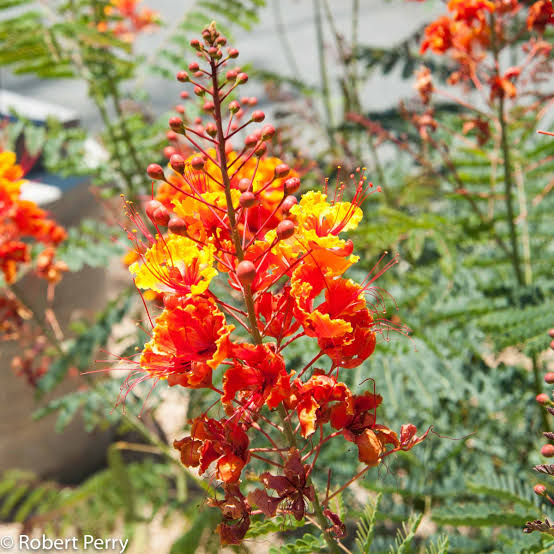
Red Bird of Paradise
1 × 5 gallonRed bird of paradise puts on a show all summer with big clusters of red, orange, and yellow flowers. It thrives in heat and grows into a large shrub around 6 to 8 feet tall.
It goes dormant in winter and can look rough after a cold snap. The easy fix is cutting it back to about a foot tall in late winter. It comes back fast in spring and flowers on the new growth.
Before and after we plant
Irrigation
Irrigation needs to be in place at every planting spot before we get there. Each tree and shrub on this list needs a water source at its location on planting day.
If you need help getting lines run, Garrett is who I work with for irrigation: 480-678-9121.
The firesticks
We'll pull the firesticks out at no charge when we come to plant the red push pistache. If you'd rather take them out yourself before we get there, that works too.
How we plant
We backfill every hole with your native soil and a small amount of compost, so the roots learn to grow into the soil they'll live in for the long haul. Then we lay compost on top of the soil around each plant instead of working it in, the same way nature builds soil from the top down.
We plant the trees first, then the hopseed screen, then everything else.
Feeding
Since you're already on our fertilizing program, the new plants will get fed on your regular visits along with everything else. That compost and liquid biology is what helps new plantings root in faster and handle their first summer.
90 day warranty
Because you're on our fertilizing program, everything we plant is covered by a 90 day warranty. If a plant fails in that window, we'll replace it.
Your planting quote
12 plants, including the plants and planting.
| Plant | Qty | Each | Total |
|---|---|---|---|
| Red Push Pistache, 15 gal Location 1, front yard | 1 | $300 | $300 |
| Chuparosa, 5 gal Front door planter | 3 | $85 | $255 |
| Tipu, 15 gal Location 2, backyard | 1 | $300 | $300 |
| Desert Willow, 15 gal Location 3, south side | 2 | $300 | $600 |
| Hopseed, 5 gal Location 4, south side | 4 | $85 | $340 |
| Red Bird of Paradise, 5 gal Northeast corner | 1 | $85 | $85 |
Questions about any of it? Text me at 480-253-9261.