
Wendy, here's what we found
Thanks for having me out to walk the yard. I put this together in the same order we walked it, backyard through front yard. As a consult client, you're already in the Garden Nerd Club, so you've got direct access to me in there anytime you have questions as you work through this.

Let some light back in so it can fruit
The Fern of the Desert trees growing up and over this orange tree are blocking too much light. I'd prune those back so the orange tree gets a solid six to eight hours of direct sun a day, that's what it needs to actually set fruit.

Root flare excavation and a bigger water well
I'd dig out the root flare on this one and enlarge the water well so you can flood it and really get water deep into the ground. While we're in there, cut off all the suckers growing at the base.
Video not loading? Watch it here: youtu.be/mLCVVxdvxU8

Both are buried too deep and on the wrong watering schedule
Both ash trees are struggling because they're buried too deep. Each needs a root flare excavation and a water well about six feet across with drippers placed inside it. I'd also change the watering from every other day to a one-week deep soak, run it long enough that the water actually reaches three to four feet down, however long that takes is how long you water. Hold off on any trimming until December, then take off anything dead.
October is a good time to do the excavation on these. If you're tackling it yourselves, ask in the Garden Nerd Club and I'm happy to help you through it. Once it's done, give the tree a really good deep soak right after to help it settle back in.


What to plant here once the rock and irrigation are sorted
This isn't something to tackle right now, you'll still need to get the river rock out and the irrigation fixed here first. But once that's done, here's what I'd cover this wall with completely. Mix a few together or go with just one for a more uniform look, whatever fits your style best.

Hopseed
Fast, thick, and fills in quickly at the base of the wall.

Arizona Rosewood
Dense, upright, and built for full sun against a wall.

Orange Jubilee
Fast growing with orange blooms most of the year.
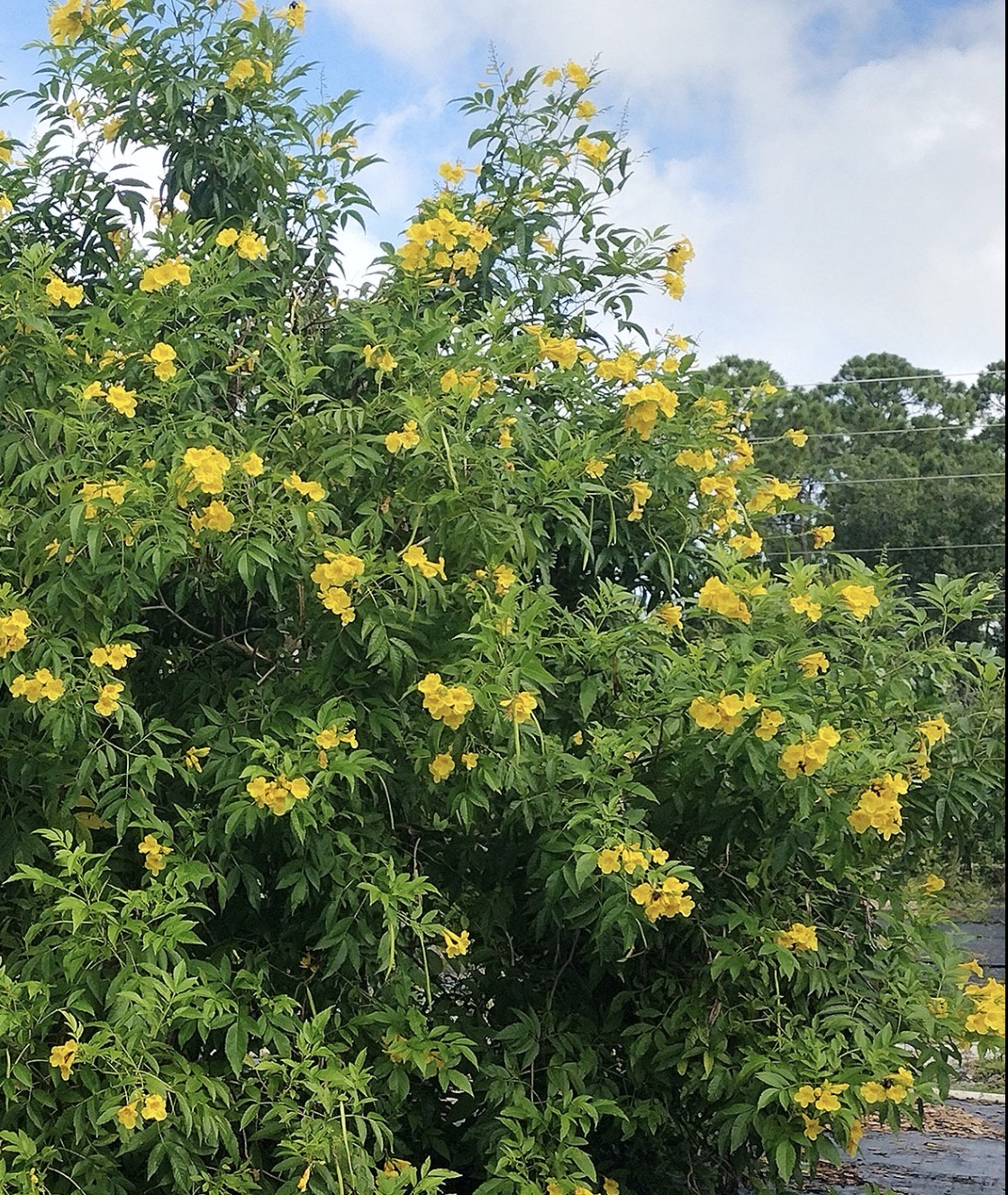
Yellow Bells
Fast, informal, covered in yellow trumpet blooms through the warm months.
For the irrigation fix, Garrett is my go-to, reach him at 480-678-9121.

Switch to what will actually survive here
The hibiscus and bird of paradise you tried in this area both died. Instead of bird of paradise, I'd try Cana Lily. For hibiscus, either the red variety or San Marcos Hibiscus, both hold up a lot better here.
Just as important, I'd pull out and enlarge the water wells around all of these. A bigger well lets water pool and soak down deep instead of running off, which is a big part of why the last plantings struggled here. Once the wells are enlarged, put down a layer of compost first, then mulch on top of that inside each well, that combination builds the soil biology these plants need to actually take hold.

Cana Lily
Bold, tropical-looking bloom that handles the heat better than bird of paradise has here.
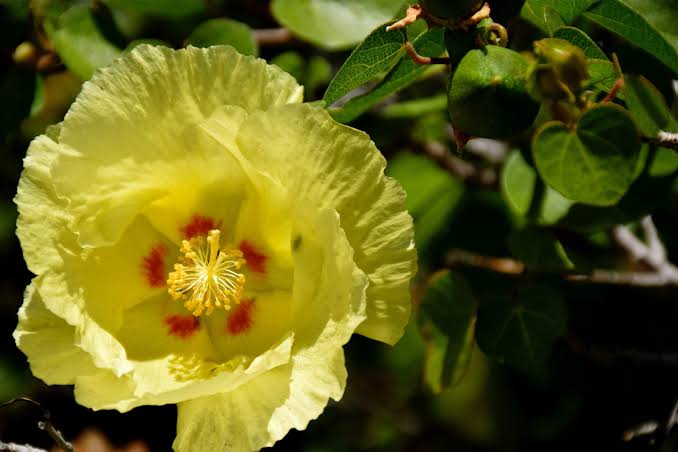
San Marcos Hibiscus
Softer yellow bloom, much tougher here than tropical hibiscus.

Root flare and a proper restake
Pull the soil back to expose the root flare, and move the stakes out to either side instead of having one right up against the trunk, that'll let it grow straight without girdling the bark.

Root flare excavation, then hands off until winter
This one also needs to be dug out and have its root flare exposed, and it needs more water in the meantime. Don't trim anything on it yet, wait until winter, then take off any dead wood and crossing branches.
Five trees need root flare excavations
The lemon, both ash trees, the fig, and the backyard shade tree all have the same underlying issue, soil built up around the trunk over the years. Uncovering the root flare on each one lets the tree breathe and take up water properly, and sets it up to grow bigger and live longer.
This is honestly something you're more than capable of doing yourselves, it's mostly careful digging. Post progress or questions in the Garden Nerd Club and I'll walk you through it as you go. If you'd rather we just handle it for you, that works too.
Root Flare Excavation (if you'd like us to handle it)
All five together, or however many you want us to start with.
Text me to schedule
Rock out, mulch and a ground cover border in
I'd pull the red rock lining this walkway, switch it to mulch, and then run a low ground cover along the full length. My first choice is Ruellia, but since this is a true desert front yard, here are a few other desert adapted options to consider too, a couple of which will also pull in pollinators along the walkway. If you want to source the mulch for free, chipdrop.com connects you with local arborists dropping off wood chips, just know it comes in bulk and unsorted.

Ruellia
My first choice, low growing and blooms most of the year.
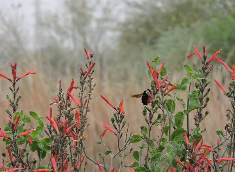
Chuparosa
Pulls in hummingbirds all along the walkway, tough and desert adapted.

Desert Milkweed
A monarch magnet, upright form that reads well as a border accent.
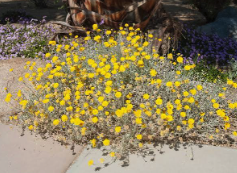
Desert Marigold
Cheerful yellow blooms most of the year, tough as it gets.

Globe Mallow
Bright orange blooms, easy and reliable along a border like this.

Iceplant
Thick mat of color if you want something lower and denser.

Bird of Paradise here if you want it
This spot right back here would work well for a Bird of Paradise if that's something you're interested in adding.
Giant Bird of Paradise
Big, architectural banana-like foliage with striking white and blue blooms, a great statement plant for this corner. Photo coming.

Fill the gap where the old tree used to be
You can still see the indentation from the tree that used to be here. Here are a few solid options to replace it, each with a different size and look.
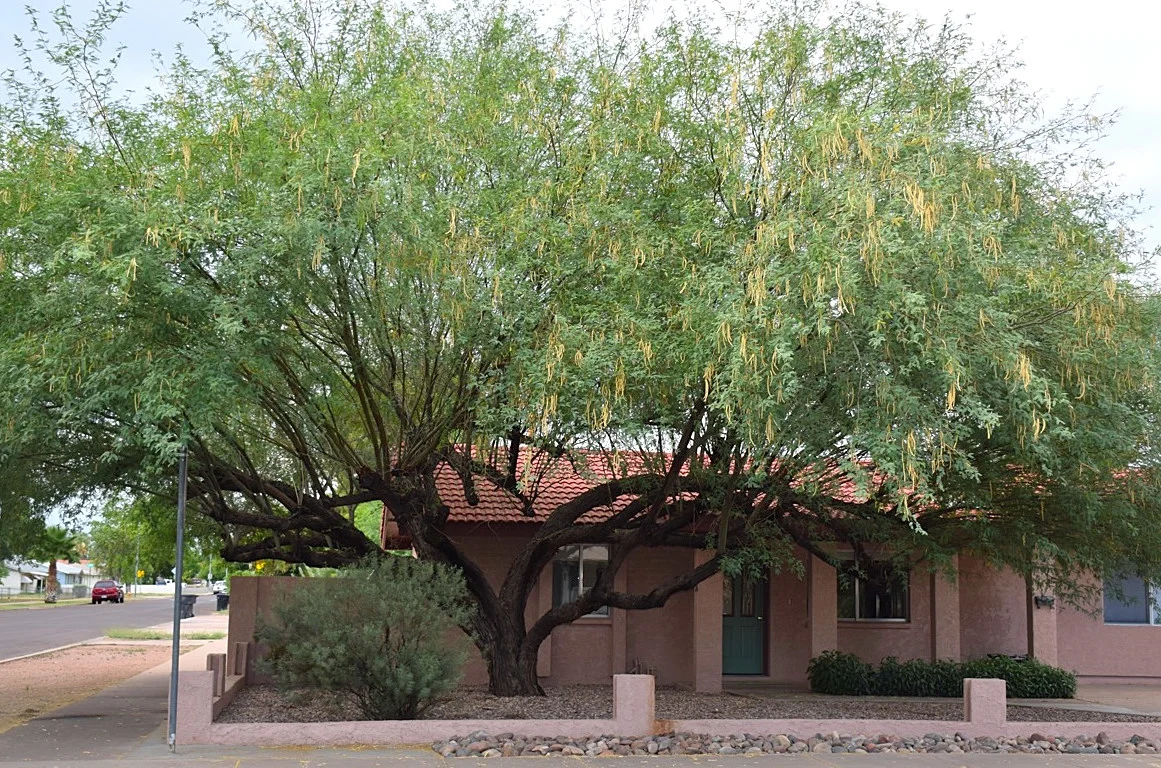
Mesquite
Native and tough. Grows 20 to 30 ft tall and wide, evergreen most winters, drops leaves briefly in a hard freeze.
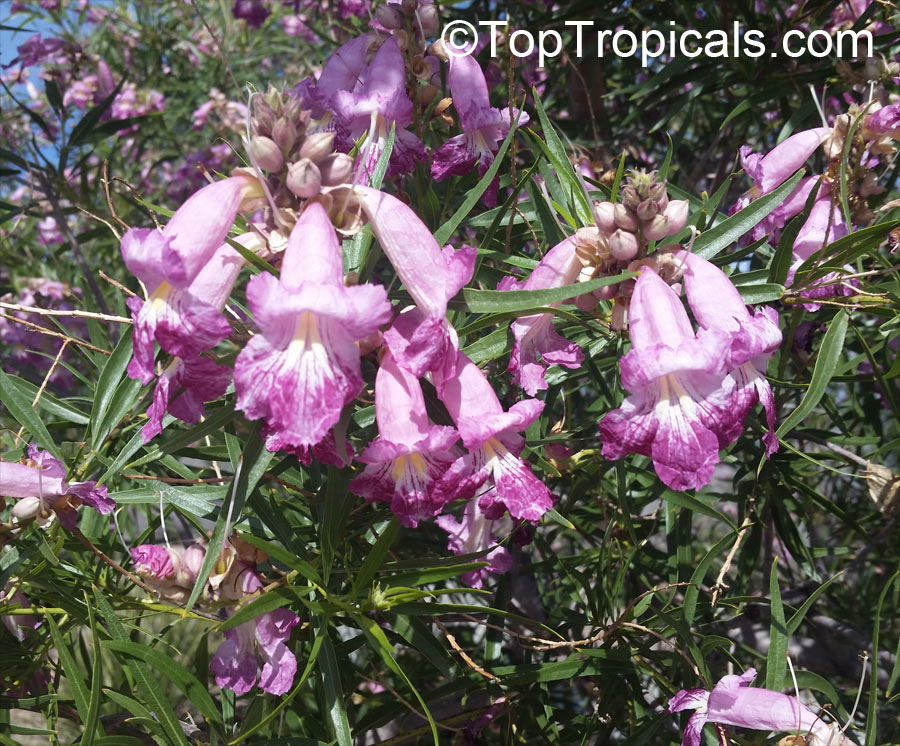
Desert Willow
Orchid-like blooms all summer. Grows 15 to 25 ft tall and 10 to 15 ft wide, deciduous, bare in winter.

Red Push Pistache
Vivid red new growth. Grows to about 30 ft tall and 25 ft wide, deciduous, drops leaves in winter with good fall color first.
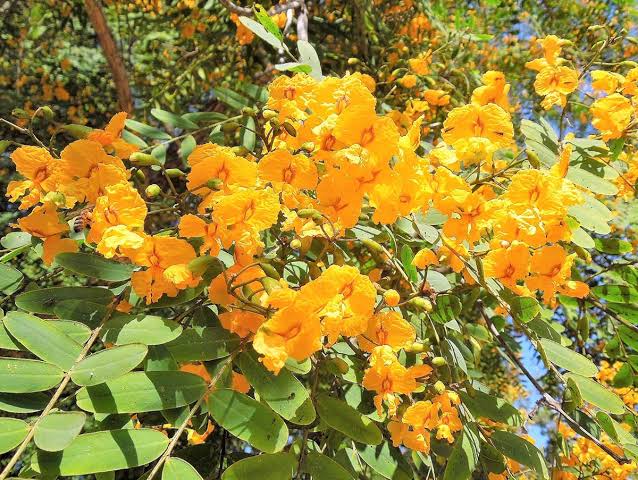
Tipu
Big, fast canopy with summer blooms. Grows 30 to 40 ft tall and wide, evergreen most winters, can drop leaves briefly after a hard freeze.
Give all of this a strong foundation
Every tree here is struggling for the same underlying reason, the soil around it needs help. Quality compost and organic fertilizer build the soil biology that actually feeds your plants long term, rather than forcing growth with synthetic salts. A monthly program keeps that going year-round.
Monthly Landscape Fertilizing
Liquid feeding every month, plus compost applied three times a year.
Text me to get startedHere's the order I'd tackle this in
Rock removal and mulch first, especially along that front walkway, it's the fastest win and sets up everything else to perform better. From there, focus on the trees since several need root flare work, then cover the block wall, then everything else after that. Text me whenever you're ready and I'll put together pricing for whichever areas you want to move on.
For turf or irrigation questions, Garrett is my go-to, you can reach him directly at 480-678-9121.