
Angela, here's what we covered
36117 N 10th Ave, Phoenix, AZ 85086Thanks for walking the property with me. Since you've got a contractor handling the backyard build, irrigation, and planting itself, I put this together as guidance for them to follow, the plant picks, spacing, and setup we'd recommend so everything gets planted right the first time. As a consult client you're already in the Garden Nerd Club, so I'm happy to keep working through this with you or your contractor whenever helpful.

Eight Raised Beds, Set Up Right From the Start
This area on the north side of the backyard is where the eight raised garden beds will go. Olle Gardens is where I'd source the beds themselves. Once they're in, my Maricopa County planting guide will walk through what to plant and when as the seasons change.
For soil, don't go cheap here, it's genuinely not worth saving money on. Quality soil is the foundation everything else in these beds depends on, and cutting corners here just means fighting the beds for years afterward.
I'd also add a light layer of woodchips on top of the soil in each bed. It cuts down on how much water you need since it slows evaporation, feeds the plants as it slowly breaks down, and keeps the soil cooler through our summer heat than bare soil would.

One or Two Trees for Shade
Just west of the garden beds, I'd add one or two trees to give them some afternoon shade. Chinese Elm and Red Push Pistache are both good picks, Chinese Elm grows fast with a dense canopy, while Red Push Pistache grows a bit slower but gives you striking red fall color the elm doesn't. Red Push is also the more disease resistant of the two and tends to give you fewer problems over the years, and its canopy actually thickens up nicely over time, so it's worth weighing that against the elm's faster initial growth.
See the Planting Guidelines section at the bottom for depth, water well, and mulch setup that applies to these trees too.

Chinese Elm
Fast growing, dense canopy, deciduous.

Red Push Pistache
Slower growing, deciduous, vivid red fall color.

Lush and Full, This Is the View You'll See Every Day
This wall faces south and it's what you'll see both out your window and while working in the garden beds, so it's worth getting right. I'd cover it completely and let it get lush and full rather than keeping it trimmed tight. Orange Jubilee is a great option here, just don't hedge it hard, it needs room to fill out or it won't give you that full look. Twisted Myrtle is a softer alternative if you'd rather have a gentler, more textured look than Orange Jubilee's brighter, showier growth.

Orange Jubilee
Let it grow full, don't hedge it hard.

Twisted Myrtle
Softer, more textured alternative.

Hopseed or Arizona Rosewood
For the rest of the block walls around the yard, Hopseed and Arizona Rosewood are both good choices, and covering these walls is worth doing regardless of which you pick. Bare block wall absorbs and radiates a lot of heat back into the yard, especially in summer, and a planted buffer in front of it noticeably cools that whole area down.
Hopseed is the faster grower of the two and fills in a bit quicker, but it's also a little looser and less formal in its growth habit. Arizona Rosewood grows a bit slower but gives you a denser, more uniform hedge that holds a cleaner line over time. Both are Arizona natives and don't need much water once established. I'd pick one and run it the length of a given wall rather than mixing the two together, and you can vary which one you use wall to wall if you want some variety across the yard.
Both of these can actually grow quite tall if you let them, we're talking fifteen to twenty feet at full size. I'd let them get up there rather than keeping them trimmed short. At that height they give you real privacy, help the whole yard feel like your own private oasis rather than something surrounded by neighbors, and they also do a lot to cut down on the strong winds that come through.

Hopseed
Faster growing, looser habit.

Arizona Rosewood
Slower growing, denser and more uniform.

A Real Orchard in the Middle of the Yard
This area north of the turf is a great spot for a fruit tree orchard. Florida Prince Peach is really the only stone fruit I'd recommend planting right now. There are other cool season stone fruits you could technically grow here, but our winters just aren't getting cold enough anymore for most of them to actually set a good fruit crop, the tree will grow fine, you just won't get much fruit off it. Florida Prince is bred specifically for our low chill hours, so it's the one that'll actually perform. Lemon and lime would both do well here too, and no orange or fig in this area, per your preference. Pomegranate (Parfianka) is a great addition, it holds up better against leaf-footed bugs than the Wonderful variety does. Guava rounds out the mix nicely, a smaller, easy going tree.
I'd treat this group, peach, lemon, lime, pomegranate, and guava, as your staples to get the orchard going. Once these are established and start creating some shade and their own little microclimate underneath and around them, you can always add more trees in later, including some of those cooler season varieties that might do better once the site has matured a bit.

Peach (Florida Prince)
The only stone fruit I'd plant right now, bred for our low chill hours.

Lemon
Evergreen year round.

Lime
Evergreen year round.
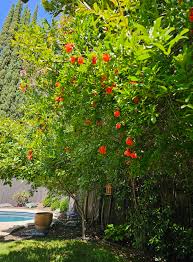
Pomegranate (Parfianka)
Holds up better against leaf-footed bugs than Wonderful.

Guava
Smaller, easy going addition to the mix.
Fruit trees are not a set-it-and-forget-it planting. They're heavy feeders and genuinely need consistent monthly feeding with quality compost, no synthetic fertilizers, to keep producing well year after year. Skipping feeding is one of the most common reasons a fruit tree grows fine but never really produces. See the Planting Guidelines section at the bottom for depth and water well setup that applies to all of these too.

A Tipu Tree to Screen It
That power line pole at the back of the yard is worth screening out, and a Tipu tree is a great option for it, it grows big and fast and will give you enough canopy to visually block the pole within a few years.
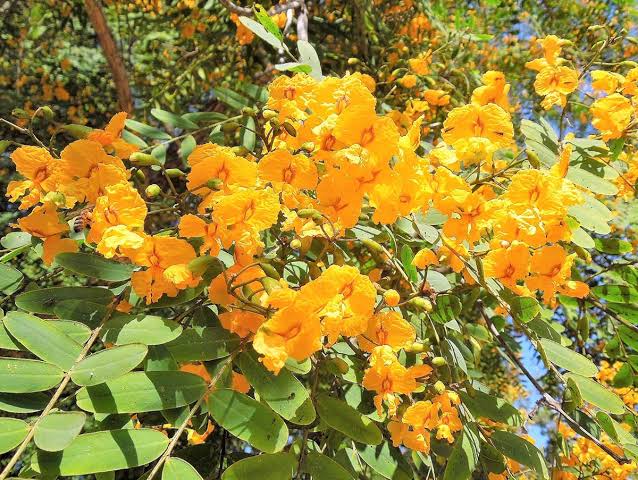
Tipu
Big, fast growing, good canopy to screen the pole.
See the Planting Guidelines section at the bottom for depth, water well, and mulch setup that applies to this tree too.

A Green Backdrop for the Whole Yard
I see this retention area as a great spot for a run of large shade trees. Planted as a group, they'd become the backdrop you see when you look out into the backyard, just a wall of green in the distance rather than looking at the retention area itself. That kind of backdrop makes the rest of the yard feel cooler and, honestly, makes it feel less like you're standing in the middle of the desert.
Carob, Ficus, or Chinese Elm would all work well for this, planted roughly fifteen to twenty feet apart so they read as one continuous canopy once they mature rather than a row of individual trees.
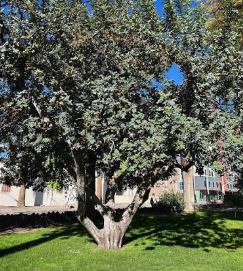
Carob
Evergreen, tough and well-shaped.
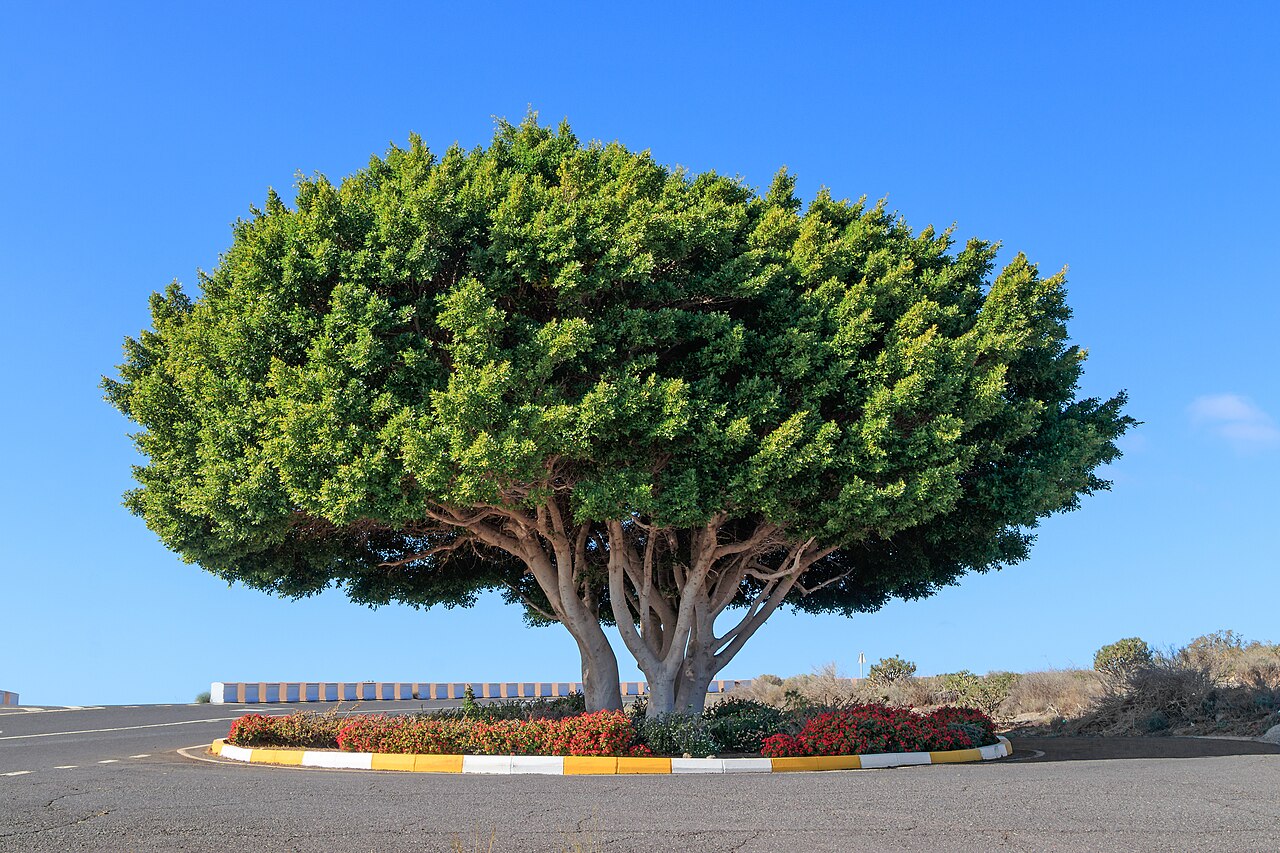
Ficus
Evergreen, dense canopy at maturity.
Chinese Elm
Fast growing, dense canopy.
Space them 15 to 20 feet apart so the canopy reads as one continuous backdrop as they fill in. See the Planting Guidelines section at the bottom for depth, water well, and mulch setup that applies to these trees too.

A Vine to Grow Up and Around It
If the trellis behind the pool goes in, I'd grow a vine up and around it. Hacienda Creeper is a great option and gives you real fall color as a bonus, the leaves turn red and orange before dropping for winter. Tangerine Crossvine is another solid choice if you'd rather have reliable orange blooms and stay evergreen.
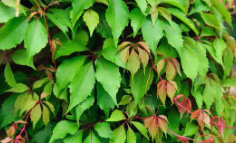
Hacienda Creeper
Real fall color, red and orange before dropping.

Tangerine Crossvine
Reliable coverage with orange blooms, evergreen.
Full Sun Options That Fit the Space
This area gets a lot of direct sun, so whatever goes in needs to handle that heat without missing a beat. Red Bird of Paradise gives you bold color and holds up great in full sun right by the pool. San Marcos Hibiscus fits well too if you want that softer, more tropical feel near the water, and Yellow Bells brings a lot of bloom with very little fuss. Chuparosa is another good option, bright red tubular blooms that also happen to bring in hummingbirds. Ruellia would work well here too, but only if there's a border around it, without one it'll spread well beyond where you want it. All of these are easy to work with regardless of exactly how you end up using this space.
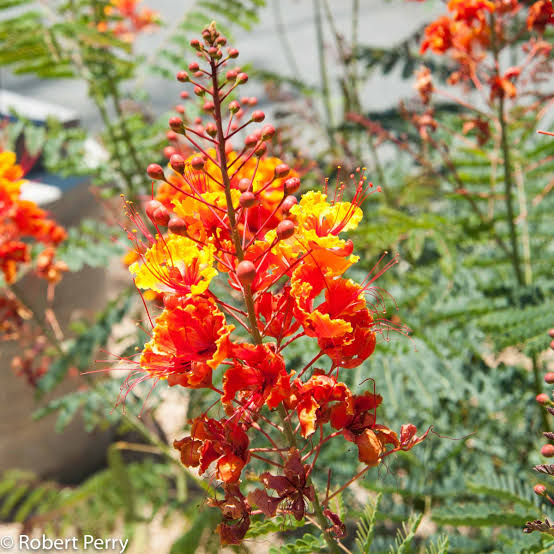
Red Bird of Paradise
Bold color, holds up great in full sun.
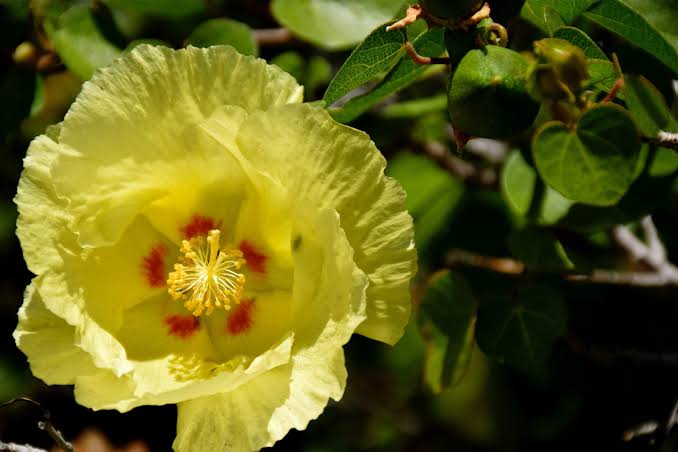
San Marcos Hibiscus
Softer, tropical feel near the pool.
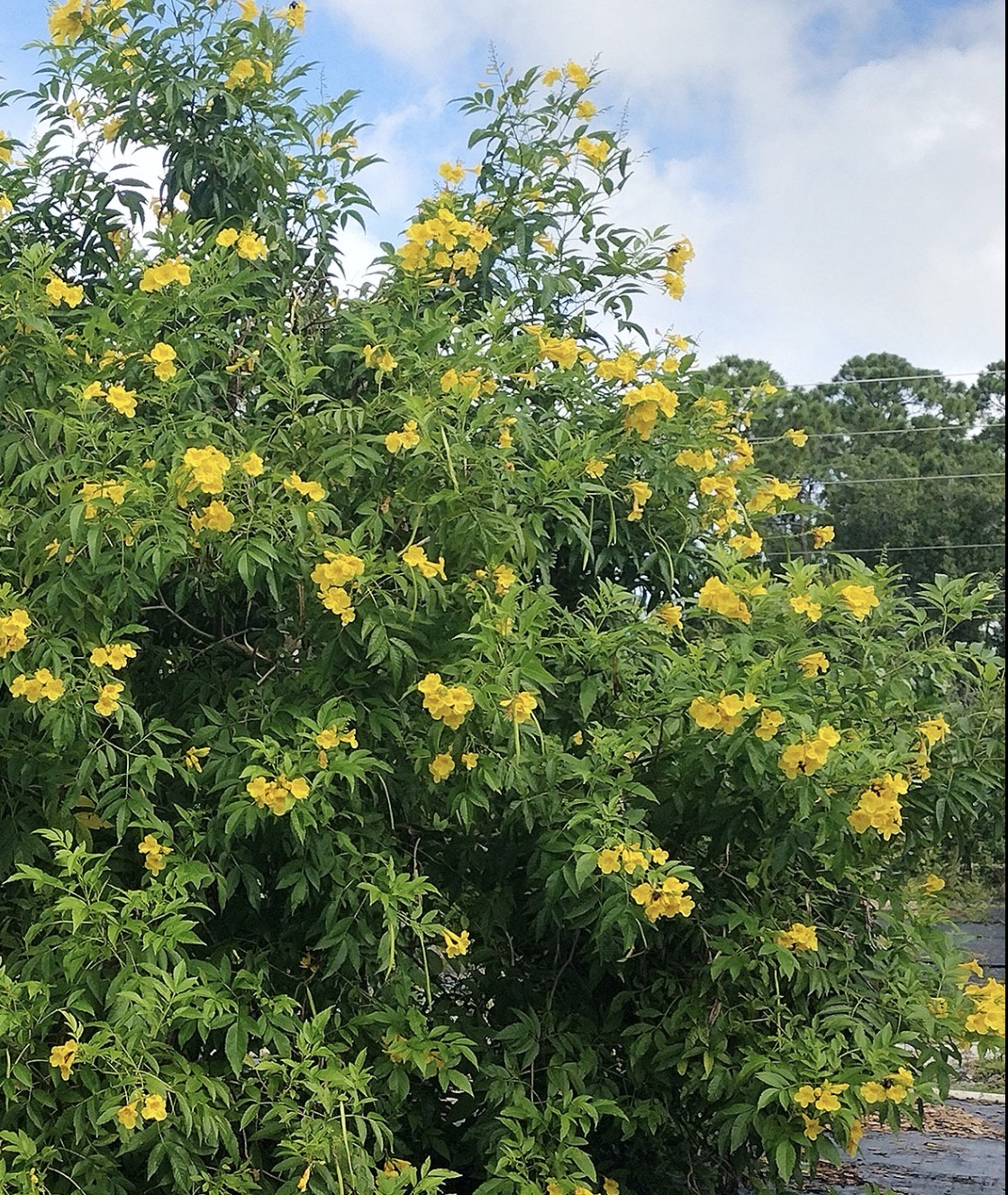
Yellow Bells
Lots of bloom, very little fuss.
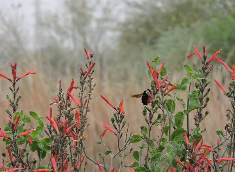
Chuparosa
Red tubular blooms, brings in hummingbirds.
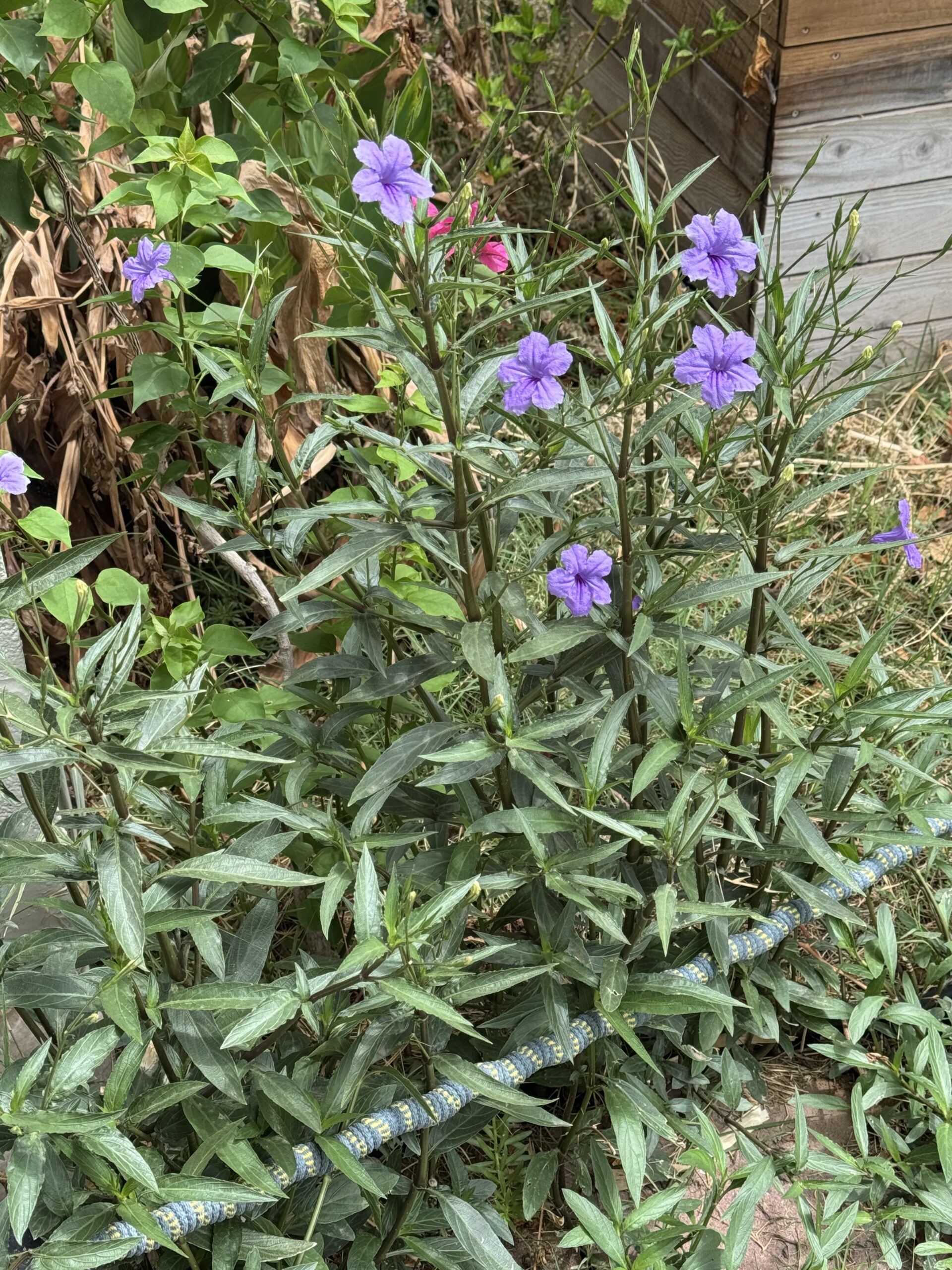
Ruellia
Needs a border, spreads without one.

Easy Care, Low Water Color
Along the side of the driveway, Baja Fairy Duster or Texas Sage would both work well, easy to care for and needing very little water once established. Dwarf Myrtle is another good option if you'd rather have something greener and more structured, and Boxwood would work well here too if you want a more classic, tidy look.
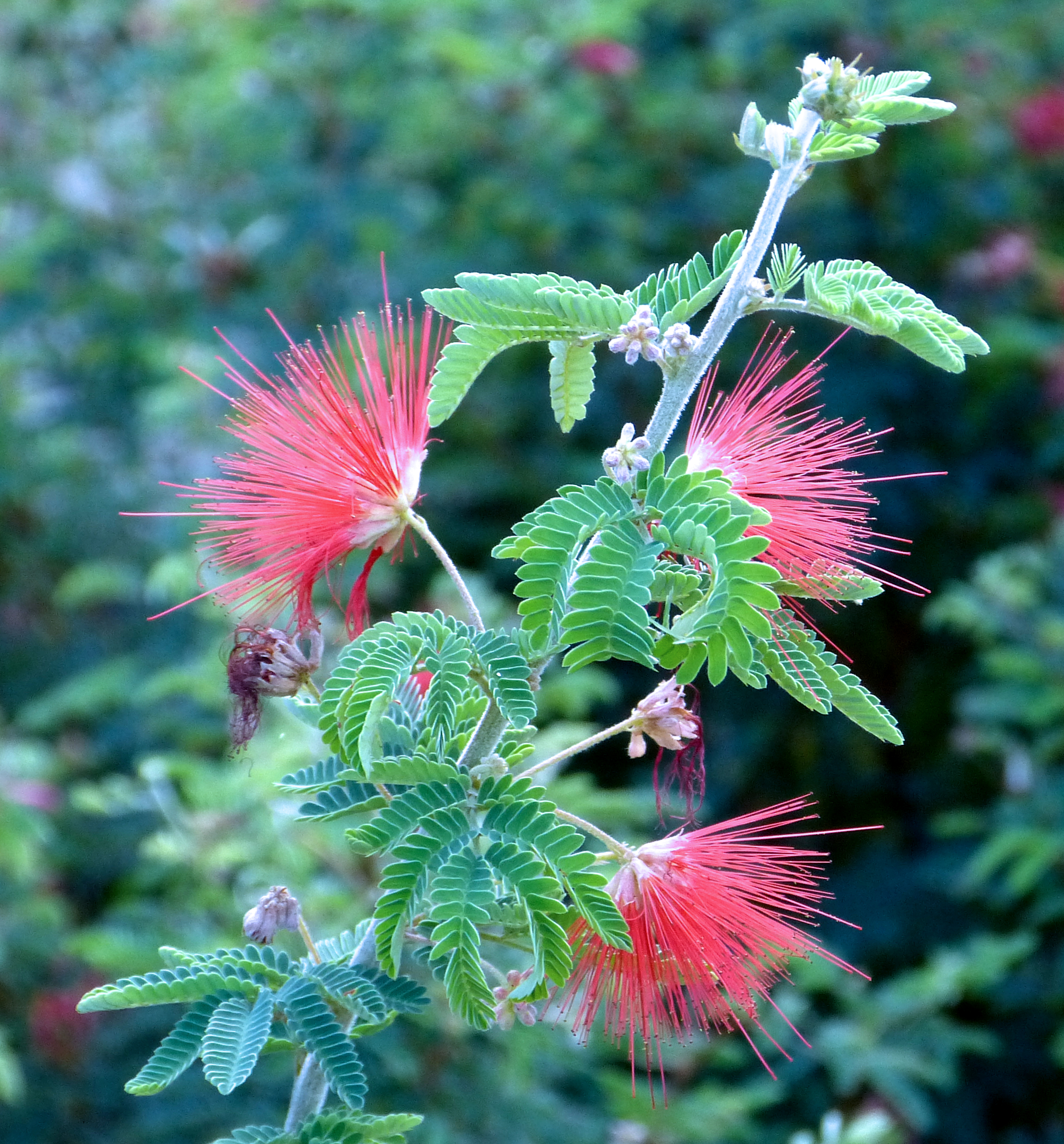
Baja Fairy Duster
Wispy red blooms, stays small and compact.

Texas Sage
Silvery foliage with purple blooms.
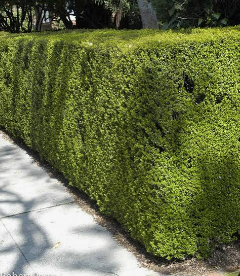
Dwarf Myrtle
Greener, more structured option.
Boxwood
Classic, tidy look.

Something With Presence, Right Where You Look Out
Right where you walk into the backyard, and where you'll see it out the window, I'd put something with real presence. A Purple Leaf Plum would give you deep purple foliage that stands out year-round, or Hong Kong Orchid if you'd rather have big purple blooms concentrated in the cooler months instead.

Purple Leaf Plum
Deep purple foliage, stands out year-round.

Hong Kong Orchid
Big purple blooms in the cooler months.
See the Planting Guidelines section at the bottom for depth, water well, and mulch setup that applies to this tree too.

Simple, Green and White, Built to Take the Heat
This side of the house gets blasted with sun, and you mentioned wanting to keep it simple with a green and white palette. Texas Olive gives you big white blooms on a substantial shrub, Iceberg Roses are the most reliable white rose for a spot like this, White Emu works well as a low groundcover, Dwarf Myrtle gives you dense green structure, and White Oleander rounds it out with more white bloom and height, it can also be trained and grown as a small tree if you'd rather have that form instead of a shrub. For more white options that are genuinely desert adapted and heat tolerant, White Ruellia is a great call, low growing and blooms reliably through the heat. White Lantana and Gaura (also called Whirling Butterflies) are both worth considering too, Gaura especially gives you an airy, delicate white bloom that moves in the breeze and still holds up fine in full sun. A few more worth throwing into the mix, Blackfoot Daisy stays low and mounding with cheerful white blooms most of the year, Natal Plum is a tough evergreen shrub with white star-shaped flowers, and both White Bougainvillea and a white flowered Cape Plumbago variety are options if you want something a bit showier without breaking from the palette.

Texas Olive
Big white blooms, substantial shrub size.
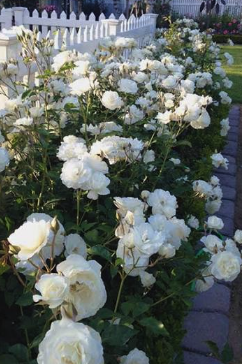
Iceberg Rose
Most reliable white rose for full sun.

White Emu
Low groundcover, doesn't need much water once established.
Dwarf Myrtle
Dense green structure.
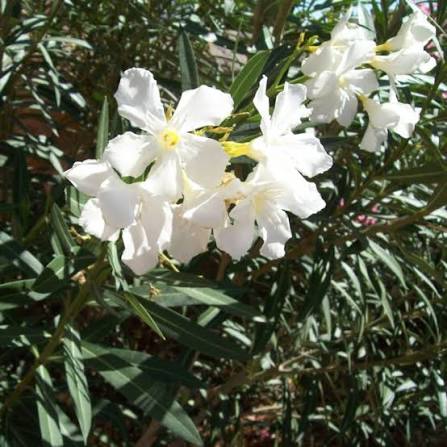
White Oleander
White bloom and height, can also be grown as a small tree.
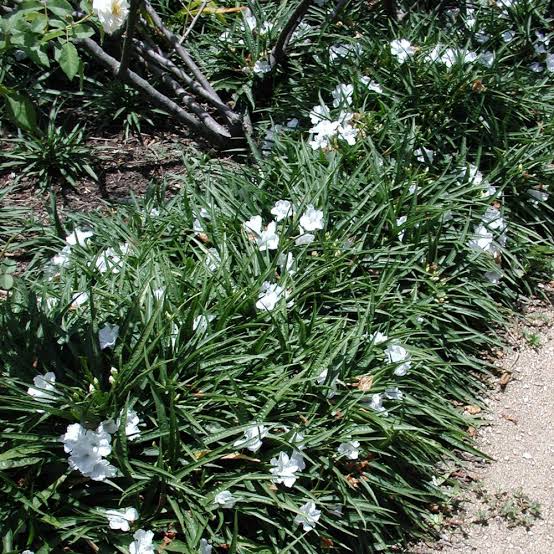
White Ruellia
Low growing, blooms reliably through the heat.

White Lantana
Another low, easy white bloom option.

Gaura (Whirling Butterflies)
Airy, delicate white blooms that move in the breeze.
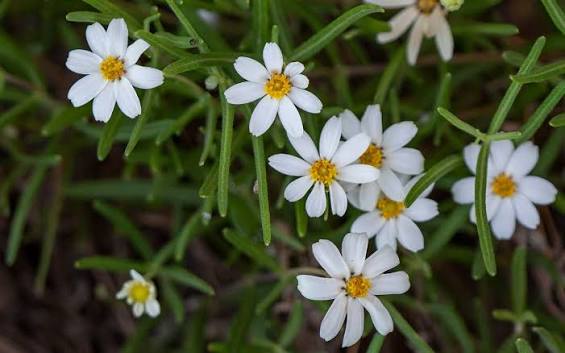
Blackfoot Daisy
Low, mounding, white daisy blooms most of the year.

Natal Plum
Tough evergreen shrub, white star-shaped flowers.

White Bougainvillea
Showier option, same color palette.

White Cape Plumbago
Showier option, same color palette.
No need to use all of these, pick whichever mix gives you the simple, green and white look you're after.

Hopseed to Cover This Wall
For the block wall on the side of the house, Hopseed is the call, fast and thick, it'll fill this wall in quickly.
Hopseed
Fast, thick, fills in quickly.
The One Rule That Matters Across All of This
Since your contractor is handling the actual planting and irrigation, the single most important thing to pass along is planting depth. Every tree and shrub on this list needs to go in with its root flare, the point where the trunk widens and the first major roots branch off, sitting above grade, not buried. A huge number of tree problems we see later on trace back to this one mistake made at planting time, and it's a lot harder to fix after the fact than to just get right from the start. Here's a video that walks through exactly how to find and expose the root flare on a new tree.
Before backfilling, expose the root flare on each tree if it isn't already visible in the container, some nursery stock comes with the flare already buried a little too deep. Once planted, mulch is great, but keep it pulled back several inches from the trunk itself rather than piled up against it, mulch against the trunk holds moisture there and invites rot and disease.
For every tree on this list, I'd also build a proper water well around the base and run a bubbler to it, that's what gives you the deep, even soak trees actually need to establish well. If bubblers aren't an option for a given spot, a good number of drip emitters around the root zone is the fallback, just make sure there are enough of them spread around the well rather than one or two emitters trying to cover the whole area.
Happy to Keep Advising as This Moves Forward
Since your contractor is handling the build, we're really just here to advise on plant selection, placement, and setup. Feel free to loop us in as things progress, whether that's confirming a plant pick, reviewing the irrigation plan, or answering questions along the way. As always, you're welcome to lean on us in the Garden Nerd Club too.
You can also read more about how we plant at thegardennerd.org.