
Tracy, here's what we covered
305 W Wilshire Dr, Phoenix, AZ 85003Thanks for having me out to walk the yard. I put this together in the same order we walked it, backyard through front. As a consult client you're already in the Garden Nerd Club, so I'm happy to keep working through this list with you whenever you're ready.

Solarize the grass between the flagstone, then replant with something better
Right now there's grass growing in the gaps between the flagstone under the awnings, and we don't want that there. The plan is to solarize it, essentially using clear plastic and our summer heat to cook the grass and its roots to death over several weeks, rather than digging it all out by hand or spraying it.
The University of Arizona's Maricopa County Cooperative Extension has a publication that covers this well. The short version: solarizing works by trapping heat under clear plastic to kill grass, weed seeds, and some soil-borne pests down several inches into the soil, but it takes a real commitment, several weeks of hot, sunny weather with the plastic sealed down tight, and even then tough grasses can leave some roots behind that need a follow-up round. Since this area has trees and other plants nearby, we'll also need to be careful the solarizing doesn't overheat their roots in the process. You can read the full guide here: UA Cooperative Extension, Maricopa County: Kurapia, A Low-Water Use Groundcover and Turfgrass Alternative.
Once the grass is gone, I'd replant the gaps with Kurapia, frogfruit, clover, or dichondra. Kurapia and frogfruit are actually closely related plants, Kurapia is a selectively bred version of the same plant frogfruit is, so both give you a similar low, tidy look. Clover and dichondra are great too, though heads up, both can look a little rough in the peak of summer heat, they'll bounce back and look great the rest of the year.

Kurapia
Low, tidy groundcover, tolerates foot traffic and full sun well.
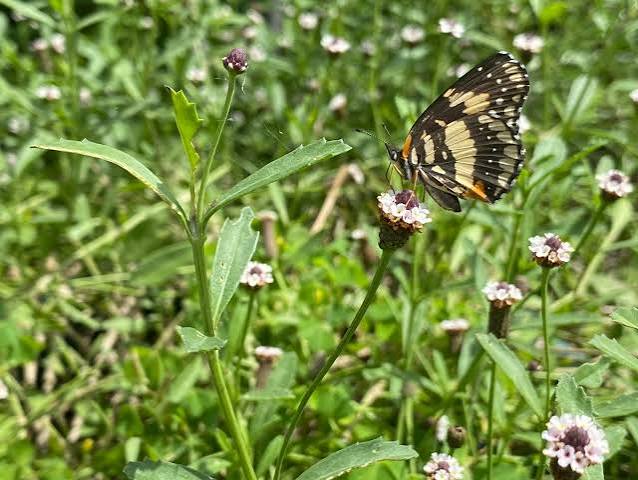
Frogfruit
Native relative of Kurapia, similar low spreading habit.
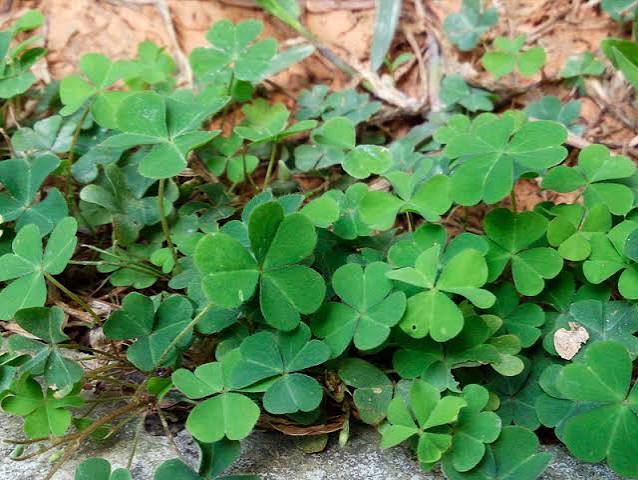
Clover
Great most of the year, can look rough in peak summer heat.
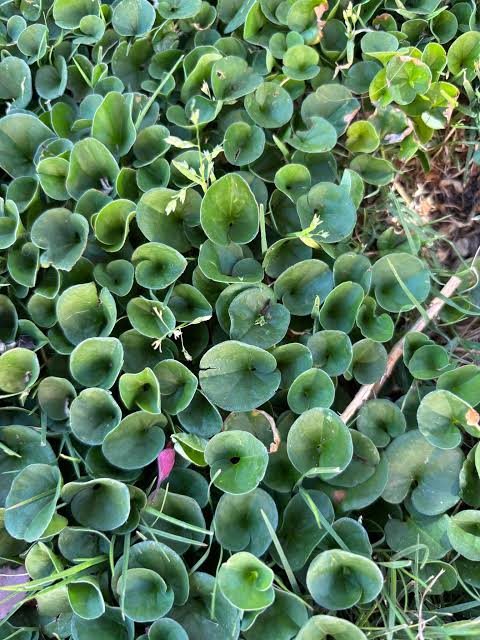
Dichondra
Soft, fine-textured groundcover, same summer heat trade-off as clover.
You don't need to mix all four, pick whichever look you like best for between the flagstone.

Remove the Bird of Paradise, let the mulberries take over
The mulberries back here are supposed to be the dominant trees in this space, but the Bird of Paradise is currently shading them out and holding them back. I'd remove the Bird of Paradise so the mulberries get the full sun they need. Once they do, expect them to grow fast and get large, mulberries take off quickly once nothing's competing with them for light. Be ready to prune regularly to keep them in check, and get ready to eat a lot of mulberries.

It's already thriving here, so let's add more
You've already got Ruellia growing in this awning and flagstone area, and it clearly likes it here. Easy call, let's just add more of it. You like it, it's already proven it does well in this spot, no reason to look for anything else here.
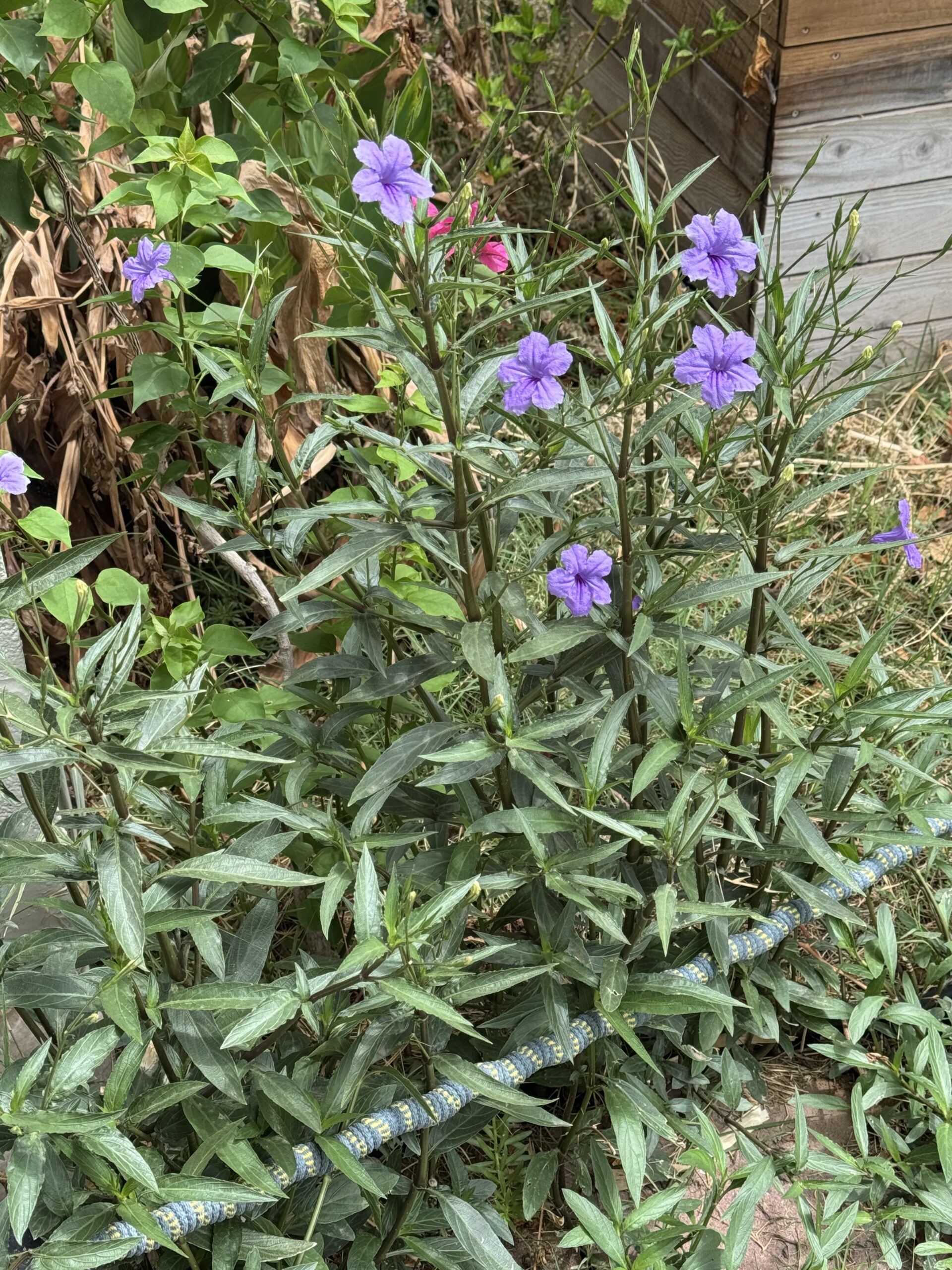
Ruellia
Already established and thriving here, just add more.

Pick one: the Orange Jubilee is shading out the pomegranate
Both the Orange Jubilee and the pomegranate here want full sun, and right now the Orange Jubilee is winning that fight and shading the pomegranate out. With both fighting over the same light, neither one is going to look good, so it's time to pick one. I'd remove the Orange Jubilee and let the pomegranate have this spot to itself.
While we're at it, this pomegranate is due for a really good prune this year. Find the main scaffolding branches, the thicker structural limbs the rest of the plant grows from, and shape it into whatever form you want it to keep going forward. You can train it more like a small tree with a single trunk, or keep it bushier with multiple stems from the base, it'll do fine either way structurally. If fruit production is the priority though, keeping it more as a multi-stem shrub will get you better fruit than training it into a single-trunk tree form.

Move the mulberry to where the pluot is now
The mulberry currently in the southeast part of the yard wants more sun than it's getting there, and it'll take off quickly once it has it. I'd move it to where the pluot currently is. The pluot, on the other hand, will actually be happier with more shade than it's getting now, so this move benefits both trees.
Once relocated and given more light, this mulberry will likely start to outgrow and overtake the sissoo nearby over time. Once the mulberry reaches somewhere around ten feet tall or more, that's the point where the sissoo can come out, it'll have served its purpose and the mulberry will be ready to take over that space.

Fill in the bare soil with more Ruellia
Along the east side of the pool deck, I don't want to see any bare soil left uncovered. More Ruellia here will fill in the ground nicely and keep this whole area looking intentional rather than patchy.
Ruellia
Fills in ground cover fast, keeps bare soil covered.

A Desert Willow here, with Ruellia along the base
Against the garage wall on this side of the pool deck, Desert Willow is a great fit, it stays smaller than a lot of shade trees, has no invasive root concerns this close to the garage, and gives you great color all summer with its orchid-like blooms. I'd run more Ruellia along the base of the wall here too, same as the rest of this area.
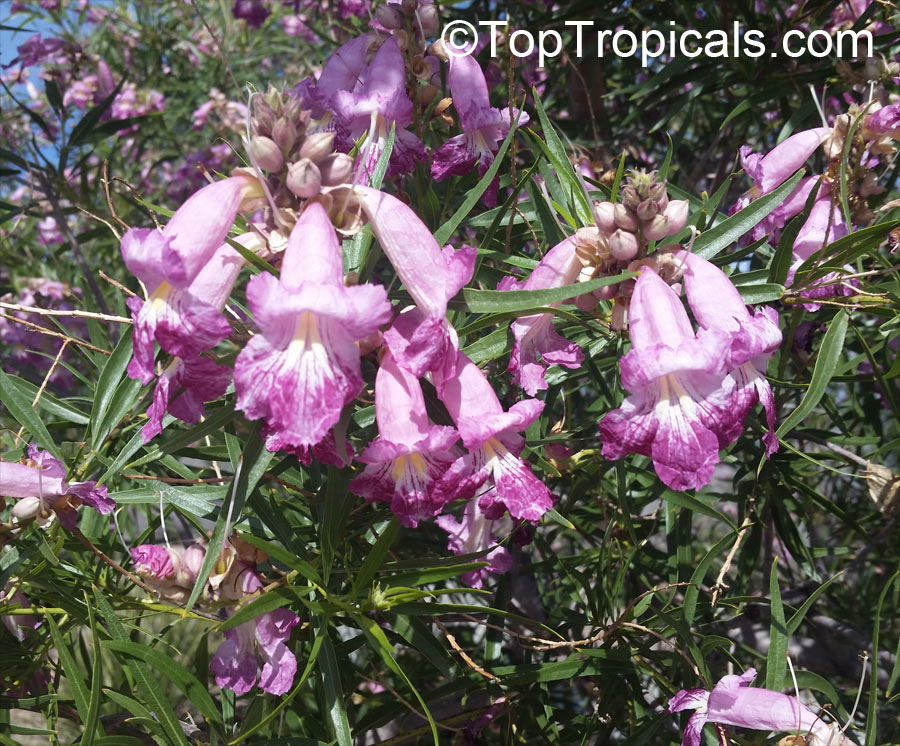
Desert Willow
Smaller size, no invasive roots, orchid-like blooms all summer.
Ruellia
Along the base of the wall, same as the rest of the pool deck.

Desert Ironwood or Hong Kong Orchid
Up against the shed, south of the awning, either a Desert Ironwood or a Hong Kong Orchid would work well. Desert Ironwood is a slower growing native with a dense, long-lived canopy, while Hong Kong Orchid brings big purple blooms in the cooler months and stays semi-evergreen through most winters. Either is a solid pick, it really comes down to which look you'd rather have here.
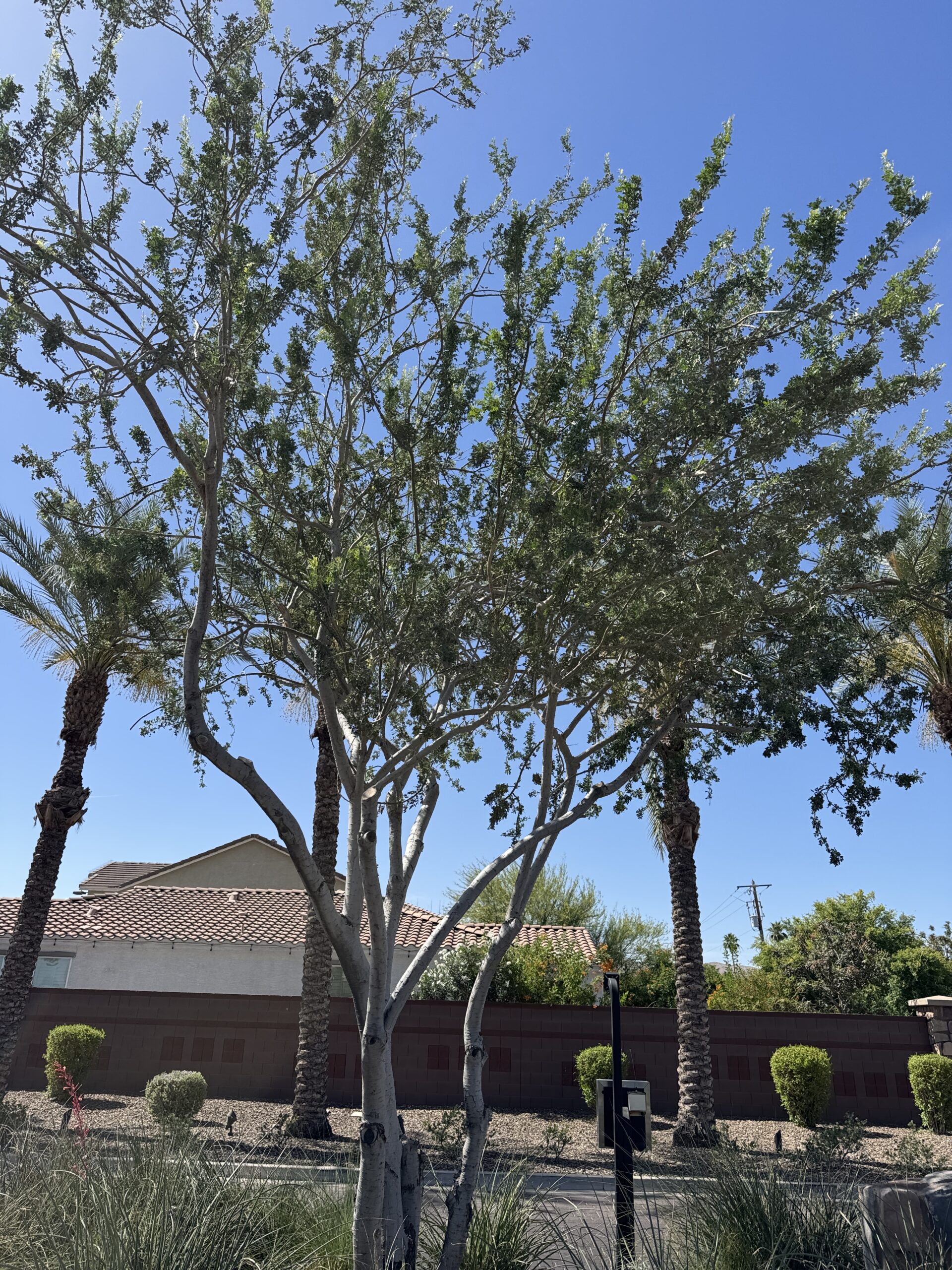
Desert Ironwood
Slower growing native, dense and long-lived.

Hong Kong Orchid
Purple orchid-like blooms in the cooler months, semi-evergreen.

Swap the pencil cactus for Milkweed and Gregg's Mistflower
These front containers currently have pencil cactus in them, I'd replace that with Milkweed and Gregg's Mistflower instead, both bring in pollinators and give you a lot more color and life in these pots than the pencil cactus does.

Milkweed
Magnet for monarchs and other pollinators.
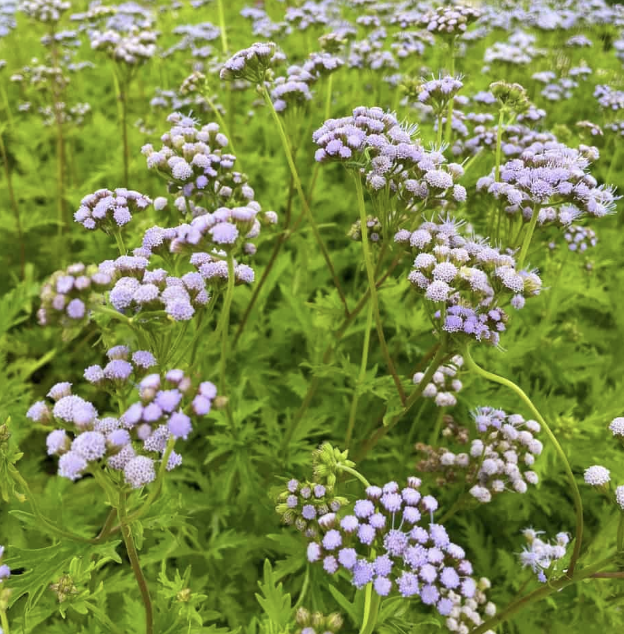
Gregg's Mistflower
Fuzzy purple-blue blooms that butterflies love, low and mounding.

Thin the canopy, then dig out the root flares
These Chinese Elms need to be thinned out, I'd recommend King's Tree Service for that. Thinning the canopy lets more sunlight reach the ground underneath, which will directly help the grass out here that's currently struggling in all that shade.
These trees also need their root flares dug out. Start by pulling back any grass or soil piled up around the base until you can see the flare, the point where the trunk widens and the first major roots branch off. Here's the video that walks through exactly how to find and expose it, and how to tell which roots need pruning.
This is something you're welcome to tackle yourself with the video as your guide, or if you'd rather we just handle it, let me know and I can get you pricing on doing the root flare work for you.

Yellow Dot for the strip on the other side of the sidewalk
For that strip of ground on the far side of the sidewalk from the house, Yellow Dot (Wedelia) is what I'd suggest. It's a fast spreading groundcover with bright yellow flowers that will fill in nicely and hold up well out there.

Yellow Dot (Wedelia)
Fast spreading groundcover with bright yellow flowers.

Clover or Purple Heart where nothing's grown so far
Right up against the front porch where nothing has taken hold yet, both Clover and Purple Heart would work well here. Clover gives you that low, green fill-in look, while Purple Heart brings a completely different texture and color with its deep purple foliage. Either one, or both together, would finally get this spot filled in.
Clover
Low, green fill-in for this bare spot.

Purple Heart
Deep purple foliage, a different texture and color for this spot.
Let's tackle this in whatever order makes sense
There's a lot here, so pick what matters most to you first. We can advise you along the way in the Garden Nerd Club, or if you'd rather have help with any of it, planting, tree work, or anything else, just reach out and I can get you pricing.
For turf or irrigation questions, Garrett is my go-to, you can reach him directly at 480-678-9121. For tree thinning on the Chinese Elms, King's Tree Service is who I'd call, you can find them at kingstreeserviceaz.com.
You can also read more about how we plant at thegardennerd.org.